Unlock the Power of AI Gateway for Seamless Integration
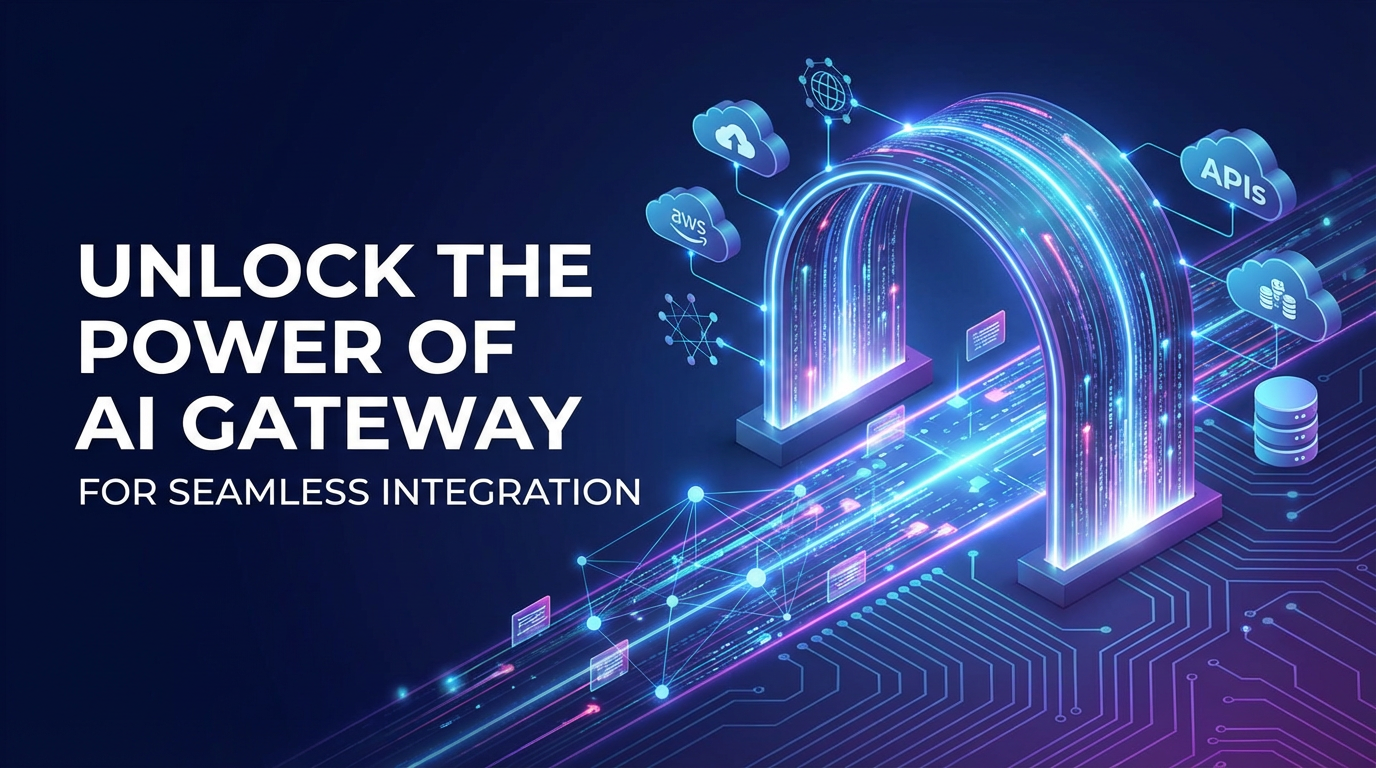


The modern enterprise stands at a pivotal juncture, grappling with an unprecedented wave of technological innovation driven by artificial intelligence. From sophisticated large language models (LLMs) generating human-like text to advanced computer vision systems deciphering complex imagery, AI is no longer a futuristic concept but a present-day imperative shaping industries and transforming business operations. Yet, the true power of AI lies not just in its individual capabilities but in its seamless integration into existing digital ecosystems. This integration, however, is often fraught with complexities, security concerns, and scalability challenges, forming a significant barrier to unlocking AI's full potential. Enter the AI Gateway – a transformative solution designed to centralize, secure, and streamline the interaction with diverse AI services. More than just a simple proxy, an AI Gateway acts as an intelligent intermediary, a crucial control plane that orchestrates access to and management of a myriad of AI models, including the increasingly prevalent LLMs. By providing a unified interface, robust security mechanisms, and granular control over usage, the AI Gateway, often built upon the foundational principles of an advanced API Gateway, is rapidly becoming an indispensable component for any organization committed to harnessing the power of artificial intelligence effectively and efficiently. This comprehensive exploration will delve deep into the multifaceted benefits and technical intricacies of AI Gateways, explaining how they are not merely useful tools but indispensable strategic assets for modern businesses navigating the intricate landscape of AI-driven innovation.
The Transformative Era of Artificial Intelligence and Its Integration Challenges
The past decade has witnessed an explosion in the field of artificial intelligence, transitioning from academic curiosities to practical, impactful tools. Generative AI, particularly Large Language Models (LLMs) like GPT-4, Claude, and Llama, has captured the public imagination and demonstrated capabilities that were once confined to science fiction. Beyond text generation, AI now powers sophisticated image recognition, natural language understanding, predictive analytics, recommendation engines, and complex decision-making systems. Businesses across every sector, from finance and healthcare to retail and manufacturing, are actively exploring and deploying AI to enhance customer experience, optimize operational efficiency, foster innovation, and gain competitive advantage. The sheer diversity of AI models, providers, and specialized services available today is staggering, creating an ecosystem rich with possibilities. Cloud providers offer extensive AI/ML platforms, while a vibrant landscape of startups and open-source communities continuously push the boundaries with specialized models and APIs.
However, this rich tapestry of AI innovation comes with significant integration challenges that can quickly overwhelm even the most technologically adept organizations. The primary hurdle lies in the inherent heterogeneity of AI services. Each AI model or API typically comes with its own unique set of authentication mechanisms, data formats, invocation protocols, rate limits, and pricing structures. Integrating even a handful of these disparate services into a single application or enterprise system can become a monumental task. Developers find themselves writing custom code for each integration, managing multiple API keys, and constantly adapting to changes in vendor APIs. This fragmented approach not only slows down development cycles but also introduces substantial technical debt, making applications brittle and difficult to maintain. Furthermore, managing the lifecycle of these integrations – from deployment and monitoring to versioning and deprecation – adds another layer of complexity. As businesses scale their AI initiatives, these integration challenges multiply exponentially, hindering agility and stifling innovation, underscoring the critical need for a more unified and streamlined approach to AI consumption.
Beyond the immediate technical integration hurdles, several other critical pain points emerge when dealing with multiple AI services. Security and data privacy are paramount concerns. Exposing internal applications directly to external AI APIs increases the attack surface, requiring meticulous management of API keys, access tokens, and data in transit. Ensuring compliance with regulations like GDPR, HIPAA, and various industry-specific standards becomes exceedingly difficult when data flows through multiple, uncontrolled external endpoints. Cost management is another significant challenge; different AI models have varying pricing models, often based on usage tokens, compute hours, or request volumes. Without a centralized view and control, tracking and optimizing AI spending across an organization can become opaque and inefficient, leading to unexpected budget overruns. Moreover, performance and reliability are critical for mission-critical applications. Direct integration means developers must implement their own caching, retry mechanisms, and load balancing strategies, which are complex to build correctly and scale effectively. Finally, the ability to swap out AI models or providers to leverage better performance, lower costs, or new capabilities without significant re-engineering is crucial for future-proofing AI investments. Without an abstraction layer, changing an underlying AI model could necessitate extensive code modifications throughout an application, making such transitions prohibitively expensive and time-consuming. These multifaceted challenges highlight that merely accessing AI models is insufficient; managing and integrating them efficiently, securely, and cost-effectively is the true key to unlocking their immense power.
Demystifying the AI Gateway: What it is and Why it Matters
At its core, an AI Gateway serves as a sophisticated intermediary, a single, unified entry point for all interactions with various artificial intelligence models and services. Imagine it as a central nervous system for your AI ecosystem, orchestrating communication between your applications and a diverse array of AI backends, regardless of their underlying complexity or location. It abstracts away the inherent heterogeneity of different AI APIs, providing a standardized, consistent interface for developers. Instead of directly calling individual AI providers like OpenAI, Google AI, or custom in-house models, applications route their requests through the AI Gateway. This central point then intelligently processes, transforms, secures, and dispatches these requests to the appropriate AI service, managing the responses before returning them to the original application. The AI Gateway is not merely a proxy; it is an intelligent, policy-driven layer that adds significant value by centralizing control, enhancing security, improving performance, and streamlining the entire AI consumption lifecycle.
The concept of an AI Gateway builds upon and extends the well-established principles of an API Gateway. A traditional API Gateway acts as the frontline for all API traffic, handling tasks such as authentication, rate limiting, routing, and monitoring for microservices and traditional backend APIs. It provides a crucial abstraction layer, shielding clients from the complexities of the backend architecture. An AI Gateway inherits all these fundamental capabilities but introduces specialized functionalities tailored specifically for the unique demands of AI models, particularly Large Language Models. For instance, while a standard API Gateway might route a request to a database service, an AI Gateway intelligently routes a request to a specific LLM, potentially even performing prompt engineering or managing model versions. This specialization is key to effectively managing the nuances of AI services, which often involve complex payloads, asynchronous processing, and dynamic resource allocation.
When we speak of an LLM Gateway, we are referring to a specialized type of AI Gateway designed with a particular focus on Large Language Models. The challenges of integrating LLMs are particularly acute: prompt engineering requires careful management, different models have varying token limits and input/output formats, and the costs associated with token usage can fluctuate significantly across providers. An LLM Gateway addresses these specific challenges by: 1. Unified Prompt Interface: Allowing developers to use a consistent prompt structure regardless of the underlying LLM, which the gateway then translates into the specific format required by the target model. 2. Model Abstraction: Enabling seamless switching between different LLMs (e.g., from GPT-4 to Claude 3) without requiring application code changes, facilitating A/B testing and cost optimization. 3. Token Management & Cost Tracking: Providing granular insights into token usage for each request, allowing for precise cost allocation and budget management specific to LLM interactions. 4. Content Filtering & Moderation: Implementing an additional layer of safety to ensure that prompts and responses adhere to defined content policies, crucial for responsible AI deployment. 5. Streaming Support: Efficiently handling the streaming nature of LLM responses, ensuring real-time updates to user interfaces without performance bottlenecks.
In essence, while an API Gateway provides a generic interface for backend services, an AI Gateway (and more specifically, an LLM Gateway) offers a purpose-built, intelligent layer optimized for the distinctive characteristics of AI models. It acts as the intelligent orchestration layer that empowers organizations to leverage the full spectrum of AI capabilities securely, efficiently, and at scale, transforming fragmented AI integrations into a coherent and manageable ecosystem. This strategic component becomes indispensable for organizations aiming to build robust, scalable, and future-proof AI-powered applications.
Core Capabilities and Advanced Features of a Robust AI Gateway
A truly robust AI Gateway is far more than a simple passthrough proxy. It is a sophisticated platform imbued with a suite of core capabilities and advanced features designed to manage the entire lifecycle of AI interactions. These functionalities address the inherent complexities of integrating diverse AI models, ensuring security, optimizing performance, and providing granular control over AI consumption. Understanding these capabilities is key to appreciating the transformative power an AI Gateway brings to an enterprise's AI strategy.
Unified API Interface
One of the most significant values proposition of an AI Gateway is its ability to provide a Unified API Interface. In an ecosystem where every AI model (whether from OpenAI, Google, Hugging Face, or an internal MLOps deployment) presents a unique API signature, authentication scheme, and data payload structure, developers face a steep learning curve and significant integration effort. The AI Gateway abstracts away this underlying complexity by offering a single, standardized API endpoint for all AI services. Developers interact solely with the gateway's consistent interface, sending requests in a predefined format. The gateway then intelligently translates these requests into the specific format required by the target AI model, handles its unique authentication, and processes its response back into the unified format before returning it to the application. This standardization drastically simplifies development, reduces the time-to-market for AI-powered applications, and significantly lowers maintenance overhead, as changes to an underlying AI model's API no longer necessitate modifications across all client applications. For instance, if an organization decides to switch from one LLM provider to another, or to upgrade to a newer version of a model, the application code remains untouched; only the gateway's configuration needs to be updated. This level of abstraction fosters agility and resilience, making AI adoption far more manageable and scalable.
Authentication and Authorization
Security is paramount when dealing with sensitive data and intellectual property, and AI services are no exception. A robust AI Gateway provides centralized Authentication and Authorization capabilities, acting as the single point of entry for all AI-related traffic. Instead of distributing API keys or credentials across numerous client applications and managing access individually for each AI service, the gateway handles all authentication against the backend AI models. This centralizes identity management, allowing organizations to integrate with existing enterprise identity providers (IdPs) like OAuth2, OpenID Connect, or LDAP. The gateway verifies the identity of the calling application or user and then applies Role-Based Access Control (RBAC) to determine which AI models or specific functionalities they are authorized to access. This ensures that only legitimate and authorized entities can invoke AI services, preventing unauthorized API calls and potential data breaches. Furthermore, the gateway can manage and securely store API keys for various backend AI services, rotating them regularly and ensuring they are never directly exposed to client applications. This significantly reduces the attack surface and simplifies security audits, providing a comprehensive and airtight security perimeter around your AI ecosystem.
Rate Limiting and Throttling
Uncontrolled access to AI models can lead to several problems, including service degradation, denial-of-service attacks, and unexpected cost escalations. Rate Limiting and Throttling are essential features of an AI Gateway that mitigate these risks. The gateway allows administrators to define policies that restrict the number of requests an application or user can make within a specified time window. For example, a development team might be limited to 100 requests per minute, while a production application could have a higher limit of 10,000 requests per minute. When these limits are exceeded, the gateway intelligently throttles or rejects subsequent requests, preventing backend AI services from being overwhelmed. This not only protects the stability and availability of the AI infrastructure but also helps manage costs by preventing runaway usage, especially with pay-per-use AI models. These policies can be configured at various granularities – per user, per application, per API key, or even per specific AI model endpoint – offering fine-grained control over resource consumption and ensuring fair usage across different tenants and departments within an organization.
Request/Response Transformation
The ability to perform Request/Response Transformation is a powerful feature that further enhances the flexibility and compatibility of an AI Gateway. As previously mentioned, different AI models often expect input and produce output in varying formats. The gateway can dynamically modify incoming requests before forwarding them to the backend AI service, and similarly, alter the responses received from the AI service before sending them back to the client application. This can involve: * Data Normalization: Converting data types, renaming fields, or restructuring JSON/XML payloads to match the target AI model's expectations. * Prompt Engineering: For LLMs, the gateway can dynamically inject context, system instructions, or specific formatting into user prompts, ensuring optimal performance from the model without requiring client applications to manage complex prompt logic. * Content Filtering/Masking: Sanitizing or anonymizing sensitive data (e.g., PII) in requests before they reach the AI model, and similarly, masking sensitive information in responses before they are returned to the client, enhancing data privacy and compliance. * Protocol Mediation: Converting between different communication protocols if necessary, though AI services primarily rely on HTTP/HTTPS. This transformation capability is invaluable for maintaining compatibility between disparate systems, enabling rapid integration, and ensuring that data flows securely and optimally across the AI ecosystem.
Caching Mechanisms
For frequently invoked AI models, especially those with predictable outputs or high latency, Caching Mechanisms within the AI Gateway can dramatically improve performance and reduce operational costs. The gateway can store the responses of AI models to specific requests for a predetermined duration. When a subsequent, identical request arrives, the gateway can serve the cached response immediately, bypassing the need to call the actual backend AI service. This significantly reduces latency, providing a faster and more responsive experience for end-users. Beyond performance improvements, caching also translates directly into cost savings by reducing the number of chargeable API calls to external AI providers. Smart caching strategies, which consider factors like data freshness, cache invalidation policies, and specific API endpoints, ensure that clients always receive accurate and up-to-date information while maximizing the benefits of caching. This feature is particularly impactful for scenarios involving high-volume, repetitive AI inferences, such as common sentiment analysis tasks, standard translations, or predefined content generation prompts.
Monitoring, Logging, and Analytics
Visibility into the operation and usage of AI services is critical for troubleshooting, performance optimization, security auditing, and cost management. An AI Gateway provides comprehensive Monitoring, Logging, and Analytics capabilities, offering a centralized vantage point for all AI interactions. * Detailed Call Logging: Every API call passing through the gateway is meticulously recorded, including timestamps, request/response payloads, origin IP addresses, user identities, response status codes, and latency metrics. This granular logging is invaluable for debugging issues, reconstructing events, and ensuring compliance. * Real-time Performance Metrics: The gateway collects and aggregates key performance indicators (KPIs) such as request volume, error rates, average response times, and throughput across all AI services. These metrics can be visualized on dashboards, providing administrators with real-time insights into the health and performance of their AI ecosystem. * Cost Tracking and Usage Insights: By correlating API calls with pricing models, the gateway can provide detailed reports on AI consumption costs, breaking them down by application, user, or specific AI model. This empowers organizations to track spending, identify cost inefficiencies, and optimize their AI budget. * Anomaly Detection: Advanced gateways can leverage the collected data to detect unusual patterns in API usage, such as sudden spikes in error rates or abnormally high request volumes from a particular source, potentially indicating a security threat or a performance bottleneck. This rich telemetry data is essential for maintaining the stability, security, and cost-effectiveness of an enterprise's AI deployments, transforming opaque AI usage into actionable intelligence.
Security and Compliance
Given the sensitive nature of data processed by AI models, robust Security and Compliance features are non-negotiable. An AI Gateway acts as a powerful security enforcement point, protecting AI services from a wide array of cyber threats. Beyond authentication and authorization, it can implement various security policies: * Threat Protection: Guarding against common web vulnerabilities and API attacks, including DDoS attacks, SQL injection, cross-site scripting (XSS), and other OWASP API Security Top 10 threats. * Data Encryption: Ensuring that all data transmitted between client applications, the gateway, and backend AI services is encrypted both in transit (e.g., using TLS/SSL) and, if required, at rest. * IP Whitelisting/Blacklisting: Controlling access based on source IP addresses. * API Key Management: Securely managing and rotating API keys, reducing the risk of compromise. * Compliance Auditing: Centralized logging and policy enforcement simplify the process of demonstrating compliance with regulatory requirements (e.g., GDPR, CCPA, HIPAA) by providing a clear audit trail of all AI interactions and security measures in place. By centralizing security enforcement, the AI Gateway provides a consistent and fortified perimeter around your AI assets, significantly reducing the risk of breaches and ensuring regulatory adherence.
Cost Management and Optimization
With the proliferation of pay-per-use AI models, effective Cost Management and Optimization is a critical function of an AI Gateway. The gateway provides the tools to gain complete visibility and control over AI spending. * Intelligent Routing to Cheaper Models/Providers: An advanced AI Gateway can be configured to dynamically route requests to the most cost-effective AI model or provider based on real-time pricing, performance, and specific task requirements. For instance, less critical tasks might be routed to a smaller, cheaper LLM, while complex, high-value tasks go to a premium model. * Quota Management: Beyond rate limiting, quotas can be set to limit the total number of API calls or tokens consumed within a billing period for specific applications or users, preventing accidental overspending. * Detailed Cost Reporting: Comprehensive dashboards and reports provide insights into expenditure breakdown by model, application, team, or project, enabling precise budget allocation and accountability. * Caching for Cost Reduction: As previously mentioned, effective caching directly translates into fewer calls to chargeable AI services, offering substantial cost savings over time. By actively managing and optimizing AI resource consumption, the AI Gateway ensures that organizations get the most value from their AI investments without incurring unexpected and prohibitive costs.
Version Control and A/B Testing
The world of AI is rapidly evolving, with new models and updates being released frequently. An AI Gateway facilitates robust Version Control and A/B Testing for AI models and associated configurations (like prompts). * Seamless Model Updates: It allows organizations to deploy new versions of an AI model or prompt without disrupting existing applications. Traffic can be gradually shifted from an older version to a newer one, enabling blue-green deployments or canary releases. * A/B Testing: The gateway can split traffic between different versions of an AI model or different prompt variations, allowing organizations to conduct A/B tests to compare performance, accuracy, and cost-effectiveness in a production environment. This enables data-driven decision-making for model selection and optimization. * Rollback Capabilities: In case of issues with a new model version, the gateway allows for quick and seamless rollback to a stable previous version, minimizing downtime and business impact. This capability is crucial for iterative development and continuous improvement in AI applications, ensuring that organizations can always leverage the best available AI technology with minimal risk.
To further illustrate the practical implementation of many of these features, it's worth noting that platforms like APIPark exemplify a comprehensive approach to AI Gateway and API Management. APIPark offers the capability to integrate over 100 AI models, providing a unified management system for authentication and cost tracking, directly addressing the challenge of unified API interfaces and cost optimization. Its feature set, including prompt encapsulation into REST APIs, end-to-end API lifecycle management, and detailed API call logging, aligns perfectly with the advanced capabilities discussed above, making it a powerful tool for organizations seeking to streamline their AI integrations and secure their API ecosystems. With quick deployment and performance rivaling Nginx, APIPark addresses many of the critical challenges discussed previously, providing both technical agility and operational oversight.
The Strategic Advantages of Implementing an AI Gateway
The technical capabilities of an AI Gateway translate directly into significant strategic advantages for businesses striving to fully embrace and operationalize artificial intelligence. Beyond mere technical elegance, an AI Gateway becomes a strategic enabler, fostering agility, security, efficiency, and a future-proof approach to AI investments. Recognizing these broader benefits is crucial for justifying its implementation and integrating it into an overarching digital transformation strategy.
Accelerated Development and Deployment
One of the most immediate and tangible benefits of an AI Gateway is the Accelerated Development and Deployment of AI-powered applications. By providing a unified and consistent interface to diverse AI models, the gateway drastically reduces the integration burden on developers. Instead of spending valuable time understanding and implementing the unique APIs, authentication schemes, and data formats of multiple AI providers, developers interact with a single, well-documented gateway API. This abstraction allows them to focus on building core application logic and user experiences, rather than wrestling with integration complexities. The ability to quickly swap out AI models or experiment with different providers without rewriting significant portions of application code empowers teams to iterate faster, prototype new ideas more efficiently, and bring AI-driven products and features to market much quicker. This agility translates directly into a competitive advantage, enabling businesses to respond rapidly to market demands and innovations in the AI landscape. The reduced development effort and shortened release cycles mean that AI initiatives can deliver value sooner, driving faster ROI and reinforcing a culture of innovation within the organization.
Enhanced Security Posture
In an era of increasing cyber threats and stringent data regulations, an Enhanced Security Posture is paramount. The AI Gateway acts as a critical control point, centralizing and enforcing security policies across all AI interactions. Instead of relying on individual applications to manage security for each AI service, the gateway provides a single, hardened perimeter. This architecture drastically reduces the attack surface by hiding the direct endpoints of backend AI models from client applications. All requests are funneled through the gateway, where robust authentication, authorization, threat protection, and data encryption mechanisms are applied consistently. This not only protects against common API vulnerabilities but also ensures that sensitive data, such as API keys and internal credentials, are never directly exposed to client-side code. Furthermore, the centralized logging and audit trails provided by the gateway simplify compliance efforts, making it easier to demonstrate adherence to industry regulations like GDPR, HIPAA, and CCPA. By abstracting security concerns from developers and centralizing them within a dedicated gateway, organizations can achieve a higher, more consistent level of security for their entire AI ecosystem, building trust and mitigating significant risks.
Improved Scalability and Reliability
For mission-critical AI applications, Improved Scalability and Reliability are non-negotiable. An AI Gateway is engineered to handle high volumes of traffic and manage complex request routing efficiently. It can intelligently distribute incoming requests across multiple instances of an AI service or even across different AI providers, performing load balancing to prevent any single endpoint from becoming a bottleneck. This not only ensures high availability but also enhances overall system performance. Should an individual AI service become unavailable or experience performance degradation, the gateway can be configured with circuit breaker patterns and retry mechanisms to gracefully handle failures, rerouting requests to alternative services or implementing fallback strategies, thus ensuring continuous operation and resilience. As demand for AI services grows, the gateway itself can be scaled horizontally, providing an elastic and robust infrastructure that can accommodate increasing workloads without sacrificing performance or stability. This built-in resilience and scalability are vital for maintaining uninterrupted business operations and delivering a consistent, high-quality experience to end-users, even during peak loads or unexpected outages.
Optimized Performance and Cost Efficiency
The ability to achieve Optimized Performance and Cost Efficiency is a compelling strategic advantage. Through intelligent caching, an AI Gateway can significantly reduce the latency for frequently accessed AI inferences, delivering responses much faster than if each request had to be processed by the backend AI model. This directly translates into a snappier user experience and improved application responsiveness. Beyond speed, the gateway actively works to optimize costs. By reducing redundant calls through caching, organizations can dramatically lower their expenditure on usage-based AI services. Furthermore, advanced AI Gateways can implement intelligent routing policies that direct requests to the most cost-effective AI models or providers available at any given time, dynamically switching between models based on real-time pricing and performance metrics. This proactive cost management, coupled with detailed usage analytics and quota enforcement, ensures that AI investments are not only transparent but also maximally efficient, preventing budget overruns and allowing resources to be allocated more strategically. The convergence of speed and savings makes an AI Gateway a powerful tool for maximizing the return on AI technology investments.
Better Governance and Control
As AI permeates various departments and business processes, Better Governance and Control over its usage becomes critical. An AI Gateway provides a centralized control plane for defining, enforcing, and monitoring policies across the entire AI landscape. Administrators gain comprehensive visibility into who is accessing which AI models, how often, and for what purpose. This enables effective policy enforcement for resource consumption, security, and data handling. Organizations can set granular access permissions, define rate limits per team or project, and ensure that all AI interactions comply with internal governance frameworks and external regulatory requirements. The centralized logging and auditing capabilities offer an undeniable source of truth for all AI API calls, simplifying compliance reporting and internal accountability. This level of oversight is invaluable for managing organizational risk, ensuring responsible AI deployment, and maintaining control over a rapidly expanding and often distributed set of AI assets. It transforms potential AI chaos into a well-ordered and manageable ecosystem.
Future-Proofing AI Investments
Perhaps one of the most forward-looking advantages is the ability to Future-Proof AI Investments. The AI landscape is characterized by rapid innovation; new models emerge, existing models are updated, and providers evolve their offerings constantly. Without an AI Gateway, changing an underlying AI model or switching providers can be a massive undertaking, requiring extensive code modifications across all dependent applications. This creates vendor lock-in and hinders agility. The AI Gateway, by providing a robust abstraction layer, liberates applications from direct dependencies on specific AI models or providers. It allows organizations to swap out backend AI services—whether it's upgrading to a newer LLM, integrating a different computer vision model, or switching from a commercial API to an open-source alternative—with minimal to no impact on the consuming applications. This flexibility ensures that businesses can always leverage the best-in-class AI technology, optimize for performance and cost, and adapt quickly to market changes without incurring prohibitive re-engineering costs. It protects an organization's investment in AI by ensuring that its applications remain adaptable, resilient, and ready for whatever the future of artificial intelligence holds.
APIPark is a high-performance AI gateway that allows you to securely access the most comprehensive LLM APIs globally on the APIPark platform, including OpenAI, Anthropic, Mistral, Llama2, Google Gemini, and more.Try APIPark now! 👇👇👇
Specific Applications and Use Cases of AI Gateways
The versatility of an AI Gateway means its utility extends across a vast array of industries and operational scenarios. Its ability to streamline, secure, and optimize AI interactions makes it an invaluable asset for various specific applications, transforming how businesses leverage artificial intelligence. Understanding these use cases highlights the practical impact and widespread applicability of this technology.
Enterprise AI Integration
In large enterprises, the integration of AI models into existing legacy systems and diverse microservices architectures presents a significant challenge. An AI Gateway becomes the central nervous system for Enterprise AI Integration, acting as a unified bridge between internal applications and external or internal AI services. For instance, a financial institution might use an AI Gateway to connect its fraud detection system to a third-party anomaly detection AI, while simultaneously routing customer service queries to an LLM-powered chatbot. The gateway standardizes these diverse integrations, ensuring consistent authentication, data formats, and monitoring across all AI touchpoints. This allows different departments to consume AI services securely and efficiently without needing to understand the underlying complexities of each model. It enables the creation of custom AI microservices by encapsulating specific AI model calls with custom business logic or prompts into easily consumable REST APIs, making AI capabilities accessible across the entire organization, even to non-technical users through a well-defined API catalog. This centralized approach accelerates the deployment of AI across the enterprise, fosters interoperability, and facilitates a coherent AI strategy.
Customer Service and Support
The customer service landscape is being revolutionized by AI, and an AI Gateway plays a critical role in orchestrating these advanced capabilities. Consider a scenario where a customer initiates a chat. The AI Gateway can intelligently route requests to different chatbots or knowledge bases based on the query's complexity or intent. For example, simple FAQs might be handled by a basic rule-based bot, while complex queries are routed to an LLM for more sophisticated natural language understanding and response generation. The gateway can also perform sentiment analysis on incoming customer queries in real-time, prioritizing negative interactions for immediate human intervention. Furthermore, for global customer support, the gateway can integrate language translation APIs, ensuring seamless communication across linguistic barriers without requiring the underlying applications to manage multiple translation service integrations. This orchestration improves response times, enhances the quality of customer interactions, and frees human agents to focus on more complex or empathetic tasks, leading to higher customer satisfaction and operational efficiency. The gateway ensures that the most appropriate AI tool is deployed at the right moment, optimizing the customer journey.
Content Generation and Curation
The rise of generative AI has transformed content creation, and an AI Gateway is essential for managing the integration of these powerful tools. Businesses can leverage an AI Gateway to orchestrate various content-related tasks, making the process more efficient and scalable. For example, an organization can use the gateway to call different LLMs for drafting marketing copy, summarizing lengthy reports, or generating creative ideas for campaigns. The gateway can encapsulate specific prompts as distinct APIs, allowing content creators to simply invoke a "summarize document" API or a "generate blog post idea" API without needing to understand the underlying LLM's intricacies. For visual content, the gateway can integrate image generation and processing AI models, allowing for the automated creation of visuals based on text prompts or the intelligent enhancement of existing images. This centralization simplifies the access to powerful generative capabilities, ensures consistent brand voice through standardized prompts, and allows for efficient management of content creation workflows. It empowers content teams to produce high-quality, diverse content at scale, driving engagement and innovation.
Data Analysis and Insights
AI's prowess in processing and deriving insights from vast datasets is unparalleled, and an AI Gateway facilitates the seamless integration of these analytical capabilities. Organizations can use the gateway to connect their data pipelines to various analytical AI models for tasks such as predictive analytics, anomaly detection, or complex pattern recognition. For instance, a retail company might send sales data through the gateway to an AI model that predicts future purchasing trends, or a manufacturing firm could use it to integrate with an AI service that analyzes sensor data for proactive maintenance scheduling. The gateway ensures that data is properly formatted and secured before reaching the analytical AI, and that the insights generated are returned in a consistent, consumable format. It can also enable real-time data processing for business intelligence, allowing organizations to gain immediate insights from streaming data. This unified approach to data analysis accelerates decision-making, uncovers hidden patterns, and provides a competitive edge by transforming raw data into actionable intelligence, enabling businesses to react faster and smarter to market dynamics and internal operational needs.
Security Operations
In the realm of cybersecurity, AI is rapidly becoming an indispensable tool for defense against sophisticated threats. An AI Gateway can play a crucial role in enhancing Security Operations. It can integrate with AI models designed for threat detection and anomaly flagging by feeding network traffic logs, user behavior data, or system events to an AI that identifies suspicious patterns. For example, a sudden surge in login attempts from an unusual geographical location, detected by an AI and routed through the gateway, could trigger an alert to security teams. The gateway can also facilitate automated incident response by connecting to AI-powered orchestration tools that can, for instance, automatically block malicious IP addresses or quarantine affected systems based on AI-generated threat intelligence. By centralizing access to these security-focused AI models, the gateway ensures that security teams have a consistent, reliable, and secure interface to leverage advanced AI capabilities for proactive threat hunting, faster incident response, and overall fortification of the organization's digital defenses. This integration elevates the overall security posture and operational efficiency of cybersecurity teams.
Choosing the Right AI Gateway Solution
Selecting the appropriate AI Gateway is a critical decision that can profoundly impact an organization's ability to effectively leverage AI, manage costs, and maintain a robust security posture. With a growing number of solutions available, it's essential to evaluate potential candidates against a comprehensive set of criteria that align with specific business needs and technical requirements. The choice isn't just about features; it's about finding a platform that supports your current AI strategy while offering the flexibility to adapt to future innovations.
Key considerations when selecting an AI Gateway include:
- Scalability and Performance: The gateway must be able to handle anticipated traffic volumes, especially during peak loads, without introducing unacceptable latency. Evaluate its ability to scale horizontally and its performance benchmarks (e.g., requests per second, response times). Look for solutions that offer low overhead and efficient resource utilization.
- Feature Set: Beyond basic routing, assess the depth and breadth of its specialized AI-centric features. Does it offer robust request/response transformation, prompt engineering capabilities for LLMs, intelligent caching, and comprehensive monitoring? Are its security features (authentication, authorization, threat protection) mature and configurable?
- Ease of Deployment and Management: How straightforward is the installation process? Does it integrate well with your existing infrastructure (e.g., cloud platforms, Kubernetes)? How intuitive is the management interface for configuring routes, policies, and users? A solution that requires extensive custom coding for basic operations can quickly become a burden.
- Community Support and Documentation: For open-source solutions, a vibrant community and comprehensive documentation are invaluable for troubleshooting, finding best practices, and extending functionality. For commercial products, evaluate the vendor's support offerings and service level agreements (SLAs).
- Cost Model: Understand the pricing structure for commercial solutions (licensing, usage fees, enterprise support). For open-source options, consider the total cost of ownership, including internal development, maintenance, and potential commercial support. Balance initial costs with long-term operational expenses and potential savings from optimization features.
- Vendor Lock-in Potential: Evaluate how easily you can migrate your AI integrations if you decide to switch gateway providers in the future. Solutions that adhere to open standards and provide flexible configuration options generally reduce lock-in.
- Extensibility and Customization: Can the gateway be extended with custom plugins or logic to meet unique business requirements? This is particularly important for niche AI applications or complex enterprise integrations.
For organizations seeking a robust, open-source solution that combines the best of AI Gateway functionalities with comprehensive API Gateway management, platforms like APIPark stand out. APIPark, an open-source AI gateway and API management platform under the Apache 2.0 license, offers a unified system for integrating over 100 AI models, standardizing API formats, and encapsulating prompts into REST APIs. It directly addresses many of the critical challenges discussed previously, providing both technical agility and operational oversight. APIPark's official website, ApiPark, provides a wealth of information for developers and enterprises.
Let's delve deeper into how APIPark embodies the characteristics of an ideal AI Gateway:
- Quick Integration of 100+ AI Models: This directly tackles the "Unified API Interface" challenge, providing a centralized system for managing diverse AI models with unified authentication and cost tracking, crucial for any modern LLM Gateway.
- Unified API Format for AI Invocation: By standardizing request data formats across all AI models, APIPark ensures that application or microservice code remains unaffected by changes in AI models or prompts. This dramatically simplifies AI usage and reduces maintenance costs, aligning perfectly with the goal of "Future-Proofing AI Investments."
- Prompt Encapsulation into REST API: This innovative feature allows users to quickly combine AI models with custom prompts to create new, specialized APIs (e.g., sentiment analysis, translation). This enhances "Accelerated Development and Deployment" by making complex AI capabilities easily consumable.
- End-to-End API Lifecycle Management: APIPark assists with managing the entire lifecycle of APIs—design, publication, invocation, and decommission. This covers critical aspects like traffic forwarding, load balancing, and versioning of published APIs, directly contributing to "Improved Scalability and Reliability" and "Better Governance and Control."
- API Service Sharing within Teams: The platform centralizes the display of all API services, fostering collaboration and efficient resource utilization within an organization, aligning with "Better Governance and Control."
- Independent API and Access Permissions for Each Tenant: APIPark enables multi-tenancy, allowing for independent applications, data, user configurations, and security policies for different teams, while sharing underlying infrastructure. This improves resource utilization and provides granular security and access control, bolstering "Enhanced Security Posture" and "Better Governance and Control."
- API Resource Access Requires Approval: The subscription approval feature ensures that callers must subscribe to an API and await administrator approval, preventing unauthorized calls and potential data breaches, a vital aspect of "Enhanced Security Posture."
- Performance Rivaling Nginx: With just an 8-core CPU and 8GB of memory, APIPark can achieve over 20,000 TPS and supports cluster deployment, demonstrating its capability for "Optimized Performance and Cost Efficiency" and "Improved Scalability."
- Detailed API Call Logging: APIPark provides comprehensive logging, recording every detail of each API call. This is indispensable for quickly tracing and troubleshooting issues, ensuring system stability and data security, directly supporting "Monitoring, Logging, and Analytics."
- Powerful Data Analysis: By analyzing historical call data, APIPark displays long-term trends and performance changes, aiding in preventive maintenance and optimizing resource allocation, feeding into "Optimized Performance and Cost Efficiency" and "Monitoring, Logging, and Analytics."
APIPark's quick deployment (a single command line) and commercial support options for enterprises underscore its versatility for various organizational sizes and needs. Its foundation from Eolink, a leader in API lifecycle governance, further solidifies its credibility and robust design principles. By embodying these advanced features, APIPark serves as a powerful example of how a well-chosen AI Gateway can transform an organization's AI strategy from a series of fragmented integrations into a cohesive, secure, and scalable ecosystem.
Implementation Best Practices and Future Trends
Successfully deploying and managing an AI Gateway involves more than just selecting the right software; it requires adherence to best practices and an awareness of emerging trends to ensure long-term value and adaptability. As the AI landscape continues its rapid evolution, so too will the demands on the intermediary layer that connects applications to these intelligent services.
Implementation Best Practices
- Start Small, Iterate Often: Begin by implementing the AI Gateway for a single, non-critical AI integration. This allows your team to gain familiarity with the platform, refine configurations, and establish best practices without introducing significant risk. Gradually expand its use to more complex or critical AI services as your confidence and expertise grow. This iterative approach helps identify and address challenges early.
- Implement Robust Monitoring and Alerting: Do not deploy an AI Gateway without comprehensive monitoring. Utilize its logging and analytics capabilities, integrating them with your existing observability tools. Set up alerts for critical metrics such as high error rates, increased latency, or unusual traffic patterns. Proactive monitoring is crucial for maintaining system health, quickly identifying issues, and ensuring optimal performance and security.
- Prioritize Security from Day One: Security should be a foundational consideration, not an afterthought. Configure strong authentication and authorization policies from the outset. Regularly review access controls, manage API keys securely, and ensure all data in transit is encrypted. Implement threat protection mechanisms and conduct regular security audits to mitigate vulnerabilities. The gateway is a critical security choke point, and its hardening is paramount.
- Document Everything Thoroughly: Maintain clear and comprehensive documentation for your AI Gateway configurations, API endpoints, access policies, rate limits, and any custom transformations. This documentation is invaluable for onboarding new team members, troubleshooting, and ensuring consistency across deployments. Clear examples of how to consume the gateway's unified APIs will accelerate developer adoption.
- Plan for Scalability and Resilience: Design your AI Gateway deployment with future growth in mind. Ensure it can scale horizontally to handle increasing loads and that it has built-in mechanisms for high availability, such as redundant instances and failover strategies. Implement circuit breakers and retry logic to gracefully handle failures in backend AI services, maintaining application resilience.
- Regularly Review and Optimize Configurations: The AI landscape is dynamic. Periodically review your gateway configurations, especially those related to routing, caching, and cost optimization. As new AI models emerge or pricing structures change, adapt your gateway settings to ensure you are always leveraging the most efficient and cost-effective options. Optimize caching strategies based on usage patterns to maximize performance gains and cost savings.
Future Trends in AI Gateways
- Increased Intelligence within Gateways (AI-powered Routing, Auto-Scaling): The AI Gateway itself will become more intelligent, potentially using AI to optimize its own operations. This could include AI-powered routing that dynamically selects the best AI model based on real-time performance, cost, and contextual data, or auto-scaling mechanisms that predict demand fluctuations and proactively adjust resource allocation. The gateway might also incorporate AI-driven anomaly detection for its own operational metrics.
- Edge AI Integration: As AI moves closer to the data source for low-latency processing and privacy concerns, AI Gateways will increasingly extend their reach to the network edge. This involves managing and orchestrating AI models deployed on edge devices, IoT sensors, or local servers, facilitating secure and efficient communication between edge AI and centralized cloud AI systems. This will be crucial for applications like autonomous vehicles, smart factories, and real-time medical monitoring.
- Serverless AI Gateways: The adoption of serverless computing will likely influence AI Gateways. Future solutions may offer fully managed, serverless gateway functionalities, abstracting away infrastructure management entirely. This would enable organizations to deploy and scale their AI access layer with even greater agility and pay only for the actual requests processed, aligning perfectly with cost optimization goals.
- Enhanced Security Features (Zero-Trust, Verifiable Credentials): With escalating cyber threats, AI Gateways will integrate even more advanced security paradigms. Expect deeper integration of zero-trust architectures, where every request is authenticated and authorized regardless of its origin. The use of verifiable credentials and decentralized identity mechanisms could also become prevalent, offering more robust and privacy-preserving access control to AI services.
- Standardization Efforts for AI APIs: While AI Gateways currently bridge diverse APIs, there's a growing movement towards standardizing AI APIs (e.g., efforts around Open AI's API format becoming a de facto standard). Should these efforts mature, AI Gateways might shift their focus from complex transformations to more advanced policy enforcement, observability, and value-added services built on top of standardized interfaces.
- Broader Adoption of Open-Source AI Gateway Solutions: The success of open-source projects in the API management space suggests a similar trajectory for AI Gateways. Solutions like APIPark, being open-source, foster community-driven innovation, offer transparency, and provide cost-effective alternatives to commercial products, driving broader adoption and rapid feature development.
The AI Gateway is not a static technology; it is a dynamic and evolving component that will continue to adapt to the changing landscape of artificial intelligence. By embracing best practices and staying abreast of these future trends, organizations can ensure their AI Gateway strategy remains robust, scalable, and capable of unlocking the full, transformative potential of AI for years to come.
Conclusion
The journey into the transformative world of artificial intelligence, with its myriad models, providers, and rapidly evolving capabilities, is both exhilarating and challenging. While AI promises unprecedented innovation and efficiency, the complexities of integrating, securing, and managing these intelligent services can quickly become overwhelming. This is precisely where the AI Gateway emerges as an indispensable strategic asset. Far more than a mere technical component, it acts as the central orchestrator, security sentinel, and performance optimizer for an organization's entire AI ecosystem.
We have explored how an AI Gateway, often built upon the robust foundations of an API Gateway but specialized for the nuances of AI, demystifies the integration process. It provides a Unified API Interface, abstracting away the heterogeneity of diverse AI models, including the intricate demands of LLM Gateway functionalities like prompt engineering and token management. Its core capabilities – from robust authentication and authorization to intelligent caching, sophisticated request transformation, and granular rate limiting – ensure that AI consumption is not only seamless but also secure, compliant, and cost-effective. The strategic advantages are clear: accelerated development, an enhanced security posture, improved scalability and reliability, optimized performance, better governance, and perhaps most crucially, the future-proofing of vital AI investments.
From powering enterprise AI integrations and revolutionizing customer service to streamlining content generation, facilitating deep data analysis, and bolstering security operations, the practical applications of an AI Gateway are vast and impactful. Solutions like APIPark exemplify how a well-designed AI Gateway can offer end-to-end API lifecycle management, unify access to a multitude of AI models, and provide critical insights through detailed logging and powerful data analysis, all while ensuring high performance and ease of deployment.
As AI continues to mature and integrate deeper into the fabric of business, the role of the AI Gateway will only become more pronounced. Adhering to best practices in implementation and staying attuned to future trends—such as the gateway becoming even more intelligent, extending to the edge, or embracing serverless paradigms—will be crucial for maintaining a competitive edge. Ultimately, an AI Gateway is not just about connecting to AI; it's about connecting to the future, ensuring that organizations can confidently and securely unlock the boundless power of artificial intelligence to drive innovation, foster growth, and redefine what's possible. It is the intelligent intermediary that transforms the complex into the coherent, making the promise of AI a tangible, operational reality.
Frequently Asked Questions (FAQs)
1. What is an AI Gateway and how does it differ from a traditional API Gateway? An AI Gateway is a specialized type of API Gateway that acts as a central intermediary for managing, securing, and optimizing interactions with various artificial intelligence models and services. While a traditional API Gateway handles generic API traffic (e.g., for microservices), an AI Gateway includes specific functionalities tailored for AI, such as unified prompt interfaces for LLMs, specialized request/response transformations for AI model inputs/outputs, and AI-specific cost tracking (e.g., token usage). It abstracts away the heterogeneity of diverse AI APIs, providing a consistent interface for developers.
2. Why is an AI Gateway crucial for organizations using multiple AI models or providers? An AI Gateway is crucial because it centralizes control, enhances security, optimizes performance, and streamlines the integration process for diverse AI services. It solves problems like inconsistent APIs, complex authentication, varying rate limits, and difficult cost management across multiple AI providers. By providing a single point of entry and an abstraction layer, it reduces development complexity, improves maintainability, and allows organizations to easily switch or upgrade AI models without impacting client applications, thereby future-proofing their AI investments.
3. How does an LLM Gateway specifically help with Large Language Models? An LLM Gateway is an AI Gateway specifically optimized for Large Language Models. It helps by providing a unified prompt interface, allowing developers to use a consistent prompt structure regardless of the underlying LLM (e.g., GPT, Claude, Llama). It enables seamless model abstraction, making it easy to swap LLMs for A/B testing or cost optimization without application code changes. Additionally, it offers granular token management and cost tracking, content filtering for safety, and efficient handling of streaming responses, addressing the unique challenges of integrating and managing LLMs at scale.
4. What are the key benefits of implementing an AI Gateway for an enterprise? Key benefits include accelerated development and deployment of AI applications, significantly enhanced security posture through centralized policy enforcement and threat protection, improved scalability and reliability via load balancing and fault tolerance, optimized performance (e.g., reduced latency through caching) and cost efficiency (e.g., intelligent routing to cheaper models), better governance and control over AI resource usage, and future-proofing AI investments by allowing flexible model switching.
5. Can an AI Gateway help in managing AI costs and ensuring compliance? Yes, an AI Gateway plays a significant role in both cost management and compliance. For costs, it provides detailed usage analytics, allows for quota management, and can implement intelligent routing to select the most cost-effective AI models or providers based on real-time pricing and performance. For compliance, it centralizes authentication, authorization, and logging, providing clear audit trails of all AI interactions. It can also enforce data anonymization or masking policies, helping organizations adhere to regulations like GDPR or HIPAA by controlling the flow of sensitive information.
🚀You can securely and efficiently call the OpenAI API on APIPark in just two steps:
Step 1: Deploy the APIPark AI gateway in 5 minutes.
APIPark is developed based on Golang, offering strong product performance and low development and maintenance costs. You can deploy APIPark with a single command line.
curl -sSO https://download.apipark.com/install/quick-start.sh; bash quick-start.sh

In my experience, you can see the successful deployment interface within 5 to 10 minutes. Then, you can log in to APIPark using your account.

Step 2: Call the OpenAI API.