Unlock the Power of LibreChat Agents MCP
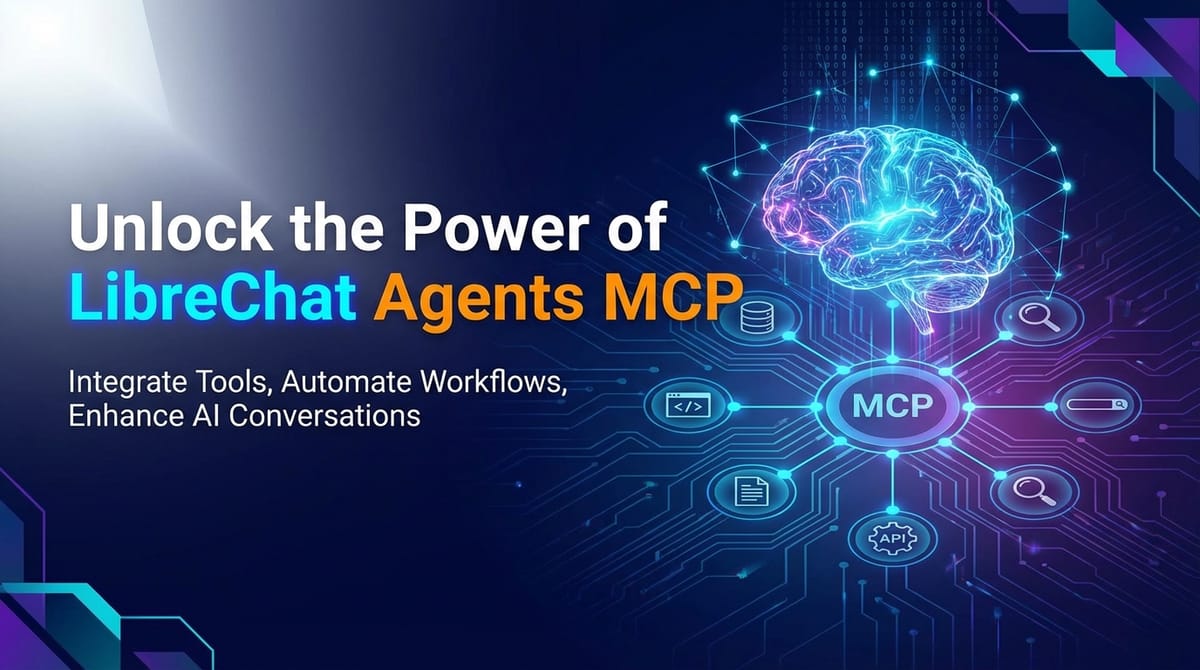


In the rapidly evolving landscape of artificial intelligence, Large Language Models (LLMs) have emerged as transformative technologies, capable of generating human-like text, answering complex questions, and even assisting with creative tasks. However, the true potential of these models is often hindered by inherent limitations, particularly concerning their "memory" and ability to manage context over extended interactions or complex multi-step tasks. Enter LibreChat, a powerful open-source, self-hostable alternative to proprietary conversational AI platforms, which is pushing the boundaries of what LLMs can achieve. At the heart of its advanced capabilities lies the innovative integration of LibreChat Agents MCP, a sophisticated framework that leverages the Model Context Protocol (MCP) to empower AI agents with unprecedented intelligence, efficiency, and adaptability.
This article delves deep into how LibreChat Agents MCP is not just an incremental improvement but a foundational shift in how we build and interact with AI. We will explore the critical problem of context management in LLMs, introduce the groundbreaking Model Context Protocol (MCP) as a solution, and demonstrate how its seamless integration with LibreChat transforms simple chatbots into highly intelligent, autonomous agents. From understanding the core principles of MCP to exploring its practical applications and future implications, this comprehensive guide aims to illuminate the profound impact of this technology on the future of conversational AI and beyond. By the end, you will grasp why LibreChat Agents MCP is poised to unlock a new era of powerful, adaptable, and truly intelligent AI interactions.
The Paradigm Shift: From Simple Chatbots to Intelligent Agents
The journey of conversational AI has been a fascinating evolution, starting from rudimentary rule-based systems that offered rigid, pre-programmed responses, to the sophisticated neural network-powered chatbots of today. Early systems, often found in phone menus or basic customer service applications, relied on keyword matching and predefined scripts. Their intelligence was limited to anticipating specific user inputs and following predetermined conversational paths. Any deviation from these paths would often lead to confusion or a breakdown in the interaction, highlighting their inherent lack of understanding and adaptability.
The advent of statistical methods and later, deep learning, brought about a significant leap forward. Models began to understand nuances in language, identify user intent with greater accuracy, and generate more natural-sounding responses. However, even these advanced systems, while impressive, often operated within the confines of a single turn or a very short, limited conversation history. They struggled with maintaining long-term coherence, remembering details from earlier in a dialogue, or executing multi-step tasks that required planning and external information retrieval. The concept of "memory" in these systems was rudimentary at best, typically involving simply concatenating previous turns into the current prompt, a method fraught with limitations as conversation length grew.
The true paradigm shift arrived with Large Language Models (LLMs), characterized by their colossal scale, vast training data, and remarkable ability to generate coherent and contextually relevant text. LLMs like OpenAI's GPT series, Anthropic's Claude, and open-source alternatives have demonstrated capabilities far beyond simple response generation, including complex reasoning, summarization, translation, and even code generation. Yet, despite their immense power, standalone LLMs still possess inherent limitations when it comes to replicating human-like intelligence in dynamic, goal-oriented interactions. They often lack:
- Persistent Memory: While they have a "context window," this is a finite buffer, meaning information from earlier in a conversation can be forgotten as new turns push older data out. This leads to conversational drift and an inability to refer back to past details.
- Tool Use: LLMs, by themselves, are primarily text generators. They cannot directly interact with the real world, query databases, browse the internet, or execute code. Their knowledge is confined to their training data.
- Planning and Goal Pursuit: LLMs can generate plans, but executing them requires external mechanisms. They don't inherently break down complex goals into sub-tasks, monitor progress, or recover from failures.
- Real-time Information Access: Their knowledge cut-off means they lack information about current events or proprietary internal data.
This is where the concept of AI agents emerges as a critical next step. An AI agent is not merely an LLM but a system built around an LLM, designed to perceive its environment, reason about its observations, plan actions to achieve specific goals, and execute those actions. Agents augment LLMs with:
- Memory Modules: Allowing them to store and retrieve long-term information beyond the LLM's immediate context window. This could involve vector databases for semantic search, knowledge graphs, or simple key-value stores.
- Tool Use Capabilities: Enabling them to interact with external systems and APIs. This means an agent can search the web, run code, query a database, send an email, or interact with an internal business application.
- Planning and Execution Loops: Allowing them to break down complex goals into smaller, manageable steps, execute these steps, and adapt their plan based on the outcomes.
- Reflection and Self-Correction: The ability to evaluate their own performance and refine their strategies.
The rise of AI agents is crucial for transitioning AI from impressive demos to practical, real-world applications. Imagine an agent that can not only answer questions about your product but also check inventory, process orders, and provide real-time shipping updates by interacting with your internal systems. Or a research assistant that can synthesize information from multiple web sources, summarize academic papers, and generate new hypotheses. These capabilities move beyond mere conversation to active problem-solving and automation.
LibreChat, as an open-source platform, offers a unique advantage in this evolving landscape. By providing a flexible, self-hostable environment, it empowers developers and organizations to experiment with and deploy advanced AI agents without being locked into proprietary ecosystems. This open approach fosters innovation, allows for greater customization, and addresses concerns around data privacy and control. With LibreChat, the ability to integrate and orchestrate these agentic components becomes a powerful tool for building the next generation of intelligent systems, laying the groundwork for how LibreChat Agents MCP will redefine our interaction with AI.
Understanding the "Context Problem" in Large Language Models
At the core of an LLM's ability to generate coherent and contextually relevant text is its "context window." This is essentially a finite buffer of tokens (words or sub-word units) that the model can consider when generating its next output. When you interact with an LLM, your prompt, the system instructions, and the model's previous responses within the current conversation all occupy this context window. The model "remembers" and processes everything within this window to formulate its reply. However, this seemingly straightforward mechanism hides a profound challenge that significantly limits the capabilities of LLMs, especially in the context of building sophisticated AI agents: the "Context Problem."
The Context Problem manifests in several critical ways, posing substantial hurdles for developers and users alike:
1. Context Window Limitations: The Finite Nature of Memory
Every LLM, regardless of its size or sophistication, has a hard limit on the number of tokens it can process in a single interaction. This limit can range from a few thousand tokens (e.g., 4K, 8K, 16K for older models) to significantly larger capacities (e.g., 128K, 1M for newer, more advanced models). While these larger windows are impressive, they are still finite. Consider a long conversation, an agent trying to process a large document, or an agent needing to remember complex instructions and a history of tool interactions. As the interaction progresses, new tokens push out older ones from the context window, leading to:
- Context Drift/Loss: Relevant information from earlier in the conversation or from initial instructions can be gradually forgotten. The LLM loses track of crucial details, leading to repetitive questions, incoherent responses, or an inability to complete multi-step tasks that rely on long-term memory. Imagine an agent forgetting the user's name or the specific product they were discussing just a few turns ago.
- Incomplete Information for Reasoning: For complex tasks, an agent might need access to a broad range of information simultaneously – user preferences, current task status, available tools, historical data, and general knowledge. If only a fraction of this information can fit into the context window, the LLM's reasoning capabilities are severely hampered, leading to suboptimal or incorrect outputs.
2. Relevance Mismatch and Information Overload
The context window isn't just about quantity; it's also about quality and relevance. Simply stuffing all available information into the prompt is often counterproductive:
- Degraded Performance: LLMs can struggle to filter out irrelevant information when presented with an overwhelming amount of data. This "noise" can dilute the signal, making the model less effective at identifying the truly pertinent details for its current task. The model might hallucinate or provide generic answers because it cannot pinpoint the core of the query amidst the clutter.
- Wasted Tokens and Increased Costs: Every token processed by an LLM incurs computational cost, and for many commercial APIs, a direct financial cost. Sending a vast amount of irrelevant data not only degrades performance but also leads to unnecessary expenditure. This becomes particularly problematic in high-volume applications or for agents that constantly need to interact with various data sources.
- Prompt Engineering Challenges: Crafting effective prompts for LLMs is an art, but for agents, the prompt needs to be dynamically generated and optimized at each step. Manually managing what information to include and exclude for every single turn in a complex agentic workflow is practically impossible and highly inefficient.
3. The Need for Intelligent Context Management Beyond Simple Concatenation
Traditional approaches to managing context, such as simply appending previous turns to the current prompt or summarizing past interactions, offer only partial solutions:
- Simple Concatenation: Quickly hits the token limit and suffers from context drift. It's akin to having a short-term memory that constantly overwrites itself.
- Summarization: While useful, can lead to loss of crucial details or nuance. A summary might capture the gist but miss the specific facts an agent needs for a precise action. Moreover, summarization itself consumes tokens and computational resources.
- External Databases (e.g., Vector DBs for RAG): These are excellent for retrieving relevant chunks of information from a knowledge base. However, merely retrieving text chunks isn't enough; an agent needs to reason over these chunks, integrate them with user input, task instructions, and its own internal state, and then formulate an intelligent response or action. The challenge lies in how this retrieved information is presented to the LLM within its context window.
For AI agents, which are designed to perform complex, multi-step tasks involving memory, tool use, and planning, the Context Problem is magnified. An agent needs to remember its overall goal, the sub-tasks it has completed, the results of tool calls, the current user request, and any specific constraints. Without an intelligent mechanism to manage this influx of information, agentic systems would quickly become overwhelmed, inefficient, and prone to failure. This inherent challenge underscores the critical need for a sophisticated solution like the Model Context Protocol (MCP), which provides the architectural framework within LibreChat to transcend these limitations and unlock the full potential of AI agents.
Introducing MCP: The Model Context Protocol
The inherent limitations of LLM context windows and the complexities of managing dynamic information flow for sophisticated AI agents highlight a critical gap in current AI architecture. This gap is precisely what the Model Context Protocol (MCP) within LibreChat is designed to bridge. MCP is not just another feature; it's a foundational framework, a standardized and intelligent system for orchestrating, optimizing, and dynamically generating the contextual information that is presented to an LLM at every step of an interaction. Think of MCP as the sophisticated 'brain' or 'nervous system' for context management, ensuring that the LLM always receives the most relevant and concise information necessary to perform its task optimally.
What is MCP?
At its core, MCP can be defined as an intelligent, dynamic protocol that governs how context is prepared, prioritized, and injected into the prompts sent to large language models within the LibreChat ecosystem. It moves beyond simple concatenation or rudimentary summarization, employing advanced techniques to ensure the LLM's context window is utilized with maximum efficiency and efficacy. The goal of MCP is to maximize the LLM's understanding and reasoning capabilities for any given query or agentic step, while simultaneously minimizing token usage and associated costs.
Core Principles of MCP:
To achieve its objectives, MCP operates on several fundamental principles:
- Selective Context Injection: This is perhaps the most crucial principle. Instead of dumping all available information into the prompt, MCP intelligently identifies and injects only the data segments that are directly relevant to the current user query, the agent's immediate task, or the overall goal. This selective approach filters out noise, reduces cognitive load on the LLM, and ensures focus.
- Example: If a user asks about product warranty, MCP might retrieve only warranty information from a knowledge base, not the entire product manual.
- Dynamic Context Generation: MCP is not static. The context it generates is fluid and adapts in real-time based on the ongoing interaction, the agent's internal state, and the results of previous actions. As the conversation evolves or an agent executes different sub-tasks, MCP dynamically re-evaluates what information is most pertinent.
- Example: After a tool call returns a specific data point, MCP might include that data point and a summary of the tool's purpose in the next prompt to the LLM, allowing it to interpret the result correctly.
- Hierarchical Context Management: MCP recognizes that not all context is created equal. It manages information across different levels of granularity:
- Global Context: Persistent instructions, system persona, general knowledge relevant to all interactions.
- Session Context: User preferences, overall conversation history (perhaps summarized), long-term memory elements.
- Task-Specific Context: Details relevant only to the current task or sub-task, such as retrieved documents, intermediate results, or specific tool outputs.
- Turn-Specific Context: The immediate user input and previous model response. MCP intelligently prioritizes and integrates these layers, ensuring that the most critical information is always accessible.
- Compression and Summarization Techniques: Where full details are not strictly necessary, or when dealing with very long documents, MCP employs intelligent compression and summarization algorithms. These techniques aim to condense information without sacrificing critical meaning, allowing more data to fit within the context window while maintaining clarity. This could involve abstractive summarization, extractive summarization, or even dense vector representations.
- Metadata Integration and Semantic Search: MCP leverages metadata associated with different pieces of information to enhance relevance. For instance, timestamps, source information, topic tags, or user IDs can help MCP make more informed decisions about what context to retrieve. It also integrates seamlessly with semantic search capabilities (often powered by vector databases) to find conceptually similar pieces of information, even if keywords don't directly match.
How MCP Solves the "Context Problem":
The intelligent design of MCP directly addresses the challenges outlined earlier, transforming the way LLMs interact with information:
- Overcoming Token Limits: By selectively injecting only relevant data and compressing where possible, MCP significantly reduces the total token count needed for each prompt. This allows agents to handle much longer and more complex interactions without hitting the LLM's token limit, or at least managing it far more effectively.
- Improving Relevance and Reducing Noise: The focus on selective injection means the LLM is presented with a cleaner, more targeted context. This reduces the "noise" that can degrade performance, allowing the LLM to focus its reasoning power on the truly important information, leading to more accurate and relevant outputs.
- Enhancing Memory for Agents: MCP acts as the orchestrator for an agent's memory system. It decides when to retrieve information from long-term memory (e.g., a vector database), how to process it (e.g., summarize or extract key facts), and where to place it within the prompt to the LLM. This gives agents the illusion of a much longer, more reliable memory, crucial for multi-step tasks and long-running conversations.
- Reducing Computational Costs: By sending fewer tokens per interaction, MCP directly translates into lower API costs for commercial LLMs and reduced computational load for self-hosted models. This makes advanced agentic AI more economically viable for a wider range of applications.
- Enabling Complex Reasoning and Planning: With a consistently relevant and well-organized context, LLMs within LibreChat Agents can perform more sophisticated reasoning, break down complex problems more effectively, and execute multi-step plans with greater success. They are less likely to get sidetracked or forget critical components of their task.
In essence, MCP elevates LLMs from powerful but context-limited text generators to dynamic, context-aware reasoning engines. It ensures that the LLM always has the precise information it needs, when it needs it, to act intelligently and effectively within the broader framework of a LibreChat Agent. This robust protocol forms the backbone of highly capable and autonomous AI systems, pushing the boundaries of what open-source conversational AI can achieve.
APIPark is a high-performance AI gateway that allows you to securely access the most comprehensive LLM APIs globally on the APIPark platform, including OpenAI, Anthropic, Mistral, Llama2, Google Gemini, and more.Try APIPark now! 👇👇👇
LibreChat Agents: Empowered by MCP
The true power of the Model Context Protocol (MCP) truly shines when integrated into the architecture of LibreChat Agents. While an LLM is the brain, and tools are the limbs, MCP acts as the nervous system, intelligently coordinating information flow to empower these agents to perform complex tasks, maintain long-term coherence, and interact with the world in sophisticated ways. Without MCP, LibreChat agents would quickly become hobbled by context limitations, struggling to remember past interactions or make effective use of external tools. With MCP, they transform into highly capable and adaptable problem-solvers.
The Architecture of LibreChat Agents with MCP:
Let's dissect how MCP orchestrates the various components of a LibreChat Agent:
- Agent Core (The LLM): This is the reasoning engine. The LLM receives its prompt, processes the context, and generates thoughts, plans, actions, or responses. MCP's primary role is to feed this LLM with an optimal prompt.
- Memory Modules: Agents require more than just the LLM's short-term context window.
- Short-term Memory (In-context): Managed directly by MCP, this includes the most recent turns, crucial system instructions, and dynamically injected task-specific details.
- Long-term Memory (External): This typically involves vector databases (for RAG - Retrieval Augmented Generation), knowledge graphs, or traditional databases. When the LLM needs information beyond its immediate context, MCP queries these long-term memory stores. It then intelligently filters, summarizes, or extracts relevant snippets from the retrieved data and injects them into the prompt. This ensures that only the most pertinent historical facts or external knowledge are presented to the LLM, overcoming its inherent memory limitations.
- Tool Use: Agents differentiate themselves by their ability to use external tools. These tools can be anything from web search engines, calculators, code interpreters, to custom APIs interacting with internal enterprise systems.
- Tool Description and Selection: MCP helps manage the descriptions of available tools, presenting them to the LLM in a concise and actionable format. When the LLM decides to use a tool, MCP prepares the relevant input parameters for the tool.
- Tool Output Integration: Critically, when a tool returns an output (e.g., a search result, a calculation, or data from an API call), MCP intelligently processes this output. It might summarize it, extract key figures, or reformulate it before injecting it back into the LLM's context. This ensures the LLM can correctly interpret and utilize the tool's result without being overwhelmed by raw data.
- APIPark's Role in Tool Management: When agents need to interact with external services, like databases, internal systems, or third-party APIs, platforms designed for robust API management become essential. For example, APIPark serves as an open-source AI gateway and API management platform, simplifying the integration and deployment of both AI and REST services. This kind of platform provides a unified interface for agent tools, ensuring secure, efficient, and standardized access to external functionalities. APIPark's ability to unify API formats and manage the API lifecycle can be invaluable for LibreChat agents that rely heavily on external tools, providing a consistent and reliable way for agents to interact with the broader digital ecosystem.
- Planning Module: For multi-step tasks, agents need to break down a complex goal into a sequence of smaller, manageable actions.
- Goal and Sub-goal Context: MCP maintains the overall goal in the LLM's context, alongside the current sub-goal and the outcomes of previously completed steps.
- Reflection Context: If the agent needs to reflect on its progress or adjust its plan, MCP provides the necessary historical context and current state for the LLM to perform effective self-correction.
MCP's Central Role: At each step of an agent's execution loop (perceive, think, act), MCP is actively involved. It gathers relevant information from user input, memory modules, tool outputs, and the agent's internal state. It then intelligently filters, prioritizes, compresses, and formats this information into an optimized prompt, which is then fed to the LLM. This iterative process allows the LLM to consistently operate with a clear, concise, and highly relevant understanding of its current situation, enabling it to make informed decisions and execute complex actions.
Key Capabilities of LibreChat Agents with MCP:
The synergistic integration of LibreChat's agent framework with MCP unlocks a suite of powerful capabilities:
- Enhanced Conversational Coherence and Long-Term Memory: Agents can maintain context over incredibly long conversations, remembering user preferences, past interactions, and critical details from earlier in the dialogue. This eliminates the frustration of repetition and fosters a more natural, human-like interaction.
- Complex Task Execution and Multi-Step Problem Solving: By intelligently managing the context for planning, tool use, and memory retrieval, LibreChat agents can tackle intricate tasks that require multiple steps, decision-making, and interaction with external systems. They can break down problems, execute sub-tasks, and synthesize information to achieve a broader objective.
- Efficient Resource Utilization and Cost Reduction: MCP's selective context injection and summarization techniques mean that fewer tokens are sent to the LLM per interaction. This directly translates to lower API costs for commercial models and more efficient use of computational resources for self-hosted instances, making advanced AI agents more economically viable.
- Improved Adaptability and Learning: With a clear and relevant context, agents can better understand feedback, learn from their mistakes, and adapt their strategies. MCP facilitates this by providing the LLM with the necessary information to reflect on past actions and refine future ones.
- Reduced Hallucinations and Increased Factual Accuracy: By grounding the LLM's responses in specific, retrieved facts from long-term memory or real-time tool calls (managed by MCP), the likelihood of generating false or misleading information (hallucinations) is significantly reduced. Agents can confidently provide accurate and verifiable information.
Practical Examples/Use Cases:
To illustrate the transformative power of LibreChat Agents MCP, consider these real-world applications:
- Advanced Customer Support Automation: An agent can handle complex queries, not just with pre-scripted answers, but by accessing a customer's purchase history, looking up product specifications in a database (via an API managed by MCP), checking real-time inventory, and even initiating a return process. It remembers previous interactions with the customer and provides personalized support throughout.
- Code Generation and Debugging Assistant: A developer agent can understand complex coding requests, generate code snippets, explain syntax, and then, using tools, run tests against the generated code. If errors occur, MCP provides the LLM with the error logs and relevant code sections for debugging, allowing the agent to iteratively refine the code.
- Intelligent Research Assistant: An agent can be tasked with "research the impact of climate change on coastal ecosystems." It would use web search tools, access academic databases, summarize findings from multiple sources, maintain a bibliography, and present a coherent report, remembering the user's specific areas of interest throughout the process.
- Personal Productivity Assistant: Beyond setting reminders, an agent could manage your calendar by integrating with various scheduling APIs, draft emails based on contextual cues from your previous communications, and even automate data entry into CRM systems, all while maintaining a consistent understanding of your daily routine and priorities.
These examples underscore how LibreChat Agents MCP moves beyond simple conversational AI to create truly intelligent, autonomous systems that can understand, reason, plan, and act effectively in complex environments. The seamless interplay between LibreChat's agent architecture and MCP's intelligent context management is revolutionizing what open-source AI can accomplish.
Integrating and Extending LibreChat Agents with MCP
The true strength of LibreChat Agents MCP lies not only in its inherent capabilities but also in its extensibility and the power it gives to developers. LibreChat's open-source nature, combined with the modularity of MCP, creates a fertile ground for innovation, allowing users to tailor agents to specific needs, integrate them with diverse external systems, and scale their AI deployments effectively.
Developer Perspective: Interacting with LibreChat Agents MCP
For developers, interacting with LibreChat Agents MCP involves a sophisticated orchestration of various components, yet LibreChat's framework aims to abstract much of the low-level complexity. Developers typically define:
- Agent Persona and Goals: High-level instructions that guide the agent's behavior and overall objectives. MCP ensures these foundational instructions remain consistently in the LLM's context.
- Memory Configurations: How and where the agent stores and retrieves long-term information. This might involve configuring connections to vector databases (e.g., Pinecone, Weaviate, ChromaDB) or traditional databases. MCP then intelligently queries these stores based on relevance scores.
- Tool Definitions: This is where developers specify the external functions an agent can call. Each tool requires a clear description (for the LLM to understand its purpose and when to use it), input schema, and the actual code or API endpoint that executes the tool's function. MCP uses these descriptions to decide which tool is most appropriate at any given moment and to format the tool call correctly.
The beauty of MCP is that developers don't need to manually craft every prompt with specific context snippets. Instead, they define the sources of context (memory, tools, system instructions, user input), and MCP intelligently assembles the optimal prompt for the LLM at each turn. This dramatically simplifies agent development and reduces the chances of context-related errors.
Customizing MCP: Strategies for Tailoring Context Management
While MCP provides a robust default framework, its power is amplified by the ability to customize its behavior. Developers can implement strategies to tailor context management for specific use cases:
- Context Prioritization Rules: Define custom rules for which types of context are most important under different scenarios. For example, in a customer support agent, recent user issues might take precedence over general product FAQs.
- Summarization Strategies: Integrate different summarization algorithms based on the type of information. For long documents, an abstractive summarizer might be best, while for chat history, an extractive approach might retain key facts more effectively.
- Dynamic Context Filtering: Implement custom filters that prune irrelevant information before it even reaches MCP's main processing pipeline. This could be based on keywords, sentiment, or temporal relevance.
- Advanced Retrieval Strategies: Beyond simple semantic search, developers can experiment with hybrid retrieval methods (keyword + semantic), re-ranking algorithms, or graph-based retrieval for highly interconnected knowledge bases, all feeding into MCP's context assembly.
By allowing this level of customization, MCP ensures that LibreChat agents can be finely tuned for performance, accuracy, and efficiency across a wide spectrum of applications.
Developing Custom Tools: Expanding Agent Capabilities
One of the most exciting aspects of LibreChat Agents is their ability to use custom tools. This means an agent isn't limited to its pre-programmed knowledge but can interact with virtually any digital service or database. Developing custom tools typically involves:
- Identifying a Need: What external action does your agent need to perform? (e.g., fetch real-time weather, query an internal CRM, trigger an IoT device).
- Defining the Tool Interface: Create a clear, concise description of the tool's function, its input parameters, and its expected output. This description is what the LLM will "read" to understand how to use the tool.
- Implementing the Tool's Logic: Write the code that performs the actual action. This usually involves making API calls, querying databases, or executing scripts.
For developers looking to extend their LibreChat agents with custom tools that interact with a myriad of APIs, managing these connections efficiently is paramount. This is where comprehensive API management solutions like APIPark truly shine. APIPark's ability to quickly integrate over 100 AI models, encapsulate prompts into REST APIs, and manage the entire API lifecycle from design to deployment, provides a robust backend for agentic tool creation. Its features, such as unified API format for AI invocation, end-to-end API lifecycle management, and API service sharing within teams, ensure that agents can reliably access and leverage external data and services, contributing to more powerful and versatile applications. Moreover, APIPark's focus on independent API and access permissions for each tenant and performance rivaling Nginx makes it an ideal choice for both small teams and large enterprises looking to secure and scale their agent's interactions with external services.
Open-Source Benefits: Collaboration, Transparency, and Flexibility
LibreChat's open-source nature underpins its extensibility. This brings several significant advantages:
- Community Contributions: A vibrant community of developers can contribute new tools, improved MCP strategies, and innovative agent architectures, accelerating development and feature richness.
- Transparency and Auditability: The open codebase allows developers to inspect how MCP works, understand its logic, and ensure it meets specific security and compliance requirements. This is crucial for enterprise adoption.
- Flexibility and Customization: Without vendor lock-in, organizations have complete control over their AI infrastructure. They can modify, extend, or integrate LibreChat Agents MCP into their existing technology stacks without limitations. This level of flexibility is unmatched by proprietary solutions.
Deployment Considerations: Self-Hosting and Scalability
Deploying LibreChat Agents with MCP provides robust options for self-hosting, which is particularly attractive for organizations prioritizing data privacy and control. Developers can deploy LibreChat on their own servers or cloud infrastructure, ensuring that sensitive data remains within their control.
Scalability is also a key consideration. While individual LLM calls can be resource-intensive, MCP's efficiency in token management helps reduce the load. Furthermore, LibreChat's architecture is designed to support clustered deployments, allowing organizations to scale their agent services to handle large volumes of concurrent interactions. For optimizing the performance and managing the load of the underlying APIs that agents might call, solutions like APIPark, with its reported performance rivaling Nginx (20,000+ TPS on modest hardware), can be a critical component in the overall infrastructure stack. Its detailed API call logging and powerful data analysis features also contribute to better monitoring and maintenance of agent dependencies.
In summary, integrating and extending LibreChat Agents with MCP is a testament to the power of open-source AI. It empowers developers to build sophisticated, context-aware agents that can interact intelligently with the world, all while benefiting from the flexibility, transparency, and community-driven innovation that LibreChat and the Model Context Protocol (MCP) provide. This synergy is paving the way for truly transformative AI applications across industries.
The Future of Agentic AI and MCP
The journey of AI agents, particularly those empowered by the Model Context Protocol (MCP) within LibreChat, is still in its nascent stages, yet the trajectory points towards a future brimming with unprecedented capabilities. What we are witnessing is not merely an incremental improvement but a fundamental shift in how we conceive, build, and interact with artificial intelligence. The future promises even more sophisticated, autonomous, and seamlessly integrated AI systems, with MCP playing an ever more critical role in their intelligence.
Continued Advancements in Context Management
While MCP already offers advanced context management, future developments will likely push these capabilities even further. We can anticipate:
- Proactive Context Pre-fetching: Instead of waiting for a query, agents might proactively pre-fetch context based on predicted user intent or anticipated task requirements, leading to near-instantaneous responses.
- Multi-Modal Context Integration: Current MCP primarily deals with text. The future will see it seamlessly integrate context from various modalities – images, video, audio, and structured data – allowing agents to understand and reason across a richer, more diverse input landscape. Imagine an agent processing a video, understanding its visual context, and then engaging in a text conversation about its contents.
- Self-Improving Context Strategies: AI agents, powered by reinforcement learning or meta-learning, might dynamically learn and refine their own MCP strategies. They could identify which context types are most effective for specific tasks and adapt their context retrieval and summarization techniques autonomously.
- Personalized Context Profiles: MCP could maintain highly personalized context profiles for individual users or specific tasks, ensuring that interactions are always deeply relevant and tailored to individual needs and preferences.
More Sophisticated Planning and Reasoning
As context management becomes more robust, so too will the planning and reasoning abilities of LibreChat Agents.
- Hierarchical Planning: Agents will be capable of more intricate, multi-layered planning, breaking down grand objectives into complex sub-plans and dynamically adjusting them in real-time based on environmental feedback.
- Counterfactual Reasoning: Agents might develop the ability to consider alternative scenarios and their outcomes, allowing for more robust decision-making and proactive problem avoidance.
- Causal Inference: Moving beyond mere correlation, future agents could infer causal relationships, enabling them to understand why things happen and predict the likely effects of their actions with greater accuracy.
- Emotional and Social Intelligence: While still a distant frontier, as MCP incorporates more social and emotional cues into context, agents could develop a rudimentary understanding of human emotions, leading to more empathetic and nuanced interactions.
The Emergence of Multi-Agent Systems
The individual intelligence of LibreChat Agents, enhanced by MCP, naturally leads to the concept of multi-agent systems. Here, multiple specialized agents collaborate to achieve a common goal, each contributing its unique expertise.
- Collaborative Problem Solving: Imagine a team of AI agents: one specializing in research (web search, data synthesis), another in planning (task breakdown, resource allocation), and a third in execution (API calls, code execution). MCP would be crucial in coordinating the context shared between these agents, ensuring seamless communication and task handoffs.
- Dynamic Role Assignment: Agents could dynamically assign roles to each other based on the demands of the task, leveraging their collective intelligence and specialized knowledge to solve problems more efficiently than any single agent could.
- Emergent Intelligence: The interaction of multiple well-contextualized agents could lead to emergent forms of intelligence, where the system as a whole exhibits capabilities greater than the sum of its parts.
Ethical Considerations and Safety
As agents become more autonomous and capable, the importance of ethical guidelines and robust safety mechanisms will grow exponentially.
- Transparency and Explainability: Users must understand how an agent arrived at a decision or generated a response. MCP's structured context can provide a valuable audit trail, detailing what information the LLM considered.
- Bias Mitigation: Care must be taken to ensure that the context provided by MCP does not inadvertently perpetuate or amplify biases present in training data or retrieval sources.
- Controlled Autonomy: While agents strive for autonomy, human oversight and control will remain paramount, especially in critical applications. Frameworks for human-in-the-loop validation and override mechanisms will be essential.
- Data Privacy and Security: The open-source nature of LibreChat, combined with platforms like APIPark that offer robust API management and security features (such as API resource access requiring approval, detailed logging, and independent permissions for tenants), will be vital for building secure and privacy-preserving agent systems, especially when dealing with sensitive information.
The Role of Open-Source in Driving Innovation
LibreChat's commitment to open-source principles will continue to be a significant driver of innovation in agentic AI. The collaborative nature of open development, coupled with the transparent and flexible foundation provided by LibreChat Agents MCP, ensures that these advanced capabilities are not confined to a few proprietary entities. Instead, they are accessible to a global community of developers, fostering rapid experimentation, adaptation, and the creation of diverse applications that address a wide range of needs. This democratizing effect will accelerate the adoption and refinement of agent technology, making intelligent AI more pervasive and beneficial for society.
The future of LibreChat Agents MCP is one where AI is not just a tool, but a collaborative partner, capable of understanding, reasoning, and acting intelligently within complex environments. By continually refining the Model Context Protocol (MCP), LibreChat is paving the way for a future where AI agents are truly autonomous, efficient, and seamlessly integrated into every facet of our digital and physical lives, ushering in an era of unprecedented productivity and innovation.
Conclusion
The journey through the intricate world of LibreChat Agents MCP reveals a profound advancement in conversational AI, one that systematically addresses the fundamental challenges of context management in Large Language Models. We have seen how the finite and often unruly nature of LLM context windows has historically limited the potential of AI, leading to forgetful conversations, inefficient processing, and a struggle with complex, multi-step tasks.
However, the advent of the Model Context Protocol (MCP) within LibreChat marks a pivotal turning point. MCP is not merely a technical tweak; it is a sophisticated, intelligent framework that transforms raw information into highly refined, relevant context, dynamically feeding it to the LLM at precisely the right moment. By embracing principles of selective injection, dynamic generation, hierarchical management, and smart compression, MCP overcomes the limitations of token windows, drastically improves the quality of LLM interactions, and significantly reduces operational costs.
This intelligent context orchestration by MCP is what truly empowers LibreChat Agents. It enables them to transcend the capabilities of simple chatbots, evolving into autonomous entities capable of long-term memory, sophisticated tool use (facilitated by platforms like APIPark for robust API integration), complex planning, and adaptive problem-solving. From providing hyper-personalized customer support to serving as advanced research assistants, LibreChat Agents, fueled by MCP, are poised to automate intricate workflows, augment human intelligence, and redefine our interaction with technology.
The open-source ethos of LibreChat amplifies this revolution, offering transparency, flexibility, and a collaborative environment for developers to build, extend, and deploy these cutting-edge AI systems. As we look to the future, the continuous evolution of MCP will undoubtedly unlock even greater capabilities, paving the way for multi-agent collaboration, more nuanced reasoning, and safer, more ethical AI deployments.
In essence, LibreChat Agents MCP represents a powerful confluence of open-source innovation and intelligent design. It is empowering developers and enterprises to build not just smarter chatbots, but truly intelligent agents that understand, learn, and act with unprecedented coherence and efficiency. The era of context-aware, autonomous AI is here, and LibreChat, with its foundational Model Context Protocol, is leading the charge.
Frequently Asked Questions (FAQ)
1. What is the Model Context Protocol (MCP) and why is it important for LibreChat Agents?
The Model Context Protocol (MCP) is an intelligent, dynamic framework within LibreChat designed to manage and optimize the contextual information provided to Large Language Models (LLMs). It's crucial because LLMs have finite "context windows," meaning they can only process a limited amount of information at a time. MCP overcomes this by selectively injecting only the most relevant data, dynamically generating context based on the interaction, and using compression techniques. This ensures LibreChat agents have a coherent, relevant, and efficient "memory" for long conversations and complex tasks, preventing context loss and reducing costs.
2. How do LibreChat Agents with MCP improve upon traditional LLM interactions?
Traditional LLM interactions often suffer from "context drift" where older, but still relevant, information is forgotten as new data fills the context window. LibreChat Agents with MCP significantly improve this by: * Enhanced Memory: Intelligently managing short and long-term memory, ensuring agents remember details from across extensive conversations. * Efficient Tool Use: Providing relevant tool descriptions and integrating tool outputs intelligently into the LLM's context. * Complex Task Execution: Enabling multi-step planning and problem-solving by maintaining a clear understanding of goals, sub-tasks, and progress. * Cost Efficiency: Reducing token usage by only sending relevant information, leading to lower API costs for commercial LLMs.
3. Can LibreChat Agents interact with external systems and APIs? How does MCP facilitate this?
Yes, LibreChat Agents are designed to interact extensively with external systems and APIs, which is a core part of their "tool use" capability. MCP plays a vital role by: * Tool Description Management: Presenting LLMs with clear, concise descriptions of available tools, enabling them to decide when and how to use them. * Input/Output Orchestration: Preparing input parameters for tool calls and, critically, processing and integrating the raw output from tools back into the LLM's context. This ensures the LLM can correctly interpret and act upon the results of external interactions. Platforms like APIPark further enhance this by providing robust API management and integration capabilities for these external services.
4. What are the benefits of using LibreChat's open-source approach for agent development with MCP?
LibreChat's open-source nature offers several significant advantages: * Transparency and Control: Developers have full visibility into the codebase, understanding how MCP works and ensuring data privacy and security. * Flexibility and Customization: Without vendor lock-in, organizations can freely modify, extend, and integrate LibreChat Agents with MCP into their existing infrastructure. * Community-Driven Innovation: A global community contributes to the platform, accelerating development, adding new features, and refining MCP strategies. * Cost-Effectiveness: Reduces reliance on proprietary solutions, offering a powerful, self-hostable alternative.
5. What kind of applications can benefit most from LibreChat Agents MCP?
Applications requiring long-term memory, complex multi-step reasoning, and interaction with external data sources or services benefit immensely from LibreChat Agents MCP. This includes: * Advanced Customer Support: Handling intricate queries, accessing customer history, and performing actions like order processing. * Personal Productivity Assistants: Managing calendars, drafting communications, and automating data entry across various platforms. * Intelligent Research & Development Tools: Summarizing vast amounts of information, synthesizing data from multiple sources, and assisting in code generation/debugging. * Enterprise Automation: Automating complex internal workflows by integrating with CRM, ERP, and other proprietary systems.
🚀You can securely and efficiently call the OpenAI API on APIPark in just two steps:
Step 1: Deploy the APIPark AI gateway in 5 minutes.
APIPark is developed based on Golang, offering strong product performance and low development and maintenance costs. You can deploy APIPark with a single command line.
curl -sSO https://download.apipark.com/install/quick-start.sh; bash quick-start.sh

In my experience, you can see the successful deployment interface within 5 to 10 minutes. Then, you can log in to APIPark using your account.

Step 2: Call the OpenAI API.