Unlocking Network Observability: Logging Header Elements Using eBPF
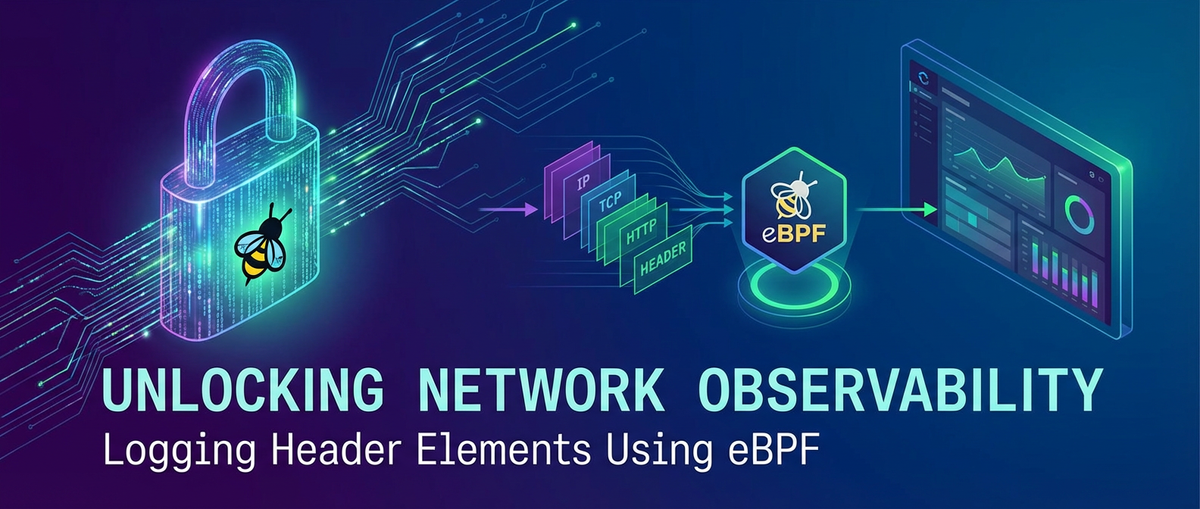


In the intricate tapestry of modern distributed systems, where microservices communicate across dynamic networks and cloud-native architectures redefine traditional infrastructure boundaries, ensuring robust network observability has transitioned from a mere operational convenience to an absolute necessity. The sheer volume and velocity of data flowing through these systems demand granular visibility far beyond rudimentary connection statistics or simple packet counts. Enterprises are increasingly grappling with the challenge of understanding precisely what is happening at the network edge, within their service meshes, and across their vast interconnected landscapes. This deep understanding is crucial for diagnosing elusive performance bottlenecks, fortifying security postures against sophisticated threats, and maintaining an unwavering commitment to compliance.
Traditional monitoring tools, while foundational, often struggle to provide the contextual richness required in these complex environments. They might show that a connection was made, or that latency increased, but they frequently fall short of detailing why or what exactly transpired during that interaction. This gap in visibility can lead to prolonged troubleshooting cycles, missed security incidents, and a general lack of confidence in the underlying system's health. The need for precise, real-time insights into network traffic, particularly the metadata encapsulated within HTTP header elements, has never been more pressing. These headers carry invaluable contextual information about client requests, server responses, authentication details, caching directives, and much more, acting as silent storytellers of every network interaction.
Enter eBPF (extended Berkeley Packet Filter), a revolutionary technology that has fundamentally reshaped the landscape of kernel programmability and, by extension, network observability. eBPF empowers developers to run sandboxed programs within the Linux kernel without altering kernel source code or loading kernel modules, offering unparalleled performance, safety, and flexibility. This capability opens up a new frontier for capturing, processing, and analyzing network data directly at its source, with minimal overhead and profound depth. By leveraging eBPF, organizations can move beyond surface-level metrics to achieve truly transformative network observability, gaining unprecedented insight into the flow of information across their infrastructure, including the critical details hidden within HTTP headers. This article will delve into how eBPF can be harnessed to log these vital header elements, thereby unlocking a new dimension of understanding for network performance, security, and operational efficiency, especially within the context of managing complex API interactions and the traffic flowing through an api gateway.
The Evolving Landscape of Network Observability
The journey of network observability has paralleled the evolution of computing infrastructure itself. In the era of monolithic applications running on dedicated hardware, monitoring was relatively straightforward. Tools like SNMP and basic tcpdump could provide sufficient insights into network health and traffic patterns. However, the advent of virtualization, followed by cloud computing, microservices, and containerization, has dramatically altered this landscape, introducing complexities that traditional methods are ill-equipped to handle.
Modern distributed systems are characterized by ephemeral workloads, dynamic scaling, and an explosion of east-west traffic – communication between services within the same data center or cloud region, rather than solely between clients and the perimeter. A single user request might traverse dozens of microservices, each residing in a different container, pod, or virtual machine, potentially across multiple availability zones. This intricate web of interactions makes it incredibly challenging to trace the path of a request, identify performance bottlenecks, or pinpoint the source of a security anomaly. The sheer volume and transient nature of these inter-service communications mean that traditional logging and monitoring approaches often struggle to keep pace, generating overwhelming amounts of data that can be difficult to contextualize and analyze effectively.
Furthermore, the widespread adoption of encryption, particularly HTTPS for virtually all web traffic and often mTLS (mutual TLS) within service meshes, adds another layer of complexity. While encryption is vital for security and privacy, it simultaneously obfuscates network traffic from traditional packet inspection tools operating at the lower layers of the network stack. An api gateway, often serving as the primary ingress point for external traffic, becomes a critical choke point where decryption and re-encryption occur, making it a valuable place for high-level visibility, but still presenting challenges for deep, low-level inspection without impacting performance. Sidecar proxies, common in service mesh architectures, alleviate some of this by handling encryption/decryption and providing service-level metrics, but they also introduce their own overhead and resource consumption.
The limitations of traditional network observability tools become apparent in this context. Simple host-level metrics like CPU utilization or network bandwidth tell us little about the actual application-level interactions. Packet sniffers like Wireshark or tcpdump, while powerful for deep dives, are resource-intensive, often impractical to run continuously in production, and provide raw packet data that requires extensive post-processing to derive meaningful insights, especially when dealing with encrypted payloads. Application Performance Monitoring (APM) tools offer valuable insights into application logic and database queries, but their network visibility often begins after the data has already been processed by the application, missing crucial details about the network transport layer itself.
The need for deep visibility is paramount across several dimensions:
- Performance Optimization: Identifying latency spikes, dropped packets, or retransmissions that impact application responsiveness. Understanding how network configuration and protocols affect application performance.
- Security Posture: Detecting unusual traffic patterns, unauthorized access attempts, data exfiltration, or anomalous header values that might indicate an attack. Monitoring for compliance with security policies.
- Debugging and Troubleshooting: Rapidly diagnosing network-related issues that manifest as application errors. Tracing transactions across multiple services to identify which component is introducing delays or failing.
- Compliance and Auditing: Maintaining comprehensive audit trails of network interactions, demonstrating adherence to regulatory requirements regarding data handling and access.
In this complex and dynamic environment, solutions that can offer granular, real-time, and high-performance insights directly from the kernel, without compromising system stability or adding significant overhead, are not just desirable but indispensable. This is precisely where eBPF emerges as a transformative technology, offering a novel approach to overcome the limitations of conventional network observability methods and provide the deep, contextual understanding that modern systems demand, particularly when managing an increasingly complex landscape of api integrations.
Understanding eBPF: A Paradigm Shift in Kernel Programmability
eBPF, or extended Berkeley Packet Filter, represents a revolutionary leap in the capabilities of the Linux kernel. Originating from the classic BPF developed in the early 1990s for packet filtering, eBPF has evolved into a general-purpose, in-kernel virtual machine that allows users to run custom programs safely and efficiently within the operating system kernel. This paradigm shift empowers developers to extend the kernel's functionality, inject custom logic, and collect highly granular data without the traditional pitfalls associated with kernel module development or the performance overhead of user-space agents.
At its core, eBPF allows for the attachment of small, event-driven programs to various hook points within the kernel. These hook points can be almost anywhere: network events (like packet reception or transmission), system calls, kernel function entries/exits (kprobes), user-space function entries/exits (uprobes), kernel tracepoints, and even hardware events. When an event occurs, the associated eBPF program is executed. This design makes eBPF incredibly powerful for observability, security, and networking tasks, as it enables real-time data collection and dynamic kernel behavior modification at the source of events, with unparalleled performance.
How eBPF Works:
The lifecycle of an eBPF program involves several key stages:
- Program Definition: eBPF programs are typically written in a restricted C dialect (often referred to as "eBPF C") and then compiled into eBPF bytecode using a specialized LLVM backend.
- Loading into Kernel: The bytecode is then loaded into the Linux kernel using the
bpf()system call. - Verification: Before execution, a crucial component known as the eBPF verifier meticulously checks the program for safety and termination guarantees. This step is fundamental to eBPF's security model. The verifier ensures the program:
- Does not contain infinite loops.
- Does not access invalid memory locations.
- Does not crash the kernel.
- Adheres to resource limits (e.g., maximum instructions, stack size). If the program passes verification, it's deemed safe to run.
- JIT Compilation (Optional but Common): For optimal performance, the eBPF bytecode is often Just-In-Time (JIT) compiled into native machine code specific to the CPU architecture. This eliminates the overhead of interpretation, allowing eBPF programs to execute at near-native speeds.
- Attachment to Hook Points: The compiled eBPF program is then attached to one or more kernel hook points. When the specific event corresponding to the hook point occurs, the eBPF program is executed in the kernel context.
- Data Interaction: eBPF programs can interact with the kernel and user-space through:
- Maps: Shared data structures (hash maps, arrays, ring buffers, etc.) that can be accessed by both eBPF programs in the kernel and user-space applications. Maps are used to store state, configuration, and collected data.
- Helper Functions: A set of well-defined, stable APIs provided by the kernel that eBPF programs can call to perform specific tasks, such as looking up data in maps, generating random numbers, sending network packets, or accessing process context.
- Perf Buffers: A high-performance mechanism for streaming data from eBPF programs in the kernel to user-space applications, commonly used for event logging and tracing.
Key Advantages of eBPF:
- Performance: By executing directly in the kernel and often JIT-compiled, eBPF programs introduce minimal overhead. They avoid costly context switches between kernel and user space and operate at the point of data origin, making them exceptionally efficient for high-throughput scenarios.
- Safety: The eBPF verifier is a cornerstone of its security model. It rigorously checks programs before they run, ensuring they are safe and cannot destabilize the kernel. This is a significant improvement over traditional kernel modules, which can easily crash the system if poorly written.
- Flexibility: eBPF's broad range of hook points and its ability to process data programmatically allow for incredibly flexible and custom logic to be implemented. This makes it suitable for a vast array of use cases, from network filtering and load balancing to security monitoring and deep observability.
- Non-intrusive: eBPF programs do not require modifications to the kernel source code or recompilation, nor do they necessitate restarting services. They can be dynamically loaded and unloaded, making them ideal for production environments where downtime must be minimized.
- Rich Context: Unlike user-space agents that might rely on sampled data or indirect measurements, eBPF programs have direct access to kernel data structures and the full context of the event they are hooked to. This allows for the collection of extremely rich and accurate information.
Comparison with Traditional Methods:
- Kernel Modules: While kernel modules also run in kernel space, they bypass the verifier and can easily crash the system due to bugs or malicious intent. They also require specific kernel versions and often necessitate system reboots. eBPF provides a safer, more dynamic, and more portable alternative.
- User-Space Agents/Daemons: These agents incur context switching overhead, have limited access to kernel-level events, and might rely on less efficient mechanisms like
/procorsysfsfor data. eBPF offers a direct, low-overhead path to kernel data. - Sidecars in Service Meshes: While effective for application-level observability, sidecars consume significant resources (CPU, memory, network) and introduce latency. eBPF can provide similar or even deeper network-level visibility with significantly less overhead, potentially offloading some sidecar functionality.
eBPF Program Types Relevant to Network Observability:
- XDP (eXpress Data Path): Allows eBPF programs to be attached very early in the network driver's receive path, even before the kernel's network stack processes the packet. This is ideal for high-performance packet filtering, load balancing, and DDoS mitigation. While powerful, parsing complex protocols and extracting extensive header data here can be challenging due to its raw packet context.
- Traffic Control (TC) Hooks: eBPF programs can be attached to ingress and egress points of network interfaces using the
cls_bpforact_bpfclassifiers. This allows for fine-grained control over packet queuing, shaping, and modification. sock_ops: These programs can be attached to socket operations, enabling insights into TCP connection lifecycle events (e.g., connection establishment, state changes) and allowing for custom logic related to socket behavior. This is crucial for understanding application-level network interactions post-decryption.kprobesandtracepoints: These hooks allow eBPF programs to attach to arbitrary kernel functions (kprobes) or well-defined, stable instrumentation points (tracepoints) to observe and collect data about kernel internal operations. For network observability,kprobescan be used on functions within the network stack (e.g.,tcp_sendmsg,ip_rcv) to inspect packets and connection states at various stages.
By providing such a powerful and flexible platform, eBPF has become the cornerstone for next-generation network observability tools, offering the ability to capture, analyze, and react to network events with unprecedented detail and efficiency. This capability is particularly impactful when attempting to understand the nuances of api communication and the inner workings of an api gateway.
The Significance of HTTP Header Elements in Observability
While eBPF provides the mechanism for deep kernel-level inspection, the true value for application and network observability often lies in the data being inspected. For a vast majority of modern applications, especially those interacting via apis, HTTP/HTTPS traffic forms the backbone of communication. Within this traffic, HTTP header elements are not merely ancillary data; they are rich metadata containers that carry critical contextual information about every request and response. Understanding and logging these headers unlocks a profound level of insight into application behavior, user experience, security postures, and performance characteristics.
HTTP headers provide the "who, what, when, where, and how" of an HTTP transaction, without delving into the potentially large and complex payload body. They are the control plane of web communication, dictating how clients and servers interact, how content is delivered, and how security mechanisms are enforced. Capturing these details directly from the network stack, as enabled by eBPF, offers a powerful advantage over application-level logging, which might be incomplete or incur higher overhead.
Why Headers Matter: Unpacking the Context
Consider the myriad pieces of information that HTTP headers convey:
- Client Identification and Capabilities:
User-Agent(client software, OS),Accept(preferred media types),Accept-Language(preferred languages),Referer(originating page). These headers help understand client demographics, device types, and browser capabilities, crucial for content delivery and personalization. - Authentication and Authorization:
Authorization(credentials),Cookie(session management). These are fundamental for securing access to resources, tracking user sessions, and enforcing permission models. Monitoring these headers can reveal unauthorized access attempts or session hijacking. - Caching Directives:
Cache-Control,Expires,If-Modified-Since,ETag. These headers dictate how content should be cached by clients and intermediate proxies, directly impacting performance and freshness of data. Analyzing them can reveal caching inefficiencies. - Connection Management:
Connection(e.g.,keep-alive),Upgrade. These control the behavior of the network connection itself. - Proxy and Forwarding Information:
X-Forwarded-For,X-Forwarded-Proto,X-Real-IP. When traffic passes through load balancers, proxies, or an api gateway, these headers preserve the original client's IP address and protocol, which is essential for accurate logging, geo-location, and security analysis. - Content Negotiation:
Content-Type,Content-Encoding,Content-Length. These specify the nature and size of the message body. - Security Features:
Strict-Transport-Security,Content-Security-Policy,X-Frame-Options,X-XSS-Protection. These headers instruct browsers on how to enforce various security policies, mitigating common web vulnerabilities. - Custom Headers: Many applications and apis utilize custom
X-prefixed headers (or simply application-specific headers in HTTP/2 and beyond) to pass unique transaction IDs (X-Request-ID), tenant identifiers, debugging flags, or other application-specific context. These custom headers are often indispensable for tracing requests across distributed services, especially through an api gateway.
Importance of Header Logging for Different Domains:
- Security:
- Detecting Anomalies: Unusual
User-Agentstrings, malformedAuthorizationheaders, or unexpectedReferervalues can signal reconnaissance efforts, credential stuffing, or other attack vectors. - Access Control Auditing: Logging
Authorizationheaders (sanitized, of course, to avoid exposing sensitive tokens) provides an audit trail of who accessed what and when, critical for compliance and incident response. - IP Whitelisting/Blacklisting: Using
X-Forwarded-Forfrom an api gateway allows security systems to act on the true client IP. - DDoS Mitigation: Identifying and blocking traffic patterns based on specific header combinations.
- Detecting Anomalies: Unusual
- Debugging and Troubleshooting:
- Request Tracing: Custom
X-Request-IDheaders are vital for correlating logs across multiple services, from the initial api gateway ingress to the final backend service. Logging these at the network level ensures consistent tracking even if application logs are missing or incomplete. - Client Behavior Analysis: Understanding browser types, devices, and geographic origins helps reproduce bugs or tailor support.
- Error Diagnosis: Identifying requests that led to specific server errors by analyzing their header context.
- Request Tracing: Custom
- Performance Optimization:
- Caching Effectiveness: Analyzing
Cache-ControlandETagheaders helps determine if caching strategies are being effectively applied, reducing load on backend services and improving response times. - Content Negotiation: Ensuring clients receive optimal content (e.g., compressed or localized versions) by monitoring
Accept-EncodingandAccept-Language. - Load Balancing: Insights into how traffic is distributed based on headers, especially through a sophisticated gateway.
- Caching Effectiveness: Analyzing
- Compliance and Auditing:
- Data Locality: Headers indicating user region or preferred data center can be logged to demonstrate compliance with data residency regulations (e.g., GDPR).
- Audit Trails: Comprehensive logging of request metadata for legal and regulatory purposes.
Table: Critical HTTP Headers and Their Observability Insights
| Header Name | Type | Common Use Cases | Observability Insights |
|---|---|---|---|
User-Agent |
Request | Identifies client software (browser, OS, bot, API client). | Tracks client demographics, bot activity, potential malicious user-agents. Useful for security and analytics. |
Referer |
Request | Indicates the URI of the page that linked to the current request. | Understands traffic sources, navigations paths. Can reveal unauthorized access attempts or suspicious linking. |
Host |
Request | Specifies the domain name of the server (for virtual hosting). | Verifies correct routing, identifies misconfigurations, detects host header injection attempts. Essential for multi-tenant api gateway setups. |
Authorization |
Request | Carries authentication credentials (e.g., Bearer token, Basic Auth). | Audits API access, identifies unauthorized attempts. Must be logged with extreme caution and heavily sanitized/hashed to prevent credential exposure. |
X-Forwarded-For |
Request | Discloses the original IP address of the client in proxy chains. | Identifies true client IP for security, geo-location, rate limiting, and analytics, especially when behind a load balancer or api gateway. |
X-Request-ID |
Request | Unique identifier for a client request across multiple services. | Enables end-to-end request tracing in distributed systems. Critical for debugging and performance monitoring, correlating logs from api gateway to backend. |
Cookie |
Request | Contains name-value pairs for session management, user tracking. | Monitors session integrity. Sensitive data; requires careful handling, redaction, or hashing if logged. Can reveal session hijacking attempts. |
Cache-Control |
Request/Response | Directives for caching mechanisms (e.g., no-cache, max-age). |
Verifies caching policies are applied correctly, diagnoses stale content issues, optimizes content delivery network (CDN) performance. |
ETag / If-None-Match |
Response/Request | An entity tag for a specific version of a resource. | Enables efficient conditional requests. Logging helps verify content freshness and cache revalidation effectiveness. |
Content-Type |
Response/Request | Indicates the media type of the resource (e.g., application/json). |
Ensures correct data interpretation by clients/servers, identifies misconfigurations or unexpected data formats in api responses. |
Content-Length |
Response/Request | The size of the message body in bytes. | Monitors data transfer sizes, detects unusually large requests/responses, aids in identifying potential denial-of-service attacks or data exfiltration. |
Accept-Encoding |
Request | Client's preferred encoding for the response (e.g., gzip). |
Verifies server-side compression, diagnoses content encoding issues, ensures optimal bandwidth usage. |
Server |
Response | Information about the origin server software. | Identifies exposed software versions for security scanning, ensures compliance with security policies (e.g., hiding server banners). |
Access-Control-Allow-Origin |
Response | Specifies which origins are allowed to access a resource (CORS). | Debugs Cross-Origin Resource Sharing (CORS) issues, verifies security policies for web applications and apis, particularly critical for frontend-backend communication. |
Via |
Request/Response | Indicates intermediate proxies (forward and reverse). | Traces path through proxies, load balancers, and api gateway infrastructure. Useful for debugging network hops. |
X-Forwarded-Proto |
Request | Identifies the protocol (HTTP or HTTPS) that a client used to connect to a proxy. | Useful for ensuring proper protocol handling downstream, especially when an api gateway terminates SSL and forwards HTTP. |
Logging these header elements, especially at the kernel level with eBPF, provides an unparalleled foundation for a holistic observability strategy. It offers the raw, unbiased truth about network interactions, enabling deep analysis that complements and enhances the insights gained from application logs and metrics. This becomes exceptionally valuable when managing the complexity of an api ecosystem where precise control and visibility over every transaction, often mediated by an api gateway, is paramount.
APIPark is a high-performance AI gateway that allows you to securely access the most comprehensive LLM APIs globally on the APIPark platform, including OpenAI, Anthropic, Mistral, Llama2, Google Gemini, and more.Try APIPark now! 👇👇👇
Implementing Header Logging with eBPF
Leveraging eBPF to log HTTP header elements presents a powerful, yet nuanced, technical challenge. The primary goal is to extract specific header information from network packets as they traverse the kernel network stack, process it, and then export it to user-space for storage and analysis, all with minimal performance impact. Achieving this requires careful selection of eBPF hook points, sophisticated packet parsing within the kernel, and robust data transfer mechanisms.
Choosing the Right eBPF Hook Point:
The choice of eBPF hook point is critical and depends largely on the specific requirements, especially concerning performance and the stage in the network stack where the headers are needed.
- XDP (eXpress Data Path):
- Placement: Attached to the network interface driver, very early in the ingress path, before the kernel's full network stack has processed the packet.
- Pros: Extremely high performance, minimal overhead, capable of dropping packets or redirecting them even before they hit the IP stack. Ideal for initial filtering or identifying raw packet anomalies.
- Cons: Operates on raw
sk_buff(socket buffer) data without much kernel context. Parsing complex protocols like HTTP/1.1 or HTTP/2, especially to extract specific headers, is challenging and requires custom parsing logic in eBPF C. It also cannot see traffic after encryption/decryption, meaning it will see encrypted TLS packets. - Use Case: Identifying traffic from known bad IPs, performing basic flow analysis based on IP/Port, or filtering large volumes of traffic based on initial packet bytes. Less suitable for detailed HTTP header extraction unless combined with other techniques.
kprobesandtracepointson Network Stack Functions:- Placement:
kprobescan attach to virtually any kernel function, whiletracepointsare stable, explicitly defined instrumentation points. For network headers, one might attach to functions involved in packet reception/transmission (e.g.,ip_rcv,tcp_recvmsg,__skb_datagram_iter). - Pros: Offers flexibility to observe data at specific stages of the network stack, with access to
sk_buffand potentially richer kernel context. Can be used to inspect packets after they have passed some initial processing. - Cons: Requires deep knowledge of kernel internals to pick the right functions and understand their arguments. The functions can change between kernel versions, potentially breaking
kprobeprograms (thoughtracepointsare more stable). Still operates largely on raw packet data for header parsing. - Use Case: Observing specific kernel network events, debugging subtle network stack behaviors, or prototyping new observability features where custom kernel logic is needed.
- Placement:
sock_ops:- Placement: Hooked to socket operations, providing visibility into TCP connection lifecycle events and opportunities to inspect data as it's being sent or received by a socket.
- Pros: Operates at a higher level than XDP, closer to the application, potentially offering a better vantage point for application-layer protocols. It can interact with the socket state.
- Cons: Still requires parsing application-layer protocols. Data might be fragmented across multiple
sock_opsevents. - Use Case: Gaining insights into TCP connection health, retransmissions, or for specific protocol analysis that is bound to socket interactions.
kprobeson Application-Level Functions (e.g., within an api gateway or proxy):- Placement: Attach to functions within user-space applications (using
uprobes) or specific kernel functions that are known to process application data. For HTTP headers, this could be functions within an Nginx proxy, Envoy sidecar, or an api gateway that explicitly parse HTTP requests/responses. - Pros: After TLS decryption, direct access to the cleartext HTTP headers. The application context is richer, simplifying header extraction. This is often the most practical approach for cleartext HTTP header logging.
- Cons: Requires knowledge of the specific application's internal function calls. It's more fragile to application version upgrades, as function signatures or offsets might change. It also requires the eBPF program to run on the host where the application/proxy is running.
- Use Case: Comprehensive cleartext HTTP header logging, especially for api traffic flowing through a critical component like an api gateway.
- Placement: Attach to functions within user-space applications (using
The Challenge of TLS/SSL Decryption:
A significant hurdle for logging HTTP headers with eBPF at lower network layers is encryption. If traffic is encrypted with TLS/SSL (HTTPS), eBPF programs operating before the decryption point (e.g., XDP, most kprobes on generic network stack functions) will only see encrypted bytes. They cannot decrypt the traffic to reveal the HTTP headers.
To overcome this, eBPF programs must be placed after decryption has occurred. This typically means:
- Hooking into application-level SSL libraries: Using
uprobesto attach to functions within libraries like OpenSSL or GnuTLS that handle decryption, then inspecting the cleartext data buffers. This is complex and highly dependent on library versions. - Hooking into application proxies/gateways: If an api gateway or a reverse proxy (like Nginx, Envoy, HAProxy) terminates TLS, it performs the decryption. eBPF can then attach
uprobesto the application's internal functions that handle the cleartext HTTP request parsing. This is often the most effective and stable approach for full cleartext HTTP header logging. - Kernel TLS (KTLS): When KTLS is used, some TLS operations are offloaded to the kernel. eBPF programs could potentially hook into KTLS functions, but this is a more advanced and less commonly available scenario.
Architectural Considerations for Header Logging:
- Deployment Location:
- Host-level: eBPF programs can run on any Linux host, observing all traffic on that host. Ideal for infrastructure-wide visibility.
- Sidecar/Proxy-level: When integrated with a service mesh (e.g., Istio with Envoy), eBPF could complement or even enhance the sidecar's network visibility by providing kernel-level context, or directly monitor the sidecar's processes.
- Gateway-level: For traffic flowing through an api gateway, eBPF programs can be deployed directly on the gateway server to gain deep insights into api calls at their ingress point. This is particularly effective given that the gateway often performs TLS termination.
- Data Extraction and Parsing:
- Within the eBPF program, the challenge is to reliably parse the
sk_buffdata to identify the start of the HTTP protocol and then extract specific header fields. - For HTTP/1.1, this involves scanning for
\r\ndelimiters and parsing key-value pairs. For HTTP/2, it requires understanding the binary framing layer and the HPACK compression scheme, which is considerably more complex to do safely and efficiently within the kernel. - The eBPF verifier imposes strict limits (e.g., no unbounded loops), meaning parsing logic must be carefully constrained. Common strategies involve setting maximum header lengths or counts to prevent infinite loops and ensure termination.
- Within the eBPF program, the challenge is to reliably parse the
- Data Storage and Export:
- eBPF Maps: Simple header counts or aggregated statistics can be stored directly in eBPF maps, which user-space applications can periodically poll.
- Perf Buffers: For streaming individual events (like each parsed header),
perf_event_outputis the preferred mechanism. This allows eBPF programs to send structured data (e.g., a struct containing selected header name/value pairs, timestamps, source/destination IPs) to user-space applications with high throughput. - User-space Agent: A companion user-space application is always needed to load the eBPF program, attach it to hooks, interact with maps, and consume data from perf buffers. This agent is then responsible for processing, filtering, enriching, and forwarding the collected header data to external logging systems (e.g., ELK stack, Splunk, Prometheus, Loki) or for real-time analysis.
Conceptual Code Snippet (Illustrative, not complete):
To give a simplified idea, an eBPF program for uprobe on an api gateway might look conceptually like this (using libbpf and BPF_PROG_TYPE_KPROBE or BPF_PROG_TYPE_UPROBE):
#include "vmlinux.h"
#include <bpf/bpf_helpers.h>
#include <bpf/bpf_tracing.h>
#include <linux/types.h>

// Define a structure to hold extracted header data
struct http_header_event {
    __u64 timestamp_ns;
    __u32 pid;
    char comm[16];
    char src_ip[46]; // For IPv4 or IPv6
    char dst_ip[46];
    __u16 src_port;
    __u16 dst_port;
    char header_name[64];
    char header_value[256];
};

// Define a perf buffer map to send data to user-space
struct {
    __uint(type, BPF_MAP_TYPE_PERF_EVENT_ARRAY);
    __uint(key_size, sizeof(__u32));
    __uint(value_size, sizeof(__u32));
} events SEC(".maps");

// Define a ring buffer map (alternative to perf buffer for some cases)
// struct {
//    __uint(type, BPF_MAP_TYPE_RINGBUF);
//    __uint(max_entries, 256 * 1024);
// } rb SEC(".maps");


// Hook point for HTTP request parsing function (example: in Nginx, Envoy, or custom API Gateway)
// This is a simplified representation. Actual u/kprobe arguments vary greatly.
SEC("uprobe/my_api_gateway:http_parse_request_headers")
int BPF_UPROBE(my_http_header_logger, struct http_request *req) {
    // ... (Code to safely read req->headers data from user-space memory)
    // This involves bpf_probe_read_kernel/user, pointer arithmetic, and boundary checks.

    // Example: Assuming we parsed a "X-Request-ID" header
    char header_name[] = "X-Request-ID";
    char header_value[256]; // Safely read this from 'req' structure

    struct http_header_event *event;
    event = bpf_perf_event_output(ctx, &events, BPF_F_CURRENT_CPU, sizeof(*event));
    if (!event)
        return 0;

    event->timestamp_ns = bpf_ktime_get_ns();
    event->pid = bpf_get_current_pid_tgid() >> 32;
    bpf_get_current_comm(&event->comm, sizeof(event->comm));
    // Fill IP/Port info from socket context (requires additional helper calls)

    __builtin_memcpy(event->header_name, header_name, sizeof(header_name));
    __builtin_memcpy(event->header_value, header_value, sizeof(header_value));

    // For production, always sanitize sensitive data like Authorization or Cookie headers
    // bpf_probe_read_user() is crucial here to safely read from user-space process memory.
    // The verifier will ensure all memory accesses are valid.

    return 0;
}

char LICENSE[] SEC("license") = "GPL";
The complexity lies in the bpf_probe_read_user() (for uprobes) and pointer arithmetic required to safely navigate memory within the eBPF program, respecting the verifier's rules. This often involves writing careful bounds checking and using helper functions to access data. Frameworks like BCC (BPF Compiler Collection) and libbpf simplify this development by providing abstractions and helper utilities.
By strategically placing eBPF programs, especially at the point where TLS is terminated and HTTP headers become cleartext (e.g., within an api gateway or proxy), organizations can achieve comprehensive, low-overhead logging of header elements. This granular visibility forms the bedrock for advanced security analysis, performance tuning, and robust debugging in complex api-driven architectures.
Practical Use Cases and Benefits of eBPF-driven Header Logging
The ability to log HTTP header elements directly from the kernel using eBPF, particularly in cleartext after TLS termination, offers a myriad of practical applications and significant benefits across various operational domains. These insights move beyond generic network metrics, providing highly contextualized data that is crucial for the efficient and secure operation of modern distributed systems, especially those heavily reliant on api communications and managed by an api gateway.
1. Enhanced Security Posture
Logging detailed HTTP headers provides a forensic goldmine for security teams, enabling proactive threat detection and rapid incident response.
- Detecting Suspicious
User-AgentStrings: Malicious bots, vulnerability scanners, and automated attack tools often use non-standard or easily identifiableUser-Agentstrings. eBPF can capture these at scale, allowing real-time blacklisting or flagging for further investigation. For instance, detecting a sudden surge of requests with an unknownUser-Agentpattern can signal a reconnaissance phase. - Analyzing
AuthorizationHeaders for Anomalies: While logging fullAuthorizationtokens is a security risk, capturing metadata (e.g., token length, type, or presence/absence) or logging a cryptographically hashed version of tokens allows for the detection of unusual access patterns. For example, a high volume of failed authorization attempts with specific token formats could indicate brute-force attacks or credential stuffing against an api. - Identifying SQL Injection/XSS Attempts via Header Patterns: Although most injection attacks target the payload or URL, some sophisticated attacks might use custom headers to bypass Web Application Firewalls (WAFs) or inject malicious scripts. eBPF can monitor for known attack patterns within any header, providing an early warning system at the network layer.
- Geolocation-based Access Control and Threat Intelligence: By logging
X-Forwarded-Forheaders (which preserve the original client IP when traffic passes through an api gateway or proxy), security systems can enrich data with geo-location information. This enables the detection of requests originating from blacklisted countries or unusual geographic shifts in traffic, indicative of botnets or compromised accounts. - Compliance with Security Policies: For highly regulated industries, granular logging of network interactions, including header details, is often a compliance requirement. eBPF provides an unalterable, kernel-level record of these interactions, strengthening audit trails.
2. Optimized Performance Debugging
Performance issues in distributed systems are often elusive, spanning multiple layers from network to application logic. Detailed header logging offers crucial context for pinpointing bottlenecks.
- Pinpointing Slow Requests with
X-Request-ID: Modern microservice architectures rely on correlation IDs (X-Request-IDor similar) to trace requests end-to-end. By logging this header at the kernel/network level using eBPF, alongside timestamps and network metrics, operators can identify exactly where a request experienced latency. If an api gateway adds or forwards this header, eBPF logging on backend services provides a consistent trace from ingress to processing. - Understanding
Cache-ControlHeader Impact: Incorrect caching directives can lead to stale data or, conversely, excessive load on backend services due to missed caching opportunities. LoggingCache-Control,ETag, andIf-None-Matchheaders on both requests and responses allows for real-time analysis of caching effectiveness, helping to optimize CDN configurations and client-side caching. - Content Negotiation Issues:
Accept-Encoding,Accept-Language, andAcceptheaders dictate how content is negotiated between client and server. Logging these can help diagnose cases where clients receive unoptimized (e.g., uncompressed or incorrect language) content, impacting perceived performance. - Identifying TCP/Network-level Latency: While not strictly header-specific, eBPF can log network socket events alongside header extraction. Correlating header data with TCP retransmissions or slow start phases can reveal if network congestion or misconfiguration is contributing to application-level performance degradation.
3. Advanced Traffic Analysis and Business Intelligence
Beyond security and performance, header logging provides rich data for understanding user behavior, traffic patterns, and business insights.
- Granular Client Behavior Insights: Aggregating
User-Agentdata helps analyze the dominant browsers, operating systems, and device types interacting with your services. This informs development priorities and compatibility testing. - API Usage Patterns: For api providers, logging custom headers that denote API keys, client application IDs, or even specific api versions can provide unparalleled insights into how different consumers are using the api. This data is invaluable for capacity planning, feature prioritization, and billing.
- Geographic Distribution and Locality: Leveraging
X-Forwarded-Forwith geo-IP databases allows for detailed analysis of where traffic originates, which can impact data center selection, content delivery, and regional marketing strategies. - A/B Testing and Feature Flag Analysis: Custom headers are often used to route traffic for A/B tests or activate specific feature flags. eBPF logging of these headers can provide real-time metrics on the performance and user experience of different variants.
4. Compliance and Auditing
For enterprises operating in regulated environments, comprehensive auditing and demonstrable compliance are non-negotiable.
- Detailed Audit Trails: Regulatory bodies often demand detailed records of who accessed what data, when, and from where. Logging relevant HTTP headers (e.g.,
Authorizationmetadata,X-Forwarded-For,User-Agent) provides a robust audit trail for every network interaction. - Data Residency and Locality: For services that must adhere to data residency laws, logging headers that identify the user's region or preferred data center can provide crucial evidence of compliance with data handling policies.
- Incident Forensics: In the event of a security breach or operational failure, granular header logs provide invaluable forensic data, helping to reconstruct events, identify the root cause, and understand the scope of impact.
APIPark Integration: Bridging Deep Observability with API Management
While eBPF provides raw, kernel-level visibility into network traffic, including the minutiae of HTTP headers, managing the lifecycle of apis and their interactions requires a comprehensive platform that can centralize control, apply policies, and provide higher-level operational insights. This is where an api gateway and management platform like APIPark becomes an indispensable component in the overall ecosystem, complementing the deep network insights gained from eBPF.
APIPark, an open-source AI gateway and API management platform, excels at handling the complexities of modern api ecosystems. It not only streamlines the integration and deployment of AI and REST services but also provides robust features for end-to-end API lifecycle management. Crucially, APIPark offers Detailed API Call Logging, recording every detail of each api call. This feature is paramount for businesses to quickly trace and troubleshoot issues in api calls, ensuring system stability and data security. By centralizing api traffic management, enforcing security policies, and providing comprehensive logging capabilities, APIPark simplifies the operational burden and offers a structured view of api interactions.
Consider how eBPF-driven header logging and APIPark can synergize: eBPF can monitor the underlying network infrastructure where APIPark's gateway processes requests, providing low-level insights into TCP connections, packet drops, or unusual kernel-level activity before the api request even reaches the gateway application logic. Concurrently, APIPark, acting as the api gateway, performs TLS termination, applies routing rules, enforces rate limits, handles authentication, and then generates its own rich, application-level logs of api requests, including cleartext HTTP headers.
This combined approach offers a powerful multi-layered observability strategy:
- eBPF at the Kernel: Provides the lowest-level, highest-performance view of network conditions, identifying issues that might impact APIPark or any other application. It can detect network-based anomalies or performance degradations that an api gateway might not inherently see.
- APIPark at the API Gateway: Provides the comprehensive, application-aware view of api transactions, including full cleartext HTTP header logging after TLS termination, authentication status, routing decisions, and backend service responses. APIPark's Detailed API Call Logging capability is specifically designed to give businesses the crucial api-centric context needed for management and troubleshooting. It also offers Powerful Data Analysis based on historical call data, which can include insights derived from headers.
By leveraging both eBPF for deep kernel-level network observability and APIPark for robust, application-aware api management and logging, organizations gain unparalleled insight into their entire api ecosystem. This ensures both the foundational network health and the successful, secure, and efficient operation of every api call, from the raw packet to the business transaction.
Challenges and Future Directions
While eBPF offers transformative capabilities for network observability and header logging, its implementation is not without challenges. Understanding these hurdles and the ongoing advancements in the eBPF ecosystem is crucial for successful adoption.
Current Challenges:
- Complexity of eBPF Development: Writing eBPF programs, especially those involving complex protocol parsing (like HTTP/2's binary framing and HPACK compression) or intricate memory access patterns, requires a deep understanding of kernel internals, the eBPF instruction set, and the verifier's rules. The restricted C language and the need for meticulous bounds checking can make development steep for newcomers.
- Protocol Parsing in Kernel Space: Parsing high-level application protocols like HTTP/1.1 or HTTP/2 within the kernel is inherently tricky. The eBPF verifier imposes strict limits on loop iterations, stack size, and complexity, which makes parsing variable-length fields or recursive structures difficult. For HTTP/2, the complexity of HPACK decompression is generally considered too high for a pure eBPF kernel program, often requiring offloading some parsing to user-space.
- TLS Decryption: As discussed, eBPF cannot decrypt encrypted traffic without specific integration points. Relying on
uprobeson application-level decryption functions or on cleartext traffic after an api gateway terminates TLS is currently the most practical approach for cleartext header logging. This means eBPF alone doesn't provide a "magic bullet" for ubiquitous encrypted traffic inspection. - Data Volume and Management: Logging detailed header information for every packet can generate an immense volume of data, especially in high-throughput environments. Efficiently exporting, storing, processing, and querying this data requires robust backend logging, monitoring, and analysis systems. Without proper filtering and aggregation, the sheer data volume can overwhelm existing infrastructure.
- Tooling and Abstraction Maturity: While the eBPF ecosystem is rapidly maturing, higher-level abstractions and development frameworks (like Cilium's Hubble, Falco for security, or standard
libbpfandBCC) are still evolving. Writing production-grade eBPF applications often requires diving into lower-level details, though efforts are constantly being made to simplify this. - Kernel Version Compatibility: Although
tracepointsand thebpf()system call interface are stable,kprobeson arbitrary kernel functions can be fragile across different kernel versions as function signatures or internal structures might change. This requires careful testing and potentially adaptation for different deployments.
Future Directions and Advancements:
- Higher-Level Abstractions and Frameworks: The trend is towards more user-friendly frameworks that abstract away much of the eBPF kernel programming complexity. Projects like
libbpf-toolsand more specialized eBPF-based agents are making it easier for developers to leverage eBPF without needing deep kernel expertise. - Kernel TLS (KTLS) Integration: As KTLS adoption grows, there might be new eBPF hook points that allow for inspecting cleartext data directly within the kernel after hardware-accelerated TLS decryption, simplifying the challenge of encrypted traffic.
- Hardware Offloading: eBPF programs, particularly XDP, can already be offloaded to network interface card (NIC) hardware for even greater performance. Future advancements could see more complex eBPF logic, potentially including basic HTTP header parsing, being offloaded, further reducing CPU overhead.
- Integration with Service Meshes: eBPF is increasingly seen as a complementary or even alternative technology to sidecar proxies in service meshes. By offloading network policy enforcement, load balancing, and observability tasks to eBPF programs running in the kernel, service meshes can become more efficient and performant. This could lead to more integrated solutions where eBPF enhances or replaces parts of a service mesh's data plane, providing more granular visibility for api interactions.
- AI/ML-driven Anomaly Detection on eBPF Data: The rich, real-time data stream from eBPF, including detailed header information, is an ideal input for AI and Machine Learning models. These models can learn normal traffic patterns and automatically detect subtle anomalies indicative of security threats (e.g., unusual
User-Agentsequences, changes inAuthorizationheader patterns) or performance issues (e.g., unexpected header values preceding latency spikes). - Standardization and Community Growth: The rapidly expanding eBPF community and ongoing standardization efforts will continue to improve documentation, examples, and the overall developer experience, making it more accessible to a wider audience.
In essence, eBPF is still a rapidly evolving technology. While it presents certain complexities, the unparalleled benefits it offers for deep, performant, and safe kernel-level observability make it an indispensable tool for the future of network management, security, and performance optimization. As the ecosystem matures and more sophisticated tooling emerges, the power of eBPF-driven header logging will become even more accessible and impactful, revolutionizing how we understand and interact with our network infrastructure, particularly in the complex world of apis and api gateway management.
Conclusion
The modern digital landscape, characterized by dynamic microservices, ephemeral workloads, and ubiquitous api interactions, demands a level of network observability that transcends traditional monitoring paradigms. Understanding the "why" and "what" behind every network interaction, rather than just the "if," has become critical for maintaining system health, ensuring robust security, and optimizing performance. Within this context, HTTP header elements emerge as invaluable carriers of contextual metadata, providing the granular insights necessary to navigate the complexities of distributed systems.
eBPF (extended Berkeley Packet Filter) stands as a monumental technological advancement, fundamentally reshaping how we can observe and interact with the Linux kernel. By enabling safe, high-performance execution of custom programs directly within the kernel's event-driven framework, eBPF empowers engineers to collect unprecedentedly rich network data, including detailed HTTP header elements, with minimal overhead. This capability moves beyond the limitations of traditional tools, offering a truly transformative approach to deep network visibility.
We've explored how eBPF can be strategically employed to log these critical header elements, discussing the nuanced choices of kernel hook points, the challenge of TLS decryption, and the architectural considerations for data extraction and export. The practical implications are profound: from significantly enhancing security postures by detecting suspicious header patterns and auditing access, to optimizing performance by tracing requests with X-Request-ID and analyzing caching directives. Furthermore, this granular data fuels advanced traffic analysis, provides crucial business intelligence, and strengthens compliance and auditing capabilities.
Moreover, the deep network insights gleaned from eBPF are not meant to operate in isolation. They form a powerful complement to comprehensive API management platforms like APIPark. While eBPF provides the raw, kernel-level truth about network flows, an api gateway such as APIPark offers the structured, application-aware logging and management of api calls, including Detailed API Call Logging and Powerful Data Analysis. This synergistic approach allows organizations to achieve a holistic view of their api ecosystem, from the foundational network layer to the application-specific business logic.
While eBPF development presents its own set of challenges, from the complexity of kernel programming to managing vast data volumes, the rapid advancements in tooling and the growing community support are steadily making this powerful technology more accessible. As eBPF continues to evolve, integrating with service meshes, leveraging hardware offloading, and feeding into AI/ML-driven anomaly detection systems, its potential to revolutionize network observability and security will only expand.
In conclusion, embracing eBPF for logging header elements is not merely an incremental improvement; it is a fundamental shift towards a more intelligent, secure, and performant network infrastructure. It empowers engineers and operators with the clarity needed to navigate the increasing complexity of modern systems, ensuring the seamless and secure operation of critical apis and the vast networks that underpin our digital world.
Frequently Asked Questions (FAQs)
Q1: What makes eBPF uniquely suited for network observability compared to traditional methods? A1: eBPF's unique advantage lies in its ability to safely run custom programs directly within the Linux kernel, without modifying kernel source code or loading insecure kernel modules. This provides unparalleled performance, low overhead, and direct access to kernel data structures and events. Unlike traditional tools that might rely on user-space sampling, indirect measurements, or resource-intensive packet capture, eBPF offers real-time, granular insights directly at the source of network events, allowing for highly contextualized data collection that is both efficient and secure.
Q2: Can eBPF decrypt HTTPS traffic to log headers? A2: No, eBPF itself cannot decrypt HTTPS (TLS/SSL) traffic. eBPF programs operating at lower layers of the network stack will only see the encrypted bytes. To log cleartext HTTP headers, eBPF programs must be placed after decryption has occurred. This is typically achieved by using uprobes to attach to application-level functions within a proxy or an api gateway (like APIPark) that performs TLS termination, or by hooking into TLS libraries used by applications if specific cleartext buffers are exposed.
Q3: What are the main challenges when implementing eBPF for header logging? A3: Key challenges include the complexity of eBPF program development, which requires a deep understanding of kernel internals and the verifier's rules. Parsing complex application protocols like HTTP/2 (especially HPACK compression) safely and efficiently within the kernel's constraints is difficult. Overcoming TLS encryption to access cleartext headers requires specific architectural considerations, and managing the potentially massive volume of logged header data effectively demands robust backend logging and analysis systems.
Q4: How does an API Gateway like APIPark complement eBPF-driven observability? A4: An api gateway such as APIPark acts as a critical control point for api traffic, often performing TLS termination and offering application-aware logging capabilities. While eBPF provides low-level, kernel-centric insights into network conditions and traffic before or at the point of processing, APIPark offers comprehensive, application-level Detailed API Call Logging including cleartext HTTP headers (post-TLS termination), authentication status, routing decisions, and backend responses. Together, eBPF offers foundational network health insights, and APIPark provides the crucial api-centric context and management capabilities, creating a multi-layered and holistic observability strategy.
Q5: Is eBPF secure, given it runs in the kernel? A5: Yes, eBPF is designed with robust security in mind. Before any eBPF program is executed, it undergoes rigorous verification by the eBPF verifier. This kernel component ensures that the program does not contain infinite loops, access invalid memory, crash the kernel, or violate any system security policies. Only verified, safe programs are allowed to run, making eBPF a significantly more secure and stable alternative to traditional kernel modules for extending kernel functionality.
🚀You can securely and efficiently call the OpenAI API on APIPark in just two steps:
Step 1: Deploy the APIPark AI gateway in 5 minutes.
APIPark is developed based on Golang, offering strong product performance and low development and maintenance costs. You can deploy APIPark with a single command line.
curl -sSO https://download.apipark.com/install/quick-start.sh; bash quick-start.sh

In my experience, you can see the successful deployment interface within 5 to 10 minutes. Then, you can log in to APIPark using your account.

Step 2: Call the OpenAI API.