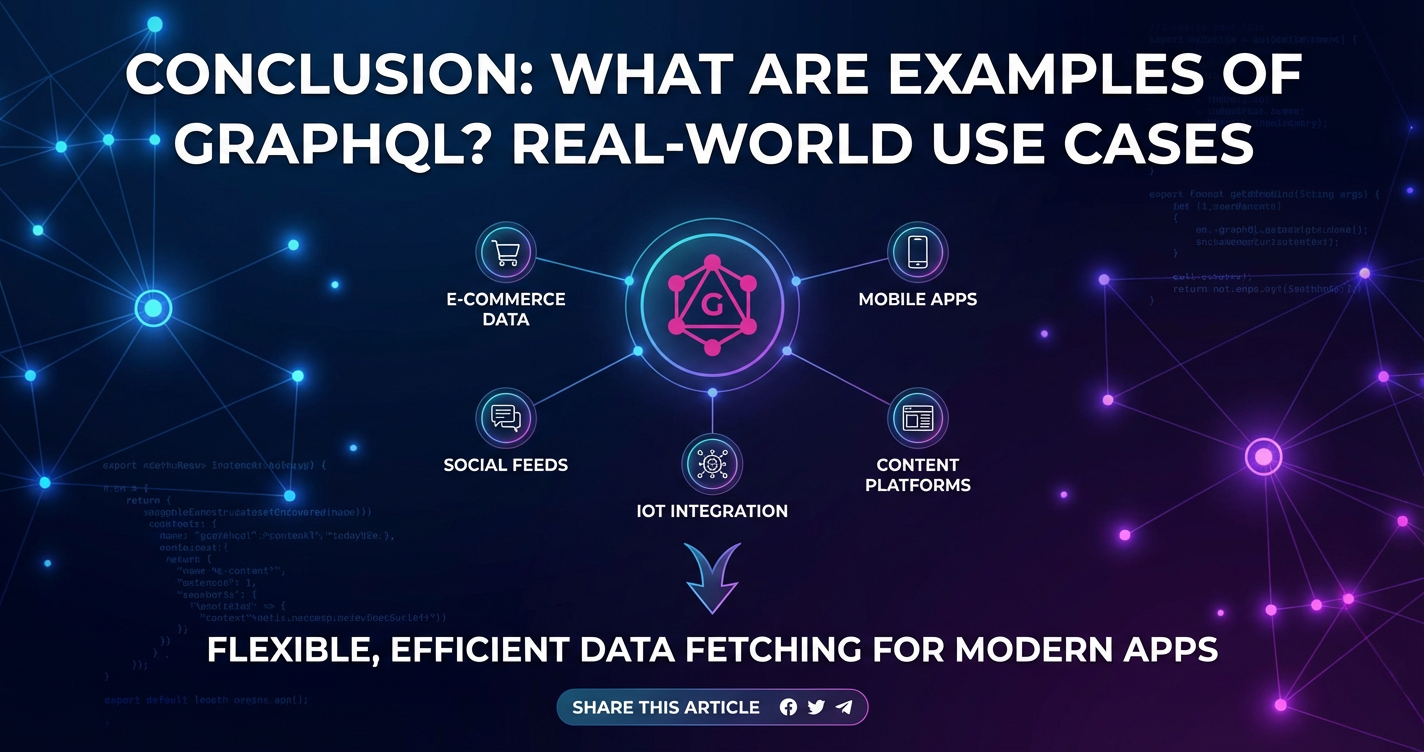
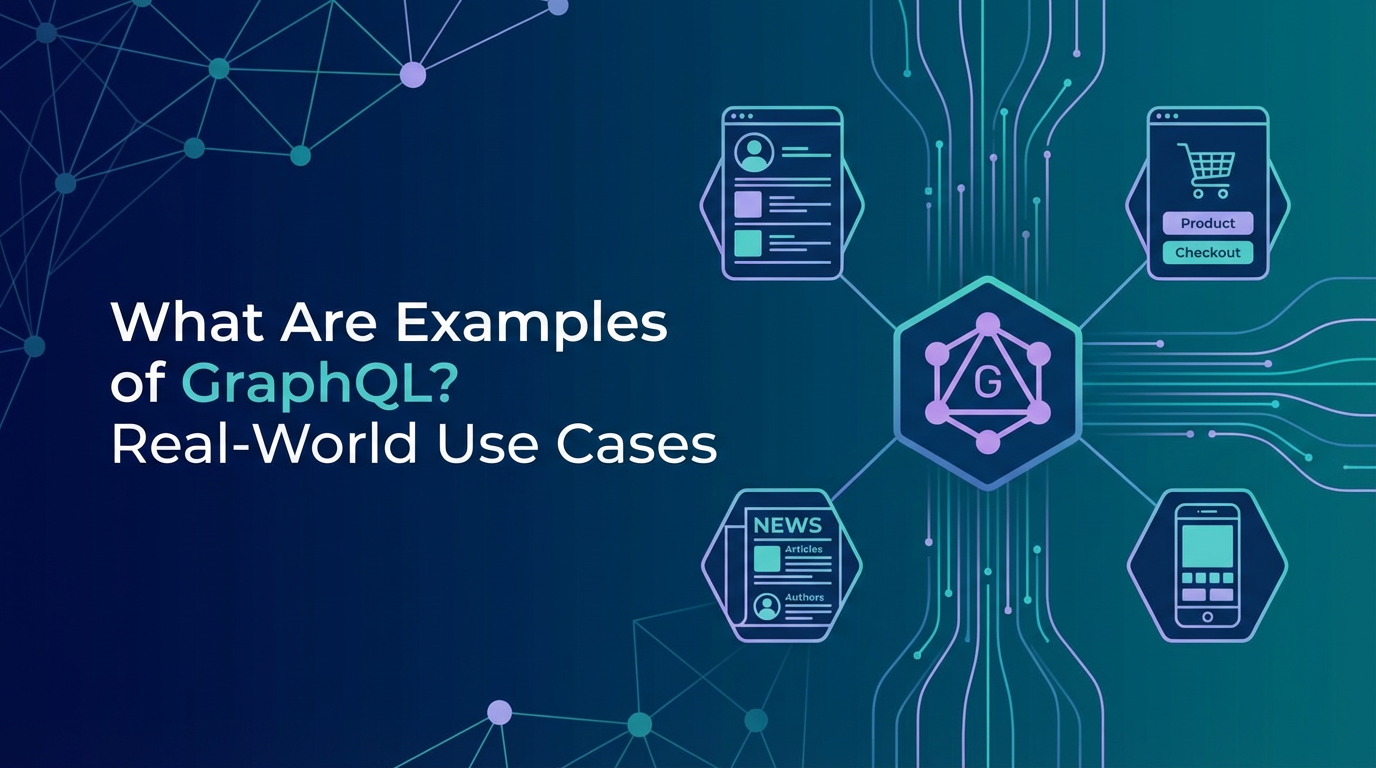
What Are Examples of GraphQL? Real-World Use Cases


In the rapidly evolving landscape of modern software development, the way applications communicate and exchange data is paramount to their success. For decades, REST (Representational State Transfer) reigned supreme as the de facto standard for building web APIs, offering a straightforward, resource-oriented approach. However, as applications grew more complex, data requirements became more nuanced, and user experiences demanded increasingly dynamic and personalized content, the limitations of REST began to emerge. Enter GraphQL, a powerful query language for APIs and a runtime for fulfilling those queries with your existing data. Developed by Facebook in 2012 and open-sourced in 2015, GraphQL was designed to address the challenges of over-fetching and under-fetching data, provide a more efficient client-server interaction, and offer a flexible, strongly-typed api that empowers frontend developers.
This comprehensive exploration delves into the core tenets of GraphQL, dissecting its mechanics, advantages, and the transformative impact it has had across a myriad of industries. We will move beyond theoretical discussions to illuminate practical, real-world examples where GraphQL has been successfully implemented, demonstrating its versatility and efficacy in solving complex data challenges. From powering the intricate data graphs of social media giants to streamlining the dynamic product catalogs of e-commerce platforms, and orchestrating microservices in enterprise architectures, GraphQL has proven to be a game-changer. Furthermore, we will critically examine the scenarios where GraphQL truly shines, discuss best practices for its implementation, and consider its strategic role within a broader api gateway and API Developer Portal ecosystem, ensuring developers can harness its full potential for building robust, scalable, and future-proof applications.
The Genesis and Evolution of GraphQL: A Paradigm Shift in API Design
The story of GraphQL begins with a problem faced by Facebook as its mobile applications matured. Developers were wrestling with slow performance, attributed to the sheer volume of data being exchanged between their mobile clients and backend servers. Traditional REST APIs, with their fixed endpoints, often resulted in clients either receiving too much data (over-fetching) or needing to make multiple requests to gather all necessary information (under-fetching). This inefficiency translated directly into poorer user experiences, especially on mobile devices with limited bandwidth and varying network conditions. Facebook's engineering team recognized the need for a more efficient and flexible way for clients to declare their data requirements, leading to the creation of GraphQL.
At its core, GraphQL is a specification that defines a contract between the client and the server. Unlike REST, which typically exposes different endpoints for different resources (e.g., /users, /products/123), GraphQL operates on a single endpoint. Clients send a query document (a string that defines the data shape they need) to this endpoint, and the server responds with a JSON object that precisely matches the structure of the requested data. This declarative approach shifts control from the server, which dictates what data is available at each endpoint, to the client, which specifies exactly what data it requires. This fundamental shift is what makes GraphQL so powerful and why it has rapidly gained traction across the industry, offering a fresh perspective on api interaction that prioritizes client needs and network efficiency.
Understanding the Core Pillars of GraphQL
To fully grasp GraphQL's power, it's essential to understand its foundational concepts:
- Schema and Types: At the heart of every GraphQL
apiis a schema. This schema is a strongly typed graph that defines all the data types available in theapi, their fields, and the relationships between them. It's written in the GraphQL Schema Definition Language (SDL) and acts as a contract between the client and the server. For instance, you might define aUsertype with fields likeid,name,email, andposts, wherepostsitself is a list ofPosttypes. This strong typing provides clarity, allows for powerful introspection (clients can ask the API what types and fields are available), and enables robust validation, ensuring that clients only request data that exists and is structured correctly. This rigorous definition significantly reduces ambiguity and makes API consumption much more predictable. - Queries: Queries are how clients request data from the GraphQL server. They are structured like the data they return, allowing clients to specify exactly what fields they need, even nested ones. For example, instead of fetching a full user object and then making separate requests for their posts, a single GraphQL query can ask for a user's name and email, and for the titles of their last three posts, all in one go. This precision eliminates over-fetching, where clients receive data they don't need, and under-fetching, where multiple requests are required, thereby optimizing network usage and reducing latency, which is particularly beneficial for mobile applications or those operating in environments with constrained bandwidth.
- Mutations: While queries are for fetching data, mutations are for modifying data on the server. Just like queries, mutations are strongly typed and defined within the schema. They allow clients to create, update, or delete data. A mutation operation also typically allows the client to request specific fields of the modified object back in the response. This ensures that after an operation, the client can immediately update its local state with the most current data, eliminating the need for subsequent
apicalls to refresh information. For instance, a mutation to create a new user might return the newly created user's ID, name, and creation timestamp, providing immediate feedback to the client. - Subscriptions: For real-time functionality, GraphQL offers subscriptions. Subscriptions allow clients to subscribe to specific events on the server and receive real-time updates when those events occur. This is typically implemented over WebSocket connections, providing a persistent channel for server-to-client communication. Common use cases include live chat applications, real-time notifications, or streaming data dashboards where immediate updates are critical. Subscriptions are defined in the schema, just like queries and mutations, providing a consistent
apiexperience across all data interaction paradigms.
Advantages that Elevate GraphQL Beyond Traditional REST
The architectural choices and foundational concepts of GraphQL translate into several compelling advantages that explain its growing adoption:
- Efficient Data Fetching (Eliminating Over-fetching and Under-fetching): This is GraphQL's most celebrated benefit. Clients dictate exactly what data they need, meaning no unnecessary data is sent over the network. This significantly reduces payload sizes and improves load times, especially for clients with limited bandwidth or where latency is a concern. Developers no longer need to design
apiendpoints for every conceivable data combination, leading to a more streamlined and performant client-server interaction. - Single Endpoint and Simplified Client Development: Unlike REST, which often requires interaction with multiple endpoints to gather related data, GraphQL aggregates all data access behind a single endpoint. This simplifies client-side code, as developers only need to interact with one URL, and the complexity of data aggregation is pushed to the GraphQL server layer. This consistency makes
apiconsumption more intuitive and reduces the cognitive load on frontend teams. - Strong Typing and Introspection: The GraphQL schema provides a robust type system that defines the capabilities of the
api. This strong typing offers compile-time validation, catches errors early, and acts as a single source of truth for all data interactions. Furthermore, GraphQL APIs are self-documenting through introspection. Tools like GraphiQL or GraphQL Playground can query the schema itself to discover available types, fields, and operations, greatly enhancing developer experience and reducing the need for external documentation (though a comprehensiveAPI Developer Portalremains crucial for broader adoption). - Evolving APIs Without Versioning Issues: With REST, making changes to an
api(e.g., adding a new field or changing a resource structure) often necessitates versioning (e.g.,/v1/usersvs./v2/users) to avoid breaking existing clients. GraphQL offers more flexibility. New fields can be added to types without impacting existing queries. Deprecated fields can be marked in the schema, allowing clients to gradually migrate without forcing a hard cutover. This approach enables continuous evolution of theapiwithout the overhead and complexity of managing multipleapiversions simultaneously. - Aggregating Data from Multiple Sources: In modern microservices architectures, data often resides in disparate backend services, databases, or even third-party APIs. A GraphQL server can act as an
api gatewayor a "federation layer," aggregating data from these various sources into a single, unified graph that clients can query. This provides a clean abstraction for frontend developers, shielding them from the underlying complexity of the backend architecture. This capability is particularly powerful in enterprise environments where data silos are common, enabling a holistic view of information through a singleapiinterface. - Improved Developer Experience (DX): The combination of strong typing, introspection, and the declarative query language significantly enhances the developer experience. Frontend developers can prototype faster, confidently make changes knowing the type system will catch errors, and explore the
apiwith built-in tools. This efficiency translates into faster development cycles and fewer bugs, leading to higher productivity and more robust applications.
Challenges and Considerations in GraphQL Adoption
While GraphQL offers compelling advantages, it's not a silver bullet and comes with its own set of challenges that need careful consideration:
- Caching Complexity: REST APIs benefit from HTTP's built-in caching mechanisms (e.g., browser cache, proxy caches) because resources are typically identified by unique URLs. With GraphQL, all requests often go to a single endpoint via POST, making traditional HTTP caching less effective. Caching strategies for GraphQL usually require more sophisticated client-side (e.g., Apollo Client's normalized cache) or server-side (e.g., data loaders, response caching) implementations, adding a layer of complexity.
- N+1 Problem (and Solutions): Without proper optimization, a GraphQL query that fetches a list of items and then details for each item can lead to the "N+1 problem," where the server makes N additional database or service calls for each item in the list. This can be mitigated effectively using tools like
DataLoader, which batch and cache requests, but it requires diligent implementation by the backend team. - Rate Limiting and Security: Because clients can request arbitrary data shapes, implementing effective rate limiting and ensuring robust authorization can be more complex than with REST. Traditional approaches might limit requests per endpoint, but with GraphQL, the depth and complexity of a query also need to be factored in. Careful design of authentication and authorization at the field level, alongside robust query complexity analysis, is essential.
- File Uploads: While GraphQL has specifications for file uploads, they are not as natively integrated or straightforward as with REST, which can leverage standard multipart/form-data. GraphQL file uploads typically involve specific directives or extensions to the specification.
- Learning Curve: For teams accustomed to REST, there is an initial learning curve associated with GraphQL's schema design, query language, and new tooling. While the benefits often outweigh this initial investment, it's a factor to consider during adoption.
- Operational Overhead: Deploying and monitoring a GraphQL server, especially one that acts as an
api gatewayover multiple microservices, can introduce operational overhead. Robust logging, performance monitoring, and error tracking become critical to maintaining system health and debugging issues effectively. This is where comprehensiveapimanagement platforms become invaluable.
Real-World Use Cases: Where GraphQL Shines
GraphQL's ability to provide efficient data fetching, flexible api evolution, and a unified data graph has led to its adoption across a wide spectrum of industries and application types. Let's explore some prominent real-world use cases, detailing how GraphQL addresses specific challenges and delivers tangible benefits.
1. Social Media Platforms: Navigating Complex Data Graphs
The Challenge: Social media platforms are characterized by incredibly complex and interconnected data graphs. Users interact with posts, comments, likes, shares, friends, groups, and notifications, all of which have various attributes and relationships. Displaying a user's feed, which might include posts from friends, pages they follow, and suggested content, often requires aggregating data from numerous backend services (e.g., user profiles, content services, recommendation engines, notification services). Traditional REST APIs would necessitate multiple requests to different endpoints, leading to significant over-fetching or N+1 issues, impacting performance and user experience. Moreover, mobile apps need highly optimized data payloads to perform well on varying network conditions.
How GraphQL Solves It: GraphQL was born out of Facebook's need to solve precisely these problems. It allows clients to query for exactly the data they need in a single request, irrespective of how deeply nested or broadly distributed that data is across the backend. For example, a single GraphQL query can fetch a user's profile details, along with their most recent five posts, the first three comments on each of those posts, and the names of the users who liked each post. All of this is accomplished with one network round trip.
Specific Examples:
- Facebook: As its creator, Facebook has been leveraging GraphQL extensively for its mobile applications and internal tools for years. It powers the dynamic news feed, user profiles, and many other interactive elements, ensuring a fast and responsive experience even with highly complex data interactions.
- GitHub API v4: GitHub's public API for developers is built entirely on GraphQL. This allows developers to craft highly specific queries for repositories, users, pull requests, issues, and more. For instance, a developer can query for a repository, its owner's details, the latest ten open pull requests with their associated commit messages, and the assignees' names, all within a single, highly efficient request. This flexibility empowers developers to build sophisticated integrations and tools without being constrained by fixed REST endpoints.
- Pinterest: Pinterest uses GraphQL to power its rapidly evolving user interface and diverse client applications. By standardizing on GraphQL, they enable frontend teams to iterate quickly on new features without needing constant backend changes, and optimize data fetching for mobile clients, enhancing the user experience.
Detail: In social media, personalization is key. GraphQL facilitates this by allowing clients to request user-specific data tailored to their preferences and interactions. For instance, a news feed algorithm might determine a specific set of posts relevant to a user. A GraphQL query can then precisely fetch these posts along with specific fields like author name, content, image URL, and the count of likes and comments, while completely omitting other fields that are not relevant for the current view. This granular control over data payloads is invaluable for delivering rich, personalized, and performant social experiences across diverse devices. Furthermore, GraphQL's schema provides a consistent contract for different teams (mobile, web, backend) working on various parts of the social graph, ensuring that everyone understands the data landscape.
2. E-commerce and Retail: Dynamic Product Catalogs and Personalized Experiences
The Challenge: E-commerce platforms deal with vast amounts of interconnected data: product information (SKUs, descriptions, images, prices, variants), customer details, order history, reviews, recommendations, inventory levels, and payment gateway integrations. Displaying a product page often requires fetching product details, related products, customer reviews, seller information, and stock availability from potentially different microservices or databases. Similar to social media, over-fetching or multiple requests can lead to slow page loads, impacting conversion rates and customer satisfaction. Dynamic filters, search, and personalized recommendations further complicate data retrieval with traditional REST.
How GraphQL Solves It: GraphQL offers a unified and efficient way to query all this interconnected e-commerce data. A single query can retrieve a product's name, description, images, price, available sizes and colors, average customer rating, the last five customer reviews, and a list of recommended products, all tailored to the user's preferences and past behavior. This significantly speeds up page loading and allows for highly dynamic and personalized shopping experiences.
Specific Examples:
- Shopify: Shopify has a powerful GraphQL
apithat allows merchants and developers to build custom storefronts, integrations, and apps. Developers can query for product listings, orders, customer data, inventory, and more with fine-grained control, enabling them to create highly customized e-commerce solutions that would be cumbersome with REST. - Walmart Labs: Walmart, one of the largest retailers globally, has adopted GraphQL for various internal and external APIs. This allows them to aggregate product data from various systems, streamline checkout processes, and deliver a consistent experience across their web and mobile applications, optimizing for performance and flexibility.
- Booking.com: For a travel booking platform, aggregating information about hotels, flights, prices, reviews, and availability from numerous external and internal sources is a monumental task. GraphQL helps Booking.com unify these disparate data sources into a single, queryable graph, making it easier for their frontend teams to build complex search interfaces and personalized recommendations efficiently.
Detail: In e-commerce, user experience directly impacts sales. GraphQL's ability to fetch exactly what's needed means faster page loads for product listings, faster filtering based on complex criteria, and more responsive shopping carts. For instance, when a user applies a filter for "red shirts in size M," a GraphQL query can instantly return only the relevant products with their specific attributes, without fetching all products first and then filtering on the client side. This reactive and highly optimized data retrieval is crucial for retaining customers and driving conversions. Furthermore, for cross-device experiences, GraphQL ensures that the same data logic can be reused, with clients simply requesting different fields depending on the screen size or device capabilities, maintaining consistency while optimizing for performance.
3. Mobile Applications: Optimizing for Bandwidth and Performance
The Challenge: Mobile applications often operate in environments with varying network conditions, limited bandwidth, and diverse device capabilities. Traditional REST APIs can be problematic here, as fixed endpoints often lead to over-fetching data, wasting precious bandwidth, increasing data costs for users, and slowing down application responsiveness. Making multiple api calls to gather all necessary data for a single screen further exacerbates latency issues.
How GraphQL Solves It: GraphQL is inherently optimized for mobile environments because it allows clients to request precisely the data they need for a specific view or component. This drastically reduces the payload size over the network, leading to faster load times, lower data consumption, and improved responsiveness. Mobile developers can tailor queries to the exact requirements of each screen, ensuring maximum efficiency.
Specific Examples:
- Mobile apps of any platform using GraphQL: Any company building a mobile application that needs to display complex, interconnected data (e.g., news apps, productivity tools, social networks) can benefit immensely from GraphQL. By requesting only the necessary fields, they minimize network traffic, leading to snappier UIs and better battery life.
- Netflix (for specific features): While Netflix's core streaming
apimight use different approaches, they've explored and utilized GraphQL for specific use cases, especially where flexible data fetching for UI components is critical. Their mobile clients, with their diverse device ecosystems, would greatly benefit from tailored data payloads.
Detail: Consider a mobile news application. On a list view, the app might only need article titles, thumbnails, and author names. When a user taps on an article, the app then fetches the full article content, comments, and related articles. With REST, you might have separate endpoints for "article list" and "full article details." With GraphQL, a single schema defines the Article type, and the client simply changes its query to ask for more fields when needed. This fluid data fetching model, combined with features like fragments (reusable query parts), significantly streamlines mobile development, making it easier to build responsive and data-efficient applications. Moreover, by reducing the number of round trips to the server, GraphQL inherently reduces the impact of network latency, which is a common bottleneck in mobile usage, thereby providing a smoother and more reliable user experience even on slower connections.
4. Content Management Systems (CMS) & Blogging Platforms: Headless Flexibility
The Challenge: Modern CMS platforms are increasingly "headless," meaning the content management backend is decoupled from the frontend presentation layer. This allows content to be delivered to various clients (websites, mobile apps, smart devices, voice assistants) via an api. The challenge is providing a flexible api that can cater to the diverse data requirements of these different consumption channels. A blog post, for example, might need different fields for a short preview card versus a full article view, or a variant view for a voice api versus a web api. Traditional REST, with its fixed resource structures, can lead to either bloated responses or the need for numerous specialized endpoints.
How GraphQL Solves It: GraphQL is a natural fit for headless CMS architectures. It provides a single, powerful api endpoint through which clients can query any content type (articles, pages, authors, categories, media assets) and specify exactly which fields they need. This flexibility empowers frontend developers to build diverse user interfaces without relying on backend changes for every new data requirement.
Specific Examples:
- Strapi: Strapi is a leading open-source headless CMS that offers a GraphQL API out-of-the-box. Developers define their content models, and Strapi automatically generates a corresponding GraphQL schema, allowing clients to query their content with maximum flexibility.
- Contentful: A popular commercial headless CMS, Contentful also provides robust GraphQL APIs, enabling developers to build sophisticated content-driven applications for various platforms by precisely fetching the content they need.
- Ghost: The open-source blogging platform Ghost offers a GraphQL Content API, allowing users to build custom themes and integrations by querying post data, author details, tags, and more with high flexibility.
Detail: The "headless" nature thrives on api flexibility. With GraphQL, a web client might query for an article's title, image, and full HTML content, while a mobile client might query for the title, a truncated summary, and a low-resolution image, and a voice assistant might only need the title and a short audio summary. All of these can be satisfied by different GraphQL queries against the same underlying schema. This not only speeds up development but also ensures consistency in the content data model across all platforms. The introspection capabilities of GraphQL further aid developers in understanding the content structure without extensive external documentation, although a robust API Developer Portal is still invaluable for onboarding and community support.
5. Dashboards and Analytics: Aggregating Real-time Data
The Challenge: Business intelligence and analytics dashboards often require aggregating data from multiple disparate sources (databases, data warehouses, third-party apis, microservices) to present a unified view of metrics, trends, and operational status. This data might need to be refreshed in real-time or near real-time, and different users or roles might require customized views of the data. Orchestrating these data streams and ensuring efficient, up-to-date displays with traditional REST can be complex, involving many parallel requests and client-side data stitching.
How GraphQL Solves It: GraphQL excels at aggregating data from multiple backend services. A GraphQL server can act as an api gateway, providing a unified interface to various data sources. Clients can then craft complex queries to fetch specific metrics, trends, or aggregated data points from across the entire ecosystem in a single request. Subscriptions further enable real-time updates for live dashboards.
Specific Examples:
- Internal Company Dashboards: Many enterprises build custom dashboards to monitor operational metrics, sales data, user activity, or system health. GraphQL allows them to pull specific data points from different microservices (e.g., sales data from a CRM, user activity from an analytics service, system status from a monitoring service) into a single, cohesive view.
- Data Visualization Platforms: Companies building tools for data visualization and reporting can use GraphQL to provide their users with flexible
apiaccess, allowing them to define custom reports and charts by querying precisely the data they need.
Detail: Imagine a sales dashboard that needs to display current sales figures, leads generated this week, and customer support ticket resolution rates. These three data points might come from three different microservices. A GraphQL query can fetch all three pieces of information, potentially with historical context, in a single request. If these metrics need to update in real-time, GraphQL subscriptions can push new data to the dashboard as soon as it becomes available. This powerful combination of aggregation and real-time capabilities makes GraphQL an ideal choice for building dynamic and responsive analytics platforms, providing businesses with timely insights to make informed decisions. The ability to request specific time ranges, aggregations, and filters within the query itself further enhances its utility for analytical applications.
6. Microservices Architectures: A Unified API Gateway
The Challenge: In a microservices architecture, an application is broken down into small, independent services, each responsible for a specific business capability. While this promotes scalability and independent deployment, it introduces complexity in terms of data orchestration. A frontend application might need to combine data from five, ten, or even more microservices to render a single page. If the frontend directly calls each microservice, it leads to a proliferation of network requests, increased latency, and tight coupling between the frontend and the specific backend services. Managing these multiple apis effectively is a significant challenge.
How GraphQL Solves It: A GraphQL server can effectively serve as an api gateway in a microservices architecture. It sits in front of all the individual microservices, providing a single, unified api endpoint to clients. When a client sends a GraphQL query, the GraphQL server (often called a "schema stitching" or "federation" layer) intelligently resolves the query by making internal calls to the appropriate backend microservices, aggregating the data, and then sending a single, precisely structured response back to the client. This decouples the frontend from the backend microservice landscape, simplifying client-side development and optimizing network interactions.
Specific Examples:
- Any Enterprise Adopting Microservices: Companies migrating from monolithic architectures to microservices, or building new applications with a microservices-first approach, often leverage GraphQL as their public-facing
apilayer. It simplifies client consumption by abstracting the complexity of the underlying services. - The New York Times: The New York Times uses GraphQL to stitch together data from various backend systems, allowing them to deliver their rich content and diverse features across multiple platforms efficiently.
- APIPark: For robust
apimanagement, especially in modern cloud-native environments and microservices setups, platforms like APIPark offer comprehensive solutions. APIPark, an open-source AI gateway and API management platform, excels at unifying various AI and REST services, acting as a powerfulapi gatewaythat can integrate 100+ AI models, normalize API formats, and manage the entire lifecycle of APIs. Its high performance, rivalling Nginx, combined with detailed logging and data analysis capabilities, makes it an ideal choice for enterprises looking to streamlineapiintegration and governance, ensuring efficiency and security across their digital landscape. APIPark provides a unified management system for authentication and cost tracking, crucial for complex microservice environments.
Detail: The role of a GraphQL layer as an api gateway is transformative. It allows frontend teams to consume data as if it came from a single, cohesive source, without needing to know which microservice is responsible for which piece of data. This dramatically reduces the "chatty" nature of microservices (where frontends make many small requests), improves performance, and simplifies frontend codebases. It also provides a clear abstraction boundary, allowing backend teams to evolve their microservices independently without breaking client applications. The strong typing of GraphQL ensures that changes in backend services are reflected in the GraphQL schema, providing a controlled way to manage api evolution. For a GraphQL API to be truly successful, especially within larger organizations or when exposed to external partners, a well-structured API Developer Portal is essential. Such a portal, often integrated with or complementary to an api gateway solution like APIPark, provides comprehensive documentation, examples, and tools for developers to discover, understand, and integrate with the API efficiently. Platforms like APIPark not only offer advanced api gateway functionalities but also feature a robust API Developer Portal that centralizes API services, streamlines team collaboration, and manages access permissions, making it easier for developers to find and utilize the necessary services, thereby accelerating innovation and secure api consumption.
7. Developer Tools & IDEs: Introspection-Powered Productivity
The Challenge: Developer tools, integrated development environments (IDEs), and internal utility applications often need to interact with various internal apis to fetch configurations, user data, project details, or system statuses. The challenge is providing a flexible api that can be easily explored, understood, and consumed by developers building these tools, without extensive manual documentation or opaque data structures.
How GraphQL Solves It: GraphQL's strong typing and introspection capabilities make it an excellent choice for developer tools. The schema acts as a single source of truth, and tools can query the schema itself to understand what data is available and how to query it. This enables dynamic api exploration and auto-completion features, significantly boosting developer productivity.
Specific Examples:
- GraphiQL and GraphQL Playground: These are interactive, in-browser IDEs for GraphQL. They use the introspection capabilities of GraphQL to automatically provide schema documentation, query auto-completion, and error highlighting, making it incredibly easy for developers to test and build GraphQL queries.
- Internal Development Tools: Many companies use GraphQL for their internal tools that manage deployments, monitor systems, or administer user accounts. The self-documenting nature of GraphQL means developers can quickly build new features for these tools without extensive
apiresearch.
Detail: For developers building tools, having an api that explains itself is invaluable. When you open GraphiQL, it doesn't need external configuration; it queries the GraphQL endpoint's schema and immediately knows all the types, fields, and arguments available. This means developers spend less time digging through documentation and more time writing functional code. Furthermore, GraphQL's ability to evolve without strict versioning means that internal tools are less likely to break when the underlying api schema changes, leading to a more stable and efficient development environment. This inherent discoverability and self-documentation drastically reduce friction, empowering developers to quickly understand and leverage existing services, which is critical for maintaining velocity in rapidly evolving tech environments.
8. Financial Services: Secure and Granular Data Access
The Challenge: The financial services industry operates with highly sensitive, complex, and often real-time data, including transactions, portfolio performance, market data, and customer account information. Security, compliance, and granular access control are paramount. Providing flexible api access to this data for various internal systems (trading platforms, risk management, customer portals) and potentially external partners, while maintaining strict regulatory requirements, is a significant challenge. Traditional APIs might struggle with the complexity of authorization at a fine-grained level and the need for efficient real-time updates.
How GraphQL Solves It: GraphQL's schema-driven approach allows for precise definition of data types and their relationships, which can be leveraged for granular access control. Authorization logic can be implemented at the field level, ensuring that only authorized users or systems can access specific pieces of sensitive data. Subscriptions provide efficient real-time updates for market data or transaction feeds.
Specific Examples:
- Internal Trading Platforms: Financial institutions can use GraphQL to provide their trading platforms with real-time market data, portfolio updates, and transaction history. The field-level authorization ensures traders only see data relevant to their permissions.
- Customer Portfolio Viewers: Banks and investment firms can use GraphQL to power customer-facing applications that display portfolio performance, account balances, and transaction details. Clients can query for specific data points, and the GraphQL layer ensures they only receive information they are authorized to view.
Detail: In finance, security and compliance are non-negotiable. GraphQL's strong type system and the ability to define resolvers for each field allow for sophisticated authorization logic. For example, a User type might have a salary field, but the resolver for that field could check if the requesting user has "HR Manager" permissions before returning the data. If not, it could return null or an authorization error. This granular control is crucial for meeting regulatory requirements and protecting sensitive financial information. Furthermore, for real-time market data, GraphQL subscriptions offer a highly efficient mechanism to push updates to client applications, enabling traders and analysts to react instantly to market movements. The unification of various financial data sources through a GraphQL api gateway further simplifies the data landscape, providing a consistent and secure interface for complex financial operations.
9. Gaming: Managing Player Data and Game States
The Challenge: Modern video games, especially online multiplayer and persistent world games, deal with vast amounts of player data (profiles, inventories, achievements), game state (world status, quest progress), and real-time interactions (leaderboards, chat, in-game actions). Managing this data efficiently, ensuring consistency, and providing low-latency updates across numerous clients and servers is complex. Updating player inventories or game progress often requires multiple api calls with traditional REST.
How GraphQL Solves It: GraphQL can serve as a unified api for managing all aspects of game data. Players can query their inventory, character stats, and quest logs with a single request. Mutations can update game states, complete quests, or process in-game purchases. Subscriptions are ideal for real-time leaderboards, chat, or informing players of in-game events.
Specific Examples:
- Player Profiles and Inventories: A game's backend can expose a GraphQL
apifor managing player profiles, their equipped items, inventory contents, and currency balances. The client can fetch all relevant player data for a character screen in one optimized query. - Leaderboards and Matchmaking: GraphQL subscriptions can power real-time leaderboards, updating player rankings as scores change. Mutations can be used to submit scores or join matchmaking queues.
Detail: For a game like an online RPG, a player's character might have a complex inventory with various items, each with its own attributes. A GraphQL query could fetch the character's name, current health, mana, and a list of all items in their inventory, including each item's name, type, and specific stats, all in one go. When a player uses an item, a mutation can update the inventory and character stats, returning the new state immediately. This efficiency is critical for responsive gameplay and a seamless user experience. The declarative nature of GraphQL also means game developers can quickly iterate on new game features or items without needing to redesign api endpoints for every addition. The unified data model across client and server also aids in consistency and reduces the potential for data discrepancies that can plague complex game economies.
GraphQL vs. REST: A Detailed Comparison
While this article focuses on GraphQL, understanding its distinct advantages often involves contrasting it with its predecessor, REST. Both are architectural styles for building APIs, but they approach data interaction from fundamentally different philosophies. The choice between them depends heavily on the specific project requirements, team expertise, and desired outcomes.
| Feature / Aspect | REST (Representational State Transfer) | GraphQL (Graph Query Language) |
|---|---|---|
| Architectural Style | Resource-oriented. Based on standard HTTP methods (GET, POST, PUT, DELETE) and URLs. | Graph-oriented. Clients request specific data shapes from a single endpoint. |
| Endpoints | Multiple endpoints, each representing a resource (e.g., /users, /products/123, /posts/456/comments). |
Typically a single endpoint (e.g., /graphql). |
| Data Fetching | Over-fetching: Often returns more data than the client needs. Under-fetching: May require multiple requests to gather all necessary data. |
Precise fetching: Clients specify exactly what data fields they need, eliminating over/under-fetching. |
| Request Method | Uses standard HTTP verbs (GET for retrieve, POST for create, PUT/PATCH for update, DELETE for delete). | Primarily uses POST requests (for queries and mutations), but GET can also be used for queries. |
| Response Structure | Server dictates the response structure for each resource/endpoint. | Client dictates the response structure through its query. |
| Versioning | Often requires URL versioning (e.g., /v1/users, /v2/users) to avoid breaking changes. |
Flexible schema evolution. New fields can be added; old fields can be deprecated without versioning the API. |
| Caching | Leverages standard HTTP caching mechanisms (browser cache, proxy caches) due to unique URLs and GET requests. | More complex caching. Requires client-side (e.g., normalized cache) or server-side (e.g., DataLoader) application-level caching. |
| Error Handling | Uses HTTP status codes (e.g., 200 OK, 404 Not Found, 500 Internal Server Error). | Returns 200 OK for valid requests, with errors included in the response payload as a errors array. |
| Learning Curve | Generally lower initial learning curve for teams familiar with HTTP and REST concepts. | Higher initial learning curve due to new query language, schema design, and concepts. |
| Tooling & Ecosystem | Mature tooling (Swagger/OpenAPI, Postman, cURL) for documentation and testing. | Rich tooling (GraphiQL, Apollo Client, Relay, Prisma) focused on schema introspection and client-side management. |
| Use Cases | Simple CRUD operations, resource-centric APIs, publicly exposed APIs where caching is critical. | Complex data graphs, microservices orchestration, mobile apps, real-time updates, evolving UIs. |
| Real-time | Typically uses WebSockets or long polling for real-time updates. | Built-in subscriptions for real-time data updates over WebSockets. |
This table highlights that while REST is excellent for simpler, resource-based interactions that benefit from HTTP's native caching, GraphQL shines in scenarios demanding precise data fetching, complex data aggregation, and flexible api evolution, particularly for modern frontend-heavy applications and microservices architectures. The choice often boils down to the complexity of the data graph, the number of different clients, and the desired level of flexibility for frontend teams.
APIPark is a high-performance AI gateway that allows you to securely access the most comprehensive LLM APIs globally on the APIPark platform, including OpenAI, Anthropic, Mistral, Llama2, Google Gemini, and more.Try APIPark now! 👇👇👇
Best Practices for Implementing and Managing GraphQL APIs
Adopting GraphQL successfully requires more than just understanding its syntax; it necessitates adhering to best practices that ensure scalability, maintainability, and security.
- Design a Thoughtful Schema:
- Single Source of Truth: Your GraphQL schema should be the definitive contract for your
api. Design it carefully, ensuring it accurately represents your data model and business logic. - Noun-Oriented Naming: Name types and fields descriptively, using nouns for types (e.g.,
User,Product) and fields (e.g.,name,email). - Consistency: Maintain consistent naming conventions (e.g., camelCase for fields) and data structures throughout your schema to make it intuitive for consumers.
- Think in Graphs, Not Resources: Shift your mindset from fetching individual resources to querying connected data graphs.
- Single Source of Truth: Your GraphQL schema should be the definitive contract for your
- Implement Data Loaders to Prevent N+1 Problems:
DataLoaderis an indispensable library (or concept) for batching and caching requests. When a GraphQL query asks for a list of items and then a field for each item that requires a separate database lookup orapicall,DataLoaderensures that all such lookups are batched into a single request to the backend service or database, significantly improving performance. This is critical for preventing performance bottlenecks in complex queries.
- Secure Your API Effectively:
- Authentication and Authorization: Implement robust authentication (e.g., JWTs) and authorization at the resolver level. Each resolver should check if the requesting user has permission to access the specific field or perform the requested mutation.
- Query Depth and Complexity Limiting: Prevent malicious or overly complex queries that could overload your server. Implement mechanisms to limit query depth and calculate query complexity (e.g., based on field weights) to reject expensive queries.
- Rate Limiting: Protect your
apifrom abuse by implementing rate limiting. This can be more nuanced than with REST, as it might need to consider query complexity in addition to the number of requests. Anapi gatewaycan be particularly effective here, offering advanced capabilities to manage access and traffic. - Input Validation: Always validate input arguments for mutations to prevent data integrity issues and security vulnerabilities.
- Version Your API Gracefully:
- Schema Evolution: Leverage GraphQL's flexibility to evolve your schema by adding new fields or types.
- Deprecation: Use the
@deprecateddirective to mark fields or arguments that are no longer recommended, providing a clear path for clients to migrate without breaking existing applications. Avoid hard versioning where possible.
- Robust Error Handling and Logging:
- Consistent Error Responses: Ensure your GraphQL server returns consistent and informative error messages within the
errorsarray of the response, adhering to the GraphQL specification. - Detailed Logging: Implement comprehensive logging for all
apicalls, errors, and performance metrics. This is crucial for debugging, monitoring, and understandingapiusage patterns. Platforms like APIPark provide detailedapicall logging, recording every detail for quick tracing and troubleshooting.
- Consistent Error Responses: Ensure your GraphQL server returns consistent and informative error messages within the
- Performance Monitoring and Optimization:
- Monitor Resolver Performance: Track the performance of individual resolvers to identify bottlenecks.
- Caching: Beyond
DataLoader, explore server-side caching for frequently accessed data and client-side caching (e.g., using Apollo Client's normalized cache) to reduce redundant requests. - Persisted Queries: For static queries, use persisted queries to reduce network payload size (by sending an ID instead of the full query string) and provide an additional layer of security by only allowing known queries.
- Choose the Right Tools and Libraries:
- Client Libraries: Leverage powerful client libraries like Apollo Client or Relay for features like caching, state management, and optimistic UI updates.
- Server Implementations: Choose a robust GraphQL server implementation for your chosen programming language (e.g., Apollo Server for Node.js, Graphene for Python, Hot Chocolate for .NET).
- Provide an Excellent Developer Experience (DX):
- Interactive Tools: Offer interactive query tools like GraphiQL or GraphQL Playground directly with your
api. - Comprehensive Documentation: While GraphQL is self-documenting, a rich
API Developer Portalthat provides tutorials, examples, and use case scenarios is invaluable for onboarding developers and fostering adoption. This helps explain the "why" and "how" beyond just the "what" of the schema. - Schema Stitching/Federation: In microservices architectures, consider GraphQL federation or schema stitching to provide a unified graph API while allowing individual teams to manage their subgraphs independently.
- Interactive Tools: Offer interactive query tools like GraphiQL or GraphQL Playground directly with your
By following these best practices, organizations can fully realize the benefits of GraphQL, building highly performant, scalable, and maintainable APIs that empower frontend developers and provide superior user experiences. The strategic integration of robust api gateway solutions, such as APIPark, further enhances these capabilities, providing end-to-end api lifecycle management, security, and performance at an enterprise scale.
The Future of API Design and GraphQL's Enduring Role
The landscape of API design is continuously evolving, driven by the ever-increasing demands for faster, more flexible, and more interconnected applications. While REST will undoubtedly remain relevant for many use cases, especially simpler APIs or those heavily leveraging HTTP caching, GraphQL has carved out an indispensable niche for itself. Its graph-oriented approach, client-driven data fetching, and strong type system position it as a powerful solution for the complex data needs of modern applications, particularly in microservices environments, mobile development, and rich web experiences.
The trend towards "API-first" development, where the api is designed before or in parallel with the user interface, strongly favors GraphQL's contract-driven nature. The self-documenting schema acts as a single source of truth, fostering better collaboration between frontend and backend teams. As AI integration becomes more pervasive across applications, the ability to unify diverse data sources and AI models efficiently will be paramount. Platforms like APIPark, acting as an advanced api gateway and API Developer Portal, are at the forefront of this evolution, not only enabling efficient management of traditional REST APIs but also providing specialized capabilities for integrating and orchestrating AI services, often exposing them through a unified interface that could very well leverage GraphQL for flexible consumption.
Looking ahead, we can expect continued innovation in GraphQL tooling, further enhancements in performance optimizations (especially for distributed graphs), and wider adoption across even more industries. Concepts like GraphQL Federation will become standard for managing large-scale, decentralized api graphs in enterprise settings. The emphasis will remain on developer experience, making it even easier for engineers to design, build, and consume powerful apis that fuel the next generation of digital products and services. GraphQL is not just a passing trend; it represents a fundamental shift in how we think about and interact with data, solidifying its enduring role in the future of API design.
Conclusion
GraphQL has emerged as a transformative technology in the realm of API design, offering a powerful and flexible alternative to traditional REST architectures. Its ability to eliminate over-fetching and under-fetching, provide a single, unified api endpoint, and facilitate robust schema evolution has proven invaluable across a diverse range of real-world applications. From the intricate data graphs of social media platforms and the dynamic product catalogs of e-commerce sites to the resource-constrained environments of mobile applications and the complex orchestration of microservices, GraphQL empowers developers to build more efficient, performant, and maintainable systems.
By adopting GraphQL, organizations gain the agility to respond quickly to changing business requirements, deliver superior user experiences, and streamline development workflows. While it introduces its own set of challenges, particularly around caching and security, these are well-understood and addressable with established best practices and a robust ecosystem of tools. Furthermore, the strategic integration of GraphQL within a comprehensive api gateway and API Developer Portal solution, such as APIPark, can elevate its impact, providing end-to-end api lifecycle management, enhanced security, and powerful analytics, ensuring that apis are not only performant but also governable and discoverable.
As the digital landscape continues to evolve, demanding increasingly complex and interconnected data interactions, GraphQL's client-driven and graph-centric approach will undoubtedly continue to play a pivotal role. It represents a paradigm shift that puts the power of data retrieval precisely where it needs to be: in the hands of the application developers who are building the user experiences of tomorrow. The examples discussed herein merely scratch the surface of GraphQL's potential, underscoring its versatility and its crucial position in shaping the future of how applications consume and interact with data.
Frequently Asked Questions (FAQs)
1. What is the fundamental difference between GraphQL and REST APIs? The fundamental difference lies in their approach to data fetching and endpoint design. REST APIs are resource-oriented, typically exposing multiple fixed endpoints (URLs) for different resources, and the server dictates the data structure returned by each endpoint. This often leads to over-fetching (receiving more data than needed) or under-fetching (requiring multiple requests). GraphQL, on the other hand, is graph-oriented and typically uses a single endpoint. Clients send a query (a declarative string) to the server, specifying precisely the data fields and relationships they need, and the server responds with exactly that data. This client-driven approach eliminates over-fetching and under-fetching, optimizing network efficiency and reducing the number of requests.
2. When should I choose GraphQL over REST for my project? You should consider GraphQL when your project involves: * Complex data graphs: When data is highly interconnected (e.g., social networks, e-commerce, content management). * Multiple client types: When you need to support diverse client applications (web, mobile, IoT) that require different subsets of data for the same resources. * Microservices architectures: When you need to aggregate data from many backend services into a single, unified API for clients (where a GraphQL server acts as an api gateway). * Rapid UI iteration: When frontend teams need the flexibility to quickly iterate on UI features without constant backend changes or API versioning. * Real-time capabilities: When your application requires live updates through subscriptions (e.g., chat, dashboards). If your project has simpler CRUD operations, a stable API design, or heavily relies on HTTP caching mechanisms, REST might still be a more straightforward and suitable choice.
3. Is GraphQL more secure than REST? GraphQL is not inherently more secure than REST; rather, security considerations shift and can be more complex. Both require robust authentication and authorization. With GraphQL, granular authorization needs to be implemented at the field level, checking permissions for each requested data field. Additionally, measures like query depth and complexity limiting are crucial to prevent denial-of-service attacks from overly complex queries that could overload the server. Rate limiting, often managed effectively by an api gateway, also needs to be carefully designed. While GraphQL's strong typing helps prevent certain types of errors, vigilance in security implementation remains paramount, just as it is with any api.
4. How does GraphQL handle real-time data updates? GraphQL handles real-time data updates through Subscriptions. Subscriptions are a type of GraphQL operation (similar to queries and mutations) that allow clients to "subscribe" to specific events on the server. When such an event occurs, the server pushes new data to all subscribed clients. This is typically implemented over persistent connections like WebSockets. Common use cases include live chat applications, real-time notifications, or dynamically updating dashboards, ensuring that clients receive data instantaneously as it becomes available without needing to continuously poll the server.
5. How does an API Developer Portal relate to GraphQL APIs? An API Developer Portal is crucial for the success and adoption of any API, including GraphQL APIs. While GraphQL APIs are self-documenting through introspection (tools like GraphiQL can explore the schema), an API Developer Portal provides a richer, more guided experience. It offers comprehensive documentation, tutorials, use case examples, code samples, SDKs, and sometimes even sandbox environments. For GraphQL, the portal helps developers understand the overall data graph, learn how to construct complex queries and mutations, and grasp best practices. It centralizes API information, facilitates onboarding for new developers, enables team collaboration, and often integrates with an api gateway for managing access, subscriptions, and security, making the GraphQL API more discoverable, consumable, and governable for both internal and external consumers.
🚀You can securely and efficiently call the OpenAI API on APIPark in just two steps:
Step 1: Deploy the APIPark AI gateway in 5 minutes.
APIPark is developed based on Golang, offering strong product performance and low development and maintenance costs. You can deploy APIPark with a single command line.
curl -sSO https://download.apipark.com/install/quick-start.sh; bash quick-start.sh

In my experience, you can see the successful deployment interface within 5 to 10 minutes. Then, you can log in to APIPark using your account.

Step 2: Call the OpenAI API.