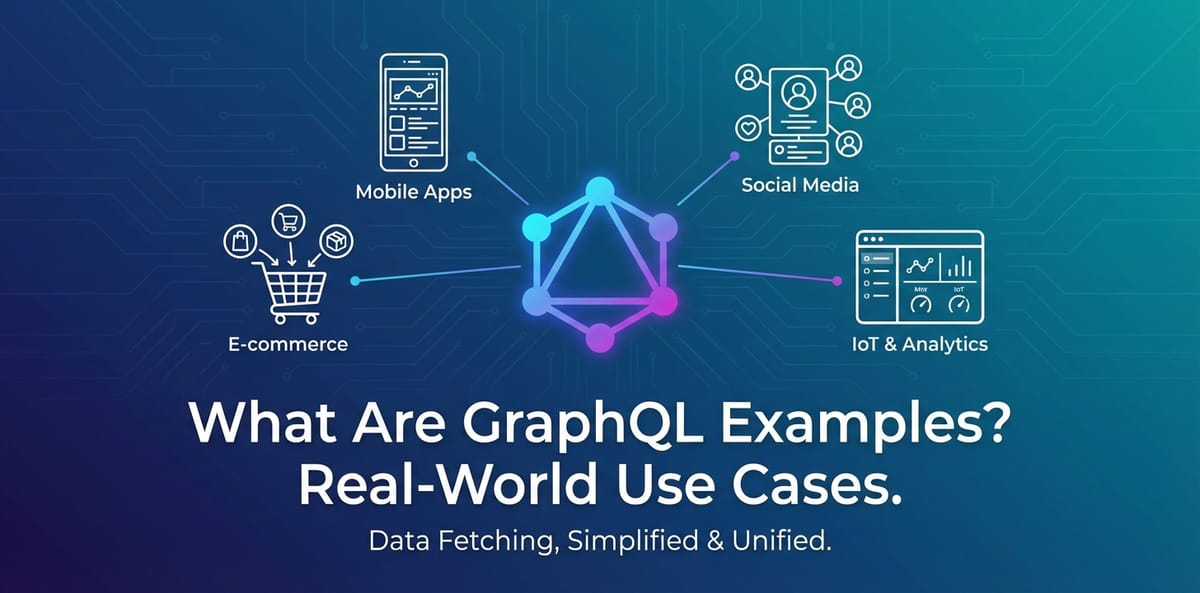
What Are GraphQL Examples? Real-World Use Cases


The landscape of web and mobile application development has undergone a profound transformation over the last decade. As applications grow in complexity, requiring richer user experiences and integration with a multitude of data sources, the traditional methods of data fetching and API design have faced increasing challenges. Developers and architects have continually sought more efficient, flexible, and scalable ways to connect frontend experiences with backend services. In this quest for optimization, GraphQL has emerged as a powerful paradigm, fundamentally altering how client applications interact with their data.
For many years, REST (Representational State Transfer) reigned supreme as the de facto standard for building web services. Its simplicity, statelessness, and adherence to HTTP methods made it incredibly popular. However, as applications evolved, so did the demands placed upon their APIs. RESTful APIs, which typically expose fixed data structures through multiple endpoints, often lead to issues such as over-fetching (receiving more data than needed), under-fetching (requiring multiple requests to gather all necessary data), and rigid versioning challenges. These inefficiencies can severely impact application performance, increase network latency, and complicate frontend development, especially for mobile clients with limited bandwidth and varying data requirements.
GraphQL, developed internally by Facebook in 2012 and open-sourced in 2015, offers a compelling alternative by shifting the control of data fetching to the client. Instead of relying on the server to define the structure of the data it returns, GraphQL provides a query language that allows clients to precisely describe the data they need, and nothing more. It acts as a single, unified api endpoint where clients can send queries to retrieve data, mutations to modify data, and subscriptions to receive real-time updates. This client-driven approach empowers developers with unprecedented flexibility and efficiency, fostering faster development cycles and more responsive applications.
This article will delve deep into the world of GraphQL, moving beyond its theoretical advantages to explore its practical implementation in real-world scenarios. We will examine diverse GraphQL examples, showcasing how organizations across various industries leverage this technology to solve complex data fetching challenges, streamline development workflows, and build high-performance, scalable applications. From e-commerce giants managing intricate product catalogs to social media platforms handling vast interconnected datasets, and from headless CMS architectures delivering content everywhere to sophisticated api gateway implementations orchestrating microservices, GraphQL proves its versatility and power. We will explore its core concepts, fundamental benefits, and critical considerations for adoption, ultimately providing a comprehensive understanding of why GraphQL has become an indispensable tool in the modern api ecosystem.
Understanding GraphQL Fundamentals: A Paradigm Shift in API Interaction
Before diving into the myriad real-world applications of GraphQL, it's essential to establish a solid understanding of its core principles and how it fundamentally differs from traditional api design patterns like REST. GraphQL is not a database technology, nor is it a specific programming language; rather, it is a query language for your API and a server-side runtime for executing those queries using a type system you define for your data. This distinction is crucial, as it positions GraphQL as a powerful interface layer that can sit atop any existing data source, be it databases, microservices, or even other RESTful APIs.
At its heart, GraphQL provides a declarative way for clients to request data. Instead of interacting with a multitude of endpoints, each returning a fixed resource, a GraphQL api exposes a single endpoint. To this endpoint, clients send queries that describe the exact data they need, specifying the fields and relationships required. The server then responds with precisely that data, structured according to the client's request. This singular interaction point and client-defined data fetching mechanism are what give GraphQL its remarkable flexibility and efficiency.
Key Concepts Driving GraphQL's Power
To truly appreciate GraphQL's capabilities, one must grasp its foundational concepts:
- The Schema Definition Language (SDL): The Contract The cornerstone of any GraphQL
apiis its schema. Written in a simple, expressive Schema Definition Language (SDL), the schema acts as a formal contract between the client and the server. It defines all the types of data that can be queried, the relationships between these types, and the operations (queries, mutations, subscriptions) that clients can perform. For instance, an e-commerce schema might define types likeProduct,User, andOrder, along with their respective fields and relationships:```graphql type Product { id: ID! name: String! description: String price: Float! category: Category reviews: [Review] }type User { id: ID! username: String! email: String! orders: [Order] }type Query { product(id: ID!): Product products(limit: Int, offset: Int): [Product] user(id: ID!): User } ``` This schema ensures that both frontend and backend teams have a clear, unambiguous understanding of the available data and its structure, facilitating parallel development and reducing communication overhead. - Queries: Requesting Data with Precision Queries are how clients read or fetch data from the GraphQL server. Unlike REST, where fetching related data often requires multiple requests to different endpoints (e.g.,
/products, then/products/123/reviews), GraphQL allows a client to request nested, related data in a single round trip. The client specifies exactly which fields they need, and the server prunes any unnecessary data.Consider an example where a client needs a product's name, price, and its associated reviews, including the review's author:graphql query GetProductWithReviews($productId: ID!) { product(id: $productId) { name price reviews { id rating comment author { username email } } } }This single query fetches all the necessary data, preventing both over-fetching (no unrelated product details likedescriptionorcategoryare returned if not requested) and under-fetching (no secondapicall is needed to get reviews). - Mutations: Modifying Data Graphically While queries are for reading data, mutations are for writing, updating, or deleting data. Just like queries, mutations are strongly typed and defined within the schema. They enable clients to perform operations such as creating a new user, updating a product's price, or adding a review. Each mutation operation can also return the modified data, ensuring that the client has the most up-to-date state after the operation.An example of adding a new product:
graphql mutation CreateNewProduct($input: CreateProductInput!) { createProduct(input: $input) { id name price } }WhereCreateProductInputwould be an input type defined in the schema to encapsulate the product creation parameters. - Subscriptions: Real-time Data Streams Subscriptions enable real-time communication between the client and the server. Using protocols like WebSockets, subscriptions allow clients to subscribe to specific events and receive live updates whenever those events occur on the server. This is particularly useful for features like live chat, real-time notifications, stock tickers, or collaborative editing.A subscription to new product reviews:
graphql subscription NewReviewAdded { reviewAdded { id rating comment product { name } } }This ensures that clients immediately receive updates without constantly polling the server. - Resolvers: The Data Fetchers Behind every field in the GraphQL schema lies a resolver function. When a client sends a query, the GraphQL server traverses the query's fields, and for each field, it calls the corresponding resolver. These resolvers are responsible for actually fetching the data for their respective fields from various data sources—databases, microservices, third-party APIs, or even static files. The beauty of resolvers is that they abstract away the data source logic from the client, allowing the backend to evolve independently. This also means a single GraphQL
apican federate data from dozens of disparate backend services, presenting a unifiedapito the frontend.
A Brief Comparison with REST
While GraphQL doesn't seek to replace REST entirely, it offers a different philosophy for api design. Here's a brief comparison to highlight the key differences:
- Endpoints: REST typically uses multiple endpoints, each representing a resource (e.g.,
/users,/products/123/reviews). GraphQL uses a single endpoint for all operations. - Data Fetching: REST is server-driven, returning fixed data structures. GraphQL is client-driven, allowing clients to request specific fields, eliminating over- and under-fetching.
- Versioning: REST often requires versioning (e.g.,
/v1/users,/v2/users) asapirequirements change, leading to maintenance overhead. GraphQL, with its ability for clients to request specific fields, often allowsapievolution without breaking existing clients, as new fields can be added without affecting old queries. - Round Trips: Fetching related data in REST often necessitates multiple HTTP requests. GraphQL aggregates all required data into a single request.
- Schema & Introspection: REST has no universal schema definition language (though OpenAPI/Swagger provides something similar). GraphQL has a strong, introspectable type system, allowing for powerful tooling and auto-generated documentation.
By understanding these fundamental concepts, it becomes clear why GraphQL represents a significant advancement in api development, promising greater efficiency, flexibility, and an enhanced developer experience. These advantages translate directly into the powerful real-world use cases we will explore next.
Core Advantages of GraphQL: Fueling Modern API Development
The fundamental design choices of GraphQL translate into a multitude of compelling advantages that address many of the pain points encountered with traditional api architectures. These benefits are not merely theoretical; they directly impact development speed, application performance, and the overall developer experience, making GraphQL an attractive option for a wide array of projects.
Efficiency: Precision Data Fetching
One of GraphQL's most celebrated advantages is its inherent efficiency, particularly in how it handles data retrieval:
- Elimination of Over-fetching: In a RESTful
api, an endpoint like/products/123might return an entire product object, including fields such asdescription,category,SKU,dimensions, andmanufacturing_details. However, a mobile application displaying a product list might only need theid,name, andprice. The excess data transmitted is "over-fetched," consuming unnecessary bandwidth, increasing latency, and wasting client processing power. With GraphQL, the client explicitly states:query { product(id: "123") { name price } }. The server responds with only these two fields, ensuring minimal data transfer and optimal resource utilization. This is particularly critical for mobile clients operating on cellular networks where bandwidth is often limited and expensive, and battery life is a concern. The impact on page load times and user experience for data-intensive applications can be significant. - Resolution of Under-fetching and N+1 Problems: Conversely, traditional APIs often suffer from "under-fetching," where a single request does not provide all the necessary data, forcing the client to make multiple subsequent requests. For instance, displaying a list of products with their reviews might involve fetching
/products, then iterating through each product to fetch/products/{id}/reviews. This "N+1 problem" (1 request for the list, N requests for N related items) leads to a cascade of HTTP requests, dramatically increasing network latency and server load. GraphQL elegantly solves this by allowing clients to request deeply nested and related data in a single query:query { products { name price reviews { comment author { username } } } }. The GraphQL server, through its resolvers, can intelligently fetch all this data from various backend services or databases in an optimized manner (e.g., using DataLoader patterns to batch requests), delivering it to the client in one consolidated response. This significantly reduces the number of network round trips, leading to faster application response times and a smoother user experience. - Reduced Network Requests: By combining multiple data requirements into a single query, GraphQL inherently reduces the number of HTTP requests a client needs to make. This is a massive performance boon, especially in environments with high latency, such as mobile networks or geographically dispersed users. Fewer requests mean less overhead for connection establishment, handshakes, and
apicall boilerplate, resulting in quicker overall data retrieval and a more responsive application.
Flexibility & Agility: Adapting to Evolving Demands
The declarative nature of GraphQL bestows immense flexibility, which is crucial in today's rapidly evolving digital landscape:
- Client-driven Data Evolution: As applications mature, frontend requirements frequently change. A new feature might demand additional data fields, or an existing component might no longer need certain information. With REST, such changes often necessitate modifications to server-side endpoints, potentially leading to new
apiversions (e.g.,/v2/products). GraphQL, however, allows clients to dynamically adapt their data requirements without any changes to the server'sapicontract (as long as the requested fields exist in the schema). Frontend teams can add or remove fields from their queries at will, enabling faster iteration and independent development. This decouples frontend and backend release cycles, allowing both teams to move at their own pace. - Independent Client Development: GraphQL's schema-driven approach provides a clear, stable contract. Once the schema is defined, frontend teams can mock data and begin developing their UI components even before the backend resolvers are fully implemented. This parallel development capability significantly accelerates project timelines. Different client types (web, iOS, Android, internal tools) can also fetch data tailored precisely to their needs from the same GraphQL
api, without the need for custom server endpoints for each client.
Enhanced Developer Experience: Streamlined Workflows
Beyond efficiency and flexibility, GraphQL significantly improves the day-to-day experience for developers:
- Strong Typing and Introspection: GraphQL's robust type system provides compile-time validation for queries, catching potential errors early in the development cycle. Furthermore, GraphQL APIs are introspectable, meaning clients can query the schema itself to discover what types, fields, and operations are available. This introspection capability fuels an incredibly rich ecosystem of developer tools. Tools like GraphiQL or Apollo Studio provide interactive
apiexplorers, offering auto-completion, real-time validation, and executable documentation directly within the browser. This eliminates the need to constantly refer to externalapidocumentation, reducing cognitive load and accelerating development. - Unified API for Disparate Data Sources: Modern applications often draw data from a heterogeneous mix of sources: relational databases, NoSQL stores, third-party
apis, and various microservices. GraphQL serves as an excellentapi gatewayor aggregation layer, unifying these disparate backends behind a single, consistentapi. The resolvers handle the complexity of fetching data from different places, allowing frontend developers to interact with a cohesive "graph" of data rather than a patchwork of isolated services. This simplifies the client-side data fetching logic considerably and reduces the learning curve for new developers joining the project. - Auto-generated Documentation: The GraphQL schema acts as living documentation. Because tools can introspect the schema, comprehensive
apidocumentation can be automatically generated and kept perpetually up-to-date. This ensures that developers always have access to accurate information about theapi's capabilities, eliminating discrepancies between documentation and actualapibehavior, a common frustration with RESTful APIs.
Data Aggregation: Bridging Microservice Silos
In architectures built around microservices, a common challenge is coordinating data from multiple, specialized services to fulfill a single client request. A user profile might be served by a UserService, their orders by an OrderService, and their reviews by a ReviewService. A client needing to display a user's profile with their latest orders and reviews would traditionally have to make separate calls to each service and then manually stitch the data together on the client-side. This process introduces complexity, increases network overhead, and burdens the client.
GraphQL excels at solving this data aggregation problem. By placing a GraphQL layer in front of the microservices, it can act as a federation layer. A single GraphQL query from the client triggers resolvers that fan out to call the appropriate microservices, aggregate their responses, and then return a unified, client-friendly JSON payload. This keeps the client simple, interacting with a single, coherent api, while the backend maintains its modular, microservice architecture. This approach not only streamlines client development but also allows backend teams to evolve their individual microservices without directly impacting frontend consumers, promoting greater architectural flexibility and resilience.
In essence, GraphQL's core advantages—its efficiency in data fetching, its flexibility in adapting to evolving requirements, and its ability to enhance the developer experience through strong typing and unified data access—collectively make it a compelling choice for building modern, high-performance, and scalable applications that can keep pace with the dynamic demands of the digital world.
Real-World GraphQL Examples: Diverse Use Cases and Transformative Impact
The theoretical benefits of GraphQL translate into tangible advantages across a wide spectrum of industries and application types. From massive social networks to intricate e-commerce platforms, and from internal enterprise systems to public-facing API Developer Portal, GraphQL consistently demonstrates its capability to streamline data fetching, enhance developer productivity, and improve application performance. Let's explore some detailed real-world GraphQL examples, illustrating its profound impact.
E-commerce Platforms: Orchestrating Complex Product Data
E-commerce websites and mobile applications are inherently data-intensive. A single product page might need to display the product's name, description, images, price, availability, customer reviews, related products, sizing charts, shipping information, and potentially user-specific data like items in their wishlist or shopping cart. This data often originates from multiple backend services: product catalog, inventory, pricing engine, review service, recommendation engine, user profile service, and more.
The Problem: Traditional RESTful APIs for e-commerce often lead to: * Multiple API Calls: Loading a single product page could require separate api calls for product details, then reviews, then recommended items, leading to significant latency and a poor user experience. * Over-fetching: A product list might return full product descriptions when only names and images are needed, wasting bandwidth. * Under-fetching: To get all necessary data for a complex UI, developers might have to orchestrate numerous api calls and manually stitch together responses on the client side, increasing client-side complexity and development time. * Version Management: As new features are added (e.g., augmented reality previews, advanced filters), modifying existing REST endpoints or creating new ones can lead to api versioning headaches.
GraphQL Solution: GraphQL provides an elegant solution by serving as a unified api layer over these disparate backend services. A single GraphQL query can fetch all the required data for a product page in one go, specifying precisely the fields needed.
Example GraphQL Query for a Product Page:
query ProductDetailsPage($productId: ID!, $userId: ID) {
  product(id: $productId) {
    id
    name
    description
    price {
      amount
      currency
    }
    images {
      url
      altText
    }
    stockStatus
    category {
      name
    }
    reviews(limit: 5) { # Fetch top 5 reviews
      id
      rating
      comment
      author {
        username
      }
    }
    relatedProducts(limit: 3) { # Fetch 3 related products
      id
      name
      price {
        amount
      }
      images {
        url
      }
    }
  }
  # Optionally fetch user-specific data if available
  user(id: $userId) @include(if: $userId) {
    wishlist {
      productId
    }
    cart {
      items {
        productId
        quantity
      }
    }
  }
}
Benefits for E-commerce: * Faster Page Loads: Reduced network requests and minimal data transfer result in significantly quicker loading times for product pages, category listings, and checkout flows. This directly impacts conversion rates and user satisfaction. * Personalized Experiences: It's easier to integrate user-specific data (wishlists, past orders, cart contents) into the same query that fetches product details, enabling highly personalized recommendations and tailored content. * Developer Agility: Frontend teams can iterate rapidly on UI designs without waiting for backend api changes. Adding a new field (e.g., sustainabilityScore) simply means adding it to the GraphQL schema and updating the client query; existing clients are unaffected. * Simplified Client-side Logic: The burden of data aggregation shifts from the client to the GraphQL server, simplifying frontend code and reducing bugs.
Social Media Applications: Handling Interconnected Data Graphs
Social media platforms are quintessential examples of highly interconnected data. Users, posts, comments, likes, friends, followers, notifications—all these entities form a vast, intricate graph. Displaying a user's feed, which might contain posts from friends, with nested comments and associated likes, is a complex data retrieval task.
The Problem: * Deeply Nested Relationships: Fetching a user's feed along with all comments, comment authors, and like counts in a RESTful api would involve many nested calls or require the backend to create highly specific, often redundant, "denormalized" endpoints for each UI view. * Real-time Updates: Features like live comment feeds, instant notifications, and chat messages demand real-time data streaming, which is difficult and inefficient to implement with traditional REST polling. * Client Complexity: Mobile apps with varying data display requirements (e.g., showing fewer details on a compact feed vs. a full post view) would struggle with fixed REST responses.
GraphQL Solution: GraphQL's graph-oriented nature is a perfect fit for social media. Its ability to query deeply nested relationships efficiently and its support for subscriptions make it ideal for delivering rich, interactive, and real-time user experiences.
Example GraphQL Query for a User Feed:
query UserFeed($userId: ID!) {
  user(id: $userId) {
    id
    username
    posts(first: 10) { # Fetch latest 10 posts
      id
      content
      timestamp
      author {
        id
        username
        profilePictureUrl
      }
      likes {
        count
        # Optionally, list specific users who liked it
        # users(first: 3) { username }
      }
      comments(first: 5) { # Fetch top 5 comments per post
        id
        text
        timestamp
        author {
          id
          username
        }
      }
    }
  }
}
GraphQL Subscription for Real-time Notifications:
subscription NewNotificationForUser($userId: ID!) {
  notificationAdded(userId: $userId) {
    id
    type
    message
    createdAt
    link
    isRead
  }
}
Benefits for Social Media: * Rich, Interactive UIs: GraphQL enables developers to build highly dynamic and responsive UIs, fetching exactly what's needed for complex components like user profiles, news feeds, and interaction widgets. * Efficient Data Synchronization: A single query can retrieve a vast amount of interconnected data, reducing the number of server round trips and significantly improving the perceived performance of the application. * Real-time Capabilities: Subscriptions are a game-changer for social applications, enabling instant updates for likes, comments, messages, and notifications without resource-intensive polling mechanisms. * Simplified Frontend Development: Frontend developers can compose complex views by simply writing a single, descriptive GraphQL query, rather than manually chaining multiple api calls.
Mobile App Backends: Optimizing for Performance and Connectivity
Mobile applications operate in an environment characterized by varying network conditions, limited bandwidth, and diverse device capabilities. Optimizing data payloads and minimizing network requests are paramount for ensuring a fast, fluid, and battery-efficient user experience.
The Problem: * Over-fetching on Limited Bandwidth: RESTful api endpoints often return fixed, comprehensive datasets. On a mobile device with slow cellular data, transmitting unnecessary data drains battery and consumes valuable bandwidth, leading to slow app performance. * Multiple Round Trips: Even with good connectivity, multiple api calls for related data can introduce cumulative latency, making the app feel sluggish. * Rapid UI Changes: Mobile app UIs often evolve quickly. Changes in data requirements for different screens (e.g., a summary view vs. a detail view) can force constant backend api adjustments or complex client-side data manipulation.
GraphQL Solution: GraphQL's client-driven data fetching is a natural fit for mobile. It allows mobile clients to request only the specific data fields they need for a particular screen or component, minimizing payload size and optimizing network usage.
Example GraphQL Query for a Mobile Product Card (List View):
query MobileProductCardData($productId: ID!) {
  product(id: $productId) {
    id
    name
    thumbnailUrl # Optimized for mobile list view
    price {
      amount
      currency
    }
    averageRating # Simple aggregated rating
  }
}
Contrast this with a desktop view that might request full descriptions, multiple images, and an array of reviews.
Benefits for Mobile App Backends: * Improved Mobile Performance: Drastically reduced payload sizes mean faster downloads, quicker screen rendering, and less battery consumption. This is a critical factor for user retention. * Optimized Network Usage: Fewer requests and smaller payloads translate to more efficient use of cellular data, which can be a cost-saving for users. * Faster Development Cycles: Mobile teams can rapidly iterate on UI designs without requiring backend modifications for every slight change in data requirements. They can simply adjust their queries. * Adaptive UIs: The same GraphQL api can power different mobile UIs (e.g., tablet vs. phone, portrait vs. landscape) by simply adjusting the client-side queries, without needing different backend endpoints.
Content Management Systems (CMS) & Headless CMS: True Omnichannel Delivery
Modern content delivery extends far beyond traditional websites. Content needs to be consumed by mobile apps, smart devices, IoT gadgets, digital signage, voice assistants, and more. Headless CMS solutions decouple content management from content presentation, making content available via apis. GraphQL enhances this capability, enabling true omnichannel content delivery.
The Problem: * Fixed API Responses: Traditional RESTful CMS APIs often return content in fixed structures. Adapting this content for vastly different presentation layers (e.g., a short headline for a smartwatch vs. rich text and images for a web article) requires extensive client-side parsing and filtering. * Versioning Content Models: Evolving content models (e.g., adding a new field for author bio) can lead to complex api versioning and migration challenges. * Fetching Related Content: A blog post might need its author details, related articles, and categories. Fetching all this in REST could be multiple calls.
GraphQL Solution: A GraphQL api for a headless CMS allows each frontend channel to query for precisely the content and fields it needs. This makes the content api incredibly flexible and powerful for various consumption contexts.
Example GraphQL Query for a Blog Post on a Web Page:
query BlogPostDetails($slug: String!) {
  post(slug: $slug) {
    id
    title
    publishDate
    content {
      html # Rich HTML content for web
    }
    author {
      name
      bio
      profilePicture {
        url
      }
    }
    tags {
      name
    }
    featuredImage {
      url
      altText
      caption
    }
    relatedPosts(limit: 3) {
      id
      title
      slug
    }
  }
}
Contrast with a query for a list of articles on a mobile app's homepage:
query MobileArticleList {
  posts(first: 10, category: "news") {
    id
    title
    thumbnailImage {
      url # Smaller image for mobile
    }
    publishDate
  }
}
Benefits for CMS & Headless CMS: * True Omnichannel Delivery: The same content api can serve any frontend, delivering precisely what each channel requires, from a full web page to a tiny snippet for a smartwatch. * Highly Customizable Content Fetching: Frontends can specify image sizes, content formats (HTML, plain text, Markdown), and even conditional fields based on the rendering context. * Simplified Frontend Integration: Frontend developers integrate with a single, consistent api endpoint, regardless of the content type or display context. * Future-Proofing: As new devices and content consumption platforms emerge, the GraphQL api can adapt without significant backend re-engineering.
API Gateways and Microservices Orchestration: Unifying Backend Complexity
In complex enterprise architectures built around microservices, a common challenge is the sheer number of distinct services. While microservices offer benefits like scalability and independent deployment, they can lead to increased client-side complexity, as clients might need to interact with dozens of different service endpoints. An api gateway is traditionally used to consolidate these services, providing a single entry point for clients. GraphQL can further enhance the capabilities of an api gateway by acting as an intelligent aggregation layer.
The Problem: * Client-side Orchestration: Without a unified layer, clients might have to make multiple calls to different microservices (e.g., UserService, ProductService, OrderService) and then combine the data themselves, increasing latency and client complexity. * Fragmented API Experience: Different microservices might expose inconsistent api styles, authentication mechanisms, or error handling patterns, making integration cumbersome for client developers. * Performance Bottlenecks: Many individual HTTP calls from the client to the api gateway, and then from the api gateway to various microservices, can accumulate latency.
GraphQL Solution: GraphQL can be deployed within an api gateway or as a dedicated layer that sits behind the api gateway. It exposes a single GraphQL schema to client applications, which then sends a single query to this api endpoint. The GraphQL server (acting as the api orchestrator) then internally translates this single client query into multiple calls to the underlying REST, gRPC, or other microservices, aggregates their responses, and returns a unified JSON object to the client. This approach effectively federates data from various services.
For organizations dealing with a multitude of APIs, be they REST, AI-driven, or GraphQL, managing them efficiently is paramount. Tools like APIPark, an open-source AI gateway and API management platform, provide comprehensive lifecycle management, security, and performance monitoring. It can act as a crucial layer for unifying and orchestrating diverse api endpoints, including those powered by GraphQL, ensuring a cohesive and secure api experience. An api gateway integrated with GraphQL can handle aspects like authentication, authorization, rate limiting, and caching at a centralized point, before the query even hits the GraphQL resolvers, thereby creating a robust and secure api ecosystem.
How it Works (Conceptual Flow): 1. Client sends GraphQL Query: query { user(id: "1") { name orders { id total } } } 2. API Gateway (with GraphQL layer) receives query: * Authenticates/Authorizes client. * Parses GraphQL query. * Resolvers: * user resolver calls UserService.getUserById("1") (e.g., a REST call to /users/1). * orders resolver (nested within user) calls OrderService.getOrdersByUserId("1") (e.g., another REST call to /orders?userId=1). 3. API Gateway Aggregates and Responds: Combines data from UserService and OrderService into a single GraphQL response.
Table: GraphQL in API Gateway vs. Traditional REST Gateway
| Feature/Aspect | Traditional REST API Gateway | GraphQL Layer within/behind API Gateway |
|---|---|---|
| Client Interaction | Clients make multiple requests to specific endpoints. | Clients make a single request to a unified GraphQL endpoint. |
| Data Fetching | Fixed resource representations; prone to over/under-fetching. | Client-driven, precise data fetching; eliminates over/under-fetching. |
| Backend Calls | Clients might call the gateway multiple times for related data, triggering multiple backend calls. | Single client call triggers intelligent backend orchestration by resolvers, potentially batching requests to microservices. |
| Flexibility | Changes in client data needs often require new gateway endpoints or versions. | Highly flexible; clients adapt queries without backend changes (as long as fields exist). |
| Developer Exp. | Can be complex for clients to discover and stitch data from multiple gateway endpoints. | Single schema acts as clear contract; introspection enables powerful tools for exploration. |
| Data Aggregation | Primarily request routing; data aggregation is often client-side or requires specific gateway logic. | Native data aggregation capabilities through resolvers, unifying disparate sources transparently. |
| Real-time Support | Typically relies on polling or separate WebSocket implementations. | Built-in support for subscriptions via WebSockets for real-time updates. |
Benefits for API Gateways and Microservices Orchestration: * Simplified Client-Side Interactions: Clients interact with a single, coherent api, simplifying frontend code and reducing integration complexity. * Reduced Latency: Fewer network round trips between client and api gateway, and intelligent batching of backend calls by resolvers, improve overall response times. * Unified API Developer Portal: The GraphQL schema itself can serve as a powerful interactive documentation tool within an API Developer Portal, making it easy for internal and external developers to understand and consume complex microservice landscapes. * Backend Decoupling: Frontend teams are insulated from the underlying microservice architecture, allowing backend services to evolve independently without breaking clients. * Centralized Control: An api gateway equipped with GraphQL offers centralized control over security, rate limiting, caching, and monitoring for all client api interactions.
Data Analytics and Dashboards: Flexible Data Visualization
Interactive data dashboards and analytics platforms require the ability to fetch highly specific data points, filter them by various criteria, perform aggregations, and present them dynamically. The exact data required often changes based on user interactions, chosen filters, and the type of visualization.
The Problem: * Rigid REST Endpoints: REST endpoints for analytics often return pre-aggregated data or raw datasets that require significant client-side processing, limiting the flexibility of interactive dashboards. * Parameter Explosion: To support various filters, date ranges, and aggregation types, REST endpoints can become unwieldy with a huge number of query parameters. * Inefficient Data Retrieval: Fetching data for multiple widgets on a dashboard might require several api calls, even if the underlying data sources are similar.
GraphQL Solution: GraphQL's expressive query language is ideally suited for analytics. Clients can specify exactly the metrics, dimensions, filters, and aggregations they need, all within a single query.
Example GraphQL Query for a Dashboard:
query AnalyticsDashboard($startDate: DateTime!, $endDate: DateTime!, $country: String) {
  sales(startDate: $startDate, endDate: $endDate, country: $country) {
    totalRevenue
    totalOrders
    avgOrderValue
    revenueByProductCategory {
      category
      revenue
    }
    dailySales(period: DAY) {
      date
      revenue
    }
  }
  userActivity(startDate: $startDate, endDate: $endDate) {
    newUsers
    activeUsers
    usersByCountry {
      country
      count
    }
  }
}
Benefits for Data Analytics: * Flexible Dashboard Customization: Users can dynamically adjust filters, time ranges, and data points, and the dashboard can instantly fetch only the relevant data via a tailored GraphQL query. * Real-time Insights: With subscriptions, dashboards can display real-time updates for critical metrics (e.g., live sales figures, server load). * Efficient Data Visualization: All necessary data for multiple dashboard widgets can be fetched in a single request, speeding up dashboard loading and interaction. * Reduced Backend Complexity: The GraphQL resolvers can encapsulate the complex database queries and aggregations, presenting a clean and intuitive api to the frontend for analytics.
Enterprise Integrations: Harmonizing Disparate Systems
Large enterprises often operate a landscape of legacy systems, modern microservices, and various third-party applications. Integrating these disparate systems to create unified business processes or customer experiences is a persistent challenge.
The Problem: * Heterogeneous Interfaces: Different systems expose data through varying api styles (SOAP, REST, RPC, proprietary protocols) and data formats, making integration complex and fragile. * Data Silos: Information is often trapped in separate systems, making it difficult to get a holistic view of a customer, order, or business process. * Integration Sprawl: Building point-to-point integrations between every system becomes unmanageable and creates a "spaghetti architecture."
GraphQL Solution: GraphQL can serve as an integration layer, unifying these disparate systems under a single, cohesive api. It can act as a facade, translating GraphQL queries into the appropriate calls to various backend systems and stitching together their responses.
Example: Integrating Customer Data from CRM and Support Systems
query GetCustomer360View($customerId: ID!) {
  customer(id: $customerId) {
    id
    name
    email
    # From CRM system
    crmData {
      segment
      lifetimeValue
      salesRep {
        name
        contact
      }
    }
    # From Support system
    supportTickets(status: OPEN) {
      id
      subject
      priority
      lastUpdated
    }
    # From Order system
    latestOrders(first: 3) {
      id
      totalAmount
      status
    }
  }
}
Benefits for Enterprise Integrations: * Unified API Layer: Provides a single, consistent interface for interacting with diverse backend systems, significantly simplifying integration logic for consuming applications. * Reduced Complexity: Abstracts away the intricacies of different integration protocols and data formats from the client. * Faster Development of New Applications: New internal or external applications can quickly integrate with existing enterprise data through a standardized GraphQL api. * Future-Proofing: As legacy systems are replaced or new third-party services are adopted, the GraphQL layer can be updated internally without requiring changes to all consuming applications.
Open API Developer Portal: Empowering Developers with Introspection
An API Developer Portal is a crucial component for any organization that offers APIs to internal teams, partners, or the public. It serves as a central hub for api documentation, self-service api key management, and api exploration. For GraphQL APIs, developer portals can leverage GraphQL's unique introspection capabilities to provide an unparalleled developer experience.
The Problem: * Outdated Documentation: Manual api documentation for REST APIs often falls out of sync with the actual api implementation, leading to developer frustration. * Difficult API Exploration: Developers may struggle to understand the full capabilities of a complex REST api without making actual requests or extensively reading static documentation. * Lack of Interactive Tools: Traditional portals might offer basic api explorers but lack the deep, interactive capabilities that accelerate learning and integration.
GraphQL Solution: GraphQL's introspection system allows tools to query the api schema itself, providing a complete and always up-to-date description of all available types, fields, arguments, and operations. This powers advanced interactive tools directly within the API Developer Portal.
How it works within an API Developer Portal: 1. Integrated GraphiQL/Playground: A GraphQL-powered API Developer Portal can embed an interactive api explorer like GraphiQL or Apollo Studio. This tool allows developers to: * Browse the Schema: Navigate through types and fields, understand relationships. * Write and Validate Queries: Compose queries with auto-completion and real-time syntax/schema validation. * Execute Queries: Send actual queries to the live api endpoint and view responses directly, fostering immediate feedback and understanding. * Auto-generated Docs: The introspection query automatically generates comprehensive, always-current documentation based on the schema, including field descriptions, argument types, and return types. 2. Schema Visualizers: Tools can visualize the GraphQL schema as a graph, helping developers understand the data relationships at a glance. 3. Code Snippet Generation: Based on a written query, the portal can automatically generate client-side code snippets in various languages (e.g., JavaScript with Apollo Client, Python with requests), accelerating integration.
Benefits for API Developer Portals: * Self-Service API Exploration: Developers can independently explore the api's full capabilities without needing extensive human guidance or static documentation. * Always Up-to-Date Documentation: Because documentation is derived directly from the living schema via introspection, it is inherently accurate and reflects the latest api state. * Improved Developer Onboarding: New developers can quickly get up to speed with the api through interactive tools and clear schema definitions, reducing time-to-first-call. * Faster Integration for Third-Party Developers: External partners can rapidly understand and integrate with the api, fostering a stronger api ecosystem and expanding reach. * Enhanced API Governance: The clear, standardized schema definition facilitates better api governance and consistency across an organization's api landscape.
These real-world GraphQL examples illustrate that GraphQL is not merely a niche technology but a versatile and powerful solution for overcoming a broad range of api development challenges, driving efficiency, flexibility, and an improved developer experience across diverse application domains.
APIPark is a high-performance AI gateway that allows you to securely access the most comprehensive LLM APIs globally on the APIPark platform, including OpenAI, Anthropic, Mistral, Llama2, Google Gemini, and more.Try APIPark now! 👇👇👇
Implementing GraphQL: Key Considerations for Success
While GraphQL offers compelling advantages, its successful implementation requires careful consideration of several architectural and operational aspects. Adopting GraphQL is not simply swapping out a REST endpoint; it's a shift in how data is thought about and managed across the client-server boundary. Addressing these key considerations upfront can help teams maximize GraphQL's benefits and avoid common pitfalls.
Schema Design: The Heart of Your GraphQL API
The GraphQL schema is the central contract between your clients and your backend services. A well-designed schema is crucial for the long-term maintainability, scalability, and usability of your GraphQL api.
- Think in Graphs, Not Endpoints: Instead of modeling individual resources, focus on the relationships between data entities. How does a
Userrelate toOrders,Products, andReviews? This graph-centric thinking helps in designing a coherent and intuitive schema. - Clear Naming Conventions: Use consistent and descriptive names for types, fields, and arguments. This greatly enhances the discoverability and readability of your
api. For instance,User.fullNameis clearer thanUser.fn. - Scalar Types and Custom Scalars: Leverage built-in scalar types (
String,Int,Float,Boolean,ID) and define custom scalars (e.g.,DateTime,JSON,Email) for specific data formats to ensure strong typing and validation. - Input Types for Mutations: For mutations, use
Inputtypes to group arguments. This keeps the mutation signature clean and makes it easier to pass complex data structures. - Deprecation and Evolution: GraphQL provides mechanisms for deprecating fields and types. When an
apievolves, clearly mark deprecated fields to guide developers towards newer alternatives, without immediately breaking existing clients. This is a significant advantage over REST's typical need forapiversioning. - Modularity: For large APIs, consider schema federation or schema stitching to combine multiple smaller, domain-specific GraphQL schemas into a single unified
api. This allows teams to own and manage their specific parts of the graph independently.
The N+1 Problem and Data Loaders: Optimizing Performance
One of the most common performance challenges in GraphQL is the "N+1 problem." This occurs when fetching a list of items, and then for each item in the list, making a separate database query or api call to fetch related data. For example, if you fetch 10 Products and then need to fetch the Category for each product, a naive implementation might make 1 query for the 10 products, and then 10 separate queries for their categories. This results in 1 + N queries, which is inefficient.
Solution: DataLoader Pattern The DataLoader pattern (popularized by Facebook and available in various language implementations) is the standard solution for the N+1 problem. A DataLoader batches and caches requests for individual objects, turning multiple individual api calls or database lookups into a single, optimized operation.
- Batching: When multiple resolvers request the same type of data (e.g., all
CategoryIDs for a list ofProducts) within a single event loop tick, DataLoader collects these requests and dispatches them in a single batch query to the underlying data source. - Caching: DataLoader also provides a caching layer, storing previously fetched results by key. If the same key is requested multiple times within the same query, it returns the cached value, preventing redundant data fetches.
Implementing DataLoaders is crucial for achieving high performance in GraphQL APIs, especially when dealing with nested data and complex relationships.
Caching Strategies: Client-Side and Server-Side Optimization
Caching is vital for api performance and scalability. GraphQL introduces new considerations for caching due to its dynamic query structure.
- Client-Side Caching: Modern GraphQL client libraries like Apollo Client and Relay come with sophisticated normalized caches. These caches store data objects by their
IDand type, allowing clients to:- Read from Cache First: Fulfill subsequent queries from the cache without hitting the network.
- Automatic Updates: When mutations occur, the cache can be intelligently updated to reflect the new state, automatically propagating changes to all affected UI components.
- Optimistic UI: Clients can render UI changes immediately after a mutation, assuming it will succeed, and then revert if an error occurs, providing a faster perceived user experience.
- Server-Side Caching:
- HTTP Caching: For queries that are largely static or idempotent, standard HTTP caching headers (e.g.,
Cache-Control) can still be used at theapi gatewayor CDN level, but this is less effective for highly dynamic or personalized queries. - Resolver-Level Caching: Implement caching within individual resolvers for expensive data fetches from databases or external
apis. - Persistent Query Caching: Store common, complex queries and their results in a key-value store (e.g., Redis) to serve repeated requests quickly. This works well for data that doesn't change frequently.
- CDN Integration: For public-facing GraphQL
apis, integrating with a CDN that can cache GraphQL responses for common queries can significantly reduce load on the origin server.
- HTTP Caching: For queries that are largely static or idempotent, standard HTTP caching headers (e.g.,
Security: Protecting Your GraphQL Endpoint
GraphQL's flexibility can also introduce new security considerations that must be carefully managed.
- Authentication and Authorization: Standard
apiauthentication methods (e.g., JWTs, OAuth) can be applied to GraphQL. Authorization logic should be implemented at the resolver level, ensuring that users only access data they are permitted to see. This means checking permissions for each field or type. - Query Depth Limiting: Malicious or poorly designed queries can request extremely deep nested data (e.g.,
user { friends { friends { friends { ... } } } }), leading to excessive resource consumption and potential denial-of-service (DoS) attacks. Implement mechanisms to limit the maximum depth of a query. - Query Complexity Analysis: Beyond depth, some queries might be shallow but computationally expensive (e.g., fetching a large number of items with complex filters). Tools can analyze query complexity based on estimated costs per field and reject queries exceeding a predefined threshold.
- Rate Limiting: Protect your GraphQL endpoint from abuse by implementing rate limiting at the
api gatewaylevel or within your GraphQL server. - Input Validation: Thoroughly validate all input arguments for mutations and queries to prevent injection attacks and ensure data integrity.
- Error Handling: Ensure that errors are handled gracefully and do not expose sensitive server details. GraphQL allows for structured error responses, which should be leveraged to provide meaningful but secure feedback to clients.
Tooling and Ecosystem: Leveraging a Rich Development Environment
The GraphQL ecosystem has matured rapidly, offering a rich set of tools and libraries that significantly enhance developer productivity.
- GraphQL Servers: Frameworks like Apollo Server (Node.js), Strawberry/Graphene (Python), Hot Chocolate (C#), and various implementations in Go, Java, Ruby, etc., provide robust server-side environments for building GraphQL APIs.
- Client Libraries: Libraries such as Apollo Client, Relay, and urql offer advanced features for client-side data fetching, caching, state management, and optimistic UI updates in JavaScript/TypeScript applications. Similar libraries exist for mobile platforms (e.g., Apollo iOS/Android).
- Development Tools: GraphiQL and Apollo Studio are indispensable interactive
apiexplorers that provide schema introspection, query validation, auto-completion, and documentation browsing. IDE plugins for VS Code, IntelliJ, etc., offer GraphQL language support. - Code Generation: Tools can generate client-side
apicalls or TypeScript types directly from your GraphQL schema, reducing boilerplate and ensuring type safety across the stack. - Schema Federation/Stitching: Tools like Apollo Federation enable building a unified "supergraph" from multiple independent GraphQL microservices, allowing large organizations to scale their GraphQL adoption.
By addressing these key implementation considerations, teams can effectively harness the power of GraphQL to build efficient, flexible, and scalable applications while maintaining robust security and a positive developer experience. The initial investment in understanding and properly configuring these aspects will pay significant dividends throughout the lifecycle of the GraphQL api.
The Future of GraphQL: Continuing Evolution and Expanding Influence
GraphQL has already cemented its place as a pivotal technology in modern api development, but its journey is far from over. The community around GraphQL is vibrant and continuously pushing the boundaries of what's possible, driving further evolution of the specification and expanding its influence across new domains. The future promises even greater sophistication, wider adoption, and deeper integration into the fabric of interconnected digital systems.
One clear trajectory for GraphQL is its growing adoption across enterprises of all sizes. What started as a Facebook innovation quickly spread to tech giants like GitHub, Shopify, and Airbnb, and is now being embraced by a vast array of companies, from startups to traditional industries. As more organizations grapple with complex data requirements, microservices architectures, and omnichannel content delivery, GraphQL's value proposition—efficiency, flexibility, and an improved developer experience—becomes increasingly undeniable. This widespread adoption will lead to a larger talent pool, more mature tools, and a wealth of best practices, further solidifying its position.
The evolution of the GraphQL specification itself is ongoing. Initiatives like GraphQL Federation, pioneered by Apollo, represent a significant leap forward in scaling GraphQL in large organizations. Federation allows multiple, independent GraphQL services (often owned by different teams or domains) to collectively form a single, unified "supergraph." Clients interact with this supergraph as if it were a single api, while the complexity of querying and stitching data from various underlying services is handled transparently by a gateway. This approach addresses key challenges in large-scale microservice environments, such as service ownership, independent deployment, and modularity, ensuring that GraphQL can scale effectively with organizational growth and complexity.
GraphQL is also increasingly finding its place in serverless and edge computing architectures. Its single endpoint and client-driven nature are well-suited for serverless functions, where each resolver can potentially be a distinct function triggered on demand. This can lead to highly scalable and cost-efficient backend solutions. As edge computing gains traction, bringing computation and data closer to the user, GraphQL's ability to minimize payload sizes and network round trips will be a critical asset for building fast, responsive applications that span distributed environments.
The intersection of GraphQL with other emerging technologies is another exciting area. We see increasing interest in integrating GraphQL with Web3 technologies, providing a structured and efficient way to query blockchain data. Similarly, its role in AI/ML contexts is expanding. Just as APIPark, an open-source AI gateway and API management platform, facilitates the integration and management of AI models, GraphQL could serve as an elegant query layer for apis that expose AI model inference capabilities or manage complex AI-generated data. This would allow developers to precisely query AI results, model versions, and training data, making AI services more consumable and flexible.
Furthermore, the tooling and ecosystem will continue to mature. We can expect even more sophisticated client-side caching mechanisms, better support for real-time data streaming beyond basic subscriptions, enhanced security features like automatic query complexity analysis and rejection, and more advanced monitoring and observability solutions tailored for GraphQL APIs. Developer experience will remain a central focus, with tools becoming even more intelligent in providing schema insights, generating code, and streamlining debugging.
In conclusion, GraphQL is not a passing trend but a fundamental shift in how we approach api design and data fetching. Its core principles of efficiency, flexibility, and developer empowerment position it uniquely to address the complexities of modern software development. As the digital world continues to demand richer, faster, and more interconnected experiences, GraphQL's continued evolution and expanding influence promise to make it an even more indispensable technology in the global api economy.
Conclusion
In an increasingly interconnected digital landscape, where applications demand unparalleled flexibility, efficiency, and real-time responsiveness, GraphQL has emerged as a transformative technology for API design and data fetching. This comprehensive exploration of GraphQL examples has illuminated its profound impact across a diverse array of real-world scenarios, demonstrating its ability to solve some of the most pressing challenges faced by modern developers and architects.
We've seen how GraphQL addresses the inherent limitations of traditional apis, such as over-fetching, under-fetching, and the N+1 problem, by empowering clients to precisely define their data requirements. This client-driven approach leads to significantly reduced network overhead, faster application performance, and a more streamlined user experience, particularly crucial for mobile applications operating under varying network conditions.
From the intricate data demands of e-commerce platforms, where a single query can fetch all necessary product details, reviews, and user-specific data, to the highly interconnected data graphs of social media applications that benefit from GraphQL's ability to handle deep relationships and real-time subscriptions, the versatility of GraphQL is undeniable. Its role in headless CMS architectures enables true omnichannel content delivery, allowing any frontend to consume content tailored to its specific needs.
Furthermore, GraphQL proves invaluable in complex enterprise environments. It acts as an intelligent aggregation layer within or behind an api gateway, orchestrating calls to disparate microservices and legacy systems to present a unified api to the client. This not only simplifies client-side development but also promotes architectural decoupling and efficiency. In this context, platforms like APIPark further enhance api management, providing robust infrastructure for governing, securing, and optimizing a diverse api ecosystem, including those leveraging GraphQL. We also highlighted how GraphQL's introspection capabilities revolutionize the API Developer Portal experience, providing developers with self-service, always-up-to-date documentation and interactive api exploration tools.
Successful adoption of GraphQL, however, requires careful consideration of schema design, performance optimization techniques like DataLoaders, strategic caching, and robust security measures. By addressing these aspects, organizations can fully leverage GraphQL's potential to build scalable, high-performance, and maintainable applications.
As the digital frontier continues to expand, encompassing serverless, edge computing, and emerging AI/ML and Web3 paradigms, GraphQL's flexible and efficient data querying capabilities position it for continued growth and innovation. Its graph-centric philosophy aligns perfectly with the interconnected nature of modern data, promising to further streamline development workflows and unlock new possibilities for how applications interact with information.
In conclusion, GraphQL is more than just a query language; it's a powerful methodology that redefines the client-server contract, offering a path to more agile development, superior application performance, and a more delightful developer experience. By understanding its examples and embracing its principles, organizations can effectively navigate the complexities of modern api development and build the next generation of intelligent, responsive, and data-rich applications.
Frequently Asked Questions (FAQ)
1. What is GraphQL and how is it different from REST?
GraphQL is a query language for your api and a server-side runtime for executing queries using a type system you define for your data. The key difference from REST is that REST typically exposes multiple endpoints, each returning fixed data structures (server-driven fetching). In contrast, GraphQL provides a single endpoint where clients can send precise queries to request only the specific data fields they need, eliminating over-fetching and under-fetching. This client-driven approach allows for more efficient data retrieval and greater flexibility.
2. What are the main benefits of using GraphQL in real-world applications?
The primary benefits of using GraphQL include: * Efficiency: Clients fetch exactly what they need in a single request, reducing network round trips and payload sizes, which is crucial for mobile performance. * Flexibility: The schema-driven approach allows clients to evolve their data requirements without requiring server-side api versioning changes. * Improved Developer Experience: Strong typing, introspection, and tools like GraphiQL provide auto-completion, validation, and living documentation. * Data Aggregation: GraphQL excels at unifying data from multiple disparate backend services or microservices into a single, cohesive api for clients. * Real-time Capabilities: Subscriptions enable real-time data updates for features like chat or notifications.
3. Can GraphQL replace an API Gateway, or does it work with one?
GraphQL does not necessarily replace an api gateway; rather, it often complements it or can even be incorporated within it. An api gateway primarily handles cross-cutting concerns like authentication, authorization, rate limiting, and routing requests to various microservices. A GraphQL layer can sit behind an existing api gateway, acting as an intelligent aggregation layer that unifies responses from multiple backend services into a single graph for clients. Alternatively, an api gateway itself can be built with GraphQL capabilities, exposing a GraphQL endpoint as the primary client interface while still performing gateway functions. Platforms like APIPark demonstrate how an AI gateway and API management platform can effectively manage diverse api types, including GraphQL.
4. Is GraphQL suitable for small projects, or only large-scale applications?
While GraphQL truly shines in large, complex applications with diverse client needs and numerous data sources (like those at Facebook, GitHub, or Shopify), it is also increasingly suitable for small to medium-sized projects. The developer experience benefits, such as clear schema documentation and powerful tooling, can accelerate development even for smaller teams. For projects anticipating future growth or those with a rapidly evolving frontend, starting with GraphQL can provide a more scalable and maintainable api architecture from the outset. However, the initial setup and learning curve might be slightly steeper than a very simple REST api.
5. What are some common challenges when implementing GraphQL and how are they addressed?
Common challenges in GraphQL implementation include: * N+1 Problem: Naively fetching related data can lead to many database queries. This is typically addressed using the DataLoader pattern, which batches and caches requests to optimize data fetching. * Caching: Dynamic GraphQL queries can make traditional HTTP caching difficult. Solutions involve client-side normalized caches (e.g., Apollo Client), resolver-level caching, and persistent query caching on the server. * Security: Deep or complex queries can strain server resources. This is mitigated by implementing query depth limiting, query complexity analysis, and robust authorization checks at the field level within resolvers. * Schema Design: Designing an intuitive and scalable schema requires careful planning and a graph-oriented mindset. Modularity via schema federation or stitching helps manage large schemas. These challenges are well-understood within the GraphQL community, and robust tools and best practices have emerged to effectively address them.
🚀You can securely and efficiently call the OpenAI API on APIPark in just two steps:
Step 1: Deploy the APIPark AI gateway in 5 minutes.
APIPark is developed based on Golang, offering strong product performance and low development and maintenance costs. You can deploy APIPark with a single command line.
curl -sSO https://download.apipark.com/install/quick-start.sh; bash quick-start.sh

In my experience, you can see the successful deployment interface within 5 to 10 minutes. Then, you can log in to APIPark using your account.

Step 2: Call the OpenAI API.