What is an AI Gateway and Why Your Business Needs One
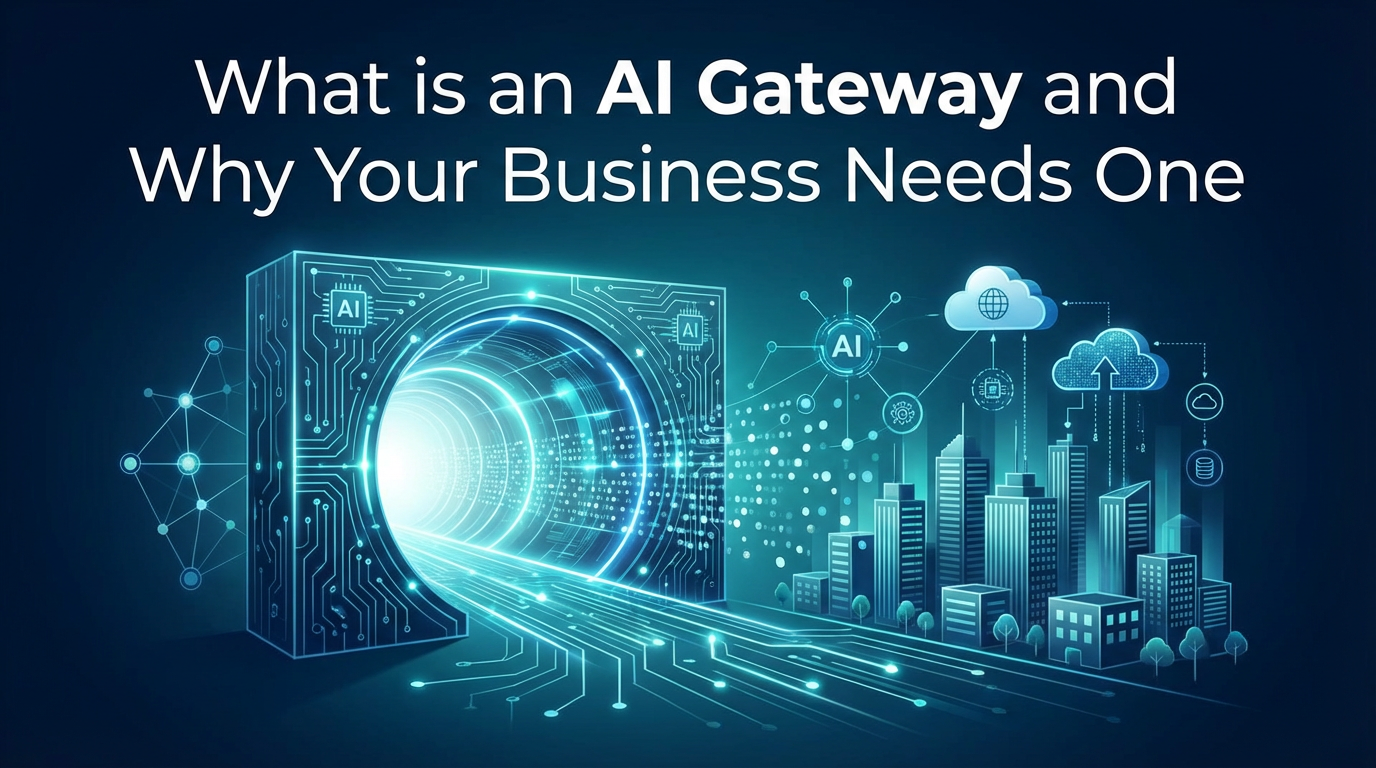


In the rapidly evolving landscape of artificial intelligence, businesses across every sector are scrambling to integrate advanced AI capabilities into their products, services, and internal operations. From enhancing customer experience with intelligent chatbots to automating complex data analysis and generating creative content, the potential of AI, particularly Large Language Models (LLMs), is transformative. However, the path to harnessing this power is fraught with significant technical and operational complexities. Organizations often grapple with the fragmentation of AI models, inconsistent APIs, spiraling costs, and formidable security challenges. This is precisely where the concept of an AI Gateway emerges not merely as a convenience, but as an indispensable architectural component for any forward-thinking enterprise.
Historically, the API Gateway has served as the frontline for managing traditional RESTful services, providing crucial functionalities like routing, security, and rate limiting. As AI models proliferated and became central to application logic, the need for a specialized evolution of this technology became evident. An AI Gateway takes the foundational principles of a conventional API Gateway and extends them to specifically address the unique demands of AI, acting as a unified orchestration layer that simplifies the consumption, management, and optimization of diverse AI services, including the increasingly powerful and complex LLMs. For businesses navigating the intricate world of artificial intelligence, understanding what an AI Gateway is and why it's critical is no longer optional; it's a prerequisite for innovation, efficiency, and sustained competitive advantage.
Understanding the Core Concepts: From API Gateway to LLM Gateway
To truly appreciate the necessity of an AI Gateway, it's essential to first establish a clear understanding of its foundational predecessor and its specialized descendant. The journey from a generic API management tool to a sophisticated AI orchestration layer reflects the evolving demands of modern application architectures.
What is an API Gateway? The Foundation of Microservices Connectivity
At its core, an API Gateway serves as a single entry point for all client requests into a microservices-based application or system. Instead of clients needing to know the specifics of multiple backend services, they communicate solely with the API Gateway. This architectural pattern emerged as a solution to the challenges posed by distributed systems, where an increasing number of granular services made direct client-to-service communication unwieldy, inefficient, and insecure.
The primary functions of a traditional API Gateway are multifaceted and critical for the health and scalability of an application:
- Request Routing: It intelligently directs incoming client requests to the appropriate backend service, abstracting away the underlying service discovery and network topology. This ensures that clients only need to know a single endpoint.
- Load Balancing: By distributing incoming traffic across multiple instances of a service, the API Gateway enhances performance, improves availability, and prevents any single service instance from becoming a bottleneck.
- Authentication and Authorization: It acts as the first line of defense, verifying client identities and ensuring they have the necessary permissions to access specific resources. This offloads security concerns from individual microservices.
- Rate Limiting and Throttling: To prevent abuse, manage resource consumption, and ensure fair usage, the API Gateway can enforce limits on the number of requests a client can make within a given timeframe.
- Protocol Translation: It can translate requests between different protocols, allowing clients and services to communicate seamlessly even if they use disparate standards.
- Caching: By storing responses to frequently requested data, the API Gateway can reduce latency and lighten the load on backend services.
- Monitoring and Analytics: It collects metrics on API usage, performance, and errors, providing valuable insights into the system's health and user behavior.
- Request Aggregation: For complex operations that require data from multiple backend services, the API Gateway can aggregate responses before sending a single, unified response back to the client, simplifying client-side logic.
- API Versioning: It allows for the simultaneous management of different versions of an API, enabling seamless updates and rollbacks without disrupting existing client applications.
In essence, a traditional API Gateway centralizes control over API consumption, enhancing security, improving performance, and streamlining the development process by providing a consistent interface to complex backend systems. It has become an indispensable component for enterprises embracing microservices and modern cloud architectures.
What is an AI Gateway? The Evolution for Intelligent Services
Building upon the robust foundation of a traditional API Gateway, an AI Gateway represents a significant evolution, specifically designed to address the unique complexities and demands of integrating artificial intelligence models into applications. While it inherits many of the core functionalities of its predecessor, it introduces specialized capabilities tailored for the lifecycle and consumption of AI services.
An AI Gateway acts as an intelligent intermediary between client applications and various AI models, whether they are hosted in the cloud, on-premise, or accessed via third-party APIs. Its purpose is to abstract away the inherent diversity and rapid evolution of AI technologies, providing a unified, consistent, and optimized interface for AI consumption.
Key distinctions and specialized features of an AI Gateway include:
- Unified Model Integration: AI models often come from different providers (e.g., OpenAI, Google AI, Hugging Face, custom-trained models) and expose vastly different APIs, data formats, and authentication mechanisms. An AI Gateway normalizes these disparate interfaces, presenting a single, coherent API for all integrated AI services. This dramatically simplifies integration for developers. For example, a platform like ApiPark excels at quick integration of over 100+ AI models, offering a unified management system for authentication and cost tracking across them.
- Prompt Management and Versioning: A critical aspect of interacting with generative AI models, especially LLMs, is the "prompt." An AI Gateway provides centralized management for prompts, allowing businesses to store, version, A/B test, and optimize prompts independently of the application code. This ensures consistency, facilitates experimentation, and decouples prompt engineering from application development. Moreover, some advanced AI Gateway solutions enable prompt encapsulation, allowing users to quickly combine AI models with custom prompts to create new, specialized APIs, such as sentiment analysis, translation, or data analysis APIs, directly from the gateway.
- Intelligent Routing and Model Selection: Beyond simple traffic distribution, an AI Gateway can make intelligent decisions about which AI model to use for a given request. This might be based on cost (routing to a cheaper model for non-critical tasks), performance (selecting the fastest available model), specific model capabilities, or even dynamic load.
- Cost Optimization and Monitoring: AI models, particularly LLMs, can incur significant costs based on token usage, compute time, or API calls. An AI Gateway provides granular visibility into these costs, enables quota management, and can implement strategies like caching, intelligent routing to cheaper models, or even fallback mechanisms to control spending effectively.
- AI-Specific Security and Governance: Beyond traditional API security, an AI Gateway addresses concerns specific to AI. This includes input sanitization to prevent prompt injection attacks, output filtering to ensure responsible AI usage, and data privacy measures for sensitive AI interactions. It can enforce access policies based on model capabilities or data classifications.
- Response Caching for AI Inferences: AI inferences can be computationally intensive and costly. The gateway can cache responses for identical or highly similar AI requests, significantly reducing latency and operational expenses.
- Observability for AI Operations: It provides comprehensive logging, metrics, and tracing for every AI interaction, offering deep insights into model performance, usage patterns, errors, and costs. This is crucial for debugging, auditing, and optimizing AI applications. For instance, ApiPark offers detailed API call logging, recording every detail of each API call, enabling quick tracing and troubleshooting, alongside powerful data analysis to display long-term trends and performance changes.
- Decoupling Applications from AI Models: By acting as an abstraction layer, the AI Gateway ensures that applications are not tightly coupled to specific AI models or providers. This allows businesses to switch models, update versions, or experiment with new AI services with minimal impact on the consuming applications, fostering significant agility.
In summary, an AI Gateway is not just an API Gateway for AI; it's a specialized control plane that simplifies, secures, optimizes, and orchestrates the complex landscape of artificial intelligence services, making them more accessible, manageable, and cost-effective for enterprise adoption.
What is an LLM Gateway? A Specialization for Large Language Models
An LLM Gateway is a specific type of AI Gateway that focuses exclusively or primarily on managing interactions with Large Language Models. While it shares many characteristics with a general AI Gateway, its specialization arises from the unique characteristics and challenges presented by LLMs themselves.
Large Language Models (LLMs) like GPT-4, Claude, Llama, and Gemini are powerful, versatile, but also notoriously complex to integrate and manage at scale. An LLM Gateway is engineered to address these specific nuances:
- Token Management and Cost Control: LLM usage is typically billed by "tokens" – units of text processed. An LLM Gateway provides granular token tracking, allows for setting quotas, and can implement intelligent routing strategies to choose the most cost-effective LLM for a given prompt, or even fall back to a cheaper model if token limits are approached.
- Advanced Prompt Engineering and Chaining: LLM prompts are often intricate, involving system messages, user messages, few-shot examples, and specific formatting. An LLM Gateway facilitates advanced prompt engineering by providing tools for templating, versioning, and chaining prompts together to create complex, multi-step AI workflows.
- Model Agility and Switching for LLMs: The LLM landscape is highly dynamic, with new models and versions being released frequently. An LLM Gateway provides the flexibility to seamlessly switch between different LLM providers (e.g., from OpenAI to Anthropic) or different models from the same provider (e.g., GPT-3.5 to GPT-4) without requiring changes in the application code. This is crucial for staying competitive and leveraging the best available models.
- Context Window Management: LLMs have a finite "context window" – the maximum amount of text they can process in a single interaction. An LLM Gateway can help manage this by implementing strategies like summarization, truncation, or chunking of input text to fit within the context window, ensuring efficient and effective LLM utilization.
- Safety and Moderation for Generative AI: LLMs can sometimes generate undesirable, biased, or harmful content. An LLM Gateway can integrate content moderation filters, both pre-processing inputs and post-processing outputs, to ensure that interactions with LLMs adhere to safety guidelines and ethical standards.
- Semantic Caching: Beyond simple caching, an LLM Gateway can implement semantic caching, where not just identical prompts, but semantically similar prompts, can retrieve cached responses, further reducing costs and latency for generative AI tasks.
- Observability and Debugging for LLMs: Debugging LLM interactions can be challenging due to their probabilistic nature. An LLM Gateway provides detailed logs of prompts, responses, tokens used, latency, and model choices, which are invaluable for understanding model behavior and troubleshooting issues.
In essence, while an AI Gateway provides a broad framework for all AI models, an LLM Gateway hones in on the specific intricacies of large language models, offering specialized tools and optimizations to manage their unique challenges, ensuring their effective, secure, and cost-efficient deployment within enterprise applications. It is an indispensable tool for any business looking to leverage the full potential of generative AI.
Key Challenges in AI Integration Without an AI Gateway
The allure of artificial intelligence is undeniable, promising revolutionary advancements across industries. However, the journey from recognizing AI's potential to successfully embedding it into core business operations is paved with significant obstacles. Without a dedicated AI Gateway or LLM Gateway, organizations often find themselves entangled in a web of complexities that hinder progress, inflate costs, and compromise security. Understanding these challenges underscores the critical need for an intelligent orchestration layer.
1. Model Fragmentation & Inconsistency: A Labyrinth of APIs
The AI landscape is incredibly diverse and rapidly expanding. Businesses often need to integrate multiple AI models for different tasks: one for sentiment analysis, another for image recognition, a third for natural language generation, and perhaps several LLMs from different providers. Each of these models typically comes with its own unique API, data input/output formats, authentication mechanisms, and SDKs.
- Developer Burden: Developers are forced to learn and manage a multitude of distinct interfaces. This not only increases the cognitive load but also leads to slower development cycles as teams spend more time on integration boilerplate rather than innovative application logic. They must write custom code for each integration, handling unique error structures, retry logic, and data transformations.
- Inconsistent Data Handling: The absence of a unified data format across different AI models means applications must constantly adapt their data structures. This introduces potential for errors, data corruption, and makes it challenging to swap models without significant code refactoring.
- Authentication Sprawl: Managing API keys, tokens, and OAuth flows for dozens of different AI services manually is a security and operational nightmare. Revoking access or rotating credentials becomes a tedious, error-prone process.
- Vendor Lock-in Risk: Direct integration with a specific AI provider's API creates tight coupling, making it difficult to switch providers or leverage a more performant/cost-effective model in the future without substantial code changes. This reduces agility and negotiating power.
2. Prompt Management & Versioning: The Unruly Heart of Generative AI
For applications leveraging generative AI, particularly LLMs, the "prompt" is the directive that guides the model's output. Effective prompt engineering is crucial for achieving desired results. Without an AI Gateway to centralize this, businesses face:
- Inconsistent Prompt Usage: Different parts of an application or different teams might use slightly varied prompts for the same task, leading to inconsistent AI outputs, quality degradation, and difficulty in debugging.
- Lack of Version Control: Prompts often evolve. Tracking changes, reverting to previous versions, or understanding which prompt led to a specific output becomes almost impossible when prompts are hardcoded within application logic or scattered across various services.
- Difficulty in A/B Testing: Optimizing prompts requires experimentation. Without a centralized system to manage and serve different prompt versions, performing A/B tests to identify the most effective prompts is cumbersome and often neglected.
- Prompt Injection Vulnerabilities: If prompts are directly exposed or not properly sanitized, malicious actors could inject harmful instructions, leading to unintended or dangerous AI behaviors.
3. Cost Management & Optimization: The Hidden Drain on Resources
AI inference can be expensive, especially with high-volume usage of advanced LLMs. Without an AI Gateway, businesses often encounter:
- Uncontrolled Spending: A lack of centralized visibility into token usage, API calls, and compute resources across various AI models makes it incredibly difficult to track and control costs. Departments might rack up significant bills unknowingly.
- Inefficient Model Selection: Without intelligent routing, applications might default to using the most expensive AI model for every request, even when a cheaper, equally effective model could suffice for certain tasks.
- Missed Optimization Opportunities: Features like caching AI responses, batching requests, or dynamically switching to cheaper models during off-peak hours are difficult to implement and manage without a central orchestrator.
- Billing Complexity: Reconciling invoices from multiple AI providers and allocating costs to different teams or projects manually is a time-consuming administrative burden.
4. Security & Access Control: An Open Door to Vulnerabilities
Integrating AI introduces a new attack surface and unique security considerations. Without an AI Gateway, security becomes a significant headache:
- Weakened Authentication & Authorization: Individual AI services might have varying security protocols, making it difficult to enforce consistent, granular access controls. Managing separate API keys for each service increases the risk of compromise.
- Data Privacy Risks: Sensitive data might be inadvertently exposed to third-party AI models without proper filtering or anonymization. Ensuring compliance with regulations like GDPR or HIPAA becomes a manual and error-prone process.
- Prompt Injection and Output Filtering: As mentioned, malicious prompts can lead to unintended AI behavior or data leaks. The absence of a central point for input sanitization and output validation leaves systems vulnerable.
- Lack of Centralized Audit Trails: Without comprehensive logging of every AI interaction, tracing security incidents, auditing data access, or proving compliance is incredibly challenging.
5. Performance & Reliability: The Bottlenecks of Direct Integration
Directly integrating AI models often leads to performance and reliability issues that degrade user experience and operational efficiency:
- Latency Spikes: Each direct call to an external AI service introduces network latency. Without caching or intelligent routing, cumulative latency can make AI-powered features feel sluggish.
- Error Handling Complexity: Different AI APIs return errors in various formats. Applications must implement custom error handling logic for each, increasing code complexity and making it harder to build resilient systems.
- Lack of Load Balancing and Redundancy: If an AI model or a specific provider experiences an outage or performance degradation, directly integrated applications have no mechanism to automatically failover to an alternative, leading to service disruptions.
- Resource Contention: Uncontrolled requests to AI services can overwhelm backend systems or hit rate limits, leading to service degradation or denial.
6. Observability & Analytics: Flying Blind in the AI Fog
Understanding how AI models are performing, being used, and impacting the business is crucial for continuous improvement. Without an AI Gateway:
- Limited Visibility: It's difficult to gain a holistic view of AI usage across the organization. Metrics like response times, error rates, token consumption per user, or model effectiveness are scattered or non-existent.
- Ineffective Debugging: When AI-powered features misbehave, diagnosing the root cause is a nightmare without centralized logs of prompts, responses, and intermediate steps.
- Lack of Performance Monitoring: Identifying performance bottlenecks, cost inefficiencies, or underperforming models becomes a manual, reactive process rather than a proactive, data-driven one.
- Missing Business Insights: Without aggregated data on AI usage, businesses cannot effectively measure the ROI of their AI investments or identify areas for further optimization and innovation.
7. Developer Experience: A Drag on Productivity
Ultimately, all these challenges converge to create a poor developer experience. Instead of focusing on building innovative applications, developers are bogged down by:
- Boilerplate Code: Writing and maintaining custom integration code for each AI model.
- Debugging Headaches: Navigating disparate error messages and tracing issues across multiple systems.
- Security Complexity: Manually managing credentials and worrying about data privacy for each AI interaction.
- Lack of Tooling: Absence of centralized dashboards, logs, and management interfaces.
The cumulative effect of these challenges is a significant impediment to AI adoption and scaling within an enterprise. They lead to slower development cycles, higher operational costs, increased security risks, and a compromised ability to innovate rapidly with AI. This paints a clear picture of why a robust AI Gateway is not just an advantage, but a necessity for any business serious about leveraging artificial intelligence effectively.
Core Features and Benefits of an AI Gateway: The Solution to AI Chaos
The complexities and challenges inherent in integrating and managing diverse AI models underscore the indispensable role of an AI Gateway. It acts as the intelligent orchestration layer that transforms AI chaos into a streamlined, secure, and cost-effective operational reality. By centralizing management and providing a unified interface, an AI Gateway empowers businesses to fully unlock the potential of artificial intelligence.
1. Unified Access Layer: A Single Pane of Glass for All AI
One of the most profound benefits of an AI Gateway is its ability to create a single, unified access layer for all AI models, regardless of their provider or underlying technology.
- Single Endpoint for All AI Models: Instead of connecting directly to OpenAI, then Google AI, then a custom-trained model, applications interact with a single, consistent endpoint provided by the AI Gateway. This drastically simplifies client-side integration and reduces the cognitive load on developers.
- Standardized Request/Response Formats: The AI Gateway normalizes the diverse API interfaces of various AI models. It takes incoming requests in a standard format, translates them into the specific format required by the chosen AI model, and then translates the AI model's response back into a consistent format for the client. This ensures that changes in AI models or prompts do not affect the application or microservices, thereby simplifying AI usage and maintenance costs. For example, ApiPark specifically highlights its unified API format for AI invocation, ensuring standardization across models.
- Simplifies Integration for Developers: With a unified interface, developers only need to learn one API structure. This accelerates development cycles, reduces boilerplate code, and allows engineers to focus on building innovative features rather than grappling with integration complexities. It fosters a more productive and agile development environment.
- Reduces Vendor Lock-in: By abstracting the underlying AI models, the gateway provides a crucial layer of indirection. This means applications are decoupled from specific AI providers, allowing businesses to swap models or providers (e.g., move from one LLM vendor to another) with minimal or no changes to the application code, enhancing strategic flexibility.
2. Security & Access Control: Fortifying the AI Perimeter
AI models, especially those processing sensitive data, require robust security. An AI Gateway serves as the primary enforcement point for security policies, extending beyond traditional API security to address AI-specific vulnerabilities.
- Centralized Authentication (API Keys, OAuth, JWT): The gateway handles authentication for all AI services in one place. It validates API keys, OAuth tokens, or JWTs, ensuring that only authorized applications and users can access the AI models. This eliminates the need to manage credentials for each individual AI service, reducing the attack surface.
- Granular Authorization (Role-Based Access Control): Beyond authentication, the gateway enforces fine-grained authorization policies. It can determine which users or applications have permission to access specific AI models, perform certain types of AI tasks, or access particular data categories. For instance, ApiPark allows for the creation of multiple teams (tenants), each with independent applications, data, user configurations, and security policies, ensuring independent API and access permissions for each tenant.
- Threat Protection (Input Sanitization, Malicious Prompt Detection): The gateway can implement sophisticated filters to sanitize user inputs, preventing common vulnerabilities like prompt injection attacks where malicious instructions are embedded in user-supplied text to manipulate LLMs. It can also detect and block attempts to exploit AI models for generating harmful content.
- Data Privacy and Compliance (Anonymization, Redaction): For sensitive workloads, the AI Gateway can be configured to anonymize or redact personally identifiable information (PII) before it's sent to external AI models, helping businesses comply with data privacy regulations like GDPR, CCPA, or HIPAA. This ensures that sensitive data never leaves the corporate perimeter in an unmasked format.
- Subscription Approval Features: For highly sensitive or regulated AI services, the gateway can enforce an approval workflow. APIPark, for example, allows for the activation of subscription approval features, ensuring that callers must subscribe to an API and await administrator approval before they can invoke it, preventing unauthorized API calls and potential data breaches.
3. Cost Management & Optimization: Intelligent Spending for AI
AI operations can become unexpectedly expensive without proper oversight. An AI Gateway provides the tools to gain control over AI spending and optimize resource utilization.
- Intelligent Routing Based on Cost/Performance: The gateway can dynamically choose the most cost-effective or highest-performing AI model for a given request. For example, it might route simple queries to a cheaper, faster LLM, while complex tasks go to a more powerful but expensive model. This ensures resources are used efficiently.
- Token Usage Tracking and Quotas: For LLMs, token consumption is a primary cost driver. The AI Gateway meticulously tracks token usage per user, application, or project. It can then enforce quotas, alerting administrators or even blocking requests once limits are reached, preventing unexpected cost overruns.
- Caching of AI Responses: Many AI requests, especially for common queries or recurring analyses, might yield identical or highly similar results. The AI Gateway can cache AI responses, serving them directly from memory instead of incurring a new inference cost. This dramatically reduces latency and expenditure. Advanced gateways can even implement semantic caching for LLMs, recognizing semantically similar prompts.
- Fallbacks to Cheaper Models: In scenarios where a primary, expensive AI model fails or reaches its rate limit, the gateway can be configured to automatically fall back to a less expensive or less capable model, ensuring service continuity at a lower cost, rather than failing the request entirely.
- Detailed Cost Allocation: By tracking usage per tenant, team, or application, the AI Gateway provides clear visibility into where AI costs are originating, facilitating accurate chargebacks and budget management.
4. Prompt Management & Versioning: Mastering the Art of Conversation
Effective interaction with generative AI hinges on well-crafted prompts. An AI Gateway transforms prompt engineering from an ad-hoc process into a structured, manageable discipline.
- Centralized Prompt Library: The gateway provides a central repository for all prompts, making them easily discoverable, reusable, and consistent across an organization. This eliminates duplication and ensures that teams are using approved, optimized prompts.
- Version Control for Prompts: Just like application code, prompts evolve. The AI Gateway allows for versioning prompts, enabling teams to track changes, revert to previous versions, and understand the history of prompt evolution. This is crucial for debugging and maintaining quality.
- A/B Testing of Prompts: To optimize AI output, different prompt variations need to be tested. The gateway facilitates A/B testing by routing a percentage of traffic to different prompt versions, allowing businesses to compare performance metrics and identify the most effective prompts.
- Prompt Encapsulation into New APIs: A powerful feature, the AI Gateway can take an AI model and a specific, optimized prompt, and "encapsulate" them into a new, higher-level REST API. For instance, ApiPark allows users to quickly combine AI models with custom prompts to create new APIs, such as a "summarize_text" API or a "translate_to_german" API, which developers can then consume without needing to understand the underlying AI model or prompt details. This significantly enhances reusability and simplifies development.
5. Traffic Management & Reliability: Ensuring AI Service Uptime and Performance
The performance and reliability of AI services directly impact user experience and business operations. An AI Gateway implements robust traffic management features to ensure high availability and optimal performance.
- Load Balancing Across Multiple Instances/Providers: The gateway intelligently distributes incoming AI requests across multiple instances of an AI model or even across different AI providers. This prevents single points of failure, improves response times, and allows for seamless scalability under heavy load.
- Rate Limiting to Prevent Abuse and Manage Costs: To protect AI services from being overwhelmed and to control costs, the AI Gateway enforces rate limits, restricting the number of requests an individual client or application can make within a specified period. This prevents denial-of-service attacks and ensures fair resource distribution.
- Circuit Breakers for Fault Tolerance: If an AI model or external service starts to exhibit errors or high latency, the gateway can "open" a circuit breaker, temporarily stopping requests to that service. This prevents cascading failures and gives the struggling service time to recover, improving overall system resilience.
- Retries and Exponential Backoff: For transient errors, the gateway can automatically retry failed AI requests with an exponential backoff strategy, increasing the delay between retries. This improves the success rate of requests without overwhelming the backend service.
- High Performance: A well-engineered AI Gateway is designed for high throughput and low latency. For example, ApiPark boasts performance rivaling Nginx, achieving over 20,000 TPS with modest hardware and supporting cluster deployment to handle large-scale traffic, ensuring that the gateway itself doesn't become a bottleneck.
6. Observability & Analytics: Gaining Deep Insights into AI Operations
Understanding how AI models are performing, being used, and impacting the business is crucial for continuous improvement and strategic decision-making. An AI Gateway provides unparalleled visibility.
- Comprehensive Logging of AI Interactions: The AI Gateway meticulously records every detail of each AI interaction – the original prompt, the AI model used, the full response, latency, token count, cost incurred, and any errors. This creates a detailed audit trail essential for debugging, compliance, and post-mortem analysis. APIPark specifically provides comprehensive logging capabilities, recording every detail of each API call, enabling businesses to quickly trace and troubleshoot issues.
- Metrics and Dashboards for Performance, Usage, and Cost: The gateway collects real-time metrics on various aspects of AI usage, including request volume, average response times, error rates, token consumption per model/user, and API costs. These metrics are presented in intuitive dashboards, offering immediate insights into AI system health and business impact.
- Tracing for Debugging Complex Workflows: For multi-step AI workflows or chained prompts, distributed tracing capabilities within the AI Gateway allow developers to follow the entire path of a request, pinpointing bottlenecks or failure points across different AI models or internal services.
- Powerful Data Analysis: Beyond raw logs and metrics, an AI Gateway can perform sophisticated data analysis on historical call data. This feature allows businesses to identify long-term trends, anticipate performance changes, uncover usage patterns, and spot potential issues before they impact operations. APIPark highlights this capability, helping businesses with preventive maintenance and strategic optimization.
- Predictive Maintenance: By analyzing historical data, the gateway can even help predict future resource needs or potential points of failure, enabling proactive maintenance and capacity planning.
7. Model Agility & Switching: Future-Proofing AI Investments
The AI landscape is dynamic, with new models and advancements emerging constantly. An AI Gateway ensures that your AI strategy remains agile and adaptable.
- Decoupling Applications from Specific AI Models: The abstraction layer provided by the gateway means that applications are not hardwired to a particular AI model or provider. This is critical for future-proofing your architecture.
- Seamlessly Switch Between Providers or Models: Businesses can easily experiment with or migrate to newer, more efficient, or more cost-effective AI models (e.g., from GPT-3.5 to GPT-4, or from OpenAI to an open-source alternative like Llama) with minimal or no changes to the consuming applications. This fosters innovation and allows rapid adoption of the best available AI technology.
- A/B Testing of Different Models: The gateway can route a fraction of production traffic to a new AI model, allowing businesses to compare its performance, cost, and output quality against existing models in a real-world setting before a full rollout. This reduces risk and ensures optimal model selection.
8. Developer Experience & Productivity: Empowering the Builders
Ultimately, an AI Gateway is about empowering developers and accelerating innovation by simplifying the AI integration journey.
- Simplified SDKs and APIs: With a unified API presented by the gateway, developers can use a single SDK or API interface to access a multitude of AI services, drastically simplifying their development workflow.
- Developer Portals: Many AI Gateways offer integrated developer portals that provide clear documentation, examples, and self-service access to AI APIs. APIPark functions as an API developer portal, centralizing the display of all API services and making it easy for different departments and teams to find and use required services, fostering internal collaboration.
- Faster Time to Market for AI-Powered Features: By abstracting away complexity and providing robust management tools, the AI Gateway enables development teams to build, test, and deploy AI-powered features much more quickly, accelerating time to market and providing a competitive edge.
- Reduced Operational Overhead: Automating tasks like authentication, rate limiting, and monitoring frees up development and operations teams to focus on higher-value activities.
9. Tenant Management & Collaboration: Enterprise-Ready AI Governance
For larger organizations or those building multi-tenant AI products, specific features for managing different teams and their access are crucial.
- Independent API and Access Permissions for Each Tenant: An advanced AI Gateway allows for the creation of multiple isolated environments or "tenants," each with its own independent applications, data configurations, and security policies. This ensures data isolation and customized access while sharing underlying infrastructure to improve resource utilization and reduce operational costs. APIPark is designed with this multi-tenant capability, making it suitable for complex enterprise environments.
- API Service Sharing within Teams: The platform allows for the centralized display of all API services, making it easy for different departments and teams to find and use the required API services within their authorized scope. This fosters internal collaboration and reuse of AI capabilities across the enterprise.
- Streamlined Onboarding for New Teams: Setting up new teams or projects to consume AI services becomes a self-service process with predefined templates and access controls, rather than a manual, IT-dependent one.
The combination of these powerful features makes an AI Gateway an indispensable strategic asset. It not only addresses the immediate technical challenges of AI integration but also lays the groundwork for scalable, secure, and cost-effective AI operations, positioning businesses for sustained innovation and competitive advantage in the AI-first era.
APIPark is a high-performance AI gateway that allows you to securely access the most comprehensive LLM APIs globally on the APIPark platform, including OpenAI, Anthropic, Mistral, Llama2, Google Gemini, and more.Try APIPark now! 👇👇👇
Use Cases for an AI Gateway: Powering Diverse Business Applications
The versatility and essential nature of an AI Gateway become particularly clear when examining its applicability across a wide spectrum of business scenarios. From enhancing customer interactions to supercharging internal operations, the gateway serves as the backbone for diverse AI-powered initiatives.
1. Customer Service Chatbots and Virtual Assistants
- Challenge: Modern chatbots need to be intelligent, responsive, and often draw on multiple AI capabilities: natural language understanding (NLU) to interpret user intent, natural language generation (NLG) for responses (often an LLM), sentiment analysis to gauge emotion, and sometimes knowledge base retrieval. Directly integrating each of these models can be complex, and ensuring consistent responses across various AI providers is difficult.
- AI Gateway Solution: The AI Gateway provides a unified interface to all these underlying AI models. A chatbot application simply sends a user query to the gateway, which then intelligently routes it through the NLU model, potentially an LLM for response generation, and a sentiment analysis model. The gateway can manage prompts for the LLM, cache common responses, and ensure consistent tone and safety guidelines across all interactions. It centralizes authentication for all AI services, and provides real-time monitoring of performance and cost per customer interaction.
2. Content Generation and Summarization Tools
- Challenge: Businesses developing tools for marketing, content creation, or knowledge management often leverage LLMs for generating articles, social media posts, summaries, or translations. Different LLMs might excel at different types of content, and prompt engineering is critical for quality. Cost control is also paramount for high-volume generation.
- AI Gateway Solution: An LLM Gateway (a specialized AI Gateway) is ideal here. It manages a library of optimized prompts for various content types (e.g., "generate blog post outline," "summarize meeting minutes," "translate to Spanish"). It can intelligently route generation requests to the most appropriate or cost-effective LLM based on the content type or required quality. For example, a quick internal summary might use a cheaper LLM, while customer-facing marketing copy uses a premium one. The gateway tracks token usage, caches previously generated content, and ensures consistent branding and tone through standardized prompts.
3. Data Analysis and Insights Platforms
- Challenge: Analytics platforms increasingly integrate AI for tasks like anomaly detection, predictive modeling, data categorization, or even natural language querying of data (e.g., "show me sales trends for Q3 in Europe"). These often involve multiple specialized AI models and require secure, high-throughput access.
- AI Gateway Solution: The AI Gateway provides a secure, performant layer for these platforms to access various analytics AI models. It handles authentication and authorization for sensitive data, routes analytical queries to the correct model (e.g., a time-series forecasting model, a clustering algorithm, or an LLM for natural language queries), and manages rate limits to prevent overwhelming the underlying AI infrastructure. Comprehensive logging ensures auditability for regulatory compliance and data governance.
4. Developer Tools Integrating Multiple AI APIs
- Challenge: Software development kits (SDKs) and integrated development environments (IDEs) are incorporating AI for code generation, code completion, bug detection, and documentation. These tools need to seamlessly access various code-specific LLMs and potentially other AI models for natural language processing or image analysis (e.g., for diagram generation).
- AI Gateway Solution: An AI Gateway simplifies the integration of these diverse AI services into developer tools. It offers a single, consistent API for all AI functions, allowing SDKs to remain lean and agnostic to the specific AI models being used. The gateway can manage API keys for various AI services, route code-related requests to specialized coding LLMs, and handle versioning for AI models, ensuring that developer tools always access the most up-to-date and performant AI capabilities.
5. Internal Enterprise AI Applications
- Challenge: Large enterprises often build internal AI applications for tasks such as HR policy lookup, internal knowledge search, legal document review, or employee training. These applications need to access proprietary data securely, leverage various AI models, and ensure compliance with internal policies.
- AI Gateway Solution: The AI Gateway acts as a central control plane for all internal AI consumption. It enforces strict access controls and authentication for internal employees, ensuring that only authorized users can access specific AI capabilities or sensitive data. It can integrate with enterprise identity providers. The gateway can also perform data redaction for internal documents, route queries to internal custom AI models, and provide detailed audit logs for compliance purposes. Its multi-tenant capabilities, as offered by APIPark, are particularly valuable here, allowing different departments to manage their own AI services and access permissions independently, yet within a unified corporate framework.
6. Healthcare: Medical Diagnosis and Research Assistance
- Challenge: AI in healthcare requires extreme accuracy, data privacy (HIPAA compliance), and the ability to integrate with specialized medical imaging AI models, diagnostic LLMs, and research databases.
- AI Gateway Solution: The gateway provides a highly secure and compliant layer. It can ensure patient data is anonymized or de-identified before being sent to AI models, route diagnostic requests to certified AI algorithms, and manage access permissions for healthcare professionals. Its logging capabilities are critical for audit trails and regulatory compliance.
7. Finance: Fraud Detection and Personalized Financial Advice
- Challenge: Financial institutions use AI for real-time fraud detection, algorithmic trading, and personalized customer advice. These applications demand ultra-low latency, robust security, and the ability to switch between high-performance analytics AI models quickly.
- AI Gateway Solution: The AI Gateway provides the necessary performance and security. It can route high-priority fraud detection requests to dedicated, low-latency AI models, apply stringent rate limiting to prevent abuse, and cache responses for frequently requested financial data. Its security features, including advanced authentication and authorization, are paramount for protecting sensitive financial information.
In each of these use cases, the AI Gateway transcends its role as a mere technical component; it becomes a strategic enabler, simplifying the complex world of AI integration, boosting developer productivity, reducing costs, and significantly enhancing the security and reliability of AI-powered applications. It moves businesses beyond experimentation into scalable, production-ready AI deployments.
Choosing the Right AI Gateway: Strategic Considerations for Your Business
The decision to adopt an AI Gateway is clear, but selecting the right one requires careful consideration. The market offers a range of solutions, from open-source projects to commercial platforms, each with its unique strengths and weaknesses. Businesses must evaluate their specific needs, current infrastructure, long-term goals, and risk tolerance to make an informed choice.
Here are key factors to consider when selecting an AI Gateway:
1. Scalability and Performance
- Throughput and Latency: Can the gateway handle your current and projected AI request volumes without introducing significant latency? Look for solutions designed for high-performance and efficient resource utilization. For instance, platforms like APIPark boast performance rivaling Nginx, capable of over 20,000 TPS, indicating a robust core architecture.
- Clustering and Horizontal Scaling: Does the gateway support cluster deployment and horizontal scaling to accommodate peak loads and provide high availability? This is crucial for mission-critical AI applications.
- Resource Footprint: How much compute, memory, and storage does the gateway require? An efficient gateway minimizes infrastructure costs.
2. Security Features
- Authentication & Authorization: Comprehensive support for various authentication methods (API keys, OAuth, JWT) and robust, granular role-based access control (RBAC) are non-negotiable.
- Threat Protection: Look for features like input sanitization, prompt injection detection, output filtering for harmful content, and IP whitelisting/blacklisting.
- Data Privacy and Compliance: Does it offer capabilities for data redaction, anonymization, and audit trails to help meet regulatory requirements (e.g., GDPR, HIPAA)?
- Encryption: Support for encryption in transit (TLS) and at rest for sensitive configurations.
- API Subscription Approval: For controlled access to sensitive APIs, features like requiring admin approval before an API can be invoked, as offered by APIPark, are a significant security advantage.
3. Integration Capabilities and Ecosystem
- AI Model Support: How easily can it integrate with a wide range of AI models from different providers (OpenAI, Anthropic, Google, custom models)? Does it support various model types (LLMs, vision models, speech models)?
- Unified API Format: A key differentiator is its ability to normalize disparate AI APIs into a single, consistent format, simplifying developer experience.
- Prompt Management: Does it offer robust tools for prompt storage, versioning, A/B testing, and encapsulation into new APIs?
- API Management Features: Beyond AI, does it offer traditional API Gateway functionalities like routing, rate limiting, caching, and versioning for all your services?
- Extensibility: Can you easily extend its functionality through plugins, custom logic, or integrations with other tools in your ecosystem (e.g., CI/CD, monitoring systems)?
4. Cost Management and Optimization
- Token/Usage Tracking: Granular tracking of AI consumption per user/application/model.
- Cost Quotas and Alerts: Ability to set spending limits and receive notifications.
- Intelligent Routing: Dynamic routing based on cost, performance, or specific model capabilities.
- Caching: Support for caching AI responses to reduce inference costs and latency.
- Fallback Mechanisms: Automatic fallbacks to cheaper models or alternative providers.
5. Observability and Analytics
- Comprehensive Logging: Detailed logs of all AI interactions (prompts, responses, errors, latency, cost).
- Metrics and Dashboards: Real-time visibility into performance, usage, and cost metrics.
- Data Analysis: Powerful tools for analyzing historical data to identify trends and potential issues. APIPark emphasizes its detailed logging and powerful data analysis for proactive maintenance.
- Tracing: Distributed tracing capabilities for complex AI workflows.
6. Ease of Deployment and Management
- Deployment Options: Does it support various deployment environments (cloud, on-premise, Kubernetes, Docker)?
- Quick Start: How fast and simple is the initial setup? Products like APIPark highlight quick deployment (e.g., "in just 5 minutes with a single command line"), which significantly lowers the barrier to adoption.
- User Interface/Developer Portal: An intuitive management UI and a comprehensive developer portal with documentation, SDKs, and self-service capabilities greatly enhance productivity.
- Operational Overhead: How much effort is required for ongoing maintenance, upgrades, and troubleshooting?
7. Open Source vs. Commercial
- Open Source: Offers flexibility, community support, full transparency, and often lower initial costs. However, it may require more internal expertise for deployment, support, and advanced features. APIPark is an open-source AI gateway under the Apache 2.0 license, making it a strong contender for those valuing flexibility and community.
- Commercial: Typically provides professional support, SLAs, advanced features, and a more polished user experience. It comes with licensing costs but can reduce operational burden. APIPark also offers a commercial version with advanced features and professional technical support for enterprises.
8. Vendor Support and Community
- Documentation and Tutorials: High-quality, comprehensive documentation is crucial for adoption and troubleshooting.
- Community: For open-source solutions, an active community indicates good support and ongoing development.
- Commercial Support: For commercial products, evaluate the vendor's reputation, responsiveness, and service level agreements (SLAs).
By meticulously evaluating these criteria against your organization's specific needs and strategic roadmap, you can select an AI Gateway that not only solves immediate integration challenges but also serves as a robust, future-proof foundation for your enterprise AI initiatives. For businesses looking for a powerful, flexible, and rapidly deployable solution, exploring platforms like APIPark provides an excellent starting point, especially given its open-source nature and comprehensive feature set.
The Future of AI Gateways: Evolving with Intelligence
The journey of the AI Gateway is far from over; it is a continuously evolving architectural component, adapting to the relentless pace of innovation in artificial intelligence. As AI models become more sophisticated, specialized, and pervasive, the role of the gateway will expand, integrating deeper intelligence and becoming an even more central nervous system for AI operations.
1. Enhanced Intelligence Within the Gateway Itself
Future AI Gateways will not just orchestrate AI, but will themselves become more intelligent.
- AI-Powered Optimization: Gateways will increasingly use AI to optimize their own operations, such as dynamic routing based on predictive analytics of model performance or real-time cost fluctuations. They might learn from past interactions to automatically select the best model for a given context without explicit configuration.
- Autonomous Prompt Engineering: With advancements in meta-prompting and self-improving LLMs, gateways could potentially suggest, refine, and even autonomously A/B test prompts, continuously optimizing AI output quality and efficiency.
- Proactive Anomaly Detection: Leveraging machine learning, the gateway will be able to detect unusual patterns in AI usage, performance, or cost, proactively alerting administrators to potential issues or security threats before they escalate.
2. Broader Support for Multimodal AI and Specialized Models
While LLMs are currently dominant, the future of AI is increasingly multimodal, combining text, images, audio, and video.
- Unified Multimodal Interfaces: AI Gateways will evolve to provide unified APIs for multimodal AI models, abstracting away the complexities of integrating disparate data types and model architectures. This will simplify the development of applications that can, for example, understand an image and generate a textual description, or interpret a spoken query and respond with relevant visuals.
- Specialized AI Microgateways: As highly specialized AI models emerge for niche tasks (e.g., specific scientific simulations, complex financial modeling), the AI Gateway might evolve to manage these with dedicated "microgateways" optimized for their unique data formats and computational requirements, all orchestrated by a central control plane.
3. Tighter Integration with MLOps Pipelines
The lifecycle of AI models, from development and training to deployment and monitoring, is governed by MLOps (Machine Learning Operations). AI Gateways will become more intrinsically linked to these pipelines.
- Automated Model Deployment and Versioning: The gateway will seamlessly integrate with MLOps tools to automatically deploy new versions of AI models, manage traffic routing between old and new versions, and roll back if issues are detected, ensuring continuous delivery of AI capabilities.
- Feedback Loops for Model Retraining: Data collected by the AI Gateway (e.g., user feedback on AI responses, identified errors, performance metrics) will flow directly back into MLOps pipelines to inform model retraining and improvement, closing the loop on the AI lifecycle.
- Policy-as-Code for AI Governance: Security, cost, and usage policies for AI models will increasingly be defined as code within the MLOps pipeline and enforced by the AI Gateway, ensuring consistency and automation in governance.
4. Edge AI and Decentralized AI Gateways
As AI moves closer to the data source (edge computing), AI Gateways will also need to adapt.
- Edge AI Gateways: Miniaturized, high-performance gateways will operate at the edge, orchestrating local AI inferences, caching results, and securely communicating with centralized cloud AI models when necessary, reducing latency and bandwidth costs.
- Federated AI Gateways: For privacy-preserving AI, gateways might facilitate federated learning scenarios, allowing models to be trained on decentralized data without the data ever leaving its source, with the gateway managing model updates and aggregation.
The future of the AI Gateway is one of increasing sophistication, autonomy, and ubiquity. It will continue to be the linchpin that enables businesses to navigate the accelerating complexity of the AI landscape, transforming raw AI power into reliable, secure, and valuable business outcomes. Its evolution will mirror the broader evolution of AI itself, making it an ever more critical investment for any organization committed to harnessing intelligent technologies.
Conclusion: The Indispensable Role of the AI Gateway in Modern Enterprise
The dawn of the AI era presents businesses with unprecedented opportunities for innovation, efficiency, and competitive advantage. Yet, beneath the veneer of powerful AI capabilities lies a complex, fragmented, and rapidly evolving landscape. Integrating and managing diverse AI models, especially the resource-intensive and nuanced Large Language Models, poses significant challenges in terms of technical complexity, spiraling costs, security vulnerabilities, and operational overhead. Without a strategic approach, the promise of AI can quickly turn into a source of frustration and inefficiency.
This is precisely why the AI Gateway has rapidly transitioned from a niche concept to an indispensable architectural component for modern enterprises. Evolving from the foundational API Gateway and further specializing into an LLM Gateway for large language models, it serves as the intelligent orchestration layer that simplifies, secures, and optimizes every interaction with artificial intelligence services.
By providing a unified access layer, an AI Gateway liberates developers from the burden of integrating disparate AI models, accelerating product development and fostering innovation. It fortifies the AI perimeter with robust authentication, granular authorization, and AI-specific threat protection, safeguarding sensitive data and ensuring compliance. Through intelligent routing, comprehensive usage tracking, and caching, it transforms AI consumption into a cost-controlled and highly efficient operation. Furthermore, its advanced prompt management, traffic control, and deep observability features ensure that AI-powered applications are not only performant and reliable but also continuously optimized for business impact.
In an environment where AI agility is paramount, an AI Gateway decouples applications from specific models, enabling seamless switching between providers and rapid adoption of the latest advancements without disrupting operations. Solutions like APIPark, an open-source AI gateway and API management platform, exemplify these capabilities, offering quick integration, unified API formats, robust security, and powerful analytics, making it an excellent choice for businesses aiming to effectively manage their AI landscape.
For any business looking to move beyond sporadic AI experimentation to scalable, production-grade AI deployment, the AI Gateway is not merely a technical convenience; it is a strategic imperative. It is the bridge that connects the vast potential of artificial intelligence with the practical demands of enterprise operations, ensuring that your business can navigate the AI future with confidence, security, and unparalleled efficiency. Embracing an AI Gateway is not just about managing AI; it's about mastering it.
Frequently Asked Questions (FAQs)
Q1: What is the primary difference between a traditional API Gateway and an AI Gateway?
A traditional API Gateway primarily focuses on managing RESTful services, handling routing, authentication, rate limiting, and caching for general APIs. An AI Gateway, while inheriting these core functionalities, specializes in the unique challenges of AI models. This includes features like unified integration for diverse AI models (often with differing APIs and data formats), prompt management and versioning for generative AI, intelligent routing based on AI-specific criteria (cost, performance, model capability), token usage tracking, AI-specific security (e.g., prompt injection prevention), and deep observability for AI interactions. It's an evolution tailored to the complexities of AI, particularly LLMs.
Q2: Why can't I just connect my applications directly to AI model APIs without an AI Gateway?
While direct connection is technically possible, it introduces significant challenges. You'd face: model fragmentation (managing multiple disparate APIs), lack of centralized prompt versioning, uncontrolled AI costs due to no unified tracking or intelligent routing, heightened security risks (managing individual API keys, no centralized input sanitization), reduced reliability (no load balancing, failovers, or circuit breakers for AI services), and a poor developer experience due to increased boilerplate code. An AI Gateway abstracts these complexities, providing a streamlined, secure, and cost-optimized approach.
Q3: How does an AI Gateway help with managing the costs of Large Language Models (LLMs)?
An AI Gateway offers several mechanisms for LLM cost management: 1. Token Usage Tracking: It meticulously tracks token consumption per user, application, or project. 2. Intelligent Routing: It can route requests to the most cost-effective LLM for a given task, or fall back to cheaper models when appropriate. 3. Quotas and Alerts: Allows setting spending limits and sends notifications when thresholds are approached. 4. Caching: Caches responses to identical or semantically similar LLM prompts, reducing repeat inference costs. 5. Rate Limiting: Prevents excessive, costly API calls. By centralizing these functions, the gateway provides unparalleled visibility and control over LLM expenditure.
Q4: What are the key security benefits of using an AI Gateway for my business?
The security benefits are extensive: 1. Centralized Authentication/Authorization: Single point of control for API keys, OAuth, and granular access permissions to AI models. 2. Data Privacy: Capabilities for anonymizing or redacting sensitive data before it reaches external AI models, aiding compliance (e.g., GDPR, HIPAA). 3. Threat Protection: Input sanitization to prevent prompt injection attacks and output filtering to ensure responsible AI usage. 4. Audit Trails: Comprehensive logging of all AI interactions provides invaluable data for security audits and incident response. 5. Subscription Approval: Features like requiring administrative approval for API access (as offered by APIPark) prevent unauthorized usage and potential data breaches.
Q5: Can an AI Gateway integrate with both third-party AI models (like OpenAI) and my custom-trained internal models?
Yes, a robust AI Gateway is designed for this very purpose. Its core function is to provide a unified access layer that abstracts away the underlying AI model. Whether the model is a popular LLM from a cloud provider (e.g., OpenAI, Anthropic), a specialized vision model from Google AI, or a custom-trained machine learning model hosted on your own infrastructure, the gateway can integrate them all. It normalizes their APIs and data formats, presenting a consistent interface to your applications, thereby offering maximum flexibility and interoperability.
🚀You can securely and efficiently call the OpenAI API on APIPark in just two steps:
Step 1: Deploy the APIPark AI gateway in 5 minutes.
APIPark is developed based on Golang, offering strong product performance and low development and maintenance costs. You can deploy APIPark with a single command line.
curl -sSO https://download.apipark.com/install/quick-start.sh; bash quick-start.sh

In my experience, you can see the successful deployment interface within 5 to 10 minutes. Then, you can log in to APIPark using your account.

Step 2: Call the OpenAI API.