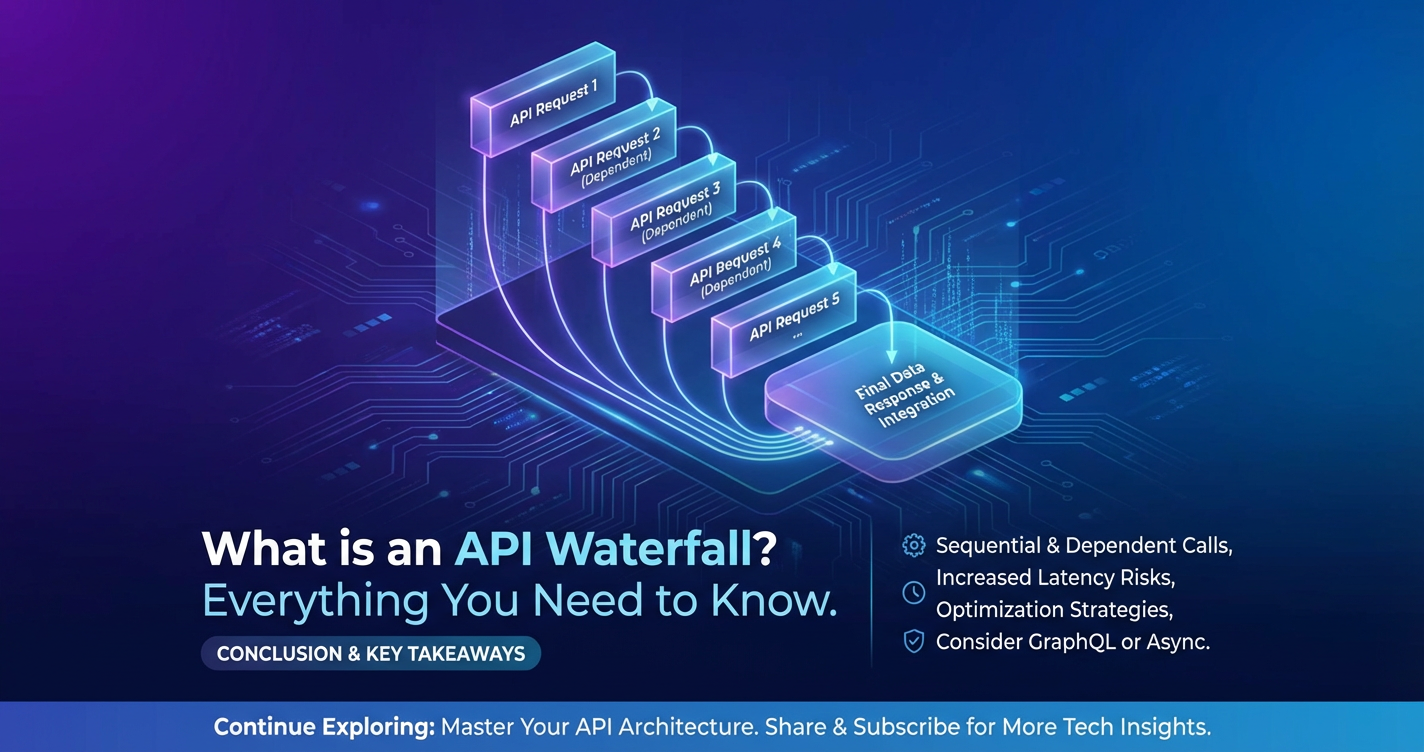
What is an API Waterfall? Everything You Need to Know.
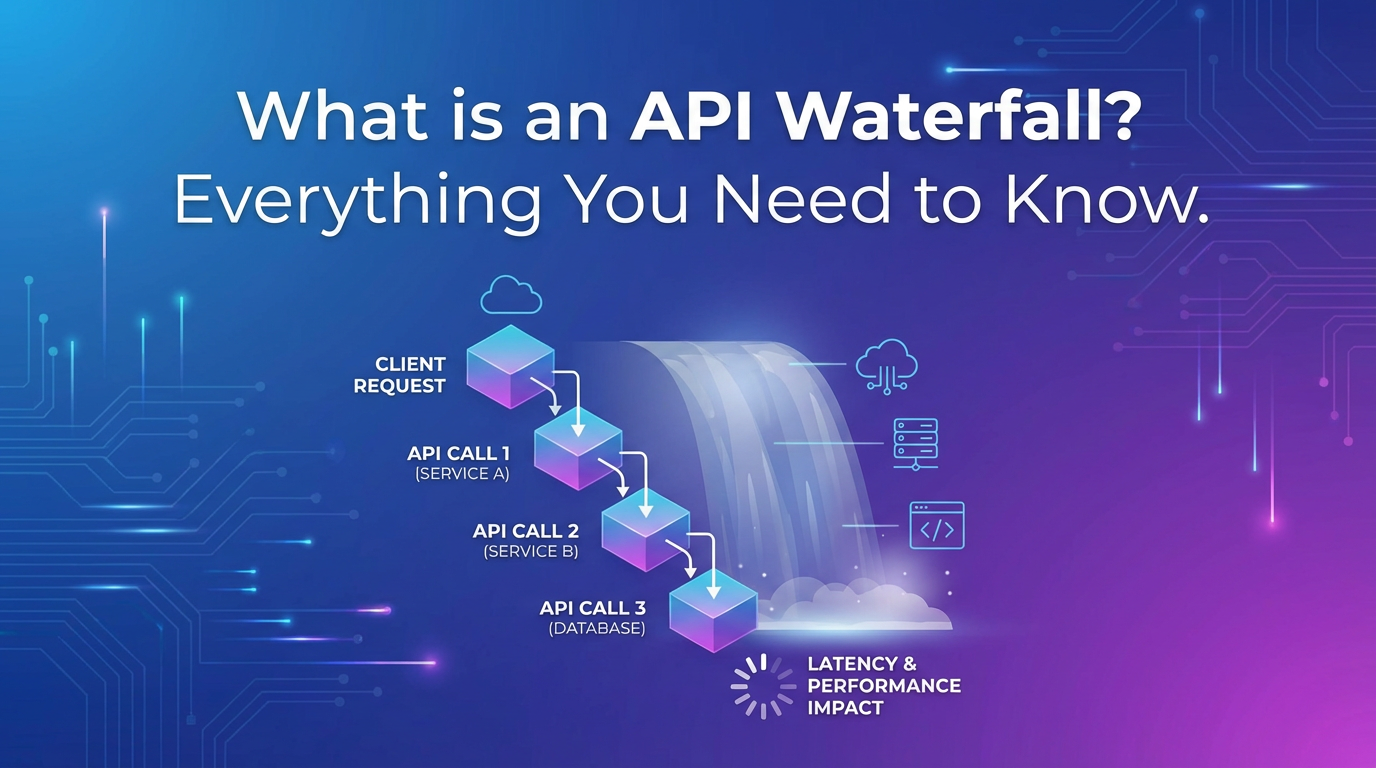


In the intricate tapestry of modern software architecture, Application Programming Interfaces (APIs) serve as the indispensable threads that weave together disparate services, applications, and data sources. From the seamless flow of information between microservices within a complex enterprise ecosystem to the real-time data exchanges powering our mobile applications, APIs are the foundational glue. However, as systems grow in complexity and distributed architectures become the norm, a common and insidious performance anti-pattern emerges: the API waterfall. This phenomenon, often lurking beneath the surface of seemingly robust systems, can significantly degrade performance, cripple user experience, and challenge scalability, posing a formidable hurdle for developers and architects alike. Understanding what an API waterfall is, how it manifests, and crucially, how to prevent and mitigate it, is paramount for building truly performant and resilient digital experiences.
This comprehensive guide delves deep into the concept of an API waterfall, exploring its definition, underlying causes, detrimental impacts, and effective detection methods. More importantly, we will dissect a range of sophisticated strategies for mitigation, emphasizing the pivotal role of an API gateway as a critical orchestrator in preventing these sequential bottlenecks. By equipping you with a thorough understanding, this article aims to empower you to design, implement, and manage API ecosystems that are not only functional but also exceptionally fast and reliable, ensuring that your applications deliver unparalleled performance and user satisfaction.
Unpacking the Fundamentals: The Essence of APIs
Before we delve into the intricacies of API waterfalls, it's essential to firmly grasp the foundational concept of APIs themselves. An API, or Application Programming Interface, is essentially a set of definitions and protocols that allows different software applications to communicate with each other. Think of it as a meticulously designed menu in a restaurant: you don't need to know how the chef prepares the dishes (the internal workings of the server application), you just need to know what you can order (the available endpoints and methods) and what ingredients you need to provide (the request parameters) to get your desired meal (the response data).
APIs define the methods developers can use to interact with a system, the types of requests they can make, the data formats they can expect in return, and the conventions they need to follow. They abstract away the complexity of the underlying system, presenting a clean, standardized interface for interaction. This abstraction is incredibly powerful, enabling modularity, reusability, and interoperability across vast and diverse software landscapes.
The pervasive importance of APIs in modern software architecture cannot be overstated. In an era dominated by microservices, cloud computing, and mobile-first development, APIs are the very fabric that holds everything together. Microservices, by their very nature, are small, independent services that communicate with each other exclusively through APIs. Cloud platforms expose their vast array of services—from storage and compute to machine learning capabilities—through robust APIs. Mobile applications, single-page web applications, and even IoT devices rely heavily on APIs to fetch data, authenticate users, and interact with backend systems. Without well-defined and performant APIs, these interconnected systems would crumble into isolated silos, incapable of delivering the rich, integrated experiences users now demand.
API communication typically follows a request-response cycle. A client (e.g., a web browser, a mobile app, another microservice) sends a request to an API endpoint, specifying an action to be performed and any necessary data. The server-side application processes this request, performs the requested operation (e.g., retrieving data from a database, performing a calculation, initiating a background task), and then sends a response back to the client. This response usually contains the requested data, a status code indicating the success or failure of the operation, and potentially other metadata. Common protocols for API communication include HTTP/HTTPS, with data often formatted in JSON or XML, especially for RESTful APIs which are the most prevalent type today. Other API styles, such as SOAP, GraphQL, and gRPC, offer different paradigms for communication, each with its own strengths and use cases. The meticulous design of an API—considering its functionality, data structures, authentication mechanisms, and error handling—is paramount, as it directly influences its usability, performance, and overall impact on the larger ecosystem.
The "Waterfall" Metaphor in a New Context
The term "waterfall" might first conjure images of the traditional Waterfall software development model, a sequential process where each phase (requirements, design, implementation, testing, deployment) must be completed before the next one begins. This rigid, linear approach has its own well-documented advantages and disadvantages, primarily in project management. However, when we speak of an "API waterfall," we are not referring to a project management methodology but rather to a specific execution pattern within a software system, particularly concerning how API calls are made and processed.
In the context of APIs, a waterfall refers to a scenario where a series of API calls are executed sequentially, with each subsequent call being dependent on the completion and often the output of the previous one. Much like water flowing down a series of steps in a natural waterfall, each drop of water (or API call) must complete its descent before the next can follow the same path. This creates a chain reaction where the total time taken for the entire sequence is the sum of the individual latencies of each API call, compounded by network overheads, processing times, and any intermediate logic.
The core distinction lies in the domain: the traditional Waterfall model describes the lifecycle of a software project, emphasizing a strict, phase-by-phase progression of work. An API waterfall, conversely, describes the runtime execution flow of interconnected API requests within an operational system. While the project management model focuses on sequential task completion to manage scope and schedule, the API phenomenon highlights sequential dependency in live data fetching or process orchestration, often leading to performance degradation. The analogy is powerful because both scenarios illustrate the cumulative impact of waiting for one step to complete before the next can even begin, ultimately dictating the overall speed and efficiency of the entire process, whether it's a software development project or a critical user request traversing multiple services.
Defining the API Waterfall Phenomenon
At its heart, an API waterfall is a critical performance anti-pattern characterized by a sequence of dependent API calls where the initiation of each successive call is contingent upon the successful completion and often the data output of the preceding one. This creates an unavoidable, additive latency across the entire chain. Imagine a complex manufacturing assembly line where each station relies on the output of the previous one. If one station slows down, the entire line grinds to a halt. Similarly, in an API waterfall, the total response time for the client becomes the cumulative sum of the individual latencies of each API call in the sequence, plus any network transit times, server-side processing, and client-side rendering delays.
Let's illustrate this with concrete examples:
- E-commerce Order History Retrieval:In this example, Call 2 cannot start until Call 1 returns
user_id. Call 3 waits for Call 2. Call 4, if done sequentially for multiple orders, will compound the problem further, creating a very long total response time for the user who simply wants to view their purchase history.- Call 1: User Authentication API (
POST /auth/login): Client sends username/password. Server authenticates and returns auser_idand an authentication token. - Call 2: Fetch User Profile API (
GET /users/{user_id}/profile): Client uses theuser_idobtained from Call 1 and the auth token to fetch basic user information (e.g.,user_name,address). - Call 3: Fetch Order History API (
GET /users/{user_id}/orders): Client usesuser_idand auth token to get a list oforder_idsfor the user. - Call 4: Fetch Order Details for Each Order (
GET /orders/{order_id}/details): For eachorder_idfrom Call 3, the client makes a separate API call to retrieve line items, quantities, prices, and shipping status. This can itself be a mini-waterfall if orders are many. - Call 5: Calculate Total/Display: After all order details are fetched, the client aggregates and displays the information.
- Call 1: User Authentication API (
- Social Media Feed Generation:Here, the user's feed experience is directly proportional to the sum of the latencies of all these sequential and iterative calls. If a user has hundreds of friends, and each
GET /postscall takes even a few hundred milliseconds, the total load time can become agonizingly slow.- Call 1: Authenticate User (
POST /auth): Returnsuser_idand session token. - Call 2: Get Friend List (
GET /users/{user_id}/friends): Usesuser_idto retrieve a list offriend_ids. - Call 3: Get Latest Posts from Each Friend (
GET /posts?author_id={friend_id}): For eachfriend_idfrom Call 2, a separate API call is made to fetch their recent posts. - Call 4: Aggregate and Sort Posts: All posts are collected and then sorted by timestamp before being displayed to the user.
- Call 1: Authenticate User (
The critical characteristic of an API waterfall is this "domino effect": a delay in any single step propagates through the entire chain, delaying all subsequent operations. This is distinct from independent parallel calls, where delays in one call don't necessarily affect others. API waterfalls are particularly problematic because they directly contribute to increased perceived latency from the end-user's perspective, leading to frustration and potentially abandonment of the application. Identifying and untangling these dependencies is a cornerstone of performance optimization in distributed systems.
Decoding the Genesis: Why API Waterfalls Emerge
Understanding what an API waterfall is merely the first step; comprehending why they arise is crucial for effective prevention and mitigation. API waterfalls are rarely intentional design choices; more often, they are an emergent property of complex systems, evolving from a confluence of architectural decisions, data dependencies, and sometimes, less-than-optimal API design practices. Pinpointing the root causes allows for targeted interventions that can dismantle these performance bottlenecks.
1. Architectural Dependencies: The Interconnected Web
One of the most common origins of API waterfalls lies in the inherent architectural dependencies between services, particularly prevalent in microservices-based systems. While microservices promote modularity and independent deployment, they also necessitate robust communication channels. If one microservice fundamentally requires data or a processing outcome from another before it can proceed with its own logic, a synchronous dependency is formed.
For example, a PaymentProcessing service might need to first query an Inventory service to confirm stock availability and then an Account service to verify customer credit before it can authorize a transaction. This creates a strict Inventory -> Account -> PaymentProcessing sequence. While logical from a business perspective, if not managed carefully, each of these internal service-to-service API calls adds to the total latency. This problem often stems from a "lift-and-shift" approach when migrating from a monolith, where existing tightly coupled logic is simply wrapped in API calls between new, smaller services, without truly decoupling their runtime dependencies.
2. Data Dependencies: The Chained Information Flow
Closely related to architectural dependencies are data dependencies, where a specific piece of information returned by one API call is absolutely essential for formulating the request or even determining the endpoint for the subsequent API call. This is perhaps the most direct and undeniable cause of sequential execution.
Consider fetching a user's details: first, you might call an Authentication API to get a user_session_id. Then, using that user_session_id, you call a UserProfile API to retrieve user_id. Finally, with user_id, you might call an Address API to get the user's shipping information. Each step builds upon the data received from the previous one, forming an unbreakable chain. This pattern is common when dealing with normalized data schemas across different services, where identifiers are obtained from one service to query another. While data normalization is good for database integrity, it can inadvertently lead to API waterfalls if not complemented by efficient data access patterns.
3. Suboptimal API Design: Granularity and Communication Paradigms
Poorly designed APIs are a significant contributor to waterfall patterns. This often manifests in two primary ways:
- Excessive Granularity: APIs that are too fine-grained require clients to make multiple small requests to gather all necessary information for a single logical operation. For instance, instead of a single
GET /user-dashboard-dataendpoint that returns all relevant information (user profile, recent orders, notifications), a system might expose separate APIs likeGET /user-profile,GET /user-orders,GET /user-notifications. The client then has to orchestrate these calls, often sequentially if there are implicit dependencies, leading to a waterfall. The design might be simple for individual services but complex for the consumer. - Lack of Batching Capabilities: Many systems lack APIs that allow for batch operations. If a client needs to update 10 different items, but the API only supports updating one item per request (
PUT /items/{item_id}), the client is forced to make 10 sequential API calls, forming a waterfall. Similarly, for fetching data, if there's noGET /items?ids=1,2,3endpoint, the client must loop through individualGET /items/{item_id}calls. - Synchronous Communication Bias: A default reliance on synchronous request-response patterns, even when parts of the process could be handled asynchronously, contributes to waterfalls. If a process involves multiple steps, some of which are long-running but not immediately critical for the client's immediate response, forcing synchronous execution creates unnecessary waiting.
4. Third-Party Integrations: External Latency and Constraints
Modern applications rarely exist in isolation; they often integrate with numerous third-party services for payments, analytics, marketing, identity management, and more. When your application's logic depends on calls to these external APIs, you inherit their performance characteristics and potential waterfall patterns.
If your application needs to: 1. Verify a user's identity via an external ID Verification API. 2. Then check their credit score via a Credit Bureau API. 3. Then process a payment via a Payment Gateway API.
Each of these steps introduces external network latency and the processing time of the third-party service. Since these are external systems, you have limited control over their performance, and chaining them together invariably forms a waterfall within your application's request flow. Even if your internal services are hyper-optimized, external dependencies can easily become the slowest link in the chain.
5. Database Interaction Patterns: N+1 Queries Manifested
While not strictly an "API" waterfall in the traditional sense, certain database interaction patterns can manifest as API waterfalls when data access is encapsulated behind services. The notorious N+1 query problem, where an initial query fetches N entities, and then N subsequent queries are made to fetch related data for each entity, can easily translate into an API waterfall.
For example, an API might first return a list of order_ids. Then, for each order_id, it might call an internal OrderItems service to fetch the details of items within that order. If the OrderItems service itself translates each order_id into a database query, you've effectively created an N+1 query pattern across services, resulting in a performance-killing API waterfall.
6. Absence of Effective Caching: Redundant Data Fetching
A fundamental oversight that exacerbates API waterfalls is the lack of proper caching mechanisms. If frequently requested, relatively static data is consistently fetched through a sequence of API calls instead of being served from a cache, the waterfall effect is amplified. Each time a client needs a piece of information, if it must traverse the entire API chain to retrieve it from the source, the cumulative latency persists. Effective caching at various layers—client-side, CDN, API gateway, or dedicated caching services—can dramatically short-circuit these long, sequential data retrieval paths, thereby alleviating waterfall symptoms.
By carefully evaluating these potential causes during system design, development, and ongoing maintenance, architects and developers can proactively identify areas prone to API waterfalls and implement strategies to mitigate their emergence, ensuring a smoother and faster user experience.
The Cascade Effect: Impacts of API Waterfalls
The consequences of unaddressed API waterfalls extend far beyond mere technical inefficiency; they ripple through the entire user experience, operational costs, and ultimately, the business bottom line. Understanding these impacts highlights the critical need for their identification and resolution.
1. Crippling Performance Bottlenecks and Increased Latency
This is the most direct and obvious impact. As discussed, an API waterfall inherently means that the total time to complete a composite operation is the sum of the latencies of its individual, sequential API calls. Even if each individual API call is fast (e.g., 50ms), a chain of 10 such calls means a minimum end-to-end latency of 500ms, plus network overheads. In real-world scenarios, where individual calls might take hundreds of milliseconds due to database lookups, complex business logic, or external service dependencies, these waterfalls can easily push response times into the multi-second range.
From a user's perspective, this translates directly to slow loading screens, unresponsive applications, and a generally sluggish experience. Studies consistently show that even a few hundred milliseconds of increased latency can lead to significant drops in user engagement, conversion rates, and overall satisfaction. In a competitive digital landscape, speed is not just a feature; it's a fundamental expectation.
2. Reduced System Throughput
Increased latency has a direct correlation with reduced throughput. If each request takes longer to process due to an API waterfall, the system can handle fewer concurrent requests per unit of time. This is because resources (like threads, database connections, memory) are tied up for longer durations waiting for the waterfall to complete.
Imagine a single server that can process 10 requests per second if each request takes 100ms. If an API waterfall increases the request processing time to 1000ms (1 second), that same server can now only process 1 request per second. To achieve the original throughput, you would need 10 times more servers, leading to significantly higher infrastructure costs. This directly impacts the scalability of the application, making it difficult to handle spikes in user traffic efficiently.
3. Higher Resource Consumption
The longer a request remains active within the system, the more resources it consumes. This includes: * CPU Cycles: For processing intermediate logic, data serialization/deserialization, and orchestrating subsequent calls. * Memory: To hold intermediate data, connections, and application state during the entire duration of the waterfall. * Network Sockets/Connections: Keeping open connections to various backend services for extended periods. * Database Connections: Potentially holding database connections open while waiting for other API calls to complete, rather than releasing them promptly.
This elevated resource consumption can lead to several problems: increased cloud billing for compute and network usage, faster exhaustion of available resources, and potential for resource contention, where different requests compete for limited resources, exacerbating the performance issues.
4. Amplified Risk of Cascading Failures
One of the most dangerous aspects of an API waterfall is its susceptibility to cascading failures. If one API call in the sequence fails, times out, or returns an error, all subsequent dependent calls are prevented from executing. This can lead to a complete failure of the entire composite operation from the client's perspective.
For instance, if the Fetch User Profile API in our e-commerce example fails, the system cannot proceed to fetch order history or order details. The user's request to view their account will result in an error or an incomplete display. In extreme cases, a slowdown or failure in a highly utilized, upstream service within a waterfall can propagate its distress downstream, causing a ripple effect that overwhelms other services, potentially bringing down large parts of the application. This fragility significantly undermines the resilience and fault tolerance of a distributed system.
5. Degraded User Experience (UX) and Business Impact
Ultimately, all technical impacts coalesce into a degraded user experience. Slow load times, unresponsive interfaces, and frequent errors translate directly into user frustration. This often leads to: * High Bounce Rates: Users abandon slow applications quickly. * Reduced Conversion Rates: For e-commerce, slow checkout processes mean lost sales. * Lower Engagement: Users are less likely to return to or interact with applications that perform poorly. * Negative Brand Perception: A slow application can damage a company's reputation and customer loyalty.
From a business perspective, these translate into direct financial losses, reputational damage, and a competitive disadvantage. Investing in resolving API waterfalls is not just a technical optimization; it's a strategic business imperative.
6. Hindered Scalability and Increased Operational Complexity
Scaling a system plagued by API waterfalls is inherently challenging. Simply adding more instances of bottlenecked services might not help if the underlying sequential dependency is the constraint. The architecture itself becomes a limiting factor. Furthermore, diagnosing and troubleshooting issues within complex waterfall patterns adds significant operational complexity. Pinpointing exactly where the latency is introduced or where a failure originated across multiple sequential API calls requires sophisticated monitoring and tracing tools, increasing the Mean Time To Resolution (MTTR) for incidents.
In essence, API waterfalls are silent killers of performance, resilience, and user satisfaction. Recognizing their destructive potential is the first step towards building high-performing, scalable, and delightful digital products.
APIPark is a high-performance AI gateway that allows you to securely access the most comprehensive LLM APIs globally on the APIPark platform, including OpenAI, Anthropic, Mistral, Llama2, Google Gemini, and more.Try APIPark now! 👇👇👇
The Detective Work: Detecting and Diagnosing API Waterfalls
Identifying the presence and precise location of API waterfalls requires a combination of robust monitoring, meticulous tracing, and analytical prowess. Since these patterns often emerge subtly within complex, distributed systems, proactive and systematic detection methods are crucial. Simply observing a slow application is not enough; one must delve deeper to uncover the sequential bottlenecks.
1. Application Performance Monitoring (APM) Tools
APM solutions are designed to monitor and manage the performance and availability of software applications. Modern APM tools offer powerful features for detecting API waterfalls: * Transaction Tracing: This is arguably the most critical feature. APM tools like New Relic, Datadog, Dynatrace, or AppDynamics can trace individual requests as they traverse multiple services and components. They visualize the entire path, showing which service calls which other service, the duration of each call, and the cumulative time. This visual representation often immediately reveals sequential dependencies and their combined latency, making API waterfalls apparent. * Service Maps: APM tools can generate interactive maps showing the dependencies between services. A dense, linear chain of dependencies in these maps can indicate a potential waterfall. * Latency Metrics: Monitoring the response times of individual API endpoints and comparing them to the end-to-end transaction time can highlight discrepancies, suggesting that the sum of individual call times is lower than the total request time due to orchestration delays.
2. Distributed Tracing Systems
Dedicated distributed tracing systems are purpose-built for visualizing the flow of requests across a microservices architecture. Projects like Jaeger, Zipkin, and OpenTelemetry are excellent examples. They work by injecting unique trace IDs into requests at the entry point and propagating them through all subsequent service calls. Each operation performed during the request's journey (known as a "span") is logged with its start time, end time, and parent-child relationship.
When visualized, these traces provide a precise, timeline-based view of how long each service took, how many services were involved, and, critically, which operations ran in parallel versus which ran sequentially. An API waterfall will appear as a long, linear chain of dependent spans in the trace visualization, clearly showing the cumulative waiting times. These tools are indispensable for pinpointing the exact service or database call that is causing or contributing most significantly to the sequential delay.
3. Browser Developer Tools and Network Tab
For front-end initiated API waterfalls, browser developer tools (e.g., Chrome DevTools, Firefox Developer Tools) are invaluable. The "Network" tab provides a waterfall chart (ironically sharing the same name) that visually represents the timing of all network requests made by a web page. This chart shows: * Request Start Times: When each request began. * Request Durations: How long each request took (DNS lookup, connection, SSL, waiting, content download). * Dependencies: Visually, you can often spot requests that only begin after a previous one has completed, indicating a client-side API waterfall. For example, if GET /user-profile starts only after POST /auth/login finishes, and GET /user-orders only starts after GET /user-profile finishes, you've identified a classic client-side waterfall.
This is a powerful first line of defense for detecting issues that impact the user directly, as it visualizes the exact experience the user is having.
4. Load Testing and Stress Testing
Before an application reaches production, or as part of ongoing performance testing, load testing tools (e.g., JMeter, Locust, k6) can simulate high volumes of concurrent users and requests. By designing test scenarios that mimic real-world user journeys involving multiple API calls, you can: * Identify Bottlenecks Under Load: Waterfalls that might be latent during low traffic can become pronounced under heavy load, as shared resources become contended. * Measure End-to-End Latency: Observe how the total response time for complex operations scales with increased concurrency. A disproportionate increase in latency compared to the load increase is a strong indicator of sequential bottlenecks. * Profile Resource Utilization: Monitor CPU, memory, and network usage across services during load tests. Services involved in waterfalls will often show higher resource consumption over longer periods.
5. Log Analysis and Correlation
While less immediate than tracing, comprehensive log analysis can help diagnose waterfalls, especially when combined with correlation IDs. By ensuring that every request carries a unique transaction ID or correlation ID through all services it touches, logs from different services can be aggregated and analyzed. Tools like ELK Stack (Elasticsearch, Logstash, Kibana) or Splunk can then be used to: * Sequence Events: Reconstruct the sequence of events and API calls for a given transaction. * Calculate Durations: Extract timestamps to calculate the duration of each step and identify where excessive delays occurred between sequential calls. * Identify Errors: Pinpoint which step in a sequence failed, providing clues to cascading issues.
6. Service Mesh Observability
In architectures leveraging a service mesh (e.g., Istio, Linkerd), the mesh proxies (sidecars) automatically intercept all inter-service communication. This provides an incredibly rich source of observability data out-of-the-box, including: * Request Metrics: Latency, throughput, error rates for every service-to-service call. * Distributed Tracing: Service meshes often integrate directly with distributed tracing systems, automatically generating and propagating trace spans without requiring code changes in the application. * Topology Visualization: Visual graphs of service dependencies and traffic flow.
This centralized observability greatly simplifies the detection of API waterfalls by providing a holistic view of the entire communication landscape, making it easier to spot sequential bottlenecks and performance anomalies.
Through a combination of these sophisticated tools and methodologies, development and operations teams can effectively detect, diagnose, and pinpoint the specific components contributing to API waterfalls, laying the groundwork for targeted and impactful mitigation strategies.
Architecting for Speed: Strategies for Mitigating API Waterfalls
Once an API waterfall has been detected, the crucial next step is to implement effective mitigation strategies. These strategies aim to break the chains of sequential dependency, minimize cumulative latency, and improve the overall responsiveness and resilience of the system. A multi-pronged approach, combining architectural changes, intelligent design, and the strategic deployment of specialized tools, is typically most effective.
1. Parallelism and Concurrency: The Power of Simultaneous Execution
The most direct antidote to sequential execution is to embrace parallelism and concurrency. If multiple API calls do not strictly depend on each other's output, they can and should be executed simultaneously.
- Asynchronous Programming Models: Modern programming languages and frameworks offer robust features for asynchronous programming (e.g.,
async/awaitin JavaScript/Python/C#,CompletableFuturein Java, Goroutines in Go). These allow applications to initiate multiple API requests without blocking the main thread, waiting for all responses to return, and then processing them. - Thread Pools/Task Queues: For heavier backend processing, utilizing thread pools or message queues allows the application to offload API calls to worker threads or separate processes, enabling the main request handler to remain responsive while waiting for multiple parallel operations to complete.
- Fan-out/Fan-in Pattern: A common pattern where an orchestrating service (or an API gateway) dispatches multiple requests to different backend services in parallel ("fan-out") and then collects and aggregates their responses before returning a single, consolidated result ("fan-in"). This is a powerful technique for turning sequential calls into concurrent ones.
2. Batching and Aggregation: Consolidating Requests
Instead of making numerous fine-grained API calls, design APIs that can handle multiple related requests in a single call. This reduces network overhead, connection setup/teardown costs, and the number of round trips.
- Batch Endpoints: Provide an endpoint (e.g.,
POST /batch) that accepts an array of operations or identifiers. For example,GET /products?ids=1,2,3,4allows fetching details for multiple products in one go, rather thanGET /products/1,GET /products/2, etc. - Aggregation Services/Endpoints: Create dedicated services or endpoints that aggregate data from several upstream APIs. Instead of a client making separate calls to
GET /user-profile,GET /user-orders,GET /user-notifications, design a singleGET /user-dashboard-dataendpoint. This aggregation can happen within a new microservice designed specifically for this purpose or, more commonly and efficiently, within an API gateway.
3. Strategic Caching: Reducing Redundant API Calls
Caching is a fundamental performance optimization technique that significantly alleviates API waterfalls by storing and serving frequently accessed data closer to the consumer, avoiding repetitive trips through the entire API chain.
- Client-Side Caching: Browser caching (HTTP caching headers), mobile app local storage, or application-level in-memory caches can store data that changes infrequently, preventing repeated API calls from the client.
- CDN Caching: For static assets or global API responses, Content Delivery Networks (CDNs) can cache data at edge locations, serving it to users from the closest geographic point.
- Server-Side Caching:
- In-Memory Caches: Using solutions like Guava Cache in Java or similar libraries for application-level object caching.
- Distributed Caches: Leveraging systems like Redis or Memcached to store data that is shared across multiple service instances. This is particularly effective for caching results of expensive API calls or database queries.
- API Gateway Caching: A robust API gateway can implement intelligent caching policies. It can cache responses from backend services based on configured rules (e.g., time-to-live, cache-key based on request parameters). This allows the gateway to serve responses directly from its cache for subsequent identical requests, completely bypassing the backend services and thereby breaking potential waterfalls. This is a powerful way to reduce the load on backend services and improve response times for common requests.
4. The Pivotal Role of an API Gateway
An API gateway acts as a single entry point for all API clients, abstracting the internal microservices architecture. It's a powerful tool for mitigating API waterfalls, often serving as the central orchestrator.
- Request Aggregation and Fan-out: A sophisticated API gateway can receive a single client request and, in turn, make multiple parallel calls to various backend microservices. It then aggregates the responses from these services, combines them, and sends a single, consolidated response back to the client. This transforms a client-side API waterfall (where the client makes sequential calls) into a single, optimized request to the gateway, which then handles the internal parallel processing. This pattern offloads orchestration complexity from the client and significantly reduces end-to-end latency.
- Caching at the Edge: As mentioned, API gateways are ideal points for implementing caching, preventing redundant calls to backend services.
- Protocol Translation and Transformation: Gateways can transform requests and responses to suit different backend services or client needs, allowing for more flexible API design and easier integration.
- Offloading Cross-Cutting Concerns: Authentication, authorization, rate limiting, and logging can all be handled at the gateway level. This frees backend services to focus purely on business logic, potentially simplifying their API interfaces and reducing their individual latency. For managing and orchestrating these complex API interactions, especially in AI-driven environments, robust API gateway solutions like ApiPark become indispensable. APIPark, for instance, offers features like prompt encapsulation into REST APIs and end-to-end API lifecycle management, which can directly contribute to mitigating waterfall patterns by enabling smarter aggregation and efficient service design at the gateway level.
5. Data Denormalization and Event-Driven Architectures
These strategies involve more significant architectural shifts but can profoundly impact waterfall prevention.
- Data Denormalization: While often considered an anti-pattern in transactional databases, tactical denormalization for read-heavy operations can be extremely beneficial. By duplicating certain data across services or within a single service's database, you can avoid complex joins or multiple API lookups to gather related information. This is particularly useful in read models of CQRS (Command Query Responsibility Segregation) architectures.
- Event-Driven Architecture (EDA): Instead of synchronous API calls, services communicate by publishing and subscribing to events via a message broker (e.g., Kafka, RabbitMQ). When an event occurs (e.g., "User Profile Updated"), other interested services can react asynchronously, updating their own internal data stores. This breaks tight synchronous dependencies, as services don't wait for each other in real-time, effectively eliminating many waterfall patterns. Data can be pre-computed and stored in various services, ready for quick retrieval via a single API call when needed.
6. GraphQL and Backend-for-Frontend (BFF) Patterns
These approaches empower clients (or client-specific intermediaries) to dictate their data needs more precisely.
- GraphQL: Instead of multiple REST endpoints, GraphQL exposes a single endpoint that allows clients to request exactly the data they need, often from multiple underlying data sources, in a single query. The GraphQL server then resolves this query, potentially making parallel calls to various microservices or databases on its own, and aggregates the results before sending a single, tailored response to the client. This significantly reduces over-fetching and under-fetching, and inherently manages internal data fetching parallelism to prevent client-side waterfalls.
- Backend-for-Frontend (BFF) Pattern: This involves creating a dedicated gateway or aggregation layer specifically tailored for a particular client application (e.g., a "Mobile BFF," a "Web BFF"). This BFF service understands the specific data requirements of its client and can optimize the calls to backend microservices, performing necessary aggregations and transformations, and preventing the client from having to orchestrate complex sequential calls. It effectively shifts the waterfall from the client to a dedicated, optimized server-side component.
7. Proactive API Design and Contract-First Development
The best way to mitigate waterfalls is to prevent them from forming in the first place through thoughtful API design.
- Coarser-Grained APIs: Design APIs that provide aggregated information for common use cases. Anticipate client needs and offer endpoints that reduce the number of client-side calls required for a complete view.
- Hypermedia as the Engine of Application State (HATEOAS): While complex, this REST principle can guide clients through API interactions, providing relevant links for subsequent actions within a response, potentially reducing the need for the client to "guess" or build URLs, simplifying orchestration.
- Contract-First Development: Define API contracts (e.g., OpenAPI/Swagger) rigorously and collaboratively. This allows teams to identify potential data dependencies and interaction patterns early in the development cycle, encouraging the design of APIs that support efficient data retrieval and minimize sequential dependencies.
8. Robust Error Handling, Circuit Breakers, and Timeouts
While these don't prevent waterfalls, they mitigate their worst impact: cascading failures.
- Timeouts: Implement strict timeouts for all API calls (both client-side and server-to-server). If a service doesn't respond within a reasonable timeframe, the call should fail quickly, preventing the entire waterfall from hanging indefinitely.
- Circuit Breakers: Employ circuit breaker patterns (e.g., Hystrix, Resilience4j) to prevent a failing or slow service from overwhelming others. If a service is consistently returning errors or taking too long, the circuit breaker "trips," routing subsequent requests directly to a fallback mechanism or failing fast, preventing the waterfall from getting stuck behind an unhealthy service. This improves the resilience of the overall system.
- Graceful Degradation: Design applications to gracefully degrade rather than completely fail. If a non-critical part of a waterfall fails, the application can still display partial information or a simplified view, maintaining a basic level of functionality for the user.
By judiciously applying these strategies, developers and architects can transform API waterfalls from debilitating performance killers into well-managed, optimized interaction flows, leading to significantly faster, more resilient, and ultimately, more satisfying user experiences.
The API Gateway's Central Role in Orchestration and Mitigation
The API gateway is not merely a routing mechanism; it is a strategic control point in modern microservices architectures, uniquely positioned to prevent, manage, and mitigate the detrimental effects of API waterfalls. Its capabilities extend far beyond simple request forwarding, making it an indispensable tool for building high-performance, resilient, and scalable API ecosystems. The keywords api gateway and gateway are central to understanding how this component acts as a shield and an accelerator.
Intelligent Routing and Orchestration
A primary function of an API gateway is intelligent routing. It acts as the traffic controller, directing incoming client requests to the appropriate backend services. More crucially, a sophisticated gateway can go beyond simple 1:1 routing. It can be configured to orchestrate complex operations, acting as a mini-aggregator or a mini-orchestrator on behalf of the client. This allows the gateway to understand the high-level intent of a client request and then internally decompose it into multiple, potentially parallel, calls to various downstream microservices. For instance, a single request like GET /dashboard-summary might be translated by the api gateway into concurrent calls to /users/{id}/profile, /orders/{id}/recent, and /notifications/{id}/unread. The gateway then waits for all these responses, combines them into a single, cohesive payload, and sends it back to the client. This dramatically reduces the burden on the client and transforms a potential waterfall (if the client had to make those calls sequentially) into an efficient, parallel execution within the gateway.
Request and Response Transformation
Beyond mere routing, an api gateway can perform powerful request and response transformations. This means it can modify the payload of an incoming request before forwarding it to a backend service, or modify a response from a backend service before sending it back to the client. This capability is critical for waterfall mitigation in several ways: * Standardization: The gateway can ensure that all internal backend APIs receive requests in a consistent format, even if different client types send varied formats. * Simplification: It can translate a complex, fine-grained client request into a simpler, coarser-grained internal call, or vice-versa. * Data Aggregation/Composition: The gateway can take partial responses from multiple services and compose them into a single, unified response object that is tailored for the client's needs, thus eliminating the client's need to perform this aggregation and wait for sequential data. This significantly simplifies client-side logic and reduces network round trips.
Service Aggregation (Deeper Dive)
The api gateway's ability to aggregate is one of its most potent weapons against API waterfalls. Instead of the client making N calls to N different services, it makes a single call to the gateway. The gateway then takes on the responsibility of: 1. Fanning Out: Initiating requests to multiple backend services, often in parallel, based on the incoming client request. 2. Collecting: Gathering responses from all the backend services. 3. Aggregating/Composing: Combining the individual service responses into a single, unified data structure. This can involve simple concatenation, complex data merging, or even data enrichment. 4. Returning: Sending this single, aggregated response back to the client.
This "server-side composition" strategy is pivotal. It effectively moves the waterfall from the client (where network latency and browser limitations can be significant) to a high-performance gateway server. On the server-side, network latency between the gateway and internal microservices is typically much lower, and the gateway can leverage efficient asynchronous I/O and multi-threading capabilities to execute parallel calls far more effectively than a client could. This dramatically reduces the end-to-end response time for the client, masking the underlying complexity of the microservices architecture.
Resilience Features
A robust api gateway is equipped with a suite of resilience features that protect the entire ecosystem from the cascading failures often associated with API waterfalls: * Circuit Breakers: The gateway can detect when a backend service is failing or unresponsive. Instead of continually hammering the failing service and exacerbating the problem, the circuit breaker "trips," preventing further requests from reaching that service for a period. This allows the unhealthy service to recover and prevents its failure from impacting other services in a waterfall chain. * Timeouts: The gateway enforces strict timeouts for calls to backend services. If a service doesn't respond within the configured time, the gateway can immediately return an error or a fallback response to the client, preventing the client's request from hanging indefinitely and consuming resources. * Retries: For transient errors, the gateway can be configured to automatically retry failed requests to backend services, improving the reliability of the overall system without burdening the client. * Rate Limiting/Throttling: The gateway can control the number of requests allowed to reach backend services, protecting them from being overwhelmed during traffic surges, which could otherwise lead to slow responses and waterfall effects.
Centralized Monitoring and Observability
Because the api gateway is the single point of entry for all API traffic, it becomes an ideal location for centralizing monitoring and observability. It can: * Collect Metrics: Gather detailed metrics on request counts, latency, error rates for all incoming and outgoing API calls. * Generate Traces: Integrate with distributed tracing systems (like OpenTelemetry) to automatically generate and propagate trace IDs for every request, providing end-to-end visibility into the request flow and identifying latency hot spots within waterfalls. * Log All Traffic: Provide comprehensive logging of all API interactions, invaluable for auditing, troubleshooting, and understanding usage patterns.
This centralized visibility is crucial for identifying emerging API waterfalls, diagnosing their causes, and measuring the impact of mitigation strategies. Solutions like ApiPark exemplify how a well-designed api gateway can be a cornerstone of modern API management, offering not only superior performance and stability but also comprehensive features for lifecycle management, team collaboration, and even AI model integration, all of which indirectly or directly contribute to mitigating API waterfall effects by providing a more controlled and optimized environment for API interaction. Its ability to perform at over 20,000 TPS with modest hardware, coupled with detailed call logging and powerful data analysis, positions it as an excellent choice for enterprises battling complex API performance challenges, ensuring efficient traffic forwarding, load balancing, and versioning of published APIs.
Security and Version Management
Beyond performance, the api gateway offloads critical security functions (authentication, authorization, SSL termination) from individual microservices, simplifying their development and ensuring consistent security policies. For version management, the gateway can facilitate seamless API versioning, allowing old and new versions of an API to coexist and be routed appropriately without impacting clients. This ensures continuity and flexibility, crucial for evolving a microservices architecture without introducing new waterfall dependencies during transitions.
In essence, the api gateway acts as the intelligent conductor of the API orchestra. By centralizing request orchestration, applying caching intelligently, enforcing resilience, and providing comprehensive observability, it actively dismantles the sequential bottlenecks of API waterfalls, transforming potentially sluggish and fragile systems into responsive, robust, and scalable platforms. Its role is not merely technical; it is strategic, enabling organizations to deliver superior digital experiences and unlock the full potential of their API-driven architectures.
Illustrative Case Studies: Waterfalls in Action (and Mitigation)
To further solidify the understanding of API waterfalls and their mitigation, let's explore a couple of illustrative, albeit simplified, real-world scenarios. These examples highlight how waterfalls manifest and how strategic interventions can transform performance.
Case Study 1: E-commerce Product Page Loading
Scenario: A user navigates to a product page on an e-commerce website. This page needs to display: 1. Basic product details (name, price, description). 2. Product images. 3. Customer reviews and ratings. 4. Related products based on user history or category. 5. Current stock availability.
Without API Gateway Aggregation (Waterfall Effect):
The front-end application might make the following sequential API calls: 1. GET /products/{product_id}: Fetches basic details. (Returns product_name, price, description, image_ids). 2. For each image_id from step 1: GET /images/{image_id}: Fetches image URLs. 3. GET /products/{product_id}/reviews: Fetches customer reviews. 4. GET /products/{product_id}/related: Fetches IDs of related products. 5. For each related_product_id from step 4: GET /products/{related_product_id}/summary: Fetches summary for related products. 6. GET /inventory/{product_id}/stock: Fetches stock level.
Latency Breakdown (Illustrative): * Step 1: 100ms * Step 2 (assuming 5 images, each 50ms, sequentially): 250ms * Step 3: 150ms * Step 4: 100ms * Step 5 (assuming 3 related products, each 70ms, sequentially): 210ms * Step 6: 80ms
Total estimated time: 100 + 250 + 150 + 100 + 210 + 80 = 890ms (almost 1 second). This doesn't even account for network round-trip times between the client and the server for each call, which could easily double or triple the perceived latency. This is a classic client-side API waterfall.
With API Gateway Aggregation and Parallelism:
An API gateway is introduced. The front-end makes a single call: GET /product-page-data/{product_id}.
The API gateway then internally performs the following: 1. Parallel Calls: * GET /products/{product_id} (Backend Product Service) * GET /images?product_id={product_id} (Backend Image Service - now a batched call) * GET /reviews?product_id={product_id} (Backend Review Service) * GET /recommendations?product_id={product_id} (Backend Recommendation Service) * GET /inventory/{product_id}/stock (Backend Inventory Service) 2. Aggregation: The gateway collects all these responses, potentially performing further sub-parallel calls (e.g., fetching details for recommended products concurrently if the recommendation service only returns IDs), and then combines them into a single, rich JSON object.
Latency Breakdown (Illustrative - within gateway, assuming fast internal network): * Longest parallel call: GET /reviews (150ms) or GET /recommendations (100ms) followed by parallel fetch of related products (longest 70ms = 170ms). Let's say max internal is 200ms for orchestration. * Aggregation time: 50ms
Total estimated time (client perspective): Single call to gateway (e.g., 50ms network + gateway processing 250ms) = 300ms.
By moving the orchestration to the API gateway and leveraging parallelism, the perceived client latency is drastically reduced, from nearly 1 second to a fraction of that, offering a much smoother user experience.
Case Study 2: User Dashboard in a SaaS Application
Scenario: A user logs into a SaaS application and sees their personal dashboard. This dashboard needs to display: 1. User profile summary. 2. Recent activity log. 3. Upcoming tasks/reminders. 4. Subscription status and usage metrics.
Without API Gateway (Microservice-to-Microservice Waterfall):
Imagine a client (e.g., a single-page application) calls a DashboardService which itself acts as an orchestrator, but performs internal sequential calls due to data dependencies. 1. Client -> GET /dashboard: Calls the DashboardService. 2. DashboardService -> GET /auth/user-session (Internal Auth Service): Gets user_id. (50ms) 3. DashboardService -> GET /users/{user_id}/profile (Internal User Profile Service): Gets user name, email. (100ms) 4. DashboardService -> GET /activity/{user_id}/recent (Internal Activity Service): Gets recent actions. (150ms) 5. DashboardService -> GET /tasks/{user_id}/upcoming (Internal Task Service): Gets reminders. (120ms) 6. DashboardService -> GET /subscriptions/{user_id}/status (Internal Billing Service): Gets plan, usage. (180ms) 7. DashboardService aggregates and returns to client.
Latency Breakdown: * Step 1 (client to DashboardService): 50ms (network) * Steps 2-6 (sequential internal calls): 50 + 100 + 150 + 120 + 180 = 600ms * Aggregation by DashboardService: 30ms * Step 7 (DashboardService to client): 50ms (network)
Total estimated time: 50 + 600 + 30 + 50 = 730ms. The user experiences a significant delay.
With API Gateway and Data Pre-computation (Event-Driven):
- An API gateway is in place. The client calls
GET /user-dashboard. - Behind the scenes, the
DashboardServiceitself has been redesigned. Instead of making synchronous calls, it now subscribes to events fromUser Profile,Activity,Task, andBillingservices. - Whenever a user's profile changes, an activity occurs, a task is created, or subscription status updates, the respective service publishes an event (e.g., "UserProfileUpdated," "ActivityLogged").
- The
DashboardServiceconsumes these events and updates its own denormalized, aggregated view of the user's dashboard data in its local data store. This data is kept up-to-date asynchronously. - When the client calls
GET /user-dashboard, the API gateway routes it to theDashboardService. - The
DashboardServicesimply fetches the pre-computed, aggregated dashboard data from its local, fast data store.
Latency Breakdown: * Client to API Gateway: 50ms (network) * API Gateway to DashboardService: 10ms (internal network) * DashboardService reads local data: 30ms * DashboardService to API Gateway: 10ms (internal network) * API Gateway to Client: 50ms (network)
Total estimated time: 50 + 10 + 30 + 10 + 50 = 150ms.
This example demonstrates how combining an API gateway with a more fundamental architectural shift (event-driven, data pre-computation) can virtually eliminate API waterfalls for read-heavy operations, leading to astonishing improvements in responsiveness. The gateway maintains the single, clean client interface, while the backend is optimized for speed and resilience.
These case studies underscore that tackling API waterfalls often involves a blend of smart client-side handling, intelligent server-side orchestration (especially via an api gateway), and sometimes, deeper architectural redesigns.
Comparative Overview of API Waterfall Mitigation Strategies
Understanding the various techniques for combating API waterfalls is crucial, but knowing when and where to apply them is equally important. This table provides a quick reference to the primary mitigation strategies, highlighting their core mechanisms, pros, and cons.
| Strategy | Core Mechanism | Pros | Cons | Best Used For |
|---|---|---|---|---|
| 1. Parallelism/Concurrency | Execute independent API calls simultaneously. | Dramatically reduces overall latency by overlapping execution. Optimizes resource utilization. | Requires careful management of asynchronous operations. Can complicate error handling/state management. | Independent data fetches, non-blocking operations. |
| 2. Batching/Aggregation | Combine multiple fine-grained requests into a single, coarser-grained call. | Reduces network overhead, number of round trips, and connection setup costs. Simplifies client code. | Requires backend API support for batching. May complicate backend processing if not designed carefully. | Fetching lists of related items, bulk updates, reducing client-side loops. |
| 3. Caching (Client, Gateway, Server) | Store and retrieve frequently accessed data, avoiding repeated API calls. | Significantly reduces latency for repeated requests. Lessens load on backend services. | Data staleness (cache invalidation) challenges. Requires cache management strategy. | Static or slow-changing data, frequently accessed resources. |
| 4. API Gateway Aggregation | Gateway makes parallel calls to backend services, aggregates, and returns single response. | Offloads orchestration from client. Optimal for internal network latency. Improves client UX. | Adds a layer of indirection. Requires gateway configuration and logic. Can become a bottleneck if poorly managed. | Complex dashboard views, composite data for single client requests. |
| 5. Data Denormalization | Duplicate data across services or data stores to avoid joins/lookups. | Faster read access. Reduces cross-service API calls. | Data consistency challenges (eventual consistency). Increased storage requirements. | Read-heavy models, dashboards, search indexes. |
| 6. Event-Driven Architecture (EDA) | Services communicate asynchronously via events/message queues. | Decouples services, improves resilience and scalability. Breaks synchronous waterfalls. | Increased complexity (message brokers, eventual consistency). Debugging can be harder. | Long-running processes, real-time data updates, background processing. |
| 7. GraphQL | Client defines exactly what data it needs in a single query. | Reduces over-fetching/under-fetching. Efficiently aggregates data from multiple sources internally. | Steeper learning curve. Can be complex to implement efficiently on the backend. | Mobile apps, complex UIs needing varied data, public APIs with diverse client needs. |
| 8. Backend-for-Frontend (BFF) | Client-specific gateway optimizes backend calls for that client. | Tailored optimization for specific client needs. Simplifies client code. | Adds more services/complexity. Potential for duplicated logic if not managed. | Different client types (web, iOS, Android) with unique data requirements. |
| 9. Proactive API Design | Design coarser-grained, composable APIs from the outset. | Prevents waterfalls from forming. Simplifies future development. | Requires foresight and strong architectural governance. Can be harder to refactor later. | New API development, greenfield projects. |
| 10. Circuit Breakers & Timeouts | Protect downstream services, fail fast on unhealthy ones. | Prevents cascading failures. Improves resilience and system stability. | Doesn't prevent waterfalls, only limits their destructive impact. Requires careful configuration. | Any inter-service communication, especially in distributed systems. |
Conclusion: Orchestrating Performance in a Connected World
The journey through the intricate landscape of API waterfalls reveals them to be a formidable, yet conquerable, challenge in modern distributed systems. Far from a mere technical nuisance, these sequential bottlenecks exert a profound impact on application performance, user experience, system scalability, and operational costs. We've seen how the innocent-looking chain of dependent API calls can cumulatively escalate latency, choke throughput, and amplify the risk of cascading failures, ultimately diminishing the value and reliability of our digital products.
However, the silver lining lies in the robust array of strategies available for detection, prevention, and mitigation. From embracing the inherent power of parallelism and concurrency, to intelligently batching requests, leveraging sophisticated caching mechanisms, and fundamentally rethinking API design, developers and architects possess a powerful toolkit. Among these, the API gateway emerges as an unequivocally pivotal component. Acting as the intelligent orchestrator, it stands at the forefront, transforming fragmented, sequential client requests into optimized, parallel backend interactions. By performing crucial aggregations, enforcing resilience patterns like circuit breakers and timeouts, and providing centralized observability, the API gateway doesn't just manage API traffic; it actively constructs a more performant and resilient API ecosystem. Modern solutions, epitomized by platforms like ApiPark, exemplify how a well-implemented api gateway can revolutionize API management, ensuring high performance, stability, and comprehensive control even in the most demanding environments, including those integrating cutting-edge AI models.
Ultimately, combating API waterfalls is an ongoing commitment to excellence in software engineering. It demands a proactive mindset in API design, continuous vigilance through comprehensive monitoring and distributed tracing, and a willingness to adopt architectural patterns that prioritize speed and resilience. By mastering the principles and applying the strategies discussed, we can move beyond merely building functional APIs, and instead craft API ecosystems that are not only robust and scalable but also exceptionally fast, delivering delightful and seamless experiences for every user in our increasingly connected world. The pursuit of optimal API performance is not just an optimization task; it is a fundamental aspect of delivering business value and fostering user satisfaction in the digital age.
Frequently Asked Questions (FAQs)
Q1: What is the primary difference between a "slow API call" and an "API waterfall"?
A1: A "slow API call" refers to an individual API request that takes an unacceptably long time to complete due to inefficient backend processing, database bottlenecks, or network latency. An "API waterfall," on the other hand, describes a sequence of multiple API calls where each subsequent call cannot begin until the previous one has finished and often provided its output. While an individual slow API call can contribute to a waterfall, the core issue of a waterfall is the cumulative latency resulting from these chained, synchronous dependencies, which can make the overall user experience much slower than the sum of individual API call durations.
Q2: Can an API waterfall occur on both the client-side and server-side?
A2: Yes, absolutely. API waterfalls can manifest in both scenarios. A client-side API waterfall occurs when a browser or mobile app makes multiple sequential API calls, waiting for each to complete before initiating the next, typically seen in the network tab of browser developer tools. A server-side API waterfall (or microservice-to-microservice waterfall) happens when one backend service makes sequential calls to other internal backend services, creating a chain of dependencies within the server-side architecture. Both types contribute to increased end-to-end latency and poor user experience.
Q3: How does an API Gateway specifically help in mitigating API waterfalls?
A3: An API gateway is exceptionally effective in mitigating API waterfalls primarily through its capabilities for request aggregation and parallel execution. Instead of a client making multiple sequential API calls, it makes a single call to the gateway. The gateway then intelligently fans out this request into several parallel calls to various backend services. It collects all the responses, aggregates them into a single payload, and returns it to the client. This transforms a slow, sequential client-side waterfall into a single, optimized request where the internal backend calls are executed concurrently, dramatically reducing perceived client latency. Additionally, gateways can implement caching to avoid redundant calls and resilience features like circuit breakers to prevent cascading failures in a waterfall.
Q4: Are API waterfalls always bad, or are there scenarios where they are unavoidable or even acceptable?
A4: While API waterfalls generally negatively impact performance, they are not always entirely avoidable, especially when strict data dependencies exist. For example, you cannot fetch a user's order history until you've authenticated the user and retrieved their user ID. In such cases, the initial sequential steps are necessary. However, the goal is to minimize the length and latency of these waterfalls. Where possible, independent calls within a necessary sequence should be parallelized. Small, very fast waterfalls might be acceptable if the cumulative latency remains within user experience tolerances. The key is to distinguish between necessary sequential logic and opportunities for concurrency or aggregation.
Q5: What's the relationship between the N+1 query problem and API waterfalls?
A5: The N+1 query problem, a common database performance anti-pattern where fetching N items subsequently leads to N additional queries to retrieve related data for each item, can directly translate into an API waterfall in a distributed system. If each of those N additional queries is handled by a separate API call to a data-providing microservice, then you've essentially created an API waterfall at the service layer. The initial API call fetches the N identifiers, and then the consuming service makes N sequential (or even parallel, but still numerous) API calls to fetch the details for each, leading to significant cumulative latency. Strategies like batching API calls or pre-aggregating data (e.g., in a dedicated read model) are effective solutions for both N+1 queries and their API waterfall manifestations.
🚀You can securely and efficiently call the OpenAI API on APIPark in just two steps:
Step 1: Deploy the APIPark AI gateway in 5 minutes.
APIPark is developed based on Golang, offering strong product performance and low development and maintenance costs. You can deploy APIPark with a single command line.
curl -sSO https://download.apipark.com/install/quick-start.sh; bash quick-start.sh

In my experience, you can see the successful deployment interface within 5 to 10 minutes. Then, you can log in to APIPark using your account.

Step 2: Call the OpenAI API.