What is an API Waterfall: The Complete Guide
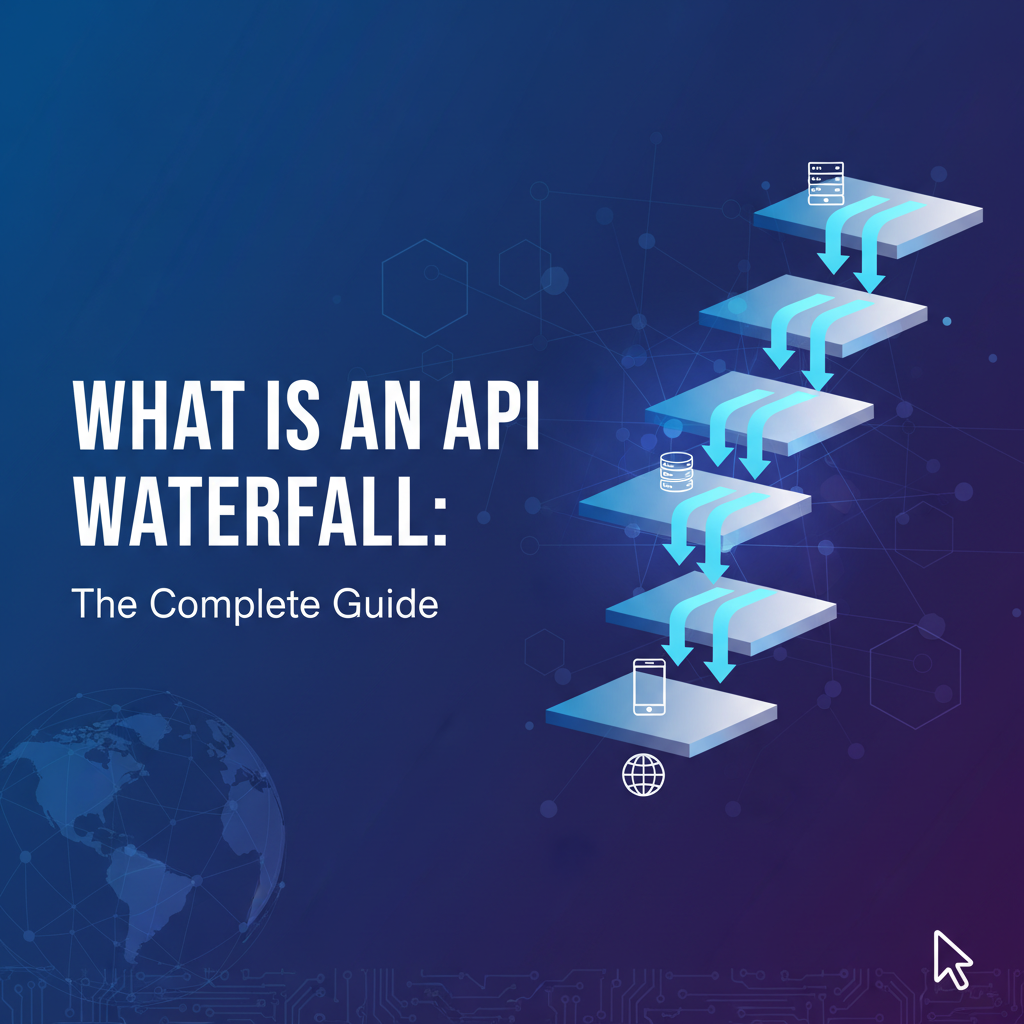


In the intricate tapestry of modern software architecture, Application Programming Interfaces (APIs) serve as the fundamental threads that weave together disparate services and systems. They enable applications to communicate, exchange data, and collaborate, forming the backbone of virtually every digital experience we encounter daily. From the moment you refresh your social media feed to the instant your online purchase is confirmed, APIs are diligently working behind the scenes, orchestrating a complex dance of data exchange. However, this interconnectedness, while empowering, often introduces a phenomenon known as an "API Waterfall" – a sequence of interdependent API calls where the completion of one request is a prerequisite for the initiation or successful execution of the next. Understanding this concept is not merely an academic exercise; it is crucial for architects, developers, and operations teams striving to build robust, performant, and scalable distributed systems.
The advent of microservices and cloud-native architectures has exponentially increased the reliance on APIs, leading to systems composed of hundreds, if not thousands, of services collaborating to deliver a single user-facing feature. While parallel processing and asynchronous operations are often lauded for their ability to enhance efficiency, the reality is that many business processes inherently demand a sequential flow of information. Imagine an e-commerce transaction: you cannot process a payment until the order details are confirmed, and you cannot confirm an order until the inventory check is complete. Each step is a domino falling, triggering the next in a carefully choreographed cascade. This guide aims to demystify the API waterfall, exploring its definition, common manifestations, profound implications on system performance and reliability, and, most importantly, a comprehensive suite of strategies and tools to effectively manage and optimize it. By the end of this journey, you will possess a holistic understanding of how to navigate these complex API sequences, transforming potential bottlenecks into resilient, high-performing pathways.
Chapter 1: Foundations – Understanding APIs and Distributed Systems
To truly grasp the nuances of an API waterfall, we must first firmly establish our understanding of its foundational components: APIs themselves and the distributed systems they inhabit. The modern software landscape is characterized by its distributed nature, a significant departure from the monolithic applications of yesteryear. This shift has not only redefined how software is built but also how its various parts interact.
What is an API? The Language of Interoperability
An API, or Application Programming Interface, is essentially a set of definitions and protocols that allows different software components to communicate with each other. It acts as a contract, specifying how one piece of software can request services from another, and how it will receive responses. Think of it as a waiter in a restaurant: you (the client) tell the waiter (the API) what you want from the kitchen (the server), and the waiter brings back your order. You don't need to know how the kitchen prepares the food, just how to ask for it.
APIs come in various flavors, each with its own set of conventions and use cases:
- REST (Representational State Transfer): The most prevalent architectural style for web services today. REST APIs are stateless, relying on standard HTTP methods (GET, POST, PUT, DELETE) to perform operations on resources identified by URLs. They are lightweight, scalable, and widely adopted due to their simplicity and broad browser support.
- SOAP (Simple Object Access Protocol): An older, more protocol-heavy standard often used in enterprise environments. SOAP APIs typically use XML for message formatting and rely on more rigid contracts (WSDL - Web Services Description Language). While powerful, they are generally more complex and verbose than REST.
- GraphQL: A query language for APIs and a runtime for fulfilling those queries with your existing data. GraphQL allows clients to request exactly the data they need, nothing more and nothing less, often in a single request. This contrasts with REST, where clients might need to make multiple requests or receive excessive data.
- RPC (Remote Procedure Call): Allows a program to cause a procedure (subroutine) to execute in a different address space (typically on a remote computer) as if it were a local procedure. Examples include gRPC (Google's RPC framework) and Apache Thrift.
Regardless of the style, the core purpose of an API remains consistent: to facilitate controlled and structured interaction between software components. They abstract away the underlying complexity of services, allowing developers to consume functionalities without needing to understand their internal workings.
The Rise of Microservices Architecture
For decades, software systems were predominantly built as monoliths – single, large, self-contained applications where all components (user interface, business logic, data access layer) were tightly coupled and deployed as a single unit. While simpler to develop initially for smaller projects, monoliths often became unwieldy as they grew, leading to:
- Slow Development Cycles: Changes in one part of the application required redeploying the entire system.
- Scaling Challenges: The entire application had to scale even if only a small part was experiencing high load.
- Technology Lock-in: Difficult to adopt new technologies without a complete rewrite.
- Reduced Resilience: A failure in one component could bring down the entire system.
Enter microservices architecture, a paradigm shift where a large application is broken down into a suite of small, independent services, each running in its own process and communicating with others through lightweight mechanisms, most commonly APIs. Each microservice typically focuses on a single business capability, is independently deployable, and can be developed using different programming languages and databases.
The benefits of microservices are compelling:
- Faster Development and Deployment: Teams can work independently on services and deploy them without affecting others.
- Improved Scalability: Individual services can be scaled up or down based on demand.
- Enhanced Resilience: Failure in one service is less likely to affect the entire application.
- Technological Diversity: Teams can choose the best technology for each service.
However, this architectural style introduces new challenges, primarily related to service discovery, inter-service communication, distributed data management, and operational complexity. It is precisely in this context that APIs become not just important, but absolutely indispensable, acting as the glue that binds this distributed ecosystem together.
Why APIs Are Essential in Modern Software
In a microservices world, every interaction between services is an API call. A user action, such as logging in, might trigger a cascade of API calls across an authentication service, a user profile service, a notification service, and an analytics service. The front-end application itself often acts as a client to numerous backend APIs, assembling data from multiple sources to present a unified view to the user.
Beyond microservices, APIs are fundamental for:
- Third-Party Integrations: Allowing applications to leverage external services (payment gateways, mapping services, social media platforms).
- Mobile and Web Applications: Providing the backend data and logic for client-side applications.
- IoT Devices: Enabling devices to send data to and receive commands from cloud platforms.
- Data Exchange: Facilitating B2B data sharing and internal data pipelines.
The sheer volume and complexity of these API interactions necessitate robust management and optimization strategies. As systems become more interconnected, the performance and reliability of these API calls directly impact the overall user experience and business operations. This interdependency sets the stage for the phenomenon we call the "API waterfall," where the sequential nature of certain business processes or data requirements creates a chain reaction of API invocations, each link's strength and speed determining the integrity and pace of the entire chain.
Interdependencies in Modern Applications
The move towards distributed systems and microservices, while offering significant advantages in terms of agility and scalability, inherently introduces a higher degree of interdependency. Unlike monolithic applications where components could communicate directly within the same process, microservices rely on network calls – API calls – to exchange information. This means that a single user request might traverse multiple services, each potentially calling other services in turn.
Consider a typical scenario in a modern application. When a user requests to view their order history, the frontend application might first call an authentication service to verify the user's identity. Once authenticated, it might then call a user profile service to retrieve basic user information. With the user ID, it then calls an order service to fetch a list of past orders. For each order in that list, it might subsequently call a product catalog service to get detailed product descriptions and images, and a shipping service to retrieve tracking information. Finally, to display the total cost, it might call a currency conversion service if items were purchased in different currencies.
This sequence exemplifies a natural dependency: 1. Authentication must complete before user-specific data can be accessed. 2. User profile is often needed to filter orders. 3. Order IDs are required to fetch product details. 4. Product details are needed for display. 5. Shipping details are associated with specific orders.
Each step in this chain is reliant on the successful and timely completion of the preceding step. This is not a theoretical construct but a practical reality in almost all complex applications. While some calls can be made in parallel (e.g., fetching multiple product details once all order IDs are known), the overall flow often contains critical sequential links. This interwoven network of dependencies forms the very fabric of an API waterfall, making its understanding and management paramount for maintaining application performance and ensuring a seamless user experience.
Chapter 2: Delving into the "API Waterfall" Concept
Having established the foundational role of APIs in distributed systems, we can now precisely define and explore the concept of an API waterfall. This phenomenon is a direct consequence of the dependencies inherent in complex business logic and data aggregation patterns across multiple services. It significantly impacts how applications perform and how users perceive their responsiveness.
Formal Definition and Analogy
An API Waterfall refers to a sequence of API calls where each subsequent call depends on the successful completion and often the data output of a preceding call. It creates a chain reaction, meaning that the overall latency of the entire operation is the sum of the latencies of each individual call in the sequence, plus any network overheads and processing delays between them. If any link in this chain is slow or fails, the entire process is stalled or breaks down.
To better visualize this, consider a few analogies:
- A Real Waterfall: Just as water flows downwards in a series of steps, with each pool overflowing into the next, data flows from one API call to another. If one pool is slow to empty, or a blockage occurs, the entire flow downstream is affected.
- A Domino Effect: When one domino falls, it triggers the next, and so on. If a domino is missing or doesn't fall properly, the chain reaction stops. In an API waterfall, each successful API response is a fallen domino, triggering the next request.
- An Assembly Line: Imagine a car assembly line. A car cannot have its engine installed until the chassis is complete. It cannot be painted until all bodywork is done. Each station depends on the successful completion of the previous one. A bottleneck at any station will slow down the entire production line.
In essence, an API waterfall is characterized by its linearity in execution, where the "total time" of an operation is the sum of the "individual times" of its dependent parts. This stands in contrast to parallel API calls, where independent requests can be executed concurrently, and the total time is determined by the slowest of those parallel calls, rather than their sum.
Illustrative Examples: Bringing the Waterfall to Life
Real-world applications are replete with examples of API waterfalls. Understanding these scenarios helps solidify the concept and highlights its pervasive nature.
Example 1: E-commerce Transaction Processing
When a user clicks "Place Order" on an e-commerce website, a series of dependent API calls is typically initiated:
- Validate Shopping Cart API: The first call might go to a
Cart Serviceto validate the items, quantities, and prices in the user's shopping cart. This ensures no fraudulent or expired items are present. - Check Inventory API: Once the cart is validated, the system needs to confirm that all items are in stock. This call to an
Inventory Servicedepends on the valid item IDs and quantities from the cart. If an item is out of stock, the process halts. - Process Payment API: With inventory confirmed, the next crucial step is payment. This call to a
Payment Gateway Servicerequires the total amount and customer payment details. It depends on the successful inventory check and confirmed prices. - Create Order API: After successful payment, a call is made to an
Order Serviceto officially create the order record in the database. This depends on a successful payment transaction. - Send Confirmation Email/Notification API: Finally, after the order is created, a call to a
Notification Serviceis made to send an order confirmation to the customer. This depends on the order being successfully saved.
In this sequence, if the inventory check takes too long, or the payment gateway times out, the entire order placement process is delayed or fails, directly impacting the user's experience.
Example 2: Social Media Feed Aggregation
Generating a personalized feed for a user on a social media platform is another classic example:
- Authenticate User API: The system first verifies the user's login credentials via an
Authentication Service. This is fundamental for accessing personalized content. - Fetch Friend List API: Once authenticated, a call to a
Friends Serviceretrieves a list of people the user follows or is friends with. - Fetch Posts from Friends API: For each friend or followed user, calls are made to a
Post Serviceto retrieve their recent posts. This can be complex, involving multiple parallel calls for different friends, but often needs to occur after the friend list is aggregated. - Enrich Post Data API: For each post, additional calls might be made:
- To a
Media Serviceto fetch image or video URLs. - To an
Engagement Serviceto retrieve likes/comments count. - To an
Advertisement Serviceto fetch relevant ads. These calls might initially run in parallel for a single post, but the enrichment of post data depends on the initial post content.
- To a
- Rank and Filter Feed API: Finally, a
Feed Generation Servicetakes all the aggregated and enriched posts, applies ranking algorithms (based on relevance, recency, engagement), and filters out unwanted content. This step depends on all previous data being available.
The responsiveness of the social media app heavily relies on the efficiency of this multi-stage data retrieval and processing, which inherently contains several sequential dependencies.
Example 3: Financial Services - Account Balance and Transaction History
Consider a banking application where a user wants to view their current balance and recent transactions:
- Login API: User authenticates through an
Identity Service. - Get Account Details API: Upon successful login, a call to an
Account Servicefetches basic account information (account number, type). - Get Account Balance API: Using the account details, a separate call to a
Balance Serviceretrieves the current balance. This often needs to happen after account details are confirmed. - Get Transaction History API: Simultaneously or subsequently, a call to a
Transaction Serviceretrieves a list of recent transactions for that account. This also relies on the account ID from step 2. - Categorize Transactions API: For each transaction, a call to a
Categorization Servicemight classify the spending (e.g., "Dining," "Travel"). This enriches the display and depends on the raw transaction data.
While fetching balance and transaction history can often be parallelized once the account details are known, the initial steps of authentication and account identification form a critical sequential block, influencing the overall perceived speed of the application.
Visual Representation (Conceptual Flow Diagram in Text)
A textual representation can help illustrate the sequential nature:
User Request
      |
      V
API Call 1 (e.g., Authentication Service)
      |
      | - (Data from API Call 1: UserID)
      V
API Call 2 (e.g., User Profile Service)
      |
      | - (Data from API Call 2: UserProfileData)
      V
API Call 3 (e.g., Order Service)
      |
      | - (Data from API Call 3: OrderIDs)
      V
API Call 4 (e.g., Product Catalog Service) -- (Called multiple times in parallel for each OrderID)
      |
      | - (Data from API Call 4: ProductDetails)
      V
API Call 5 (e.g., Shipping Service) -- (Called for specific Order/Product)
      |
      V
Final Response to User
This diagram clearly shows the dependencies. API Call 2 cannot begin until API Call 1 returns UserID. API Call 3 needs UserProfileData to filter orders. While API Call 4 might involve internal parallelization (fetching multiple product details concurrently), it still depends on the OrderIDs provided by API Call 3. The entire sequence forms a waterfall.
Distinguishing from Parallel API Calls
It's vital to differentiate an API waterfall from scenarios where API calls can be executed in parallel. Parallel API calls occur when multiple requests are independent of each other, meaning the data or outcome of one call does not influence or depend on the data or outcome of another.
For instance, if a dashboard needs to display: 1. User's current weather. 2. User's stock portfolio performance. 3. User's upcoming calendar events.
These three pieces of information are likely retrieved from three completely separate services (Weather API, Financial API, Calendar API) and do not depend on each other. The application can make these three API calls simultaneously, and the total time to display the dashboard will be determined by the longest of these three calls, plus any rendering time.
In contrast, an API waterfall's total time is the sum of the individual call times, making it inherently more susceptible to cumulative latency and the domino effect of failures. The challenge lies in identifying which parts of a complex workflow are truly sequential dependencies and which can be optimized through parallel execution. Recognizing this distinction is the first step towards effectively managing and mitigating the performance impacts of API waterfalls.
Chapter 3: The Genesis of an API Waterfall – Common Scenarios and Triggers
API waterfalls don't spontaneously appear; they are typically born out of specific architectural decisions, data dependencies, and business logic requirements. Understanding these common scenarios and triggers is paramount for both identifying existing waterfalls and designing new systems that minimize their impact.
Data Dependency: The Most Common Trigger
The overwhelming majority of API waterfalls are driven by data dependencies. This occurs when the input for one API call is directly derived from the output of a previous API call. Without the data from the upstream service, the downstream service simply cannot execute its function.
- Example: A
User Profile Serviceneeds aUserIDto retrieve a user's details. ThisUserIDmight first be obtained from anAuthentication Serviceafter a successful login. TheUser Profile Servicecannot function until theAuthentication Servicehas completed its task and provided the necessaryUserID. - Chained Lookups: Consider a system displaying order details. It might first call an
Order Serviceto get basic order IDs. Then, for each order ID, it calls aLine Item Serviceto get product IDs. Finally, for each product ID, it calls aProduct Catalog Serviceto get product names and descriptions. This forms a deep chain of data lookups, each feeding into the next. - Conditional Logic: Sometimes, the choice of the next API call depends on the data returned by the previous one. For instance, after fetching a user's subscription status, the application might call a
Premium Content APIif the user is subscribed, or aTrial Offer APIif they are not.
This direct input-output relationship is the quintessential characteristic of a data-driven API waterfall, and it's pervasive in almost every application that processes structured information across multiple domains.
Authentication/Authorization Chains
Security is a layered process, and often, gaining access to a protected resource involves a series of sequential API calls.
- Token Generation and Validation: A client might first make an API call to an
Identity Provider(e.g., OAuth 2.0 endpoint) to obtain an access token. This initial call typically involves providing credentials (username/password) or a refresh token. - Resource Access: Once the access token is received, subsequent API calls to various backend services include this token in the request header. Each of these backend services then typically makes an internal API call to an
Authorization ServiceorIdentity Providerto validate the token's authenticity, expiry, and the user's permissions to access the specific resource. - Multi-Factor Authentication (MFA): If MFA is enabled, the initial login might trigger an API call to send a verification code (e.g., via SMS or email), and a subsequent API call is required to submit this code for final authentication.
This sequence of calls, from initial authentication request to token validation for resource access, forms a critical API waterfall. Any delay or failure in the authentication and authorization chain will prevent access to all downstream protected APIs.
Business Logic Flow: Multi-Step Processes
Many business processes are inherently sequential, meaning certain actions must be completed before others can begin. This naturally translates into API waterfalls.
- Checkout Process: As seen in the e-commerce example, the steps of validating items, checking inventory, processing payment, and creating an order cannot realistically be rearranged without breaking the business logic. Each step logically follows from the previous one.
- Workflow Automation: In workflow systems, one task might generate a document, which then needs to be approved, then signed, and finally archived. Each of these steps might correspond to an API call, forming a clear waterfall.
- User Onboarding: A user onboarding flow might involve creating a user account, then verifying an email address, then setting up a profile, and finally linking a payment method. Each step often relies on the successful completion of the previous one and typically involves distinct API interactions.
These business-driven waterfalls are often difficult to completely parallelize because the sequence itself is a core requirement of the underlying process. The challenge here is to make these necessary sequential steps as efficient as possible.
Aggregations: Gathering Data for a Complete View
Modern applications often present a unified view of data that is actually sourced from numerous disparate services. The process of gathering and consolidating this data frequently results in API waterfalls.
- Dashboard Creation: A user dashboard might pull data from a
Sales Service, aMarketing Service, and aSupport Ticket Service. While some top-level aggregations can happen in parallel, drilling down into specific metrics might involve fetching summary data first, then making subsequent calls to retrieve detailed records based on those summaries. - Complex Reports: Generating a comprehensive report often requires fetching initial summary data, then iterating through those summaries to fetch detailed line items, then perhaps fetching related metadata for those line items. For example, a "Customer 360" view might first retrieve basic customer info, then their order history, then for each order, fetch product details, and finally, their support ticket history.
These aggregation patterns often start with a broad request and then fan out into more specific, dependent requests, forming a waterfall structure where the final, complete view depends on all upstream data being successfully collected.
Legacy System Integration
Integrating with legacy systems is a common source of API waterfalls due to the nature of older architectures.
- Fixed Interface Design: Legacy systems often expose monolithic, coarse-grained APIs that return a large chunk of data, or, conversely, highly granular APIs that require many calls to achieve a simple task. Their interfaces might not be designed for modern parallel consumption.
- Synchronous Operations: Many older systems were built with synchronous, blocking operations in mind, making it difficult to introduce asynchronous or parallel processing.
- Sequential Data Access: Data access patterns in legacy databases might necessitate sequential lookups. For example, you might need to query a master table for a primary key, then use that key to query a detail table, and so on, mirroring this structure in API calls.
- Stateful APIs: Unlike stateless RESTful APIs, some legacy systems might maintain session state, requiring a specific sequence of calls to establish and maintain a session before any actual work can be done.
When modern services need to interact with these older systems, they often have to adapt to the legacy system's constraints, inevitably leading to waterfall patterns. This is where an api gateway can become invaluable, acting as an abstraction layer to mask the underlying legacy complexities from the consuming services.
Third-Party API Integration
Relying on external services introduces dependencies that are often beyond your direct control, leading to potential waterfalls.
- Payment Gateways: As discussed, payment processing is inherently sequential. You submit an amount, get a transaction ID, then potentially query the status, and then confirm.
- Shipping and Logistics APIs: Checking shipping rates, creating a shipment, tracking a package – these are typically multi-step processes involving different API endpoints.
- CRM/ERP Systems: Integrating with external CRM or ERP solutions often involves specific sequences, like creating a contact, then associating an activity, then updating custom fields.
- AI Model Inference: When integrating AI models, as facilitated by platforms like APIPark, there might be an initial API call to validate inputs, followed by the actual inference API call, and then potentially a post-processing API call. While APIPark simplifies the integration of 100+ AI models and unifies the API format for invocation, the inherent sequential nature of some AI pipelines (e.g., pre-processing -> model A -> model B -> post-processing) can still lead to waterfalls.
These external dependencies mean that your application's performance is intrinsically linked to the performance and reliability of these third-party services. If a third-party API in your waterfall experiences high latency or outages, your application will suffer the consequences.
In summary, API waterfalls are not accidental. They are the logical outcome of how modern distributed systems operate, driven by data relationships, security protocols, business requirements, and the characteristics of both internal and external services. Recognizing these origins is the first step towards formulating effective strategies to mitigate their negative impacts.
Chapter 4: The Ramifications – Why API Waterfalls Matter
The existence of API waterfalls is not merely a technical curiosity; it carries significant consequences that ripple through the entire application stack, impacting performance, reliability, scalability, development complexity, and ultimately, the end-user experience. Ignoring these ramifications can lead to sluggish applications, frustrated users, and costly operational overheads.
Performance Implications: The Cumulative Burden
The most immediate and tangible impact of an API waterfall is on performance. The sequential nature means that delays accumulate, leading to increased overall response times.
- Increased Latency: The Sum of Delays: In a waterfall, the total time for an operation is approximately the sum of the network latency, processing time, and potential queueing delays of each individual API call in the chain. If an operation involves five sequential API calls, and each takes 100ms, the minimum total latency will be 500ms, excluding any inter-service processing time. This adds up quickly, especially with dozens of such chains within a complex application.
- Bottlenecks: The Slowest Link Dictates Pace: The entire waterfall's speed is dictated by its slowest component. Even if four out of five API calls are lightning-fast, if the fifth one takes several seconds, the entire operation will be slow. Identifying and optimizing these individual bottlenecks is critical, but often challenging due to their distributed nature.
- Timeouts: Cascading Failures Triggered by Delay: Increased latency makes services more susceptible to timeouts. If an upstream service takes too long to respond, a downstream service or the client might time out, leading to a failed operation. This can then trigger retries, further exacerbating the load and potentially creating a "thundering herd" problem if not managed carefully.
- Resource Consumption: While waiting for an upstream service, the downstream service or the client might hold open network connections, threads, and other resources. In high-traffic scenarios, this prolonged resource consumption can lead to resource exhaustion, further degrading performance across the system.
These performance penalties directly translate into a poorer user experience, potentially leading to user abandonment, decreased engagement, and negative business outcomes.
Reliability and Resilience Concerns: The Fragile Chain
An API waterfall is, by its very nature, a fragile construct. Its sequential dependency model makes it susceptible to cascading failures, where a problem in one service quickly propagates and brings down the entire chain.
- Single Point of Failure (SPOF) Magnification: While modern architectures aim to avoid SPOFs, an API waterfall effectively creates a logical SPOF for that specific operation. If an API call in the middle of the chain fails (e.g., due to an error, service outage, or malformed response), all subsequent calls in that chain will fail, and the entire operation will be unsuccessful.
- Error Propagation: Undefined States and Inconsistent Data: When an error occurs in an upstream service, how that error is handled by downstream services is crucial. Poor error handling can lead to:
- Partial Data: Some services might have completed their tasks, while others haven't, leaving the system in an inconsistent state.
- Undefined States: Downstream services receiving unexpected or partial data might enter undefined states or throw unhandled exceptions.
- Incorrect Business Logic: Subsequent services might proceed with incorrect assumptions based on faulty or missing upstream data, leading to incorrect business outcomes.
- Retry Mechanisms: Complexity and Overload: Implementing robust retry logic in a waterfall is complex. Should the entire chain be retried? Or just the failing step? Retrying the entire chain can be inefficient and put undue load on already struggling services. Retrying a specific step requires careful state management to ensure idempotency and prevent duplicate processing. Unintelligent retries can turn a minor glitch into a system-wide meltdown.
Ensuring the reliability of an API waterfall requires diligent design, implementation of fault-tolerance patterns, and continuous monitoring.
Scalability Challenges: Resource Contention
While microservices are designed for scalability, API waterfalls can introduce specific challenges that hinder horizontal scaling.
- Resource Blocking: As mentioned, services waiting for upstream responses hold onto resources (e.g., database connections, threads, memory). In a high-throughput environment, if many concurrent requests are stuck in different stages of a waterfall, the waiting services can exhaust their resource pools, leading to new requests being rejected or queued indefinitely.
- Database Load: A deep waterfall involving multiple data lookups across different services can put significant strain on underlying databases. If each service makes its own database queries, the cumulative load can quickly overwhelm the database, becoming a bottleneck for the entire system.
- Network Congestion: A large number of sequential API calls generates considerable network traffic between services. In systems with high fan-out or deep waterfalls, this can contribute to network congestion and increased latency, especially in multi-zone or multi-region deployments.
Scalability in the presence of waterfalls isn't just about spinning up more instances; it requires optimizing the interaction patterns themselves to minimize resource contention and maximize throughput.
Complexity in Development and Maintenance: The Debugging Maze
API waterfalls significantly increase the complexity of development, testing, and troubleshooting, placing a burden on engineering teams.
- Debugging Difficulties: Tracing Across Services: When an error occurs or performance degrades in a waterfall, identifying the root cause can be a nightmare. Developers need to trace requests across multiple services, often maintained by different teams, written in different languages, and running on different infrastructure. Without proper distributed tracing tools, pinpointing the exact failing or slow step is like finding a needle in a haystack.
- Version Control and Compatibility: Changes in one service's API (e.g., modifying a response schema) can have ripple effects down the entire waterfall, requiring coordinated updates across multiple dependent services. Ensuring backward compatibility becomes a critical, ongoing challenge.
- Testing Intricacies: End-to-End Scenarios: Unit testing individual services is straightforward, but end-to-end testing of an API waterfall requires orchestrating multiple services in a specific sequence, mimicking real-world dependencies. This makes automated testing more complex to set up, execute, and maintain, increasing the risk of defects slipping into production.
- Developer Onboarding: New developers joining a team might struggle to understand the intricate dependencies and interaction patterns within a complex API waterfall, leading to a steeper learning curve and slower productivity.
This increased complexity translates directly into higher development and operational costs, slower feature delivery, and greater risk of production issues.
User Experience Impact: The Ultimate Consequence
Ultimately, all the technical ramifications of API waterfalls converge to impact the end-user experience, often in very direct and noticeable ways.
- Slow Responsiveness: Users expect instant feedback. A delay of even a few hundred milliseconds can be perceived as slow, leading to frustration. In deep waterfalls, these delays compound rapidly, turning a snappy application into a sluggish one.
- Frustration and Abandonment: If an operation takes too long or consistently fails due to a waterfall issue, users are likely to abandon the task, switch to a competitor, or simply stop using the application altogether. This has direct business consequences.
- Inconsistent Behavior: Partial failures or timeouts within a waterfall can lead to inconsistent application states, where some data is displayed, but other critical information is missing, confusing the user and undermining trust.
- Perceived Unreliability: Frequent errors or long loading spinners due to waterfall issues damage the application's reputation for reliability, even if the underlying services are mostly operational.
In a competitive digital landscape, user experience is paramount. An API waterfall, if left unmanaged, can be a silent killer of user satisfaction and business success. Therefore, actively addressing and optimizing these patterns is not just a technical best practice but a business imperative.
APIPark is a high-performance AI gateway that allows you to securely access the most comprehensive LLM APIs globally on the APIPark platform, including OpenAI, Anthropic, Mistral, Llama2, Google Gemini, and more.Try APIPark now! 👇👇👇
Chapter 5: Strategies for Managing and Optimizing API Waterfalls
Effectively managing and optimizing API waterfalls is a multi-faceted endeavor, requiring a combination of architectural patterns, technical optimizations, robust monitoring, and resilient design principles. The goal is to reduce latency, improve reliability, enhance scalability, and simplify operational complexity, ultimately leading to a superior user experience.
Architectural Patterns: Re-shaping the Flow
Strategic architectural choices can fundamentally alter how API waterfalls manifest and behave within a system.
Backend for Frontend (BFF)
The BFF pattern involves creating a separate backend service specifically for a particular client type (e.g., web, iOS, Android). Instead of clients making multiple API calls directly to various backend microservices, they make a single call to their dedicated BFF. The BFF then orchestrates the necessary backend API calls, aggregates the data, and returns a tailored response to the client.
How it helps with waterfalls: * Reduces Client-Side Waterfall: The client no longer needs to manage multiple sequential calls. The waterfall logic is moved to the server-side BFF, closer to the data sources. * Optimized Payloads: BFFs can fetch only the data needed by a specific client, reducing over-fetching and network traffic for the client. * Client-Specific Logic: It allows for client-specific transformations, caching, and error handling, making the client application simpler and more robust.
Considerations: Increases the number of backend services and might lead to some code duplication if not carefully managed.
API Gateway
An api gateway acts as a single entry point for all API clients, sitting between the clients and the backend services. It is responsible for routing requests, authentication, authorization, rate limiting, caching, and often, API orchestration.
How it helps with waterfalls: * Centralized Orchestration: A sophisticated API Gateway can be configured to execute complex API waterfalls internally. For example, a single client request to the gateway might trigger a sequence of calls to multiple backend services, with the gateway aggregating the results before sending a single, unified response back to the client. This significantly reduces client-side waterfall complexity. * Caching: The gateway can cache responses from frequently accessed backend services, reducing the need for repeated calls in a waterfall. * Security: Handles authentication and authorization before requests even reach backend services, streamlining security processes across the waterfall. * Load Balancing and Traffic Management: Distributes traffic across multiple instances of backend services, improving reliability and performance for calls within the waterfall.
Natural placement for APIPark mention: An api gateway like APIPark can play a crucial role here, offering a comprehensive suite of features. APIPark provides end-to-end API lifecycle management, including design, publication, invocation, and decommissioning. It helps regulate API management processes, manage traffic forwarding, load balancing, and versioning of published APIs. Furthermore, APIPark's ability to encapsulate prompts into REST API, and its quick integration of over 100 AI models, means it can effectively streamline complex call sequences involving AI, making it easier to manage and optimize AI-driven API waterfalls. The platform's high performance, rivaling Nginx, ensures that it can handle the significant traffic associated with orchestrating such intricate call patterns.
Service Mesh
A service mesh is a dedicated infrastructure layer for handling service-to-service communication. It often sits alongside each service as a proxy (sidecar) and handles concerns like traffic management, security, and observability without requiring changes to the service code.
How it helps with waterfalls: * Built-in Resilience: Provides features like automatic retries with exponential backoff, circuit breakers, and timeouts at the network level. This can prevent individual slow or failing services within a waterfall from causing cascading failures. * Observability: Offers detailed metrics, logs, and distributed tracing, making it much easier to monitor the performance of each hop in an API waterfall and pinpoint bottlenecks. * Traffic Control: Allows for advanced routing rules, enabling techniques like A/B testing or canary deployments, which can be critical when rolling out changes to services involved in waterfalls.
Considerations: Adds significant operational complexity and overhead, best suited for large-scale microservice deployments.
Event-Driven Architecture (EDA)
EDA decouples services by having them communicate through asynchronous events rather than direct synchronous API calls. When a service completes a task, it publishes an event, and other interested services subscribe to and react to these events.
How it helps with waterfalls: * Reduces Synchronous Dependencies: By replacing direct sequential API calls with event publications and subscriptions, many waterfalls can be transformed into asynchronous workflows. This removes the direct "wait-for-response" bottleneck. * Improved Resilience: If a downstream service is temporarily unavailable, the event can be queued and processed later, preventing failures from propagating immediately. * Enhanced Scalability: Event consumers can scale independently, processing events at their own pace.
Considerations: Introduces eventual consistency challenges and increases complexity in debugging distributed event flows. Not suitable for scenarios requiring immediate, synchronous responses.
Technical Optimizations: Fine-tuning for Speed
Beyond architectural shifts, several technical optimizations can be applied at the code or infrastructure level to mitigate the impact of API waterfalls.
Parallelization (Where Possible)
The most direct way to reduce a waterfall's cumulative latency is to identify parts of the sequence that are truly independent and execute them concurrently.
- Identifying Independent Paths: Analyze the dependency graph. If API Call A produces data for B and C, but B and C do not depend on each other, then B and C can be executed in parallel once A completes.
- Asynchronous Programming: Use language features (e.g.,
async/awaitin JavaScript/Python/C#, Goroutines in Go) or thread pools to initiate multiple API calls concurrently and await their combined results. - Fan-Out/Fan-In Pattern: A service can make multiple requests (fan-out) to different downstream services in parallel, then wait for all (or a quorum) of those responses to "fan-in" and aggregate the results.
Considerations: Requires careful management of concurrent operations, error handling, and resource utilization. Over-parallelization can also lead to resource exhaustion.
Caching
Caching stores frequently accessed data or API responses, allowing subsequent requests for that data to be served much faster without hitting the original source.
- API Response Caching: Cache the entire response of an API call if its data is relatively static or has an acceptable staleness. This can be done at the API Gateway level, a dedicated caching layer (e.g., Redis, Memcached), or within the service itself.
- Data Caching: Cache specific data elements that are frequently looked up by multiple services in a waterfall.
- Intermediate Result Caching: If a waterfall involves expensive intermediate computations or aggregations, cache these results to avoid re-computing them for subsequent dependent calls.
Considerations: Cache invalidation strategies are critical to prevent serving stale data. Time-to-Live (TTL) policies and event-driven invalidation are common approaches.
Batching/Aggregation
Batching involves grouping multiple individual requests into a single, larger request to reduce the number of network round trips. Aggregation is often used in conjunction with batching to combine results.
- Client-Side Batching: The client application (or BFF/API Gateway) collects several individual requests over a short period and sends them as one batch request to a backend service.
- Server-Side Batching: A backend service designed to accept batched requests can process them more efficiently, for example, by making a single database query for multiple IDs rather than N separate queries.
- Data Aggregation Endpoints: Create dedicated API endpoints that aggregate data from several backend services in a single call, specifically designed for common data retrieval patterns that would otherwise result in a waterfall. This is a common function of an
api gateway.
Considerations: Increases the complexity of request/response handling and can introduce larger payloads. If one part of a batch fails, the entire batch's handling needs careful consideration.
Asynchronous Processing
For non-critical or long-running steps in a waterfall, asynchronous processing can decouple the immediate response from the eventual completion of the task.
- Message Queues/Brokers: Use message queues (e.g., Kafka, RabbitMQ, SQS) to send data from one service to another, allowing the sender to return an immediate response to its caller while the receiver processes the message later.
- Webhooks: A service can respond immediately with an acknowledgement and then, upon completion of a long-running task, notify the original caller (or another designated service) via a webhook.
Considerations: Introduces eventual consistency, making it harder to track the real-time status of an operation. Requires robust message delivery guarantees and error handling for queue failures.
Data Denormalization
In some cases, duplicating data across services or adding redundant data to a primary service can reduce the need for chained lookups.
- Example: Instead of an
Order Servicealways calling aProduct Catalog Servicefor product names, theOrder Servicemight store a snapshot of the product name at the time of order creation. - Materialized Views: Create pre-aggregated or pre-joined data views in a data store that combine information from multiple sources, reducing the need for runtime API lookups.
Considerations: Introduces data consistency challenges (how to keep duplicated data in sync) and increased storage requirements. Best for data that changes infrequently.
GraphQL
GraphQL allows clients to describe exactly the data they need from a hierarchical structure, and the server responds with only that data. This capability can dramatically reduce the number of client-side waterfall requests.
- Single Request for Multiple Resources: Instead of making one REST API call for user details, then another for orders, then another for product details for each order, a single GraphQL query can fetch all this related information in one go.
- Reduced Over-fetching and Under-fetching: Clients get precisely what they ask for, minimizing network payload and subsequent processing.
Considerations: Requires a new API paradigm and changes to both client and server implementations. Can be complex to implement efficient data loaders on the server for deep, nested queries.
Monitoring and Observability: Seeing the Invisible
You cannot optimize what you cannot measure. Comprehensive monitoring and observability are crucial for understanding, diagnosing, and ultimately resolving issues within API waterfalls.
Distributed Tracing
Distributed tracing tools (e.g., OpenTelemetry, Zipkin, Jaeger) follow a single request as it propagates through multiple services in a distributed system. Each hop in the waterfall is recorded as a "span," linked together to form a "trace."
Benefits: * Root Cause Analysis: Quickly identify which service or API call within a waterfall is causing latency or errors. * Performance Bottleneck Identification: Visualizes the time spent in each service, highlighting slow components. * Dependency Mapping: Helps understand the complex interaction patterns of services.
Logging
Comprehensive logging across all services involved in a waterfall is essential. Logs should include correlation IDs (trace IDs from distributed tracing), request/response details (sanitized), and execution times.
Benefits: * Detailed Incident Investigation: Provides granular data points for each step of an operation. * Audit Trails: Important for security and compliance, showing the exact sequence of events.
Natural placement for APIPark mention: Platforms like APIPark provide detailed API call logging capabilities, recording every detail of each API call. This feature is invaluable for tracing and troubleshooting issues within complex API waterfalls, ensuring system stability and data security. By centralizing logs, APIPark helps teams quickly pinpoint the exact point of failure or performance degradation within a multi-service transaction.
Performance Metrics
Collect and monitor key performance indicators (KPIs) for each API call and service within the waterfall.
- Latency: Response time (average, p95, p99) for each API.
- Error Rates: Percentage of failed requests.
- Throughput: Requests per second.
- Resource Utilization: CPU, memory, network, disk I/O for each service.
Benefits: Proactive detection of performance degradation, capacity planning, and understanding baseline behavior.
Alerting
Set up alerts based on deviations from normal performance metrics or specific error conditions.
- Threshold-based Alerts: Alert if latency exceeds a certain threshold or error rates spike.
- Anomaly Detection: Use machine learning to detect unusual patterns in metrics that might indicate an emerging problem.
Natural placement for APIPark mention: Complementing its logging, APIPark also offers powerful data analysis features, analyzing historical call data to display long-term trends and performance changes. This predictive capability is crucial for identifying potential issues in API waterfalls before they escalate, enabling businesses to perform preventive maintenance and avoid critical outages.
Robust Error Handling and Resilience: Building for Failure
Given the inherent fragility of waterfalls, designing for failure is not optional; it's mandatory.
Circuit Breakers
A circuit breaker pattern prevents a system from repeatedly trying to access a failing service. If a service repeatedly fails, the circuit breaker "trips," short-circuiting further calls to that service and returning an immediate error or fallback. After a cool-down period, it might allow a few requests to "probe" the service, and if successful, "closes" the circuit.
Benefits: Prevents cascading failures, gives failing services time to recover, and provides faster feedback to callers.
Retries with Backoff
Instead of immediate retries for transient errors, implement an exponential backoff strategy. This means waiting for progressively longer periods between retries.
Benefits: Reduces the load on a temporarily overloaded service and prevents a "thundering herd" effect.
Considerations: Ensure retries are idempotent (can be safely repeated without adverse side effects). Define maximum retry attempts and total timeout for the entire operation.
Timeouts
Implement strict timeouts for all API calls within a waterfall. If a service doesn't respond within a defined period, the connection is closed, and an error is returned.
Benefits: Prevents indefinite waiting, frees up resources, and provides faster error feedback.
Considerations: Timeouts need to be carefully configured, not too short (causing false failures) and not too long (causing excessive latency).
Fallbacks
Provide fallback mechanisms for non-essential parts of a waterfall. If an API call fails, instead of halting the entire operation, return a cached value, a default value, or a degraded experience.
Example: If a Recommendation Service in an e-commerce checkout flow fails, display generic popular products instead of customized recommendations, allowing the core checkout process to continue.
Benefits: Improves resilience and user experience by ensuring core functionality remains available even during partial outages.
By strategically applying these architectural patterns, technical optimizations, and robust resilience measures, organizations can transform fragile, slow API waterfalls into resilient, high-performing pathways that underpin seamless digital experiences.
Chapter 6: Practical Implementation and Case Studies
To solidify the concepts discussed, let's explore practical scenarios where API waterfalls are common and how various optimization strategies can be applied to mitigate their impact. These case studies will illustrate the journey from identifying a waterfall to implementing solutions.
Example 1: E-commerce Checkout Optimization
Initial Waterfall Scenario: A user initiates a checkout on an e-commerce platform. The front-end application (or a monolithic backend) makes a sequence of dependent calls to process the order:
- Frontend -> Cart Service: Validate items and quantities in the user's cart. (e.g.,
POST /carts/{id}/validate)- Output: Validated Cart Details.
- Cart Service -> Inventory Service: Check real-time stock availability for each item. (e.g.,
POST /inventory/check_availability)- Output: Stock availability confirmed or not.
- Inventory Service -> Payment Gateway: Process the payment. (e.g.,
POST /payments/process)- Output: Payment status (success/failure), transaction ID.
- Payment Gateway -> Order Service: Create the official order record. (e.g.,
POST /orders)- Output: Order ID.
- Order Service -> Notification Service: Send order confirmation to the user. (e.g.,
POST /notifications/send_email)- Output: Confirmation of email sent.
Problem: Each step adds latency. If the Inventory Service is slow, or the Payment Gateway experiences a hiccup, the user faces a long wait or a failed transaction, leading to frustration and abandoned carts. Debugging payment issues requires tracing through multiple logs.
Optimization Strategies Applied:
- API Gateway (APIPark) for Orchestration and Caching:
- Orchestration: Instead of the frontend making separate calls, an
api gatewayis introduced. The frontend makes one call to the gateway (POST /checkout), which then orchestrates theCart,Inventory,Payment,Order, andNotificationservices internally. This significantly reduces network round trips from the client and centralizes the complex logic. - Caching: The API Gateway could cache frequently accessed inventory data for non-critical items (e.g., common accessories). While real-time inventory for core products is still necessary, caching supporting data reduces load.
- Centralized Logging and Monitoring: The gateway centralizes logs for the entire checkout flow, making it easier to trace requests. APIPark with its detailed API call logging and powerful data analysis features would be instrumental here, allowing quick identification of bottlenecks or failures within the checkout sequence.
- Orchestration: Instead of the frontend making separate calls, an
- Parallelizing Inventory Checks and Payment Initiation (where possible):
- While payment cannot complete without confirmed inventory, the payment initiation (e.g., tokenizing card details) can happen concurrently with the inventory check. The actual payment capture would still wait for inventory confirmation.
- The API Gateway or a dedicated orchestration service could manage this. Once the Cart Service validates, it triggers both
Inventory CheckandPayment Tokenizationin parallel. Only when both succeed does it proceed toPayment CaptureandOrder Creation.
- Asynchronous Processing for Non-Critical Steps:
- The
Notification Service(sending confirmation email/SMS) can be decoupled. TheOrder Servicepublishes an "OrderCreated" event to a message queue, and theNotification Servicesubscribes to this event. TheOrder Servicecan then immediately return "Order Confirmed" to the user, improving perceived latency. - This prevents a slow email service from delaying the core transaction.
- The
- Robust Error Handling (Circuit Breakers/Fallbacks):
- Implement a circuit breaker for the
Inventory Service. If it starts failing, the system can temporarily fallback to an "out of stock" message for all items, preventing further requests from hammering the failing service. - For the
Notification Service, if it fails, simply log the error and mark the notification as "pending retry" rather than failing the entire checkout. A separate process can retry sending later.
- Implement a circuit breaker for the
Result: A faster, more resilient checkout experience. The user receives a quicker "Order Confirmed" message, even if the email sending is delayed, and the system is better protected against individual service failures.
Example 2: Social Media Feed Aggregation
Initial Waterfall Scenario: A user opens their social media app. The client needs to display a personalized feed:
- Client -> Auth Service: Authenticate the user.
- Output: UserID, Session Token.
- Auth Service -> User Profile Service: Get basic user details (e.g., display name, profile picture).
- Output: UserProfileData.
- User Profile Service -> Friends Service: Fetch list of friends/followed accounts. (e.g.,
GET /users/{id}/friends)- Output: List of FriendIDs.
- Friends Service -> Post Service (for each FriendID): Fetch recent posts for each friend. This often involves N parallel calls, but it's still dependent on the
FriendIDs. (e.g.,GET /posts?author={friendId})- Output: List of raw Post objects.
- Post Service -> Media Service (for each Post): Fetch media URLs for images/videos in each post. (e.g.,
GET /media?post={postId})- Output: Media URLs.
- Media Service -> Engagement Service (for each Post): Fetch likes/comments count for each post. (e.g.,
GET /engagement?post={postId})- Output: Engagement Metrics.
- Engagement Service -> Feed Generation Service: Aggregate all data, apply ranking algorithms, and filter. (e.g.,
POST /feed/generate)- Output: Sorted and filtered Feed.
Problem: A deep, multi-stage waterfall. Many small calls lead to high latency. If any underlying service (Post, Media, Engagement) is slow, the entire feed generation is delayed, leading to a blank screen or a spinner.
Optimization Strategies Applied:
- Backend for Frontend (BFF):
- A dedicated BFF service for the mobile app (e.g.,
/mobile/feed) is created. The mobile app makes a single API call to the BFF. - The BFF then orchestrates the entire waterfall on the server side, potentially parallelizing calls where possible (e.g., fetching posts for multiple friends concurrently, and fetching media/engagement for multiple posts concurrently).
- The BFF can also cache common user data and even a user's generated feed for a short period.
- A dedicated BFF service for the mobile app (e.g.,
- Data Aggregation and Batching:
- Modify
Post Service,Media Service, andEngagement Serviceto accept batched requests. Instead of making one call for each post's media, the BFF can collect all post IDs and make a single call toMedia Serviceasking for media URLs for all posts in one go (GET /media?posts={id1},{id2},{id3}). This drastically reduces network overhead. - The
Feed Generation Servicecan be designed to pull data from internal materialized views or caches that pre-aggregate data, rather than making real-time calls to all underlying services.
- Modify
- Caching at Multiple Layers:
- BFF Cache: Cache a user's personalized feed for a few seconds. If the user navigates away and comes back, they get an instant, albeit slightly stale, feed.
- Service-Level Caching:
User Profile ServiceandFriends Servicecan cache frequently accessed user data. - Distributed Cache: A shared Redis cache can store media URLs or engagement counts, reducing the load on
Media ServiceandEngagement Service.
- Asynchronous Pre-computation and Event-Driven Updates:
- For less frequently updated parts of the feed or for "cold starts," the
Feed Generation Servicecan asynchronously pre-compute portions of the feed in the background. - When a new post is created or an engagement occurs, an event is published, triggering an update to the pre-computed feed. This uses an event-driven architecture to eventually update the cache rather than relying on real-time synchronous calls for everything.
- For less frequently updated parts of the feed or for "cold starts," the
Result: A significantly faster and more responsive feed loading experience. The user sees content almost instantly, even if some background updates are still processing, greatly improving user retention and engagement.
Table: Comparing Optimization Strategies for Common Waterfall Scenarios
To help illustrate the applicability of various strategies, the following table summarizes their benefits and potential drawbacks in the context of API waterfall optimization.
| Optimization Strategy | Description | Best Suited For | Benefits | Potential Drawbacks |
|---|---|---|---|---|
| API Gateway | Centralizes API management, orchestrates multiple calls, provides caching, authentication, rate limiting. | Complex microservice architectures, managing external access, security. | Reduces client-side complexity, enhances security, improves performance via caching and orchestration. | Adds a layer of indirection, potential single point of failure if not highly available, configuration overhead. |
| Backend for Frontend (BFF) | Creates tailored API endpoints for specific client applications, consolidating multiple backend calls into one. | Multiple client types (web, mobile), diverse data requirements, reducing client-side logic. | Reduces client-side data fetching waterfalls, optimizes payload size, improves client performance. | Increases backend service count, potential for code duplication across BFFs. |
| Caching | Stores frequently accessed data or API responses to reduce redundant calls to backend services or databases. | Data that changes infrequently, read-heavy operations, expensive computations. | Significantly reduces latency and load on backend services, improves responsiveness. | Cache invalidation complexity, potential for stale data if not managed properly, increased memory consumption. |
| Parallelization | Identifies independent API calls within a sequence and executes them concurrently to reduce overall waiting time. | Scenarios where multiple data sources are needed but don't depend on each other sequentially. | Reduces cumulative latency, improves throughput. | Requires careful dependency analysis, increased resource utilization during concurrent execution, potential for increased complexity in error handling. |
| Batching/Aggregation | Groups multiple individual requests into a single, larger request to reduce the number of network round trips. | Scenarios needing multiple small pieces of data from the same service, reducing chatty APIs. | Decreases network overhead, improves efficiency, reduces total request time. | Increased complexity in request/response handling, potential for larger payloads, harder to debug individual sub-requests. |
| Event-Driven Architecture | Decouples services using asynchronous events, where services react to events instead of making direct sequential calls. | Long-running processes, high-throughput systems, achieving loose coupling. | Improves scalability, resilience, and responsiveness; reduces direct service dependencies. | Eventual consistency challenges, increased complexity in system design and debugging distributed events, potential for message loss. |
| GraphQL | A query language for APIs that allows clients to request exactly the data they need, often in a single request. | Clients needing highly flexible data fetching, reducing over-fetching and under-fetching. | Eliminates multiple HTTP requests for related data, reduces client-side waterfalls, flexible data models. | Requires a new API paradigm, potential for complex server-side query resolution, learning curve for developers. |
By carefully analyzing the specific needs of each API waterfall and the characteristics of the involved services, architects and developers can select the most appropriate combination of these strategies to achieve optimal performance, reliability, and maintainability. It’s rarely a one-size-fits-all solution but rather a thoughtful application of multiple techniques.
Chapter 7: The Future of API Waterfalls and Evolving Practices
The landscape of software development is in perpetual motion, driven by new technologies, evolving architectural paradigms, and increasing demands for performance and resilience. The way we perceive, manage, and optimize API waterfalls is similarly evolving, shaped by innovations in AI, serverless computing, and a growing emphasis on system reliability.
Emergence of AI and ML in API Management
The integration of Artificial Intelligence and Machine Learning is transforming various aspects of software, and API management is no exception. AI/ML can both introduce new types of waterfalls and offer sophisticated tools for managing existing ones.
- AI-Driven Pipelines: Complex AI applications often involve multiple sequential steps: data ingestion, pre-processing, model inference, post-processing, and finally, integration with business logic. Each of these steps can be exposed as an API, creating deep AI-driven API waterfalls. For example, a user request might trigger an API to an
Image Recognition Service, whose output then feeds into anObject Tracking Service, then into aReporting Service. - Intelligent API Gateways: AI can enhance
api gatewaycapabilities. Imagine a gateway that not only routes requests but also predicts potential bottlenecks in a waterfall based on historical data, dynamically adjusts rate limits, or intelligently caches responses based on predicted usage patterns. - Automated Anomaly Detection: ML algorithms can analyze API call logs and performance metrics across a waterfall to detect subtle anomalies that indicate emerging issues long before they become critical, providing proactive insights for optimization.
- Prompt Engineering and AI Orchestration: The rapid integration of AI models, as facilitated by platforms like APIPark, which offers quick integration of 100+ AI models and a unified API format for AI invocation, presents new challenges and opportunities for API waterfalls. APIPark allows users to encapsulate prompts into REST API, essentially turning complex AI model interactions into manageable API calls. Orchestrating these AI-specific API calls, which might involve pre-processing data, sending it to one AI model, taking its output, transforming it, and sending it to another AI model, inherently forms intricate API waterfalls. Tools like APIPark simplify this orchestration, ensuring that developers can focus on the business logic rather than the underlying AI integration complexities.
The future will likely see more api gateway solutions incorporate advanced AI capabilities to manage these increasingly intelligent and complex API workflows.
Serverless Functions and Their Role in Breaking Down Waterfalls
Serverless computing, epitomized by technologies like AWS Lambda, Azure Functions, and Google Cloud Functions, offers a compelling paradigm for mitigating some aspects of API waterfalls.
- Granular Execution: Serverless functions are typically small, single-purpose pieces of code that execute in response to events. This extreme granularity allows for breaking down complex waterfalls into smaller, more manageable units.
- Event-Driven Nature: Serverless functions naturally align with event-driven architectures. A function can perform one step of a waterfall, publish an event, and then trigger another function for the next step, rather than waiting synchronously. This promotes decoupling and parallel execution where possible.
- Reduced Operational Overhead: The platform manages the underlying infrastructure, allowing developers to focus solely on the function's code. This simplifies the deployment and scaling of individual components within a waterfall.
- Function Orchestration: Cloud providers offer services (e.g., AWS Step Functions) specifically designed to orchestrate sequences of serverless functions, providing built-in state management, error handling, and retries for complex workflows, effectively managing serverless-driven API waterfalls.
While serverless can create its own "cold start" latency challenges, its event-driven nature and powerful orchestration capabilities provide a strong toolkit for designing more resilient and efficient API sequences.
Greater Emphasis on Resilience and Chaos Engineering
The understanding that failures are inevitable in distributed systems is leading to a greater emphasis on building resilience from the ground up, moving beyond merely reacting to issues.
- Proactive Failure Testing: Chaos Engineering, a discipline of experimenting on a system in production to build confidence in its capability to withstand turbulent conditions, is becoming crucial. By intentionally injecting failures into services or network paths within an API waterfall, teams can identify weaknesses and validate resilience mechanisms (circuit breakers, timeouts, retries) before they impact users.
- Self-Healing Systems: Future systems will increasingly leverage automation to detect and autonomously recover from failures within API waterfalls, potentially by rerouting requests, scaling up services, or deploying alternative fallbacks.
- Resilience as a Design Principle: Designers are incorporating resilience patterns (like those discussed in Chapter 5) from the initial architecture phase rather than retrofitting them.
This shift ensures that API waterfalls are not just optimized for speed but are also robust enough to withstand the unpredictable nature of distributed environments.
Standardization Efforts (OpenAPI, AsyncAPI)
Standardization plays a vital role in managing the complexity of API ecosystems, including waterfalls.
- OpenAPI Specification (OAS): Provides a language-agnostic, human-readable, and machine-readable interface for describing RESTful APIs. When all services in a waterfall adhere to OpenAPI, it simplifies documentation, client generation, and the validation of API contracts. This reduces integration errors and speeds up development.
- AsyncAPI Specification: Similar to OpenAPI but for event-driven architectures. It helps describe asynchronous API interactions, which are increasingly replacing synchronous waterfalls for better scalability and resilience.
These specifications facilitate better tooling, automated testing, and improved collaboration, which are all critical for successfully navigating the challenges of API waterfalls.
The Continuous Evolution of API Gateway Technologies
The api gateway will continue to be a cornerstone for managing API waterfalls, with its capabilities constantly expanding.
- Smarter Orchestration: Gateways will offer more sophisticated logic for dynamically orchestrating API calls based on runtime conditions, user context, or even AI predictions.
- Enhanced Security: Integrated advanced threat protection, behavioral analytics, and fine-grained authorization policies to secure API waterfalls against increasingly sophisticated attacks.
- Full Lifecycle Management: Platforms like APIPark, which offer end-to-end API lifecycle management, will continue to evolve, providing more seamless integration from API design and publishing to invocation, monitoring, and eventual decommissioning. This comprehensive approach is essential for managing the entire journey of APIs, especially those involved in complex waterfalls.
- Open Source Innovation: The open-source nature of many API Gateway projects, including APIPark (open-sourced under the Apache 2.0 license), fosters rapid innovation and community-driven development, ensuring these tools remain at the forefront of API management capabilities. APIPark’s commitment to providing a powerful yet flexible platform for managing both REST and AI services ensures it will remain a critical tool in the evolving API landscape.
The future of API waterfalls is one of increased complexity due to new technologies and demands, but also one of greater sophistication in the tools and practices available for their management. By embracing these evolving trends, organizations can continue to build highly performant, resilient, and scalable distributed systems that deliver exceptional value.
Conclusion
The "API Waterfall" is an inherent and often unavoidable characteristic of modern distributed systems, a direct consequence of the intricate dependencies required to deliver complex functionalities. As we've journeyed through this comprehensive guide, we've seen that understanding this phenomenon is not a mere academic exercise but a critical imperative for anyone involved in designing, developing, or operating software in today's interconnected world.
We began by establishing the foundational role of APIs as the indispensable language of communication between services in an increasingly microservices-driven landscape. This inherent interconnectedness naturally gives rise to sequential API calls, where the output of one serves as the input for the next – the very essence of an API waterfall. Through illustrative examples in e-commerce, social media, and financial services, we saw how data dependencies, authentication chains, business logic flows, and aggregation patterns inevitably weave these cascading sequences into the fabric of our applications.
The ramifications of unmanaged API waterfalls are profound and far-reaching. They manifest as increased latency, leading to sluggish user experiences, and create significant reliability concerns, where a single point of failure can cascade into system-wide outages. Scalability becomes a bottlenecked aspiration, and the sheer complexity introduced in development, debugging, and maintenance can cripple engineering teams. Ultimately, these technical challenges directly translate into diminished user satisfaction and, consequently, adverse business outcomes.
However, recognizing the problem is the first step toward mastery. We then explored a robust arsenal of strategies designed to effectively manage and optimize API waterfalls. Architectural patterns such as Backend for Frontend (BFF) and the indispensable api gateway (where a platform like APIPark offers powerful orchestration and management capabilities) serve to reshape the flow, centralize control, and reduce client-side complexity. Technical optimizations like intelligent parallelization, strategic caching, request batching, asynchronous processing, and the adoption of GraphQL empower developers to fine-tune performance. Crucially, comprehensive monitoring and observability, including distributed tracing and detailed API call logging (a key feature of APIPark), provide the visibility needed to diagnose and resolve issues. Finally, robust error handling mechanisms – circuit breakers, smart retries, timeouts, and fallbacks – are non-negotiable for building resilient waterfalls that can gracefully withstand the inevitable failures of a distributed environment.
As we look to the future, the evolution of AI and ML, the rise of serverless computing, and a continuous emphasis on resilience engineering will further refine our approaches to API waterfalls. api gateway technologies will become even smarter, and standardization efforts will continue to foster better interoperability.
In conclusion, API waterfalls are not to be feared but understood. They are a natural consequence of building powerful, feature-rich distributed applications. By embracing the architectural patterns, technical optimizations, and resilience best practices outlined in this guide, and by leveraging advanced platforms like APIPark that streamline API management and AI integration, organizations can transform these complex sequences into highly performant, reliable, and scalable pathways. The journey towards building robust distributed systems is continuous, and the mastery of API waterfalls is a critical milestone on that path, ensuring that our digital experiences remain swift, seamless, and dependable.
Frequently Asked Questions (FAQs)
1. What exactly is an API Waterfall, and how does it differ from other API interactions? An API Waterfall describes a sequence of API calls where each subsequent call relies on the data or successful completion of a preceding call. It creates a chain of dependencies, meaning the total time for the operation is the sum of the individual call times. This differs from parallel API interactions, where multiple independent API calls are made concurrently, and the total time is determined by the longest of those parallel calls, not their sum. Waterfalls are characterized by their sequential nature driven by data or business logic dependencies.
2. Why are API Waterfalls problematic for application performance and reliability? API waterfalls significantly impact performance by accumulating latency – each step's delay adds to the overall response time, making applications feel slow. They also introduce reliability risks because if any single API call in the chain fails or times out, the entire operation can halt, leading to cascading failures. This makes debugging complex, reduces scalability by holding resources longer, and ultimately degrades the user experience, potentially leading to frustration and abandonment.
3. What are the most effective architectural patterns to manage API Waterfalls? Several architectural patterns are highly effective. A Backend for Frontend (BFF) moves waterfall logic from the client to a server-side service tailored for specific client needs, reducing client-side complexity. An API Gateway, like APIPark, acts as a central entry point, orchestrating multiple backend calls into a single client request, providing caching, security, and load balancing. Event-Driven Architectures (EDA) decouple services, transforming synchronous waterfalls into asynchronous flows where services react to events, improving resilience and scalability, albeit with eventual consistency.
4. How can I monitor and troubleshoot issues within a complex API Waterfall? Effective monitoring and observability are crucial. Distributed tracing tools (e.g., OpenTelemetry, Zipkin) allow you to visualize the entire request path across multiple services, pinpointing bottlenecks and error sources within the waterfall. Comprehensive logging with correlation IDs (a feature well-supported by platforms like APIPark) helps in detailed incident investigation. Performance metrics (latency, error rates, throughput) for each service provide real-time insights, while alerting on anomalies or thresholds ensures proactive problem detection. APIPark's detailed API call logging and powerful data analysis features are specifically designed to provide this level of visibility into complex API interactions.
5. Can AI/ML APIs create new types of waterfalls, and how can they be managed? Yes, AI/ML APIs can indeed create new and often complex waterfalls. A single AI-driven feature might involve sequential calls for data pre-processing, multiple model inferences (e.g., text understanding then sentiment analysis), and post-processing, each exposed as an API. These new waterfalls can be managed using existing strategies like API Gateways (APIPark excels here with its support for AI model integration and unified API formats), serverless function orchestration, and robust monitoring. The ability of platforms like APIPark to simplify the integration and orchestration of 100+ AI models, and to encapsulate prompts into REST API, is particularly beneficial for streamlining and managing these emerging AI-centric API waterfalls.
🚀You can securely and efficiently call the OpenAI API on APIPark in just two steps:
Step 1: Deploy the APIPark AI gateway in 5 minutes.
APIPark is developed based on Golang, offering strong product performance and low development and maintenance costs. You can deploy APIPark with a single command line.
curl -sSO https://download.apipark.com/install/quick-start.sh; bash quick-start.sh

In my experience, you can see the successful deployment interface within 5 to 10 minutes. Then, you can log in to APIPark using your account.

Step 2: Call the OpenAI API.