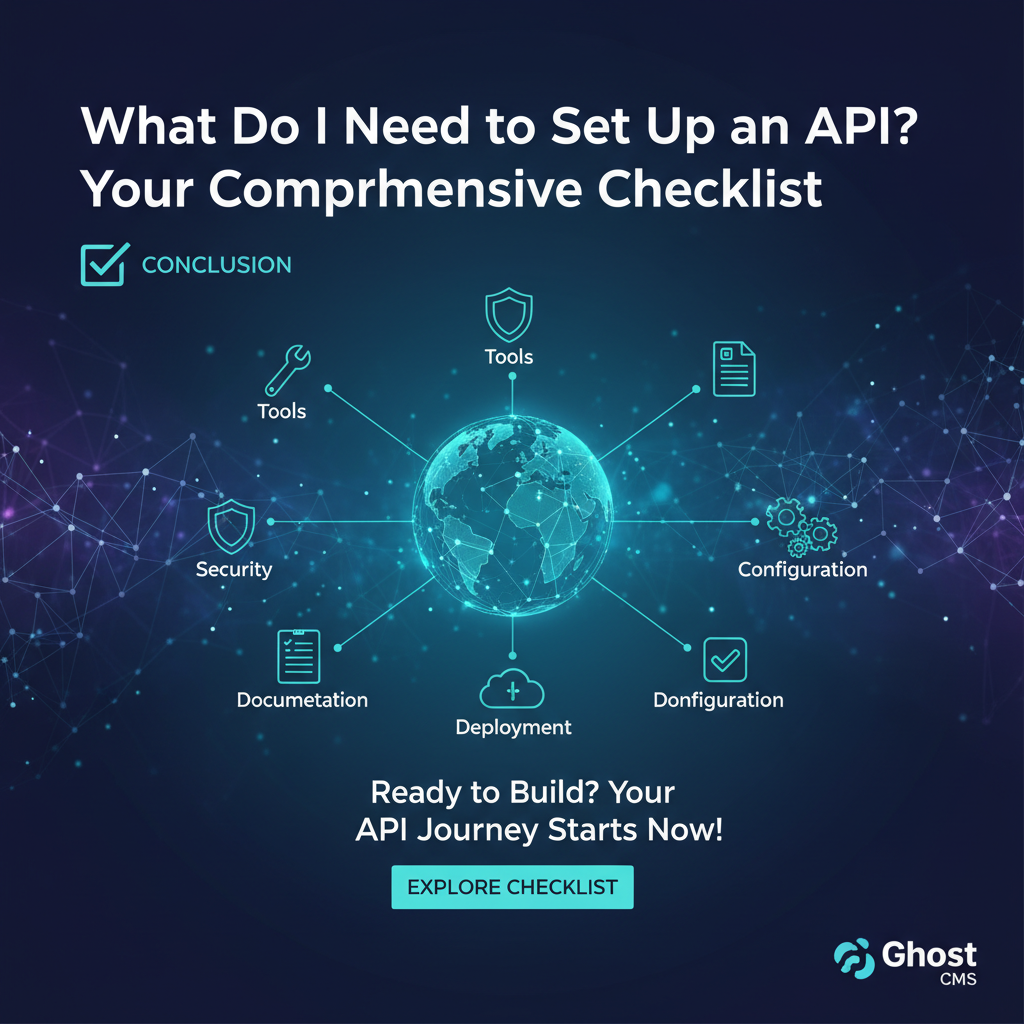
Wht Do I Need to Set Up an API? Your Comprehensive Checklist


In today's interconnected digital landscape, the phrase "API" (Application Programming Interface) has transcended technical jargon to become a cornerstone of modern business strategy. From enabling seamless mobile app functionality to powering complex enterprise integrations and facilitating the rapid development of new services, APIs are the invisible threads that weave together the fabric of our digital world. However, the decision to "set up an API" is far more than a mere technical task; it's a strategic undertaking that demands meticulous planning, robust execution, and continuous governance. This comprehensive guide will delve into the profound reasons why your organization needs APIs and provide an exhaustive checklist to ensure every critical aspect of API setup, from conceptualization to deployment and ongoing management, is meticulously addressed.
The proliferation of cloud computing, microservices architectures, and the burgeoning ecosystem of third-party integrations has elevated APIs from a desirable feature to an indispensable necessity. They empower innovation by allowing developers to leverage existing functionalities without reinventing the wheel, foster collaboration by enabling disparate systems to communicate effortlessly, and unlock new revenue streams by exposing services to a wider audience. Yet, realizing these benefits requires a systematic approach. Without a clear understanding of the "why" and a detailed blueprint for the "how," API projects can quickly become mired in complexities, security vulnerabilities, or simply fail to deliver their intended value. This article serves as your definitive roadmap, ensuring that your journey into API development is guided by foresight and precision.
The Strategic Imperative: Understanding the "Why" Behind Your API
Before a single line of code is written or a server is configured, the most crucial step in setting up an API is to articulate its fundamental purpose and strategic value. An API is not merely a technical endpoint; it is a product, a service, or an enabler for business objectives. Without a crystal-clear understanding of the "why," even the most technically brilliant API can fail to achieve its potential, becoming an expensive white elephant rather than a transformative asset.
1. Define Clear Business Objectives and Use Cases
Every successful API project begins with a definitive answer to the question: "What business problem is this API solving, or what business opportunity is it creating?" Is the API intended to streamline internal operations by connecting disparate legacy systems, thereby improving efficiency and reducing manual data entry errors? Perhaps its goal is to open up new distribution channels for your products or services, allowing partners and third-party developers to integrate with your platform and extend your market reach. It might be designed to facilitate the rapid development of new applications, accelerating time-to-market for innovative features. Or, perhaps, it's about enabling data sharing and analytics, providing valuable insights to both internal stakeholders and external consumers.
Consider a scenario where a retail company wishes to allow third-party logistics providers to track order statuses in real-time. The business objective here is improved supply chain visibility and customer satisfaction. The API would expose an endpoint for order status queries, with defined parameters for order IDs and secure authentication mechanisms. Without this clear objective, the scope of the API could balloon unnecessarily, or critical functionality might be overlooked. Articulating these objectives not only guides the development process but also provides measurable metrics for evaluating the API's success post-launch. This foundational step ensures that technical development remains aligned with overarching organizational goals, preventing resource wastage on features that don't contribute to the core mission.
2. Identify and Understand Your Target Audience
Just as with any product, knowing your API's consumers is paramount. Who will be using this API? Are they internal development teams seeking to integrate microservices within your own ecosystem? Are they external partners looking to build applications that leverage your data or functionality? Or perhaps they are public developers, part of a wider community you aim to foster? Each audience segment has distinct needs, technical proficiencies, and expectations that will profoundly influence the API's design, documentation, and support strategy.
Internal developers, for instance, might tolerate a steeper learning curve or less polished documentation if they have direct access to internal experts for support. External partners, however, will require robust, clearly documented, and highly reliable APIs with predictable behavior, as their businesses often depend on the stability of your integration. Public developers, on the other hand, thrive on comprehensive SDKs, interactive sandboxes, and a vibrant community forum. An API designed for internal use might prioritize performance and tight coupling with internal data models, while a public API will emphasize ease of use, security, and abstraction of underlying complexities. Failing to cater to the specific needs of your target audience can lead to low adoption rates, frustration, and ultimately, the failure of the API initiative, irrespective of its technical merit.
3. Define the Value Proposition and Monetization Strategy
What unique value does your API offer that would compel others to use it? Is it access to proprietary data, specialized algorithms, or unique services? Is it the convenience it offers, simplifying complex tasks into straightforward API calls? Clearly articulating this value proposition is essential for marketing and driving adoption. Furthermore, consider if and how the API will contribute to revenue.
APIs can be monetized in various ways, directly or indirectly. Direct monetization might involve a pay-per-call model, tiered subscriptions based on usage volume, or a freemium model that offers basic access for free and charges for advanced features. Indirect monetization often involves using APIs to drive engagement with core products, enhance customer loyalty, or attract new users to your platform. For example, an e-commerce platform might offer a free product catalog API to increase product visibility, leading to more sales through their primary website. A clear monetization strategy, even if it's "free for now," ensures that the API's ongoing maintenance and evolution are sustainable and justified by its contribution to the business's bottom line. This foresight allows for the establishment of appropriate infrastructure, support, and governance models from the outset.
4. Plan for Integration Needs and Ecosystem Fit
An API doesn't exist in a vacuum. It's designed to connect. Therefore, understanding its place within a larger ecosystem is critical. Will it integrate with existing legacy systems, requiring careful consideration of data transformation and communication protocols? Will it be consumed by modern microservices, where speed and lightweight communication are paramount? Will it serve as a bridge between your platform and various third-party services, necessitating flexibility and adherence to common standards?
Thinking about integration needs also involves considering the existing tools and workflows of your target audience. For instance, if your API is aimed at developers already using a specific programming language or framework, providing SDKs or code samples in that language can significantly lower the barrier to adoption. Furthermore, consider how your API will interact with other APIs in the broader market. Does it complement existing offerings, or does it directly compete? Understanding its niche and potential interdependencies can inform design decisions and strategic partnerships. A well-integrated API becomes a valuable component of a larger digital ecosystem, multiplying its utility and impact far beyond its individual capabilities.
5. Consider Scalability, Performance, and Future-Proofing
APIs, if successful, will experience growth in usage. From the very outset, you must design for scalability. Can your API handle a sudden surge in requests without degrading performance or failing altogether? This involves planning for robust infrastructure, efficient database queries, and stateless design principles where appropriate. Performance is not just about raw speed but also about consistency and reliability. Developers expect APIs to be responsive and available, with minimal latency and downtime.
Future-proofing involves anticipating how your API might evolve over time. What new features might be added? How will data models change? What new types of consumers might emerge? While predicting the future perfectly is impossible, designing for extensibility, using clear versioning strategies, and abstracting internal complexities can make future adaptations significantly easier and less disruptive. A well-designed API should be able to evolve without breaking existing integrations, a principle that underpins long-term success and developer trust. This forward-thinking approach prevents costly re-architecting down the line and ensures the API remains a valuable asset for years to come.
The Foundation: API Design and Definition Checklist
Once the strategic "why" is firmly established, the focus shifts to the "what" and "how" of the API's technical design. This phase is about laying a solid, thoughtful foundation that ensures the API is robust, secure, easy to use, and maintainable. Poor design choices at this stage can lead to significant technical debt, security vulnerabilities, and developer frustration later on.
1. Choose an Appropriate Architectural Style
The dominant architectural style for APIs today is REST (Representational State Transfer), known for its simplicity, statelessness, and use of standard HTTP methods. However, it's not the only option. GraphQL offers a powerful alternative, allowing clients to request precisely the data they need, reducing over-fetching and under-fetching. Other styles like gRPC (for high-performance microservices communication) or SOAP (for enterprise-grade, highly structured integrations) might be suitable depending on specific requirements.
- RESTful APIs: Adhere to principles like statelessness, client-server separation, cacheability, and a uniform interface. Resources are identified by URIs, and operations are performed using standard HTTP methods (GET, POST, PUT, DELETE, PATCH). This is often the default choice due to its ubiquity, browser compatibility, and ease of understanding.
- GraphQL: Provides a query language for APIs, allowing clients to specify the structure of the data they need. This is particularly beneficial for complex data graphs, mobile applications requiring minimal data transfer, and situations where clients need to aggregate data from multiple resources in a single request.
- gRPC: A high-performance, open-source universal RPC framework developed by Google. It uses Protocol Buffers for defining service contracts and data serialization, enabling efficient communication between microservices, often favored in polyglot environments where services are implemented in different languages.
The choice of architectural style is foundational and impacts almost every subsequent design decision. It should align with the API's performance requirements, the complexity of the data it exposes, and the capabilities of its target consumers.
2. Design Clear and Consistent Data Models and Schemas
The data exchanged through your API is its lifeblood. Therefore, defining clear, consistent, and well-structured data models is paramount. This involves standardizing naming conventions (e.g., camelCase for JSON properties, snake_case for database fields), ensuring data types are correctly represented, and validating input and output payloads.
- Resource Naming: Use plural nouns for collection resources (e.g.,
/products,/users) and singular nouns for specific resources (e.g.,/products/{id}). - Data Types: Be precise with data types (string, integer, boolean, timestamp, etc.) and formats (e.g., ISO 8601 for dates).
- Consistency: Maintain a consistent structure across all endpoints. If an error object has
codeandmessageproperties in one endpoint, it should have the same in all others. - Validation: Implement robust input validation to ensure data integrity and prevent security vulnerabilities like injection attacks. Clearly define what constitutes valid input for each field.
- Relationships: Model relationships between resources clearly, often using linked resources or embedding related data where appropriate, while avoiding excessive nesting.
Well-defined schemas prevent ambiguity, reduce integration errors, and make the API significantly easier for developers to consume.
3. Implement Robust Authentication and Authorization Mechanisms
Security is non-negotiable for any API. Authentication verifies the identity of the API caller, while authorization determines what actions that verified caller is permitted to perform. Several standard mechanisms exist, and the choice depends on the API's sensitivity, target audience, and integration context.
- API Keys: Simplest form, often passed in headers or query parameters. Suitable for public APIs where tracking usage is primary, but less secure for sensitive data as keys can be easily intercepted.
- OAuth 2.0: An industry-standard protocol for authorization, allowing users to grant third-party applications limited access to their resources without sharing their credentials. Ideal for consumer-facing APIs (e.g., "Login with Google/Facebook") and delegating permissions. It involves roles like resource owner, client, authorization server, and resource server, making it robust for complex scenarios.
- JSON Web Tokens (JWT): A compact, URL-safe means of representing claims to be transferred between two parties. JWTs are often used with OAuth 2.0 or as a standalone token-based authentication mechanism. They carry information about the user and their permissions, signed to prevent tampering, and are excellent for stateless APIs and microservices.
- Mutual TLS (mTLS): Provides two-way authentication between client and server, where both parties verify the identity of the other using digital certificates. This offers a very high level of security, typically used in highly sensitive enterprise or B2B integrations.
Choosing the right mechanism involves balancing security needs with ease of integration for consumers. Always prioritize secure storage and transmission of credentials and tokens, and consider implementing rate limiting to prevent brute-force attacks.
4. Define Comprehensive Error Handling and Response Codes
Even the most perfect API will encounter errors. How your API communicates these errors to consumers is critical for a positive developer experience. A consistent, informative error handling strategy allows developers to debug issues quickly and integrate robust error handling into their applications.
- Standard HTTP Status Codes: Utilize appropriate HTTP status codes (e.g.,
200 OK,201 Created,400 Bad Request,401 Unauthorized,403 Forbidden,404 Not Found,429 Too Many Requests,500 Internal Server Error). Avoid generic 200s for error conditions. - Consistent Error Response Structure: Define a standardized payload for error responses that includes essential information such as a unique error
code, a human-readablemessage, and potentiallydetailsorfield_errorsfor validation issues. This consistency is crucial for automated error parsing. - Meaningful Error Messages: Error messages should be clear, concise, and actionable, guiding the developer towards a solution rather than just stating a problem. Avoid exposing internal system details in error messages for security reasons.
- Logging: Ensure all errors are logged internally for monitoring and debugging, but be cautious about what information is exposed externally.
A well-designed error handling system significantly reduces the support burden and enhances the overall usability of the API.
5. Plan for API Versioning
APIs evolve. New features are added, existing functionalities are modified, and sometimes, old features are deprecated. A robust versioning strategy ensures that these changes can be introduced without breaking existing client applications, thereby maintaining backward compatibility and developer trust.
Common versioning strategies include:
- URI Versioning: Embedding the version number directly in the API path (e.g.,
/v1/products). This is explicit and easy to understand but can lead to URI bloat if many versions exist. - Header Versioning: Including the version number in a custom HTTP header (e.g.,
X-API-Version: 1). This keeps URIs cleaner but requires clients to explicitly set headers. - Query Parameter Versioning: Appending the version as a query parameter (e.g.,
/products?version=1). This can be prone to caching issues and might feel less RESTful. - Content Negotiation: Using the
Acceptheader to request a specific media type that includes versioning (e.g.,Accept: application/vnd.yourcompany.v1+json). This is considered a more RESTful approach but can be more complex to implement and consume.
Regardless of the chosen method, clearly communicate the deprecation policy and provide ample notice before discontinuing older versions. A phased rollout of new versions, with a period of supporting multiple versions, is often the most practical approach.
6. Embrace the OpenAPI Specification (Swagger)
The OpenAPI Specification (formerly known as Swagger Specification) is a language-agnostic, human-readable, and machine-readable interface description language for RESTful APIs. It allows you to describe your API's endpoints, operations, parameters, authentication methods, and data models in a standardized JSON or YAML format. Adopting OpenAPI is not just a best practice; it's a transformative step in API development and management.
- Documentation Generation: OpenAPI definitions can automatically generate interactive documentation (like Swagger UI), making it incredibly easy for developers to explore and understand your API. This reduces the manual effort of writing and maintaining documentation and ensures it's always up-to-date with the API's actual implementation.
- Code Generation: Tools can generate client SDKs (Software Development Kits) in various programming languages directly from the OpenAPI specification, dramatically accelerating client development and ensuring type safety. Server stubs can also be generated, providing a consistent starting point for API implementation.
- Testing and Validation: OpenAPI definitions can be used to validate API requests and responses, ensuring they conform to the defined schema. They can also power automated testing tools, allowing for comprehensive validation of API behavior.
- API Gateway Integration: Many API Gateways can ingest OpenAPI definitions to automatically configure routing, apply policies, and generate developer portals, streamlining the deployment and management process.
- Design-First Approach: By writing the OpenAPI specification before coding, teams can collaborate on the API contract, ensuring alignment between frontend and backend developers and a consistent API experience. This "design-first" approach often leads to better-designed, more intuitive APIs.
Integrating OpenAPI into your API development lifecycle is a powerful enabler for efficiency, consistency, and a superior developer experience, making it an essential item on any API setup checklist.
Building the API: Development Best Practices
With a solid design in hand, the next phase is the actual implementation of the API. This stage focuses on coding, testing, and ensuring the API is secure and robust from a development perspective.
1. Choose a Suitable Technology Stack
The choice of programming language, framework, and database will depend on various factors: team expertise, existing infrastructure, performance requirements, and the complexity of the API's logic.
- Programming Languages: Popular choices include Python (with Flask/Django), Node.js (with Express/NestJS), Java (with Spring Boot), Go (for high performance), and Ruby (with Rails). Each has its strengths in terms of ecosystem, performance characteristics, and developer productivity.
- Frameworks: Frameworks provide structure and common functionalities (routing, ORM, security helpers) that accelerate development and enforce consistency.
- Databases: Relational databases (PostgreSQL, MySQL) are excellent for structured data and complex queries, while NoSQL databases (MongoDB, Cassandra, Redis) offer flexibility and scalability for specific use cases like large-scale unstructured data or caching.
- Other Tools: Consider messaging queues (Kafka, RabbitMQ) for asynchronous processing, caching layers (Redis, Memcached) for performance optimization, and search engines (Elasticsearch) for complex search functionalities.
Aligning the technology stack with team skills and project requirements is crucial for efficient development and long-term maintainability.
2. Adhere to Coding Standards and Documentation
Internal code quality is as important as external API documentation. Consistent coding standards ensure that the codebase is readable, maintainable, and scalable.
- Style Guides: Enforce a consistent style guide for your chosen language (e.g., PEP 8 for Python, Airbnb style guide for JavaScript) using linters and formatters (e.g., Prettier, Black).
- Code Reviews: Implement a rigorous code review process to catch bugs, ensure adherence to standards, and share knowledge among team members.
- Internal Documentation: Document complex logic, architectural decisions, and setup instructions within the codebase. Use inline comments judiciously for clarity.
- Modular Design: Design the API's internal structure to be modular, with clear separation of concerns (e.g., controllers, services, repositories). This improves maintainability and testability.
High-quality internal code leads to fewer bugs, easier onboarding for new team members, and a more resilient API.
3. Implement Robust Testing Strategies
Comprehensive testing is paramount for an API's reliability, stability, and correctness. A multi-layered testing strategy covers various aspects of the API's functionality and performance.
- Unit Tests: Test individual components (functions, methods) in isolation to ensure they work as expected. These are fast and provide immediate feedback.
- Integration Tests: Verify that different components or services interact correctly. This might involve testing API endpoints with a database or other external services.
- End-to-End (E2E) Tests: Simulate real user scenarios, testing the entire flow of an application from the client's perspective through the API to the backend and back.
- Performance Tests: Assess the API's behavior under various loads (load testing, stress testing) to identify bottlenecks and ensure it meets performance requirements.
- Security Tests: Conduct penetration testing, vulnerability scanning, and fuzz testing to identify and mitigate potential security flaws.
- Contract Tests: Ensure that the API producer and consumer adhere to a shared contract (often derived from the OpenAPI specification), preventing integration issues when either side changes.
Automating these tests within a CI/CD pipeline is essential for continuous validation and rapid, confident deployments.
4. Prioritize Security Throughout Development
Security is not an afterthought; it must be ingrained into every stage of the API development lifecycle.
- Input Validation: Sanitize and validate all incoming data to prevent common vulnerabilities like SQL injection, XSS, and command injection. Never trust client-side input.
- Output Encoding: Properly encode all output data before rendering it to prevent XSS attacks when API responses are consumed by web applications.
- Least Privilege Principle: Ensure that API keys, service accounts, and internal systems only have the minimum necessary permissions to perform their tasks.
- Secure Configuration: Disable unnecessary services, close unused ports, and apply security best practices to all infrastructure components (servers, databases, load balancers).
- Dependency Security: Regularly scan third-party libraries and dependencies for known vulnerabilities using tools like OWASP Dependency-Check or Snyk.
- Secret Management: Never hardcode API keys, database credentials, or other sensitive information in the codebase. Use secure secret management solutions (e.g., HashiCorp Vault, AWS Secrets Manager).
- Rate Limiting: Protect your API from abuse, denial-of-service attacks, and unintentional overload by implementing rate limiting on all public endpoints.
- Encryption in Transit and at Rest: Use HTTPS (TLS) for all API communication to encrypt data in transit. Consider encrypting sensitive data at rest in databases and storage.
A proactive and continuous approach to security development significantly reduces the risk of breaches and maintains consumer trust.
APIPark is a high-performance AI gateway that allows you to securely access the most comprehensive LLM APIs globally on the APIPark platform, including OpenAI, Anthropic, Mistral, Llama2, Google Gemini, and more.Try APIPark now! 👇👇👇
The Crucial Infrastructure: Deployment and Management Checklist
Once the API is built, it needs to be deployed to a reliable, scalable, and secure infrastructure. Furthermore, ongoing management is essential for its health, performance, and evolution. This stage often involves sophisticated tools and processes to ensure high availability and operational efficiency.
1. Choose a Robust Hosting Environment
The decision of where to host your API has significant implications for scalability, cost, security, and operational complexity.
- Cloud Platforms (AWS, Azure, GCP): Offer unparalleled scalability, global reach, a pay-as-you-go model, and a vast array of managed services (compute, database, serverless functions, networking). This is often the preferred choice for modern APIs due to its flexibility and reduced operational overhead. You can leverage services like AWS Lambda/API Gateway, Azure Functions/API Management, or Google Cloud Functions/Apigee.
- On-Premise or Private Cloud: Provides maximum control over hardware and networking, essential for highly sensitive data or specific regulatory compliance requirements. However, it incurs higher upfront costs, requires significant operational expertise for scaling and maintenance, and can be slower to provision resources.
- Containerization (Docker, Kubernetes): Regardless of cloud or on-premise, containerization has become a standard for deploying APIs. Docker packages your API and its dependencies into a consistent unit, while Kubernetes orchestrates these containers across a cluster, providing automated scaling, self-healing, and declarative deployments.
The choice should align with your organization's existing infrastructure, compliance needs, and operational capabilities.
2. Plan for Scalability and Load Balancing
Successful APIs attract traffic, and you must be prepared to handle it. Scalability ensures that your API can grow to meet increasing demand without performance degradation.
- Horizontal Scaling: The primary method for API scalability, involving running multiple instances of your API service behind a load balancer. Each instance handles a portion of the incoming requests. This is often achieved with container orchestration platforms like Kubernetes.
- Load Balancing: Distributes incoming API requests across multiple instances of your API server, preventing any single server from becoming a bottleneck. Load balancers can operate at different layers (Layer 4 TCP, Layer 7 HTTP) and offer features like health checks, SSL termination, and sticky sessions (though stateless APIs are preferred).
- Stateless API Design: Wherever possible, design API endpoints to be stateless. This means each request from a client to the server contains all the information needed to understand the request, and the server does not store any client context between requests. This significantly simplifies scaling, as any server instance can handle any request.
- Database Scaling: As API traffic grows, so does the load on your database. Strategies include read replicas, sharding, and database clustering.
- Caching: Implement caching layers (e.g., Redis, Memcached, CDN for static assets) to store frequently accessed data, reducing the load on your backend services and improving response times.
Proactive planning for scalability from the outset prevents performance issues and costly architectural overhauls as your API gains traction.
3. Implement Comprehensive Monitoring and Logging
You can't manage what you don't measure. Robust monitoring and logging systems are critical for understanding your API's health, performance, and usage patterns, and for quickly diagnosing issues.
- Performance Metrics: Monitor key performance indicators (KPIs) such as response times (latency), error rates, throughput (requests per second), CPU utilization, memory usage, and network traffic. Tools like Prometheus, Grafana, Datadog, or New Relic can provide real-time dashboards and alerting.
- Application Logs: Capture detailed logs of API requests, responses, internal service calls, and errors. These logs are invaluable for debugging and auditing. Ensure logs are structured (e.g., JSON format) for easy parsing and analysis, and stored in a centralized logging system (e.g., ELK Stack - Elasticsearch, Logstash, Kibana, or Splunk).
- Distributed Tracing: For microservices architectures, distributed tracing tools (e.g., Jaeger, Zipkin, OpenTelemetry) help track a single request as it flows through multiple services, providing visibility into performance bottlenecks and failures across the entire system.
- Alerting: Configure alerts for critical thresholds (e.g., high error rates, increased latency, low disk space) to proactively notify operations teams of potential problems before they impact users.
- Security Auditing: Logs are crucial for security audits, providing an immutable record of who accessed what, when, and from where. Implement audit trails for sensitive operations.
Effective monitoring and logging provide the visibility needed to maintain a high-performing and reliable API, identifying potential issues before they escalate.
4. Leverage an API Gateway
An API Gateway is a single entry point for all API calls, sitting between clients and your backend services. It acts as a reverse proxy, routing requests to the appropriate microservice, but also provides a host of critical functionalities that would otherwise need to be implemented within each individual API service. This is a crucial component in modern API architectures, especially in microservices environments.
Key functions of an API Gateway include:
- Request Routing: Directs incoming API requests to the correct backend service based on the request path, host, or other criteria.
- Authentication and Authorization: Centralizes security enforcement, offloading authentication and initial authorization checks from individual services.
- Rate Limiting and Throttling: Protects backend services from overload and abuse by limiting the number of requests a client can make within a certain time frame.
- Caching: Improves performance and reduces backend load by caching responses for frequently requested data.
- Policy Enforcement: Applies various policies such as traffic management, security, and transformation rules.
- Request/Response Transformation: Modifies requests or responses (e.g., header manipulation, payload transformation) to normalize data or adapt to different client needs.
- Analytics and Monitoring: Collects metrics on API usage, performance, and errors, providing valuable insights into API consumption patterns.
- Load Balancing: Can distribute traffic across multiple instances of backend services.
- API Versioning: Can manage different versions of an API, routing clients to the appropriate version without them needing to change their client code.
Choosing a robust API Gateway is a strategic decision that significantly enhances security, scalability, and manageability of your API ecosystem. For organizations building modern, especially AI-driven, applications, an advanced solution like APIPark can be exceptionally valuable. APIPark is an open-source AI gateway and API management platform designed to help developers and enterprises manage, integrate, and deploy AI and REST services with ease. It stands out by offering quick integration of 100+ AI models, a unified API format for AI invocation, and the ability to encapsulate prompts into REST APIs, simplifying the consumption of complex AI services. Beyond AI-specific features, APIPark provides comprehensive end-to-end API lifecycle management, including design, publication, invocation, and decommissioning, ensuring robust governance and traffic management. Its high-performance architecture, rivaling Nginx with over 20,000 TPS, detailed API call logging for troubleshooting and security, and powerful data analysis capabilities make it an excellent choice for businesses aiming to optimize their API infrastructure.
5. Establish Continuous Integration/Continuous Deployment (CI/CD) Pipelines
Automating the build, test, and deployment process is fundamental for rapid, reliable, and consistent API releases. CI/CD pipelines reduce manual errors, accelerate time-to-market for new features, and ensure that your API is always in a deployable state.
- Continuous Integration (CI): Every code change is automatically built and tested against the entire codebase. This helps catch integration issues early.
- Continuous Deployment (CD): Once changes pass all automated tests in CI, they are automatically deployed to production (or a staging environment), minimizing human intervention and accelerating releases.
- Automated Testing: Integrate all unit, integration, and E2E tests into the pipeline.
- Code Quality Checks: Include static code analysis, linting, and security scans (SAST/DAST) in the pipeline to maintain high code quality and identify vulnerabilities.
- Artifact Management: Store build artifacts (e.g., Docker images) in a secure registry for consistent deployments.
- Infrastructure as Code (IaC): Manage your infrastructure (servers, databases, networks) using code (e.g., Terraform, CloudFormation). This ensures consistent environments across development, staging, and production.
A well-implemented CI/CD pipeline is a cornerstone of agile API development, enabling frequent, low-risk releases and faster feedback loops.
Making it Accessible: Documentation and Developer Experience Checklist
An API, no matter how technically brilliant, is useless if developers cannot understand how to use it. The developer experience (DX) is paramount for adoption and success, and comprehensive, user-friendly documentation is its cornerstone.
1. Create Clear, Concise, and Comprehensive Documentation
Documentation is the primary interface between your API and its consumers. It must be accurate, up-to-date, and easy to navigate.
- Overview and Getting Started Guides: Provide a high-level explanation of the API's purpose, key concepts, and a quick-start guide to make the first successful API call. This should be the entry point for new developers.
- Authentication Details: Clearly explain the required authentication mechanism, including how to obtain credentials, how to include them in requests, and token refresh strategies.
- Endpoint Reference: For each endpoint, detail the HTTP method, URI, request parameters (type, description, required/optional), example request payloads, and example success and error responses. This is where the OpenAPI Specification shines, as it can automatically generate much of this.
- Data Models: Define all data structures (objects, arrays) used in requests and responses, including property names, data types, and descriptions.
- Error Codes: Provide a complete list of possible error codes with their corresponding HTTP statuses and clear explanations of what they mean and how to resolve them.
- Rate Limits: Clearly state any rate limiting policies, including headers used to communicate limits and remaining calls.
- Versioning Policy: Explain your API versioning strategy and deprecation policy.
- Use Cases and Tutorials: Offer practical examples and step-by-step tutorials for common use cases to inspire developers and accelerate their learning curve.
Regularly review and update documentation to reflect API changes and incorporate feedback from developers.
2. Provide SDKs and Code Examples
While comprehensive documentation is crucial, developers often prefer to interact with an API through client libraries (SDKs) in their preferred programming language or by starting with working code examples.
- Software Development Kits (SDKs): Offer pre-built client libraries that abstract away the complexities of making HTTP requests, handling authentication, and parsing responses. SDKs improve developer productivity and reduce the likelihood of integration errors. Tools can often generate SDKs directly from your OpenAPI specification.
- Code Samples: Provide ready-to-use code snippets for common operations in popular programming languages (e.g., Python, JavaScript, Java, cURL). These should be fully functional and demonstrate how to authenticate, make requests, and handle responses.
- Interactive Examples (Run-in-Browser): Where feasible, offer interactive examples that allow developers to experiment with API calls directly within the documentation interface, often powered by tools like Swagger UI or Postman.
These resources significantly lower the barrier to entry and accelerate the adoption of your API.
3. Establish a Dedicated Developer Portal
A developer portal is a centralized hub for all information and tools related to your API. It's more than just documentation; it's an ecosystem designed to support developers throughout their entire journey.
- Centralized Documentation: Host all your API documentation, getting started guides, tutorials, and SDKs.
- API Key Management: Provide a self-service mechanism for developers to sign up, generate, and manage their API keys.
- Interactive API Explorer/Sandbox: Allow developers to test API endpoints directly from the portal, seeing real-time responses.
- Developer Dashboard: Offer a dashboard where developers can monitor their API usage, view analytics, and manage their applications.
- Support Channels: Integrate links to support forums, FAQs, ticketing systems, or direct contact information.
- Community Features: Potentially include forums, blogs, or newsletters to foster a developer community and announce updates.
- Terms of Service and Privacy Policy: Clearly outline the terms and conditions for using your API and how user data is handled.
A well-designed developer portal creates a welcoming and empowering environment for developers, driving engagement and adoption.
4. Provide Accessible Support and Community Channels
Even with the best documentation and tools, developers will inevitably have questions or encounter issues. Providing accessible support channels is crucial for maintaining a positive developer experience.
- FAQs: Compile a list of frequently asked questions and their answers, covering common issues and concepts.
- Support Forum/Community: Establish a platform where developers can ask questions, share solutions, and interact with your team and other users.
- Ticketing System: For more complex or sensitive issues, provide a formal support channel (e.g., Zendesk, Jira Service Management) where developers can submit tickets and receive personalized assistance.
- Service Level Agreements (SLAs): For enterprise partners or premium tiers, define clear SLAs regarding API uptime, response times for support queries, and bug fixes.
- Feedback Mechanism: Create an easy way for developers to provide feedback on the API, documentation, or developer portal. This feedback loop is invaluable for continuous improvement.
Proactive and responsive support builds trust and demonstrates a commitment to your developer community.
Post-Launch: Maintenance, Evolution, and Governance Checklist
The launch of an API is just the beginning. To ensure its long-term success and continued relevance, ongoing maintenance, strategic evolution, and robust governance are essential. An API is a living product that requires continuous care and adaptation.
1. Continuous Performance Monitoring and Analytics
Beyond initial deployment, continuous monitoring is crucial to ensure the API consistently meets performance expectations and to identify potential issues before they impact users.
- Proactive Monitoring: Implement tools that continuously track API uptime, latency, error rates, and resource utilization (CPU, memory, database connections). Set up alerts for deviations from normal behavior.
- User Behavior Analytics: Analyze API usage patterns to understand which endpoints are most popular, who the primary consumers are, and how they are using the API. This informs future development priorities.
- Traffic Analysis: Monitor traffic volumes, geographic distribution of users, and peak usage times to optimize infrastructure and plan for scaling.
- Security Event Monitoring: Continuously monitor for suspicious activities, unauthorized access attempts, and other security threats. Integrate with Security Information and Event Management (SIEM) systems.
- Cost Analysis: Track the operational costs associated with running your API infrastructure to ensure it remains within budget and to identify areas for optimization.
These insights are vital for optimizing API performance, informing business decisions, and maintaining a secure, cost-effective operation.
2. Establish Feedback Loops and Iteration Processes
An API should not be static. It needs to evolve based on user feedback, market changes, and internal business requirements.
- Developer Feedback Channels: Actively solicit feedback from your API consumers through surveys, forums, user interviews, and direct support interactions.
- Internal Stakeholder Feedback: Regularly gather input from product managers, sales teams, and other internal stakeholders who can offer insights into business needs and market demands.
- Feature Request Management: Establish a clear process for collecting, prioritizing, and acting on feature requests from both internal and external users.
- Regular Iterations: Plan for regular API updates and improvements based on collected feedback and new requirements. This could involve adding new endpoints, enhancing existing features, or optimizing performance.
- Beta Programs: Consider running beta programs for new features or API versions, allowing a select group of users to test and provide feedback before a general release.
A strong feedback loop ensures that your API remains relevant and continues to provide value to its users.
3. Define a Clear API Deprecation Strategy
Inevitably, old API versions or specific endpoints will need to be retired. A clear and well-communicated deprecation strategy is essential to avoid disrupting existing client applications and to maintain developer trust.
- Advance Notice: Provide ample notice (e.g., 6-12 months) before deprecating an API version or feature. Communicate this notice through your developer portal, email newsletters, and API documentation.
- Guidance for Migration: Offer clear migration guides and tools to help developers transition from deprecated versions to newer ones.
- Support Period: Continue to provide support for deprecated versions for a defined period, even after a newer version is released, to allow sufficient time for migration.
- Sunset Dates: Clearly communicate the exact date when a deprecated API version will be completely shut down.
- Version Headers/Responses: Use HTTP headers (e.g.,
Warningheader) or specific fields in API responses to indicate that an endpoint is deprecated.
A transparent deprecation policy demonstrates respect for your API consumers and minimizes negative impact during transitions.
4. Implement Robust API Governance Models
API governance encompasses the policies, processes, and standards that ensure consistency, security, and quality across all APIs within an organization. It's especially critical for organizations with many APIs or large development teams.
- API Design Guidelines: Establish clear guidelines for API design (e.g., REST principles, naming conventions, error handling) to ensure consistency across all APIs.
- Security Policies: Define and enforce security policies, including authentication standards, authorization rules, data encryption requirements, and vulnerability management processes.
- Compliance Requirements: Ensure the API adheres to relevant industry regulations (e.g., GDPR, HIPAA, PCI DSS) and internal compliance standards.
- Lifecycle Management: Define processes for the entire API lifecycle, from design and development to deployment, versioning, and deprecation. This is where tools like APIPark excel, offering end-to-end API lifecycle management to regulate processes, manage traffic, load balancing, and versioning.
- Ownership and Accountability: Clearly define roles and responsibilities for API development, operations, and product management.
- Audit Trails: Maintain comprehensive audit trails for all changes made to APIs and their configurations.
- Centralized Discovery: Make it easy for internal teams to discover and reuse existing APIs, often through an internal developer portal or API catalog.
Effective API governance reduces risk, improves efficiency, fosters collaboration, and ensures that APIs consistently deliver business value across the organization.
Comprehensive API Setup Checklist Summary
To help consolidate the vast information presented, here is a concise checklist summarizing the critical steps and considerations for setting up an API. This table serves as a quick reference to ensure no crucial aspect is overlooked during your API journey.
| Category | Checklist Item | Key Considerations |
|---|---|---|
| I. Strategic "Why" | 1. Define Business Objectives | What problem does it solve? What value does it create? |
| 2. Identify Target Audience | Internal, external, partners? Their needs, technical skills, and expectations. | |
| 3. Define Value & Monetization | Unique selling proposition, direct (pay-per-call) or indirect (engagement) revenue. | |
| 4. Plan Integration Needs | Fit within existing ecosystem, legacy systems, third-party services. | |
| 5. Consider Scalability & Future-Proofing | Design for growth, performance, extensibility, versioning strategy. | |
| II. Design & Definition | 1. Choose Architectural Style | REST, GraphQL, gRPC? Align with performance, data complexity. |
| 2. Design Data Models & Schemas | Consistent naming, data types, validation, relationships. | |
| 3. Implement Auth & Auth | API Keys, OAuth 2.0, JWT, mTLS? Balance security with ease of use. | |
| 4. Define Error Handling & Codes | Standard HTTP status codes, consistent error format, meaningful messages. | |
| 5. Plan API Versioning | URI, Header, Query Parameter, or Content Negotiation? Clear deprecation policy. | |
| 6. Embrace OpenAPI Specification | Use for documentation, code generation, testing, and API Gateway integration. Design-first approach. | |
| III. Building | 1. Choose Technology Stack | Language, framework, database, messaging queues, caching. Align with team expertise. |
| 2. Adhere to Coding Standards | Style guides, code reviews, internal documentation, modular design. | |
| 3. Implement Testing Strategies | Unit, integration, E2E, performance, security, contract tests. Automate. | |
| 4. Prioritize Security in Development | Input validation, output encoding, least privilege, secure configuration, dependency scanning, secret management, rate limiting, encryption. | |
| IV. Deployment & Management | 1. Choose Hosting Environment | Cloud (AWS, Azure, GCP), on-premise, containerization (Docker, Kubernetes). |
| 2. Plan Scalability & Load Balancing | Horizontal scaling, load balancers, stateless design, database scaling, caching. | |
| 3. Implement Monitoring & Logging | Performance metrics, application logs, distributed tracing, alerting, security auditing. | |
| 4. Leverage an API Gateway | Centralize routing, auth, rate limiting, caching, policy enforcement. Consider solutions like APIPark for AI and general API management. | |
| 5. Establish CI/CD Pipelines | Automate build, test, deploy. Automated testing, code quality checks, IaC. | |
| V. Accessibility | 1. Create Comprehensive Documentation | Overview, auth, endpoint reference, data models, error codes, rate limits, versioning, use cases. Regularly update. |
| 2. Provide SDKs & Code Examples | Client libraries for popular languages, interactive code samples. | |
| 3. Establish a Developer Portal | Centralized hub for docs, key management, API explorer, dashboard, support channels. | |
| 4. Provide Support & Community Channels | FAQs, forums, ticketing system, SLAs, feedback mechanism. | |
| VI. Post-Launch | 1. Continuous Performance Monitoring | Uptime, latency, error rates, resource usage, user behavior, traffic, security events, cost. |
| 2. Establish Feedback Loops & Iteration | Developer/stakeholder feedback, feature requests, regular updates, beta programs. | |
| 3. Define Deprecation Strategy | Advance notice, migration guides, support period, sunset dates, in-response warnings. | |
| 4. Implement API Governance Models | Design guidelines, security policies, compliance, lifecycle management (e.g., with APIPark), ownership, audit trails, centralized discovery. |
Conclusion
Setting up an API is a multifaceted endeavor that extends far beyond writing code. It requires a strategic vision, meticulous technical design, robust implementation, secure deployment, user-centric documentation, and vigilant post-launch governance. From clearly defining the "why" — your API's business objectives and target audience — to embracing industry standards like the OpenAPI Specification and leveraging powerful infrastructure components such as an API Gateway, each step in this comprehensive checklist plays a vital role in the API's success.
The journey of an API is continuous. It demands constant monitoring, responsiveness to feedback, and a commitment to evolution, all guided by strong governance. By meticulously addressing each item on this checklist, organizations can not only build technically sound APIs but also foster vibrant developer ecosystems, unlock new business opportunities, and ensure their digital services remain competitive and resilient in an ever-evolving technological landscape. Embracing this holistic approach transforms an API from a mere technical interface into a powerful strategic asset that drives innovation and growth.
Frequently Asked Questions (FAQs)
1. What is an API and why is it so important for businesses today?
An API (Application Programming Interface) is a set of rules and protocols that allows different software applications to communicate with each other. It defines the methods and data formats that applications can use to request and exchange information. APIs are crucial for businesses today because they enable seamless integration between disparate systems, foster innovation by allowing developers to build new applications on top of existing services, facilitate data exchange with partners, and open new revenue streams. They are the backbone of modern digital ecosystems, powering everything from mobile apps and cloud services to microservices architectures and AI integrations.
2. What is the OpenAPI Specification and why should I use it when setting up an API?
The OpenAPI Specification (formerly Swagger Specification) is a standard, language-agnostic interface description for RESTful APIs. It allows you to describe your API's endpoints, operations, input/output parameters, authentication methods, and data models in a machine-readable JSON or YAML format. You should use it because it enables automatic generation of interactive documentation (like Swagger UI), client SDKs in various programming languages, and server stubs, significantly accelerating development and ensuring consistency. It also facilitates automated testing, validation, and seamless integration with API Gateway platforms, promoting a "design-first" approach and a superior developer experience.
3. What is an API Gateway and what are its core functions?
An API Gateway acts as a single entry point for all API requests, sitting between clients and your backend services. Its core functions include request routing (directing traffic to the correct service), authentication and authorization (centralizing security checks), rate limiting and throttling (protecting backend services from overload), caching (improving performance), policy enforcement (applying rules like traffic management or data transformation), and collecting analytics. It offloads these cross-cutting concerns from individual microservices, enhancing security, scalability, and manageability of the entire API ecosystem. Solutions like APIPark provide advanced API Gateway capabilities, particularly for AI and REST services.
4. How do I ensure the security of my API?
API security is paramount and must be addressed throughout the entire lifecycle. Key measures include implementing robust authentication (e.g., OAuth 2.0, JWT) and authorization mechanisms, thorough input validation and output encoding to prevent injection attacks, using HTTPS (TLS) for all communication, implementing rate limiting to prevent abuse and DDoS attacks, securely managing API keys and other secrets, and regularly scanning third-party dependencies for vulnerabilities. Additionally, ensure proper error handling without exposing sensitive internal details and conduct regular security audits and penetration testing. Leveraging an API Gateway can centralize and enforce many of these security policies.
5. Why is API versioning important and what are common strategies?
API versioning is crucial because it allows you to introduce changes, new features, or modifications to your API without breaking existing client applications that rely on older versions. Without versioning, any change could disrupt consumers, leading to integration issues and a loss of trust. Common strategies include embedding the version number in the URI (e.g., /v1/products), using custom HTTP headers (e.g., X-API-Version), or employing query parameters (?version=1). Regardless of the chosen method, it's essential to have a clear deprecation policy, provide ample notice for older versions, and offer migration guides to help developers transition smoothly.
🚀You can securely and efficiently call the OpenAI API on APIPark in just two steps:
Step 1: Deploy the APIPark AI gateway in 5 minutes.
APIPark is developed based on Golang, offering strong product performance and low development and maintenance costs. You can deploy APIPark with a single command line.
curl -sSO https://download.apipark.com/install/quick-start.sh; bash quick-start.sh

In my experience, you can see the successful deployment interface within 5 to 10 minutes. Then, you can log in to APIPark using your account.

Step 2: Call the OpenAI API.