Access REST APIs Through GraphQL: A Complete Guide
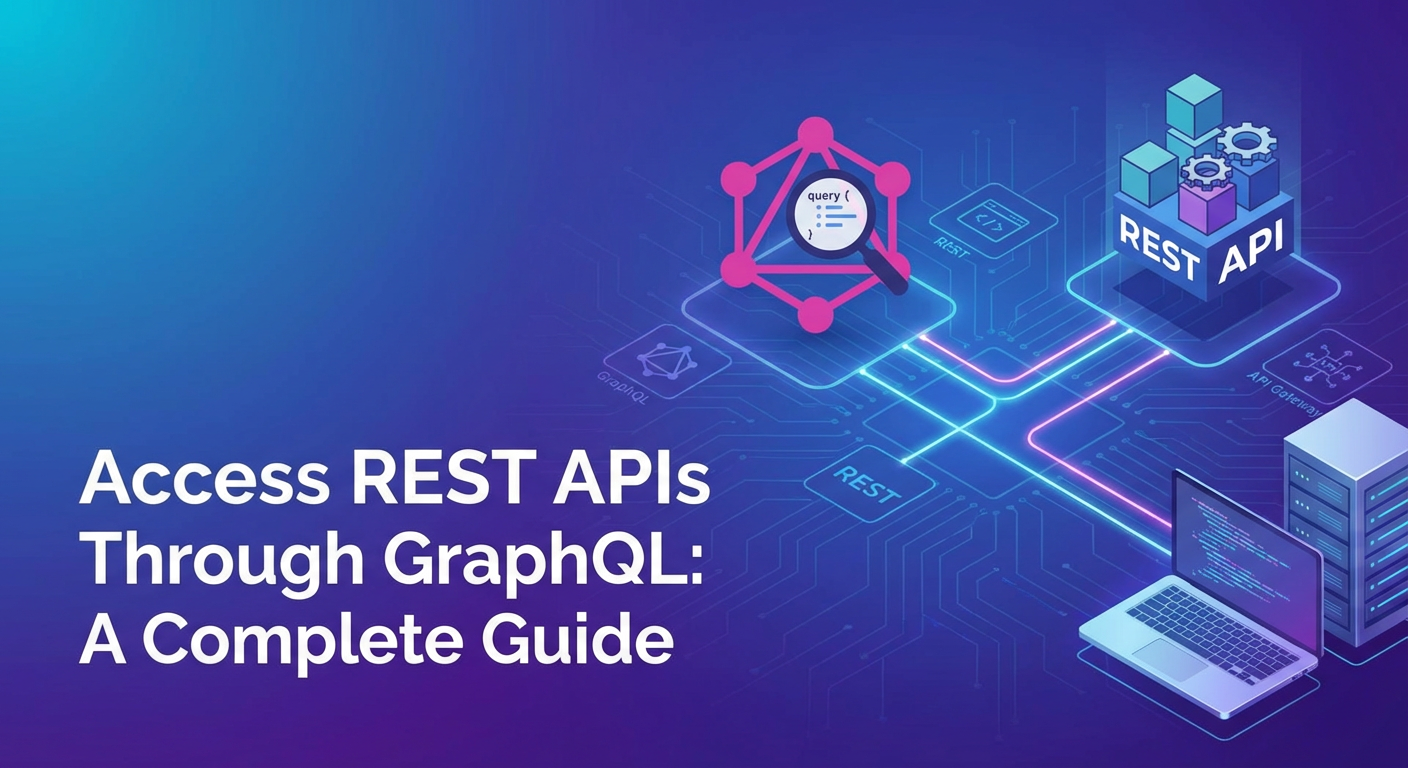


The digital landscape is a vast, interconnected web powered by Application Programming Interfaces (APIs). For decades, REST (Representational State Transfer) has reigned supreme as the de facto standard for building web services, enabling countless applications to communicate and exchange data. Its simplicity, statelessness, and reliance on standard HTTP methods made it an accessible and robust choice for a myriad of use cases, from mobile apps to complex enterprise systems. However, as applications grew more sophisticated and client-side demands became increasingly granular, the inherent limitations of REST began to surface. Developers found themselves grappling with issues like over-fetching (receiving more data than necessary), under-fetching (requiring multiple requests to gather all needed data), and the complexities of managing numerous endpoints. These challenges often led to inefficient data transfer, increased latency, and a cumbersome development experience.
In response to these evolving needs, a powerful alternative emerged from Facebook in 2012 and was open-sourced in 2015: GraphQL. More than just a query language, GraphQL is a paradigm shift in how clients interact with servers, allowing applications to request precisely the data they need, nothing more and nothing less. It promises a unified and flexible approach to data fetching, empowering client developers with unprecedented control. Yet, the world is still brimming with an enormous ecosystem of existing REST APIs, representing significant investments in time, resources, and infrastructure. Rebuilding these from scratch to adopt GraphQL is often impractical, if not impossible. This guide delves deep into a strategic and increasingly popular solution: accessing existing REST APIs through a GraphQL facade. We will explore the compelling reasons behind this integration, dissect the architectural patterns involved, walk through practical implementation steps, and discuss advanced considerations, ultimately providing a complete roadmap for leveraging GraphQL's advantages while preserving your valuable REST investments. This approach not only modernizes your data access layer but also simplifies client development, optimizes network usage, and provides a unified api experience, potentially orchestrated and secured by a sophisticated api gateway.
Part 1: Understanding the Landscape – REST and GraphQL Fundamentals
Before we embark on the journey of bridging REST and GraphQL, it's imperative to establish a clear understanding of each technology's core principles, strengths, and inherent limitations. This foundational knowledge will illuminate why integrating these two distinct api paradigms can yield significant benefits.
1.1 The Ubiquity of REST APIs
REST is an architectural style, not a protocol, that defines a set of constraints for how web services should be structured. At its heart, REST treats everything as a resource, identifiable by a unique URI. Interactions with these resources are stateless and primarily occur through a uniform interface, leveraging standard HTTP methods: GET to retrieve data, POST to create new resources, PUT to update existing ones, and DELETE to remove them. Data is commonly exchanged in formats like JSON or XML. The widespread adoption of REST APIs stems from several key strengths:
- Simplicity and Familiarity: REST's reliance on standard HTTP verbs and URLs makes it intuitive for developers already familiar with web technologies. The learning curve is relatively gentle, contributing to its broad appeal.
- Statelessness: Each request from a client to a server contains all the information needed to understand the request. The server does not store any client context between requests. This design simplifies server implementation, improves scalability, and enhances reliability, as any server can handle any request.
- Cacheability: Responses can be defined as cacheable or non-cacheable, significantly improving performance by reducing repeated requests to the server for static resources.
- Wide Adoption and Tooling: A vast ecosystem of libraries, frameworks, testing tools, and
api gatewaysolutions has matured around REST, making it easy to build, consume, and manage RESTful services across various programming languages and platforms. This extensive support contributes to faster development cycles and robustapiinfrastructures.
Despite these compelling advantages, the monolithic nature of REST responses and the proliferation of endpoints introduce certain challenges, particularly as application requirements become more dynamic and granular:
- Over-fetching: Clients often receive more data than they actually need for a specific view or component. For example, fetching a list of users might return their full profiles (email, address, phone number, etc.) when only their names and IDs are required. This excess data consumes unnecessary bandwidth and processing power, particularly detrimental for mobile clients or regions with limited connectivity.
- Under-fetching and Multiple Requests (N+1 Problem): Conversely, a single REST endpoint might not provide all the necessary data. To display a user's details along with their recent orders, a client might first fetch the user from
/users/{id}and then make a separate request to/users/{id}/orders. For a list of users, fetching orders for each user individually leads to an "N+1 problem," where N requests are made for related resources after an initial request for the primary resource. This dramatically increases the number of network round trips, leading to higher latency and slower user experiences. - Version Control Complexities: Evolving
apis often necessitates versioning (e.g.,/v1/users,/v2/users) to avoid breaking existing clients. Managing multipleapiversions concurrently adds maintenance overhead and can lead to fragmentation. - Client-Side Aggregation: Clients frequently need to combine data from several REST endpoints to construct a complete view. This logic for data aggregation resides on the client, increasing its complexity and making the application harder to maintain and evolve.
- Endpoint Proliferation: As the number of resources and their relationships grows, so does the number of REST endpoints. Navigating this multitude of endpoints can become cumbersome for client developers, blurring the
api's overall contract.
These limitations underscore the need for a more flexible data fetching mechanism, especially in complex, data-rich applications where performance and developer experience are paramount.
1.2 The Emergence of GraphQL
GraphQL is fundamentally a query language for your api and a runtime for fulfilling those queries with your existing data. Unlike REST, which is resource-oriented, GraphQL is data-graph-oriented, allowing clients to describe their data requirements in a precise and hierarchical manner. The server then responds with exactly that data, structured according to the client's request. This client-driven approach marks a significant departure from traditional api design.
Key principles and advantages of GraphQL include:
- Single Endpoint: A GraphQL server typically exposes a single HTTP endpoint (e.g.,
/graphql) that handles all data requests. Clients send queries or mutations to this single endpoint, rather than interacting with a multitude of resource-specific URLs. This simplifiesapiconsumption and management significantly. - Client-Driven Data Fetching: The most defining characteristic of GraphQL is its ability to let the client specify precisely what data it needs. Clients define the structure and fields of the desired response, eliminating over-fetching and under-fetching. This empowers client developers to fetch exactly what they display, leading to more efficient
apicalls. - Strong Typing and Introspection: Every GraphQL
apiis defined by a schema, a strongly typed contract that describes all possible data types, fields, and operations (queries, mutations, subscriptions). This schema serves as a single source of truth, enabling powerful tooling likeapiexplorers (e.g., GraphiQL) that can introspect the schema to provide real-time documentation and autocomplete suggestions. This significantly enhances developer experience andapidiscoverability. - Reduced Network Round Trips: By allowing clients to request multiple related resources in a single query, GraphQL drastically reduces the number of network requests needed to render a complex UI. This is particularly beneficial for mobile applications operating on constrained networks, where minimizing latency is critical.
- Schema Evolution Without Versioning: GraphQL's type system allows for graceful
apievolution. Fields can be added or deprecated without necessarily breaking existing clients, as clients only receive the fields they explicitly request. This often negates the need for aggressiveapiversioning strategies, simplifying maintenance. - Real-time Capabilities (Subscriptions): GraphQL natively supports subscriptions, enabling clients to receive real-time updates from the server whenever specific data changes. This feature is invaluable for applications requiring live data feeds, such as chat applications, stock tickers, or collaborative tools.
While GraphQL offers a compelling vision for modern api development, it’s not a magic bullet. Building a GraphQL server requires careful design of its schema and resolvers, the functions responsible for fetching the actual data. For applications that already rely heavily on existing REST APIs, the challenge lies in how to harness GraphQL's power without undergoing a costly and time-consuming rewrite of the entire backend infrastructure. This is where the concept of a GraphQL facade over REST APIs proves to be an elegant and practical solution, leveraging the strengths of both worlds.
Part 2: The Rationale – Why Bridge REST with GraphQL?
The decision to introduce GraphQL as a layer in front of existing REST APIs is not merely a technical choice; it's a strategic move driven by compelling operational and developmental advantages. This bridging strategy allows organizations to modernize their api consumption experience, improve performance, and enhance developer agility, all while preserving their significant investments in existing REST infrastructure.
2.1 Addressing REST's Limitations with GraphQL
The primary motivation for adopting a GraphQL facade is to directly mitigate the challenges inherent in consuming traditional REST APIs, as discussed in the previous section. By strategically positioning GraphQL, we can transform the client-server interaction model.
- Eliminating Over-fetching and Under-fetching: This is perhaps the most celebrated benefit. With GraphQL, clients construct queries that explicitly list the fields and nested relationships they require. The GraphQL server then orchestrates calls to the underlying REST APIs to retrieve only that specified data. For instance, instead of fetching a full
/users/{id}resource and then separately/users/{id}/posts, a GraphQL query could ask foruser(id: "123") { name posts { title body } }in a single request. This drastically reduces the amount of unnecessary data transferred over the network, leading to lighter payloads and faster load times. - Reducing Network Round Trips: The ability to fetch all necessary data for a particular view or component in a single GraphQL query significantly cuts down the number of HTTP requests a client needs to make. This is a game-changer for mobile applications, where network latency and limited bandwidth can severely impact user experience. Instead of making an initial request for a resource and then subsequent requests for related resources (the infamous N+1 problem), a single GraphQL query can traverse the entire data graph, fetching everything in one go.
- Simplifying Client-Side Development: When clients interact directly with REST APIs, they often bear the burden of combining data from various endpoints, filtering irrelevant information, and structuring it for UI presentation. This logic bloats client-side code, making it more complex, prone to errors, and harder to maintain. A GraphQL facade centralizes this data aggregation and transformation logic on the server. The client simply defines its data needs, and the GraphQL server handles the orchestration, reducing the complexity of client-side data management and freeing front-end developers to focus on UI/UX.
- Improving API Evolution and Maintainability: GraphQL's schema-first approach offers a more robust way to evolve your
api. By defining a strong, versionless schema, you can add new fields and types without fear of breaking existing clients, as they will simply ignore new fields they haven't requested. Deprecating fields is also handled gracefully within the schema itself, allowing clients ample time to migrate. This reduces the overhead associated with managing multipleapiversions (e.g., v1, v2) that is common in REST, simplifying long-termapimaintenance and allowing for more agile development. - Unified Data Access Layer: In complex microservices architectures, data might be scattered across dozens, if not hundreds, of disparate REST APIs. Presenting this fragmented data landscape directly to clients can be overwhelming. A GraphQL facade acts as a unified
apilayer, providing a single, coherent, and consistent interface to all underlying services. This abstractapiacts as a datagateway, masking the complexity of the backend and offering a harmonized view of the enterprise's data graph.
2.2 Strategic Advantages for Enterprises
Beyond the technical benefits, bridging REST with GraphQL offers strategic advantages that impact various facets of an organization, from development velocity to overall business agility.
- Faster Iteration Cycles for Front-End Teams: With a GraphQL facade, front-end developers can move at an accelerated pace. They are no longer blocked by backend teams needing to create new REST endpoints for every nuanced data requirement. Instead, they can craft their GraphQL queries directly, retrieving exactly what they need, often without backend intervention (assuming the underlying data is accessible via existing REST endpoints). This autonomy fosters greater productivity and responsiveness to business changes.
- Better Performance for Mobile and Low-Bandwidth Applications: The efficiency gains from reducing over-fetching and network round trips are particularly pronounced for mobile users. Applications load faster, consume less data, and feel more responsive, leading to a superior user experience and higher engagement rates. In an
apieconomy where mobile-first is often the mantra, this performance edge is critical. - Future-Proofing API Infrastructure: While REST APIs remain foundational, GraphQL offers a modern, flexible
apiparadigm that aligns well with the demands of next-generation applications. By introducing GraphQL as an abstraction layer, enterprises can incrementally adopt newerapitechnologies without a disruptive "rip and replace" strategy. This allows for a smooth transition and ensures theapiinfrastructure remains agile and adaptable to future trends. - Leveraging Existing REST Investments While Adopting Modern Approaches: Perhaps the most significant strategic advantage is the ability to maximize the return on existing
apiinvestments. Organizations have spent years, if not decades, building robust REST APIs. A GraphQL facade allows them to leverage this existing, proven infrastructure as the data source for a new, client-centricapilayer. There's no need for a costly and risky migration of the entire backend; instead, it's an additive strategy that enhances existing capabilities. This "strangler fig" pattern of gradually replacing or wrapping old systems with new ones is a powerful way to modernize enterprise architecture without causing widespread disruption. - Facilitating Microservices Adoption: In a microservices architecture, a single application might interact with dozens of independent services. A GraphQL layer can act as an aggregation point, presenting a unified
apito clients while routing requests to the appropriate microservices behind the scenes. This simplifies client consumption of microservices, masking the underlying distributed complexity and reinforcing the benefits of microservices by allowing teams to evolve their services independently without impacting client contracts.
By carefully considering these advantages, organizations can make a well-informed decision to implement a GraphQL facade, transforming their api ecosystem into a more flexible, efficient, and developer-friendly environment.
Part 3: The Architecture – How to Bridge REST with GraphQL
Implementing a GraphQL facade over existing REST APIs involves a specific architectural pattern where the GraphQL server acts as an intermediary, translating GraphQL queries into REST requests and then transforming the REST responses back into a GraphQL-compliant format. This section dissects the core concepts and components required for this bridging mechanism.
3.1 GraphQL Server as a Facade
The fundamental concept of accessing REST APIs through GraphQL revolves around deploying a GraphQL server that functions as a sophisticated facade. This server doesn't store data itself; instead, it serves as an orchestration layer, sitting between client applications and your existing RESTful services.
Here's how it generally works:
- Client Request: A client application (e.g., a web or mobile
api) sends a GraphQL query or mutation to the single GraphQL endpoint exposed by your facade server. The query specifies exactly what data the client needs, including nested relationships. - Query Parsing and Validation: The GraphQL server first parses the incoming query, ensuring it adheres to the defined GraphQL schema. It then validates the query against the schema, checking for correct field names, types, and arguments.
- Resolution Process: For each field in the parsed query, the GraphQL server invokes a corresponding "resolver" function. These resolvers are the heart of the facade. Instead of directly accessing a database, a resolver for a GraphQL field (e.g.,
userorposts) is responsible for making one or more HTTP requests to the appropriate underlying REST API endpoints. - REST API Interaction: The resolver transforms the GraphQL field arguments into parameters suitable for the REST API call. It then executes the HTTP request (GET, POST, PUT, DELETE) to the target REST service.
- Data Transformation: Once the REST API responds, the resolver receives the JSON (or XML) data. It then takes this raw REST response, potentially transforms it, filters it, or aggregates it with data from other REST calls, to match the exact shape and fields requested by the original GraphQL query.
- GraphQL Response: Finally, the GraphQL server compiles the results from all the resolvers into a single, JSON-formatted GraphQL response, which is then sent back to the client. The response strictly adheres to the structure requested by the client's query.
In essence, the GraphQL server acts as a translator and an orchestrator. It speaks GraphQL to the client and REST to the backend, seamlessly mediating the communication. This setup allows clients to interact with a unified, flexible GraphQL api while the backend infrastructure remains largely unchanged.
This orchestration role is not unlike what an advanced api gateway might provide in a broader sense, managing traffic and unifying api interactions. While a GraphQL facade specifically translates query languages, a robust api gateway can handle many aspects of api management, including authentication, authorization, rate limiting, and traffic routing for all your APIs, regardless of their underlying implementation. For instance, platforms like ApiPark, an open-source AI gateway and api management platform, are designed to simplify the management and integration of diverse api services. Though APIPark's core strength lies in its ability to integrate and manage AI models, even encapsulating AI prompts into new REST APIs, its broader api management capabilities—such as end-to-end api lifecycle management, unified api format for invocation, and api service sharing—demonstrate how modern api gateway solutions facilitate sophisticated api architectures that might integrate various backend types, including REST and potentially even GraphQL facades. Such platforms aim to reduce the complexity of api usage and maintenance, irrespective of whether the immediate use case involves direct GraphQL-to-REST translation or broader api governance.
3.2 Key Architectural Components
Building a GraphQL facade involves several critical components that work in concert to deliver the desired functionality:
- GraphQL Schema: This is the bedrock of your GraphQL
api. The schema, written in GraphQL Schema Definition Language (SDL), precisely defines the types of data that clients can query, the relationships between these types, and the available operations (queries for reading data, mutations for writing data, and subscriptions for real-time updates).- Types: Define the structure of your data objects (e.g.,
User,Product,Order). - Queries: Define the entry points for reading data from your
api(e.g.,user(id: ID!): User,allProducts: [Product]). - Mutations: Define the entry points for modifying data (e.g.,
createUser(input: CreateUserInput!): User,updateProduct(id: ID!, input: UpdateProductInput!): Product). - Scalars: Built-in types like
String,Int,Boolean,ID,Float, and custom scalar types for specific data formats (e.g.,Date). The schema acts as the contract between the client and the server, enforcing strong typing and enabling introspection. When mapping from REST, you'll typically define GraphQL types that represent logical entities, often aggregating data that might come from multiple REST endpoints.
- Types: Define the structure of your data objects (e.g.,
- Resolvers: Resolvers are JavaScript functions (or functions in whatever language your GraphQL server is written in) that are responsible for fetching the data for a specific field in the GraphQL schema. Every field in your schema, from top-level queries to nested fields on an object type, must have a corresponding resolver.
- Root Resolvers: Handle top-level queries and mutations. For example, a
userquery resolver would take anidargument, make an HTTP request toGET /users/{id}, and return the data. - Field Resolvers: Handle nested fields. If a
Usertype has apostsfield, its resolver would take the parentUserobject, extract the user's ID, and then make an HTTP request toGET /users/{id}/poststo fetch the related posts. These resolvers are where the business logic of interacting with your existing REST APIs resides. They translate GraphQL arguments into REST parameters, execute HTTP requests (using libraries likeaxiosornode-fetchin Node.js), and then process the REST response into the shape expected by the GraphQL schema.
- Root Resolvers: Handle top-level queries and mutations. For example, a
- Data Sources/Connectors: To keep resolvers clean and focused on orchestration logic, it's common practice to abstract the direct interaction with REST APIs into separate data source classes or modules. A data source might encapsulate all the methods for interacting with a specific microservice or a set of related REST endpoints. For example, a
UsersAPIdata source might have methods likegetUserById(id),getPostsByUserId(userId),createUser(userData), etc. These data sources handle HTTP requests, error handling, and basic data parsing, allowing resolvers to simply callcontext.dataSources.usersAPI.getUserById(id)without worrying about the low-level HTTP details. This promotes code reusability and testability. - GraphQL Server Frameworks: To build and deploy your GraphQL facade, you'll typically use a robust server framework. Popular choices include:
- Apollo Server (Node.js): A highly popular, production-ready GraphQL server that integrates well with various Node.js web frameworks (Express, Koa, Hapi) and provides features like caching, error handling, and schema management.
- GraphQL.js (Node.js): The reference implementation of GraphQL, often used as a foundation for other frameworks.
- Graphene (Python): A framework for building GraphQL APIs in Python.
- HotChocolate (.NET): A powerful GraphQL server for the .NET ecosystem. These frameworks provide the necessary boilerplate for setting up an HTTP server, handling incoming GraphQL requests, executing resolvers, and returning responses. They also often offer plugins for features like authentication, logging, and performance monitoring.
3.3 Data Transformation and Mapping
One of the most crucial and often complex aspects of bridging REST with GraphQL is the process of data transformation and mapping. REST APIs often return data in a "flat" or resource-centric structure, while GraphQL queries expect a nested, graph-like structure. Discrepancies between the REST response format and the GraphQL schema shape are common and must be meticulously handled by the resolvers.
Consider a REST api that returns user data like this:
// GET /api/users/123
{
  "id": "123",
  "firstName": "John",
  "lastName": "Doe",
  "emailAddress": "john.doe@example.com",
  "lastLoginDate": "2023-10-26T10:00:00Z"
}

// GET /api/posts?userId=123
[
  { "postId": "p1", "title": "My First Post", "content": "..." },
  { "postId": "p2", "title": "Another Post", "content": "..." }
]
And a desired GraphQL schema:
type User {
  id: ID!
  name: String!
  email: String!
  lastLogin: String
  posts: [Post!]
}

type Post {
  id: ID!
  title: String!
  body: String
}

type Query {
  user(id: ID!): User
}
Here's what a resolver needs to manage:
- Field Mapping: The GraphQL
Usertype hasnameandemail, while the RESTapihasfirstName,lastName, andemailAddress. The resolver for theUsertype would need to combinefirstNameandlastNameintonameand mapemailAddresstoemail. - Type Conversion: Dates (like
lastLoginDatein REST) might need to be converted to a specific string format or a custom scalarDatetype in GraphQL. Numerical IDs from REST might need to be coerced toIDscalars in GraphQL. - Aggregation Logic: The
postsfield on theUsertype requires an additional REST call (GET /api/posts?userId=123) after theuserdata has been fetched. Thepostsresolver, nested under theUsertype, would receive the parent user object and then make the necessary REST call, potentially filtering and transforming thepostIdtoidandcontenttobody. - Handling Nulls and Undefineds: REST APIs might return
nullfor missing fields, while GraphQL schemas enforce!(non-nullable) constraints. Resolvers must correctly handle these scenarios, either by ensuring the underlying REST data always provides a value or by transformingnullinto a default value if appropriate, or by propagating errors if a non-nullable field cannot be resolved. - Error Handling: Resolvers must gracefully handle errors originating from the underlying REST APIs (e.g., 404 Not Found, 500 Internal Server Error). These REST errors need to be translated into GraphQL error formats, providing meaningful messages to the client without exposing sensitive backend details. Strategies include throwing
ApolloErrors (with Apollo Server) or returningnullfor nullable fields where an error occurred during data fetching for that specific field, allowing other parts of the query to succeed.
This transformation layer is where much of the power and complexity of the GraphQL facade lies. It allows for a clean separation of concerns, providing clients with an ideal api experience while abstracting away the intricacies and inconsistencies of a potentially heterogeneous REST backend. Careful design and robust implementation of resolvers and data sources are paramount for a performant and reliable GraphQL facade.
APIPark is a high-performance AI gateway that allows you to securely access the most comprehensive LLM APIs globally on the APIPark platform, including OpenAI, Anthropic, Mistral, Llama2, Google Gemini, and more.Try APIPark now! 👇👇👇
Part 4: Practical Implementation Steps & Best Practices
Translating the architectural concepts into a working GraphQL facade requires a structured approach. This section outlines the practical steps involved, along with crucial best practices to ensure a robust, performant, and maintainable system.
4.1 Defining Your GraphQL Schema
The schema is the contract between your clients and your GraphQL server. It should be designed from the client's perspective, reflecting the data models that are most intuitive and useful for front-end development, rather than merely mirroring your existing REST API structure.
- Understand Client Data Needs: Before writing any schema, gather requirements from your client applications. What data do they need? How do different pieces of data relate to each other? What operations (create, update, delete) are required?
- Map REST Resources to GraphQL Types:
- Identify the core entities exposed by your REST APIs (e.g., users, products, orders). These will likely become your primary GraphQL
Objecttypes. - Map fields from REST responses to fields within your GraphQL types. This is where you might rename fields for clarity (e.g.,
firstName,lastName->name) or combine multiple REST fields into a single GraphQL field. - Consider how to represent relationships. If
GET /users/{id}returns user details andGET /users/{id}/postsreturns their posts, yourUserGraphQL type would have apostsfield that resolves to a[Post!]type.
- Identify the core entities exposed by your REST APIs (e.g., users, products, orders). These will likely become your primary GraphQL
- Define Queries:
- Create top-level
Queryfields that allow clients to fetch data. For instance,user(id: ID!): Userto fetch a single user by ID, orallUsers(limit: Int, offset: Int): [User!]for a collection. - The arguments for your queries (e.g.,
id,limit,offset) should align with how your underlying REST APIs accept parameters for fetching.
- Create top-level
- Define Mutations (for writes):
- If your clients need to modify data, define
Mutationtypes. These typically correspond to RESTPOST,PUT, orDELETErequests. - For example,
createUser(input: CreateUserInput!): Userwould map to aPOST /usersendpoint. Often, you'll useInputtypes for mutation arguments to group related fields.
- If your clients need to modify data, define
- Use Scalar Types and Custom Scalars: Leverage built-in scalars (
String,Int,Boolean,ID,Float) where appropriate. For specific data types not directly represented, consider creating custom scalars (e.g.,Date,EmailAddress) to ensure type safety and consistent parsing/serialization. - Example Schema Snippet: ```graphql # Schema designed around client needs, not direct REST endpointstype User { id: ID! name: String! # Combines firstName & lastName from REST email: String! isActive: Boolean! posts(limit: Int = 10): [Post!]! # A field that requires another REST call }type Post { id: ID! title: String! content: String author: User! # Relationship back to User createdAt: String! }input CreateUserInput { firstName: String! lastName: String! email: String! }type Query { user(id: ID!): User users(limit: Int = 10, offset: Int = 0): [User!]! }type Mutation { createUser(input: CreateUserInput!): User! }
`` Notice hownameis a combination,postsis a nested query, andCreateUserInput` is tailored for the mutation.
4.2 Implementing Resolvers
Resolvers are the engine of your GraphQL facade, responsible for fetching data for each field defined in your schema. This is where the translation from GraphQL to REST occurs.
- Resolver Function Structure: A resolver function typically accepts four arguments:
(parent, args, context, info).parent: The result of the parent field's resolver. Crucial for nested fields.args: Arguments provided in the GraphQL query for the current field.context: An object shared across all resolvers in a single query. Useful forapi gatewayutilities, data sources, authentication information, and caching mechanisms.info: An object containing information about the current query, including the AST (Abstract Syntax Tree) of the query. Useful for advanced optimizations like field-level permissions or selectively fetching data.
- Basic Resolvers (Direct Mapping): For top-level queries or simple fields that directly map to a single REST endpoint:
javascript // In resolvers.js const resolvers = { Query: { user: async (parent, { id }, { dataSources }) => { // dataSources.usersAPI encapsulates REST calls for user data const restUser = await dataSources.usersAPI.getUserById(id); // Basic mapping/transformation if needed return { id: restUser.id, name: `${restUser.firstName} ${restUser.lastName}`, email: restUser.emailAddress, isActive: restUser.status === 'active', // Example transformation // posts will be resolved by the User.posts resolver }; }, }, Mutation: { createUser: async (parent, { input }, { dataSources }) => { const newUser = await dataSources.usersAPI.createAUser(input); return { id: newUser.id, name: `${newUser.firstName} ${newUser.lastName}`, email: newUser.emailAddress, isActive: newUser.status === 'active', }; }, }, }; - Nested Resolvers (Handling Relationships): For fields that require additional data fetching based on the parent object. This is where the N+1 problem can arise if not handled carefully.
javascript // In resolvers.js const resolvers = { // ... other resolvers User: { posts: async (parent, { limit }, { dataSources }) => { // 'parent' here is the User object resolved by the Query.user resolver const userId = parent.id; const userPosts = await dataSources.postsAPI.getPostsByUserId(userId, limit); return userPosts.map(post => ({ id: post.postId, title: post.title, content: post.body, createdAt: post.publishedAt, // author field on Post will be resolved by Post.author resolver if needed })); }, }, }; - Batching and Caching (DataLoader): To prevent the N+1 problem (e.g., fetching 100 users, and then 100 separate requests for their posts), use a tool like Facebook's DataLoader. DataLoader batches multiple individual loads into a single request and caches results, significantly reducing the number of REST calls.
- You'd typically create a DataLoader instance for each type of resource you might fetch in batches (e.g.,
userLoader,postsByUserIdLoader). - The DataLoader instance would live in your
contextobject, accessible to all resolvers. - When a resolver needs a resource, it calls
dataLoader.load(id)instead of making a direct HTTP request. DataLoader collects allloadcalls within a single tick of the event loop and then executes a single batch function (which makes one REST call for multiple IDs) to fetch all required data.
- You'd typically create a DataLoader instance for each type of resource you might fetch in batches (e.g.,
- Error Handling within Resolvers: Catch errors from REST API calls and transform them into meaningful GraphQL errors. You can throw custom
ApolloErrors (if using Apollo Server) or simply returnnullfor nullable fields when an error occurs, allowing the rest of the query to succeed.
4.3 Setting Up the GraphQL Server
Once your schema and resolvers are defined, you need to set up a GraphQL server to expose your API.
- Choose a Framework: Select a GraphQL server framework that aligns with your technology stack (e.g., Apollo Server for Node.js, Graphene for Python). Apollo Server is a popular choice for its ease of use and extensive features.
- Initialize the Server: Configure your server with your schema and resolvers. ```javascript // Example with Apollo Server const { ApolloServer } = require('apollo-server'); const typeDefs = require('./schema'); // Your schema definition const resolvers = require('./resolvers'); // Your resolver map const UsersAPI = require('./dataSources/users'); // Your data sources const PostsAPI = require('./dataSources/posts');const server = new ApolloServer({ typeDefs, resolvers, dataSources: () => ({ // Initialize data sources for each request usersAPI: new UsersAPI(), postsAPI: new PostsAPI(), }), context: ({ req }) => { // Pass request context, e.g., authentication headers return { token: req.headers.authorization || '', // Initialize DataLoaders here if needed }; }, // Other configurations: plugins, validation rules, etc. });server.listen().then(({ url }) => { console.log(
🚀 Server ready at ${url}); }); ``` 3. Deployment: Deploy your GraphQL server like any other web application (e.g., on a cloud platform, Kubernetes, or serverless functions). Ensure it has sufficient resources to handle the orchestration workload.
4.4 Security and Authentication
Securing your GraphQL facade is paramount, especially since it acts as a gateway to your backend REST APIs.
- Authentication:
- Pass-through Authentication: The most common approach is to pass authentication tokens (e.g., JWTs from the
Authorizationheader) received from the client directly to the underlying REST APIs. The GraphQL server extracts the token from the incoming requestcontextand includes it in outgoing HTTP headers when making calls to REST services. - GraphQL Layer Authentication: You might also implement authentication logic directly within the GraphQL layer (e.g., using middleware or specific resolvers) if your GraphQL
apineeds to enforce its own authentication separate from, or in addition to, the backend REST APIs.
- Pass-through Authentication: The most common approach is to pass authentication tokens (e.g., JWTs from the
- Authorization:
- Field-Level Authorization: Implement authorization checks within resolvers. For example, a
salaryfield on aUsertype might only be visible to users with anadminrole. The resolver would check the user's role (from thecontext) before fetching or returning the sensitive data. - Directive-Based Authorization: Many GraphQL frameworks offer custom directives (e.g.,
@auth(roles: ["ADMIN"])) that can be applied to fields or types in the schema to declaratively enforce authorization rules, abstracting the actual check into a reusable function. - Backend Authorization: Rely on the underlying REST APIs to perform their own authorization checks. The GraphQL facade simply passes the authenticated user's context, and the REST
apidetermines if the action is allowed. This is often the simplest approach if REST APIs already have robust authorization.
- Field-Level Authorization: Implement authorization checks within resolvers. For example, a
- Rate Limiting: Protect your GraphQL facade and underlying REST APIs from abuse.
- API Gateway Rate Limiting: An
api gatewayplaced in front of your GraphQL server (and potentially your REST APIs) can provide centralized rate limiting based on IP address, API key, or user ID. - GraphQL Server Rate Limiting: Implement rate limiting within your GraphQL server, perhaps by counting queries per user or per IP, and blocking requests that exceed defined thresholds.
- API Gateway Rate Limiting: An
- Input Validation: Sanitize and validate all input arguments to your GraphQL queries and mutations to prevent injection attacks and ensure data integrity. The GraphQL type system helps enforce basic validation, but more complex validation (e.g., regex for email formats) should be done in resolvers or data sources.
4.5 Performance Optimization
Performance is critical for any api, and a GraphQL facade adds an orchestration layer that requires careful optimization to prevent bottlenecks.
- N+1 Problem Mitigation (DataLoader): As discussed, DataLoader is essential for batching requests and preventing an explosion of HTTP calls to backend REST APIs, especially for nested fields.
- Caching:
- Server-Side Caching: Implement caching for expensive REST
apicalls within your data sources. Use an in-memory cache (likelru-cache) or a distributed cache (like Redis) to store frequently accessed REST responses. This can significantly reduce the load on your backend services. - Client-Side Caching: GraphQL clients (e.g., Apollo Client, Relay) come with powerful normalized caches that automatically store and update data received from GraphQL responses. This prevents clients from re-fetching the same data multiple times and provides instant UI updates.
- Server-Side Caching: Implement caching for expensive REST
- Query Complexity Analysis and Throttling: Complex GraphQL queries (e.g., deeply nested requests with many fields) can be resource-intensive. Implement query complexity analysis to calculate the "cost" of a query before execution. If a query exceeds a predefined complexity limit, reject it or throttle the client. This protects your server and backend from denial-of-service attacks or unintentionally expensive queries.
- Persisted Queries: For production applications, clients often send the same GraphQL queries repeatedly. Persisted queries allow clients to send a hash or ID of a known query instead of the full query string. The server then retrieves the full query from a pre-registered list. This reduces payload size, improves caching, and prevents arbitrary query execution.
- Logging and Tracing: Integrate detailed logging for GraphQL requests, resolver execution times, and outgoing REST
apicalls. Use distributed tracing (e.g., OpenTelemetry, Jaeger) to visualize the flow of a single request across your GraphQL facade and multiple backend REST APIs, helping to identify performance bottlenecks.
4.6 Monitoring and Logging
Comprehensive monitoring and logging are indispensable for maintaining the health, performance, and security of your GraphQL facade and the underlying REST services. Without granular insights, diagnosing issues, understanding usage patterns, and optimizing performance become exceedingly difficult.
- GraphQL Specific Metrics:
- Query Count and Latency: Track the number of incoming GraphQL queries and their average response times.
- Resolver Performance: Monitor the execution time of individual resolvers. This helps identify which resolvers are slow and which underlying REST API calls might be causing delays.
- Error Rates: Keep track of GraphQL errors, categorizing them by type (e.g., validation errors, network errors from REST, business logic errors).
- Cache Hit Ratios: If you've implemented caching, monitor cache hit rates to ensure your caching strategy is effective.
- Underlying REST API Monitoring: Since your GraphQL facade depends entirely on your REST APIs, it's crucial to monitor their performance as well.
- REST Endpoint Latency: Track response times for each REST endpoint called by your resolvers.
- REST Error Rates: Monitor HTTP error codes (4xx, 5xx) returned by your REST APIs.
- Resource Utilization: Keep an eye on CPU, memory, and network usage of your REST services.
- Centralized Logging: Aggregate all logs from your GraphQL server and underlying REST APIs into a centralized logging system (e.g., ELK Stack, Splunk, DataDog). This provides a holistic view of your system's behavior and simplifies troubleshooting. Ensure logs include correlation IDs to trace a single client request through the GraphQL facade and all subsequent REST API calls.
- Alerting: Set up alerts for critical metrics and error thresholds. For example, an alert if GraphQL query latency exceeds a certain threshold, or if the error rate from a specific REST API spikes.
- Utilizing API Gateway Features: Many
api gatewaysolutions offer robust monitoring and logging capabilities that can complement or even centralize the insights gained from your GraphQL server. Platforms like ApiPark, known for its robustapimanagement and AIgatewaycapabilities, offer detailedapicall logging and powerful data analysis features. Such functionalities are invaluable for monitoring the performance and stability of your GraphQL facade and the underlying REST services, allowing businesses to quickly trace and troubleshoot issues inapicalls, gain insights into long-term trends, and even facilitate preventive maintenance before issues occur. By leveraging a comprehensiveapi gateway, you can achieve unparalleled visibility into the entireapiecosystem, from client to backend.
By diligently implementing these practical steps and adhering to best practices, you can successfully build and maintain a high-performing and secure GraphQL facade that elegantly bridges the gap between modern client demands and existing RESTful services.
Part 5: Advanced Scenarios and Considerations
Beyond the foundational implementation, several advanced scenarios and strategic considerations can further enhance your GraphQL facade, particularly in complex enterprise environments or when aiming for a sophisticated api ecosystem.
5.1 Migrating Existing Clients
Introducing a GraphQL facade doesn't necessarily mean an immediate overhaul of all existing client applications. A phased migration strategy is often more practical and less disruptive.
- Coexistence: Allow both old REST clients and new GraphQL clients to operate concurrently. The GraphQL facade acts as an optional, modernized
apientry point. Old clients continue to interact directly with the REST APIs, while new features or new client applications leverage GraphQL. - Gradual Adoption (Strangler Fig Pattern): For existing clients, consider adopting GraphQL for new features or specific data requirements that benefit most from its flexibility. Over time, more and more parts of the client application can be migrated to use the GraphQL
api. This "strangler fig" pattern allows you to slowly replace or wrap legacy interactions without a risky big-bang rewrite. - Deprecation Strategy: When a REST endpoint is fully superseded by a GraphQL query, establish a clear deprecation strategy for the old REST endpoint, providing ample notice to clients before eventually decommissioning it.
5.2 Integrating with API Gateways
While a GraphQL server itself acts as a kind of gateway to your REST APIs, a dedicated api gateway serves a broader, more enterprise-level role. Integrating your GraphQL facade with a robust api gateway offers significant advantages, enhancing security, scalability, and overall api governance.
An api gateway typically sits at the edge of your network, acting as a single entry point for all client requests, regardless of whether they target a GraphQL facade or other REST services. It provides cross-cutting concerns that are difficult or inefficient to implement within each individual api.
- Centralized Security: The
api gatewaycan handle authentication and initial authorization (e.g., checkingapikeys, validating JWTs) before requests even reach your GraphQL server. This offloads security concerns from your application logic and provides a unified security policy. - Traffic Management:
api gateways offer robust traffic management features such as load balancing (distributing requests across multiple instances of your GraphQL server), routing requests to different backend services, and circuit breaking to prevent cascading failures. - Rate Limiting and Throttling: Implement granular rate limiting policies at the
gatewaylevel to protect your GraphQL facade and backend REST APIs from excessive requests, preventing abuse and ensuring fair usage. - Caching: While GraphQL clients and servers have their own caching mechanisms, an
api gatewaycan implement edge caching for responses that are consistently the same across multiple clients, further reducing backend load. - Analytics and Monitoring: A dedicated
api gatewayprovides a centralized point for collectingapiusage analytics, performance metrics, and detailed access logs. This offers a holistic view ofapiconsumption that spans beyond just the GraphQL layer.
For enterprises, an advanced api gateway solution becomes indispensable. Platforms such as ApiPark offer comprehensive api lifecycle management, traffic forwarding, load balancing, and independent api access permissions for different tenants. By leveraging such a powerful gateway, organizations can not only secure and scale their REST APIs and GraphQL facades but also seamlessly integrate and manage a vast array of AI models, simplifying prompt encapsulation into new REST APIs and providing a unified api format for AI invocation. This integrated approach highlights how modern api gateways are evolving to manage not just traditional REST APIs but also emerging AI services, making them central to a flexible and future-proof api strategy.
5.3 Schema Stitching and Federation
In large, microservices-oriented architectures, you might have multiple GraphQL services, each owned by a different team and serving a specific domain. To present a single, unified GraphQL api to clients, you can use advanced techniques:
- Schema Stitching (Legacy): This involves combining multiple independent GraphQL schemas into a single executable schema. While powerful, it can become complex to manage in very large systems.
- GraphQL Federation (Apollo Federation): A more modern and scalable approach for building a unified graph from multiple subgraphs. Each subgraph is a self-contained GraphQL
api(potentially a GraphQL facade over its own set of REST APIs). A specialgateway(Apollo Gateway) queries these subgraphs and stitches their responses together, providing a coherentapito clients. Federation excels in distributed environments, allowing teams to develop and deploy their GraphQL services autonomously while contributing to a single, consistent enterprise graph.
5.4 Handling Mutations (Writes)
While queries fetch data, mutations modify it. When bridging REST, mutations translate directly to POST, PUT, or DELETE requests on your backend REST APIs.
- Design for Idempotency: If possible, design your mutations and underlying REST operations to be idempotent, meaning executing them multiple times has the same effect as executing them once. This is crucial for reliability in distributed systems.
- Transactional Integrity: If a single GraphQL mutation needs to trigger multiple REST
apicalls that must succeed or fail together (e.g., creating a user and their default profile), ensure you handle transactional integrity. This might involve implementing compensatory actions or using a distributed transaction pattern if the underlying REST APIs do not natively support atomic operations across services. - Return Values: GraphQL best practices suggest that a mutation should return the actual state of the modified object, or the newly created object, to the client. Your mutation resolvers should therefore not just make the REST call but also fetch and return the updated data from the REST
apiif applicable.
5.5 Real-time Data with Subscriptions
GraphQL subscriptions allow clients to receive real-time updates when data changes on the server, providing a dynamic user experience without constant polling.
- WebSocket Integration: GraphQL subscriptions typically operate over WebSockets. Your GraphQL server needs to support WebSocket connections in addition to HTTP.
- Event-Driven Backend: To implement subscriptions over REST, your REST APIs or backend services need to emit events when data changes. These events can be published to a message queue (e.g., Kafka, RabbitMQ) or an event bus.
- Subscription Resolvers: Your GraphQL subscription resolvers would then listen to these events. When a relevant event occurs, the resolver publishes the updated data to all subscribed clients through the WebSocket connection. This effectively transforms backend REST events into real-time GraphQL updates for your clients.
These advanced considerations highlight the versatility and power of GraphQL as an api layer. By carefully planning and implementing these features, organizations can build highly sophisticated, scalable, and responsive data apis on top of their existing REST infrastructure.
Part 6: Challenges and Trade-offs
While accessing REST APIs through GraphQL offers numerous compelling advantages, it's crucial to acknowledge that this architectural pattern introduces its own set of complexities and trade-offs. No technology is a silver bullet, and understanding these challenges is vital for informed decision-making and successful implementation.
6.1 Increased Server-Side Complexity
The most significant trade-off is the shift in complexity from the client to the GraphQL server.
- Orchestration Burden: The GraphQL server now shoulders the responsibility of orchestrating multiple REST API calls, transforming data, handling errors from various sources, and potentially batching requests. This requires sophisticated resolver logic and careful design of data sources.
- Development and Maintenance: Developing and maintaining this orchestration layer can be more complex than simply exposing raw REST endpoints. Developers need a deep understanding of both GraphQL principles and the intricacies of the underlying REST APIs. Debugging issues can also become more involved as requests traverse multiple layers.
- Performance Responsibility: While GraphQL aims to improve client-side performance, the server must efficiently handle the aggregation and transformation. Poorly optimized resolvers or a lack of batching (e.g., neglecting DataLoader) can lead to an N+1 problem on the server side, resulting in slower server responses and increased load on backend REST APIs.
6.2 Learning Curve
Adopting GraphQL, even as a facade, introduces a new paradigm that requires a learning investment.
- Developer Skill Set: Developers familiar only with traditional RESTful
apidesign will need to learn GraphQL's schema definition language, resolver patterns, and concepts like fragments, directives, and subscriptions. This applies to both front-end developers (learning to write GraphQL queries) and back-end developers (learning to build and optimize GraphQL servers). - Operational Challenges: Operations teams might need to adapt their monitoring, logging, and deployment strategies for a GraphQL server, which behaves differently from a typical REST service. Understanding GraphQL query complexity, potential for deep queries, and how to manage the
api gatewaybetween clients and GraphQL requires new operational insights.
6.3 Tooling Maturity (Compared to REST)
While the GraphQL ecosystem has matured significantly, REST still benefits from a longer history and broader adoption.
- API Management Tools: While
api gateways like ApiPark provide excellentapimanagement for both traditional REST and emerging AI services, specific tooling for GraphQL-firstapis (e.g., for automated documentation generation, client code generation, advanced testing) might still be catching up to the breadth and depth of tools available for REST. - Monitoring and Analytics: While GraphQL-specific monitoring tools are emerging, integrating them into existing enterprise monitoring stacks might require more effort compared to well-established REST monitoring solutions.
6.4 N+1 Problem Revisited
Although DataLoader significantly mitigates the N+1 problem, it requires conscious effort to implement correctly.
- Implementation Overhead: Setting up and properly utilizing DataLoaders across all resolvers that could potentially lead to N+1 scenarios adds development overhead and requires careful design.
- Complexity for Relationships: As your schema grows in complexity and the number of relationships increases, managing DataLoaders and ensuring optimal batching can become a non-trivial task.
6.5 Caching Challenges
GraphQL's single endpoint and flexible query language pose challenges for traditional HTTP caching mechanisms.
- HTTP Caching Limitations: Because clients can request arbitrary combinations of fields, caching an entire GraphQL HTTP response (using
Cache-Controlheaders) is often not feasible or effective. A single URL (/graphql) can return thousands of different possible responses. - Application-Level Caching: Caching must largely occur at the application level: within the GraphQL server's resolvers (e.g., using Redis for REST responses) and within the GraphQL client's normalized cache. This shifts the caching burden and complexity to the application layer.
- Cache Invalidation: Implementing an effective cache invalidation strategy for application-level caches, especially for mutations, can be complex to ensure data consistency without compromising performance.
In conclusion, the decision to implement a GraphQL facade over REST APIs should be made with a clear understanding of these trade-offs. While it offers unparalleled flexibility and efficiency for clients, it demands a higher degree of architectural sophistication, development rigor, and operational maturity on the server side. When executed thoughtfully, these challenges are manageable and the benefits often far outweigh the costs, leading to a more agile and performant api ecosystem.
Conclusion
The evolution of apis is a continuous journey, driven by the ever-increasing demands of modern applications for efficiency, flexibility, and real-time capabilities. While REST APIs have served as the backbone of the internet for decades, their limitations in scenarios requiring precise data fetching and reduced network round trips have become increasingly apparent. GraphQL emerged as a powerful solution to these challenges, empowering client developers with unprecedented control over their data needs.
This complete guide has delved into the strategic architectural pattern of accessing existing REST APIs through a GraphQL facade. We've established that this approach is not about replacing REST, but rather augmenting it, allowing organizations to leverage their substantial investments in existing REST infrastructure while simultaneously embracing the modern advantages of GraphQL. By acting as an intelligent api gateway, the GraphQL server translates the granular, client-driven queries into efficient REST API calls, orchestrating data retrieval and transformation before delivering precisely what the client requested.
From defining a client-centric schema and implementing robust resolvers with essential optimizations like DataLoader, to securing the facade with proper authentication and authorization, and integrating with advanced api gateway solutions like ApiPark for comprehensive management and monitoring, the path to a successful GraphQL facade is clear yet requires meticulous planning. Advanced considerations such as schema federation, sophisticated mutation handling, and real-time subscriptions further extend the capabilities of this pattern, enabling highly scalable and responsive api architectures.
While the journey introduces challenges, including increased server-side complexity, a learning curve for development teams, and nuanced caching strategies, the benefits of improved client performance, faster front-end iteration cycles, and a unified api experience are compelling. Ultimately, the GraphQL facade over REST is a strategic move for organizations looking to modernize their api landscape, future-proof their infrastructure, and deliver superior user experiences in an increasingly interconnected digital world. It's a testament to the adaptable nature of api design, proving that innovation can seamlessly build upon, rather than dismantle, established foundations.
Frequently Asked Questions (FAQs)
1. What is the primary benefit of using a GraphQL facade over existing REST APIs? The primary benefit is addressing REST's limitations like over-fetching (receiving too much data) and under-fetching (requiring multiple requests for related data). A GraphQL facade allows clients to request exactly the data they need in a single query, reducing network round trips, improving performance, and simplifying client-side data management.
2. Does a GraphQL facade replace my existing REST APIs? No, it does not replace them. Instead, a GraphQL facade sits in front of your existing REST APIs, acting as an abstraction layer or an api gateway. Your REST APIs continue to function as the data source, and the GraphQL server translates client queries into calls to these existing REST services. This allows you to leverage your current api investments while offering a modern consumption experience.
3. What role does an api gateway play in an architecture that uses a GraphQL facade over REST? An api gateway serves a broader, enterprise-level role by providing centralized management for all your apis, including your GraphQL facade. It can handle cross-cutting concerns like authentication, authorization, rate limiting, traffic management, load balancing, and comprehensive monitoring for all incoming requests before they reach your GraphQL server or other backend services. Platforms like ApiPark exemplify such advanced api gateways, offering robust api lifecycle management and security features that complement a GraphQL facade.
4. What are some of the challenges of implementing a GraphQL facade? Implementing a GraphQL facade introduces increased server-side complexity, as the GraphQL server must orchestrate multiple REST API calls, perform data transformations, and manage caching. There's also a learning curve for developers unfamiliar with GraphQL, and challenges related to caching GraphQL's dynamic responses. Careful design, especially using tools like DataLoader to prevent the N+1 problem, is crucial for performance.
5. Is GraphQL suitable for all types of applications, or should I stick with REST? GraphQL is particularly beneficial for complex applications with evolving data needs, multiple client platforms (web, mobile), and scenarios where minimizing network requests and data payload size is critical. If your api needs are simple, static, or primarily resource-oriented with minimal relationships, REST might still be a simpler and perfectly adequate choice. The decision to use a GraphQL facade is often a strategic one for modernizing client-server interactions without rebuilding existing backend api infrastructure.
🚀You can securely and efficiently call the OpenAI API on APIPark in just two steps:
Step 1: Deploy the APIPark AI gateway in 5 minutes.
APIPark is developed based on Golang, offering strong product performance and low development and maintenance costs. You can deploy APIPark with a single command line.
curl -sSO https://download.apipark.com/install/quick-start.sh; bash quick-start.sh

In my experience, you can see the successful deployment interface within 5 to 10 minutes. Then, you can log in to APIPark using your account.

Step 2: Call the OpenAI API.