AI Gateway Kong: Secure & Optimize Your AI APIs
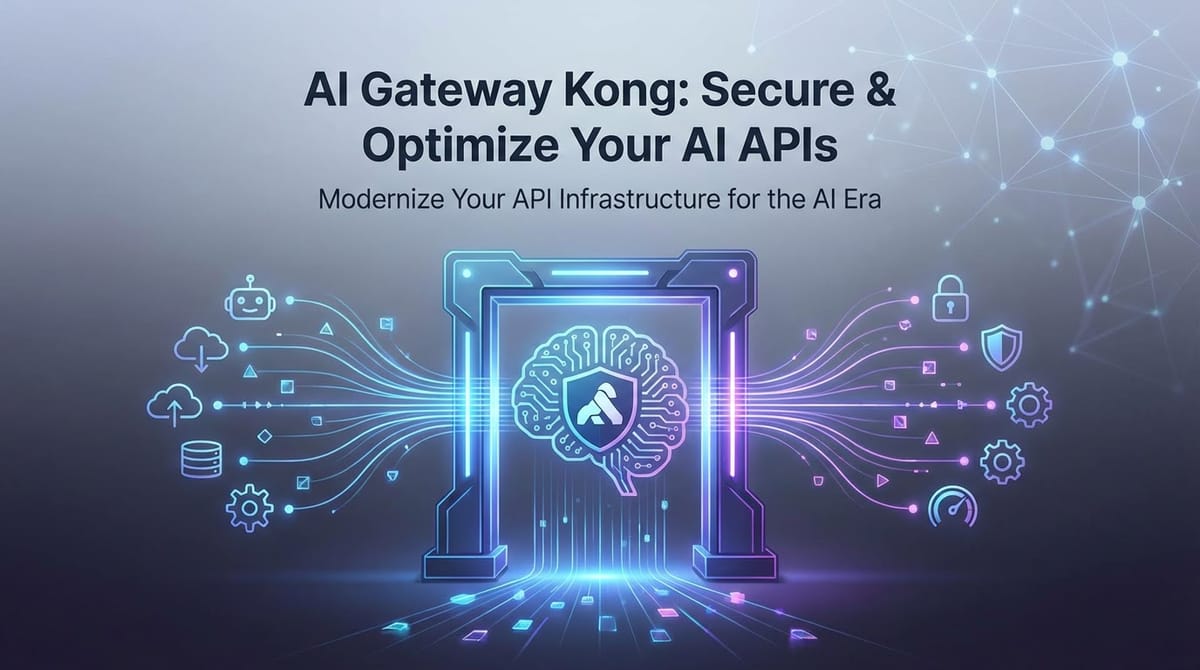


The digital frontier is rapidly evolving, driven by an unprecedented surge in Artificial Intelligence (AI) technologies. From advanced natural language processing models powering chatbots and content generation, to sophisticated computer vision systems enabling autonomous vehicles and medical diagnostics, AI is no longer a niche technology but a pervasive force reshaping industries and user experiences. At the heart of this transformation lies the humble yet powerful Application Programming Interface (API), serving as the universal language through which disparate software components communicate, interact, and exchange data. As AI models become more complex, distributed, and critical to business operations, the need for robust, secure, and performant management of these AI-driven APIs has become paramount. This exigency gives rise to the specialized concept of an AI Gateway, a sophisticated layer designed to mediate, control, and enhance the interactions with AI services.
In this intricate landscape, the role of a dedicated api gateway transforms from a mere traffic controller to a strategic orchestrator. It is no longer sufficient to simply route requests; modern architectures demand granular control over security, performance, and the very lifecycle of these critical interfaces. This is where solutions like Kong Gateway emerge as indispensable tools. Kong, a high-performance, open-source API management platform, has long been a stalwart in handling the complexities of traditional APIs. However, its extensible architecture and robust feature set position it uniquely to tackle the specific challenges inherent in managing AI APIs, including the burgeoning category of Large Language Model (LLM) APIs. This comprehensive exploration delves into how Kong can be leveraged as a powerful AI Gateway to not only secure and optimize your AI APIs but also to streamline their management, enhance developer experience, and ensure the reliability of your AI-powered applications in an ever-demanding digital ecosystem. We will journey through the foundational concepts, intricate challenges, Kong's specific capabilities, implementation strategies, and even glance at complementary solutions that collectively define the cutting edge of AI API governance.
Understanding the Landscape: AI, APIs, and the Gateway Concept
To truly appreciate the value of an AI Gateway like Kong, it is essential to first understand the fundamental components at play: APIs, the unique characteristics of AI services, and the overarching concept of a gateway. An API, or Application Programming Interface, is essentially a set of definitions and protocols for building and integrating application software. It acts as a contract, allowing different software systems to communicate with each other in a standardized way. In essence, it defines the methods that software components can use to interact, abstracting away the underlying implementation details. APIs have become the backbone of the modern internet, enabling everything from mobile applications consuming cloud services to microservices communicating within complex enterprise architectures. Without APIs, the interconnected digital world we inhabit would simply not exist.
The explosion of AI services has introduced a new dimension to API management. AI models, once confined to academic research or specialized laboratories, are now widely available as consumable services. These services span a vast spectrum, from machine learning models for predictive analytics, computer vision models for image recognition, natural language processing models for sentiment analysis, to the groundbreaking generative AI models, particularly Large Language Models (LLMs), that can understand and generate human-like text. The operationalization of these models, often referred to as MLOps, involves deploying them as accessible endpoints, typically exposed via APIs. Unlike traditional APIs which might simply retrieve or update data from a database, AI APIs involve complex computations, often leveraging specialized hardware (like GPUs), and can have varying response times and resource demands based on the input data and model complexity. The sheer diversity of AI models, their differing input/output schemas, and their often-idiosyncratic operational requirements pose a unique set of challenges for any system attempting to manage them at scale.
This is where the genesis of the api gateway becomes critical. In a world of distributed systems and microservices, an API gateway serves as a single entry point for all client requests. It acts as a reverse proxy, routing requests to the appropriate backend service, but also performs a multitude of other functions that are vital for robust API management. These functions typically include authentication and authorization, rate limiting, load balancing, caching, request and response transformation, and monitoring. By offloading these cross-cutting concerns from individual microservices, an API gateway simplifies the development process, enhances security, and improves the overall performance and resilience of the system. It centralizes control, making it easier to enforce policies, manage traffic, and gain insights into API usage.
However, as AI services proliferated, it became apparent that a standard api gateway, while capable, wasn't fully equipped to handle the evolving needs specific to AI workloads. The unique characteristics of AI APIs, such as highly variable computational costs, sensitive model inputs (e.g., personal data, proprietary prompts), the need for prompt engineering at the gateway level, and precise token usage tracking for cost management, necessitated a more specialized approach. This realization led to the emergence of the AI Gateway and, more specifically, the LLM Gateway concepts. An AI Gateway is essentially an enhanced API gateway tailored for AI services, incorporating features that address the distinct security, performance, cost, and management challenges of AI models. An LLM Gateway further refines this concept, focusing on the unique requirements of Large Language Models, which often involve managing token counts, handling prompt variations, and orchestrating requests across multiple LLM providers. These specialized gateways aim to provide a more intelligent, AI-aware layer that not only manages API traffic but also understands and optimizes the interaction with AI models themselves, transforming raw AI endpoints into polished, manageable, and secure services.
Core Challenges in Managing AI APIs
The excitement surrounding Artificial Intelligence is palpable, but its deployment in real-world applications is accompanied by a host of intricate challenges, especially when these AI capabilities are exposed via APIs. Managing these AI Gateway endpoints requires a specialized approach that goes beyond the capabilities of traditional api gateway solutions. Understanding these core challenges is crucial for designing and implementing an effective AI Gateway.
A. Security: Safeguarding Intellectual Property and Sensitive Data
Security is, without a doubt, the paramount concern when dealing with AI APIs. The data flowing through these endpoints can be highly sensitive, ranging from personally identifiable information (PII) submitted to an LLM Gateway for processing, to proprietary business data used for model training or inference. Furthermore, the AI models themselves represent significant intellectual property, requiring protection from unauthorized access or reverse engineering.
- Authentication & Authorization: The first line of defense is ensuring that only authorized users and applications can access AI services. This requires robust authentication mechanisms, which can include traditional API keys, more secure OAuth 2.0 flows, JSON Web Tokens (JWT) for stateless authentication, or even complex service account management for inter-service communication. For AI APIs, authorization needs to be granular, dictating not just who can call an API, but also what specific operations they can perform, which models they can access, or even what data scopes they are permitted to utilize. A sophisticated AI Gateway must support a variety of authentication protocols and integrate seamlessly with existing identity management systems to enforce these policies consistently.
- Data Privacy & Compliance: AI models often process vast amounts of data, much of which may be subject to stringent data privacy regulations like GDPR, CCPA, or HIPAA. The
AI Gatewaymust act as a critical control point to ensure that data submitted to and returned from AI models adheres to these regulations. This can involve data anonymization, pseudonymization, encryption in transit and at rest, and strict access controls. For anLLM Gateway, particular attention must be paid to preventing sensitive information from being inadvertently stored or used for model retraining without explicit consent, a common concern in the age of generative AI. - Threat Protection (DDoS, Prompt Injection, etc.): Like any public-facing API, AI APIs are vulnerable to common web attacks such as Distributed Denial of Service (DDoS) attacks, SQL injection, and cross-site scripting (XSS). An
api gatewaylayer is crucial for mitigating these threats through traffic filtering, rate limiting, and integrating with Web Application Firewalls (WAFs). However, AI APIs introduce unique vulnerabilities. ForLLM Gatewayendpoints, "prompt injection" attacks are a significant and emerging threat. This involves crafting malicious inputs (prompts) designed to manipulate the LLM into revealing confidential information, bypassing security controls, generating harmful content, or performing unintended actions. TheAI Gatewayneeds intelligent capabilities, potentially leveraging AI itself, to detect and neutralize such sophisticated attacks before they reach the backend model. - API Abuse Prevention: Beyond malicious attacks, API abuse can come in the form of excessive usage, unauthorized scraping of AI model outputs, or attempts to circumvent usage policies. The AI Gateway must implement mechanisms like dynamic rate limiting, quota management, and anomaly detection to identify and block abusive patterns, protecting the backend AI infrastructure from overload and ensuring fair resource distribution.
B. Optimization & Performance: Ensuring Speed and Efficiency
AI models, especially large ones, can be computationally intensive, leading to higher latency and resource consumption compared to simpler APIs. Optimizing the performance of AI APIs is critical for delivering responsive applications and managing operational costs.
- Latency Management: The round-trip time for an AI API call can be influenced by network latency, the processing time of the model itself, and any intermediate hops. An
AI Gatewaycan significantly reduce perceived latency through intelligent routing, connection pooling, and optimizing network protocols. For real-time AI applications, minimizing every millisecond is paramount, making an efficientapi gatewayindispensable. - Scalability & Load Balancing: AI workloads can be highly variable, with bursts of activity followed by periods of quiescence. A robust
AI Gatewaymust be capable of dynamically scaling to meet demand, distributing traffic efficiently across multiple instances of AI models or different backend services. Advanced load balancing algorithms, health checks, and auto-scaling integrations are essential to ensure the continuous availability and responsiveness of AI APIs, particularly when handling peak loads for anLLM Gatewayor a busy computer vision service. - Caching: Many AI models process repetitive queries or receive similar inputs, especially in scenarios like chatbots or content recommendation systems. Caching previously computed AI responses at the
api gatewaylevel can dramatically reduce the load on backend AI services, decrease latency, and lower inference costs. An intelligentAI Gatewaycan implement sophisticated caching strategies, potentially even semantic caching for LLMs, where similar (but not identical) prompts might yield sufficiently similar cached responses. - Rate Limiting & Throttling: To protect backend AI services from overload and to enforce usage policies, robust rate limiting and throttling mechanisms are necessary. An
AI Gatewaycan apply limits based on IP address, API key, user, or even custom attributes, preventing a single client from monopolizing resources and ensuring service availability for all legitimate users. This is particularly important for expensive AI models where uncontrolled access can lead to spiraling infrastructure costs. - Observability (Monitoring, Logging, Tracing): Understanding the behavior and performance of AI APIs is crucial for troubleshooting, capacity planning, and optimization. A comprehensive
AI Gatewayprovides detailed logging of all API calls, including request/response payloads (with appropriate redaction), latency metrics, error rates, and resource utilization. Integration with monitoring tools (e.g., Prometheus, Grafana) and distributed tracing systems (e.g., Jaeger, Zipkin) allows developers and operators to gain deep insights into the entire request lifecycle, from client toapi gatewayto AI model and back.
C. Management Complexity: Orchestrating the AI API Lifecycle
Beyond security and performance, the sheer complexity of managing a growing portfolio of AI APIs poses a significant challenge.
- Versioning: AI models are constantly being updated, retrained, or replaced with newer versions. Managing these changes without disrupting dependent applications requires sophisticated versioning strategies at the
AI Gateway. This allows different client applications to consume specific model versions, facilitating smooth transitions and backward compatibility. - Transformation (Data Formats, Model Interfaces): Different AI models, especially from various providers, often have distinct input and output data formats. An
AI Gatewaycan act as a powerful transformation engine, normalizing requests before they reach the AI model and standardizing responses before they are sent back to the client. This abstraction simplifies client-side integration and allows for easier swapping of backend AI models without affecting applications. For anLLM Gateway, this can involve transforming diverse prompt formats into a unified structure expected by different LLM providers. - Policy Enforcement: Organizations need to enforce various policies across their API landscape, including data governance, cost management, and access rules. The
AI Gatewayprovides a centralized point to define, manage, and enforce these policies consistently across all AI APIs, ensuring adherence to business rules and regulatory requirements. - Developer Experience (Documentation, Portals): For AI APIs to be widely adopted, developers need easy access to documentation, clear usage examples, and a straightforward onboarding process. A robust
api gatewayoften comes with or integrates into a developer portal, providing a self-service experience for API discovery, subscription, and testing, thereby accelerating the time-to-market for AI-powered applications.
D. Cost Management: The Unique Economics of AI
One of the most distinct challenges of managing AI APIs, particularly those based on generative models, is cost. Unlike traditional APIs with relatively predictable resource consumption, AI inference costs can vary wildly.
- Token Usage Tracking for LLMs: Many
LLM Gatewayproviders charge based on the number of tokens processed (both input prompts and output responses). An effectiveAI Gatewayneeds the ability to accurately track token usage per user, per application, or per API key. This granular tracking is essential for cost attribution, budgeting, and potentially for implementing tiered pricing models for consumers of the AI service. - Model-Specific Pricing: Different AI models, even from the same provider, can have vastly different pricing structures. A more performant or specialized model might be significantly more expensive. The
AI Gatewaycan intelligently route requests to different models based on factors like cost, performance requirements, or specific features, allowing for dynamic cost optimization. - Cost Visibility and Control: Enterprises require clear visibility into their AI API consumption and associated costs. The
AI Gatewayshould provide dashboards and reports that break down costs by project, team, or application, empowering organizations to manage their AI spending effectively and identify areas for optimization. This capability moves theapi gatewaybeyond just technical management into financial governance.
In summary, the journey of building and operating AI-powered applications is fraught with complexities that a standard API infrastructure cannot adequately address. A dedicated AI Gateway is not merely a convenience but a necessity, providing the specialized security, optimization, management, and cost control features required to harness the full potential of AI APIs securely and efficiently.
Kong as an AI Gateway: Capabilities and Features
Kong Gateway, with its lightweight architecture, high performance, and extensible plugin-based design, stands out as a powerful candidate for serving as an AI Gateway. Originally designed to manage traditional APIs, Kong's flexibility allows it to be adapted and extended to meet the sophisticated and unique demands of AI APIs, including acting as an effective LLM Gateway. Let's delve into how Kong's robust capabilities address the core challenges outlined previously, transforming it into an indispensable tool for securing and optimizing your AI infrastructure.
A. Overview of Kong Gateway
Kong Gateway is built on Nginx and OpenResty, leveraging the power and speed of these battle-tested technologies. Its core philosophy revolves around being: * Lightweight and Fast: Designed for high throughput and low latency, essential attributes for real-time AI applications. * Extensible: Its powerful plugin architecture allows developers to extend its functionality with custom logic written in Lua, JavaScript, or other languages, or by leveraging a vast ecosystem of pre-built plugins. This extensibility is key to adapting Kong for specific AI-related challenges. * Open-source Core with Enterprise Extensions: Kong provides a strong open-source foundation that is suitable for many use cases, complemented by enterprise offerings (like Kong Konnect) that provide additional features such as a developer portal, advanced analytics, and centralized management for larger organizations.
This foundational flexibility makes Kong an ideal platform to build upon for the specialized role of an AI Gateway.
B. Kong for AI API Security
Security is non-negotiable for AI APIs, especially given the sensitive nature of data and model intellectual property. Kong offers a comprehensive suite of security plugins and features that can be configured to protect AI services effectively.
- Authentication Plugins: Kong provides a wide array of authentication plugins, ensuring that only authenticated entities can access your AI APIs.
- Key Auth: Simple API key-based authentication, suitable for internal services or less sensitive public APIs.
- JWT (JSON Web Token): Enables stateless authentication, where tokens issued by an Identity Provider (IdP) are verified by Kong. This is ideal for microservices and single sign-on (SSO) scenarios, providing strong, verifiable identity.
- OAuth 2.0 Introspection/Proxy: Allows Kong to integrate with external OAuth 2.0 authorization servers, proxying authentication requests or introspecting tokens to ensure their validity and scope. This is crucial for securing complex applications with user consent flows.
- OpenID Connect (OIDC): Builds on OAuth 2.0, adding an identity layer for user authentication, commonly used in enterprise environments.
- LDAP/External Authentication: For integrating with existing corporate directories and identity systems. These plugins can be applied per service or route, allowing for fine-grained control over access to different AI models or API endpoints.
- Authorization & Access Control: Beyond authentication, Kong facilitates robust authorization.
- ACL (Access Control List): Based on consumer groups, ACLs allow you to define which groups of authenticated users or applications can access specific services or routes. This is invaluable for segregating access to different AI models based on team, project, or subscription level.
- RBAC (Role-Based Access Control): While not a direct plugin, Kong's extensibility allows for custom RBAC implementations through custom plugins or integration with external authorization services (e.g., OPA - Open Policy Agent). This enables highly sophisticated permission models tailored to the specific needs of an
AI Gatewaywhere access might depend on data sensitivity, model capability, or cost tiers.
- WAF (Web Application Firewall) Integration: While Kong doesn't have an embedded WAF, it can be deployed behind or integrate with external WAF solutions. This allows for comprehensive protection against common web vulnerabilities such as SQL injection, XSS, and other OWASP Top 10 threats, which are equally relevant for protecting the endpoints of an AI Gateway.
- IP Restriction & Bot Detection: The
IP Restrictionplugin allows blocking or allowing requests based on their source IP addresses, providing a simple yet effective layer of defense against known malicious actors or for restricting access to internal networks. For more advanced bot detection, custom plugins can analyze request patterns and integrate with specialized bot management services, protecting AI APIs from automated scraping or abuse. - Data Masking & Transformation for PII: A critical capability for data privacy. Kong's powerful transformation plugins can modify request and response bodies. For an AI Gateway handling sensitive data, this means PII (Personally Identifiable Information) can be masked, redacted, or tokenized before it reaches the backend AI model, and similarly, sensitive data in model responses can be processed before being returned to the client. This feature is paramount for compliance with regulations like GDPR and CCPA. Custom Lua plugins can implement complex data anonymization logic specific to your AI models and data types, turning the
api gatewayinto a privacy enforcement point. - Auditing & Logging: Kong provides extensive logging capabilities. Its various logging plugins (e.g., Syslog, HTTP Log, TCP Log, File Log, Datadog, Prometheus) allow for capturing detailed information about every API call, including request headers, body (with redaction options), response status, latency, and consumer information. This audit trail is indispensable for security investigations, compliance reporting, and understanding who is accessing which AI models and with what data.
C. Kong for AI API Optimization & Performance
Performance is key for AI APIs, impacting user experience and operational costs. Kong's native high-performance capabilities and a suite of optimization plugins make it an excellent choice for enhancing the speed and efficiency of AI services.
- Load Balancing & Service Mesh Integration: Kong can act as a sophisticated load balancer, distributing incoming requests across multiple instances of your AI models. It supports various algorithms (e.g., round-robin, least connections) and integrates with service discovery systems (e.g., DNS, Consul, Kubernetes) to dynamically manage backend targets. When deployed as a data plane in a service mesh architecture (e.g., with Istio or Linkerd), Kong can seamlessly manage traffic to AI services within the mesh, leveraging its advanced routing and policy enforcement.
- Caching: The
Proxy Cacheplugin in Kong is a game-changer for frequently accessed AI APIs. It can cache responses based on various criteria (e.g., URL, headers), significantly reducing the load on backend AI services and improving response times. For anLLM Gateway, this means common prompts or initial conversational turns can be served from the cache, saving on expensive inference cycles. Custom caching logic can also be implemented using Lua plugins, allowing for more intelligent, AI-aware caching strategies, such as semantic caching where similar inputs might hit the same cache entry. - Rate Limiting & Spike Arrest: To protect AI models from being overwhelmed and to manage resource consumption, Kong's
Rate LimitingandResponse Rate Limitingplugins are invaluable. They allow you to define limits on the number of requests per second/minute/hour, per consumer, IP address, or API key. TheTraffic Spike Arrestplugin can further protect against sudden, massive surges in traffic by queuing or rejecting excess requests, ensuring the stability of your expensive AI backend. - Circuit Breakers: The
Circuit Breakerpattern, implementable via Kong's plugins or integration with service mesh solutions, helps prevent cascading failures. If an AI service becomes unresponsive or starts throwing errors, Kong can temporarily stop routing requests to it, allowing the service to recover, and returning a graceful error to the client instead of hanging connections. This enhances the resilience of your AI infrastructure. - Traffic Management (Routing, Canary Releases, A/B Testing): Kong's routing capabilities are highly flexible. You can define routes based on host, path, headers, HTTP method, and more, directing traffic to specific AI models or versions. This enables advanced traffic management strategies:
- Canary Releases: Gradually roll out new versions of AI models by directing a small percentage of traffic to the new version, monitoring its performance, and then increasing traffic if stable.
- A/B Testing: Route different groups of users to different AI models (e.g., an experimental model vs. a production model) to compare performance, accuracy, or user engagement. This is critical for MLOps experimentation.
- Blue/Green Deployments: Easily switch all traffic between two identical environments (one running the old model, one the new) with minimal downtime.
- Observability Plugins: Kong integrates seamlessly with leading monitoring and logging solutions, providing the critical observability needed for AI APIs.
- Prometheus, Datadog, StatsD: Export metrics (e.g., request count, latency, error rates, resource utilization) for real-time monitoring and alerting.
- Splunk, ELK Stack (Elasticsearch, Logstash, Kibana): Forward detailed access logs for aggregation, analysis, and dashboarding, providing deep insights into AI API usage patterns and performance trends.
- OpenTracing (Jaeger/Zipkin): Integrate with distributed tracing systems to visualize the entire request flow from client through Kong to the backend AI model, helping pinpoint performance bottlenecks.
D. Kong for AI API Management & Developer Experience
Beyond raw performance and security, a robust AI Gateway must simplify the management overhead and enhance the experience for developers consuming AI services.
- API Definition & Versioning: Kong allows you to define services and routes declaratively, making it easy to manage multiple versions of your AI APIs. By configuring different routes for
v1,v2, orbetaversions of an AI model, you can provide clear contracts for developers and manage the lifecycle of your AI endpoints effectively. This promotes orderly evolution of your AI services. - Request/Response Transformation: Kong's
Request TransformerandResponse Transformerplugins are invaluable for standardizing AI API interfaces. You can add, remove, or modify headers, query parameters, and body content. This means you can:- Normalize diverse AI model inputs: If different AI models expect slightly different JSON schemas or parameter names, Kong can transform client requests into the format expected by the backend model.
- Unify AI model outputs: Standardize the response structure from various AI models, presenting a consistent interface to client applications, even if the underlying models differ.
- Prompt Engineering at the Gateway: For an
LLM Gateway, Kong can inject or modify parts of a prompt based on client identity, subscription level, or other rules, allowing for centralized prompt management and governance without altering client code.
- Analytics & Reporting: By aggregating logs and metrics, Kong (especially with its Konnect platform) provides dashboards and reporting tools that offer insights into AI API usage, performance, and error rates. This data is crucial for capacity planning, identifying popular AI models, and understanding the overall health of your AI infrastructure.
- Developer Portal (Kong Konnect Developer Portal): For organizations looking to expose AI APIs to internal or external developers, a developer portal is essential. Kong Konnect offers a fully customizable developer portal where API documentation (generated from OpenAPI specs), subscription workflows, and usage analytics are made available. This self-service capability greatly improves the developer experience, accelerating the adoption and integration of your AI services.
- Policy Management (Declarative Configuration): Kong's configuration is declarative, meaning you define the desired state of your gateway (services, routes, plugins, consumers) using configuration files (YAML/JSON) or its Admin API. This allows for version control of your gateway configuration, easy deployment through CI/CD pipelines, and consistent policy enforcement across your entire AI API landscape.
E. Specific Considerations for LLM Gateways with Kong
The rise of Large Language Models introduces even more specific requirements, which Kong can address through its extensible architecture. As an LLM Gateway, Kong can be tailored to:
- Prompt Engineering via Transformations: As mentioned, Kong's transformation plugins can dynamically modify prompts. This is critical for enforcing safety guidelines (e.g., adding system prompts), injecting context, or applying brand-specific tones before prompts reach the LLM, effectively centralizing prompt governance.
- Token Usage Tracking (Custom Plugins): While Kong doesn't have an out-of-the-box token counter for LLMs, custom Lua plugins can be developed to parse the incoming prompt and outgoing response, count tokens (using popular tokenizers like Tiktoken), and log this information or push it to a billing system. This capability transforms Kong into a cost-aware
LLM Gateway. - Model Routing Based on Cost/Performance: A custom plugin can be developed to inspect incoming requests and dynamically route them to different LLM providers or different models within the same provider, based on predefined rules (e.g., route basic queries to a cheaper model, complex queries to a more powerful but expensive model, or route based on real-time latency metrics). This enables intelligent cost and performance optimization at the
api gatewaylevel. - Semantic Caching: This advanced caching strategy involves understanding the semantic meaning of prompts. While complex, Kong's extensibility could allow integration with external semantic similarity engines. If a new prompt is semantically similar to a previously cached prompt, the cached response could be returned, further reducing costs and latency for
LLM Gatewayinteractions.
Kong's robust and adaptable nature makes it an exceptionally strong choice for organizations looking to build a secure, performant, and manageable AI Gateway. Its plugin ecosystem, combined with its core capabilities, provides the flexibility to address the general challenges of AI API management while also offering avenues to tackle the very specific needs of an LLM Gateway and other cutting-edge AI services.
APIPark is a high-performance AI gateway that allows you to securely access the most comprehensive LLM APIs globally on the APIPark platform, including OpenAI, Anthropic, Mistral, Llama2, Google Gemini, and more.Try APIPark now! 👇👇👇
Implementing Kong for AI API Management
Deploying Kong as an AI Gateway is not merely about enabling a few plugins; it involves strategic architectural decisions, deployment best practices, and meticulous configuration. The goal is to build a resilient, scalable, and secure infrastructure that can seamlessly manage the unique demands of AI workloads.
A. Architecture Patterns
The way Kong is integrated into your infrastructure significantly impacts its performance, scalability, and maintainability. Several common architectural patterns are suitable for deploying Kong as an AI Gateway.
- Ingress Controller (Kubernetes): In cloud-native environments, particularly those leveraging Kubernetes, Kong is frequently deployed as an Ingress Controller. In this pattern, Kong acts as the entry point for all external traffic into the Kubernetes cluster, routing requests to the appropriate internal AI services. The Kubernetes Ingress resource defines routing rules, and Kong implements these rules with its full suite of
api gatewayfeatures. This pattern simplifies traffic management in Kubernetes, provides declarative API configuration through standard Kubernetes YAMLs, and allows for automatic scaling of the gateway based on traffic load. For AI services running as pods within Kubernetes, this is an efficient way to centralize management and policy enforcement. - Sidecar Proxy: While less common for a full-fledged AI Gateway that handles all incoming traffic, Kong can also be deployed as a sidecar proxy alongside individual AI service instances. In this pattern, each AI service has its own dedicated Kong proxy, handling local traffic management, security policies, and observability for that specific service. This approach offers extreme isolation and fine-grained control but increases operational overhead due to managing many Kong instances. It's often used in conjunction with a service mesh where Kong might act as the data plane proxy for specific, highly critical AI microservices that require specialized handling at the edge of the service.
- Centralized Gateway: This is the most traditional deployment model for an api gateway. Kong runs as a dedicated cluster (on VMs, bare metal, or even outside Kubernetes) that receives all incoming requests from clients and routes them to various backend AI services, which could be running anywhere (on-premises, different cloud providers, serverless functions). This pattern offers a clear separation of concerns, simplifies client-side integration (as clients only interact with one known endpoint), and provides a single point for enforcing all
AI Gatewaypolicies. It's particularly well-suited for organizations with heterogeneous backend AI infrastructure or those managing a mix of traditional and AI APIs from different teams.
B. Deployment Strategies
Choosing the right deployment strategy for Kong is crucial for achieving high availability, scalability, and operational efficiency.
- On-premises Deployment: For organizations with strict data sovereignty requirements, existing on-premises data centers, or a need for very low-latency connections to local AI hardware (e.g., specialized GPUs), deploying Kong on-premises is a viable option. This typically involves deploying Kong on virtual machines or bare-metal servers, backed by a database like PostgreSQL or Cassandra (or in DB-less mode for configuration management). Careful planning for hardware resources, network topology, and redundancy is essential to ensure a robust
AI Gatewayin a private environment. - Cloud-native Deployment: Leveraging public cloud providers (AWS, Azure, GCP) for Kong deployment offers significant advantages in terms of scalability, elasticity, and managed services. Kong can be deployed on various cloud compute options:
- Kubernetes (EKS, AKS, GKE): As discussed, deploying Kong as an Ingress Controller in a managed Kubernetes service is a popular and powerful choice, combining the benefits of Kubernetes orchestration with Kong's gateway capabilities.
- Virtual Machines (EC2, Azure VMs, GCE): Running Kong on cloud VMs provides flexibility, allowing for custom configurations and integrations with other cloud services. Managed load balancers (ELB, Azure Load Balancer, Google Cloud Load Balancing) are typically placed in front of Kong instances for traffic distribution and high availability.
- Serverless/Container Instances (Fargate, Azure Container Instances): For more ephemeral or event-driven AI workloads, Kong might be deployed within container instances, although this requires careful consideration of its database dependency and state management. Cloud-native deployments facilitate horizontal scaling, automated backups, and integration with cloud-native monitoring and logging tools, enhancing the robustness of the AI Gateway.
- Hybrid Deployment: Many enterprises operate in hybrid environments, with some AI models or data residing on-premises and others in the cloud. A hybrid Kong deployment can act as a bridge, securing and optimizing API traffic between these disparate environments. This might involve a central Kong cluster in the cloud routing to both cloud and on-premises AI services, or multiple Kong instances (one in each environment) federated through a central control plane (like Kong Konnect) for unified management. This ensures that the
api gatewayprovides a consistent experience across the entire distributed AI landscape.
C. Configuration Best Practices
Effective configuration is the bedrock of a high-performing and secure Kong AI Gateway.
- Declarative Configuration (DB-less mode): While Kong traditionally uses a database (PostgreSQL or Cassandra) to store its configuration,
DB-lessmode is gaining popularity. In this mode, Kong's entire configuration is defined in a YAML or JSON file. This approach is highly recommended for AI Gateway deployments as it:- Enables GitOps: The configuration file can be version-controlled in Git, allowing for full traceability, rollbacks, and collaborative management.
- Simplifies CI/CD: Configuration changes can be deployed automatically via CI/CD pipelines, treating the gateway configuration as code.
- Improves Resilience: Eliminates the database as a single point of failure for configuration, making Kong instances faster to start and more resilient.
- CI/CD Integration: Automating the deployment and management of your Kong
AI Gatewayconfiguration through Continuous Integration/Continuous Deployment (CI/CD) pipelines is a critical best practice. This ensures that:- Consistency: All environments (dev, staging, production) have consistent gateway configurations.
- Speed: New AI API routes, security policies, or optimization settings can be rolled out rapidly.
- Reliability: Automated testing within the pipeline can catch configuration errors before they impact production. Tools like Jenkins, GitLab CI/CD, GitHub Actions, or Azure DevOps can be used to manage the lifecycle of Kong's configuration and deployments.
- Monitoring & Alerting Setup: As highlighted in the optimization section, robust observability is crucial. Beyond simply enabling Kong's monitoring plugins, it's vital to:
- Establish meaningful dashboards: Visualize key
AI Gatewaymetrics like request rates, latency, error rates per AI service, cache hit ratios, and CPU/memory usage of Kong nodes. - Configure proactive alerts: Set up alerts for anomalies such as sudden spikes in error rates for an
LLM Gateway, unusually high latency for a computer vision API, or resource saturation on Kong nodes. - Integrate with incident management: Ensure alerts are routed to the appropriate teams (DevOps, SRE, AI engineers) through platforms like PagerDuty or Opsgenie for rapid incident response.
- Establish meaningful dashboards: Visualize key
D. Case Studies/Examples (Conceptual)
To illustrate the practical application of Kong as an AI Gateway, let's consider a few conceptual scenarios:
- Securing a Generative AI Chatbot: Imagine an enterprise building an internal chatbot powered by an
LLM Gateway. Kong would be deployed in front of the LLM service. Key Auth or JWT plugins would enforce internal authentication. A custom Lua plugin could implement prompt filtering to prevent employees from submitting sensitive company data or attempting prompt injection attacks. Rate limiting would prevent excessive usage, and logging would provide an audit trail of all interactions for compliance. Data transformation could ensure a unified output format from potentially multiple LLM providers. - Optimizing a Computer Vision Service: A retail company uses a computer vision API for real-time inventory tracking, processing images from security cameras. Kong, acting as an
AI Gateway, would handle load balancing across multiple GPU-enabled inference servers. The Proxy Cache plugin would cache results for frequently scanned items or similar image patterns, reducing inference costs and latency. Advanced routing could perform A/B testing between a new, experimental vision model and the stable production model, gradually shifting traffic based on performance metrics. - Managing Multiple LLM Providers: An organization wants to leverage different LLMs (e.g., OpenAI, Anthropic, open-source models) for various tasks based on cost, performance, and specific capabilities. Kong can serve as the LLM Gateway to abstract away these providers. A custom routing plugin could inspect the incoming request (e.g., a specific header or query parameter) and dynamically route it to the most appropriate LLM backend. Another custom plugin could track token usage for each provider, centralizing cost reporting and allowing for intelligent provider selection based on real-time pricing.
E. Integrating with Existing Infrastructure
A successful AI Gateway deployment with Kong must integrate seamlessly with an organization's existing technology stack:
- CI/CD Pipelines: As mentioned, integrate configuration changes into existing CI/CD workflows for automation.
- Monitoring and Alerting Systems: Push metrics and logs to established observability platforms (Prometheus, Datadog, Splunk) to consolidate monitoring.
- Identity Providers: Connect Kong's authentication plugins to corporate identity systems (Okta, Azure AD, Auth0) for unified user management.
- Service Discovery: Integrate with existing service discovery mechanisms (Consul, Kubernetes DNS) to dynamically locate backend AI services.
By carefully considering these architectural patterns, deployment strategies, and best practices, organizations can effectively leverage Kong to build a robust, secure, and highly optimized AI Gateway that empowers their AI-driven applications and services.
The Broader Ecosystem and Alternatives/Complements: Introducing APIPark
While Kong provides a remarkably robust and extensible foundation for building an AI Gateway, the landscape of API and AI management tools is vast and continuously evolving. Organizations often have diverse needs, ranging from granular, low-level control to out-of-the-box, specialized solutions designed for specific workloads. The choice of an api gateway or LLM Gateway often depends on the existing infrastructure, team expertise, and the specific problems an organization is trying to solve.
Kong excels in its flexibility, performance, and the ability to be customized through its extensive plugin ecosystem. It's an excellent choice for teams that require deep control, operate at a large scale, or need to integrate with complex, custom authentication and authorization systems. However, its power comes with a certain level of operational overhead and a steeper learning curve for teams unfamiliar with its configuration and Lua-based plugin development. For many, especially those primarily focused on rapidly deploying and managing a portfolio of AI models, a more opinionated, AI-centric platform might offer quicker time-to-value and a streamlined developer experience.
This is where specialized tools like APIPark come into play, offering a compelling alternative or complement to a raw Kong deployment, particularly for those whose primary focus is on AI API management.
APIPark - Open Source AI Gateway & API Management Platform is an all-in-one AI gateway and API developer portal that is open-sourced under the Apache 2.0 license. It is designed to help developers and enterprises manage, integrate, and deploy AI and REST services with ease. APIPark isn't just an AI Gateway; it aims to be a comprehensive platform that simplifies the entire lifecycle of AI APIs, offering a more integrated and user-friendly experience tailored for AI workloads.
Let's look at APIPark's key strengths and how it positions itself in the broader ecosystem:
- Quick Integration of 100+ AI Models: One of APIPark's standout features is its capability to swiftly integrate a wide variety of AI models. This means developers don't have to write custom integration code for each new model; APIPark provides a unified management system for authentication and cost tracking across these diverse models. This contrasts with Kong, where integrating many different AI models with distinct authentication and cost tracking might require multiple custom plugins or extensive configuration.
- Unified API Format for AI Invocation: A critical pain point in AI development is the varying input/output formats across models. APIPark addresses this by standardizing the request data format across all integrated AI models. This abstraction layer ensures that changes in underlying AI models or prompts do not affect the application or microservices consuming these APIs, significantly simplifying AI usage and reducing maintenance costs. This is akin to Kong's transformation capabilities but presented as a core, opinionated feature within APIPark.
- Prompt Encapsulation into REST API: For organizations working extensively with generative AI, prompt engineering is a continuous process. APIPark allows users to quickly combine AI models with custom prompts to create new, specialized APIs, such as sentiment analysis, translation, or data analysis APIs. This "prompt-as-API" approach simplifies the exposure and management of prompt-engineered AI services, offering a more direct solution compared to building custom prompt injection logic in Kong.
- End-to-End API Lifecycle Management: APIPark assists with managing the entire lifecycle of APIs, including design, publication, invocation, and decommission. It helps regulate API management processes, manage traffic forwarding, load balancing, and versioning of published APIs. This comprehensive lifecycle management is a core offering of commercial api gateway solutions, and APIPark brings this to the AI-centric domain.
- API Service Sharing within Teams & Independent API and Access Permissions for Each Tenant: These features highlight APIPark's focus on enterprise-grade collaboration and multi-tenancy. It allows for the centralized display of all API services, making it easy for different departments and teams to find and use required APIs. Furthermore, it enables the creation of multiple teams (tenants), each with independent applications, data, user configurations, and security policies, while sharing underlying applications and infrastructure. This improves resource utilization and reduces operational costs, offering built-in solutions for organizational structure that would require significant custom development or enterprise extensions in a standard Kong deployment.
- API Resource Access Requires Approval: Enhancing security and governance, APIPark allows for the activation of subscription approval features. Callers must subscribe to an API and await administrator approval before they can invoke it, preventing unauthorized API calls and potential data breaches. This workflow-driven access control is a valuable feature for sensitive AI APIs.
- Performance Rivaling Nginx & Detailed API Call Logging & Powerful Data Analysis: APIPark boasts impressive performance, achieving over 20,000 TPS with modest resources, and supports cluster deployment for large-scale traffic. Crucially, it provides comprehensive logging and powerful data analysis, recording every detail of each API call and analyzing historical data to display long-term trends and performance changes. This helps with preventive maintenance and troubleshooting, ensuring system stability and data security. These are capabilities that Kong provides through plugins and integrations, while APIPark offers them as integrated features of its platform.
Deployment: APIPark emphasizes ease of deployment with a quick-start script: curl -sSO https://download.apipark.com/install/quick-start.sh; bash quick-start.sh, making it highly accessible for rapid prototyping and deployment.
Value to Enterprises: APIPark's powerful API governance solution can enhance efficiency, security, and data optimization for developers, operations personnel, and business managers alike. While the open-source product meets basic API resource needs, APIPark also offers a commercial version with advanced features and professional technical support for leading enterprises. This positions APIPark as a strong contender for organizations seeking a specialized, feature-rich AI Gateway solution with a strong emphasis on AI model integration and management.
In essence, while Kong offers unparalleled flexibility and a building-block approach to construct a custom AI Gateway, APIPark provides a more integrated, opinionated, and AI-focused platform that aims to abstract away much of that underlying complexity. The choice between them often boils down to an organization's preference for granular control versus rapid, opinionated deployment, and the specific blend of traditional API management alongside AI API management requirements. For many, APIPark could serve as an excellent starting point or even a complete solution, especially where the focus is heavily on leveraging and managing a diverse set of AI models efficiently and securely without extensive custom development on the api gateway layer.
Future Trends in AI Gateway Technology
The rapid pace of innovation in AI, particularly with advancements in foundation models and generative AI, means that the capabilities of the AI Gateway are also continuously evolving. What began as an extension of a traditional api gateway is quickly becoming a distinct and intelligent layer with its own specialized requirements and functionalities. Looking ahead, several key trends are poised to shape the future of AI Gateway technology.
A. AI-Powered Gateways (Self-Optimization, Anomaly Detection)
It's a natural progression for an AI Gateway to become more intelligent itself. Future gateways will likely leverage AI and machine learning internally to self-optimize and enhance their operations. This could include: * Intelligent Traffic Management: Using AI to predict traffic patterns for different LLM Gateway endpoints, dynamically adjust rate limits, and optimize load balancing decisions based on real-time model performance, cost metrics, and user behavior. * Automated Anomaly Detection: Proactively identifying security threats (e.g., sophisticated prompt injection attempts, unusual access patterns) or performance degradation (e.g., sudden spikes in latency for specific AI models) using ML-driven anomaly detection algorithms, triggering alerts or automated mitigation actions. * Adaptive Security Policies: Dynamically adjusting authentication requirements or authorization policies based on the context of the request, user behavior, and the sensitivity of the data being processed by the AI model.
B. Edge AI Gateways
As AI permeates various industries, the need for real-time inference at the edge—closer to the data source—is growing. This includes scenarios like autonomous vehicles, industrial IoT, and smart cities, where latency is critical, and continuous cloud connectivity might be unreliable or costly. Edge AI Gateways will emerge as specialized api gateway solutions deployed on edge devices or local networks. These gateways will be optimized for low resource consumption, secure communication in constrained environments, and capable of performing local inference or data pre-processing before sending aggregated or critical data to centralized cloud AI services. They will extend the secure and optimized management of AI APIs from the datacenter to the very periphery of the network.
C. Federated AI Gateways
The future of AI will likely involve a more distributed and federated approach, where models and data are spread across multiple clouds, on-premises environments, and even collaborative networks. Federated AI Gateways will play a crucial role in orchestrating these distributed AI ecosystems. These gateways will facilitate secure, compliant, and efficient access to AI models residing in different administrative domains, ensuring data privacy across organizational boundaries. They will enable scenarios like federated learning (where models are trained on decentralized data without moving the data itself) and provide a unified control plane for managing a heterogeneous landscape of AI services from various providers and locations, offering a seamless experience regardless of where the AI resides.
D. Continued Focus on Security and Privacy for Sensitive AI Data
As AI models become more powerful and are applied to increasingly sensitive domains (e.g., healthcare, finance, national security), the emphasis on security and privacy will only intensify. Future AI Gateway solutions will need to incorporate advanced cryptographic techniques, homomorphic encryption, and confidential computing capabilities to process data while it remains encrypted. There will be an increased demand for privacy-preserving AI techniques, and the api gateway will be instrumental in enforcing these at the point of interaction. Compliance with evolving global data protection regulations will remain a top priority, driving innovation in data governance and access control features within the AI Gateway.
In conclusion, the AI Gateway is rapidly evolving beyond its initial role as a simple traffic manager. It is becoming an intelligent, adaptive, and indispensable component of modern AI architectures, driven by the need for enhanced security, optimized performance, simplified management, and cost control in an increasingly AI-driven world. These trends indicate a future where the gateway is not just a passive intermediary but an active, intelligent participant in the AI operational pipeline.
Conclusion
The journey into the realm of Artificial Intelligence, particularly with the proliferation of sophisticated models like Large Language Models, has undeniably transformed the technological landscape. However, harnessing the full potential of these AI capabilities in production environments is fraught with challenges, from ensuring robust security and optimal performance to managing complexity and controlling costs. It has become abundantly clear that a traditional api gateway, while foundational, requires specialization to effectively mediate and govern interactions with AI services. This has given rise to the indispensable concept of the AI Gateway and its focused counterpart, the LLM Gateway.
Throughout this extensive exploration, we have underscored the critical role that a sophisticated AI Gateway plays in overcoming these multifaceted challenges. By centralizing authentication, authorization, and threat protection, it forms an impregnable barrier around valuable AI models and sensitive data. Through intelligent caching, load balancing, and dynamic traffic management, it ensures that AI applications remain responsive, scalable, and cost-efficient. Moreover, by providing robust mechanisms for versioning, transformation, and comprehensive observability, it streamlines the entire lifecycle of AI APIs, enhancing developer experience and operational transparency.
Kong Gateway, with its high-performance architecture, unparalleled extensibility through a rich plugin ecosystem, and open-source foundation, stands out as a preeminent choice for constructing a powerful AI Gateway. Its configurable capabilities allow organizations to tailor solutions for securing and optimizing a diverse array of AI APIs, from intricate computer vision systems to the most demanding LLM Gateway deployments. Kong's ability to integrate seamlessly into modern cloud-native and hybrid environments further solidifies its position as a cornerstone of future-proof AI infrastructure.
While Kong offers the ultimate flexibility for bespoke api gateway solutions, the market also presents specialized, opinionated platforms like APIPark. Such solutions cater specifically to AI API management, offering rapid integration of diverse AI models, unified API formats, and dedicated features like prompt encapsulation and comprehensive lifecycle management. The choice between such robust platforms ultimately hinges on an organization's specific operational needs, existing technological stack, and appetite for custom development versus integrated, out-of-the-box functionality.
As AI continues its relentless march forward, the AI Gateway will not remain static. It is poised to evolve into an even more intelligent, AI-powered entity, capable of self-optimization and advanced anomaly detection, extending its reach to the edge, and facilitating federated AI ecosystems. The imperative to secure and optimize AI APIs will only grow, making the strategic deployment of a capable AI Gateway not just a best practice, but a fundamental requirement for any enterprise seeking to responsibly and effectively leverage the transformative power of artificial intelligence.
Frequently Asked Questions (FAQs)
1. What is an AI Gateway and how does it differ from a traditional API Gateway?
An AI Gateway is a specialized type of api gateway designed to specifically address the unique challenges of managing Artificial Intelligence (AI) APIs. While a traditional API Gateway handles general concerns like routing, authentication, and rate limiting for any API, an AI Gateway extends these capabilities with AI-specific features. This includes advanced security against AI-specific threats (like prompt injection for LLMs), intelligent caching tailored for model inferences, token usage tracking for cost management of Large Language Models (LLMs), dynamic routing based on AI model performance or cost, and data transformation capabilities to standardize diverse AI model inputs/outputs. It acts as an intelligent intermediary that understands and optimizes interactions with AI services.
2. How does Kong Gateway support the features of an AI Gateway, especially for LLMs?
Kong Gateway, built on a high-performance, extensible plugin-based architecture, supports AI Gateway features through its rich ecosystem of plugins and its powerful request/response transformation capabilities. For LLMs, Kong can: * Secure Access: Utilize plugins like JWT, OAuth 2.0, and ACLs for robust authentication and authorization. * Optimize Performance: Employ caching for frequent prompts, load balancing for multiple LLM instances, and rate limiting to prevent overload. * Manage Prompts: Use transformation plugins to inject, modify, or filter prompts for safety, context, or prompt engineering at the gateway level. * Track Usage & Cost: Custom Lua plugins can be developed to count tokens in requests and responses, providing crucial data for cost attribution and billing. * Dynamic Routing: Route requests to different LLM providers or specific models based on cost, performance, or specific requirements, creating a flexible LLM Gateway.
3. What are the main security considerations when exposing AI APIs through a gateway?
Exposing AI APIs requires rigorous security measures due to the sensitive nature of data and model intellectual property. Key security considerations for an AI Gateway include: * Strong Authentication & Authorization: Ensuring only authorized users/applications can access AI models with appropriate permissions. * Data Privacy & Compliance: Implementing data masking, encryption, and strict access controls to comply with regulations like GDPR or HIPAA, especially when processing PII. * Threat Protection: Defending against common web attacks (DDoS, XSS) and AI-specific threats such as prompt injection for LLMs, where malicious inputs can manipulate the model. * API Abuse Prevention: Implementing rate limiting, quotas, and bot detection to prevent unauthorized scraping or excessive usage that could incur high costs or degrade service. * Auditing & Logging: Maintaining detailed logs of all API interactions for security investigations and compliance reporting.
4. Can an AI Gateway help manage the costs associated with using AI models, particularly LLMs?
Absolutely. Cost management is one of the significant benefits of an AI Gateway, especially for LLMs which often incur charges based on token usage. An effective AI Gateway can: * Track Token Usage: Accurately count input and output tokens for LLM Gateway interactions, providing granular data for cost attribution to specific users, applications, or departments. * Implement Quotas: Enforce usage quotas per user or application to control spending and prevent unexpected high bills. * Dynamic Model Routing: Route requests to different AI models or providers based on cost-effectiveness for specific tasks (e.g., sending simple queries to a cheaper model, complex ones to a more powerful but expensive model). * Caching: Reduce the number of expensive inference calls by serving cached responses for repetitive or similar queries, thereby directly lowering operational costs. * Provide Cost Visibility: Offer dashboards and reports that break down AI API consumption and associated costs, empowering financial oversight and optimization.
5. When should an organization consider a specialized AI Gateway solution like APIPark over a general-purpose API Gateway like Kong?
Organizations should consider a specialized AI Gateway solution like APIPark when their primary focus is on rapidly integrating, managing, and optimizing a diverse portfolio of AI models, and they seek an out-of-the-box, opinionated platform. While Kong offers unparalleled flexibility and customization for building an AI Gateway, APIPark provides a more integrated, AI-centric platform with features like: * Quick Integration of 100+ AI Models: Simplified onboarding for numerous AI services without extensive custom coding. * Unified API Format: Automatic standardization of AI model inputs/outputs for easier development. * Prompt Encapsulation: Direct features for managing and exposing prompt-engineered AI services. * Built-in Multi-tenancy and Team Sharing: Designed for organizational collaboration and resource segregation. * Integrated Analytics and Lifecycle Management: A comprehensive suite of tools specifically tailored for AI API governance, often with less setup effort than building from scratch with a general-purpose gateway. The choice depends on whether the organization prioritizes deep, low-level control and extensive customization (where Kong excels) or a streamlined, AI-focused management experience with faster deployment (where solutions like APIPark shine).
🚀You can securely and efficiently call the OpenAI API on APIPark in just two steps:
Step 1: Deploy the APIPark AI gateway in 5 minutes.
APIPark is developed based on Golang, offering strong product performance and low development and maintenance costs. You can deploy APIPark with a single command line.
curl -sSO https://download.apipark.com/install/quick-start.sh; bash quick-start.sh

In my experience, you can see the successful deployment interface within 5 to 10 minutes. Then, you can log in to APIPark using your account.

Step 2: Call the OpenAI API.