AI Gateway: The Key to Secure & Scalable AI
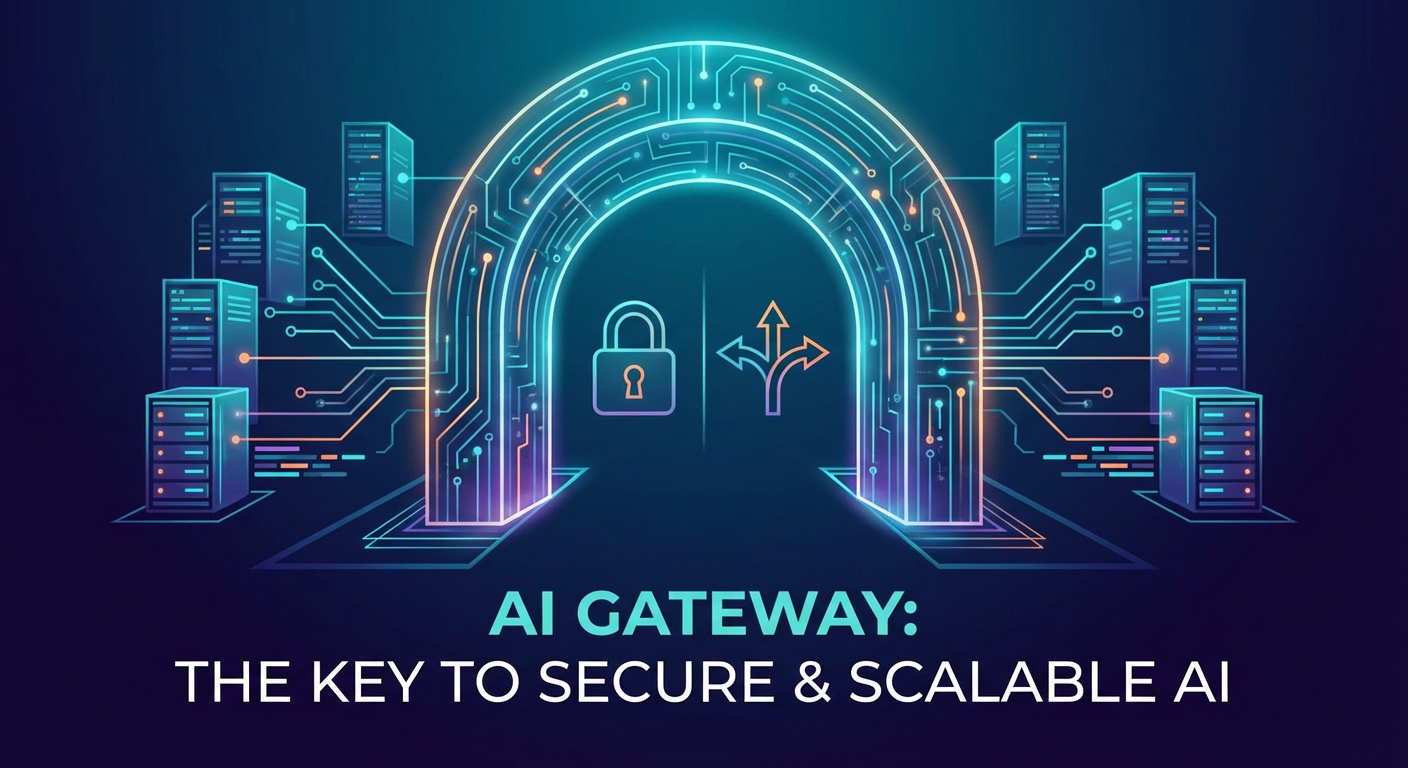


The landscape of artificial intelligence is undergoing a profound transformation, moving from niche research applications to pervasive integration across every sector imaginable. At the heart of this revolution are increasingly sophisticated AI models, particularly Large Language Models (LLMs), which are redefining how businesses interact with data, automate processes, and innovate their services. However, as the adoption of AI skyrockets, so too do the complexities associated with managing, securing, and scaling these powerful capabilities. Enterprises are quickly realizing that simply deploying AI models is insufficient; they require a robust, intelligent infrastructure layer to govern their AI assets effectively. This is where the AI Gateway emerges as an indispensable architectural component, serving as the critical nexus for orchestrating secure, scalable, and manageable AI interactions. Far beyond the capabilities of a traditional api gateway, an AI Gateway is specifically engineered to address the unique demands and challenges presented by the dynamic world of artificial intelligence, particularly the nuances of LLMs and other advanced machine learning models. It acts as an intelligent intermediary, centralizing control, enhancing performance, bolstering security, and streamlining the integration of diverse AI services, ultimately unlocking the full potential of AI within the enterprise.
The Unprecedented Rise of AI and the Inherent Challenges of Integration
The past decade has witnessed an explosion in AI innovation, with advancements in deep learning, neural networks, and computational power propelling AI from theoretical concepts into practical, impactful tools. From computer vision systems recognizing objects with human-like accuracy to natural language processing models understanding and generating coherent text, AI has permeated countless applications. The recent advent of Large Language Models (LLMs) like OpenAI's GPT series, Google's Bard/Gemini, Anthropic's Claude, and a multitude of open-source alternatives, has further accelerated this trend, demonstrating unprecedented capabilities in content creation, code generation, complex problem-solving, and human-like conversation. These models are not just static tools; they are continually evolving, requiring sophisticated infrastructure to manage their lifecycle, consumption, and integration into existing enterprise ecosystems. The promise of AI is immense, offering unparalleled opportunities for automation, personalization, and data-driven insights that can drive significant competitive advantages. However, translating this promise into tangible, secure, and scalable reality presents a myriad of formidable challenges that traditional infrastructure solutions are ill-equipped to handle.
One of the primary challenges stems from the sheer diversity and rapid evolution of AI models. Enterprises often find themselves using a patchwork of models from different providers – some hosted in the cloud, others deployed on-premises, and many more developed internally. Each model typically comes with its own unique API interface, authentication mechanism, data format requirements, and operational quirks. Integrating these disparate services directly into applications can lead to a tangled web of dependencies, increasing development time, maintenance overhead, and technical debt. Moreover, the constant updates and new releases of these models mean that applications built against specific model versions can quickly become outdated or break entirely with API changes, necessitating continuous refactoring. This fragmented landscape creates an environment ripe for inconsistencies, security vulnerabilities, and significant operational friction, hindering the agile adoption of new AI capabilities and slowing down innovation cycles within the organization. The complexity only amplifies when considering the need to manage multiple versions of the same model, A/B testing different models for performance, or seamlessly switching between providers to mitigate vendor lock-in or optimize costs, all of which demand a unified and intelligent orchestration layer.
Another critical concern revolves around scalability and performance. AI models, especially LLMs, are resource-intensive. Serving a high volume of concurrent requests can quickly overwhelm backend infrastructure, leading to latency issues, timeouts, and degraded user experiences. Enterprises need mechanisms to efficiently route traffic, balance loads across multiple instances of models, and implement intelligent caching strategies to reduce redundant computations and improve response times. Furthermore, the dynamic nature of AI workloads, which can surge unexpectedly during peak hours or specific events, necessitates an infrastructure that can dynamically scale resources up and down without manual intervention or service disruption. Without a centralized control point, managing the performance and scalability of individual AI services becomes an arduous and error-prone task, often resulting in over-provisioning (and thus increased costs) or under-provisioning (leading to performance bottlenecks and service unavailability). The ability to maintain consistent low latency and high throughput is paramount for applications that rely on real-time AI inferences, such as chatbots, fraud detection systems, or personalized recommendation engines, making robust performance management a non-negotiable requirement for successful AI integration.
Security and governance present equally daunting obstacles. AI models often process sensitive or proprietary data, raising significant concerns about data privacy, compliance with regulations like GDPR or HIPAA, and protection against malicious attacks. Traditional security measures applied at the application layer might not be sufficient to safeguard AI interactions, especially against novel threats like prompt injection attacks unique to LLMs or adversarial examples targeting machine learning models. Enterprises need granular access control, robust authentication and authorization mechanisms, data encryption in transit and at rest, and comprehensive auditing capabilities specifically tailored for AI traffic. Without a centralized enforcement point, maintaining a consistent security posture across all AI services becomes virtually impossible, exposing the organization to potential data breaches, compliance violations, and reputational damage. The need to monitor AI usage, detect anomalies, and enforce ethical AI guidelines further complicates the governance landscape, demanding a dedicated infrastructure layer that can provide visibility and control over all AI-related interactions within the organization. The challenge is not just about preventing external threats, but also about ensuring responsible and compliant internal usage of AI resources.
Finally, managing the financial aspects of AI consumption is a growing challenge. Many cloud-based AI services, particularly LLMs, are priced based on usage, often measured in tokens for language models or compute time for complex inferences. Without proper visibility and control, costs can quickly spiral out of control, leading to budget overruns and inefficient resource allocation. Enterprises need mechanisms to set quotas, track usage metrics per user or application, and even route requests to the most cost-effective model or provider based on specific criteria. The ability to monitor, analyze, and optimize AI spending is crucial for sustainable AI adoption. These intertwined challenges underscore the urgent need for a sophisticated architectural solution that can abstract away the underlying complexities, provide a unified control plane, and offer specialized functionalities to manage the unique lifecycle of AI services. This solution is precisely what an AI Gateway is designed to deliver, transforming the way enterprises interact with, secure, and scale their AI capabilities.
What is an AI Gateway? A Specialized Orchestrator for Intelligent Systems
At its core, an AI Gateway is a sophisticated architectural component that acts as a single entry point for all incoming requests targeting AI services and models. While it shares conceptual similarities with a traditional api gateway, its functionality is significantly extended and specialized to address the unique requirements of artificial intelligence workloads, particularly those involving Large Language Models (LLMs). Imagine it as an intelligent conductor for an AI orchestra, routing requests, applying policies, enhancing security, and optimizing performance for a diverse ensemble of AI models, rather than just generic microservices. It sits between client applications and backend AI models, providing a centralized control plane that abstracts away the complexities of interacting directly with various AI providers and underlying infrastructures. This strategic positioning allows the AI Gateway to intercept, inspect, transform, and manage every interaction with AI services, enabling a host of advanced capabilities that are crucial for successful enterprise AI adoption.
Unlike a generic api gateway which primarily focuses on routing HTTP requests, applying basic authentication, and rate limiting for conventional REST APIs, an AI Gateway is deeply aware of the semantic and operational nuances of AI models. For instance, it understands that a request to an LLM involves tokens, prompts, context windows, and specific model parameters (like temperature or top-p sampling) that are fundamentally different from a request to a database or a standard business logic service. This deep understanding enables it to implement AI-specific policies, such as prompt engineering versioning, token usage tracking, and intelligent model routing based on cost, latency, or specific model capabilities. It effectively serves as a universal adapter, normalizing disparate AI API interfaces into a consistent, unified format, thereby simplifying integration for developers and future-proofing applications against changes in underlying AI models or providers. This abstraction layer is particularly valuable in a world where new AI models and updates are released at an astounding pace, preventing application-level rework every time an AI backend changes or improves.
The architectural role of an AI Gateway is multifaceted. Firstly, it acts as a traffic manager, directing incoming requests to the most appropriate AI model or instance based on predefined rules, load balancing algorithms, or real-time performance metrics. This ensures optimal resource utilization and consistent service levels. Secondly, it serves as a policy enforcement point, applying security policies, access controls, rate limits, and data governance rules before requests reach the sensitive AI models. This centralized enforcement enhances security and ensures compliance across all AI interactions. Thirdly, it acts as a powerful data transformer, capable of modifying request payloads (e.g., adding context, reformatting prompts, masking sensitive data) and response payloads (e.g., filtering outputs, standardizing data formats) to meet application requirements or security policies. This transformation capability is vital for integrating models with diverse input/output specifications and for ensuring data integrity and privacy.
Furthermore, an AI Gateway provides an invaluable layer for observability and analytics. By intercepting all AI traffic, it can collect comprehensive metrics on model usage, performance, latency, error rates, and cost. This granular data is crucial for monitoring the health of AI services, identifying bottlenecks, optimizing resource allocation, and generating insights into AI consumption patterns. Such detailed telemetry is often difficult or impossible to gather directly from individual AI models or cloud provider APIs, making the gateway an essential component for effective MLOps and FinOps for AI. In essence, while an api gateway is designed to manage the ingress and egress of HTTP traffic for microservices, an AI Gateway is purpose-built to manage the unique complexities of AI inference, offering specialized functionalities that empower organizations to deploy, secure, scale, and govern their AI initiatives with unprecedented efficiency and control. It elevates the discussion from simple API management to intelligent AI service orchestration, a fundamental shift required to harness the full power of modern AI.
Core Features and Transformative Benefits of an AI Gateway
The strategic deployment of an AI Gateway introduces a spectrum of advanced features that collectively deliver transformative benefits for organizations venturing into or expanding their AI capabilities. These features extend far beyond what a traditional api gateway offers, directly addressing the unique security, scalability, management, and cost challenges inherent in AI adoption, especially concerning LLMs. By centralizing control and intelligence, an AI Gateway becomes the linchpin for a resilient, efficient, and innovative AI infrastructure.
1. Robust Security and Compliance Enforcement
Security is paramount when dealing with AI models, particularly those processing sensitive data or operating in critical business functions. An AI Gateway acts as the primary defense line, implementing multi-layered security protocols far more advanced than basic API key validation. It provides granular authentication and authorization mechanisms, allowing organizations to define who can access which models and with what permissions, based on roles, groups, or even specific IP ranges. This prevents unauthorized access and ensures that only legitimate applications and users interact with valuable AI assets. Furthermore, the gateway can enforce sophisticated rate limiting and throttling policies, not just based on generic request counts, but also on AI-specific metrics like token usage or compute time, effectively mitigating Denial of Service (DoS) attacks and preventing abusive consumption patterns that could lead to exorbitant costs.
Beyond these foundational measures, an AI Gateway is crucial for addressing AI-specific vulnerabilities. For Large Language Models, prompt injection attacks represent a significant threat, where malicious inputs can manipulate the model into divulging sensitive information, generating harmful content, or executing unintended actions. The gateway can implement advanced input validation and sanitization techniques, using heuristics, regex patterns, or even secondary AI models to detect and filter out suspicious prompts before they reach the LLM. Similarly, it can perform output filtering to prevent the model from inadvertently leaking sensitive data or generating undesirable content, thus acting as a content moderator. Data masking and anonymization features can be applied dynamically to request and response payloads, ensuring that personally identifiable information (PII) or proprietary data is never exposed to the AI model or logged in raw form, thereby aiding compliance with stringent regulations like GDPR, HIPAA, or CCPA. By providing a centralized point for auditing and logging all AI interactions, the gateway offers an immutable trail for forensic analysis and compliance verification, ensuring that every AI transaction is transparent and accountable. This comprehensive approach to security elevates the trust and reliability of AI deployments, enabling businesses to confidently leverage AI even in highly regulated environments.
2. Enhanced Scalability and Performance Optimization
The ability to scale AI services on demand while maintaining optimal performance is critical for meeting fluctuating user loads and delivering responsive applications. An AI Gateway is engineered to provide superior scalability and performance optimization capabilities that go beyond simple load balancing. It employs intelligent routing algorithms that can distribute incoming requests across multiple instances of an AI model, across different geographical regions, or even across various cloud providers, based on factors like current load, latency, cost, or model version. This ensures high availability and distributes the processing burden effectively, preventing any single point of failure or bottleneck. For highly concurrent workloads, the gateway can manage connection pooling and optimize network communication, reducing overhead and improving throughput.
Caching is another powerful feature. For repetitive queries or common prompts, the gateway can store previous AI responses and serve them directly from the cache, significantly reducing latency and compute costs by avoiding redundant calls to the backend AI model. This is especially beneficial for read-heavy AI applications where the same query might be issued multiple times. Furthermore, the gateway can implement advanced features like asynchronous processing for long-running AI tasks, offloading immediate responses to clients while the AI model processes the request in the background. It can also manage batch processing, aggregating multiple individual requests into a single, more efficient call to the AI model, thereby improving overall efficiency and reducing per-request overhead. The ability to dynamically scale gateway resources up or down based on real-time traffic patterns, coupled with intelligent queue management for peak loads, ensures that AI services remain responsive and available even under extreme demand. This robust performance management infrastructure ensures that AI remains a tool for competitive advantage, not a source of operational strain.
3. Comprehensive Observability and Monitoring
Effective management of AI services necessitates deep visibility into their operation, performance, and usage. An AI Gateway is uniquely positioned to provide comprehensive observability and monitoring capabilities across all AI interactions. As every request and response passes through it, the gateway can capture rich, granular data points, including request latency, error rates, model usage (e.g., token counts for LLMs), throughput, and resource consumption. This data is collected in a standardized format, regardless of the underlying AI model or provider, simplifying aggregation and analysis. It can then be seamlessly integrated with existing monitoring tools, SIEM systems, and analytics platforms.
The gateway provides real-time dashboards and alerting mechanisms, allowing operations teams to proactively detect performance degradations, error spikes, or unusual usage patterns that might indicate a security threat or a cost overrun. Detailed logging capabilities record every aspect of an AI call, from the input prompt and parameters to the model's response and any transformations applied by the gateway. This detailed audit trail is invaluable for debugging, troubleshooting, and compliance purposes, offering a complete historical record of all AI interactions. For instance, if an LLM generates an unexpected or incorrect response, the logs can pinpoint whether the issue originated from the prompt, the model itself, or an intermediary transformation. Beyond basic metrics, the gateway can perform advanced data analysis, identifying long-term trends, predicting future usage patterns, and highlighting opportunities for optimization. This holistic view of AI service health and behavior is indispensable for maintaining system stability, ensuring data security, and continuously improving the performance and cost-efficiency of AI deployments.
4. Advanced Cost Management and Optimization
The financial implications of scaling AI, particularly with usage-based billing for cloud AI services and LLMs, can be substantial. An AI Gateway plays a pivotal role in providing transparency and control over AI expenditures, transforming potential cost liabilities into managed assets. It enables organizations to implement granular quota enforcement mechanisms, setting daily, weekly, or monthly limits on token usage, API calls, or compute time per user, application, or department. This prevents runaway costs by ensuring that consumption stays within predefined budgets. The gateway can also implement sophisticated budget alerting, notifying administrators when thresholds are approached or exceeded, allowing for timely intervention.
Beyond simply capping usage, an AI Gateway facilitates intelligent cost optimization. It can route requests to the most cost-effective AI model or provider based on the nature of the request, current pricing, or negotiated enterprise agreements. For instance, a non-critical internal request might be routed to a cheaper, less powerful LLM, while a customer-facing interaction demands the highest-tier model. It can also integrate with cloud cost management platforms, providing detailed breakdowns of AI spending, attributing costs to specific projects or teams. By precisely tracking token consumption and other billing metrics for each interaction, the gateway provides the data necessary for accurate chargeback models, fostering accountability and encouraging efficient AI resource utilization across the organization. This financial oversight transforms AI from a black-box expense into a strategically managed investment, ensuring maximum return on AI spend.
5. Unified API Management and Standardization
One of the most significant complexities in enterprise AI adoption is the fragmentation of AI models and their diverse API interfaces. An AI Gateway acts as a powerful abstraction layer, offering a unified api gateway experience for all AI services. It standardizes the request and response data formats across different AI models and providers, meaning that whether an application is calling OpenAI's GPT, Google's Gemini, or an internally developed machine learning model, the client interaction remains consistent. This drastically simplifies development efforts, as developers no longer need to write custom code for each AI model's unique API signature, authentication method, or data schema. This unified interface insulates client applications from backend changes; if an organization decides to switch from one LLM provider to another, or update to a newer model version, the applications consuming AI services via the gateway require minimal, if any, modifications.
This standardization extends to prompt management for LLMs. The gateway can encapsulate complex prompt engineering into standardized API endpoints. For example, a "summarize text" API call might internally map to a specific LLM prompt template, allowing developers to invoke the function without needing to understand the underlying prompt structure. This feature, often described as "Prompt Encapsulation into REST API," enables users to quickly combine AI models with custom prompts to create new, specialized APIs, such as sentiment analysis, translation, or data analysis APIs, accelerating the development of AI-powered features. Moreover, the gateway can manage API versioning, allowing multiple versions of an AI API to coexist, ensuring backward compatibility while new features or models are introduced. This end-to-end API lifecycle management, including design, publication, invocation, and decommission, helps regulate API management processes, manage traffic forwarding, load balancing, and versioning of published APIs. This cohesive approach to API management drastically reduces integration friction, accelerates time-to-market for AI-powered applications, and safeguards against vendor lock-in, providing unparalleled flexibility in leveraging diverse AI capabilities.
6. Enhanced Developer Experience (DX) and Team Collaboration
A crucial aspect of successful AI adoption is empowering developers to integrate AI capabilities quickly and efficiently. An AI Gateway significantly enhances the developer experience by providing a simplified, consistent interface to a potentially complex array of AI models. With a unified API format, developers no longer need to spend time learning the idiosyncrasies of different AI providers or constantly adapting to API changes. This reduction in cognitive load and development effort translates into faster iteration cycles and increased productivity. The gateway can provide comprehensive documentation for its standardized API endpoints, often automatically generated, alongside ready-to-use SDKs in various programming languages, further lowering the barrier to entry for AI integration.
Moreover, the AI Gateway facilitates seamless collaboration within and across development teams. By centralizing the management and exposure of all AI services, it acts as a self-service portal where different departments and teams can easily discover, understand, and consume the required AI services. This eliminates the "reinvention of the wheel" syndrome, where multiple teams might independently try to integrate the same AI model. Features like "API Service Sharing within Teams" enable the centralized display of all API services, making it easy for different departments and teams to find and use the required API services. Independent API and Access Permissions for Each Tenant also allow for the creation of multiple teams (tenants), each with independent applications, data, user configurations, and security policies, while sharing underlying applications and infrastructure to improve resource utilization and reduce operational costs. The gateway can also integrate with internal developer portals, offering a single pane of glass for all API consumption, both AI and traditional. This collaborative environment fosters innovation, promotes reuse of AI assets, and accelerates the widespread adoption of AI within the enterprise, ensuring that AI capabilities are accessible and effectively utilized by all relevant stakeholders.
7. Compliance and Regulatory Governance
Operating AI systems, especially those handling sensitive data or making consequential decisions, requires strict adherence to various regulatory frameworks (e.g., GDPR, HIPAA, CCPA, PCI DSS) and internal governance policies. An AI Gateway serves as a vital enforcement point for compliance and ethical AI guidelines. By intercepting all AI traffic, it can enforce data residency rules, ensuring that data is processed only in approved geographical locations, a critical requirement for many international regulations. It can also apply policies for data retention and deletion, automatically purging sensitive prompts or responses after a specified period, minimizing data exposure risks.
The gateway's robust logging and auditing capabilities provide a comprehensive, immutable record of every AI interaction, including who made the request, what data was sent, what response was received, and which policies were applied. This detailed audit trail is invaluable for demonstrating compliance during regulatory audits and for internal accountability. Furthermore, features like "API Resource Access Requires Approval" allow for the activation of subscription approval features, ensuring that callers must subscribe to an API and await administrator approval before they can invoke it, preventing unauthorized API calls and potential data breaches. This extra layer of control ensures that AI resources are used responsibly and in accordance with established governance frameworks, mitigating legal and reputational risks associated with AI deployment. The gateway transforms complex regulatory challenges into automated, auditable processes, providing peace of mind for legal and compliance teams.
8. Flexibility and Vendor Agnosticism
The rapid pace of innovation in the AI space means that today's leading model might be surpassed by tomorrow's breakthrough. Enterprises need the flexibility to switch between different AI models or providers without significant refactoring of their applications. An AI Gateway provides this crucial vendor agnosticism. By abstracting the underlying AI models behind a unified API, applications become decoupled from specific implementations. If a new, more performant, or more cost-effective model becomes available, the organization can simply configure the gateway to route traffic to the new model, potentially with minor prompt adjustments, without requiring changes to the consuming applications.
This flexibility extends to hybrid and multi-cloud AI strategies. The gateway can seamlessly integrate models deployed in various environments – on-premises, in different public clouds, or even across edge devices – presenting them all through a single, consistent interface. This enables organizations to leverage the best-of-breed AI solutions regardless of their deployment location, optimizing for factors like cost, latency, or data residency. It also mitigates vendor lock-in risks, empowering organizations to negotiate better terms with AI providers and select solutions based purely on merit rather than entrenched infrastructure. This adaptability ensures that an organization's AI strategy remains agile and responsive to the evolving technological landscape, maximizing the long-term value of their AI investments.
9. Intelligent Prompt Management and Protection for LLMs
For Large Language Models, prompt engineering is a critical discipline, directly influencing the quality and relevance of the model's output. An LLM Gateway, a specialized form of AI Gateway, offers advanced features for managing and protecting prompts. It allows for the versioning of prompts, enabling organizations to iterate on and maintain a library of optimized prompts for various use cases. This ensures consistency in AI behavior across applications and allows for A/B testing different prompt strategies to find the most effective ones. The gateway can also enforce prompt templating, ensuring that all prompts conform to predefined structures, enhancing output quality and reducing errors.
Crucially, an LLM Gateway provides robust protection against prompt injection attacks. As discussed earlier, these attacks can manipulate an LLM into unintended behaviors. The gateway can employ sophisticated filtering, sanitization, and even AI-powered detection mechanisms to identify and block malicious or ambiguous prompts before they reach the LLM. It can also manage "system prompts" or "guard rails" that define the overall behavior and safety constraints of the LLM, ensuring that even if user input attempts to bypass these, the gateway reinforces the intended operational boundaries. This level of intelligent prompt management is vital for maintaining the safety, reliability, and ethical integrity of LLM-powered applications, safeguarding against misuse and ensuring consistent, high-quality AI interactions.
Comparing AI Gateway to a Traditional API Gateway
While an AI Gateway shares some foundational principles with a traditional API Gateway, it represents a significant evolution, tailored specifically for the unique demands of artificial intelligence workloads. Understanding their distinctions is crucial for selecting the right infrastructure.
| Feature Area | Traditional API Gateway | AI Gateway (including LLM Gateway) |
|---|---|---|
| Primary Function | Centralized entry point for RESTful APIs, microservices. Routing, auth, rate limiting. | Centralized entry point for AI models (LLMs, CV, NLP). Intelligent routing, AI-specific security, cost optimization, prompt management. |
| Traffic Type Focus | Primarily HTTP/REST, JSON/XML payloads. | AI inference requests (e.g., text, images, audio, specific model parameters). Token-based interactions for LLMs. |
| Payload Awareness | Generally agnostic to payload content (except basic validation). | Deeply aware of AI-specific payload semantics: prompts, tokens, context windows, model parameters, embeddings, tensor shapes. |
| Security Mechanisms | Basic authentication (API keys, OAuth), rate limiting, DDoS protection. | Advanced AI-specific security: prompt injection prevention, data masking, output filtering, adversarial attack detection, semantic input validation. Granular access based on model capabilities. |
| Performance Optimization | Load balancing, caching (generic HTTP responses), connection pooling. | Intelligent model routing (cost, latency, capacity), AI-specific caching (semantic caching for LLMs), batching AI requests, token-aware rate limiting. |
| Cost Management | Basic rate limiting to prevent over-consumption. | Granular token/compute usage tracking, cost attribution, intelligent cost-based routing, quota enforcement specific to AI billing models. |
| Integration Complexity | Handles diverse REST APIs with varying standards. | Unifies disparate AI model APIs (OpenAI, Google, custom, open-source) into a single, standardized interface. |
| Developer Experience | Simplifies microservice consumption, provides documentation. | Abstracts AI model complexities, offers unified AI APIs, prompt encapsulation into REST APIs, prompt versioning, SDKs. |
| Observability | Logs API calls, basic metrics (latency, errors). | Detailed AI model usage metrics (tokens, inferences), prompt/response logging, AI-specific error tracing, performance analysis per model. |
| Governance | Access control, audit logging, basic policy enforcement. | AI model governance, data residency enforcement for AI data, ethical AI policy enforcement, subscription approval for AI resources. |
| Vendor Agnosticism | Can manage multiple API backends. | Enables seamless switching between different AI model providers (e.g., OpenAI to Anthropic) with minimal application changes. |
| Prompt Management | Not applicable. | Centralized prompt library, prompt versioning, prompt templating, prompt injection protection, prompt-as-a-service. |
This table clearly illustrates that while a traditional api gateway provides a fundamental layer of management for HTTP traffic, an AI Gateway extends this functionality with deep, AI-specific intelligence and controls. It's not merely an upgrade; it's a specialized tool essential for the secure, scalable, and cost-effective deployment of modern AI systems, especially those leveraging the power of Large Language Models.
APIPark is a high-performance AI gateway that allows you to securely access the most comprehensive LLM APIs globally on the APIPark platform, including OpenAI, Anthropic, Mistral, Llama2, Google Gemini, and more.Try APIPark now! 👇👇👇
Use Cases for AI Gateways Across Industries
The versatility and robust capabilities of an AI Gateway make it an indispensable component across a wide array of industries and use cases, fundamentally transforming how organizations leverage artificial intelligence. Its ability to provide security, scalability, and streamlined management unlocks new possibilities for innovation and efficiency.
1. Enterprise AI Adoption and Digital Transformation: For large enterprises integrating AI into their core operations, the AI Gateway is foundational. It enables a coherent strategy for rolling out AI capabilities across various departments, ensuring consistent security, governance, and cost management. For instance, a financial institution implementing AI for fraud detection, customer service chatbots, and personalized investment advice needs a unified platform to manage these diverse models. The gateway allows them to integrate models from different vendors (e.g., a specialized fraud detection model, a general-purpose LLM for chatbots) under a single, controlled interface, ensuring compliance with strict financial regulations like PCI DSS or Sarbanes-Oxley. It prevents departmental silos from developing isolated, unsecured AI solutions, fostering a collaborative and secure environment for AI innovation across the entire organization. This centralized approach accelerates digital transformation initiatives by simplifying AI integration and mitigating risks.
2. Building AI-Powered Applications at Scale: Application developers are increasingly incorporating AI features into their products, from smart assistants and content generation tools to intelligent data analysis platforms. An AI Gateway dramatically simplifies the development process by providing a unified and stable API for all AI services. Instead of juggling multiple SDKs and API keys from different AI providers, developers interact with a single, well-documented gateway API. This abstraction allows them to easily experiment with different AI models (e.g., trying various LLMs for text generation) without altering their application code. For example, a marketing platform building a content generation feature can use the gateway to switch between OpenAI's GPT and a fine-tuned open-source LLM based on cost or performance, all while keeping the application logic consistent. The gateway's capabilities for prompt encapsulation also enable rapid creation of specialized AI APIs (e.g., "summarize-article," "generate-ad-copy") that simplify complex AI tasks into easy-to-consume REST endpoints, empowering developers to focus on core application logic rather than intricate AI model interactions.
3. MLOps Integration and Lifecycle Management: In the realm of Machine Learning Operations (MLOps), the AI Gateway serves as a critical bridge between deployed AI models and their consumption. It integrates seamlessly into MLOps pipelines by providing a consistent deployment target and a source of rich operational metrics. Data scientists and ML engineers can deploy new model versions behind the gateway, leveraging its versioning capabilities for A/B testing or canary deployments without impacting existing applications. The gateway's detailed logging and monitoring data provide invaluable feedback for model retraining and performance evaluation, informing the entire MLOps lifecycle. For instance, an e-commerce company using an AI Gateway for its recommendation engine can track how different model versions perform in terms of click-through rates and conversion, routing traffic dynamically to the best-performing model based on real-time A/B test results. This continuous feedback loop driven by gateway analytics is essential for iterative model improvement and maintaining high-quality AI services.
4. Multi-Cloud and Hybrid AI Deployments: Many organizations adopt multi-cloud strategies to mitigate vendor lock-in, meet data residency requirements, or leverage specialized services from different cloud providers. The AI Gateway is instrumental in orchestrating AI models deployed across diverse environments. Whether models are running on AWS, Azure, Google Cloud, or on-premises Kubernetes clusters, the gateway provides a unified access layer. This allows an organization to, for example, run a sensitive LLM on its private cloud for compliance reasons, while offloading less sensitive or high-volume tasks to a cost-effective public cloud model, all managed through the same gateway. This flexibility enables organizations to optimize for cost, performance, and regulatory adherence by intelligently routing AI requests to the most appropriate backend, irrespective of its physical location or cloud provider. It simplifies the management of complex, distributed AI infrastructures, making hybrid and multi-cloud AI strategies truly viable.
5. SaaS Products Leveraging AI: SaaS companies are increasingly embedding AI capabilities into their offerings to provide smart features, personalization, and automation. For these providers, the AI Gateway is a non-negotiable component. It enables them to efficiently manage and monetize AI features for their multi-tenant user base. For example, a SaaS platform offering AI-powered data analytics can use the gateway to track token usage per customer, implement tiered pricing models, and enforce specific quotas for different subscription levels. Features like "Independent API and Access Permissions for Each Tenant" ensure that each customer (tenant) has their own isolated data, applications, and security policies while still sharing the underlying AI infrastructure, optimizing resource utilization and reducing operational costs. The gateway also protects the backend AI models from individual customer misuse or malicious attacks, ensuring the stability and security of the entire SaaS platform. This robust management layer is crucial for delivering high-quality, secure, and scalable AI-powered SaaS solutions.
Across these diverse scenarios, the AI Gateway stands out as an enabling technology, transforming potential chaos into controlled, secure, and efficient AI operations. Its capabilities allow organizations to move beyond mere experimentation with AI to truly embedding it as a strategic, core component of their business.
Implementing an AI Gateway: Considerations and Solutions
The decision to implement an AI Gateway marks a strategic investment in an organization's AI future. Choosing the right approach and solution involves careful consideration of various factors, including deployment models, feature sets, scalability needs, and budget constraints. Organizations can generally opt for either building an in-house solution, leveraging open-source projects, or adopting commercial off-the-shelf products. Each approach comes with its own set of trade-offs, and the optimal choice often depends on the specific context, technical expertise, and strategic goals of the enterprise.
Deployment Models: On-Premise vs. Cloud-Based
On-Premise Deployment: For organizations with stringent data privacy requirements, existing on-premise infrastructure, or a need for absolute control over their AI workloads, deploying an AI Gateway on-premises is a viable option. This model offers maximum control over security, networking, and resource allocation. It's particularly favored by industries like finance, healthcare, or government, where sensitive data must remain within a controlled environment, preventing any potential exposure to third-party cloud services. An on-premise gateway can also provide lower latency for applications running locally and can integrate deeply with existing internal security and identity management systems. However, this approach demands significant internal expertise for setup, maintenance, scaling, and patching. Organizations must be prepared to manage the underlying hardware or virtualization infrastructure, handle software updates, and ensure high availability, which can be resource-intensive. The initial capital expenditure might be higher, but recurring operational costs could be lower than cloud alternatives, depending on the scale and complexity.
Cloud-Based Deployment: Leveraging a cloud-native AI Gateway or deploying an open-source solution within a public cloud environment offers significant advantages in terms of scalability, flexibility, and reduced operational overhead. Cloud providers offer managed services that handle much of the infrastructure heavy lifting, allowing organizations to focus on AI strategy rather than server management. This model is ideal for dynamic workloads, as cloud resources can be scaled up or down instantly to meet demand, ensuring high availability and performance without over-provisioning. Cloud-based gateways can also integrate seamlessly with other cloud AI services, data platforms, and security offerings. However, this approach introduces dependencies on cloud providers, and data residency concerns might arise depending on the chosen cloud regions. While operational costs are generally pay-as-you-go, they can accumulate quickly if not carefully monitored and optimized. Many cloud providers also offer their own api gateway solutions with some AI capabilities, but a dedicated AI Gateway often provides more specialized features.
Open-Source vs. Commercial Solutions
Open-Source AI Gateways: Open-source solutions offer unparalleled transparency, flexibility, and typically lower initial costs. They allow organizations to inspect, customize, and extend the gateway's functionality to perfectly match their unique requirements. The community support around popular open-source projects can be vibrant, providing valuable insights and contributions. However, opting for an open-source solution often means that organizations are responsible for their own deployment, configuration, maintenance, security patching, and troubleshooting. While the software itself is free, the "total cost of ownership" can be substantial due to the need for internal expertise and resources to manage the solution effectively. For startups and organizations with strong in-house engineering teams, open-source can be an excellent choice, fostering innovation and complete control.
An excellent example of such an open-source solution is APIPark. APIPark is an open-source AI gateway and API developer portal released under the Apache 2.0 license, designed to help developers and enterprises manage, integrate, and deploy AI and REST services with ease. It offers quick integration of over 100+ AI models, a unified API format for AI invocation, and the ability to encapsulate prompts into REST APIs, aligning perfectly with the advanced capabilities discussed for an AI Gateway. Its robust features, such as end-to-end API lifecycle management, API service sharing within teams, independent API and access permissions for each tenant, and detailed API call logging, make it a comprehensive choice for organizations looking for a flexible and powerful solution. Notably, APIPark boasts performance rivaling Nginx, capable of over 20,000 TPS with modest hardware, and offers quick deployment. While the open-source product meets the basic API resource needs of startups, APIPark also offers a commercial version with advanced features and professional technical support for leading enterprises, providing a clear upgrade path as an organization's needs evolve. This exemplifies how an open-source AI Gateway can provide a robust foundation, with commercial support available for more demanding enterprise requirements.
Commercial AI Gateways: Commercial products typically offer turn-key solutions with comprehensive feature sets, professional technical support, regular updates, and enterprise-grade reliability. These solutions often come with user-friendly interfaces, extensive documentation, and managed services, significantly reducing the operational burden on internal teams. They are ideal for organizations that prioritize speed of deployment, require guaranteed service levels, or lack the in-house expertise to manage a complex open-source solution. While commercial offerings involve licensing fees or subscription costs, the value derived from reduced operational costs, enhanced security, and professional support can often outweigh the financial investment, especially for large enterprises with critical AI workloads. These solutions may also come with advanced analytics, compliance reporting, and specialized AI security features out of the box, offering a complete package. The choice between open-source and commercial often boils down to a strategic decision balancing control, cost, and convenience.
Key Considerations for Selection:
When selecting an AI Gateway solution, organizations should carefully evaluate:
- AI Model Compatibility: Does it support the specific AI models and providers currently in use and planned for the future (e.g., specific LLMs, computer vision APIs)?
- Security Features: Does it offer robust authentication, authorization, prompt injection prevention, data masking, and compliance auditing tailored for AI?
- Scalability and Performance: Can it handle the expected volume of AI requests, provide low latency, and scale dynamically?
- Cost Management: Does it offer granular tracking, quotas, and intelligent routing for cost optimization?
- Developer Experience: Is the API unified, well-documented, and easy for developers to integrate?
- Observability: Does it provide comprehensive logging, monitoring, and analytics for AI workloads?
- Deployment Flexibility: Can it be deployed in the preferred environment (on-prem, cloud, hybrid)?
- Ecosystem Integration: Does it integrate with existing monitoring, identity management, and MLOps tools?
- Support and Community: What kind of support is available (commercial, community-driven)?
- Roadmap: Does the solution have an active development roadmap that aligns with future AI trends?
By meticulously assessing these factors, organizations can select an AI Gateway solution that not only meets their immediate AI management needs but also provides a resilient and scalable foundation for their evolving AI strategy. The right AI Gateway is not just a technological tool; it's a strategic enabler that empowers organizations to confidently navigate the complexities of artificial intelligence.
The Future of AI Gateways: Intelligent Orchestration at the Edge of Innovation
As artificial intelligence continues its relentless march towards greater sophistication and ubiquitous adoption, the role of the AI Gateway is set to expand and deepen, evolving into an even more intelligent and integral orchestrator at the very edge of innovation. The future of these gateways will be characterized by heightened autonomy, advanced security mechanisms, deeper integration with the broader AI ecosystem, and an increasingly critical role in navigating the ethical and regulatory landscapes of AI. They will move beyond merely routing and enforcing policies to actively anticipating needs, optimizing interactions, and safeguarding the integrity of AI systems in real-time.
One of the most significant evolutions will be in the realm of intelligent routing and optimization. Future AI Gateways will leverage machine learning internally to dynamically route requests not just based on current load or cost, but on the semantic content of the prompt, the historical performance of specific models for similar queries, or even the emotional tone detected in the input. Imagine an LLM Gateway that can automatically detect a highly sensitive customer service query and route it to a specialized, fine-tuned LLM with enhanced safety protocols, while a routine content generation request goes to a more cost-effective, general-purpose model. They will incorporate advanced predictive analytics to anticipate traffic surges and proactively scale resources, ensuring seamless performance even during unforeseen peak demands. Furthermore, cross-model inference will become standard, where the gateway can intelligently break down a complex request, send sub-components to different specialized AI models (e.g., one for summarization, another for sentiment analysis, and a third for translation), and then synthesize their responses into a coherent output, all transparently to the client application.
Security for AI interactions will also undergo a profound transformation. As AI models become more powerful, so do the potential threats. Future AI Gateways will integrate advanced, AI-powered threat detection capabilities, moving beyond static rules to dynamic behavioral analysis. They will be able to detect subtle prompt injection attempts that exploit nuanced language, identify adversarial attacks designed to trick computer vision models, or spot data poisoning attempts targeting machine learning pipelines. Secure multi-party computation and federated learning integration will become commonplace, allowing the gateway to facilitate AI inferences on encrypted data or across decentralized datasets without exposing the raw information, addressing critical privacy concerns. The gateway will also play an expanded role in ensuring responsible AI use, enforcing ethical guidelines, detecting biases in model outputs, and providing real-time explanations for AI decisions where transparency is required, aligning with emerging AI ethics regulations. This advanced security layer will be crucial for maintaining trust in AI systems deployed in sensitive applications.
Moreover, the AI Gateway will become an even tighter component of the overall API management ecosystem. While they currently extend the concept of an api gateway, future iterations will blur the lines further, offering a unified platform for managing all forms of digital interactions – traditional REST APIs, streaming data APIs, and sophisticated AI/LLM interfaces. This convergence will simplify infrastructure for organizations, providing a single control plane for their entire digital fabric. Integration with low-code/no-code platforms will enable business users, not just developers, to easily compose and deploy AI-powered workflows through the gateway, leveraging its prompt encapsulation and unified API capabilities to build sophisticated applications without writing extensive code. The gateway will also serve as a crucial interface for model marketplaces, dynamically discovering and integrating new AI models as they become available, enabling organizations to always leverage the cutting edge of AI innovation with minimal effort.
Finally, the increasing prominence of edge computing will see AI Gateways extending their footprint beyond central data centers and clouds. Lightweight, optimized versions of these gateways will reside at the network edge – in smart factories, autonomous vehicles, and IoT devices – providing localized AI inference, real-time decision-making, and enhanced data privacy by processing sensitive information closer to its source. These edge gateways will seamlessly synchronize with their cloud counterparts, ensuring consistent policy enforcement, aggregated monitoring, and the ability to offload complex tasks to more powerful central models when necessary. This distributed intelligence architecture will unlock new paradigms for AI applications, making them faster, more resilient, and deeply embedded in our physical world.
In essence, the future AI Gateway will transcend its current role as a mere traffic manager. It will evolve into an intelligent, adaptive, and indispensable orchestrator that not only secures and scales AI but actively optimizes its performance, manages its costs, ensures its ethical deployment, and accelerates its integration into every facet of human endeavor. It will be the silent guardian and enabling force behind the next wave of AI innovation, making complex intelligent systems accessible, reliable, and profoundly impactful.
Conclusion
The journey into the era of pervasive artificial intelligence presents both unprecedented opportunities and significant challenges for enterprises worldwide. As AI models, particularly Large Language Models, become increasingly sophisticated and integral to business operations, the complexities of their management, security, and scalability amplify. A traditional api gateway, while fundamental for microservices, simply cannot address the nuanced requirements of AI workloads, which demand specialized capabilities for prompt management, token-based security, intelligent routing, and precise cost control. This is where the AI Gateway emerges not merely as a beneficial tool, but as an absolutely essential architectural component for any organization committed to harnessing the full, transformative power of AI.
The AI Gateway acts as an intelligent intermediary, a centralized control plane that abstracts away the inherent complexities of diverse AI models and providers. It delivers a multitude of critical benefits, fundamentally enhancing the way organizations interact with their AI assets. From establishing robust security measures against AI-specific threats like prompt injection and data leakage, to ensuring unparalleled scalability and performance through intelligent load balancing and caching, the gateway provides the bedrock for reliable AI operations. It empowers organizations with granular cost management, preventing runaway expenses by tracking usage and optimizing model routing. Moreover, it unifies the disparate interfaces of various AI models into a single, standardized API, drastically improving developer experience, accelerating integration, and fostering seamless team collaboration. Capabilities such as prompt encapsulation, end-to-end API lifecycle management, and detailed call logging, as exemplified by platforms like APIPark, illustrate how an AI Gateway streamlines the entire AI adoption process.
By embracing an AI Gateway, enterprises are not just deploying another piece of infrastructure; they are investing in a future-proof strategy that ensures their AI initiatives are secure, scalable, cost-effective, and agile. It provides the flexibility to seamlessly switch between models and providers, mitigating vendor lock-in, and offers the critical observability needed to monitor, troubleshoot, and optimize AI performance and compliance. As AI continues to evolve at a breakneck pace, the AI Gateway will remain at the forefront, adapting to new challenges and enabling the next generation of intelligent applications. It is, unequivocally, the key to unlocking the immense potential of AI, transforming complex technological landscapes into manageable, secure, and highly impactful business advantages. For any organization serious about building a robust and sustainable AI strategy, the implementation of a dedicated AI Gateway is not an option, but a strategic imperative.
5 Frequently Asked Questions (FAQs)
1. What is the fundamental difference between an AI Gateway and a traditional API Gateway? While both act as an entry point for external requests, an AI Gateway is specifically designed for artificial intelligence workloads, offering specialized features that a traditional api gateway lacks. An AI Gateway understands AI-specific concepts like prompts, tokens, context windows, and model parameters. It provides AI-specific security (e.g., prompt injection prevention, data masking), intelligent routing based on AI model capabilities or cost, detailed AI usage tracking (like token consumption), and unifies disparate AI model APIs into a consistent format. A traditional API Gateway primarily focuses on generic HTTP routing, authentication, and rate limiting for conventional RESTful services.
2. Why is an LLM Gateway particularly important for Large Language Models? An LLM Gateway (a specialized type of AI Gateway) is crucial for Large Language Models because LLMs introduce unique complexities. It manages token usage and billing, which is fundamental to LLM pricing. It protects against prompt injection attacks, a significant security vulnerability specific to LLMs, by sanitizing and validating prompts. An LLM Gateway also centralizes prompt management, allowing for versioning, templating, and encapsulation of complex prompts into simpler API calls, enhancing developer experience and ensuring consistent model behavior. It abstracts away the varying APIs of different LLM providers, offering a unified interface for easier integration and vendor agnosticism.
3. How does an AI Gateway help with cost management for AI services? An AI Gateway provides robust cost management by offering granular visibility and control over AI resource consumption. It tracks detailed usage metrics, such as token counts for LLMs or compute time for other models, allowing organizations to monitor spending in real-time. It enables the implementation of usage quotas and budget alerts for individual users, applications, or departments, preventing unexpected cost overruns. Furthermore, the gateway can intelligently route requests to the most cost-effective AI model or provider based on predefined policies, optimizing resource allocation and ensuring maximum return on investment for AI expenditures.
4. Can an AI Gateway help with AI model governance and compliance? Absolutely. An AI Gateway is a powerful tool for AI model governance and compliance. It enforces granular access controls, ensuring that only authorized users and applications can interact with specific AI models. It can implement data privacy measures like data masking and anonymization, helping organizations adhere to regulations such as GDPR, HIPAA, or CCPA. Its comprehensive logging and auditing capabilities provide an immutable record of all AI interactions, essential for demonstrating compliance during audits and ensuring accountability. The gateway can also enforce ethical AI guidelines by filtering inappropriate inputs or outputs and by providing mechanisms for subscription approval for API resources, preventing unauthorized use.
5. Is it better to build an AI Gateway in-house, use an open-source solution like APIPark, or opt for a commercial product? The best approach depends on an organization's specific needs, technical capabilities, and budget. Building in-house offers maximum customization and control but requires significant engineering resources and ongoing maintenance. Open-source solutions, such as APIPark, provide transparency, flexibility, and lower initial software costs, making them ideal for organizations with strong in-house technical teams willing to manage deployment and support. APIPark specifically offers robust features for integrating 100+ AI models, unified API formats, and prompt encapsulation, with the added benefit of commercial support for enterprises requiring advanced features. Commercial products offer turn-key solutions, professional support, and often more advanced features out-of-the-box, reducing operational burden but incurring licensing or subscription fees. The choice should be based on a thorough evaluation of security, scalability, features, integration needs, and internal resource availability.
🚀You can securely and efficiently call the OpenAI API on APIPark in just two steps:
Step 1: Deploy the APIPark AI gateway in 5 minutes.
APIPark is developed based on Golang, offering strong product performance and low development and maintenance costs. You can deploy APIPark with a single command line.
curl -sSO https://download.apipark.com/install/quick-start.sh; bash quick-start.sh

In my experience, you can see the successful deployment interface within 5 to 10 minutes. Then, you can log in to APIPark using your account.

Step 2: Call the OpenAI API.