Optimize Network Performance with Load Balancer AYA
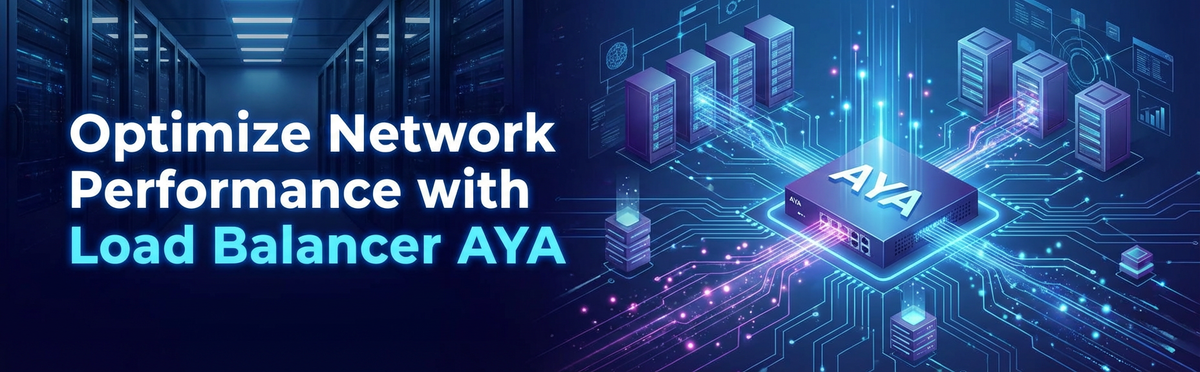


In the vast, interconnected landscape of modern digital infrastructure, the seamless flow of data is not merely a convenience but the very backbone of operational success. From e-commerce platforms handling millions of transactions per second to intricate AI models powering real-time decision-making, the demand for resilient, high-performance network systems has never been greater. Amidst this complexity, the unsung hero that often ensures stability, scalability, and an optimal user experience is the load balancer. This comprehensive exploration delves into the critical role of load balancing, particularly focusing on how an advanced solution like Load Balancer AYA can meticulously optimize network performance, especially in the context of burgeoning technologies like AI Gateway and LLM Gateway architectures, and the foundational importance of a robust API Gateway.
The digital realm is unforgiving of sluggishness. A few milliseconds of delay can translate into millions in lost revenue, eroded customer trust, and hampered productivity. Therefore, understanding and actively optimizing network performance is not an optional luxury but a strategic imperative. This article will unpack the intricacies of load balancing, from its fundamental principles to its most sophisticated applications, illustrating how a meticulously implemented solution empowers businesses to not only meet but exceed the escalating demands of the digital age.
The Unseen Architecture: Understanding Network Performance and Its Criticality
Before delving into the specifics of load balancing, it is essential to establish a clear understanding of what "network performance" truly entails and why its optimization is paramount in today's hyper-connected world. Network performance refers to the quality of service of a network as seen by the end-user. It encompasses a multitude of quantifiable metrics that collectively paint a picture of efficiency, reliability, and responsiveness.
Key Metrics of Network Performance:
- Latency (Delay): Perhaps the most noticeable aspect of network performance, latency is the time it takes for a data packet to travel from its source to its destination. High latency translates directly into frustrating delays for users, slower application responses, and can significantly impair real-time interactions. For applications like online gaming, video conferencing, or financial trading, low latency is non-negotiable. It's often measured in milliseconds (ms). Factors contributing to latency include distance, network congestion, and the number of hops (routers) a packet must traverse. Optimizing latency is about finding the most efficient paths and minimizing processing delays at each node.
- Throughput (Bandwidth): Throughput measures the amount of data that can be successfully transmitted over a network connection in a given period, typically expressed in bits per second (bps) or bytes per second (Bps). While often conflated with bandwidth (the maximum theoretical data transfer rate), throughput represents the actual rate achieved, which can be limited by various factors beyond just the pipe's capacity, such as packet loss or processing bottlenecks. High throughput is vital for applications dealing with large data transfers, such as streaming high-definition video, downloading large files, or backing up databases. Insufficient throughput can lead to buffering, slow downloads, and overall application sluggishness.
- Packet Loss: Packet loss occurs when data packets fail to reach their destination. This can happen due to network congestion, faulty hardware, or overloaded network devices. Even a small percentage of packet loss can severely degrade application performance, especially for real-time applications like voice (VoIP) or video, where retransmitting lost packets introduces additional delay and can result in choppy audio or pixelated video. For mission-critical data, packet loss necessitates retransmission, which in turn increases latency and reduces effective throughput.
- Jitter: Jitter refers to the variation in packet delay. In an ideal network, packets would arrive at perfectly regular intervals. However, real-world networks exhibit variations, leading to some packets arriving significantly earlier or later than expected. Jitter is particularly problematic for real-time audio and video communications, as consistent timing is crucial for smooth playback. High jitter can lead to distorted sound, fragmented video, and an overall poor quality of experience.
- Availability: Availability is the percentage of time a network or service is operational and accessible. In today's always-on world, downtime is simply unacceptable for many businesses. High availability is measured as a percentage (e.g., "five nines" or 99.999% availability, meaning only about 5 minutes of downtime per year). Ensuring high availability often involves redundancy, fault tolerance, and failover mechanisms, which are areas where load balancing plays a pivotal role.
- Reliability: While related to availability, reliability also speaks to the consistency and trustworthiness of network services. It's not just about being up, but about consistently performing as expected without errors or degradation. A reliable network ensures data integrity and consistent service delivery over time.
Why Network Performance Optimization Matters:
- User Experience (UX): In a competitive digital marketplace, a fast and responsive application is key to user satisfaction and retention. Slow applications lead to frustration, abandonment, and negative brand perception.
- Business Continuity and Revenue: Downtime or performance degradation directly impacts business operations, leading to lost sales, reduced productivity, and potential financial penalties. For critical systems, performance directly equates to revenue generation and operational efficiency.
- Scalability: As businesses grow, their network infrastructure must be able to handle increasing traffic and data volumes without compromising performance. Optimized networks are inherently more scalable.
- Cost Efficiency: Poor network performance can lead to overprovisioning of resources, inefficient operations, and higher support costs. Optimization helps in utilizing resources more effectively.
- Competitive Advantage: Organizations with superior network performance can deliver better services, reach more customers, and innovate faster, gaining a significant edge over competitors.
In essence, optimizing network performance is about ensuring that users, applications, and services have efficient, reliable, and consistent access to the data and resources they need, when they need them. This fundamental necessity sets the stage for understanding the transformative power of load balancing.
The Imperative for Load Balancing: Addressing the Challenges of Modern Systems
As digital platforms scale and user demands intensify, applications face a multitude of challenges that, if left unaddressed, can severely cripple performance and undermine service reliability. These challenges fundamentally drive the need for sophisticated traffic management solutions like load balancers.
The Perils of Unbalanced Systems:
- Single Point of Failure (SPOF): Without a mechanism to distribute traffic, all incoming requests are directed to a single server or a single cluster of servers. Should this sole entity fail – due to hardware malfunction, software crash, or maintenance – the entire service becomes unavailable. This creates an unacceptable single point of failure that is catastrophic for any business-critical application. Users are met with error messages, operations grind to a halt, and revenue is lost.
- Resource Exhaustion and Overload: Even if a server remains operational, it has finite processing power, memory, and network capacity. A sudden surge in user traffic or a particularly demanding set of requests can quickly overwhelm a single server. When a server is overloaded, its response times skyrocket, leading to high latency, increased packet loss, and eventually, service degradation or complete unresponsiveness. Users experience slow page loads, timeouts, and a generally frustrating experience, which often leads them to abandon the service entirely.
- Inefficient Resource Utilization: Conversely, in scenarios where traffic is intermittent or fluctuates widely, individual servers might be either overloaded or significantly underutilized. Without proper distribution, some servers could be idling while others are struggling. This leads to inefficient use of hardware resources, translating into higher operational costs because infrastructure is provisioned for peak load across all servers, rather than distributing the load more intelligently.
- Poor User Experience (UX): The direct consequence of SPOFs and server overload is a drastically degraded user experience. Slow loading times, frequent errors, and service unavailability erode user trust and loyalty. In today's competitive landscape, users have little patience for poor performance and will quickly migrate to more reliable alternatives. A negative UX can severely impact brand reputation and customer retention.
- Difficulty in Scaling and Maintenance: Adding more servers to handle increased demand doesn't automatically solve the problem if there's no intelligent way to direct traffic to them. Manual traffic routing is impractical and prone to errors. Furthermore, performing maintenance or updates on a live system without disrupting service becomes a logistical nightmare. Taking down the sole server for an update means downtime for all users.
- Lack of Redundancy and Resilience: Modern applications demand high availability and fault tolerance. Systems must be designed to withstand failures and continue operating without interruption. Without load balancing, achieving true redundancy is impossible. Any component failure in the direct path of traffic can bring down the entire system.
- Security Vulnerabilities: Overloaded servers can also become more susceptible to certain types of attacks, as their resources are stretched thin, potentially making them less effective at defending against malicious traffic or processing security protocols efficiently. While load balancers are not primary security devices, they can offload SSL/TLS termination and provide some level of DDoS protection, freeing up backend servers to focus on application logic.
These challenges highlight a fundamental truth in distributed computing: a single point of entry and processing is inherently fragile and inefficient. The solution lies in intelligently distributing incoming network traffic across multiple servers, a practice known as load balancing. By doing so, services can achieve unprecedented levels of scalability, reliability, and performance, ensuring that no single component becomes a bottleneck or a critical point of failure.
Foundations of Load Balancing: Distributing the Digital Load
At its core, load balancing is the strategic distribution of incoming network traffic across multiple servers, or a group of backend resources, to ensure that no single server bears too much demand. This process is orchestrated by a specialized device or software application known as a load balancer. Its primary purpose is to enhance the availability, scalability, and reliability of applications and services.
The Core Purpose of a Load Balancer:
Imagine a bustling supermarket with multiple checkout counters. Without a system to direct customers, some counters might have long queues stretching out of the aisle, while others remain empty. A smart manager, acting as a "load balancer," would guide customers to the least busy counter, ensuring efficient flow, reduced waiting times for everyone, and preventing any single cashier from becoming overwhelmed. In the digital world, the concept is precisely analogous.
A load balancer sits in front of your server farm (a group of servers) and acts as a "traffic cop." When a client (e.g., a web browser, a mobile app) sends a request to your application, it first hits the load balancer. The load balancer then decides which backend server is best suited to handle that request and forwards it accordingly. This decision is made based on various algorithms and predefined rules, taking into account the current load on each server, its health status, and other factors.
Key Benefits Derived from Load Balancing:
- Enhanced Scalability:
- Horizontal Scaling: Load balancing enables applications to scale horizontally, meaning you can easily add more servers to your backend pool as traffic increases. The load balancer automatically detects new servers and starts distributing traffic to them, seamlessly expanding your capacity without requiring changes to the application logic. This "elasticity" is crucial for handling unpredictable traffic spikes, such as during holiday sales or viral marketing campaigns, ensuring that your service remains responsive even under extreme demand.
- Dynamic Resource Allocation: Instead of upgrading a single, more powerful (and expensive) server, horizontal scaling allows for the use of multiple, often less expensive, commodity servers. This makes scaling more flexible and cost-effective.
- Achieving High Availability (HA):
- Redundancy: By distributing traffic across multiple servers, a load balancer inherently creates redundancy. If one server in the pool fails, the load balancer automatically detects its unhealthiness (through continuous health checks) and immediately stops sending new traffic to it. All subsequent requests are then routed to the remaining healthy servers. This failover mechanism ensures that the application remains available to users even if individual server components fail.
- Elimination of Single Points of Failure: This distributed approach effectively eliminates the single point of failure that a standalone server represents, guaranteeing service continuity. For critical applications where even minutes of downtime can be disastrous, high availability is paramount.
- Increased Reliability and Fault Tolerance:
- Proactive Health Monitoring: Load balancers continuously monitor the health and performance of backend servers. They can detect issues like high CPU usage, memory exhaustion, application crashes, or network connectivity problems. Upon detecting an unhealthy server, the load balancer removes it from the active pool, preventing requests from being sent to a server that cannot process them. Once the server recovers, it is automatically re-added to the pool.
- Graceful Degradation: This proactive monitoring and automatic failover mean that even if several servers experience issues, the service can continue to operate, albeit with potentially reduced capacity, rather than failing completely. This graceful degradation is a hallmark of resilient systems.
- Optimized Performance and Resource Utilization:
- Even Distribution of Load: By intelligently routing requests, load balancers prevent any single server from becoming overwhelmed. This ensures that all servers are operating within their optimal performance parameters, leading to faster response times for individual requests and overall higher application throughput.
- Reduced Latency: When servers are not overloaded, they can process requests more quickly, which directly contributes to lower latency for end-users.
- Efficient Resource Use: Load balancers ensure that the collective resources of the server farm are used efficiently. Instead of having some servers idle while others struggle, traffic is balanced, maximizing the utility of all deployed infrastructure. This means fewer wasted CPU cycles and memory.
- Enhanced Security:
- DDoS Protection: Load balancers can act as an initial defense layer against Distributed Denial of Service (DDoS) attacks. They can identify and block malicious traffic or distribute it across so many servers that the attack's impact is diluted, preventing any single server from being overwhelmed.
- SSL/TLS Offloading: Many modern load balancers can handle SSL/TLS encryption and decryption. This "SSL offloading" frees up backend servers from the computationally intensive task of cryptographic processing, allowing them to focus solely on serving application content. This not only improves server performance but also simplifies certificate management.
- Traffic Scrubbing: Advanced load balancers can perform deep packet inspection to filter out known malicious patterns or suspicious requests before they even reach the application servers, adding an extra layer of security.
In essence, a load balancer transforms a collection of individual servers into a robust, unified, and highly available application delivery system. It is not just about distributing requests; it is about intelligently managing traffic to guarantee continuous service, optimal performance, and efficient resource allocation, which are non-negotiable requirements for any successful digital venture today.
Types of Load Balancers and Deployment Models: A Spectrum of Solutions
The landscape of load balancing solutions is diverse, offering various options tailored to different architectural needs, scale requirements, and budget constraints. Understanding these types and deployment models is crucial for selecting the right strategy for your infrastructure.
1. Hardware Load Balancers: * Description: These are physical appliances, dedicated hardware devices specifically designed and optimized for load balancing. They are typically high-performance, purpose-built machines from vendors like F5 Networks (BIG-IP), Citrix (NetScaler), or A10 Networks. * Pros: * Superior Performance: Hardware load balancers often offer the highest throughput and lowest latency due to specialized processors (ASICs) and optimized network stacks. They can handle a massive number of concurrent connections and high data volumes. * Advanced Features: They often come with a rich set of advanced features, including sophisticated security capabilities, global server load balancing (GSLB), and granular traffic management policies. * Reliability: Being dedicated appliances, they are often designed for extreme reliability and uptime. * Cons: * High Cost: The upfront investment for hardware load balancers can be substantial, making them less accessible for smaller organizations or startups. * Lack of Flexibility: They are physical boxes, making them less flexible for rapid scaling up or down compared to software or cloud solutions. Scaling often involves purchasing and installing new hardware. * Management Overhead: Requires physical installation, configuration, and maintenance, which can be complex. * Limited Cloud Integration: Can be challenging to integrate seamlessly with dynamic cloud environments. * Use Cases: Large enterprises, telecommunication providers, and organizations with extremely high traffic volumes and strict performance requirements, particularly for on-premise data centers.
2. Software Load Balancers: * Description: These are applications that run on standard servers (either physical or virtual machines) within your infrastructure. Popular examples include Nginx, HAProxy, and Apache HTTP Server (with mod_proxy_balancer). * Pros: * Cost-Effective: Typically much cheaper than hardware load balancers, often open-source and free to use (though commercial support and advanced features may cost). * Flexible and Scalable: Can be easily deployed on virtual machines or containers, allowing for rapid scaling by simply spinning up more instances. They integrate well with virtualization and cloud platforms. * Customization: Open-source options offer high degrees of customization and extensibility. * Cloud-Native Integration: Well-suited for cloud and containerized environments. * Cons: * Performance: While highly performant, they might not match the raw throughput of high-end hardware load balancers for extremely demanding workloads, as they share resources with the underlying OS. * Management Complexity: Requires management of the underlying operating system, patching, and configuration of the software itself. * Resource Consumption: Consume CPU and memory resources from the host server. * Use Cases: Small to medium-sized businesses, startups, cloud-native applications, microservices architectures, and environments where flexibility and cost-efficiency are prioritized.
3. Cloud-Based Load Balancers: * Description: These are fully managed services offered by cloud providers (e.g., AWS Elastic Load Balancing (ELB), Google Cloud Load Balancing, Azure Load Balancer). They are essentially software load balancers provided as a service. * Pros: * Managed Service: The cloud provider handles all the underlying infrastructure, maintenance, scaling, and high availability of the load balancer itself. This significantly reduces operational overhead. * Auto-Scaling and Elasticity: Automatically scales to handle fluctuating traffic demands without manual intervention. * Cost-Effective: Pay-as-you-go model, eliminating large upfront investments. Costs are often based on traffic processed and active time. * Deep Cloud Integration: Seamlessly integrates with other cloud services (e.g., auto-scaling groups, virtual networks, monitoring tools). * Global Reach: Cloud load balancers often support global distribution and can direct traffic to the nearest healthy region. * Cons: * Vendor Lock-in: Tightly coupled with the specific cloud provider's ecosystem. * Less Customization: May offer fewer granular configuration options compared to self-managed software load balancers, though they are continuously evolving. * Cost at Scale: While cost-effective for smaller loads, very high traffic volumes can accumulate significant costs over time. * Use Cases: Almost all cloud deployments, hybrid cloud architectures, serverless applications, and organizations seeking simplicity, scalability, and reduced operational burden.
Load Balancing Layers (OSI Model Perspective):
Load balancers operate at different layers of the OSI (Open Systems Interconnection) model, influencing their capabilities and the type of traffic they can inspect and route.
- Layer 4 (Transport Layer) Load Balancers:
- Description: These load balancers operate at the transport layer, primarily inspecting IP addresses and port numbers. They make routing decisions based on network-level information, such as source/destination IP and TCP/UDP ports.
- Characteristics:
- Fast: Because they don't inspect the content of the packets, they are extremely fast and efficient.
- Simple: Less processing overhead.
- Limited Intelligence: Cannot make decisions based on application-specific data (e.g., HTTP headers, URL paths).
- Use Cases: Distributing TCP/UDP traffic to any application where content-based routing isn't required, such as database connections, VPNs, or simple network services.
- Layer 7 (Application Layer) Load Balancers:
- Description: These load balancers operate at the application layer, allowing them to inspect the actual content of the network traffic (e.g., HTTP headers, URLs, cookies, SSL session IDs).
- Characteristics:
- Intelligent Routing: Can make highly sophisticated routing decisions based on application-level data.
- Advanced Features: Enable features like SSL termination, content-based routing, URL rewriting, session persistence (sticky sessions), and Web Application Firewall (WAF) integration.
- Higher Processing Overhead: Inspecting and modifying application data requires more computational resources, making them slightly slower than L4 balancers.
- Use Cases: Web applications, microservices, API Gateways, streaming services, and any scenario requiring deep traffic inspection and intelligent content-based routing. Most modern application deployments benefit from L7 load balancing.
A sophisticated solution like Load Balancer AYA would typically offer both L4 and L7 capabilities, providing the flexibility to choose the appropriate level of intelligence for different types of traffic and services. This dual capability ensures that applications can benefit from both high-speed network-level distribution and intelligent, application-aware routing when needed.
Load Balancing Algorithms: The Art of Intelligent Distribution
The effectiveness of a load balancer hinges on its ability to intelligently distribute incoming requests among a pool of backend servers. This intelligence is embodied in the various load balancing algorithms it employs. Each algorithm has its own logic, strengths, and weaknesses, making the choice dependent on the specific application requirements, traffic patterns, and server characteristics.
1. Round Robin: * Logic: This is the simplest and most widely used algorithm. It cycles through the list of servers sequentially, sending each new request to the next server in line. Once it reaches the end of the list, it starts again from the beginning. * Pros: Extremely simple to implement, ensures a very even distribution of requests over time, requires no knowledge of server load or capabilities. * Cons: Does not account for server capacity, current load, or individual server health. If one server is significantly less powerful or currently bogged down, it will still receive the same number of requests as others, potentially leading to performance bottlenecks on that server. Assumes all servers are equal. * Use Cases: Environments where all backend servers have identical specifications and processing capabilities, and requests are generally uniform in their computational demands.
2. Weighted Round Robin: * Logic: An enhancement of the basic Round Robin. Each server is assigned a "weight" based on its processing capacity, memory, or other performance metrics. Servers with higher weights receive a proportionally larger share of the requests. * Pros: Allows for unequal server capacities. More powerful servers can handle more traffic, optimizing resource utilization across a heterogeneous server farm. * Cons: Still does not dynamically account for the current load on servers; weights are static. If a server is temporarily bogged down but has a high weight, it will still receive more requests. * Use Cases: When you have servers of varying hardware specifications in your backend pool, allowing you to maximize the output of more powerful machines.
3. Least Connections: * Logic: The load balancer sends the new request to the server that currently has the fewest active connections. * Pros: A more dynamic approach than Round Robin. It takes into account the actual current workload of each server, making it more intelligent in distributing sessions. It's effective for applications where requests vary widely in their session duration or computational requirements. * Cons: Requires the load balancer to keep track of active connections for each server, adding a slight overhead. It also doesn't consider the type of connection or the actual processing power required per connection. * Use Cases: Highly effective for applications with persistent connections, like long-lived database connections or streaming services, where connections might stay open for extended periods.
4. Weighted Least Connections: * Logic: Combines the intelligence of Least Connections with the flexibility of Weighted Round Robin. It directs new requests to the server with the fewest active connections, but also considers the assigned weight of each server. A server with a higher weight is still preferred even if it has slightly more connections than a lower-weighted server, as it's assumed to be able to handle more. * Pros: Balances traffic more intelligently by accounting for both current load and server capacity, leading to better overall performance and resource utilization in heterogeneous environments. * Cons: Increased complexity in maintaining connection counts and applying weights. * Use Cases: Similar to Least Connections, but for environments with servers of differing capacities, offering a more refined distribution.
5. IP Hash: * Logic: The load balancer computes a hash (a unique numerical value) from the client's source IP address. This hash value is then used to determine which server receives the request. This ensures that a particular client IP address always gets routed to the same backend server. * Pros: Provides session persistence without needing to inspect application-level data (like cookies). This can be useful if session persistence is required but you want to operate at Layer 4 for speed. * Cons: If a server fails or is removed, all clients previously routed to it will be rerouted, potentially losing session state. If traffic originates from a large number of clients behind a single proxy (thus sharing the same source IP), that server can become a bottleneck. * Use Cases: When session persistence is important for certain applications, and you want a simple, fast L4 solution without relying on application-level sticky sessions.
6. URL Hash / Content Hashing (L7 Specific): * Logic: For Layer 7 load balancers, the hash can be computed from elements within the request itself, such as a specific part of the URL, a particular HTTP header, or a cookie value. This allows for routing requests for specific content or user sessions to particular servers. * Pros: Highly flexible content-based routing. For instance, requests for static images might go to one set of optimized servers, while dynamic content goes to another. Can also be used for session persistence. * Cons: Requires L7 inspection, which is more resource-intensive. * Use Cases: Microservices architectures, caching strategies, or scenarios where specific parts of an application are handled by dedicated server pools.
7. Response Time (Adaptive): * Logic: The load balancer actively monitors the response time of each backend server. It then directs new requests to the server that is currently exhibiting the fastest response time. * Pros: Highly dynamic and performance-oriented. It directly optimizes for the speed of service delivery, ensuring users get the quickest response. * Cons: Can be challenging to implement accurately as response time can fluctuate rapidly. A momentary spike in response time from one server might lead to it being unfairly excluded for a period. Requires continuous monitoring and sophisticated algorithms to prevent oscillation. * Use Cases: High-performance, latency-sensitive applications where maximizing user responsiveness is paramount.
Table: Comparison of Common Load Balancing Algorithms
| Algorithm | Logic | Advantages | Disadvantages | Best Use Case |
|---|---|---|---|---|
| Round Robin | Sequential distribution | Simple, even distribution over time | Doesn't account for server load/capacity, static | Homogeneous server pools, uniform request load |
| Weighted Round Robin | Sequential, based on pre-assigned server weight | Prioritizes more powerful servers, better resource use for varied capacity | Still static, doesn't account for real-time load | Heterogeneous server pools where capacities differ |
| Least Connections | Routes to server with fewest active connections | Dynamic, adapts to current server load, better for variable session lengths | Requires connection tracking, can be skewed by long-lived inactive connections | Applications with persistent connections, varied request processing times |
| Weighted Least Connections | Fewest active connections + server weight | Most intelligent for varied server capacity and dynamic load, optimizes resource use | More complex to implement | Heterogeneous server pools with varied connection durations |
| IP Hash | Hash of client IP determines server | Simple L4 session persistence, good for stateless applications requiring sticky sessions | Poor distribution if many clients share an IP, server failure disrupts sessions | Simple session persistence without L7 inspection |
| URL Hash / Content Hash | Hash of URL/content determines server (L7) | Content-based routing, advanced session persistence | L7 overhead, more complex | Microservices, content caching, specific resource routing |
| Response Time | Routes to server with fastest response time | Prioritizes user experience, highly dynamic | Can be volatile, prone to oscillations, complex to fine-tune | High-performance, latency-sensitive applications |
The choice of load balancing algorithm is a critical design decision. While Load Balancer AYA would offer a rich array of these algorithms, the optimal strategy often involves combining multiple algorithms, perhaps with intelligent policies that switch between them based on real-time metrics, or using L7 inspection for certain requests and L4 for others. Understanding these nuances is key to truly optimizing network performance.
APIPark is a high-performance AI gateway that allows you to securely access the most comprehensive LLM APIs globally on the APIPark platform, including OpenAI, Anthropic, Mistral, Llama2, Google Gemini, and more.Try APIPark now! 👇👇👇
Advanced Load Balancer AYA Features and Capabilities: Beyond Basic Distribution
While the fundamental task of a load balancer is to distribute traffic, modern and sophisticated solutions like Load Balancer AYA offer a suite of advanced features that go far beyond simple request routing. These capabilities significantly enhance security, performance, flexibility, and overall application delivery.
1. SSL/TLS Offloading (or Termination): * Description: SSL/TLS encryption and decryption are computationally intensive processes. An advanced load balancer can handle this cryptographic workload on behalf of the backend servers. When a client initiates a secure connection, the load balancer establishes the SSL/TLS session, decrypts the traffic, and then forwards the unencrypted (or re-encrypted with a self-signed certificate for internal security) request to the backend server. * Benefits: * Performance Boost: Frees backend application servers from the burden of encryption/decryption, allowing them to dedicate their CPU cycles to processing application logic, thus improving overall application performance and throughput. * Simplified Certificate Management: SSL certificates only need to be installed and managed on the load balancer, not on every backend server. * Enhanced Security: Allows for inspection of traffic (e.g., for WAF rules, content-based routing) before it reaches the backend, even if it was originally encrypted.
2. Session Persistence (Sticky Sessions): * Description: Many web applications require that a user's entire session (all their subsequent requests) be consistently routed to the same backend server. This is crucial for maintaining session state, shopping cart contents, or user authentication information that might be stored locally on a particular server. Session persistence ensures that once a client establishes a connection with a server, all subsequent requests from that client during the session continue to go to that same server. * Mechanisms: * Cookie-based: The load balancer inserts a special cookie into the client's browser, identifying the backend server that handled the initial request. Subsequent requests with that cookie are then routed back to the same server. * IP-based (IP Hash): As discussed, a hash of the client's source IP address determines the server. * SSL Session ID: For SSL connections, the unique SSL session ID can be used to route subsequent requests. * Benefits: Guarantees a consistent user experience for stateful applications, preventing data loss or unexpected behavior.
3. Health Checks and Active Monitoring: * Description: A load balancer doesn't just distribute traffic; it intelligently monitors the health of its backend servers. It performs continuous health checks using various protocols (e.g., ping, TCP port check, HTTP/HTTPS request, database connection check) to determine if a server is alive, responsive, and capable of handling requests. * Benefits: * Automatic Failover: If a server fails a health check, the load balancer immediately marks it as unhealthy and stops sending new traffic to it, automatically redirecting requests to healthy servers. * Automatic Recovery: Once the unhealthy server recovers and passes its health checks, the load balancer automatically re-adds it to the active pool. * Proactive Problem Detection: Helps identify and isolate server issues before they lead to widespread outages or significant user impact.
4. Content-Based Routing (L7 Intelligence): * Description: Operating at Layer 7, advanced load balancers can inspect the content of application requests (e.g., URL paths, HTTP headers, request methods, query parameters) and route them to different backend server pools based on predefined rules. * Benefits: * Microservices Support: Requests for /api/users can go to the user service backend, while /api/products goes to the product service. * A/B Testing: Direct a percentage of users to a new version of an application for testing. * Static vs. Dynamic Content: Route requests for static assets (images, CSS, JS) to highly optimized caching servers, while dynamic requests go to application servers. * Multi-Tenancy: Route traffic for clientA.example.com to Client A's dedicated server pool and clientB.example.com to Client B's.
5. Global Server Load Balancing (GSLB): * Description: GSLB takes load balancing to a global scale. Instead of distributing traffic across servers within a single data center, GSLB distributes traffic across multiple data centers or geographical regions. It typically operates at the DNS level, directing users to the closest or best-performing data center based on various metrics (e.g., latency, data center load, availability). * Benefits: * Disaster Recovery: If an entire data center fails, GSLB can reroute traffic to an operational data center in another region, ensuring business continuity. * Improved User Experience: Routes users to the geographically closest data center, significantly reducing latency and improving response times. * Optimal Resource Utilization: Distributes global traffic to leverage resources across all available regions.
6. Web Application Firewall (WAF) Integration/Functionality: * Description: Many advanced load balancers now incorporate or integrate with WAF functionalities. A WAF inspects HTTP/HTTPS traffic for common web-based attacks (e.g., SQL injection, cross-site scripting (XSS), cross-site request forgery (CSRF), OWASP Top 10 vulnerabilities) and can block or alert on malicious requests before they reach the backend application. * Benefits: Provides an additional layer of security, protecting applications from a wide range of cyber threats and vulnerabilities, and reducing the attack surface on backend servers.
7. DDoS Protection: * Description: Load balancers can provide initial mitigation against Distributed Denial of Service (DDoS) attacks by absorbing high volumes of traffic, filtering out malicious requests, and distributing the legitimate traffic across available resources to minimize impact. * Benefits: Helps maintain service availability during large-scale cyberattacks, protecting applications from being overwhelmed.
8. Advanced Monitoring and Analytics: * Description: Load Balancer AYA would offer sophisticated monitoring capabilities, tracking metrics like connection rates, throughput, server response times, error rates, and resource utilization. It can integrate with central monitoring systems and provide granular insights into traffic patterns and application performance. * Benefits: Crucial for understanding application behavior, identifying bottlenecks, troubleshooting issues, and making informed decisions for capacity planning and performance tuning.
These advanced features elevate a load balancer from a simple traffic distributor to a sophisticated application delivery controller (ADC). By leveraging capabilities like SSL offloading, intelligent routing, global distribution, and integrated security, Load Balancer AYA can ensure not only high availability and scalability but also a secure, high-performance, and resilient experience for users and applications alike.
Load Balancing in Contemporary Architectures: Microservices, API Gateways, and AI/LLM Workloads
Modern software development has embraced distributed architectures, containerization, and the cloud, presenting new challenges and opportunities for load balancing. From the granular distribution of requests in microservices to the specialized demands of AI inference, load balancing plays a foundational role in ensuring optimal performance and reliability.
The Rise of Microservices, Containers, and Serverless
Contemporary application architectures increasingly favor microservices—small, independent services that communicate over APIs—deployed in containers (like Docker) and orchestrated by platforms like Kubernetes. Serverless computing further abstracts the underlying infrastructure.
- Microservices: Each microservice often has its own set of backend instances. A load balancer is essential to distribute incoming requests to the correct service and then within that service's instances. This allows independent scaling of individual services.
- Containers and Kubernetes: In Kubernetes, Services act as internal load balancers, but an external load balancer is typically required to expose services to the outside world, distributing traffic to the Kubernetes ingress controllers or specific service endpoints.
- Serverless: While managed by the cloud provider, even serverless functions behind an API Gateway often rely on load balancing mechanisms at the infrastructure level to handle concurrent invocations and ensure high availability across function instances.
In these environments, a dynamic and intelligent load balancer is paramount, capable of integrating with service discovery mechanisms and adapting to frequently changing backend pools.
The Crucial Role with API Gateways
The API Gateway has become a central component in modern distributed architectures, particularly for microservices. An API Gateway acts as a single entry point for all client requests, routing them to the appropriate backend services. It handles concerns like authentication, authorization, rate limiting, and analytics. While an API Gateway itself can perform some level of internal routing and load balancing among its own service instances, an external load balancer is often deployed in front of or in conjunction with the API Gateway for robust, high-performance traffic management.
How Load Balancers Enhance API Gateway Performance:
- High Availability for the API Gateway Itself: The API Gateway is a critical component; if it fails, all APIs become inaccessible. A load balancer placed in front of multiple instances of the API Gateway ensures that even if one gateway instance goes down, traffic is seamlessly routed to another healthy instance, guaranteeing continuous API availability.
- Scalability of the API Gateway: As API traffic grows, the load balancer distributes requests across a cluster of API Gateway instances, allowing the gateway to scale horizontally and handle massive request volumes without becoming a bottleneck.
- DDoS Protection and Security Offloading: The load balancer can act as the first line of defense, mitigating DDoS attacks before they even reach the API Gateway. It can also offload SSL/TLS termination, freeing the gateway to focus purely on API management functions, improving its performance.
- Global Distribution for API Access: For geographically dispersed users, a GSLB (Global Server Load Balancer) can route API requests to the closest API Gateway instance, significantly reducing latency and improving the responsiveness of API calls.
- Traffic Management and Policy Enforcement: While the API Gateway enforces API-specific policies, the load balancer can manage broader network traffic policies, such as geo-blocking, content-based routing (e.g., routing requests for specific API versions to different gateway instances), or directing certain API calls to specialized backend server pools.
By offloading the heavy lifting of network-level traffic management and ensuring the availability and scalability of the API Gateway, the load balancer empowers the API Gateway to perform its specialized functions more effectively, leading to a more resilient and performant API ecosystem.
Empowering AI/ML Workloads: AI Gateway and LLM Gateway
The advent of Artificial Intelligence and Machine Learning has introduced a new frontier for network performance optimization. AI/ML applications, especially those involving real-time inference, demand significant computational resources and often exhibit unique traffic patterns. This is where specialized gateways, like an AI Gateway or an LLM Gateway, come into play, and where load balancing becomes absolutely indispensable.
Unique Challenges of AI/ML Workloads:
- Compute-Intensive Inference: Running AI models, particularly deep learning models, requires substantial GPU or specialized AI accelerator resources. A single inference request can consume significant processing power.
- High Latency Sensitivity: Many AI applications (e.g., real-time fraud detection, recommendation engines, conversational AI) require extremely low latency for inference responses.
- Burstiness: AI workloads can be highly bursty, with periods of intense demand (e.g., during peak user activity for an LLM Gateway serving chatbots) followed by lulls.
- Model Management: AI models are frequently updated, requiring seamless deployment of new versions without disrupting service.
- Resource Optimization: GPU resources are expensive. Efficiently sharing and utilizing these resources across multiple inference requests is critical.
How Load Balancing Benefits AI Gateway and LLM Gateway Architectures:
- Distributing Inference Requests: An AI Gateway serves as the front-end for various AI models. A load balancer is crucial to distribute incoming inference requests across a pool of backend AI inference servers (which might be GPU-equipped machines). This prevents any single server from becoming a bottleneck, ensuring efficient utilization of expensive hardware.
- Scalability for AI/LLM Models: As the demand for AI services (e.g., more users querying an LLM Gateway for large language model interactions) increases, load balancers enable horizontal scaling. New GPU servers can be added to the backend pool, and the load balancer automatically directs traffic to them, ensuring the AI Gateway can handle growing inference loads.
- High Availability for AI Services: If an AI inference server fails (e.g., a GPU crashes, or the model serving process stops responding), the load balancer detects this via health checks and instantly diverts all traffic to healthy servers. This is vital for maintaining continuous operation of critical AI applications, from real-time analytics to automated customer service powered by an LLM Gateway.
- Optimizing GPU Utilization: By intelligently distributing requests, load balancers can help maximize the utilization of costly GPU resources. Algorithms like "Least Connections" can direct requests to servers that are currently less busy, ensuring that no GPU sits idle while another is overwhelmed.
- A/B Testing and Canary Deployments for Models: Load balancers, especially Layer 7 types, can facilitate seamless model updates. A new version of an AI model can be deployed on a subset of servers, and the load balancer can direct a small percentage of traffic to it (canary deployment) or split traffic equally for A/B testing, allowing for real-world validation before full rollout.
- Content-Based Routing for Different Models: An AI Gateway might expose multiple AI models (e.g., one for sentiment analysis, another for image recognition, a third for an LLM). A Layer 7 load balancer can inspect the request path or headers and route requests for
/predict/sentimentto one server pool and/predict/imageor/generate/llmto another, each optimized for its specific model. - Latency Reduction for Real-time AI: By ensuring efficient request distribution and preventing server overload, load balancers directly contribute to lower inference latency, which is critical for real-time AI applications.
Load Balancer AYA, with its advanced features like content-based routing, robust health checks, and dynamic algorithms, is perfectly suited to manage the complex and demanding workloads of AI Gateways and LLM Gateways. It transforms a collection of powerful but disparate AI inference servers into a cohesive, highly available, and scalable AI service delivery platform, unlocking the full potential of artificial intelligence in production environments.
Deployment and Configuration Strategies for Load Balancer AYA
Deploying and configuring an advanced load balancer like AYA effectively requires careful planning, adherence to best practices, and continuous monitoring. A well-architected load balancing solution is not just about installing software or hardware; it's about integrating it seamlessly into the entire infrastructure lifecycle.
1. Planning and Design Phase: * Understand Traffic Patterns: Analyze current and projected traffic volumes, peak loads, request types (HTTP/HTTPS, TCP/UDP), and geographical distribution of users. This informs the sizing and type of load balancer needed. * Backend Server Characteristics: Document the number of backend servers, their specifications (CPU, RAM), their operating systems, and the applications they host. Determine if the server pool is homogeneous or heterogeneous. * Application Requirements: Identify critical application needs such as session persistence (sticky sessions), SSL/TLS offloading, specific content-based routing rules (e.g., for microservices or different API Gateway endpoints), and required availability SLAs. * High Availability for the Load Balancer Itself: A single load balancer instance is a single point of failure. Deploying AYA in a high-availability pair (active-standby or active-active) is crucial. This involves having redundant load balancer instances that can take over traffic automatically if the primary unit fails. * Network Topology: Plan the network placement of AYA – whether it's inline, behind a firewall, or integrated with a CDN. Consider VLANs, subnets, and IP addressing schemes. * Security Requirements: Define security policies, including WAF integration, DDoS mitigation, and access control lists (ACLs).
2. Installation and Initial Configuration: * Hardware vs. Software vs. Cloud: Based on the planning phase, select the appropriate deployment model for AYA. * Hardware AYA: Physically install the appliance, connect network cables, and power it on. Initial configuration often involves console access or a dedicated management interface. * Software AYA: Install the software (e.g., Nginx, HAProxy, or a commercial solution) on chosen virtual machines or container hosts. Ensure the underlying OS is hardened and configured correctly. * Cloud AYA (Managed Service): Provision the load balancer resource through the cloud provider's console or API. * Network Configuration: Configure IP addresses (virtual IPs for incoming traffic, self-IPs for management), subnets, and routing tables. * Backend Server Pool Definition: Define the group of backend servers that AYA will distribute traffic to. This includes their IP addresses and listening ports. * Virtual Servers/Listeners: Create virtual servers on AYA that listen for incoming client requests on specific IPs and ports. These virtual servers are associated with backend server pools. * SSL/TLS Configuration: If SSL/TLS offloading is required, upload SSL certificates and private keys to AYA and configure the listeners to decrypt incoming secure traffic.
3. Algorithm Selection and Fine-Tuning: * Choose Appropriate Algorithms: Select the most suitable load balancing algorithm (e.g., Weighted Least Connections for mixed server capacities, IP Hash for simple session persistence) based on application needs and backend server characteristics. * Weight Assignment: For weighted algorithms, assign appropriate weights to backend servers based on their relative capacities. * Session Persistence: If required, configure session persistence using cookies, source IP, or SSL session IDs. Carefully consider the impact of persistence on load distribution.
4. Health Check Configuration: * Define Health Monitors: Configure detailed health checks for each backend server. This goes beyond a simple ping. * TCP Port Check: Verifies if a specific port on the backend server is open and listening. * HTTP/HTTPS Monitor: Sends an HTTP GET request to a specific URL (e.g., /healthz endpoint) and expects a specific HTTP status code (e.g., 200 OK) and/or content in response. This confirms the application itself is responsive. * Application-Specific Checks: For an AI Gateway or LLM Gateway, a health check might involve sending a lightweight inference request to the model and verifying a valid response, ensuring the model is loaded and functional. * Thresholds and Intervals: Configure the frequency of health checks, the number of consecutive failures before a server is marked down, and the number of successes required for recovery.
5. Advanced Feature Integration: * Content-Based Routing (L7 Rules): Implement rules to route traffic based on URLs, headers, or other application-layer data, crucial for microservices or specific API Gateway endpoints. * WAF/Security Policies: Enable and configure integrated WAF features or integrate with external security solutions. * DDoS Mitigation: Configure rate limiting, blacklisting, or other DDoS protection mechanisms. * Global Server Load Balancing (GSLB): If operating across multiple data centers or regions, configure GSLB to direct users to the optimal location.
6. Monitoring and Alerting: * Integrate with Monitoring Systems: Connect AYA's monitoring capabilities with your central observability platform (e.g., Prometheus, Grafana, ELK stack). * Key Metrics to Monitor: Track incoming connections, throughput, server response times, active connections per server, server health status, CPU/memory utilization of AYA itself, and error rates. * Set Up Alerts: Configure alerts for critical events, such as a backend server going down, AYA's resource utilization exceeding thresholds, or significant increases in error rates.
7. Testing and Validation: * Functionality Tests: Verify that traffic is being routed correctly to all backend servers. * Failover Tests: Simulate server failures to ensure AYA correctly marks them down and reroutes traffic. Test the high-availability failover of AYA itself. * Performance Tests: Conduct load testing to ensure AYA and the backend systems can handle expected and peak traffic volumes without degradation. * Security Tests: Perform penetration testing to validate security configurations.
By meticulously following these deployment and configuration strategies, organizations can harness the full power of Load Balancer AYA to build a resilient, scalable, and high-performance network infrastructure, ensuring optimal delivery of applications and services, including those powered by AI Gateways and LLM Gateways.
Optimizing and Monitoring Load Balancer Performance: The Continuous Journey
Deploying a load balancer is not a set-it-and-forget-it task. To truly optimize network performance with a solution like Load Balancer AYA, a continuous cycle of monitoring, analysis, and refinement is essential. This proactive approach ensures that the load balancer remains effective as traffic patterns evolve, application demands shift, and infrastructure changes.
Key Metrics to Monitor:
Effective monitoring begins with identifying the right metrics to track. For Load Balancer AYA, these typically include:
- Incoming Connections/Requests per Second (CPS/RPS): This provides an immediate understanding of the traffic volume the load balancer is handling. Spikes can indicate increased user activity or potential attacks.
- Throughput (Bytes/Bits per Second): Measures the data volume flowing through the load balancer. Useful for capacity planning and detecting network bottlenecks.
- Active Connections: The total number of open connections maintained by the load balancer. High numbers can indicate long-lived sessions or potential server issues.
- Backend Server Health Status: Crucial for understanding which servers are active, unhealthy, or in maintenance mode. Any prolonged "down" status requires immediate investigation.
- Backend Server Response Times: The average time it takes for backend servers to respond to requests. Elevated response times often point to server overload, application bottlenecks, or database issues.
- Load Balancer Resource Utilization (CPU, Memory, Network I/O): Monitors the performance of AYA itself. High CPU or memory usage can indicate that the load balancer itself is becoming a bottleneck and may require scaling or optimization.
- Error Rates (HTTP 5xx, connection resets): An increase in error rates from either the load balancer or the backend servers can signal severe problems, such as application crashes, database failures, or misconfigurations.
- SSL/TLS Handshake Latency: If AYA is performing SSL/TLS offloading, monitoring the time taken for handshakes can indicate cryptographic overhead issues.
Monitoring Tools and Strategies:
- Integrated Dashboards: Most sophisticated load balancers, including Load Balancer AYA, offer built-in dashboards that display real-time and historical performance data.
- Centralized Observability Platforms: Integrate AYA's metrics and logs into broader monitoring systems like Prometheus & Grafana, ELK Stack (Elasticsearch, Logstash, Kibana), Splunk, or cloud-native monitoring services (e.g., AWS CloudWatch, Azure Monitor). This provides a holistic view of the entire application stack, from the user to the backend database.
- Alerting: Configure automated alerts for critical thresholds (e.g., server down, high error rate, AYA CPU > 80%). Timely alerts are crucial for rapid incident response.
- Traffic Logging: AYA should generate detailed access logs for all traffic it handles. These logs are invaluable for troubleshooting, security analysis, and understanding user behavior.
- Distributed Tracing: For complex microservices architectures, integrating with distributed tracing tools (e.g., OpenTelemetry, Jaeger, Zipkin) can help visualize the flow of requests through AYA, API Gateways, and multiple backend services, pinpointing latency bottlenecks.
Optimization Strategies:
Based on continuous monitoring, several optimization strategies can be employed:
- Algorithm Adjustment: If a specific backend server is consistently overloaded despite using a dynamic algorithm, consider adjusting weights or switching to a more appropriate algorithm. For instance, if an LLM Gateway backend consistently has a few long-running inference tasks, a "Least Connections" algorithm might be more effective than a "Round Robin."
- Capacity Planning: Use historical data on traffic and resource utilization to forecast future needs. If AYA's CPU or memory is consistently high, it might be time to scale out (add more AYA instances) or scale up (provision a more powerful AYA instance). Similarly, if backend server response times are increasing, more backend servers may be needed.
- Health Check Refinement: Fine-tune health check intervals and thresholds. Overly aggressive checks can cause "flapping" (servers being marked up and down rapidly), while too infrequent checks can delay failover. Ensure health checks accurately reflect application health, not just network reachability.
- SSL/TLS Optimization: Review SSL/TLS cipher suites and protocol versions. Use modern, secure, and performant options. If SSL offloading is enabled, ensure AYA has sufficient cryptographic processing power.
- Caching at the Edge: For static content, integrating a Content Delivery Network (CDN) or configuring AYA to cache responses can significantly reduce load on backend servers and improve user experience by serving content closer to the user.
- Load Balancer Rules and Policies: Regularly review and optimize L7 routing rules for efficiency. Remove redundant rules, group similar rules, and ensure they are processed in an optimal order. For AI Gateways, this might involve refining routing based on specific model endpoints.
- Backend Server Tuning: Address issues identified on backend servers (e.g., application code inefficiencies, database bottlenecks, resource leaks) to reduce their response times and overall load.
- Network Configuration Review: Ensure the network path to and from AYA and its backend servers is optimized, free from congestion, and correctly configured.
The journey of optimizing network performance with Load Balancer AYA is iterative. By combining robust deployment with continuous, intelligent monitoring and proactive optimization, organizations can ensure their applications remain fast, reliable, and available, even as the demands of the digital world continue to escalate. This relentless pursuit of efficiency is what transforms a functional network into a truly performant and resilient one.
The Broader Ecosystem: API Management and Beyond
While an advanced load balancer like AYA provides the foundational elements for high availability, scalability, and performance at the network level, it operates within a broader ecosystem of tools and platforms that further refine and secure the delivery of digital services. Chief among these is a comprehensive API management platform, which complements the load balancer's capabilities by focusing on the lifecycle and governance of APIs themselves.
An API Gateway, as discussed, is a crucial component within this ecosystem, acting as the entry point for all API traffic. However, a full-fledged API management platform extends beyond just the gateway functionality, offering a suite of tools for design, testing, documentation, monitoring, and monetization of APIs. These platforms are particularly vital in microservices architectures and for exposing specialized services such as those from an AI Gateway or an LLM Gateway.
Consider a powerful and flexible solution like APIPark. As an open-source AI gateway and API management platform, APIPark seamlessly integrates with and complements the robust traffic distribution capabilities offered by a load balancer. While a solution like Load Balancer AYA ensures that API requests efficiently reach the API Gateway layer, APIPark then takes over, providing granular control and intelligence over those API calls themselves.
Here's how APIPark enhances the value proposition alongside a load balancer:
- Unified AI Model Integration: While load balancers handle the network traffic, APIPark excels at abstracting the complexity of integrating over 100 diverse AI models. It provides a unified management system for authentication and cost tracking across these models. This means requests intelligently distributed by AYA to the AI Gateway can then be further routed by APIPark to the correct AI backend, regardless of the model's underlying specifics.
- Standardized AI Invocation: APIPark standardizes the request data format for AI models. This prevents changes in AI models or prompts from impacting applications, simplifying maintenance. Load Balancer AYA ensures the API requests reach the gateway, and APIPark ensures they are correctly interpreted and forwarded to the appropriate AI service instances.
- Prompt Encapsulation into REST API: APIPark allows users to quickly combine AI models with custom prompts to create new, specialized APIs (e.g., for sentiment analysis or translation). These new APIs can then be exposed through the API Gateway, benefiting from the load balancer's traffic distribution for scalability and reliability.
- End-to-End API Lifecycle Management: Beyond raw traffic distribution, APIPark offers comprehensive lifecycle management, including API design, publication, versioning, and decommissioning. It works hand-in-hand with load balancing by regulating traffic forwarding and versioning of published APIs.
- Performance that Complements: APIPark's impressive performance, rivaling Nginx with over 20,000 TPS on modest hardware (8-core CPU, 8GB memory), makes it an excellent companion to any load balancing strategy. This high throughput ensures that even after the load balancer efficiently delivers requests to the API Gateway, APIPark can process them with minimal latency, crucial for high-demand services involving LLM Gateways and other AI services.
- Detailed Logging and Analytics: While a load balancer provides network-level logs, APIPark offers comprehensive logging for every detail of each API call, enabling quick tracing and troubleshooting. Its powerful data analysis capabilities track long-term trends and performance changes, offering preventive insights into API performance that complement the infrastructure-level metrics from the load balancer.
- Enhanced Security and Access Control: APIPark allows for granular API resource access control, requiring approval for subscriptions and enabling independent API and access permissions for each tenant. This adds an application-level security layer on top of the network-level security provided by the load balancer.
In essence, Load Balancer AYA provides the robust highway for all digital traffic, ensuring smooth, fast, and continuous flow. APIPark, as an advanced AI Gateway and API management platform, then acts as the sophisticated control tower and navigation system for specific API traffic, especially for complex AI workloads. It enriches the raw performance and availability delivered by the load balancer with intelligence, governance, and specialized capabilities that are indispensable in today's API-driven and AI-powered world. Together, these solutions create a resilient, high-performance, and intelligently managed digital ecosystem.
Conclusion: The Indispensable Role of Load Balancing in Modern Networks
In an era defined by instant gratification and relentless digital demands, the optimization of network performance stands as a non-negotiable prerequisite for success. From the bustling e-commerce storefronts to the intricate, real-time intelligence delivered by AI Gateways and LLM Gateways, the underlying infrastructure must be capable of unfalteringly delivering speed, reliability, and scale. At the heart of achieving these critical objectives lies the indispensable technology of load balancing.
This comprehensive exploration has traversed the vast landscape of network performance, dissecting its key metrics and underscoring the severe consequences of an unbalanced system. We've delved into the foundational principles of load balancing, unraveling its multifaceted benefits—from bolstering scalability and ensuring high availability to enhancing overall system reliability and fortifying security postures. The journey continued through the diverse types of load balancers, from the raw power of hardware appliances to the flexible efficiency of software and cloud-native solutions, and elucidated the art of intelligent traffic distribution through a myriad of algorithms.
Moreover, we examined the advanced capabilities that elevate a solution like Load Balancer AYA beyond mere traffic distribution, transforming it into a sophisticated application delivery controller capable of SSL offloading, content-based routing, global traffic management, and integrated security. Crucially, we highlighted the symbiotic relationship between load balancing and modern architectural paradigms, illustrating its pivotal role in empowering microservices, ensuring the resilience of API Gateways, and, most significantly, enabling the demanding, compute-intensive workloads that define AI Gateways and LLM Gateways. The strategic deployment, rigorous configuration, and continuous monitoring of a load balancing solution are not just technical exercises but fundamental pillars supporting the entirety of a digital enterprise.
Ultimately, a robust load balancer like AYA is more than just a piece of technology; it is a strategic investment in the future resilience and competitiveness of any organization. By intelligently distributing the digital load, it ensures that applications remain responsive under immense pressure, services stay available through unforeseen challenges, and resources are utilized with maximum efficiency. In a world where milliseconds matter and downtime is simply not an option, the optimized network performance delivered by advanced load balancing is not just beneficial—it is absolutely essential for navigating the complexities and seizing the opportunities of the digital age.
Frequently Asked Questions (FAQ)
1. What is the primary purpose of a load balancer, and why is it so crucial for network performance? The primary purpose of a load balancer is to intelligently distribute incoming network traffic across multiple backend servers or resources. It's crucial for network performance because it prevents any single server from becoming overwhelmed, thereby improving application response times, ensuring high availability by rerouting traffic from unhealthy servers, and enhancing scalability by allowing easy addition of more servers to handle increased demand. Without it, applications would suffer from single points of failure, poor performance due and server overload, and inefficient resource utilization.
2. How does an advanced load balancer like AYA specifically benefit applications deployed with an AI Gateway or LLM Gateway? Load Balancer AYA significantly benefits AI/LLM applications by distributing computationally intensive inference requests across multiple specialized (often GPU-equipped) AI servers. This ensures high availability and scalability for the AI Gateway or LLM Gateway, preventing bottlenecks and maximizing the utilization of expensive hardware. It also supports features like content-based routing to direct specific AI model requests to optimized server pools and enables seamless model updates via canary deployments, crucial for continuous AI service delivery.
3. What is the difference between Layer 4 and Layer 7 load balancing, and when would you use each? Layer 4 (Transport Layer) load balancers make routing decisions based on network-level information like IP addresses and port numbers. They are faster and simpler. Layer 7 (Application Layer) load balancers inspect the actual content of the application traffic (e.g., HTTP headers, URLs). You would use Layer 4 for fast, simple distribution of TCP/UDP traffic where content inspection isn't needed (e.g., database connections). Layer 7 is preferred for web applications, microservices, and API Gateways where intelligent, content-based routing, SSL offloading, or application-level security features are required.
4. Can a load balancer help with security, such as DDoS protection or SSL/TLS handling? Yes, advanced load balancers like AYA often include or integrate with security features. They can provide initial mitigation against Distributed Denial of Service (DDoS) attacks by absorbing or filtering malicious traffic. Additionally, they can perform SSL/TLS offloading, taking on the computationally intensive task of encrypting and decrypting traffic. This frees up backend servers to focus on application logic, improving performance, and simplifies certificate management. Some advanced load balancers also offer Web Application Firewall (WAF) functionalities to protect against common web vulnerabilities.
5. How does a load balancer contribute to the scalability of an API Gateway in a microservices architecture? In a microservices architecture, the API Gateway acts as the single entry point. A load balancer positioned in front of multiple instances of the API Gateway allows it to scale horizontally. As API traffic increases, the load balancer distributes requests across all available API Gateway instances, ensuring that no single instance becomes a bottleneck. This not only improves the gateway's performance and responsiveness but also provides high availability, as traffic is automatically rerouted if an API Gateway instance fails.
🚀You can securely and efficiently call the OpenAI API on APIPark in just two steps:
Step 1: Deploy the APIPark AI gateway in 5 minutes.
APIPark is developed based on Golang, offering strong product performance and low development and maintenance costs. You can deploy APIPark with a single command line.
curl -sSO https://download.apipark.com/install/quick-start.sh; bash quick-start.sh

In my experience, you can see the successful deployment interface within 5 to 10 minutes. Then, you can log in to APIPark using your account.

Step 2: Call the OpenAI API.