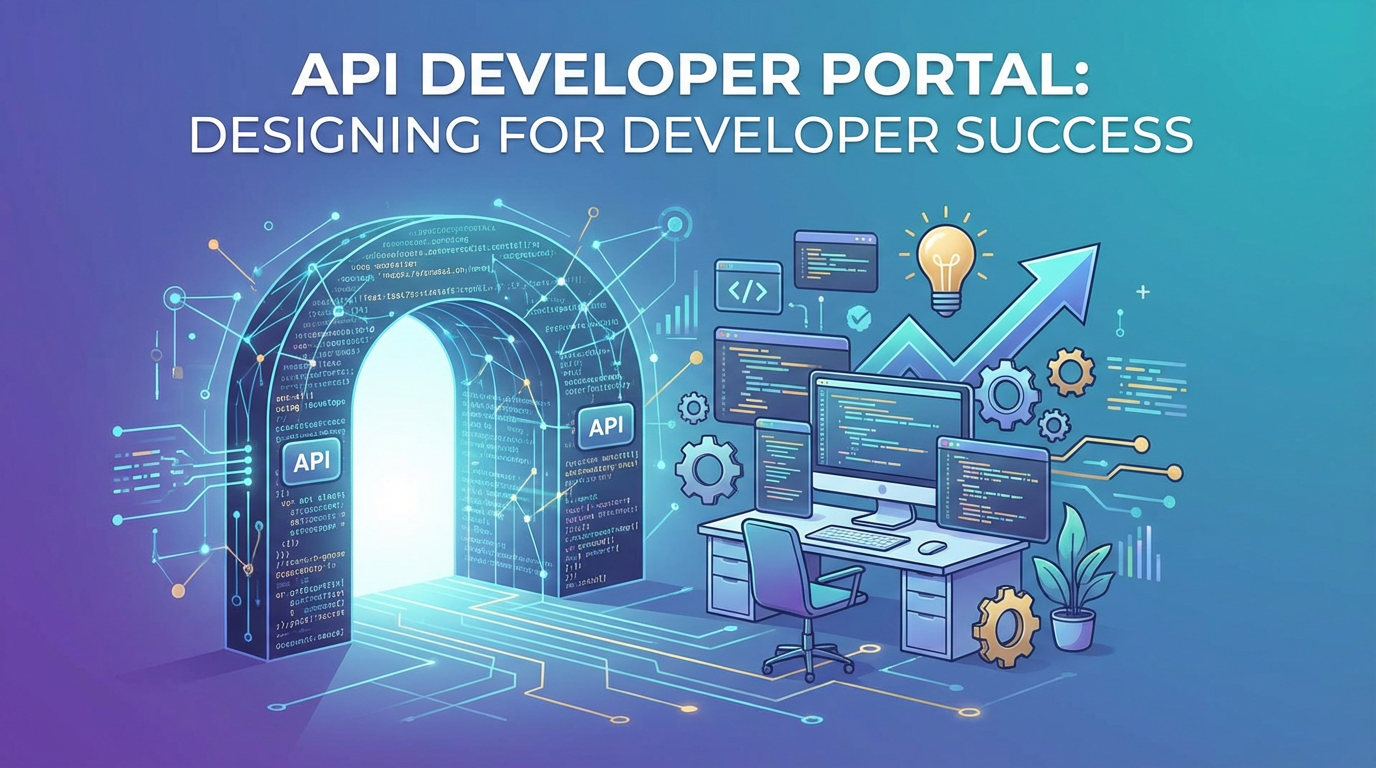
API Developer Portal: Designing for Developer Success


Introduction: The Gateway to Digital Innovation
In the relentlessly evolving landscape of modern software development, Application Programming Interfaces (APIs) have emerged as the foundational building blocks that power digital transformation, connectivity, and innovation across industries. From mobile applications and web services to IoT devices and sophisticated enterprise systems, APIs facilitate seamless communication, data exchange, and functional integration, making them indispensable components of almost every technological endeavor. However, the sheer proliferation of APIs, while offering immense opportunities, also presents a significant challenge: how do developers efficiently discover, understand, integrate, and manage these critical resources?
The answer lies in the strategic design and meticulous implementation of an API Developer Portal. More than just a collection of documentation, an API Developer Portal serves as the central hub, the comprehensive storefront, and the interactive workbench where developers engage with your APIs. It is the crucial interface that bridges the gap between the complex backend logic of your services and the practical needs of the developers striving to leverage them. A meticulously crafted portal not only streamlines the developer journey but also acts as a powerful catalyst for innovation, fostering a vibrant ecosystem around your digital assets. This article will delve deep into the art and science of designing an API Developer Portal that doesn't just present APIs, but actively cultivates developer success, thereby transforming your offerings into a truly dynamic API Open Platform. By prioritizing the developer experience, providers can unlock unparalleled growth, accelerate adoption, and establish a competitive edge in the fast-paced digital economy.
Understanding the API Developer Portal: More Than Just Documentation
At its core, an API Developer Portal is a specialized website or application designed to provide external (and internal) developers with all the necessary tools, information, and resources to effectively use and integrate a company's APIs. While it naturally houses comprehensive API documentation, its scope extends far beyond static descriptions. It's a dynamic environment engineered to support developers at every stage of their interaction with your APIs, from initial discovery to ongoing maintenance and troubleshooting.
Historically, the concept of a "developer portal" might have been rudimentary, often consisting of fragmented documents or simple webpages that vaguely outlined API endpoints. However, as APIs matured into strategic business assets and the complexity of integrations grew exponentially, the need for a more robust, intuitive, and feature-rich platform became acutely apparent. Modern API Developer Portals have evolved into sophisticated platforms that offer an integrated experience, encompassing a wide array of functionalities crucial for a seamless developer journey. They represent the public face of an organization's API program, embodying its commitment to transparency, ease of use, and partnership. Think of it as a comprehensive toolkit, a learning center, a support desk, and a community forum all rolled into one accessible digital space. This holistic approach is fundamental to transforming raw API capabilities into tangible developer value and fostering an environment conducive to widespread adoption and innovation.
Key Elements of a Robust API Developer Portal
To truly serve its purpose, an API Developer Portal typically integrates several critical components:
- Comprehensive API Documentation: This is the bedrock, offering detailed descriptions of endpoints, request/response formats, authentication methods, error codes, and examples.
- Interactive Tools: Features like "Try It Out" consoles, sandbox environments, and code generators allow developers to experiment with APIs in real-time without immediate coding.
- Developer Dashboard: A personalized space where developers can manage their applications, API keys, monitor usage, and view analytics.
- Community Support: Forums, blogs, tutorials, and FAQs that facilitate learning, problem-solving, and peer-to-peer interaction.
- Onboarding Resources: Quick-start guides, SDKs, client libraries, and example applications to accelerate integration.
- Security and Governance: Clear policies on API access, rate limiting, data privacy, and compliance.
By integrating these elements seamlessly, an API Developer Portal transcends its role as a mere information repository, becoming an active participant in the developer's journey, guiding them towards successful integration and utilization of your digital services.
Why a Developer Portal is Indispensable for Developer Success
The success of any API program hinges not just on the technical excellence of the APIs themselves, but crucially on the ability of developers to easily and effectively use them. This is precisely where a well-designed API Developer Portal becomes an indispensable asset, directly contributing to developer success in myriad ways. It serves as the primary touchpoint, the first impression, and the ongoing support system that can make or break an API's adoption and long-term viability. Without a robust portal, even the most innovative APIs risk remaining undiscovered, misunderstood, or underutilized, severely limiting their potential impact.
Accelerated Onboarding and Time-to-First-Call
One of the most critical metrics for an API program is the "time-to-first-call" – how quickly a developer can make their first successful API call after discovering the API. A well-structured API Developer Portal dramatically reduces this time. It provides intuitive navigation, clear getting-started guides, interactive tutorials, and readily available API keys, streamlining the onboarding process. Developers can quickly find the necessary authentication details, understand the basic request structure, and execute their first call within minutes, not hours or days. This immediate gratification is paramount; in a world of abundant choices, developers are unlikely to persevere with APIs that present significant initial hurdles. The portal effectively removes friction points, turning potential frustration into productive engagement right from the outset.
Enhanced Developer Experience (DX)
The Developer Experience (DX) is as crucial for APIs as User Experience (UX) is for end-user applications. A superior DX fosters loyalty, encourages adoption, and transforms casual explorers into dedicated users. An API Developer Portal is the primary vehicle for delivering an exceptional DX. It provides:
- High-Quality, Up-to-Date Documentation: Clear, consistent, and comprehensive documentation, often driven by specifications like
OpenAPI, ensures developers always have accurate information at their fingertips. This eliminates guesswork and reduces errors, which are major pain points for developers. - Interactive Capabilities: Features such as "Try It Out" consoles allow developers to experiment with API endpoints directly within the browser, observing real-time responses. This hands-on approach significantly accelerates learning and validation.
- Code Samples and SDKs: Providing ready-to-use code snippets in popular programming languages (Python, JavaScript, Java, C#, etc.) and robust Software Development Kits (SDKs) dramatically lowers the barrier to entry. Developers can copy-paste and adapt rather than building everything from scratch, saving valuable development time.
- Meaningful Examples and Use Cases: Beyond technical specifications, practical examples illustrating common use cases help developers understand how to apply the API to solve specific business problems, inspiring them to build more sophisticated integrations.
By prioritizing these elements, the portal transforms the often-daunting task of API integration into a smooth, even enjoyable, process, directly contributing to developer success and satisfaction.
Fostering Community and Support
APIs are not static products; they are living services that evolve over time, and their effective use often benefits from collaborative problem-solving and shared knowledge. An API Developer Portal acts as a hub for building a vibrant developer community.
- Forums and Q&A Sections: These spaces allow developers to ask questions, share insights, report bugs, and help each other. This peer-to-peer support mechanism can significantly offload the burden on official support channels.
- Blogs and Articles: Regular posts about new API features, best practices, success stories, and developer tips keep the community engaged and informed.
- Direct Feedback Channels: Integrated feedback mechanisms allow developers to easily report issues, suggest improvements, or ask for new features. This valuable input directly informs API roadmap planning and demonstrates that their contributions are valued.
- Announcements and Changelogs: A dedicated section for API updates, deprecation notices, and maintenance schedules ensures transparency and helps developers anticipate and adapt to changes, preventing unexpected disruptions.
A thriving community not only provides self-service support but also cultivates a sense of belonging and collaboration, turning individual developers into advocates for your API platform.
Fueling API Program Growth and Innovation
A compelling API Developer Portal is a powerful marketing tool that attracts new developers and encourages them to build innovative applications. It effectively showcases the value proposition of your APIs and demonstrates your commitment to supporting external innovation.
- Visibility and Discoverability: A well-optimized portal makes your APIs easily discoverable through search engines, drawing in a wider audience of potential integrators.
- Inspiration and Use Cases: By presenting diverse examples, success stories, and innovative applications built using your APIs, the portal inspires developers to explore new possibilities and push the boundaries of what can be achieved.
- Strategic Expansion: For organizations looking to build an API Open Platform, the developer portal is the central gateway for partners, independent developers, and internal teams to access and leverage shared digital capabilities, facilitating broader ecosystem growth. This strategic approach extends the reach and impact of your core business services far beyond your direct control, fostering a decentralized innovation model.
Ultimately, by making APIs accessible, understandable, and enjoyable to work with, the portal lowers the barrier to entry for innovation, leading to a greater number of integrations and a richer ecosystem of applications built upon your services.
Reduced Support Burden and Operational Efficiency
A comprehensive and intuitive API Developer Portal empowers developers to help themselves. By providing answers to common questions, detailed troubleshooting guides, and transparent API status information, it significantly reduces the volume of support tickets and queries directed to your internal teams.
- Self-Service Troubleshooting: Clear error codes, troubleshooting guides, and comprehensive FAQs enable developers to diagnose and resolve many issues independently.
- Status Pages: A visible status page for all APIs ensures developers are immediately aware of any outages or performance degradation, preventing them from reporting known issues.
- Automated Processes: Features like automated API key generation, application registration, and usage monitoring reduce the manual workload on your support and operations teams, allowing them to focus on more complex issues and strategic initiatives.
This shift towards self-service not only enhances developer satisfaction by providing immediate answers but also frees up valuable internal resources, leading to greater operational efficiency and cost savings for the API provider.
Unlocking Monetization Opportunities
For organizations pursuing API monetization strategies, the API Developer Portal is an essential component. It provides the infrastructure to communicate pricing models, manage subscriptions, and track usage for billing purposes.
- Clear Pricing Tiers and Usage Policies: The portal can clearly display different API plans, usage limits, and associated costs, allowing developers to choose the model that best suits their needs.
- Subscription Management: Developers can subscribe to APIs, upgrade/downgrade plans, and view their billing history directly through the dashboard.
- Usage Analytics for Billing: Robust analytics capture granular data on API calls, which can then be used for accurate metered billing, ensuring fair and transparent charges for API consumption.
By integrating these commercial aspects seamlessly into the developer experience, the portal supports the business objectives of the API program while maintaining transparency and ease of use for developers.
In essence, an API Developer Portal is not merely a technical necessity; it is a strategic imperative. It's the engine that drives developer adoption, fosters innovation, reduces operational overhead, and ultimately contributes directly to the business success of any organization leveraging APIs in the digital economy.
Core Components and Essential Features of an Ideal API Developer Portal
Designing an exemplary API Developer Portal necessitates a holistic approach, carefully curating a suite of features that collectively empower developers. These components must work in harmony to provide an intuitive, comprehensive, and supportive environment, transforming potential users into active, successful integrators. Let's explore the indispensable elements that constitute a truly effective portal.
1. Interactive API Documentation
Documentation is the bedrock of any developer portal, but it must transcend static text. Modern API documentation needs to be interactive, dynamic, and always up-to-date.
- OpenAPI (Swagger) Specification Integration: This is paramount. The
OpenAPISpecification (OAS) provides a language-agnostic, human-readable, and machine-readable interface for describing RESTful APIs. Integrating OAS directly into your portal allows for automatic generation of documentation, ensuring consistency and accuracy. Changes in your API definition can automatically reflect in the portal, significantly reducing the manual effort of maintaining documentation. Tools built aroundOpenAPIcan render interactive documentation that developers love. - Interactive Consoles ("Try It Out"): A crucial feature derived from
OpenAPIspecifications, this allows developers to make live API calls directly from the documentation page. They can input parameters, see request/response examples, and observe actual API behavior without writing a single line of code or setting up a development environment. This "learn by doing" approach drastically improves understanding and speeds up the time-to-first-call. - Version Management: APIs evolve, and portals must clearly articulate versioning strategies. Developers need to know which version they are consuming, how to upgrade, and when older versions will be deprecated. Clear documentation for each API version, including migration guides, is essential to prevent breaking changes and ensure smooth transitions.
- Code Samples in Multiple Languages: Providing ready-to-use code snippets for common programming languages (e.g., Python, Node.js, Java, Ruby, PHP, C#) removes significant friction. Developers can simply copy-paste and adapt these examples, accelerating their integration process. These samples should demonstrate basic authentication, making simple calls, and handling responses.
- Tutorials and Use Cases: Beyond mere technical descriptions, the portal should offer practical tutorials that guide developers through common integration scenarios. These "recipes" demonstrate how to combine multiple API calls to achieve specific business outcomes, inspiring developers and providing clear pathways to value.
- Glossary and FAQs: A comprehensive glossary defines technical terms specific to your API ecosystem, while a robust FAQ section addresses common queries and troubleshooting steps, further reducing the need for direct support.
2. API Catalog and Discovery
Even with perfect documentation, APIs are useless if they cannot be found. The portal must provide an intuitive mechanism for developers to discover available APIs.
- Search and Filtering: A powerful search engine is non-negotiable, allowing developers to quickly locate APIs by keywords, tags, categories, or business domains. Robust filtering options (e.g., by status, authentication type, business unit) further refine results.
- Clear Descriptions and Use Cases: Each API entry in the catalog should have a concise, compelling description outlining its purpose, key functionalities, and primary use cases. This helps developers immediately grasp the API's relevance to their needs.
- API Status and Deprecation Policies: Transparency is key. The catalog should clearly indicate the status of each API (e.g., GA, Beta, Deprecated) and provide clear timelines and migration paths for deprecated APIs, building trust and preventing unexpected issues.
- Categorization and Tagging: Logical categorization based on functionality, business domain, or audience helps organize a large number of APIs, making the catalog easy to navigate and understand.
3. Developer Dashboard
The developer dashboard is the personalized control center for each developer or development team. It offers a centralized view and management capabilities for their API consumption.
- Application Management: Developers should be able to register new applications, generate and revoke API keys and secrets, and manage client credentials for OAuth flows. This self-service capability is critical for scalability.
- Usage Analytics and Monitoring: A visual dashboard displaying API call volume, error rates, latency, and quota usage provides developers with critical insights into their consumption patterns and helps them diagnose issues. APIPark provides powerful data analysis, showing long-term trends and performance changes, which is invaluable for preventive maintenance.
- Billing and Subscription Management: For monetized APIs, the dashboard should allow developers to view their current subscription plan, track billing details, access invoices, and upgrade/downgrade their service tiers.
- Team Management: For larger organizations, the ability to invite team members, assign roles, and share API keys and application access within a team streamlines collaborative development efforts.
- API Monitoring and Alerts: Proactive notifications about reaching usage limits, impending API key expiration, or significant error spikes can help developers avoid service interruptions.
4. SDKs and Libraries
While code samples are valuable, Software Development Kits (SDKs) and client libraries provide a higher level of abstraction, simplifying API integration even further.
- Generated SDKs: Leveraging tools that can automatically generate SDKs from
OpenAPIspecifications for various languages can significantly reduce developer effort and ensure consistency. - Example Applications: Providing fully functional, albeit simple, example applications that demonstrate how to use your APIs in real-world scenarios is incredibly helpful. These examples can serve as templates that developers can fork and adapt.
5. Community and Support Features
A robust support infrastructure and a thriving community are vital for sustained API adoption.
- Forums, Q&A, and Discussion Boards: Dedicated spaces for developers to interact, ask questions, share solutions, and provide feedback foster a sense of community and can significantly reduce direct support requests.
- Blogs and Announcements: Regularly updated content, including product updates, technical deep-dives, best practices, and success stories, keeps developers informed and engaged.
- Changelogs and Release Notes: Transparently communicating changes, new features, bug fixes, and deprecations is crucial for developers to manage their integrations effectively.
- Support Ticket System: While self-service is encouraged, a clear path to direct technical support for complex issues is essential. Integration with helpdesk systems streamlines this process.
6. Security and Access Control
Security is paramount in an API Open Platform. The portal must clearly outline and enforce robust security measures.
- Authentication and Authorization Methods: Clear documentation on how to authenticate (e.g., API keys, OAuth 2.0, JWTs) and what authorization scopes are available is fundamental.
- Rate Limiting Policies: Explicitly stating rate limits, burst allowances, and how to handle rate limit errors helps developers build resilient applications.
- Subscription Approval Workflows: For sensitive APIs or controlled access, features that require administrators to approve developer subscriptions before API access is granted add an essential layer of security. APIPark offers precisely this feature, allowing for the activation of subscription approval, ensuring callers must subscribe to an API and await administrator approval before invocation, thereby preventing unauthorized API calls and potential data breaches. This is a critical component for many enterprises.
- Data Privacy and Compliance: Detailed information on how data is handled, privacy policies, and compliance with regulations (e.g., GDPR, CCPA) builds trust and ensures legal adherence.
7. Branding and Customization
The developer portal is an extension of your brand. It should reflect your company's identity and values.
- Customizable Themes and Layouts: The ability to align the portal's aesthetics with your brand guidelines (colors, logos, fonts) provides a consistent and professional experience.
- White-labeling Options: For certain use cases, white-labeling the portal allows partners to integrate it seamlessly into their own branded environments.
By meticulously implementing these core components, an organization can transform its API offerings into an compelling API Open Platform that truly champions developer success, driving innovation and expanding its digital ecosystem.
Designing for Developer Success: Best Practices and Principles
Creating an API Developer Portal that genuinely fosters developer success is not merely about accumulating features; it's about adopting a user-centric design philosophy. Every decision, from layout to content, should be driven by the overarching goal of making developers' lives easier and more productive. This requires adherence to a set of best practices and fundamental design principles that prioritize the developer experience (DX).
1. User-Centric Design (UCD): Know Your Audience
The most critical principle is to design with the developer in mind. Developers are your users, and understanding their needs, pain points, skill levels, and typical workflows is paramount.
- Conduct Developer Research: Engage with your target developers through surveys, interviews, and usability testing. What are their goals? What frustrates them? What tools do they already use?
- Create Developer Personas: Develop detailed profiles of your ideal API consumers (e.g., frontend developer, data scientist, mobile developer, partner integrator). This helps tailor content, examples, and features to specific segments.
- Map Developer Journeys: Understand the typical path a developer takes, from initial discovery to successful integration and ongoing maintenance. Identify potential roadblocks and design solutions within the portal.
By deeply understanding your audience, you can create a portal that feels intuitive and directly addresses their needs, rather than imposing a generic, one-size-fits-all solution.
2. Clarity and Simplicity: Less is More (But Comprehensive is Key)
While comprehensive information is essential, it must be presented with utmost clarity and simplicity. Overwhelming developers with too much jargon, dense text, or complex navigation will lead to frustration.
- Intuitive Navigation: Design a logical site structure and navigation menu that allows developers to quickly find what they need without extensive searching. Use clear labels and consistent placement.
- Clear Language: Avoid ambiguous terms and unnecessary technical jargon where simpler language suffices. Explain complex concepts clearly and concisely.
- Information Hierarchy: Organize content hierarchically, starting with high-level overviews and progressively diving into details. Use headings, subheadings, bullet points, and short paragraphs to break up text and improve readability.
- Visually Clean Layout: A clean, uncluttered design with ample whitespace improves readability and reduces cognitive load. Focus on functionality and ease of use over excessive embellishment.
The goal is to present complex information in an easily digestible format, allowing developers to quickly grasp concepts and find relevant details without getting lost.
3. Consistency: Predictability Builds Trust
Consistency across all aspects of the API Developer Portal fosters a sense of familiarity, predictability, and professionalism.
- Consistent UI/UX: Maintain a uniform look, feel, and interaction pattern throughout the portal. This includes consistent button styles, form designs, error messages, and overall visual identity.
- Consistent API Design and Documentation Style: Ensure that all APIs follow similar design principles (e.g., naming conventions, request/response structures, error handling) and that their documentation adheres to a standardized style guide. This makes learning new APIs within your platform much easier.
- Consistent Terminology: Use the same terms for the same concepts across all documentation, tutorials, and UI elements. Ambiguous or varying terminology creates confusion.
Consistency reduces the learning curve, builds trust, and allows developers to focus on integrating your APIs rather than figuring out how to navigate your portal.
4. Completeness: Leave No Stone Unturned
While simplicity is important, it should not come at the expense of completeness. Developers need all the information to succeed, even if they don't consume it all at once.
- Comprehensive Documentation: Ensure that every API endpoint, parameter, response, error code, and authentication method is thoroughly documented. Lack of detail forces developers to guess or seek external support, slowing them down.
- Edge Cases and Error Handling: Document not just the happy path but also common error scenarios, edge cases, and how developers should handle them gracefully. Provide example error responses and strategies for recovery.
- Rate Limits and Quotas: Clearly outline any usage limits, throttling policies, and how developers can request increases.
- Deprecation Policies: When an API or feature is deprecated, provide clear guidance on migration paths, timelines, and alternatives.
A complete portal minimizes ambiguity and provides developers with confidence that they have all the necessary information to build robust integrations.
5. Interactivity: Enable Hands-On Exploration
Developers are doers. Providing interactive elements allows them to experiment, test, and learn by doing, which is far more effective than passive reading.
- "Try It Out" Consoles: As mentioned earlier, this is a game-changer. Allowing developers to execute live API calls directly from the documentation is invaluable for quick testing and understanding.
- Sandbox Environments: Offer a separate, non-production environment where developers can freely experiment with your APIs without affecting live data or incurring costs.
- Code Generators: Tools that can generate basic client code in various languages based on
OpenAPIdefinitions can significantly jumpstart integration efforts. - Interactive Tutorials: Guided walkthroughs that involve making actual API calls or manipulating data in a sandbox environment reinforce learning.
Interactivity transforms the portal from a static reference into a dynamic learning and development environment.
6. Feedback Loops: Listen and Adapt
A truly successful API Developer Portal is not a static artifact; it's a living product that evolves based on user feedback.
- Easy Feedback Mechanisms: Provide clear and prominent ways for developers to offer feedback, report bugs, or suggest improvements directly from any page (e.g., "Was this helpful?" buttons, embedded feedback forms).
- Community Forums: Monitor and actively participate in forums, addressing questions, clarifying doubts, and gathering insights into common pain points.
- Analytics and Usage Data: Track how developers interact with the portal – what pages they visit, what they search for, where they get stuck. This data provides objective insights for continuous improvement. APIPark provides detailed API call logging and powerful data analysis, which can also be extended to understand how developers interact with the portal's features related to API invocation.
- Regular Updates: Demonstrate that you are listening by regularly updating content, adding new features, and addressing feedback.
By creating robust feedback channels and actively responding, you show developers that their input is valued, fostering loyalty and a sense of partnership.
7. Performance and Reliability: The Foundation of Trust
A slow, unreliable, or insecure developer portal undermines trust and frustrates users, regardless of how good the content is.
- Fast Load Times: Optimize portal performance to ensure quick page loads, especially for documentation and interactive tools. Developers have little patience for slow websites.
- High Availability: The portal must be accessible 24/7. Any downtime means developers cannot access critical resources, halting their work.
- Robust Security: Protect the portal and its underlying data with strong security measures, including HTTPS, secure authentication, and regular security audits.
- Scalability: Ensure the portal infrastructure can handle increasing traffic and data volume as your API program grows. APIPark, for instance, is built for performance, rivaling Nginx with the ability to achieve over 20,000 TPS on modest hardware and supporting cluster deployment for large-scale traffic. This highlights the importance of choosing a performant platform for your API management and portal needs.
Reliability and performance are foundational. Without them, even the most well-intentioned design principles will fall short.
8. Searchability: Pinpointing Information Quickly
Given the volume of information within a comprehensive portal, a powerful and accurate search function is non-negotiable.
- Advanced Search Engine: Implement a search engine that supports fuzzy matching, filtering, and prioritizing results based on relevance (e.g., documentation, tutorials, forum posts).
- Search Engine Optimization (SEO): Optimize your portal's content and structure to rank well in external search engines, making your APIs discoverable by developers actively searching for solutions.
- Tagging and Metadata: Ensure all content is appropriately tagged and has rich metadata to improve search accuracy and discoverability.
Effective search allows developers to bypass navigation and directly access the information they need, saving time and reducing frustration.
9. Mobile Responsiveness: Access Anywhere, Anytime
While developers often work on desktop machines, providing a responsive design that adapts gracefully to various screen sizes (tablets, mobile phones) is a modern expectation. Developers may want to quickly check documentation or status updates on the go.
Adhering to these best practices and principles ensures that your API Developer Portal is not just a repository of information, but a dynamic, supportive, and empowering environment that genuinely fosters developer success and drives the widespread adoption of your APIs.
APIPark is a high-performance AI gateway that allows you to securely access the most comprehensive LLM APIs globally on the APIPark platform, including OpenAI, Anthropic, Mistral, Llama2, Google Gemini, and more.Try APIPark now! 👇👇👇
Building an API Open Platform with Your Developer Portal
The concept of an API Open Platform represents an evolution beyond simply exposing APIs for consumption. It signifies a strategic shift towards creating a vibrant, interconnected ecosystem where APIs serve as the foundation for collaborative innovation, partner engagement, and sustained business growth. At the heart of this transformation lies the API Developer Portal, acting as the indispensable gateway and operational hub for this expansive platform. Without a thoughtfully designed and meticulously managed portal, the vision of an API Open Platform would remain largely unrealized, akin to having an expansive library without an effective catalog or a welcoming entrance.
The API Open Platform Concept: Beyond Mere Consumption
An API Open Platform is an architectural and business strategy where an organization actively encourages external developers, partners, and even internal teams to build upon its core services and data assets through well-defined, publicly accessible (or partner-accessible) APIs. The "open" aspect implies transparency, ease of access, clear governance, and a commitment to fostering a community of innovators. It moves beyond a transactional relationship (API provider to API consumer) to a collaborative, symbiotic one.
Key characteristics of an API Open Platform include:
- Broad Accessibility: APIs are designed for a wide range of developers.
- Clear Value Proposition: The APIs offer tangible business value and opportunities for integration.
- Robust Governance: Clear policies for security, usage, and lifecycle management.
- Developer Support: Comprehensive resources, tools, and community engagement.
- Ecosystem Focus: Emphasis on fostering external innovation and partner relationships.
The goal is to extend the capabilities and reach of the core business, create new revenue streams, and leverage external creativity to build innovative solutions that the API provider might not have conceived internally.
Fostering Innovation and Ecosystem Growth through the Portal
The API Developer Portal is the public face and operational engine of an API Open Platform. Its design and functionality directly influence the platform's ability to attract, engage, and retain external innovators.
- Showcasing API Value: The portal is where the value proposition of your
API Open Platformis articulated. Through clear descriptions, compelling use cases, and success stories, it inspires developers to envision new products and services. - Enabling Rapid Prototyping: Features like interactive documentation (
OpenAPI-driven "Try It Out" consoles), sandbox environments, and easily accessible API keys allow developers to quickly prototype and validate their ideas. This low-friction environment accelerates the innovation cycle, encouraging experimentation. - Facilitating Collaboration: Community forums, discussion boards, and shared workspaces within the portal foster collaboration among developers, leading to the exchange of ideas, shared solutions, and the potential for new, collaborative projects built on your platform.
- Onboarding Partners Seamlessly: For a true
API Open Platform, onboarding strategic partners is crucial. The portal can provide dedicated sections or customized experiences for partners, including specialized documentation, partner-specific APIs, and direct support channels, ensuring they can integrate quickly and effectively. - Promoting a Marketplace: A mature
API Open Platformmight evolve to include a marketplace within the portal where developers can showcase the applications they've built using your APIs. This creates a virtuous cycle: showcasing successful integrations attracts more developers, who in turn build more applications, further enriching the ecosystem.
Partner Programs and Marketplace Integration
For organizations serious about an API Open Platform, the developer portal becomes the administrative hub for formal partner programs and potential API marketplaces.
- Partner Registration and Management: The portal can manage the entire lifecycle of partner engagement, from initial application and approval to access to specialized APIs and resources.
- Tiered Access and Benefits: Different partner tiers can be reflected in the portal, offering varying levels of API access, support, and branding opportunities.
- Integrated Monetization: For providers monetizing their APIs, the portal seamlessly integrates billing, subscription management, and usage tracking, making it easy for partners to understand and manage their costs.
- Showcasing Partner Solutions: A dedicated section to highlight partner success stories, case studies, and integrated solutions reinforces the value of the
API Open Platformand encourages others to join.
Strategic Importance for Business Growth
An API Open Platform, powered by an effective API Developer Portal, offers profound strategic advantages:
- Increased Market Reach: By enabling third-party developers to build integrations, your services can reach new customer segments and markets that your core business might not directly address.
- New Revenue Streams: Direct monetization of APIs, or indirect revenue through increased product adoption, can unlock significant new financial opportunities.
- Accelerated Product Development: External developers act as an extended R&D arm, rapidly prototyping and validating new features and use cases that can eventually be integrated back into your core offerings.
- Enhanced Brand Value: Becoming a leading
API Open Platformpositions your organization as an innovator and a leader, attracting top talent and fostering a reputation for technical excellence and openness. - Competitive Differentiation: In crowded markets, a robust
API Open Platformcan be a significant differentiator, creating network effects and making it harder for competitors to catch up.
The API Developer Portal is not merely a technical requirement for an API Open Platform; it is the strategic linchpin that enables collaboration, drives innovation, and fundamentally expands the scope and impact of your business in the digital age. Its design and continuous refinement are therefore paramount to the long-term success of your platform strategy.
Implementing and Managing Your API Developer Portal
Once the strategic importance of an API Developer Portal is understood and its essential features defined, the next critical phase involves its actual implementation and ongoing management. This stage encompasses crucial decisions about technology, content, governance, and the resources required to ensure the portal remains a dynamic and effective tool for developer success.
Technology Choices: Build vs. Buy, Open-Source vs. Commercial
The first major decision often revolves around the technical foundation of the portal. Organizations typically face a build-versus-buy dilemma, further complicated by the options of open-source or commercial solutions.
- Building from Scratch: Developing a custom portal offers maximum flexibility and control over features, design, and integration with existing internal systems. This path is suitable for organizations with unique requirements, significant internal development resources, and a desire for deep customization. However, it incurs high initial development costs, ongoing maintenance burden, and requires expertise in web development, content management, and API infrastructure. It can also divert resources from core product development.
- Buying a Commercial Solution: Numerous vendors offer purpose-built API Developer Portal solutions. These commercial platforms often come with a rich feature set out-of-the-box, professional support, regular updates, and integrations with API management platforms. They can accelerate time-to-market, reduce upfront development costs, and offload maintenance. The downsides include vendor lock-in, potentially less flexibility for deep customization, and recurring licensing fees. Examples include solutions offered by API management providers like Google Apigee, Mulesoft, Kong, and independent portal solutions.
- Leveraging Open-Source Solutions: An attractive middle ground is to use open-source API management platforms or developer portal frameworks. These offer the benefit of lower (or no) licensing costs, community support, and the ability to inspect and customize the codebase. This option requires internal expertise for deployment, configuration, and potential modifications, but it avoids vendor lock-in and can be highly cost-effective.For instance, APIPark is an all-in-one AI gateway and API developer portal that is open-sourced under the Apache 2.0 license. It's designed to help developers and enterprises manage, integrate, and deploy AI and REST services with ease. Its open-source nature makes it an excellent choice for organizations seeking flexibility and control while benefiting from a community-driven project. It can be quickly deployed in just 5 minutes with a single command line:
curl -sSO https://download.apipark.com/install/quick-start.sh; bash quick-start.sh. This ease of deployment, combined with its robust feature set including end-to-end API lifecycle management and powerful data analysis, positions APIPark as a strong contender for building an efficientAPI Open Platform. While the open-source product meets the basic API resource needs of startups, APIPark also offers a commercial version with advanced features and professional technical support for leading enterprises, providing a scalable path for growth.
The choice largely depends on an organization's budget, internal capabilities, specific requirements, and long-term strategic vision for its API Open Platform.
Content Management: Keeping Documentation Up-to-Date
The value of a developer portal rapidly diminishes if its content, particularly the API documentation, becomes outdated. Effective content management is critical for maintaining developer trust and ensuring success.
- Automated Documentation Generation: Integrate the portal with your API definition tools (e.g., using
OpenAPIspecifications) to automatically generate and update documentation. This ensures consistency between your API implementation and its description, minimizing manual errors and effort. - Version Control for Documentation: Treat documentation like code, storing it in version control systems (e.g., Git). This allows for tracking changes, reviewing updates, and rolling back if necessary.
- Content Governance Workflow: Establish clear processes for creating, reviewing, approving, and publishing documentation. Assign ownership for different API documentation sections to relevant teams or individuals.
- Regular Audits: Periodically review all content on the portal to ensure accuracy, relevance, and adherence to style guidelines. Remove or update deprecated information.
- Developer Contribution: If appropriate, allow trusted developers or community members to suggest edits or improvements to documentation, fostering a collaborative approach.
Governance and Workflows: Regulating the API Ecosystem
A well-governed API Developer Portal ensures consistency, security, and compliance across the entire API Open Platform.
- API Publication Workflow: Define a clear process for publishing new APIs or updating existing ones on the portal, including review stages, testing, and deployment. APIPark assists with managing the entire lifecycle of APIs, including design, publication, invocation, and decommission, helping regulate API management processes.
- Access Approval Processes: Implement workflows for granting developers access to certain APIs, especially for sensitive or premium services. As mentioned, APIPark allows for the activation of subscription approval features, ensuring callers must subscribe to an API and await administrator approval before they can invoke it. This prevents unauthorized API calls and potential data breaches, offering robust governance.
- Version Management Strategy: Formalize how API versions are managed, communicated, and deprecated, ensuring developers have clear guidance on migration paths.
- Security Policies: Document and enforce policies related to API key management, OAuth client registration, data privacy, and compliance with industry regulations.
- Rate Limiting and Throttling: Clearly define and manage rate limiting policies to prevent abuse and ensure fair usage of API resources. APIPark helps regulate API management processes, manage traffic forwarding, load balancing, and versioning of published APIs, which includes managing these critical operational aspects.
Analytics and Iteration: Measuring Success and Continuous Improvement
An API Developer Portal is not a "set it and forget it" solution. It requires continuous monitoring, analysis, and iteration to remain effective.
- Key Performance Indicators (KPIs): Define metrics to measure the portal's success, such as time-to-first-call, API adoption rates, developer engagement (e.g., forum activity, documentation views), support ticket volume reduction, and conversion rates for monetized APIs.
- Usage Analytics Tools: Integrate web analytics tools (e.g., Google Analytics, Matomo) to track user behavior on the portal. Understand which pages are most visited, where users drop off, and what they search for.
- API Usage Analytics: Monitor actual API call data to understand popular endpoints, error rates, and overall API health. APIPark provides powerful data analysis, analyzing historical call data to display long-term trends and performance changes, helping businesses with preventive maintenance before issues occur. This comprehensive logging and analysis are crucial for understanding the real-world impact of your APIs.
- A/B Testing: Experiment with different layouts, content presentations, or feature placements to optimize the developer experience.
- Regular Iteration Cycles: Based on feedback, analytics, and new requirements, continuously improve the portal through regular update cycles, treating it as a product with its own roadmap.
Team and Resources: Dedicated Expertise
Successful management of an API Developer Portal requires a dedicated, cross-functional team and adequate resources.
- Product Manager/Owner: Responsible for the portal's strategy, roadmap, and overall developer experience.
- Technical Writers: Dedicated to creating and maintaining high-quality, clear, and consistent API documentation.
- Developers/Engineers: To build, customize, integrate, and maintain the portal's technical infrastructure.
- Community Manager: To engage with developers, moderate forums, and foster a thriving community.
- Marketing/Advocacy: To promote the portal and APIs, produce tutorials, and build developer awareness.
Investing in the right team ensures that the portal remains a dynamic, well-supported, and continuously improving resource for your developers.
By carefully considering these implementation and management aspects, organizations can ensure their API Developer Portal evolves into a robust and enduring asset, continuously contributing to developer success and strengthening their API Open Platform.
Challenges in API Developer Portal Design and How to Overcome Them
Despite the clear benefits, designing and maintaining an effective API Developer Portal is fraught with challenges. These obstacles, if not adequately addressed, can undermine developer success, hinder API adoption, and negate the strategic value of an API Open Platform. Recognizing these common pitfalls and understanding how to overcome them is crucial for long-term success.
1. Outdated and Inaccurate Documentation
This is perhaps the most common and damaging challenge. Developers rely heavily on documentation, and encountering outdated examples, incorrect parameter descriptions, or missing information quickly erodes trust and causes immense frustration.
- Overcoming this:
- Automate Documentation Generation: Leverage tools that automatically generate documentation directly from
OpenAPIspecifications or source code comments. Integrate this into your CI/CD pipeline so that documentation updates are part of every API release. - "Documentation as Code": Store documentation in version control (e.g., Git) alongside the API code. This ensures that changes to the API require corresponding changes to the documentation, making it part of the development workflow.
- Dedicated Technical Writers: Invest in professional technical writers who specialize in API documentation. They can translate complex technical details into clear, concise, and developer-friendly language.
- Feedback Mechanisms: Provide easy ways for developers to report issues with documentation directly on the page. Actively monitor and respond to this feedback.
- Automate Documentation Generation: Leverage tools that automatically generate documentation directly from
2. Poor Searchability and Discoverability
A large API Open Platform with many APIs and extensive documentation can become a labyrinth if developers cannot easily find what they are looking for. Poor search functionality leads to wasted time and missed opportunities.
- Overcoming this:
- Robust Search Engine: Implement a powerful, intelligent search engine that supports fuzzy matching, filtering, and understands natural language queries.
- Comprehensive Tagging and Categorization: Ensure all APIs, documentation articles, and forum posts are well-tagged and categorized with relevant metadata to improve search results.
- Semantic Search: Explore AI-powered search capabilities that understand the intent behind a developer's query, even if the exact keywords aren't present.
- Clear Navigation and Information Architecture: Beyond search, ensure the overall site structure is logical and intuitive, with clear menus and breadcrumbs to help developers browse effectively.
3. Lack of Developer Engagement and Community
A portal that feels like a static, unmonitored repository will fail to build a thriving community or foster innovation. If developers feel unheard or unsupported, they will disengage.
- Overcoming this:
- Active Community Management: Dedicate resources to moderate forums, respond to questions, and actively participate in discussions. A community manager can be invaluable.
- Regular Content Updates: Keep the portal fresh with new blog posts, tutorials, API updates, and success stories to demonstrate ongoing commitment.
- Encourage Contributions: Provide ways for developers to contribute (e.g., submit code samples, suggest documentation improvements, answer peer questions).
- Host Developer Events: Organize webinars, hackathons, or online workshops that leverage your APIs and promote interaction.
- Public Roadmaps and Changelogs: Transparently communicate your API and portal roadmap, showing developers what's coming and that their feedback influences future development.
4. Security Concerns and Access Management
Managing access to APIs, especially sensitive ones, while maintaining an "open" feel is a delicate balance. Inadequate security or overly complex access procedures can deter developers or expose vulnerabilities.
- Overcoming this:
- Clear Security Policies: Document all security measures, authentication methods, and authorization scopes in detail.
- Automated Access Management: Implement self-service features for API key generation, OAuth client registration, and credential management, reducing manual intervention and potential errors.
- Subscription Approval Workflows: For sensitive APIs, integrate an approval process where administrators review and approve developer access requests. APIPark offers this crucial feature, allowing for activation of subscription approval, ensuring that callers must subscribe to an API and await administrator approval before they can invoke it, preventing unauthorized API calls and potential data breaches. This granular control is vital for enterprise-grade security.
- Role-Based Access Control (RBAC): Implement RBAC within the portal to ensure developers only see and can access the APIs and functionalities relevant to their permissions.
- API Monitoring and Auditing: Provide tools for developers to monitor their own API usage and logs, and for administrators to track overall API activity and identify suspicious patterns. APIPark offers detailed API call logging, recording every detail of each API call, which allows businesses to quickly trace and troubleshoot issues, ensuring system stability and data security.
5. Scalability and Performance Issues
As an API Open Platform grows, the developer portal must scale to handle increased traffic, more APIs, and a larger developer base. Performance bottlenecks can quickly frustrate users and damage the platform's reputation.
- Overcoming this:
- Robust Infrastructure: Design the portal with scalable architecture, utilizing cloud services, content delivery networks (CDNs), and efficient caching mechanisms.
- Performance Optimization: Regularly profile and optimize the portal's code, database queries, and static assets to ensure fast load times and responsiveness.
- Choose a High-Performance Platform: Select an API management or portal solution that is built for performance. As previously highlighted, APIPark is engineered for high performance, rivaling Nginx, achieving over 20,000 TPS on an 8-core CPU and 8GB of memory, and supporting cluster deployment to handle large-scale traffic. Such a foundation ensures the portal itself can meet the demands of a growing
API Open Platform. - Distributed Architecture: For extremely large platforms, consider a distributed architecture for the portal that can handle traffic across multiple geographical regions.
6. Managing Multiple API Versions
As APIs evolve, managing different versions and ensuring developers are aware of changes and deprecations is a complex task. Confusion around versions can lead to broken integrations.
- Overcoming this:
- Clear Versioning Strategy: Adopt a consistent and well-documented API versioning strategy (e.g., URL versioning, header versioning).
- Dedicated Version Documentation: Provide separate, archived documentation for each API version within the portal.
- Migration Guides: Offer comprehensive migration guides that clearly outline breaking changes, new features, and the steps required to upgrade from one API version to another.
- Deprecation Timelines: Communicate deprecation schedules well in advance, giving developers ample time to adapt and migrate.
- Status Indicators: Clearly label API versions (e.g., "Active," "Deprecated," "Sunset") in the API catalog.
By proactively addressing these challenges, organizations can build and maintain an API Developer Portal that truly supports developer success, fostering a thriving API Open Platform and maximizing the return on their API investments.
The Future of API Developer Portals
The landscape of APIs and software development is in constant flux, and the API Developer Portal must evolve to keep pace. As technology advances and developer expectations shift, the portals of tomorrow will likely be even more intelligent, personalized, and integrated into the broader developer workflow. Predicting the future is always an exercise in informed speculation, but several emerging trends point towards a transformative evolution for the API Open Platform and its central gateway.
1. AI Integration: Intelligent Assistance for Developers
Artificial Intelligence and Machine Learning are poised to revolutionize how developers interact with APIs and developer portals.
- AI-Powered Search and Discovery: Future portals will likely leverage AI to offer highly intelligent search capabilities, understanding natural language queries and providing contextually relevant API recommendations based on a developer's project or past behavior. This moves beyond keyword matching to true semantic understanding.
- Automated Code Generation and Suggestions: AI assistants could generate more complex code snippets, suggest optimal API calls based on a desired outcome, or even help refactor existing integration code. Tools like GitHub Copilot are early indicators of this trend, and deep integration with the portal's documentation and
OpenAPIdefinitions could make this even more powerful. - Intelligent Support Chatbots: AI-driven chatbots will move beyond simple FAQs to provide real-time, personalized support, troubleshooting common errors, guiding developers through tutorials, and escalating complex issues to human support seamlessly.
- Proactive Anomaly Detection and Prevention: Leveraging AI to analyze API usage patterns, identify potential issues (e.g., performance bottlenecks, security threats), and proactively alert developers or suggest preventative measures. Given that APIPark is an open-source AI gateway and API management platform capable of quick integration of 100+ AI models and prompt encapsulation into REST API, it is exceptionally well-positioned to integrate and leverage AI for enhanced developer portal features. This intrinsic AI capability suggests a natural evolution towards an even smarter, more proactive developer experience.
2. Low-Code/No-Code Empowerment
The burgeoning low-code/no-code movement aims to democratize software development, allowing individuals with limited coding experience to build applications. Future API Developer Portals will cater to this audience.
- Visual API Builders: Portals will offer drag-and-drop interfaces for composing API calls, chaining multiple APIs, and even building simple workflows without writing code.
- Integration with Low-Code Platforms: Seamless connectors and plugins for popular low-code platforms (e.g., Zapier, Power Apps, Mendix) will simplify API consumption for non-traditional developers.
- Pre-built Templates and Recipes: A rich library of pre-built integration templates will allow users to achieve common tasks with minimal configuration, opening up the
API Open Platformto a much broader audience.
This expansion will make APIs accessible to a new generation of "citizen developers," further accelerating the pace of innovation.
3. Personalization and Contextual Experiences
Just as consumer websites offer personalized experiences, developer portals will become increasingly tailored to individual developer needs and preferences.
- Personalized Dashboards: Dashboards will dynamically adapt to show relevant APIs, documentation, usage statistics, and community discussions based on a developer's role, projects, and past interactions.
- Customized Learning Paths: The portal could suggest learning paths or tutorials based on a developer's skill level and the specific APIs they are integrating.
- Dynamic Content Delivery: Documentation might dynamically highlight sections most relevant to a developer's current context or programming language preference.
- Team-Specific Views: For enterprise environments, the portal will offer highly customized views for different teams or departments, showing only relevant APIs and resources.
4. Event-Driven Architectures and Streaming APIs
As architectures shift towards event-driven patterns, future portals will need to provide first-class support for managing and documenting streaming APIs and webhooks.
- Event Catalogues: Beyond traditional REST API catalogs, portals will feature catalogs of events that developers can subscribe to, detailing event schemas, topics, and real-time streams.
- Webhook Management: Tools for registering, managing, and testing webhooks will become standard, allowing developers to easily consume event notifications.
- Real-time Data Visualization: Visualizations of data streams and event flows will help developers understand complex event-driven interactions.
- Asynchronous API Documentation: Specialized documentation patterns for asynchronous APIs (e.g., AsyncAPI specification) will become prevalent, providing interactive tools for testing and subscribing to real-time data.
5. Unified Developer Experience (UDX)
The API Open Platform will evolve to offer a more holistic developer experience that extends beyond just APIs, encompassing microservices, SDKs, serverless functions, and other digital assets.
- Integrated Tools: The portal will serve as a central hub for all developer tools, including version control, issue tracking, continuous integration, and deployment pipelines.
- Full Lifecycle Management: From design to monitoring, the portal will offer tools that support the entire lifecycle of an API and associated services, including comprehensive monitoring and observability for deployed integrations. APIPark already assists with managing the entire lifecycle of APIs, including design, publication, invocation, and decommission, providing a foundation for this unified approach.
- Developer Workspaces: More interactive "developer workspaces" within the portal, allowing for in-browser coding, testing, and deployment of small functions or integrations directly against the
API Open Platformresources.
The future API Developer Portal will be less of a static website and more of an intelligent, interactive, and personalized ecosystem that anticipates developer needs, streamlines complex processes, and acts as a truly indispensable partner in the development journey. Its evolution is critical for any organization aspiring to lead with a truly dynamic and expansive API Open Platform.
Conclusion: The Strategic Imperative of Developer-Centric Design
In an era where digital ecosystems are defined by connectivity and collaboration, APIs have transcended their purely technical function to become fundamental drivers of business strategy, innovation, and market expansion. The success of any organization leveraging these powerful connectors hinges not just on the technical prowess of its APIs, but critically, on the ability of developers to seamlessly discover, understand, integrate, and manage them. This pivotal challenge is precisely what a meticulously designed and continuously refined API Developer Portal addresses.
As we have thoroughly explored, an API Developer Portal is far more than a mere repository of documentation. It serves as the digital storefront, the interactive workbench, the learning center, and the community hub for your entire API Open Platform. By prioritizing developer success at every turn, from intuitive onboarding and comprehensive OpenAPI-driven documentation to robust support and transparent governance, a well-crafted portal becomes an indispensable asset. It accelerates the time-to-first-call, fosters a thriving developer community, reduces support overhead, and ultimately fuels the growth and innovation that defines a truly expansive digital ecosystem.
The journey of building and maintaining such a portal is not without its challenges, from keeping documentation fresh to ensuring seamless scalability and robust security. However, by embracing best practices such as user-centric design, promoting clarity and consistency, and leveraging modern tools like automated documentation and intelligent analytics (as exemplified by the capabilities of platforms like APIPark), these obstacles can be effectively overcome. The future of API Developer Portals is bright, promising even greater intelligence, personalization, and integration with emerging technologies like AI and low-code/no-code platforms, further empowering developers and expanding the reach of the API Open Platform.
Ultimately, investing in a world-class API Developer Portal is not merely a technical checkbox; it is a strategic imperative. It's a commitment to your developer community, a statement about the value of your digital assets, and a critical enabler for unlocking new opportunities in the interconnected digital economy. By designing for developer success today, organizations can lay the groundwork for a future of sustained innovation, collaborative growth, and unparalleled digital leadership.
Frequently Asked Questions (FAQs)
1. What is an API Developer Portal and why is it crucial for an API program?
An API Developer Portal is a specialized website or application that provides developers with all the necessary tools, information, and resources to effectively discover, understand, and integrate a company's APIs. It's crucial because it serves as the central hub for developer interaction, offering documentation, interactive tools, support, and a community. It significantly accelerates developer onboarding, enhances the overall developer experience (DX), reduces support burdens, and fosters a vibrant ecosystem around your APIs, which is vital for transforming your API offerings into a successful API Open Platform.
2. How does the OpenAPI Specification contribute to a better API Developer Portal?
The OpenAPI Specification (OAS) is a standardized, language-agnostic format for describing RESTful APIs. When integrated into an API Developer Portal, it allows for the automatic generation of interactive documentation, including "Try It Out" consoles, code samples, and detailed parameter descriptions. This ensures consistency and accuracy between the API implementation and its documentation, significantly reduces manual documentation efforts, and provides developers with a dynamic, hands-on experience, thereby improving efficiency and reducing integration time.
3. What are the key features that define a successful API Developer Portal?
A successful API Developer Portal is characterized by several key features: comprehensive and interactive API documentation (often OpenAPI-driven), an intuitive API catalog for discovery, a personalized developer dashboard for managing applications and monitoring usage, readily available SDKs and code samples, robust community support (forums, blogs), strong security and access control mechanisms (e.g., subscription approval), and clear branding. These features collectively create a supportive and efficient environment for developers.
4. What is an API Open Platform and how does the developer portal support it?
An API Open Platform refers to a strategic approach where an organization encourages external developers and partners to build upon its core services and data assets through well-defined, accessible APIs, fostering a collaborative ecosystem. The API Developer Portal is the indispensable gateway to this platform. It attracts new developers, enables rapid prototyping through interactive tools, facilitates seamless partner onboarding, fosters community engagement, and provides the governance and support necessary to scale the platform and drive external innovation, thereby expanding the organization's market reach and creating new value.
5. What role does AI play in the future of API Developer Portals?
AI is poised to transform API Developer Portals by making them more intelligent and personalized. Future portals will likely feature AI-powered search for highly accurate API discovery, intelligent chatbots for real-time support and troubleshooting, and even AI-assisted code generation for quicker integration. AI can also enhance proactive anomaly detection in API usage and personalize the developer experience based on individual needs. Platforms like APIPark, with their intrinsic AI gateway and management capabilities, are well-positioned to leverage these advancements to create more intuitive and powerful developer environments.
🚀You can securely and efficiently call the OpenAI API on APIPark in just two steps:
Step 1: Deploy the APIPark AI gateway in 5 minutes.
APIPark is developed based on Golang, offering strong product performance and low development and maintenance costs. You can deploy APIPark with a single command line.
curl -sSO https://download.apipark.com/install/quick-start.sh; bash quick-start.sh

In my experience, you can see the successful deployment interface within 5 to 10 minutes. Then, you can log in to APIPark using your account.

Step 2: Call the OpenAI API.