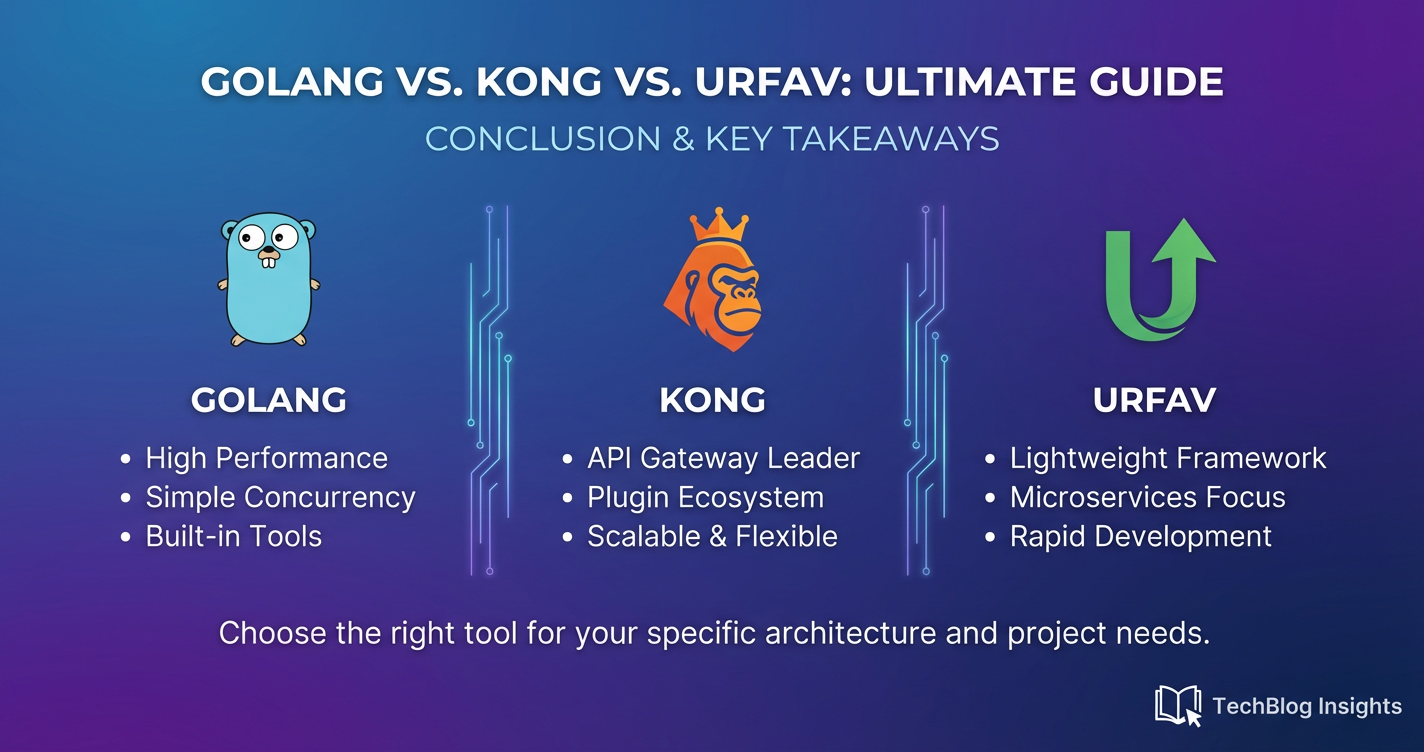
Golang vs. Kong vs. URFav: Ultimate Guide


In the ever-evolving landscape of modern software architecture, the API gateway has emerged as a cornerstone for building robust, scalable, and secure microservices. As organizations transition from monolithic applications to distributed systems, managing the flow of requests and responses between numerous services, external clients, and third-party integrations becomes an increasingly complex challenge. An API gateway acts as a single entry point for all client requests, abstracting the internal complexities of the backend services, thereby simplifying client-side development and enhancing overall system management. This pivotal role makes the choice of an API gateway a critical architectural decision, one that can significantly impact performance, scalability, security, and developer productivity.
The market offers a spectrum of solutions, ranging from dedicated, feature-rich commercial products to open-source alternatives, and the option to build a custom gateway from the ground up using powerful programming languages. Among the myriad choices, Kong stands out as a leading open-source and enterprise-grade API gateway, celebrated for its extensibility and comprehensive feature set. On the other hand, Golang (Go), with its inherent concurrency and performance capabilities, presents a compelling platform for developers opting to craft highly optimized, custom API gateway solutions tailored to specific needs. The third aspect, "URFav," while not a specific product, encapsulates the spirit of "User-Favored" or "Roll-Your-Own" solutions, particularly those built with flexible, high-performance languages like Golang, or leveraging open-source platforms that prioritize developer control and customization. This guide aims to provide an ultimate comparison, dissecting the strengths, weaknesses, ideal use cases, and technical considerations for each approach, offering deep insights to help you navigate this crucial decision in your api infrastructure strategy.
The Indispensable Role of API Gateways in Modern Architectures
At its core, an API gateway is a specialized server that sits in front of your apis. It's the public face of your backend services, acting as a single, unified point of entry for clients. Instead of clients having to interact with multiple individual microservices, they send all requests to the gateway, which then intelligently routes them to the appropriate backend service. This seemingly simple function masks a wealth of powerful capabilities that are fundamental to modern cloud-native and microservices architectures. Without a well-implemented gateway, managing hundreds or thousands of API endpoints, ensuring consistent security, handling traffic surges, and monitoring performance across a distributed system would be an insurmountable task, leading to brittle systems and operational nightmares.
The functionalities of an API gateway extend far beyond basic routing. Key features include:
- Request Routing and Load Balancing: Directing incoming requests to the correct backend service instance and distributing traffic evenly to prevent overload. This is crucial for maintaining high availability and responsiveness across a distributed system, ensuring that individual service failures do not cascade into wider outages.
- Authentication and Authorization: Verifying the identity of clients and ensuring they have the necessary permissions to access requested resources. The gateway can offload this crucial security concern from individual microservices, implementing various authentication schemes like OAuth2, JWT, or API keys at the edge. This centralizes security policy enforcement, making it easier to manage and update.
- Rate Limiting and Throttling: Controlling the number of requests a client can make within a specified timeframe, preventing abuse, ensuring fair usage, and protecting backend services from being overwhelmed by traffic spikes or malicious attacks. Without proper rate limiting, even well-intentioned clients could inadvertently degrade service quality for others.
- Traffic Management and Circuit Breaking: Implementing sophisticated rules for traffic shaping, canary deployments, A/B testing, and automatically preventing cascading failures by isolating problematic services. Circuit breakers, for instance, can temporarily block calls to a failing service, allowing it time to recover without bringing down the entire system.
- API Composition and Transformation: Aggregating multiple backend
apicalls into a single response for the client, or transforming request/response formats to suit client needs (e.g., converting JSON to XML, or vice-versa). This can significantly reduce the complexity for mobile clients or legacy systems that may require a specific data structure. - Caching: Storing responses from backend services to reduce latency and load on those services for frequently accessed data. An intelligent caching mechanism within the
gatewaycan dramatically improve response times for clients and reduce operational costs for backend infrastructure. - Logging, Monitoring, and Analytics: Collecting detailed data on
apirequests and responses, providing invaluable insights into system performance, usage patterns, and potential issues. Centralized logging and metrics aggregation at thegatewayprovide a holistic view ofapitraffic, enabling proactive problem identification and resolution. - Security Policies and WAF Integration: Acting as a first line of defense against common web attacks (e.g., SQL injection, XSS) and enforcing enterprise-wide security policies. Integrating with Web Application Firewalls (WAFs) at the
gatewaylevel provides an additional layer of protection before requests reach the internal services. - API Versioning: Managing different versions of
apis, allowing for graceful transitions and supporting older clients while new versions are rolled out. This is essential for maintaining backward compatibility and evolvingapis without disrupting existing integrations.
These functionalities are not merely add-ons; they are fundamental pillars that enable the agility, resilience, and security required by modern digital businesses. In a world increasingly driven by the API economy, where services are consumed and composed programmatically, a robust API gateway is not just a convenience—it's an absolute necessity. It serves as the intelligent traffic cop, the vigilant security guard, and the insightful analyst, all rolled into one, allowing development teams to focus on building business logic within their microservices rather than reinventing common infrastructure concerns.
Golang – The Power of Building Your Own API Gateway
When the off-the-shelf solutions don't quite fit, or when extreme performance and ultimate control are paramount, building a custom API gateway using a language like Golang becomes an attractive proposition. Go, developed at Google, was designed with modern, concurrent, and networked applications in mind. Its lean syntax, powerful concurrency model (goroutines and channels), efficient garbage collection, and robust standard library make it an ideal candidate for high-performance network proxies and services, including API gateways. Organizations like Uber, Twitch, and Netflix have leveraged Go for their critical backend infrastructure, attesting to its capabilities in demanding environments.
Introduction to Golang for Gateways
Golang's appeal for gateway development stems from several core strengths. Firstly, its strong static typing and compilation to machine code result in excellent runtime performance, often comparable to C/C++. This is critical for an API gateway that needs to handle millions of requests per second with minimal latency. Secondly, Go's concurrency model, built around goroutines (lightweight threads managed by the Go runtime) and channels (for safe communication between goroutines), simplifies the development of highly concurrent network applications. An api gateway is inherently concurrent, dealing with many simultaneous connections, and Go handles this elegantly without the complexities of traditional multi-threading models. Furthermore, Go's comprehensive standard library provides robust and production-ready packages for HTTP servers, api routing, JSON parsing, and network operations, significantly reducing the effort required to implement core gateway functionalities. Its single binary deployment model also simplifies operational aspects, making deployments faster and more predictable.
Advantages of a Custom Golang Gateway
Choosing to build your own API gateway with Golang comes with a distinct set of advantages, particularly for organizations with specific, demanding requirements:
- Ultimate Control and Customization: This is perhaps the most significant benefit. A custom Go
gatewayallows you to tailor every single feature and behavior precisely to your application's unique needs. Whether it's a highly specific authentication mechanism, an unusual routing algorithm, deep integration with internal systems, or bespoke logging formats, a custom solution provides unparalleled flexibility. You are not constrained by the plugin ecosystem or configuration options of an existing product; you dictate the architecture and implementation down to the last line of code. This level of control can be crucial for highly specialized industries or complex enterprise landscapes. - Exceptional Performance: Go's design prioritizes performance and efficiency. A well-written Golang
gatewaycan achieve incredibly low latencies and high throughput due to its efficient use of system resources, fast startup times, and minimal memory footprint. Unlike gateways built on heavier runtimes or with extensive plugin layers, a custom Go solution can be stripped down to exactly what's needed, eliminating any unnecessary overhead. This makes it ideal for applications where every millisecond of latency matters, such as real-time financial trading platforms, gaming backends, or high-volume data streaming services. - Cost Efficiency (Long-term Development): While the initial development cost can be higher, a custom Go
gatewaycan be cost-effective in the long run. There are no licensing fees associated with open-source Go, and its efficient resource utilization can lead to lower infrastructure costs compared to more resource-intensive alternatives. Furthermore, if your team already possesses strong Golang expertise, leveraging that skill set for critical infrastructure components can be more efficient than learning and managing a new, complex external product. - Leveraging Existing Team Expertise: If your development team is already proficient in Golang for building microservices or other backend components, extending that expertise to the API gateway means less ramp-up time and more consistent code quality. This internal knowledge base ensures that the
gatewaycan be maintained, debugged, and evolved effectively by the same team responsible for the rest of your backend stack. - Specific Use Cases and Niche Requirements: For unique operational requirements, such as extremely complex routing logic that depends on real-time data, specific protocol transformations (e.g., converting gRPC to HTTP/JSON), or specialized business logic that must be applied at the edge, a custom Go
gatewaycan be the most direct and efficient path. It empowers you to implement exactly the functionality required, without working around the limitations of a generalized product.
Disadvantages of a Custom Golang Gateway
Despite its allure, building a custom API gateway in Golang is not without its significant challenges and drawbacks:
- Development Time and Effort: This is the most substantial hurdle. You are essentially building a complex piece of infrastructure from scratch. Implementing core
api gatewayfunctionalities like dynamic routing, robust authentication, comprehensive rate limiting, and advanced traffic management features can consume considerable development resources and time. This is a large undertaking that often requires specialized expertise in network programming, security, and distributed systems. The time to market for a truly feature-complete customgatewaywill almost always be longer than deploying an off-the-shelf solution. - Maintenance Burden: Once built, you own it entirely. This means your team is responsible for all bug fixes, security patches, performance optimizations, and feature enhancements. This can be a continuous and demanding task, especially as industry standards evolve and new security vulnerabilities emerge. Unlike commercial products or popular open-source projects with dedicated teams, the maintenance responsibility falls squarely on your internal developers, potentially diverting resources from core business logic development.
- Feature Parity with Commercial Products: Reimplementing the breadth and depth of features offered by mature, enterprise-grade
api gateways (like Kong) can be an arduous and often impractical task. Features such as sophisticated analytics dashboards, advanced developer portals, integratedapilifecycle management, and extensive plugin ecosystems are often the result of years of development and significant investment. A custom Gogatewaywould typically only implement the specific features deemed absolutely essential, potentially lacking the comprehensiveness of a commercial offering. - Operational Overhead: Deploying, monitoring, scaling, and managing a custom
gatewayadds to your operational complexity. You'll need to set up comprehensive logging, metrics collection, and alerting systems, as well as define robust deployment and rollback strategies. While Go's single binary makes deployment simpler, the responsibility for its operational success rests entirely with your DevOps team. - Security Responsibility: Building your own API gateway means you are fully responsible for its security posture. Implementing secure authentication, authorization, input validation, and protection against common
apiattacks requires deep security expertise and rigorous testing. Any vulnerabilities introduced in your customgatewaycould expose your entire backend infrastructure to significant risks. This level of security responsibility can be daunting and expensive to maintain.
Key Components for a Golang Gateway
A basic custom Golang API gateway would typically involve:
- HTTP Server: Using Go's
net/httppackage to create a high-performance HTTP server that listens for incomingapirequests. - Router: A custom routing mechanism or a third-party
apirouting library (e.g.,gorilla/mux,chi) to map incoming URLs to specific handlers or backend services. - Middleware Chain: A series of interceptors that process requests before they reach the backend service and responses before they are sent back to the client. This is where functionalities like authentication, rate limiting, logging, and metrics collection would be implemented.
- Reverse Proxy: Using
net/http/httputil.ReverseProxyto forward requests to the appropriate backend microservice and relay the response back to the client. This involves dynamic URL rewriting and header manipulation. - Service Discovery: Integration with a service discovery mechanism (e.g., Consul, Eureka, Kubernetes DNS) to dynamically locate available backend service instances.
- Configuration Management: A robust system for managing
gatewayconfigurations, including routing rules,apikeys, and security policies, possibly using external tools like Vault or Kubernetes ConfigMaps.
When to Choose Golang for Your API Gateway
Building a custom API gateway with Golang is best suited for scenarios where:
- Niche Requirements and Unique Business Logic: Your organization has highly specific, non-standard API requirements that cannot be met by existing
api gatewayproducts or their plugin ecosystems. This includes complex routing rules based on dynamic data, specialized protocol transformations, or bespoke security protocols. - Extreme Performance and Low Latency are Critical: For applications where every millisecond of latency is a competitive advantage (e.g., ad tech, high-frequency trading, IoT data processing), a custom Go
gatewaycan be meticulously optimized for speed and efficiency, shedding any unnecessary layers. - Deep Integration Needs: When the
api gatewayneeds to be deeply integrated with internal systems, data stores, or legacy applications in ways that off-the-shelf solutions make difficult or impossible. - Strong Internal Golang Expertise: Your development team possesses significant experience and comfort with Golang, making the development and long-term maintenance of a custom solution a natural extension of their existing skill set rather than a steep learning curve.
- Long-Term Strategic Investment: Your organization views the
api gatewayas a core strategic asset that requires continuous, internal evolution and customization, justifying the significant upfront and ongoing development investment.
Kong – The Enterprise-Grade API Gateway Solution
Kong has established itself as a dominant force in the API gateway market, particularly for organizations seeking a feature-rich, scalable, and extensible solution. Founded in 2015, Kong is an open-source api gateway and api management platform built on top of Nginx and OpenResty (Nginx with Lua scripting capabilities). Its plugin-based architecture allows for a high degree of customization and extensibility without requiring modifications to the core gateway code. Kong provides a comprehensive suite of functionalities that are essential for managing modern apis, from basic routing to advanced traffic control, security, and monitoring.
Introduction to Kong
Kong operates as a reverse proxy, routing client requests to upstream services. What sets it apart is its powerful plugin architecture, which allows developers to extend its capabilities without deep knowledge of Nginx/OpenResty. These plugins can enforce policies, transform requests/responses, provide authentication, implement rate limiting, and much more. Kong is often chosen for its maturity, extensive documentation, and a vibrant community that contributes to its plugin ecosystem. It's available as an open-source Community Edition and a more feature-rich Enterprise Edition, catering to a wide range of organizational needs, from small startups to large enterprises. Its ability to manage apis across multiple clouds and Kubernetes clusters makes it a versatile choice for complex, distributed environments.
Advantages of Kong
Adopting Kong as your API gateway brings a host of benefits, particularly for teams looking for a battle-tested and comprehensive solution:
- Feature Richness (Out-of-the-Box): Kong comes with an extensive array of built-in functionalities and a vast marketplace of plugins that cover almost every conceivable
api gatewayrequirement. This includes robust authentication methods (OAuth2, JWT, basic auth,apikeys, LDAP), sophisticated rate limiting, traffic management (load balancing, health checks, circuit breakers, traffic splitting), request/response transformations, caching, logging integrations (Splunk, Datadog, ELK stack), and detailed analytics. You don't need to reinvent the wheel for standardapi gatewayfeatures; they are readily available and configurable. - Extensive Plugin Ecosystem: Kong's greatest strength is its plugin-based architecture. It boasts a rich ecosystem of official, community, and custom plugins written in Lua. This allows organizations to extend Kong's capabilities with minimal effort, integrating with various security systems, monitoring tools, or adding custom logic without modifying the core
gateway. This modularity ensures flexibility and adaptability to evolving requirements, making it a highly customizableapi gatewaywithout the overhead of building everything from scratch. - Maturity and Community Support: Having been around for several years, Kong is a mature product with a large, active user base and a well-established community. This translates to extensive documentation, numerous tutorials, a wealth of online resources, and responsive community forums. For enterprise users, Kong Inc. provides professional support, ensuring that critical issues can be resolved quickly. The product has been battle-tested in diverse production environments, making it a reliable choice for mission-critical
apiinfrastructure. - Deployment Flexibility: Kong offers excellent deployment flexibility, supporting various environments including bare metal servers, virtual machines, Docker containers, and highly orchestrated Kubernetes clusters. Its control plane and data plane architecture allows for scalable deployments, where the
gateway(data plane) can be horizontally scaled independently of the configuration management (control plane). This adaptability makes it suitable for both on-premises and multi-cloud strategies. - Comprehensive API Management Capabilities: Beyond just being an
api gateway, Kong often serves as a foundational component forapi management platforms. Its enterprise version, Kong Enterprise, offers advanced features like a developer portal forapidiscovery and consumption,apilifecycle management tools, advanced analytics, and centralized governance. This holistic approach helps organizations manage their entireapiprogram effectively. - Security Focus: Kong places a strong emphasis on
apisecurity, providing a wide range of plugins for authentication, authorization,apikey management, and IP restriction. It can act as a crucial enforcement point for security policies, protecting backend services from various threats and ensuring compliance with regulatory requirements.
Disadvantages of Kong
While powerful, Kong also presents certain challenges and drawbacks that organizations should consider:
- Complexity for Smaller Use Cases: For very simple
api gatewayneeds or small-scale applications, Kong's extensive feature set and plugin architecture can feel overly complex and introduce unnecessary overhead. The initial setup and configuration can be more involved than a minimalist custom solution, requiring a steeper learning curve for teams unfamiliar with its ecosystem. - Resource Consumption: Being built on Nginx and OpenResty, Kong can be more resource-intensive (CPU and memory) than a highly optimized, lightweight custom Go application, especially when numerous plugins are enabled. While its performance is generally very high, this overhead might be a consideration for extremely cost-sensitive or resource-constrained environments where every byte and cycle counts.
- Vendor Lock-in (Enterprise Features): While the core Kong API Gateway is open-source, many advanced features, particularly those geared towards enterprise-level
apimanagement (e.g., advanced analytics, sophisticated developer portals, premium plugins, professional support), are only available in Kong Enterprise. This can lead to a form of vendor lock-in if an organization becomes reliant on these commercial offerings, potentially increasing long-term costs. - Performance Overhead with Plugins: While plugins offer flexibility, each active plugin introduces some level of processing overhead. For extremely high-throughput and low-latency scenarios, the cumulative effect of multiple plugins can sometimes result in slightly higher latency compared to a meticulously optimized custom Go
gatewaythat performs exactly the required logic without any abstraction layers. - Learning Curve for Lua/Nginx: While plugins abstract much of the complexity, advanced customization or debugging often requires familiarity with Lua scripting and Nginx configuration. Teams without this specific expertise might face a learning curve, limiting their ability to fully leverage Kong's extensibility or troubleshoot intricate issues effectively.
- Data Store Dependency: Kong typically requires a database (PostgreSQL or Cassandra) to store its configuration,
apidefinitions, and plugin settings. This introduces an additional dependency and operational burden for database management, backup, and high availability, which a stateless, customgatewaymight avoid.
Key Features and Architecture
Kong's architecture consists of two main components:
- Data Plane: The core API gateway instances that handle incoming
apirequests and forward them to upstream services. These are built on Nginx/OpenResty and run the configured plugins. - Control Plane: The centralized management interface (Admin API and Kong Manager) used to configure Kong, define services, routes, consumers, and manage plugins. This typically communicates with a database (PostgreSQL or Cassandra) to store all configurations.
Key features include an Admin API for programmatic configuration, a CLI for command-line management, and Kong Manager (a UI for Kong Enterprise) for visual management.
When to Choose Kong for Your API Gateway
Kong is an excellent choice for organizations that:
- Require a Comprehensive, Feature-Rich Solution: Need a broad set of
api gatewayfunctionalities out-of-the-box, including advanced security, traffic management, and observability. - Prioritize Rapid Deployment and Time-to-Market: Want to quickly deploy a robust
api gatewaywithout significant development effort, leveraging pre-built features and plugins. - Operate in an Enterprise Environment: Require professional support, comprehensive
apimanagement capabilities (developer portals, analytics), and the ability to manage a large and diverseapilandscape. - Value Extensibility through Plugins: Seek a flexible solution that can be easily extended with custom logic or integrated with third-party systems via a rich plugin ecosystem.
- Are Already Familiar with Nginx/OpenResty: Teams with existing expertise in these technologies will find Kong's underlying architecture familiar and easier to manage.
- Need Scalability and High Availability: Kong is designed for horizontal scalability and high availability, making it suitable for high-traffic and mission-critical applications.
APIPark is a high-performance AI gateway that allows you to securely access the most comprehensive LLM APIs globally on the APIPark platform, including OpenAI, Anthropic, Mistral, Llama2, Google Gemini, and more.Try APIPark now! 👇👇👇
URFav / User-Favored Custom Golang Solutions – Bridging the Gap
The term "URFav" (User-Favored) in this context represents a broader category of solutions that prioritize flexibility, efficiency, and alignment with specific organizational preferences. It often refers to bespoke, lightweight solutions built using languages like Golang, or to platforms that offer significant developer control and open-source transparency. While not a single product, it embodies the spirit of tailoring an API gateway to precise needs, often sitting somewhere between a full custom build and a monolithic off-the-shelf product. This approach acknowledges that not every organization needs the full suite of an enterprise API gateway, nor does every organization have the resources or desire to build a complete gateway from scratch. Instead, they might seek to implement specific api gateway functionalities using Go, or adopt open-source platforms that offer the best of both worlds: robust features combined with the flexibility and cost-effectiveness of an open-source model.
Concept: Tailored Components and Smart Integrations
Instead of building an entire API gateway, a "URFav" approach might involve building specific, high-performance api gateway microservices in Golang. For example, a custom Go service could handle extremely high-volume api key validation, or implement a unique request transformation logic for a critical api. These specialized Go components could then integrate with a broader api management platform or an existing, more generalized API gateway that handles the common functionalities like basic routing and logging. This hybrid model allows organizations to leverage Go's performance for critical bottlenecks while benefiting from the comprehensive features of a managed solution for less performance-sensitive aspects. Another facet of "URFav" includes adopting open-source api management platforms that provide a comprehensive solution while maintaining a high degree of control and customization, such as APIPark.
When This Approach Makes Sense
This "URFav" or hybrid approach is particularly compelling in several scenarios:
- When Existing Solutions are Either Too Heavy or Too Simple: Organizations might find enterprise
api gateways overly complex and resource-intensive for their specific needs, yet a minimalist custom proxy built from scratch lacks essential features. A tailored Go component, or a flexible open-source platform, can strike the right balance. - When a Specific, High-Performance Micro-Gateway is Needed: For a particular subset of
apitraffic that demands extreme low latency or high throughput, a custom Golang micro-gatewaycan be deployed solely for thatapi. This avoids burdening the maingatewaywith niche performance requirements and allows for granular optimization. - To Avoid the Full Overhead of an Enterprise API Gateway for Simple Cases: For internal
apis or specific applications with less stringent requirements, a simplifiedgatewaybuilt with Go (or a lightweight open-source alternative) can provide core functionalities without the operational and licensing costs of a full enterpriseapi gateway. - As a Stepping Stone or Proof of Concept: Before committing to a large-scale custom build or a costly commercial product, teams can build a minimal viable
gatewayor a proof-of-concept for specific functionalities using Golang, testing their assumptions and gaining valuable insights. - For AI-Driven API Management: In an era increasingly dominated by Artificial Intelligence, managing
apis that interface with AI models presents unique challenges. This is where platforms like APIPark shine. APIPark, as an Open Source AI Gateway & API Management Platform, embodies the "user-favored" philosophy by offering a robust, feature-rich, and open-source solution specifically designed for AIapis. It provides quick integration of over 100 AI models, a unifiedapiformat for AI invocation, and prompt encapsulation into RESTapis. This means developers can rapidly deploy and manage AI services without building custom integrations for each model, significantly simplifying AI usage and reducing maintenance costs. Its end-to-endapilifecycle management, team sharing capabilities, and multi-tenant support offer enterprise-grade features while retaining the flexibility and transparency of an open-source product. For organizations venturing into AI-powered applications, APIPark presents a compelling, ready-to-deploy, and user-centricapi gatewaysolution.
Comparison with Full Custom Go Gateway
This approach requires less development effort than building an entire api gateway from scratch with Go, as it often focuses on implementing specific functionalities or leverages an existing platform. However, it still requires more effort than simply configuring an off-the-shelf product like Kong. The key distinction is the focus: a full custom Go gateway aims to replace all api gateway functionalities, whereas this approach seeks to augment, specialize, or provide a more flexible, comprehensive alternative where specific performance or integration needs are paramount.
For those who value the flexibility and transparency of open-source but desire a complete api management platform rather than just a basic proxy, APIPark offers a powerful alternative. It provides the high performance rivaling Nginx (achieving over 20,000 TPS with modest resources) and comprehensive features like detailed api call logging and powerful data analysis, addressing many of the concerns that might drive a team to consider a custom Go solution, but within a ready-to-use, open-source framework. This allows teams to benefit from the performance and control without the immense burden of building and maintaining an entire api management platform themselves. The quick deployment with a single command (curl -sSO https://download.apipark.com/install/quick-start.sh; bash quick-start.sh) further enhances its "user-favored" appeal.
Comparative Analysis – Golang, Kong, and Robust Managed Alternatives like APIPark
Choosing the right API gateway solution requires a careful evaluation of various factors, including your organizational size, technical expertise, budget, performance requirements, and long-term strategic goals. Each option—a custom Golang gateway, Kong, or a feature-rich managed open-source platform like APIPark—brings its unique set of advantages and disadvantages to the table. This comparative analysis aims to provide a clear framework for decision-making.
Feature Comparison Table
To summarize the key differences, let's look at a detailed comparison table:
| Feature / Aspect | Golang Custom Gateway | Kong API Gateway | APIPark (Open Source AI Gateway & API Management Platform) |
|---|---|---|---|
| Control & Customization | Maximum (build anything from scratch) | High (extensive plugin ecosystem, configurable) | High (open-source, comprehensive features, AI model integration) |
| Development Effort | Very High (build and maintain all features) | Low-Medium (configuration, plugin development for custom needs) | Low (quick deployment, configuration-driven for AI/REST APIs) |
| Performance Potential | Maximum (if meticulously optimized) | High (Nginx/OpenResty base, performant) | High (rivaling Nginx, 20,000+ TPS with 8-core CPU, 8GB memory) |
| Feature Set (Out-of-box) | Minimal (must build everything yourself) | Very Rich (routing, auth, rate limit, traffic mgmt, plugins) | Very Rich (AI model integration, unified AI format, API lifecycle, dev portal, security, analytics) |
| Maintenance Burden | Very High (responsible for all code, bugs, security) | Medium (manage configuration, upgrades, plugin updates) | Low (platform handles core, focus on API logic, open-source community) |
| Community/Support | Golang (general language community) | Large, active community; professional (Kong Inc.) for Enterprise | Growing community (backed by Eolink); commercial support available |
| Cost | High (developer salaries, time to build/maintain) | Varies (open-source core free, Enterprise licensing can be significant) | Low (open-source Apache 2.0 licensed, commercial version for advanced features) |
| Time to Market | Very Long (significant development time) | Fast (configure and deploy quickly) | Fast (5-minute deployment, quick AI/REST API integration) |
| Best For | Niche, extreme high-performance, unique business logic, deep system integrations, specific security needs | Enterprise-grade API management, comprehensive features, broad plugin ecosystem, rapid deployment, diverse API landscape | AI-driven applications, full API lifecycle management, robust open-source solution, high performance, team collaboration, multi-tenant |
| Core Technology | Golang standard library, custom logic | Nginx, OpenResty, Lua, PostgreSQL/Cassandra | Go, Kubernetes, Cloud-native services (simplified management) |
Deeper Dive into Key Decision Factors
Beyond the feature set, several critical factors influence the final decision:
- Scale and Performance Requirements:
- Custom Golang Gateway: If your
apitraffic is in the tens of thousands to hundreds of thousands of requests per second, with sub-millisecond latency requirements, and you have the expertise to optimize Go code to its limits, a custom Gogatewaymight be the only way to achieve such specific performance profiles. Its minimal overhead and direct control allow for unparalleled tuning. - Kong API Gateway: Kong is designed for high performance and can handle very large volumes of
apicalls. Its Nginx base is inherently efficient, and with proper configuration and scaling, it can serve most enterprise needs. However, the cumulative overhead of many plugins might slightly reduce raw throughput compared to a highly optimized, minimalist Gogateway. - APIPark:
APIParkexplicitly states performance rivaling Nginx, with capabilities to handle over 20,000 TPS on modest hardware. This positions it as a high-performance solution, suitable for demanding environments without the need for extensive custom development. Its cluster deployment support further enhances its scalability for large-scale traffic.
- Custom Golang Gateway: If your
- Budget and Resources:
- Custom Golang Gateway: The upfront cost in terms of developer salaries and time is substantial. You're paying for senior engineers to build and maintain core infrastructure, which can be expensive. However, infrastructure costs might be lower due to efficient resource usage.
- Kong API Gateway: The open-source core is free, but the Enterprise version has licensing costs that scale with usage or features. Operational costs involve managing the
gatewayinstances and its database. Staffing needs include engineers familiar with Kong's configuration and potentially Lua for custom plugins. - APIPark: As an open-source product under Apache 2.0, the initial software cost is zero. Deployment is simple, and its efficiency can lead to lower infrastructure costs. While commercial support and advanced features are available for enterprises, the core platform is highly capable. This makes it an attractive option for startups and enterprises seeking a cost-effective yet powerful solution, especially when leveraging its open-source nature.
- Feature Requirements:
- Custom Golang Gateway: You start with a blank slate. You'll build only the features you absolutely need, which is efficient but also means every common
api gatewayfeature must be implemented from scratch. This is suitable if your needs are very specific and narrow, or if you plan a multi-year effort to build a comprehensive internal platform. - Kong API Gateway: Offers a comprehensive suite of features out-of-the-box and through a vast plugin marketplace. If you need standard authentication, rate limiting, traffic management, and observability, Kong provides them readily. Its strength lies in providing a mature, complete
api gatewaysolution. - APIPark: Beyond standard
api gatewayfeatures,APIParkspecifically excels in AIapiintegration. It provides quick integration with 100+ AI models, unifiedapiinvocation formats, and prompt encapsulation. For teams building AI-powered applications or those needing a fullapilifecycle management platform with developer portal capabilities,APIParkoffers a compelling and specialized feature set. It goes beyond a simplegatewayto provide a completeapi management platform.
- Custom Golang Gateway: You start with a blank slate. You'll build only the features you absolutely need, which is efficient but also means every common
- Time to Market:
- Custom Golang Gateway: The slowest option. Expect months, if not years, to build a production-ready, feature-complete custom
gateway. This is a long-term strategic investment. - Kong API Gateway: Relatively fast. You can have a basic
gatewayup and running in hours or days, with more complex configurations taking weeks. - APIPark: Extremely fast. With a 5-minute quick-start deployment and intuitive integration for AI and REST
apis,APIParkallows teams to get theirapis managed and exposed very rapidly. This is a significant advantage for agile development and quick iteration cycles.
- Custom Golang Gateway: The slowest option. Expect months, if not years, to build a production-ready, feature-complete custom
- Existing Ecosystem and Team Expertise:
- Custom Golang Gateway: Best if your team is already proficient in Golang and thrives on building core infrastructure. It integrates seamlessly if your microservices are also in Go.
- Kong API Gateway: Ideal if your team is familiar with Nginx, OpenResty, and Lua, or is willing to invest in learning them. It integrates well with Kubernetes and other cloud-native tooling.
- APIPark: Benefits teams already using or planning to use Go (as its backend is Go-based), or those operating in Kubernetes environments. Its open-source nature aligns with teams that prefer transparency and community involvement, while its AI focus caters to emerging technology stacks.
- Security Posture and Governance:
- Custom Golang Gateway: You have complete control over security implementations, but also full responsibility. This requires deep internal security expertise and rigorous auditing.
- Kong API Gateway: Provides a strong security framework with numerous plugins for authentication, authorization, and traffic filtering. It centralizes security policy enforcement, reducing the burden on individual microservices.
- APIPark: Offers robust security features including
apiresource access approval, independentapiand access permissions for each tenant, and detailedapicall logging for auditing and troubleshooting. Itsapilifecycle management capabilities aid in enforcing governance across the entireapilandscape.
Real-World Scenarios and Recommendations
The "best" API gateway is not a universal constant; it's the one that best fits your specific context. Let's explore several real-world scenarios to illustrate how different organizational needs might lead to different choices.
Scenario 1: A Lean Startup with a Few Microservices and a Focus on Rapid Iteration
- Challenge: Need to expose a small set of
apis quickly, manage basic authentication, and ensure scalability without significant infrastructure overhead or large developer teams. Budget is often tight. - Recommendation:
- Kong (Open-Source Core): A strong contender. It offers rich features, is relatively easy to set up for basic use cases, and the open-source version keeps costs down. It allows the team to focus on business logic rather than building gateway features. As the
apilandscape grows, Kong's plugin ecosystem can scale with needs. - APIPark: An even more compelling choice, especially if the startup anticipates using AI in their applications.
APIPark's 5-minute deployment and out-of-the-box features forapilifecycle management, team collaboration, and particularly its AIapiintegration, significantly reduce time-to-market and operational burden. It provides enterprise-grade features in an open-source package, allowing startups to leverage powerful tools without upfront costs, preparing them for future growth and AI adoption. Its strong performance and data analysis capabilities mean they won't outgrow it quickly. - Custom Golang Gateway: Overkill. The development and maintenance burden would drain precious resources and significantly slow down product development, which is detrimental for a startup focused on rapid iteration and market validation.
- Kong (Open-Source Core): A strong contender. It offers rich features, is relatively easy to set up for basic use cases, and the open-source version keeps costs down. It allows the team to focus on business logic rather than building gateway features. As the
Scenario 2: A Large Enterprise with a Diverse API Landscape and Legacy Systems
- Challenge: Managing hundreds or thousands of internal and external
apis, integrating with diverse backend services (some modern microservices, some legacy monolithic applications), enforcing complex security policies, providing developer portals, and ensuring high availability across a global infrastructure. - Recommendation:
- Kong Enterprise: For a large enterprise, Kong Enterprise often provides the most comprehensive solution. Its advanced features, professional support, developer portal, centralized governance, and enterprise-grade security align perfectly with complex organizational requirements. The plugin ecosystem allows for integration with various legacy and modern systems.
- Hybrid Approach with Golang for Specific Cases: For extremely high-performance
apis or specific protocol conversions involving legacy systems, a custom Golanggatewaycould be used as a specialized component, sitting alongside a broader Kong deployment. This allows the enterprise to leverage Go's performance for critical bottlenecks while relying on Kong for generalapimanagement. - APIPark (with Commercial Support):
APIParkis also a very strong contender here, especially for forward-thinking enterprises embracing AI. Its multi-tenant support, independentapiand access permissions,apiresource access approval, and end-to-endapilifecycle management are all crucial for large organizations. The commercial version offers advanced features and professional technical support, making it a robust and future-proof solution for complexapigovernance, particularly in an AI-driven world. Its performance and comprehensive logging/analytics are enterprise-ready.
Scenario 3: AI-Driven Application Development and Management
- Challenge: Rapidly integrating various AI models (LLMs, vision models, etc.), standardizing
apiformats for AI invocation, managing prompts, and ensuring consistent authentication and cost tracking for AI services. - Recommendation:
- APIPark: This is
APIPark's core strength and ideal use case. It is purpose-built as an "Open Source AI Gateway & API Management Platform." Its features like quick integration of 100+ AI models, unifiedapiformat for AI invocation, and prompt encapsulation into RESTapis directly address these challenges. It simplifies the entire AIapilifecycle, allowing developers to focus on building innovative AI applications rather than infrastructure. The cost tracking and authentication features are vital for managing AI service consumption. - Custom Golang Gateway (Highly Specialized): While possible to build custom AI
apiproxies in Go, it would require significant development effort to replicateAPIPark's specialized AI integration, prompt management, and unified format capabilities. It would likely be chosen only if an organization has extremely unique and proprietary AIapineeds thatAPIParkcannot fulfill, and has substantial engineering resources dedicated to it. - Kong API Gateway: Kong can route
apis to AI services, but it doesn't offer the specialized AI model integration, prompt management, or unified AIapiformat capabilities thatAPIParkdoes out-of-the-box. It would require extensive custom plugin development to achieve similar functionality, making it less efficient for this specific use case.
- APIPark: This is
Scenario 4: High-Performance Trading Platform with Microsecond Latency Requirements
- Challenge: Every microsecond counts. The
api gatewaymust add minimal latency, be highly available, and process enormous volumes of real-time market data and trade requests. - Recommendation:
- Custom Golang Gateway: This is where a meticulously optimized custom Golang
gatewaytruly shines. With direct control over network stacks, memory allocation, and concurrency models, a Go solution can be engineered to achieve the lowest possible latency and highest throughput, specifically for the critical paths of the trading system. The investment in building and maintaining this custom component is justified by the direct impact on trading performance and profitability. - APIPark / Kong: While both offer high performance, their inherent layers of abstraction (plugins, configuration systems, database dependencies) might introduce overhead that, while negligible for most applications, could be critical in a microsecond-sensitive environment. They might be used for less latency-critical
apis or for management interfaces, but the core tradingapiwould likely benefit most from a custom Go solution.
- Custom Golang Gateway: This is where a meticulously optimized custom Golang
Scenario 5: Developer Portal Focus and External API Monetization
- Challenge: Providing a seamless experience for external developers to discover, subscribe to, and consume
apis, with robust monetization, analytics, and versioning capabilities. - Recommendation:
- Kong Enterprise (with Developer Portal): Kong's comprehensive
apimanagement platform, including its dedicated developer portal, subscription management, and analytics features, makes it a strong choice for externalapiprograms and monetization strategies. It provides a complete ecosystem forapiproviders and consumers. - APIPark:
APIParkalso offers strong capabilities in this area with its "API Service Sharing within Teams" feature andapiresource access approval. While primarily anapi gatewayfor internal and AIapis, its robustapilifecycle management, tenant isolation, and detailed analytics make it well-suited for controlledapiexposure and consumption, even for external partners, allowing for secure and managedapimonetization. Its open-source nature means teams can extend the developer experience as needed. - Custom Golang Gateway: A custom Go
gatewaywould handle the coreapirouting and security, but building an entire developer portal, subscription management, and monetization system from scratch would be an enormous undertaking, far exceeding the scope of a typicalapi gatewayproject. It would require integrating with a separate, purpose-builtapimanagement portal.
- Kong Enterprise (with Developer Portal): Kong's comprehensive
Conclusion
The journey to select the ideal API gateway is not about finding a universally "best" solution, but rather about aligning the capabilities of available options with your unique organizational context, technical requirements, and strategic objectives. This ultimate guide has delved into three distinct philosophies: the unparalleled control and performance potential of a custom Golang gateway, the comprehensive, enterprise-grade feature set of Kong, and the flexible, high-performance, and open-source approach exemplified by APIPark, especially for modern AI-driven apis.
A custom Golang gateway offers the ultimate in performance and customization, allowing for meticulous optimization and bespoke logic. It is the choice for organizations with unique, extreme performance demands or highly specialized integration needs, backed by strong internal Go expertise and a willingness to commit significant resources to development and long-term maintenance. This approach values complete ownership and tailoring above all else, making it a strategic investment in core infrastructure.
Kong, on the other hand, provides a mature, feature-rich, and highly extensible api gateway solution. Its vast plugin ecosystem, robust traffic management, and comprehensive api management capabilities make it an excellent choice for enterprises needing a battle-tested, ready-to-deploy solution that can manage a diverse and evolving api landscape. It allows teams to focus on api design and consumption rather than building underlying gateway mechanics, leveraging a proven platform with strong community and commercial support.
Finally, APIPark, representing the "User-Favored" paradigm, bridges the gap by offering a powerful, open-source AI gateway and api management platform. It provides the flexibility and transparency of open-source, combined with exceptional performance rivaling Nginx, and specialized features tailored for AI model integration and api lifecycle management. APIPark stands out as a compelling choice for organizations embracing AI, seeking a fast time-to-market, robust team collaboration features, and a high-performance api gateway that doesn't demand the extensive development overhead of a full custom build. Its ability to unify AI api formats and encapsulate prompts empowers developers to rapidly build and manage intelligent applications.
Ultimately, the decision hinges on a careful evaluation of your scale, performance requirements, budget, team expertise, desired time-to-market, and the specific features you prioritize. Whether you opt for the tailored precision of Go, the comprehensive power of Kong, or the innovative, open-source flexibility of APIPark for your AI and REST apis, a well-chosen API gateway will serve as the resilient backbone of your modern, distributed architecture, enabling secure, scalable, and efficient api interactions.
Frequently Asked Questions (FAQs)
1. What is the primary difference between building a custom Golang API gateway and using a product like Kong or APIPark? The primary difference lies in the level of control, development effort, and out-of-the-box features. A custom Golang api gateway gives you absolute control over every aspect and maximum performance potential, but requires significant development and maintenance effort to build all features from scratch. Kong and APIPark are off-the-shelf platforms that provide a rich set of api gateway functionalities, extensive plugin ecosystems (Kong), or specialized AI integration (APIPark), drastically reducing development time at the cost of some control and potential vendor lock-in (for enterprise versions).
2. When is a custom Golang API gateway a better choice than a commercial or open-source product? A custom Golang api gateway is a better choice when your organization has extremely specific, niche requirements for performance (e.g., sub-millisecond latency), deep system integrations, unique security protocols, or complex routing logic that cannot be met by existing products. It also makes sense if you have strong internal Golang expertise and view the api gateway as a core strategic asset justifying significant long-term development investment.
3. How does APIPark differentiate itself from other API gateways like Kong, especially concerning AI? APIPark distinguishes itself by being an Open Source AI Gateway & API Management Platform with a strong focus on AI apis. While Kong provides general api gateway features, APIPark offers specialized capabilities like quick integration of 100+ AI models, unified api formats for AI invocation, and prompt encapsulation into REST apis. This significantly simplifies the management, deployment, and usage of AI services, making it uniquely suited for AI-driven application development, in addition to its robust general api management features and high performance.
4. What are the main trade-offs when choosing between flexibility (custom Go) and speed-to-market (Kong/APIPark)? Choosing flexibility with a custom Go gateway means you gain ultimate control and optimization opportunities, but at the expense of significant development time, effort, and ongoing maintenance burden, leading to a slower speed-to-market. Conversely, opting for Kong or APIPark prioritizes speed-to-market and comprehensive out-of-the-box features, as they are ready-to-deploy platforms. While they offer extensibility through plugins or open-source customization, you'll have less granular control over the core architecture compared to a purely custom solution.
5. Can I combine these approaches, for example, use a custom Golang component with Kong or APIPark? Yes, a hybrid approach is often viable and sometimes optimal, especially in complex enterprise environments. You could use a custom Golang component as a specialized micro-gateway for specific, high-performance apis or unique protocol transformations, integrating it with a broader api management platform like Kong or APIPark that handles general api routing, authentication, and overall lifecycle management. This allows you to leverage the strengths of each solution where they are most effective, addressing niche requirements with Go while benefiting from the comprehensive features and efficiency of a managed platform for the majority of your apis.
🚀You can securely and efficiently call the OpenAI API on APIPark in just two steps:
Step 1: Deploy the APIPark AI gateway in 5 minutes.
APIPark is developed based on Golang, offering strong product performance and low development and maintenance costs. You can deploy APIPark with a single command line.
curl -sSO https://download.apipark.com/install/quick-start.sh; bash quick-start.sh

In my experience, you can see the successful deployment interface within 5 to 10 minutes. Then, you can log in to APIPark using your account.

Step 2: Call the OpenAI API.