Boost AI Performance with an LLM Gateway
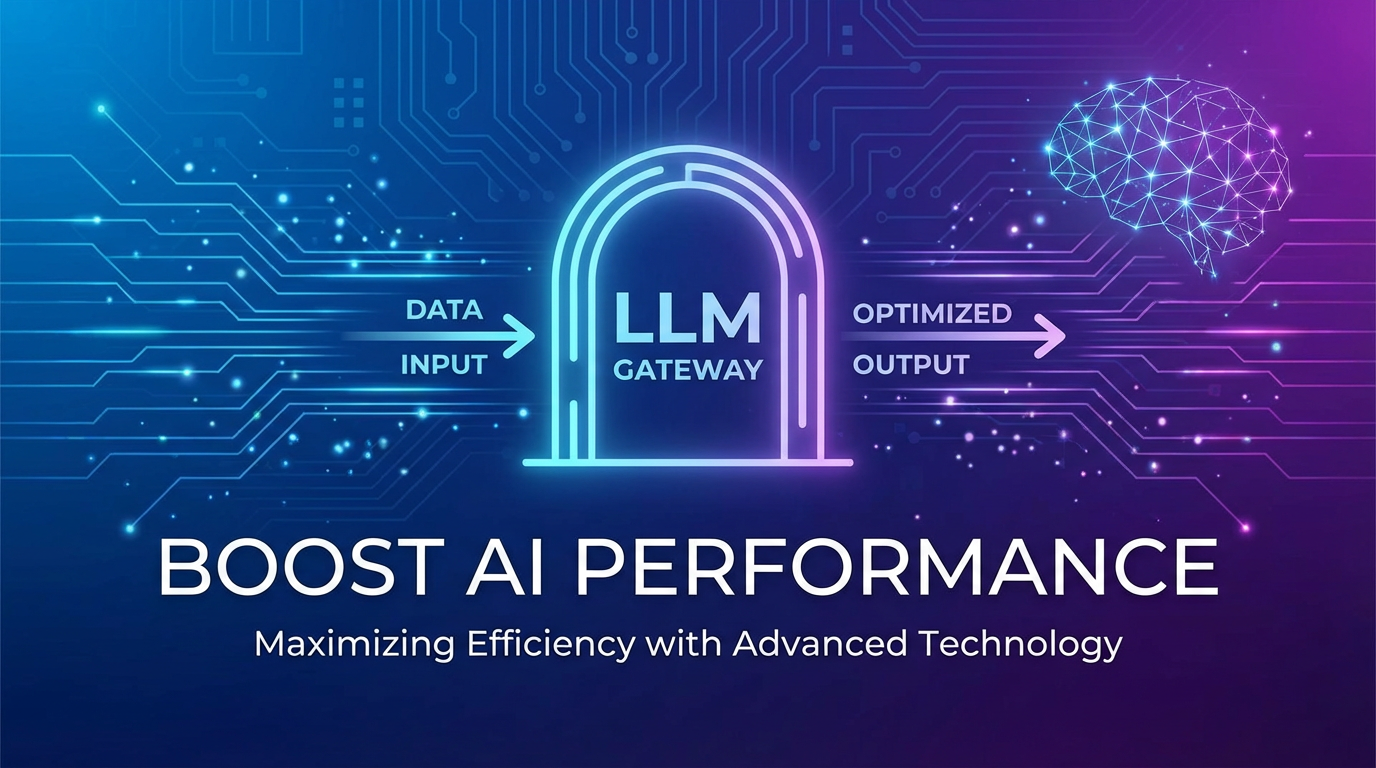


The dawn of the artificial intelligence era has ushered in a period of unprecedented innovation, fundamentally reshaping industries and redefining the capabilities of technology. At the forefront of this revolution are Large Language Models (LLMs), sophisticated AI systems capable of understanding, generating, and manipulating human language with astonishing fluency and coherence. From powering advanced chatbots and intelligent assistants to driving content creation, code generation, and complex data analysis, LLMs have quickly become cornerstones of digital transformation initiatives across diverse sectors. Their transformative potential is undeniable, promising increased efficiency, deeper insights, and novel user experiences previously confined to science fiction. However, as organizations increasingly integrate these powerful models into their production environments, a myriad of operational challenges emerges, ranging from managing diverse model APIs and ensuring robust security to optimizing performance, controlling costs, and maintaining scalability. The raw power of LLMs, while immense, requires a robust, intelligent, and flexible infrastructure layer to truly unlock its full potential in real-world applications.
Navigating this intricate landscape of AI integration demands more than just adopting the latest models; it requires a strategic approach to managing their lifecycle, interactions, and operational intricacies. The sheer variety of LLM providers—each with their own APIs, pricing structures, and performance characteristics—can lead to fragmentation, complexity, and significant overhead for development teams. Ensuring consistent performance, guarding against security vulnerabilities, and keeping expenditures in check become paramount concerns that, if not addressed proactively, can derail even the most promising AI projects. Moreover, as AI systems evolve and business requirements shift, the ability to seamlessly swap models, experiment with different prompts, and scale resources up or down without disrupting critical applications becomes a competitive imperative. This complex interplay of technological capabilities and operational demands underscores the need for a sophisticated architectural component designed specifically to mediate and enhance interactions with LLMs.
This article delves deep into the pivotal role of an LLM Gateway – often interchangeably referred to as an AI Gateway or LLM Proxy – as the indispensable orchestrator for modern AI infrastructure. We will explore how this critical component acts as a centralized control plane, abstracting away the complexities of diverse LLM APIs, providing robust security, optimizing performance, and delivering unparalleled flexibility and control over AI deployments. By establishing a unified, intelligent layer between applications and LLMs, an LLM Gateway not only simplifies development and accelerates deployment but also lays the groundwork for a more scalable, cost-efficient, and secure AI future. As we navigate the intricacies of this transformative technology, we will uncover its core features, profound benefits, practical applications, and the strategic considerations for organizations looking to maximize their AI investments and truly boost AI performance.
The Evolving Landscape of Modern AI and Large Language Models
The journey of artificial intelligence from theoretical concepts to practical, widespread applications has been a testament to relentless innovation and scientific breakthroughs. While AI has a long and storied history, the recent explosion in the capabilities of Large Language Models (LLMs) marks a particularly significant chapter. These models, trained on colossal datasets of text and code, possess an uncanny ability to understand context, generate human-like text, translate languages, write different kinds of creative content, and answer your questions in an informative way. Their emergence has democratized access to advanced AI functionalities, allowing developers and enterprises to integrate sophisticated natural language processing capabilities into a vast array of products and services.
The current LLM ecosystem is characterized by both intense competition and remarkable diversity. On one hand, we have proprietary models developed by tech giants like OpenAI (GPT series), Google (PaLM, Gemini), and Anthropic (Claude), which often lead in terms of raw performance and advanced features. These models are typically accessed via cloud-based APIs, with usage-based pricing models tied to token consumption. On the other hand, the open-source community has seen a flourishing of powerful alternatives such as Llama 2, Falcon, and Mistral, which can be fine-tuned and deployed on private infrastructure, offering greater control and potential cost savings, albeit with higher operational overhead. This dual landscape presents a rich but complex choice for organizations, each path offering distinct advantages and trade-offs concerning performance, cost, data privacy, and customization.
However, integrating and managing these powerful, yet diverse, LLMs in a production environment is far from trivial. Developers and enterprises frequently encounter a formidable array of challenges that can hinder the smooth deployment and optimal operation of AI-powered applications:
1. API Sprawl and Inconsistent Interfaces: Each LLM provider typically exposes its models through unique APIs, requiring different authentication methods, request formats, and response structures. When an application needs to interact with multiple LLMs – perhaps to leverage the strengths of different models for varying tasks or to provide redundancy – developers face the arduous task of writing and maintaining separate integration codebases for each model. This not only increases development time and complexity but also introduces a significant maintenance burden. Changing an underlying LLM provider or adding a new model often necessitates substantial code modifications across the application, leading to a rigid and brittle architecture.
2. Performance Bottlenecks and Latency Management: While LLMs are powerful, their inference can be computationally intensive and thus prone to latency, especially with complex prompts or high volumes of requests. Network latency to cloud-based APIs, cold starts of serverless functions, and the inherent processing time of the models themselves can collectively degrade user experience. Ensuring consistent low-latency responses, even under heavy load, requires sophisticated traffic management and optimization strategies that are often beyond the scope of a single application instance.
3. Cost Management and Optimization: The usage-based pricing models of commercial LLMs, typically tied to the number of input and output tokens, can lead to unpredictable and potentially escalating costs. Without granular visibility and control over LLM interactions, organizations can find themselves facing unexpectedly high bills. Optimizing costs involves intelligent routing to the most cost-effective model for a given task, caching repetitive requests, and setting spending limits—complex tasks that are difficult to implement at the application level. The challenge is further compounded by varying pricing tiers and free limits across different providers, making unified cost tracking and prediction a significant hurdle.
4. Security and Data Privacy Concerns: Interacting with external LLM APIs inevitably involves sending sensitive data for processing. Ensuring that this data is protected in transit and at rest, and that interactions comply with stringent regulatory requirements like GDPR, HIPAA, or CCPA, is paramount. Authentication and authorization mechanisms need to be robust, preventing unauthorized access to LLM services. Furthermore, the risk of prompt injection attacks, data leakage through model outputs, and ensuring data residency requirements add layers of complexity to security postures. Directly exposing application API keys to client-side code, for instance, represents a severe security vulnerability.
5. Scalability Issues and Reliability: As AI applications gain traction, the volume of requests to LLMs can surge dramatically. Direct integration with single LLM endpoints can quickly become a bottleneck, leading to rate limiting, failed requests, or service degradation. Building a resilient architecture that can automatically scale with demand, handle failures gracefully, and provide high availability across multiple LLM providers or instances is a non-trivial engineering feat. Downtime from a single provider can bring an entire AI-powered system to a halt, necessitating failover strategies.
6. Prompt Engineering Complexities and Versioning: The performance and relevance of LLM outputs are heavily dependent on the quality and specificity of the input prompts. Effective prompt engineering is an iterative process of experimentation and refinement. Managing different versions of prompts, conducting A/B tests to determine optimal phrasing, and ensuring consistency across various applications or user groups can become chaotic without a centralized system. Hardcoding prompts within application logic makes experimentation and updates cumbersome and error-prone.
7. Monitoring and Observability Gaps: Without a centralized point of control, gaining comprehensive visibility into LLM interactions—including request volumes, latency, error rates, token usage, and user-specific activity—is challenging. Distributed logging and metrics across disparate LLM providers make it difficult to identify performance bottlenecks, troubleshoot issues, or understand usage patterns effectively. This lack of unified observability hampers proactive management and informed decision-making.
These profound challenges highlight a critical architectural gap in the evolving AI landscape. While LLMs offer immense power, their effective, secure, and scalable deployment hinges on an intelligent intermediary layer that can abstract these complexities and provide a robust management framework. This is precisely the void that an LLM Gateway is designed to fill.
What is an LLM Gateway? Defining the Core Concept
In the sprawling and often complex ecosystem of modern software development, API Gateways have long served as indispensable architectural components. They act as a single entry point for a multitude of client requests, routing them to the appropriate microservices, enforcing security policies, handling load balancing, and providing various cross-cutting concerns. Think of a traditional API Gateway as the concierge and security guard for your backend services, ensuring efficient traffic flow and controlled access.
An LLM Gateway (often interchangeably called an AI Gateway or LLM Proxy) extends this established concept specifically to the realm of Artificial Intelligence, particularly Large Language Models. At its core, an LLM Gateway is a centralized, intelligent proxy that sits between your applications and various LLM providers or self-hosted LLM instances. Instead of your application directly calling specific LLM APIs, it directs all AI-related requests through the LLM Gateway. This architectural shift is not merely about proxying requests; it's about injecting a layer of intelligent orchestration, management, and control over every interaction with AI models.
Core Definition and Functionality:
An LLM Gateway serves as the single, unified entry point for all requests destined for one or more LLMs. Its primary function is to abstract away the underlying complexity and diversity of different LLM services, presenting a consistent, standardized interface to the consuming applications. This centralization enables a suite of advanced functionalities that are crucial for robust, scalable, and cost-effective AI deployments:
- Request Routing: The gateway intelligently directs incoming requests to the most appropriate LLM endpoint. This could be based on factors such as the specific model requested, current load, performance metrics, cost considerations, or even geographic location.
- Authentication and Authorization: It acts as a security enforcement point, verifying the identity of the calling application or user and ensuring they have the necessary permissions to access the requested AI service. This prevents unauthorized usage and protects sensitive API keys.
- Load Balancing: When multiple instances of an LLM (either from different providers or self-hosted replicas) are available, the gateway distributes requests across them to prevent overload on any single instance, thereby improving overall throughput and reliability.
- Caching: For common or repeatable requests, the gateway can store and serve previous responses, significantly reducing latency and operational costs by avoiding redundant calls to the LLM.
- Rate Limiting and Throttling: It controls the volume of requests an application or user can make within a given time frame, protecting LLM services from abuse, preventing unexpected cost spikes, and ensuring fair resource allocation.
- Logging and Monitoring: The gateway captures detailed logs of all LLM interactions, including request and response payloads, latency, errors, and token usage. This centralized data is invaluable for debugging, auditing, performance analysis, and cost tracking.
- Transformation and Standardization: It can translate incoming requests from a unified format into the specific API format required by the target LLM and transform LLM responses back into a consistent format for the consuming application.
Distinction and Nuances: LLM Gateway vs. AI Gateway vs. LLM Proxy
While often used interchangeably, it's worth briefly clarifying the subtle distinctions:
- LLM Proxy: This term typically refers to a more direct, simpler intermediary. A proxy primarily forwards requests and responses, perhaps with basic caching or rate limiting. It's the simplest form of an LLM Gateway, focusing on basic traffic management.
- LLM Gateway: This term implies a more feature-rich and intelligent system than a simple proxy. An LLM Gateway incorporates advanced capabilities like intelligent routing, prompt management, cost optimization logic, sophisticated security policies, and an enhanced developer experience. It's purpose-built for the unique challenges of LLMs.
- AI Gateway: This is the broadest term, encompassing gateways that manage interactions with any type of AI model, not just LLMs. This could include computer vision models, speech-to-text, traditional machine learning models, etc. An LLM Gateway is, therefore, a specialized type of AI Gateway, focusing specifically on the intricacies of large language models. Given the current prevalence and complexity of LLMs, "LLM Gateway" has become a commonly adopted and accurate term for these specialized systems.
In essence, an LLM Gateway is far more than just a simple pass-through proxy. It's an intelligent orchestration layer designed to unlock the full potential of AI models by addressing the operational complexities inherent in their deployment. By abstracting the 'how' of interacting with various LLMs, it allows developers to focus on the 'what' – building innovative AI-powered features – without getting bogged down in infrastructure minutiae. This strategic architectural choice transforms LLM integration from a brittle, provider-specific task into a flexible, scalable, and manageable component of your enterprise AI strategy.
Key Features and Capabilities of an Advanced LLM Gateway
The true power of an LLM Gateway lies in its comprehensive suite of features, meticulously designed to tackle the multifaceted challenges of integrating and managing diverse Large Language Models. These capabilities extend far beyond simple request forwarding, transforming the gateway into an intelligent control plane for all AI interactions. An advanced LLM Gateway empowers organizations to achieve unprecedented levels of performance, security, cost efficiency, and operational agility.
1. Unified API Abstraction and Standardization
One of the most significant pain points in LLM integration is the fragmentation caused by different providers offering unique APIs, data models, and authentication schemes. An advanced LLM Gateway solves this by providing a unified API abstraction. It acts as a translator, accepting requests in a standardized format from your applications and then converting them into the specific format required by the target LLM (e.g., OpenAI, Google, Anthropic, or a self-hosted open-source model). Conversely, it normalizes responses from these diverse models back into a consistent structure before returning them to the application.
- Model Interchangeability: This standardization means that your applications interact with a single, consistent API, regardless of the underlying LLM. This allows for seamless swapping of LLM providers or models without requiring any code changes in the consuming application. Want to switch from GPT-4 to Claude 3 for a specific task? Or maybe experiment with a fine-tuned Llama 3 instance? With an LLM Gateway, this becomes a configuration change, not a development sprint.
- Reduced Development Overhead: Developers no longer need to learn and implement multiple SDKs or API clients. They integrate once with the gateway, drastically simplifying the development process and accelerating time-to-market for AI-powered features.
- Simplified Maintenance: As LLM APIs evolve or new models emerge, updates are handled centrally within the gateway, insulating applications from breaking changes and reducing ongoing maintenance burdens.
- For instance, platforms like ApiPark offer the capability to integrate a variety of AI models with a unified management system for authentication and cost tracking, standardizing the request data format across all AI models. This ensures that changes in AI models or prompts do not affect the application or microservices, thereby simplifying AI usage and maintenance costs.
2. Intelligent Routing and Load Balancing
Effective management of LLM traffic is crucial for performance, reliability, and cost control. An LLM Gateway provides sophisticated routing capabilities:
- Multi-Provider Routing: It can route requests to different LLM providers based on predefined rules. These rules might consider factors like cost (e.g., use a cheaper model for less critical tasks), latency (e.g., route to the fastest available model), availability (e.g., failover to a secondary provider if the primary is down), or even specific model capabilities (e.g., route image generation requests to a specialized vision model).
- Geographical Routing: For global applications, requests can be routed to LLM instances or providers geographically closer to the user to minimize latency.
- Dynamic Load Balancing: Beyond simple round-robin, advanced gateways can employ intelligent load balancing algorithms that consider real-time load metrics, response times, and error rates of various LLM instances. This ensures optimal distribution of traffic, preventing any single endpoint from becoming a bottleneck.
- Failover Mechanisms: In the event of an LLM provider experiencing downtime or degraded performance, the gateway can automatically detect the issue and reroute traffic to a healthy alternative, ensuring high availability and resilience for your AI applications. This is critical for maintaining business continuity.
3. Performance Optimization: Caching & Rate Limiting
To enhance user experience and manage resources efficiently, LLM Gateways incorporate critical performance optimization features:
- Intelligent Caching: Many LLM requests, especially those for common queries or frequently generated content, produce identical or near-identical responses. An LLM Gateway can cache these responses, serving subsequent identical requests directly from its cache. This significantly reduces latency (as no external API call is needed) and substantially lowers operational costs by reducing token consumption from LLM providers. Sophisticated caching can even involve semantic caching for similar, but not identical, prompts.
- Rate Limiting: This feature prevents abuse, controls costs, and ensures fair usage by limiting the number of requests an application or user can make to an LLM within a specified time frame. Rate limits can be configured per API key, per user, per endpoint, or globally, protecting your infrastructure and budget from unexpected surges.
- Throttling: Similar to rate limiting, throttling manages the flow of requests to prevent overwhelming the LLM service, ensuring consistent performance for all users. It can temporarily delay requests or return an error if the service is under too much stress.
4. Security and Access Control
Security is paramount when dealing with AI, especially with sensitive data. An LLM Gateway acts as a fortified bastion:
- Centralized Authentication: It authenticates every request before it reaches an LLM. This can involve verifying API keys, OAuth tokens, JWTs, or integrating with enterprise identity providers. This centralizes security management, eliminating the need to embed API keys directly into multiple applications, which is a major security risk.
- Granular Authorization: Beyond authentication, gateways can implement fine-grained authorization policies (Role-Based Access Control, RBAC). This ensures that only authorized users or applications can access specific LLM models or functionalities. For example, a marketing team might have access to a content generation LLM, while a legal team accesses a specialized legal research LLM.
- Data Masking and Anonymization: For sensitive data, advanced gateways can apply rules to mask, redact, or anonymize portions of the input prompt or even the LLM's response before it leaves the gateway. This helps in complying with privacy regulations and reducing the risk of data leakage.
- Threat Protection: Gateways can incorporate features to detect and mitigate common web vulnerabilities and API abuse attempts, such as DDoS attacks, SQL injection attempts (if applicable to prompt structures), and suspicious request patterns.
- Platforms like ApiPark excel in this area, enabling the creation of multiple teams (tenants) with independent applications, data, user configurations, and security policies. It also allows for the activation of subscription approval features, ensuring that callers must subscribe to an API and await administrator approval before they can invoke it, preventing unauthorized API calls and potential data breaches.
5. Cost Management and Optimization
Controlling the often unpredictable costs associated with LLM usage is a critical gateway function:
- Detailed Cost Tracking: The gateway meticulously tracks token usage (both input and output) for every request, broken down by user, application, LLM model, and provider. This granular visibility is crucial for understanding spending patterns and attributing costs.
- Cost-Aware Routing: By integrating with LLM provider pricing information, the gateway can intelligently route requests to the most cost-effective model available for a given task, balancing performance and budget constraints.
- Budget Enforcement and Alerts: Organizations can set budgets at various levels (e.g., per team, per project, per model). The gateway can trigger alerts when thresholds are approached or exceeded, and even automatically block requests once a budget is exhausted, preventing bill shock.
- Quota Management: Beyond rate limiting, quotas can be set to manage the total volume of tokens or requests allowed over longer periods, offering another layer of cost control.
6. Prompt Management and Versioning
The quality of an LLM's output is highly dependent on the prompt. An LLM Gateway streamlines prompt management:
- Centralized Prompt Store: Prompts, including complex chained prompts and few-shot examples, can be stored, managed, and versioned centrally within the gateway. This eliminates prompt duplication across applications and ensures consistency.
- Prompt Templating and Variables: Gateways can support prompt templating, allowing dynamic insertion of variables into predefined prompt structures. This enhances flexibility and personalization without modifying the core prompt.
- A/B Testing of Prompts: The gateway can route a percentage of requests to different prompt versions, allowing for controlled experimentation and optimization of prompt engineering strategies to achieve better LLM outputs.
- Prompt Encapsulation into REST API: Users can quickly combine AI models with custom prompts to create new APIs, such as sentiment analysis, translation, or data analysis APIs, a capability elegantly demonstrated by platforms like ApiPark through its prompt encapsulation into REST API feature. This turns complex prompt chains into simple, reusable API endpoints.
7. Observability and Monitoring
Understanding how your AI systems are performing is vital. An LLM Gateway provides comprehensive visibility:
- Comprehensive Logging: It records every detail of each LLM call, including request/response payloads, headers, timestamps, latency, status codes, and associated metadata (e.g., user ID, application ID, model used, token count). This deep logging is invaluable for debugging, auditing, and compliance. This is precisely what sophisticated platforms like ApiPark offer, providing detailed API call logging.
- Real-time Metrics: The gateway collects and exposes a wealth of metrics, such as request volume, error rates, average latency, cache hit ratios, and token usage, often integrating with popular monitoring dashboards (e.g., Prometheus, Grafana).
- Alerting: Configurable alerts can notify administrators of anomalies, performance degradation, error spikes, or budget overruns, enabling proactive intervention.
- Powerful Data Analysis: Beyond raw logs, sophisticated gateways provide tools for analyzing historical call data to display long-term trends and performance changes, helping businesses with preventive maintenance and optimization before issues occur. ApiPark further enhances this with powerful data analysis capabilities, offering insights into usage patterns and potential areas for improvement.
8. Developer Experience and API Portal
A good LLM Gateway also prioritizes the developer experience, making it easier for teams to consume AI services:
- Self-Service Developer Portal: Provides a centralized portal where developers can discover available AI services (backed by LLMs), view documentation, test APIs, obtain API keys, and manage their subscriptions.
- API Service Sharing within Teams: For internal teams, platforms such as ApiPark provide a centralized display of all API services, making it easy for different departments and teams to find and use the required API services.
- End-to-End API Lifecycle Management: Platforms like [ApiPark](https://apipark.com/] specifically address this by assisting with managing the entire lifecycle of APIs, including design, publication, invocation, and decommission. It helps regulate API management processes, manage traffic forwarding, load balancing, and versioning of published APIs, providing a structured approach to AI service governance.
These capabilities collectively elevate an LLM Gateway from a simple proxy to an indispensable strategic asset for any organization serious about integrating, scaling, and optimizing Large Language Models in their production environment. It provides the architectural foundation necessary to leverage AI's full potential securely and efficiently.
Table: Core Capabilities of an Advanced LLM Gateway
| Feature Category | Key Capabilities | Benefits |
|---|---|---|
| API Abstraction | Unified API interface, request/response translation | Simplifies development, enables model interchangeability, reduces maintenance. |
| Traffic Management | Intelligent routing, load balancing, failover | Optimizes performance (latency/cost), ensures high availability, enhances resilience. |
| Performance Opt. | Caching, rate limiting, throttling | Reduces latency, lowers costs, prevents abuse, ensures stable service. |
| Security & Access | Centralized auth/auth, data masking, threat prot. | Protects sensitive data, prevents unauthorized access, ensures compliance, enhances overall security posture. |
| Cost Management | Detailed tracking, cost-aware routing, budgets | Provides cost visibility, reduces operational expenses, prevents bill shock, optimizes resource allocation. |
| Prompt Management | Centralized store, templating, A/B testing | Standardizes prompts, facilitates experimentation, improves LLM output quality, accelerates prompt engineering workflows. |
| Observability | Comprehensive logging, real-time metrics, alerts | Enables rapid troubleshooting, performance analysis, proactive issue detection, informed decision-making. |
| Developer Experience | Developer portal, API sharing, lifecycle mgmt. | Accelerates integration, fosters collaboration, provides self-service capabilities, improves API discoverability and governance. |
Transformative Benefits of Implementing an LLM Gateway
The strategic adoption of an LLM Gateway is not merely an architectural choice; it's a fundamental decision that delivers a cascade of transformative benefits across an organization, impacting performance, cost efficiency, security, developer agility, and overall business resilience. By centralizing and intelligently orchestrating interactions with Large Language Models, an LLM Gateway becomes a critical enabler for maximizing the value derived from AI investments.
1. Enhanced Performance and Responsiveness
At the forefront of any production system is performance, and an LLM Gateway significantly boosts the responsiveness of AI-powered applications.
- Reduced Latency: Through intelligent caching, an LLM Gateway can serve frequently requested or identical responses directly from its local store, bypassing the need for a round-trip to the LLM provider. This eliminates network latency, processing time, and cold-start issues, dramatically improving response times for common queries. For instance, if multiple users ask the same question to a chatbot, the answer can be delivered instantly from the cache after the first request.
- Increased Throughput: Sophisticated load balancing mechanisms distribute incoming requests across multiple LLM instances or providers, preventing any single endpoint from becoming overwhelmed. This allows the system to handle a higher volume of concurrent requests, ensuring smooth operation even during peak traffic periods and supporting a larger user base.
- Optimized Resource Utilization: By strategically routing requests to the most performant or least loaded LLM, the gateway ensures that resources are utilized efficiently, leading to faster responses and a more stable service.
2. Improved Scalability and Reliability
Modern applications demand the ability to scale effortlessly and remain resilient in the face of outages. An LLM Gateway provides this critical infrastructure.
- Elastic Scalability: As demand for AI services grows, the LLM Gateway can scale horizontally by routing requests to additional LLM instances (either self-hosted or cloud-based). This allows applications to seamlessly handle traffic spikes without redesigning core logic.
- High Availability and Failover: By integrating with multiple LLM providers or deploying redundant instances, the gateway can automatically detect failures in a primary LLM service and reroute traffic to a healthy alternative. This ensures continuous operation of AI-powered features, minimizing downtime and maintaining business continuity. This multi-provider strategy acts as a critical safety net against single points of failure.
- Graceful Degradation: In extreme load scenarios, the gateway can intelligently prioritize critical requests or temporarily throttle less important ones, ensuring that core functionalities remain operational while preventing a complete system collapse.
3. Significant Cost Savings and Optimization
The pay-per-use model of many commercial LLMs can lead to unpredictable and high expenditures. An LLM Gateway offers powerful mechanisms for cost control.
- Reduced Token Consumption: Caching directly translates to fewer API calls to LLM providers, which in turn reduces the number of tokens consumed, leading to substantial cost savings.
- Cost-Aware Routing: By understanding the pricing models of different LLMs, the gateway can route requests to the most cost-effective model for a specific task. For example, less complex tasks might go to a cheaper, smaller model, while premium models are reserved for critical, high-value operations.
- Budget Enforcement and Alerts: Setting and enforcing spending limits at the gateway level prevents unexpected cost overruns. Alerts provide early warnings, allowing organizations to adjust strategies before exceeding budgets. This granular control transforms opaque LLM billing into a transparent and manageable expense.
- Quota Management: Limits on usage can be applied per user, team, or application, ensuring equitable access and preventing any single entity from monopolizing resources and driving up costs.
4. Streamlined Development and Operations
An LLM Gateway profoundly simplifies the complexities of building and maintaining AI applications.
- Unified API Simplification: Developers no longer need to deal with the intricacies of multiple LLM APIs. They interact with a single, consistent interface provided by the gateway, significantly reducing development time and effort. This allows engineers to focus on application logic rather than integration boilerplate.
- Accelerated Iteration and Experimentation: With centralized prompt management and the ability to easily swap LLM models or providers, developers can rapidly experiment with different AI strategies, perform A/B tests, and iterate on AI features without altering core application code. This agility fosters innovation.
- Reduced Operational Overhead: Centralized logging, monitoring, and security management simplify the operational burden. Operators have a single point of truth for all LLM interactions, making troubleshooting, auditing, and performance analysis much more efficient.
- Empowered Prompt Engineers: The ability to manage and version prompts centrally means prompt engineers can work more effectively, optimizing prompts without requiring developers to redeploy applications.
5. Robust Security and Compliance
Security and data privacy are non-negotiable in AI deployments. The LLM Gateway fortifies an organization's security posture.
- Centralized Security Enforcement: All authentication and authorization policies are enforced at the gateway, ensuring a consistent security layer across all LLM interactions. This eliminates the risk of fragmented security measures across different applications.
- Protection of API Keys: Sensitive LLM API keys are stored securely within the gateway, never exposed to client-side applications or distributed across multiple microservices. This significantly reduces the attack surface.
- Compliance Facilitation: Features like data masking/anonymization and comprehensive logging provide tools necessary to meet strict regulatory requirements (e.g., GDPR, HIPAA, CCPA) by controlling and auditing data flows to and from LLMs. The detailed audit trails simplify compliance reporting.
- Threat Mitigation: As a central choke point, the gateway can be equipped with advanced security features to detect and block malicious requests, prompt injection attempts, and other forms of API abuse, safeguarding both the LLMs and the data they process.
6. Future-Proofing AI Investments
The AI landscape is rapidly evolving. An LLM Gateway provides the agility needed to adapt.
- Model Agnosticism: The abstraction layer ensures that your applications are not tightly coupled to any specific LLM provider or model. This means you can easily switch to newer, better, or more cost-effective models as they emerge, protecting your investment from technological obsolescence.
- Flexibility and Experimentation: The gateway allows for seamless experimentation with different LLMs, fine-tuned models, or even open-source alternatives without significant architectural changes. This flexibility encourages innovation and ensures you're always using the best tool for the job.
- Integration with Emerging Technologies: As new AI paradigms or infrastructure components arise, the gateway can be updated or extended to support them, acting as a flexible bridge between your existing applications and the AI innovations of tomorrow.
7. Better Governance and Control
Organizations need control over their AI consumption and behavior. The LLM Gateway provides this comprehensive oversight.
- Centralized Policy Enforcement: All operational policies – from security rules to cost limits to usage quotas – are managed and enforced from a single location. This ensures consistency and simplifies governance across the entire AI landscape.
- Enhanced Visibility and Accountability: Detailed logs and metrics provide a complete picture of who is using which LLMs, for what purpose, and at what cost. This level of transparency is crucial for auditing, performance reviews, and resource allocation.
- Improved Collaboration: With features like API service sharing within teams and self-service portals, LLM Gateways foster better collaboration between development, operations, and business units, all working from a shared, well-governed platform.
In conclusion, implementing an LLM Gateway is a strategic move that delivers far-reaching benefits. It transforms the often-challenging task of integrating and managing LLMs into a streamlined, secure, cost-effective, and highly performant operation. By providing a resilient and intelligent intermediary layer, organizations can confidently build and scale their AI-powered applications, truly unlocking the transformative potential of Large Language Models.
APIPark is a high-performance AI gateway that allows you to securely access the most comprehensive LLM APIs globally on the APIPark platform, including OpenAI, Anthropic, Mistral, Llama2, Google Gemini, and more.Try APIPark now! 👇👇👇
Use Cases and Applications of an LLM Gateway
The versatility and robust capabilities of an LLM Gateway make it an indispensable component across a broad spectrum of AI-powered applications and enterprise use cases. From enhancing customer interactions to supercharging internal operational efficiency, the gateway provides the critical infrastructure to deploy, manage, and scale AI effectively.
1. Enterprise AI Applications and Customer-Facing Services
Many businesses are leveraging LLMs to revolutionize their customer experiences. An LLM Gateway is central to these initiatives:
- Advanced Chatbots and Virtual Assistants: For customer service, sales, or technical support, LLM-powered chatbots offer more natural and intelligent interactions. An LLM Gateway ensures these chatbots are highly available, responsive, and cost-effective by routing requests to the best available model, caching common answers, and maintaining security for sensitive customer queries. It can also switch between general-purpose LLMs for broad inquiries and fine-tuned, specialized LLMs for specific product support without the chatbot application itself needing to know the difference.
- Personalized Content Generation: Marketing departments use LLMs for generating personalized emails, product descriptions, ad copy, and social media content. The gateway can manage requests across various content generation models, ensuring brand consistency through prompt management, and optimizing for speed and cost.
- Dynamic Language Translation: For global companies, real-time translation of customer communications or internal documents is crucial. The gateway can route translation requests to the most accurate and cost-effective translation LLMs, ensuring compliance with data residency and privacy regulations through secure handling of text.
- Sentiment Analysis and Customer Feedback Processing: Analyzing vast amounts of customer feedback (reviews, social media, support tickets) for sentiment and key themes is a common LLM task. The gateway ensures these analytical tasks are performed efficiently, securely, and scalably, potentially routing to models specialized in sentiment analysis.
2. Developer Tools for Rapid AI Prototyping and Deployment
For development teams, an LLM Gateway significantly streamlines the AI development lifecycle.
- Rapid Prototyping and Experimentation: Developers can quickly test different LLMs, prompt variations, and model configurations through a single gateway API without modifying application code. This accelerates the iterative process of finding the optimal AI solution for a given problem. The ability to A/B test prompts via the gateway allows for data-driven prompt engineering.
- Standardized AI Access for Internal Tools: Instead of each internal tool building its own LLM integration, they can all connect to the gateway. This provides a consistent, secure, and managed way for diverse internal applications (e.g., code assistants, document summarizers, internal knowledge base Q&A) to leverage AI capabilities.
- Building AI-Powered Features with Ease: By abstracting away LLM complexities, developers can integrate AI features (like text summarization, code completion, or data extraction) into their applications with minimal effort, using simple, standardized API calls. The prompt encapsulation feature of platforms like ApiPark further simplifies this by turning complex AI tasks into simple REST API calls.
3. Multi-Model AI Systems and Ensemble Architectures
Many advanced AI solutions benefit from combining the strengths of multiple LLMs or other AI models.
- Task-Specific Model Orchestration: A complex AI workflow might involve routing a user query first to a classification model (LLM A) to determine its intent, then sending it to a specialized factual retrieval model (LLM B), and finally using a creative generation model (LLM C) to synthesize a human-like response. The LLM Gateway orchestrates these handoffs, ensuring seamless integration and optimal model selection.
- Fallback and Redundancy: By configuring failover to a different LLM provider or model if the primary one fails or performs poorly, the gateway enables the creation of highly resilient AI systems that can withstand individual model outages.
- Cost-Performance Optimization for Diverse Tasks: For applications handling a wide range of tasks, the gateway can dynamically choose the most appropriate LLM based on a balance of cost and performance. For example, simple summarization might go to a cheaper LLM, while highly creative or sensitive content generation goes to a premium, more capable model.
4. AI-Powered Internal Tools for Large Organizations
Beyond customer-facing applications, LLMs are transforming internal operations for large enterprises.
- Intelligent Knowledge Management: Employees can query internal knowledge bases using natural language, with the LLM Gateway directing requests to secure, internally hosted LLMs or carefully managed external ones, ensuring data privacy for proprietary information.
- Automated Report Generation and Data Analysis: LLMs can summarize large datasets, generate insights, or draft reports based on internal data. The gateway manages access to these capabilities, tracks usage, and ensures data security.
- Code Assistants and Developer Tools: Integrating LLMs into IDEs for code completion, bug detection, or generating documentation becomes streamlined. The gateway provides a managed interface for these developer-centric AI services, often with strict rate limits to prevent over-consumption.
5. Managed AI Services for Customers
For companies that offer AI capabilities as a service to their own clients, an LLM Gateway is foundational.
- Multi-Tenant AI Services: Businesses can use the gateway to provide segregated, secure AI access to multiple customers (tenants). Each tenant gets independent access controls, usage quotas, and cost tracking, all managed through the gateway. This is particularly relevant for platforms like ApiPark, which support independent API and access permissions for each tenant.
- API Productization of LLM Capabilities: Companies can turn raw LLM functionalities into ready-to-use APIs for their customers. The gateway handles the underlying LLM calls, abstracting the complexity and offering a robust, rate-limited, and secure API product. This allows them to monetize AI capabilities without exposing their direct LLM integrations.
In summary, an LLM Gateway is a foundational technology for any organization looking to leverage the power of LLMs across its operations. It provides the essential layer of management, security, and optimization needed to turn experimental AI capabilities into reliable, scalable, and value-generating production systems.
Implementing an LLM Gateway: Considerations and Best Practices
Bringing an LLM Gateway into your AI infrastructure is a strategic decision that requires careful planning and consideration. The right implementation can dramatically enhance your AI operations, while a misstep can introduce new complexities. This section outlines key considerations and best practices for successfully adopting an LLM Gateway.
1. Build vs. Buy Decision
The first crucial decision is whether to develop an LLM Gateway in-house or to leverage an existing commercial or open-source solution.
- Building In-House: This offers maximum customization and control, perfectly aligning the gateway with unique internal requirements and proprietary systems. However, it demands significant engineering resources, expertise in distributed systems, security, and AI infrastructure, and incurs ongoing maintenance costs. It's generally only viable for organizations with substantial technical capabilities and very specific, complex needs not met by off-the-shelf solutions. The time-to-market can also be considerably longer.
- Buying/Using Off-the-Shelf: This option, encompassing both commercial products and robust open-source projects, offers quicker deployment, often comes with professional support, and benefits from a community-driven development or vendor-backed feature roadmap. These solutions typically embody best practices for security, performance, and scalability out-of-the-box. The trade-off is less customization, though many solutions offer extensive configuration options and extensibility through plugins. For most organizations, especially those looking to accelerate their AI journey, an off-the-shelf solution is the more pragmatic and cost-effective choice.
2. Deployment Options: On-Premise, Cloud, or Hybrid
Where you deploy your LLM Gateway profoundly impacts its performance, security, and operational model.
- Cloud Deployment: Deploying the gateway in a public cloud (AWS, Azure, GCP) offers unparalleled scalability, managed services, and integration with other cloud-native tools. This is often the quickest and most flexible option, allowing you to scale resources up and down as needed. It's ideal for applications primarily relying on cloud-based LLM providers.
- On-Premise Deployment: For organizations with stringent data residency requirements, highly sensitive data, or existing on-premise infrastructure, deploying the gateway on private servers or data centers provides maximum control over data and security. This is also suitable when running self-hosted open-source LLMs on proprietary hardware. However, it requires managing the underlying infrastructure and scaling manually.
- Hybrid Deployment: A hybrid approach combines the best of both worlds. You might deploy core gateway services on-premise for data governance and low-latency access to internal LLMs, while using cloud-based instances for routing to external LLM providers or for handling burstable traffic. This requires careful network configuration and synchronization. A prime example of a platform designed with deployment flexibility in mind is ApiPark, which can be quickly deployed in just 5 minutes with a single command line, highlighting its ease of setup across various environments. Furthermore, with just an 8-core CPU and 8GB of memory, APIPark can achieve over 20,000 TPS, supporting cluster deployment to handle large-scale traffic, indicating its robustness for both on-premise and cloud deployments.
3. Integration with Existing Infrastructure
The LLM Gateway should seamlessly integrate with your current technology stack.
- Identity and Access Management (IAM): Integrate with your existing identity providers (e.g., Okta, Azure AD, Auth0) for centralized user authentication and authorization. This ensures consistent security policies and simplifies user management.
- Monitoring and Logging Systems: Ensure the gateway can export logs and metrics to your existing observability platforms (e.g., Splunk, ELK Stack, Prometheus/Grafana). This provides a unified view of your entire system's health, including LLM interactions.
- CI/CD Pipelines: Automate the deployment and configuration of the LLM Gateway within your Continuous Integration/Continuous Deployment pipelines. This ensures consistency and reduces manual errors.
- Network Infrastructure: Configure network access, firewalls, and proxy settings appropriately to ensure secure and efficient communication between your applications, the gateway, and the LLMs.
4. Choosing the Right Solution
When evaluating LLM Gateway solutions, consider the following:
- Feature Set: Does it offer the core features you need (routing, caching, security, cost management, prompt management)? Look for advanced capabilities that align with your future AI strategy.
- Scalability and Performance: Can it handle your projected traffic volumes? Look for benchmarks and real-world performance data. As mentioned earlier, solutions like ApiPark offer performance rivaling Nginx, demonstrating high throughput capabilities.
- Security and Compliance: Does it meet your organization's security standards and regulatory compliance requirements? Look for features like robust authentication, authorization, data masking, and audit logging.
- Ease of Deployment and Management: How easy is it to install, configure, and maintain? Consider the learning curve for your team. The quick deployment of ApiPark is a notable advantage in this regard.
- Community and Support: For open-source solutions, a vibrant community indicates good support and active development. For commercial products, evaluate the vendor's support offerings, SLAs, and reputation. ApiPark as an open-source AI gateway and API management platform launched by Eolink, benefits from robust community involvement and also offers commercial support for enterprises requiring advanced features and professional technical assistance.
- Extensibility: Can you customize or extend its functionality through plugins, custom rules, or integration points?
- Cost: Evaluate the total cost of ownership, including licensing, infrastructure, and operational expenses.
5. Scalability and Resilience Planning
Designing for failure and scale is paramount for an LLM Gateway.
- Horizontal Scaling: Plan to deploy multiple instances of your LLM Gateway behind a load balancer to distribute traffic and provide redundancy.
- Redundant LLM Providers: Configure the gateway to route requests to multiple LLM providers or internal LLM instances. This ensures that if one provider experiences an outage, your AI services remain operational.
- Monitoring and Alerting: Implement comprehensive monitoring for the gateway itself, tracking its health, resource utilization, and error rates. Set up alerts for critical thresholds or anomalies.
- Disaster Recovery: Develop a disaster recovery plan for your LLM Gateway, including backups of its configuration and data, and a strategy for quick recovery in case of a major incident.
By carefully considering these aspects, organizations can effectively implement an LLM Gateway that not only addresses current AI challenges but also provides a resilient, scalable, and future-proof foundation for their evolving AI strategy. The choice of the right gateway, whether a robust open-source option like ApiPark or a commercial enterprise solution, will be a cornerstone of success in the AI era.
The Future of LLM Gateways and AI Management
The rapid pace of innovation in artificial intelligence, particularly within the domain of Large Language Models, ensures that the landscape of AI management will continue to evolve at an exhilarating speed. LLM Gateways, having established themselves as critical infrastructure, are poised to develop further, incorporating increasingly sophisticated capabilities to meet the demands of an ever more complex AI ecosystem. Their future trajectory will be shaped by advancements in AI models themselves, heightened regulatory scrutiny, and the growing need for even greater control, efficiency, and ethical considerations.
One clear trend is the development of more sophisticated intelligent routing capabilities. Beyond simply optimizing for cost or latency, future LLM Gateways will likely incorporate semantic routing, where the gateway analyzes the intent or complexity of a prompt and routes it to the most semantically appropriate (and potentially specialized) LLM. For instance, a complex coding query might go to a code-optimized LLM, while a creative writing prompt goes to a model excelling in generative text, even if from different providers. This will involve more advanced machine learning within the gateway itself to interpret requests and make real-time routing decisions based on nuanced contextual understanding. We can also expect real-time feedback loops to dynamically adjust routing based on the perceived quality or satisfaction of LLM outputs.
Deeper integration with MLOps pipelines is another inevitable progression. As AI models move from experimentation to production, they become part of a broader MLOps lifecycle encompassing data preparation, model training, deployment, and continuous monitoring. Future LLM Gateways will seamlessly integrate with these pipelines, providing automated prompt versioning, A/B testing frameworks that tie directly into model performance metrics, and simplified deployment of fine-tuned LLMs. This will create a unified ecosystem where prompt engineering and model management are tightly coupled with the entire machine learning workflow, ensuring greater consistency and efficiency.
The demand for enhanced security and privacy features will undoubtedly drive innovation in LLM Gateways. As LLMs handle increasingly sensitive data, gateways will need to incorporate advanced techniques like federated learning (where models learn from data without it leaving its original location), confidential computing (processing data in hardware-protected environments), and homomorphic encryption (processing encrypted data without decrypting it). These features will become essential for organizations operating in highly regulated industries, allowing them to leverage LLMs while strictly adhering to data governance and privacy mandates. The ability to perform fine-grained data anonymization and redaction will also become more sophisticated and context-aware.
Furthermore, we can anticipate the emergence of specialized AI Gateways for specific domains or modalities. While current LLM Gateways are general-purpose, the future might see gateways optimized for niche applications, such as a "Healthcare AI Gateway" with built-in HIPAA compliance and routing to medical-specific LLMs, or a "Multimodal AI Gateway" seamlessly orchestrating interactions between text, image, and audio models. This specialization will cater to industry-specific needs and emerging AI applications beyond pure text generation. The open-source community will play a crucial role here, with platforms like ApiPark continuing to evolve and potentially offer specialized modules or configurations.
Finally, the increasing importance of open-source solutions like ApiPark will continue to grow. Open-source LLM Gateways offer transparency, flexibility, and community-driven innovation, allowing organizations to maintain greater control over their AI infrastructure and adapt it to their unique requirements without vendor lock-in. As the core capabilities of LLM Gateways become more standardized, the differentiation will come from robust open-source offerings that balance powerful features with deployment flexibility and cost-effectiveness. The future of AI performance and management will, therefore, be inexorably linked with the continued evolution and adoption of these indispensable gateway technologies, ensuring that the transformative power of LLMs is harnessed securely, efficiently, and responsibly.
Conclusion
The era of Artificial Intelligence, driven by the phenomenal capabilities of Large Language Models, presents both unprecedented opportunities and significant operational challenges. While LLMs offer transformative potential for every industry, their effective integration, management, and scaling in production environments require a sophisticated architectural approach. Direct interaction with diverse LLM APIs, managing costs, ensuring security, optimizing performance, and maintaining flexibility are complex tasks that can quickly overwhelm even the most capable development teams.
This is precisely where the LLM Gateway – or AI Gateway / LLM Proxy – emerges as an indispensable cornerstone of modern AI infrastructure. By acting as an intelligent, centralized intermediary between applications and LLMs, the gateway abstracts away the underlying complexities, providing a unified, secure, and highly performant control plane. We have explored its comprehensive suite of features, including unified API abstraction, intelligent routing, caching, robust security and access control, meticulous cost management, centralized prompt management, and unparalleled observability. Each of these capabilities directly addresses a critical pain point in the AI lifecycle, transforming potential obstacles into manageable, optimized processes.
The benefits derived from implementing an LLM Gateway are profound and far-reaching. From dramatically enhancing performance through reduced latency and increased throughput, to ensuring unrivaled scalability and reliability through intelligent load balancing and failover mechanisms, the gateway solidifies the foundation of AI applications. Critically, it delivers significant cost savings by optimizing token usage and enforcing budgets, while simultaneously establishing robust security and compliance postures that protect sensitive data and prevent unauthorized access. Furthermore, by streamlining development and operations, and providing a flexible, future-proof architecture, the LLM Gateway empowers organizations to rapidly innovate, experiment, and adapt to the ever-evolving AI landscape.
In a world where AI is rapidly becoming a competitive differentiator, the ability to efficiently, securely, and scalably deploy and manage Large Language Models is no longer optional—it is a strategic imperative. The LLM Gateway is not just a technological component; it is an enabler of innovation, a guardian of resources, and a guarantor of resilience. For any organization committed to harnessing the full power of AI and truly boosting its performance, the implementation of a robust LLM Gateway is an essential step towards building a sustainable, intelligent, and highly effective digital future.
Frequently Asked Questions (FAQ)
1. What is an LLM Gateway and why is it necessary for AI performance?
An LLM Gateway is a centralized proxy and management layer that sits between your applications and various Large Language Models (LLMs). It’s necessary because it abstracts away the complexities of diverse LLM APIs, provides intelligent routing, caching, security, and cost management. This leads to enhanced performance by reducing latency, increasing throughput, and ensuring reliability, all while simplifying development and controlling costs. It acts as a single, unified entry point for all LLM interactions, offering control and optimization that direct integration cannot.
2. How does an LLM Gateway help in managing costs associated with LLMs?
An LLM Gateway manages costs through several key mechanisms: * Caching: By storing and serving responses for repetitive queries, it drastically reduces the number of API calls and tokens consumed from LLM providers. * Cost-Aware Routing: It can intelligently route requests to the most cost-effective LLM provider or model for a given task, based on real-time pricing information. * Detailed Tracking & Budget Enforcement: It provides granular visibility into token usage and costs per user, application, or model, allowing organizations to set and enforce budgets, preventing unexpected expenditure spikes.
3. What security benefits does an LLM Gateway offer for AI applications?
An LLM Gateway significantly enhances security by: * Centralizing Authentication and Authorization: It acts as the single point for validating user/application identities and enforcing access permissions, protecting sensitive API keys from being exposed in client-side code. * Data Masking/Anonymization: It can redact or anonymize sensitive data within prompts or responses to ensure compliance with privacy regulations. * Threat Protection: It can implement rate limiting and other measures to prevent abuse, such as denial-of-service attacks or prompt injection attempts, ensuring the integrity of LLM interactions.
4. Can an LLM Gateway work with both proprietary (e.g., OpenAI GPT) and open-source (e.g., Llama) LLMs?
Yes, absolutely. A key feature of an advanced LLM Gateway is its ability to provide a unified API abstraction layer. This means it can standardize the interface for your applications, allowing them to seamlessly interact with a wide range of LLM providers, whether they are proprietary cloud-based services like OpenAI's GPT models or self-hosted open-source models like Llama. The gateway handles the necessary transformations to communicate with each specific LLM's API, making your applications model-agnostic.
5. What is the difference between an LLM Gateway, an AI Gateway, and an LLM Proxy?
While often used interchangeably, there are subtle distinctions: * An LLM Proxy typically refers to a simpler intermediary that primarily forwards requests and responses, with basic features like caching or rate limiting. * An LLM Gateway implies a more feature-rich and intelligent system, purpose-built for LLMs, including advanced capabilities like intelligent routing, prompt management, cost optimization, and sophisticated security policies. * An AI Gateway is the broadest term, encompassing gateways that manage interactions with any type of AI model (e.g., computer vision, speech-to-text), not just LLMs. An LLM Gateway is thus a specialized type of AI Gateway focusing on large language models.
🚀You can securely and efficiently call the OpenAI API on APIPark in just two steps:
Step 1: Deploy the APIPark AI gateway in 5 minutes.
APIPark is developed based on Golang, offering strong product performance and low development and maintenance costs. You can deploy APIPark with a single command line.
curl -sSO https://download.apipark.com/install/quick-start.sh; bash quick-start.sh

In my experience, you can see the successful deployment interface within 5 to 10 minutes. Then, you can log in to APIPark using your account.

Step 2: Call the OpenAI API.