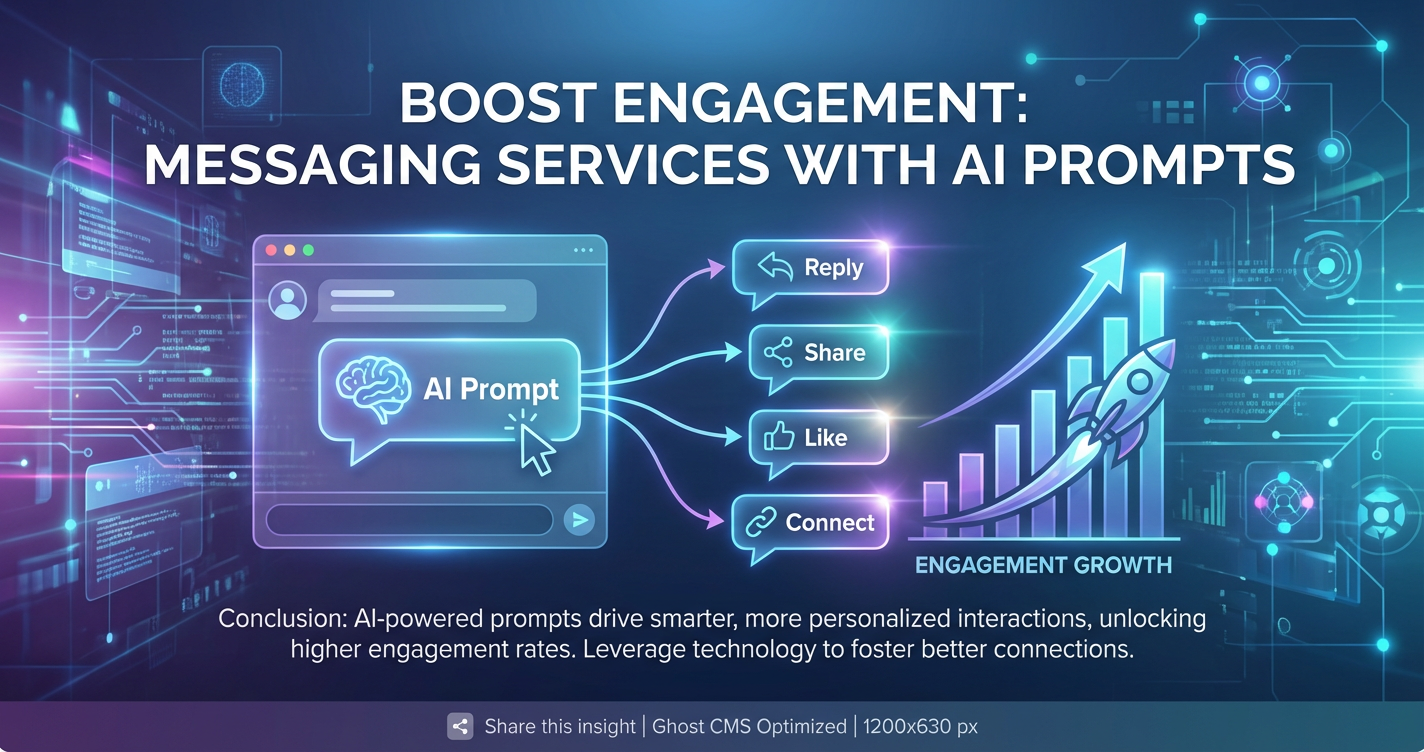
Boost Engagement: Messaging Services with AI Prompts


The digital age has fundamentally reshaped how we communicate, transforming interactions from rudimentary exchanges into intricate, dynamic dialogues. From the early days of short message service (SMS) and rudimentary email to the pervasive instant messaging platforms of today, each evolutionary leap in communication technology has sought to bring us closer, faster, and more efficiently. Yet, despite these advancements, a persistent challenge has lingered: how to make these interactions not just efficient, but truly engaging, deeply personalized, and genuinely intelligent. The answer, increasingly, lies at the intersection of messaging services and advanced artificial intelligence, particularly through the strategic application of AI prompts.
At its core, boosting engagement in messaging is about creating meaningful, relevant, and timely interactions that resonate with users on an individual level. Traditional messaging systems, while adept at information transfer, often fall short in delivering this nuanced level of personalization and dynamic responsiveness. They typically rely on pre-programmed scripts, rule-based chatbots, or human intervention, all of which have inherent limitations in scalability, consistency, and contextual understanding. This is where the transformative power of AI prompts steps in, offering a paradigm shift by enabling messaging platforms to generate bespoke, contextually aware, and emotionally intelligent responses that were once the exclusive domain of human interaction.
The integration of AI prompts into messaging services is not merely an incremental upgrade; it represents a foundational overhaul of how digital conversations are conceived and executed. By leveraging the immense capabilities of Large Language Models (LLMs), these systems can interpret complex user queries, understand underlying intent, and craft responses that are not just accurate, but also appropriate in tone, style, and content. This leads to a richer, more satisfying user experience, fostering deeper connections and driving higher levels of engagement across various applications, from customer support and marketing to internal communications and educational platforms.
However, harnessing the power of LLMs for messaging at scale is not a trivial undertaking. It demands robust infrastructure to manage diverse AI models, optimize performance, ensure security, and control costs. This is precisely where critical technologies like an LLM Gateway, an AI Gateway, and an LLM Proxy become indispensable. These infrastructural layers act as sophisticated intermediaries, providing the essential connective tissue and management capabilities that allow businesses to integrate, deploy, and scale AI-powered messaging services effectively and securely. They abstract away the complexities of interacting directly with myriad AI providers, standardizing interfaces, managing traffic, and safeguarding data, thereby enabling developers and enterprises to focus on crafting exceptional user experiences rather than wrestling with underlying technical intricacies.
This comprehensive exploration will delve into the profound impact of AI prompts on messaging services, dissecting the underlying technologies that make them possible, examining their diverse applications across industries, and offering practical guidance on crafting effective prompts. We will navigate the challenges and ethical considerations inherent in this rapidly evolving field, ultimately painting a picture of a future where messaging is not just a tool for communication, but a powerful engine for truly engaging and intelligent interaction.
Chapter 1: The Evolution of Messaging Services – From Simple Texts to Dynamic Dialogues
The journey of digital messaging has been a fascinating ascent, marked by relentless innovation driven by an insatiable human desire for faster, more convenient, and more expressive communication. To truly appreciate the revolutionary impact of AI prompts, it's essential to first contextualize this evolution, tracing the lineage from its humble beginnings to its current, sophisticated state.
In the nascent days of digital communication, messaging was rudimentary, constrained by technological limitations and high costs. The early 1990s witnessed the widespread adoption of SMS (Short Message Service), a technology born from GSM mobile networks. SMS was revolutionary for its time, allowing individuals to send concise text messages, typically limited to 160 characters, directly to another mobile device. It was a utilitarian tool, efficient for transmitting brief pieces of information, but inherently lacking in richness, multimedia capabilities, and real-time interactivity. Emotions were conveyed through nascent emoticons, and context was often inferred rather than explicitly stated. Simultaneously, email emerged as the backbone of asynchronous professional and personal communication, offering greater length, attachment capabilities, and a more formal structure, but still lacking the immediacy and conversational flow that would later become standard.
The turn of the millennium brought the internet into homes and pockets, paving the way for the rise of Instant Messaging (IM). Platforms like ICQ, AOL Instant Messenger, and MSN Messenger became cultural phenomena, offering real-time text-based conversations. This was a significant leap, introducing features like presence indicators (online/offline status), buddy lists, and rudimentary emoticons that began to mimic the fluidity of face-to-face dialogue. However, these early IM services were often fragmented, platform-specific, and lacked unified standards, creating silos of communication.
The advent of smartphones and pervasive mobile internet connectivity ushered in the next major wave: the era of modern instant messaging applications. WhatsApp, WeChat, Facebook Messenger, and Telegram transformed the landscape by offering cross-platform compatibility, multimedia sharing (photos, videos, voice notes), group chats, and end-to-end encryption. These applications moved beyond simple text, integrating location sharing, voice and video calls, and even payment functionalities, evolving into comprehensive communication hubs. The convenience and feature richness of these platforms made them indispensable for billions globally, embedding digital conversations deeply into daily life.
Within these sophisticated messaging environments, the concept of automation began to take root with the introduction of bots. Initially, these were simple, rule-based chatbots. Programmed with a predefined set of questions and answers, they could handle basic queries, guide users through decision trees, or automate simple tasks like checking an order status or answering frequently asked questions. While useful for specific, narrow tasks, their limitations quickly became apparent. They lacked contextual understanding, struggled with nuanced language, and would often break down when confronted with unforeseen inputs or complex, multi-turn conversations. Their responses felt robotic and impersonal, often leading to frustration rather than engagement.
The true paradigm shift began with the dawn of advanced artificial intelligence, particularly in the fields of Natural Language Processing (NLP) and generative AI. Early NLP models enabled machines to understand human language more effectively, moving beyond keyword matching to grasp intent and sentiment. This allowed for more sophisticated rule-based bots that could interpret variations in phrasing. However, the game-changer arrived with the development of Large Language Models (LLMs), deep learning models trained on vast corpuses of text data. These models are capable of not just understanding but also generating human-like text, demonstrating remarkable abilities in summarization, translation, question-answering, and creative writing.
This capability to dynamically generate coherent, contextually relevant, and even stylistically appropriate text has set the stage for the current revolution in messaging. No longer are we confined to pre-written scripts or rigid decision trees. Instead, AI-powered messaging, driven by sophisticated prompts, can now engage in fluid, adaptive, and highly personalized conversations. This evolution has transformed messaging from a mere channel for information exchange into a dynamic interface capable of fostering genuine engagement, offering bespoke assistance, and creating truly intelligent interactions that adapt and learn, mimicking the subtleties of human dialogue to an unprecedented degree.
Chapter 2: Understanding AI Prompts and Their Power in Messaging
At the heart of every intelligent interaction with a large language model lies a concept as simple as it is profound: the AI Prompt. Far from being mere keywords, prompts are carefully constructed instructions, questions, or statements that serve as the primary interface between human intent and the vast, generative capabilities of an AI model. Understanding their nature and how they function is crucial to unlocking the full potential of AI-powered messaging.
What are AI Prompts?
An AI prompt is essentially the input given to a generative AI model, typically an LLM, to guide its output. It's the conversation starter, the directive, the context setter that tells the AI what task to perform, what information to consider, and what kind of response is expected. Think of it as providing specific directions to a highly intelligent but otherwise unguided assistant. Without a well-crafted prompt, an LLM might produce generic, irrelevant, or even nonsensical output. With a precise prompt, it can generate highly targeted, creative, and contextually rich content.
How They Work: Input, Context, and Desired Output
The process can be broken down into several key stages:
- Input: The user (or an automated system) formulates a prompt, which could be a simple question ("What's the weather like?") or a complex multi-part instruction ("As a friendly customer service agent, explain the new return policy, then ask if there's anything else I can help with."). This input often includes not just the immediate query but also relevant background information.
- Context: The LLM receives the prompt along with any preceding conversation history or additional data (e.g., user preferences, previous interactions, product information). This context is critical. LLMs are designed to process sequential data, making them adept at maintaining conversational flow and referencing earlier parts of a dialogue. A good prompt leverages this by providing sufficient context, allowing the AI to understand the current situation and tailor its response accordingly.
- Processing by the LLM: The LLM, leveraging its vast training data and intricate neural network architecture, analyzes the prompt and context. It identifies patterns, predicts the most probable sequence of words that would constitute a relevant and coherent response, and synthesizes information to fulfill the prompt's requirements. This involves complex processes like tokenization, attention mechanisms, and decoding to generate new text.
- Desired Output: Based on its processing, the LLM generates a response that aims to satisfy the prompt's instructions. The quality of this output is directly correlated with the quality and clarity of the prompt. A well-designed prompt will elicit an output that is not only factually correct but also adheres to specified tone, length, format, and persona.
Types of Prompts in Practice:
While the possibilities are endless, prompts can generally be categorized by their approach:
- Declarative Prompts: These state a fact or provide information and ask the AI to elaborate, summarize, or react. Example: "Our new product features X, Y, and Z. Draft a short message introducing these features to potential customers."
- Imperative Prompts: These issue direct commands to the AI, instructing it to perform a specific action. Example: "Summarize the following customer feedback in three bullet points."
- Question-Based Prompts: The most common form, asking the AI to answer a direct question. Example: "What are the common troubleshooting steps for a slow internet connection?"
- Role-Playing Prompts: These instruct the AI to adopt a specific persona, which significantly influences the tone and style of its responses. Example: "Act as a cheerful travel agent. Respond to a user asking for recommendations for a family vacation to Europe."
- Few-Shot Prompts: The prompt includes one or more examples of input-output pairs to guide the AI's understanding of the desired format or style. This is incredibly powerful for complex tasks where clear examples are more effective than purely textual instructions.
- Zero-Shot Prompts: The prompt provides no examples, relying solely on the LLM's pre-trained knowledge to generate a response. This works well for straightforward tasks where the AI's general understanding is sufficient.
The Role of Large Language Models (LLMs) in Interpreting and Generating Responses:
LLMs are the engine behind AI prompts. Their training on immense datasets (trillions of words) enables them to:
- Understand Nuance and Context: LLMs can infer sentiment, recognize sarcasm, and grasp implied meanings far beyond what rule-based systems could achieve. They can maintain a coherent dialogue over multiple turns, remembering previous statements.
- Generate Creative and Coherent Text: Unlike simple retrieval systems, LLMs create original text. This allows for dynamic, non-repetitive responses that can surprise and delight users.
- Adapt to Different Styles and Tones: By specifying a persona or desired output style in the prompt, LLMs can adjust their language, formality, and even emotional register, making interactions feel more human and tailored.
- Synthesize Information: LLMs can pull together information from disparate sources (their training data) to formulate comprehensive and informative answers, acting as intelligent knowledge aggregators.
The Shift from Pre-Programmed Responses to Dynamic, Context-Aware Conversations:
This capability fundamentally alters the nature of messaging. Instead of users navigating rigid menus or encountering "I don't understand" messages, AI prompts empower a dynamic, adaptable conversational flow. If a user asks a complex question about a product, the AI can not only retrieve relevant information but also rephrase it, provide examples, offer alternatives, and even anticipate follow-up questions, all while maintaining a consistent and helpful persona. This responsiveness and adaptability lead directly to higher user satisfaction and, consequently, greater engagement. The conversation feels less like an interaction with a machine and more like a dialogue with an informed and empathetic entity, opening up unprecedented possibilities for personalized communication at scale.
Chapter 3: Key Technologies Enabling AI-Powered Messaging: LLM Gateways, AI Gateways, and LLM Proxies
The promise of AI-powered messaging, driven by sophisticated prompts and the generative capabilities of LLMs, is immense. However, translating this promise into scalable, secure, and cost-effective real-world applications requires a robust technical foundation. Directly integrating every application with multiple LLM providers presents a myriad of challenges. This is where specialized infrastructure, particularly the LLM Gateway, AI Gateway, and LLM Proxy, becomes not just beneficial, but absolutely essential. These technologies act as the crucial intermediaries, streamlining operations and fortifying the entire AI messaging ecosystem.
The Need for a Centralized Hub
Imagine an enterprise needing to integrate AI into its customer service, marketing, and internal communication systems. Each application might require different LLMs (e.g., one for code generation, another for creative writing, yet another for customer support, perhaps from different vendors like OpenAI, Google, Anthropic). Directly connecting each application to each LLM provider would lead to:
- Security Vulnerabilities: Managing API keys, authentication tokens, and access permissions for multiple providers across numerous applications becomes a security nightmare.
- Cost Management Headaches: Tracking consumption, optimizing spending, and implementing rate limits across various vendor APIs is complex and error-prone.
- Vendor Lock-in: Switching LLM providers or adding new ones requires re-architecting applications, leading to significant development overhead.
- Performance Inconsistencies: Different LLMs have varying latencies and throughputs. Managing these differences for optimal user experience is challenging.
- Complexity in Prompt Management: Standardizing prompts, versioning them, and A/B testing variations across multiple applications and models is a logistical challenge.
- Lack of Observability: Gaining a unified view of AI usage, errors, and performance across the entire organization is nearly impossible without a central point of control.
This is precisely why a centralized hub, an intermediary layer, is critical.
LLM Gateway / AI Gateway: The Command Center for AI Interactions
While often used interchangeably, an AI Gateway typically refers to a broader platform designed to manage and orchestrate access to a wide range of AI services (including but not limited to LLMs, computer vision, speech-to-text, etc.), whereas an LLM Gateway specifically focuses on Large Language Models. For the purpose of AI-powered messaging, their core functions significantly overlap and are equally vital.
An AI Gateway (or LLM Gateway) is a sophisticated middleware layer positioned between your applications and various AI/LLM providers. It acts as a single point of entry and control for all AI interactions, offering a suite of functionalities that are indispensable for enterprise-grade AI adoption:
- Unified API Interface: Perhaps its most critical function. Different LLM providers have distinct APIs, data formats, and authentication mechanisms. An AI Gateway abstracts these differences, presenting a standardized, unified API to your applications. This means your developers write code once, interacting with the gateway, regardless of which underlying LLM is being used. This significantly reduces integration complexity and prevents vendor lock-in.
- Rate Limiting and Quota Management: To prevent abuse, control costs, and ensure fair usage, the gateway can enforce rate limits (e.g., maximum requests per second per user/application) and manage quotas (e.g., total tokens consumed per month).
- Cost Optimization and Routing: Advanced gateways can intelligently route requests to different LLM providers based on various criteria: cost (e.g., send less critical requests to a cheaper model), performance (e.g., route to the fastest available model), or specific capabilities. This dynamic routing ensures optimal resource utilization and minimizes operational expenses.
- Enhanced Security: The gateway centralizes authentication and authorization, acting as a secure proxy. It can inject API keys securely, mask sensitive data in prompts or responses before they reach the LLM or your application, and enforce granular access control policies for different teams or applications.
- Observability: Logging, Monitoring, and Analytics: A robust gateway provides comprehensive logging of all AI requests and responses, including latency, token usage, and error rates. This data is crucial for monitoring system health, troubleshooting issues, optimizing performance, and understanding AI consumption patterns. Dashboards and analytics tools often complement this function.
- Prompt Management and Versioning: Prompts are central to AI output. A gateway can store, version, and manage prompts centrally, allowing for A/B testing of different prompt variations, ensuring consistency across applications, and facilitating iterative improvement of AI interactions without modifying application code.
- Fallback Mechanisms and Retry Logic: If a primary LLM provider is down or returns an error, the gateway can automatically retry the request or route it to a backup provider, ensuring higher availability and resilience for your AI services.
For organizations looking to integrate and manage a diverse array of AI models efficiently, platforms like APIPark exemplify the power of an AI Gateway. APIPark, an open-source AI gateway and API developer portal, is specifically designed to help developers and enterprises manage, integrate, and deploy AI and REST services with ease. It offers the crucial capability to integrate over 100+ AI models with a unified management system for authentication and cost tracking, directly addressing the complexities discussed above. Moreover, APIPark ensures a unified API format for AI invocation, meaning changes in underlying AI models or prompts do not affect the application or microservices, thereby significantly simplifying AI usage and maintenance costs. Its feature to encapsulate prompts into REST API allows users to quickly combine AI models with custom prompts to create new, specialized APIs, such as sentiment analysis or translation APIs, accelerating development and deployment cycles. You can learn more about its capabilities at ApiPark.
LLM Proxy: The Specialized Forwarding Agent
An LLM Proxy can be considered a specialized component or a simpler form of an LLM Gateway. While an LLM Gateway often encompasses a broader set of management, security, and optimization features, an LLM Proxy primarily focuses on the technical aspects of forwarding, routing, and basic management of requests specifically to LLMs. It acts as a network proxy that stands between your application and the LLM endpoint.
Key functions of an LLM Proxy often include:
- Load Balancing: Distributing requests across multiple LLM instances or even different LLM providers to ensure optimal performance and prevent any single endpoint from becoming overloaded.
- Caching: Storing responses for frequently asked identical prompts to reduce latency and save costs by avoiding redundant LLM calls.
- Retry Logic: Automatically re-sending failed requests, possibly with exponential backoff, to handle transient network issues or temporary LLM service unavailability.
- Basic Prompt Templating: While not as sophisticated as full prompt management, a proxy might allow for simple templating to inject dynamic variables into prompts before forwarding them.
- Connection Pooling: Efficiently managing connections to LLM APIs to minimize overhead.
In many real-world scenarios, an LLM Proxy might be implemented as a module within a larger AI Gateway system, or as a lightweight solution for simpler integration needs. The distinction can sometimes be nuanced, with the terms often used interchangeably or in a hierarchical manner (a gateway includes proxy functionalities and much more). What's important is that both serve to abstract the complexities of direct LLM interaction, enhance control, and improve the reliability and efficiency of AI-powered messaging.
Together, the LLM Gateway, AI Gateway, and LLM Proxy form the backbone of scalable, secure, and manageable AI integration, empowering developers to build engaging messaging services without getting bogged down in the intricacies of diverse AI infrastructures. They are the silent enablers of the AI revolution in communication.
Chapter 4: Boosting Engagement Through Personalized AI Prompts
The ultimate goal of integrating AI prompts into messaging services is to elevate engagement. This isn't just about making conversations more efficient, but about making them more meaningful, relevant, and captivating for each individual user. The key to achieving this lies in the AI's ability to deliver deep personalization and dynamic content generation at scale, far beyond what traditional methods could ever offer.
Personalization at Scale: Tailoring Messages to the Individual
True engagement stems from feeling understood and valued. AI prompts, when crafted effectively and supported by rich user data, enable messaging services to deliver hyper-personalization that feels genuinely human:
- Leveraging User History: By analyzing past interactions, purchase history, browsing behavior, and stated preferences, AI can tailor responses. For example, a customer service bot might recall previous support tickets and reference them when a user initiates a new query, eliminating the need for repetition. In e-commerce, product recommendations become incredibly precise when AI understands a user's past purchases and expressed interests.
- Adapting to Demographics and Psychographics: Prompts can guide the AI to adjust its tone, vocabulary, and content based on inferred or explicit demographic information (e.g., age group, geographical location) or psychographic profiles (e.g., casual vs. formal, tech-savvy vs. novice). This ensures messages resonate culturally and contextually.
- Proactive Personalization: Rather than just reacting to user input, AI can anticipate needs. A travel agent bot, knowing a user's upcoming flight, might proactively suggest weather-appropriate packing tips or local attractions, enhancing the user experience before they even ask.
This level of personalization transforms generic interactions into bespoke dialogues, fostering a sense of connection and significantly boosting user satisfaction and loyalty.
Dynamic Content Generation: Beyond Static Scripts
The hallmark of AI prompts is their capacity for dynamic content generation, which moves messaging far beyond the limitations of static, pre-written scripts. This capability manifests in several powerful ways:
- Customer Service Excellence: Instead of generic FAQs, AI can generate personalized troubleshooting steps based on the user's specific product model and reported issue. It can explain complex policies in simplified terms or provide step-by-step guides that are dynamically tailored to the user's unique context, dramatically improving first-contact resolution rates and reducing call center loads. For instance, if a user reports a specific error code on a smart device, the AI can immediately pull up documentation for that exact model and generate a human-friendly explanation and solution, rather than just linking to a generic support page.
- Hyper-Targeted Marketing and Sales: AI can craft individualized marketing messages, suggesting products or services that align perfectly with a user's inferred interests, recent browsing activity, or even current events relevant to them. A retail bot might recommend a complementary accessory based on a recent purchase, or a sales assistant might generate personalized follow-up emails that address specific pain points discussed in a previous conversation. This precision leads to higher conversion rates and a less intrusive marketing experience. The AI can even dynamically adjust promotional offers based on user engagement history or loyalty status.
- Adaptive Learning in Education: In educational settings, AI prompts can power personalized tutoring experiences. An AI tutor can generate practice questions based on a student's demonstrated strengths and weaknesses, provide targeted explanations for specific concepts they're struggling with, or even create unique scenarios for problem-solving. This adaptive learning path ensures that each student receives instruction tailored to their individual pace and learning style, making education more effective and engaging.
- Contextual Healthcare Communications: While always requiring human oversight for critical decisions, AI in healthcare messaging can provide valuable dynamic content. It can generate personalized health reminders based on a patient's medical history (e.g., "Time for your medication, John. Remember to take it with food."), offer simple, general health advice based on common queries, or explain complex medical terms in layman's language, improving patient adherence and understanding.
Interactive Storytelling and Gamification
AI prompts open up new avenues for engagement through interactive experiences:
- Choose-Your-Own-Adventure Narratives: AI can generate dynamic storylines in educational or entertainment contexts, where user choices via messaging prompts influence the unfolding narrative, making the experience highly immersive and unique each time.
- AI-Generated Quizzes and Challenges: For training, marketing, or general knowledge, AI can create personalized quizzes, riddles, or challenges within a chat interface, providing immediate feedback and adapting difficulty based on user performance. This gamified approach significantly increases active participation.
Sentiment Analysis and Adaptive Responses
Advanced AI gateways and LLMs can perform real-time sentiment analysis on user inputs. This allows the AI to:
- Adjust Tone and Empathy: If a user expresses frustration, the AI can be prompted to respond with greater empathy, offer apologies, and prioritize resolution. Conversely, if a user is positive, the AI can reflect that positivity. This emotional intelligence makes interactions feel more human and less transactional.
- Proactive Problem Solving: Detecting negative sentiment can trigger proactive measures, such as offering an immediate escalation to a human agent or automatically flagging the conversation for urgent review, preventing minor issues from escalating into major complaints.
Multilingual Support: Breaking Down Language Barriers
AI prompts, especially when routed through sophisticated LLMs and LLM Gateways, can provide instant, accurate translation and localized content. This means:
- Seamless Global Communication: Businesses can offer support and engage customers in their native language, regardless of where they are, without the need for human translators for every interaction.
- Culturally Sensitive Content: Prompts can guide the AI to adapt not just the language but also cultural nuances, idioms, and social norms, ensuring messages are not just translated but truly localized and appropriate.
By harnessing these capabilities, AI prompts transform messaging from a utilitarian channel into a powerful engine for building relationships, delivering value, and cultivating deep, lasting engagement with every user. The future of communication is not just smart; it is deeply personal and endlessly adaptive.
APIPark is a high-performance AI gateway that allows you to securely access the most comprehensive LLM APIs globally on the APIPark platform, including OpenAI, Anthropic, Mistral, Llama2, Google Gemini, and more.Try APIPark now! 👇👇👇
Chapter 5: Practical Applications Across Industries
The transformative power of AI prompts in messaging services is not confined to theoretical discussions; it is actively revolutionizing operations and customer experiences across a multitude of industries. From streamlining customer interactions to enhancing internal collaboration, the applications are vast and varied, demonstrating concrete benefits in efficiency, satisfaction, and strategic insight.
Customer Support: The Front Line of AI Engagement
Customer support is arguably one of the most immediate and impactful beneficiaries of AI-powered messaging. The ability of AI to understand natural language and generate dynamic responses has moved beyond simple FAQs to profound service enhancements:
- 24/7 Availability and Instant Resolution: AI-powered chatbots, driven by sophisticated prompts, can provide immediate assistance around the clock, transcending geographical and time zone limitations. They can resolve common issues, answer frequently asked questions, and guide users through troubleshooting steps instantly, significantly reducing wait times and improving customer satisfaction. For example, a banking bot can help a customer check their balance, transfer funds, or even dispute a transaction, all within seconds, day or night.
- Agent Assist and Augmentation: AI isn't just replacing human agents; it's empowering them. AI prompts can be used in "agent assist" modes, where the AI drafts response suggestions for human agents in real-time, summarizes complex chat histories, or retrieves relevant knowledge base articles. This significantly reduces agent workload, improves response quality, and decreases training time for new agents, allowing humans to focus on more complex, empathetic interactions.
- Proactive Outreach Based on Predictive Analysis: Leveraging an AI Gateway for data analysis, AI can identify patterns in customer behavior or system status to proactively initiate conversations. For instance, if an outage is detected in a specific region, AI can automatically send personalized notifications to affected customers, providing updates and managing expectations before they even experience an issue and reach out. This shifts customer service from reactive to proactive, building trust and loyalty.
- Personalized Onboarding and Guidance: For new users, AI can provide a tailored onboarding experience, guiding them through product features, answering initial questions, and ensuring a smooth introduction to a service, reducing churn.
Marketing & Sales: Driving Conversions and Nurturing Leads
The dynamic nature of AI prompts allows for unparalleled precision and personalization in marketing and sales efforts, fostering engagement throughout the customer journey:
- Lead Qualification and Nurturing: AI chatbots can engage with website visitors, ask qualifying questions, and determine their needs and intent. Based on responses, the AI can then nurture leads with relevant content, product information, or even schedule a call with a human sales representative, ensuring that sales teams only receive high-quality leads.
- Personalized Product Recommendations: By analyzing user browsing history, past purchases, and preferences gathered through conversation, AI can generate highly accurate and persuasive product recommendations in real-time, directly within a messaging interface. This not only boosts sales but also enhances the shopping experience.
- Automated Follow-ups and Appointment Scheduling: AI can automate the often-tedious tasks of sending follow-up messages after a demo or a sales call, gently reminding prospects and offering to schedule the next appointment based on both parties' availability, significantly improving conversion rates.
- Crafting Compelling Copy for Campaigns: Marketers can use AI prompts to generate various ad copy variations, email subject lines, social media posts, or even blog outlines, tailored to specific target audiences and campaign goals, dramatically accelerating content creation and testing cycles.
Internal Communications: Enhancing Employee Experience and Productivity
AI-powered messaging isn't just for external customers; it's a powerful tool for improving internal operations and employee engagement:
- Employee Onboarding and Training: New hires can interact with AI bots for personalized onboarding, asking questions about company policies, benefits, or navigating internal systems. AI can also facilitate training by generating quizzes, providing instant feedback, and explaining complex concepts.
- Knowledge Base Access and Instant Answers: Employees can query an AI chatbot for immediate answers to HR questions (e.g., "What's our holiday policy?"), IT support (e.g., "How do I reset my VPN?"), or access to company knowledge bases, reducing the burden on support departments and increasing productivity.
- Team Collaboration Tools with AI Assistance: Integrated into platforms like Slack or Microsoft Teams, AI can summarize long discussion threads, extract key decisions, suggest relevant documents, or even help draft messages, streamlining team collaboration and information sharing.
- Internal Surveys and Feedback Collection: AI can conduct engaging internal surveys, dynamically adjusting follow-up questions based on employee responses, leading to richer insights and higher participation rates.
Education: Revolutionizing Learning and Support
In the realm of education, AI prompts offer unprecedented opportunities for personalized and accessible learning:
- Personalized Tutoring and Adaptive Learning Paths: AI can act as a tireless tutor, generating explanations, practice problems, and feedback tailored to each student's learning style and pace. It can identify areas of weakness and provide targeted resources, creating a truly adaptive learning experience.
- Generating Practice Questions and Feedback: For educators, AI can quickly generate diverse sets of practice questions, quizzes, and even essay prompts. For students, it can provide instant, constructive feedback on their work, helping them understand mistakes and improve without waiting for a human instructor.
- Content Creation and Course Design: AI can assist educators in drafting lesson plans, creating supplementary materials, or even outlining entire course modules, leveraging its vast knowledge base to suggest relevant topics and structures.
- Student Support Services: AI chatbots can answer common student queries about admissions, financial aid, campus services, or course registration, providing instant support and freeing up administrative staff.
Healthcare: Streamlining Information and Patient Engagement
While respecting stringent privacy and ethical guidelines, AI in healthcare messaging offers significant benefits:
- Appointment Reminders and Prescription Refills: AI can send automated, personalized reminders for appointments, medication dosages, and prescription refill alerts, improving patient adherence and reducing missed appointments.
- Symptom Checkers and General Health Information (with Disclaimers): AI can guide users through symptom checkers (always with clear disclaimers to consult a medical professional) or provide reliable general health information based on approved medical databases, empowering patients with knowledge.
- Mental Health Support through Conversational AI: For non-diagnostic support, AI-powered conversational agents can offer guided meditation, cognitive behavioral therapy (CBT) exercises, or act as a listening ear, providing a safe and accessible channel for initial mental wellness support.
- Patient Onboarding and Post-Discharge Instructions: AI can explain complex medical procedures or post-discharge instructions in easy-to-understand language, tailored to the patient's specific condition, improving recovery outcomes.
These diverse applications underscore the versatility and profound impact of AI prompts when integrated into messaging services. By leveraging an efficient AI Gateway to manage these integrations, businesses can unlock new levels of engagement, efficiency, and intelligence across all facets of their operations.
Chapter 6: Crafting Effective AI Prompts for Optimal Engagement
The power of AI-powered messaging hinges almost entirely on the quality of the prompts provided to the underlying Large Language Models. A poorly constructed prompt can lead to generic, irrelevant, or even erroneous outputs, diminishing engagement and eroding trust. Conversely, a meticulously crafted prompt can unlock the full potential of the AI, generating responses that are precise, engaging, and perfectly tailored. Prompt engineering, therefore, is not merely a technical skill but an art form that blends linguistic clarity with a deep understanding of AI capabilities.
Clarity and Specificity: The "Garbage In, Garbage Out" Principle
The fundamental rule of prompt engineering is that the AI's output quality is directly proportional to the clarity and specificity of the input prompt. Vague or ambiguous instructions will yield vague or ambiguous results.
- Be Direct and Unambiguous: Avoid jargon where possible, and phrase your request clearly. Instead of "Tell me about cars," ask "Explain the pros and cons of electric vehicles for a first-time buyer on a budget of $40,000."
- Define the Task Explicitly: Clearly state what you want the AI to do. Is it to summarize, explain, compare, generate, translate, or act as a persona?
- Bad Prompt: "Help me with customer service."
- Good Prompt: "As a polite customer service representative for a tech company, explain how to troubleshoot a Wi-Fi connection issue for a user who is frustrated."
- Specify Constraints: Define desired length, format, tone, and audience.
- Bad Prompt: "Write about a new product."
- Good Prompt: "Write a concise, engaging social media post (max 150 characters) introducing our new eco-friendly water bottle to a young, environmentally conscious audience. Include a call to action to visit our website."
Contextual Information: Providing Enough Background
LLMs are powerful, but they are not mind-readers. They operate based on the information provided in the prompt and their training data. Supplying relevant context significantly improves the accuracy and relevance of the output.
- Provide Key Details: If the AI needs to refer to specific data, policies, or user history, include it in the prompt. For example, when asking an AI to draft a response to a customer, include the customer's original message, order number, and any relevant account details.
- Establish the Situation: Before asking the AI to perform a task, briefly set the scene. "A customer named Sarah (Order #12345) is asking why her package is delayed. Her tracking shows it's stuck in transit. As a helpful agent, draft a response."
- Reference Previous Interactions: In multi-turn conversations, the LLM Gateway or application should automatically feed the chat history as part of the context in subsequent prompts, allowing the AI to maintain coherence and build upon previous statements.
Role-Playing and Persona Definition: Guiding the AI's Tone and Style
One of the most effective ways to control AI output is to instruct it to adopt a specific persona. This influences the language, tone, empathy, and overall style of its responses.
- Define a Clear Persona: "Act as a sympathetic financial advisor," "You are a witty marketing specialist," "Respond as a concise technical support agent."
- Specify Desired Tone: "Use a friendly and encouraging tone," "Maintain a formal and authoritative voice," "Be humorous but professional."
- Set Communication Guidelines: "Always end with a question to encourage further interaction," "Avoid technical jargon," "Prioritize empathy over speed."
Iterative Refinement: Testing and Improving Prompts
Prompt engineering is rarely a one-shot process. It requires experimentation and refinement.
- Start Simple, Then Add Complexity: Begin with a basic prompt to see how the AI responds. Then, gradually add constraints, context, and persona details based on the initial output.
- A/B Testing: For critical applications, especially in marketing or customer service, test different prompt variations to see which yields the best engagement metrics (e.g., higher click-through rates, faster resolution times, better customer satisfaction scores). An AI Gateway can facilitate this by allowing for prompt versioning and performance tracking.
- Analyze Outputs: Carefully review the AI's responses. Are they accurate? Relevant? Engaging? Do they meet all the prompt's requirements? Use feedback loops to improve your prompts over time.
Guardrails and Ethical Considerations: Preventing Harmful or Biased Outputs
As powerful as LLMs are, they can sometimes generate biased, inappropriate, or factually incorrect information (hallucinations). Prompts must incorporate guardrails.
- Negative Constraints: Explicitly tell the AI what not to do. "Do not offer medical advice," "Do not use offensive language," "Do not disclose personal identifying information."
- Safety Instructions: Integrate safety parameters into prompts. "If unsure, state that you do not have enough information and suggest consulting a human expert."
- Bias Mitigation: Be mindful of potential biases in training data and actively try to prompt the AI to provide neutral, fair, and inclusive responses.
- Fact-Checking: Where accuracy is paramount, prompt the AI to reference specific, verifiable sources, or explicitly state that it is generating creative content rather than factual reporting.
Examples of Effective and Ineffective Prompts
To illustrate these principles, consider the following examples:
| Characteristic | Ineffective Prompt Example | Effective Prompt Example | Why it's Effective |
|---|---|---|---|
| Clarity | "Tell me about cars." | "Explain the key differences between electric and hybrid cars, focusing on environmental impact and refueling convenience, for a consumer trying to decide which to buy." | Specific topic, target audience, comparison criteria. |
| Context | "Help a customer." | "A customer, Mr. Smith (account #7890), purchased our 'Pro-B' blender last week and is experiencing a specific error code E-10. As a supportive customer service agent, explain what E-10 means and provide two common troubleshooting steps he can try at home, then offer to connect him to a technician if those don't work. Maintain a helpful and empathetic tone." | Provides customer identity, product, specific problem, desired persona, and next steps. |
| Persona | "Write a marketing email." | "Act as a witty and informal social media manager for a new coffee shop. Draft a 50-word Instagram caption promoting our new Pumpkin Spice Latte. Use emojis and include a call to action to visit us this weekend. Focus on the cozy, autumnal vibe." | Defines clear persona, platform, length, tone, specific product, and call to action. |
| Constraints | "Summarize this article." | "Summarize the attached article on renewable energy trends in three concise bullet points, suitable for an executive briefing. Focus only on technological advancements and market growth, excluding political commentary." | Specifies length, format, audience, key focus areas, and exclusion criteria. |
| Safety | "Give me health tips." | "Provide general wellness tips for stress reduction, but explicitly state that this is not medical advice and to consult a doctor for health concerns." | Adds a crucial disclaimer for sensitive topics. |
Mastering prompt engineering is an ongoing journey that significantly enhances the capabilities of AI-powered messaging. By meticulously crafting prompts, organizations can ensure that their AI interactions are not just functional but genuinely engaging, intelligent, and aligned with their brand's voice and objectives.
Chapter 7: Challenges and Considerations in Implementing AI-Powered Messaging
While the promise of AI-powered messaging with dynamic prompts is compelling, its implementation is not without significant challenges. Enterprises must navigate a complex landscape of technical, ethical, financial, and operational considerations to fully realize the benefits and avoid potential pitfalls. Addressing these issues proactively is crucial for building robust, secure, and responsible AI messaging systems.
Data Privacy and Security: Handling Sensitive User Data
Integrating AI into messaging often means exposing sensitive user data (conversations, personal information, preferences) to external LLM providers and internal systems.
- Risk of Data Leakage: Prompts and responses might contain proprietary business information or personally identifiable information (PII). Ensuring that this data is not inadvertently exposed or used for unauthorized purposes by LLM providers is a paramount concern.
- Compliance with Regulations: Adhering to stringent data privacy regulations such as GDPR, CCPA, HIPAA, and others is non-negotiable. This involves understanding where data is processed, stored, and how it's secured throughout the AI pipeline. An AI Gateway can play a critical role here by providing data masking, anonymization, and granular access controls before data reaches the LLM.
- Authentication and Authorization: Robust security measures are needed to ensure that only authorized applications and users can access the AI services and that API keys for LLMs are managed securely. The LLM Gateway serves as a crucial point for centralizing and enforcing these security protocols.
- Data Retention Policies: Defining and enforcing clear data retention policies for conversation logs and AI outputs is essential for both compliance and ethical reasons.
Ethical AI: Bias, Fairness, and Transparency
LLMs are trained on vast datasets that inherently reflect societal biases, which can be inadvertently propagated and amplified in AI-generated responses.
- Algorithmic Bias: If the training data contains biases (e.g., gender, racial, cultural stereotypes), the AI might produce discriminatory or unfair outputs. For example, a recruitment bot might favor certain demographics if trained on historical hiring data that exhibited bias.
- Fairness and Inclusivity: Ensuring that AI systems treat all users fairly, regardless of their background, requires continuous monitoring and mitigation strategies, including careful prompt engineering and debiasing techniques.
- Transparency and Explainability: Users should understand when they are interacting with an AI and, where possible, why the AI provided a particular response. Lack of transparency can lead to distrust.
- Responsible Use: Establishing clear guidelines for the ethical use of AI in messaging, preventing its misuse for harmful purposes (e.g., spreading misinformation, generating hate speech), is a continuous commitment.
Cost Management: Balancing Performance with Budget
LLMs, especially advanced proprietary models, can be expensive to operate at scale, with costs typically based on token usage (input and output tokens).
- High Operational Costs: Each API call to an LLM incurs a cost. For high-volume messaging applications, these costs can quickly escalate.
- Unpredictable Usage Patterns: User interactions can be unpredictable, making it difficult to forecast LLM consumption and budget accurately.
- Optimizing Model Choice: Different LLMs have varying cost structures and performance characteristics. Choosing the right model for the right task is crucial for cost efficiency. An LLM Gateway is invaluable here, enabling intelligent routing to the cheapest or most performant model for a given request, and providing detailed cost tracking and analytics.
- Caching and Deduplication: Implementing caching for common queries via an LLM Proxy can significantly reduce redundant LLM calls and associated costs.
- Prompt Optimization: Crafting concise prompts reduces input token count, and guiding the AI to generate shorter, relevant responses reduces output token count, both directly impacting costs.
Integration Complexities: Connecting AI Models with Existing Systems
Integrating AI-powered messaging into existing enterprise infrastructure can be a complex undertaking.
- Legacy Systems: Many organizations operate with legacy systems that may not be designed for modern API integrations or real-time data exchange, posing significant challenges.
- Data Silos: Relevant user data (CRM, ERP, ticketing systems) might reside in disparate silos, making it difficult to provide the necessary context for personalized AI interactions.
- API Management: Managing connections to multiple AI providers, along with other internal and external APIs, requires robust API management capabilities. This is where an AI Gateway shines, simplifying integration by providing a unified interface and abstracting away underlying complexities.
- Development Skill Gap: Integrating and fine-tuning LLMs requires specialized skills in prompt engineering, data science, and AI development, which may not be readily available in all organizations.
Maintaining a Human Touch: Knowing When to Escalate
While AI excels at scale and efficiency, there are situations where human intervention is indispensable.
- Complex or Sensitive Issues: AI may struggle with highly nuanced, emotionally charged, or unique problems that require human empathy, judgment, or creativity.
- Unforeseen Scenarios: While LLMs are good at generalization, they may not be equipped to handle completely novel or highly specific edge cases, leading to user frustration.
- User Preference: Some users simply prefer to interact with a human, especially for critical issues or complaints.
- Seamless Handover: Designing a smooth, context-aware handover process from AI to a human agent, where the human agent has full access to the AI's conversation history and relevant data, is critical for customer satisfaction. This integration is facilitated by an effective AI Gateway.
Over-reliance and Hallucinations: Managing AI Limitations
Despite their impressive capabilities, LLMs have inherent limitations.
- Hallucinations: LLMs can sometimes generate factually incorrect yet highly confident responses. Relying solely on AI without verification can lead to misinformation or poor decision-making.
- Lack of Real-World Understanding: LLMs lack true common sense or consciousness. Their "understanding" is statistical, based on patterns in training data, not genuine comprehension of the world.
- Over-Generalization: AI might over-generalize or fail to understand subtle nuances, leading to inappropriate or unhelpful responses.
- Bias in Data: As mentioned, biases in training data can lead to skewed or unfair outputs.
Scalability: Handling Growing User Bases and Message Volumes
For successful AI-powered messaging, the underlying infrastructure must be able to scale efficiently to meet demand.
- High Throughput Requirements: As user adoption grows, the system needs to handle a rapidly increasing number of concurrent messages and AI requests without performance degradation.
- Latency Management: Real-time messaging demands low latency. High latency in AI responses can lead to a frustrating user experience.
- Resource Allocation: Dynamically allocating computational resources (GPUs, CPUs) for LLM inference can be complex, especially with fluctuating demand.
- Resilience and High Availability: The messaging system must be resilient to failures and offer high availability, ensuring continuous service. An AI Gateway capable of cluster deployment and high Transactions Per Second (TPS), like APIPark which can achieve over 20,000 TPS with modest resources, is essential for addressing these scalability concerns, offering performance rivaling traditional high-performance proxies.
Addressing these challenges requires a holistic approach, encompassing careful system design, robust governance, continuous monitoring, and the strategic deployment of technologies like LLM Gateways and AI Gateways to build secure, ethical, and highly engaging AI-powered messaging solutions.
Chapter 8: The Future of Messaging: Hyper-Personalized, Proactive, and Predictive
The trajectory of AI-powered messaging, propelled by the continuous evolution of LLMs and sophisticated prompt engineering, points towards a future far more integrated, intelligent, and intuitive than anything we experience today. This future is characterized by interactions that are not just responsive, but genuinely hyper-personalized, proactively anticipating our needs, and predictively shaping our experiences.
Ambient AI: Seamless Integration into Daily Interactions
One of the most significant shifts will be the move towards Ambient AI, where artificial intelligence is seamlessly woven into the fabric of our daily lives, often operating in the background without explicit invocation.
- Invisible Assistants: Messaging will become an interface for AI that understands context across multiple devices and platforms. Imagine AI anticipating your need for a grocery list based on depleted pantry items, suggesting a meeting time by cross-referencing calendars and traffic, or summarizing a lengthy email thread before you even open it, all within your preferred messaging app, without you having to formulate a specific prompt.
- Context-Aware Environment: Your messaging system, powered by an underlying AI Gateway that aggregates data from various sensors and applications, will understand your location, calendar, communication history, and preferences to offer assistance before you realize you need it. This could mean your car automatically messages your family with your ETA, adjusted for real-time traffic, or your smart home proactively adjusts lighting and temperature based on your evening routine.
Multimodal AI: Beyond Text-Only Conversations
Currently, much of AI messaging is text-based. The future will embrace Multimodal AI, integrating text, voice, image, and video for richer, more natural interactions.
- Voice and Visual Prompts: Users will be able to speak their prompts naturally, and the AI will understand not just the words but also the tone and emotion. They could send an image of a broken appliance and ask, "How do I fix this?" with the AI providing step-by-step video instructions or animated guides.
- Generative Multimedia Responses: AI will generate not just text, but also images, short videos, or even 3D models in response to prompts, making communication incredibly expressive and informative. Imagine asking for interior design ideas and receiving AI-generated visualizations directly in your chat.
- Augmented Reality (AR) Integration: Messaging could integrate with AR, allowing users to point their phone at a product and receive real-time, AI-generated information or support instructions overlaid on the physical object.
Proactive AI: Anticipating Needs Before They Are Explicitly Stated
The next frontier of engagement moves beyond reactive responses to proactive anticipation.
- Predictive Assistance: Leveraging vast amounts of data and advanced analytics (often managed and processed through an AI Gateway's data analysis capabilities), AI will predict user needs. A financial assistant might proactively message you about an upcoming bill and suggest payment options, or a travel assistant might alert you to flight changes and suggest alternative routes before the airline even sends a notification.
- Intelligent Recommendations: Beyond suggesting products, AI will proactively recommend actions, learning resources, or even social connections based on your evolving interests, goals, and network.
- Behavioral Nudging: In areas like health and wellness, AI could proactively send personalized motivational messages or reminders based on your activity patterns and stated goals, subtly encouraging positive behaviors.
Self-Improving AI: Models That Learn and Adapt Over Time
Future AI models will not be static; they will continuously learn and refine their understanding and generation capabilities from every interaction.
- Adaptive Learning: Each conversation will serve as a training data point, allowing the AI to become increasingly adept at understanding individual communication styles, preferences, and common queries. This personalized learning will make interactions feel progressively more intuitive and tailored.
- Automated Prompt Optimization: The LLM Gateway itself might evolve to intelligently optimize prompts in real-time based on past performance metrics, automatically iterating to find the most effective ways to elicit desired responses from the underlying LLMs, further boosting engagement and efficiency.
- Contextual Self-Correction: AI will be better equipped to identify and correct its own errors, asking clarifying questions when uncertain or suggesting alternative approaches if its initial response isn't well-received.
AI as a Co-Pilot: Augmenting Human Capabilities
Crucially, the future of messaging will likely see AI not as a replacement for human interaction, but as a powerful co-pilot, augmenting human capabilities.
- Enhanced Human Agents: Human customer service representatives, sales professionals, and educators will be equipped with AI assistants that provide real-time suggestions, summarize conversations, access vast knowledge bases, and even draft responses, allowing humans to focus on empathy, complex problem-solving, and relationship building.
- Collaborative Creativity: In professional settings, AI could act as a brainstorming partner in messaging channels, generating ideas, refining drafts, and offering diverse perspectives, empowering teams to achieve more.
- Democratization of Expertise: AI will make specialized knowledge more accessible through natural language interfaces, allowing individuals to tap into expert insights for learning, decision-making, and problem-solving.
The future of messaging is poised to be profoundly transformative. Fueled by advancements in generative AI, managed by sophisticated infrastructures like the LLM Gateway and AI Gateway, and driven by intelligently crafted prompts, communication will become an effortlessly engaging, deeply personalized, and powerfully intelligent experience that anticipates our needs and empowers our interactions in ways we are only just beginning to imagine. It is a future where every message has the potential to be a meaningful connection.
Conclusion
The journey through the evolving landscape of digital communication reveals a profound transformation, moving us from the rudimentary exchanges of early messaging to the dynamic, intelligent dialogues powered by advanced artificial intelligence. At the heart of this revolution lies the concept of AI prompts, which, when meticulously crafted, unlock the immense capabilities of Large Language Models (LLMs) to create truly engaging, personalized, and context-aware interactions.
We have explored how AI prompts facilitate unprecedented levels of personalization, allowing messaging services to tailor content based on individual user history, preferences, and demographics, thereby fostering deeper connections and significantly boosting user satisfaction. The ability of AI to dynamically generate content for customer service, marketing, education, and even healthcare, represents a paradigm shift from static, rule-based systems, enabling real-time, adaptive, and emotionally intelligent responses that were once the exclusive domain of human interaction.
Crucially, the seamless integration and scalable deployment of these powerful AI capabilities are underpinned by foundational technologies such as the LLM Gateway, AI Gateway, and LLM Proxy. These sophisticated intermediaries serve as the centralized command centers, abstracting the complexities of diverse AI providers, ensuring robust security, optimizing costs, and providing critical observability. They are the silent architects that enable organizations to harness the full potential of AI-powered messaging, allowing developers and enterprises to focus on innovation and user experience rather than intricate infrastructure management. Platforms like APIPark exemplify how an open-source AI Gateway can unify disparate AI models, standardize interactions, and encapsulate prompts into reusable APIs, thereby accelerating development and reducing operational overhead.
While the benefits are immense, we have also acknowledged the significant challenges inherent in this transition, including critical concerns around data privacy and security, ethical considerations regarding bias and fairness, the complexities of cost management, and the need to maintain a crucial human touch. Addressing these challenges proactively, through thoughtful design, robust governance, and the strategic use of enabling technologies, is paramount to building trustworthy and responsible AI messaging ecosystems.
Looking ahead, the future of messaging promises an even more integrated and intelligent experience. We envision a world of ambient AI, where assistance is proactive and invisible; multimodal AI, integrating voice, image, and video for richer interactions; predictive AI, anticipating needs before they are even articulated; and self-improving AI, continually learning and adapting. In this future, AI will not merely replace human interaction but will act as a powerful co-pilot, augmenting human capabilities and democratizing expertise, making communication more effective, intuitive, and profoundly engaging.
Ultimately, boosting engagement in messaging services with AI prompts is not just about adopting new technology; it is about reimagining the very nature of digital conversation. It is about creating interactions that are so relevant, so personalized, and so intelligent that they forge stronger connections, enhance productivity, and enrich the lives of users across every conceivable domain. The tools are here, the potential is boundless, and the journey towards this hyper-personalized future of messaging has only just begun.
Frequently Asked Questions (FAQs)
- What is an AI Prompt in the context of messaging services, and why is it important for engagement? An AI prompt is a specific instruction, question, or statement given to an AI model (like an LLM) to guide its response in a messaging context. It's crucial for engagement because it allows for highly personalized, context-aware, and dynamic conversations. Instead of generic, pre-programmed replies, a well-crafted prompt enables the AI to generate unique, relevant, and engaging responses tailored to the user's specific query and historical interactions, making the conversation feel more human and valuable.
- How do LLM Gateway, AI Gateway, and LLM Proxy differ, and why are they necessary for AI-powered messaging? An LLM Proxy is typically a simpler layer focused on forwarding, routing, and basic management (like load balancing or caching) of requests to Large Language Models. An LLM Gateway is more comprehensive, specifically managing LLM interactions with features like unified APIs, rate limiting, cost optimization, and security. An AI Gateway is the broadest term, encompassing all the functionalities of an LLM Gateway but extending to manage various types of AI models (not just LLMs). They are necessary because they provide a centralized hub for managing diverse AI models, ensuring security, optimizing costs, streamlining integration, and improving the scalability and reliability of AI-powered messaging services, preventing vendor lock-in and reducing complexity.
- What are some practical benefits of using AI prompts in customer service messaging? In customer service, AI prompts offer numerous benefits: 24/7 availability for instant query resolution, personalized troubleshooting steps based on specific product models, agent assist features that empower human agents with AI-drafted responses, and proactive outreach based on predictive analysis. These capabilities lead to reduced wait times, higher first-contact resolution rates, improved customer satisfaction, and a more efficient allocation of human resources.
- How can organizations ensure data privacy and security when implementing AI-powered messaging? Ensuring data privacy and security requires a multi-faceted approach. Organizations should implement robust authentication and authorization mechanisms, utilize an AI Gateway for data masking and anonymization before sending data to LLMs, comply strictly with data protection regulations (e.g., GDPR, HIPAA), define clear data retention policies, and choose AI providers and gateway solutions with strong security track records and encryption protocols. Regular security audits and prompt engineering that avoids eliciting sensitive information are also critical.
- What are the future trends expected in AI-powered messaging? The future of AI-powered messaging is anticipated to be hyper-personalized, proactive, and predictive. Key trends include: Ambient AI, where AI is seamlessly integrated into daily interactions; Multimodal AI, allowing communication through text, voice, image, and video; Proactive AI, which anticipates user needs before they are explicitly stated; Self-Improving AI, where models continuously learn and adapt from interactions; and AI as a Co-Pilot, augmenting human capabilities rather than fully replacing them, making interactions more intuitive, efficient, and deeply engaging.
🚀You can securely and efficiently call the OpenAI API on APIPark in just two steps:
Step 1: Deploy the APIPark AI gateway in 5 minutes.
APIPark is developed based on Golang, offering strong product performance and low development and maintenance costs. You can deploy APIPark with a single command line.
curl -sSO https://download.apipark.com/install/quick-start.sh; bash quick-start.sh

In my experience, you can see the successful deployment interface within 5 to 10 minutes. Then, you can log in to APIPark using your account.

Step 2: Call the OpenAI API.