Build Your Own Gateway: Easy Steps & Best Practices


APIPark is a high-performance AI gateway that allows you to securely access the most comprehensive LLM APIs globally on the APIPark platform, including OpenAI, Anthropic, Mistral, Llama2, Google Gemini, and more.Try APIPark now! 👇👇👇
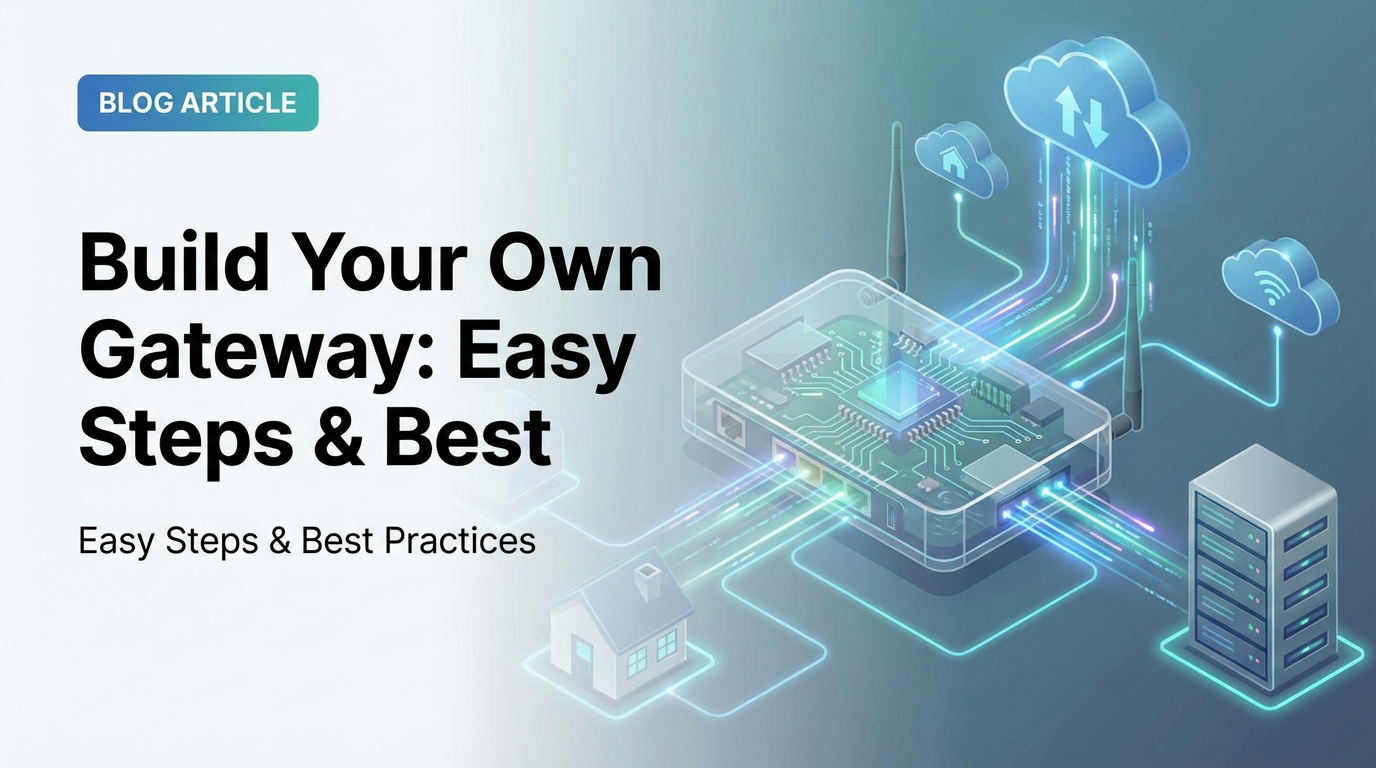
Build Your Own Gateway: Easy Steps & Best Practices
In the intricate tapestry of modern software architecture, where microservices dance with distributed systems and artificial intelligence increasingly weaves its way into every facet of an application, the concept of a gateway has ascended from a mere networking component to an indispensable strategic asset. Far beyond simple traffic routing, a well-designed gateway acts as the sophisticated bouncer, the multilingual interpreter, and the vigilant security guard at the digital frontier of your services. It is the crucial orchestrator that simplifies complexity, enhances security, and ensures the seamless operation of your entire ecosystem.
The journey of software development has evolved dramatically from monolithic behemoths to agile, independent microservices. While this paradigm shift brings unparalleled flexibility, scalability, and resilience, it also introduces a new layer of complexity: managing countless service endpoints, ensuring consistent security policies, and orchestrating interactions across a heterogeneous environment. This is precisely where the API Gateway emerges as a foundational pillar, serving as the single entry point for all client requests, abstracting the internal architecture, and centralizing cross-cutting concerns. It transforms a sprawling network of services into a cohesive, manageable unit from the perspective of external consumers.
But the digital landscape continues its relentless march forward, and with the explosive proliferation of artificial intelligence, particularly large language models and specialized AI services, a new breed of gateway is rapidly gaining prominence: the AI Gateway. This specialized gateway is not just about routing HTTP requests; it's about intelligently managing, orchestrating, and optimizing interactions with diverse AI models, standardizing their interfaces, ensuring cost efficiency, and providing robust security for these powerful new capabilities. It addresses the unique challenges of integrating AI into applications, from managing prompts and model versions to tracking token usage and abstracting away the myriad of vendor-specific AI APIs.
Embarking on the endeavor to build your own gateway, whether a general API Gateway or a specialized AI Gateway, can seem like a daunting task. However, with a clear understanding of its purpose, the various architectural considerations, and a disciplined approach to implementation, it becomes a powerful mechanism for gaining fine-grained control over your service interactions, optimizing performance, and future-proofing your infrastructure against evolving technological demands. This comprehensive guide will meticulously walk you through the essential steps, illuminate the best practices, and delve into the critical considerations involved in constructing a robust, scalable, and intelligent gateway solution tailored to your specific needs, preparing you for the challenges and opportunities of the interconnected, AI-driven world.
Chapter 1: Understanding the Foundation – What is a Gateway?
At its core, a gateway is an entry point, a passage, a critical juncture where distinct networks or systems meet and communicate. In the digital realm, this concept takes on multifaceted forms, but the underlying principle remains consistent: to facilitate controlled and efficient communication between disparate entities. To truly appreciate the strategic importance of building your own gateway, it's essential to first grasp its fundamental role and the various manifestations it takes in modern computing.
1.1 The Fundamental Role of a Gateway
Imagine a bustling metropolis where every building has its own unique entrance, security protocols, and internal navigation system. For a visitor, simply reaching the correct office in the correct building would be an exercise in frustration and inefficiency. Now, imagine a central information desk, a security checkpoint, and a concierge service that directs every visitor to their precise destination with a unified process. This centralized hub is analogous to a gateway in a software system. It serves as the single entry point, abstracting away the underlying complexity and providing a streamlined interface for consumers.
In the context of distributed systems and microservices architectures, the gateway's role becomes even more pronounced. Without it, every client—be it a web application, a mobile app, or a third-party service—would need to know the specific addresses, protocols, and authentication mechanisms for potentially dozens or hundreds of backend services. This tight coupling creates a brittle system that is difficult to maintain, evolve, and secure.
A gateway fundamentally addresses these challenges by performing several critical functions:
- Request Routing: It intelligently directs incoming requests to the appropriate backend service or group of services based on defined rules, paths, or headers. This is its most basic yet vital function.
- Protocol Translation: Clients might communicate using REST over HTTP, while backend services might use gRPC, GraphQL, or even legacy protocols. The gateway can act as an intermediary, translating between these disparate communication styles.
- Security Enforcement: It provides a centralized point for authentication, authorization, and other security policies, shielding individual backend services from direct exposure and attack vectors. This ensures consistent security across the entire ecosystem.
- Load Balancing: By distributing incoming traffic across multiple instances of a service, the gateway ensures high availability and prevents any single service from becoming overwhelmed, thereby improving overall system performance and reliability.
- API Composition/Aggregation: For certain client needs, multiple backend service calls might be required. The gateway can aggregate these calls into a single response, reducing network chatter and simplifying client logic.
The necessity of a gateway becomes apparent when moving from monolithic applications, where all functionalities reside within a single codebase, to microservices, where functionalities are broken down into small, independent services. While microservices offer benefits like independent deployment and scalability, they inherently increase the number of network endpoints and the complexity of managing inter-service communication. The gateway mitigates this complexity, serving as a robust front door to an otherwise intricate internal architecture.
1.2 Types of Gateways
The term gateway is broad, encompassing various components across different layers of the computing stack. While our focus for this article is primarily on application-level gateways, understanding the broader context helps in appreciating their specific evolution and purpose.
- Network Gateways (Traditional): These are the most basic and oldest forms of gateways, primarily operating at the network layer. Examples include routers, firewalls, and proxy servers.
- Routers: Connect different networks and forward data packets between them.
- Firewalls: Act as a barrier between a trusted internal network and untrusted external networks (like the internet), enforcing security policies by filtering traffic.
- Proxy Servers: Act as an intermediary for requests from clients seeking resources from other servers. They can be used for security, performance (caching), or anonymization. While a reverse proxy might seem similar to an API gateway, an API gateway is far more application-aware.
- Application Gateways: These operate at the application layer (Layer 7 of the OSI model) and are deeply aware of the application's logic and data. They can inspect, modify, and route traffic based on HTTP headers, URLs, and even the content of the request body. They often provide features like SSL offloading, web application firewalls (WAF), and advanced routing. Cloud providers offer managed application gateways (e.g., Azure Application Gateway, AWS Application Load Balancer with advanced routing features).
- API Gateways: This is a specialized form of an application gateway, meticulously designed to manage and orchestrate API traffic. It's the central nervous system for your microservices, providing a unified, secure, and performant interface for external and internal consumers to interact with your backend APIs. We will delve deeply into API Gateways in the next chapter, as they form the cornerstone of any modern distributed system. They are characterized by rich features like request/response transformation, authentication/authorization, rate limiting, and service discovery integration, going far beyond what a typical reverse proxy or load balancer offers.
- AI Gateways: Emerging as a distinct and increasingly vital category, an
AI Gatewayis a specializedAPI Gatewaytailored specifically for the unique demands of integrating and managing Artificial Intelligence models and services. With the explosion of large language models (LLMs) and various other machine learning models, developers face challenges such as managing diverse model APIs, handling different data formats, tracking costs, and ensuring consistent security. AnAI Gatewayaddresses these challenges by providing a unified interface for AI model invocation, prompt management, cost optimization, and AI-specific security policies. It acts as an intelligent intermediary between your applications and the vast, evolving landscape of AI services, simplifying integration and governance. This type of gateway is becoming indispensable for companies looking to leverage AI at scale without being overwhelmed by its inherent complexities.
By understanding these different types, particularly the distinction and progression from general application gateways to specialized API and then AI Gateways, we can appreciate the nuanced requirements and architectural considerations involved in building a truly effective and future-proof gateway solution. The next chapter will focus intensely on the API Gateway, laying the groundwork for understanding its advanced cousin, the AI Gateway.
Chapter 2: The Cornerstone – Deep Dive into API Gateways
The API Gateway stands as a critical architectural pattern in the era of microservices. It's more than just a reverse proxy; it's an intelligent intermediary, a traffic cop, and a security guard rolled into one, designed to manage the complexities inherent in distributed systems. For anyone considering building their own gateway, a thorough understanding of the API Gateway's capabilities and principles is absolutely paramount, as it forms the foundational blueprint for any more specialized gateway, including the burgeoning AI Gateway.
2.1 What is an API Gateway?
An API Gateway is a server that acts as the single entry point for a set of APIs. It sits between clients and a collection of backend services, abstracting the complexity of the underlying microservices architecture from the consumers. Instead of clients needing to interact with individual services directly, they communicate solely with the API Gateway, which then intelligently routes requests to the appropriate internal services.
Think of it as the control tower at an airport. Flights (client requests) don't directly interact with individual gates or maintenance hangars (microservices). Instead, they communicate with the control tower, which then directs them safely and efficiently to their specific destinations, handling all the intricate logistics in between. Similarly, an API Gateway encapsulates the internal structure of the application, providing a simplified, consistent, and secure interface for external consumers.
Crucially, an API Gateway is application-aware. Unlike a generic load balancer or reverse proxy that might only inspect basic network information or HTTP headers, an API Gateway understands the semantics of the API requests and responses. It can inspect the API path, query parameters, request body, and even user roles to make sophisticated routing and policy decisions. This deep understanding enables it to perform a rich array of functions that are vital for scalable, secure, and maintainable microservices deployments.
2.2 Key Features and Functions of an API Gateway
The robust feature set of an API Gateway is what elevates it beyond a simple traffic forwarder. These capabilities address common cross-cutting concerns that would otherwise need to be implemented (and duplicated) in every single microservice, leading to inconsistencies and increased development overhead.
- Request Routing & Composition: This is the gateway's most fundamental function. It dispatches incoming requests to the correct backend service based on the URL path, HTTP method, headers, or other criteria. More advanced gateways can also compose responses from multiple backend services, allowing a single client request to retrieve data from several microservices, thereby reducing chatty communication between client and backend. For instance, a mobile app might need user profile information, recent orders, and wish list items. The gateway can call three different microservices, aggregate their responses, and send a single, coherent payload back to the client.
- Authentication & Authorization: Centralizing security at the gateway dramatically simplifies security management. The gateway can authenticate clients (e.g., validate JWT tokens, OAuth2, API keys) and then pass authenticated user information downstream to microservices, or even perform coarse-grained authorization checks itself before forwarding requests. This offloads the security burden from individual services, allowing them to focus purely on business logic.
- Rate Limiting & Throttling: To protect backend services from overload, prevent abuse, and ensure fair usage, the gateway can enforce rate limits (e.g., 100 requests per minute per user). Throttling can also be applied to manage resource consumption and prioritize certain client types or subscriptions. This is crucial for maintaining system stability and preventing malicious or accidental denial-of-service attacks.
- Caching: By caching responses from backend services, the gateway can significantly improve response times for frequently accessed data and reduce the load on backend services. This is especially effective for static or infrequently changing data, enhancing overall system performance and scalability without requiring modifications to the backend services.
- Logging & Monitoring: The
API Gatewayacts as a central vantage point for observing all incoming and outgoing API traffic. It can log every request and response, including headers, payload sizes, response times, and error codes. This centralized logging is invaluable for troubleshooting, auditing, performance analysis, and security incident investigation, providing a holistic view of API interactions. - Protocol Translation: In complex environments, clients might communicate using different protocols than backend services. The gateway can seamlessly translate between, for example, a RESTful HTTP client and a gRPC backend service, or even convert between different data serialization formats (e.g., JSON to XML).
- Request/Response Transformation: Before forwarding a request to a backend service, the gateway can modify it—add/remove headers, transform payload structures, or inject specific parameters. Similarly, it can transform the response from a backend service before sending it back to the client, adapting it to the client's expected format or masking sensitive information.
- Service Discovery Integration: In dynamic microservices environments, service instances are constantly starting, stopping, and scaling. An
API Gatewaycan integrate with a service discovery mechanism (e.g., Eureka, Consul, Kubernetes DNS) to dynamically locate available service instances, ensuring that requests are always routed to healthy and active endpoints. - Circuit Breaker & Retry Mechanisms: To enhance resilience, the gateway can implement patterns like circuit breakers. If a backend service consistently fails, the gateway can "open the circuit" to that service, preventing further requests from being sent and allowing the service to recover, rather than continuously hammering it with failing requests. It can also implement retry logic for transient errors.
2.3 Benefits of Using an API Gateway
The advantages of deploying an API Gateway extend across development, operations, and business strategy:
- Decoupling Clients from Microservices: Clients no longer need to know the internal topology of your services. They interact with a single, stable API endpoint provided by the gateway, making backend changes much less impactful on client applications.
- Simplifying Client Code: Clients don't have to deal with complex logic like service discovery, load balancing, or making multiple requests to compose a view. The gateway handles these complexities, allowing client developers to focus on the user interface and experience.
- Centralizing Cross-Cutting Concerns: Security, rate limiting, logging, and caching are concerns that apply to many services. Implementing them once at the gateway ensures consistency, reduces duplication, and simplifies maintenance across the entire system.
- Improving Security: By acting as the sole entry point, the gateway forms a strong perimeter for your services, enabling consolidated security policies and easier auditing. Individual services are not exposed to the public internet, reducing their attack surface.
- Enhancing Performance and Scalability: Caching, load balancing, and request aggregation capabilities directly contribute to faster response times and better utilization of backend resources. The gateway itself can be horizontally scaled to handle immense traffic volumes.
- Easier API Versioning: The gateway can manage different versions of your APIs, allowing you to gradually roll out new versions while supporting older clients, simplifying API evolution without breaking existing applications.
2.4 When to Implement an API Gateway
While incredibly beneficial, an API Gateway is not a one-size-fits-all solution. It introduces an additional layer of complexity and a single point of failure if not properly designed and operated. Consider implementing an API Gateway when:
- You're building a Microservices Architecture: This is the primary driver. As the number of services grows, managing direct client-to-service communication becomes unmanageable.
- You have Multiple Client Types: Different clients (web, mobile, IoT, internal, external partners) often have varying requirements for data format, security, and aggregation. A gateway can adapt responses for each client.
- You have Complex Security or Rate-Limiting Requirements: When consistent, robust authentication, authorization, or traffic management policies are needed across many APIs.
- You Need Centralized Logging and Monitoring: To gain a comprehensive overview of all API interactions, performance, and errors from a single point.
- You are Integrating with Third-Party APIs: The gateway can act as an abstraction layer for external APIs, providing a unified interface to your internal systems.
In essence, an API Gateway is a powerful tool for managing complexity, enhancing security, and optimizing the performance of your distributed systems. It's the essential first step in building any robust and scalable modern application, and it lays the conceptual and functional groundwork for the next evolution: the AI Gateway.
Chapter 3: The Next Frontier – Understanding the AI Gateway
As we navigate deeper into the digital age, artificial intelligence has transcended academic research to become a pivotal component of countless applications. From intelligent chatbots and recommendation engines to advanced data analysis and content generation, AI models are now core business assets. However, integrating and managing these powerful, yet diverse, AI capabilities presents a unique set of challenges that traditional API Gateways are not fully equipped to handle. This is where the specialized AI Gateway steps in, representing the next frontier in intelligent traffic management.
3.1 The Rise of AI in Applications
The last few years have witnessed an unprecedented explosion in the availability and capability of AI models, particularly large language models (LLMs) like those from OpenAI, Anthropic, Google, and a growing ecosystem of open-source alternatives. Beyond LLMs, there are specialized models for image recognition, speech-to-text, anomaly detection, and countless other tasks. Businesses and developers are eager to harness this power to create innovative products and enhance existing services.
However, this rapid proliferation introduces significant complexities: * Diverse APIs and Protocols: Each AI vendor or open-source model often comes with its own unique API, authentication mechanism, data formats, and rate limits. * Prompt Engineering & Management: For generative AI, crafting effective prompts is an art and a science. Managing, versioning, and deploying these prompts across different applications is a significant challenge. * Cost Management: AI model inference can be expensive, often charged per token or per call. Without centralized tracking, costs can quickly spiral out of control. * Performance & Latency: AI models, especially large ones, can introduce significant latency. Optimizing these interactions is crucial for responsive applications. * Security & Data Privacy: AI models might process sensitive data, making robust security, access control, and data governance paramount. * Model Switching & Redundancy: Relying on a single AI provider or model can be risky. The ability to switch between models or fall back to alternatives for resilience and cost optimization is highly desirable.
These challenges highlight a critical gap in the existing API Gateway landscape, prompting the need for a more specialized solution.
3.2 What is an AI Gateway?
An AI Gateway is a specialized API Gateway explicitly designed to manage, orchestrate, and optimize interactions with artificial intelligence models and services. It acts as an intelligent abstraction layer between your applications and the diverse array of AI backends, simplifying their integration and lifecycle management. Just as an API Gateway abstracts microservices, an AI Gateway abstracts the complexities of heterogeneous AI models.
Its primary purpose is to provide a unified, consistent, and controlled interface for applications to consume AI capabilities, regardless of the underlying model, vendor, or deployment location. It is the central nervous system for your AI infrastructure, bringing order and governance to what can otherwise be a chaotic and expensive domain.
3.3 Core Capabilities of an AI Gateway
While retaining all the core functionalities of a traditional API Gateway (like routing, security, rate limiting, and logging), an AI Gateway extends these capabilities with AI-specific features:
- Unified Model Integration: An
AI Gatewayprovides a single endpoint and a standardized API format for interacting with a multitude of AI models, whether they are from OpenAI, Anthropic, Google, or your own custom-trained models. This eliminates the need for developers to learn and integrate different SDKs and APIs for each model. Imagine needing to switch from one LLM to another; without anAI Gateway, this could mean significant code refactoring. With it, the change happens seamlessly at the gateway level.- It's worth noting that platforms like ApiPark excel in this area, offering quick integration of 100+ AI models with a unified management system for authentication and cost tracking, abstracting away the underlying complexities.
- Standardized API Format for AI Invocation: A key challenge with AI models is their varied input/output data formats. An
AI Gatewaynormalizes these formats, presenting a consistent interface to applications. This means that changes in an underlying AI model's API or even a prompt modification do not necessitate changes in the application code or microservices, significantly reducing maintenance costs and developer effort. - Prompt Management & Versioning: Prompts are central to generative AI. An
AI Gatewaycan store, manage, version, and even A/B test different prompts. This allows developers and prompt engineers to refine and deploy prompts independently of the application code, ensuring consistency and enabling rapid iteration. It's like a content delivery network for your AI prompts. - Cost Tracking & Optimization: AI inference costs can be substantial. An
AI Gatewayprovides granular insights into AI model usage, tracking costs per user, application, prompt, or model. This allows for effective budget management, identification of cost-saving opportunities, and chargeback mechanisms. It can also implement intelligent routing to cost-effective models when performance constraints allow. - Security for AI Endpoints: Beyond traditional API security, an
AI Gatewayensures that AI model access is secured with robust authentication and authorization policies. It can filter sensitive data, mask PII before sending it to models, and monitor for suspicious AI usage patterns, protecting against data breaches and model misuse. - Caching for AI Inferences: Many AI inference requests might be repetitive or have identical inputs. An
AI Gatewaycan cache the responses of AI models, drastically reducing latency for common queries and significantly cutting down on inference costs by avoiding redundant calls to the backend AI service. - Observability for AI Operations: Comprehensive logging and monitoring specific to AI interactions are crucial. An
AI Gatewaycaptures details like prompt requests, model responses, latency, token usage, and error rates, providing deep visibility into the performance and health of your AI services. This data is vital for debugging, performance tuning, and ensuring model reliability. - Prompt Encapsulation into REST API: A powerful feature of an
AI Gatewayis the ability to combine an AI model with a specific, pre-defined prompt to create a new, dedicated REST API. For example, you could define a "sentiment analysis" API that internally calls an LLM with a specific prompt, or a "translation" API.- Again, this is a core capability highlighted by ApiPark, allowing users to quickly combine AI models with custom prompts to create new, specialized APIs.
3.4 Why an AI Gateway is Becoming Indispensable
The strategic value of an AI Gateway cannot be overstated for organizations looking to scale their AI initiatives:
- Simplifying AI Integration for Developers: Developers no longer need to deal with the individual idiosyncrasies of each AI model. They interact with a single, consistent API, significantly accelerating AI application development.
- Ensuring Consistency and Reliability of AI Services: Centralized prompt management, standardized interfaces, and robust monitoring ensure that AI capabilities are delivered consistently and reliably across all applications.
- Providing Governance and Cost Control Over AI Usage: With detailed tracking and policy enforcement, organizations gain complete control over their AI consumption, optimizing spending and preventing unauthorized usage.
- Accelerating AI Application Development: By abstracting complexities, developers can focus on building innovative features rather than grappling with AI infrastructure, leading to faster time-to-market for AI-powered products.
- Enabling AI Model Agility: The ability to swap out or add new AI models seamlessly without affecting consuming applications provides crucial flexibility and allows organizations to leverage the best-performing or most cost-effective models as the AI landscape evolves.
In essence, an AI Gateway is not just an optional enhancement; it is rapidly becoming a fundamental component for any enterprise serious about integrating AI into its core operations. It bridges the gap between the promise of AI and the practical realities of deploying and managing it at scale, ensuring that AI becomes a force for innovation rather than a source of operational headaches.
Chapter 4: Building Your Own Gateway: Easy Steps & Considerations
The decision to build your own gateway, be it a general API Gateway or a specialized AI Gateway, is a strategic one that offers unparalleled control, optimization, and the ability to tailor features precisely to your operational needs. While off-the-shelf solutions and cloud-managed services provide convenience, building your own empowers you to address unique performance bottlenecks, integrate deeply with proprietary systems, or create a truly differentiated developer experience. This chapter will guide you through the architectural choices, implementation steps, and critical considerations for embarking on this significant endeavor.
4.1 Architectural Choices & Design Patterns
Before writing a single line of code, establishing a clear architectural vision for your gateway is paramount. The right pattern depends heavily on your system's scale, complexity, and specific requirements.
- Centralized Gateway: This is the most common pattern, where a single
API Gatewayinstance (or a horizontally scaled cluster of instances) acts as the sole entry point for all client requests across all microservices.- Pros: Simplified client experience, centralized policy enforcement (security, rate limiting), easier to manage and monitor a single component.
- Cons: Can become a single point of failure if not made highly available, potentially a performance bottleneck for very high traffic, and can become a monolithic component itself if too many responsibilities are loaded onto it.
- When to Use: Suitable for most microservices architectures, especially when starting out or when client applications interact with a broad set of services.
- Decentralized Gateways (Backend-for-Frontend - BFF): In this pattern, each distinct client type (e.g., web app, iOS app, Android app) has its own dedicated gateway instance. These BFFs are tailored to the specific needs of that client.
- Pros: Optimized for specific client experiences, allows for client-specific aggregation and transformation, decouples client teams from each other.
- Cons: Duplication of some gateway logic across multiple BFFs, increased operational overhead to manage multiple gateways.
- When to Use: Ideal for applications with diverse client types that have significantly different data consumption patterns or require highly optimized, client-specific APIs.
- Sidecar Gateways: Often seen in service mesh architectures (like Istio or Linkerd), a sidecar proxy (like Envoy) runs alongside each service instance within the same deployment unit (e.g., Kubernetes pod). While these are typically for inter-service communication, they can also expose services to the edge, effectively acting as very granular gateways.
- Pros: Highly distributed, granular control over each service, leverages service mesh capabilities for resilience and observability.
- Cons: Higher operational complexity, often overkill for simply exposing APIs to external clients, more focused on internal traffic management.
- When to Use: In mature microservices environments already leveraging a service mesh, or when extremely fine-grained control and policy enforcement are required at the service level.
- Hybrid Approaches: It's common to combine these patterns. For instance, a central
API Gatewaymight handle general authentication and rate limiting, while specific teams or client types might deploy BFFs behind it for custom API aggregation and transformation. This balances the benefits of centralization with client-specific optimization.
4.2 Step-by-Step Implementation Guide
Once you have a clear architectural vision, you can begin the practical steps of building your gateway. This is a multi-faceted process that requires careful planning and execution.
Step 1: Define Requirements and Scope
Before any coding, clearly articulate what your gateway must do. * Core API Gateway features: Routing, authentication, authorization, rate limiting, logging, caching, request/response transformation, service discovery. * AI Gateway specific features (if applicable): Unified AI model integration, prompt management, cost tracking, AI-specific security, intelligent routing to AI models. * Non-functional requirements: Performance (TPS, latency), scalability (horizontal scaling, concurrency), reliability (HA, failover), security posture. * Integration points: Which backend services will it expose? Which identity providers will it integrate with? Which monitoring systems?
Step 2: Choose Your Technology Stack
This is perhaps the most critical decision, influencing development speed, performance, maintainability, and future extensibility.
- Open-Source Solutions (Build on Existing Foundations):
- Nginx (with Lua/OpenResty): Highly performant and flexible. Nginx itself is a powerful reverse proxy and load balancer. By extending it with Lua scripts (OpenResty), you can implement complex
API Gatewaylogic, including custom authentication, rate limiting, and request transformation. This offers immense control but requires strong Nginx and Lua expertise. - Kong: Built on Nginx and OpenResty, Kong is a dedicated open-source
API Gatewaywith a rich plugin ecosystem. It provides robust features for authentication, authorization, traffic control, and analytics out-of-the-box. It's often favored for its comprehensive features and enterprise-grade capabilities. - Envoy Proxy: A high-performance, open-source edge and service proxy from Lyft. Envoy is a core component of service meshes like Istio. It's incredibly configurable and powerful, suitable for very demanding environments, but can have a steeper learning curve than simpler proxies.
- Spring Cloud Gateway (Java): For Java ecosystems, this is a popular choice. It's built on Spring Framework 5, Project Reactor, and Spring Boot 2, providing a powerful and programmatic way to build
API Gatewayswith reactive capabilities. - Ocelot (.NET): A lightweight, open-source
API Gatewayspecifically for .NET Core applications. It offers features like routing, authentication, authorization, caching, and rate limiting, suitable for .NET-centric architectures. - For those specifically looking to manage AI models and APIs, an open-source solution like ApiPark can significantly simplify this step. APIPark provides an all-in-one AI gateway and API developer portal, offering quick integration of 100+ AI models and end-to-end API lifecycle management, reducing the effort of building AI-specific features from scratch.
- Nginx (with Lua/OpenResty): Highly performant and flexible. Nginx itself is a powerful reverse proxy and load balancer. By extending it with Lua scripts (OpenResty), you can implement complex
- Cloud-Managed Gateways:
- AWS API Gateway, Azure API Management, Google Cloud Apigee: These are fully managed services that provide
API Gatewayfunctionalities (routing, security, caching, monitoring) without the operational overhead of managing servers. They integrate seamlessly with their respective cloud ecosystems but can incur significant costs at scale and might have vendor lock-in concerns.
- AWS API Gateway, Azure API Management, Google Cloud Apigee: These are fully managed services that provide
- Building from Scratch (using Frameworks):
- You can build a custom
API Gatewayusing general-purpose web frameworks like Node.js (Express/Fastify), Go (Gin/Echo), Python (FastAPI/Flask), or Java (Spring Boot). This offers ultimate flexibility and control, allowing for deep integration with existing systems and highly specialized logic. - Trade-offs: Maximum control and customization vs. higher development effort, longer time-to-market, and the responsibility of maintaining all gateway features (security, performance, resilience). This path is typically chosen when existing solutions don't meet highly specific, complex requirements or when specific performance characteristics are paramount.
- You can build a custom
Consider the following comparison for common open-source choices:
| Feature/Metric | Nginx + OpenResty | Kong Gateway | Envoy Proxy | Spring Cloud Gateway (Java) |
|---|---|---|---|---|
| Core Technology | Nginx (C), Lua | Nginx (C), Lua, PostgreSQL/Cassandra | C++ | Java, Spring Boot, Project Reactor |
| Primary Use Case | High-performance reverse proxy, custom gateway logic | Full-featured API Gateway with rich plugins | Service mesh proxy, advanced traffic management, edge proxy | Reactive API Gateway for Java/Spring ecosystems |
| Performance | Extremely High | High (based on Nginx) | Extremely High | High (Reactive, non-blocking) |
| Ease of Setup/Use | Medium (requires Nginx/Lua expertise) | Medium (plugin-driven, declarative config) | High (complex config, often via service mesh) | Medium (Spring ecosystem knowledge helpful) |
| Extensibility | Very High (Lua scripts, C modules) | High (extensive plugin ecosystem, custom plugins) | Very High (WASM filters, C++ extensions) | High (Java code, Spring Beans, filters) |
| Features | Basic routing, load balancing, custom logic | Routing, Auth, Rate Limiting, Caching, Transformations, etc. | Routing, Load Balancing, Circuit Breaking, Retries, Observability | Routing, Filters, Rate Limiting, Circuit Breakers, Auth |
| Community Support | Large and active | Large and active | Very large and active (Cloud Native Computing Foundation) | Very large and active |
| AI Gateway Potential | Possible with custom Lua, more effort | Possible with plugins, or custom proxy logic via Lua | Possible with filters, more complex | Possible with custom Java code |
| Management | Configuration files, custom tooling | Admin API, GUI (Kong Manager) | YAML/JSON config, control plane (e.g., Istio) | Spring Boot config, code-based |
Step 3: Design Your API Contracts
Regardless of your chosen stack, define your API contracts using standards like OpenAPI (Swagger). This ensures consistency, facilitates automated testing, and provides clear documentation for consumers. For AI Gateways, this also includes defining unified input/output schemas for AI model interactions.
Step 4: Implement Core Features
Begin by implementing the fundamental functionalities identified in Step 1.
- Routing Logic: Set up rules to direct incoming requests to the correct backend services. This might involve path-based routing, header-based routing, or more complex rules.
- Authentication & Authorization Modules: Integrate with your chosen identity provider (e.g., OAuth2, JWT validation). Implement logic to verify tokens and apply access control policies. The gateway should typically issue new tokens for internal services (e.g., short-lived internal JWTs) or pass relevant user context securely.
- Rate Limiting: Implement mechanisms to restrict the number of requests clients can make within a given time frame. Distributed rate limiting often requires a shared state store like Redis.
- Error Handling & Fallbacks: Design robust error handling for upstream service failures, network timeouts, and invalid requests. Implement circuit breakers and retry logic to prevent cascading failures.
- Request/Response Transformation: Implement logic to modify requests before forwarding them and responses before sending them back to the client.
Step 5: Integrate AI-Specific Capabilities (if building an AI Gateway)
If your gateway is destined to be an AI Gateway, this step is crucial.
- Model Abstraction Layer: Create an internal abstraction that encapsulates the unique APIs and data formats of different AI models. Your gateway will interact with this layer.
- Prompt Management Interface: Develop a system to store, retrieve, and version prompts. This might involve a dedicated database or configuration service.
- Unified Data Schema for AI Calls: Define a canonical input and output data format for all AI model interactions, which the gateway translates to and from vendor-specific formats.
- Cost Tracking Hooks: Integrate logic to capture and log token usage, model IDs, and other metrics necessary for detailed cost attribution and optimization.
- Intelligent Routing to AI Models: Implement logic to select the best AI model based on factors like cost, performance, availability, or specific prompt requirements. This might involve A/B testing or dynamic routing.
Step 6: Monitoring, Logging, and Alerting
A gateway is a critical piece of infrastructure; its health and performance must be continuously monitored.
- Comprehensive Logging: Implement detailed logging of all requests, responses, errors, and performance metrics. Integrate with a centralized logging solution (e.g., ELK stack, Splunk, DataDog).
- Metrics Collection: Expose metrics (e.g., request count, latency, error rates, CPU/memory usage) in a format suitable for a monitoring system (e.g., Prometheus).
- Distributed Tracing: Integrate with a distributed tracing system (e.g., Jaeger, OpenTelemetry) to track requests as they flow through the gateway and into backend services, invaluable for debugging.
- Alerting: Set up alerts for critical issues like high error rates, increased latency, or security events.
Step 7: Testing & Deployment
- Unit and Integration Tests: Thoroughly test each component and the integration points of your gateway.
- Performance and Load Testing: Simulate realistic traffic to identify bottlenecks and ensure the gateway meets performance requirements under stress.
- Containerization: Package your gateway application into Docker containers for consistent deployment.
- Orchestration: Deploy your gateway using container orchestration platforms like Kubernetes for high availability, scalability, and automated management. Ensure you have robust CI/CD pipelines for automated deployment.
- For those considering building an AI Gateway or API Management platform, solutions like ApiPark offer quick deployment options, often via a single command line, drastically reducing the operational overhead of this step.
4.3 Key Decision Points
Throughout the process, several critical decisions will shape your gateway's capabilities and operational profile:
- Performance Requirements: What throughput (requests per second) and latency targets must your gateway meet? This will influence technology choices (e.g., Go/Rust for extreme performance vs. Node.js/Python for faster development).
- Security Posture: How stringent are your security requirements? Does it need to be PCI DSS compliant? What level of granular access control is needed?
- Scalability Needs: How much traffic growth do you anticipate? How easily can the gateway scale horizontally to handle increased load?
- Developer Experience (DX): How easy will it be for developers to consume APIs through the gateway? Clear documentation, consistent API contracts, and self-service capabilities (e.g., developer portal) are crucial.
- A strong developer portal, like that offered by ApiPark, centralizes API service sharing, making it easy for different teams to discover and use APIs.
- Maintenance Overhead: What are your team's capabilities for maintaining the chosen technology stack? What is the long-term cost of ownership for a custom-built solution versus an open-source or managed service?
Building your own gateway is a significant undertaking that demands expertise in networking, security, distributed systems, and potentially AI. However, the resulting control, performance, and customization capabilities can provide a substantial competitive advantage, enabling your organization to innovate and scale with confidence.
Chapter 5: Best Practices for Gateway Implementation and Management
Building a gateway is only half the battle; effectively implementing and managing it in production is where its true value is realized, and its potential pitfalls are mitigated. A poorly managed API Gateway or AI Gateway can become a single point of failure, a performance bottleneck, or a security vulnerability. Adhering to best practices ensures that your gateway remains a robust, performant, and secure cornerstone of your architecture.
5.1 Security First
The gateway is the front door to your services, making it the primary target for malicious actors. Security must be an integral part of its design and operation from day one.
- Enforce Strong Authentication: The
gatewayshould be the first line of defense for authenticating incoming requests. Implement robust authentication mechanisms like OAuth2, OpenID Connect, or JWT validation. Avoid simple API key authentication for sensitive operations. Ensure token validation (signature, expiry, audience) is strictly enforced. - Implement Granular Authorization Policies: Beyond authentication, the
gatewayshould apply authorization policies. This means checking if an authenticated user has the necessary permissions to access a specific API endpoint or perform a particular action. Policy enforcement points (PEPs) at the gateway can offload this from individual services. - Input Validation and Sanitization: All incoming request parameters, headers, and payloads should be rigorously validated and sanitized to prevent common attacks such as SQL injection, cross-site scripting (XSS), and command injection. The
gatewaycan act as a centralized validator, protecting backend services from malformed or malicious inputs. - Protect Against Common Attacks (WAF): Consider integrating Web Application Firewall (WAF) capabilities into your
gatewayor placing it behind a dedicated WAF solution. This adds a layer of protection against OWASP Top 10 vulnerabilities, DDoS attacks, and bot traffic. - Use HTTPS/TLS End-to-End: All communication to and from the
gateway, and ideally between thegatewayand backend services, should be encrypted using HTTPS and TLS 1.2+ to protect data in transit. Ensure proper certificate management and rotation. - Least Privilege Principle: The
gatewayitself should operate with the minimum necessary permissions. Its internal access to backend services should also follow the principle of least privilege. - API Resource Access Requires Approval: For sensitive APIs or those with commercial implications, implementing an approval workflow can be critical.
- Platforms like ApiPark allow for the activation of subscription approval features, ensuring callers must subscribe to an API and await administrator approval, preventing unauthorized API calls and potential data breaches.
5.2 Performance and Scalability
A slow or bottlenecked gateway cripples the entire system. Design for performance and scalability from the outset.
- Efficient Load Balancing Strategies: Implement intelligent load balancing across backend service instances (e.g., round-robin, least connections, weighted round-robin). For an
AI Gateway, this might extend to dynamic routing to different AI models based on their current load or cost. - Caching at the Gateway Level: Utilize the
gatewayfor caching responses from backend services or AI inferences. This significantly reduces latency for repetitive requests and offloads load from your backend, dramatically improving perceived performance. Implement robust cache invalidation strategies. - Asynchronous Processing: For operations that don't require immediate client response, consider asynchronous processing patterns. The
gatewaycan accept a request, acknowledge it, and then process it in the background, potentially using message queues. - Horizontal Scaling of the Gateway Itself: The
gatewayshould be stateless and designed to be horizontally scalable. Deploy multiple instances behind a traditional load balancer to distribute incoming traffic and ensure high availability. - Efficient Routing Algorithms: Optimize routing logic to minimize overhead. Use fast pattern matching and avoid complex, high-latency computations in the critical path of a request.
- Performance Rivaling Nginx: Aim for high throughput and low latency. Many open-source and custom gateways can achieve impressive performance.
- For instance, ApiPark demonstrates strong performance, achieving over 20,000 TPS with just an 8-core CPU and 8GB of memory, supporting cluster deployment for large-scale traffic.
5.3 Resilience and Reliability
Your gateway must be resilient to failures in backend services and itself.
- Circuit Breakers, Retries, Timeouts: Implement these essential resilience patterns. If a backend service is failing, the
gatewayshould "trip" a circuit breaker to prevent further requests, giving the service time to recover. Implement retry logic for transient errors and enforce strict timeouts for all upstream calls. - Graceful Degradation: Design the
gatewayto handle partial failures gracefully. If a non-critical backend service is down, thegatewayshould still serve responses from other available services, perhaps with reduced functionality, rather than returning a complete error. - Redundancy and Failover Mechanisms: Deploy the
gatewayin a highly available configuration with redundant instances across multiple availability zones. Implement automatic failover to ensure continuous operation in case of an instance or zone failure. - Health Checks: Configure robust health checks for backend services. The
gatewayshould only route traffic to healthy instances and immediately remove unhealthy ones from its routing pool.
5.4 Observability and Monitoring
You cannot manage what you cannot see. Comprehensive observability is critical for troubleshooting, performance analysis, and security.
- Comprehensive Logging: Capture every detail of each API call—request headers, response status codes, payload sizes, latency, error messages, and trace IDs. This provides the granular data needed for debugging and auditing.
- Platforms like ApiPark provide detailed API call logging, recording every detail, which is essential for quickly tracing and troubleshooting issues.
- Metrics Collection: Collect and expose a wide range of metrics, including request volume, error rates (by endpoint, client, service), average/p99 latency, cache hit rates, CPU/memory utilization of the
gatewayitself. - Distributed Tracing: Integrate with a distributed tracing system to visualize the end-to-end flow of requests across the
gatewayand all backend services. This is invaluable for pinpointing performance bottlenecks and understanding complex interactions. - Alerting on Anomalies: Configure proactive alerts for deviations from normal behavior, such as sudden spikes in error rates, unusually high latency for specific endpoints, or unauthorized access attempts.
- Powerful Data Analysis: Leverage collected historical data to identify trends, anticipate issues, and perform preventive maintenance.
- With its powerful data analysis capabilities, ApiPark helps businesses analyze historical call data to display long-term trends and performance changes, facilitating proactive maintenance.
5.5 Versioning and API Evolution
APIs evolve, and your gateway must facilitate this evolution without disrupting existing clients.
- Strategies for API Versioning: Implement a consistent API versioning strategy (e.g., URI versioning
/v1/users, header versioningAccept: application/vnd.myapi.v1+json, or query parameter versioning?api-version=1). Thegatewayshould handle routing requests to the correct API version. - Backward Compatibility: Strive for backward compatibility as much as possible. When breaking changes are unavoidable, provide clear migration paths and deprecation schedules.
- Phased Rollouts: Use the
gatewayto enable phased rollouts (e.g., canary deployments, blue/green deployments) of new API versions or backend services, gradually exposing changes to a subset of users before a full rollout.
5.6 Documentation and Developer Experience
A powerful gateway is only as good as its usability for developers.
- Clear API Documentation (OpenAPI): Provide comprehensive, up-to-date documentation for all APIs exposed through the
gateway, ideally using OpenAPI (Swagger) specifications. This allows developers to easily understand and integrate with your services. - SDKs and Examples: Offer SDKs in popular programming languages and provide clear code examples to accelerate developer onboarding and integration.
- Developer Portal: Implement a self-service developer portal where developers can discover APIs, read documentation, manage their API keys, view usage analytics, and subscribe to API updates.
- A unified developer portal is a core offering of platforms like ApiPark, which enables centralized display of all API services, making it easy for different departments and teams to find and use required API services.
5.7 Operational Excellence
Maintaining and operating a gateway effectively requires robust processes and automation.
- Automated Deployment (CI/CD): Implement Continuous Integration/Continuous Deployment (CI/CD) pipelines for the
gatewayitself, ensuring that changes are tested and deployed rapidly and reliably. - Infrastructure as Code (IaC): Manage the
gateway's infrastructure (servers, load balancers, configuration) using IaC tools like Terraform or CloudFormation. This ensures consistency, reproducibility, and version control. - Regular Security Audits and Updates: Regularly audit your
gateway's configuration for vulnerabilities, keep its underlying software (OS, libraries, gateway software) up-to-date with security patches, and perform penetration testing. - Capacity Planning: Continuously monitor traffic patterns and resource utilization to predict future capacity needs and proactively scale your
gatewayinfrastructure.
By adhering to these best practices, your gateway will not only facilitate efficient communication but also act as a resilient, secure, and scalable foundation for your entire service ecosystem, whether you're managing traditional REST APIs or the cutting-edge complexities of AI Gateways. The initial investment in meticulous design and disciplined operations will pay dividends in long-term stability, performance, and developer satisfaction.
Conclusion
The journey through the intricacies of building and managing a gateway reveals its profound importance in today's sophisticated software landscapes. From its foundational role as a traffic orchestrator to its evolution into a strategic API Gateway for microservices, and now its indispensable form as an AI Gateway for integrating burgeoning artificial intelligence capabilities, the gateway stands as an architectural lynchpin. It is the sophisticated interface that bridges the gap between client simplicity and backend complexity, ensuring that modern applications can be built with unprecedented scalability, resilience, and security.
We've explored how an API Gateway centralizes critical concerns like authentication, authorization, rate limiting, and request routing, effectively decoupling client applications from the dynamic internal topology of microservices. This abstraction simplifies development, enhances security, and improves overall system performance. The emergence of the AI Gateway further refines this concept, offering specialized capabilities to manage the unique challenges of AI integration, from standardizing diverse model APIs and managing prompts to optimizing costs and ensuring the secure deployment of intelligent services.
Building your own gateway is a significant undertaking, demanding careful consideration of architectural patterns, judicious technology stack choices, and a meticulous step-by-step implementation. However, the investment yields immense rewards in terms of control, customization, and optimization potential. Whether you choose to leverage robust open-source solutions like Kong or Nginx with OpenResty, or opt for a tailored build using modern frameworks, the underlying principles of design and execution remain critical. Furthermore, platforms like ApiPark offer comprehensive open-source solutions that significantly streamline the development and management of both API and AI gateways, providing advanced features and an all-in-one developer portal to accelerate your journey.
Ultimately, the true strength of a gateway lies not just in its initial construction but in its ongoing management through a commitment to best practices. Prioritizing security, optimizing for performance and scalability, embedding resilience and observability, meticulously planning for API evolution, and fostering a positive developer experience are non-negotiable aspects of ensuring your gateway remains a robust and reliable component. Operational excellence, underpinned by automation and continuous monitoring, guarantees its long-term viability and effectiveness.
As the digital frontier continues to expand, integrating ever more complex services and intelligence, the role of the gateway will only grow in prominence. Future iterations will likely see tighter integration with edge computing, serverless architectures, and even more advanced AI-driven traffic management. By understanding the principles, mastering the practices, and embracing the right tools and strategies outlined in this guide, you are not just building a piece of infrastructure; you are crafting a powerful enabler for innovation, securing your digital assets, and positioning your organization for sustained success in the interconnected, AI-powered future.
Frequently Asked Questions (FAQ)
1. What is the fundamental difference between a traditional Reverse Proxy and an API Gateway? While both act as intermediaries for incoming traffic, a traditional reverse proxy primarily operates at lower network layers (like Layer 4/TCP or basic Layer 7/HTTP) for load balancing and basic routing. An API Gateway, on the other hand, is application-aware, operating at Layer 7 with a deep understanding of API requests. It offers advanced features such as authentication/authorization, rate limiting, request/response transformation, API composition, and service discovery integration, effectively abstracting microservices complexity from clients.
2. Why is an AI Gateway becoming increasingly important in modern architectures? An AI Gateway is crucial because it addresses the unique complexities of integrating and managing diverse AI models (like LLMs, vision models, etc.). It provides a unified API for various models, handles prompt management, tracks AI inference costs, ensures AI-specific security, and abstracts away vendor-specific model APIs. This simplifies AI integration for developers, ensures consistent AI service delivery, and provides governance over AI usage, allowing organizations to leverage AI at scale more efficiently and securely.
3. What are the key benefits of building your own gateway versus using a cloud-managed service? Building your own gateway offers unparalleled control and customization, allowing you to tailor features precisely to your unique performance, security, and integration requirements. It can lead to better cost optimization in high-volume scenarios and avoids vendor lock-in. Cloud-managed services (like AWS API Gateway, Azure API Management) offer convenience, reduced operational overhead, and quick setup, but may come with higher costs at scale, less flexibility for deep customization, and reliance on a specific cloud provider's ecosystem.
4. What are some essential security best practices for an API Gateway or AI Gateway? Critical security practices include enforcing strong authentication (e.g., OAuth2, JWT), implementing granular authorization policies, rigorous input validation and sanitization, employing Web Application Firewall (WAF) capabilities, ensuring end-to-end HTTPS/TLS encryption, and adhering to the principle of least privilege. Additionally, for AI Gateways, securing access to AI models and potentially implementing subscription approval workflows for sensitive APIs (as offered by ApiPark) are crucial to prevent unauthorized access and data breaches.
5. How does an API Gateway or AI Gateway contribute to overall system resilience and observability? A gateway significantly enhances resilience through features like circuit breakers, retry mechanisms, timeouts, and graceful degradation, preventing cascading failures and ensuring continued service availability. For observability, it acts as a central point for logging all API interactions, collecting critical performance metrics (latency, error rates), and integrating with distributed tracing systems. This comprehensive data provides deep visibility into the system's health, performance, and behavior, enabling rapid troubleshooting and proactive issue resolution, particularly for AI Gateways with their complex model interactions and cost implications.
🚀You can securely and efficiently call the OpenAI API on APIPark in just two steps:
Step 1: Deploy the APIPark AI gateway in 5 minutes.
APIPark is developed based on Golang, offering strong product performance and low development and maintenance costs. You can deploy APIPark with a single command line.
curl -sSO https://download.apipark.com/install/quick-start.sh; bash quick-start.sh

In my experience, you can see the successful deployment interface within 5 to 10 minutes. Then, you can log in to APIPark using your account.

Step 2: Call the OpenAI API.