Choosing the Right Breaker: A Guide to All Types of Breakers


I. Introduction: The Unsung Heroes of Electrical Safety
In the intricate dance of modern living, electricity powers our homes, invigorates our industries, and illuminates our cities, becoming an indispensable force that shapes virtually every aspect of our daily existence. Yet, beneath the seamless hum of appliances and the vibrant glow of lights lies a complex network of electrical circuits, each meticulously engineered to deliver power safely and efficiently. At the heart of this safety infrastructure are circuit breakers, often overlooked components that stand as the ultimate guardians against electrical hazards. Far more than simple switches, these ingenious devices are designed to detect abnormal conditions – such as overloads, short circuits, or ground faults – and rapidly interrupt the flow of electricity, preventing damage to equipment, mitigating the risk of fires, and, most critically, safeguarding human lives.
The act of "choosing the right breaker" is not merely a technical decision; it is a critical investment in safety, reliability, and peace of mind. A poorly selected breaker can lead to frequent nuisance tripping, disrupting productivity and comfort, or, far worse, fail to trip when genuinely needed, escalating a minor electrical anomaly into a catastrophic event. From the simplest residential outlets to the most sophisticated industrial machinery, every electrical load requires a specific type and rating of circuit protection. Understanding the nuances of different breaker types, their operational principles, and their appropriate applications is paramount for electricians, engineers, homeowners, and facility managers alike. This comprehensive guide aims to demystify the world of circuit breakers, offering a deep dive into their classifications, functionalities, selection criteria, and the critical role they play in maintaining a secure electrical environment. We will journey through their historical evolution, explore the fundamental physics behind their operation, dissect the myriad of specialized designs, and ultimately equip you with the knowledge to make informed decisions for optimal electrical protection.
The evolution of circuit protection devices mirrors the advancement of electrical technology itself. Early electrical systems relied primarily on fuses – sacrificial devices that melted and broke the circuit upon detecting an overcurrent. While effective, fuses require replacement after each trip, an inconvenience that spurred innovation. The invention of the reusable circuit breaker revolutionized electrical safety, offering a more convenient, reliable, and sophisticated solution. Today, breakers range from simple mechanical devices to highly intelligent electronic systems capable of instantaneous fault detection and remote monitoring, reflecting a continuous drive towards enhanced safety and operational efficiency in an increasingly electrified world.
II. The Fundamental Principles of Circuit Protection
To truly appreciate the various types of circuit breakers, one must first grasp the core electrical phenomena they are designed to combat. Circuit breakers primarily protect against three major categories of electrical faults: overcurrents (which include both overloads and short circuits), ground faults, and arc faults. Each of these conditions poses distinct threats and requires specific detection and interruption mechanisms.
A. Overcurrent Protection: Fuses vs. Breakers
At its most basic level, overcurrent protection is about preventing excessive electrical current from flowing through a conductor or device. When current exceeds a safe limit, conductors can overheat, leading to insulation breakdown, fire, and damage to connected equipment.
- Fuses: Historically, fuses were the primary method of overcurrent protection. A fuse consists of a metal wire or strip that melts and breaks when the current flowing through it exceeds a certain threshold for a specific duration. This interruption is irreversible, meaning the fuse must be replaced after it trips. Fuses are simple, reliable, and generally fast-acting, but their single-use nature can be inconvenient and costly in systems requiring frequent resetting.
- Circuit Breakers: Unlike fuses, circuit breakers are reusable electromechanical switches. When an overcurrent or fault condition is detected, an internal mechanism trips, opening the circuit contacts and stopping the current flow. Once the fault is cleared, the breaker can be manually reset (or in some advanced models, automatically reset), restoring power. This reusability is a significant advantage in terms of operational convenience and cost-effectiveness.
B. Short Circuits
A short circuit occurs when there is an abnormal, low-resistance path between two points in an electrical circuit that are supposed to be at different potentials (e.g., between the live/hot wire and the neutral wire, or between two live wires). This low resistance causes an extremely high current to flow almost instantaneously, often thousands of amperes, significantly exceeding the circuit's design limits.
The dangers of a short circuit are immense: * Excessive Heat: The enormous current generates intense heat, capable of melting conductors, vaporizing metal, and igniting surrounding materials, leading to severe electrical fires. * Explosions/Arc Flashes: The rapid discharge of energy can create powerful electrical arcs, accompanied by bright light, intense heat, and pressure waves, posing a severe burn and blast hazard to anyone nearby. * Damage to Equipment: The sudden surge of current can instantly destroy sensitive electronic components and severely damage electrical infrastructure.
Circuit breakers designed to protect against short circuits must be extremely fast-acting, often tripping within milliseconds, to interrupt the fault current before it can cause widespread destruction.
C. Overloads
An overload occurs when too much current flows through a circuit that is otherwise working correctly, but the total demand from connected loads exceeds the circuit's rated capacity. Unlike a short circuit, an overload current is typically lower in magnitude but persists over a longer duration. For instance, plugging too many high-power appliances into a single outlet can cause an overload.
The dangers of an overload include: * Overheating: Sustained overcurrent causes conductors to heat up gradually, potentially melting insulation, damaging wires, and increasing the risk of electrical fires over time. * Reduced Equipment Lifespan: Operating equipment under overload conditions can stress components, leading to premature failure and reduced operational lifespan.
Breakers protecting against overloads typically employ thermal mechanisms that respond to the heat generated by sustained excessive current. They have a time-delay characteristic, allowing for temporary current surges (like motor startup currents) without tripping, but disconnecting the circuit if the overload persists.
D. Ground Faults and Arc Faults
Beyond overcurrents, two other critical fault conditions necessitate specialized circuit protection:
- Ground Faults: A ground fault occurs when an unintended electrical path is created between a live (hot) wire and the earth (ground). This typically happens when insulation fails, and a live conductor accidentally touches a grounded object, such as the metal casing of an appliance, a water pipe, or even a person. When a person becomes part of this unintended path, it can result in a severe, potentially fatal electric shock. Ground fault current can be much smaller than short-circuit current, often below the threshold that would trip a standard overcurrent breaker. Therefore, specialized devices like Ground Fault Circuit Interrupters (GFCIs) are required to detect these subtle current imbalances.
- Arc Faults: An arc fault is a dangerous electrical discharge that occurs across an unintended gap in a circuit. This can happen due to damaged wires, loose connections, frayed cords, or faulty equipment. Arc faults generate intense heat and can easily ignite combustible materials, leading to electrical fires. Unlike short circuits, which have a distinct signature of high, abrupt current, arc faults often manifest as erratic, fluctuating current patterns that are difficult for standard overcurrent devices to detect. Arc Fault Circuit Interrupters (AFCIs) are designed to recognize the unique waveform signatures of these hazardous arcs and trip the circuit before a fire can start.
E. Key Terminology: Amperage, Voltage, Trip Curves
Understanding key electrical terminology is crucial for selecting the correct breaker:
- Amperage (Current Rating): Measured in Amperes (A), this is the maximum continuous current a breaker is designed to safely carry without tripping. It should match the circuit's wire gauge and the load's requirements. Common residential ratings include 15A, 20A, 30A, 40A, 50A, and 60A, with main breakers often rated 100A, 150A, or 200A.
- Voltage Rating: Measured in Volts (V), this indicates the maximum voltage the breaker is designed to operate safely at. Breakers are rated for specific AC or DC voltages (e.g., 120V, 240V, 480V, 600V).
- Interrupting Rating (AIC/kAIC): Ampere Interrupting Capacity (AIC) or kiloAmpere Interrupting Capacity (kAIC) is the maximum fault current (e.g., short-circuit current) that a breaker can safely interrupt without being damaged. This rating must be equal to or greater than the maximum available fault current at the point of installation. Insufficient AIC can lead to catastrophic breaker failure during a severe short circuit.
- Trip Curves: These are graphical representations showing how quickly a breaker will trip at different levels of overcurrent. Trip curves illustrate the inverse time characteristic for overloads (longer time for smaller overcurrents, shorter time for larger ones) and the instantaneous trip point for short circuits. Different breaker types (e.g., Type B, C, D MCBs) have distinct trip curves optimized for various load characteristics.
III. Main Types of Circuit Breakers
Circuit breakers come in a vast array of designs, each optimized for specific applications and fault conditions. While their core function remains consistent – to interrupt current flow – the mechanisms they employ and the environments they serve vary dramatically. Let's delve into the principal types, from the residential workhorses to the industrial giants.
A. Miniature Circuit Breakers (MCBs)
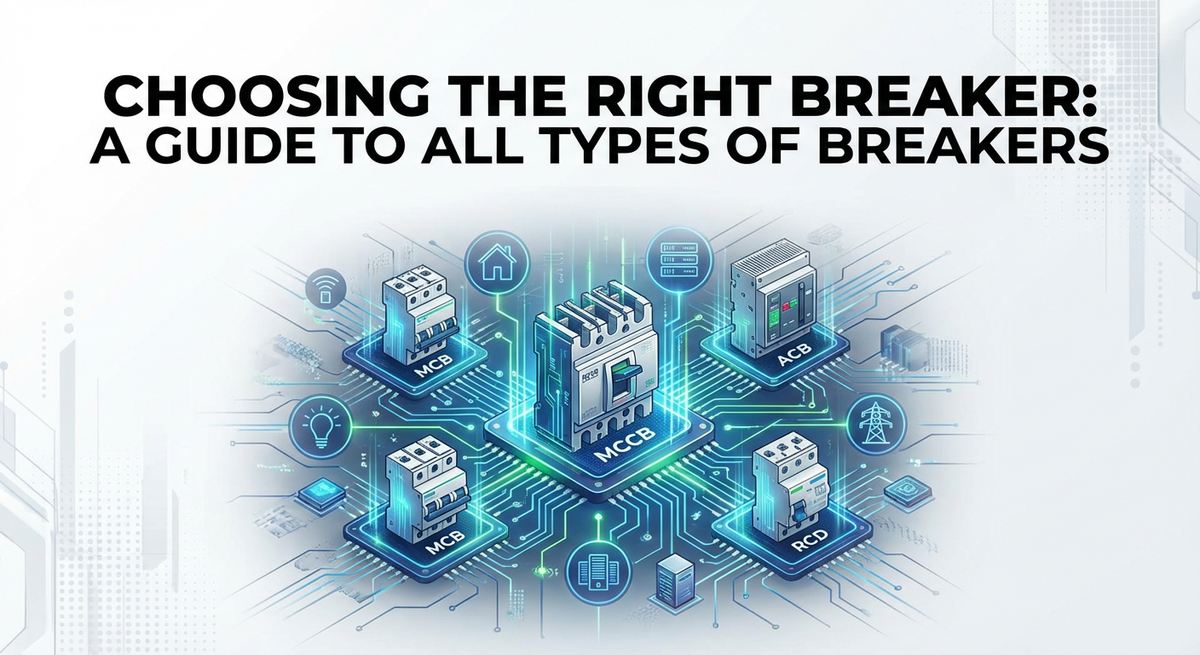
Miniature Circuit Breakers, or MCBs, are perhaps the most common type of circuit breaker encountered in everyday life. They are primarily designed for low-voltage residential, commercial, and light industrial applications, protecting against overcurrents resulting from overloads and short circuits.
Description and Operation: An MCB is a compact, modular, electromechanical device that automatically switches off an electrical circuit during an abnormal condition. Inside, it typically comprises two main tripping mechanisms: * Thermal Trip Unit: A bimetallic strip (composed of two different metals bonded together) responds to sustained overcurrents. As excessive current flows, the strip heats up and bends due to the different expansion rates of the two metals. This bending action eventually actuates a mechanical latch, causing the breaker contacts to open. This provides overload protection with an inverse time characteristic – the greater the overcurrent, the faster the strip heats and bends, and thus the quicker the trip. * Magnetic Trip Unit: A solenoid coil rapidly responds to high-magnitude currents, typical of short circuits. When a sudden, large surge of current flows, it creates a strong electromagnetic field around the coil, which pulls a plunger. This plunger directly triggers the mechanical latch, causing an instantaneous trip. This mechanism provides swift protection against dangerous short circuits.
MCBs are typically available in single-pole (1P), double-pole (2P), triple-pole (3P), and four-pole (4P) configurations, suitable for various wiring systems (e.g., 120V, 240V single-phase, 208V, 400V, 480V three-phase). Their breaking capacity (kAIC) is generally lower than larger industrial breakers, often ranging from 3kA to 10kA, sufficient for typical residential and light commercial fault levels.
Applications: * Residential: Lighting circuits, receptacle circuits, small appliance circuits. * Light Commercial: Office lighting, computers, small motors. * Industrial: Control circuits, small machinery protection, individual branch circuits.
Types and Trip Characteristics (Trip Curves): MCBs are classified into different types based on their magnetic trip characteristics, which determine how quickly they trip in response to short-circuit currents relative to their rated current. These are often referred to as "trip curves."
- Type B Breakers:
- Trip Range: 3 to 5 times the rated current (In).
- Application: Primarily for resistive loads (e.g., incandescent lights, heaters, some residential circuits) where there are no significant inrush currents. They trip relatively quickly on moderate overcurrents.
- Type C Breakers:
- Trip Range: 5 to 10 times the rated current (In).
- Application: The most common type for general commercial and residential use. Suitable for inductive loads (e.g., motors, transformers, fluorescent lighting) that produce moderate inrush currents upon startup without nuisance tripping.
- Type D Breakers:
- Trip Range: 10 to 20 times the rated current (In).
- Application: For highly inductive loads with very high inrush currents (e.g., large motors, X-ray machines, welding equipment, transformers) where a higher tolerance for temporary surges is required to prevent nuisance tripping.
- Type K Breakers:
- Trip Range: 8 to 12 times the rated current (In).
- Application: Often used for motor protection, offering a compromise between Type C and D, with a slightly faster trip for short-circuit faults than Type D.
- Type Z Breakers:
- Trip Range: 2 to 3 times the rated current (In).
- Application: Extremely sensitive to short circuits, used for protecting very sensitive electronic equipment (e.g., semiconductor devices) where even small overcurrents can cause damage.
Understanding these trip types is crucial for ensuring proper coordination and preventing both equipment damage and unnecessary power interruptions.
B. Molded Case Circuit Breakers (MCCBs)
Molded Case Circuit Breakers, or MCCBs, represent a significant step up from MCBs in terms of current rating, breaking capacity, and versatility. They are commonly found in commercial buildings, industrial facilities, and larger residential installations as main service entrance breakers or for protecting feeder circuits and substantial loads.
Description and Operation: MCCBs are encased in a molded composite insulating material, providing a robust, compact, and insulated housing for their internal components. Similar to MCBs, they utilize both thermal and magnetic tripping mechanisms, but with greater sophistication and adjustability. * Thermal-Magnetic Trip Units: Many MCCBs still rely on bimetallic strips for overload protection and electromagnetic coils for short-circuit protection. However, these components are designed to handle much higher currents and fault levels. The trip settings for both the thermal (long-time delay) and magnetic (instantaneous) elements can often be adjusted within a certain range, providing greater flexibility in coordination. * Electronic Trip Units: Modern MCCBs frequently incorporate advanced electronic trip units, which utilize microprocessors to monitor current flow. These units offer highly precise and adjustable trip settings for various protection functions, including: * Long Time (Overload): Adjustable current setting and time delay. * Short Time (Short Circuit): Adjustable current setting and time delay (with an intentional delay to allow downstream breakers to clear the fault first, ensuring selective coordination). * Instantaneous: High-speed tripping for severe short circuits. * Ground Fault: Integrated ground fault protection (GFP) to detect current imbalances. Electronic trip units can also offer communication capabilities, allowing for remote monitoring, control, and integration into building management systems.
MCCBs are available in a wide range of current ratings, typically from 100A up to 2500A, and boast higher interrupting capacities (kAIC), often from 10kA to 200kA, to handle the significant fault currents found in larger electrical distribution systems. They are commonly available in 1P, 2P, 3P, and 4P configurations.
Applications: * Commercial Buildings: Main distribution panels, feeder circuits for multiple branch panels, protection for HVAC systems, elevators, and large lighting loads. * Industrial Facilities: Motor control centers, protection for large machinery, transformers, and industrial processes. * Large Residential: Main service entrance breakers for homes with high electrical demand. * Renewable Energy: Protection for solar PV arrays and wind turbine systems.
Breaking Capacity and Selective Coordination: A critical consideration for MCCBs is their breaking capacity. In commercial and industrial settings, the available fault current from the utility can be extremely high. An MCCB must have an AIC rating sufficient to safely interrupt this maximum potential fault current without exploding or failing.
Selective coordination is another vital aspect, especially in complex electrical systems. It refers to the ability of a protective device to isolate a fault closest to its origin, without disrupting power to healthy parts of the system. For instance, if a fault occurs on a branch circuit, only the branch circuit breaker should trip, leaving the upstream feeder and main breakers unaffected. MCCBs with adjustable electronic trip units are essential for achieving proper selective coordination, as their time-delay settings can be carefully engineered.
C. Air Circuit Breakers (ACBs)
Air Circuit Breakers, or ACBs, are heavy-duty circuit protection devices designed for high-current, low-voltage applications, typically found as main incoming breakers in large industrial plants, data centers, and critical commercial facilities. They are known for their robust construction, high interrupting capacities, and advanced control features.
Description and Operation: ACBs operate in open air at atmospheric pressure to extinguish the electric arc that forms when the breaker contacts separate under fault conditions. They use a specialized arc chute structure, composed of metallic plates, to cool and dissipate the arc. * Contact Mechanism: ACBs feature robust main contacts for carrying normal load current and separate arcing contacts that make and break first, absorbing the brunt of the arc energy and protecting the main contacts. * Arc Quenching Mechanism: When a fault occurs and the contacts separate, an electric arc is drawn. This arc is driven into the arc chute by magnetic forces generated by the fault current itself. Within the arc chute, the arc is stretched, cooled, and divided into smaller, manageable segments by the metallic plates, causing it to extinguish rapidly. * Operating Mechanism: ACBs typically employ stored-energy mechanisms (e.g., spring-charged) to ensure rapid and consistent contact separation, regardless of how quickly the operator manually closes or opens the breaker. This guarantees the speed necessary for effective fault interruption. * Advanced Electronic Trip Units: Almost all modern ACBs are equipped with sophisticated electronic trip units, offering extensive adjustability for overload (long time), short circuit (short time and instantaneous), and ground fault protection. These units often include advanced features like communication ports (Modbus, Ethernet), power metering, event logging, and remote control capabilities, enabling integration into SCADA systems or building management systems.
ACBs have very high current ratings, often from 800A up to 6300A, and exceptionally high interrupting capacities, typically ranging from 42kA to 150kA or even higher, making them suitable for handling the most severe fault currents from utility grids. They are predominantly used in three-phase systems.
Applications: * Main Distribution Boards (MDBs): As the primary protection device for the entire electrical system in large buildings and industrial facilities. * Generator Paralleling Panels: Protecting and controlling generators used for backup power or co-generation. * Motor Control Centers (MCCs): For very large motor loads. * Data Centers: Ensuring reliable power distribution and protection for critical IT infrastructure. * Process Industries: Steel mills, chemical plants, oil and gas facilities, where continuous operation and high fault current handling are essential.
Advanced Features and Selective Coordination: The advanced electronic trip units of ACBs are crucial for achieving sophisticated selective coordination within complex power distribution networks. By precisely adjusting the time-delay and current settings, engineers can ensure that faults are cleared by the nearest downstream breaker, maintaining continuity of service for unaffected portions of the plant or building. Their robust design also allows for high numbers of switching operations, contributing to their long operational life.
D. Vacuum Circuit Breakers (VCBs)
Vacuum Circuit Breakers, or VCBs, are predominantly used in medium-voltage applications (typically 1kV to 38kV), finding widespread use in utility substations, industrial power distribution, and commercial switchgear. They are distinguished by their use of a vacuum interrupter to extinguish the arc.
Description and Operation: The core component of a VCB is the vacuum interrupter, a sealed ceramic or glass envelope containing fixed and moving contacts in a high vacuum (typically 10-5 to 10-7 Torr). * Arc Quenching in Vacuum: When the contacts separate in a vacuum, the absence of an ionized medium (like air or gas) means the arc cannot sustain itself for long. The metallic vapor created by the arc rapidly disperses and condenses on the contacts and the surrounding shield, quickly leading to arc extinction. This makes vacuum interrupters incredibly efficient at interrupting arcs with minimal energy release. * Operating Mechanism: VCBs typically use a spring-charged or hydraulic operating mechanism to ensure fast and precise contact separation and closing. * Advantages of Vacuum: The vacuum environment prevents oxidation and contamination of contacts, leading to very long contact life and minimal maintenance. It also offers a quiet operation with no flame, smoke, or gas byproducts, making VCBs environmentally friendly and safer for indoor installations.
VCBs are known for their compact size, high breaking capacities (up to 50kA or more at medium voltage), and exceptional longevity, often capable of tens of thousands of operations without maintenance of the interrupter.
Applications: * Utility Distribution Systems: Switching and protection in substations and feeder lines. * Industrial Plants: Main switchgear and motor starters for large medium-voltage motors. * Commercial Buildings: Medium-voltage incoming service and distribution for large campuses or high-rise buildings. * Renewable Energy Generation: In wind farms and solar power plants, for connecting generators to the grid or protecting internal medium-voltage systems.
Longevity and Maintenance: The primary advantage of VCBs is their superior longevity and very low maintenance requirements. Because the contacts are sealed in a vacuum, they are protected from environmental degradation. The absence of arc byproducts means there is no need for contact cleaning or replacement for extended periods, significantly reducing operational costs and downtime compared to other medium-voltage breaker types. The only maintenance typically required is lubrication of the operating mechanism and periodic electrical checks.
E. SF6 Circuit Breakers
SF6 (Sulfur Hexafluoride) Circuit Breakers are primarily employed in high-voltage applications (typically 33kV up to 800kV) within power transmission and distribution networks, where their excellent arc-quenching and insulating properties are invaluable.
Description and Operation: SF6 gas is an inert, non-flammable, and highly electronegative gas with outstanding dielectric strength (insulating capability) and a remarkable ability to absorb free electrons, making it an excellent medium for arc extinction. * Arc Quenching with SF6: When the contacts separate under fault conditions, the SF6 gas is directed into the arc path. The gas rapidly absorbs electrons from the arc, converting it into a non-conducting plasma that quickly extinguishes. Different designs exist, including puffer-type (where a piston compresses SF6 and blows it into the arc) and self-blast type (where the arc's own heat generates pressure to move the SF6). * Insulation: Beyond arc quenching, SF6 gas provides superior insulation between live parts and ground, allowing for more compact switchgear designs compared to air-insulated equipment at the same voltage levels. * Sealed Systems: To prevent gas leakage and environmental contamination, SF6 breakers are typically designed as sealed-pressure systems, sometimes incorporating gas density monitors to detect leaks.
SF6 breakers offer extremely high interrupting capacities, essential for clearing the massive fault currents that can occur in high-voltage transmission grids. They are available in single-pole (for three-phase systems where each phase is interrupted independently) or three-pole designs.
Applications: * High-Voltage Transmission Substations: Protecting transmission lines, transformers, and busbars. * Generating Stations: Protecting large generators and connecting them to the grid. * Large Industrial Facilities: For main incoming feeders at high voltages.
SF6 Gas Properties and Environmental Concerns: While highly effective, SF6 gas is a potent greenhouse gas, with a global warming potential (GWP) approximately 23,500 times higher than CO2 over a 100-year period. It has an atmospheric lifetime of up to 3,200 years. Due to these environmental concerns, strict regulations govern the handling, recycling, and disposal of SF6. * Mitigation Efforts: Manufacturers are continuously working on designs that minimize SF6 leakage, improve gas handling procedures, and develop SF6-free alternatives. * Recent Developments and Alternatives: Research and development are actively exploring alternatives to SF6, such as mixtures of SF6 with other gases (like nitrogen) to reduce the overall SF6 content, or entirely new gas mixtures (e.g., fluoronitriles, perfluoroketones) that have significantly lower GWP while maintaining comparable performance. Solid dielectric insulation and vacuum technology are also being extended to higher voltage levels as viable alternatives.
The choice of SF6 breakers, therefore, involves balancing their superior performance characteristics with environmental responsibility and regulatory compliance.
IV. Specialized Breakers for Enhanced Safety
Beyond the primary types of overcurrent protection, specialized circuit breakers have been developed to address specific, critical safety concerns that standard thermal-magnetic breakers might not detect. These devices focus on protecting against electric shock and preventing electrical fires, often mandated by electrical codes in specific locations.
A. Ground Fault Circuit Interrupters (GFCIs)
Ground Fault Circuit Interrupters, commonly known as GFCIs, are life-saving devices specifically designed to protect against severe electric shock. They detect even minute amounts of current leakage to ground, which could indicate a person is being shocked, and quickly cut off the power.
Purpose: The primary purpose of a GFCI is personal protection against electric shock. They are not designed to protect equipment from overloads or short circuits (though they often incorporate standard overcurrent protection in their breaker form). A dangerous electric shock occurs when a person becomes an unintended path for current flowing to ground. Standard circuit breakers, which trip on overcurrent, may not activate in such a scenario because the current flowing through a person's body to ground (e.g., 50mA to 300mA) is often far too low to trip a typical 15A or 20A breaker, yet it is more than enough to cause severe injury or death.
How They Work: Detecting Current Imbalance: The ingenious mechanism of a GFCI relies on monitoring the balance of current flowing through the circuit. It has a sensitive current transformer that measures the current flowing out on the "hot" wire and compares it to the current returning on the "neutral" wire. * Normal Operation: In a healthy circuit, all the current flowing out on the hot wire should return on the neutral wire. The currents are balanced, and the GFCI sees no difference. * Ground Fault Condition: If a ground fault occurs – meaning some current is diverting directly to ground (e.g., through a person who touches a live wire or a faulty appliance with current leakage) – less current will return on the neutral wire than left on the hot wire. This creates an imbalance. * Trip Mechanism: The GFCI is designed to trip and interrupt the circuit when this current imbalance (the "ground fault current") exceeds a very small threshold, typically 4 to 6 milliamperes (mA), within a fraction of a second (often 25 milliseconds). This rapid response time is crucial to prevent serious injury.
Applications: Because ground faults are more likely to occur in areas where electricity and water are present, GFCIs are mandated by electrical codes (e.g., National Electrical Code in the US, IEC standards internationally) in specific locations: * Wet Locations: Bathrooms, kitchens (for countertop receptacles), garages, unfinished basements, crawl spaces. * Outdoor Receptacles: All outdoor outlets must be GFCI protected. * Specific Appliances: Dishwashers, laundry areas, hot tubs, swimming pools, fountains, boathouses. * Construction Sites: Portable generators and temporary wiring often require GFCI protection.
Types of GFCIs: * GFCI Receptacles: These are integrated into electrical outlets. They protect themselves and all downstream receptacles and loads wired to them. They are easily identified by the "TEST" and "RESET" buttons on their face. * GFCI Breakers: These replace standard circuit breakers in the electrical panel. A GFCI breaker protects the entire branch circuit it serves, including all outlets and lighting fixtures on that circuit. They also have "TEST" and "RESET" buttons on the breaker handle itself. * Portable GFCIs: These are typically in-line devices or adapter plugs that can be used temporarily when GFCI protection is not available at a power source, common on construction sites or for outdoor power tools.
Regular testing of GFCIs (monthly is often recommended by manufacturers) by pressing the "TEST" button is vital to ensure they are functioning correctly and will protect you when needed.
B. Arc Fault Circuit Interrupters (AFCIs)
Arc Fault Circuit Interrupters, or AFCIs, are specialized circuit breakers designed to protect against electrical fires caused by dangerous arc faults. While GFCIs protect people from shock, AFCIs protect property from fire.
Purpose: The primary purpose of an AFCI is fire prevention. They detect specific electrical arcing conditions that could ignite combustible materials, even when the current is below the trip threshold of standard overcurrent protection. Arc faults can occur from: * Damaged wire insulation (e.g., from nails, screws, pests, or wear and tear). * Loose electrical connections at outlets, switches, or in junction boxes. * Frayed appliance cords. * Overheated or stressed wires.
These conditions can create erratic, high-temperature electrical arcs that generate enough heat to ignite building materials, leading to devastating fires. Standard breakers are largely blind to these subtle, yet hazardous, arcing conditions.
How They Work: Detecting Arc Signatures: AFCIs utilize sophisticated electronic circuitry and microprocessors to continuously monitor the current waveform in a circuit. They are programmed to recognize the unique and chaotic "signatures" or patterns of dangerous arcing faults, distinguishing them from harmless arcs that occur during normal operation (e.g., when a light switch is flipped or a motor starts). When a dangerous arc fault signature is detected, the AFCI trips rapidly, interrupting the circuit before enough heat can build up to start a fire.
Applications: Recognizing the significant role of arc faults in electrical fires, electrical codes have increasingly mandated AFCI protection in residential areas. * Residential Bedrooms: Historically, bedrooms were the first mandated locations due to the presence of ignition sources (beds, curtains) and potentially long periods of occupancy while sleeping. * Living Areas: Most recent codes require AFCI protection for nearly all 15A and 20A branch circuits supplying outlets or lighting in dwellings, including living rooms, family rooms, dining rooms, hallways, closets, and even kitchens and laundry areas. * Specific Circuit Types: Depending on local codes, certain circuits, like those exclusively serving fire alarm systems or dedicated appliance circuits, might be exempt.
Types of AFCIs: * Branch/Feeder AFCI Breakers: These are installed in the electrical panel and protect the entire branch circuit they serve, including all wiring, outlets, and connected devices on that circuit. * Combination AFCI (CAFCI) Breakers: This is the most common type now. A CAFCI protects against both series arc faults (arcs in a continuous conductor, like a frayed cord) and parallel arc faults (arcs between hot and neutral/ground, often leading to a short circuit or ground fault). They offer more comprehensive arc fault detection. * AFCI Receptacles: Similar to GFCI receptacles, these are outlets with built-in AFCI protection. They protect themselves and any downstream receptacles or loads. They are often used when replacing an older, non-AFCI breaker in an older panel, where AFCI protection is now required for that specific outlet.
AFCIs can sometimes be prone to "nuisance tripping" if they falsely identify normal electrical events as dangerous arcs. Manufacturers have continuously improved their algorithms to reduce these occurrences, but proper troubleshooting is essential if frequent, unexplained AFCI trips occur.
C. Combination AFCI/GFCI Breakers
The increasing emphasis on comprehensive electrical safety has led to the development of devices that integrate both arc fault and ground fault protection into a single unit. These are known as Combination AFCI/GFCI breakers.
Integrating Both Protections: A Combination AFCI/GFCI breaker, also known as a Dual Function breaker, provides the highest level of residential circuit protection available in a single device. It guards against: 1. Overloads: Due to excessive current draw. 2. Short Circuits: Due to low-resistance paths. 3. Series and Parallel Arc Faults: To prevent electrical fires. 4. Ground Faults: To protect against electric shock.
Benefits and Installation Considerations: * Ultimate Safety: By combining both AFCI and GFCI technologies, these breakers offer the most comprehensive protection for residential branch circuits, addressing all major electrical hazards. This simplifies compliance with stringent electrical codes that might require both types of protection in certain areas (e.g., a bathroom with a countertop receptacle that also supplies power to a bedroom). * Space Saving: In crowded electrical panels, a single dual-function breaker can save space compared to trying to install separate AFCI and GFCI breakers or a GFCI receptacle at the beginning of a circuit with an AFCI breaker. * Simplified Wiring: While more complex internally, they simplify the wiring for the installer as only one device needs to be connected to provide full protection. * Cost-Effectiveness: Although individually more expensive than a standard breaker, they can be more cost-effective than installing separate AFCI and GFCI devices on the same circuit when both types of protection are mandated.
Installation Challenges and Troubleshooting: * Cost: The primary drawback is their higher initial cost compared to standard breakers or even single-function AFCI/GFCI devices. * Troubleshooting: When a combination breaker trips, determining whether it tripped due to an overload, short circuit, arc fault, or ground fault can be more challenging. Many dual-function breakers include indicator lights or codes to help diagnose the specific fault type, which is invaluable for electricians during troubleshooting. * Compatibility: Ensure compatibility with the existing electrical panel and bus bar system.
These advanced breakers represent the pinnacle of circuit protection for modern homes, delivering peace of mind by safeguarding against virtually all common and dangerous electrical faults.
APIPark is a high-performance AI gateway that allows you to securely access the most comprehensive LLM APIs globally on the APIPark platform, including OpenAI, Anthropic, Mistral, Llama2, Google Gemini, and more.Try APIPark now! 👇👇👇
V. Criteria for Choosing the Right Breaker
Selecting the appropriate circuit breaker is a multifaceted decision that goes beyond simply matching the amperage rating. A careful evaluation of several critical factors ensures optimal safety, reliable operation, and compliance with electrical codes. Ignoring any of these criteria can lead to frequent nuisance trips, equipment damage, or, worse, a catastrophic electrical failure.
A. Application Type: Residential, Commercial, Industrial
The environment in which the breaker will operate fundamentally dictates the necessary features and robustness.
- Residential Applications: For homes, the primary concerns are personal safety and fire prevention. MCBs (Type B or C), GFCIs, and AFCIs are the workhorses. Main service entrance breakers might be MCCBs. Loads are typically single-phase and relatively low amperage. The available fault current is generally lower than in commercial or industrial settings.
- Commercial Applications: Office buildings, retail spaces, and smaller institutional buildings have higher power demands and more complex distribution systems. MCCBs are common for main distribution and feeder circuits, while MCBs still protect branch circuits. Selective coordination becomes more important to minimize business disruption. GFCI/AFCI requirements might extend to specific areas like kitchens, restrooms, or common areas. Higher AIC ratings are often necessary.
- Industrial Applications: Factories, processing plants, and heavy manufacturing facilities demand the most robust and sophisticated breakers. ACBs and VCBs are prevalent for main incoming power and critical feeder circuits due to their high current ratings, superior breaking capacities, and advanced protection features. Selective coordination is paramount to maintain operational continuity. Specialized breakers for motor protection or hazardous locations may be required. Fault currents can be extremely high, necessitating very high AIC ratings.
B. Load Requirements: Amperage, Voltage
This is often the first and most fundamental parameter to consider.
- Amperage Rating (Current Rating): The breaker's continuous current rating (e.g., 15A, 20A, 100A) must be carefully matched to the wire gauge of the circuit it protects and the total continuous current drawn by the connected load. A breaker that is too small will trip frequently, while one that is too large will not protect the wires from overheating in an overload condition, creating a fire hazard. The NEC (National Electrical Code) and similar standards provide tables linking wire gauge to maximum allowable amperage.
- Voltage Rating: The breaker's voltage rating (e.g., 120V, 240V, 480V) must be equal to or greater than the circuit's operating voltage. Using a breaker rated for a lower voltage than the system can lead to catastrophic failure during fault interruption, as it may not be able to safely extinguish the arc.
- Number of Poles: Single-pole breakers protect one hot conductor (for 120V circuits). Double-pole breakers protect two hot conductors (for 240V or 208V single-phase circuits or two phases of a three-phase circuit). Three-pole breakers protect three hot conductors (for three-phase circuits). The number of poles must match the circuit configuration.
C. Fault Current Rating (AIC/kAIC): Withstanding Short Circuits
The Ampere Interrupting Capacity (AIC) or kiloAmpere Interrupting Capacity (kAIC) is one of the most critical, yet often misunderstood, ratings. It specifies the maximum fault current (e.g., short-circuit current) that a breaker can safely interrupt without being damaged or failing catastrophically.
- Calculation: The available fault current at a given point in an electrical system depends on the impedance of the utility transformer, the length and size of service conductors, and other factors. This value must be calculated by a qualified electrical engineer.
- Matching Requirements: The AIC rating of the chosen breaker must be equal to or greater than the maximum available fault current at its point of installation. If a breaker with an insufficient AIC rating attempts to interrupt a fault current exceeding its capacity, it can literally explode, causing severe damage, injury, or fire. This is particularly crucial in industrial and large commercial settings where utility transformers can supply enormous fault currents.
D. Environmental Conditions: Temperature, Humidity, Hazardous Locations
The operating environment significantly impacts breaker performance and longevity.
- Ambient Temperature: Breakers are typically rated for operation at specific ambient temperatures (e.g., 40°C). Operating a breaker in an environment consistently hotter than its rating can cause it to trip below its nominal current (thermal derating) or reduce its lifespan. Conversely, extremely cold temperatures can affect the performance of some electronic trip units.
- Humidity and Corrosive Environments: High humidity or exposure to corrosive chemicals (e.g., in certain industrial processes) can degrade internal components, leading to premature failure. Breakers designed for such environments may feature special coatings or sealed enclosures.
- Hazardous Locations: In areas where flammable gases, vapors, liquids, combustible dust, or ignitable fibers are present (e.g., chemical plants, grain elevators, refineries), special explosion-proof or intrinsically safe breakers and enclosures are required. These are designed to prevent the breaker from igniting the hazardous atmosphere during normal operation or fault conditions.
E. Code Compliance: NEC, IEC, Local Regulations
Adherence to relevant electrical codes and standards is not optional; it is a legal and safety imperative.
- National Electrical Code (NEC) / Local Building Codes: In North America, the NEC (NFPA 70) dictates minimum safety standards for electrical installations. It specifies when GFCIs, AFCIs, and specific types of overcurrent protection are required. Local jurisdictions may adopt the NEC with amendments or have their own additional requirements.
- International Electrotechnical Commission (IEC) Standards: Many parts of the world follow IEC standards (e.g., IEC 60898 for MCBs, IEC 60947 for MCCBs and ACBs). These standards define characteristics like trip curves (Type B, C, D), breaking capacities, and testing procedures.
- Other Standards: Depending on the application (e.g., marine, aerospace, specific industrial equipment), other industry-specific standards or certification bodies (e.g., UL, CSA, CE) may need to be considered. Always ensure the chosen breaker is listed or approved for its intended application by a recognized testing laboratory.
F. Selective Coordination: Ensuring Only the Faulted Circuit Trips
Selective coordination (or simply "coordination") is the strategic application of overcurrent protective devices (OCPDs) to ensure that only the device immediately upstream of a fault opens, while all other upstream devices remain closed. This minimizes the extent of the outage.
- Importance: In critical applications (hospitals, data centers, industrial processes) where continuous power is vital, selective coordination is paramount. A fault on a minor branch circuit should not trip the main breaker for an entire facility.
- Achieving Coordination: This is accomplished by carefully selecting OCPDs with appropriate time-current characteristics (trip curves) and settings. Downstream devices must trip faster or at lower current levels than their upstream counterparts. Electronic trip units in MCCBs and ACBs provide the necessary adjustability (long-time, short-time, instantaneous, ground fault delay settings) to achieve precise coordination. For MCBs, coordination is often achieved by selecting devices with different trip curve types and ratings.
G. Cost vs. Performance: Balancing Budget with Safety and Reliability
The initial cost of a breaker can vary dramatically, from a few dollars for a residential MCB to tens of thousands for a high-voltage SF6 breaker.
- Upfront Cost: While it's tempting to opt for the cheapest option, compromising on safety or reliability for cost savings is a false economy. The potential costs of fire damage, equipment destruction, production downtime, or human injury far outweigh any savings.
- Long-Term Value: Consider the total cost of ownership, which includes maintenance, expected lifespan, and the cost of potential outages. High-performance breakers, like VCBs, may have a higher initial cost but offer significantly reduced maintenance and superior reliability over their lifetime. Advanced features like communication capabilities or remote monitoring can provide operational efficiencies that justify a higher price point.
- Features: Decide which features are truly necessary (e.g., adjustable trip units, communication capabilities, integral ground fault protection) and which are desirable but not essential for your specific application.
H. Future Expansion and Flexibility
Consider the potential for future growth or changes in the electrical system.
- Oversizing (Slightly): While a breaker should always match the wire size, sometimes slightly oversizing a panel's main breaker or feeder breakers (within code limits) can provide flexibility for future load additions without requiring a complete panel upgrade.
- Modular Design: Some breaker systems, especially in industrial switchgear, are designed with modularity in mind, allowing for easier upgrades or additions of protection elements.
- Adjustable Trip Units: Breakers with adjustable electronic trip units offer significant flexibility, as their settings can be modified if load characteristics or coordination requirements change, without needing to replace the entire breaker.
By methodically evaluating these criteria, electrical professionals can ensure they select breakers that provide the optimal balance of safety, reliability, and cost-effectiveness for any given electrical installation.
VI. Installation, Maintenance, and Common Issues
The lifespan and effective operation of any circuit breaker depend not only on proper selection but also on meticulous installation, diligent maintenance, and an understanding of common operational issues. Even the most advanced breaker can fail if mishandled or neglected.
A. Proper Installation Practices (Wiring, Torque)
Correct installation is foundational to a breaker's performance and safety.
- Qualified Personnel: All electrical work, especially breaker installation, should be performed by qualified and licensed electricians who are familiar with local codes and safety practices.
- Correct Wiring: Ensure that the correct wire gauge is used for the circuit and that it is properly terminated. Wires must be stripped to the correct length, inserted fully into the breaker terminals, and tightened securely. Loose connections are a common cause of overheating, arcing, and nuisance tripping.
- Torque Specifications: This is a critical yet often overlooked detail. Breaker terminals have specific torque requirements (measured in inch-pounds or Newton-meters) provided by the manufacturer. Using a calibrated torque screwdriver or wrench to tighten terminal screws to these exact specifications is paramount.
- Under-torquing: Leads to loose connections, high resistance, overheating, and potential fire hazards.
- Over-torquing: Can strip threads, damage the wire, or crack the breaker's internal components, compromising its integrity.
- Panelboard Alignment: Ensure the breaker snaps securely onto the bus bar in the electrical panel. It should sit flush and make proper electrical contact.
- Neutral and Ground Connections: For GFCIs, AFCIs, and combination breakers, proper wiring of the neutral wire is essential, as these devices monitor the neutral current. The neutral wire typically connects to a pig-tail on the breaker itself, not directly to the neutral bar (unless specified otherwise).
B. Regular Inspection and Testing
Breakers, like any safety device, require periodic checks to ensure they remain functional.
- Visual Inspection (Annual):
- External Damage: Check for any signs of physical damage, cracks, discoloration, or burning on the breaker housing or wires.
- Loose Connections: Gently tug on wires to ensure they are secure (after de-energizing the circuit).
- Dust and Debris: Keep the electrical panel clean and free of dust, which can impede heat dissipation or lead to tracking.
- Corrosion: Look for any signs of rust or corrosion on terminals or bus bars.
- Manual Trip Test (As per manufacturer/code):
- GFCI/AFCI Test Buttons: For receptacles and breakers with "TEST" buttons, press them monthly (or as recommended) to ensure the device trips. Reset immediately after testing. This simulates a fault and verifies the internal mechanism.
- Breaker Handle Operation: Occasionally, manually switch general-purpose breakers OFF and then back ON to ensure the mechanism isn't stuck. This is more for exercise than a functional test.
- Electrical Testing (Periodic):
- Insulation Resistance: For larger industrial breakers, insulation resistance tests (Megger testing) can be performed to check the integrity of the insulation.
- Contact Resistance: Verify the resistance across the main contacts to ensure good conductivity.
- Trip Curve Testing: For critical industrial breakers with electronic trip units (MCCBs, ACBs), specialized test sets can inject currents to verify that the breaker trips precisely according to its programmed time-current curve. This is crucial for maintaining selective coordination. This testing is typically done by specialized technicians during scheduled maintenance outages (e.g., every 3-5 years).
C. Common Causes of Tripping
Understanding why a breaker trips is the first step in troubleshooting.
- Overload: The most common reason. Too many devices are drawing current on the same circuit, exceeding its amperage rating. For instance, plugging a space heater and a vacuum cleaner into the same 15A circuit.
- Short Circuit: A sudden, high-magnitude current flow due to a direct connection between hot and neutral/ground. This often causes an instantaneous trip and might be accompanied by sparks or a burnt smell. Common culprits include damaged appliance cords, faulty wiring, or an internal short in an appliance.
- Ground Fault: Current leakage to ground, detected by GFCIs. This could be due to a faulty appliance, damaged wiring in a wet location, or someone touching a live wire while grounded.
- Arc Fault: Detected by AFCIs, often due to loose connections, frayed wires, or damaged insulation, leading to dangerous electrical arcing.
- Nuisance Tripping: When a breaker trips without an apparent fault. This can be caused by:
- Sensitive Breakers: AFCIs and GFCIs are very sensitive and can sometimes react to motor startup surges or electromagnetic interference.
- Loose Connections: Even minor loose connections can cause heat build-up or intermittent arcing.
- Aging Breaker: Over time, the internal components of a breaker can degrade, making it more sensitive.
- Overheating: If the breaker is installed in an excessively hot enclosure or exposed to direct sunlight, its thermal element may trip prematurely.
- Incorrect Breaker Type: Using a Type B MCB for an inductive load that requires a Type C can lead to nuisance tripping.
D. Troubleshooting Breaker Issues
When a breaker trips, follow a systematic approach:
- Safety First: Before investigating, ensure power is off to the affected circuit. Never try to hold a breaker in the ON position if it keeps tripping.
- Identify the Cause:
- Overload: Unplug appliances from the affected circuit. If the breaker resets, plug them back in one by one until the culprit is found.
- Short/Ground/Arc Fault: Look for obvious signs of damage (burnt outlets, frayed cords). Unplug all devices from the circuit. If the breaker still trips, the fault is likely in the fixed wiring or an integrated appliance (e.g., dishwasher). If it resets, plug devices back in one by one.
- Reset the Breaker: Push the breaker handle firmly to the "OFF" position, then firmly to the "ON" position. Some breakers require a full "OFF" toggle before they can be reset.
- Persistent Tripping: If the breaker trips immediately upon resetting, or if it trips repeatedly after a short period, it indicates a persistent fault in the wiring or a connected appliance. Do not continue to reset it. This requires professional assistance.
- Professional Help: For any persistent or unexplained trips, or if you suspect a serious electrical fault, always call a licensed electrician. Attempting to diagnose or fix complex electrical problems without expertise is extremely dangerous.
E. When to Replace a Breaker
Breakers are durable, but they are not immortal.
- Repeated Tripping: A breaker that frequently trips for no apparent reason, or after the identified fault has been cleared, might be weakening and should be replaced.
- Physical Damage: Any signs of burning, melting, corrosion, or physical damage to the breaker indicate it needs immediate replacement.
- Age: Older breakers, especially those from decades past, may not meet modern safety standards, particularly if they are not GFCI or AFCI protected where required. Their internal components also degrade over time.
- Failure to Trip: If a severe fault occurs (e.g., a short circuit) and the breaker does not trip, it is a critical failure and must be replaced immediately. This is often more challenging to diagnose but highlights the importance of periodic testing for GFCIs/AFCIs.
- Upgrades: When renovating or adding significant electrical loads, it might be necessary to upgrade breakers to higher capacities (ensuring wire gauge is also upgraded) or to install modern GFCI/AFCI protection.
- Nuisance Tripping with Old Breakers: If an older breaker (not GFCI/AFCI) starts nuisance tripping, replacement is often more cost-effective than extensive troubleshooting.
Properly installed and maintained, circuit breakers provide decades of reliable protection. However, vigilance and prompt action when issues arise are key to maintaining a safe electrical system.
VII. Emerging Technologies and Future Trends in Circuit Protection
The landscape of electrical protection is continuously evolving, driven by advancements in digital technology, the proliferation of smart devices, the integration of renewable energy sources, and an unyielding commitment to enhanced safety and efficiency. The future of circuit breakers extends far beyond simple mechanical switching, embracing intelligence, connectivity, and predictive capabilities.
A. Smart Breakers and Home Automation Integration
The rise of the smart home has brought connectivity to nearly every appliance, and circuit breakers are no exception. Smart breakers represent a significant leap forward, transforming passive safety devices into active, intelligent components of a networked home.
- Remote Monitoring and Control: Smart breakers can communicate with home automation hubs, smartphones, or cloud platforms. This allows homeowners to remotely monitor the status of individual circuits (on/off, current draw), receive alerts for tripped breakers, and even remotely switch circuits on or off. Imagine checking if you left a curling iron on and being able to switch off that circuit from your phone.
- Energy Management: By providing real-time data on energy consumption for individual circuits, smart breakers enable more granular energy monitoring. Users can identify energy-hogging appliances, track energy usage patterns, and potentially automate load shedding during peak hours or for demand response programs.
- Predictive Maintenance and Diagnostics: Integrated sensors and software can monitor the health of the breaker itself (e.g., internal temperature, number of operations). This data can be used to predict potential failures before they occur, scheduling proactive maintenance and improving system reliability.
- Enhanced Safety Features: Some smart breakers incorporate advanced fault detection algorithms, leveraging machine learning to more accurately distinguish between dangerous arc faults and harmless electrical noise, reducing nuisance tripping while maintaining superior protection. Others may offer features like surge protection or voltage anomaly detection.
- Seamless Integration: Designed to work within existing electrical panels, smart breakers facilitate seamless integration into broader smart home ecosystems, allowing for complex automation rules (e.g., "if motion detected in the basement, turn on basement lights unless that circuit is off for maintenance").
B. IoT in Electrical Panels: Remote Monitoring and Control
Expanding beyond just individual smart breakers, the entire electrical panel is becoming a hub for the Internet of Things (IoT). This trend focuses on embedding sensors and communication modules directly into panel components, enabling comprehensive monitoring and control of an entire electrical distribution system, from residential to industrial scales.
- Centralized Data Collection: IoT-enabled electrical panels can collect vast amounts of data on voltage, current, power factor, harmonics, temperature, and breaker status across all circuits. This data is then sent to cloud-based platforms for analysis and visualization.
- Proactive System Management: Facility managers and homeowners can gain unprecedented insights into their electrical infrastructure. Abnormal patterns or impending issues (e.g., a circuit consistently running hot, subtle power fluctuations) can be identified early, allowing for proactive intervention before a critical failure occurs.
- Reduced Downtime: In industrial and commercial settings, remote diagnostics and event logging significantly speed up troubleshooting. Instead of manually inspecting every breaker, technicians can pinpoint the exact fault location and type from a central dashboard, reducing mean time to repair (MTTR) and minimizing costly downtime.
- Optimized Performance: By analyzing electrical load profiles, businesses can optimize energy usage, balance loads across phases, and ensure their electrical infrastructure is operating at peak efficiency, potentially extending the life of equipment.
As electrical systems become increasingly sophisticated, integrating with smart home platforms, industrial IoT networks, and renewable energy sources, the sheer volume of data and the complexity of managing diverse digital interfaces proliferate. For instance, when different smart devices, sensors, and control systems need to communicate seamlessly, they often rely on Application Programming Interfaces (APIs). Managing these myriad digital connections, ensuring their security, reliability, and efficient operation, is paramount. This is where dedicated tools come into play. For organizations and developers grappling with the intricacies of integrating and deploying such services, platforms like APIPark, an open-source AI gateway and API management platform, offer robust solutions to unify and streamline the management of these digital interactions, from AI model invocation to end-to-end API lifecycle management, ensuring smooth communication across a broad ecosystem of applications and services that underpin modern smart electrical infrastructure. Just as advanced breakers protect the physical flow of electricity, API management platforms ensure the robust and secure flow of digital information within these complex, interconnected systems.
C. Predictive Maintenance for Breakers
Leveraging the data collected from smart breakers and IoT panels, predictive maintenance strategies are transforming how electrical protection systems are managed.
- Condition-Based Monitoring: Instead of fixed maintenance schedules, predictive maintenance relies on the actual condition of the breaker. Sensors monitor critical parameters like contact wear, spring tension, operating mechanism health, and internal temperature.
- Algorithm-Driven Diagnostics: Sophisticated algorithms and machine learning models analyze the collected data to identify patterns that precede failure. For example, slight variations in trip time or increasing contact resistance over time could signal an impending issue.
- Optimized Resource Allocation: By knowing precisely which breakers require attention and when, maintenance teams can prioritize tasks, order parts proactively, and minimize unnecessary preventive maintenance activities, leading to significant cost savings and improved resource utilization.
- Enhanced Reliability: The ultimate goal is to move from reactive maintenance (fixing things after they break) and preventive maintenance (fixing things on a schedule, possibly too early) to predictive maintenance, where failures are anticipated and addressed before they impact operations.
D. Renewable Energy Integration and DC Breakers
The global shift towards renewable energy sources like solar PV and wind power is introducing new challenges and requirements for circuit protection, particularly in the realm of direct current (DC) systems.
- DC Breakers: Unlike AC circuits, DC circuits have no natural zero-crossing of current, making arc extinction more challenging. Specialized DC circuit breakers are required for photovoltaic (PV) arrays, battery energy storage systems (BESS), and electric vehicle (EV) charging infrastructure. These breakers employ unique arc quenching technologies (e.g., magnetic blowouts) to rapidly extinguish the persistent DC arc.
- Hybrid AC/DC Systems: The increasing integration of DC sources into traditional AC grids necessitates advanced protection that can seamlessly handle both AC and DC faults, as well as complex interactions between them.
- Microgrids and Grid Modernization: The development of microgrids (localized grids that can operate autonomously) and the broader modernization of the electrical grid require highly intelligent and fast-acting protection devices that can respond to dynamic power flows, bidirectional power, and rapid changes in generation and load.
E. Enhanced Safety Features and AI-driven Diagnostics
The pursuit of electrical safety is a continuous journey, with emerging technologies pushing the boundaries of protection.
- High-Resolution Fault Signatures: Advanced sensors are capable of capturing extremely high-resolution current and voltage waveforms, providing more detailed "fingerprints" of various fault conditions.
- AI and Machine Learning for Fault Detection: Artificial intelligence and machine learning algorithms are being trained on vast datasets of normal operation and various fault signatures. This allows them to identify and classify fault types (e.g., distinguishing between different types of arc faults, or even identifying specific appliance failures) with unprecedented accuracy and speed, further reducing nuisance tripping while enhancing genuine protection.
- Self-Healing Grids: In the most advanced visions for smart grids, AI-driven protection systems could enable portions of the grid to automatically isolate faults and reroute power around affected sections, achieving a degree of "self-healing" and minimizing widespread outages.
- Modular and Adaptable Protection: Future breakers may be even more modular, allowing for easy updates to their firmware or the addition of new protection modules as safety standards evolve or new types of electrical threats emerge.
In essence, the future of circuit breakers is intelligent, connected, and proactive. They are becoming integral nodes in a vast, interconnected electrical ecosystem, leveraging data and advanced algorithms to deliver unparalleled levels of safety, reliability, and efficiency for the electrified world of tomorrow.
VIII. Conclusion
The humble circuit breaker, though often unseen and unappreciated until a fault occurs, stands as the unwavering sentinel of our electrical systems. From the compact Miniature Circuit Breakers safeguarding our homes to the colossal Air and Vacuum Circuit Breakers defending industrial behemoths and utility grids, each type is meticulously engineered to serve a critical role in preventing electrical hazards. Our exploration has revealed that choosing the right breaker is a decision demanding careful consideration of numerous factors: the specific application, the precise load requirements, the anticipated fault current, the environmental conditions, and the ever-evolving landscape of electrical codes.
We have delved into the fundamental principles of overcurrent, short circuit, ground fault, and arc fault protection, understanding the distinct threats each poses and how specialized devices like GFCIs and AFCIs have revolutionized personal and property safety. The meticulous process of selection, installation, and ongoing maintenance underscores the complexity and importance of these devices. A poorly chosen or neglected breaker can transform an otherwise benign electrical system into a hidden danger, while a correctly specified and maintained one silently ensures continuous, safe operation for decades.
Looking forward, the integration of smart technologies, IoT connectivity, and advanced AI diagnostics promises an even safer and more efficient future. Smart breakers will not only protect but also inform, predict, and integrate seamlessly into our intelligent environments, ushering in an era of unprecedented control and reliability for our electrical infrastructure.
Ultimately, whether you are a homeowner, an electrician, an engineer, or a facility manager, the knowledge gleaned from this guide empowers you to make informed decisions that prioritize safety above all else. Remember that electricity, while indispensable, demands respect and vigilant protection. By choosing the right breaker for every application and ensuring its proper installation and maintenance, we uphold our collective commitment to a secure and resilient electrified world. When in doubt, always consult with a qualified electrical professional, for their expertise is invaluable in navigating the intricate world of circuit protection.
IX. Frequently Asked Questions (FAQs)
1. What is the fundamental difference between a fuse and a circuit breaker? The fundamental difference lies in their reusability and operational mechanism. A fuse is a single-use, sacrificial device containing a metal wire that melts and breaks the circuit when an overcurrent occurs; it must be replaced after each trip. A circuit breaker, on the other hand, is a reusable electromechanical switch that trips open during a fault and can be manually reset (or in some advanced models, automatically reset) once the fault is cleared, restoring power without needing replacement. Breakers also offer more sophisticated protection against various fault types beyond simple overcurrents.
2. Why do I need both GFCI and AFCI protection? Aren't they redundant? No, GFCI (Ground Fault Circuit Interrupter) and AFCI (Arc Fault Circuit Interrupter) protect against different types of dangerous electrical faults and are not redundant. * GFCI protects against electric shock by detecting small current imbalances (ground faults) that could flow through a person's body to ground. These currents are often too low to trip a standard breaker. * AFCI protects against electrical fires by detecting dangerous arc faults (like those caused by frayed wires or loose connections) that generate intense heat and can ignite combustible materials. Arc fault currents often have erratic patterns that standard breakers and GFCIs cannot reliably detect. Both are essential for comprehensive safety, and many modern electrical codes require both in specific areas of a home.
3. What does the "AIC" rating on a circuit breaker mean, and why is it important? AIC stands for Ampere Interrupting Capacity (sometimes kAIC for kiloAmpere Interrupting Capacity). It represents the maximum fault current (e.g., short-circuit current) that a circuit breaker can safely interrupt without being damaged or failing catastrophically. The AIC rating of a breaker must be equal to or greater than the maximum available fault current at its point of installation. If a breaker with an insufficient AIC rating attempts to clear a fault exceeding its capacity, it can explode, leading to severe damage, fire, and potential injury. This rating is particularly critical in commercial and industrial settings where very high fault currents can occur.
4. My breaker keeps tripping, but I can't find anything wrong. What should I do? Frequent, unexplained tripping (often called "nuisance tripping") can be frustrating but should never be ignored. First, ensure you've unplugged all devices from the affected circuit and tried resetting the breaker (firmly OFF, then firmly ON). If it still trips, the issue is likely within the fixed wiring of the circuit or an integrated appliance (like a built-in oven). Potential causes include: * A persistent, subtle fault in the wiring (e.g., a loose connection creating heat or intermittent arcing). * A faulty appliance that you haven't identified yet. * An aging or weakening breaker that has become overly sensitive. * The breaker being the wrong type for the connected load (e.g., a Type B MCB for a motor with high inrush current). * Overheating in the electrical panel or the breaker itself due to poor ventilation or high ambient temperatures. It is highly recommended to call a qualified, licensed electrician. They have specialized diagnostic tools to identify the exact cause, such as insulation resistance testers, circuit tracers, and power quality analyzers, and can safely resolve the issue.
5. How do smart breakers differ from traditional circuit breakers, and what are their main benefits? Smart breakers integrate traditional circuit protection with advanced digital technology, offering capabilities far beyond simple fault interruption. Key differences and benefits include: * Connectivity: Smart breakers can connect to home automation systems, smartphones, or cloud platforms via Wi-Fi or other protocols. * Remote Monitoring & Control: Users can remotely monitor circuit status (on/off, current draw), receive alerts for tripped breakers, and even remotely turn circuits on or off from anywhere. * Energy Management: They provide granular, real-time data on energy consumption for individual circuits, helping users identify energy hogs, track usage patterns, and optimize energy efficiency. * Predictive Maintenance: Integrated sensors and software can monitor the health of the breaker itself and predict potential failures, allowing for proactive maintenance before an outage occurs. * Enhanced Diagnostics: Some use AI/machine learning to more accurately detect fault types, reducing nuisance tripping while providing superior protection. * Integration: They seamlessly integrate into broader smart home ecosystems, enabling complex automation scenarios. In essence, smart breakers transform passive safety devices into active, intelligent components of a connected electrical system, offering greater control, insight, and safety.
🚀You can securely and efficiently call the OpenAI API on APIPark in just two steps:
Step 1: Deploy the APIPark AI gateway in 5 minutes.
APIPark is developed based on Golang, offering strong product performance and low development and maintenance costs. You can deploy APIPark with a single command line.
curl -sSO https://download.apipark.com/install/quick-start.sh; bash quick-start.sh

In my experience, you can see the successful deployment interface within 5 to 10 minutes. Then, you can log in to APIPark using your account.

Step 2: Call the OpenAI API.