Demystifying IP Allowlisting vs Whitelisting


In the ever-evolving landscape of cybersecurity, managing access to sensitive systems, data, and services is paramount. As organizations increasingly adopt distributed architectures, microservices, and cloud-native solutions, the traditional perimeter-based security model has given way to more granular and dynamic access control mechanisms. Among these, IP allowlisting stands out as a foundational, yet frequently misunderstood, technique. This article aims to comprehensively demystify IP allowlisting, exploring its technical underpinnings, practical applications, benefits, limitations, and its crucial role in modern security postures, particularly in the context of API management and gateway solutions. We will also address the important linguistic shift from "whitelisting" to the more inclusive and precise "allowlisting," highlighting the reasons behind this change and its broader implications for professional communication in technology.
The digital realm is a constant battleground where legitimate users and malicious actors vie for access to resources. From sophisticated nation-state attacks to opportunistic brute-force attempts, the threats are diverse and relentless. In such an environment, merely relying on strong passwords or basic authentication is often insufficient. Enterprises need robust mechanisms to explicitly define who or what is permitted to interact with their digital assets. This is where IP allowlisting becomes a critical component of a multi-layered defense strategy. By meticulously curating a list of approved IP addresses, organizations can erect a powerful barrier, ensuring that only trusted sources can initiate connections or requests to specific services, thereby drastically reducing their attack surface and bolstering their overall security posture. This proactive approach to access management is not just a technical implementation detail; it represents a fundamental shift in how trust is established and maintained in a networked world.
The Evolution of Terminology: From Whitelisting to Allowlisting
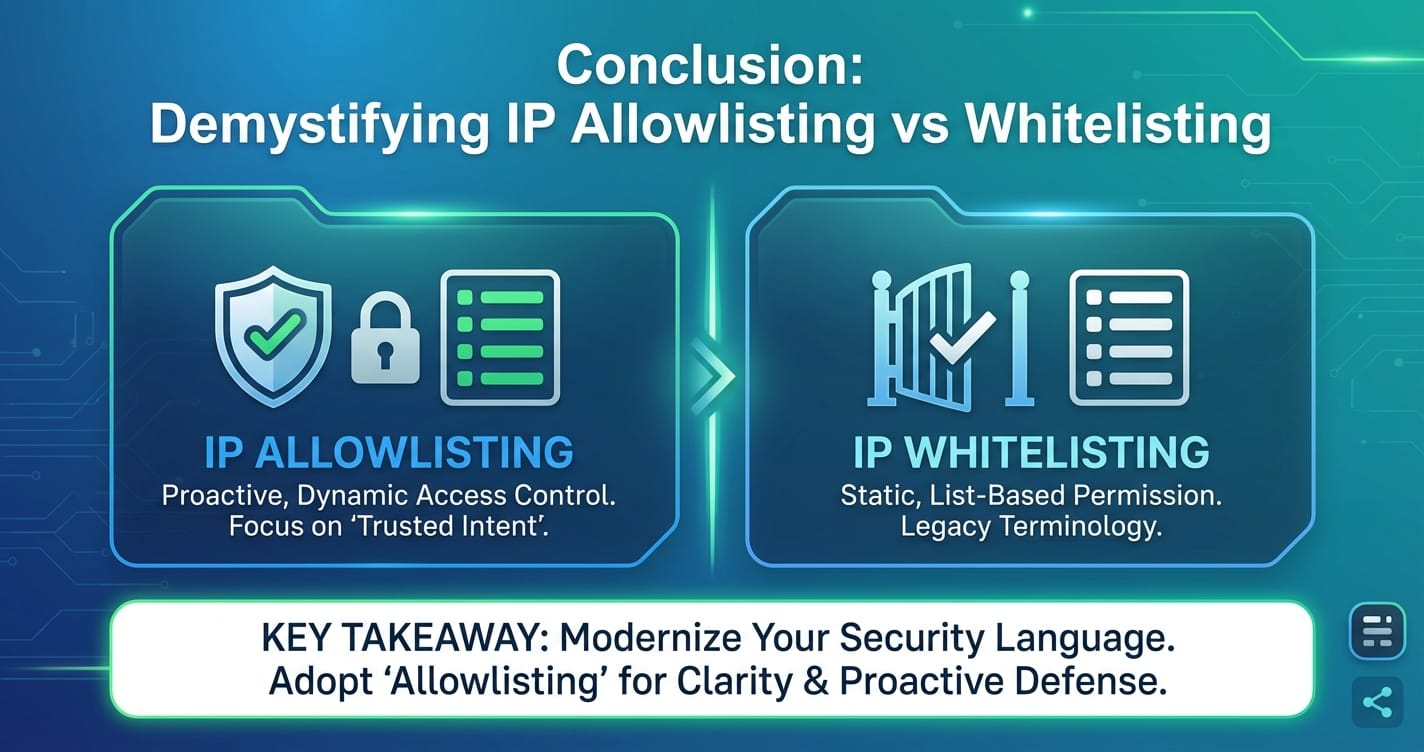
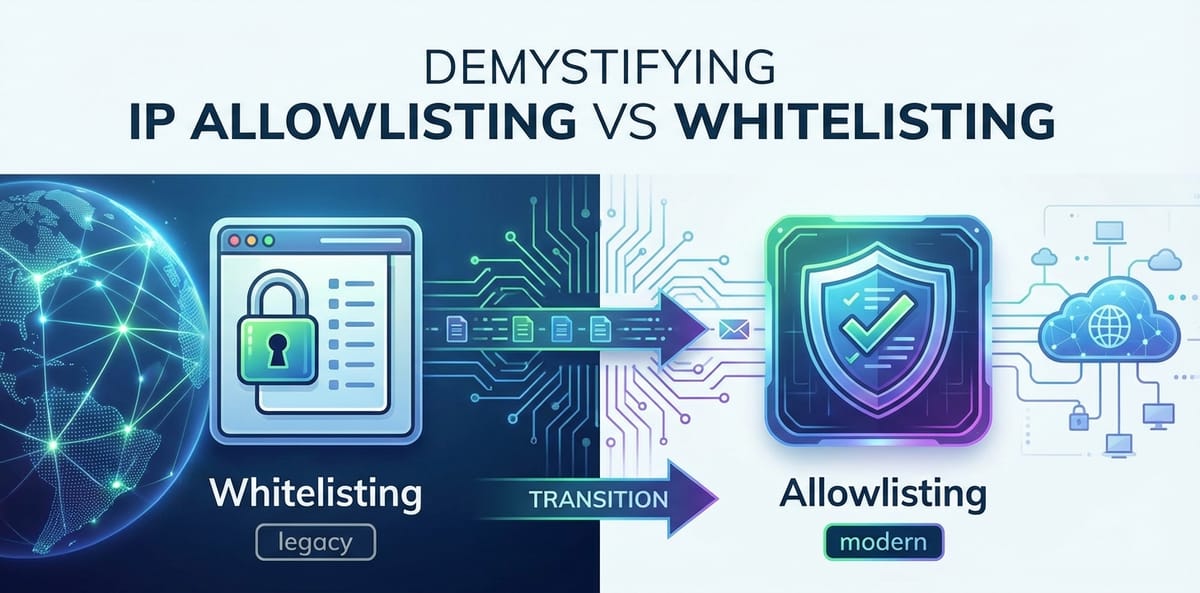
Before delving into the technical intricacies, it is essential to address a significant linguistic shift that has gained traction in the technology industry: the move from "whitelisting" to "allowlisting." While functionally identical in their technical application, the choice of terminology carries important implications for inclusivity, clarity, and professional best practices.
Historically, terms like "whitelist" and "blacklist" were commonplace in computing and cybersecurity. A "whitelist" denoted a list of approved items, while a "blacklist" signified a list of prohibited ones. These terms, however, have come under scrutiny due to their association with racial connotations and their potential to perpetuate biased language. The "white" and "black" prefixes, particularly in the context of access or approval, can unintentionally evoke associations with societal inequalities, even if their original technical use was not intended to be discriminatory. As the tech industry strives for greater diversity and inclusion, there has been a conscious effort to adopt more neutral and descriptive language.
The term "allowlisting" is a direct and unambiguous replacement for "whitelisting." It clearly communicates the action being performed: allowing specific entities to pass through a gate or access a resource. Similarly, "denylisting" or "blocklisting" are preferred alternatives to "blacklisting." This terminological evolution is not merely a matter of political correctness; it reflects a broader commitment to fostering an inclusive professional environment where language choices align with ethical values. By adopting "allowlisting," the industry signals a move towards more precise, less ambiguous, and culturally sensitive communication. While some legacy systems or documentation might still use the older terms, the prevailing best practice and recommended terminology in modern cybersecurity and networking discourse is "allowlisting." This article will predominantly use "allowlisting" to align with current industry standards, though "whitelisting" may appear occasionally to acknowledge its historical usage and ensure clarity for those familiar with the older term. The shift represents a subtle but important refinement in our collective lexicon, demonstrating a commitment to clear, unbiased, and inclusive language across the technology spectrum.
Understanding IP Allowlisting: The Foundation of Explicit Trust
At its core, IP allowlisting is a fundamental network security mechanism that enforces a "default-deny" principle. This means that unless an IP address or a range of IP addresses is explicitly listed as permitted, all access attempts originating from that source are automatically denied. It acts as a digital bouncer, checking every incoming request against a predefined guest list and only granting entry to those on the list.
What is IP Allowlisting?
IP allowlisting involves creating and maintaining a specific list of Internet Protocol (IP) addresses that are granted permission to connect to a particular network resource, application, or service. These resources can range from a single server port to an entire network segment, an administrative interface, or even a specific API. The principle is straightforward: if an incoming connection's source IP address matches an entry on the allowlist, it proceeds; otherwise, it is blocked. This contrasts sharply with blacklisting (or denylisting), where a list of known malicious or undesirable IP addresses is maintained, and all others are permitted by default. While blacklisting can be useful for blocking known threats, allowlisting offers a much stronger security posture because it assumes all sources are untrusted until proven otherwise. This proactive stance significantly reduces the attack surface by eliminating the possibility of connections from unknown or unauthorized sources, a critical advantage in securing sensitive systems.
The precision of IP allowlisting is one of its greatest strengths. Organizations can specify individual IP addresses (e.g., 203.0.113.45) or entire blocks of addresses using CIDR (Classless Inter-Domain Routing) notation (e.g., 192.168.1.0/24 to allow all IPs from 192.168.1.1 to 192.168.1.254). This flexibility allows for fine-grained control, catering to diverse operational needs while maintaining a high level of security. For instance, an internal administrative interface for a critical database might only be accessible from the IP addresses of the network operations center and specific development workstations, effectively isolating it from the broader internet and even most internal networks. This targeted approach ensures that the most sensitive parts of an infrastructure are protected by the strictest access policies, minimizing opportunities for unauthorized access and potential breaches.
How IP Allowlisting Works (Technical Deep Dive)
The technical implementation of IP allowlisting can occur at various layers of the network stack and within different components of an IT infrastructure. Understanding these layers is crucial for effective deployment and troubleshooting.
- Network Layer (Firewalls and Routers): This is the most common and often the first line of defense. Hardware firewalls, network gateway devices, and even operating system-level firewalls (like
iptableson Linux or Windows Defender Firewall) can be configured to filter traffic based on source IP addresses.- Stateless Filtering: Basic firewalls can inspect incoming packet headers and allow or deny based solely on the source IP. This is fast but doesn't track connection state.
- Stateful Filtering: More advanced firewalls track the state of connections. Once an allowed connection is established, subsequent packets belonging to that connection are automatically permitted, even if their individual headers don't strictly match the initial rule. This is more secure and efficient for ongoing communications.
- Network Access Control Lists (ACLs): Routers often use ACLs to filter traffic. These are ordered lists of rules that specify what traffic to permit or deny based on various criteria, including source IP.
- Cloud Security Groups/Network ACLs: In cloud environments (AWS, Azure, GCP), virtual firewalls known as Security Groups or Network ACLs are used to control inbound and outbound traffic for virtual machines, load balancers, and other cloud resources. These are fundamental for implementing IP allowlisting in the cloud.
- Application Layer (Web Servers, API Gateways, Load Balancers): Beyond the network perimeter, IP allowlisting can also be enforced closer to the application itself.
- Web Servers: Web servers like Nginx, Apache HTTP Server, or IIS can be configured with directives to restrict access based on the client's IP address. This provides an additional layer of defense, even if perimeter firewalls are bypassed or misconfigured. For example, Nginx can use the
allowanddenydirectives within server or location blocks. - Load Balancers: Many load balancers (both hardware and software-defined) offer IP filtering capabilities. This allows them to preprocess requests, blocking unauthorized IPs before they even reach the backend application servers, thus reducing unnecessary load and potential exposure.
- API Gateways: An API gateway is an ideal location to enforce IP allowlisting for API access. As a central entry point for all API requests, it can apply these policies before routing requests to various backend microservices. This consolidates security logic and ensures consistent enforcement. We'll delve deeper into the role of API gateway solutions later.
- Web Servers: Web servers like Nginx, Apache HTTP Server, or IIS can be configured with directives to restrict access based on the client's IP address. This provides an additional layer of defense, even if perimeter firewalls are bypassed or misconfigured. For example, Nginx can use the
The choice of where to implement IP allowlisting depends on the specific resource, the desired granularity of control, and the overall network architecture. Often, a layered approach is adopted, with allowlists at the network perimeter, specific application-level allowlists for sensitive services, and an API gateway enforcing policies for API traffic. This defense-in-depth strategy ensures that even if one layer is compromised or misconfigured, subsequent layers can still provide protection, making it significantly harder for unauthorized entities to gain access.
Why is IP Allowlisting Indispensable for Modern Security?
The importance of IP allowlisting cannot be overstated in today's threat landscape. It provides several critical benefits that make it an indispensable tool for securing digital assets.
- Reduces Attack Surface: By explicitly defining allowed IP sources, organizations dramatically shrink the pool of potential attackers. Instead of being exposed to the entire internet, a service might only be visible and accessible to a handful of trusted IP addresses. This makes it far more difficult for malicious actors to discover vulnerabilities or launch widespread attacks like DDoS, as their initial connection attempts would be blocked at the outset.
- Protects Sensitive Resources: For mission-critical systems such as database servers, internal administrative panels, or specific microservices handling sensitive data, IP allowlisting provides an essential layer of isolation. It ensures that only authorized systems or personnel from designated locations can even attempt to connect, safeguarding them from external probing and unauthorized internal access.
- Enhances Compliance: Many regulatory frameworks and industry standards (e.g., PCI DSS for credit card data, HIPAA for healthcare information, GDPR for data privacy) mandate stringent access control measures. IP allowlisting, particularly for systems handling regulated data, can be a key component in demonstrating compliance by proving that access is restricted to known and authorized entities.
- Mitigates Specific Threats:
- Brute-Force Attacks: If an attacker attempts to guess credentials, an IP allowlist can block all attempts originating from untrusted networks, preventing the attack from even reaching the authentication mechanism.
- DDoS (Distributed Denial-of-Service) Attacks: While not a complete solution, an IP allowlist can help mitigate certain types of DDoS attacks, especially those targeting specific application endpoints, by blocking traffic from non-approved sources at the network edge, thereby preserving resources for legitimate users.
- Credential Stuffing: By limiting access to known good sources, the effectiveness of credential stuffing attacks (where compromised credentials are used to try and log into various services) can be severely hampered.
- Simplifies Auditing and Forensics: When an incident occurs, an IP allowlist simplifies the process of identifying potential sources of compromise. By narrowing down the list of allowed IPs, investigators can quickly focus on a smaller, trusted pool, making it easier to trace suspicious activity and pinpoint the origin of a breach.
- Secures B2B Integrations: In scenarios where businesses integrate their systems via APIs, IP allowlisting is a standard practice. It ensures that only the partner's designated servers can access the integration API, preventing unauthorized third parties from exploiting the connection.
In an era where every connected device and service represents a potential vulnerability, IP allowlisting serves as a foundational and highly effective mechanism for explicit trust, ensuring that only expected and authorized traffic reaches critical infrastructure.
The Crucial Role of API Gateways in Implementing IP Allowlisting
As organizations increasingly adopt microservices architectures and expose functionalities via APIs, the concept of a centralized API gateway has become indispensable. This component plays a pivotal role not only in routing and managing API traffic but also in enforcing critical security policies, including IP allowlisting.
What is an API Gateway? A Central Hub for API Management
An API gateway acts as a single entry point for all client requests to your backend services. Instead of clients interacting directly with multiple individual microservices, they communicate with the API gateway, which then handles the request, routes it to the appropriate service, and returns the aggregated response. This architectural pattern brings numerous benefits, especially in complex, distributed environments.
Key functions of an API gateway include:
- Request Routing: Directing incoming requests to the correct backend service based on defined rules.
- Load Balancing: Distributing traffic across multiple instances of a service to ensure high availability and performance.
- Authentication and Authorization: Verifying client identity and permissions before allowing access to backend APIs.
- Rate Limiting: Controlling the number of requests a client can make within a given timeframe to prevent abuse and ensure fair usage.
- Caching: Storing responses to frequently requested data to improve performance and reduce backend load.
- Transformation: Modifying request or response payloads to meet the requirements of different clients or services.
- Monitoring and Analytics: Collecting metrics and logs about API usage, performance, and errors.
- Security Policy Enforcement: Applying various security controls such as WAF capabilities, JWT validation, and crucially, IP allowlisting.
In essence, an API gateway is a critical intermediary that centralizes many cross-cutting concerns that would otherwise need to be implemented within each individual microservice. This centralization simplifies development, improves consistency, and enhances overall manageability and security. A robust API gateway, such as ApiPark, an open-source AI gateway and API management platform, acts as a critical intermediary, offering comprehensive features for managing, integrating, and securing both traditional REST APIs and modern AI models. Its capabilities extend far beyond basic routing, encompassing advanced security, traffic management, and lifecycle governance, making it an ideal platform for implementing sophisticated access control strategies like IP allowlisting.
Implementing IP Allowlisting at the API Gateway Layer
Implementing IP allowlisting at the API gateway layer offers significant advantages for API security and management. Given its position as the first point of contact for external API requests, the API gateway is an ideal choke point for enforcing such policies.
- Centralized Control and Policy Enforcement: Rather than configuring IP allowlists on each individual microservice, which can become unwieldy in a large environment, the API gateway allows for centralized management of these policies. This ensures consistency across all APIs or specific groups of APIs, reducing the risk of misconfigurations and security gaps. Any changes to the allowlist only need to be applied in one place, simplifying operations.
- Early Blocking, Reduced Load: By blocking unauthorized IP addresses at the gateway level, requests from these sources never reach the backend services. This prevents unnecessary processing load on the microservices, conserves computational resources, and ensures that backend systems are only processing legitimate traffic. This is particularly beneficial for mitigating low-level DDoS attempts or persistent scanning.
- Granular Control: Modern API gateway solutions provide highly granular control over IP allowlisting. Policies can be applied:
- Globally: For all APIs managed by the gateway.
- Per-API: Specific APIs can have their own unique allowlists. For instance, a public-facing read-only API might have a very broad allowlist, while a sensitive API used for financial transactions would have a very restricted one.
- Per-Route/Endpoint: Even within a single API, different endpoints might require different access restrictions. An
/adminendpoint would likely have a tighter allowlist than a/public-dataendpoint. - Per-Consumer/Application: If your API gateway manages different client applications or partners, you can define allowlists specific to each consumer, ensuring that only their registered IP addresses can access their allocated APIs.
- Integration with Other Security Features: The API gateway is a nexus for various security measures. IP allowlisting can be seamlessly integrated with other controls such as:
- Authentication and Authorization: An incoming request might first pass an IP allowlist check, then proceed to authentication (e.g., JWT validation, OAuth), and finally authorization based on roles or permissions. This layered approach creates a robust defense.
- Rate Limiting: Even an allowed IP address might be subject to rate limits to prevent abuse or resource exhaustion.
- Web Application Firewall (WAF): The gateway can also incorporate WAF functionalities to detect and block common web attacks (SQL injection, XSS) from allowed IP sources, adding another layer of security.
- Enhanced Observability: By enforcing IP allowlisting at the gateway, all blocked attempts are logged centrally. This provides valuable insights into potential attack vectors, allows for quick identification of persistent threats, and contributes to better security monitoring and incident response capabilities. Platforms like APIPark offer detailed API call logging and powerful data analysis features, crucial for tracing and troubleshooting issues, including unauthorized access attempts.
In essence, positioning IP allowlisting at the API gateway transforms it from a mere access control feature into an integral part of a comprehensive API security strategy. It ensures that the digital front door to your services is not only robustly locked but also intelligently managed, allowing only expected and trusted guests to even knock.
Advanced API Gateway Features for Enhanced Security
Beyond basic IP allowlisting, modern API gateway solutions offer a suite of advanced features that significantly enhance security, especially for complex api and microservices environments.
- Request Header Inspection and Manipulation: Gateways can inspect various headers (e.g.,
User-Agent,Referer, custom headers) to make more intelligent access control decisions. This allows for blocking requests that do not originate from expected clients or applications, even if their IP address is on an allowlist (perhaps due to spoofing or a compromised client). They can also add or modify headers for backend services, such as injectingX-Forwarded-Forto pass the original client IP. - JWT (JSON Web Token) Validation: For APIs secured with OAuth 2.0 or OpenID Connect, the gateway can perform cryptographic validation of JWTs. This includes checking signatures, expiration times, audience, issuer, and claims, ensuring that only valid and unexpired tokens are processed, and verifying user identity and permissions.
- OpenID Connect (OIDC) Integration: Gateways can act as a Relying Party (RP) in an OIDC flow, abstracting identity provider (IdP) interactions from backend services. This simplifies authentication for developers and provides a single point of enforcement for identity-based access policies.
- Security Policies Orchestration: A sophisticated API gateway allows administrators to chain multiple security policies in a specific order. For instance, a request might first undergo IP allowlisting, then WAF analysis, followed by JWT validation, and finally rate limiting, before being routed to a backend service. This orchestration capability ensures a comprehensive defense posture.
- Threat Protection and Bot Management: Many gateways integrate advanced threat protection features, including bot detection and mitigation. They can identify and block automated attacks, credential stuffing, and scraping attempts that might originate from seemingly legitimate (but compromised) IP addresses.
- Data Loss Prevention (DLP): Some advanced gateways can inspect API request and response payloads for sensitive information (e.g., credit card numbers, PII) and block requests or redact data to prevent data leakage, ensuring compliance with data privacy regulations.
- Service Mesh Integration: In environments using a service mesh (like Istio or Linkerd), the API gateway can integrate with the mesh's control plane to enforce even more granular, service-to-service access policies, extending the "zero-trust" principle throughout the internal microservices network.
- API Versioning and Lifecycle Management: While not strictly security, managing different versions of APIs and their complete lifecycle (design, publish, invoke, decommission) through a gateway helps maintain a clean API surface, reducing the risk of exposing deprecated or insecure API versions. APIPark, for example, assists with end-to-end API lifecycle management, regulating processes and managing traffic forwarding and versioning.
These advanced capabilities transform the API gateway from a simple traffic router into a powerful security enforcement point, capable of protecting APIs against a wide array of modern threats, while simultaneously improving developer experience and operational efficiency.
Practical Applications and Use Cases of IP Allowlisting
IP allowlisting is a versatile security mechanism applicable across a broad spectrum of IT infrastructure and operational scenarios. Its effectiveness lies in its ability to explicitly define trust boundaries, making it invaluable for safeguarding various digital assets.
- Securing Administrative Interfaces: This is perhaps one of the most common and critical applications.
- SSH, RDP, and Management Consoles: Access to servers via SSH, remote desktop via RDP, or web-based administrative panels for databases, cloud services, firewalls, and other infrastructure components should almost always be restricted via IP allowlisting. Typically, these interfaces should only be accessible from specific IT department IP addresses, VPN endpoints, or jump boxes. This significantly reduces the risk of external attackers gaining control over critical infrastructure even if credentials are leaked.
- Cloud Provider Consoles: Even cloud provider management consoles (AWS, Azure, GCP) often allow for IP-based restrictions on access, ensuring that only requests from your corporate network or secure VPN can attempt login.
- Protecting Backend Services and Databases:
- Database Servers: Direct access to database servers from the internet is almost universally considered a security anti-pattern. IP allowlisting ensures that only application servers, internal tools, or specific gateways (like an API gateway) can initiate connections to the database. This prevents direct exploitation of database vulnerabilities from external sources.
- Internal Microservices: In a microservices architecture, certain services might be designed only for internal communication. IP allowlisting can ensure that these services are only callable by other authorized internal services or the API gateway, preventing unintended exposure or lateral movement by attackers.
- B2B API Integrations (Partner Access): When two businesses integrate their systems using APIs, IP allowlisting is a standard and highly effective security measure.
- Dedicated API Endpoints: A company might expose a specific API to a business partner. By allowlisting the partner's public-facing API server IP addresses, access is restricted solely to that partner, preventing other entities from accessing the integration.
- Managed File Transfer (MFT): For secure file exchanges, SFTP or FTPS servers can be configured to only accept connections from partner IP addresses.
- Cloud Environment Security (VPC, Security Groups): Cloud platforms offer sophisticated networking capabilities that make IP allowlisting highly effective.
- Virtual Private Clouds (VPCs): Within a VPC, subnets can be designed with strict IP-based access controls.
- Security Groups/Network ACLs: These virtual firewalls are fundamental for applying IP allowlisting to cloud resources. For example, an AWS EC2 instance running a web server might have a security group allowing HTTP/HTTPS from
0.0.0.0/0(everyone), but SSH access only from a specific corporate IP range (e.g.,192.0.2.0/24). This provides flexible and granular control over network traffic for each resource.
- Restricting Access to Internal Tools and Microservices:
- Development and Staging Environments: Access to non-production environments should be strictly controlled, often limited to internal developer IPs or VPN connections. This prevents accidental exposure of work-in-progress features or sensitive test data.
- Monitoring and Logging Systems: Tools like Grafana, Prometheus, ELK stack (Elasticsearch, Logstash, Kibana) often contain sensitive operational data. Restricting access to these systems via IP allowlisting ensures that only authorized operations teams can view or interact with them.
- Geographical Restrictions: While not purely IP allowlisting in the sense of specific hosts, this is a related concept. Some services might need to block or allow access based on the country of origin. This is often achieved using geolocation databases in conjunction with firewalls or WAFs, and can be crucial for compliance with data residency laws or to block traffic from known malicious regions.
- CI/CD Pipeline Security: Continuous Integration/Continuous Deployment (CI/CD) tools often need to interact with various services (code repositories, deployment targets, artifact storage). Ensuring that these interactions only originate from the IP addresses of trusted CI/CD runners or servers, rather than arbitrary sources, is a critical security measure.
Each of these use cases underscores IP allowlisting's foundational role in building robust, secure, and compliant IT environments. By applying this simple yet powerful mechanism, organizations can significantly reduce their exposure to threats and protect their most valuable digital assets.
Best Practices for Effective IP Allowlisting Implementation
While IP allowlisting is a powerful security tool, its effectiveness hinges on proper implementation and ongoing management. Adhering to best practices ensures that it provides maximum protection without introducing operational complexities or creating new vulnerabilities.
Principle of Least Privilege (PoLP): Only Allow What is Absolutely Necessary
This is the golden rule of security. When creating an IP allowlist, explicitly define the narrowest possible range of IP addresses required for legitimate operations. * Avoid Wildcards: Resist the temptation to allow broad IP ranges (e.g., 0.0.0.0/0 or 10.0.0.0/8) unless absolutely necessary and thoroughly justified (e.g., a public web server's HTTP/HTTPS ports). For administrative interfaces or sensitive APIs, specify individual IPs or small, controlled CIDR blocks. * Service-Specific Allowlists: Each service or resource should have its own tailored allowlist based on its specific access requirements. Do not reuse a broad allowlist meant for one application for a different, more sensitive one. * Justification: For every entry on an allowlist, there should be a clear, documented business or technical justification. This helps in auditing and review processes.
Regular Review and Updates: Adapt to Changing Environments
IP addresses are not static, and operational needs evolve. An outdated allowlist can quickly become a security liability. * Scheduled Reviews: Establish a regular cadence (e.g., quarterly, semi-annually) for reviewing all IP allowlists. This is crucial to identify and remove stale entries. * Dynamic Environments: In cloud environments or with partners whose IP addresses might change, this process is even more critical. Consider implementing automated checks or leveraging dynamic DNS where appropriate, though direct IP allowlisting for highly sensitive resources might require more manual, verified updates. * Documentation: Maintain comprehensive documentation for each allowlist, including: * What resource it protects. * Who owns the allowlist. * When it was last reviewed. * The justification for each allowed IP or range. * Contact information for the allowed entities, especially for B2B integrations.
Combining with Other Security Layers: Not a Standalone Solution
IP allowlisting is a foundational layer, but it is not a silver bullet. It must be integrated into a comprehensive, multi-layered security strategy (defense-in-depth). * Strong Authentication and Authorization: Even if an IP is allowed, users or applications still need to authenticate (e.g., strong passwords, MFA, client certificates, OAuth tokens) and be authorized for specific actions. An allowlist only controls network access, not user identity or permissions. * Web Application Firewall (WAF): A WAF can protect against application-layer attacks (SQL injection, XSS) that could originate even from an allowed IP address if a client is compromised. * Intrusion Detection/Prevention Systems (IDS/IPS): These systems can monitor traffic (even from allowed IPs) for suspicious patterns or known attack signatures. * Endpoint Security: Ensure endpoints (servers, workstations) accessing sensitive resources have robust antivirus, host-based firewalls, and security patching. * Network Segmentation: Use VLANs and subnets to further isolate sensitive resources, creating smaller, more manageable security domains.
Monitoring and Alerting: Detect Anomalies and Bypass Attempts
Even with robust allowlists, continuous monitoring is essential to detect unusual activity or attempts to circumvent controls. * Log Everything: Configure firewalls, API gateways, and web servers to log all connection attempts, especially blocked ones. * Anomaly Detection: Implement systems to detect unusual patterns, such as a sudden increase in blocked connection attempts from a new IP, or an allowed IP attempting to access an unauthorized port. * Real-time Alerts: Set up alerts for critical events, such as failed authentication attempts from an allowed IP, or a large volume of traffic from an unexpected source. APIPark provides detailed API call logging and powerful data analysis to track such trends and provide preventive maintenance. * Security Information and Event Management (SIEM): Integrate logs from all security components into a SIEM system for centralized analysis, correlation, and long-term storage.
Documentation: Maintain Clear Records
Good documentation is crucial for both security and operational efficiency. * Purpose and Scope: Clearly document what each allowlist protects and its intended scope. * Contact Information: For each allowed IP or range, list the owner or administrator responsible for it. * Change Management: Integrate allowlist updates into your change management process, requiring approvals and justifications for any modifications. This ensures accountability and prevents unauthorized changes.
Consider Dynamic IPs: Challenges and Solutions
Many internet users and even some business partners operate with dynamic IP addresses, which change periodically. This poses a challenge for static IP allowlisting. * VPNs or Private Links: For critical access, provide VPN access or dedicated private network links (e.g., AWS Direct Connect, Azure ExpressRoute) to ensure a stable, known IP source. * Proxy Servers/Gateways: Partners with dynamic IPs might be able to route their traffic through a static IP proxy or gateway that you can then allowlist. * DNS-based Allowlisting (with caution): For less sensitive applications, some systems can accept DNS hostnames in allowlists. However, DNS records can be spoofed or change unexpectedly, making this less secure than direct IP allowlisting. It's generally not recommended for high-security applications. * Cloud-specific solutions: For cloud-based services, leveraging cloud security features that dynamically manage IP assignments for internal services can simplify management, allowing you to allowlist entire virtual networks or service endpoints rather than individual, ephemeral IPs.
By diligently following these best practices, organizations can leverage IP allowlisting as a highly effective and robust component of their cybersecurity architecture, ensuring that explicit trust remains at the forefront of their access control strategy.
APIPark is a high-performance AI gateway that allows you to securely access the most comprehensive LLM APIs globally on the APIPark platform, including OpenAI, Anthropic, Mistral, Llama2, Google Gemini, and more.Try APIPark now! 👇👇👇
Challenges and Limitations of IP Allowlisting
While IP allowlisting is a powerful security tool, it is not without its challenges and limitations. Understanding these aspects is crucial for deploying it effectively and knowing when to augment it with other security controls.
- Management Overhead for Large, Dynamic Environments:
- Scale: In environments with hundreds or thousands of servers, applications, and constantly changing user bases, managing a multitude of individual IP allowlists can become a significant operational burden.
- Dynamic IPs: As discussed, dynamic IP addresses (common for remote workers, mobile users, or small business partners without static IPs) make static allowlisting impractical or impossible. Constantly updating allowlists for these users leads to high administrative overhead and potential for errors or delays in access.
- Cloud Auto-scaling: In cloud-native architectures where services scale up and down, and instances receive ephemeral IP addresses, maintaining a precise allowlist for individual service instances is unfeasible. This necessitates allowlisting entire VPCs or leveraging service mesh solutions for internal communication.
- Vulnerability to IP Spoofing (When Not Combined with Other Layers):
- Layer 3 Spoofing: At the network layer, an attacker can sometimes spoof their source IP address to appear as if they are originating from an allowed IP. While harder to do on the public internet, it can be a concern in certain network segments or with sophisticated attackers.
- Insufficient in Isolation: If IP allowlisting is the only control, a successful IP spoofing attack (or a compromise of an allowed IP) could grant an attacker full access, bypassing all other security measures. This underscores the need for additional layers like strong authentication.
- Does Not Protect Against Authenticated Internal Threats:
- Insider Threat: An employee or system within an allowed IP range, if malicious or compromised, would still have network access to the allowlisted resources. IP allowlisting offers no protection against such authenticated insider threats. It only controls where a connection can originate, not who initiates it or what they do once connected.
- Compromised Endpoint: If a machine with an allowed IP address becomes compromised, the attacker effectively inherits the privileges of that IP, potentially gaining access to all resources on its allowlist.
- Not Suitable for Public-Facing, Widely Accessible Services:
- Public Websites: A public website or a widely available API cannot realistically use IP allowlisting, as its purpose is to be accessible to anyone on the internet. In such cases, other security measures like WAFs, strong authentication, rate limiting, and DDoS protection are paramount.
- Scalability for Global Access: For services that need to be globally accessible to a vast, unknown user base, IP allowlisting is simply impractical.
- Complexity with CDN/WAF Services:
- Proxy Effect: When a Content Delivery Network (CDN) or a Web Application Firewall (WAF) sits in front of your application, all incoming traffic to your application will appear to originate from the CDN/WAF's IP addresses, not the actual client's IP.
- Challenge: If you allowlist only client IPs, your application will block traffic from the CDN/WAF. You must allowlist the CDN/WAF's IPs. However, this means your application is exposed to all traffic coming through the CDN/WAF, not just specific clients. Many CDNs/WAFs will pass the original client IP in a header (e.g.,
X-Forwarded-For), which your application or API gateway can then use for more granular, application-layer allowlisting after the initial network-level allowance of the CDN/WAF IPs. This adds complexity and requires careful configuration.
- Does Not Address Application-Layer Vulnerabilities:
- IP allowlisting operates primarily at the network layer. It prevents unauthorized network connections, but it does not protect against vulnerabilities within the application itself. If an allowed user or system exploits a SQL injection or cross-site scripting (XSS) vulnerability, the allowlist will not prevent the attack.
- This again highlights the need for a multi-layered security approach where different controls address different types of threats at various layers.
In summary, while IP allowlisting is a fundamental building block for strong access control, it's crucial to understand its boundaries. It excels at reducing the attack surface by controlling network ingress, but it must be complemented by identity-based access controls, application-level security, and continuous monitoring to provide a truly robust defense.
Beyond IP Allowlisting: Towards a Zero-Trust Architecture
The limitations of traditional perimeter-based security, which relied heavily on implicit trust within the network, have become increasingly evident in modern, distributed computing environments. This has led to the emergence of the Zero-Trust security model, a paradigm shift that fundamentally rethinks how trust is established and maintained.
What is Zero Trust? "Never Trust, Always Verify."
Zero Trust is a security model centered on the principle of "never trust, always verify." Unlike traditional models that assume everything inside the network perimeter is trustworthy, Zero Trust operates under the assumption that no user or device, whether inside or outside the network, should be implicitly trusted. Every access attempt, regardless of its origin, must be authenticated, authorized, and continuously validated.
Key tenets of a Zero-Trust architecture include:
- Verify Explicitly: All resources are accessed securely regardless of location. All users, devices, and applications must be authenticated and authorized before granting access to resources.
- Use Least Privilege Access: Users and devices are granted the minimum necessary access to perform their tasks. Permissions are reviewed and adjusted regularly.
- Assume Breach: Design for pervasive monitoring and rapid response. Expect that breaches will occur and plan accordingly.
- Micro-segmentation: Break down security perimeters into small, isolated zones to limit lateral movement within the network.
- Multi-Factor Authentication (MFA): Require multiple forms of identity verification for all access attempts.
- Contextual Access Policies: Access decisions are dynamic and based on real-time context, including user identity, device posture, location, time of day, and sensitivity of the resource.
How IP Allowlisting Fits (or Doesn't Fit Perfectly) into Zero Trust
IP allowlisting, in its traditional static form, is a perimeter-focused control. It allows access based on the network origin, implying a level of trust for that origin. This contrasts with the core Zero-Trust principle of "never trust."
- Limited Fit for Strict Zero Trust: A purely static IP allowlist can seem at odds with Zero Trust because it trusts a location rather than explicitly verifying identity and context for every request. If an allowed IP's source is compromised, the allowlist provides no further protection without additional controls.
- Complementary Role (with Enhancements): However, IP allowlisting can play a complementary role in a Zero-Trust architecture, especially when enhanced and combined with other mechanisms. It can serve as a preliminary filter or a strong signal for contextual access.
- Network Segmentation: In a micro-segmented environment, IP allowlisting can define which specific microservices or containers can communicate with each other, limiting lateral movement.
- VPN/Secure Gateways: Requiring users to connect via a secure VPN or API gateway (like APIPark) before their IP is allowlisted for sensitive services aligns better with Zero Trust, as the VPN itself verifies identity and device posture. The gateway acts as a policy enforcement point.
- Contextual Allowlisting: In advanced implementations, IP allowlisting might be dynamically adjusted based on context. For example, a user attempting to access a sensitive API might only be allowlisted if they are using a corporate device, connecting from a specific geographic region, and have recently passed MFA.
Micro-segmentation, Identity-Based Access, and Context-Aware Policies
These are the pillars of a robust Zero-Trust implementation that go far beyond simple IP allowlisting.
- Micro-segmentation: Instead of a single, broad network perimeter, micro-segmentation divides the network into granular security zones, often down to individual workloads or applications. Each segment has its own strict access policies, limiting communication between them to only what is explicitly necessary. This drastically reduces the blast radius of a breach.
- Identity-Based Access: Access decisions are primarily driven by the verified identity of the user or machine, rather than just their network location. This involves robust authentication (MFA, certificates) and authorization (Role-Based Access Control RBAC, Attribute-Based Access Control ABAC) systems. An API gateway is instrumental here for verifying identities for every API call.
- Context-Aware Policies: Access is dynamic and adaptive, based on real-time contextual factors. This could include:
- Device Posture: Is the device patched, encrypted, and free of malware?
- User Behavior: Is the user's current activity typical for them? (e.g., accessing a resource at an unusual time or from a new location).
- Resource Sensitivity: How critical is the data or service being accessed?
- Location: Is the user connecting from a trusted geographic region?
- Time of Day: Is the access attempt within business hours?
By moving beyond static IP lists to embrace these dynamic, identity-centric, and context-aware approaches, organizations can build a security posture that is far more resilient against modern threats and better suited for the complexities of cloud and distributed architectures. While IP allowlisting can still serve a purpose as a blunt initial filter, true Zero Trust demands a much more sophisticated and continuous verification process.
IP Allowlisting in the Context of Modern Cloud and Microservices Architectures
The advent of cloud computing and the widespread adoption of microservices have fundamentally changed how applications are built, deployed, and secured. These dynamic and distributed environments present both opportunities and challenges for traditional security mechanisms like IP allowlisting.
Ephemeral IPs, Auto-scaling Challenges
One of the defining characteristics of cloud and microservices is their dynamic nature. * Ephemeral IPs: In cloud platforms, virtual machines, containers, and serverless functions often receive temporary (ephemeral) IP addresses that change frequently upon scaling, restarts, or re-deployments. This makes static IP allowlisting of individual instances impractical and operationally intensive. * Auto-scaling: Cloud services often auto-scale based on demand, spinning up and tearing down instances. Manually updating allowlists for these constantly changing IPs is impossible. * Containers and Orchestration: Containerization platforms like Docker and Kubernetes create highly dynamic network environments. Pods (the smallest deployable units in Kubernetes) have ephemeral IPs, and services are accessed via internal DNS names or cluster IPs.
These dynamics necessitate a shift from allowlisting individual instance IPs to allowlisting broader network constructs or using more sophisticated, identity-aware controls.
Service Meshes and Their Role in Access Control
A service mesh is a dedicated infrastructure layer that handles service-to-service communication in a microservices architecture. It provides capabilities like traffic management, observability, and, critically, security. * Traffic Management: Service meshes (e.g., Istio, Linkerd) provide sophisticated routing rules, load balancing, and traffic shifting. * Observability: They offer deep insights into service communication, including metrics, logging, and tracing. * Security: This is where service meshes significantly enhance access control. * Mutual TLS (mTLS): A service mesh can enforce mTLS for all service-to-service communication, ensuring that both ends of a connection are authenticated using cryptographic certificates. This provides strong identity verification, going far beyond what IP allowlisting can offer for internal traffic. * Network Policies: Service meshes, particularly in Kubernetes environments, can implement network policies that control which pods can communicate with each other based on labels, namespaces, or service accounts, rather than just IP addresses. This is a form of micro-segmentation that is identity-aware and workload-centric. * API Gateway Integration: An API gateway can integrate with a service mesh, handling external traffic and applying policies like IP allowlisting before passing requests into the mesh, where finer-grained service-to-service controls take over.
Security Groups and Network ACLs in AWS, Azure, GCP
Cloud providers offer native security features that are highly effective for implementing IP allowlisting in their respective environments. * AWS Security Groups: These act as virtual firewalls for instances (EC2), load balancers, and other resources. They allow you to define inbound and outbound rules based on source/destination IP addresses, ports, and even other security groups (allowing traffic from all instances within a specific security group, regardless of their individual IPs). This is highly effective for allowing internal traffic between services without having to manage individual ephemeral IPs. * Azure Network Security Groups (NSGs): Similar to AWS Security Groups, NSGs filter network traffic to and from Azure resources. They can be associated with subnets or individual network interfaces, providing granular control over traffic flow. * Google Cloud Platform (GCP) Firewall Rules: GCP's firewall rules are globally defined but can be applied to specific instances using network tags. They allow highly flexible ingress and egress rules based on source/destination IPs, protocols, and ports.
These cloud-native constructs provide scalable and manageable ways to implement IP allowlisting and network segmentation in dynamic cloud environments, often abstracting away the complexities of ephemeral IPs.
Container Orchestration (Kubernetes) and Network Policies
Kubernetes, the leading container orchestration platform, has its own mechanism for network-level access control: Network Policies. * Pod-centric Access Control: Kubernetes Network Policies allow administrators to define how groups of pods are allowed to communicate with each other and with external endpoints. These policies are based on labels (metadata tags assigned to pods) and namespaces, rather than relying solely on IP addresses. * Default Deny: Network Policies, when applied, typically enforce a default-deny rule, meaning that unless explicitly allowed by a policy, no communication is permitted. This aligns perfectly with the principle of least privilege. * Integration with IP Allowlisting: While primarily label-based, Network Policies can also include ipBlock rules to allow or deny traffic from specific CIDR ranges, effectively integrating IP allowlisting for external ingress/egress or specific legacy integrations. * CNI (Container Network Interface): The actual enforcement of Network Policies is handled by the Container Network Interface (CNI) plugin (e.g., Calico, Cilium, Flannel) used in the Kubernetes cluster. These plugins translate the high-level policy rules into underlying network filtering mechanisms.
In modern cloud and microservices architectures, IP allowlisting evolves from a static list of host IPs to more dynamic and abstract forms. It's about defining trusted network boundaries using cloud provider security groups, Kubernetes network policies, or relying on identity-aware service meshes, ensuring that access control keeps pace with the agility and scale of these environments. The API gateway, again, remains a critical enforcement point for external traffic before it enters these sophisticated internal networks.
The Technical Implementation Landscape: Tools and Technologies
Implementing IP allowlisting effectively requires leveraging a variety of tools and technologies across different layers of the IT infrastructure. The choice of tool depends on the specific context, the resource being protected, and the desired level of control.
- Firewalls (Hardware/Software):
- Dedicated Hardware Firewalls: Appliances from vendors like Palo Alto Networks, Cisco, Fortinet, Check Point offer robust stateful packet inspection, deep packet inspection, and highly configurable rule sets for IP allowlisting at the network perimeter. They are crucial for protecting entire corporate networks.
- Software-Defined Firewalls: Virtual firewalls or Network Virtual Appliances (NVAs) in cloud environments provide similar functionality but are managed as software.
- Operating System Level Firewalls:
- Linux (iptables/nftables):
iptables(or its successornftables) is the native packet filtering framework in Linux kernels. It allows administrators to define highly granular rules to allow or deny traffic based on source/destination IP, port, protocol, and connection state.bash # Allow SSH from a specific IP sudo iptables -A INPUT -p tcp --dport 22 -s 203.0.113.1 -j ACCEPT # Deny all other SSH sudo iptables -A INPUT -p tcp --dport 22 -j DROP - Windows Defender Firewall: Windows operating systems include a built-in firewall that can be configured via GUI or PowerShell to create inbound and outbound rules, allowing IP-based restrictions.
- Linux (iptables/nftables):
- Cloud Security Groups (AWS Security Groups, Azure Network Security Groups):
- AWS Security Groups: As discussed, these act as virtual firewalls at the instance or interface level. Rules specify inbound/outbound traffic, source/destination, and ports. For example, to allow HTTP from anywhere and SSH from a specific IP:
json // Inbound rules for an EC2 instance's security group [ { "Port": 80, "Protocol": "TCP", "Source": "0.0.0.0/0" }, { "Port": 443, "Protocol": "TCP", "Source": "0.0.0.0/0" }, { "Port": 22, "Protocol": "TCP", "Source": "203.0.113.10/32" } ] - Azure Network Security Groups (NSGs): Provide similar functionality in Azure, allowing rules to be applied to virtual networks (subnets) or individual network interfaces.
- GCP Firewall Rules: Global rules applied to instances via network tags, offering powerful and flexible filtering.
- AWS Security Groups: As discussed, these act as virtual firewalls at the instance or interface level. Rules specify inbound/outbound traffic, source/destination, and ports. For example, to allow HTTP from anywhere and SSH from a specific IP:
- Web Application Firewalls (WAFs):
- WAFs (e.g., Cloudflare WAF, AWS WAF, Imperva) protect web applications and APIs from common web exploits. They sit in front of the application and can be configured with IP allowlists to restrict access at the application layer, often in addition to network-level firewalls. WAFs are particularly useful for protecting public-facing services where network firewalls allow
0.0.0.0/0traffic.
- WAFs (e.g., Cloudflare WAF, AWS WAF, Imperva) protect web applications and APIs from common web exploits. They sit in front of the application and can be configured with IP allowlists to restrict access at the application layer, often in addition to network-level firewalls. WAFs are particularly useful for protecting public-facing services where network firewalls allow
- Load Balancers:
- Many load balancers (e.g., Nginx, HAProxy, AWS ELB/ALB, Azure Load Balancer) offer built-in IP filtering capabilities. They can be configured to drop connections from unauthorized IP addresses before forwarding them to backend servers, helping to offload this task from application servers and provide a centralized control point for the initial ingress.
- API Gateway Solutions:
- As highlighted extensively, an API gateway (like ApiPark) is a prime location for enforcing IP allowlisting for all API traffic. It can apply these policies at a granular level (per-api, per-route, per-consumer) before authentication and authorization. This integrates IP allowlisting directly into the API management lifecycle.
- Example configuration snippet (conceptual for an API gateway): ```yaml # API Gateway Policy for a sensitive API api: /v1/sensitive-data policies:
- name: ip-allowlist config: allowed_ips: - 192.168.1.10/32 - 10.0.0.0/24 block_message: "Access Denied: Your IP is not authorized."
- name: jwt-validation # ... other policies like rate limiting, authentication ```
- Container Network Policies (Kubernetes):
- Kubernetes Network Policies provide a native way to implement IP-based and label-based access control within a Kubernetes cluster. They are crucial for micro-segmenting containerized applications.
- Example (Kubernetes Network Policy):
yaml apiVersion: networking.k8s.io/v1 kind: NetworkPolicy metadata: name: allow-internal-from-specific-ip namespace: default spec: podSelector: matchLabels: app: my-sensitive-app policyTypes: - Ingress ingress: - from: - ipBlock: cidr: 192.168.1.0/24 # Allow traffic from this internal IP range - podSelector: matchLabels: app: trusted-backend # Allow traffic from pods with this label ports: - protocol: TCP port: 8080
By strategically deploying and configuring these tools, organizations can build a robust, multi-layered defense strategy that effectively leverages IP allowlisting alongside other security controls to protect their digital assets from unauthorized network access.
Future Trends in Access Control and API Security
The landscape of access control and API security is in constant flux, driven by evolving threats, technological advancements, and shifts in architectural paradigms. While IP allowlisting remains a foundational technique, future trends point towards more intelligent, dynamic, and automated approaches.
- AI/ML-Driven Threat Detection and Adaptive Access:
- Behavioral Analytics: Future systems will increasingly leverage Artificial Intelligence and Machine Learning to analyze user and system behavior in real-time. By establishing baselines of "normal" behavior, these systems can detect anomalies (e.g., access from an unusual location, at an odd hour, or an unexpected volume of requests) that might indicate a compromised account or an ongoing attack.
- Adaptive Access Policies: Based on these real-time threat assessments, access policies will become adaptive. For example, if unusual behavior is detected, an API gateway might dynamically challenge the user with MFA, temporarily restrict access, or escalate the risk score, even if their IP is allowlisted and initial authentication was successful.
- Predictive Security: AI could move beyond detection to predict potential attack vectors based on observed patterns and proactively adjust security controls, such as tightening allowlists or rate limits for specific regions or services under emerging threat.
- Behavioral Biometrics:
- Beyond traditional biometrics (fingerprints, facial recognition), behavioral biometrics analyze unique patterns in how users interact with devices – keyboard typing rhythm, mouse movements, swipe gestures. This provides continuous authentication and can detect if an authorized user's session has been hijacked, even if their IP is allowed and credentials are valid. This offers a more granular level of trust beyond just network location.
- Policy-as-Code and GitOps for Security:
- Infrastructure as Code (IaC): Just as infrastructure is managed as code, security policies (including IP allowlists, firewall rules, API gateway configurations, and Kubernetes Network Policies) will increasingly be defined, version-controlled, and deployed as code.
- GitOps: This approach extends IaC to operations, where Git repositories become the single source of truth for declarative infrastructure and application definitions. Changes to security policies are made via Git pull requests, reviewed, and automatically applied, ensuring consistency, auditability, and faster deployment of security updates. This minimizes manual errors and standardizes security postures across environments.
- Context-Aware Identity and Access Management (CIAM):
- The evolution of Identity and Access Management (IAM) will focus on richer context. Access decisions will not just be based on "who" (identity) but also "where" (location, device), "when" (time), "what" (resource sensitivity), and "why" (business purpose). This holistic context will drive more intelligent and precise access grants.
- For APIs, this means an API gateway will use a combination of IP allowlisting, JWT claims, client certificates, device posture, and potentially AI-driven risk scores to make real-time access decisions.
- Fully Distributed Access Control and Decentralized Identity:
- In highly distributed architectures (edge computing, serverless, blockchain), traditional centralized access control points might be less efficient.
- Decentralized Identity: Technologies like Verifiable Credentials and Decentralized Identifiers (DIDs) could enable users and machines to prove their identity and attributes in a privacy-preserving and verifiable manner, reducing reliance on centralized identity providers.
- Fine-grained Authorization: Access control could become even more distributed, with individual microservices or data components enforcing their own granular authorization policies, potentially leveraging attribute-based access control (ABAC) to make decisions based on a rich set of attributes associated with the user, resource, and environment.
- Quantum-Resistant Cryptography:
- As quantum computing advances, current cryptographic algorithms (which underpin much of API security, including TLS and JWTs) may become vulnerable. Future trends include the development and eventual adoption of quantum-resistant cryptography to secure communications and identities, ensuring the long-term integrity of access control mechanisms.
These trends signify a move towards a more proactive, intelligent, and adaptable approach to access control. While IP allowlisting will continue to serve as a fundamental network-level filter, it will increasingly be integrated into a sophisticated ecosystem of identity-aware, context-driven, and AI-enhanced security policies orchestrated across the entire digital landscape, with the API gateway serving as a critical enforcement point for external interactions.
Conclusion
In the intricate dance between accessibility and security, IP allowlisting emerges as a foundational, yet profoundly effective, mechanism for establishing explicit trust in digital environments. By strictly defining the permissible sources of network traffic, organizations can significantly reduce their attack surface, protect sensitive resources, and reinforce their overall cybersecurity posture. While the terminology has rightly evolved from "whitelisting" to the more inclusive "allowlisting," the core functional principle remains steadfast: "default deny, explicit permit." This approach stands in stark contrast to reactive blacklisting, offering a proactive shield against a multitude of threats, from casual probing to targeted brute-force attacks.
Throughout this comprehensive exploration, we have delved into the technical nuances of how IP allowlisting operates across various layers of the network and application stack, from traditional firewalls and cloud security groups to modern API gateway solutions. The strategic placement of IP allowlisting at the API gateway is particularly impactful, centralizing policy enforcement, reducing backend load, and providing granular control over API access. Platforms like ApiPark, an open-source AI gateway and API management platform, exemplify how modern API gateway solutions integrate such security features, offering robust tools for managing and securing complex API landscapes, including vital capabilities like detailed call logging and data analysis for proactive threat intelligence.
However, recognizing the limitations of IP allowlisting is equally crucial. It is not a panacea for all security challenges and is particularly vulnerable to insider threats or IP spoofing if not augmented by other controls. The dynamic nature of modern cloud and microservices architectures, characterized by ephemeral IPs and auto-scaling, also necessitates a more adaptive approach, moving beyond static host-based lists to leverage cloud-native security groups, Kubernetes Network Policies, and service meshes. This evolution points towards a future where access control is deeply intertwined with a Zero-Trust philosophy – "never trust, always verify" – demanding explicit authentication and authorization for every access attempt, regardless of origin.
Ultimately, effective cybersecurity demands a multi-layered, defense-in-depth strategy. IP allowlisting serves as an indispensable first line of defense, a powerful network-level filter that prevents unauthorized entities from even knocking on the digital door. But its true strength lies in its integration with a broader security ecosystem that includes strong authentication, robust authorization, continuous monitoring, web application firewalls, and adaptive, context-aware policies. As the digital world continues to expand and interconnect, the principles underpinning IP allowlisting—explicit trust and least privilege—will remain cornerstones of secure access control, continually evolving to meet the challenges of an increasingly complex threat landscape. By embracing best practices and integrating allowlisting into a holistic security framework, organizations can build resilient and trustworthy digital infrastructures capable of safeguarding their most valuable assets.
5 Frequently Asked Questions (FAQs)
1. What is the fundamental difference between IP allowlisting and IP denylisting (blacklisting)? The fundamental difference lies in their default posture. IP allowlisting operates on a "default-deny" principle, meaning that all IP addresses are blocked by default, and only those explicitly listed as permitted are granted access. This offers a stronger security stance by eliminating access from unknown sources. Conversely, IP denylisting (or blacklisting) operates on a "default-allow" principle, permitting all IP addresses by default and only blocking those explicitly listed as malicious or unwanted. While denylisting can stop known threats, it leaves systems vulnerable to unknown or new attack vectors.
2. Why is "allowlisting" preferred over "whitelisting" in modern technical discourse? The shift from "whitelisting" to "allowlisting" (and "denylisting" or "blocklisting" for "blacklisting") is driven by a move towards more inclusive and precise language in the technology industry. Terms like "whitelist" and "blacklist" carry historical racial connotations that can perpetuate biased language. "Allowlisting" is a more neutral, descriptive, and unambiguous term that clearly communicates the technical action being performed, aligning with efforts to foster a diverse and inclusive professional environment. Functionally, there is no technical difference between "whitelisting" and "allowlisting."
3. How does an API Gateway contribute to IP allowlisting for APIs? An API gateway acts as a central entry point for all API requests, making it an ideal location to enforce IP allowlisting policies. By configuring the API gateway with an IP allowlist, all incoming API requests are checked against this list before they are routed to backend services. This provides centralized control, reduces the load on individual microservices, and ensures consistent enforcement of access policies across all managed APIs. It offers granular control, allowing different allowlists for different APIs or even specific endpoints, and integrates seamlessly with other security features like authentication and rate limiting.
4. Can IP allowlisting alone protect my systems from all cyber threats? No, IP allowlisting is a foundational security measure but is not a standalone solution for all cyber threats. While it is highly effective at reducing the attack surface by controlling network access, it does not protect against application-layer vulnerabilities (like SQL injection from an allowed IP), insider threats (malicious activity from within an allowed network), or IP spoofing if not combined with stronger authentication. For comprehensive security, IP allowlisting must be part of a multi-layered defense strategy that includes strong authentication (e.g., MFA), authorization, Web Application Firewalls (WAFs), intrusion detection systems, endpoint security, and regular security patching.
5. How do dynamic IP addresses (common in cloud or mobile environments) impact the effectiveness of IP allowlisting, and what are the alternatives? Dynamic IP addresses, which change frequently (common for cloud instances that auto-scale, remote workers, or mobile users), make static IP allowlisting of individual hosts impractical due to high management overhead. For cloud environments, alternatives include using cloud-native security groups (like AWS Security Groups or Azure NSGs) that allow listing entire virtual private clouds (VPCs) or specific security group IDs, rather than individual ephemeral IPs. For remote access, requiring users to connect via a secure VPN that provides a static, known exit IP address is a common solution. For highly distributed and dynamic internal microservices, solutions like service meshes with mutual TLS (mTLS) and Kubernetes Network Policies (which can control communication based on pod labels and service accounts) offer more robust and scalable access control than traditional IP allowlisting.
🚀You can securely and efficiently call the OpenAI API on APIPark in just two steps:
Step 1: Deploy the APIPark AI gateway in 5 minutes.
APIPark is developed based on Golang, offering strong product performance and low development and maintenance costs. You can deploy APIPark with a single command line.
curl -sSO https://download.apipark.com/install/quick-start.sh; bash quick-start.sh

In my experience, you can see the successful deployment interface within 5 to 10 minutes. Then, you can log in to APIPark using your account.

Step 2: Call the OpenAI API.