Edge AI Gateway: Powering the Future of IoT
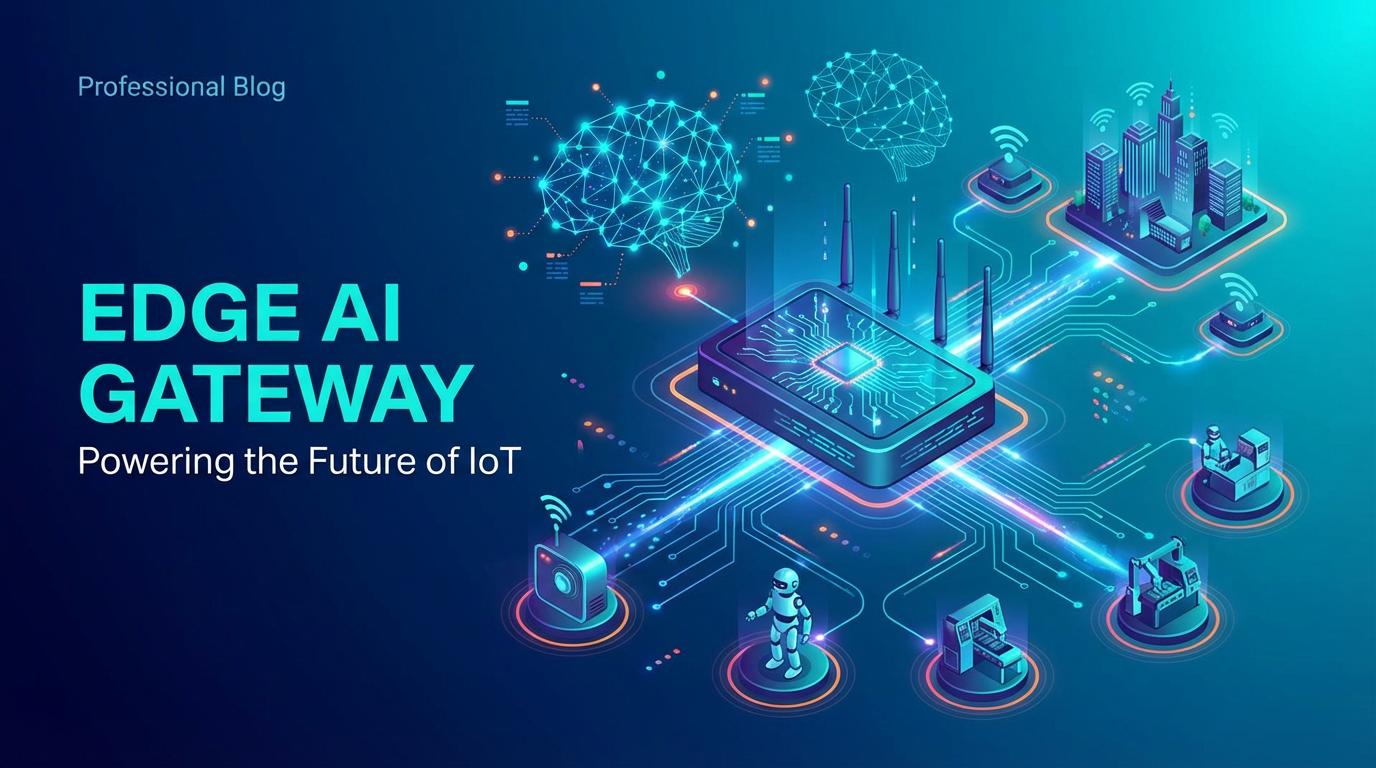


The relentless march of digital transformation continues to reshape industries across the globe, with two technological behemoths – Artificial Intelligence (AI) and the Internet of Things (IoT) – leading the charge. Individually, they are powerful; AI grants machines the ability to learn and reason, while IoT connects physical objects to the digital realm, generating unprecedented volumes of data. However, it is their convergence, particularly at the network's periphery, that promises to unlock a truly transformative era. This convergence manifests itself profoundly in the emergence of the Edge AI Gateway, a specialized gateway device that is rapidly becoming the cornerstone of intelligent IoT ecosystems. This article delves into the intricate world of Edge AI Gateways, exploring their fundamental role, the compelling reasons for their ascendancy, their diverse applications, the challenges they present, and their visionary future, ultimately demonstrating how they are unequivocally powering the future of IoT.
The Foundation: Understanding IoT, AI, and Edge Computing
To fully appreciate the significance of an Edge AI Gateway, it is imperative to first understand the foundational technologies it bridges: the Internet of Things, Artificial Intelligence, and Edge Computing. Each of these paradigms has evolved independently, yet their synergy at the edge creates a potent new capability that addresses the inherent limitations of traditional centralized computing models.
The Internet of Things (IoT) Landscape: A Web of Connected Intelligence
The Internet of Things (IoT) represents a vast and growing network of physical objects embedded with sensors, software, and other technologies for the purpose of connecting and exchanging data with other devices and systems over the internet. From the smart thermostat in your home adjusting temperatures based on occupancy, to massive industrial sensors monitoring machinery health in a factory, IoT devices are ubiquitous. These devices generate an unimaginable torrent of data – telemetry, status updates, environmental readings, video streams, and more. This data holds immense potential for insights, automation, and operational optimization.
The core components of any IoT ecosystem typically include: * Sensors and Actuators: The eyes and hands of IoT, gathering data (temperature, pressure, motion, light, etc.) and performing actions (opening valves, turning lights on/off). * Connectivity: The communication channels that allow devices to transmit data. This ranges from short-range technologies like Bluetooth and Zigbee for local networks to wider area networks like Wi-Fi, cellular (4G/5G), LoRaWAN, and satellite communication. * Data Processing: Where the raw data is transformed into meaningful information. Traditionally, this was heavily reliant on cloud computing, but this is precisely where the gateway and edge processing become critical. * User Interface/Applications: The platforms through which users interact with and derive value from the IoT system, whether it’s a mobile app, a web dashboard, or an enterprise software solution.
Despite its revolutionary potential, the sheer scale and nature of IoT deployments present significant challenges. The colossal volume of data generated by billions of connected devices can overwhelm network bandwidth and storage infrastructure. Latency, the delay in data transmission and processing, can render real-time applications impractical or even dangerous. Security and privacy concerns are paramount, as sensitive data flows across diverse networks. Moreover, the reliability of cloud-dependent systems can be compromised by network outages or intermittent connectivity in remote locations. These challenges underscore the need for a more distributed, intelligent processing architecture, paving the way for Edge Computing.
The Power of Artificial Intelligence (AI): Unlocking Data's Potential
Artificial Intelligence (AI) refers to the simulation of human intelligence in machines that are programmed to think like humans and mimic their actions. It encompasses a broad range of technologies and disciplines, with Machine Learning (ML) and Deep Learning (DL) being particularly prominent in the context of IoT. ML algorithms enable systems to learn from data without explicit programming, identifying patterns and making predictions. Deep Learning, a subset of ML, uses artificial neural networks with multiple layers to learn complex representations of data, excelling in tasks like image recognition, natural language processing, and speech synthesis.
The benefits of integrating AI into IoT are manifold: * Automation and Autonomy: AI-powered systems can make decisions and take actions independently, automating routine tasks and enabling autonomous operations, such as self-driving vehicles or robotic process automation in factories. * Predictive Maintenance: By analyzing sensor data from machinery, AI can predict equipment failures before they occur, allowing for proactive maintenance and significantly reducing downtime and operational costs. * Anomaly Detection: AI algorithms can swiftly identify unusual patterns or deviations from normal behavior in vast datasets, crucial for cybersecurity, fraud detection, and identifying critical failures in industrial systems. * Personalized Experiences: In consumer IoT, AI can learn user preferences and behaviors to offer tailored services, from personalized smart home environments to customized health recommendations. * Enhanced Efficiency: AI optimizes resource utilization, energy consumption, and logistical processes, leading to substantial operational efficiencies across various sectors.
The challenge, however, lies in bringing this powerful computational capability closer to the source of the data – the IoT devices themselves. Traditional cloud-centric AI processing often introduces delays and requires constant data transmission, which can be prohibitive for real-time and bandwidth-intensive applications.
Edge Computing: Bringing Computation Closer to the Data
Edge computing is a distributed computing paradigm that brings computation and data storage closer to the sources of data. Instead of sending all IoT data to a centralized cloud data center for processing, edge computing processes data at the "edge" of the network – closer to where it is generated. This can be on the IoT device itself (tiny edge), on an intermediate local server, or, most commonly, on a specialized gateway device.
The motivations for the rapid adoption of edge computing are compelling: * Latency Reduction: For applications demanding immediate responses (e.g., autonomous driving, industrial control systems, augmented reality), processing data at the edge eliminates the round-trip delay to the cloud, enabling near real-time decision-making. * Bandwidth Conservation: Many IoT devices generate massive amounts of data (e.g., high-resolution video streams from surveillance cameras). Processing this data at the edge allows for filtering, aggregation, and compression, sending only relevant insights or anomalies to the cloud, thereby significantly reducing bandwidth usage and associated costs. * Enhanced Security and Privacy: Processing sensitive data locally at the edge minimizes its exposure during transit to the cloud, reducing the attack surface and helping organizations comply with data privacy regulations like GDPR and HIPAA. Data can be anonymized or aggregated before being sent off-site. * Increased Reliability and Autonomy: Edge systems can operate independently even when connectivity to the cloud is intermittent or completely lost. This is crucial for remote industrial sites, smart infrastructure in disaster zones, or any mission-critical application where continuous operation is paramount. * Cost Efficiency: While there's an initial investment in edge hardware, reduced bandwidth costs, lower cloud processing fees, and the prevention of expensive downtime often lead to significant long-term savings.
The architecture of edge computing often involves a tiered approach: the devices themselves (sensors, actuators), the edge gateway (performing local processing), and the cloud (for long-term storage, batch analytics, and global management). This multi-layered approach balances the need for immediate responsiveness with the benefits of centralized oversight and vast computational power when necessary.
The Rise of the Edge AI Gateway
With the foundational understanding of IoT, AI, and Edge Computing firmly established, we can now appreciate the pivotal role of the Edge AI Gateway. This specialized device stands at the nexus of these transformative technologies, serving as the intelligent intermediary that unlocks the full potential of distributed, smart ecosystems.
What is an Edge AI Gateway?
An Edge AI Gateway is a sophisticated gateway device that not only performs traditional gateway functions – such as connecting disparate IoT devices, translating protocols, and filtering data – but crucially integrates robust Artificial Intelligence and Machine Learning capabilities directly at the network's edge. It is a powerful, localized computing unit designed to ingest raw data from a multitude of IoT sensors and devices, preprocess this data, and then apply AI/ML models to derive immediate insights and make autonomous decisions, all without relying on a constant connection to a centralized cloud infrastructure.
At its core, an Edge AI Gateway acts as an intelligent data orchestrator and decision-maker. Its functions typically include: * Data Ingestion and Aggregation: Collecting data from various IoT devices using diverse communication protocols (e.g., Modbus, OPC UA, MQTT, Zigbee, BLE, Wi-Fi, 5G). It normalizes and aggregates this data, preparing it for analysis. * Preprocessing and Filtering: Raw sensor data can be noisy and voluminous. The AI Gateway performs data cleaning, normalization, compression, and filtering, ensuring that only relevant and high-quality data proceeds to the AI inference stage. This significantly reduces the load on subsequent processing stages. * AI Inference (Local Intelligence): This is the defining feature. Pre-trained AI/ML models are deployed directly onto the AI Gateway. The gateway then executes these models using the locally processed data to perform tasks such as anomaly detection, object recognition, predictive analysis, natural language understanding, or classification. The results of this inference are immediately available at the edge. * Local Decision-Making and Control: Based on the AI inference, the AI Gateway can trigger immediate actions, control connected actuators, send alerts, or optimize local operations without waiting for instructions from the cloud. This enables true autonomy and real-time responsiveness. * Secure Communication: It acts as a secure conduit, managing encrypted communication between local IoT devices, other edge gateway nodes, and centralized cloud platforms. It often includes robust security features like hardware-level encryption, secure boot, and access control. * Data Synchronization and Cloud Integration: While emphasizing local processing, the AI Gateway doesn't entirely replace the cloud. It selectively transmits filtered, aggregated, or model-generated insights to the cloud for long-term storage, broader analytics, model retraining, and global management. This selective upload is key to optimizing bandwidth and cloud resources.
In essence, an Edge AI Gateway is a mini data center, a local brain that empowers IoT devices with immediate intelligence, transforming them from mere data producers into active participants in an intelligent, responsive ecosystem.
Why Edge AI is Critical for IoT's Future
The integration of AI capabilities directly into edge gateway devices is not merely an incremental improvement; it is a fundamental shift that addresses many of the critical limitations of traditional cloud-centric IoT architectures and unlocks new paradigms of operation.
Real-time Processing and Low Latency
For a rapidly increasing number of mission-critical IoT applications, even a few hundred milliseconds of delay can have severe consequences. Consider autonomous vehicles: processing sensor data in the cloud would introduce unacceptable latency, making real-time decision-making impossible. Similarly, in industrial automation, a delay in detecting a critical machine fault could lead to catastrophic equipment failure, production downtime, or even safety hazards. By bringing AI inference directly onto the AI Gateway at the edge, decisions are made almost instantaneously, enabling sub-millisecond response times. This is vital for applications requiring immediate feedback, such as robotic control, precision agriculture, smart traffic management, and patient monitoring in healthcare. The ability to react in real-time transforms reactive systems into proactive, intelligent agents.
Bandwidth Optimization
The sheer volume of data generated by modern IoT deployments, especially those involving high-definition video, high-frequency sensor readings, or lidar data, can quickly overwhelm available network bandwidth. Sending all this raw data to the cloud for analysis is not only costly but often impractical. An AI Gateway addresses this by performing initial processing and AI inference locally. For example, a surveillance camera equipped with an AI Gateway doesn't need to stream hours of raw video to the cloud; instead, it can use local AI to detect specific events (e.g., an unauthorized person, a package drop-off, a fall) and only transmit short clips of these events or metadata about them. This drastically reduces the data sent over the network, leading to substantial cost savings on data transmission and freeing up bandwidth for other critical communications.
Enhanced Security and Privacy
Data security and privacy are paramount concerns in the IoT era, particularly with the proliferation of sensitive information. Processing data at the edge inherently enhances both. By minimizing the amount of raw, sensitive data that needs to travel across public networks to the cloud, the attack surface is significantly reduced. An AI Gateway can anonymize data, encrypt it, or perform AI analysis on sensitive information locally, transmitting only aggregated insights or alerts, never the raw data itself. This local processing capability is crucial for complying with stringent data privacy regulations such as GDPR, HIPAA, and CCPA, which often mandate that sensitive data be processed within specific geographical boundaries or with maximum local control. Moreover, robust security features can be embedded directly into the gateway hardware and software, providing an additional layer of protection.
Increased Reliability and Autonomy
Many IoT deployments are in remote locations, harsh environments, or critical infrastructure where consistent, high-speed cloud connectivity cannot be guaranteed. Think of oil rigs, remote agricultural fields, smart infrastructure in disaster-prone areas, or even simply a factory floor with intermittent Wi-Fi. In such scenarios, cloud-dependent systems are vulnerable to downtime. An AI Gateway, with its local processing and decision-making capabilities, can operate autonomously even when disconnected from the central cloud. It can continue to monitor, analyze, and control local systems, ensuring continuous operation and preventing disruptions. Once connectivity is restored, it can synchronize relevant data and updates with the cloud. This resilience is a game-changer for mission-critical applications where continuous operation is non-negotiable.
Cost Efficiency
While there is an initial investment in the powerful hardware of an AI Gateway, the long-term cost savings can be substantial. Reducing the volume of data transmitted to the cloud directly translates to lower bandwidth costs and reduced cloud storage and processing fees. Cloud AI inference, while powerful, can be expensive at scale. By offloading a significant portion of AI inference to the edge, organizations can optimize their cloud resource utilization. Furthermore, by enabling predictive maintenance and preventing costly downtime, Edge AI Gateways contribute directly to operational cost reductions and improved asset utilization.
Scalability
Distributing AI processing across numerous gateway devices at the edge allows for immense scalability. Instead of a single central cloud struggling to process data from billions of devices, the workload is distributed, with each AI Gateway handling the immediate intelligence needs of its local cluster of IoT devices. This parallel processing capability makes it easier to scale IoT deployments without encountering bottlenecks or incurring exorbitant cloud costs.
The table below summarizes the key advantages of Edge AI compared to purely Cloud AI, highlighting why the Edge AI Gateway is indispensable.
| Feature | Cloud AI | Edge AI |
|---|---|---|
| Latency | High (data must travel to cloud and back) | Very Low (processing near data source) |
| Bandwidth | High consumption (all raw data sent to cloud) | Low consumption (only filtered/aggregated data sent) |
| Security/Privacy | Data exposed during transit; centralized risk | Enhanced (local processing, reduced data movement) |
| Reliability | Dependent on continuous cloud connectivity | High (autonomous operation possible even offline) |
| Cost | Potentially high for data transfer and cloud inference | Can be lower long-term (reduced bandwidth/cloud costs) |
| Scalability | Centralized scaling, potential bottlenecks | Distributed scaling, better load distribution |
| Real-time Action | Limited by latency | Instantaneous |
Key Components and Architecture of an Edge AI Gateway
The sophisticated capabilities of an Edge AI Gateway are underpinned by a carefully designed architecture that integrates powerful hardware with optimized software. Understanding these components is crucial to appreciating the technical prowess required for effective edge intelligence.
Hardware: The Muscle and Brain at the Edge
An AI Gateway is not just a simple router; it's a robust, often ruggedized mini-computer. Its hardware specifications are carefully chosen to balance computational power, energy efficiency, and environmental resilience. * Processors: At its core, an Edge AI Gateway typically features powerful central processing units (CPUs) capable of handling general-purpose computing tasks. However, to execute complex AI/ML models efficiently, specialized co-processors are increasingly common. These include Graphics Processing Units (GPUs) for parallel computations, Neural Processing Units (NPUs), Vision Processing Units (VPUs), or custom AI accelerators (like Google's Edge TPUs or Intel's Movidius Myriad VPUs). These accelerators are specifically designed to perform AI inference tasks with high throughput and low power consumption, crucial for edge environments. * Memory and Storage: Sufficient RAM (typically 4GB to 16GB, but sometimes more) is required to run operating systems, applications, and AI models. Robust, often industrial-grade, non-volatile storage (e.g., eMMC, SSDs, or industrial SD cards) is essential for storing operating systems, AI models, application data, and logs, designed to withstand harsh conditions and frequent read/write cycles. * Connectivity Modules: Edge AI Gateways are connectivity hubs. They are equipped with multiple network interfaces, supporting a wide array of protocols to connect to diverse IoT devices and upstream networks. This includes standard Ethernet ports, Wi-Fi (802.11ac/ax), Bluetooth/BLE, and cellular modems (4G LTE, 5G) for wide area connectivity. For industrial and specific IoT applications, they also often support specialized protocols like LoRaWAN, Zigbee, Z-Wave, Modbus, OPC UA, CAN bus, and serial ports (RS-232/485). * Ruggedization: Unlike typical IT equipment, many Edge AI Gateways are deployed in harsh industrial or outdoor environments. This requires rugged enclosures designed to withstand extreme temperatures, dust, moisture, vibrations, and electromagnetic interference (EMI/RFI). Fanless designs are common to improve reliability and prevent dust ingress. * Power Management: Energy efficiency is a critical consideration, especially for deployments in remote areas or where power consumption is a key operational cost. Gateways often include advanced power management features, wide input voltage ranges, and support for Power over Ethernet (PoE) or battery backup.
Software Stack: The Brain's Operating System and Intelligence
The hardware provides the muscle, but the software stack provides the intelligence and management capabilities. * Operating System (OS): Lightweight, secure, and real-time operating systems are preferred, such as embedded Linux distributions (e.g., Yocto Linux, Ubuntu Core), or specialized RTOS (Real-Time Operating Systems) for highly deterministic applications. These OSes provide the foundation for running applications and managing hardware resources. * Containerization: Technologies like Docker and Kubernetes (often lightweight versions like K3s or MicroK8s for the edge) are becoming increasingly prevalent. Containerization allows applications, including AI models and their dependencies, to be packaged into isolated, portable units. This simplifies deployment, management, and updates across a fleet of diverse gateway devices, ensuring consistent operation regardless of the underlying hardware. * AI/ML Frameworks and Runtimes: Optimized versions of popular AI frameworks are deployed on the AI Gateway. Examples include TensorFlow Lite, PyTorch Mobile, OpenVINO, and NVIDIA JetPack. These frameworks allow trained AI models (often trained in the cloud) to be efficiently executed for inference on edge hardware, leveraging the specialized AI accelerators. * Device Management Agents: Software agents running on the AI Gateway enable remote monitoring, configuration, and over-the-air (OTA) updates of both the gateway's firmware and the deployed AI models. This is crucial for managing large-scale, distributed deployments. * Middleware and Protocol Converters: These software components handle the diverse communication protocols of IoT devices, translating data into a standardized format that can be processed by the AI Gateway's applications and AI models. * Security Software: Beyond hardware security, the software stack includes components for secure boot, firewall rules, intrusion detection, VPN capabilities, and robust access control mechanisms to protect the gateway and the data it processes.
Security Modules: Fortifying the Edge
Security is not an afterthought but an integral part of an Edge AI Gateway's design. * Trusted Platform Module (TPM): A hardware-based security module that provides cryptographic capabilities, secure key storage, and secure boot processes, ensuring the integrity of the gateway's software. * Secure Boot: A process that verifies the digital signature of the OS and other software components during startup, preventing the execution of unauthorized or malicious code. * Hardware Root of Trust (RoT): A set of functions in hardware that are inherently trusted and used to verify the integrity of the system from the very first boot instruction. * Encryption Accelerators: Dedicated hardware modules that speed up cryptographic operations, ensuring efficient data encryption and decryption without overburdening the main CPU.
The AI Gateway and API Gateway Perspective
While the term "AI Gateway" emphasizes its intelligence capabilities, it is crucial to understand that in a broader architectural sense, an Edge AI Gateway also inherently functions as an API Gateway for local, edge-based services. This dual role makes it an even more powerful and versatile component in modern IoT architectures.
An API Gateway is traditionally a server that acts as an API gateway (a single entry point) for a group of microservices. It handles requests, routing them to the appropriate service, and manages cross-cutting concerns such as authentication, authorization, rate limiting, and caching. When these concepts are extended to the edge, the Edge AI Gateway takes on these responsibilities for services and intelligence running locally.
Here's how an Edge AI Gateway functions as an API Gateway for edge services: * Unified Access Point for Edge AI Models: An AI Gateway hosts multiple AI models (e.g., a vision model for object detection, an anomaly detection model for sensor data, a speech recognition model). Instead of having applications directly interface with each model's specific runtime, the AI Gateway can expose these models as standardized RESTful APIs or other well-defined interfaces. This provides a unified point of access, simplifying integration for edge applications, other local services, or even cloud services requesting edge intelligence. * Authentication and Authorization at the Edge: Just as a traditional API Gateway secures access to backend services, an AI Gateway can enforce authentication and authorization policies for invoking local AI models or accessing processed data. This ensures that only authorized devices, users, or applications can utilize the edge intelligence, bolstering security and control. * Protocol Translation and Data Transformation: Edge AI Gateways connect disparate IoT devices using various protocols. As an API Gateway, it can translate these diverse device protocols into standardized API calls, making it easier for client applications to consume data and trigger actions without needing to understand the underlying device-specific communication. It can also transform data formats to ensure compatibility between edge applications and AI models. * Service Discovery and Routing: In complex edge deployments with multiple AI Gateway nodes and diverse edge services, the gateway can play a role in service discovery, helping applications locate and route requests to the appropriate local AI model or processing service. * Traffic Management and Load Balancing (Local): While not as extensive as cloud-scale load balancing, an AI Gateway can manage local traffic to ensure that AI inference requests are processed efficiently, especially if multiple applications are simultaneously requesting AI insights from the gateway. It might prioritize critical tasks or manage the queue of requests. * Caching of AI Inference Results: For frequently requested AI inferences or stable data, the AI Gateway can cache results, reducing redundant computation and further improving response times.
The importance of standardized API Gateway functionality cannot be overstated for integrating diverse edge applications and cloud services. As IoT ecosystems grow in complexity, the ability to manage, secure, and expose edge AI capabilities through well-defined APIs becomes critical for interoperability and scalability. For organizations seeking to efficiently manage and integrate these disparate AI and REST services, particularly in complex, distributed environments like those powered by Edge AI Gateways, platforms like APIPark offer a robust solution. APIPark functions as an open-source AI gateway and API management platform, designed to simplify the complexities of quick integration of 100+ AI models and provide unified API formats for AI invocation. This is crucial for scalable edge deployments where managing numerous AI models, their versions, and access permissions across a fleet of Edge AI Gateways would otherwise be a monumental task. APIPark helps developers encapsulate prompts into REST APIs, manage the end-to-end API lifecycle, and enables API service sharing within teams, significantly streamlining the development and deployment of intelligent edge applications.
Applications and Use Cases of Edge AI Gateways
The transformative capabilities of Edge AI Gateways are not confined to theoretical discussions; they are actively reshaping numerous industries, enabling new levels of automation, efficiency, and intelligence across a wide spectrum of real-world applications. Their ability to deliver immediate insights and autonomous actions at the data source makes them indispensable for the future of IoT.
Industrial IoT (IIoT) and Manufacturing: The Smart Factory Revolution
In the realm of Industrial IoT, Edge AI Gateways are driving the vision of smart factories and intelligent industrial operations. The demanding nature of industrial environments, with critical real-time operations and often limited connectivity, makes edge intelligence particularly impactful. * Predictive Maintenance: This is one of the most significant applications. Edge AI Gateways continuously monitor vibrations, temperature, pressure, current draw, and acoustic signatures from industrial machinery. Local AI models analyze this data in real-time to detect subtle anomalies that indicate impending equipment failure. By predicting breakdowns before they occur, factories can schedule maintenance proactively, minimizing unplanned downtime, reducing repair costs, and extending the lifespan of valuable assets. For example, an AI Gateway can analyze motor vibration patterns and, using an embedded machine learning model, identify early signs of bearing wear, triggering an alert to maintenance personnel. * Quality Control and Defect Detection: On high-speed production lines, traditional manual inspection is slow and prone to human error. Edge AI Gateways, coupled with high-resolution cameras, can perform automated visual inspection in real-time. AI models deployed on the gateway can identify even microscopic defects (e.g., scratches, misalignments, color inconsistencies) on products with extreme precision and speed. Defective items can be immediately flagged and removed from the line, ensuring consistent product quality and reducing waste without significant latency. * Worker Safety and Compliance: Edge AI can enhance workplace safety. Computer vision models running on AI Gateway devices can monitor work areas for safety violations, such as workers operating without hard hats or safety vests, or entering restricted zones. They can also detect unusual movements that might indicate a fall or an accident, immediately alerting supervisors. This real-time monitoring and anomaly detection can significantly reduce workplace accidents. * Process Optimization and Anomaly Detection: In complex chemical plants or semiconductor manufacturing, process parameters need precise control. Edge AI Gateways can monitor hundreds of process variables simultaneously, identifying subtle deviations from optimal operating conditions that humans might miss. This allows for immediate adjustments to improve yield, reduce energy consumption, and prevent costly process excursions. * Asset Tracking and Optimization: In large facilities, tracking the location and status of tools, vehicles, or inventory can be challenging. Edge AI Gateways, integrated with RFID or ultra-wideband (UWB) tracking systems, can process location data locally to provide real-time asset visibility, optimize material flow, and prevent loss.
Smart Cities and Infrastructure: Building Responsive Urban Environments
Edge AI Gateways are instrumental in transforming urban centers into truly smart and responsive cities, enhancing public safety, improving resource management, and optimizing urban services. * Traffic Management and Optimization: In busy intersections, Edge AI Gateways equipped with computer vision can analyze real-time video feeds to count vehicles, classify vehicle types, detect pedestrian crossings, and identify traffic congestion or accidents. Based on this local analysis, the gateway can dynamically adjust traffic light timings to optimize traffic flow, reduce wait times, and respond instantly to incidents, without sending continuous video streams to a central cloud. This significantly reduces latency in decision-making, which is critical for dynamic traffic control. * Public Safety and Surveillance: Edge AI Gateways are enhancing traditional surveillance systems by adding intelligence at the source. AI models can perform real-time object detection (e.g., unattended bags, suspicious vehicles), facial recognition (where permitted and appropriate), or anomaly detection (e.g., crowd formation, fights). These capabilities allow security personnel to be alerted to specific events of interest, rather than sifting through hours of video, making surveillance far more proactive and effective while conserving network bandwidth. * Smart Lighting and Energy Management: In smart street lighting systems, AI Gateway devices can analyze environmental factors (ambient light levels, time of day) and occupancy (pedestrian or vehicle presence) to dynamically adjust lighting intensity. This leads to significant energy savings while ensuring adequate illumination where and when needed. Similarly, in smart buildings, edge AI optimizes HVAC systems based on real-time occupancy and environmental sensor data. * Environmental Monitoring: Edge AI Gateways can process data from various environmental sensors (air quality, noise levels, water quality) deployed across the city. Local AI models can identify pollution hotspots, detect unusual contaminant levels, or predict environmental changes, providing immediate alerts to authorities and allowing for rapid response.
Healthcare: Enhancing Patient Care and Operational Efficiency
The healthcare sector is leveraging Edge AI Gateways to improve patient monitoring, diagnostics, and operational efficiency, especially for applications requiring real-time insights and data privacy. * Remote Patient Monitoring (RPM): For patients with chronic conditions or those recovering at home, Edge AI Gateways can collect data from wearable sensors (heart rate, blood pressure, glucose levels, activity trackers). Local AI models analyze this data in real-time to detect subtle changes that might indicate a worsening condition or a medical emergency (e.g., a fall). Immediate alerts can be sent to caregivers or medical professionals, enabling timely intervention and potentially saving lives. This local processing also ensures high data privacy, as sensitive patient data doesn't necessarily leave the patient's home network in its raw form. * Medical Imaging Pre-analysis: While full diagnostic analysis often requires powerful cloud-based AI, Edge AI Gateways can perform initial processing and filtering of medical images (e.g., X-rays, CT scans) at the point of capture. This could involve segmenting regions of interest, highlighting potential anomalies for further review, or compressing images before secure transmission to the cloud, speeding up the diagnostic workflow and optimizing bandwidth. * Hospital Asset Tracking: In large hospitals, managing critical assets like wheelchairs, IV pumps, or specialized equipment can be challenging. Edge AI Gateways, integrated with indoor positioning systems (like Wi-Fi, BLE, or UWB), can track these assets in real-time, helping staff quickly locate equipment, improve utilization, and reduce search times.
Retail and Smart Buildings: Tailored Experiences and Operational Optimization
Edge AI Gateways are enhancing customer experiences, optimizing operations, and improving security in retail environments and smart commercial buildings. * Customer Behavior Analysis: In retail stores, Edge AI Gateways with computer vision can analyze in-store video feeds to understand customer movement patterns, identify popular product displays (heat maps), measure queue lengths, and even detect anonymous demographic information. This data, processed locally for privacy, provides retailers with real-time insights to optimize store layouts, staffing levels, and promotional strategies. For example, an AI Gateway could detect long queues and alert staff to open another checkout lane. * Inventory Management: Edge AI can assist in real-time inventory tracking by analyzing shelf stock levels using cameras or RFID readers, alerting staff when items need restocking, or identifying misplaced products. * Personalized Experiences: In smart retail, Edge AI could facilitate personalized digital signage or promotions based on inferred customer demographics or preferences, all processed locally to maintain privacy. * Energy Efficiency and Occupancy Management: In smart buildings, Edge AI Gateways collect data from occupancy sensors, temperature sensors, and window/door sensors. AI models running on the gateway can optimize HVAC systems, lighting, and security based on real-time occupancy patterns and environmental conditions, leading to significant energy savings and improved occupant comfort. For example, an AI Gateway can detect that a conference room is empty and automatically turn off lights and adjust the thermostat.
Autonomous Vehicles and Robotics: Enabling Intelligent Mobility
Perhaps one of the most demanding applications, autonomous vehicles and robotics rely heavily on Edge AI Gateways for real-time perception, decision-making, and control. * Real-time Sensor Fusion and Decision-Making: Autonomous vehicles are essentially AI Gateway on wheels. They collect massive amounts of data from cameras, lidar, radar, ultrasonic sensors, and GPS. Edge AI processes this data in milliseconds to build a comprehensive understanding of the vehicle's surroundings, detect obstacles, identify traffic signs, predict pedestrian movements, and make instantaneous driving decisions. The latency associated with cloud processing is unacceptable for safety-critical operations. * Fleet Management and Diagnostics: Edge AI Gateways in commercial fleets can monitor vehicle performance, driver behavior, and mechanical diagnostics in real-time. AI models can detect anomalies, predict maintenance needs, and optimize routing, enhancing operational efficiency and safety. * Robotics: From industrial robots on factory floors to service robots in hospitals, Edge AI empowers robots with local intelligence to navigate complex environments, interact with objects, and make decisions without constant reliance on a central server. This enables more agile, responsive, and reliable robotic systems.
In each of these diverse applications, the Edge AI Gateway serves as the critical enabler, pushing intelligence from centralized cloud environments to the very edge of the network, where data is born and immediate action is required. This distributed intelligence is fundamentally reshaping how we interact with technology and how industries operate.
APIPark is a high-performance AI gateway that allows you to securely access the most comprehensive LLM APIs globally on the APIPark platform, including OpenAI, Anthropic, Mistral, Llama2, Google Gemini, and more.Try APIPark now! 👇👇👇
Challenges and Considerations for Deploying Edge AI Gateways
While the benefits of Edge AI Gateways are profound, their deployment and management come with a unique set of challenges that organizations must carefully consider. Overcoming these hurdles requires meticulous planning, robust engineering, and a strategic approach to technology adoption.
Hardware Limitations: Balancing Power, Size, and Environment
Deploying computing power at the edge introduces physical constraints not typically encountered in data centers. * Power Consumption: Edge AI Gateways need to be energy-efficient, especially in battery-powered applications or remote locations where power is scarce or expensive. High-performance AI accelerators can be power-hungry, requiring a delicate balance between computational capability and power envelopes. * Thermal Management: Powerful processors and AI accelerators generate heat. In compact, often fanless enclosures designed for rugged environments, dissipating this heat effectively without active cooling (which can introduce dust and points of failure) is a significant engineering challenge. Overheating can lead to performance degradation or system failure. * Form Factor and Size: Edge Gateways must often fit into tight spaces, such as inside machinery, on utility poles, or within vehicle dashboards. This necessitates compact designs, which can complicate component selection and cooling solutions. * Ruggedness and Environmental Resilience: Many edge deployments are in harsh conditions – extreme temperatures, humidity, dust, vibrations, electromagnetic interference, and even corrosive agents. The hardware must be robust enough to withstand these challenges, requiring industrial-grade components and ingress protection (IP) ratings. * Computational Power vs. Cost Trade-offs: There's a constant battle to select hardware that provides sufficient AI inference capability for the specific application without being prohibitively expensive. Over-provisioning hardware leads to unnecessary costs, while under-provisioning leads to performance bottlenecks.
Software and Model Management: The Distributed Brain Problem
Managing software and AI models across a large fleet of distributed Edge AI Gateways is vastly more complex than managing a centralized cloud environment. * Deployment and Updates: Deploying and updating AI models, operating systems, and application software on hundreds or thousands of physically dispersed gateway devices can be a logistical nightmare. Over-the-air (OTA) update mechanisms are essential, but they must be robust, secure, and capable of handling intermittent connectivity and ensuring atomic updates to prevent bricking devices. * Model Versioning and Rollback: As AI models evolve and improve, managing different versions across various gateway deployments is crucial. The ability to roll back to a previous stable version in case of a new model performing poorly is vital for maintaining system reliability. This requires sophisticated version control and deployment orchestration. * Edge-to-Cloud Synchronization and Model Retraining: While AI inference happens at the edge, the cloud often remains critical for model training and retraining. This requires efficient mechanisms to send relevant edge data (e.g., labeled data, anomalous patterns) back to the cloud for model improvement, and then securely deploy the retrained models back to the edge. This often involves federated learning approaches to protect data privacy. * Heterogeneous Software Stacks: A large IoT deployment might involve a variety of AI Gateway hardware from different vendors, each potentially running different operating systems or software stacks. Managing this diversity, ensuring interoperability, and standardizing deployment processes is a significant challenge. * Resource Management at the Edge: Effectively managing the limited computational resources (CPU, GPU, memory) on each gateway to run multiple applications and AI models simultaneously requires efficient scheduling and resource allocation, often leveraging container orchestration tools.
Connectivity and Interoperability: The Language Barrier
The fragmented nature of IoT connectivity and data formats poses considerable challenges for Edge AI Gateways. * Diverse Communication Protocols: IoT devices communicate using a myriad of protocols (MQTT, CoAP, Modbus, Zigbee, LoRaWAN, Wi-Fi, 5G, etc.). An Edge AI Gateway must be capable of understanding and translating these diverse protocols into a unified format for AI processing. This requires extensive protocol gateway functionality and middleware. * Intermittent and Unreliable Connectivity: Edge deployments often face unreliable or low-bandwidth network connections. The gateway must be designed with robust mechanisms to queue data, retry transmissions, and operate autonomously during disconnected periods, ensuring data integrity and continued operation. * Data Format Standardization: Raw data from different sensors can come in various formats, units, and structures. The AI Gateway needs powerful data ingestion and transformation capabilities to normalize this data before it can be fed into AI models, ensuring consistency and preventing errors. * Integration with Existing Systems: In industrial settings, Edge AI Gateways must seamlessly integrate with legacy operational technology (OT) systems and enterprise IT systems, which often use proprietary protocols and data formats.
Security and Privacy: Protecting the Perimeter
With intelligence moving to the edge, the AI Gateway becomes a critical point of attack. Securing it and the data it processes is paramount. * Physical Security: Edge Gateways are often deployed in physically accessible locations, making them vulnerable to tampering, theft, or physical attacks. Robust physical security measures, tamper detection, and secure enclosures are necessary. * Cybersecurity at the Edge: The AI Gateway must be protected against cyber threats, including malware, denial-of-service attacks, and unauthorized access. This requires implementing strong authentication, authorization, firewalls, intrusion detection systems, and regular security updates. * Data Encryption: All data, whether at rest on the gateway or in transit between the gateway and the cloud, must be strongly encrypted to protect against eavesdropping and data breaches. Hardware-based encryption accelerators are crucial for performance. * Access Control and Identity Management: Robust identity and access management (IAM) systems are needed to control who (or what application) can access the AI Gateway, deploy models, or retrieve data. This includes secure key management and certificate management. * Privacy Compliance: Processing sensitive data at the edge, especially in healthcare or surveillance applications, requires strict adherence to privacy regulations (e.g., GDPR, CCPA). The gateway architecture must support data anonymization, pseudonymization, and consent management features. * Secure Over-the-Air (OTA) Updates: Updates to firmware and AI models must be signed and verified to prevent malicious code injection, ensuring that only trusted software runs on the gateway.
Skills Gap: The Human Factor
The multidisciplinary nature of Edge AI Gateway deployments creates a significant skills gap. * Convergence of Expertise: Successfully deploying and managing Edge AI Gateways requires expertise in IoT devices, edge computing infrastructure, AI/ML development and deployment, network engineering, cybersecurity, and even domain-specific knowledge of the application area (e.g., manufacturing, healthcare). * Lack of Unified Tools and Platforms: While many tools exist for individual components, integrated platforms that seamlessly manage the entire lifecycle from cloud-based AI training to edge deployment, monitoring, and updates are still maturing, exacerbating the need for highly specialized personnel.
Cost of Deployment and Maintenance: Total Cost of Ownership
While Edge AI promises long-term cost savings, the initial investment and ongoing operational expenses need careful consideration. * Initial Hardware Investment: Robust, AI-enabled gateway hardware is often more expensive than basic IoT gateway devices. Scaling this investment across many devices can be substantial. * Software Licensing and Services: While open-source options exist (like APIPark for API management), commercial software licenses for OS, AI frameworks, and management platforms can add to the cost. * Deployment and Integration Costs: The complexity of integrating diverse hardware, software, and legacy systems can lead to significant upfront deployment and integration costs. * Ongoing Maintenance and Operational Costs: This includes power consumption, network connectivity fees, remote management, software updates, and the cost of skilled personnel for troubleshooting and maintenance.
Addressing these challenges requires a holistic strategy that considers hardware selection, software architecture, security by design, robust operational processes, and the development of specialized skills. However, the immense benefits offered by Edge AI Gateways often outweigh these complexities, making them a strategic investment for organizations looking to fully leverage the power of IoT and AI.
The Future Outlook and Evolution of Edge AI Gateways
The journey of Edge AI Gateways is still in its early to middle stages, with immense potential for growth and innovation. As technology continues to advance rapidly, we can anticipate several key trends that will further enhance their capabilities and expand their applications, solidifying their role as essential components in the intelligent future of IoT.
Further Miniaturization and Power Efficiency: AI Everywhere
The relentless pursuit of Moore's Law, even if slowed, continues to drive advancements in chip design. We will see even more powerful yet incredibly small and energy-efficient processors and AI accelerators. * Specialized AI Chips: The emergence of custom silicon designed specifically for edge AI inference (e.g., neuromorphic chips mimicking the human brain, FPGAs, ASICs) will significantly boost performance while drastically reducing power consumption. This will enable complex AI models to run on devices with even tighter power budgets and smaller form factors. * TinyML: This growing field focuses on deploying highly optimized machine learning models on extremely resource-constrained devices, down to microcontrollers. Future Edge AI Gateways will leverage TinyML principles to perform even more sophisticated tasks closer to the sensor, further reducing the need for data transmission. * Energy Harvesting and Self-Powered Edge AI: For remote or widespread deployments, Edge AI Gateways might become increasingly self-sufficient, drawing power from ambient sources like solar, vibration, or thermal gradients, reducing maintenance cycles for battery replacements.
Advanced AI Capabilities at the Edge: Smarter, More Collaborative Intelligence
The intelligence at the edge will become more sophisticated, moving beyond simple inference to more complex AI paradigms. * Federated Learning: This collaborative AI training approach allows models to be trained on decentralized edge devices without centralizing the raw data. The AI Gateway can participate in local model training, sending only model updates (not raw data) to a central server for aggregation. This significantly enhances data privacy and security while improving model accuracy across diverse edge datasets. * Reinforcement Learning at the Edge: For autonomous systems like robots or industrial control, reinforcement learning models can enable devices to learn optimal behaviors through trial and error directly in their operating environment, adapting to real-time conditions without continuous retraining from the cloud. * Explainable AI (XAI) at the Edge: As AI models become more complex, understanding why they make certain decisions is crucial, especially in critical applications like healthcare or autonomous driving. Future Edge AI Gateways will incorporate XAI techniques to provide transparent insights into their AI inference processes, increasing trust and accountability. * Multi-modal AI at the Edge: Edge AI Gateways will increasingly fuse and analyze data from multiple sensor modalities simultaneously (e.g., combining vision, audio, and thermal data) to gain a more comprehensive understanding of the environment and make more robust decisions.
Integration with 5G and Beyond: Hyper-Connected and Ultra-Responsive Edge
The evolution of wireless communication technologies will fundamentally augment the capabilities of Edge AI Gateways. * Ultra-Low Latency with 5G/6G: The extreme low latency and high bandwidth of 5G and future 6G networks will create a seamless continuum between cloud and edge. While some processing remains local, the near-instantaneous communication will allow for more dynamic collaboration between AI Gateway devices and distributed cloud resources, enabling richer and more complex real-time applications. * Network Slicing and Mobile Edge Computing (MEC): 5G network slicing will allow for dedicated network resources and optimized connections for specific edge AI applications, guaranteeing performance. MEC will integrate computing resources directly into the cellular network infrastructure, providing an even closer gateway for AI processing for mobile IoT devices. * Massive IoT Connectivity: Future wireless technologies will support an even greater density of connected devices, expanding the scope and scale of edge AI deployments across vast geographic areas.
Open Standards and Ecosystems: Fostering Innovation and Interoperability
The maturation of the Edge AI Gateway market will be accelerated by greater standardization and open collaboration. * Open-Source Initiatives: Open-source projects and foundations will continue to drive innovation in edge AI software, operating systems, and management tools. This fosters interoperability, reduces vendor lock-in, and lowers development barriers. Platforms like APIPark, being open-source, exemplify this trend by providing a flexible and extensible foundation for managing AI models and APIs at the edge. * Standardized API Gateway Interfaces: The adoption of standardized API Gateway interfaces for exposing edge AI services will simplify integration, allowing different edge devices and cloud platforms to seamlessly interact with AI Gateway capabilities. This will be crucial for building complex, multi-vendor IoT solutions. * Cloud-to-Edge Orchestration: Cloud providers will continue to enhance their platforms to seamlessly extend AI model training, deployment, and management from the cloud down to the edge, offering unified orchestration across the entire computing continuum.
Synergies with Digital Twins and Metaverse: Intelligent Replicas and Immersive Worlds
Edge AI Gateways will play a crucial role in powering the next generation of digital experiences and industrial simulations. * Real-time Digital Twins: Edge AI will be critical for feeding real-time data and AI-driven insights into digital twins – virtual replicas of physical assets, processes, or even entire environments. This allows for hyper-realistic simulations, predictive maintenance, and optimized operations in a virtual space that accurately reflects the physical world, driven by immediate edge data. * Edge for the Metaverse: As the concept of the metaverse evolves, demanding ultra-low latency, real-time rendering, and personalized interactive experiences, Edge AI Gateways will be essential. They will process sensor data from the physical world, enable real-time AI inference for avatar interactions, and facilitate rapid data exchange for immersive augmented and virtual reality applications, bringing the metaverse closer to the user.
The trajectory of Edge AI Gateways is clear: they are poised to become increasingly intelligent, efficient, and ubiquitous. By continuously pushing the boundaries of what's possible at the network's periphery, these powerful devices will not only address current IoT challenges but also pave the way for entirely new applications and paradigms that are only just beginning to emerge, fundamentally powering the intelligent and autonomous future of everything.
Conclusion
The convergence of the Internet of Things (IoT) and Artificial Intelligence (AI) at the network's edge marks a pivotal moment in technological evolution. At the heart of this transformative shift lies the Edge AI Gateway, a sophisticated gateway device that is proving to be far more than just a data conduit. It is an intelligent orchestrator, a local decision-maker, and a robust security enforcer, fundamentally reshaping the capabilities and potential of connected ecosystems. By embedding AI inference directly where data is generated, Edge AI Gateways overcome the inherent limitations of traditional cloud-centric models – addressing critical issues of latency, bandwidth, security, and reliability.
We have explored how these AI Gateway devices are not only crucial for real-time processing and efficient resource utilization but also instrumental in enhancing data privacy and ensuring operational autonomy, even in the most challenging environments. From revolutionizing industrial manufacturing with predictive maintenance and automated quality control to making our cities smarter, our healthcare more responsive, and our retail experiences more personalized, the applications of Edge AI Gateways are vast and rapidly expanding. Their inherent ability to function as an API Gateway for edge services, facilitating seamless integration and management of diverse AI models, further amplifies their value, as demonstrated by comprehensive platforms like APIPark.
While the deployment of Edge AI Gateways presents its own set of challenges—including hardware constraints, complex software management, and stringent security requirements—the ongoing advancements in specialized AI chips, power efficiency, and open standards are continuously addressing these hurdles. Looking ahead, the future promises even more miniaturized, intelligent, and collaborative edge capabilities, driven by breakthroughs in federated learning, TinyML, and synergistic integration with 5G/6G networks, digital twins, and immersive metaverse experiences.
In essence, Edge AI Gateways are not merely components; they are the central nervous system for the next generation of intelligent IoT. They empower devices to transcend their roles as passive data collectors, transforming them into active, autonomous agents capable of immediate insight and action. For any organization looking to unlock the full potential of their IoT investments, to build truly responsive, secure, and efficient systems, the strategic adoption and masterful deployment of Edge AI Gateways will be absolutely fundamental. They are, without doubt, powering the future of IoT, laying the groundwork for a world where intelligence is pervasive, immediate, and utterly transformative.
Frequently Asked Questions (FAQs)
1. What is the fundamental difference between an Edge AI Gateway and a traditional IoT Gateway? A traditional IoT Gateway primarily focuses on connecting disparate IoT devices, translating communication protocols, and securely transferring raw or minimally processed data to a centralized cloud platform. Its main role is data aggregation and connectivity. An Edge AI Gateway, in contrast, not only performs these connectivity functions but crucially embeds powerful Artificial Intelligence (AI) and Machine Learning (ML) capabilities directly at the network's edge. This allows it to perform real-time data analysis, AI inference, and make autonomous decisions locally, without constant reliance on cloud connectivity. It acts as a local "brain" for IoT data, providing immediate insights and actions.
2. Why is low latency so critical for Edge AI Gateway applications, and how does Edge AI achieve it? Low latency is critical for applications that require immediate responses and real-time decision-making, where even a few hundred milliseconds of delay can have severe consequences. Examples include autonomous vehicles, industrial robotic control, real-time safety monitoring, and critical infrastructure management. Edge AI achieves low latency by processing data directly at the source (the edge of the network), eliminating the time-consuming round-trip data transmission to a distant cloud server and back. By performing AI inference locally on the AI Gateway, decisions can be made instantaneously, enabling near real-time reactions and proactive control of physical systems.
3. How do Edge AI Gateways enhance security and privacy for IoT deployments? Edge AI Gateways enhance security and privacy by minimizing the exposure of raw, sensitive data. Instead of sending all data to the cloud, the AI Gateway processes this data locally. It can perform AI analysis on sensitive information (e.g., video feeds, health data) at the edge, anonymize or aggregate results, and then only transmit filtered insights or alerts to the cloud. This significantly reduces the attack surface during data transit, helps comply with data privacy regulations (like GDPR and HIPAA), and allows organizations to maintain greater control over sensitive information. Additionally, AI Gateway devices often incorporate robust hardware-level security features like secure boot and encryption to protect the device itself.
4. What role does an API Gateway play in the context of an Edge AI Gateway, and how does APIPark fit in? In addition to its AI capabilities, an Edge AI Gateway inherently functions as an API Gateway for local, edge-based services. It acts as a single entry point for applications to access the AI models and data processing capabilities running on the gateway. This involves exposing these AI functions as standardized APIs, managing authentication and authorization for access to these APIs, and handling protocol translation. Platforms like APIPark provide an open-source solution for managing and integrating such AI and REST services, whether in the cloud or at the edge. APIPark helps developers quickly integrate diverse AI models, unify API formats for AI invocation, manage the full API lifecycle (design, publication, security), and enable team-based API sharing, which is crucial for streamlining the development and deployment of complex Edge AI applications across distributed gateway fleets.
5. What are some of the primary challenges in deploying and managing Edge AI Gateways at scale? Deploying and managing Edge AI Gateways at scale presents several challenges. These include: * Hardware Limitations: Balancing computational power, energy efficiency, and ruggedness in a small form factor, often for harsh environments. * Software and Model Management: Efficiently deploying, updating, and versioning AI models and software across numerous dispersed gateway devices, often with intermittent connectivity. * Connectivity and Interoperability: Handling diverse communication protocols from various IoT devices and ensuring seamless data flow despite unreliable network conditions. * Security and Privacy: Protecting the gateway itself from cyber and physical threats, securing data at rest and in transit, and ensuring compliance with stringent privacy regulations. * Skills Gap: The need for specialized expertise spanning IoT, edge computing, AI/ML, networking, and cybersecurity. * Cost of Ownership: Initial hardware investment and ongoing operational expenses for maintenance and management.
🚀You can securely and efficiently call the OpenAI API on APIPark in just two steps:
Step 1: Deploy the APIPark AI gateway in 5 minutes.
APIPark is developed based on Golang, offering strong product performance and low development and maintenance costs. You can deploy APIPark with a single command line.
curl -sSO https://download.apipark.com/install/quick-start.sh; bash quick-start.sh

In my experience, you can see the successful deployment interface within 5 to 10 minutes. Then, you can log in to APIPark using your account.

Step 2: Call the OpenAI API.