Multi Tenancy Load Balancer: Enhance Scalability & Performance
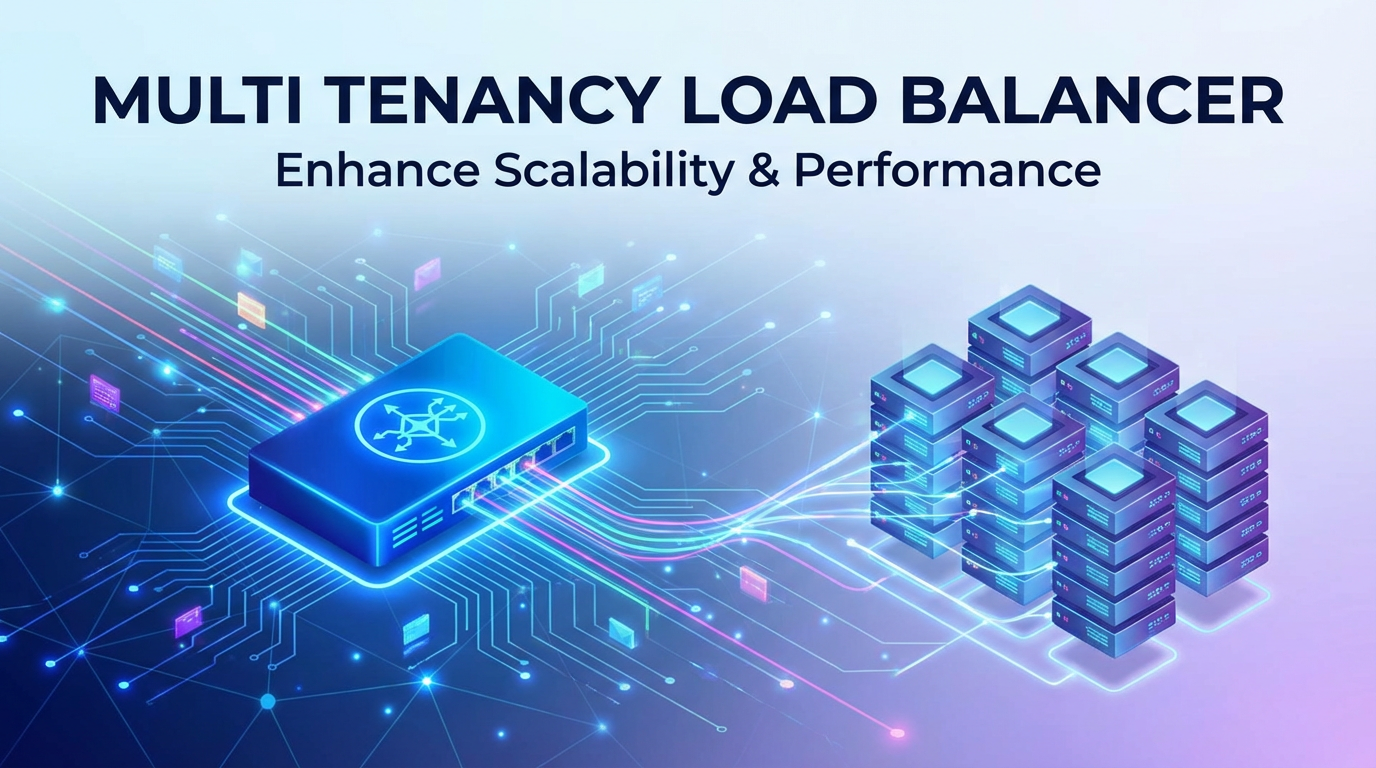


The digital landscape is relentlessly evolving, pushing the boundaries of what applications and services can deliver. At the heart of this evolution lies the incessant demand for systems that are not only powerful and responsive but also inherently scalable and cost-efficient. Enterprises, from burgeoning startups to multinational corporations, are increasingly migrating towards cloud-native architectures and software-as-a-service (SaaS) models, where the principle of multi-tenancy reigns supreme. Concurrently, the sheer volume and complexity of user requests necessitate sophisticated traffic management solutions, making load balancing an indispensable component of any robust infrastructure. When these two fundamental concepts — multi-tenancy and load balancing — converge, they form a synergistic powerhouse: the Multi-Tenancy Load Balancer. This advanced architectural pattern is not merely a technical configuration; it represents a strategic imperative for organizations aiming to maximize resource utilization, enhance performance, bolster security, and streamline operations across diverse client bases. Understanding its intricacies, deployment strategies, and inherent benefits is paramount for anyone navigating the complexities of modern distributed systems and striving to deliver unparalleled service quality.
This comprehensive exploration delves into the foundational elements of multi-tenancy and load balancing independently, before meticulously dissecting their powerful combination. We will unravel the architectural paradigms, delve into the operational nuances, examine the security implications, and ultimately articulate how a well-implemented multi-tenancy load balancer serves as the linchpin for achieving unprecedented levels of scalability and performance in today's demanding digital ecosystem. The journey will illuminate how organizations can leverage these sophisticated mechanisms to not only meet but exceed the expectations of an increasingly interconnected and performance-sensitive user base, ensuring that their services remain resilient, efficient, and capable of adapting to future growth and technological shifts.
The Foundation: Understanding Multi-Tenancy in Depth
Multi-tenancy is an architectural principle where a single instance of a software application serves multiple distinct customer organizations (tenants). Each tenant, while sharing the same application and underlying infrastructure, operates as if they have a dedicated instance of the software. This approach stands in stark contrast to single-tenancy, where each customer requires and receives their own separate software instance and potentially their own dedicated infrastructure. The allure of multi-tenancy lies in its profound economic advantages and operational efficiencies, making it a cornerstone of the SaaS model that has revolutionized software delivery.
From a conceptual standpoint, multi-tenancy involves a delicate balance between resource sharing and logical separation. Imagine an apartment building: all residents share the same building structure, common amenities like elevators and hallways, and utilities like water and electricity. However, each apartment unit provides a private, isolated space for its occupant, complete with individual locks and privacy. In the software world, the "apartment building" is the application instance and infrastructure, while each "apartment unit" is the isolated environment for a tenant. This analogy highlights the core challenge and benefit: maximizing shared resources while ensuring robust logical isolation and customization for each tenant.
Architectural Models of Multi-Tenancy
The implementation of multi-tenancy is not a one-size-fits-all solution; it manifests in various architectural models, each offering different trade-offs in terms of isolation, cost, and complexity.
- Shared Database, Shared Schema: This is the most cost-effective and resource-efficient model. All tenants share a single database and a single schema. Tenant data is typically distinguished by a
tenant_idcolumn in every table. While this model offers excellent resource utilization, the isolation is purely logical and relies heavily on application-level filtering. Security vulnerabilities in the application layer could potentially expose one tenant's data to another. Performance can also be a concern if queries are not efficiently designed to handletenant_idfiltering across very large datasets. Scaling individual tenant resources (e.g., giving one tenant more database capacity) is challenging, as resources are pooled. - Shared Database, Separate Schemas: In this model, tenants share a single database instance, but each tenant has their own separate schema within that database. This provides a stronger level of isolation compared to the shared schema model, as data separation is enforced at the database level rather than just the application layer. Data breaches between tenants become less likely if the database security is properly configured. However, managing and evolving multiple schemas within a single database can introduce operational overhead, especially during database migrations or schema updates. Resource pooling still means that a "noisy neighbor" tenant consuming excessive database resources could impact others.
- Separate Databases, Shared Application Instance: Here, each tenant gets their own dedicated database instance, but they all share the same application code instance. This model offers the highest level of data isolation short of complete infrastructure separation. Performance issues in one tenant's database are less likely to directly impact others. Scaling database resources for a specific tenant becomes much easier. The trade-off is increased cost and complexity due to managing multiple database instances. While the application code is shared, database connection pools or configurations must be dynamic enough to switch context based on the incoming tenant request. This model is often preferred for applications dealing with highly sensitive data or demanding strong compliance requirements.
- Separate Application Instances, Separate Databases (but Shared Infrastructure): This is a hybrid approach where tenants might have their own application instances (e.g., containers, VMs) and dedicated databases, but they still run on shared underlying physical infrastructure (e.g., a shared Kubernetes cluster or cloud VMs). This offers maximum isolation and allows for tenant-specific customizations and resource allocations. The cost savings come from sharing the underlying hardware, networking, and virtualization layers. This model often appears in more mature SaaS offerings where specific tenants might require unique application configurations or dedicated processing power, and it transitions towards what some might call "virtualized single-tenancy" on shared hardware.
Benefits of Multi-Tenancy
The adoption of multi-tenancy is driven by several compelling advantages:
- Cost Efficiency: By sharing application instances and infrastructure resources, providers can significantly reduce operational costs. Hardware, licensing, maintenance, and administrative overhead are amortized across a larger customer base. This allows providers to offer services at a lower price point, making their offerings more competitive.
- Simplified Management and Maintenance: Managing a single application instance for all tenants is far more efficient than deploying and maintaining hundreds or thousands of individual instances. Software updates, patches, and security fixes can be applied once, immediately benefiting all tenants. This reduces downtime, minimizes administrative effort, and speeds up feature delivery.
- Scalability: Multi-tenant architectures are inherently designed for scalability. As the customer base grows, resources can be dynamically allocated or provisioned from a shared pool. The system can scale horizontally by adding more application instances or vertically by increasing resource allocation to existing ones, all while serving multiple tenants. This agility is crucial for handling fluctuating demand and continuous growth.
- Resource Optimization: Multi-tenancy leads to better utilization of computing resources. Instead of having potentially idle dedicated instances for each client, resources are pooled and dynamically distributed based on current demand. This "cloud bursting" capability ensures that no resource goes to waste, maximizing ROI on infrastructure investments.
- Faster Onboarding: Bringing new tenants online is typically a streamlined process, often involving just database provisioning (if separate databases are used) or simply creating a new tenant entry in a shared database. This rapid provisioning enhances customer satisfaction and accelerates market entry for the provider.
Challenges and Considerations in Multi-Tenancy
Despite its advantages, multi-tenancy presents a unique set of challenges that must be meticulously addressed:
- Tenant Isolation and Security: Ensuring that one tenant's data and operations are completely isolated from others is paramount. A security flaw that allows unauthorized access between tenants can have catastrophic consequences. Strict access controls, data encryption, and robust application-level filtering are essential.
- "Noisy Neighbor" Problem: If resources are extensively shared, a tenant with high demand or inefficient queries can degrade performance for all other tenants. Implementing robust resource governance, quality of service (QoS) mechanisms, and intelligent load distribution becomes critical to prevent this.
- Customization Limitations: Offering tenant-specific customizations can be challenging in a multi-tenant environment without introducing significant complexity. The application must be designed with extensibility in mind, allowing configuration and feature toggles per tenant rather than deep code modifications.
- Data Backups and Recovery: While individual tenant data needs to be recoverable, the shared nature of databases can complicate granular backup and restore operations for a single tenant without affecting others. Strategies often involve logical backups per tenant or point-in-time recovery for the entire shared dataset.
- Regulatory Compliance: Different tenants may have varying regulatory and compliance requirements (e.g., GDPR, HIPAA, PCI DSS). Meeting all these diverse requirements within a single shared infrastructure can be complex, often requiring the highest common denominator of security and compliance features.
In summary, multi-tenancy is a powerful architectural paradigm that underpins much of the modern SaaS economy. Its ability to deliver significant cost savings and operational efficiencies makes it incredibly attractive. However, successful implementation demands careful consideration of isolation, security, and resource management to mitigate the inherent complexities and deliver a robust, performant, and secure service to all tenants. It is against this backdrop of shared resources and diverse demands that the role of load balancing becomes not just important, but absolutely critical.
The Enabler: Demystifying Load Balancing
Load balancing is a fundamental component of modern distributed systems, acting as the intelligent traffic cop of the digital highway. At its core, load balancing refers to the process of distributing network traffic efficiently across a pool of servers, ensuring that no single server becomes overwhelmed. The primary goals of load balancing are to maximize throughput, minimize response time, prevent server overload, and improve the overall reliability and availability of applications. Without load balancing, a single server or a small group of servers could become a bottleneck, leading to degraded performance, extended outages, and a poor user experience.
Imagine a busy commercial district with multiple stores selling similar products. If all customers rush to just one store, lines become long, service slows down, and some customers might even leave. A load balancer, in this analogy, would be an intelligent usher guiding customers to the least crowded store, or even directing them to specialized stores based on their specific needs, ensuring an equitable distribution of traffic and optimal service for everyone.
Core Principles and Mechanisms
Load balancers operate by intercepting incoming requests and, based on a predefined algorithm and current server health, forwarding them to one of the available backend servers. This seemingly simple operation involves several sophisticated mechanisms:
- Traffic Distribution: The most visible function is the intelligent distribution of requests. This prevents any single server from becoming a "hot spot" while others sit idle, thus preventing performance bottlenecks.
- Health Checks: A critical function of any load balancer is continuously monitoring the health and availability of backend servers. This involves sending periodic probes (e.g., ping, HTTP requests) to check if a server is responding correctly. If a server fails a health check, the load balancer automatically removes it from the pool of active servers and stops sending traffic to it. Once the server recovers, it is automatically added back into the pool. This proactive monitoring is vital for maintaining high availability and fault tolerance.
- Session Persistence (Sticky Sessions): For applications that require user sessions to be maintained on a specific server (e.g., e-commerce shopping carts, authenticated sessions), load balancers can be configured for session persistence. This ensures that all subsequent requests from a particular user within a session are always directed to the same backend server. This is typically achieved using cookies, source IP hashing, or SSL session IDs. While beneficial for application state, it can sometimes counteract optimal load distribution.
- SSL/TLS Termination: Load balancers often handle SSL/TLS termination, decrypting incoming encrypted traffic and forwarding unencrypted traffic to backend servers. This offloads the CPU-intensive encryption/decryption process from the backend servers, allowing them to focus on application logic. It also simplifies certificate management, as certificates only need to be installed on the load balancer, not on every backend server.
Load Balancing Algorithms
The intelligence of a load balancer largely resides in its choice of distribution algorithms, which dictate how incoming requests are directed. Each algorithm has its strengths and weaknesses, suitable for different use cases:
- Round Robin: This is the simplest and most widely used algorithm. Requests are distributed sequentially to each server in the pool. Server 1 gets the first request, Server 2 gets the second, and so on, cycling back to Server 1 after the last server. It's easy to implement but doesn't account for server load or processing capability, potentially sending requests to an already busy server.
- Weighted Round Robin: An enhancement to Round Robin, where administrators can assign a "weight" to each server based on its capacity or processing power. Servers with higher weights receive a proportionally larger share of requests. This helps distribute load more intelligently across heterogeneous server environments.
- Least Connections: This algorithm directs new requests to the server with the fewest active connections. It's a dynamic algorithm that considers the current load on each server, making it highly effective for distributing requests more evenly, especially for applications where connection duration varies significantly.
- Weighted Least Connections: Combines Least Connections with server weights. The load balancer directs traffic to the server that has the least number of active connections relative to its assigned weight.
- IP Hash: The source IP address of the client is used to calculate a hash, and this hash determines which server receives the request. This ensures that requests from the same client always go to the same server, providing session persistence without requiring cookies, which can be useful for caching or maintaining specific client-server states.
- Least Response Time: This algorithm directs traffic to the server with the fastest response time and fewest active connections. It aims to optimize for perceived user experience by prioritizing speed.
- Least Bandwidth: Directs new requests to the server currently serving the least amount of traffic (measured in Mbps). This is useful for file transfer servers or streaming services.
Types of Load Balancers
Load balancers can be categorized based on their implementation and operational layer:
- Hardware Load Balancers: These are dedicated physical appliances (e.g., F5 BIG-IP, Citrix ADC) designed specifically for high-performance load balancing. They offer superior throughput and advanced features but come with significant capital expenditure, require physical space, and can be less flexible in cloud environments.
- Software Load Balancers: These are applications running on standard servers (e.g., Nginx, HAProxy, Envoy). They are more flexible, cost-effective, and easier to deploy in virtualized or cloud environments. They can also be scaled horizontally by simply deploying more instances.
- Cloud Load Balancers: Public cloud providers offer managed load balancing services as part of their infrastructure (e.g., AWS Elastic Load Balancing - ELB/ALB, Google Cloud Load Balancing, Azure Load Balancer). These are software-defined, highly scalable, and fully managed, abstracting away much of the operational complexity. They integrate seamlessly with other cloud services and often provide advanced features like content-based routing and auto-scaling.
- Application Load Balancers (Layer 7): These operate at the application layer (Layer 7 of the OSI model) and can inspect the content of a request. This allows for advanced routing decisions based on HTTP headers, URLs, cookies, or even the content of the request body. They are ideal for microservices architectures, api gateway implementations, and content-based routing.
- Network Load Balancers (Layer 4): These operate at the transport layer (Layer 4) and distribute traffic based on IP addresses and port numbers. They are extremely high-performance and low-latency, suitable for handling millions of requests per second for protocols like TCP and UDP. They do not inspect application content.
Benefits of Load Balancing
The strategic deployment of load balancers offers transformative benefits to any application or service:
- Enhanced Scalability: By distributing load across multiple servers, the system can handle a much larger volume of traffic than a single server could. As demand grows, more backend servers can be added to the pool without reconfiguring the client-facing application.
- Improved Performance: Load balancers ensure that user requests are directed to the most available and responsive server, minimizing latency and improving overall application performance. This leads to a better user experience and higher user satisfaction.
- Increased Availability and Reliability: Through continuous health checks, load balancers automatically detect and isolate unhealthy servers, ensuring that traffic is only sent to functional instances. This fault tolerance significantly reduces downtime and improves the resilience of the application against server failures.
- Cost Efficiency: By effectively utilizing all available server resources, organizations can often achieve desired performance levels with fewer servers than would be needed if traffic was unevenly distributed. This optimizes infrastructure costs.
- Simplified Maintenance: Backend servers can be taken offline for maintenance, updates, or scaling operations without affecting the availability of the application. The load balancer simply directs traffic to the remaining healthy servers.
- SSL/TLS Offloading: As mentioned, offloading cryptographic operations to the load balancer frees up valuable CPU cycles on backend application servers, allowing them to focus on processing business logic more efficiently.
- Security: Load balancers can act as the first line of defense, providing basic DDoS protection, IP blacklisting, and in some cases, integrating with Web Application Firewalls (WAFs) to filter malicious traffic before it reaches backend services.
In essence, load balancing is not just a mechanism for distributing traffic; it is a critical architectural pattern that underpins the reliability, scalability, and performance of almost all significant online services today. It enables systems to grow gracefully, recover from failures autonomously, and deliver a consistently high-quality experience to users, regardless of the underlying infrastructure's complexity. With a solid grasp of multi-tenancy and load balancing individually, we are now poised to explore their powerful, synergistic combination.
The Synergy: Multi-Tenancy Load Balancer Explained
When the demands of multi-tenancy intersect with the capabilities of load balancing, a specialized and sophisticated architectural component emerges: the Multi-Tenancy Load Balancer. This is not simply a generic load balancer placed in front of a multi-tenant application; rather, it is a load balancing system specifically designed and configured to understand, differentiate, and intelligently route traffic for multiple distinct tenants, all while optimizing shared resources and maintaining strict isolation. The multi-tenancy load balancer becomes the critical gateway that enables a single application instance or a pool of application instances to serve a diverse client base efficiently and securely.
The core challenge a multi-tenancy load balancer addresses is reconciling the need for resource sharing (inherent in multi-tenancy) with the requirement for logical separation and potentially tenant-specific performance guarantees. In a traditional load balancing setup, all incoming requests are treated largely the same, directed to any available healthy server. In a multi-tenant context, however, the load balancer must be tenant-aware. It needs to identify which tenant a request belongs to early in the request lifecycle and then apply tenant-specific routing, policies, and resource allocations.
Why a Specialized Approach for Multi-Tenancy?
Generic load balancers, while excellent at distributing undifferentiated traffic, fall short in multi-tenant environments for several reasons:
- Tenant Identification: A generic load balancer has no inherent mechanism to distinguish between Tenant A's request and Tenant B's request. It simply sees incoming packets. A multi-tenancy load balancer must be capable of extracting tenant identity from various parts of the request (e.g., hostname, URL path, custom HTTP headers, API keys, JWT tokens).
- Tenant-Specific Routing: Once identified, a tenant's request might need to be routed to a specific subset of backend servers, a particular version of a service, or even a dedicated microservice instance optimized for that tenant. For example, a premium tenant might be routed to servers with more dedicated resources, while a free-tier tenant uses shared, lower-priority resources.
- Resource Isolation and QoS: To prevent the "noisy neighbor" problem, a multi-tenancy load balancer needs to enforce tenant-specific rate limits, allocate bandwidth, or even prioritize traffic. A generic load balancer cannot apply these fine-grained controls per tenant.
- Security Policies: Different tenants may have distinct security requirements or custom firewall rules. The load balancer, acting as the primary ingress point, might need to apply tenant-specific Web Application Firewall (WAF) rules or access control lists (ACLs).
- Monitoring and Analytics: For effective operational management and billing, it's crucial to monitor resource consumption and performance metrics on a per-tenant basis. A multi-tenancy load balancer can provide this granular visibility.
Architectural Considerations for Multi-Tenancy Load Balancers
Designing and implementing a multi-tenancy load balancer involves several critical architectural decisions:
- Tenant Identification Mechanism:
- Hostname-based Routing: Each tenant is assigned a unique subdomain (e.g.,
tenantA.yourdomain.com,tenantB.yourdomain.com). The load balancer inspects theHostheader to determine the tenant. This is a common and clean approach. - Path-based Routing: Tenants are identified by a specific URL path segment (e.g.,
yourdomain.com/tenantA/,yourdomain.com/tenantB/). The load balancer matches the URI path. This can be simpler to manage certificate-wise but might impact URL aesthetics. - Header-based Routing: Custom HTTP headers (e.g.,
X-Tenant-ID) are included in the request, carrying the tenant identifier. This offers flexibility but requires client applications to explicitly add the header. - API Key/Token-based Routing: For API traffic, the tenant ID might be embedded in an API key or a JWT token. The load balancer (or an upstream api gateway) might need to decrypt/validate the token to extract tenant information.
- Hostname-based Routing: Each tenant is assigned a unique subdomain (e.g.,
- Backend Service Segregation:
- Shared Pool, Tenant-aware Application: The most common model, where all backend application instances are identical and tenant-aware. The load balancer routes to any healthy instance, and the application itself is responsible for tenant-specific data isolation.
- Dedicated Pools per Tenant/Tier: For strong isolation or performance guarantees, a multi-tenancy load balancer might direct traffic for specific tenants (e.g., premium customers) to a dedicated pool of more powerful backend servers, while others use a general pool.
- Container/VM Isolation: In cloud-native environments, each tenant might have their own set of containers or even virtual machines, dynamically provisioned. The load balancer then routes to the appropriate set of containers/VMs for the identified tenant.
- Policy Enforcement:
- Rate Limiting: Crucial for preventing individual tenants from monopolizing resources. The load balancer can enforce API call limits, bandwidth limits, or connection limits on a per-tenant basis.
- Quality of Service (QoS): Prioritizing traffic for certain tenants or types of requests. For example, critical business operations for a premium tenant might receive higher priority than background tasks for a free-tier tenant.
- Access Control: Tenant-specific IP whitelists/blacklists or geographical restrictions can be applied at the load balancer level.
- Security Context: Integration with identity providers to authenticate tenant requests and pass security context downstream.
Benefits of a Multi-Tenancy Load Balancer
The adoption of a specialized multi-tenancy load balancer brings a wealth of advantages:
- Enhanced Resource Utilization: By sharing the load balancer and backend infrastructure, overall resource utilization is optimized. The load balancer intelligently directs traffic to available resources, preventing underutilization in some areas and overload in others.
- Improved Scalability per Tenant: As individual tenants grow, the load balancer can dynamically scale the resources allocated to them or direct their traffic to more capable backend pools. This allows providers to offer tailored scalability without requiring entirely separate infrastructures.
- Stronger Tenant Isolation: Beyond just data isolation, a multi-tenancy load balancer can provide network-level and resource-level isolation. This means one tenant's traffic patterns or resource consumption are less likely to impact others, mitigating the "noisy neighbor" problem at the ingress.
- Granular Performance Management: The ability to apply tenant-specific rate limits, QoS policies, and routing rules allows providers to offer differentiated service levels (e.g., bronze, silver, gold tiers) and ensure that each tenant receives performance commensurate with their service agreement.
- Centralized Security Enforcement: Security policies, such as WAF rules, DDoS mitigation, and access control, can be centrally managed and applied at the load balancer. This simplifies security operations and ensures consistent protection across all tenants, while still allowing for tenant-specific overrides where necessary.
- Simplified Operational Management: Managing a single, intelligent load balancer is more efficient than managing multiple, tenant-specific load balancers. Configuration changes, updates, and monitoring can be streamlined.
- Actionable Monitoring and Analytics: A multi-tenancy load balancer can provide detailed metrics on traffic volume, latency, errors, and resource consumption per tenant. This data is invaluable for billing, capacity planning, identifying performance bottlenecks, and troubleshooting.
- Cost Savings: By enabling multiple tenants to share the same load balancing infrastructure and backend compute resources more effectively, providers can significantly reduce their overall operational expenditure and capital investment compared to a single-tenant per customer model.
Key Features and Capabilities
To effectively serve multi-tenant environments, a sophisticated load balancer incorporates several advanced features:
| Feature/Capability | Description | Benefit in Multi-Tenancy |
|---|---|---|
| Advanced Content-Based Routing | Ability to inspect HTTP headers, URL paths, query parameters, cookies, or even parts of the request body (for Layer 7 load balancers) to make routing decisions. This includes regex matching, header existence, and complex conditional logic. | Enables precise tenant identification and directs traffic to specific backend pools, service versions, or even entirely different microservices based on the tenant context, allowing for differentiated service delivery and A/B testing for specific tenant groups. |
| Tenant-Specific Rate Limiting | Configurable limits on the number of requests, connections, or bandwidth that each individual tenant can consume within a given time frame. Can be enforced based on tenant ID, API key, IP, or other identifiers. | Prevents any single "noisy neighbor" tenant from monopolizing shared resources, ensuring fair usage for all tenants. Crucial for maintaining service quality and offering tiered service level agreements (SLAs). |
| Dynamic Tenant Provisioning | The load balancer can be programmatically updated to add or remove routing rules and policies for new or departing tenants without manual intervention or service interruption. Often integrates with API-driven configuration management. | Facilitates rapid tenant onboarding and offboarding, reducing operational overhead and accelerating time to value for new customers. Supports automated scaling and management in dynamic cloud environments. |
| Web Application Firewall (WAF) Integration | Ability to integrate with or embed WAF capabilities to inspect incoming traffic for malicious patterns, common web vulnerabilities (SQL injection, XSS), and bot attacks, applying rules specific to an application or tenant. | Provides a crucial layer of security, protecting backend multi-tenant applications from common cyber threats. Tenant-specific WAF policies can be applied to meet varying security compliance requirements for different clients, offering bespoke protection. |
| API Gateway Functionality | For api heavy applications, the load balancer may incorporate api gateway features such as authentication, authorization, caching, request/response transformation, and schema validation. This positions it as the primary ingress point for api interactions. | A robust api gateway serves as the central control point for all api traffic. When integrated with multi-tenancy load balancing, it can apply tenant-specific access policies, rate limits, and even route api calls to different backend services based on the tenant, streamlining api management. Platforms like APIPark exemplify how a comprehensive gateway can unify management, integrate diverse AI models, and crucially, handle traffic forwarding and load balancing while ensuring independent access and configurations for each tenant. APIPark's ability to manage traffic forwarding, load balancing, and versioning of published APIs, alongside its support for independent API and access permissions for each tenant, directly addresses the sophisticated needs of multi-tenant API environments. Its performance, rivalling Nginx, further emphasizes its capability to act as a high-throughput multi-tenant ingress. |
| Observability (Metrics, Logging, Tracing) | Comprehensive collection of real-time metrics (traffic, latency, errors) per tenant, detailed request logging, and distributed tracing capabilities to follow a request's journey through the system, identifying bottlenecks. | Provides unparalleled visibility into the performance and usage patterns of each tenant. Essential for capacity planning, troubleshooting, identifying "noisy neighbors," billing, and demonstrating SLA compliance. Detailed logging, such as that provided by APIPark, allows businesses to quickly trace and troubleshoot issues, ensuring system stability. |
| Advanced Health Checks & Auto-Scaling | Beyond simple ping/port checks, sophisticated health checks that involve specific API endpoints or application logic. Integration with auto-scaling groups to automatically adjust the number of backend instances based on tenant-specific load or overall system metrics. | Ensures high availability and fault tolerance for tenant services. Automatically adapts to fluctuating demand, scaling resources up or down to maintain performance for all tenants without manual intervention, optimizing cost and responsiveness. |
The multi-tenancy load balancer is therefore far more than a simple traffic distributor; it is a strategic orchestrator that ensures each tenant receives a secure, performant, and appropriately resourced experience from a shared underlying infrastructure. It is an indispensable component for any organization committed to delivering scalable, cost-effective, and high-quality multi-tenant services in today's demanding cloud ecosystem.
Deployment Strategies and Technologies
Implementing a multi-tenancy load balancer involves choosing the right tools and deployment strategies that align with an organization's infrastructure, budget, and operational capabilities. The landscape of load balancing technologies is rich and varied, ranging from traditional on-premise solutions to cloud-native managed services and sophisticated service meshes. Each approach offers distinct advantages and challenges in a multi-tenant context.
Cloud-Native Load Balancers
For organizations operating in public cloud environments, cloud providers offer robust, fully managed load balancing services that are inherently designed for scalability and high availability. These services often provide features critical for multi-tenancy.
- AWS Elastic Load Balancing (ELB) - Application Load Balancer (ALB):
- Description: AWS ALB operates at Layer 7, making it ideal for multi-tenant applications. It supports content-based routing rules, allowing traffic to be forwarded to different target groups based on attributes like host headers, URL paths, and query strings.
- Multi-Tenancy Application: Each tenant can be assigned a unique subdomain (e.g.,
tenantA.example.com). The ALB listener rules can then direct traffic based on theHostheader to a specific backend target group associated with that tenant's services. Alternatively, path-based routing (example.com/tenantA/) can be used. ALB also supports weighted target groups, allowing for traffic splitting for A/B testing or blue/green deployments per tenant. - Benefits: Fully managed, highly scalable, integrates seamlessly with other AWS services (EC2, ECS, EKS, Lambda), supports SSL/TLS termination, and offers fine-grained access control through IAM. Provides detailed metrics via CloudWatch.
- Considerations: Cost scales with usage, and while flexible, complex tenant-specific rules can become unwieldy without proper automation.
- Azure Application Gateway:
- Description: Azure Application Gateway is a Layer 7 load balancer that provides web traffic management. It offers URL-based routing, host-based routing, SSL termination, and integrated Web Application Firewall (WAF).
- Multi-Tenancy Application: Similar to AWS ALB, it excels at host-based and path-based routing for multi-tenant applications. It allows defining multiple hostnames on a single listener, each routing to a different backend pool for various tenants. Its WAF capabilities can be configured with tenant-specific rules.
- Benefits: Fully managed, highly available, integrated WAF, supports URL rewriting and redirection. Provides deep integration with Azure ecosystem.
- Considerations: Can be more expensive than basic load balancers for simple use cases, and complex configurations can require careful management.
- Google Cloud Load Balancing (HTTPS Load Balancer):
- Description: Google Cloud offers a global, high-performance load balancer with native support for Layer 7 features. It provides a single global IP address for all traffic, routing it to the nearest healthy backend.
- Multi-Tenancy Application: Its advanced URL map features allow for routing based on host and path, perfect for multi-tenant applications. It can direct traffic for
tenantA.example.comto one set of instances andtenantB.example.comto another, even across different regions. - Benefits: Global load balancing, single anycast IP, extremely scalable, integrates with Google's network edge, provides strong security features including DDoS protection.
- Considerations: Configuration can be complex for granular control, and cost can be a factor for high-traffic scenarios.
Open-Source Software Load Balancers and Proxies
For more control, specific feature requirements, or on-premise/hybrid cloud deployments, open-source solutions provide powerful and flexible alternatives.
- Nginx (and Nginx Plus):
- Description: Nginx is a powerful open-source web server, reverse proxy, and load balancer. Its event-driven architecture makes it highly performant. Nginx Plus is the commercial version offering advanced features.
- Multi-Tenancy Application: Nginx's
server_namedirective allows easy hostname-based routing. Withlocationblocks, it can handle path-based routing. Lua scripting can extend its capabilities for complex tenant identification logic, header manipulation, and dynamic routing based on custom rules. Rate limiting (limit_req) can be applied on a per-tenant basis using variables. - Benefits: High performance, mature, versatile, extensive community support, highly configurable. Cost-effective for self-managed deployments.
- Considerations: Requires manual configuration and management. Advanced multi-tenancy features often require custom scripting or the commercial Nginx Plus.
- HAProxy:
- Description: HAProxy is a high-performance, highly reliable reverse proxy and load balancer for TCP and HTTP-based applications. It is renowned for its speed and advanced feature set.
- Multi-Tenancy Application: HAProxy is exceptional for multi-tenancy due to its powerful
acl(Access Control List) anduse_backenddirectives. It can inspect HTTP headers (likeHost), URL paths, or custom headers to dynamically route requests to different backend pools. It offers very granular rate limiting, connection limiting, and queue management per tenant. - Benefits: Extremely fast, highly flexible, robust feature set for complex routing and policy enforcement, excellent for Layer 4 and Layer 7 load balancing.
- Considerations: Configuration can be complex and requires deep understanding. Not as widely used as a web server compared to Nginx.
- Envoy Proxy:
- Description: Envoy is an open-source, high-performance edge/service proxy from Lyft, designed for cloud-native applications. It is the de facto standard data plane for many service mesh implementations.
- Multi-Tenancy Application: Envoy's advanced routing capabilities (e.g.,
virtual hosts,routes) and filter chain architecture allow for highly sophisticated tenant-aware traffic management. It can be configured dynamically via its xDS API, making it ideal for large-scale, automated multi-tenant environments. It supports request/response transformation, fine-grained rate limiting, and sophisticated circuit breaking per tenant. - Benefits: Cloud-native by design, highly extensible, dynamic configuration, strong observability features (metrics, tracing), excellent for microservices and service mesh architectures.
- Considerations: Can be overkill for simpler deployments. Its complexity typically requires a control plane (like Istio or a custom solution) for effective management in production.
Kubernetes Ingress Controllers and Service Meshes
In Kubernetes-native multi-tenant environments, specialized components handle ingress and intra-cluster traffic.
- Kubernetes Ingress Controllers:
- Description: An Ingress Controller is a specialized load balancer that implements the Kubernetes Ingress API, acting as an entry point for external traffic into a Kubernetes cluster. Popular examples include Nginx Ingress Controller, Traefik, and Envoy-based controllers.
- Multi-Tenancy Application: Ingress resources can define host-based or path-based routing rules, directing traffic to different services (which might belong to different tenants or tenant components) within the cluster. In a multi-tenant cluster, each tenant might deploy their own Ingress resource, or a central Ingress Controller can manage routing for all tenants. Namespace isolation and network policies are key for multi-tenancy in Kubernetes.
- Benefits: Kubernetes-native, leverages familiar Kubernetes concepts, simplifies external access management, supports declarative configuration.
- Considerations: Managing multiple Ingress resources in a large multi-tenant cluster can become complex. Basic Ingress might not offer all the advanced multi-tenancy features without extensions or custom annotations.
- Service Meshes (e.g., Istio, Linkerd):
- Description: A service mesh is a dedicated infrastructure layer for handling service-to-service communication in microservices architectures. It provides capabilities like traffic management (routing, load balancing), policy enforcement, security, and observability at the application layer.
- Multi-Tenancy Application: While primarily for internal service communication, service meshes often include an ingress gateway (like Istio Ingress Gateway, which uses Envoy). This gateway can serve as the multi-tenancy load balancer, applying sophisticated routing, authentication, authorization, rate limiting, and traffic shaping policies on a per-tenant basis before forwarding requests to tenant-specific microservices within the mesh. Istio's
VirtualServiceandGatewayresources are powerful for tenant-aware routing. - Benefits: Comprehensive control over all traffic (ingress and inter-service), rich policy enforcement, built-in observability, strong security features (mTLS). Excellent for highly complex, multi-tenant microservices.
- Considerations: Adds significant operational complexity and resource overhead. Learning curve can be steep. Best suited for large-scale, mature microservices deployments.
Choosing the Right Strategy
The selection of a multi-tenancy load balancing strategy depends on several factors:
- Infrastructure: Cloud-native, on-premise, or hybrid.
- Scale: Number of tenants, traffic volume, and growth projections.
- Complexity: Granularity of tenant-specific policies required (routing, rate limiting, security).
- Budget: Managed services vs. self-managed open-source solutions.
- Operational Expertise: Availability of staff experienced with specific technologies.
- Existing Ecosystem: Integration with current CI/CD pipelines, monitoring, and security tools.
For many cloud-based multi-tenant SaaS applications, cloud-native Application Load Balancers (ALB, Application Gateway, GCP HTTPS LB) provide an excellent balance of features, scalability, and managed operational simplicity. For containerized microservices in Kubernetes, Ingress Controllers and potentially a service mesh offer powerful, declarative control. For high-performance, self-managed environments, HAProxy or Nginx provide unmatched flexibility and efficiency. The key is to evaluate the specific needs of the multi-tenant application and choose a solution that can effectively manage tenant isolation, performance, and scalability without introducing undue operational burden.
APIPark is a high-performance AI gateway that allows you to securely access the most comprehensive LLM APIs globally on the APIPark platform, including OpenAI, Anthropic, Mistral, Llama2, Google Gemini, and more.Try APIPark now! 👇👇👇
Performance Optimization in Multi-Tenant Load Balancing
Achieving optimal performance in a multi-tenant environment through intelligent load balancing is a multifaceted endeavor. It extends beyond simply distributing requests evenly; it involves a sophisticated interplay of configuration, resource management, and strategic design choices that aim to minimize latency, maximize throughput, and ensure consistent service quality for all tenants. The goal is to make the shared infrastructure feel like dedicated resources for each tenant, even under heavy load.
Key Optimization Strategies
- Efficient Tenant Identification:
- Mechanism Choice: The method chosen for tenant identification (hostname, path, header) can impact performance. Hostname-based routing is often the most performant as it's typically the earliest point of inspection for Layer 7 load balancers and allows for direct mapping to backend configurations.
- Regex Optimization: If using regex for path or header matching, ensure patterns are highly optimized to minimize processing time. Avoid overly complex or inefficient regex, which can become a bottleneck at high traffic volumes.
- Caching Tenant Metadata: If tenant identification involves a database lookup or external API call, caching this metadata on the load balancer can significantly speed up subsequent requests for the same tenant.
- Smart Load Balancing Algorithms:
- Least Connections/Weighted Least Connections: These dynamic algorithms are generally superior for multi-tenant applications compared to simple Round Robin, as they consider the actual current load on backend servers. This prevents new requests from piling up on an already busy server, even if it's its "turn" in a Round Robin cycle. Weighted versions are crucial for heterogeneous backend pools where some servers are more powerful.
- Least Response Time: For performance-critical applications, routing to the server with the fastest current response time can directly improve user experience, though it requires the load balancer to actively track and aggregate response times.
- Application-Aware Algorithms: In advanced scenarios, the load balancer might integrate with application metrics (e.g., active processing queues, available memory) to make even more intelligent routing decisions, sending traffic to the server best equipped to handle the specific type of request.
- Connection Management and Pooling:
- Keep-Alive Connections: Enable HTTP Keep-Alive (persistent connections) between the load balancer and backend servers. This reduces the overhead of establishing new TCP connections for every request, saving CPU cycles and reducing latency.
- Connection Pooling: Load balancers can maintain a pool of open connections to backend servers. When a new request arrives, it can reuse an existing connection from the pool rather than establishing a new one, further reducing latency and resource consumption on both ends.
- Idle Connection Timeouts: Configure appropriate idle timeouts for connections to prevent stale connections from consuming resources unnecessarily.
- SSL/TLS Offloading and Optimization:
- TLS Termination at Load Balancer: Terminating SSL/TLS at the load balancer is a critical optimization. Cryptographic operations are CPU-intensive. By offloading this to the load balancer, backend servers are freed to focus on application logic.
- Optimized TLS Handshakes: Use modern TLS versions (TLS 1.2, 1.3) and efficient cipher suites. Configure OCSP stapling to speed up certificate validation.
- Session Resumption: Enable TLS session resumption to reduce the overhead of repeated full TLS handshakes for returning clients.
- Caching Strategies:
- Edge Caching: Implement caching at the load balancer or an edge CDN (Content Delivery Network) for static assets or frequently accessed dynamic content that is not tenant-specific or can be cached per tenant. This reduces the load on backend servers and delivers content faster to users.
- Tenant-Specific Caching: Where applicable, configure caching mechanisms that understand tenant boundaries. For instance, a cache key might include the tenant ID to ensure one tenant's cached data is not served to another.
- Rate Limiting and Throttling per Tenant:
- Prevention of "Noisy Neighbors": Aggressive rate limiting at the load balancer level, enforced per tenant, is paramount. This prevents any single tenant from overwhelming shared resources, ensuring consistent performance for others.
- Graduated Tiers: Implement tiered rate limits (e.g., free tier vs. premium tier) to align performance with service level agreements.
- Spike Protection: Use rate limiting to protect backend services from sudden, unpredictable spikes in traffic, even if the total traffic volume is within general capacity limits.
- Backend Scaling and Health Checks:
- Aggressive Health Checks: Configure granular and frequent health checks to quickly identify and remove unhealthy backend instances. Faster detection of failures leads to less traffic being sent to problematic servers, improving overall system stability and performance.
- Proactive Auto-Scaling: Integrate the load balancer with auto-scaling mechanisms for backend services. Dynamically add or remove backend instances based on load metrics (CPU utilization, request queue length, memory usage) to ensure optimal resource allocation and responsiveness for all tenants.
- HTTP/2 and HTTP/3 Adoption:
- Multiplexing: HTTP/2 (and the newer HTTP/3) allows multiple requests and responses to be interleaved over a single TCP (or UDP for HTTP/3) connection. This significantly reduces latency, especially for web pages with many assets, by eliminating head-of-line blocking and reducing connection overhead.
- Header Compression: Both protocols employ header compression, further reducing bandwidth usage.
- Server Push: HTTP/2 Server Push can proactively send resources to the client that it anticipates will be needed, reducing round trips. Implementing these protocols at the load balancer (which can then proxy to backend HTTP/1.1 if necessary) can yield substantial performance gains.
- GZIP Compression:
- Content Compression: Enable GZIP (or Brotli) compression for text-based content (HTML, CSS, JavaScript, JSON) at the load balancer. This reduces the amount of data transferred over the network, improving page load times and saving bandwidth, without burdening backend application servers.
- Observability and Monitoring:
- Per-Tenant Metrics: Comprehensive monitoring of traffic, latency, error rates, and resource utilization per tenant is crucial. This data helps identify "noisy neighbors," detect performance regressions, and validate that QoS policies are being effective.
- Distributed Tracing: Implementing distributed tracing (e.g., OpenTelemetry, Jaeger) through the load balancer and into backend services helps pinpoint latency bottlenecks within the multi-tenant architecture, allowing for targeted optimizations. Platforms like APIPark, with its detailed API call logging and powerful data analysis, can be invaluable here, providing insights into long-term trends and performance changes, which assists with preventive maintenance.
By meticulously applying these optimization strategies, organizations can transform their multi-tenant load balancing infrastructure from a simple traffic distributor into a finely tuned performance engine. This ensures that every tenant, regardless of their size or traffic patterns, receives a consistent, high-quality, and responsive service experience, bolstering customer satisfaction and underpinning the long-term success of the multi-tenant offering.
Security Considerations for Multi-Tenancy Load Balancers
Security is not merely a feature but a fundamental pillar upon which a robust multi-tenant system must be built. For multi-tenancy load balancers, acting as the primary ingress point for all tenant traffic, security takes on an even greater significance. A compromise at this layer could potentially expose all tenants to risks, undermine data integrity, and lead to significant reputational and financial damage. Therefore, a comprehensive security strategy is paramount, encompassing tenant isolation, access control, threat mitigation, and compliance.
Core Security Principles
- Defense in Depth: No single security measure is foolproof. A layered approach, where security controls are implemented at multiple points (load balancer, api gateway, application, database, network), provides redundancy and resilience against attacks.
- Principle of Least Privilege: Grant only the minimum necessary permissions to users, services, and configurations.
- Tenant Isolation: Preventing one tenant from accessing or affecting another's data or resources is the cornerstone of multi-tenant security. The load balancer plays a crucial role in enforcing this at the network edge.
- Continuous Monitoring and Auditing: Proactive monitoring for suspicious activities and regular security audits are essential for early detection and response to threats.
Key Security Considerations and Measures
- Tenant Isolation at the Network Edge:
- Dedicated Endpoints/Hostnames: Using unique hostnames (e.g.,
tenantA.example.com) or specific URL paths (example.com/tenantA/) for each tenant allows the load balancer to route traffic and apply policies based on this explicit tenant identifier. This provides a clear logical separation. - Virtual Private Clouds (VPCs) / Subnets: While not directly managed by the load balancer itself, the underlying network infrastructure should be designed with tenant isolation in mind, potentially using separate subnets or even separate VPCs for highly sensitive tenants. The load balancer acts as the bridge, ensuring traffic reaches only the intended isolated backend.
- Network Segmentation: Utilize network segmentation and firewall rules (Security Groups, Network ACLs) to ensure that even if traffic bypasses the load balancer (e.g., from an internal threat), it cannot reach unauthorized tenant resources.
- Dedicated Endpoints/Hostnames: Using unique hostnames (e.g.,
- Authentication and Authorization:
- Centralized Authentication: The load balancer, especially when acting as an api gateway, can perform initial authentication (e.g., validating API keys, JWT tokens) before forwarding requests to backend services. This offloads authentication from backend services and ensures only legitimate requests proceed. Platforms like APIPark offer API resource access approval features, where callers must subscribe to an API and await administrator approval, preventing unauthorized API calls and potential data breaches, further strengthening the authentication and authorization layer.
- Tenant-Aware Authorization: After identifying the tenant, the load balancer can enforce tenant-specific authorization policies, ensuring users only access resources they are permitted to. This often involves integration with an Identity and Access Management (IAM) system.
- Secure Credential Management: Store API keys, certificates, and other sensitive credentials securely (e.g., in a secrets manager, Hardware Security Module - HSM), and rotate them regularly.
- DDoS Protection and Rate Limiting:
- DDoS Mitigation: The load balancer is the first line of defense against Distributed Denial of Service (DDoS) attacks. It should be capable of absorbing large volumes of malicious traffic, identifying attack patterns, and dropping malicious requests before they overwhelm backend servers. Cloud load balancers often have built-in DDoS protection.
- Rate Limiting per Tenant: Crucial for preventing individual tenants (or malicious actors impersonating them) from launching a denial-of-service attack or consuming excessive resources, impacting other tenants. As discussed, granular rate limits based on IP, tenant ID, or API key are essential.
- Bot Detection and Mitigation: Integrate with bot detection services to identify and block automated attacks, credential stuffing, and scraping.
- Web Application Firewall (WAF):
- Integrated WAF: Deploy a WAF either directly within the load balancer (e.g., Azure Application Gateway WAF) or as a separate service integrated with it (e.g., AWS WAF with ALB). A WAF protects against common web vulnerabilities like SQL injection, cross-site scripting (XSS), and security misconfigurations.
- Tenant-Specific WAF Rules: For enhanced security, allow for tenant-specific WAF rules to cater to unique application requirements or compliance mandates.
- SSL/TLS Security:
- Enforce HTTPS: All traffic to the multi-tenancy load balancer should be encrypted using HTTPS. The load balancer should enforce this, redirecting HTTP traffic to HTTPS.
- Strong TLS Configuration: Use strong, modern TLS versions (TLS 1.2 or 1.3), robust cipher suites, and secure certificate management practices. Regularly audit TLS configurations for weaknesses.
- Certificate Pinning: Consider implementing certificate pinning for critical client applications to prevent Man-in-the-Middle (MitM) attacks, though this comes with operational overhead.
- Secure Configuration Management:
- Minimize Attack Surface: Configure the load balancer with the minimum necessary services and open ports. Disable unused features.
- Secure Access to Configuration: Restrict administrative access to the load balancer to authorized personnel using strong authentication (MFA) and audited access logs.
- Regular Patching and Updates: Keep the load balancer software (or firmware for hardware appliances) consistently updated with the latest security patches to protect against known vulnerabilities.
- Logging, Monitoring, and Auditing:
- Comprehensive Logging: The load balancer must generate detailed access logs, error logs, and audit logs that capture information like source IP, destination, tenant ID, request headers, and response codes. These logs are critical for forensic analysis, intrusion detection, and compliance.
- Real-time Monitoring: Implement real-time monitoring and alerting for unusual traffic patterns, error spikes, and security events (e.g., failed authentication attempts, WAF blocks).
- Audit Trails: Maintain an immutable audit trail of all configuration changes to the load balancer.
- Compliance:
- Regulatory Alignment: Understand and adhere to relevant industry and government regulations (e.g., GDPR, HIPAA, PCI DSS) for data privacy and security. The load balancer's features should support these compliance efforts, such as data residency rules or explicit consent mechanisms.
- Regular Security Assessments: Conduct penetration testing, vulnerability scanning, and security audits of the multi-tenant load balancing infrastructure regularly.
The multi-tenancy load balancer is a critical control point for the security posture of an entire multi-tenant application. By implementing a robust set of security measures at this layer, organizations can significantly reduce their attack surface, protect tenant data, ensure regulatory compliance, and build trust with their customers. A proactive and layered security approach, constantly refined and monitored, is the only way to safeguard the complex and dynamic multi-tenant environments of today.
Use Cases and Industry Examples
The power and versatility of multi-tenancy load balancers extend across a vast array of industries and application types. From the omnipresent SaaS platforms that define modern business to highly specialized cloud service providers, these intelligent traffic managers are fundamental to delivering scalable, high-performance, and secure services. Understanding these diverse applications provides concrete insights into the practical benefits and deployment considerations of such sophisticated systems.
1. Software-as-a-Service (SaaS) Platforms
This is arguably the most prevalent and impactful use case for multi-tenancy load balancers. Almost every modern SaaS application – whether it's a CRM, ERP, project management tool, or marketing automation suite – operates on a multi-tenant model to maximize efficiency and offer competitive pricing.
- Example: CRM/ERP Systems: A SaaS CRM platform like Salesforce serves millions of users across thousands of companies. Each company is a "tenant." When a user from "Company A" logs in, the multi-tenancy load balancer (often an advanced Layer 7 load balancer like AWS ALB or a self-managed Nginx/HAProxy cluster) identifies Company A based on the hostname (
companyA.salesforce.com) or a custom header. It then routes the request to a pool of backend application servers optimized for CRM operations. These servers, while shared, apply application-level logic to ensure Company A's data is isolated from Company B's. The load balancer also enforces rate limits to prevent any single company from overwhelming the system, guaranteeing fair performance for all. - Benefits:
- Cost Efficiency: One infrastructure serves many customers, dramatically lowering operational costs per customer.
- Simplified Operations: Updates and maintenance are applied once to the shared application instance, benefiting all tenants instantly.
- Scalability: The platform can seamlessly onboard new tenants and scale resources dynamically to meet aggregate demand, managed efficiently by the load balancer.
- Differentiated Services: Load balancers enable offering premium tenants higher rate limits or routing to dedicated, higher-performance backend pools.
2. Cloud Service Providers (IaaS/PaaS)
Cloud providers themselves leverage multi-tenancy load balancing extensively to manage their vast infrastructure and offer services to millions of customers. While their internal systems are complex, the principles apply.
- Example: Managed Database Services: A cloud provider offering a "Database-as-a-Service" (DBaaS) where customers get isolated database instances but share the underlying compute and storage infrastructure. A multi-tenancy load balancer would sit in front of the API endpoints for managing these databases. When a customer (tenant) makes an api call to create a new database, the load balancer identifies the customer, routes the request to the appropriate provisioning service, and applies any customer-specific policies (e.g., resource quotas, billing limits).
- Benefits:
- Massive Scale: Enables providers to serve an enormous number of independent customers from shared physical resources.
- Resource Pooling: Maximizes hardware utilization across diverse workloads.
- Automated Management: Facilitates automated provisioning, scaling, and management of customer resources via API, with the load balancer as the central ingress.
3. API-as-a-Service (APIaaS) Offerings
Many companies offer specialized APIs as a service, allowing other developers to integrate specific functionalities into their applications. These often need robust multi-tenant handling.
- Example: Geocoding or Payment Gateway APIs: A provider offering a geocoding api service. Developers sign up, get an API key, and integrate the api into their applications. The multi-tenancy load balancer (often integrated with or functioning as an api gateway) identifies the calling application (tenant) via the API key or authentication token. It then routes the request to the geocoding service, enforcing tenant-specific rate limits, usage quotas, and even different pricing tiers based on the API key.
- Benefits:
- API Management: Centralized control over all incoming api traffic, enforcing policies and ensuring fair usage.
- Monetization: Enables flexible billing models and service tiers based on API usage, managed and enforced by the gateway/load balancer.
- Security: Provides a crucial security layer for api endpoints, protecting backend services from abuse and unauthorized access. This is where products like APIPark, an open-source AI gateway and API management platform, shine. APIPark's capabilities in managing traffic forwarding, load balancing, and versioning of published APIs, combined with its support for independent API and access permissions for each tenant, directly cater to the needs of multi-tenant APIaaS. Its features like quick integration of 100+ AI models and prompt encapsulation into REST API allow developers to create sophisticated multi-tenant API services with robust load balancing and access controls.
4. Managed Services and Hosted Solutions
Organizations providing managed IT services or hosting specialized applications for multiple clients often rely on multi-tenancy and intelligent load balancing.
- Example: Managed WordPress Hosting: A company offering managed WordPress hosting, where each client has their own WordPress installation but shares a common server infrastructure (e.g., a Kubernetes cluster or a pool of VMs). The multi-tenancy load balancer directs traffic from
clientA.wordpresshost.comto Client A's specific WordPress containers, whileclientB.wordpresshost.comgoes to Client B's. The load balancer can also apply client-specific caching rules or WAF policies. - Benefits:
- Isolation and Customization: Provides logical isolation for each client while leveraging shared infrastructure.
- Performance Guarantees: Can enforce resource limits or prioritize traffic for premium clients.
- Operational Efficiency: Centralized management of routing and security policies for all hosted clients.
5. Content Delivery Networks (CDNs)
While CDNs are primarily about caching and geographic distribution, the edge servers of a CDN often employ multi-tenancy principles for different customer websites or applications.
- Example: CDN for Multiple Websites: A CDN provider serves cached content for thousands of websites. When a user requests an image from
image.clientA.com, the CDN's edge server (acting as a multi-tenancy proxy/load balancer) identifiesclientA.com, serves the cached content if available, or fetches it from Client A's origin server. Different clients may have different caching rules, security policies, or even specific origin server configurations, all managed by the CDN's intelligent routing system. - Benefits:
- Global Scalability: Distributes traffic and content globally.
- Reduced Latency: Content served from the nearest edge location.
- Cost Savings: Reduces load on origin servers for static content.
In conclusion, multi-tenancy load balancers are not confined to a niche; they are an ubiquitous and indispensable architectural pattern powering much of the modern internet's most critical and widely used services. Their ability to intelligently manage traffic, enforce policies, and ensure isolation across diverse client bases from a shared infrastructure is what enables enterprises to deliver high-performing, cost-effective, and secure services at scale, ultimately driving innovation and growth in the digital economy.
Future Trends in Multi-Tenancy Load Balancing
The evolution of technology is relentless, and the domain of multi-tenancy load balancing is no exception. As cloud-native architectures mature, AI becomes more integrated into infrastructure, and edge computing gains prominence, the capabilities and complexity of these systems will continue to advance. Anticipating these future trends is crucial for architects and developers aiming to build resilient, adaptive, and future-proof multi-tenant applications.
1. AI/ML-Driven Load Balancing and Traffic Management
The integration of Artificial Intelligence and Machine Learning promises to revolutionize load balancing by introducing unprecedented levels of intelligence and adaptability.
- Predictive Load Balancing: Instead of reacting to current server load, AI/ML models can analyze historical traffic patterns, time of day, seasonal trends, and even external events to predict future demand. Load balancers could then proactively scale resources and intelligently distribute traffic to prevent congestion before it occurs. This could include predictive scaling of backend services or pre-warming specific servers for anticipated tenant spikes.
- Anomaly Detection and Self-Healing: AI can monitor real-time metrics across all tenants and quickly identify anomalous behavior—be it a "noisy neighbor", a nascent DDoS attack, or a subtle performance degradation in a specific microservice. The load balancer, informed by AI, could automatically quarantine the offending tenant/service, apply dynamic rate limits, or even trigger self-healing actions without human intervention.
- Personalized Routing and QoS: ML algorithms could learn individual tenant usage patterns and performance requirements, dynamically adjusting routing decisions and QoS policies to optimize each tenant's experience. For instance, a critical business transaction for a high-value tenant could be prioritized over a batch job from a lower-tier tenant automatically.
- Intelligent Resource Allocation: AI can optimize the allocation of resources (CPU, memory, network bandwidth) to different tenants or services based on their real-time needs and historical profiles, ensuring maximum utilization while maintaining performance guarantees.
2. Serverless and Event-Driven Architectures
The rise of serverless computing (e.g., AWS Lambda, Azure Functions, Google Cloud Functions) presents a new paradigm for multi-tenancy and load balancing.
- Function-as-a-Service (FaaS) as Backend: In serverless architectures, the "backend servers" are ephemeral functions that scale almost infinitely. The load balancer's role evolves from distributing requests to fixed servers to acting as an API gateway that triggers these functions.
- Event-Driven Routing: Load balancing in a serverless context often becomes more event-driven. The gateway might route requests to different functions based on event types, tenant-specific logic embedded in the request, or even the characteristics of the incoming event payload.
- Cold Start Optimization: While serverless platforms handle scaling, "cold starts" (initialization latency for a function) can be an issue. Future multi-tenancy load balancers or api gateways might employ predictive techniques to keep tenant-specific functions "warm" or intelligently batch requests to minimize cold start impact.
3. Edge Computing and Distributed Load Balancing
As data processing moves closer to the data source and users, edge computing will significantly impact multi-tenancy load balancing.
- Edge-Native Load Balancers: Load balancing functionality will increasingly be deployed at the network edge, closer to end-users and IoT devices. This reduces latency, improves responsiveness, and offloads processing from centralized cloud data centers.
- Hierarchical Load Balancing: A multi-layered load balancing architecture will emerge, with edge load balancers handling initial tenant identification and local traffic distribution, potentially routing specific requests to regional cloud load balancers or central data centers for complex processing.
- Data Residency and Compliance at the Edge: For multi-tenant applications with strict data residency requirements, edge load balancers can help ensure that tenant data is processed and stored within specific geographical boundaries as early as possible in the request lifecycle.
4. Advanced Service Mesh Integration
Service meshes (like Istio, Linkerd) are already powerful, but their role in multi-tenancy load balancing will deepen.
- Unified Control Plane for Ingress and Egress: Service meshes will provide a more cohesive control plane for managing both external multi-tenant ingress traffic and internal service-to-service communication. This simplifies policy enforcement and observability across the entire application stack.
- Per-Tenant Micro-segmentation: Leveraging service mesh capabilities, multi-tenancy load balancers can enforce granular network policies and micro-segmentation per tenant, down to individual service instances. This offers unparalleled isolation and security within a shared infrastructure.
- Tenant-Aware Traffic Shifting: Advanced traffic management features (e.g., weighted routing, traffic mirroring) within service meshes will enable sophisticated tenant-specific canary deployments, A/B testing, and blue/green deployments.
5. Enhanced Observability and AIOps
The sheer complexity of multi-tenant systems demands increasingly sophisticated observability tools.
- End-to-End Tracing with Tenant Context: Distributed tracing will become even more critical, allowing operators to follow a single tenant's request across numerous services, load balancers, and potentially multiple cloud regions, identifying performance bottlenecks and errors with precise tenant context.
- AIOps for Multi-Tenancy: AI-driven operational insights (AIOps) platforms will aggregate metrics, logs, and traces from the load balancer and backend services. They will use ML to detect anomalies, predict outages, automate troubleshooting, and even suggest optimal configurations for individual tenants or tenant groups.
- Proactive Billing and Resource Utilization Insights: Enhanced observability will provide more accurate, real-time data for per-tenant billing and resource utilization analysis, allowing providers to optimize pricing models and capacity planning more effectively.
The multi-tenancy load balancer of the future will be less of a static traffic router and more of an intelligent, AI-augmented, and dynamically adaptive orchestration layer. It will operate seamlessly across cloud, edge, and serverless environments, providing unprecedented levels of performance, security, and operational efficiency for the next generation of multi-tenant applications. Embracing these trends will be key for any organization looking to maintain a competitive edge in the rapidly evolving digital landscape.
Conclusion: The Indispensable Role of Multi-Tenancy Load Balancers
In the intricate tapestry of modern cloud-native architectures, the multi-tenancy load balancer stands out as a critical, indispensable component. Its evolution from a simple traffic distributor to a sophisticated, intelligent orchestrator underscores its profound importance in the digital realm. We have embarked on a comprehensive journey, dissecting the foundational principles of multi-tenancy and load balancing, meticulously exploring their synergistic combination, examining deployment strategies, delving into performance optimization, and scrutinizing the paramount security considerations. The narrative concludes with a glimpse into the transformative future, where AI, edge computing, and advanced service meshes will redefine the boundaries of what these systems can achieve.
The core challenge that the multi-tenancy load balancer masterfully addresses is the delicate balance between resource sharing for cost-efficiency and robust logical isolation for security and performance guarantees. By intelligently identifying each tenant and applying a rich array of tenant-specific routing rules, rate limits, quality of service policies, and security measures, it transforms a shared infrastructure into a seemingly dedicated experience for every client. This capability is not merely an architectural nicety; it is the linchpin that enables the very existence and scalability of the multi-billion-dollar SaaS industry and a vast ecosystem of cloud services.
From the economic advantages of reduced operational overhead to the operational efficiencies of streamlined management, the benefits are profound. Organizations can onboard new tenants rapidly, scale their services dynamically to meet fluctuating demand, and enforce granular performance agreements, all while maintaining a fortified security posture. The ability to mitigate the "noisy neighbor" problem, centralize security enforcement with features like WAF integration, and provide detailed per-tenant observability offers an unparalleled level of control and insight. Whether deploying cloud-native managed services, leveraging powerful open-source proxies, or integrating with sophisticated service meshes, the choice of a multi-tenancy load balancing solution profoundly impacts an organization's ability to deliver high-quality services at scale.
As we look ahead, the integration of AI and Machine Learning promises to infuse these systems with predictive intelligence, enabling proactive resource allocation and self-healing capabilities. The shift towards serverless architectures and the proliferation of edge computing will further decentralize and optimize traffic management, bringing processing closer to the user. Ultimately, the multi-tenancy load balancer is more than just technology; it is a strategic imperative. For any enterprise striving to enhance scalability, boost performance, ensure security, and remain competitive in a landscape defined by shared resources and demanding users, mastering the art and science of multi-tenancy load balancing is not optional—it is essential for long-term success and sustained innovation.
5 FAQs about Multi-Tenancy Load Balancers
1. What is a Multi-Tenancy Load Balancer and how does it differ from a regular Load Balancer?
A Multi-Tenancy Load Balancer is a specialized network component designed to efficiently distribute incoming client requests across a pool of backend servers for applications that serve multiple distinct customer organizations (tenants) from a single instance of software and infrastructure. The key difference from a regular load balancer is its "tenant awareness." A regular load balancer treats all requests equally, distributing them based on algorithms like Round Robin or Least Connections. A multi-tenancy load balancer, however, can identify the specific tenant associated with an incoming request (e.g., via hostname, URL path, or custom HTTP header) and then apply tenant-specific routing rules, security policies, rate limits, or quality of service (QoS) parameters. This ensures robust logical isolation, fair resource allocation, and tailored performance for each tenant within a shared environment, preventing one "noisy neighbor" tenant from negatively impacting others.
2. What are the main benefits of using a Multi-Tenancy Load Balancer for SaaS applications?
For SaaS applications, a Multi-Tenancy Load Balancer offers numerous critical benefits: * Enhanced Cost Efficiency: It maximizes resource utilization by allowing a single infrastructure to serve multiple tenants, significantly reducing hardware, licensing, and operational costs. * Improved Scalability: It facilitates seamless onboarding of new tenants and dynamic scaling of backend resources to meet aggregate demand, ensuring the application can grow without proportional cost increases. * Stronger Tenant Isolation: It provides network-level and resource-level isolation, preventing one tenant's activities from affecting the performance or security of others, thereby mitigating the "noisy neighbor" problem. * Granular Performance Management: It enables the enforcement of tenant-specific rate limits, bandwidth allocation, and QoS policies, allowing providers to offer differentiated service tiers and guarantee performance levels. * Centralized Security: It acts as a central point for applying security policies like Web Application Firewalls (WAFs), DDoS protection, and access controls, which can be configured per tenant to meet diverse compliance requirements. * Simplified Operations: It streamlines traffic management, policy enforcement, and monitoring for all tenants from a single point, reducing administrative overhead.
3. How does a Multi-Tenancy Load Balancer identify which tenant a request belongs to?
Multi-Tenancy Load Balancers employ several mechanisms to identify tenants: * Hostname-based Routing: Each tenant is assigned a unique subdomain (e.g., tenantA.yourdomain.com). The load balancer inspects the Host header in the HTTP request to determine the tenant. This is a very common and efficient method. * Path-based Routing: Tenants are identified by a specific segment in the URL path (e.g., yourdomain.com/tenantA/dashboard). The load balancer matches the URI path to the corresponding tenant. * Header-based Routing: Custom HTTP headers (e.g., X-Tenant-ID: tenantA) are included in the request by the client application. The load balancer reads this header to identify the tenant. * API Key/Token-based Routing: For API-centric applications, the tenant identifier might be embedded within an API key or a JWT (JSON Web Token) presented with the request. The load balancer (or an integrated API Gateway) can validate these tokens and extract the tenant ID.
4. Can an API Gateway also function as a Multi-Tenancy Load Balancer?
Yes, absolutely. In many modern architectures, especially those built around microservices and APIs, an API Gateway effectively serves as a powerful Multi-Tenancy Load Balancer. An API Gateway sits at the edge of the network and acts as the single entry point for all API calls. Beyond basic request routing, it often provides advanced features critical for multi-tenancy, such as: * Tenant-specific authentication and authorization. * Per-tenant rate limiting and throttling. * Content-based routing based on API parameters or custom headers. * Request/response transformation. * API versioning and lifecycle management. * Centralized logging and monitoring per tenant. This allows it to manage traffic, enforce policies, and ensure isolation for multiple API consumers (tenants) from a shared backend. For example, platforms like APIPark, an open-source AI gateway and API management platform, inherently incorporate such sophisticated load balancing and multi-tenancy capabilities, allowing for independent API and access permissions for each tenant while handling high-performance traffic forwarding.
5. What are the key security considerations for Multi-Tenancy Load Balancers?
Given their position as the primary ingress point, Multi-Tenancy Load Balancers demand robust security measures: * Tenant Isolation: Ensuring strict logical and (where possible) network isolation between tenants is paramount to prevent data breaches or resource interference. * Authentication and Authorization: Performing centralized tenant authentication and enforcing tenant-specific authorization policies at the load balancer or API Gateway level (e.g., using API keys, JWTs) is crucial. * DDoS Protection and Rate Limiting: Implementing strong DDoS mitigation and granular per-tenant rate limiting is essential to protect backend services from malicious attacks or abuse by a single tenant. * Web Application Firewall (WAF): Integrating a WAF to inspect traffic for common web vulnerabilities (SQL injection, XSS) and applying tenant-specific rules provides a critical layer of defense. * SSL/TLS Security: Enforcing HTTPS for all traffic, terminating TLS at the load balancer, and using strong cryptographic configurations are vital for data in transit. * Secure Configuration and Patching: Maintaining secure configurations, restricting administrative access, and regularly applying security patches are continuous operational imperatives. * Comprehensive Logging and Monitoring: Detailed logging of all traffic, security events, and audit trails, coupled with real-time monitoring and alerting, is necessary for detecting and responding to threats.
🚀You can securely and efficiently call the OpenAI API on APIPark in just two steps:
Step 1: Deploy the APIPark AI gateway in 5 minutes.
APIPark is developed based on Golang, offering strong product performance and low development and maintenance costs. You can deploy APIPark with a single command line.
curl -sSO https://download.apipark.com/install/quick-start.sh; bash quick-start.sh

In my experience, you can see the successful deployment interface within 5 to 10 minutes. Then, you can log in to APIPark using your account.

Step 2: Call the OpenAI API.