Edge AI Gateway: Powering the Future of Smart Devices
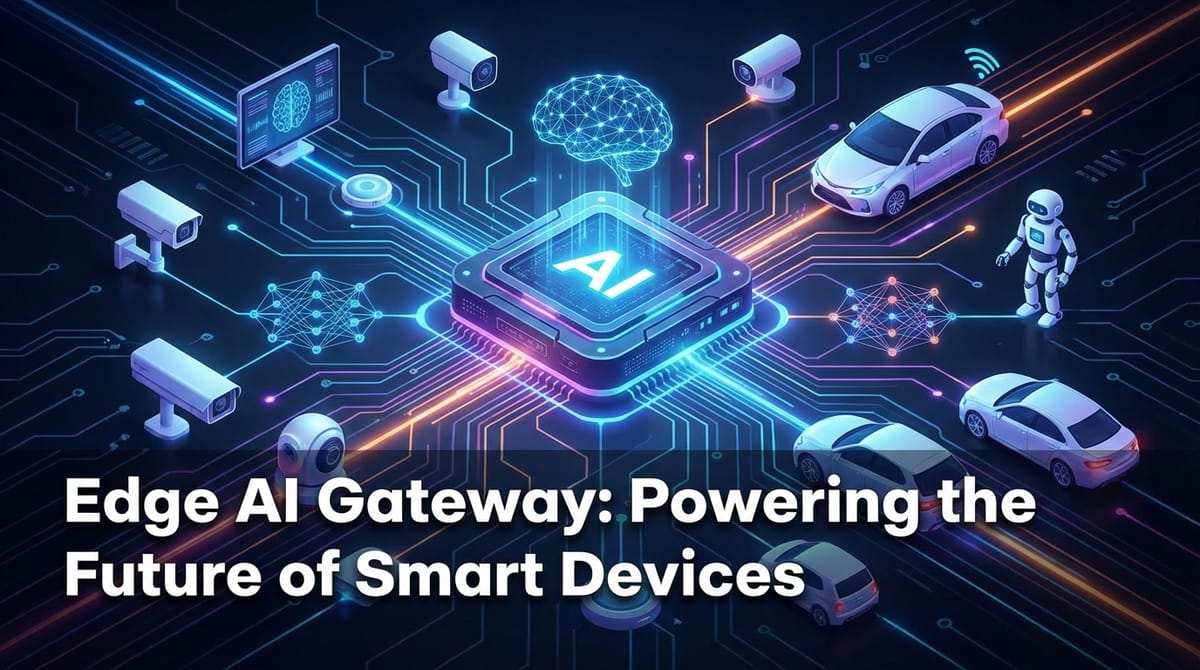


The world is rapidly evolving into a hyper-connected tapestry of intelligent devices, from autonomous vehicles navigating complex urban landscapes to smart factories orchestrating intricate production lines with unparalleled precision. This proliferation of smart devices is generating an unprecedented deluge of data, pushing the boundaries of traditional cloud-centric computing models. The sheer volume, velocity, and variety of this data demand a paradigm shift, one that brings intelligence closer to the source – the 'edge' of the network. At the forefront of this transformative movement stands the Edge AI Gateway, a pivotal technology poised to redefine how smart devices operate, interact, and deliver value in real-time. This comprehensive exploration delves into the intricate mechanisms, profound implications, and exciting future of Edge AI Gateways, revealing how these sophisticated conduits are not merely connecting devices, but actively powering the intelligence that drives our increasingly smart world.
The Dawn of Distributed Intelligence: Why Edge AI Gateways are Indispensable
For years, the promise of artificial intelligence has largely been tethered to the immense processing power and storage capabilities of centralized cloud data centers. Cloud AI has undoubtedly delivered revolutionary advancements, enabling everything from natural language processing to complex image recognition, but its inherent reliance on continuous internet connectivity and the latency involved in data transmission to and from distant servers presents significant limitations for mission-critical applications at the network edge. Imagine an autonomous vehicle needing to make split-second decisions based on sensor data, or an industrial robot requiring immediate fault detection to prevent costly production line shutdowns. In such scenarios, even milliseconds of delay can have catastrophic consequences. This fundamental challenge has spurred the development of Edge AI, a computing paradigm where AI algorithms are processed directly on or very near the data source, significantly reducing latency and bandwidth consumption.
The transition from purely cloud-based AI to a hybrid cloud-edge model, heavily reliant on the AI Gateway at the edge, is not merely an optimization; it is a necessity for the next generation of smart devices. These devices, ranging from tiny sensors to powerful industrial machines, are increasingly tasked with generating insights, making decisions, and acting autonomously in dynamic environments. Without the ability to process data locally, many of these applications would be impractical, cost-prohibitive, or simply too slow to be effective. The Gateway at the edge serves as the brain, the arbiter, and the protector of these localized intelligent ecosystems, transforming raw data into actionable intelligence with remarkable speed and efficiency. Its role extends beyond simple data forwarding; it encompasses complex AI inference, data pre-processing, protocol translation, and robust security measures, establishing it as the cornerstone of distributed intelligence architectures.
Deconstructing the Core Concepts: AI Gateway, API Gateway, and the Edge Nexus
To fully appreciate the significance of an Edge AI Gateway, it's crucial to first understand its foundational components and the distinct roles they play. The term "gateway" itself implies a point of access or a transition, a bridge between two distinct domains. In the context of distributed computing, gateways have evolved significantly, but their fundamental purpose remains consistent: to manage communication, enforce policies, and facilitate interaction across different systems.
What is an AI Gateway? Beyond Simple Data Routing
An AI Gateway is far more than a conventional network gateway; it is a specialized interface designed specifically to manage and process artificial intelligence workloads. Its primary function is to facilitate the efficient and secure deployment, invocation, and monitoring of AI models. Unlike a standard gateway that might simply forward network packets, an AI Gateway possesses the intelligence to understand the nature of AI requests. It can perform critical tasks such as:
- Model Inference: Running trained machine learning models locally to generate predictions or insights from incoming data. This is perhaps its most distinguishing feature, differentiating it sharply from a generic network device. The gateway hosts the AI model and executes its logic, delivering immediate results.
- Data Pre-processing: Preparing raw sensor data or input streams for AI model consumption. This might involve normalization, scaling, feature extraction, or filtering out irrelevant information, ensuring that the data fed into the AI model is in the optimal format and quality for accurate inference.
- Request Routing and Load Balancing (for AI Services): Directing AI-related requests to the appropriate model or inference engine, potentially balancing the load across multiple available AI resources to optimize performance and resource utilization.
- Authentication and Authorization: Securing access to AI services, ensuring that only authorized applications or users can invoke specific models or access their outputs. This layer of security is paramount, especially when dealing with sensitive data or critical control systems.
- Monitoring and Logging: Tracking the performance, usage, and health of deployed AI models. This includes metrics like inference time, error rates, and resource consumption, providing crucial insights for model optimization and system maintenance.
The power of an AI Gateway lies in its ability to abstract the complexities of AI model management and execution, presenting a simplified interface for applications to consume AI services. It acts as a smart intermediary, making AI capabilities readily available and efficiently managed.
What is an API Gateway? The Backbone of Modern Microservices
An API Gateway is a central component in modern microservices architectures, acting as a single entry point for a multitude of disparate services. Before the advent of API Gateways, client applications would have to directly interact with multiple backend services, leading to increased complexity, security vulnerabilities, and management overhead. The API Gateway simplifies this by:
- Request Routing: Directing incoming client requests to the appropriate backend microservice based on the request's path, header, or other parameters.
- Authentication and Authorization: Validating client credentials and ensuring that requests are authorized to access specific resources, offloading this crucial security concern from individual microservices.
- Rate Limiting: Controlling the number of requests a client can make within a given timeframe, preventing abuse and ensuring fair resource allocation.
- Load Balancing: Distributing incoming requests across multiple instances of a service to improve performance and reliability.
- Caching: Storing responses to frequently accessed requests to reduce latency and backend load.
- Transformations: Modifying request and response formats to suit the needs of clients or backend services, bridging compatibility gaps.
- Monitoring and Logging: Centralizing the collection of metrics and logs related to API calls, providing valuable operational insights into service performance and usage patterns.
Essentially, an API Gateway provides a unified and managed interface for external applications to interact with internal services, streamlining development, enhancing security, and improving operational efficiency. It’s a critical Gateway for all external communication into a system.
The Synergy: Edge AI Gateway – AI Intelligence meets API Management at the Network Frontier
The true innovation of an Edge AI Gateway lies in its synergistic integration of the capabilities of both an AI Gateway and an API Gateway, strategically positioned at the network's periphery. It combines the AI inference and model management strengths with the robust API management and security features, all while operating in resource-constrained, often disconnected, environments. This unique combination makes it an indispensable component for distributed intelligent systems.
An Edge AI Gateway doesn't just pass data; it actively processes, interprets, and manages the flow of intelligence. It can take raw data from local sensors, perform AI inference using on-board models, and then expose these insights as readily consumable APIs to other local devices or even back to the cloud. This dual functionality is critical: the AI capabilities deliver immediate insights, while the API management capabilities ensure these insights are securely and efficiently delivered to the right consumers.
The "Edge" aspect is paramount here. Unlike cloud-based counterparts, an Edge AI Gateway must operate with limited computational resources, often minimal power, and potentially intermittent connectivity. It is engineered for resilience, real-time performance, and localized decision-making, significantly reducing reliance on constant cloud communication. This convergence creates a powerful, self-sufficient node of intelligence that is fundamental to the future of smart devices across every industry.
The Irreversible Momentum: Why Edge AI is Ascending Now
The concept of bringing computing closer to the data source is not new, but the rapid acceleration of Edge AI is a relatively recent phenomenon driven by a confluence of technological advancements and evolving operational demands. Several critical factors have converged to make Edge AI Gateways not just desirable, but increasingly essential for modern applications.
Technological Breakthroughs: Enabling Intelligence in Compact Form Factors
One of the primary drivers behind the rise of Edge AI is the astonishing progress in hardware miniaturization and computational efficiency. The development of specialized processors capable of high-performance AI inference in compact, low-power packages has been a game-changer.
- Dedicated AI Accelerators: The advent of specialized chips like Google's Coral Edge TPU, NVIDIA's Jetson series (designed for AI at the edge), Intel's Movidius Myriad Vision Processing Units (VPUs), and various custom NPUs (Neural Processing Units) has made it possible to run complex deep learning models directly on edge devices. These accelerators are optimized for parallel processing of neural network operations, delivering orders of magnitude improvement in inference speed and power efficiency compared to general-purpose CPUs.
- Improved Power Efficiency: Advances in semiconductor technology mean that these powerful processors can operate within strict power budgets, making them suitable for battery-powered devices or locations where power availability is limited. This is crucial for IoT devices that often run on minimal energy for extended periods.
- 5G and Low-Latency Networks: The rollout of 5G cellular networks provides ultra-low latency and high bandwidth connectivity, not just to the cloud, but also between edge devices themselves. While Edge AI aims to reduce reliance on cloud communication, 5G enhances the ability of Edge AI Gateways to transmit processed insights or critical alerts back to a central system rapidly, and facilitates over-the-air (OTA) model updates and management.
These hardware and network innovations have effectively dismantled the traditional barriers to deploying sophisticated AI capabilities outside the data center, paving the way for ubiquitous intelligence.
The Data Deluge and Privacy Imperative: Processing at the Source
The proliferation of Internet of Things (IoT) devices – from smart sensors in agricultural fields to cameras in retail stores – generates an astronomical amount of data every second. Transmitting all this raw data to the cloud for processing is often impractical, costly, and in many cases, unnecessary.
- Bandwidth and Storage Costs: Continuously streaming petabytes of raw video, audio, or sensor data to the cloud incurs significant bandwidth costs and requires vast cloud storage. Processing data at the edge means only aggregated insights or critical events need to be sent to the cloud, drastically reducing data transmission volumes and associated expenses.
- Latency-Sensitive Applications: For critical applications like autonomous driving, industrial automation, or surgical robotics, the round-trip latency to a cloud server is simply unacceptable. Decisions must be made in milliseconds, often within the physical confines of the device itself. Edge AI Gateways provide this near-instantaneous response capability.
- Data Privacy and Security: With increasing concerns and regulations around data privacy (e.g., GDPR, CCPA, HIPAA), processing sensitive data locally at the edge becomes a crucial advantage. Personally identifiable information (PII) or proprietary operational data can be processed and anonymized on-device, minimizing the risk of data breaches during transmission and ensuring compliance. The raw data never leaves the local environment, offering an enhanced layer of security.
The combination of data overload and a stringent privacy landscape mandates a shift towards local processing, a role perfectly filled by the Edge AI Gateway.
Demand for Real-time, Autonomous Intelligence: The Imperative of Immediacy
Many of the most impactful applications of AI require immediate action and continuous, autonomous operation. Waiting for cloud processing is not an option.
- Autonomous Systems: Self-driving cars, drones, and robots depend on real-time perception, decision-making, and control loops. An Edge AI Gateway can process lidar, radar, camera, and ultrasonic data on the fly, enabling critical functions like object detection, path planning, and collision avoidance without any cloud dependency for primary operations.
- Industrial Automation: In smart factories, Edge AI Gateways monitor machinery for anomalies, predict equipment failures (predictive maintenance), ensure quality control through real-time visual inspection, and optimize production flows. Immediate detection of a defect or a potential machine breakdown can prevent costly downtime and ensure operational continuity.
- Medical Diagnostics and Monitoring: Wearable medical devices or point-of-care diagnostic tools can use Edge AI to analyze physiological data or medical images in real-time, providing immediate alerts for critical conditions or aiding rapid diagnosis, especially in remote areas with limited connectivity.
These applications exemplify the core value proposition of Edge AI: enabling instantaneous, intelligent responses directly at the point of action, thereby unlocking unprecedented levels of autonomy and efficiency across a multitude of sectors.
The Pillars of Power: Key Features and Capabilities of an Edge AI Gateway
An Edge AI Gateway is a sophisticated piece of technology, embodying a rich set of features that enable it to function as a powerful, intelligent hub at the network's periphery. These capabilities extend beyond simple connectivity, encompassing advanced AI processing, robust security, and comprehensive management functions tailored for distributed environments.
Local AI Inference and Model Management: Bringing Intelligence On-Site
The fundamental capability of an Edge AI Gateway is its ability to host and execute trained machine learning models directly on the device, often using specialized hardware accelerators. This local inference is what fundamentally distinguishes it from a generic network gateway.
- On-Device Model Execution: Instead of sending all raw data to the cloud for AI processing, the gateway performs inferencing locally. This drastically reduces latency, making real-time applications viable. It also enables operation in environments with limited or intermittent connectivity, as the core AI function doesn't rely on constant internet access.
- Model Deployment and Versioning: Edge AI Gateways provide mechanisms to securely deploy AI models to the edge, often over-the-air (OTA). This includes managing different versions of models, allowing for A/B testing or rolling back to a previous, stable version if issues arise. The ability to update models remotely is critical for maintaining performance and adapting to new data patterns without physically accessing each device.
- Support for Diverse AI Frameworks: A robust Edge AI Gateway typically supports various popular AI frameworks optimized for edge deployment, such as TensorFlow Lite, PyTorch Mobile, OpenVINO, or ONNX Runtime. This flexibility allows developers to leverage their existing AI development workflows and deploy models trained in different environments.
- Model Optimization: Edge AI Gateways often include tools or support for model optimization techniques like quantization (reducing model size and computational demands), pruning (removing unnecessary connections), and compilation for specific hardware accelerators, ensuring efficient execution on resource-constrained devices.
Data Pre-processing and Filtering: Refinining Raw Input for AI
Raw data from sensors and cameras is often noisy, redundant, and not directly suitable for AI model input. An Edge AI Gateway plays a critical role in refining this data before inference or transmission.
- Noise Reduction and Normalization: Eliminating sensor noise, calibrating readings, and normalizing data to a consistent scale are vital steps to ensure the accuracy and reliability of AI models. The gateway can perform these operations close to the source.
- Feature Extraction: Extracting relevant features from raw data (e.g., detecting motion in a video stream, identifying specific sound patterns in audio) can significantly reduce the amount of data that needs to be processed by the AI model or sent to the cloud, enhancing efficiency.
- Data Filtering and Aggregation: Large volumes of data might only contain small segments of actionable information. The gateway can filter out irrelevant data points and aggregate meaningful information, sending only summaries or critical events upstream. For example, a security camera gateway might only send alerts and short video clips when unusual activity is detected, rather than streaming 24/7 video.
- Data Masking and Anonymization: Before data is transmitted to the cloud, the gateway can perform masking or anonymization of sensitive information, further enhancing privacy compliance and reducing data exposure.
Connectivity and Protocol Translation: Bridging Disparate Worlds
The edge landscape is characterized by a myriad of devices communicating using a diverse array of protocols. An Edge AI Gateway acts as a universal translator and secure connector.
- Multi-Protocol Support: It typically supports various IoT communication protocols such as MQTT, CoAP, Zigbee, Bluetooth Low Energy (BLE), Modbus, OPC UA, and more. This allows it to seamlessly connect and collect data from a wide range of legacy and modern industrial and consumer IoT devices.
- Protocol Translation: The gateway translates data from these diverse protocols into a standardized format (e.g., JSON over HTTP/S or MQTT) that can be easily consumed by AI models, backend systems, or cloud platforms. This abstraction simplifies integration complexities for developers.
- Secure Cloud Connectivity: While emphasizing local processing, Edge AI Gateways still need to securely connect to cloud services for data synchronization, remote management, and advanced analytics. They implement robust encryption (TLS/SSL) and authentication mechanisms to ensure data integrity and confidentiality during cloud communication.
- Edge-to-Edge Communication: Beyond connecting to the cloud, advanced gateways facilitate secure communication and data exchange between different edge devices or other gateways within a local network, enabling collaborative edge intelligence.
Security and Privacy: Fortifying the Frontier
Given its pivotal role at the edge, an Edge AI Gateway must be equipped with comprehensive security features to protect both the device itself and the data it processes. The edge is often the most vulnerable attack surface, making robust security non-negotiable.
- Hardware-Rooted Security: Many gateways incorporate Trusted Platform Modules (TPMs) or Secure Elements (SEs) to provide a hardware root of trust, ensuring secure boot processes, secure storage of cryptographic keys, and device identity attestation.
- Data Encryption: Data is encrypted both at rest (on local storage) and in transit (during communication with other devices or the cloud) using industry-standard encryption protocols.
- Access Control and Authentication: Robust mechanisms for user and device authentication (e.g., X.509 certificates, API keys, OAuth) and fine-grained access control (role-based access control – RBAC) are implemented to prevent unauthorized access to the gateway, its AI models, and the data it manages.
- Firmware and Software Integrity: Secure boot, code signing, and remote attestation mechanisms ensure that only legitimate and untampered software runs on the gateway, protecting against malware and unauthorized modifications.
- Network Segmentation and Firewalling: The gateway can segment the local network, isolating critical devices and enforcing firewall rules to restrict traffic flow and prevent lateral movement of threats.
- Threat Detection and Response: Some advanced gateways incorporate lightweight anomaly detection algorithms at the edge itself, identifying unusual network activity or device behavior that might indicate a security breach and triggering alerts.
API Management and Orchestration: Exposing Edge Intelligence as Services
Just as API Gateways manage cloud-based services, Edge AI Gateways extend these capabilities to the edge, making locally processed intelligence consumable through well-defined APIs.
- Exposing Edge AI Services as APIs: The insights generated by local AI models can be exposed as RESTful APIs or other programmatic interfaces. This allows other local applications, microservices, or even cloud services to easily consume the edge intelligence without needing to understand the underlying AI model complexities.
- Rate Limiting and Throttling: Managing API consumption to prevent overload and ensure fair access to edge resources.
- Load Balancing (for Edge Services): If an Edge AI Gateway manages multiple AI inference engines or instances of a service, it can distribute requests to optimize performance.
- Service Discovery: Enabling other edge devices or applications to discover and connect to available AI services hosted on the gateway.
- Monitoring and Logging of Edge APIs: Tracking the usage, performance, and errors of APIs exposed by the gateway, providing critical insights into the health and demand for edge services.
For organizations dealing with a multitude of AI models and needing robust API management capabilities at scale, both in the cloud and at the edge, platforms like APIPark stand out. APIPark, as an open-source AI gateway and API management platform, simplifies the integration of over 100 AI models, offers unified API formats for invocation, and provides end-to-end API lifecycle management. This comprehensive platform enables users to quickly combine AI models with custom prompts to create new APIs, effectively encapsulating complex AI logic into easily consumable REST APIs. Its capabilities, including independent API and access permissions for each tenant, detailed API call logging, and powerful data analysis, are crucial for orchestrating complex edge deployments where both AI inference and API governance are paramount. By standardizing request formats and managing the entire API lifecycle, APIPark greatly simplifies AI usage and reduces maintenance costs, making it an invaluable tool for enterprises extending their AI and API strategies to the network edge.
Offline Capabilities and Resilience: Ensuring Continuous Operation
Edge AI Gateways are designed to operate robustly even in the absence of continuous cloud connectivity, a common scenario in remote or industrial environments.
- Local Data Storage and Caching: The gateway can temporarily store sensor data, AI inference results, and operational logs locally. When cloud connectivity is restored, this buffered data is securely synced to the central system, preventing data loss.
- Autonomous Operation: Critical AI models and decision-making logic reside on the gateway, enabling smart devices to continue their core functions and make real-time decisions independently, even if the cloud connection is completely severed. This resilience is vital for safety-critical systems and continuous operations.
- Self-Healing Mechanisms: Some gateways incorporate mechanisms for self-diagnosis and recovery from software glitches or minor hardware failures, minimizing downtime.
Remote Management and Orchestration: Centralized Control for Distributed Intelligence
Managing a fleet of thousands or even millions of distributed Edge AI Gateways requires sophisticated remote management capabilities.
- Centralized Control Plane: A cloud-based or on-premise control plane allows administrators to monitor the health, status, and performance of all deployed gateways from a single dashboard.
- Over-the-Air (OTA) Updates: Securely delivering firmware updates, software patches, AI model updates, and configuration changes to individual gateways or groups of gateways, ensuring they remain up-to-date and secure.
- Configuration Management: Remotely configuring gateway parameters, network settings, security policies, and application deployments, streamlining operations and ensuring consistency across the fleet.
- Health Monitoring and Alerting: Continuously monitoring gateway resources (CPU, memory, storage), network connectivity, and application health. Automated alerts notify administrators of any issues, enabling proactive maintenance and troubleshooting.
- Device Lifecycle Management: Managing the entire lifecycle of edge devices, from initial provisioning and deployment to decommissioning, ensuring proper security and resource allocation throughout.
These robust features collectively empower Edge AI Gateways to act as intelligent, secure, and resilient nodes, forming the decentralized backbone of future smart device ecosystems.
| Feature Category | Key Capability | Benefit at the Edge |
|---|---|---|
| AI Processing | Local AI Inference & Model Management | Near-real-time decision making, reduced latency, offline operation |
| Data Pre-processing & Filtering | Reduced bandwidth, optimized AI input, improved accuracy | |
| Connectivity | Multi-Protocol Support & Translation | Interoperability with diverse IoT devices, simplified integration |
| Secure Cloud & Edge-to-Edge Communication | Reliable data syncing, distributed intelligence, enhanced security | |
| Security & Privacy | Hardware Rooted Security & Encryption | Protection against tampering, data confidentiality, compliance |
| Access Control & Threat Detection | Unauthorized access prevention, proactive security, localized anomaly detection | |
| API & Management | API Management & Orchestration (Edge Services) | Easy consumption of edge intelligence, controlled access, streamlined development |
| Remote Management & OTA Updates | Centralized control, scalability, reduced operational costs | |
| Resilience | Offline Capabilities & Local Storage | Continuous operation in disconnected environments, data retention |
| Autonomous Operation & Self-Healing | High availability, reliability for mission-critical tasks |
APIPark is a high-performance AI gateway that allows you to securely access the most comprehensive LLM APIs globally on the APIPark platform, including OpenAI, Anthropic, Mistral, Llama2, Google Gemini, and more.Try APIPark now! 👇👇👇
Architectural Blueprint: The Anatomy of an Edge AI Gateway
The effectiveness of an Edge AI Gateway stems from a carefully engineered combination of hardware and software components, designed to operate efficiently in challenging edge environments while delivering powerful AI capabilities. Understanding its architecture is key to appreciating its role and potential.
Hardware Components: The Physical Foundation of Edge Intelligence
The physical construction of an Edge AI Gateway is optimized for resilience, performance, and often, low power consumption. These devices are purpose-built to withstand harsh industrial conditions, extreme temperatures, or remote deployments.
- System on Chip (SoC) / Processor: At the heart of the gateway is a powerful System on Chip (SoC) that integrates various processing units. This typically includes:
- CPU (Central Processing Unit): For general-purpose computing, operating system management, and running standard applications. Often ARM-based processors are favored for their power efficiency.
- GPU (Graphics Processing Unit): Increasingly common for accelerating certain AI workloads, especially those involving image and video processing, benefiting from their parallel processing architecture.
- NPU/TPU (Neural Processing Unit/Tensor Processing Unit) or VPU (Vision Processing Unit): Dedicated AI accelerators are crucial for high-performance, low-power inference of deep learning models. These specialized units are optimized for matrix operations, which are fundamental to neural networks, delivering significant speedups over general-purpose CPUs or even GPUs for specific AI tasks. Examples include Google Coral Edge TPU, NVIDIA Jetson series (which integrates a powerful GPU and ARM CPU), and Intel Movidius VPUs.
- Memory (RAM): Sufficient RAM is necessary to load AI models, process data, and run the operating system and applications. The amount varies based on the complexity of the AI models and the volume of data handled.
- Storage (eMMC, SSD, microSD): Local storage is essential for storing the operating system, AI models, application software, configuration files, and buffered data for offline operation. Industrial-grade eMMC (embedded MultiMediaCard) or SSDs (Solid-State Drives) are often preferred for their reliability and endurance in harsh environments compared to traditional HDDs. MicroSD cards can also be used for expandable storage, especially in smaller form factors.
- Network Interfaces: Edge AI Gateways are communication hubs, requiring robust and versatile networking capabilities. This includes:
- Ethernet: For reliable wired connectivity to local networks or industrial control systems. Multiple Ethernet ports might be present for network segmentation.
- Wi-Fi (2.4/5GHz): For wireless connectivity to local devices or backhaul.
- Cellular (4G/5G): Critical for remote deployments where wired or Wi-Fi infrastructure is unavailable, providing connectivity to the cloud.
- LPWAN (Low-Power Wide-Area Network) like LoRaWAN, NB-IoT: For connecting to low-power, long-range IoT sensors.
- Short-range wireless (Bluetooth, Zigbee): For connecting to local sensors and actuators.
- I/O Ports: Various input/output ports for connecting to external devices, sensors, or actuators. This might include USB, HDMI, GPIO (General Purpose Input/Output), Serial ports (RS-232/485), CAN bus (for automotive/industrial), etc.
- Security Modules (e.g., TPM): Hardware-based security features like a Trusted Platform Module (TPM) or Secure Elements provide a hardware root of trust, secure key storage, and secure boot capabilities, crucial for protecting the device and its data.
- Power Management Unit (PMU): Manages power consumption, essential for energy-efficient operation and supporting battery power in mobile or remote applications.
Software Stack: The Intelligent Operating System
The software stack on an Edge AI Gateway is equally complex and critical, enabling its diverse functionalities. It's often designed for robustness, security, and ease of management in distributed environments.
- Operating System (OS): Typically a lightweight, robust, and secure Linux distribution (e.g., Yocto Linux, Debian, Ubuntu Core, Alpine Linux) optimized for embedded systems. Real-time operating systems (RTOS) might be used for safety-critical applications requiring deterministic timing. These OSes provide the foundational services for running applications and managing hardware.
- Containerization Runtime: Technologies like Docker, containerd, or even lightweight Kubernetes distributions (e.g., K3s) are widely used. Containerization isolates applications, ensures portability, simplifies deployment, and allows for efficient resource management and updates of AI models and applications on the gateway.
- AI Runtime/Inference Engine: Software libraries and runtimes specifically designed to execute trained AI models on the available hardware accelerators. Examples include TensorFlow Lite Runtime, PyTorch Mobile, OpenVINO Toolkit, NVIDIA TensorRT, and ONNX Runtime. These engines are optimized for fast and efficient inference at the edge.
- Data Processing Frameworks: Libraries and tools for ingesting, filtering, transforming, and aggregating data from connected devices. This could involve stream processing libraries or custom scripts.
- API Management Layer: Software components that implement the API Gateway functionalities – API exposure, routing, authentication, rate limiting, and monitoring for services hosted on the edge gateway. This layer enables other applications to consume edge intelligence easily.
- Device Management and Orchestration Agents: Software agents that allow the gateway to be remotely managed, updated, and monitored by a central cloud or on-premise control plane. These agents facilitate OTA updates, configuration management, health reporting, and remote troubleshooting.
- Security Frameworks: Software components implementing cryptographic functions, secure boot management, access control policies, firewall rules, and potentially lightweight intrusion detection systems.
- Connectivity and Protocol Stacks: Software that implements the various communication protocols (MQTT, CoAP, HTTP/S, industrial protocols) and manages network interfaces to ensure seamless communication.
Deployment Models: Flexibility in Implementation
Edge AI Gateways can be deployed in various configurations to suit different use cases and existing infrastructures.
- Stand-alone Edge Device: The gateway functions as an independent, intelligent node, directly connected to sensors and actuators, performing all AI processing and decision-making locally. It might only communicate with the cloud for intermittent data synchronization or management.
- Integrated into Existing Infrastructure: The gateway can be integrated into existing industrial control systems, smart city infrastructure, or telecommunication networks, augmenting their capabilities with local AI intelligence and modernized API management.
- Hybrid Cloud-Edge Architecture: This is the most common and powerful model. The Edge AI Gateway handles real-time, latency-sensitive tasks locally, while leveraging the cloud for computationally intensive training, long-term data storage, deep analytics, and global management of the edge fleet. This creates a continuous spectrum of computing, optimizing resource utilization and performance.
The robust architecture of an Edge AI Gateway, combining specialized hardware with an intelligent software stack, positions it as a resilient, powerful, and flexible platform capable of bringing advanced AI capabilities to the furthest reaches of the network.
Transforming Industries: Ubiquitous Use Cases and Applications
The profound impact of Edge AI Gateways is evident across a rapidly expanding array of industries, revolutionizing operations, enhancing safety, and unlocking unprecedented levels of efficiency. By decentralizing intelligence, these gateways enable real-time decision-making and autonomous operations that were previously impossible or impractical.
Industrial IoT (IIoT): The Smart Factory Revolution
In industrial settings, Edge AI Gateways are foundational to the concept of Industry 4.0, transforming traditional factories into smart, agile, and highly efficient production environments.
- Predictive Maintenance: Gateways collect data from machinery sensors (vibration, temperature, current, acoustics) and use local AI models to predict equipment failures before they occur. This allows for proactive maintenance scheduling, minimizing costly unplanned downtime, extending asset lifespan, and optimizing resource allocation. For example, a gateway monitoring a critical pump can detect subtle changes in vibration patterns indicative of bearing wear, alerting technicians to intervene before a catastrophic failure.
- Quality Control and Defect Detection: High-speed cameras integrated with Edge AI Gateways perform real-time visual inspection on production lines. AI models running on the gateway can instantly identify defects in products (e.g., cracks, missing components, incorrect labeling) with greater accuracy and speed than human inspectors, ensuring consistent product quality and reducing waste.
- Worker Safety Monitoring: Gateways connected to cameras and wearable sensors can monitor hazardous areas, detect if workers are entering restricted zones without proper PPE, or identify falls and unusual behavior. Real-time alerts can prevent accidents and ensure immediate response in emergencies.
- Process Optimization: Analyzing operational data at the edge, gateways can optimize machine parameters, energy consumption, and material flow in real-time, leading to increased throughput and reduced operational costs.
Smart Cities: Enhancing Urban Living
Edge AI Gateways are vital for building more responsive, sustainable, and safer urban environments, addressing challenges from traffic congestion to public safety.
- Intelligent Traffic Management: Gateways process real-time video feeds from traffic cameras to analyze vehicle density, flow patterns, and pedestrian movement. AI models can dynamically adjust traffic light timings, optimize route guidance, and detect accidents or congestion, significantly reducing commute times and improving urban mobility.
- Public Safety and Surveillance: AI-powered video analytics on Edge AI Gateways can detect unusual activities, identify abandoned objects, or recognize specific events in public spaces, providing immediate alerts to law enforcement without streaming all raw video data to a centralized server. This enhances privacy by processing video locally and only sending alerts or snippets of relevant events.
- Environmental Monitoring: Gateways connected to air quality, noise, and weather sensors can process environmental data locally, identifying pollution hotspots or unusual climate patterns in real-time, informing proactive urban planning and public health initiatives.
- Smart Parking: Gateways integrated with parking sensors can identify available parking spots and relay this information to mobile applications, reducing cruising time and congestion.
Healthcare: Revolutionizing Patient Care and Diagnostics
The healthcare sector is leveraging Edge AI Gateways for remote patient monitoring, point-of-care diagnostics, and enhancing operational efficiency in clinical settings.
- Remote Patient Monitoring: Wearable medical devices transmit physiological data (heart rate, blood pressure, glucose levels) to a home-based Edge AI Gateway. The gateway analyzes this data in real-time, detecting anomalies or alarming trends that might indicate a health crisis, and automatically alerting caregivers or medical professionals. This enables proactive intervention and reduces hospital readmissions.
- AI-Powered Diagnostics at the Point of Care: In clinics or emergency rooms, gateways can assist medical professionals by analyzing medical images (X-rays, CT scans) or lab results locally, providing rapid preliminary diagnoses or highlighting areas of concern. This is particularly valuable in remote areas with limited access to specialists.
- Elderly Care Assistance: Gateways in smart homes can monitor the movement and activity patterns of elderly individuals. AI models can detect falls, prolonged inactivity, or deviations from routine, triggering alerts to family members or emergency services, providing peace of mind and supporting independent living.
Retail: Personalized Experiences and Operational Efficiency
Edge AI Gateways are transforming the retail experience, from inventory management to personalized customer interactions.
- Inventory Management and Loss Prevention: Gateways connected to smart shelves or cameras can monitor stock levels in real-time, automatically reordering popular items and detecting potential theft by analyzing customer behavior patterns.
- Customer Behavior Analysis: AI models on edge gateways can analyze anonymous video feeds to understand customer traffic flow, dwell times in specific aisles, and product interactions, providing valuable insights for store layout optimization, merchandising, and targeted promotions. This can be done while preserving customer privacy by only processing aggregated, anonymized data.
- Personalized Shopping Experiences: Digital signage and in-store kiosks powered by Edge AI Gateways can detect customer presence and preferences (e.g., through loyalty programs or anonymous demographic estimation) to deliver personalized advertisements, product recommendations, and offers in real-time.
Automotive and Autonomous Vehicles: The Road to Self-Driving
For autonomous vehicles, Edge AI Gateways (often deeply embedded as powerful ECUs) are not just beneficial; they are absolutely essential for safety and functionality.
- Real-time Decision Making: Autonomous cars rely on an array of sensors (lidar, radar, cameras, ultrasonic). Edge AI Gateways process this massive influx of data in milliseconds to perform object detection, lane keeping, obstacle avoidance, and path planning, making critical driving decisions instantaneously.
- Driver Assistance Systems (ADAS): Features like adaptive cruise control, lane departure warning, and automatic emergency braking are powered by local AI processing on edge gateways within the vehicle, enhancing safety for human drivers.
- Fleet Management and Telematics: Gateways in commercial fleets can monitor driver behavior, vehicle diagnostics, and route optimization, providing real-time data for improving fuel efficiency, reducing wear and tear, and enhancing overall fleet safety and management.
Smart Homes and Buildings: Intelligent Environments
Edge AI Gateways are the central intelligence for creating truly smart, responsive, and energy-efficient homes and commercial buildings.
- Energy Management: Gateways analyze sensor data (occupancy, temperature, light levels) and appliance usage patterns to intelligently control HVAC systems, lighting, and other energy-consuming devices, optimizing energy consumption and reducing utility bills.
- Advanced Security Systems: Integrating with cameras, motion sensors, and door/window sensors, gateways can perform local video analytics for intrusion detection, identify familiar faces (for authorized entry), and send alerts based on learned behavioral patterns, providing a more robust and responsive security solution.
- Personalized Environmental Control: Learning occupant preferences, gateways can proactively adjust lighting, temperature, and even air quality settings to create personalized comfort zones, adapting to individual habits and real-time conditions.
These diverse applications highlight that Edge AI Gateways are not a niche technology but a fundamental enabler for the widespread adoption of intelligent, autonomous, and responsive devices across virtually every facet of modern life and industry. Their ability to deliver real-time insights and actions at the source of data generation is truly powering the future of smart devices.
Navigating the Frontier: Challenges and Future Outlook of Edge AI Gateways
While Edge AI Gateways offer transformative potential, their widespread adoption and continued evolution face a unique set of challenges. However, the relentless pace of innovation suggests a future where these intelligent conduits become even more powerful, ubiquitous, and seamlessly integrated into our digital fabric.
Pressing Challenges in Edge AI Gateway Deployment
The unique operational context of the edge—often remote, resource-constrained, and diverse—presents formidable hurdles that demand innovative solutions.
- Resource Constraints (Compute, Memory, Power): Edge AI Gateways must perform complex AI inference with limited CPU/GPU/NPU power, constrained memory, and strict power budgets. Optimizing AI models to run efficiently on these lean resources without sacrificing accuracy is a continuous challenge. Developers must constantly balance model complexity with hardware capabilities.
- Model Optimization and Lifecycle Management: Deploying and managing a multitude of AI models across a vast, heterogeneous fleet of edge devices is incredibly complex. Ensuring model compatibility with diverse hardware, performing efficient over-the-air (OTA) updates, handling model versioning, and continuously retraining models with fresh edge data pose significant logistical and technical challenges. Debugging and monitoring performance across thousands of distributed models is also demanding.
- Security Vulnerabilities at the Edge: The edge is often geographically dispersed and physically exposed, making it a prime target for attacks. Securing the gateway hardware, software stack, communication channels, and the AI models themselves against tampering, unauthorized access, and cyber threats is paramount. Maintaining secure firmware updates and ensuring robust authentication and authorization across all connected devices adds layers of complexity.
- Interoperability and Standardization: The vast ecosystem of IoT devices utilizes a myriad of communication protocols, data formats, and operating systems. Achieving seamless interoperability between different devices, sensors, and cloud platforms through the Edge AI Gateway remains a significant challenge, hindering plug-and-play functionality and increasing integration effort. Lack of universal standards for edge AI deployment and management further complicates matters.
- Data Privacy and Compliance Complexities: While edge processing enhances privacy by keeping sensitive data local, ensuring compliance with evolving global data privacy regulations (e.g., GDPR, CCPA) across a distributed architecture still requires careful design and implementation of data governance policies, anonymization techniques, and audit trails. Managing consent and data retention across a decentralized network is intricate.
- Management of Distributed Systems at Scale: Deploying, configuring, monitoring, and maintaining thousands or millions of Edge AI Gateways remotely presents enormous operational challenges. Tools for centralized orchestration, automated deployment, remote diagnostics, and predictive maintenance for the gateways themselves are critical but still maturing. Network reliability for management tasks can also be an issue in remote locations.
- Connectivity and Network Latency Variability: While edge AI aims to reduce cloud reliance, intermittent or unreliable network connectivity (e.g., in rural areas or during network outages) can still impact management, updates, and data synchronization. The variability in network latency can also affect hybrid cloud-edge applications where some data or decisions are still sent upstream.
The Horizon: Future Outlook for Edge AI Gateways
Despite these challenges, the trajectory for Edge AI Gateways is one of exponential growth and increasing sophistication. Several key trends are shaping their future, promising even more powerful and pervasive intelligence at the edge.
- Further Miniaturization and Power Efficiency: Expect continued advancements in semiconductor technology, leading to even smaller, more powerful, and significantly more energy-efficient AI accelerators. This will enable the integration of advanced AI capabilities into an even wider array of ultra-constrained devices, powering things like disposable sensors or highly miniaturized medical implants.
- More Specialized AI Accelerators: The future will likely see a diversification of AI accelerators tailored for specific types of AI workloads (e.g., dedicated chips for natural language processing, specific computer vision tasks, or even neuromorphic computing architectures mimicking the human brain). These specialized chips will deliver unparalleled efficiency for their niche applications.
- Federated Learning and On-Device Training: Moving beyond just inference, Edge AI Gateways will increasingly support federated learning, where AI models are trained collaboratively across multiple edge devices without centralizing raw data. This preserves privacy and reduces data transmission. Furthermore, limited on-device training or continuous learning will allow models to adapt to local data patterns and improve over time without constant cloud retraining.
- Edge-to-Cloud Continuum Computing: The distinction between edge and cloud will become increasingly blurred, forming a seamless computing continuum. Edge AI Gateways will be intelligent nodes within this continuum, dynamically shifting workloads between local processing, nearby fog nodes, and distant cloud data centers based on resource availability, latency requirements, and cost. This will optimize performance and resource utilization across the entire network.
- AI Marketplaces and Ecosystems for Edge Models: The emergence of specialized marketplaces for pre-trained, optimized AI models specifically designed for edge deployment will accelerate development. These ecosystems will provide developers with a rich library of ready-to-deploy solutions, reducing time-to-market and fostering innovation.
- Enhanced Security and Trust Architectures: Hardware-level security will become standard, with more sophisticated trusted execution environments (TEEs) and homomorphic encryption techniques to protect data and AI models even during processing. Blockchain technology might also be explored for secure device identity management and verifiable data provenance at the edge.
- Advanced Remote Orchestration and Automation: AI-powered management platforms will emerge, capable of autonomously monitoring, diagnosing, and even self-healing fleets of Edge AI Gateways. This will drastically reduce operational complexity, enabling enterprises to manage vast deployments with minimal human intervention.
- Increased Adoption in Niche and Harsh Environments: As gateways become more robust, autonomous, and self-sufficient, their deployment will expand into even more extreme environments – deep-sea exploration, space missions, remote agricultural sites, and disaster zones – where connectivity is minimal and resilience is paramount.
The journey of Edge AI Gateways is still in its early stages, yet its trajectory points towards an increasingly intelligent, responsive, and autonomous world. These powerful conduits are not just facilitating a technological shift; they are driving a fundamental re-architecture of computing itself, bringing the power of AI to every corner of our lives and industries, truly powering the future of smart devices.
Conclusion
The relentless march of technology has propelled us into an era defined by the omnipresence of smart devices, each generating invaluable streams of data that hold the key to unprecedented levels of efficiency, safety, and innovation. At the heart of this transformative movement, bridging the physical world of sensors and actuators with the digital realm of artificial intelligence, stands the Edge AI Gateway. This sophisticated piece of technology is far more than a simple connector; it is a critical enabler, processing intelligence closer to the source, thereby fundamentally reshaping the architecture of modern computing.
Throughout this extensive exploration, we have deconstructed the very essence of the Edge AI Gateway, distinguishing its unique capabilities from traditional network gateways and even cloud-centric AI systems. We've seen how it expertly marries the AI inference and model management prowess of an AI Gateway with the robust traffic handling and security features of an API Gateway, all while operating within the often-challenging confines of the network edge. This powerful synergy is precisely what allows for near-instantaneous decision-making, unparalleled data privacy, and remarkable operational autonomy, freeing smart devices from the shackles of constant cloud dependency.
The factors driving the ascent of Edge AI are clear and compelling: technological breakthroughs in specialized hardware and high-speed networking, the overwhelming deluge of data coupled with stringent privacy mandates, and the ever-growing demand for real-time, autonomous intelligence across every conceivable industry. From revolutionizing industrial IoT with predictive maintenance and quality control, to enhancing public safety and traffic flow in smart cities, and even transforming patient care through remote monitoring and rapid diagnostics, Edge AI Gateways are proving to be indispensable. They are the silent, intelligent workhorses powering autonomous vehicles, optimizing retail experiences, and creating truly responsive smart homes and buildings.
While challenges remain, particularly concerning resource optimization, security at the edge, and the complexities of managing massively distributed systems, the future outlook for Edge AI Gateways is undeniably bright. Continued innovation in specialized AI accelerators, the rise of federated learning, and the evolution towards a seamless edge-to-cloud continuum promise to make these intelligent conduits even more powerful, efficient, and easier to deploy.
In essence, Edge AI Gateways are not merely components in a larger system; they are the foundational keystones empowering the next generation of smart devices. They are the engines of a decentralized intelligence revolution, ensuring that critical insights are generated, decisions are made, and actions are executed with the speed, security, and efficiency demanded by an increasingly interconnected and intelligent world. As we continue to build out our smart future, the Edge AI Gateway will remain at the forefront, powering innovation and delivering intelligence where it matters most – right at the edge.
Frequently Asked Questions (FAQs)
1. What is the fundamental difference between an Edge AI Gateway and a traditional IoT Gateway? A traditional IoT Gateway primarily focuses on data aggregation, protocol translation, and secure connectivity between IoT devices and the cloud. It acts as a data conduit. An Edge AI Gateway, while performing these functions, goes a significant step further by embedding powerful AI processing capabilities directly on the device. It hosts and executes AI models locally to perform real-time data analysis, inference, and decision-making at the edge, significantly reducing latency and reliance on continuous cloud connectivity. It can also manage AI models' lifecycle and expose AI services via APIs locally, acting as an intelligent processing hub rather than just a data forwarder.
2. Why is latency reduction so critical for Edge AI Gateway applications? Latency reduction is paramount because many modern smart device applications require immediate responses and real-time decision-making. For instance, in autonomous vehicles, milliseconds of delay in processing sensor data for object detection or collision avoidance can have catastrophic consequences. Similarly, in industrial automation, immediate fault detection can prevent costly downtime. By processing AI models at the edge, the Edge AI Gateway eliminates the round-trip time to a distant cloud server, enabling near-instantaneous reactions that are vital for safety-critical, time-sensitive, and autonomous operations.
3. How do Edge AI Gateways enhance data privacy and security? Edge AI Gateways significantly enhance data privacy and security by processing sensitive data locally at the source. This minimizes the need to transmit raw, potentially identifiable data to the cloud, thereby reducing the risk of data breaches during transmission and helping comply with privacy regulations like GDPR. For security, they often incorporate hardware-rooted security features (e.g., TPMs), secure boot processes, data encryption (at rest and in transit), robust access control, and sometimes even local anomaly detection to protect against cyber threats and unauthorized access, creating a stronger security perimeter at the edge.
4. Can an Edge AI Gateway operate completely offline, without any internet connection? Yes, a well-designed Edge AI Gateway is capable of operating autonomously and performing its core AI functions completely offline. Since it hosts AI models and processes data locally, it can continue to generate insights and make decisions even without an internet connection. It typically includes local data storage to buffer any data or logs generated during offline periods, which can then be securely synchronized to the cloud once connectivity is restored. However, remote management, software updates, and new AI model deployments would require intermittent connectivity.
5. What role does an API Gateway play within the broader context of an Edge AI Gateway, and how does it relate to platforms like APIPark? Within an Edge AI Gateway, the API Gateway component is crucial for exposing the locally processed AI insights and other edge services as easily consumable APIs. It manages aspects like request routing, authentication, authorization, rate limiting, and monitoring for these edge-hosted APIs, making edge intelligence accessible to other local applications or even securely back to the cloud. Platforms like APIPark extend these capabilities comprehensively by offering an open-source AI gateway and API management platform that can integrate and manage a multitude of AI models, standardize API formats for invocation, and provide end-to-end API lifecycle management. This ensures that whether AI services are running in the cloud or at the edge, they are governed, secured, and easily consumable through a unified and efficient API management system, simplifying the entire process of deploying and interacting with intelligent services.
🚀You can securely and efficiently call the OpenAI API on APIPark in just two steps:
Step 1: Deploy the APIPark AI gateway in 5 minutes.
APIPark is developed based on Golang, offering strong product performance and low development and maintenance costs. You can deploy APIPark with a single command line.
curl -sSO https://download.apipark.com/install/quick-start.sh; bash quick-start.sh

In my experience, you can see the successful deployment interface within 5 to 10 minutes. Then, you can log in to APIPark using your account.

Step 2: Call the OpenAI API.