Gartner Magic Quadrant Companies: Leaders & Innovators


In an era defined by relentless digital transformation, where technological paradigms shift with astonishing speed, businesses face the monumental challenge of not just keeping pace, but strategically positioning themselves for sustained growth and competitive advantage. The myriad of solutions, platforms, and services available can be overwhelming, making informed decision-making an art form in itself. Navigating this complex landscape requires reliable beacons, and few are as respected and widely referenced as Gartner's Magic Quadrant reports. These comprehensive analyses serve as critical navigational tools, dissecting market segments and evaluating vendors based on their "Completeness of Vision" and "Ability to Execute." For enterprises striving to innovate, optimize, and secure their operations, understanding the leaders and innovators within these Quadrants, especially in pivotal areas like API Gateway technology, nascent AI Gateway solutions, and the emerging need for a robust Model Context Protocol, is not merely advantageous—it is indispensable. This extensive exploration delves into the significance of Gartner's insights, unpacks the critical technologies driving modern enterprise architecture, and highlights how leading and innovative companies are shaping the digital future, offering a strategic roadmap for businesses determined to thrive.
Demystifying the Gartner Magic Quadrant: A Compass for Strategic Technology Decisions
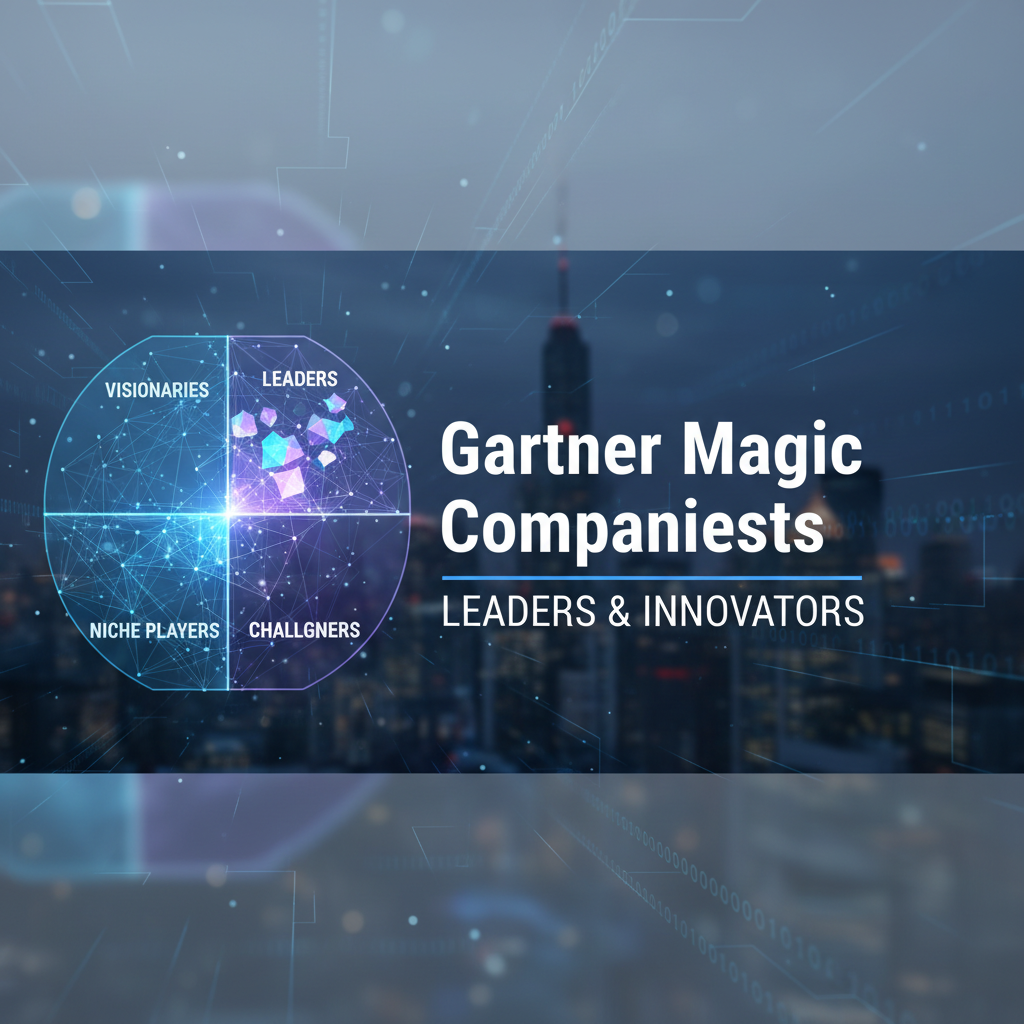
The Gartner Magic Quadrant is more than just a vendor ranking; it is a profound analytical methodology designed to provide a graphic representation of a market's direction, maturity, and participants. For decades, it has served as an essential resource for CIOs, IT leaders, and business strategists across industries, helping them make sense of complex technology markets and identify suitable technology providers. At its core, the Magic Quadrant evaluates vendors within a specific market against two primary criteria: "Completeness of Vision" and "Ability to Execute." These two axes form the basis of the four distinct quadrants that give the report its name and structure.
"Completeness of Vision" assesses a vendor's understanding of market trends, their product strategy, innovation, geographic strategy, and industry-specific strategy. It asks whether a vendor is merely reacting to current demands or if they are proactively shaping the future of the market with forward-thinking solutions and a clear roadmap. A vendor with strong Completeness of Vision is often seen as an innovator, anticipating future needs and developing technologies that will define the next generation of solutions. This dimension looks beyond the immediate capabilities to the potential impact and long-term viability of a vendor's strategic direction. It’s about foresight, market insight, and the ability to articulate a compelling narrative for how their offerings will evolve and address tomorrow's challenges.
Conversely, "Ability to Execute" focuses on a vendor's current performance and operational prowess. This includes evaluating their product or service capabilities, overall viability (financial strength, stability), sales execution and pricing, market responsiveness and track record, marketing execution, customer experience, and operations. A high score in Ability to Execute signifies that a vendor can deliver on its promises, scale its operations, provide excellent customer support, and maintain a strong market presence. This dimension is intensely practical, focusing on the tangible results and operational excellence that translate directly into customer satisfaction and successful deployments. It's about demonstrating consistent performance, reliable delivery, and a robust operational framework that supports widespread adoption and effective utilization of their technology.
The intersection of these two critical dimensions creates the four distinct quadrants:
- Leaders: Positioned in the upper-right quadrant, Leaders possess both a strong Completeness of Vision and an impressive Ability to Execute. These vendors are often market share leaders, offering mature, comprehensive products that align well with current market needs and anticipated future demands. They set the benchmark for others, consistently innovate, and demonstrate a track record of successful deployments and customer satisfaction. Enterprises can typically rely on Leaders for robust, proven solutions with strong support and ongoing development. They are the vendors that not only understand where the market is going but also have the operational capacity to take their customers there effectively.
- Challengers: Located in the upper-left quadrant, Challengers have a robust Ability to Execute but may lack the Completeness of Vision of the Leaders. These vendors are often large, well-established players with significant market presence and strong product offerings, but they might be more focused on current market demands rather than anticipating future trends. They are highly competitive and can be excellent choices for specific, well-defined needs where their execution strength is paramount. They represent a safe, reliable bet for many use cases, though they might not always be at the bleeding edge of innovation.
- Visionaries: Found in the lower-right quadrant, Visionaries possess an excellent Completeness of Vision but may currently have a lower Ability to Execute. These vendors are often innovative companies bringing new technologies or approaches to the market, challenging established norms and identifying emerging needs. While their products may not yet be as comprehensive or widely adopted as those of Leaders, their forward-thinking strategies often represent the future direction of the market. Enterprises willing to take on some risk for potentially transformative solutions might find Visionaries compelling. They are the disruptors and the trendsetters, often pushing the boundaries of what's possible, even if their market footprint is still growing.
- Niche Players: Occupying the lower-left quadrant, Niche Players typically focus on a small segment of the market or have a narrow product offering. They might excel in a very specific area or geography but lack the broad vision or execution capabilities of other quadrants. While not suitable for all enterprises, Niche Players can be ideal for organizations with highly specific requirements that align perfectly with their specialized strengths. They often provide highly tailored solutions for unique problems, offering deep expertise within their chosen domain.
Understanding the nuances of each quadrant is paramount. The Magic Quadrant is not a "buy list" but rather a strategic analytical tool. It encourages a deeper dive into vendor capabilities, market dynamics, and a company's specific needs before making a decision. For businesses, leveraging these insights means making informed choices that align with their long-term strategic goals, mitigating risks, and capitalizing on opportunities presented by the ever-evolving technology landscape. It helps to differentiate between hype and tangible value, guiding organizations towards solutions that truly empower their digital ambitions.
The Evolving Enterprise Technology Landscape: Navigating Waves of Disruption
The digital age has ushered in an era of unprecedented technological advancement, fundamentally reshaping how businesses operate, interact with customers, and compete in the global marketplace. The modern enterprise technology landscape is a dynamic tapestry woven with threads of innovation, demanding continuous adaptation and strategic foresight. Several overarching trends continue to drive this evolution, each presenting both immense opportunities and complex challenges for organizations worldwide.
At the forefront of this transformation is digital transformation itself—a holistic shift in how businesses leverage technology to create new or modify existing business processes, culture, and customer experiences to meet changing business and market requirements. This isn't merely about adopting new software; it’s about a fundamental reimagining of operations, from back-office efficiencies to customer-facing innovations. Cloud computing, specifically multi-cloud and hybrid cloud strategies, forms the bedrock of this transformation, offering unparalleled scalability, flexibility, and cost-effectiveness. Enterprises are migrating workloads, developing cloud-native applications, and leveraging serverless architectures to accelerate innovation and reduce operational overhead. The agility afforded by cloud infrastructure is no longer a luxury but a strategic imperative for speed to market and competitive responsiveness.
Hand-in-hand with cloud adoption is the pervasive influence of Artificial Intelligence (AI) across nearly every facet of business. From automating routine tasks and enhancing decision-making with predictive analytics to powering sophisticated customer service chatbots and enabling hyper-personalized marketing, AI is moving from experimental use cases to mission-critical applications. The proliferation of AI models—large language models (LLMs), computer vision models, recommendation engines—introduces both incredible power and significant complexity. Managing these diverse models, ensuring their ethical use, maintaining data privacy, and integrating them seamlessly into existing workflows requires new architectural patterns and governance frameworks.
Furthermore, the explosion of data continues unabated, driven by interconnected devices, social media, and digital interactions. This torrent of information, often referred to as "big data," holds immense potential for insights and competitive advantage. However, extracting value from this data requires sophisticated analytics capabilities, robust data governance, and scalable data storage and processing solutions. The ability to collect, process, analyze, and act upon data in real-time is becoming a key differentiator, fueling data-driven decision-making across the enterprise.
Finally, the shift towards microservices architectures has profoundly impacted how applications are designed, developed, and deployed. Breaking down monolithic applications into smaller, independently deployable services enhances agility, resilience, and scalability. While microservices offer tremendous benefits, they also introduce challenges related to inter-service communication, distributed tracing, security, and overall management. This architectural shift necessitates robust tools and platforms that can manage the intricate web of connections and interactions within a distributed system.
These interwoven trends collectively underscore the critical need for resilient, scalable, and intelligent infrastructure. Enterprises must invest in solutions that not only address current operational demands but also possess the flexibility and foresight to adapt to future technological shifts. The complexity introduced by these advancements mandates intelligent management layers, robust security protocols, and platforms that can abstract away underlying infrastructure complexities, allowing developers and businesses to focus on innovation rather than infrastructure plumbing. It is within this dynamic context that technologies like API Gateway and the burgeoning AI Gateway come to the fore, acting as vital conduits and control points in the modern digital ecosystem.
Pillars of Modern Connectivity: The Rise and Evolution of API Gateways
In the complex tapestry of modern distributed systems and microservices architectures, the API Gateway has emerged as an indispensable component, serving as the critical front door for all client requests into an application. As organizations increasingly decompose monolithic applications into smaller, independently deployable microservices and expose internal functionalities to external partners and developers, the need for a robust, intelligent, and scalable management layer becomes paramount. An API Gateway is precisely that: a single, unified entry point that processes, routes, and secures incoming API calls before forwarding them to the appropriate backend services.
The fundamental premise of an API Gateway is to abstract the complexities of the backend microservices from the client. Instead of clients needing to know the specific addresses and interaction patterns of numerous individual services, they simply interact with the gateway. This simplifies client-side development, as the client can remain oblivious to how the application is partitioned into microservices. More importantly, it centralizes cross-cutting concerns that would otherwise need to be implemented in every single microservice, leading to redundancy, inconsistencies, and increased development overhead.
The core features and capabilities of a leading API Gateway are extensive and critical for maintaining the health and security of a distributed system:
- Traffic Management: This is perhaps the most visible function. API Gateways intelligently route requests to the correct backend services, often incorporating load balancing algorithms to distribute traffic efficiently and prevent any single service from becoming a bottleneck. They also enable request and response transformations, allowing for protocol translation between different client and service expectations, and often support versioning, directing requests to specific API versions without requiring client-side changes.
- Security Enforcement: As the first line of defense, the API Gateway is crucial for security. It centralizes authentication and authorization, verifying client credentials (e.g., API keys, OAuth tokens) before forwarding requests. It can also implement rate limiting to protect against DDoS attacks and brute-force attempts, enforce security policies, and encrypt/decrypt traffic. This centralized security posture significantly reduces the attack surface and ensures consistent security across all APIs.
- Monitoring and Analytics: Gateways provide a single point for collecting metrics and logs related to API usage, performance, and errors. This data is invaluable for monitoring the health of services, identifying bottlenecks, tracking API adoption, and understanding user behavior. Real-time analytics can trigger alerts for unusual activity or performance degradation, enabling proactive problem resolution.
- Policy Enforcement: Beyond security, gateways can enforce various business policies, such as caching to improve performance, throttling to manage resource consumption per client, and circuit breaking to prevent cascading failures in a resilient system. They provide a declarative way to apply these policies across multiple services without embedding them within the application logic.
- Developer Experience: A good API Gateway also plays a vital role in enhancing the developer experience. By providing a unified interface, clear documentation, and consistent access patterns, it simplifies API consumption for internal and external developers, fostering innovation and quicker integration cycles.
Gartner's perspective on API Gateway leaders typically highlights vendors that offer not just these foundational capabilities but also advanced features. These leaders are characterized by their extreme robustness, enabling them to handle massive traffic volumes with low latency and high availability. Their scalability allows them to grow seamlessly with enterprise demands, from supporting hundreds to hundreds of thousands of transactions per second. Advanced security features often include sophisticated threat protection, anomaly detection, and integration with enterprise identity and access management (IAM) systems. Furthermore, a strong leader in this space provides comprehensive developer portals, extensive analytics, flexible deployment options (on-premises, cloud, hybrid), and seamless integration into CI/CD pipelines. They understand that the API Gateway is not just a technical component but a strategic business enabler, facilitating new business models and fostering digital ecosystems.
In this rapidly evolving landscape, open-source solutions are increasingly gaining traction, offering flexibility, community support, and cost-effectiveness. APIPark stands out as an exemplary open-source API Gateway and API management platform that addresses these critical needs for modern enterprises. Designed to manage the entire API lifecycle, from design and publication to invocation and decommissioning, APIPark offers a robust set of features that rival commercial offerings. Its ability to handle traffic forwarding, load balancing, and versioning of published APIs ensures optimal performance and reliability. Notably, APIPark boasts impressive performance, capable of achieving over 20,000 transactions per second (TPS) with just an 8-core CPU and 8GB of memory, a performance metric that rivals even established leaders like Nginx. This capability, coupled with support for cluster deployment, makes it a powerful choice for handling large-scale traffic and demanding enterprise environments. Moreover, APIPark's detailed API call logging and powerful data analysis features provide invaluable insights into API usage and performance, empowering businesses to ensure system stability and optimize their API strategies. For organizations seeking a comprehensive, high-performance, and open-source solution for their API management needs, APIPark (visit their website at ApiPark) represents a compelling option that embodies the qualities of an effective and forward-thinking API Gateway.
The Intelligence Revolution: AI Gateways and the Future of AI Integration
As Artificial Intelligence transitions from a specialized domain to a fundamental layer of enterprise architecture, the complexity of integrating and managing diverse AI models has given rise to a new, specialized form of gateway: the AI Gateway. While traditional API Gateway solutions manage access to general REST or GraphQL services, an AI Gateway is specifically designed to handle the unique challenges and opportunities presented by AI models, machine learning services, and large language models (LLMs). This emerging category is critical for enterprises seeking to harness the full power of AI without succumbing to the associated operational complexities and governance headaches.
The rapid proliferation of AI models, often originating from different vendors, open-source projects, or internal development teams, presents a significant integration challenge. Each model may have its own API, data format expectations, authentication mechanisms, and cost structures. Managing this heterogeneity directly within applications leads to brittle code, vendor lock-in, and escalating maintenance costs. This is precisely where the AI Gateway steps in, acting as an intelligent intermediary that standardizes, secures, and optimizes access to this diverse ecosystem of AI capabilities.
The key differentiators and benefits of a robust AI Gateway are profound:
- Unified Access to Diverse AI Models: An AI Gateway provides a single point of entry and a standardized interface for interacting with a multitude of AI models, whether they are hosted internally, in public clouds (e.g., OpenAI, Google AI, Anthropic), or from specialized vendors. This abstraction layer means applications don't need to be rewritten when switching between models or integrating new ones.
- Standardization of AI Invocation: One of the most significant challenges in AI integration is the varying input and output formats across models. An AI Gateway standardizes the request and response data format for AI invocation, ensuring consistency. This means changes in an underlying AI model's API or prompt structure do not necessitate changes in the application or microservices consuming that AI. This dramatically simplifies AI usage, reduces maintenance costs, and accelerates time-to-market for AI-powered features.
- Prompt Management and Encapsulation: In the era of large language models, effective prompt engineering is critical. An AI Gateway can encapsulate complex prompts, system instructions, and few-shot examples into simple, reusable APIs. Developers can invoke these pre-engineered prompts without needing deep knowledge of the underlying model's intricacies, ensuring consistent AI behavior and enabling easy A/B testing or versioning of prompts. This also facilitates the creation of new APIs, such as sentiment analysis or translation APIs, by combining base AI models with custom prompts.
- Cost Optimization and Monitoring: AI model usage, especially for powerful LLMs, can incur significant costs. An AI Gateway provides centralized cost tracking, allowing enterprises to monitor usage patterns, enforce budgets, and implement intelligent routing to cost-effective models or providers based on specific use cases or performance requirements. Detailed logging captures every aspect of AI calls, which is crucial for troubleshooting, auditing, and optimizing resource allocation.
- Enhanced Security for AI Endpoints: Just like a traditional API Gateway, an AI Gateway enforces authentication, authorization, and data privacy for AI services. It can apply security policies specific to AI data, such as redacting sensitive information, ensuring compliance with regulations like GDPR or HIPAA, and protecting against model-related vulnerabilities. Access control ensures that only authorized applications or users can invoke specific AI models.
- Policy Enforcement and Observability for AI: Beyond security, an AI Gateway can apply policies like rate limiting per model, ensuring fair usage and preventing overload. It provides comprehensive observability, offering insights into model performance, latency, error rates, and usage patterns, which are vital for maintaining the reliability and efficiency of AI-powered applications.
Gartner's view on innovators in the AI Gateway space focuses on companies that are visionary in addressing these nascent challenges. These innovators are characterized by their deep understanding of AI model dynamics, their emphasis on abstraction and standardization, and their ability to provide advanced governance and lifecycle management for AI assets. They are building platforms that can dynamically adapt to new AI models, support complex prompt engineering workflows, and offer intelligent routing based on model capabilities, performance, and cost. Their solutions are often designed with a developer-first mindset, simplifying the integration of AI into diverse applications and accelerating the adoption of intelligent capabilities across the enterprise. These innovators recognize that the future of AI in the enterprise hinges not just on powerful models, but on the infrastructure that makes them manageable, secure, and scalable.
It is precisely in this innovative domain that APIPark shines as a leading open-source AI Gateway and API management platform. APIPark is engineered to streamline the integration and management of AI services, making it an invaluable tool for enterprises looking to leverage AI effectively. Its core strengths directly address the emerging needs of AI integration: APIPark offers the capability to quickly integrate over 100+ diverse AI models, providing a unified management system for authentication and crucial cost tracking. This feature alone dramatically simplifies the process of experimenting with and deploying multiple AI solutions. Furthermore, APIPark's commitment to a unified API format for AI invocation ensures that changes in AI models or prompts do not disrupt application logic, thereby significantly simplifying AI usage and reducing maintenance costs. Its unique ability to encapsulate prompts into REST APIs empowers users to quickly combine AI models with custom prompts to create new, specialized APIs—such as sentiment analysis, translation, or data analysis APIs—without extensive coding. By providing such a robust and intelligent abstraction layer, APIPark enables enterprises to accelerate their AI initiatives, fostering greater agility and innovation while maintaining control and cost efficiency. As a testament to its comprehensive approach, APIPark also offers end-to-end API lifecycle management and robust security features, making it a holistic solution for the new era of intelligent applications.
APIPark is a high-performance AI gateway that allows you to securely access the most comprehensive LLM APIs globally on the APIPark platform, including OpenAI, Anthropic, Mistral, Llama2, Google Gemini, and more.Try APIPark now! 👇👇👇
Standardizing Intelligence: The Crucial Role of Model Context Protocol
As AI models, particularly large language models (LLMs), become increasingly sophisticated and integrated into complex applications, the concept of "context" emerges as a critical, yet often underappreciated, element. The effectiveness and coherence of an AI's responses are profoundly dependent on its understanding of the current conversational state, historical interactions, user preferences, and any specific instructions provided. This vital information, collectively referred to as "model context," poses a significant challenge for consistent management and exchange across diverse models and applications. The growing necessity for a standardized approach has spurred interest in developing a robust Model Context Protocol.
A Model Context Protocol can be defined as a set of agreed-upon standards, conventions, and data structures for managing, transmitting, and maintaining contextual information when interacting with AI models. Its purpose is to ensure that AI models receive all necessary historical data, user intent, system-level instructions, and any relevant metadata in a consistent, predictable, and interoperable manner, regardless of the specific model being used or the application invoking it. Without such a protocol, every interaction with an AI model can feel like starting a conversation anew, leading to repetitive prompts, fragmented experiences, and inefficient resource utilization.
The importance of a standardized Model Context Protocol stems from several critical factors:
- Consistency and Reproducibility: In multi-turn conversations or complex AI workflows, maintaining a consistent context is paramount. Without a protocol, the same input might yield different results depending on how the context was previously managed or truncated. A standardized protocol ensures that context is preserved and passed reliably, leading to more predictable and reproducible AI behavior across sessions and applications.
- Facilitating Model Switching and Interoperability: Enterprises often employ multiple AI models for different tasks or might switch models based on cost, performance, or accuracy. Without a common protocol for context, migrating between models or integrating them into a unified application becomes arduous, often requiring extensive re-engineering to adapt context management logic. A protocol would enable seamless swapping of models, enhancing flexibility and reducing vendor lock-in.
- Enabling Complex AI Applications and Agents: The future of AI involves intelligent agents that can perform multi-step tasks, retrieve information, and interact dynamically. These agents heavily rely on maintaining long-term context, memory, and an understanding of past actions. A robust Model Context Protocol would provide the foundational structure for building such sophisticated, stateful AI applications, allowing for more natural, intelligent, and persistent interactions.
- Optimizing Token Usage and Cost: For LLMs, the length of the context window (the portion of the conversation or data fed into the model) directly impacts token usage and, consequently, cost. A well-defined protocol can intelligently manage and compress context, ensuring that only the most relevant information is passed to the model, thereby optimizing resource consumption without sacrificing coherence.
- Developer Experience and Ecosystem Growth: A standardized protocol simplifies the developer experience by providing a clear, consistent way to handle context. This reduces the learning curve, accelerates development, and fosters the growth of a richer ecosystem of tools, libraries, and best practices around AI integration. Developers can focus on building innovative applications rather than grappling with disparate context management schemes.
The challenges without a universally adopted Model Context Protocol are significant. Enterprises might face:
- Inconsistent Model Behavior: Without a standardized way to pass context, AI models may behave unpredictably, leading to frustrating user experiences and unreliable application performance.
- Increased Development Complexity: Developers spend considerable effort writing custom code to manage context for each AI model or use case, increasing development time and the likelihood of errors.
- Limited Portability and Scalability: Applications become tightly coupled to specific context management implementations, making it difficult to scale or port them to different AI platforms or models.
- Loss of Context in Complex Applications: In scenarios involving multiple AI agents or prolonged user interactions, context can easily be lost or misinterpreted, leading to disjointed conversations and ineffective AI assistance.
Innovators and leaders in the AI space are actively addressing these challenges, often through a combination of proprietary solutions and contributions to open standards. They are developing frameworks that enable developers to define, store, and retrieve context efficiently. This might involve structured data formats for conversation history, mechanisms for embedding and retrieving knowledge from external databases, or intelligent context window management. The goal is to move towards an environment where context is treated as a first-class citizen in AI interactions, much like HTTP headers or body payloads in traditional API calls.
While APIPark does not define a new global Model Context Protocol, its "Unified API Format for AI Invocation" plays a crucial role in practically facilitating the consistent application of context within an organization's AI ecosystem. By standardizing the interface for invoking diverse AI models, APIPark inherently helps abstract away the underlying context management variations. This means that an organization can internally define its own consistent approach to structuring and passing context, knowing that APIPark will ensure this structured context is delivered uniformly to whichever AI model is selected. Furthermore, APIPark’s capability for "Prompt Encapsulation into REST API" allows businesses to pre-engineer prompts that implicitly contain contextual guidance or foundational information, making the invocation of AI models with rich, pre-defined context straightforward and repeatable. This practical standardization at the gateway level empowers developers to manage context more uniformly and effectively, accelerating the creation of robust and intelligent AI applications that leverage a consistent understanding of user and system state.
The Synergy of Leaders and Innovators: Building Resilient Digital Futures
The journey through the Gartner Magic Quadrant reveals a dynamic interplay between established leaders and ambitious innovators, a synergy that is crucial for building resilient and forward-looking digital futures. In the technology domains of API Gateway, AI Gateway, and the emerging Model Context Protocol, this collaboration and competition drive continuous evolution, pushing the boundaries of what enterprises can achieve.
Established leaders in the traditional API Gateway market, often recognized for their robust capabilities in traffic management, security, and developer experience for RESTful APIs, are now faced with the imperative to adapt to the burgeoning AI landscape. Many are integrating AI-specific features into their platforms, recognizing that AI models are simply another type of service that needs to be managed, secured, and scaled. This often involves adding capabilities for AI model versioning, prompt management, and specialized monitoring for AI inference workloads. Their strength lies in their proven ability to handle enterprise-scale traffic and provide comprehensive governance, which they are now extending to AI assets. These leaders provide the stability and reliability that large organizations demand, ensuring that new AI integrations don't compromise existing digital infrastructure.
Concurrently, innovators in the AI Gateway space are emerging, often with a deep-seated focus on the unique challenges of AI. These companies are building solutions from the ground up to abstract AI model heterogeneity, standardize invocation, and provide granular control over prompts, costs, and ethical AI use. While some may not yet have the broad market reach or the extensive feature set for traditional API management as the established leaders, their vision for AI-native infrastructure is often sharper and more specialized. They are pushing the envelope in areas like intelligent routing based on model performance, multi-modal AI integration, and advanced prompt engineering tools, offering agility and specialized intelligence for AI-first strategies.
The convergence of these two trajectories is creating a powerful new paradigm. Enterprises are increasingly looking for platforms that can seamlessly manage both traditional APIs and AI services under a unified governance framework. This means solutions that offer the battle-tested reliability and security of a leading API Gateway while simultaneously providing the specialized intelligence and flexibility of an AI Gateway. Such converged platforms reduce operational overhead, simplify architectural complexity, and ensure consistent policies across all digital assets, whether they are legacy services or cutting-edge AI models. The ability to manage the entire lifecycle of both types of APIs—from design and publication to monitoring and decommissioning—within a single pane of glass is becoming a critical requirement.
Open-source initiatives play a pivotal role in accelerating this innovation and making advanced technologies accessible to a wider audience. They foster community collaboration, encourage rapid development, and often provide the flexibility that proprietary solutions might lack. This open model is particularly vital in new and rapidly evolving fields like AI, where standards and best practices are still coalescing. Open-source projects allow for greater transparency, customization, and cost-effective deployment, empowering a broader range of organizations, from startups to large enterprises, to adopt leading-edge solutions.
It is within this spirit of open innovation and comprehensive value that APIPark positions itself. As an open-source AI Gateway and API management platform, launched by Eolink (one of China's leading API lifecycle governance solution companies), APIPark truly embodies the synergy between managing traditional APIs and embracing the future of AI. It offers a powerful API governance solution that delivers value across the entire enterprise: enhancing efficiency for developers through quick integration and unified formats; bolstering security for operations personnel with features like independent API and access permissions per tenant, and requiring approval for API resource access; and optimizing data utilization for business managers through powerful data analysis and detailed call logging. By providing a unified platform for managing over 100+ AI models alongside traditional REST services, and supporting high-performance cluster deployments, APIPark helps enterprises bridge the gap between their existing digital infrastructure and their ambitious AI goals. Its Apache 2.0 license underscores a commitment to the open-source ecosystem, democratizing access to enterprise-grade API and AI management capabilities, and enabling organizations to build robust, scalable, and intelligent digital futures without compromise.
Strategic Considerations for Enterprises in a Quadrant-Driven World
Leveraging Gartner's Magic Quadrant reports effectively requires a nuanced approach, extending beyond simply identifying Leaders. For enterprises embarking on significant technology investments, especially in pivotal areas like API Gateway, AI Gateway, and foundational elements for a Model Context Protocol, strategic considerations must guide the evaluation and decision-making process. The ultimate goal is not just to acquire technology, but to deploy solutions that align perfectly with business objectives, mitigate risks, and future-proof the organization against rapid technological shifts.
Firstly, while the Magic Quadrant offers invaluable market insights, it should always be used as a starting point, not the sole determinant. Enterprises must perform their own due diligence, deeply understanding their unique needs, specific industry regulations, existing technology stack, and long-term strategic roadmap. A Leader in the Magic Quadrant might be an excellent choice for a broad range of enterprises, but a Visionary or even a Niche Player might offer a more precise fit for a highly specialized requirement or a cutting-edge innovation strategy. The "best" solution is always contextual to the individual enterprise's environment and aspirations.
When evaluating solutions, consider the following critical factors:
- Alignment with Business Needs and Use Cases: Does the vendor's offering directly address the specific problems your business is trying to solve? For an API Gateway, is it about security, performance, or developer experience? For an AI Gateway, is the focus on multi-model integration, prompt management, cost control, or ethical AI governance? The features must translate directly into tangible business value.
- Scalability and Performance: Any solution must be capable of scaling to meet current and anticipated future demands. This includes not just technical metrics like transactions per second (TPS) and latency, but also the ability to handle growth in the number of APIs, AI models, and users. Performance benchmarks, like APIPark's impressive 20,000+ TPS, are crucial indicators of a platform's robustness.
- Security and Compliance: In an age of increasing cyber threats and stringent data regulations, security cannot be an afterthought. Evaluate vendors on their security posture, including authentication, authorization, threat detection, data encryption, and compliance certifications (e.g., GDPR, HIPAA). Independent access permissions, approval workflows, and detailed logging capabilities—like those offered by APIPark—are essential for maintaining a strong security perimeter and ensuring auditability.
- Developer Experience (DX) and Ease of Use: A powerful platform is only effective if developers can easily use and integrate with it. A strong DX includes clear documentation, intuitive interfaces, robust SDKs, and seamless integration with existing development workflows. The easier it is for developers to discover, subscribe to, and consume APIs and AI services, the faster innovation can occur.
- Deployment Flexibility: Consider whether the solution supports your preferred deployment model—on-premises, cloud-native, hybrid, or edge. Open-source solutions often provide greater flexibility in this regard, allowing organizations to deploy and customize the platform within their own infrastructure, reducing vendor lock-in. APIPark, for example, offers straightforward deployment with a single command, demonstrating its ease of adoption.
- Total Cost of Ownership (TCO): Beyond initial licensing or subscription fees, consider ongoing operational costs, maintenance, support, and potential integration expenses. Open-source solutions, while potentially requiring internal expertise, can offer significant TCO advantages, particularly for budget-conscious organizations.
- Vendor Viability and Ecosystem: Assess the vendor's financial stability, their product roadmap, and the strength of their partner ecosystem. For open-source projects, the vibrancy of the community and the commitment of commercial backers (like Eolink for APIPark) are key indicators of long-term viability and continuous innovation.
- Open Source vs. Commercial Offerings: This is a crucial decision point. Open-source products, like APIPark, offer transparency, flexibility, and often a lower entry cost, making them ideal for startups and enterprises seeking customization. However, they may require more in-house expertise. Commercial versions, conversely, often provide professional support, advanced features, and managed services, which can be invaluable for large enterprises prioritizing comprehensive support and reducing operational burden. APIPark's approach of offering a robust open-source core with a commercial version for advanced features strikes a balance.
The long-term vision for any technology investment must involve future-proofing. The digital landscape will continue to evolve, with new AI models, protocols, and architectural patterns emerging. Selecting platforms that are inherently adaptable, extensible, and built on flexible architectures (such as those that embrace microservices and cloud-native principles) will ensure that today's investments remain relevant tomorrow. Platforms that offer a unified approach to managing diverse services, like APIPark combining both traditional API and AI Gateway functionalities, reduce fragmentation and build a more resilient, integrated digital foundation for sustained growth and innovation. The strategic enterprise does not just react to change; it anticipates and builds the infrastructure to lead it.
Conclusion: Navigating the Future with Foresight and Strategic Choice
The digital future is an intricate web of interconnected services, intelligent systems, and vast data flows. For enterprises to not just survive but thrive in this landscape, strategic technological adoption, guided by reliable insights, is paramount. Gartner's Magic Quadrant reports serve as an indispensable compass, helping organizations navigate complex market segments and identify vendors that demonstrate both visionary thinking and robust execution. Understanding the nuances of these reports, and critically assessing how various vendors align with specific business needs, is the hallmark of informed decision-making.
Our comprehensive exploration has underscored the critical roles of several foundational technologies shaping this future. The API Gateway remains a cornerstone of modern distributed architectures, providing the essential infrastructure for managing, securing, and optimizing the flow of information across an enterprise's digital ecosystem. Its evolution continues, adapting to increasingly complex requirements and higher performance demands. Following this, the emergence of the AI Gateway marks a significant milestone, addressing the unique complexities of integrating and governing the rapidly proliferating universe of AI models. This specialized gateway standardizes AI invocation, manages prompts, and optimizes costs, making AI a manageable and scalable resource for the enterprise. Crucially, the imperative for a consistent Model Context Protocol highlights a deeper, foundational need to standardize how contextual information is managed and exchanged with AI, paving the way for more coherent, intelligent, and persistent AI applications.
The synergy between established leaders and agile innovators, often amplified by open-source initiatives, drives continuous advancement across these domains. Platforms that skillfully bridge the gap between traditional API management and the nascent demands of AI integration are proving to be invaluable. APIPark stands out as a prime example of this convergence, offering a powerful, open-source AI Gateway and API management platform. By providing quick integration of numerous AI models, a unified API format, prompt encapsulation, robust lifecycle management, and impressive performance metrics, APIPark empowers enterprises to streamline their AI adoption and govern their entire API landscape with efficiency and security. Its commitment to the open-source community, backed by Eolink's extensive experience, further solidifies its position as a strategic choice for businesses aiming to build resilient and intelligent digital foundations.
Ultimately, success in the digital frontier hinges on foresight, adaptability, and strategic technological investments. By diligently analyzing market insights from sources like Gartner, understanding the profound impact of technologies like API and AI Gateways, and actively engaging with the evolving landscape of protocols and standards, enterprises can confidently chart a course towards a future of sustained innovation and competitive advantage. The journey demands continuous learning and a proactive embrace of the tools that empower digital transformation at every level.
Frequently Asked Questions (FAQs)
Q1: What is the primary difference between a traditional API Gateway and an AI Gateway?
A1: While both API Gateways and AI Gateways act as central traffic managers, their primary focus and specialized functionalities differ significantly. A traditional API Gateway primarily manages and secures access to conventional RESTful APIs, focusing on tasks like routing, load balancing, authentication (e.g., API keys, OAuth), rate limiting, and monitoring for microservices architectures. Its concerns are generally protocol translation, traffic control, and enforcing security policies across various backend services. An AI Gateway, on the other hand, is specifically designed to manage the unique complexities of interacting with Artificial Intelligence models (including LLMs, computer vision models, etc.). It addresses challenges such as integrating diverse AI models with varying APIs, standardizing the invocation format for consistent interaction, managing and versioning prompts, optimizing AI inference costs, and enforcing AI-specific security and governance policies. In essence, an AI Gateway adds an intelligent abstraction layer tailored to the specific demands of AI workloads, building upon or complementing the foundational capabilities of a traditional API Gateway.
Q2: Why is "Model Context Protocol" becoming increasingly important for AI applications?
A2: The "Model Context Protocol" is crucial because the effectiveness and coherence of AI models, especially large language models (LLMs), heavily depend on their understanding of the ongoing interaction's context. This context includes past turns in a conversation, user preferences, system instructions, and relevant external data. Without a standardized protocol, managing this context across different AI models, applications, and sessions becomes highly complex and inconsistent. An effective Model Context Protocol ensures that AI models receive all necessary information in a uniform, predictable manner, leading to more reliable, consistent, and intelligent responses. It facilitates seamless model switching, enables the creation of sophisticated, multi-turn AI agents, optimizes token usage (and thus cost), and significantly improves the overall developer experience by simplifying context management logic. Its importance will only grow as AI applications become more integrated and autonomous within enterprise systems.
Q3: How does APIPark address the needs of both traditional API management and AI integration?
A3: APIPark is designed as an all-in-one platform that unifies both traditional API Gateway and specialized AI Gateway functionalities. For traditional API management, it offers end-to-end lifecycle management, including design, publication, invocation, traffic forwarding, load balancing, and robust security features such as independent permissions for teams and access approval workflows. It provides detailed logging and powerful analytics for all API calls. For AI integration, APIPark shines as an AI Gateway by enabling quick integration of over 100+ diverse AI models with unified authentication and cost tracking. It standardizes the API format for AI invocation, ensuring application consistency even if underlying AI models change. Furthermore, APIPark allows for prompt encapsulation into REST APIs, simplifying the creation of new AI-powered services. This dual capability makes APIPark a powerful solution for enterprises seeking to manage their entire digital service landscape, from legacy APIs to cutting-edge AI models, within a single, high-performance, open-source platform. You can learn more at ApiPark.
Q4: What are the key benefits for enterprises choosing an open-source solution like APIPark over commercial offerings?
A4: Choosing an open-source solution like APIPark offers several compelling benefits for enterprises. Firstly, cost-effectiveness is a major advantage, as there are often no upfront licensing fees, significantly reducing the barrier to adoption. Secondly, open-source provides unparalleled flexibility and customization; enterprises can modify the source code to precisely fit their unique requirements, integrate with proprietary systems, and avoid vendor lock-in. Thirdly, the transparency and community support of open-source projects can be invaluable, allowing for quicker bug fixes, access to a broad developer community for peer support, and greater scrutiny of the codebase for security vulnerabilities. Lastly, open-source often fosters innovation and rapid evolution, driven by collective contributions. While commercial offerings provide professional support and potentially more "out-of-the-box" advanced features, APIPark also offers a commercial version with advanced features and professional technical support for leading enterprises, providing a best-of-both-worlds scenario for those needing enterprise-grade assistance atop a flexible open-source core.
Q5: How should enterprises use Gartner Magic Quadrant reports to make strategic technology decisions?
A5: Enterprises should use Gartner Magic Quadrant reports as a strategic analytical tool, not simply a "buy list." The process should involve several steps: 1. Understand Your Needs: Clearly define your specific business problems, technical requirements, budget, and long-term strategic goals before consulting the MQ. 2. Initial Vetting: Use the MQ to quickly identify leading vendors and innovators in a particular market segment. Leaders offer robust, mature solutions, while Visionaries indicate future market direction and potential disruption. 3. Deep Dive into Vendor Profiles: Beyond the quadrant placement, read Gartner's detailed analysis of each vendor's strengths, cautions, and market position. This provides crucial context often missed by just looking at the graphic. 4. Align with Your Context: Evaluate how each vendor's offerings align with your organization's unique culture, existing infrastructure, risk tolerance, and industry-specific regulations. A vendor might be a "Leader" globally but not the "best fit" for your specific regional market or niche use case. 5. Supplement with Additional Research: Combine MQ insights with other sources like peer reviews (e.g., Gartner Peer Insights, G2), independent analyst reports, proof-of-concept trials, and direct vendor engagement. 6. Consider the Future: Assess vendors based on their product roadmaps and how they plan to address emerging trends (e.g., AI integration, new protocols). Choose solutions that offer adaptability and future-proofing capabilities. By following this comprehensive approach, enterprises can leverage the MQ to make well-informed, strategic technology decisions that drive long-term business value.
APIPark - Open Source AI Gateway & API Management Platform
Official Website: ApiPark
🚀You can securely and efficiently call the OpenAI API on APIPark in just two steps:
Step 1: Deploy the APIPark AI gateway in 5 minutes.
APIPark is developed based on Golang, offering strong product performance and low development and maintenance costs. You can deploy APIPark with a single command line.
curl -sSO https://download.apipark.com/install/quick-start.sh; bash quick-start.sh

In my experience, you can see the successful deployment interface within 5 to 10 minutes. Then, you can log in to APIPark using your account.

Step 2: Call the OpenAI API.