GraphQL to Access REST APIs: The Complete Guide


In the ever-evolving landscape of software development, the way applications communicate with each other and consume data has undergone profound transformations. For decades, REST (Representational State Transfer) APIs have reigned supreme, offering a simple, stateless, and scalable approach to building web services. However, as applications grew in complexity, data requirements became more nuanced, and user experiences demanded greater fluidity, the limitations of traditional REST began to surface. Developers found themselves grappling with issues like over-fetching, under-fetching, and the notorious "N+1" problem, leading to inefficient data transfer and complex client-side data aggregation.
Enter GraphQL, a powerful query language for APIs and a runtime for fulfilling those queries with your existing data. Conceived by Facebook to address their internal mobile development challenges, GraphQL offers a revolutionary paradigm shift, allowing clients to precisely define the data they need, thereby minimizing network requests and optimizing data payloads. It presents a single, unified endpoint, fostering a more intuitive and efficient developer experience. The allure of GraphQL is undeniable, promising a future where data access is as granular and flexible as application demands.
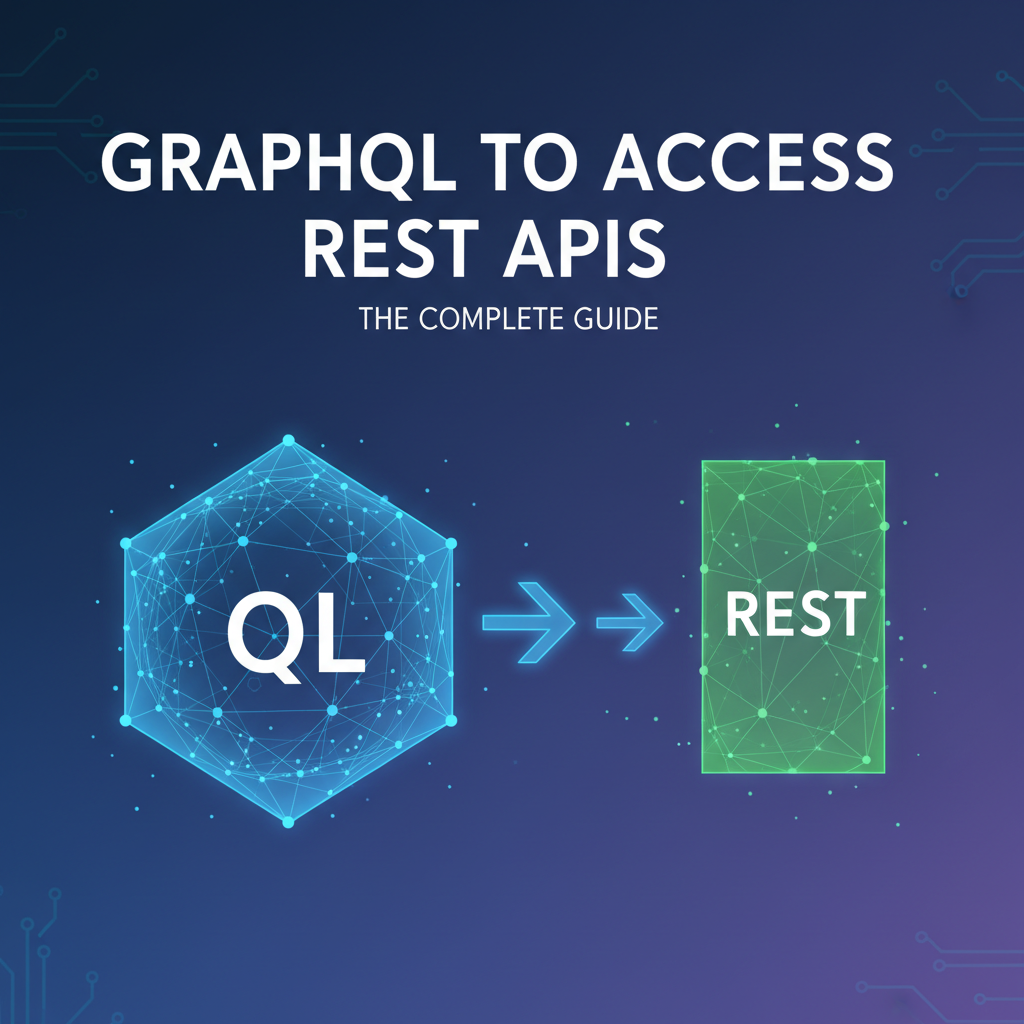
However, the reality for most enterprises is a vast, entrenched ecosystem of existing REST APIs, representing years of investment, development, and operational stability. Rewriting an entire backend infrastructure to adopt GraphQL is often a monumental, if not impossible, undertaking, fraught with risks, costs, and significant disruption. This brings us to a crucial intersection: how can organizations harness the undeniable benefits of GraphQL without abandoning their foundational REST services? The answer lies in a sophisticated, hybrid approach: leveraging GraphQL as an elegant facade or a powerful api gateway that orchestrates and presents data from your underlying REST APIs.
This comprehensive guide delves into the intricate world of integrating GraphQL with existing REST services. We will explore the architectural patterns, implementation details, performance considerations, and security implications of this hybrid model. From defining your GraphQL schema to building intelligent resolvers that seamlessly interact with legacy REST endpoints, we will uncover the strategies necessary to modernize your API layer, enhance developer experience, and optimize data consumption, all while preserving your existing investments. Crucially, we will also examine the pivotal role of an api gateway in centralizing control, security, and observability across this integrated landscape, ensuring that your journey towards a more efficient and flexible API architecture is both robust and scalable. By the end of this guide, you will possess a profound understanding of how to effectively bridge the gap between the RESTful past and the GraphQL-powered future, transforming your API ecosystem into a responsive, developer-friendly, and highly performant data delivery mechanism.
Part 1: Understanding the Landscape: REST's Reign and GraphQL's Rise
Before we dive into the intricacies of combining these two powerful paradigms, it's essential to thoroughly understand their individual strengths, weaknesses, and the contexts in which they emerged. This foundational knowledge will illuminate why a hybrid approach, orchestrated often by a robust api gateway, has become a pragmatic necessity for many modern organizations.
The Proliferation of REST APIs: A Legacy of Simplicity and Scale
RESTful architecture emerged in the early 2000s as a powerful alternative to more complex, stateful protocols like SOAP (Simple Object Access Protocol). Its core principles, articulated by Roy Fielding, championed simplicity, scalability, and adherence to standard HTTP methods. Resources, identified by URLs, could be manipulated using verbs like GET, POST, PUT, and DELETE, making API interactions intuitive and easily cacheable. This elegant design philosophy quickly propelled REST to become the de facto standard for building web services, facilitating the explosion of interconnected applications, microservices architectures, and mobile development.
Why REST Became Dominant:
- Simplicity and Familiarity: REST leverages existing HTTP infrastructure, which is well-understood by developers. Its stateless nature means each request from client to server contains all the information needed to understand the request, simplifying server logic and improving scalability.
- Caching Capabilities: HTTP's built-in caching mechanisms could be directly applied to REST resources, significantly reducing server load and improving response times for frequently accessed data.
- Scalability: The stateless nature of RESTful services makes them inherently scalable horizontally. New instances of an API can be spun up without concern for maintaining session state across servers.
- Loose Coupling: Clients and servers are loosely coupled, meaning they can evolve independently as long as the API contract is maintained, fostering modularity in system design.
- Wide Tooling Support: An extensive ecosystem of tools, libraries, and frameworks rapidly developed around REST, making it easy to build, consume, and test RESTful APIs across virtually any programming language or platform.
Challenges with REST at Scale and Evolving Demands:
Despite its undeniable successes, the very characteristics that made REST popular began to present challenges as applications grew more complex and user expectations for rich, interactive experiences intensified.
- Over-fetching and Under-fetching: This is arguably the most significant pain point.
- Over-fetching occurs when a client requests a resource (e.g., a user profile) and receives more data than it actually needs. For instance, an API call to
/users/{id}might return a user's entire profile, including address, phone number, and preferences, when the client only needs their name and email for a display list. This wastes bandwidth, increases processing on both client and server, and can impact performance, especially on mobile networks. - Under-fetching is the inverse, where a single request does not provide enough information, necessitating multiple round trips to the server. To display a list of users along with their recent orders, a client might first call
/usersto get user IDs, then iteratively call/users/{id}/ordersfor each user. This "N+1 problem" leads to high latency due to numerous sequential network requests, severely degrading user experience.
- Over-fetching occurs when a client requests a resource (e.g., a user profile) and receives more data than it actually needs. For instance, an API call to
- Multiple Endpoints for Complex Views: Crafting complex UIs often requires aggregating data from several distinct REST endpoints. This forces client developers to orchestrate multiple API calls, merge the results, and handle potential inconsistencies or errors from different sources. This client-side data aggregation significantly complicates application logic and makes maintenance more challenging.
- Versioning Headaches: As APIs evolve, new versions are often introduced (e.g.,
/v1/users,/v2/users). Managing multiple versions simultaneously to support older clients, while building new features for newer ones, can be a major operational burden. Deprecating older versions can be risky and disruptive. - Client-Server Impedance Mismatch: The fixed structure of REST resources often doesn't align perfectly with the dynamic data requirements of diverse client applications (web, mobile, IoT). Clients frequently need to transform or filter data received from REST endpoints, adding unnecessary complexity to their codebase.
- Lack of Self-Documentation for Data Structure: While REST endpoints might be documented, the exact fields and relationships within a returned JSON object are often discovered through trial and error or external documentation. There's no inherent, machine-readable schema that clients can query to understand the data's structure directly from the API itself.
These challenges underscored a growing need for a more flexible, client-driven approach to data fetching, paving the way for technologies like GraphQL. Organizations began to seek solutions that could mitigate these issues without completely dismantling their robust REST infrastructure, highlighting the potential role of an intermediate layer, often facilitated by a sophisticated api gateway.
The Rise of GraphQL: A Client-Driven Data Paradigm
GraphQL emerged from Facebook in 2012 (open-sourced in 2015) as a direct response to the aforementioned limitations of REST, particularly in the context of rapidly iterating mobile applications. Its fundamental premise is to empower clients with the ability to request exactly the data they need, and nothing more. It's not merely a query language; it's also a powerful runtime that allows you to fulfill those queries using your existing backend services and data stores.
What is GraphQL?
At its core, GraphQL is:
- A Query Language for Your API: Instead of multiple endpoints for different resources, GraphQL exposes a single endpoint that clients interact with. Clients send a query (a string) describing the data they want, and the server responds with a JSON object that precisely matches the shape of the query.
- A Runtime for Fulfilling Those Queries: The GraphQL server receives the query, parses it, validates it against a predefined schema, and then executes it using "resolvers." Resolvers are functions responsible for fetching the actual data for each field in the query from various data sources (databases, other microservices, or even existing REST APIs).
Key Principles and Benefits of GraphQL:
- Declarative Data Fetching: Clients declare their data requirements in a structured query. The server then fulfills this query, eliminating the need for clients to guess endpoint structures or make multiple requests. This paradigm shifts the burden of data aggregation from the client to the server.
- Single Endpoint: Unlike REST, which typically has many endpoints (
/users,/products,/orders), GraphQL exposes a single URL (e.g.,/graphql). All data requests, regardless of complexity or type, go through this one endpoint, simplifying client configuration and network management. - Precise Data Fetching (No Over/Under-fetching): This is GraphQL's flagship feature. Clients specify exactly which fields they need, ensuring they receive only the necessary data. This dramatically reduces payload sizes, improves network efficiency, and speeds up application loading times, especially crucial for mobile clients or those with limited bandwidth.
- Reduced Network Requests: Complex data requirements that would necessitate multiple REST calls can often be satisfied with a single GraphQL query, thanks to its ability to fetch deeply nested and interconnected data graphs in one go. This directly combats the N+1 problem inherent in many REST implementations.
- Schema-Driven Development and Strong Typing: Every GraphQL API has a strongly typed schema that defines all the data types, fields, and relationships available. This schema acts as a contract between client and server, providing clear documentation, enabling validation of queries at runtime, and facilitating powerful tooling like auto-completion and type checking in client-side codebases.
- Real-time Capabilities with Subscriptions: Beyond queries (read operations) and mutations (write operations), GraphQL supports "subscriptions." These allow clients to subscribe to specific events and receive real-time updates from the server whenever relevant data changes, powering live dashboards, chat applications, and notifications with ease.
- Improved Developer Experience (GraphiQL/Playground): The schema-driven nature of GraphQL enables powerful introspection tools like GraphiQL or GraphQL Playground. These interactive development environments allow developers to explore the API's schema, write and test queries, and view documentation directly in the browser, significantly accelerating the development and debugging process.
- Version-less APIs (Graceful Evolution): Instead of versioning the entire API, GraphQL allows for the graceful evolution of the schema by deprecating individual fields. Clients can continue to use older fields until they migrate, and new clients can immediately utilize new fields, minimizing breaking changes and reducing the operational overhead associated with managing multiple API versions.
In summary, while REST provided a robust foundation for building distributed systems, GraphQL emerged to address the growing demand for more efficient, flexible, and client-centric data access. The challenge then becomes how to marry these two powerful paradigms, leveraging the strengths of GraphQL without discarding the significant investments in existing REST infrastructure. This fusion often finds its most effective orchestration through an intelligent api gateway, acting as the linchpin in a modern API ecosystem.
Part 2: Why Bridge GraphQL and REST? The Pragmatic Approach
The decision to integrate GraphQL with an existing REST API landscape is not merely a technical preference; it's often a pragmatic business strategy driven by a desire to modernize without disruptive overhaul. This hybrid approach allows organizations to incrementally adopt cutting-edge technologies while safeguarding their substantial investments in established systems. Understanding the compelling reasons behind this integration is crucial for appreciating its strategic value and the pivotal role an api gateway plays in its success.
The Pragmatic Reality: Existing Investment and Incremental Modernization
The reality for most established companies is a significant legacy of REST APIs. These APIs power mission-critical applications, integrate with partners, and form the backbone of their digital infrastructure. This "legacy" is not necessarily a negative term; it signifies years of development, testing, and optimization, representing vast institutional knowledge and operational stability.
The Challenges of Full Migration:
- Cost and Resource Intensive: A complete migration from REST to GraphQL would entail rewriting substantial portions of the backend logic, redefining data models, and retraining development teams. This is an enormous undertaking, consuming significant financial resources, time, and engineering talent that could otherwise be focused on new feature development or core business innovation.
- Risk of Disruption: Rewriting core services inherently carries a high risk of introducing bugs, breaking existing client applications, and causing service outages. For stable, production systems, such risks are often unacceptable.
- Slow Time to Market: The lengthy development cycles associated with a full migration would delay the delivery of new features or improvements that GraphQL could enable, undermining the very goal of modernization.
- Vendor Lock-in/Expertise Gap: While GraphQL is open, adopting it often requires deep expertise in its ecosystem, schema design, and resolver implementation. For teams primarily steeped in RESTful principles, this represents a significant learning curve.
Given these formidable obstacles, a full-scale "rip and replace" strategy is rarely feasible or advisable. Instead, the focus shifts to an incremental adoption model, where GraphQL is introduced as a new, client-facing layer that sits atop the existing REST services. This is precisely where the concept of bridging GraphQL and REST becomes not just viable, but strategically advantageous.
Key Advantages of the Hybrid Approach: A Best-of-Both-Worlds Scenario
By acting as a sophisticated api gateway or facade over existing REST APIs, GraphQL offers a compelling set of benefits that address many of the limitations of pure REST without demanding a complete backend overhaul.
- Gradual Adoption and Decoupling:
- Low-Risk Introduction: Organizations can introduce GraphQL incrementally, starting with new client applications or specific feature sets. This "start small" approach allows teams to gain experience with GraphQL, validate its benefits, and refine their implementation strategy without impacting existing, stable applications.
- Backend Independence: The GraphQL layer can evolve independently of the underlying REST APIs. Changes to the GraphQL schema can be made to optimize client consumption without requiring modifications to the backend REST services, as long as the data mapping within the resolvers remains consistent. This provides a crucial layer of abstraction.
- Phased Migration: For organizations with a long-term vision to migrate to a fully GraphQL-native backend, the hybrid approach serves as an excellent stepping stone. It allows the gradual refactoring of backend services behind the GraphQL facade without clients ever noticing the underlying changes, promoting a smoother transition.
- Client Flexibility and Enhanced Developer Experience:
- Tailored Data for Diverse Clients: Different client applications (web, mobile, IoT) often have vastly different data requirements. GraphQL empowers each client to request exactly what it needs, optimizing payload sizes and network efficiency for every device. This is particularly beneficial for mobile apps operating on constrained networks, reducing battery drain and improving responsiveness.
- Unified and Self-Documenting API: GraphQL provides a single, unified endpoint that acts as a comprehensive "graph" of all available data, even if that data originates from disparate REST services. The strongly typed schema, coupled with interactive tools like GraphiQL, provides unparalleled self-documentation, allowing client developers to explore the API, understand data relationships, and compose complex queries with ease. This significantly reduces the time and effort required for client integration.
- Reduced Client-Side Complexity: By pushing the data aggregation and transformation logic to the GraphQL server (within its resolvers), client applications become simpler and cleaner. They no longer need to manage multiple API calls, merge data, or handle complex error scenarios from different REST endpoints. This allows client developers to focus on building rich user interfaces and business logic.
- Unified Data View and Performance Optimization:
- Consolidating Disparate Data Sources: Modern applications often consume data from numerous microservices, each exposing its own REST API. A GraphQL layer can act as a single point of entry, aggregating data from these disparate sources into a cohesive, client-friendly schema. This eliminates the need for clients to interact with multiple independent APIs, simplifying their architecture.
- Addressing the N+1 Problem: As discussed, REST's tendency towards under-fetching often leads to the N+1 problem, where a list of items requires N additional calls to fetch details for each item. GraphQL resolvers, especially when combined with powerful tools like DataLoader, can intelligently batch requests to the underlying REST APIs, converting many individual HTTP calls into a few optimized ones. This dramatically reduces network latency and improves overall performance.
- Optimized Network Usage: By eliminating over-fetching and minimizing under-fetching, GraphQL significantly reduces the amount of data transferred over the network. This not only speeds up response times but also reduces bandwidth costs for both the client and the server.
- Enabling Future Innovation:
- Foundation for Real-time Features: Once a GraphQL layer is in place, adding real-time capabilities through subscriptions becomes relatively straightforward, without needing to overhaul existing REST services.
- Preparation for AI/ML Integration: As organizations increasingly integrate AI models into their applications, a flexible GraphQL layer can provide a unified interface to both traditional data and AI-driven insights. This is particularly relevant for platforms designed to manage AI services.
In essence, bridging GraphQL and REST is about achieving a "best-of-both-worlds" scenario. It allows organizations to leverage their established, reliable REST infrastructure while simultaneously offering the flexibility, efficiency, and developer experience that GraphQL provides. The success of this hybrid model, however, heavily relies on a robust and intelligent api gateway to manage, secure, and monitor the interactions between clients, the GraphQL layer, and the underlying REST services. It's not just about stitching services together; it's about orchestrating a seamless and high-performing API ecosystem.
Part 3: Architectural Patterns for GraphQL over REST
Implementing GraphQL as a facade over existing REST APIs offers several architectural patterns, each with its own trade-offs regarding complexity, control, and scalability. The choice of pattern often depends on the scale of your existing REST ecosystem, your team's familiarity with GraphQL, and your long-term API strategy. Regardless of the chosen pattern, the presence of a robust api gateway often plays a crucial role in centralizing management, security, and traffic orchestration.
Pattern 1: The GraphQL Server as a Gateway/Facade
This is perhaps the most common and straightforward approach to integrating GraphQL with REST. In this pattern, a dedicated GraphQL server acts as an api gateway or a facade, sitting directly in front of one or more existing REST APIs. Clients interact solely with the GraphQL endpoint, completely unaware of the underlying REST services.
Description: The GraphQL server presents a unified schema to client applications. When a client sends a GraphQL query, the server's resolvers are responsible for making the necessary HTTP calls to the backend REST APIs, transforming the data as needed, and then returning a GraphQL-compliant response. This pattern provides a clean separation of concerns: the GraphQL server handles the client's flexible data requests, while the REST APIs continue to serve as the system of record for specific domains.
How it Works:
- Schema Definition: You define a GraphQL schema that models the data entities and relationships your clients need, irrespective of how that data is structured in the underlying REST APIs.
- Resolver Implementation: For each field in your GraphQL schema, you write a resolver function. This resolver function contains the logic to fetch the data for that field. In this pattern, resolvers primarily make HTTP requests to your existing REST endpoints using libraries like
axiosorfetch. - Data Transformation: REST API responses often contain more data than needed or are structured differently from your desired GraphQL types. Resolvers perform the necessary data filtering, mapping, and transformation to conform to the GraphQL schema. They also handle error propagation from the REST APIs to the GraphQL response.
- GraphQL Server Deployment: The GraphQL server itself is deployed as a standalone service, potentially behind a traditional api gateway that handles basic routing, load balancing, and authentication.
Advantages:
- Clear Separation of Concerns: The GraphQL layer is solely responsible for client-facing data concerns, while REST APIs maintain their domain logic. This modularity simplifies development and maintenance.
- High Control over Schema: You have complete control over the GraphQL schema, allowing you to design it optimally for client consumption, independent of the underlying REST structures.
- Incremental Adoption: New features or client applications can immediately benefit from GraphQL without requiring any changes to existing REST services.
- Centralized Data Aggregation: The GraphQL server becomes the single point of contact for clients, aggregating data from multiple REST services into one cohesive response, eliminating client-side data orchestration.
Disadvantages:
- Requires Maintaining a Separate Server: You need to develop, deploy, and maintain an additional service (the GraphQL server), adding to operational overhead.
- Potential for Increased Latency: Each GraphQL request, if not optimized with batching (e.g., DataLoader), could translate into multiple sequential REST API calls, potentially increasing overall response times. Careful optimization is crucial.
- Resolver Complexity: Resolvers can become complex if they need to interact with many different REST endpoints, handle intricate data transformations, or manage chained dependencies.
Role of an API Gateway: In this architecture, a traditional api gateway can sit in front of the GraphQL server itself. This api gateway can handle global concerns such as:
- Request Routing: Directing client requests to the correct GraphQL server instance.
- Load Balancing: Distributing traffic across multiple GraphQL server instances for high availability and scalability.
- Authentication and Authorization: Performing initial authentication checks before requests even reach the GraphQL server, offloading this responsibility.
- Rate Limiting: Protecting the GraphQL server from abuse by limiting the number of requests per client.
- SSL Termination: Handling encryption/decryption of traffic.
- Logging and Monitoring: Providing a central point for collecting access logs and performance metrics.
For organizations looking to consolidate and manage a diverse set of APIs, including those serving as facades for GraphQL or direct REST consumption, platforms like APIPark offer comprehensive API lifecycle management. As an open-source AI gateway and API management platform, APIPark can streamline the deployment, integration, and governance of both AI and REST services, acting as a crucial component in such a hybrid architecture. It ensures that your underlying REST services, whether exposed directly or through a GraphQL layer, are managed efficiently and securely, offering features like quick integration of 100+ AI models, unified API format, prompt encapsulation into REST API, and end-to-end API lifecycle management. This makes APIPark an excellent choice for an organization looking for a powerful api gateway solution that can handle a vast array of API types and management needs.
Pattern 2: Schema Stitching / Federation (Advanced)
While primarily designed for combining multiple GraphQL services, the concepts of schema stitching and federation can be extended to include services that are themselves GraphQL facades over REST. This pattern is suitable for large, distributed organizations with many teams, where different teams own different parts of the data graph.
Description: Instead of a single monolithic GraphQL server, schema stitching/federation involves multiple independent GraphQL "sub-schemas" (or "subgraphs" in Apollo Federation terminology), each potentially owned by a different team and perhaps backed by its own set of REST APIs. A "gateway" or "proxy" service then combines these sub-schemas into a single, unified "supergraph" that clients query.
How it Works:
- Multiple Sub-schemas: Each team (or domain) defines its own GraphQL schema and resolvers, which might internally call REST APIs. These sub-schemas are deployed as independent GraphQL services.
- Gateway Service: A dedicated gateway (e.g., Apollo Gateway) is configured to introspect and combine these sub-schemas. When a client queries the gateway, it intelligently breaks down the query into smaller pieces, routes them to the appropriate sub-schemas, gathers the results, and stitches them back together into a single response.
- Data Graph Composition: The gateway understands how different types in different sub-schemas relate to each other (e.g., a
Usertype from one sub-schema might haveOrdersfrom another sub-schema), enabling complex, cross-service queries.
Advantages:
- Distributed Ownership: Different teams can own and evolve their parts of the GraphQL schema independently, promoting autonomy and reducing bottlenecks.
- Scalability: Each sub-schema can be scaled independently based on its specific traffic patterns and resource needs.
- Complex Data Models: Ideal for very large organizations with complex, interconnected data models spread across numerous microservices.
- Incremental Migration to GraphQL-Native: Allows teams to gradually migrate their backend services from REST to GraphQL without impacting the overall unified graph.
Disadvantages:
- Increased Setup Complexity: Setting up schema stitching or federation is significantly more complex than a single GraphQL facade, requiring careful schema design and gateway configuration.
- Operational Overhead: Managing multiple GraphQL services and a gateway adds to the operational burden.
- Potential for Performance Bottlenecks: The gateway needs to orchestrate requests across multiple services, which can introduce latency if not carefully designed and optimized for parallel execution and caching.
Role of an API Gateway: This federated approach often relies heavily on a robust api gateway or a dedicated federation gateway to orchestrate the requests to various backend services, ensuring a seamless experience for the client. This gateway handles the complex routing logic, parallelizes sub-queries, and aggregates results. It acts as the central traffic manager, applying security policies, rate limits, and monitoring across the entire supergraph. For extremely large-scale deployments, the federation gateway itself might sit behind a traditional api gateway like APIPark, which provides an even higher layer of traffic control and security for the entire API infrastructure.
Pattern 3: Hybrid Approach (GraphQL for New, REST for Legacy)
This pattern represents a pragmatic compromise, especially for organizations that are not ready or do not need to expose all their existing REST data through GraphQL. It allows for a gradual evolution without forced migration.
Description: In this scenario, new applications or specific data domains are built with a GraphQL-first approach, or they expose a GraphQL API from the outset. Meanwhile, existing REST APIs continue to serve legacy clients or domains where GraphQL benefits are not yet critical. The GraphQL layer might still internally consume some REST APIs for certain data points, but it doesn't necessarily aim to represent all existing REST data.
How it Works:
- Dual API Exposure: The organization explicitly maintains both GraphQL and REST APIs.
- Strategic GraphQL Adoption: GraphQL is adopted for specific use cases:
- New client applications (e.g., a new mobile app).
- New features that require highly flexible data fetching.
- Domains where the N+1 problem is most acute.
- AI services where a unified API format is beneficial, as offered by platforms like APIPark.
- Internal REST Consumption (Optional): The GraphQL server might still act as a facade for a subset of REST APIs, especially for data that needs to be combined with GraphQL-native data or exposed in a more flexible format.
- Client Choice: Clients choose the API paradigm that best suits their needs. Legacy clients continue using REST, while new clients leverage GraphQL.
Advantages:
- Minimal Disruption: Existing services and clients remain untouched.
- Allows for Experimentation: Teams can experiment with GraphQL in a controlled environment without committing to a full-scale migration.
- Focused Benefits: GraphQL benefits are applied where they are most impactful, avoiding unnecessary complexity for simple, stable REST endpoints.
- Optimized Resource Allocation: Resources can be focused on building GraphQL services for high-value use cases.
Disadvantages:
- Two API Paradigms to Maintain: Developers need to be familiar with both REST and GraphQL, potentially leading to increased cognitive load and tool fragmentation.
- Inconsistent Developer Experience: Clients might experience different levels of flexibility and documentation depending on whether they consume REST or GraphQL.
- Potential for Duplication: There's a risk of duplicating data fetching logic if some data is exposed via both REST and GraphQL without careful planning.
Role of an API Gateway: An api gateway is absolutely critical in this hybrid scenario. It acts as the central traffic director, distinguishing between REST and GraphQL requests and routing them appropriately. The gateway can:
- Route by Path/Method: Forwards
/graphqlrequests to the GraphQL server and other paths (e.g.,/users,/products) to the respective REST APIs. - Centralized Security: Applies consistent authentication, authorization, and rate limiting policies across both the GraphQL and REST endpoints, providing a unified security posture.
- Monitoring and Analytics: Gathers comprehensive metrics and logs for both API types, offering a holistic view of API usage and performance.
- Developer Portal: Presents a unified developer portal where clients can discover and learn about both the REST and GraphQL APIs, simplifying client onboarding.
APIPark, with its robust API management capabilities, is perfectly suited to manage this hybrid environment. Its ability to handle end-to-end API lifecycle management, enforce independent API and access permissions for each tenant, and provide detailed API call logging makes it an ideal api gateway for orchestrating a mixed REST and GraphQL ecosystem. Whether managing traditional REST APIs or facilitating the integration of new AI models via a GraphQL layer, APIPark ensures that all API services are discoverable, secure, and performant. Its high-performance rivaling Nginx further ensures that even with a mixed workload, the API infrastructure remains responsive and scalable.
In summary, choosing the right architectural pattern depends on your specific context. The GraphQL server as a facade is a great starting point, while schema stitching/federation offers scalability for very large graphs. The hybrid approach provides a cautious, incremental path. In all these patterns, a well-implemented api gateway is not just an accessory but a foundational component that underpins security, performance, and manageability across your entire API landscape.
APIPark is a high-performance AI gateway that allows you to securely access the most comprehensive LLM APIs globally on the APIPark platform, including OpenAI, Anthropic, Mistral, Llama2, Google Gemini, and more.Try APIPark now! 👇👇👇
Part 4: Implementing GraphQL over REST - A Deep Dive
Having explored the "why" and the architectural patterns, it's time to delve into the "how." Implementing a GraphQL layer over existing REST APIs involves several key steps, each requiring careful consideration to ensure efficiency, reliability, and a stellar developer experience. This process is where the theoretical benefits translate into practical application, demanding meticulous schema design, intelligent resolver development, and robust security measures, often augmented by the capabilities of an api gateway.
Step 1: Define Your GraphQL Schema
The GraphQL schema is the heart of your API. It's the contract between your client and server, defining all the data types, fields, and operations (queries, mutations, subscriptions) available. When building a GraphQL facade over REST, your schema should ideally reflect the data requirements of your clients, not necessarily the exact structure of your underlying REST APIs. This is a crucial distinction.
Process for Schema Definition:
- Identify Core Entities and Their Relationships: Start by thinking about the domain entities your clients interact with. For an e-commerce platform, these might be
User,Product,Order,Category,Review. Define the fields for each entity, including their types (e.g.,String,Int,Boolean, custom types).- Example: A
Usermight haveid: ID!,name: String!,email: String!, and a list oforders: [Order!]. AnOrdermight haveid: ID!,totalAmount: Float!,products: [Product!].
- Example: A
- Map Fields to Potential Data Sources (REST Endpoints): Once you have a preliminary schema, identify which fields will be resolved by which REST endpoints. For instance:
User.id,User.name,User.emailmight come from/api/v1/users/{id}.User.ordersmight require a call to/api/v1/users/{id}/ordersor/api/v1/orders?userId={id}.Product.name,Product.pricemight come from/api/v1/products/{id}. This mapping informs your resolver logic in the next step.
- Design Queries, Mutations, and Subscriptions:
- Queries: Define the entry points for reading data. Examples:
user(id: ID!): User,users(limit: Int): [User!],product(id: ID!): Product. - Mutations: Define operations that modify data (create, update, delete). Examples:
createUser(input: CreateUserInput!): User,updateProduct(id: ID!, input: UpdateProductInput!): Product. - Subscriptions (Optional): If real-time updates are needed, define subscription types, e.g.,
productUpdated: Product.
- Queries: Define the entry points for reading data. Examples:
- Use Scalar Types and Custom Object Types: Leverage GraphQL's built-in scalar types (
ID,String,Int,Float,Boolean) and define your own custom object types for complex data structures. - Consider Input Types: For mutations, define separate input types to bundle arguments, promoting readability and reusability (e.g.,
CreateUserInput). - Avoid Reflecting REST Directly: The goal is to present an ideal API for the client, not a direct mirror of your REST structure. This often means flattening nested REST resources or combining data from multiple endpoints into a single GraphQL type.
Tools for Schema Definition: You typically define your schema using the GraphQL Schema Definition Language (SDL) in .graphql files, or programmatically using libraries in your chosen language.
Step 2: Choosing a GraphQL Server Framework
Once your schema is conceptualized, you need a GraphQL server to implement it. The choice of framework depends on your preferred programming language and ecosystem.
- Node.js:
- Apollo Server: A popular, production-ready GraphQL server that's framework-agnostic. It integrates well with Express, Koa, Hapi, and AWS Lambda. Apollo provides a rich ecosystem of tools (client, federation gateway).
- Express-GraphQL: A simpler
express.jsmiddleware for serving GraphQL, good for smaller projects or learning.
- Python:
- Graphene: A powerful library for building GraphQL APIs in Python, with integrations for Django, SQLAlchemy, and other ORMs.
- Ariadne: A schema-first library for building GraphQL APIs using Python 3.6+. It emphasizes the GraphQL SDL.
- Java:
- GraphQL-Java: The official GraphQL implementation for Java, providing a low-level foundation for building servers.
- Spring for GraphQL / DGS Framework: Higher-level frameworks built on GraphQL-Java, offering easier integration with Spring Boot applications.
- Go:
- gqlgen: A schema-first GraphQL server library for Go, which generates Go code from your GraphQL schema, simplifying implementation.
- graphql-go: Another popular GraphQL library for Go.
Select a framework that aligns with your team's existing skill set and the broader technology stack.
Step 3: Building Resolvers for REST APIs
This is where the magic happens – connecting your GraphQL schema to your backend REST services. Resolvers are functions responsible for fetching data for a specific field in your GraphQL schema. When building a GraphQL facade over REST, these resolvers will primarily make HTTP calls to your existing REST endpoints.
The Core Logic of Resolvers: A resolver function typically takes three arguments:
parent(orroot): The result of the parent field. Useful for nested queries (e.g., when resolvingorderson aUserobject,parentwould be theUserobject).args: An object containing the arguments passed to the field in the query (e.g.,idforuser(id: ID!)).context: An object shared across all resolvers in a single GraphQL operation. It's often used to pass authentication tokens, database connections, or common utilities.
Making HTTP Requests: Inside your resolvers, you'll use an HTTP client library (e.g., axios in Node.js, requests in Python, RestTemplate in Java) to call your REST APIs.
// Example (Node.js with Apollo Server)
const axios = require('axios');

const resolvers = {
  Query: {
    user: async (parent, args, context) => {
      try {
        const response = await axios.get(`http://rest-api.example.com/api/v1/users/${args.id}`, {
          headers: {
            'Authorization': context.authToken // Propagate auth token
          }
        });
        return response.data; // REST response data maps directly to GraphQL User type
      } catch (error) {
        throw new Error(`Failed to fetch user: ${error.message}`);
      }
    },
    users: async (parent, args, context) => {
      try {
        const response = await axios.get(`http://rest-api.example.com/api/v1/users`, {
          params: { limit: args.limit }, // Map GraphQL arguments to REST query params
          headers: {
            'Authorization': context.authToken
          }
        });
        return response.data.data; // Assuming REST returns { data: [...] }
      } catch (error) {
        throw new Error(`Failed to fetch users: ${error.message}`);
      }
    }
  },
  User: {
    // Resolver for nested field 'orders' on a User object
    orders: async (parent, args, context) => {
      try {
        // parent here is the User object fetched by the 'user' or 'users' resolver
        const response = await axios.get(`http://rest-api.example.com/api/v1/users/${parent.id}/orders`, {
          headers: {
            'Authorization': context.authToken
          }
        });
        return response.data; // REST response maps to GraphQL [Order!] type
      } catch (error) {
        throw new Error(`Failed to fetch orders for user ${parent.id}: ${error.message}`);
      }
    }
  }
};
Data Transformation: REST API responses might not perfectly align with your GraphQL schema. Resolvers are responsible for bridging this gap.
- Mapping Field Names: If a REST API returns
firstNamebut your GraphQL schema expectsgivenName, your resolver will map it. - Flattening/Nesting Data: REST might return deeply nested objects, while GraphQL needs a flatter structure, or vice-versa. Resolvers handle this restructuring.
- Combining Data: A single GraphQL field might require combining data from multiple REST endpoints. The resolver orchestrates these calls and merges the results.
- Type Coercion: Converting data types (e.g., a string representation of a number to an integer).
Handling Authentication and Authorization: This is a critical security aspect.
- Client to GraphQL Server: Clients will typically authenticate with your GraphQL server using standard methods like JWTs (JSON Web Tokens) or OAuth tokens. The GraphQL server then validates these tokens.
- GraphQL Server to REST APIs: The GraphQL server often needs to propagate the client's identity or specific API keys to the underlying REST APIs to ensure proper authorization. This token (e.g.,
context.authTokenin the example above) is usually passed in the HTTP headers to the downstream REST calls. - Centralized Auth with API Gateway: An api gateway can significantly simplify this. It can perform initial authentication and authorization for all incoming requests (whether for GraphQL or direct REST) and inject verified user context or internal API keys into the request headers before forwarding them to the GraphQL server or backend REST services. This offloads a substantial security burden from individual services.
Error Handling: Resolvers must gracefully handle errors from REST APIs. This involves:
- Catching HTTP Errors: Using
try...catchblocks or promise rejection handlers. - Translating Errors: Converting REST-specific error codes and messages (e.g., HTTP 404, 500) into GraphQL error formats, providing meaningful error messages to the client without exposing sensitive backend details. GraphQL allows returning errors in a structured way alongside partial data.
Batching and Caching (DataLoader): The "N+1 problem" is a common pitfall when building GraphQL over REST. If a query requests a list of items, and each item's resolver makes a separate REST call, you end up with N+1 HTTP requests. DataLoader (a JavaScript utility, with equivalents in other languages) is an essential pattern to solve this.
- How DataLoader Works: DataLoader batches multiple individual requests for objects into a single request to the backend. For example, if a GraphQL query requests 10 users and each user has a
postsfield that needs to call a/users/{id}/postsREST endpoint, DataLoader will collect all 10 user IDs, make one single REST call like/posts?userIds=1,2,3...10, and then distribute the results back to the individual resolvers. - Benefits: Dramatically reduces the number of HTTP round trips to backend REST APIs, significantly improving performance and reducing latency. It also caches results per request, preventing duplicate fetches within the same query.
// Conceptual example of DataLoader for posts by user ID
const DataLoader = require('dataloader'); // Assumes DataLoader is installed

function createPostLoader(authToken) {
  return new DataLoader(async (userIds) => {
    // Make a single batched REST call for all userIds
    const response = await axios.get(`http://rest-api.example.com/api/v1/posts`, {
      params: { userIds: userIds.join(',') }, // Batch multiple IDs
      headers: { 'Authorization': authToken }
    });
    const posts = response.data; // Assume response is an array of posts with userId

    // Map the results back to the requested user IDs
    // This part is crucial: DataLoader expects results in the same order as inputs
    const postsByUserId = userIds.map(id => posts.filter(post => post.userId === id));
    return postsByUserId;
  });
}

const resolversWithDataLoader = {
  Query: {
    // ... other queries
  },
  User: {
    posts: async (parent, args, context) => {
      // Access the DataLoader from context, creating one if not present
      if (!context.postLoader) {
        context.postLoader = createPostLoader(context.authToken);
      }
      return context.postLoader.load(parent.id); // DataLoader handles batching/caching
    }
  }
};
DataLoader should be instantiated per request (usually in the context object of your GraphQL server) to ensure correct caching behavior for individual requests.
Step 4: Authentication, Authorization, and Security Considerations
Security is paramount. A GraphQL facade over REST introduces unique security challenges that must be addressed at both the GraphQL layer and potentially upstream at the api gateway.
- Client to GraphQL Server Authentication:
- JWTs (JSON Web Tokens): A common pattern where clients send a JWT in the
Authorizationheader. The GraphQL server validates the JWT (signature, expiration, issuer) and extracts user information. - OAuth 2.0: For more complex scenarios, OAuth can be used to delegate authorization, providing access tokens to the GraphQL server.
- API Keys: Simpler for machine-to-machine communication, but less secure for user-facing applications. The result of this authentication is typically a
userobject orauthTokenstored in the GraphQLcontextfor use by resolvers.
- JWTs (JSON Web Tokens): A common pattern where clients send a JWT in the
- GraphQL Server to REST APIs Authorization:
- Propagating Authentication: The most common approach is to forward the client's authenticated identity (e.g., the JWT or a derived internal token) to the downstream REST APIs in the request headers. The REST APIs then perform their own authorization checks based on this propagated identity.
- Internal API Keys: For backend-to-backend calls where the GraphQL server acts as a trusted client to REST, you might use specific internal API keys or service accounts.
- API Gateway as an Auth Proxy: An api gateway like APIPark can act as an authentication proxy. It can terminate client authentication, perform authorization, and then inject standardized headers (e.g.,
X-User-ID,X-User-Roles) or generate internal tokens that the GraphQL server and downstream REST APIs trust. This offloads authentication from individual services. APIPark also allows for the activation of subscription approval features, ensuring that callers must subscribe to an API and await administrator approval before they can invoke it, preventing unauthorized API calls and potential data breaches, offering an additional layer of control.
- Rate Limiting:
- At the GraphQL Layer: Implement rate limiting based on client IP, authenticated user, or query complexity directly within your GraphQL server. GraphQL queries can be complex, so simple request counts might not be sufficient.
- At the API Gateway Layer: An api gateway can provide robust, global rate limiting across all API endpoints (GraphQL and REST). This is often the preferred approach as it acts as the first line of defense and applies consistent policies.
- Input Validation:
- GraphQL's strong typing provides basic validation, but more complex business logic validation for mutation inputs should be performed in resolvers (before calling REST APIs) or delegated to the REST APIs themselves.
- Deep Query Protection / Complexity Analysis:
- GraphQL's flexibility allows clients to construct very deep or complex queries that could overload your backend (e.g., requesting a user, their 100 orders, and 100 products for each order).
- Implement query depth limiting or complexity analysis (e.g., using libraries like
graphql-query-complexityin Node.js) to reject overly expensive queries before execution, protecting your backend services from denial-of-service attacks.
By diligently addressing these implementation steps, from schema design to robust security, you can build a powerful and efficient GraphQL facade that seamlessly integrates with your existing REST API ecosystem, delivering a superior experience for your client applications. The strategic use of an api gateway is frequently the linchpin that unifies these efforts, offering a centralized point for security, management, and performance optimization.
Part 5: Advanced Topics and Best Practices for GraphQL over REST
Beyond the foundational implementation, optimizing a GraphQL facade over REST involves several advanced techniques and adherence to best practices. These considerations are crucial for ensuring high performance, graceful evolution, and comprehensive observability of your hybrid API architecture.
Performance Optimization
Performance is a critical aspect of any API, and a GraphQL layer, especially one sitting atop existing REST services, introduces potential bottlenecks that must be proactively addressed.
- DataLoader for Batching (Revisited): As discussed in Part 4, DataLoader is indispensable. It's not just about reducing HTTP requests; it also includes basic in-memory caching for a single request, preventing redundant fetches within the same query. Ensure that DataLoader instances are correctly initialized per request context to maintain isolation and accuracy.
- Caching Strategies:
- Server-Side Caching (GraphQL Layer): Implement caching mechanisms within your GraphQL server resolvers. If a specific REST endpoint's data doesn't change frequently, you can cache its responses (e.g., using Redis or Memcached) to avoid hitting the REST API on every request. This cache needs to be invalidated appropriately when underlying data changes.
- HTTP Caching for REST Endpoints: Ensure your underlying REST APIs leverage HTTP caching headers (e.g.,
Cache-Control,ETag,Last-Modified). While GraphQL clients don't directly interact with these headers, the GraphQL server's HTTP client (axios,fetch) can respect them if configured to do so, potentially reducing calls to the actual backend logic of the REST services. - Client-Side Caching (GraphQL Clients): Modern GraphQL client libraries (like Apollo Client or Relay) come with sophisticated normalized caches. They automatically cache query results and update the cache when mutations occur, significantly speeding up subsequent requests for the same data and reducing network traffic from the client.
- Persisted Queries:
- What they are: Instead of sending the full GraphQL query string over the network, clients send a unique ID or hash corresponding to a pre-registered query. The server then retrieves the full query from its store.
- Benefits: Reduces payload size (especially for complex queries), improves security by preventing arbitrary queries, and simplifies caching at the network edge.
- Monitoring and Tracing:
- Detailed Metrics: Collect metrics on GraphQL query execution times, error rates (overall and per resolver), and performance of underlying REST calls. Tools like Prometheus, Grafana, or APM solutions (e.g., Datadog, New Relic) can provide deep insights.
- Distributed Tracing: Implement distributed tracing (e.g., OpenTelemetry, Jaeger, Zipkin) to visualize the entire lifecycle of a GraphQL request, from the client through the GraphQL server and into the various REST APIs it calls. This is invaluable for identifying performance bottlenecks across your microservice architecture.
- API Gateway's Role: An api gateway is a critical component for centralized monitoring and tracing. Platforms like APIPark offer comprehensive logging capabilities, recording every detail of each API call. This feature allows businesses to quickly trace and troubleshoot issues in API calls, ensuring system stability and data security. By centralizing these logs and metrics, APIPark enables a holistic view of API performance and health, whether the requests are for GraphQL or direct REST services.
Versioning and Evolution
Managing API changes is always a challenge. GraphQL offers inherent advantages over REST in this regard, especially when acting as a facade.
- GraphQL's Intrinsic Versioning Benefits:
- Deprecating Fields: Instead of versioning the entire API, GraphQL allows you to deprecate individual fields or types in your schema using the
@deprecateddirective. Clients can continue to use deprecated fields, but development tools like GraphiQL will flag them, guiding developers towards newer alternatives. This provides a clear, non-breaking path for API evolution. - Adding New Fields: Adding new fields or types to a GraphQL schema is a non-breaking change, meaning older clients continue to function without modification.
- Deprecating Fields: Instead of versioning the entire API, GraphQL allows you to deprecate individual fields or types in your schema using the
- Managing Underlying REST API Changes:
- The GraphQL facade acts as an abstraction layer. If an underlying REST API changes (e.g., a field name changes, or an endpoint is reorganized), you only need to update the corresponding resolver in your GraphQL server. Clients remain unaffected as long as the GraphQL schema contract is maintained. This significantly reduces the impact of backend changes on client applications.
- However, major breaking changes in REST APIs (e.g., an endpoint being removed entirely) will require careful planning and potential adjustments to the GraphQL schema and resolvers, possibly involving deprecation strategies at the GraphQL layer.
Tooling and Ecosystem
The GraphQL ecosystem is rich and rapidly growing, offering a plethora of tools to aid in development, testing, and consumption.
- GraphiQL/GraphQL Playground: Essential for exploring, testing, and documenting your GraphQL API. They provide an interactive interface to execute queries and mutations against your server.
- Client Libraries:
- Apollo Client: The most popular and comprehensive client library for web and mobile (React, Vue, Angular, iOS, Android). It offers features like normalized caching, optimistic UI updates, and local state management.
- Relay: Another powerful client library from Facebook, known for its performance optimizations and strong type safety, though it has a steeper learning curve.
- Numerous other clients exist for various languages and frameworks.
- Code Generation: Tools can generate client-side types and query functions from your GraphQL schema, enhancing type safety and developer productivity.
- Schema Linting and Validation: Tools that enforce best practices and identify issues in your GraphQL schema definition.
Observability: Logging, Metrics, and Tracing
True operational excellence requires deep insight into how your APIs are performing.
- Logging:
- GraphQL Server Logs: Log incoming GraphQL queries ( sanitized to remove sensitive data), resolver execution times, and errors. Ensure logs provide sufficient context to debug issues (e.g., query ID, user ID).
- REST Call Logs: Log outgoing HTTP requests from resolvers to REST APIs, including request URLs, methods, response status codes, and response times. This helps pinpoint issues originating from the backend REST services.
- Centralized Logging: Aggregate logs from both your GraphQL server and your underlying REST APIs into a centralized logging system (e.g., ELK Stack, Splunk, DataDog).
- API Gateway's Detailed Logging: As mentioned, an api gateway like APIPark provides comprehensive, detailed API call logging. This feature is invaluable for understanding traffic patterns, debugging failed requests, and auditing access across your entire API ecosystem, regardless of whether traffic flows through GraphQL or directly to REST.
- Metrics:
- GraphQL Metrics: Track the total number of GraphQL requests, average response times, error rates, and per-resolver performance.
- REST Metrics: Monitor the health and performance of your backend REST APIs (request counts, latency, error rates).
- Business Metrics: Beyond technical metrics, track metrics related to API usage from a business perspective (e.g., number of users fetching products, number of orders created).
- Powerful Data Analysis with APIPark: APIPark analyzes historical call data to display long-term trends and performance changes, helping businesses with preventive maintenance before issues occur. This provides a high-level view of system health and helps anticipate future problems.
- Tracing:
- End-to-End Request Tracing: Implement distributed tracing to gain visibility into the entire flow of a request from the client, through your GraphQL server, and into the various REST microservices. This helps identify latency bottlenecks and visualize dependencies across your distributed system.
| Feature Area | REST API (Traditional) | GraphQL (Facade over REST) | Benefits of Hybrid Approach (with API Gateway) |
|---|---|---|---|
| Data Fetching | Multiple endpoints, fixed data structures | Single endpoint, client-driven, precise data fetching | Eliminates over/under-fetching, N+1 problem, reduces client-side complexity, optimized for diverse clients. |
| Schema/Contract | Implicit (documentation), less formal | Explicit, strongly typed, self-documenting (SDL) | Clear API contract, improved developer experience, enables powerful tooling, easier client onboarding. |
| Performance | Potential for N+1 problems, over-fetching | Optimized with DataLoader, reduced network overhead | Significant latency reduction, efficient bandwidth usage, improved mobile performance. |
| API Evolution | Versioning (e.g., v1, v2), breaking changes common | Graceful deprecation of fields, non-breaking additions | Smoother API evolution, reduced client impact from backend changes, less operational burden for API management. |
| Data Aggregation | Client-side logic, multiple requests | Server-side (GraphQL resolvers) | Simpler client code, consolidated data from disparate sources into a single response. |
| Security | Endpoint-specific auth/auth, rate limits often external | Field-level authorization, query complexity analysis | Centralized authentication/authorization at the api gateway, consistent rate limiting, robust protection against query abuse. |
| Observability | Separate logs/metrics per service | Unified logs/metrics for GraphQL, tracing through REST | Comprehensive end-to-end visibility, centralized logging, powerful analytics provided by the api gateway. |
| Investment | Legacy systems, high cost to replace | Leverages existing REST, incremental adoption | Preserves existing investments, enables gradual modernization without full rewrite, reduces risk and cost. |
| Real-time | Typically requires WebSockets or polling | Built-in Subscriptions | Enables real-time capabilities without overhauling backend services. |
By thoughtfully implementing these advanced topics and adhering to best practices, you can ensure that your GraphQL facade over REST is not just functional but also performant, maintainable, and observable, delivering a truly modern API experience.
Part 6: The Indispensable Role of an API Gateway in a Hybrid GraphQL/REST Architecture
In a world where GraphQL serves as a modern facade over existing REST APIs, the concept of an api gateway transcends being merely a traffic proxy; it becomes an indispensable orchestration and control point. Whether you are running a single GraphQL server or a federated graph across multiple services, a robust api gateway is critical for centralizing concerns that are foundational to the security, performance, and manageability of your entire API ecosystem. It acts as the frontline, handling initial requests, enforcing policies, and providing a unified operational view.
Centralized Traffic Management
An api gateway sits at the edge of your network, acting as the single entry point for all API traffic, irrespective of whether it's destined for your GraphQL endpoint or direct REST services.
- Request Routing: The gateway intelligently routes incoming client requests to the appropriate backend service. For instance, all requests to
/graphqlcan be forwarded to your GraphQL server, while requests to/usersor/productsmight be routed to their respective REST microservices. This ensures that clients only ever need to know a single domain name or IP address. - Load Balancing: When you have multiple instances of your GraphQL server or REST services (for scalability and high availability), the api gateway efficiently distributes incoming traffic across these instances. This prevents any single server from becoming a bottleneck and ensures optimal resource utilization.
- Traffic Shaping and Throttling: Beyond simple rate limiting, an api gateway can implement more sophisticated traffic shaping, prioritizing certain types of requests or clients, and gracefully degrading service under extreme load to protect backend systems.
- Protocol Translation/Bridging: While GraphQL clients speak GraphQL, an api gateway can also facilitate protocol translation if needed, though typically for GraphQL over REST, it primarily acts as a smart HTTP router.
Enhanced Security Posture
Security is paramount for any public-facing API, and an api gateway provides a centralized enforcement point that would otherwise need to be duplicated across every individual service.
- Authentication and Authorization: The gateway can offload authentication and authorization from your backend services. It can validate client credentials (JWT, OAuth tokens, API keys) at the edge, before the request even reaches your GraphQL server or REST APIs. Once authenticated, it can enrich the request with user context (e.g.,
X-User-ID,X-User-Rolesheaders) that trusted backend services can then use for fine-grained authorization. This centralizes security logic and reduces the attack surface. - Rate Limiting and Quota Management: To prevent abuse and ensure fair usage, the api gateway enforces rate limits (e.g., X requests per minute per client) and quota policies (e.g., Y requests per month) for all API consumers. This protects your backend services from denial-of-service attacks and excessive consumption.
- IP Whitelisting/Blacklisting: Block traffic from malicious IP addresses or restrict access to trusted networks.
- Web Application Firewall (WAF) Integration: Many gateways integrate with WAFs to protect against common web vulnerabilities like SQL injection, cross-site scripting (XSS), and other OWASP Top 10 threats.
- SSL/TLS Termination: The api gateway can handle SSL/TLS termination, decrypting incoming HTTPS traffic and encrypting outgoing responses. This centralizes certificate management and frees backend services from the cryptographic overhead.
- Subscription Approval: For sensitive APIs, features like subscription approval, where callers must await administrator approval before invoking an API, add a critical layer of control, preventing unauthorized calls and potential data breaches.
Traffic Transformation and API Abstraction
While a GraphQL server is itself a form of abstraction, an api gateway can provide an additional layer of transformation.
- Request/Response Transformation: The gateway can modify request headers, body, or URL paths before forwarding them to the backend, or transform responses before sending them back to the client. This can normalize external API calls to match internal service expectations.
- API Versioning (External): While GraphQL handles internal versioning gracefully, an api gateway can manage external API versioning by routing different
/v1/and/v2/requests to different backend service versions, allowing for smoother transitions for legacy clients.
Comprehensive Monitoring and Analytics
Understanding how your APIs are being used and how they are performing is crucial for operational health and business insights.
- Centralized Logging: The api gateway provides a single point for collecting detailed logs of all API calls, including request/response headers, bodies, timestamps, and error codes. This is invaluable for debugging, auditing, and security forensics.
- Metrics and Analytics: The gateway gathers performance metrics such as response times, error rates, request volumes, and latency for all API traffic. These metrics can be aggregated and visualized to provide real-time insights into API health and usage patterns.
- Alerting: Integrate with monitoring systems to trigger alerts when predefined thresholds are exceeded (e.g., high error rates, slow response times).
Developer Portal and API Discoverability
For internal or external API consumers, a centralized developer portal hosted by the api gateway is essential.
- Unified Documentation: Even with a GraphQL facade, a api gateway's developer portal can serve as a central hub to document both the GraphQL API (with links to GraphiQL, schema, etc.) and any direct REST APIs that clients might still consume.
- Self-Service Onboarding: Allows developers to register applications, generate API keys, and subscribe to APIs with minimal manual intervention, accelerating client onboarding.
APIPark as an Exemplary API Gateway Solution
In complex architectures involving GraphQL facades over REST, an api gateway becomes an indispensable component. APIPark, an open-source AI gateway and API management platform, exemplifies how such a system can unify the management of diverse API services. It offers end-to-end API lifecycle management, robust security features like subscription approval, and detailed logging and data analysis.
Consider the various features of APIPark and how they directly address the needs of a hybrid GraphQL/REST architecture:
- End-to-End API Lifecycle Management: APIPark assists with managing the entire lifecycle of APIs, including design, publication, invocation, and decommission. This comprehensive approach is vital for both your GraphQL server (treating it as an API) and all your underlying REST services, ensuring consistent governance.
- Performance Rivaling Nginx: With just an 8-core CPU and 8GB of memory, APIPark can achieve over 20,000 TPS, supporting cluster deployment to handle large-scale traffic. This high performance ensures that the api gateway itself does not become a bottleneck, even with complex routing and policy enforcement for both GraphQL and REST requests.
- Detailed API Call Logging and Powerful Data Analysis: APIPark provides comprehensive logging, recording every detail of each API call. This is critical for troubleshooting resolver issues in your GraphQL layer or problems within your REST APIs. Its data analysis capabilities help display long-term trends and performance changes, allowing for preventive maintenance, a significant benefit for a complex, hybrid system.
- Independent API and Access Permissions for Each Tenant: This feature is invaluable for larger organizations or multi-tenant platforms. It allows different teams or departments to manage their independent applications, data, user configurations, and security policies while leveraging shared infrastructure, perfect for segmenting access to different REST services or GraphQL schema segments.
- API Service Sharing within Teams: The platform allows for the centralized display of all API services. This means both GraphQL endpoints and specific REST APIs can be easily discovered and used by different departments, fostering internal collaboration and reducing redundancy.
- Quick Integration of 100+ AI Models & Unified API Format for AI Invocation: While this guide focuses on REST, APIPark's core strength in AI integration highlights its forward-thinking design. Should your GraphQL facade ever need to integrate with AI models, APIPark can provide a standardized, unified API format, simplifying AI usage and maintenance, and potentially encapsulating prompts into REST APIs that your GraphQL resolvers can then consume. This capability makes it a versatile api gateway for future-proofing your API strategy.
Whether you're integrating 100+ AI models or simply managing traditional REST APIs that feed into your GraphQL layer, APIPark provides the infrastructure to enhance efficiency, security, and observability. Its ability to handle high TPS, rivaling Nginx, ensures that your API infrastructure scales with your needs, making it a powerful api gateway solution for enterprises navigating the complexities of modern API ecosystems. The strategic deployment of such an api gateway is not just an operational decision; it's a foundational move towards a more secure, scalable, and manageable API future.
Conclusion: Harmonizing the API Landscape
The journey through the intricate landscape of API management reveals a clear trajectory towards more flexible, efficient, and developer-friendly data consumption. While REST APIs have undeniably served as the bedrock of distributed systems for decades, their limitations in the face of increasingly complex client requirements and data aggregation challenges have paved the way for innovative paradigms like GraphQL. However, the pragmatic reality for most enterprises is a substantial, often irreplaceable, investment in existing RESTful infrastructure. The notion of a wholesale migration is frequently untenable, fraught with prohibitive costs, time commitments, and operational risks.
This comprehensive guide has illuminated the powerful and increasingly popular strategy of leveraging GraphQL as an intelligent facade or a sophisticated api gateway over your existing REST APIs. This hybrid approach offers a compelling "best-of-both-worlds" solution, allowing organizations to modernize their API layer, enhance developer experience, and optimize data fetching without necessitating a disruptive overhaul of their core backend services. We've explored how GraphQL empowers clients with precise data fetching, eliminates the cumbersome N+1 problem, and provides a self-documenting, strongly typed schema, dramatically improving efficiency and reducing client-side complexity.
We delved into various architectural patterns, from a dedicated GraphQL server acting as a direct facade, to advanced schema stitching for distributed ownership, and pragmatic hybrid approaches that selectively introduce GraphQL for new use cases. Each pattern offers unique advantages and considerations, allowing organizations to choose a path that best aligns with their current infrastructure and long-term strategic goals. Crucially, we walked through the detailed implementation steps, from designing an optimal GraphQL schema that caters to client needs, to crafting intelligent resolvers that seamlessly translate GraphQL queries into efficient REST API calls, and meticulously addressing security considerations like authentication propagation and query protection.
A recurring and foundational theme throughout this guide has been the indispensable role of an api gateway. In a hybrid GraphQL/REST architecture, the api gateway is not just an optional component; it is the orchestrator, the protector, and the central nervous system of your API ecosystem. It handles centralized traffic management, intelligently routing requests, load balancing across services, and ensuring high availability. More critically, it provides a robust security perimeter, offloading authentication, authorization, and rate limiting from individual services, thereby fortifying your entire API infrastructure against threats and abuse. Furthermore, an api gateway offers unparalleled observability, consolidating logs, metrics, and tracing information to provide a holistic view of API performance and health.
Platforms like APIPark exemplify how a modern api gateway can fulfill these diverse and critical functions. As an open-source AI gateway and API management platform, APIPark not only streamlines the deployment and governance of traditional REST APIs and GraphQL facades but also offers advanced capabilities for integrating and managing AI services with a unified API format. Its high-performance capabilities, detailed logging, robust security features, and comprehensive API lifecycle management ensure that your hybrid API landscape is not only efficient and flexible but also secure and scalable, ready to adapt to the evolving demands of the digital era.
In conclusion, the journey from traditional REST to a GraphQL-powered future doesn't have to be a leap of faith into the unknown. By thoughtfully implementing GraphQL as a facade over your existing REST APIs, and by strategically deploying a powerful api gateway to manage and secure this integrated environment, organizations can gracefully evolve their API strategy. This enables them to unlock new levels of developer productivity, enhance client experiences, and build a more resilient and future-proof digital infrastructure, confidently harmonizing the best of both API worlds.
Frequently Asked Questions (FAQ)
1. Why should I put GraphQL over REST instead of just rewriting my REST APIs to be GraphQL-native? Rewriting existing REST APIs to be GraphQL-native is a significant undertaking that can be costly, time-consuming, and risky. It requires a complete overhaul of backend logic and data models, potentially disrupting existing clients and consuming substantial development resources. Placing GraphQL over REST allows for a gradual, incremental adoption. You can leverage your existing, stable REST services while simultaneously providing the flexibility and efficiency of GraphQL to new client applications or specific features. This "facade" approach minimizes disruption, preserves your investments, and allows teams to gain experience with GraphQL in a controlled environment, often orchestrated by a central api gateway.
2. What are the main performance considerations when using GraphQL to access REST APIs? The primary performance challenge is the "N+1 problem," where a single GraphQL query can trigger numerous sequential REST API calls, leading to high latency. This is best mitigated using DataLoader (or similar batching mechanisms), which intelligently groups multiple requests for related data into a single, optimized REST call. Other considerations include implementing caching strategies at both the GraphQL server level (for REST responses) and the client level, using persisted queries to reduce payload sizes, and implementing comprehensive monitoring and distributed tracing to identify and address bottlenecks. A robust api gateway can also contribute by providing efficient load balancing and global caching for the underlying REST services.
3. How does an API Gateway fit into this GraphQL over REST architecture? An api gateway plays a critical, central role. It acts as the single entry point for all API traffic, intelligently routing requests to either the GraphQL server or direct REST APIs. Beyond routing, it offloads crucial responsibilities such as centralized authentication and authorization, rate limiting, and SSL/TLS termination, providing a consistent security perimeter for your entire API ecosystem. It also offers comprehensive logging, monitoring, and analytics capabilities, giving you a holistic view of performance and usage across both GraphQL and REST services. In essence, the api gateway ensures that your hybrid architecture is secure, scalable, and manageable, consolidating many operational concerns that would otherwise need to be duplicated.
4. How do I handle authentication and authorization when my GraphQL server sits on top of REST APIs? Authentication typically occurs at the GraphQL server (or even earlier at the api gateway) where client credentials (e.g., JWTs, OAuth tokens) are validated. Once authenticated, the GraphQL server needs to propagate the client's identity or an internal token to the underlying REST APIs when making calls. This is usually done by passing the token in HTTP headers. The REST APIs then perform their own authorization checks based on this propagated identity. An api gateway can simplify this by performing initial authentication, injecting standardized user context headers, or generating internal tokens before forwarding requests to the GraphQL server or downstream REST services, centralizing and streamlining security enforcement.
5. How does GraphQL handle versioning compared to REST, especially in a hybrid setup? GraphQL offers a more graceful approach to API evolution compared to REST's traditional versioning (e.g., /v1, /v2). Instead of creating new API versions, GraphQL allows you to deprecate individual fields or types in your schema using directives. Clients can continue to use deprecated fields, but tooling will warn them, guiding migration without breaking changes. New fields can be added without affecting older clients. In a hybrid setup, the GraphQL facade shields clients from underlying REST API changes. If a REST endpoint's structure changes, you only need to update the corresponding GraphQL resolver to translate the new REST response into the existing GraphQL schema, allowing clients to remain oblivious to backend modifications as long as the GraphQL contract holds.
🚀You can securely and efficiently call the OpenAI API on APIPark in just two steps:
Step 1: Deploy the APIPark AI gateway in 5 minutes.
APIPark is developed based on Golang, offering strong product performance and low development and maintenance costs. You can deploy APIPark with a single command line.
curl -sSO https://download.apipark.com/install/quick-start.sh; bash quick-start.sh

In my experience, you can see the successful deployment interface within 5 to 10 minutes. Then, you can log in to APIPark using your account.

Step 2: Call the OpenAI API.