Gen AI Gateway: The Future of Enterprise AI Access
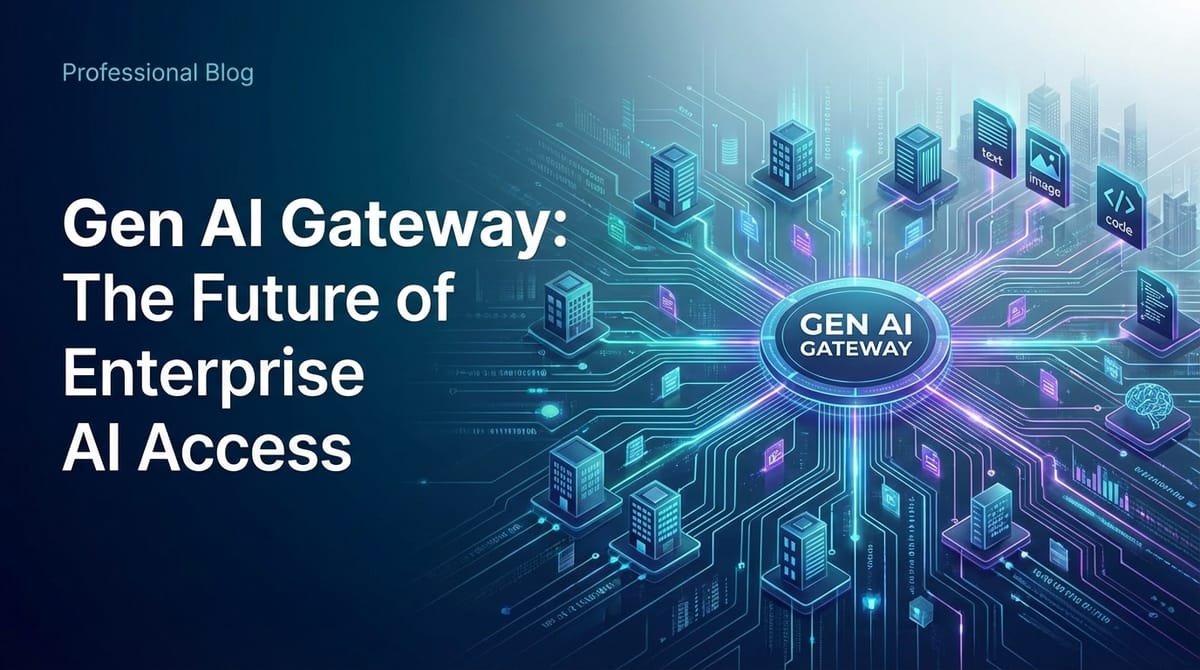


The technological epoch we inhabit is characterized by an unprecedented surge in computational power and algorithmic sophistication, birthing an era where Artificial Intelligence, particularly Generative AI (Gen AI), transcends the realm of academic curiosity to become a foundational pillar of modern enterprise. From conjuring novel marketing copy and crafting intricate lines of code to synthesizing complex datasets and revolutionizing customer interactions, Generative AI models, especially Large Language Models (LLMs), are reshaping industries at a breathtaking pace. Their capacity to understand, interpret, and generate human-like text, images, and other forms of data promises not just incremental improvements but disruptive transformations across virtually every business function. However, the path to harnessing this immense power within the intricate ecosystems of large organizations is fraught with complexities. Enterprises grapple with a diverse and rapidly evolving landscape of AI models, each with its unique API, deployment nuances, performance characteristics, and cost structures. The challenges extend to ensuring stringent security, navigating intricate compliance requirements, optimizing costs, guaranteeing scalability, and maintaining a cohesive developer experience. This intricate web of operational and strategic considerations highlights an urgent need for a sophisticated architectural component capable of abstracting these complexities, providing a unified control plane, and acting as an intelligent intermediary between enterprise applications and the burgeoning world of AI.
Enter the AI Gateway – a pivotal innovation designed to address these very challenges. At its core, an AI Gateway is not merely a pass-through proxy but an intelligent orchestration layer specifically engineered to manage, secure, and optimize access to a multitude of AI models, including the most advanced LLMs. While traditional api gateway solutions have long served as the crucial front door for microservices and RESTful APIs, the unique demands of AI, such as dynamic model routing, prompt engineering, content moderation, and fine-grained cost tracking, necessitate a specialized evolution. This is where the concept of an LLM Gateway specifically comes into play, providing tailored functionalities for the intricacies of large language models. This comprehensive article delves deep into the transformative role of the Gen AI Gateway, exploring its architecture, capabilities, benefits, and the profound impact it is poised to have on how enterprises access, deploy, and derive value from artificial intelligence, ultimately defining the future of enterprise AI access.
1. The Transformative Power of Generative AI in the Enterprise Landscape
The advent of Generative AI represents a paradigm shift comparable to the internet or cloud computing. Its ability to create new, original content rather than merely analyzing or classifying existing data unlocks unprecedented avenues for innovation and efficiency across the enterprise spectrum. From augmenting human creativity to automating previously manual, cognitively intensive tasks, Gen AI is rapidly moving from a novel concept to a strategic imperative for businesses striving to maintain a competitive edge.
Consider the diverse applications blooming across various sectors. In marketing, Gen AI can instantaneously generate tailored ad copy, engaging social media posts, and personalized email campaigns, drastically reducing content creation cycles and improving campaign effectiveness. For software development, LLMs are proving invaluable as coding assistants, capable of generating code snippets, debugging existing code, and even translating between programming languages, thereby accelerating development cycles and enhancing developer productivity. Customer service is being revolutionized by AI-powered chatbots that offer more sophisticated, context-aware interactions, resolving complex queries and providing hyper-personalized support, freeing up human agents for more intricate issues. Financial institutions are leveraging Gen AI for sophisticated fraud detection by identifying anomalous patterns in transactional data, or for generating synthetic datasets to train other models without compromising sensitive customer information. In healthcare, it aids in drug discovery by proposing novel molecular structures, assists in medical diagnosis by analyzing vast amounts of research data, and streamlines administrative tasks, allowing medical professionals to focus more on patient care. Retailers are deploying it for hyper-personalized product recommendations, dynamic pricing strategies, and creating immersive virtual shopping experiences. Each of these applications, while immensely powerful, introduces a unique set of operational complexities that traditional IT infrastructure is ill-equipped to handle natively.
However, embracing this powerful technology at an enterprise scale is not without its formidable challenges. The very nature of Gen AI, characterized by rapid evolution and diverse model architectures, creates a complex operational environment. Enterprises face significant hurdles in managing the proliferation of AI models, which can range from proprietary large-scale models offered by tech giants like OpenAI, Google, or Anthropic, to a burgeoning ecosystem of open-source models, each with distinct capabilities, performance profiles, and licensing terms. This fragmentation necessitates a robust integration strategy.
Cost management and optimization emerge as a critical concern. AI models, particularly LLMs, can be computationally expensive to run, with costs varying significantly based on model size, usage volume, and provider. Without a centralized mechanism for tracking and controlling expenditures, enterprises risk spiraling costs that can quickly erode the benefits of AI adoption.
Security, data privacy, and compliance are paramount, especially when dealing with sensitive enterprise data. How can organizations ensure that proprietary information or customer PII (Personally Identifiable Information) remains protected when interacting with external or even internal AI models? The risk of data leakage, unauthorized access, or non-compliance with regulations like GDPR, HIPAA, or CCPA becomes a significant impediment to widespread deployment.
Performance and scalability are another crucial dimension. Enterprise applications demand low latency and high throughput. Integrating AI models directly into every application can lead to performance bottlenecks, management overhead, and a lack of fault tolerance. The ability to scale AI access dynamically in response to fluctuating demand is essential for maintaining application responsiveness and user experience.
Integration complexity with existing enterprise systems poses a substantial challenge. Legacy applications and microservices architectures were not designed with AI model invocation in mind. Adapting these systems to interact with multiple, disparate AI APIs requires significant development effort, leading to slower time-to-market and increased technical debt.
Furthermore, the nuances of prompt engineering and versioning add another layer of complexity. The effectiveness of Gen AI models heavily depends on the quality and specificity of the prompts used. Managing, testing, and iterating on these prompts across various applications and models becomes an arduous task without a dedicated system. Ensuring consistency and reproducibility of AI model outputs across different versions of prompts and models is crucial for reliable enterprise operations.
Finally, observability and monitoring are vital for understanding how AI models are being used, identifying performance issues, detecting biases, and ensuring responsible AI deployment. Without a centralized view into AI traffic, usage patterns, and error rates, enterprises operate in the dark, unable to diagnose and resolve issues effectively.
These multifaceted challenges underscore an undeniable truth: for enterprises to truly unlock the full potential of Generative AI, they cannot simply integrate models on a piecemeal basis. A robust, intelligent, and centralized architectural component is not merely advantageous but absolutely essential. This component is the AI Gateway, serving as the indispensable bridge between an organization's applications and the vast, complex, and rapidly evolving landscape of artificial intelligence.
2. Understanding the AI Gateway: More Than Just an API Gateway
To fully appreciate the significance of an AI Gateway, it’s crucial to first understand its lineage and then differentiate its specialized capabilities. For decades, the api gateway has served as a cornerstone of modern distributed architectures, acting as the single entry point for a multitude of microservices. It handles concerns such as request routing, authentication, rate limiting, and caching for traditional RESTful APIs. This architecture greatly simplifies client-side application development by abstracting the complexity of the backend services. However, the unique demands and characteristics of AI models, particularly the advanced Generative AI models and LLMs, necessitate an evolution of this concept—giving rise to the specialized AI Gateway.
What is an AI Gateway?
An AI Gateway is an intelligent intermediary situated between enterprise applications and various AI models. While it inherits many foundational principles from a traditional api gateway, it is specifically engineered to cater to the unique needs of artificial intelligence workloads. It acts as a unified control plane, abstracting the complexities of interacting with diverse AI models, whether they are hosted internally, by third-party cloud providers, or as part of a hybrid infrastructure. Its primary goal is to standardize, secure, optimize, and manage access to AI services across an organization, ensuring consistent governance and enhancing developer productivity.
The fundamental difference lies in the domain of application. A standard api gateway typically deals with structured data flowing through well-defined REST endpoints, often focused on CRUD operations or business logic execution. An AI Gateway, on the other hand, is designed to handle the more complex, often unstructured inputs and outputs of AI models, which can involve natural language, images, or specialized data formats. It must contend with concepts like model inference, prompt management, and specific AI-related security concerns that are outside the scope of a generic API management solution.
Core Functions and Architecture
A robust AI Gateway is built upon a foundation of several critical functions, each designed to streamline and secure AI access:
- Unified Access Layer: This is perhaps the most fundamental function. The AI Gateway provides a single, consistent interface for applications to interact with any underlying AI model, regardless of its vendor, deployment location, or specific API signature. This abstraction layer means that developers don't need to learn a new API for every new AI model they wish to use, dramatically simplifying integration and accelerating development cycles.
- Request Routing & Load Balancing: AI workloads can be highly variable in nature and resource-intensive. The gateway intelligently routes incoming AI requests to the most appropriate backend model instance based on various criteria such as model capabilities, current load, cost considerations, performance metrics, and geographic proximity. Advanced load balancing ensures that no single model instance is overwhelmed, maintaining high availability and optimal response times across the entire AI infrastructure. This is crucial for distributing inference requests efficiently across multiple GPUs or different cloud regions.
- Authentication & Authorization: Security is paramount. The AI Gateway centralizes authentication and authorization mechanisms, ensuring that only legitimate applications and users can access specific AI models. This can involve integrating with existing Identity and Access Management (IAM) systems, supporting various authentication protocols (e.g., OAuth2, API keys, JWTs), and enforcing fine-grained access policies at the model or even prompt level.
- Rate Limiting & Throttling: To prevent abuse, manage resource consumption, and ensure fair usage among different applications or departments, the gateway implements rate limiting and throttling policies. This prevents a single application from monopolizing AI resources or incurring excessive costs, safeguarding the stability and cost-effectiveness of the overall AI infrastructure.
- Caching: AI model inference, especially for common queries or stable prompts, can be resource-intensive and time-consuming. An effective AI Gateway incorporates caching mechanisms to store and serve responses for frequently requested AI inferences. This significantly improves response times, reduces the load on backend AI models, and critically, lowers operational costs by minimizing redundant calls to expensive external AI services.
- Monitoring & Logging: Comprehensive observability is non-negotiable. The AI Gateway provides detailed logging of every AI call, including request payloads, model responses, latency, error rates, and user information. This data is invaluable for performance monitoring, debugging issues, auditing AI usage, and understanding usage patterns. Centralized monitoring dashboards offer real-time insights into the health and performance of the entire AI ecosystem.
- Cost Management: With multiple AI providers and varying pricing models, managing costs can quickly become a nightmare. The AI Gateway acts as a central point for tracking expenditures across all integrated AI models, allowing enterprises to set quotas, enforce budgets, and analyze spending patterns to optimize resource allocation and avoid unexpected bills.
The Specifics of an LLM Gateway
While an AI Gateway provides a broad set of capabilities for various AI models, the rise of Large Language Models (LLMs) has necessitated an even more specialized set of functionalities, leading to the concept of an LLM Gateway. These features are specifically tailored to the unique characteristics and challenges posed by conversational AI and generative text models:
- Prompt Engineering & Versioning: LLMs are highly sensitive to prompt design. An LLM Gateway offers sophisticated tools for managing, testing, and versioning prompts. This allows enterprises to store a library of approved, optimized prompts, track changes over time, and conduct A/B testing to determine the most effective prompts for specific use cases. It ensures consistency and enables rapid iteration without altering application code.
- Model Agnosticism & Orchestration: Enterprises often use a mix of LLMs (e.g., GPT-4, Claude, Llama 2, custom fine-tuned models). An LLM Gateway enables seamless switching between these models based on performance, cost, specific task requirements, or even dynamic failover. It can orchestrate complex workflows involving multiple LLMs or combine LLM outputs with other AI services (e.g., sentiment analysis, entity extraction) to create richer, more intelligent responses.
- Input/Output Transformation: Different LLMs may expect slightly different input formats or produce varying output structures. The LLM Gateway handles these transformations, adapting the request data to match the target model's API and normalizing responses before sending them back to the consuming application. This further insulates applications from underlying model changes.
- Guardrails & Safety Filters: A critical concern with Gen AI is ensuring responsible and ethical use. An LLM Gateway can implement robust guardrails, including content moderation filters (e.g., detecting hate speech, violence, explicit content), hallucination detection mechanisms, and ethical AI policy enforcement. These safety filters prevent the generation of harmful, biased, or inappropriate content, safeguarding brand reputation and ensuring compliance.
- Fine-tuning & RAG Integration: For enterprise-specific applications, LLMs often need to be fine-tuned on proprietary datasets or augmented with Retrieval Augmented Generation (RAG) techniques to incorporate internal knowledge bases. An LLM Gateway can facilitate the management and deployment of these custom models and integrate seamlessly with RAG pipelines, ensuring that enterprise-specific contexts are effectively utilized.
In essence, an AI Gateway, and more specifically an LLM Gateway, elevates the traditional api gateway concept by embedding deep intelligence and specialized functionalities directly relevant to the dynamic and complex world of artificial intelligence. It transforms what could be a chaotic integration landscape into a streamlined, secure, and highly optimized operational environment for enterprise AI.
3. Key Features and Benefits of a Robust Gen AI Gateway for Enterprises
The strategic deployment of a Gen AI Gateway offers a myriad of advantages that are indispensable for enterprises aiming to leverage artificial intelligence effectively and responsibly. These benefits span across security, cost management, performance, developer experience, and governance, creating a holistic ecosystem for AI adoption.
Enhanced Security and Compliance
Security is arguably the most critical concern when integrating AI, especially with sensitive enterprise data. A Gen AI Gateway acts as a fortified perimeter, centralizing and enforcing security policies across all AI interactions.
- Centralized Security Policies: Instead of configuring security individually for each application or AI model, the gateway provides a single point of control. This allows for uniform application of policies such as data encryption in transit and at rest, token validation, and IP whitelisting.
- Data Masking and PII Protection: The gateway can be configured to automatically identify and mask sensitive information (e.g., PII, financial data) in both requests and responses before they reach or leave the AI model. This significantly reduces the risk of data leakage and helps maintain compliance with privacy regulations.
- Compliance with Industry Regulations: By providing audit trails, data masking capabilities, and enforcing access controls, the gateway becomes an invaluable tool for demonstrating compliance with stringent industry-specific regulations like GDPR, HIPAA, CCPA, and many others. It ensures that AI usage aligns with legal and ethical standards.
- Audit Trails and Logging for Accountability: Every interaction with an AI model through the gateway is meticulously logged, creating a comprehensive audit trail. This detailed logging includes who accessed what model, when, what data was sent, and what response was received. Such transparency is crucial for security incident investigations, internal audits, and ensuring accountability within the organization. This feature is particularly powerful in solutions like APIPark, which offers comprehensive logging capabilities, recording every detail of each API call, enabling businesses to quickly trace and troubleshoot issues.
- API Resource Access Requires Approval: For highly sensitive or critical AI resources, an AI Gateway can introduce an approval workflow. This means that applications or developers must explicitly subscribe to an AI service and await administrator approval before gaining invocation rights, preventing unauthorized access and potential data breaches. APIPark includes this critical feature, allowing for the activation of subscription approval to ensure controlled access.
Cost Optimization and Resource Management
The computational demands of AI, especially LLMs, can quickly lead to exorbitant costs if not meticulously managed. A Gen AI Gateway is instrumental in bringing these expenditures under control.
- Intelligent Routing based on Cost, Performance, and Availability: The gateway can dynamically route requests to the most cost-effective or performant AI model available at any given time. For instance, it might prioritize an open-source model running on internal infrastructure for less critical tasks, while reserving a premium cloud-based LLM for high-value or time-sensitive applications.
- Quota Management and Budget Tracking: Administrators can set granular quotas for AI usage per team, application, or user. This prevents overspending and ensures that AI resources are allocated efficiently according to predefined budgets. The gateway provides detailed reports on consumption against these quotas.
- Caching to Reduce Redundant Calls: As mentioned previously, caching frequently requested AI inferences significantly reduces the number of calls made to expensive upstream AI providers. This not only lowers costs but also improves response times, offering a double benefit.
Improved Performance and Scalability
Enterprise applications require high performance and the ability to scale seamlessly under varying loads. The AI Gateway is designed to meet these demands for AI workloads.
- Load Balancing Across Multiple Instances/Providers: By distributing incoming requests across multiple instances of an AI model (whether from the same provider or different ones), the gateway prevents bottlenecks and ensures consistent performance, even during peak demand. This capability is critical for supporting large-scale traffic.
- Caching Mechanisms: Beyond cost savings, caching directly contributes to improved performance by serving immediate responses for cached queries, bypassing the potentially slow inference process of the underlying AI model.
- Resilience and Fault Tolerance: If an underlying AI model or provider experiences downtime or degraded performance, the gateway can automatically reroute traffic to an alternative model or instance, ensuring continuous service availability. This fault tolerance is vital for mission-critical applications.
- Real-time Performance Monitoring: Continuous monitoring of latency, throughput, and error rates allows operations teams to proactively identify and address performance bottlenecks, ensuring that AI services remain responsive and reliable. Remarkably, platforms like APIPark boast performance rivaling Nginx, capable of achieving over 20,000 TPS with modest hardware, supporting cluster deployment to handle massive traffic.
Simplified Integration and Developer Experience
One of the most significant barriers to enterprise AI adoption is the complexity of integrating diverse AI models into existing application landscapes. The AI Gateway drastically simplifies this process.
- Unified API for Various AI Models: Developers interact with a single, consistent api gateway interface, regardless of the specific AI model backend. This abstraction eliminates the need for developers to learn multiple SDKs or API specifications, greatly reducing integration effort. This is precisely where solutions like APIPark shine, offering quick integration of over 100 AI models with a unified management system for authentication and cost tracking, and standardizing the request data format across all AI models.
- Reduced Integration Effort: By providing a unified endpoint and handling all underlying model-specific nuances (input/output transformations, authentication), the gateway allows developers to focus on building innovative applications rather than wrestling with AI integration complexities.
- Self-service Portals and Documentation: A robust AI Gateway often comes with a developer portal where teams can discover available AI services, access documentation, manage their API keys, and monitor their usage, fostering a self-service model that accelerates development. APIPark functions as an all-in-one AI gateway and API developer portal, designed to help developers manage, integrate, and deploy AI and REST services with ease.
- API Service Sharing within Teams: The platform allows for the centralized display of all API services, making it easy for different departments and teams to find and use the required API services. This promotes collaboration and reuse across the organization. APIPark explicitly supports this, fostering better internal consumption of AI and API resources.
- Independent API and Access Permissions for Each Tenant: For larger enterprises, managing AI access across multiple business units or projects is complex. The gateway can support multi-tenancy, allowing for independent applications, data, user configurations, and security policies for each tenant while sharing underlying infrastructure, improving resource utilization and reducing operational costs. This is a core feature of APIPark.
Advanced Prompt Management and AI Governance
Especially for LLMs, managing prompts and ensuring responsible AI use is paramount.
- Version Control for Prompts: The gateway allows for the storage, versioning, and deployment of optimized prompts. This ensures consistency, enables A/B testing of prompt variations, and provides a clear audit trail for prompt evolution.
- A/B Testing for Prompt Variations: Teams can experiment with different prompts to optimize AI model performance or output quality without changing application code, iterating quickly to find the most effective strategies.
- Centralized Policy Enforcement for AI Usage: Beyond security, the gateway enforces broader AI governance policies, such as content guidelines, ethical use principles, and approved model usage, ensuring that AI applications align with corporate values and regulatory requirements.
- Prompt Encapsulation into REST API: Further enhancing this, platforms like APIPark allow users to quickly combine AI models with custom prompts to create new, specialized APIs, such as sentiment analysis, translation, or data analysis APIs. This turns complex prompt engineering into easily consumable microservices.
Observability and Analytics
Understanding how AI models are performing and being utilized is crucial for continuous improvement and strategic decision-making.
- Detailed Logging and Monitoring of AI Calls: The gateway collects comprehensive data on every AI request and response, including model used, latency, token counts, error codes, and user details. This rich dataset is foundational for robust observability.
- Performance Metrics and Usage Patterns: Analytical dashboards built on gateway data provide insights into AI model performance trends, peak usage times, and popular models, enabling data-driven optimization. This allows businesses to track long-term trends and performance changes, helping with preventive maintenance. This powerful data analysis is a key feature of APIPark.
- Troubleshooting and Debugging: With detailed logs and metrics, developers and operations teams can quickly pinpoint the root cause of issues, whether it’s an application error, a gateway misconfiguration, or an underlying AI model problem. APIPark's detailed logging helps businesses quickly trace and troubleshoot issues, ensuring system stability.
In summary, a robust Gen AI Gateway transforms the complex landscape of enterprise AI into a manageable, secure, and optimized environment. It accelerates development, controls costs, enhances security, and provides the necessary governance framework for enterprises to confidently scale their AI initiatives and truly unlock the future of AI access.
APIPark is a high-performance AI gateway that allows you to securely access the most comprehensive LLM APIs globally on the APIPark platform, including OpenAI, Anthropic, Mistral, Llama2, Google Gemini, and more.Try APIPark now! 👇👇👇
4. Implementing an AI Gateway: Architectural Considerations and Best Practices
The successful implementation of an AI Gateway requires careful consideration of architectural choices, integration strategies, and adherence to best practices. This ensures that the gateway not only meets immediate operational needs but also scales with future AI advancements and enterprise requirements.
Deployment Models
The choice of deployment model for an AI Gateway significantly impacts its integration, operational overhead, and compliance posture.
- Cloud-Native (Managed Services): Many cloud providers offer managed API gateway services that can be extended or configured to function as AI Gateways. These solutions leverage the cloud's inherent scalability and resilience, reducing operational burden. They are ideal for enterprises already heavily invested in cloud ecosystems and comfortable with vendor-managed infrastructure. Benefits include ease of deployment, automatic scaling, and high availability, but they might involve vendor lock-in and potentially higher costs for very high traffic volumes.
- On-Premise/Hybrid Deployments: For enterprises with stringent data residency requirements, highly sensitive data, or existing on-premise infrastructure, deploying an AI Gateway within their own data centers or a private cloud is often necessary. A hybrid approach allows for some AI models to be accessed via a cloud gateway while others, particularly those processing sensitive data, remain on-premise. This model offers maximum control over data and security but demands more significant operational resources for maintenance, scaling, and updates.
- Containerization (Kubernetes): Deploying the AI Gateway as a containerized application (e.g., Docker) managed by an orchestration platform like Kubernetes offers immense flexibility. This approach allows for consistent deployment across various environments (on-premise, public cloud, edge), simplifies scaling, and integrates well with modern DevOps pipelines. It offers a balance between control and operational efficiency, leveraging the best of both cloud and on-premise paradigms. The rapid deployment capabilities of many modern AI Gateway solutions highlight this efficiency; for instance, APIPark can be quickly deployed in just 5 minutes with a single command line, demonstrating the power of containerized and scripted deployments.
Integration with Existing Infrastructure
An AI Gateway doesn't operate in a vacuum; it must seamlessly integrate with the broader enterprise IT ecosystem.
- Identity and Access Management (IAM) Systems: The gateway should integrate with existing enterprise IAM solutions (e.g., Okta, Auth0, Active Directory, LDAP) for centralized user authentication and authorization. This ensures consistent security policies and simplifies user management without duplicating identity stores.
- Data Pipelines: For AI models that require specific pre-processing or for capturing model outputs for downstream analytics, the gateway needs to integrate with enterprise data pipelines (e.g., Kafka, message queues). This ensures a smooth flow of data to and from AI services, facilitating data governance and machine learning operations (MLOps).
- DevOps Workflows: The deployment and configuration of the AI Gateway should be automated and integrated into existing CI/CD pipelines. Infrastructure-as-Code (IaC) practices (e.g., Terraform, Ansible) should be used to manage the gateway's configuration, ensuring reproducibility and consistency across environments.
- API Management Platforms: In many enterprises, an AI Gateway complements an existing broader api gateway strategy. It might sit behind a traditional api gateway that handles all incoming traffic, or it could be a specialized component within a larger API management platform. The key is to ensure interoperability, shared governance, and a unified developer experience where possible, perhaps through a centralized developer portal that exposes both traditional APIs and AI services.
Vendor Lock-in Avoidance
The rapid evolution of the AI landscape makes vendor lock-in a significant risk. An AI Gateway can be a strategic tool to mitigate this.
- The Gateway as an Abstraction Layer: By providing a unified interface, the gateway abstracts away the specifics of individual AI model APIs. This means that if an enterprise decides to switch from one LLM provider to another, or from a proprietary model to an open-source alternative, only the gateway's configuration needs to change, not the consuming applications.
- Support for Open Standards and Open-Source Models: Prioritizing gateways that support open standards (e.g., OpenAPI specifications) and can easily integrate with open-source AI models (e.g., Llama, Falcon) provides greater flexibility and reduces dependence on any single vendor. Open-source solutions like APIPark offer a compelling alternative, providing transparency, flexibility, and community-driven development, allowing enterprises to customize and extend the platform as needed.
- Commercial Support for Open-Source: While open-source products offer immense flexibility, leading enterprises often require professional technical support and advanced features. Solutions like APIPark offer both, providing a robust open-source foundation with optional commercial versions and professional support for enhanced capabilities, striking a balance between community-driven innovation and enterprise-grade reliability.
Building vs. Buying
Enterprises often face the classic "build vs. buy" dilemma when considering an AI Gateway.
- Pros and Cons of Developing an In-House Solution:
- Pros: Complete control, tailor-made to specific requirements, deep integration with existing systems, no vendor fees.
- Cons: High development cost, ongoing maintenance burden, need for specialized AI/gateway expertise, slower time-to-market, potential for feature lag compared to dedicated products.
- Pros and Cons of Leveraging Commercial or Open-Source Products:
- Pros: Faster deployment, lower initial cost, robust feature sets, professional support (commercial), community support (open-source), continuous updates and improvements, reduced operational burden.
- Cons: Potential vendor lock-in (commercial), licensing costs (commercial), learning curve, less control over core functionality (commercial), potentially limited customization options (commercial). The decision often hinges on the enterprise's unique needs, budget, internal expertise, and strategic priorities. For many, a well-supported open-source solution like APIPark provides an optimal balance, offering the flexibility of open source combined with enterprise-grade features and professional support options.
Security Best Practices
Beyond the inherent security features of an AI Gateway, specific best practices must be observed during implementation:
- Principle of Least Privilege: Configure the gateway and its access to AI models with the absolute minimum permissions required to perform its functions.
- End-to-End Encryption: Ensure all communication channels, from applications to the gateway and from the gateway to AI models, are encrypted using TLS/SSL.
- Regular Security Audits: Conduct periodic security audits, penetration testing, and vulnerability assessments of the gateway and its surrounding infrastructure.
- API Resource Access Requires Approval: As highlighted, implementing approval workflows for accessing specific AI models or APIs adds an essential layer of security, preventing unauthorized consumption and ensuring governance.
Scalability and Performance
Designing for scalability and high performance is critical for any enterprise-grade AI Gateway.
- Horizontal Scaling: The gateway should be designed to scale horizontally, meaning new instances can be added to handle increased traffic. This requires a stateless architecture or the use of distributed state management.
- Distributed Architecture: For very large-scale deployments, the gateway itself might be distributed across multiple regions or availability zones, ensuring resilience and low-latency access for geographically dispersed users.
- Optimized Resource Utilization: Efficient resource allocation (CPU, memory, network I/O) within the gateway is crucial. Modern gateways, such as APIPark, are engineered for high performance, with the ability to achieve over 20,000 transactions per second (TPS) on modest hardware, demonstrating that with careful design, a single gateway can manage substantial traffic. This performance, coupled with the ability to deploy in a cluster, ensures the gateway can reliably handle large-scale enterprise traffic.
By carefully considering these architectural choices and adhering to best practices, enterprises can deploy a robust, secure, and scalable AI Gateway that serves as the bedrock for their current and future Generative AI initiatives.
5. The Evolving Landscape: Advanced Capabilities and Future Trends
The journey of the AI Gateway is far from complete. As Generative AI continues its rapid evolution, so too will the capabilities and responsibilities of the gateway. It is poised to become an even more sophisticated orchestrator, not just managing access but actively shaping the intelligence and ethical posture of enterprise AI.
Autonomous AI Agents and Workflows
One of the most exciting future trends is the rise of autonomous AI agents capable of performing complex multi-step tasks. These agents will interact with multiple specialized AI models, sometimes even iterating on their own prompts and actions based on observed outcomes. The AI Gateway will evolve into an "Agent Gateway," orchestrating these complex multi-AI interactions. It will manage the sequential or parallel invocation of different models, handle the transformation of outputs from one model into inputs for another, and maintain context across multiple AI calls. This orchestration will enable enterprises to build highly sophisticated, self-improving AI workflows that can automate entire business processes.
Federated AI and Edge Computing
As data privacy concerns intensify and the need for real-time inference grows, the AI Gateway will extend its reach to federated AI and edge computing environments. Rather than centralizing all AI models in the cloud, parts of the AI processing will move closer to the data source or the end-user device. The gateway will become adept at managing models deployed at the edge (e.g., on factory floors, smart devices, local servers), orchestrating model updates, ensuring data synchronization without compromising privacy, and intelligently routing requests to the closest or most efficient inference engine. This will be crucial for low-latency applications and scenarios where data cannot leave a specific locale.
Ethical AI and Bias Detection
The ethical implications of AI, particularly Generative AI, are under intense scrutiny. Future AI Gateway iterations will incorporate more sophisticated ethical AI capabilities. Beyond basic content moderation, they will integrate advanced bias detection algorithms that analyze model outputs for subtle forms of bias. They might provide explainability features, giving insights into why an AI model generated a particular response. The gateway could also enforce ethical guidelines dynamically, potentially flagging or altering outputs that violate predefined ethical parameters, ensuring that enterprise AI operates responsibly and transparently.
Personalization and Contextual Awareness
Currently, many AI interactions are stateless. Future AI Gateways will develop enhanced capabilities for retaining user context and personalization. This means the gateway will remember past interactions, user preferences, and enterprise-specific knowledge to provide more tailored and relevant AI responses. It could maintain session states, integrate with customer profiles, and dynamically adjust model choices or prompt parameters based on the current context, leading to richer, more natural, and highly personalized AI experiences.
Real-time Finetuning and Adaptive Models
The static nature of pre-trained models is giving way to dynamic, adaptive AI. The AI Gateway could facilitate real-time fine-tuning, allowing models to continuously learn and adapt based on new data or user feedback, without requiring a full redeployment cycle. It might manage the deployment of "living" models that automatically update based on usage patterns, ensuring that enterprise AI assets remain cutting-edge and highly relevant to evolving business needs. This adaptive capability, however, will require robust governance through the gateway to ensure stability and prevent unintended consequences.
AI Observability Platforms
The current logging and monitoring features of AI Gateways will evolve into comprehensive AI Observability Platforms. These platforms will offer deep insights into not just performance and usage, but also model drift, output quality, prompt effectiveness, and ethical adherence. They will provide predictive analytics, alerting enterprises to potential issues before they impact operations. Such advanced observability will be crucial for maintaining the health, efficiency, and trustworthiness of enterprise AI systems.
The Symbiotic Relationship with API Management
Finally, the AI Gateway will continue its symbiotic relationship with the broader field of API Management. While specialized, it will remain an integral part of an enterprise's overall API strategy. The principles of an api gateway – security, scalability, centralized management – will continue to be extended and deepened within the AI Gateway domain. As AI becomes an embedded component of virtually every application, the distinction between a traditional api gateway and an AI Gateway might blur, leading to unified intelligent gateways that seamlessly manage both traditional microservices and highly sophisticated AI models. This convergence will provide a truly unified infrastructure for enterprises to govern all their digital services, with the LLM Gateway component becoming an indispensable and intelligent fabric woven into the very architecture of tomorrow's digital businesses. The future sees the AI Gateway as an intelligent nervous system, enabling enterprises to navigate the complexities of AI with agility, security, and unparalleled foresight.
6. Case Studies and Real-World Impact (Illustrative Examples)
To truly grasp the transformative power of a Gen AI Gateway, let's explore hypothetical scenarios that illustrate its impact across various industries. These examples underscore how the gateway addresses critical enterprise challenges related to security, cost, performance, and compliance.
Case Study 1: A Global Financial Institution – Enhanced Fraud Detection and Customer Service
Challenge: A large financial institution faced immense pressure to improve fraud detection accuracy while simultaneously enhancing its customer service chatbot capabilities using advanced LLMs. The institution used multiple AI models from different vendors (some proprietary, some cloud-based) for various tasks: one for anomaly detection in transactions, another for natural language understanding in customer queries, and a third, a sophisticated LLM, for generating personalized responses. Integrating and securing these disparate models, ensuring data privacy, and managing costs efficiently across billions of transactions and millions of customer interactions was a monumental task. Direct integration was leading to security vulnerabilities, inconsistent customer experiences, and spiraling costs.
AI Gateway Solution: The institution deployed a robust Gen AI Gateway.
- Security & Compliance: The gateway became the single point of entry for all AI requests. It integrated with the bank's existing IAM system, ensuring that only authorized internal applications could invoke AI models. Critically, the gateway was configured to perform real-time data masking, redacting sensitive customer PII from transaction data and customer queries before forwarding them to any external LLM, thus ensuring compliance with GDPR and financial regulations. Detailed audit logs captured every AI interaction, providing irrefutable evidence for regulatory audits. The API resource access approval feature on the gateway meant that each internal application required explicit approval to access specific AI models, preventing unauthorized data processing.
- Cost Optimization: The gateway implemented intelligent routing. For routine customer queries, it prioritized a cost-effective, internally hosted LLM. For complex, high-stakes fraud detection, it routed to a premium, highly accurate cloud-based AI model. Caching was enabled for frequently asked customer service questions, drastically reducing redundant calls to expensive LLMs and saving millions annually. Quotas were enforced per department to prevent overspending.
- Performance & Scalability: The gateway’s load balancing capabilities distributed billions of transaction analysis requests across multiple instances of the fraud detection AI model, ensuring near real-time processing required for live transactions. For the customer service bot, the gateway's low-latency routing and caching meant responses were delivered almost instantaneously, enhancing customer satisfaction. If one AI model provider experienced downtime, the gateway automatically failed over to a backup, ensuring continuous service.
- Developer Experience: Developers accessed all AI capabilities through a single, unified API provided by the gateway, regardless of the underlying model. This standardized interface greatly simplified the integration of AI into their core banking applications, accelerating the deployment of new features and reducing development time.
Impact: The institution saw a 20% improvement in fraud detection accuracy due to more streamlined AI access, a 30% reduction in AI operational costs, and a significant increase in customer satisfaction scores due to faster, more consistent chatbot interactions. The unified governance provided by the AI Gateway significantly reduced compliance risks and audit complexities.
Case Study 2: A Large Manufacturing Conglomerate – Predictive Maintenance and Supply Chain Optimization
Challenge: A manufacturing giant sought to implement AI for predictive maintenance of machinery and for optimizing its complex global supply chain. This involved numerous specialized AI models: one for analyzing sensor data from factory equipment (predicting failures), another for forecasting demand based on market trends, and an LLM for synthesizing insights from various reports and real-time data streams to recommend supply chain adjustments. The challenge was integrating these domain-specific AI models, ensuring data integrity from diverse operational technology (OT) systems, managing edge deployments, and providing secure access for different business units.
AI Gateway Solution: The conglomerate implemented an AI Gateway designed for hybrid and edge deployments.
- Edge Integration & Data Integrity: The gateway deployed lightweight instances at the edge (on factory floors) to collect and pre-process sensor data locally before sending critical alerts to a central AI model via the main gateway. This reduced latency for immediate predictive maintenance alerts. The gateway also ensured data integrity by validating sensor data inputs before feeding them to the AI models, preventing erroneous predictions.
- Prompt Management & AI Governance: For supply chain optimization, business analysts used the gateway's prompt management features to A/B test different prompts for the LLM, optimizing it to generate precise recommendations for inventory adjustments or supplier diversification. All prompts were version-controlled within the gateway, ensuring consistent behavior and allowing for rollbacks if needed. The ability of APIPark to encapsulate prompts into REST APIs proved invaluable here, allowing analysts to create specific "Predictive Supply Chain Advisor" APIs from their optimized prompts, which were then consumed by the planning software.
- Unified Access & Team Collaboration: Different departments (operations, logistics, procurement) accessed relevant AI models through the gateway's centralized portal. The gateway enforced role-based access control, ensuring that only authorized personnel could query specific models or access certain types of AI-generated insights. APIPark's API service sharing within teams greatly facilitated this, creating a cohesive platform for all AI-driven insights.
- Performance & Observability: The gateway continuously monitored the performance of the predictive maintenance models, alerting engineers to any degradation in inference speed or accuracy, which could indicate an issue with the underlying model or data stream. Its powerful data analysis, akin to what APIPark offers, allowed the operations team to visualize long-term trends in model performance and usage, helping them perform preventive maintenance on their AI systems themselves.
Impact: The manufacturing conglomerate achieved a 15% reduction in unplanned equipment downtime through more accurate predictive maintenance, and a 10% improvement in supply chain efficiency by leveraging AI-driven insights. The AI Gateway provided the necessary infrastructure to securely and efficiently deploy AI across its vast operational landscape, integrating IT and OT data seamlessly.
Case Study 3: A Digital Media and Publishing House – Content Generation and Personalization
Challenge: A major digital media and publishing house aimed to scale its content creation capabilities and personalize content delivery for millions of readers using Gen AI. This involved multiple LLMs for generating article drafts, summarizing news, and creating social media content, along with specialized models for image generation and video scriptwriting. The core challenge was managing the diverse range of generative models, ensuring brand consistency, preventing the generation of inappropriate content, and optimizing the cost of generating high volumes of multimedia content.
AI Gateway Solution: The publishing house adopted a Gen AI Gateway with strong content moderation and multi-model orchestration features.
- Content Moderation & Brand Consistency: The gateway implemented robust guardrails. All AI-generated content (text, image prompts) passed through a content moderation filter integrated into the gateway before being published. This prevented the generation of biased, offensive, or off-brand material, protecting the publisher's reputation. The gateway also enforced specific style guides by routing content generation requests to LLMs fine-tuned on the publisher's existing corpus and enforcing specific prompt templates.
- Multi-Model Orchestration: For complex content pieces, the gateway orchestrated a workflow: an LLM would generate a text draft, which would then be passed to another AI model (via the gateway) for sentiment analysis, then to a different LLM for summarization, and finally to an image generation model. The gateway seamlessly managed these chained invocations, transforming data between different model APIs.
- Cost Efficiency & Model Agnosticism: The gateway intelligently routed content generation tasks. For high-volume, standard news summaries, it used a cheaper, internally hosted open-source LLM. For premium, long-form investigative journalism content, it utilized a more expensive, high-quality cloud LLM. This dynamic routing minimized costs while maintaining quality. The ability to switch between LLMs meant the publisher wasn't locked into a single provider.
- Simplified Access & Development: Content creators and developers used a unified API provided by the AI Gateway to access all generative AI capabilities. This allowed them to experiment with different models and prompts easily, rapidly prototyping new content formats without complex integrations. This simplicity significantly accelerated their time-to-market for new content services.
Impact: The digital media house increased its content output by 40% with the same editorial team, achieved higher reader engagement through personalized content, and reduced generative AI costs by 25%. The AI Gateway provided the secure, governed, and efficient backbone for scaling their content strategy with Generative AI, while safeguarding their brand integrity.
These illustrative case studies demonstrate that the Gen AI Gateway is not merely a technical convenience but a strategic necessity. It is the architectural component that transforms the potential of Generative AI into tangible business value, allowing enterprises to innovate securely, efficiently, and responsibly.
Conclusion
The seismic shifts instigated by Generative AI are undeniable, ushering in an era of unprecedented possibilities for enterprises across every sector. From automating complex workflows and accelerating content creation to revolutionizing customer engagement and fortifying data security, the potential for transformative impact is vast. However, unlocking this potential within the intricate, often legacy-laden, ecosystems of large organizations presents a unique constellation of challenges. The sheer proliferation of AI models, the complexities of managing their costs, ensuring stringent security and compliance, guaranteeing robust performance and scalability, and simplifying the integration experience for developers demand a sophisticated, purpose-built solution.
This is precisely where the Gen AI Gateway emerges as the indispensable architectural cornerstone for the future of enterprise AI access. More than a mere evolution of the traditional api gateway, it is a specialized, intelligent orchestration layer designed to specifically address the nuanced demands of AI models, particularly the advanced functionalities of Large Language Models. By providing a unified, secure, and optimized control plane, the AI Gateway acts as the crucial intermediary that abstracts away the inherent complexities of diverse AI landscapes.
We have delved into the multifaceted benefits this technology offers: from the ironclad security and stringent compliance frameworks it enables through centralized policy enforcement, data masking, and detailed audit trails, to the significant cost optimizations achieved via intelligent routing, caching, and granular quota management. The gateway fundamentally transforms enterprise AI by bolstering performance and scalability through sophisticated load balancing and fault tolerance, while dramatically simplifying the developer experience with unified APIs and self-service capabilities. Furthermore, its advanced features for prompt management and robust AI governance ensure that AI initiatives are not only powerful but also responsible, ethical, and aligned with organizational values. Solutions such as APIPark exemplify these capabilities, offering swift integration, unified API formats, and enterprise-grade performance, all while being built on an open-source foundation.
As the AI landscape continues its rapid evolution, so too will the AI Gateway. It is poised to become an even more intelligent orchestrator, managing autonomous AI agents, extending its reach to federated and edge computing environments, and embedding increasingly sophisticated ethical AI and bias detection capabilities. The future will see the LLM Gateway component becoming an even more deeply integrated and intelligent fabric within the broader enterprise architecture, continuously adapting to new models, methodologies, and ethical considerations.
In essence, the Gen AI Gateway is not just a technological component; it is a strategic imperative. It empowers enterprises to navigate the complexities of AI adoption with confidence, transforming potential chaos into structured opportunity. By centralizing control, enhancing security, optimizing performance, and fostering innovation, the AI Gateway ensures that organizations can harness the full, transformative power of artificial intelligence, thereby securing their competitive advantage and truly defining the future of enterprise AI access.
FAQ
1. What is the fundamental difference between a traditional API Gateway and an AI Gateway (or LLM Gateway)? While both act as intermediaries for services, a traditional api gateway primarily handles standard RESTful API traffic, focusing on routing, authentication, and rate limiting for conventional microservices. An AI Gateway (or LLM Gateway) is specifically designed for AI models, abstracting their unique complexities. It includes specialized features like prompt management and versioning, intelligent model routing based on cost or performance, input/output transformation for diverse AI models, content moderation, and fine-grained cost tracking tailored to AI inference, effectively extending the API gateway concept to the unique domain of artificial intelligence.
2. How does an AI Gateway help with cost optimization for Generative AI models? An AI Gateway helps optimize costs through several mechanisms. It can intelligently route requests to the most cost-effective AI model or provider based on the task's requirements. It implements caching for frequently asked queries, reducing redundant calls to expensive upstream AI services. Furthermore, it provides granular cost tracking, allows setting quotas and budgets for different teams or applications, and offers detailed analytics to identify and manage spending patterns, preventing unexpected expenditures on AI model usage.
3. What security and compliance benefits does an AI Gateway provide? An AI Gateway significantly enhances security and compliance by centralizing control over AI access. It enforces uniform authentication and authorization policies, integrating with existing IAM systems. It can perform real-time data masking to protect sensitive information (PII) before it reaches AI models, ensuring compliance with regulations like GDPR or HIPAA. Detailed audit logs provide comprehensive records of all AI interactions for accountability, and features like API resource access approval prevent unauthorized access, creating a robust security posture for enterprise AI.
4. Can an AI Gateway integrate with both proprietary and open-source AI models? Yes, a robust AI Gateway is designed for model agnosticism, meaning it can seamlessly integrate with a wide variety of AI models, including both proprietary models from major cloud providers (e.g., OpenAI, Anthropic, Google) and self-hosted open-source models (e.g., Llama, Falcon). By providing a unified API, the gateway abstracts the specific interfaces of these diverse models, allowing applications to interact with them consistently, facilitating flexibility and reducing vendor lock-in.
5. How does an AI Gateway improve the developer experience when working with Generative AI? The AI Gateway drastically simplifies the developer experience by providing a single, unified API endpoint for all integrated AI models. This eliminates the need for developers to learn multiple SDKs or manage different API keys for each AI service. It accelerates development by offering features like prompt versioning and encapsulation into easily consumable REST APIs, allowing developers to focus on building innovative applications rather than wrestling with complex AI integrations. Moreover, self-service portals and comprehensive documentation further streamline the development workflow, making AI accessible and manageable.
🚀You can securely and efficiently call the OpenAI API on APIPark in just two steps:
Step 1: Deploy the APIPark AI gateway in 5 minutes.
APIPark is developed based on Golang, offering strong product performance and low development and maintenance costs. You can deploy APIPark with a single command line.
curl -sSO https://download.apipark.com/install/quick-start.sh; bash quick-start.sh

In my experience, you can see the successful deployment interface within 5 to 10 minutes. Then, you can log in to APIPark using your account.

Step 2: Call the OpenAI API.