gRPC vs. tRPC: Choosing the Right RPC Framework
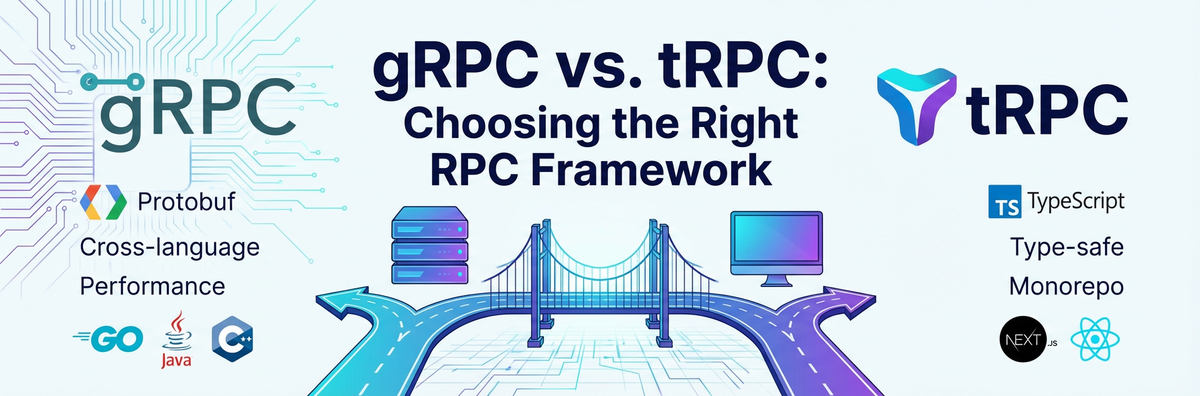


In the ever-evolving landscape of distributed systems and microservices architectures, the choice of communication protocol and framework stands as a pivotal decision for any development team. The efficiency, scalability, and maintainability of an application often hinge on how its various components interact, both internally and when exposed as external APIs. Remote Procedure Call (RPC) frameworks have emerged as powerful paradigms, offering distinct advantages over traditional RESTful approaches, particularly in scenarios demanding high performance, strict type safety, and sophisticated streaming capabilities. As systems grow in complexity and demands for real-time responsiveness intensify, understanding the nuances of different RPC implementations becomes not merely beneficial, but essential.
This comprehensive exploration delves into two prominent RPC frameworks: gRPC and tRPC. While both aim to simplify inter-service communication and enhance developer experience, they stem from different philosophies, leverage distinct underlying technologies, and cater to somewhat different use cases. gRPC, a veteran in the field backed by Google, champions performance and language agnosticism through HTTP/2 and Protocol Buffers. In contrast, tRPC, a relatively newer contender, prioritizes an unparalleled developer experience and end-to-end type safety within the TypeScript ecosystem. Navigating the strengths and weaknesses of each, understanding their architectural implications, and discerning the scenarios where one might significantly outperform the other is crucial for making an informed decision that aligns with a project's technical requirements, team expertise, and long-term strategic goals for api development and management.
Understanding RPC: The Foundation of Inter-Service Communication
At its core, Remote Procedure Call (RPC) is a protocol that allows a program to request a service from a program located on another computer on a network without having to understand the network's details. The fundamental idea is to make network communication appear as straightforward as calling a local function or method. This abstraction simplifies the development of distributed applications, enabling developers to focus on business logic rather than intricate networking specifics. When a client invokes a remote procedure, the RPC runtime takes care of locating the server, marshalling the parameters (converting them into a format suitable for transmission over the network), transmitting the request, unmarshalling the parameters on the server side, executing the procedure, marshalling the results, transmitting them back, and finally unmarshalling them on the client side.
The motivation behind RPC's widespread adoption, especially in modern microservices architectures, is multifaceted. Primarily, it addresses the challenges of building highly decoupled, scalable, and efficient systems. Unlike traditional REST APIs, which are typically stateless and rely on generic HTTP methods (GET, POST, PUT, DELETE) and human-readable JSON or XML payloads, RPC often emphasizes a more tightly coupled, procedure-oriented interface. This can lead to significant performance advantages due to more efficient data serialization formats (like binary protocols), reduced overhead from generic HTTP headers, and the potential for long-lived connections and advanced features like streaming. Furthermore, the strong contract-driven nature of many RPC frameworks, often defined via an Interface Definition Language (IDL), inherently promotes clearer API definitions, robust type checking, and simplified code generation across various programming languages. This formalized api contract minimizes integration errors between services, streamlines development workflows, and ensures greater consistency across a complex ecosystem of services, often managed and exposed through a central api gateway.
Key Components of an RPC System:
- Interface Definition Language (IDL): This is a language-agnostic way to describe the service interface, including the methods that can be called remotely, their parameters, and return types. Protobuf in gRPC is a prime example. The IDL serves as a contract between the client and the server, ensuring both sides understand the structure of the data and calls.
- Client Stub (Proxy): Generated from the IDL, the client stub provides a local interface that the client application can call. When the client invokes a method on the stub, the stub takes care of marshalling the parameters and communicating with the server.
- Server Skeleton (Dispatcher): Also generated from the IDL, the server skeleton resides on the server. It receives the incoming request from the network, unmarshals the parameters, dispatches the call to the actual implementation of the remote procedure, marshals the results, and sends them back to the client.
- Transport Layer: This is the underlying mechanism responsible for transmitting the requests and responses over the network. It handles the low-level details of connection management, data transmission, and error handling. HTTP/2 is the transport layer for gRPC, while tRPC typically leverages standard HTTP/1.1 (or HTTP/2) for its transport, but without the binary protocol aspects of gRPC.
- Serialization Format: The method by which data structures or object states are converted into a format that can be stored or transmitted and reconstructed later. Efficiency in serialization directly impacts performance.
The robustness and efficiency of an RPC system are critical for modern applications that rely heavily on inter-service communication. As such, the selection of an RPC framework goes beyond mere syntax; it implicates performance characteristics, development agility, future scalability, and the overall governance strategy for your microservices and exposed apis. The role of an api gateway in this ecosystem, especially for managing external access and cross-cutting concerns, becomes even more pronounced when dealing with the diverse characteristics of different RPC frameworks, ensuring a unified entry point and consistent policy enforcement.
Deep Dive into gRPC: Performance and Polyglot Powerhouse
gRPC, a modern open-source RPC framework developed by Google, has rapidly gained traction as a preferred choice for building high-performance, scalable microservices. Its genesis lies in Google's internal systems, where efficiency and the ability to operate across a multitude of programming languages were paramount. gRPC stands on the shoulders of two robust technologies: HTTP/2 for its transport layer and Protocol Buffers (Protobuf) for its interface definition and message serialization. This combination provides gRPC with its distinctive capabilities, making it a compelling option for complex, distributed systems that demand both speed and flexibility.
The philosophy behind gRPC is rooted in enabling seamless, efficient communication between services, regardless of the language they are written in or where they are deployed. By leveraging HTTP/2, gRPC reaps benefits such as multiplexing (sending multiple requests/responses over a single TCP connection), header compression, and bi-directional streaming. These features significantly reduce latency and increase throughput compared to traditional HTTP/1.1-based REST APIs, which typically involve opening new connections for each request or handling streaming in less optimized ways. The use of Protocol Buffers further amplifies this efficiency. Protobuf defines a language-neutral, platform-neutral, extensible mechanism for serializing structured data. It's more compact and faster than XML or JSON, making data transmission incredibly lightweight and quick.
Core Concepts of gRPC:
- Protocol Buffers (Protobuf): At the heart of gRPC’s data exchange mechanism is Protocol Buffers. Developers define service methods and message structures in
.protofiles using a simple IDL. This IDL acts as a contract, detailing the data types, names, and structure of messages exchanged between client and server, as well as the RPC service interface itself. For instance, a.protofile might define aUsermessage with fields likeid,name, andemail, and aUserServicewith a method likeGetUser(GetUserInput) returns (User). From these.protofiles, gRPC compilers generate client and server code in various programming languages (e.g., C++, Java, Python, Go, Node.js, C#, Ruby, PHP, Dart). This code includes classes for populating, serializing, and parsing messages, along with the client stub and server skeleton. This automated code generation not only ensures strict type safety across different languages but also eliminates the manual boilerplate associated withapicontract adherence. The binary serialization format of Protobuf ensures minimal payload size, significantly reducing network bandwidth consumption and improving serialization/deserialization speeds, which is crucial for high-volume microservices communication. Schema evolution is also handled gracefully, allowing for non-breaking changes to be introduced over time without requiring all clients and servers to update simultaneously. - HTTP/2 as the Transport Layer: gRPC leverages HTTP/2 as its underlying transport protocol. HTTP/2 introduces several performance enhancements over its predecessor, HTTP/1.1, which are particularly beneficial for RPC.
- Multiplexing: Unlike HTTP/1.1 where each request typically required a new TCP connection (or connection pooling with head-of-line blocking), HTTP/2 allows multiple requests and responses to be sent concurrently over a single TCP connection. This reduces connection overhead and improves resource utilization.
- Server Push: Although less commonly exploited in typical gRPC services, HTTP/2's server push capability allows a server to proactively send resources to a client that it anticipates the client will need, further reducing latency.
- Header Compression (HPACK): HTTP/2 employs HPACK compression algorithm for HTTP headers, reducing the size of headers, especially important in high-frequency request scenarios where headers might otherwise constitute a significant portion of the data payload.
- Long-Lived Connections: The nature of HTTP/2 encourages persistent connections, which is ideal for streaming and real-time communication patterns, avoiding the overhead of establishing and tearing down connections for each RPC call.
- Streaming Capabilities: One of gRPC's standout features, directly enabled by HTTP/2, is its robust support for various streaming patterns, which extend beyond the traditional request-response model:
- Unary RPC: This is the classic request-response model, where the client sends a single request, and the server sends back a single response. Most conventional
apicalls fall into this category. - Server-Side Streaming RPC: The client sends a single request to the server, and the server responds with a sequence of messages. The client reads from the stream until there are no more messages. This is ideal for scenarios like receiving real-time updates, notifications, or large data sets broken into chunks (e.g., watching a stock ticker, continuous logging).
- Client-Side Streaming RPC: The client sends a sequence of messages to the server, and after all messages are sent, the server responds with a single response. Use cases include uploading large files in chunks, sending a stream of sensor data, or performing batched writes.
- Bidirectional Streaming RPC: Both the client and the server send a sequence of messages using a read-write stream. Both streams operate independently, allowing for highly interactive, real-time communication. Examples include live chat applications, VoIP, or real-time game updates.
- Unary RPC: This is the classic request-response model, where the client sends a single request, and the server sends back a single response. Most conventional
- Language Agnostic Code Generation: As mentioned, gRPC's IDL (Protobuf) allows for the generation of client and server code in numerous programming languages. This language agnosticism is a critical advantage for polyglot microservices architectures, where different services might be written in the most suitable language for their domain (e.g., Python for machine learning, Go for high-performance network services, Java for enterprise applications). The generated code ensures interoperability and consistent
apicontracts across the entire ecosystem. - Interceptors: gRPC provides interceptors (similar to middleware) that allow developers to hook into the RPC call lifecycle on both the client and server sides. Interceptors can be used for common cross-cutting concerns such as authentication, authorization, logging, monitoring, error handling, and rate limiting. This mechanism helps keep business logic clean by centralizing infrastructural concerns, making services more modular and easier to maintain.
Advantages of gRPC:
- Exceptional Performance: By leveraging HTTP/2 and binary Protobuf serialization, gRPC achieves significantly lower latency and higher throughput compared to REST/JSON over HTTP/1.1, making it ideal for high-performance computing, IoT, and mobile backends.
- Strong Type Safety: The
.protofiles act as a strict contract, ensuring that data types and service interfaces are well-defined and consistent across all interacting services, regardless of the programming language. This drastically reduces runtime errors and simplifies integration. - Efficient Data Transfer: Protocol Buffers are much more compact than JSON or XML, leading to smaller payloads and reduced network bandwidth usage. This is particularly beneficial for bandwidth-constrained environments or applications with high data volume.
- Multi-Language Support (Polyglot): With code generation for nearly all popular programming languages, gRPC is an excellent choice for microservices architectures where different services may be developed in different languages.
- Advanced Streaming Capabilities: The ability to handle server-side, client-side, and bidirectional streaming out-of-the-box is a powerful feature for real-time applications, large data transfers, and continuous data feeds.
- Robust Tooling and Ecosystem: Backed by Google, gRPC has a mature ecosystem, extensive documentation, and a strong community. Tools for debugging, testing, and monitoring gRPC services are continually improving.
- Built-in Resilience Features: gRPC integrates well with concepts like load balancing, retries, and circuit breakers, essential for building robust and resilient distributed systems.
Disadvantages of gRPC:
- Steeper Learning Curve: For developers accustomed to REST/JSON, the concepts of Protocol Buffers,
.protofiles, code generation, and HTTP/2 semantics can present a steeper initial learning curve. - Limited Browser Support: Directly calling gRPC services from web browsers is challenging because browsers do not expose the HTTP/2 frames necessary for gRPC. This often requires an intermediary proxy (like gRPC-Web) to translate gRPC calls into a browser-compatible format.
- Less Human-Readable: The binary nature of Protobuf makes payloads less human-readable than JSON, which can complicate debugging without specialized tooling.
- Tooling Maturity Varies: While core tooling is strong, specialized tooling (e.g., specific IDE integrations, client libraries in less common languages) might not be as mature or feature-rich as for REST.
Use Cases for gRPC:
gRPC shines in environments where performance, language interoperability, and sophisticated communication patterns are critical. It is particularly well-suited for: * Microservices Architectures: Ideal for high-throughput, low-latency communication between services written in different languages. * IoT Devices: Due to its efficient binary serialization and low bandwidth usage, gRPC is excellent for communication with resource-constrained devices. * Mobile Backends: Provides fast and efficient communication between mobile clients and backend services. * Real-time Applications: Server-side and bidirectional streaming are perfect for applications requiring live updates, chat, or continuous data feeds. * High-Performance Computing (HPC): Where every millisecond and byte counts, gRPC offers a significant advantage.
Deep Dive into tRPC: The TypeScript-First Developer Experience
tRPC, which stands for "TypeScript RPC," offers a fundamentally different approach to inter-service communication compared to gRPC. Born from the desire to achieve unparalleled developer experience and end-to-end type safety, tRPC is deeply integrated with the TypeScript ecosystem. Unlike traditional RPC frameworks that rely on IDLs and code generation for multiple languages, tRPC thrives within a monorepo setup, leveraging TypeScript's powerful type inference system to provide full type safety from the backend API to the frontend client without any manual schema definition or code generation steps. This "type-driven development" philosophy drastically reduces boilerplate, minimizes api integration errors, and significantly accelerates development cycles for full-stack TypeScript applications.
The core philosophy of tRPC is to eliminate the typical api contract negotiation phase altogether. In a conventional setup, frontend and backend teams need to agree on an API schema (e.g., OpenAPI/Swagger, .proto files), which then needs to be implemented and kept in sync. This often involves manual updates, code generation, or runtime validation. tRPC sidesteps this complexity by assuming a shared TypeScript codebase, typically within a monorepo. The server defines its procedures and their input/output types directly in TypeScript, and the client, also written in TypeScript, can directly infer these types. This means changes on the server side are immediately reflected and type-checked on the client side at compile time, catching errors before they ever reach production.
Core Concepts of tRPC:
- TypeScript Monorepo as the Cornerstone: The magic of tRPC largely depends on a shared codebase containing both the client and server code, usually organized within a monorepo. This shared context is what allows TypeScript's type inference engine to seamlessly propagate types from the server's
apidefinitions directly to the client'sapicalls. Without this shared type information, tRPC's primary advantage—end-to-end type safety without manual schema declaration—would be lost. While it's technically possible to use tRPC with separate repositories by sharing only the type definitions, the monorepo setup is where its benefits are most fully realized. - No Code Generation, No IDL: One of tRPC's most distinguishing features is the complete absence of an explicit IDL (like Protocol Buffers) or separate code generation steps. Developers define their
apiprocedures directly in TypeScript on the server. For example, a server-side procedure might be defined as: ```typescript import { initTRPC } from '@trpc/server'; import { z } from 'zod'; // For input validationconst t = initTRPC.create();const appRouter = t.router({ user: t.router({ getById: t.procedure .input(z.object({ id: z.string() })) .query(({ input }) => { // Fetch user from DB return { id: input.id, name: 'John Doe' }; }), updateName: t.procedure .input(z.object({ id: z.string(), name: z.string() })) .mutation(({ input }) => { // Update user in DB return { id: input.id, name: input.name }; }), }), });export type AppRouter = typeof appRouter; // Exporting the router's type`` ThisappRoutereffectively *is* the API definition. There's no separate.proto` file or OpenAPI YAML to write. - Router and Procedure System: tRPC organizes its
apiendpoints into a router system, conceptually similar to how web frameworks define routes. Within this router, developers define "procedures." Each procedure can be either aquery(for fetching data, idempotent, comparable to GET requests) or amutation(for modifying data, comparable to POST/PUT/DELETE requests).- Procedures: These are the actual functions that perform the business logic. They can take an input, process it, and return data.
- Input Validation: tRPC heavily relies on schema validation libraries like Zod or Yup to define the expected input shape for each procedure. This ensures that incoming data conforms to the server's expectations, providing robust data integrity and contributing to type safety.
- Context: Similar to other
apiframeworks, tRPC allows for a context object to be passed to each procedure. This context typically holds request-specific information, such as authentication details, database connections, or other dependencies, making it easy to share common utilities across procedures.
- Client-Side Type Inference: This is where tRPC truly shines. On the client side, developers use a special tRPC client library (
@trpc/client). By importing theAppRoutertype (exported from the shared server code), the client library can infer the types of all available procedures, their inputs, and their outputs. ```typescript import { createTRPCReact } from '@trpc/react-query'; import type { AppRouter } from './server/src/router'; // Import server router typeexport const trpc = createTRPCReact();// On the client, you can now make type-safe calls: const userQuery = trpc.user.getById.useQuery({ id: '123' }); // userQuery.data will be automatically typed as { id: string; name: string; } // If you try userQuery.data.age (and 'age' is not defined), TypeScript will complain at compile time.const updateUserMutation = trpc.user.updateName.useMutation(); // When calling updateUserMutation.mutate(), TypeScript will enforce { id: string; name: string; } as input. ``` This eliminates the need for manual type declarations on the client, client-side data fetching libraries' query keys, or any potential mismatches between the frontend's understanding of the API and the backend's actual implementation. - Adapters/HTTP Layer: While gRPC uses HTTP/2 and a custom binary protocol, tRPC typically communicates over standard HTTP/1.1 or HTTP/2, using JSON for data serialization. It's essentially a wrapper around standard HTTP requests, but with the added layer of type inference. tRPC provides adapters for popular server frameworks (e.g., Express, Next.js API Routes, Fastify) and client-side data fetching libraries (e.g., React Query, Svelte Query), making integration straightforward. For queries, it often uses GET requests with parameters serialized in the URL, and for mutations, POST requests with JSON payloads. This standard HTTP/JSON approach means that tRPC services are generally easier to inspect with common browser developer tools and proxy utilities, making debugging a more familiar experience for web developers.
Advantages of tRPC:
- Unmatched Developer Experience (DX): This is tRPC's biggest selling point. The seamless type inference dramatically reduces boilerplate, eliminates API contract mismatches, and allows developers to build full-stack applications with an incredibly fluid workflow. It feels like calling a local function.
- End-to-End Type Safety: Errors related to API structure, input parameters, or output types are caught at compile time, not runtime. This significantly reduces bugs and improves code reliability.
- Zero Boilerplate for API Contracts: No need to write, generate, or maintain separate API schema files (like OpenAPI,
.proto). The TypeScript code itself is the source of truth. - Easy to Learn for TypeScript Developers: For teams already proficient in TypeScript, tRPC feels very natural and intuitive, requiring minimal conceptual overhead beyond standard TypeScript and server-side logic.
- Small Bundle Size: The client-side library is lightweight, contributing to faster loading times for web applications.
- Excellent Integration with React Query/TanStack Query: tRPC integrates beautifully with modern data fetching libraries, providing automatic query key management and a rich caching layer.
- Rapid Development Cycles: The efficiency gained from type safety and reduced boilerplate translates directly into faster development and iteration speeds.
Disadvantages of tRPC:
- TypeScript/JavaScript Ecosystem Locked: tRPC is inherently tied to TypeScript. It is not suitable for polyglot microservices architectures where services are written in different programming languages (e.g., Go, Python, Java).
- Strong Monorepo Preference: While not strictly mandatory, tRPC's core benefits are most fully realized within a monorepo structure where client and server types can be easily shared. Managing types across separate repositories can introduce additional complexity.
- Not a "True" RPC in the Traditional Sense: tRPC doesn't use a specialized binary protocol like gRPC's Protobuf over HTTP/2. It relies on standard HTTP/JSON, meaning it doesn't offer the same raw performance benefits in terms of serialization efficiency and transport layer optimizations.
- Limited Interoperability Outside TypeScript: Due to its tight coupling with TypeScript types, tRPC
apis are difficult to consume from non-TypeScript clients (e.g., mobile apps not using React Native/Expo, or other backend services). You'd typically need to expose a separate RESTapior convert tRPC to OpenAPI for external consumers. - Newer and Smaller Ecosystem: Compared to gRPC, tRPC is a newer framework with a smaller community and ecosystem. While growing rapidly, it might have fewer mature tools, integrations, and long-term support compared to more established RPC solutions.
- Less Suitable for Public APIs: Because of its ecosystem lock-in, tRPC is generally not recommended for public-facing
apis intended for a broad range of consumers. It excels for internal, full-stack applicationapis.
Use Cases for tRPC:
tRPC is an ideal choice for specific types of projects and teams: * Full-Stack TypeScript Applications: When both the frontend (e.g., React, Next.js, SvelteKit) and backend are written in TypeScript and ideally live within a monorepo. * Internal Services within a Monorepo: For communication between internal TypeScript services where developer experience and type safety are prioritized. * Web Applications Prioritizing DX: Teams that value speed of development, compile-time error catching, and a seamless developer workflow above all else. * Rapid Prototyping and MVPs: Its quick setup and development cycle make it excellent for getting features out quickly.
Direct Comparison: gRPC vs. tRPC
When choosing between gRPC and tRPC, it's essential to understand that they are not direct competitors in all aspects. While both facilitate inter-service communication and aim to improve upon traditional REST APIs, their architectural underpinnings, design philosophies, and target use cases diverge significantly. The decision often boils down to a fundamental trade-off between raw performance, language agnosticism, and enterprise-grade features versus unparalleled developer experience and end-to-end type safety within a specific ecosystem.
To provide a clear overview, let's delineate their key differences across several critical dimensions.
Comparative Overview Table: gRPC vs. tRPC
| Feature / Aspect | gRPC | tRPC |
|---|---|---|
| Philosophy | High-performance, language-agnostic RPC | TypeScript-first, end-to-end type safety, exceptional DX |
| IDL / Schema | Protocol Buffers (.proto files), strict contract, code generation | No explicit IDL/code generation, uses TypeScript types directly |
| Language Support | Polyglot (C++, Java, Python, Go, Node.js, C#, Ruby, Dart, etc.) | TypeScript/JavaScript ecosystem only |
| Transport Layer | HTTP/2, binary protocol | HTTP/1.1 or HTTP/2, text-based (JSON) |
| Serialization | Protocol Buffers (binary), highly efficient | JSON (text-based), standard, human-readable |
| Type Safety Approach | Static type checking via generated code from Protobuf | Compile-time inference via shared TypeScript types |
| Developer Experience | Requires understanding Protobuf, code generation steps; good tooling | Unmatched DX for TS devs, feels like local function calls |
| Performance | Excellent (HTTP/2 multiplexing, binary Protobuf) | Good (standard HTTP/JSON), but generally slower than gRPC |
| Streaming | Unary, Server-side, Client-side, Bidirectional | Limited (queries/mutations, no native bi-directional streaming) |
| Browser Compatibility | Requires gRPC-Web proxy for direct browser calls | Native browser support (standard HTTP/JSON) |
| Monorepo Preference | Not strictly required, works well with independent services | Highly preferred for seamless type inference |
| External API Exposure | Well-suited for public/cross-language APIs | Less suited for public/cross-language APIs, best for internal services |
| Learning Curve | Moderate to steep, new concepts (Protobuf, HTTP/2) | Low for TS developers, intuitive |
| Ecosystem Maturity | Mature, large community, extensive enterprise adoption | Newer, rapidly growing community, gaining traction in web dev |
Detailed Narrative Comparison:
- Type Safety and API Contracts: gRPC enforces
apicontracts through its strict Protocol Buffer definitions. The.protofiles serve as the single source of truth for message structures and service interfaces. This contract is language-agnostic, enabling static type checking across diverse programming languages once the client/server stubs are generated. Any deviation from this schema will result in compilation errors or runtime issues, ensuring high fidelity in communication. tRPC achieves type safety in a fundamentally different way: by leveraging TypeScript's type inference. Instead of a separate IDL, the TypeScript definitions of server-side procedures directly inform the client-side types. This "zero-schema" approach means that if the server's procedure changes, the client's TypeScript compiler will immediately flag any incompatible calls, providing real-time feedback during development. This is incredibly powerful for full-stack TypeScript applications but inherently ties tRPC to the TypeScript ecosystem. - Language Agnosticism vs. Ecosystem Lock-in: This is perhaps the most significant differentiator. gRPC is designed to be truly polyglot. Its
.protofiles can generate code for over a dozen languages, making it an excellent choice for microservices architectures where different services are built with the most appropriate language for their task. This fosters heterogeneity and allows teams to pick best-of-breed technologies. tRPC, conversely, is deeply embedded in the TypeScript/JavaScript ecosystem. Its entire premise relies on the shared type system of TypeScript. While this offers an unparalleled developer experience within that ecosystem, it effectively locks you into it. If your architecture involves services written in Go, Python, or Java, tRPC is not a viable option for inter-service communication with those components. - Performance Characteristics and Protocol: gRPC's performance advantages are inherent to its choice of transport and serialization. By utilizing HTTP/2, it benefits from features like multiplexing, which reduces the overhead of establishing multiple connections. Its binary serialization format (Protocol Buffers) is extremely efficient, leading to smaller payloads and faster serialization/deserialization times compared to text-based formats. This combination makes gRPC exceptionally fast and resource-efficient. tRPC, by default, communicates over standard HTTP/1.1 or HTTP/2 but uses JSON for serialization. While JSON is ubiquitous and human-readable, it is generally larger and slower to parse than binary Protobuf. Thus, while tRPC offers good performance for typical web applications, it won't match gRPC's raw speed and efficiency for high-throughput, low-latency scenarios or bandwidth-constrained environments.
- Developer Experience (DX): For a team working exclusively in TypeScript and ideally within a monorepo, tRPC offers an arguably superior developer experience. The feeling of directly calling a server-side function from the client with full type safety, without any manual
apidocumentation or code generation, is highly productive. It eliminates an entire class of integration bugs and significantly reduces boilerplate. gRPC's DX, while excellent for many, involves a slightly more ceremonious workflow. Developers must define.protofiles, generate code, and then use the generated stubs. While IDE support and tooling are robust, it's an extra step compared to tRPC's direct inference. Debugging binary gRPC payloads can also be more challenging without specialized tools compared to inspecting human-readable JSON. - Streaming Capabilities: gRPC's support for various streaming patterns—server-side, client-side, and bidirectional—is a significant strength. This enables real-time communication, efficient large data transfers, and continuous data feeds, which are critical for applications like IoT, live chat, or real-time analytics. tRPC, being built on standard HTTP requests (queries and mutations), doesn't inherently support advanced streaming patterns like bidirectional streaming out of the box. While you could combine tRPC with WebSockets or Server-Sent Events (SSE) for streaming needs, it's not a native part of the tRPC
apiitself. Its primary focus is on efficient, type-safe request-response interactions. - Browser Compatibility: Directly consuming gRPC services from web browsers can be problematic. Browsers typically do not expose the low-level HTTP/2 framing required by gRPC. To overcome this, an intermediary proxy like gRPC-Web is often used, which translates browser-compatible HTTP/1.1 requests into gRPC calls and vice-versa. This adds a layer of complexity. tRPC, using standard HTTP/JSON, is inherently browser-friendly. Its client library works seamlessly within web applications, making it straightforward to build full-stack web experiences.
- Integration with
API Gateways: Both frameworks can be integrated withapi gateways, but the implementation details differ. A robustapi gatewayis crucial for managing external access to microservices, providing features like authentication, rate limiting, logging, and routing, regardless of the underlying communication protocol. For gRPC, anapi gatewayneeds to be capable of proxying HTTP/2 traffic and potentially handling gRPC-Web translation for browser clients. Many moderngateways (like Envoy, Apache APISIX, or commercial solutions) offer first-class gRPC support, allowing them to act as a unified entry point for both gRPC and traditional REST services. They can apply policies and transformations at thegatewaylevel. tRPC, using standard HTTP/JSON, is generally easier to integrate with anyapi gatewaythat handles typical HTTP requests. Thegatewaywould see it as a regular HTTPapi, allowing for straightforward application of policies. However, the type-safety benefits of tRPC are usually confined to the direct client-server interaction within the TypeScript ecosystem, and wouldn't be directly leveraged by thegatewayitself (which typically operates at a protocol level). Regardless of the chosen RPC framework, anapi gatewayplays a critical role inapimanagement, security, and visibility.
APIPark is a high-performance AI gateway that allows you to securely access the most comprehensive LLM APIs globally on the APIPark platform, including OpenAI, Anthropic, Mistral, Llama2, Google Gemini, and more.Try APIPark now! 👇👇👇
When to Choose gRPC
The decision to opt for gRPC is usually driven by specific technical requirements that prioritize performance, language flexibility, and complex communication patterns. It's a powerful framework that excels in certain demanding environments, particularly within large-scale distributed systems.
You should consider choosing gRPC if your project exhibits one or more of the following characteristics:
- Polyglot Microservices Architectures: Your system comprises multiple services written in different programming languages (e.g., Go, Java, Python, Node.js, C++). gRPC's language-agnostic nature, achieved through Protocol Buffers and generated code, ensures seamless and type-safe communication between these disparate services. This is a primary strength for heterogenous environments.
- High-Performance, Low-Latency Requirements: When your application demands minimal latency and maximum throughput, such as in financial trading platforms, real-time analytics, gaming backends, or high-volume data processing systems. gRPC's use of HTTP/2 and binary Protobuf serialization provides significant performance advantages over traditional HTTP/1.1 with JSON payloads.
- Extensive Streaming Use Cases: If your application heavily relies on real-time data flows, continuous updates, or large data transfers, gRPC's native support for server-side, client-side, and bidirectional streaming is invaluable. This is crucial for applications like IoT sensor data ingestion, live dashboards, real-time chat, or video conferencing services.
- Cross-Platform Communication (Mobile/Backend/IoT): For efficient communication between mobile applications, web frontends (via gRPC-Web), backend services, and IoT devices. The compact nature of Protobuf and the efficiency of HTTP/2 make it ideal for bandwidth-constrained devices and mobile networks.
- Large-Scale Enterprise Systems: In complex enterprise environments with numerous interconnected services, gRPC provides a robust and scalable foundation for inter-service communication. Its strong type contracts and tooling aid in managing the complexity of such systems.
- Need for Strict Schema Enforcement: When you require a formalized, machine-readable
apicontract (via.protofiles) that can be versioned, validated, and used to generate documentation and code consistently across your entire ecosystem. This ensures strictapiadherence and reduces integration issues over time. - Existing Google Cloud Ecosystem Usage: If your infrastructure heavily utilizes Google Cloud Platform, gRPC is a natural fit as many Google Cloud services expose gRPC APIs.
When to Choose tRPC
Conversely, tRPC targets a different set of priorities, primarily focusing on developer productivity, type safety, and ease of development within the TypeScript ecosystem. It's an excellent choice for teams that prioritize a streamlined, highly efficient development workflow for full-stack web applications.
You should consider choosing tRPC if your project aligns with these criteria:
- Full-Stack TypeScript Applications: Your entire application stack, including both frontend (e.g., React, Next.js, SvelteKit) and backend (e.g., Node.js with Express/Next.js API Routes), is developed using TypeScript. This is the sweet spot where tRPC's end-to-end type safety truly shines.
- Prioritizing Developer Experience (DX) and Speed of Development: If your team values a frictionless development workflow, minimal boilerplate, and immediate feedback on API contract changes. tRPC drastically reduces the cognitive load associated with API development and integration.
- Monorepo Setup: While not strictly mandatory, tRPC's benefits are maximized within a monorepo where client and server code, along with shared types, reside in a single repository. This setup facilitates the seamless type inference that is core to tRPC's value proposition.
- Internal Services within a TypeScript Ecosystem: For internal communication between services that are all written in TypeScript. It's an excellent choice for tightly coupled services within a coherent TypeScript stack where interoperability with other languages is not a concern.
- Web Applications Where End-to-End Type Safety is Paramount: For applications where eliminating runtime
apiintegration errors and ensuring data consistency from the database to the UI is a top priority, without the overhead of maintaining separate schema files. - Teams Already Proficient in TypeScript: For development teams deeply familiar and comfortable with TypeScript, tRPC's intuitive nature and direct use of TypeScript types will feel like a natural extension of their existing workflow.
- Building Public APIs is Not a Primary Concern: If the
apis are primarily for internal consumption by your own frontend applications and not intended to be consumed by arbitrary third-party clients across different programming languages. For external-facing public APIs, a more universally accessible format like REST or gRPC with proper OpenAPI/Protobuf documentation might be preferred.
Hybrid Approaches and Interoperability
While gRPC and tRPC often cater to distinct use cases, it's not uncommon for complex systems to adopt hybrid architectures that leverage the strengths of multiple communication paradigms. The choice between them isn't always an "either/or" scenario; sometimes, a combination or a strategic bridge can provide the best of both worlds.
For instance, a common pattern involves using gRPC for high-performance, polyglot microservice-to-microservice communication within the backend, where efficiency and language interoperability are paramount. For the frontend (especially web applications), if an unparalleled developer experience and end-to-end type safety are desired, a tRPC layer could be built on top of a Node.js microservice. This Node.js service would then act as a facade, consuming gRPC services from other backend components and exposing a tRPC api to the web client. This allows the backend to benefit from gRPC's performance and language agnosticism, while the frontend developers enjoy tRPC's ergonomic advantages. Alternatively, if gRPC communication is desired directly from the browser, gRPC-Web can be employed. This solution compiles gRPC calls to a format compatible with browsers (using HTTP/1.1 and XHR/Fetch) and requires a proxy (e.g., Envoy) to translate these back to native gRPC for the backend services.
The role of an api gateway becomes even more critical in such hybrid environments. An api gateway can serve as a unified entry point, mediating between different protocol types and providing a consistent interface for consumers. It can abstract away the underlying complexities of gRPC, tRPC, REST, or other protocols, presenting a simplified facade to external clients. This allows the internal architecture to be optimized for specific needs (e.g., gRPC for high-speed internal calls, tRPC for full-stack DX), while the gateway handles the translation, security, and management for a coherent api strategy.
The Role of API Management and Gateways with APIPark
Regardless of whether you choose the high-performance, polyglot capabilities of gRPC or the developer-centric, type-safe approach of tRPC, the challenge of managing your APIs at scale remains a constant and critical concern. As distributed systems grow, and the number of services and their consumers proliferate, robust API management becomes indispensable. This is where an advanced API Gateway and management platform steps in, providing a centralized control point for handling the lifecycle, security, and performance of all your apis.
An API Gateway acts as the single entry point for all client requests, routing them to the appropriate backend services. This architecture offers numerous benefits: it decouples clients from backend service implementation details, facilitates api versioning, and allows for the centralized application of cross-cutting concerns such as authentication, authorization, rate limiting, caching, logging, and monitoring. For diverse RPC frameworks like gRPC and tRPC, an api gateway can bridge the protocol differences, making your services consumable by a wider range of clients and ensuring consistent governance across your entire api landscape. For instance, a sophisticated gateway can intelligently route gRPC traffic, handle gRPC-Web translations, and manage standard HTTP/JSON requests from tRPC, all while enforcing a unified security policy.
This comprehensive approach to API management is precisely what platforms like ApiPark are designed to deliver. APIPark is an all-in-one AI gateway and API developer portal, open-sourced under the Apache 2.0 license, crafted to help developers and enterprises manage, integrate, and deploy AI and REST services with unparalleled ease and efficiency. Whether you're building high-performance microservices with gRPC or streamlined full-stack applications with tRPC, APIPark can significantly enhance manageability, security, and observability across your entire API ecosystem.
Imagine a scenario where your backend microservices leverage gRPC for internal, high-speed communication, while your internal dashboards or developer tools, built with TypeScript, consume services via tRPC. Simultaneously, you might have legacy REST APIs, or new AI models that need to be integrated and exposed securely. APIPark provides the centralized intelligence to orchestrate all these, acting as a robust gateway that unifies access and management.
Let's delve into how APIPark’s key features make it an invaluable asset for modern api governance, regardless of your chosen RPC framework:
- Quick Integration of 100+ AI Models: In an era increasingly driven by Artificial Intelligence, the ability to seamlessly integrate and manage a diverse array of AI models is a game-changer. APIPark offers the capability to integrate over a hundred different AI models, providing a unified management system for authentication and cost tracking. This means that whether your AI service is exposed via gRPC, tRPC, or a simple REST endpoint, APIPark ensures a consistent approach to its governance, allowing for rapid adoption and deployment of AI capabilities within your applications.
- Unified API Format for AI Invocation: A significant challenge with integrating multiple AI models is their often-disparate invocation methods and data formats. APIPark addresses this by standardizing the request data format across all integrated AI models. This crucial feature ensures that any changes in underlying AI models or specific prompts do not necessitate modifications in your application or microservices. The benefits are profound: simplified AI usage, reduced maintenance costs, and a more resilient architecture capable of easily swapping out or upgrading AI backends without impacting consuming services.
- Prompt Encapsulation into REST API: Beyond just integrating raw AI models, APIPark empowers users to quickly combine specific AI models with custom prompts to create new, specialized APIs. This could involve encapsulating a sentiment analysis model with a predefined prompt to create a "Sentiment Analyzer API," or a translation model into a "Multi-Language Translator API." These newly crafted APIs are then exposed as standard REST APIs, making them incredibly easy to consume by any application, regardless of its RPC framework, while abstracting the complexity of AI invocation behind a simple, well-defined interface.
- End-to-End API Lifecycle Management: APIPark provides comprehensive support for the entire lifecycle of your APIs, from their initial design and publication to invocation and eventual decommissioning. It assists in regulating API management processes, handling traffic forwarding, implementing load balancing strategies, and managing versioning for published APIs. This ensures that your
apis, whether they originate from gRPC, tRPC, or other services, are consistently managed, highly available, and evolve gracefully over time, adhering to best practices forapigovernance. - API Service Sharing within Teams: In large organizations, fostering collaboration and preventing duplication of effort is vital. APIPark facilitates this by offering a centralized display of all API services. This makes it incredibly easy for different departments and teams to discover, understand, and reuse required API services. A developer needing to consume a specific gRPC-based microservice or a tRPC-powered internal tool can quickly find its documentation and access details through the portal, significantly improving team efficiency and consistency.
- Independent API and Access Permissions for Each Tenant: For enterprises managing multiple projects, departments, or even external partners, multi-tenancy is a key requirement. APIPark supports the creation of multiple teams (tenants), each with independent applications, data, user configurations, and security policies. Critically, these tenants can share underlying applications and infrastructure, which improves resource utilization and dramatically reduces operational costs. This allows for fine-grained control over which teams can access specific APIs, adding a layer of organizational security and segregation.
- API Resource Access Requires Approval: Security and controlled access are paramount for any
apiecosystem. APIPark includes robust subscription approval features, ensuring that callers must subscribe to an API and await administrator approval before they can invoke it. This preemptive control prevents unauthorized API calls, mitigates potential data breaches, and enforces a necessary layer of governance, especially crucial for sensitiveapis, irrespective of their underlying RPC framework. - Performance Rivaling Nginx: An
API Gatewaymust not become a bottleneck. APIPark is engineered for high performance, capable of achieving over 20,000 Transactions Per Second (TPS) with just an 8-core CPU and 8GB of memory. It also supports cluster deployment, enabling it to handle massive-scale traffic loads. This performance ensures that yourapis, whether optimized with gRPC or designed for tRPC's DX, are delivered with minimal latency and maximum reliability to your consumers. - Detailed API Call Logging: Comprehensive logging is non-negotiable for debugging, security auditing, and operational insights. APIPark provides extensive logging capabilities, meticulously recording every detail of each API call that passes through the
gateway. This feature allows businesses to quickly trace and troubleshoot issues in API calls, ensure system stability, enhance data security posture, and meet compliance requirements. - Powerful Data Analysis: Beyond raw logs, understanding long-term trends and performance changes is critical for proactive maintenance and strategic planning. APIPark analyzes historical call data to display key metrics, performance trends, and usage patterns. This powerful data analysis helps businesses identify potential issues before they escalate, optimize resource allocation, and make data-driven decisions regarding their
apistrategy and infrastructure.
In conclusion, while gRPC and tRPC offer distinct advantages for building the communication layer of your services, the overarching need for effective api management, security, and operational excellence remains constant. An API Gateway and management platform like APIPark becomes the strategic linchpin, unifying your diverse api landscape, enhancing security, and providing the robust infrastructure necessary for scaling modern distributed applications efficiently. Its ability to manage various api types, including AI-driven services, with a focus on lifecycle management, security, and performance, makes it an invaluable asset for any enterprise building complex, high-performing systems.
Conclusion
The choice between gRPC and tRPC, like many architectural decisions in software engineering, is rarely about identifying an objectively "better" framework. Instead, it revolves around aligning the framework's inherent strengths and philosophies with the specific context, requirements, and constraints of a given project. Both gRPC and tRPC represent significant advancements in remote procedure communication, each offering compelling advantages over traditional RESTful APIs in their respective domains.
gRPC emerges as the powerhouse for environments demanding extreme performance, low latency, and broad language interoperability. Its foundation on HTTP/2 and Protocol Buffers makes it an ideal candidate for polyglot microservices architectures, IoT devices, mobile backends, and any scenario where efficient binary communication and advanced streaming capabilities are paramount. The strict schema enforcement through IDLs ensures strong contracts across heterogeneous systems, fostering consistency and reducing integration complexity in large, distributed setups.
Conversely, tRPC carves out its niche by offering an unparalleled developer experience and end-to-end type safety within the TypeScript ecosystem. For full-stack TypeScript applications, especially within a monorepo, tRPC's ability to infer API types directly from server-side code eliminates boilerplate, minimizes API contract mismatches, and dramatically accelerates development cycles. It shines where developer productivity and compile-time error catching are prioritized over raw performance benchmarks or broad language support.
Ultimately, the "right" RPC framework depends on a nuanced evaluation of several factors: * Team Expertise: Is your team primarily TypeScript-focused, or do you have expertise across multiple languages? * Architecture Type: Are you building a polyglot microservices system or a tightly integrated full-stack web application? * Performance Needs: Do you require the absolute maximum performance and efficiency for high-throughput or real-time scenarios? * Language Interoperability: Is it critical for your services to communicate seamlessly across different programming languages? * Streaming Requirements: Do you need sophisticated streaming patterns (bidirectional, server-side, client-side)? * API Exposure: Will your APIs be internal-only, or will they be exposed to a broad range of external clients with diverse technology stacks?
In many modern enterprises, a hybrid approach might even be the most pragmatic. Leveraging gRPC for mission-critical, high-performance internal service communication, while employing tRPC for highly productive full-stack TypeScript frontends, allows for optimized performance and developer experience where each is most needed. Crucially, irrespective of the RPC frameworks chosen, a robust API Gateway and management platform, such as ApiPark, plays an indispensable role. These platforms unify the management, security, and observability of all your apis, bridging disparate protocols and ensuring a cohesive, scalable, and secure api ecosystem. By centralizing api governance, such platforms allow development teams to focus on building innovative services, confident that the foundational api infrastructure is well-managed and protected. The future of api development is not about a single solution but about intelligently combining powerful tools to meet the multifaceted demands of increasingly complex and distributed applications.
Frequently Asked Questions (FAQs)
1. What is the fundamental difference in how gRPC and tRPC achieve type safety?
Answer: The fundamental difference lies in their approach to defining and enforcing the API contract. gRPC achieves strong, static type safety through Protocol Buffers (Protobuf), an Interface Definition Language (IDL). Developers write .proto files to define messages and service methods, and then code generators use these definitions to create client and server stubs in various programming languages. This generated code includes type definitions, ensuring consistency and type checking across different languages at compile time. In contrast, tRPC achieves end-to-end type safety through TypeScript's native type inference. It doesn't use a separate IDL or code generation steps. Instead, the server-side api procedures are defined directly in TypeScript, and by sharing these TypeScript types (typically within a monorepo), the client-side library can infer the exact types of inputs and outputs. This allows for compile-time type checking directly within the TypeScript ecosystem without any intermediate schema or generation, providing an extremely fluid developer experience for full-stack TypeScript applications.
2. Which framework offers better performance, and why?
Answer: gRPC generally offers superior raw performance compared to tRPC. This is primarily due to its underlying technologies: 1. HTTP/2: gRPC leverages HTTP/2 as its transport layer, which includes features like multiplexing (multiple requests/responses over a single connection), header compression, and persistent connections, significantly reducing network overhead. 2. Protocol Buffers (Protobuf): gRPC uses Protobuf for message serialization. Protobuf is a binary serialization format that is much more compact and faster to serialize/deserialize than JSON (which tRPC typically uses). These factors combined result in lower latency, higher throughput, and reduced bandwidth consumption for gRPC. tRPC, while performant for typical web applications, relies on standard HTTP/1.1 or HTTP/2 with JSON payloads, which, while universally compatible, are inherently less efficient than gRPC's binary protocol.
3. Can I use gRPC and tRPC together in the same project?
Answer: Yes, it is absolutely possible and sometimes beneficial to use both gRPC and tRPC within the same project, typically in a hybrid architecture. For instance, you might use gRPC for high-performance, polyglot microservice-to-microservice communication within your backend, where language agnosticism and efficiency are crucial. Then, for a specific full-stack web application (e.g., a dashboard or admin panel) built with TypeScript, you could use tRPC to provide a highly ergonomic and type-safe api layer from a Node.js backend service to your TypeScript frontend. This Node.js service would then act as a facade, consuming the gRPC services internally and exposing a tRPC api. In such scenarios, an API Gateway becomes even more critical for managing and routing traffic between these different protocols and providing a unified entry point for all your services.
4. What are the main challenges when adopting gRPC for a new project?
Answer: While powerful, gRPC comes with certain adoption challenges: 1. Steeper Learning Curve: Developers new to gRPC need to understand concepts like Protocol Buffers, .proto file definitions, code generation, and HTTP/2 semantics, which can be a significant shift from traditional REST/JSON. 2. Browser Compatibility: Directly calling gRPC services from web browsers is not straightforward due to browser limitations with HTTP/2 framing. This typically requires using an intermediary proxy like gRPC-Web, which adds complexity to the deployment and configuration. 3. Debugging Complexity: The binary nature of Protobuf makes gRPC payloads less human-readable than JSON. Debugging and inspecting traffic often requires specialized tools (e.g., grpcurl, Wireshark with gRPC plugins) rather than standard browser developer tools. 4. Ecosystem Maturity Varies: While core gRPC support is strong across many languages, the maturity of client libraries, specialized tooling, and community resources can vary depending on the specific language or platform you're targeting.
5. Why is an API Gateway like APIPark important even when using an RPC framework?
Answer: An API Gateway like APIPark is crucial for several reasons, even when utilizing efficient RPC frameworks like gRPC or tRPC: 1. Centralized API Management: It provides a single point of control for managing the entire lifecycle of all your APIs, regardless of their underlying protocol (gRPC, tRPC, REST, AI services). This includes design, publication, versioning, and decommissioning. 2. Enhanced Security: Gateways enforce security policies uniformly, such as authentication, authorization, rate limiting, and access approval. This ensures consistent protection for all services and prevents unauthorized access, regardless of how they are implemented internally. 3. Traffic Management and Performance: Gateways handle traffic routing, load balancing, caching, and circuit breaking, improving the resilience, scalability, and performance of your api infrastructure. APIPark, for instance, offers performance rivaling Nginx and supports cluster deployment. 4. Protocol Translation and Interoperability: An API Gateway can bridge different communication protocols. For example, it can expose internal gRPC services as REST or gRPC-Web APIs to external consumers, or unify tRPC and REST services under a common api facade. 5. Observability and Analytics: Gateways provide centralized logging, monitoring, and powerful data analysis capabilities, offering deep insights into API usage, performance trends, and error rates, which are essential for troubleshooting and proactive maintenance. APIPark offers detailed API call logging and powerful data analysis features to this end. 6. Developer Portal: Platforms like APIPark often include a developer portal, simplifying api discovery, documentation, and consumption for internal and external developers, fostering collaboration and efficient service reuse.
🚀You can securely and efficiently call the OpenAI API on APIPark in just two steps:
Step 1: Deploy the APIPark AI gateway in 5 minutes.
APIPark is developed based on Golang, offering strong product performance and low development and maintenance costs. You can deploy APIPark with a single command line.
curl -sSO https://download.apipark.com/install/quick-start.sh; bash quick-start.sh

In my experience, you can see the successful deployment interface within 5 to 10 minutes. Then, you can log in to APIPark using your account.

Step 2: Call the OpenAI API.