gRPC vs tRPC: Choosing Your API Development Stack
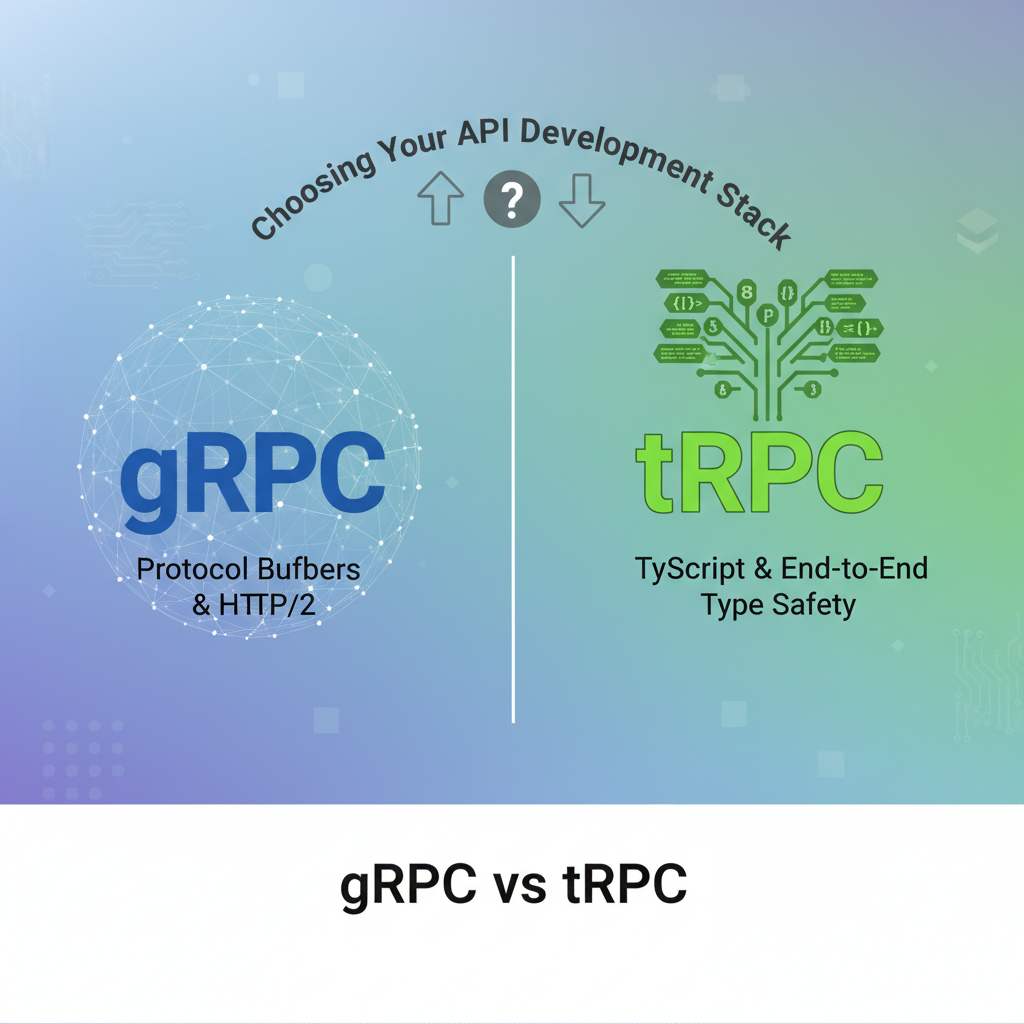


In the rapidly evolving landscape of software development, Application Programming Interfaces (APIs) serve as the bedrock for modern applications, facilitating communication between disparate services, microservices, and client applications. As architectures grow more complex, particularly with the proliferation of microservices and full-stack development patterns, the choice of API technology becomes a critical decision impacting performance, scalability, developer experience, and long-term maintainability. Traditional RESTful APIs, while ubiquitous and highly flexible, often face challenges related to over-fetching, under-fetching, and the inherent inefficiencies of text-based data transfer over HTTP/1.1 for high-performance scenarios. This has paved the way for newer, more specialized API paradigms, with gRPC and tRPC emerging as two distinct yet powerful contenders, each offering unique advantages tailored to specific development needs.
This comprehensive exploration will dive deep into gRPC and tRPC, dissecting their core philosophies, architectural underpinnings, key features, performance characteristics, and the developer experience they offer. We will scrutinize their respective strengths and weaknesses, evaluate their ideal use cases, and provide a detailed side-by-side comparison to illuminate the scenarios where each technology truly shines. Furthermore, we will contextualize these choices within the broader api ecosystem, emphasizing the indispensable role of an api gateway in harmonizing diverse api stacks, ensuring security, and optimizing traffic management in complex distributed systems. By the end of this journey, developers and architects will possess the insights necessary to make an informed decision, selecting the most appropriate API development stack that aligns with their project’s technical requirements, team expertise, and strategic objectives.
The Evolving Landscape of API Development: Beyond Traditional REST
The journey of API development has been marked by continuous innovation, driven by the ever-increasing demands for speed, efficiency, and flexibility in software systems. For decades, SOAP (Simple Object Access Protocol) reigned supreme in enterprise environments, offering strict contracts and robust tooling, albeit at the cost of significant complexity and verbosity. Its XML-based messaging and reliance on intricate WSDL files made it less agile for the burgeoning web.
The early 2000s saw the rise of REST (Representational State Transfer) as a lightweight, flexible alternative. Built upon standard HTTP methods and URL-based resource identification, RESTful APIs quickly became the de facto standard for web services. Their human-readable JSON or XML payloads, statelessness, and cacheability offered a simplicity that propelled the development of countless web and mobile applications. REST’s stateless nature and uniform interface enabled independent evolution of client and server, fostering a loosely coupled architecture that was instrumental in scaling early internet services. However, as the microservices paradigm gained traction, and applications began demanding real-time updates, bi-directional communication, and highly efficient inter-service communication, REST began to show its limitations. Issues like over-fetching (retrieving more data than needed) and under-fetching (requiring multiple round trips to get all necessary data) became performance bottlenecks. The inherent overhead of text-based JSON over HTTP/1.1, coupled with the lack of built-in streaming capabilities, prompted the search for more optimized solutions for specific scenarios.
The shift towards microservices architectures further amplified these challenges. In a system composed of dozens or hundreds of small, independent services communicating with each other, even minor inefficiencies in api calls can compound into significant system-wide latency. Furthermore, the need for robust type safety and contract enforcement across a polyglot service landscape became paramount to prevent integration errors and maintain system integrity. This necessity spurred the development of new RPC (Remote Procedure Call) frameworks and query languages, each aiming to address the specific pain points of modern distributed systems. GraphQL, for instance, offered clients the power to request precisely the data they needed, mitigating over- and under-fetching. Meanwhile, technologies like gRPC and tRPC emerged to tackle the performance and developer experience aspects, respectively, reshaping how developers think about api design and implementation. This continuous evolution underscores a fundamental truth: there is no one-size-fits-all solution for API development, and understanding the nuances of each option is crucial for building resilient, high-performing applications. The role of an api gateway also became more pronounced during this period, acting as a traffic cop and a security layer, centralizing concerns that otherwise would need to be replicated across numerous individual services. This gateway layer became essential for managing the sheer volume and complexity of api calls in these distributed environments.
Deep Dive into gRPC
gRPC, an open-source high-performance RPC framework developed by Google, represents a significant departure from traditional RESTful APIs, offering a robust solution tailored for modern distributed systems. At its core, gRPC enables clients and servers to communicate transparently, allowing you to easily build connected systems and services across a variety of environments and programming languages. It essentially treats remote methods as local ones, abstracting the network communication details away from the developer.
What is gRPC?
gRPC stands for "gRPC Remote Procedure Call." It’s an RPC framework that relies on Protocol Buffers (Protobuf) as its Interface Definition Language (IDL) and message serialization format, and HTTP/2 for its transport protocol. This combination is central to gRPC's promise of high performance and efficiency. Unlike REST, which is data-centric (focused on resources and their representation), gRPC is operation-centric, allowing you to define specific functions or methods that a service can execute, along with their input and output types.
The journey of gRPC began within Google, where it evolved from a proprietary internal RPC system used for connecting a vast array of services. Recognizing the need for a modern, efficient, and language-agnostic RPC framework beyond its walls, Google open-sourced gRPC in 2015. Since then, it has gained substantial traction, becoming a cornerstone for inter-service communication in many microservices architectures and real-time apis.
Key Features of gRPC
gRPC’s design principles and underlying technologies endow it with several compelling features:
- Language Agnostic with Code Generation: One of gRPC's most powerful attributes is its language agnosticism. Developers define their
apis using Protocol Buffers, a language-neutral, platform-neutral, extensible mechanism for serializing structured data. From these.protofiles, gRPC tools automatically generate client and server code (stubs) in various supported languages, including C++, Java, Python, Go, Node.js, Ruby, C#, PHP, and Dart. This code generation dramatically reduces boilerplate and ensures that client and server adhere to the same contract, minimizing integration errors in polyglot environments. - Performance and Efficiency (HTTP/2 and Protobuf):
- HTTP/2: gRPC leverages HTTP/2 as its transport protocol, which offers significant performance advantages over HTTP/1.1. Key features of HTTP/2 include:
- Multiplexing: Allows multiple requests and responses to be sent over a single TCP connection concurrently, eliminating head-of-line blocking and reducing latency.
- Header Compression (HPACK): Reduces overhead by compressing HTTP headers, which can be substantial for numerous small requests.
- Server Push: Although less commonly used directly by gRPC, HTTP/2's server push capability allows servers to send resources to clients before they are explicitly requested, anticipating future needs.
- Binary Framing: HTTP/2 messages are framed in binary, which is more efficient for parsing and transmission than HTTP/1.1's text-based format.
- Protocol Buffers: Protobuf is a highly efficient binary serialization format. Compared to text-based formats like JSON or XML, Protobuf messages are smaller, faster to serialize/deserialize, and strictly typed. This binary nature contributes significantly to gRPC's low latency and reduced bandwidth consumption, making it ideal for high-throughput, low-latency communication.
- HTTP/2: gRPC leverages HTTP/2 as its transport protocol, which offers significant performance advantages over HTTP/1.1. Key features of HTTP/2 include:
- Streaming Capabilities: gRPC inherently supports four types of service methods, offering flexible communication patterns beyond the traditional request-response model:
- Unary RPC: The traditional request-response model, where the client sends a single request and gets a single response.
- Server Streaming RPC: The client sends a single request and receives a stream of messages from the server in response. Useful for subscribing to events or receiving large datasets incrementally.
- Client Streaming RPC: The client sends a stream of messages to the server, and after all messages are sent, the server sends a single response. Useful for uploading large files or sending a sequence of data points.
- Bidirectional Streaming RPC: Both the client and server send a stream of messages to each other independently. This is powerful for real-time interactive applications like chat, online gaming, or real-time data synchronization.
- Strongly Typed Contracts: The use of Protocol Buffers ensures strongly typed contracts between services. The
.protofiles act as a single source of truth for the API interface, defining method signatures, request parameters, and response structures with precise data types. This compile-time contract enforcement catches errors early in the development cycle, preventing mismatches between client and server expectations. - Interceptors: gRPC provides a mechanism called interceptors, which are functions that can intercept RPC calls on both the client and server sides. They are analogous to middleware in web frameworks and are highly useful for cross-cutting concerns such as authentication, authorization, logging, tracing, metrics collection, and error handling, without cluttering the core service logic.
Architecture of a gRPC System
A typical gRPC system involves a client and a server, both defined by a common Protobuf service definition:
- Service Definition (
.protofile): Developers first define the service interface and message structures in a.protofile. This file specifies the RPC methods, their input parameters, and their return types. ```protobuf syntax = "proto3";package greeter;service Greeter { rpc SayHello (HelloRequest) returns (HelloReply) {} rpc SayHelloStream (stream HelloRequest) returns (stream HelloReply) {} }message HelloRequest { string name = 1; }message HelloReply { string message = 1; }`` 2. **Code Generation:** Using theprotoccompiler (with gRPC plugins), this.protofile is compiled into client and server stub code in the chosen programming languages. 3. **Server Implementation:** The server-side code implements the service interface defined in the.proto` file. It contains the actual business logic for each RPC method. The gRPC runtime handles the network communication, message serialization/deserialization, and dispatching requests to the appropriate handler. 4. Client Application: The client application uses the generated client stub to invoke the remote methods on the server. The client stub abstracts away the network communication details, making the remote call appear as a local function call.
When a client makes an RPC call, the client stub serializes the request using Protobuf, sends it over an HTTP/2 connection to the server. The api gateway, if present, can intercept and route this request. The server's gRPC runtime deserializes the request, invokes the appropriate service method, serializes the response, and sends it back to the client.
Use Cases for gRPC
gRPC is particularly well-suited for scenarios demanding high performance, robust contracts, and efficient inter-service communication:
- Microservices Communication (Internal): This is perhaps gRPC’s most prominent use case. In an architecture where numerous microservices need to communicate rapidly and efficiently, gRPC provides a powerful mechanism for internal
apis. Its binary payload, HTTP/2 multiplexing, and strong typing reduce latency and enhance reliability, making it an excellent choice for services within the same data center or cloud region. - High-Performance Inter-service Communication: For applications that require minimal latency and maximum throughput between backend services, such as real-time analytics pipelines, distributed databases, or gaming backend services, gRPC's performance characteristics are highly advantageous.
- Real-time Applications: The built-in support for various streaming paradigms makes gRPC ideal for real-time
apis. Examples include live chat applications, IoT device communication (where devices stream data to a central service), financial trading platforms, or real-time dashboards that push updates to clients. - Polyglot Environments: Given its language-agnostic code generation, gRPC is a perfect fit for organizations with diverse technology stacks. Teams can build services in their preferred languages, yet ensure seamless and type-safe communication across the entire system.
- Mobile and Resource-Constrained Devices: The efficiency of Protobuf and HTTP/2 means smaller payloads and faster transfer times, which can be critical for mobile applications operating on limited bandwidth or battery power.
Advantages of gRPC
- Superior Performance and Efficiency: Due to HTTP/2 and Protobuf, gRPC significantly outperforms REST+JSON in terms of speed, latency, and bandwidth usage, especially for high-volume data transfers.
- Strong Type Safety and Contracts: Protocol Buffers enforce strict
apicontracts at compile-time, drastically reducing runtime errors and improving system reliability, particularly in large, complex systems. - Reduced Boilerplate with Code Generation: Automatic code generation for client and server stubs accelerates development and ensures consistency across different language implementations.
- Native Support for Streaming: The four types of streaming unlock complex real-time communication patterns that are difficult or impossible to achieve efficiently with traditional REST.
- Language Agnostic: Facilitates interoperability across services written in different programming languages, promoting flexibility and choice in development.
Disadvantages of gRPC
- Steeper Learning Curve: Developers new to gRPC must familiarize themselves with Protocol Buffers, the concepts of HTTP/2, and the RPC paradigm, which can be a hurdle compared to the familiarity of REST.
- Limited Browser Support: gRPC does not natively run in web browsers due to HTTP/2's limitations and browser
apis. It typically requires a proxy layer like gRPC-Web (which translates gRPC calls to HTTP/1.1 or browser-friendly HTTP/2 subsets) or anapi gatewayto expose gRPC services to web clients. This adds complexity to full-stack web development. - Less Human-Readable: The binary nature of Protobuf messages makes them difficult to inspect or debug directly using standard browser developer tools or command-line utilities like
curl, unlike human-readable JSON. Specialized tools are often required. - Tooling Maturity: While improving, gRPC's ecosystem tooling (e.g., debuggers, testing tools, documentation generators) can be less mature or ubiquitous compared to the vast array of tools available for REST APIs.
- HTTP/2 Infrastructure Requirements: While widely supported, deploying and managing HTTP/2 in some environments might require specific configurations or proxy setups.
Exploring tRPC
tRPC (TypeScript Remote Procedure Call) represents a fresh, developer-centric approach to building end-to-end type-safe APIs, particularly within the TypeScript ecosystem. Unlike gRPC, which focuses on language-agnostic, high-performance binary communication, tRPC prioritizes an unparalleled developer experience by leveraging TypeScript's powerful inference capabilities to eliminate the need for schema definition languages or code generation.
What is tRPC?
tRPC is a framework that allows you to effortlessly build and consume type-safe APIs without writing any schema definition files (like Protobuf or OpenAPI/Swagger). It works by inferring types directly from your backend TypeScript code and making those types available to your frontend TypeScript code. This "zero-schema" approach means that if your backend function changes, your frontend will immediately show a compile-time error, preventing entire classes of runtime errors related to api contract mismatches.
Born out of the need for a simpler, more integrated developer workflow in full-stack TypeScript projects, tRPC embraces the philosophy of tight coupling between client and server within a monorepo or closely managed environment. It's often used with modern JavaScript frameworks like Next.js, React, or Svelte, where the frontend and backend are developed by the same team and share a common type system.
Key Features of tRPC
tRPC's design is heavily influenced by its TypeScript-first approach, leading to several distinctive features:
- End-to-End Type Safety: This is tRPC's flagship feature. By sharing TypeScript types directly between the server and client, tRPC ensures that
apicalls are type-safe from the moment they are defined on the backend to when they are invoked on the frontend. This means autocompletion forapiendpoints and their parameters, and immediate compile-time errors if a client tries to call a non-existentapimethod or passes incorrect types to an existing one. This dramatically reduces runtime errors and improves code reliability. - Zero-Schema & No Code Generation: Unlike gRPC or GraphQL, tRPC doesn't require an intermediate schema definition language (IDL) or any code generation step. The
apicontract is implicitly defined by the TypeScript types in your backend code. This eliminates a significant layer of abstraction, reduces boilerplate, and simplifies the development workflow. Developers only need to write their backend procedures, and tRPC handles the type inference andapiexposure. - Exceptional Developer Experience (DX): The combination of end-to-end type safety and zero-schema leads to an outstanding DX. Developers get instant feedback on
apichanges, rich autocompletion in their IDEs, and a high degree of confidence that theirapicalls will work as expected. This accelerates development cycles, reduces debugging time, and makesapichanges less daunting. - Monorepo-Focused Design: While not strictly limited to monorepos, tRPC truly shines in this setup. Sharing a
typespackage or directly importing backend types into the frontend within a monorepo simplifies the type inference mechanism and ensures a consistent type environment across the stack. This tight integration is a core aspect of its design philosophy. - Flexible Data Formats (JSON by Default): tRPC typically communicates over standard HTTP/1.1 using JSON payloads. This makes it highly compatible with existing web infrastructure and easily inspectable using standard browser developer tools or
curl. While not as performant as gRPC's binary Protobuf, it's often perfectly adequate for most web applications and prioritizes developer convenience and readability. - Supports Various Adapters: tRPC is not tied to a specific framework and can be integrated into various server environments (e.g., Express, Fastify) and client applications (e.g., Next.js, React, Vue, Svelte) through official or community-contributed adapters. This flexibility allows developers to leverage tRPC within their preferred ecosystem.
- Lightweight and Minimal Dependencies: tRPC is designed to be lean, with a small footprint and minimal external dependencies, contributing to faster build times and smaller bundle sizes.
Architecture of a tRPC System
A typical tRPC setup involves a shared api definition, a server implementation, and a client implementation, all within a TypeScript context:
Shared Router/Procedures: The api is defined on the server using tRPC's router. Each api endpoint is a "procedure" that can be query (read operation) or mutation (write operation). These procedures accept an input (validated using a schema like Zod) and return an output. The key is that these procedures are pure TypeScript functions. ```typescript // server/src/router.ts import { initTRPC } from '@trpc/server'; import { z } from 'zod';const t = initTRPC.create();const appRouter = t.router({ hello: t.procedure .input(z.object({ name: z.string().optional() })) .query(({ input }) => { return { text: hello ${input?.name ?? 'world'}, }; }), post: t.procedure .input(z.object({ title: z.string(), content: z.string() })) .mutation(({ input }) => { // In a real app, this would save to a database console.log('New post:', input); return { id: Math.random().toString(36).substring(7), ...input }; }), });export type AppRouter = typeof appRouter; 2. **Server Setup:** An HTTP server (e.g., Express, Next.js API route) is configured to expose the tRPC router. tRPC provides adapters for common server environments.typescript // server/src/index.ts (example with Node.js http server) import { createHTTPServer } from '@trpc/server/adapters/node-http'; import { appRouter } from './router';const { server } = createHTTPServer({ router: appRouter, // Optional: Add context for procedures (e.g., auth) createContext() { return {}; }, });server.listen(2025); console.log('tRPC server running on http://localhost:2025'); 3. **Client Application:** The frontend application imports the *type* of the `AppRouter` from the backend. tRPC client utilities then create a client proxy that leverages these types. When the client calls a procedure, it's automatically type-checked against the server's definition.typescript // client/src/pages/index.tsx (example with React) import { createTRPCReact } from '@trpc/react-query'; import type { AppRouter } from '../../server/src/router'; // Import types!export const trpc = createTRPCReact();function MyComponent() { const helloQuery = trpc.hello.useQuery({ name: 'tRPC user' }); const createPostMutation = trpc.post.useMutation();if (helloQuery.isLoading) returnLoading...;return (
{helloQuery.data?.text}
createPostMutation.mutate({ title: 'New Post', content: 'This is great!' })}> Create Post {createPostMutation.isSuccess &&Post created!} ); } `` Notice that theAppRouter` type is imported directly from the server. This is the magic behind the end-to-end type safety.
Use Cases for tRPC
tRPC excels in specific development contexts where its unique strengths are highly valuable:
- Full-Stack TypeScript Applications (e.g., Next.js, React): This is tRPC's primary use case. For applications where both the frontend and backend are written in TypeScript and are often part of the same repository (monorepo), tRPC provides an incredibly streamlined and type-safe development workflow.
- Internal Tools and Dashboards: When building internal applications where developer productivity and error prevention are paramount, and the client and server are tightly coupled, tRPC delivers an unparalleled DX.
- Rapid Prototyping and MVPs: The speed at which developers can iterate and build features with tRPC, combined with the safety net of compile-time type checking, makes it excellent for rapid prototyping and minimum viable product (MVP) development.
- Small to Medium-sized Teams: Teams that are exclusively or predominantly working with TypeScript will find tRPC a natural fit, allowing them to leverage their existing expertise fully.
- Projects Prioritizing Developer Experience: Any project where the primary goal is to maximize developer happiness and efficiency, reducing common
apiintegration frustrations, will benefit from tRPC.
Advantages of tRPC
- Unparalleled Developer Experience (DX): The core strength. Autocompletion, compile-time error checking, and direct import of types significantly boost productivity and reduce
api-related bugs. - End-to-End Type Safety: Eliminates entire categories of runtime errors that stem from
apicontract mismatches, leading to more robust and reliable applications. - Zero-Schema Overhead: No need to learn or maintain separate schema definition languages, which simplifies the development stack and reduces boilerplate code.
- Faster Development Cycles: The combination of type safety and no schema generation means quicker iteration, less debugging, and more confident
apichanges. - Familiar HTTP/JSON Transport: Uses standard HTTP requests and JSON payloads, making it easy to understand, debug, and integrate with existing web infrastructure and tooling.
- Minimalistic and Lightweight: Designed to be lean, reducing bundle sizes and improving application performance on the client side.
Disadvantages of tRPC
- TypeScript-Only: The biggest limitation. tRPC is inextricably tied to TypeScript; it's not designed for polyglot systems where services are written in different languages. This restricts its applicability to environments where the entire stack (or at least the client-server
apiboundary) is TypeScript. - Primarily Monorepo/Tightly Coupled Services: While technically usable in multi-repo setups, its strongest benefits (direct type sharing) are realized in monorepos or environments where client and server types can be easily shared. It's less ideal for public
apis consumed by unknown clients in diverse languages. - No Inherent Streaming Capabilities: Unlike gRPC's native support for bidirectional streaming, tRPC typically relies on standard HTTP request/response. While solutions like WebSockets can be integrated separately, tRPC itself does not offer out-of-the-box streaming
apis in the same way gRPC does. - Newer and Smaller Ecosystem: Compared to gRPC (backed by Google) or REST (industry standard for decades), tRPC is a relatively new framework. Its community, while vibrant, is smaller, and its ecosystem of tools and integrations is less mature.
- Performance Trade-offs: While performant enough for most web applications, tRPC's reliance on HTTP/1.1 and JSON means it generally won't match the raw performance and efficiency of gRPC with HTTP/2 and binary Protobuf for extremely high-throughput or low-latency scenarios.
gRPC vs tRPC: A Side-by-Side Comparison
Choosing between gRPC and tRPC involves understanding their fundamental differences and aligning them with your project's specific priorities. While both aim to simplify API development, they tackle different problems and cater to distinct architectural styles. The following table provides a concise comparison, followed by a more detailed breakdown of key aspects.
| Feature | gRPC | tRPC |
|---|---|---|
| Philosophy | Contract-first, Language-agnostic, High-performance RPC | Code-first, TypeScript-first, End-to-end type safety |
| Language Support | Polyglot (C++, Java, Python, Go, Node.js, C#, etc.) | TypeScript/JavaScript (primarily TypeScript) |
| Type Safety | Strong (via Protobuf IDL, compile-time code generation) | Unparalleled (via TypeScript inference, compile-time checks) |
| Performance | Excellent (HTTP/2, Protobuf binary serialization) | Good (HTTP/1.1, JSON serialization, often sufficient) |
| Schema Definition | Protocol Buffers (.proto files) |
Zero-schema (TypeScript types inferred directly) |
| Code Generation | Required (generates client/server stubs) | Not required (types are imported/inferred) |
| Learning Curve | Steeper (Protobuf, HTTP/2 concepts, RPC paradigm) | Gentler (familiar TypeScript, direct function calls) |
| Use Cases | Microservices, inter-service communication, real-time apps, polyglot environments, mobile APIs | Full-stack TypeScript apps, monorepos, internal tools, rapid prototyping |
| Ecosystem Maturity | Mature, Google-backed, large community | Newer, growing community, TypeScript-focused |
| Browser Support | Requires gRPC-Web proxy or api gateway translation |
Native (standard HTTP requests from browsers) |
| Streaming | Built-in (unary, server, client, bidirectional) | Not built-in (can be achieved with WebSockets separately) |
| Data Format | Binary (Protobuf) | Text-based (JSON) |
| Debugging | Requires specialized tools, binary less human-readable | Standard browser tools, human-readable JSON |
Detailed Comparison Points:
Philosophy and Approach
- gRPC: Contract-First and Language-Agnostic: gRPC champions a contract-first development approach. The
.protofile is the central artifact, defining the immutable contract between services. This contract drives code generation across multiple languages, ensuring that any service, regardless of its implementation language, adheres to the same predefined interface. This makes gRPC an excellent choice for large organizations with diverse technology stacks and microservice ecosystems where strict contract enforcement is paramount. - tRPC: Code-First and TypeScript-Exclusive: tRPC embraces a code-first philosophy. Your backend TypeScript code is the
apidefinition. By leveraging TypeScript's type inference, tRPC eliminates the need for a separate schema, making the development process highly streamlined. This approach is intrinsically tied to the TypeScript ecosystem, making it ideal for full-stack TypeScript teams working within a unified codebase, where shared types are a natural fit.
Language Agnosticism vs. TypeScript Exclusivity
- gRPC: Its inherent language agnosticism is a significant advantage in polyglot microservice environments. If your backend consists of services written in Go, Java, Python, and Node.js, gRPC allows them to communicate seamlessly and type-safely, all deriving from the same Protobuf definition. This flexibility is crucial for large enterprises that might inherit legacy systems or adopt new languages for specific tasks.
- tRPC: Its reliance on TypeScript means it's best suited for environments where both the client and server are developed using TypeScript. While this offers incredible benefits in terms of developer experience and type safety within that ecosystem, it makes tRPC unsuitable for public-facing
apis where consumers might be using any language, or for internal services in a truly polyglot backend. If your entire team and stack are TypeScript, this isn't a limitation; it's a feature.
Performance Characteristics
- gRPC: Leverages HTTP/2 and Protobuf to deliver superior performance. HTTP/2's multiplexing and header compression, combined with Protobuf's compact binary serialization, result in significantly lower latency, higher throughput, and reduced bandwidth consumption. This makes gRPC the go-to choice for high-performance, low-latency inter-service communication, data-intensive
apis, and mobile backends where efficiency is critical. - tRPC: Typically uses standard HTTP/1.1 and JSON. While perfectly performant for the vast majority of web applications and internal tools, it generally won't match gRPC's raw speed for extreme scenarios. The overhead of text-based JSON parsing and HTTP/1.1's connection management (without multiplexing) can become a bottleneck under very high loads or for very chatty
apis. However, for most user-facing applications, the performance difference is often negligible compared to the DX benefits.
Developer Experience
- gRPC: The DX is generally good, especially with strong IDE support for generated code. Developers benefit from compile-time type checking and autocompletion derived from the
.protofiles. However, debugging binary payloads can be less intuitive, and the need to manage.protofiles and run code generation adds a distinct step to the workflow. - tRPC: Offers an arguably unparalleled DX, particularly for full-stack TypeScript developers. The "zero-schema" approach combined with direct type inference provides instant autocompletion, compile-time error checking, and a seamless integration feel. Changing a backend function immediately updates types on the frontend, catching potential errors before runtime. This tight feedback loop dramatically accelerates development and reduces
api-related bugs.
Schema Management
- gRPC: Requires explicit schema definition in
.protofiles. These files are the single source of truth for your API contract. While this provides strong guarantees, it also means an additional file to maintain and synchronize across services. - tRPC: Completely eliminates the need for separate schema files. The schema is implicitly defined by your TypeScript code, reducing boilerplate and simplifying the project structure. This is a massive win for productivity in TypeScript-centric environments.
API Gateway Integration
The role of an api gateway becomes particularly interesting when considering gRPC and tRPC.
- gRPC and
API Gateway: For gRPC, anapi gatewayis often indispensable, especially when exposing internal gRPC services to external clients. Since gRPC doesn't natively run in browsers, agatewaycan act as a gRPC-Web proxy, translating gRPC calls into browser-compatible HTTP/1.1 or browser-friendly HTTP/2 subsets. More generally, anapi gatewaylike APIPark can provide a unified entry point, abstracting the gRPC backend from external consumers. It can handle traffic management (load balancing across gRPC service instances), authentication, authorization, rate limiting, and observability for gRPC services. This ensures that even high-performance gRPC internal services are exposed securely and efficiently to the outside world, without requiring clients to understand gRPC specifics. APIPark, as an open-source AIgatewayand API management platform, excels at managing diverse API types, including robust traffic management and observability for gRPC services, effectively centralizing the management of variousapiservices. Its end-to-endAPIlifecycle management ensures consistent control over allapis, regardless of their underlying protocol. - tRPC and
API Gateway: While tRPC is primarily designed for tightly coupled client-server communication, often within a private network or monorepo, anapi gatewaystill plays a crucial role if parts of the application need to be exposed externally or integrated into a broaderapiecosystem. Even if tRPC endpoints are mostly internal, anapi gatewaycan provide a centralized layer for common concerns like security, monitoring, caching, and traffic routing for all types ofapis, including those built with tRPC. A platform like APIPark can unify the management and sharing of all API services across teams and departments, including internal tRPC-basedapis. This allows for centralized display, controlled access, and robust logging, even forapis that might not initially seem to require an externalgateway. Its capability to provide independentAPIs and access permissions for each tenant ensures secure and isolated resource access, a critical feature when managing a diverse portfolio of services.
APIPark is a high-performance AI gateway that allows you to securely access the most comprehensive LLM APIs globally on the APIPark platform, including OpenAI, Anthropic, Mistral, Llama2, Google Gemini, and more.Try APIPark now! 👇👇👇
The Role of an API Gateway in Modern Architectures
In the complex tapestry of modern software systems, particularly those built on microservices architectures, an api gateway has transcended being merely an optional component to become an indispensable architectural necessity. It serves as the single entry point for all clients, external or internal, into the backend services, abstracting the complexities of the underlying microservices landscape and offering a myriad of crucial functionalities.
Why an API Gateway?
The rationale behind adopting an api gateway is multifaceted, addressing critical challenges that arise when dealing with a multitude of independent services:
- Single Entry Point and Abstraction: An
api gatewayacts as a facade, presenting a unifiedapito clients, regardless of how many backend services fulfill the request. This abstraction shields clients from the intricacies of microservice deployment, scaling, and internalapichanges. Clients interact with a stable, well-definedgateway api, while thegatewayhandles routing requests to the appropriate backend services. - Security Enforcement: This is one of the most vital functions. The
api gatewayis the first line of defense, implementing authentication (verifying client identity) and authorization (determining what resources a client can access). It can enforce policies like JWT validation, OAuth2 flows, andapikey management, centralizing security logic that would otherwise need to be duplicated across every microservice. Rate limiting, traffic throttling, and protection against commonapiattacks also fall under its purview, safeguarding backend services from overload and malicious activities. - Traffic Management and Routing:
API gatewaysare adept at intelligently routing requests to various backend services based on factors like URL paths, headers, query parameters, or even advanced load balancing algorithms. They can perform dynamic routing, content-based routing, and A/B testing routing. Furthermore, capabilities such as load balancing distribute incoming traffic efficiently across multiple instances of a service, ensuring high availability and optimal resource utilization. - Observability and Monitoring: By centralizing all
apitraffic, anapi gatewaybecomes a prime location for collecting valuable operational data. It can log everyapicall, gather metrics (latency, error rates, request counts), and facilitate distributed tracing. This provides a comprehensive view ofapiusage, performance, and health, enabling proactive monitoring, troubleshooting, and capacity planning. - Protocol Translation and Transformation: In polyglot environments or when integrating diverse legacy systems, an
api gatewaycan perform protocol translation. For instance, it can expose internal gRPC services as RESTfulapis to external clients, or transform data formats (e.g., XML to JSON). This allows internal services to use highly efficient protocols like gRPC while external consumers interact with more standard and accessibleapis. - Cross-Cutting Concerns Offloading: Tasks such as caching common responses, handling request transformations, response aggregation, or performing circuit breaking to prevent cascading failures can all be offloaded to the
api gateway. This allows individual microservices to focus solely on their core business logic, adhering to the single responsibility principle.
API Gateway for gRPC
For gRPC-based architectures, an api gateway plays an even more critical role due to gRPC's unique characteristics:
- Exposing gRPC to Web Browsers: As gRPC does not natively run in web browsers (due to HTTP/2's framing layer and browser
apilimitations), anapi gatewayoften serves as a gRPC-Web proxy. It translates gRPC calls from web clients into a format that can be processed by backend gRPC services, bridging the gap between the web frontend and gRPC backend. - Load Balancing gRPC Streams: Traditional load balancers might struggle with long-lived gRPC streaming connections. An intelligent
api gatewaycan understand gRPC's HTTP/2 semantics, providing sophisticated load balancing for both unary and streaming calls, ensuring persistent connections are managed effectively. - Policy Enforcement for gRPC Services: Whether it's authentication tokens, rate limits, or custom security policies, the
api gatewaycan enforce these for all incoming gRPC requests before they reach the backend services. This is especially important for inter-service communication where different microservices might have varying trust levels. - Unifying API Management: In systems that use both REST and gRPC, an
api gatewayprovides a consistent management layer. Developers and operators can manage allapis—regardless of their underlying protocol—through a single platform.
API Gateway for tRPC
While tRPC often thrives in tightly coupled full-stack TypeScript applications, typically within a monorepo, an api gateway remains highly relevant, particularly as these applications grow or need to integrate into a broader enterprise ecosystem:
- Centralized Security and Access Control: Even for internal tRPC
apis, anapi gatewaycan provide a centralized point for authentication, authorization, and tenant-specific access policies. This ensures that different teams or client applications only access the tRPC procedures they are permitted to, enhancing overall security posture. APIPark, for example, allows for the activation of subscription approval features, ensuring callers must subscribe to anapiand await administrator approval, preventing unauthorizedapicalls and potential data breaches, even for internal-facing services. - Traffic Management and Observability: If a tRPC-based application grows to handle significant internal or external traffic, an
api gatewaycan offload concerns like load balancing, caching, and comprehensive logging. This ensures the tRPC backend services remain lean and focused on business logic while thegatewayhandles the operational heavy lifting. APIPark's powerful data analysis and detailedapicall logging features can track every detail of tRPC calls, providing long-term trends and performance changes, crucial for preventive maintenance and ensuring system stability. - Unified
APIDiscovery and Sharing: In larger organizations, even internal tRPCapis benefit from centralized discovery. Anapi gatewayplatform like APIPark can centralize the display of allapiservices, including those built with tRPC, making it easy for different departments and teams to find and use the requiredapiservices. This fostersapireuse and accelerates internal development. - Performance and Scalability: While tRPC's performance is generally good, for extremely high-traffic internal applications, an
api gatewaycan enhance scalability through advanced load balancing, connection pooling, and caching. APIPark, with its performance rivaling Nginx (achieving over 20,000 TPS with an 8-core CPU and 8GB of memory), demonstrates how a robustgatewaycan significantly boost the capabilities of anyapistack. - Standardization and Governance: An
api gatewayhelps enforceapigovernance policies across allapis, regardless of their underlying technology. This includes versioning, documentation standards, and lifecycle management, which is critical for maintaining order in a largeapiecosystem. APIPark assists with managing the entire lifecycle ofapis, including design, publication, invocation, and decommission, regulatingapimanagement processes and traffic forwarding.
In essence, an api gateway acts as the intelligent orchestration layer that complements both gRPC and tRPC, enabling them to function optimally within larger, more complex, and secure api ecosystems. It allows developers to choose the best api technology for their specific service needs while providing a consistent and robust management framework for the entire api portfolio.
Making the Choice: When to Use Which?
The decision between gRPC and tRPC is not about identifying a universally "better" technology, but rather about selecting the tool that best fits your specific project requirements, team composition, and architectural goals. Both are powerful, but their strengths lie in different domains.
When to Choose gRPC
gRPC is an excellent choice for scenarios demanding high performance, robust contracts, and flexibility across diverse programming languages:
- Polyglot Microservices Architectures: If your backend consists of multiple microservices written in different programming languages (e.g., Go for high-performance services, Java for enterprise logic, Python for machine learning), gRPC is the clear winner. Its language-agnostic nature and code generation ensure seamless, type-safe communication across all services, unifying your inter-service
apilayer. - High-Performance, Low-Latency Inter-service Communication: For applications where every millisecond counts—such as real-time trading platforms, gaming backends, distributed data processing, or high-throughput data pipelines—gRPC's combination of HTTP/2 and Protobuf delivers superior speed and efficiency.
- Streaming Requirements (Real-time Data): When you need to push real-time updates from the server to the client, stream large amounts of data, or engage in bidirectional communication (like chat applications or IoT sensor data streams), gRPC's native streaming capabilities are invaluable and outperform traditional request/response models.
- Strict Contract Enforcement is Paramount: In large teams or complex systems where
apicontracts must be rigorously defined and enforced to prevent integration errors, gRPC's Protocol Buffers provide an unambiguous, versionable, and compile-time checkedapidefinition. This reduces communication overhead between teams and increases system stability. - Mobile
APIs Where Efficiency Matters: For mobile applications where network bandwidth, battery life, and response times are critical, gRPC's smaller binary payloads and efficient transport can lead to a noticeably better user experience. - Exposing AI Services: When building high-performance
apis for AI models, especially for internal consumption, gRPC can provide the necessary speed. If you're managing multiple AI models, platforms like APIPark offer quick integration of 100+ AI models and a unifiedAPIformat for AI invocation, abstracting the underlying protocol complexity.
When to Choose tRPC
tRPC shines brightest in full-stack TypeScript environments where developer experience, rapid iteration, and end-to-end type safety are the highest priorities:
- Full-Stack TypeScript Applications within a Monorepo: This is tRPC's sweet spot. If your frontend (e.g., Next.js, React, Svelte) and backend (Node.js/TypeScript) are in the same repository, tRPC provides an incredibly productive and error-free development experience. The direct sharing of types feels like making a local function call, not an
apirequest. - Prioritizing Developer Experience and Rapid Iteration: For teams that value maximizing developer happiness, minimizing boilerplate, and accelerating feature delivery, tRPC is a game-changer. The immediate feedback from compile-time errors and rich autocompletion significantly speeds up development cycles and reduces
api-related debugging time. - Minimizing Boilerplate and Schema Maintenance: If you dislike maintaining separate
.protofiles or OpenAPI schemas and prefer a purely code-driven approach toapidefinition, tRPC's zero-schema philosophy will resonate deeply. - Internal Tools or Dashboards: When building internal applications where the client and server are tightly coupled and consumed by a known set of internal users, tRPC offers a streamlined approach to building reliable and easy-to-maintain
apis. - Small to Medium-sized Teams Exclusively Using TypeScript: If your team is primarily or entirely composed of TypeScript developers and your projects are predominantly full-stack TypeScript, tRPC will leverage your team's existing expertise most effectively.
Hybrid Approaches
It's crucial to recognize that the choice between gRPC and tRPC is not mutually exclusive for an entire organization. Many complex systems adopt hybrid architectures, leveraging the strengths of each technology where appropriate:
- Internal gRPC, External REST/tRPC: A common pattern is to use gRPC for high-performance, internal microservices communication, while exposing a subset of these functionalities to external clients via a RESTful
apilayer (possibly through anapi gatewaydoing protocol translation, or a separate REST service). Simultaneously, a separate internal full-stack TypeScript application might use tRPC for its tightly coupled frontend-backend interactions. - Mixed Protocol
APIGateways: Anapi gatewayis the linchpin in such hybrid scenarios. It can unify the exposure and management of both gRPC and tRPC-basedapis, alongside traditional RESTapis. For instance, APIPark can manage the entire lifecycle of all yourapis, offering a unifiedAPIformat for AI invocation (if AI models are part of your services) and ensuring consistent security and traffic management across diverse protocols. Its ability to create multiple teams (tenants) with independentapis and access permissions further facilitates a heterogeneousapilandscape. - Team-Specific Stacks: Different teams within a large organization might opt for different
apistacks based on their specific service needs and expertise. For instance, a data engineering team might use gRPC for their streaming data services, while a web development team uses tRPC for their full-stack portal. The key is to manage these diverseapis effectively through a centralized platform like anapi gateway.
Ultimately, the decision should be a thoughtful process, weighing the performance needs, developer experience, scalability requirements, team skills, and the long-term vision for your api ecosystem. Both gRPC and tRPC offer significant advancements over older paradigms, and intelligently integrating them can lead to robust, high-performing, and developer-friendly applications.
Future Trends and Ecosystem Evolution
The API landscape is in a constant state of flux, driven by technological advancements, evolving architectural patterns, and changing developer expectations. Both gRPC and tRPC are integral parts of this evolution, and understanding their trajectory, as well as broader trends, is crucial for making future-proof decisions.
Continued Growth of gRPC and tRPC
Both gRPC and tRPC are poised for continued growth and adoption.
- gRPC's Expansion: gRPC will likely continue its dominance in the microservices realm, particularly for inter-service communication where performance and strong contracts are critical. Its ecosystem is maturing rapidly, with better tooling, observability solutions, and broader language support. The increasing prevalence of serverless architectures and edge computing could further boost gRPC's adoption, as its efficiency becomes even more valuable in resource-constrained or highly distributed environments. Efforts to improve browser compatibility (e.g., gRPC-Web proxies becoming more streamlined) will also broaden its appeal for certain frontend-to-backend communication patterns, although it is unlikely to displace REST entirely for public
apis due to its complexity and debugging challenges. - tRPC's Specialization: tRPC will solidify its position as the de facto standard for full-stack TypeScript development, especially within monorepos and for applications built with frameworks like Next.js. As TypeScript continues its meteoric rise in popularity, tRPC’s unique ability to provide end-to-end type safety with zero schema will become even more attractive. Its community is vibrant and rapidly contributing new adapters and utilities, making it even more flexible for various frontend and backend frameworks within the JS/TS ecosystem. While it will likely remain niche to TypeScript-only environments, within that niche, its impact on developer productivity is profound and will continue to drive adoption.
Improvements in Tooling and Developer Experience
The focus on improving developer experience (DX) is a major trend across the entire software industry.
- gRPC Tooling: We can anticipate more sophisticated tooling for gRPC, including better debuggers for binary payloads, more user-friendly client SDKs, enhanced integration with
api gatewayproducts for easier browser exposure, and richer documentation generation directly from.protofiles. The goal is to lower the learning curve and make gRPC more accessible without compromising its performance benefits. - tRPC Tooling: As tRPC matures, expect even more refined integrations with popular frontend frameworks, improved error handling capabilities, and possibly more standardized ways to extend its features (e.g., built-in support for WebSockets for streaming where needed). The community-driven nature of tRPC will continue to foster innovative solutions to common developer pain points.
The Increasing Importance of API Gateway Solutions
The complexity of modern architectures, characterized by diverse api protocols, numerous microservices, and varied client types, underscores the growing and critical role of api gateway solutions.
- Protocol Agnosticism: Future
api gatewayswill become even more protocol-agnostic, seamlessly managing and routing traffic for REST, gRPC, tRPC, GraphQL, and even event-drivenapis. They will offer sophisticated mechanisms for protocol translation, allowing backend services to use their optimal communication methods while presenting a unified, client-friendly interface. - Enhanced Observability and AI-Powered Insights:
API gatewayswill integrate more deeply with observability platforms, providing richer metrics, tracing, and logging capabilities. AI and machine learning will increasingly be leveraged withinapi gatewaysfor anomaly detection, predictive analytics, intelligent routing, and automated security threat mitigation. For instance, platforms like APIPark already provide powerful data analysis on historical call data to display long-term trends and performance changes, helping businesses with preventive maintenance before issues occur. This kind of intelligence at thegatewaylevel will be invaluable for managing highly dynamic and complex systems. - Policy-as-Code and Automation:
API gatewayconfiguration and policy management will shift further towards "policy-as-code," enabling greater automation, version control, and consistency inapigovernance across large organizations. This will simplify the deployment and management of hundreds or thousands ofapis. - Edge
Gatewayand Serverless Integration:API gatewayswill continue to evolve to support edge deployments, bringingapimanagement closer to users for lower latency, and integrating seamlessly with serverless functions and platforms, abstracting the invocation details of ephemeral compute resources.
The Rise of AI-Powered APIs and Management Platforms
The proliferation of Artificial Intelligence models, both proprietary and open-source, is creating a new wave of API requirements. Integrating these models, managing their unique invocation patterns, and controlling access and costs presents fresh challenges.
- Platforms like APIPark are at the forefront of this trend. Positioned as an open-source AI
gatewayand API management platform, APIPark is specifically designed to address the complexities of managing AIapis alongside traditional REST services. Its features, such as quick integration of 100+ AI models, unifiedAPIformat for AI invocation, and prompt encapsulation into RESTapis, highlight a critical future trend: abstracting the specifics of AI model interaction behind a standardizedapiinterface. This allows developers to consume AI capabilities without deep knowledge of each model's nuances, significantly accelerating AI integration into applications. - The ability to manage the entire lifecycle of
apis, share services within teams, and provide independentapis and access permissions for each tenant, as offered by APIPark, becomes even more critical when dealing with valuable and sensitive AI resources. These specializedgatewaysolutions will become essential for organizations looking to leverage AI capabilities securely, efficiently, and at scale.
In conclusion, the api development landscape will continue to diversify. gRPC will remain the champion for high-performance inter-service communication and polyglot microservices, while tRPC will dominate the full-stack TypeScript domain, offering unparalleled DX. The role of the api gateway will expand, becoming more intelligent, protocol-agnostic, and AI-aware, serving as the unifying fabric that binds these diverse api technologies into coherent, secure, and performant application ecosystems.
Conclusion
The journey through gRPC and tRPC reveals two distinctly powerful approaches to API development, each engineered to excel in particular environments and address specific challenges. gRPC, with its Google pedigree, emphasis on performance, binary serialization via Protocol Buffers, and the efficiency of HTTP/2, is undeniably the heavyweight champion for high-performance, language-agnostic inter-service communication in complex microservices architectures. Its robust contracts and native streaming capabilities make it the ideal choice for polyglot systems and applications demanding real-time data flow and minimal latency. The trade-off often involves a steeper learning curve, less human-readable payloads, and the need for a gRPC-Web proxy or an api gateway to facilitate browser communication.
Conversely, tRPC emerges as a beacon for the TypeScript ecosystem, prioritizing an unparalleled developer experience and end-to-end type safety. Its "zero-schema" philosophy, leveraging TypeScript’s powerful inference capabilities, eliminates boilerplate, accelerates development cycles, and eradicates entire classes of runtime errors caused by api contract mismatches. tRPC is tailor-made for full-stack TypeScript applications, especially within monorepos, where the tight coupling between client and server unlocks maximum productivity and confidence. However, its TypeScript-only nature and typical reliance on HTTP/1.1 with JSON payloads mean it's less suited for polyglot environments or the most extreme high-performance, low-latency scenarios where gRPC thrives.
The ultimate "best" choice is not universal; it is deeply contextual, hinging on your project's unique technical requirements, your team's existing expertise, and your long-term architectural vision. For a high-performance, distributed backend composed of services in various languages, gRPC provides the foundational efficiency and robust contracts. For a tightly integrated, full-stack web application built entirely with TypeScript, tRPC offers an unmatched developer experience and unparalleled type safety.
Crucially, in the intricate web of modern distributed systems, the api gateway serves as the indispensable glue that harmonizes these diverse api stacks. Whether it’s translating gRPC for browser consumption, providing centralized security and traffic management for both gRPC and tRPC, or offering comprehensive observability across all your apis, an api gateway is the essential orchestration layer. Platforms like APIPark exemplify this by offering robust api management for various api types, including AI apis, ensuring that irrespective of your chosen api development stack, your apis are secure, performant, and seamlessly manageable.
By carefully evaluating the strengths and weaknesses of gRPC and tRPC against your specific needs, and by strategically deploying an intelligent api gateway, developers and architects can construct resilient, scalable, and highly efficient applications that are well-positioned for the future of api development.
5 FAQs
1. What is the main difference between gRPC and tRPC?
The main difference lies in their core philosophies, target environments, and underlying technologies. gRPC is a language-agnostic, contract-first RPC framework that uses Protocol Buffers and HTTP/2 for high-performance, efficient communication, ideal for polyglot microservices and real-time streaming. tRPC, on the other hand, is a TypeScript-first, code-first framework that leverages TypeScript's type inference to provide end-to-end type safety with zero-schema overhead, primarily targeting full-stack TypeScript applications and prioritizing developer experience.
2. Can I use gRPC and tRPC in the same project?
Yes, absolutely. It's common for large, complex systems to adopt a hybrid approach. You might use gRPC for high-performance inter-service communication between backend microservices (e.g., a data processing service written in Go communicating with a Java business logic service), while using tRPC for the tightly coupled frontend and backend of a specific web application or internal tool, both built with TypeScript. An api gateway can then manage and unify access to both types of apis.
3. Is tRPC suitable for public-facing APIs?
While tRPC can technically serve public apis (as it uses standard HTTP/JSON), it is not ideally suited for them. Its primary benefit, end-to-end type safety, is realized when the client also uses TypeScript and can import server types, which isn't feasible for unknown public consumers using diverse languages. For public-facing apis, REST (with OpenAPI documentation) or GraphQL are generally preferred due to their language agnosticism, discoverability, and broader ecosystem tooling for diverse clients.
4. How does an api gateway benefit both gRPC and tRPC?
An api gateway provides crucial benefits for both. For gRPC, it can act as a gRPC-Web proxy to enable browser clients, handle load balancing for streams, enforce security policies, and abstract the gRPC backend from external consumers. For tRPC, while often internal, a gateway can centralize security, provide traffic management (rate limiting, caching), offer unified api discovery and sharing across teams, and enhance observability for all apis within an organization. It essentially creates a consistent management layer over diverse api protocols, regardless of their underlying technology.
5. What are the performance implications of choosing gRPC over tRPC (or vice versa)?
gRPC generally offers superior performance and efficiency due to its use of HTTP/2 (multiplexing, header compression) and Protobuf binary serialization, leading to lower latency and reduced bandwidth consumption. This makes it ideal for high-throughput, low-latency scenarios. tRPC, typically relying on HTTP/1.1 and JSON, is performant enough for most web applications and internal tools, but it usually won't match gRPC's raw speed for extremely demanding use cases. The choice often involves trading off absolute raw performance for developer experience and end-to-end type safety within the TypeScript ecosystem.
🚀You can securely and efficiently call the OpenAI API on APIPark in just two steps:
Step 1: Deploy the APIPark AI gateway in 5 minutes.
APIPark is developed based on Golang, offering strong product performance and low development and maintenance costs. You can deploy APIPark with a single command line.
curl -sSO https://download.apipark.com/install/quick-start.sh; bash quick-start.sh

In my experience, you can see the successful deployment interface within 5 to 10 minutes. Then, you can log in to APIPark using your account.

Step 2: Call the OpenAI API.