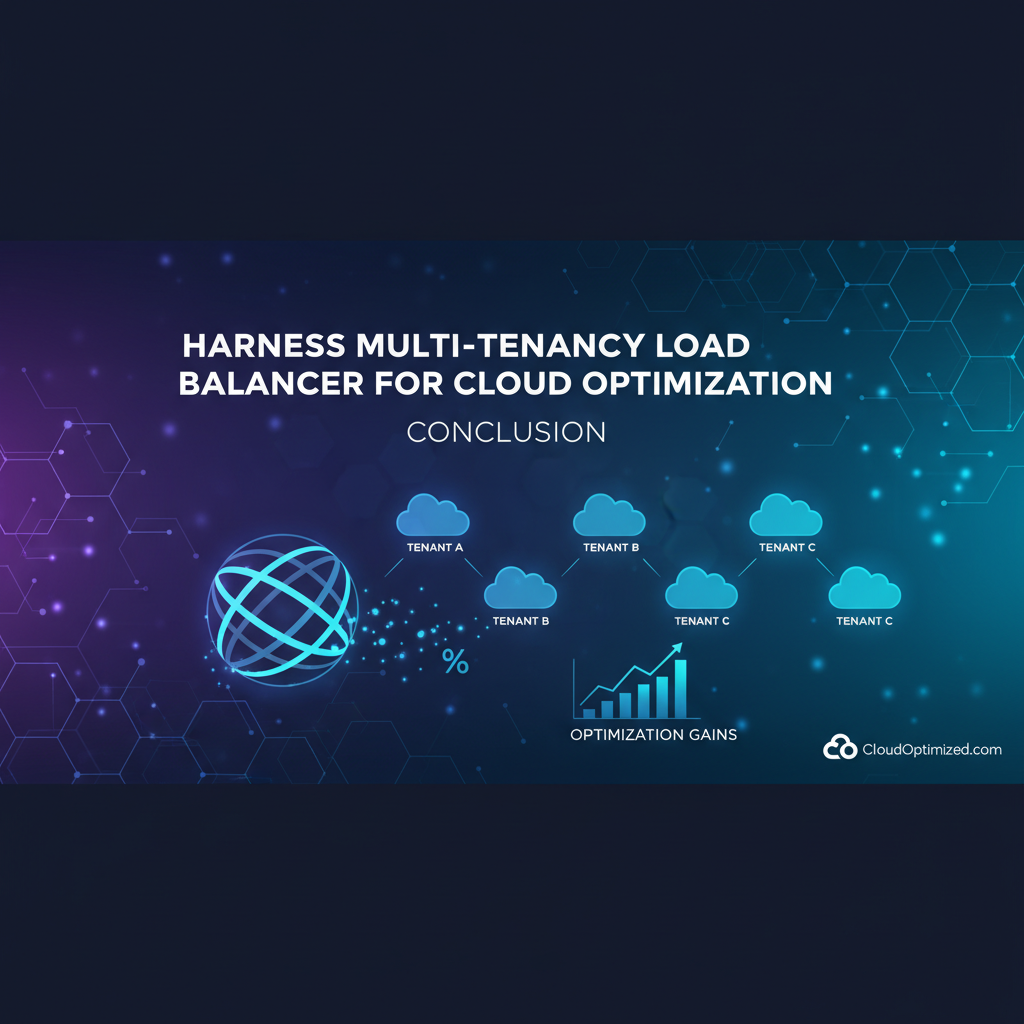
Harness Multi Tenancy Load Balancer for Cloud Optimization
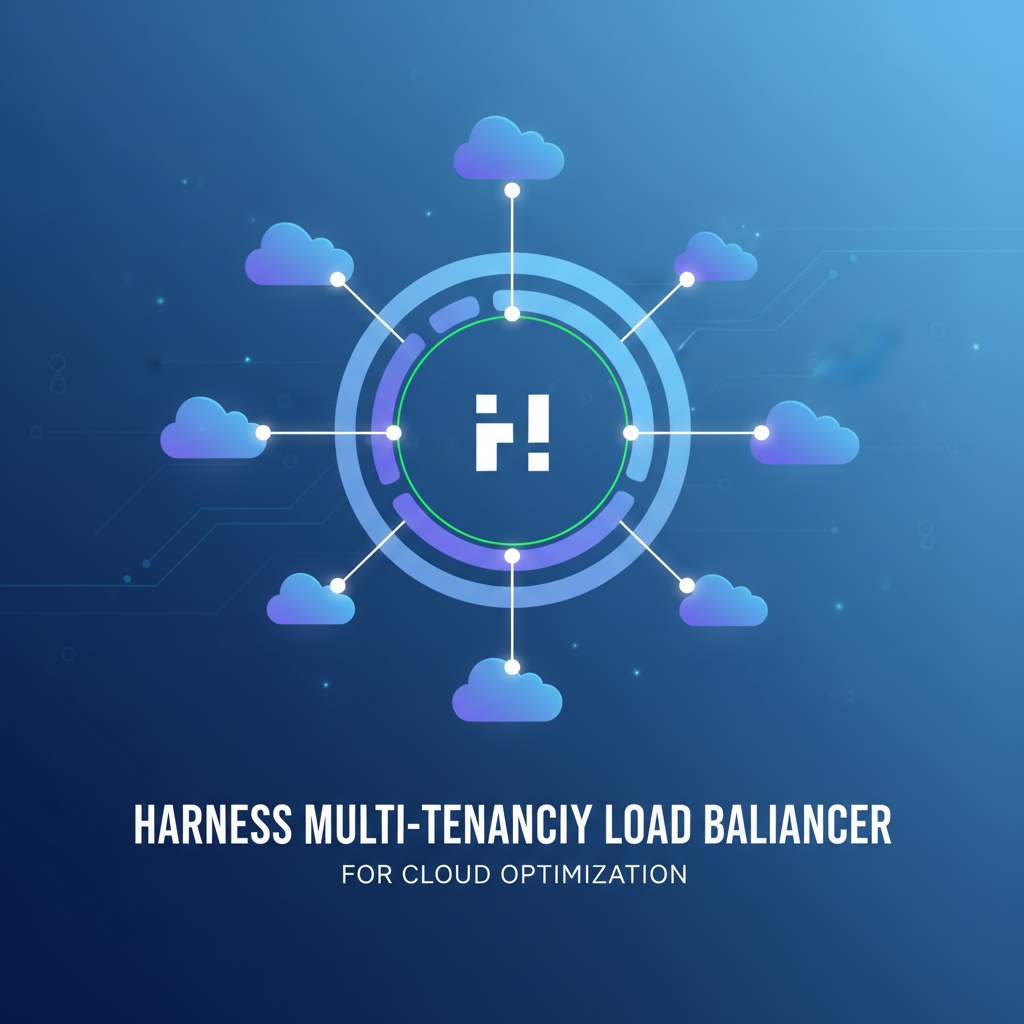


In the rapidly evolving landscape of cloud computing, organizations are constantly seeking innovative strategies to maximize efficiency, reduce operational costs, and enhance the performance and security of their digital infrastructure. The journey towards true cloud optimization is multifaceted, demanding a keen understanding of intricate architectural patterns and their symbiotic relationships. At the forefront of these patterns lie multi-tenancy and load balancing, two concepts that, when meticulously integrated, unlock a potent synergy for cloud environments. This comprehensive exploration delves into how harnessing a multi-tenancy load balancer can revolutionize cloud optimization, ensuring robust scalability, unwavering reliability, and superior resource utilization, while also highlighting the pivotal role of an api gateway in orchestrating this complex dance of data and services.
The Shifting Sands of Cloud Architecture: Challenges and Imperatives
The modern cloud paradigm is defined by its dynamism, characterized by ephemeral resources, distributed microservices, and a relentless push towards serverless computing. While these advancements offer unparalleled agility and innovation potential, they also introduce a new layer of complexity. Enterprises are grappling with the need to manage vast fleets of containerized applications, orchestrate intricate service meshes, and serve an ever-growing user base with diverse requirements, often sharing underlying infrastructure. The imperative for cloud optimization, therefore, extends beyond mere cost reduction; it encompasses a holistic approach to performance, security, operational simplicity, and sustainable growth.
Organizations embarking on their cloud journey, or those already deeply embedded in it, frequently encounter several critical challenges. These include the difficulty in achieving true resource elasticity, ensuring consistent application performance under varying loads, maintaining stringent security and data isolation for diverse user groups or internal departments, and navigating the operational overhead of managing distributed systems. Without a strategic approach to traffic management and resource allocation, these challenges can quickly erode the promised benefits of cloud computing, leading to ballooning costs, performance bottlenecks, and heightened security vulnerabilities. It is within this intricate context that the combined power of multi-tenancy and sophisticated load balancing emerges as a transformative solution, capable of transforming potential pitfalls into pillars of strength.
The aspiration for "cloud optimization" is not a singular goal but rather a continuous spectrum of improvements aimed at achieving a perfect balance between speed, cost, reliability, and security. This balance is particularly elusive when dealing with environments where multiple distinct entities—be they external customers, internal business units, or different applications—share a common computational substrate. The traditional approach of siloed infrastructure for each tenant is inherently inefficient and unsustainable in the long run. Thus, the architectural choices made at the network edge and service front-door become paramount in determining the overall success of cloud initiatives.
Deconstructing Multi-Tenancy: Sharing Resources, Preserving Isolation
Multi-tenancy, at its core, is an architectural principle where a single instance of a software application serves multiple distinct customer organizations, or "tenants." Each tenant, while sharing the same underlying application, database, and infrastructure, perceives a logically isolated and customized view of the application. This model is the bedrock of Software-as-a-Service (SaaS) offerings, but its principles are equally applicable within large enterprises seeking to optimize internal resource utilization by allowing different departments or projects to share common compute resources.
The Foundational Pillars of Multi-Tenancy
The successful implementation of multi-tenancy rests upon several foundational pillars:
- Resource Sharing: The fundamental tenet of multi-tenancy is the sharing of physical and often logical resources. This includes computing instances, storage, network bandwidth, and even application codebases. The economies of scale derived from resource sharing are significant, dramatically reducing the per-tenant cost of infrastructure and maintenance.
- Logical Isolation: Despite sharing physical resources, each tenant must experience complete logical isolation from others. This means that a tenant's data, configurations, customizations, and user access policies must remain distinct and inaccessible to other tenants. Achieving this isolation is a complex engineering feat that often involves robust database schema design, application-level segregation, and sophisticated access control mechanisms.
- Configurability and Customization: While the core application remains shared, tenants often require the ability to configure specific settings, branding, or workflows unique to their operational needs. A well-designed multi-tenant system offers rich customization options without necessitating changes to the core application code, ensuring that upgrades and maintenance can be applied universally.
- Security and Privacy: Foremost among multi-tenancy concerns is security. Protecting tenant data from unauthorized access by other tenants, external attackers, or even misconfigured internal processes is non-negotiable. This requires a multi-layered security approach, encompassing strong authentication and authorization, data encryption, network segmentation, and regular security audits.
Unpacking the Benefits of a Multi-Tenant Approach
The adoption of a multi-tenant architecture yields a plethora of benefits that directly contribute to cloud optimization:
- Cost Efficiency: By sharing infrastructure across multiple tenants, organizations can achieve significant cost savings. The fixed costs of hardware, software licenses, and operational overhead are amortized across a larger user base, leading to a lower total cost of ownership (TCO) per tenant. This is particularly impactful for startups and small to medium-sized businesses (SMBs) that might otherwise struggle with the capital expenditure of dedicated infrastructure.
- Simplified Management and Operations: Managing a single instance of an application is inherently less complex than managing hundreds or thousands of dedicated instances. Updates, patches, backups, and monitoring can be performed centrally, drastically reducing operational effort and the potential for configuration drift across different environments. This centralization frees up valuable engineering resources to focus on innovation rather than infrastructure maintenance.
- Enhanced Scalability and Elasticity: Multi-tenant systems are typically designed to scale horizontally, easily accommodating fluctuations in demand by adding more resources to the shared pool. This inherent elasticity means that tenants can seamlessly grow their usage without requiring dedicated infrastructure provisioning, a process that can be slow and resource-intensive in single-tenant models. Load balancers play a crucial role here, distributing increased traffic across the shared resources efficiently.
- Faster Time to Market: With a standardized, shared infrastructure, onboarding new tenants or deploying new features becomes a streamlined process. The foundational environment is already in place, allowing for quicker provisioning and reduced setup times, which accelerates time to market for new services and applications.
- Improved Resource Utilization: In many single-tenant deployments, resources often sit idle, leading to wasted capacity. Multi-tenancy allows for the aggregation of demand, smoothing out peak loads and ensuring that shared resources are utilized more efficiently across a broader base, minimizing idle capacity and maximizing hardware investment returns.
Navigating the Nuances: Challenges of Multi-Tenancy
While the benefits are compelling, multi-tenancy is not without its challenges. Addressing these effectively is critical for successful implementation:
- Data Isolation and Security: Ensuring robust data isolation between tenants is paramount. This can be achieved through various database strategies, from completely separate databases per tenant to shared databases with tenant-ID columns for data segregation. Each approach has trade-offs in terms of complexity, performance, and cost. A security breach in a multi-tenant environment can have widespread implications, making stringent access controls and encryption indispensable.
- The "Noisy Neighbor" Problem: When multiple tenants share resources, one tenant's unusually high resource consumption (CPU, memory, network I/O) can negatively impact the performance experienced by other tenants. Mitigating this requires sophisticated resource governance mechanisms, quality of service (QoS) controls, and intelligent load balancing to distribute workloads and prevent resource exhaustion.
- Customization Limitations: While configurability is a strength, deep customization can be challenging. Striking a balance between offering flexibility and maintaining a single, manageable codebase is an ongoing architectural challenge. Over-customization can lead to complexity that negates the benefits of shared management.
- Compliance and Regulatory Requirements: Different tenants may operate under distinct regulatory frameworks (e.g., GDPR, HIPAA, PCI DSS). Ensuring that the shared infrastructure meets all applicable compliance requirements for every tenant can be a significant hurdle, particularly regarding data residency and data handling policies.
Architecting for multi-tenancy requires careful consideration of these factors, often leading to a trade-off analysis between strict isolation and maximum resource sharing. The chosen model must align with the business's security posture, performance requirements, and cost objectives.
The Unseen Hand: Load Balancing in Cloud Environments
Load balancing is an indispensable technology in any scalable and highly available distributed system, and its importance is amplified within cloud environments. At its essence, a load balancer acts as a traffic cop, distributing incoming network traffic across a group of backend servers or resources. Its primary goal is to ensure that no single server becomes a bottleneck, thereby improving application responsiveness, maximizing throughput, and guaranteeing high availability.
Why Load Balancing is Non-Negotiable in the Cloud
The dynamic and often unpredictable nature of cloud workloads makes load balancing a fundamental requirement:
- High Availability and Fault Tolerance: By directing traffic away from unhealthy or overloaded servers, a load balancer ensures continuous service availability. If a server fails, the load balancer automatically reroutes traffic to the remaining healthy servers, preventing downtime and maintaining a seamless user experience. This resilience is critical for mission-critical applications.
- Enhanced Scalability: Load balancers enable horizontal scaling. As demand increases, new servers can be added to the backend pool, and the load balancer automatically includes them in the distribution, allowing applications to handle vast amounts of traffic without performance degradation. This elasticity is a core promise of cloud computing.
- Improved Performance: By evenly distributing requests, load balancers prevent individual servers from becoming overwhelmed, ensuring consistent response times and lower latency for end-users. They can also terminate SSL/TLS connections, offloading computationally intensive encryption tasks from backend servers.
- Efficient Resource Utilization: Load balancers help in making the most of available server resources. By ensuring that workloads are spread across all active servers, they prevent scenarios where some servers are idle while others are struggling under heavy load, thereby optimizing hardware investment.
- Simplified Maintenance and Upgrades: With a load balancer in place, individual backend servers can be taken offline for maintenance, upgrades, or patching without interrupting service. The load balancer simply directs traffic to the remaining healthy servers, allowing for zero-downtime operations.
Understanding Different Types of Load Balancers
Load balancers can be categorized based on their deployment model, the layers of the OSI model they operate on, and their specific features:
- Deployment Models:
- Hardware Load Balancers: Traditional, physical appliances with dedicated hardware for high performance. Less common in pure cloud-native setups due to lack of elasticity.
- Software Load Balancers: Run on standard servers or virtual machines. Offer greater flexibility and scalability than hardware solutions, often deployed as virtual appliances.
- Cloud-Native Load Balancers: Managed services provided by cloud providers (e.g., AWS Elastic Load Balancing, Azure Load Balancer, Google Cloud Load Balancing). These are highly scalable, integrated with other cloud services, and offer pay-as-you-go pricing, making them the preferred choice for most cloud deployments.
- OSI Model Layers:
- Layer 4 (L4) Load Balancers: Operate at the transport layer (TCP/UDP). They inspect IP addresses and ports to make routing decisions. L4 load balancers are fast and efficient but have limited visibility into application-layer data. They are suitable for simple traffic distribution, like direct database connections or general TCP services.
- Layer 7 (L7) Load Balancers: Operate at the application layer (HTTP/HTTPS). They can inspect the entire request, including URLs, HTTP headers, cookies, and even application-specific data. This allows for more intelligent routing decisions, such as routing requests based on URL path, host header (critical for multi-tenancy), or even specific api request parameters. L7 load balancers can also perform SSL termination, content-based routing, and api request rewriting. This category often includes api gateways, which extend L7 capabilities even further.
Load Balancing Algorithms: The Art of Distribution
Load balancers employ various algorithms to determine how incoming requests are distributed:
- Round Robin: Distributes requests sequentially to each server in the pool. Simple and effective for equally configured servers.
- Least Connections: Directs new requests to the server with the fewest active connections. Ideal for servers with varying processing capabilities or connection-heavy applications.
- IP Hash: Uses a hash of the client's source IP address to determine the destination server. Ensures that requests from the same client always go to the same server, useful for maintaining session persistence without explicit session management at the load balancer.
- Weighted Round Robin/Least Connections: Assigns a "weight" to each server, giving more capable servers a higher proportion of traffic. Useful when servers have different capacities.
- Response Time: Directs traffic to the server that is currently responding fastest.
The Criticality of Health Checks
Load balancers continuously monitor the health of backend servers using configurable health checks. These checks can range from simple ping tests to more sophisticated application-layer checks that verify the responsiveness of an api endpoint. If a server fails a health check, the load balancer automatically marks it as unhealthy and stops sending traffic to it until it recovers, ensuring that only functioning servers receive requests. This proactive monitoring is key to maintaining high availability and a consistent user experience.
The Symbiotic Relationship: Multi-Tenancy Meets Load Balancing
The true power of cloud optimization begins to unfold when multi-tenancy and load balancing are not merely coexisting but are deeply integrated and strategically aligned. In a multi-tenant cloud environment, a sophisticated load balancer is not just distributing traffic; it is intelligently directing tenant-specific requests to appropriate shared resources while upholding the principles of isolation and performance.
Orchestrating Tenant-Aware Traffic Distribution
The primary challenge in integrating multi-tenancy with load balancing is ensuring that the load balancer can effectively identify the tenant associated with an incoming request and route it to the correct, shared backend infrastructure, or even to tenant-specific instances if the architecture dictates. This requires L7 load balancing capabilities, which can inspect application-layer information:
- Host-Based Routing: A common pattern involves using distinct subdomains or custom domains for each tenant (e.g.,
tenant1.yourdomain.com,tenant2.yourdomain.com). The L7 load balancer can inspect theHostheader of an incoming HTTP request and route it to the appropriate backend service pool or api gateway instance dedicated to or configured for that tenant. This provides a clean separation at the network edge. - Path-Based Routing: Tenants might be identified by a specific path in the URL (e.g.,
yourdomain.com/tenant1/api,yourdomain.com/tenant2/dashboard). An L7 load balancer can use these paths to direct traffic. While functional, this can be less flexible for complex api structures. - Header-Based Routing: For more advanced scenarios, a custom HTTP header (e.g.,
X-Tenant-ID) can carry the tenant identifier. The load balancer, or more commonly an upstream api gateway, can then use this header to route requests. This is particularly useful for internal apis or microservices where the client can inject the tenant ID. - JWT Claims: In environments leveraging JSON Web Tokens (JWTs) for authentication, the tenant ID can be embedded as a claim within the token. While the load balancer typically doesn't decrypt JWTs, an api gateway downstream can, enabling highly dynamic, authenticated tenant routing.
Architectural Patterns for Multi-Tenant Load Balancing
Several architectural patterns emerge when combining these concepts:
- Shared Load Balancer, Shared Backend (Most Common SaaS): A single, highly scalable L7 load balancer (often a cloud-native service) sits at the front, routing traffic to a pool of shared application servers or microservices instances. Tenant identification (via host, path, or header) occurs at the load balancer or at a subsequent api gateway layer, with the application logic then enforcing data isolation. This model offers maximum resource sharing and cost efficiency.
- Shared Load Balancer, Tenant-Specific Backend Pools: In some cases, to mitigate the "noisy neighbor" problem or meet specific compliance requirements, a shared load balancer might route to logically separate backend server pools for different groups of tenants (e.g., premium tenants get dedicated resources, while standard tenants share a pool). The load balancer handles the initial routing to the correct pool.
- Tiered Load Balancing with Internal Gateways: A common enterprise pattern involves an external load balancer directing traffic to an internal layer of load balancers or api gateways. This internal layer might then handle more granular, tenant-aware routing to specific microservices. This provides additional layers of security and traffic management, often seen in large-scale api ecosystems.
Challenges and Considerations in Integration
Successfully integrating multi-tenancy with load balancing requires careful attention to:
- Session Persistence/Sticky Sessions: For applications that require user sessions to be maintained on the same backend server, the load balancer needs to support sticky sessions. This can be problematic in highly elastic environments, and modern stateless apis are preferred to avoid this dependency.
- Security Context and Isolation: The load balancer must maintain strong security boundaries. While it routes traffic, the application or api gateway is ultimately responsible for enforcing tenant-specific authorization and data isolation. Misconfiguration at any layer can lead to security vulnerabilities.
- Monitoring and Observability: Gaining deep insights into tenant-specific performance metrics is crucial. The load balancer's logs, combined with application-level monitoring, should allow operators to identify performance issues or resource hogs specific to a particular tenant.
- SSL/TLS Management: In a multi-tenant environment with custom domains, managing SSL certificates for each tenant can be complex. Cloud-native load balancers often integrate with certificate management services (e.g., AWS Certificate Manager) to simplify this, supporting Server Name Indication (SNI) to serve multiple certificates from a single IP address.
By thoughtfully addressing these aspects, organizations can build robust, scalable, and cost-efficient multi-tenant cloud platforms that leverage the full potential of load balancing.
APIPark is a high-performance AI gateway that allows you to securely access the most comprehensive LLM APIs globally on the APIPark platform, including OpenAI, Anthropic, Mistral, Llama2, Google Gemini, and more.Try APIPark now! 👇👇👇
The Unifying Force: API Gateways and Cloud Optimization
While load balancers handle the crucial task of distributing network traffic, an api gateway elevates this capability by focusing specifically on api traffic, adding a layer of intelligent management, security, and transformation at the edge of your microservices architecture. In a multi-tenant, load-balanced cloud environment, the api gateway becomes an indispensable component, acting as the single entry point for all client requests, routing them to the appropriate backend services, and enforcing policies specific to each tenant or api.
What is an API Gateway? A Central Hub for API Management
An api gateway acts as a reverse proxy, sitting between clients and a collection of backend services. It abstracts the complexity of the backend architecture from the client, presenting a unified, simplified api interface. But it’s much more than a simple proxy; it's a powerful traffic management and policy enforcement point.
Key functionalities of an api gateway include:
- Request Routing: Directing incoming requests to the correct backend microservice based on URL path, HTTP method, headers, or other criteria. This is particularly valuable in multi-tenant systems for tenant-specific routing.
- Authentication and Authorization: Centralizing security policies, verifying client credentials, and often integrating with identity providers (IdPs). It can enforce tenant-specific access rules.
- Rate Limiting and Throttling: Protecting backend services from overload by limiting the number of requests a client or tenant can make within a specified timeframe.
- Request/Response Transformation: Modifying requests or responses on the fly, such as translating data formats, adding/removing headers, or aggregating responses from multiple services.
- Caching: Storing frequently accessed api responses to reduce the load on backend services and improve response times.
- Load Balancing (Internal): While typically sitting behind an external load balancer, an api gateway itself can perform its own internal load balancing and health checks for the various backend services it manages.
- API Versioning: Enabling seamless evolution of apis by managing different versions, allowing clients to continue using older versions while new versions are deployed.
- Monitoring and Logging: Providing a centralized point for collecting metrics, logging api calls, and tracking performance, which is invaluable for operational insights and troubleshooting in a multi-tenant setup.
The Synergy: API Gateway, Load Balancer, and Multi-Tenancy
In a multi-tenant cloud environment, the relationship between the external load balancer and the api gateway is synergistic:
- External Load Balancer as the First Line: The external load balancer (e.g., a cloud provider's L7 LB) is the primary entry point for all traffic. It handles the initial distribution of client requests across multiple instances of the api gateway itself. This ensures high availability and scalability for the gateway layer. It might perform initial SSL termination and basic DDoS protection.
- API Gateway for Granular Control: Once traffic reaches an api gateway instance, the gateway takes over. It performs more sophisticated, application-aware routing based on tenant identifiers (from host, path, or custom headers). It applies tenant-specific policies like rate limits, authentication rules, and access permissions before forwarding the request to the appropriate backend microservice or api.
- Unified API Interface: The api gateway presents a single, unified api to all clients, abstracting the complexity of the underlying multi-tenant microservices. This simplifies client development and allows the backend architecture to evolve without impacting client applications.
This layered approach offers robust traffic management and security. The external load balancer provides the foundation of availability and scalable ingress, while the api gateway provides the intelligent, policy-driven routing and management essential for complex multi-tenant api ecosystems.
Optimizing with API Gateways: A Deeper Dive
The specific features of an api gateway contribute significantly to cloud optimization in a multi-tenant context:
- Centralized Policy Enforcement: All security, rate limiting, and access control policies can be enforced at a single point, reducing the risk of inconsistencies across different backend services. This simplifies auditing and ensures that tenant-specific rules are uniformly applied.
- Tenant-Specific Routing and Customization: An api gateway can inspect headers or other request attributes to identify the tenant and route the request to a tenant-specific microservice instance (if a siloed approach is used for certain critical tenants) or apply tenant-specific logic before forwarding to a shared service. It can also perform tenant-specific data transformations.
- Improved Security Posture: By acting as a secure gateway, it can filter malicious requests, provide DDoS protection at the api level (beyond what a basic load balancer offers), terminate TLS connections, and enforce granular authorization rules, safeguarding tenant data and applications.
- Reduced Backend Complexity: Backend microservices can remain focused on their core business logic, offloading cross-cutting concerns (authentication, rate limiting, logging) to the api gateway. This improves developer productivity and allows for more agile development cycles.
- Enhanced Observability: All api traffic flows through the gateway, making it an ideal point for comprehensive logging, monitoring, and analytics. This data is invaluable for understanding tenant usage patterns, identifying performance bottlenecks, and troubleshooting issues.
Consider, for example, a platform like APIPark. APIPark is an open-source AI gateway and api management platform designed to help developers and enterprises manage, integrate, and deploy AI and REST services with ease. In a multi-tenant cloud environment, a product like APIPark can serve as a powerful api gateway that streamlines the entire api lifecycle, from design and publication to invocation and decommission. Its features directly address many of the challenges of multi-tenant cloud optimization:
APIPark offers Independent API and Access Permissions for Each Tenant, enabling the creation of multiple teams (tenants) each with independent applications, data, user configurations, and security policies. This is crucial for maintaining the logical isolation and security boundaries required in a shared infrastructure while still benefiting from resource utilization. The platform's End-to-End API Lifecycle Management helps regulate api management processes, including traffic forwarding, load balancing (internal to the gateway's scope), and versioning of published apis – all critical for maintaining a robust, optimized, and multi-tenant cloud architecture. Furthermore, its Performance Rivaling Nginx capability ensures that the api gateway itself doesn't become a bottleneck, handling over 20,000 TPS on modest hardware and supporting cluster deployment for large-scale traffic. This robust performance is paramount when the api gateway is serving as the front-door for numerous tenants and their diverse api interactions, significantly contributing to overall cloud optimization by guaranteeing responsiveness and scalability at the api layer. Its Detailed API Call Logging and Powerful Data Analysis capabilities provide the granular visibility needed to understand tenant-specific usage, troubleshoot issues, and ensure system stability and data security, further solidifying its value in a sophisticated cloud setup. By centralizing the management of various AI models and traditional RESTful apis, APIPark acts as a smart gateway, simplifying integration and maintaining a unified api format for invocation, which is a massive win for consistency and reduced operational overhead in a multi-tenant ecosystem.
The strategic placement and configuration of an api gateway like APIPark between the external load balancer and the backend services provide a critical control point for managing the complexity and diversity inherent in multi-tenant cloud deployments, making it a cornerstone of effective cloud optimization.
Strategies for Advanced Cloud Optimization with Multi-Tenant Load Balancers
Harnessing the combined power of multi-tenancy and sophisticated load balancing, augmented by api gateway capabilities, opens the door to a truly optimized cloud environment. This optimization manifests across several key dimensions: cost, performance, security, scalability, and operational simplicity.
1. Cost Optimization: Maximizing ROI
The most direct benefit of this integrated approach is significant cost savings, primarily driven by enhanced resource utilization and reduced operational overhead.
- Aggregated Resource Utilization: By sharing compute, storage, and network resources across multiple tenants, the overall utilization rates increase dramatically. Instead of having dedicated, often underutilized, infrastructure for each tenant, the pooled resources can absorb varying peak loads from different tenants, smoothing out demand profiles. This minimizes idle capacity and reduces the total number of provisioned resources.
- Economies of Scale in Operations: Centralized management of a shared infrastructure for multiple tenants means fewer operational staff are required per tenant. Tasks like patching, monitoring, and maintenance are performed once for the shared system rather than repetitively for individual tenant silos. An api gateway further streamlines operations by centralizing policies and monitoring, reducing the need for duplicate configurations across backend services.
- Elasticity and Auto-Scaling: Integrating the load balancer with cloud auto-scaling groups ensures that resources scale dynamically based on aggregated demand, not just individual tenant needs. This means paying only for the resources consumed, avoiding over-provisioning and ensuring efficient scaling up and down during demand fluctuations. Cloud-native load balancers seamlessly integrate with these auto-scaling features, further reducing manual intervention and cost.
- Reduced Licensing Costs: For software components that are licensed per instance or per server, multi-tenancy can reduce the number of required licenses by consolidating multiple tenants onto fewer shared instances.
2. Performance Enhancement: Speed and Responsiveness
Optimal performance is crucial for user satisfaction and business success. Multi-tenant load balancing actively contributes to superior application responsiveness and throughput.
- Efficient Traffic Distribution: The load balancer intelligently distributes incoming requests, preventing any single backend server from becoming a bottleneck. This ensures that all available resources are utilized effectively, leading to consistent response times even under heavy loads.
- Reduced Latency through Proximity: Cloud-native load balancers often support global distribution, directing users to the geographically closest available data center or region. This "edge" routing significantly reduces network latency, improving the user experience for a geographically dispersed tenant base.
- Caching at the Edge: An api gateway can implement caching strategies for frequently accessed data, reducing the need to hit backend services for every request. This dramatically improves response times for read-heavy apis and reduces the load on backend infrastructure. Load balancers can also contribute by efficiently distributing cacheable content to content delivery networks (CDNs).
- SSL Offloading: Load balancers, particularly L7 api gateways, can terminate SSL/TLS connections at the edge. This offloads the computationally intensive encryption/decryption tasks from backend application servers, allowing them to dedicate more CPU cycles to processing business logic, thereby boosting overall performance.
3. Enhanced Security: Robust Protection and Isolation
Security is paramount, especially when multiple tenants share infrastructure. Multi-tenant load balancers, in conjunction with api gateways, provide robust security mechanisms.
- DDoS Protection: Load balancers act as the first line of defense against Distributed Denial of Service (DDoS) attacks, absorbing malicious traffic before it reaches backend services. Cloud providers offer managed DDoS protection services integrated with their load balancers.
- Web Application Firewall (WAF) Integration: Many L7 load balancers and api gateways integrate with WAFs, which inspect incoming requests for common web vulnerabilities (e.g., SQL injection, cross-site scripting) and block malicious traffic. This provides an essential layer of security for web-facing apis and applications.
- Tenant Isolation and Access Control: While the load balancer routes traffic, the api gateway enforces granular, tenant-specific authorization policies. This ensures that a tenant can only access their own data and authorized apis, preventing unauthorized cross-tenant access. Features like APIPark's "Independent API and Access Permissions for Each Tenant" directly contribute to this critical isolation.
- TLS Termination and Encryption: Load balancers handle TLS termination, ensuring that all traffic between the client and the load balancer is encrypted. Furthermore, they can enforce encrypted communication (mTLS) between the load balancer and backend services, securing the entire data path.
- Centralized Security Policies: By centralizing security policies at the gateway layer, organizations can ensure consistent application of security rules across all apis and tenants, simplifying audits and reducing the attack surface.
4. Improved Scalability and Reliability: Future-Proofing Your Cloud
The combination of multi-tenancy and load balancing inherently promotes scalability and resilience, critical for future-proofing cloud investments.
- Horizontal Scalability: Load balancers are designed to distribute traffic across horizontally scaled backend servers. As demand grows, new server instances or containers can be seamlessly added to the load balancer's pool, allowing the system to scale to meet virtually any load.
- Disaster Recovery and Failover: Multi-tenant systems can be deployed across multiple availability zones or even geographic regions. Load balancers can intelligently route traffic to healthy regions during a disaster, ensuring business continuity and minimal downtime for all tenants. Health checks continuously monitor backend resources, facilitating automatic failover.
- Graceful Degradation: In extreme load scenarios, an api gateway can implement policies for graceful degradation, such as returning cached responses or prioritizing critical apis over less essential ones, ensuring that core services remain operational.
- Resource Pooling: The ability to pool resources across tenants means that the overall system can better withstand individual tenant spikes without impacting others, leading to a more robust and reliable infrastructure for everyone.
5. Operational Simplicity: Streamlined Management
Simplifying operations reduces complexity, minimizes errors, and frees up valuable engineering time.
- Centralized Traffic Management: The load balancer and api gateway provide a single point of control for all incoming traffic, simplifying routing rules, policy management, and troubleshooting.
- Automated Provisioning and Scaling: Integration with cloud auto-scaling services allows for automated provisioning and de-provisioning of resources based on demand, reducing manual intervention and operational burden.
- Unified Monitoring and Observability: Centralized logging and monitoring at the gateway provide a comprehensive view of api performance, usage patterns, and potential issues across all tenants, simplifying troubleshooting and proactive maintenance.
- Simplified API Management: Platforms like APIPark consolidate the management of various apis (including AI models), their versions, and their lifecycle, significantly reducing the complexity of managing a diverse api portfolio for multiple tenants.
The strategic implementation of multi-tenant load balancing, fortified by the capabilities of an advanced api gateway, creates an incredibly powerful and adaptable architecture. It transforms the promise of cloud optimization into a tangible reality, delivering not just cost savings but also superior performance, enhanced security, unparalleled scalability, and streamlined operations. This holistic approach is essential for any organization aiming to thrive in the dynamic and competitive cloud ecosystem.
Practical Implementation Considerations and Best Practices
To effectively harness multi-tenancy load balancers for cloud optimization, organizations must adopt a strategic mindset and adhere to a set of best practices. The technical implementation choices and ongoing management paradigms will significantly influence the success and sustainability of the architecture.
1. Choosing the Right Load Balancing Solution
The decision between a cloud-native load balancer, a self-managed software load balancer, or even a hardware appliance (less common in pure cloud) depends on specific requirements, existing infrastructure, and operational preferences.
- Cloud-Native Load Balancers: For most cloud-first strategies, leveraging managed cloud provider services (e.g., AWS Application Load Balancer, Azure Application Gateway, Google Cloud Load Balancing) is often the optimal choice. They offer immense scalability, high availability, deep integration with other cloud services (like auto-scaling, WAF, DNS), and reduced operational overhead. They inherently support L7 features critical for multi-tenancy.
- Self-Managed Software Load Balancers: Tools like Nginx, HAProxy, or Envoy Proxy can be deployed on virtual machines or containers. These offer greater control and customization but come with the responsibility of managing their lifecycle, scaling, and high availability. They can be a good choice for hybrid cloud environments or highly specific, bespoke routing needs.
- API Gateway as a Strategic Layer: Regardless of the underlying load balancer, implementing a dedicated api gateway (like APIPark) is highly recommended for multi-tenant api ecosystems. It offloads critical functions, centralizes policies, and provides granular control beyond what a generic load balancer offers.
2. Designing for Comprehensive Tenant Isolation
Tenant isolation must be a design consideration at every layer of the architecture, not just at the load balancer.
- Network Isolation: Utilize Virtual Private Clouds (VPCs), subnets, and security groups to create clear network boundaries between different service components, potentially even between different tenant-specific deployments if strict isolation is required.
- Data Isolation: Implement robust database schemas (e.g., separate databases, separate schemas, or shared schema with tenant ID columns and strict application-level filtering) to ensure tenant data cannot be accessed by other tenants.
- Application-Level Segregation: Ensure that the application code itself rigorously enforces tenant context for every data access and operation. This is where most "noisy neighbor" or data leakage issues can arise if not properly handled.
- Containerization and Orchestration: Leveraging containers (Docker) and orchestrators (Kubernetes) allows for finer-grained resource allocation and isolation. Specific tenants or tenant groups can be assigned dedicated namespaces or resource quotas, mitigating noisy neighbor effects.
3. Implementing Robust Monitoring and Alerting
Visibility is paramount in complex, shared environments. Comprehensive monitoring and alerting systems are essential for proactive management and rapid issue resolution.
- End-to-End Visibility: Monitor load balancer metrics (request rates, latency, error rates, backend health), api gateway metrics (policy enforcement, authentication failures, transformation errors), and backend service metrics (CPU, memory, database connections).
- Tenant-Specific Metrics: Instrument applications and the api gateway to capture metrics per tenant. This allows operators to identify if a performance degradation or error spike is affecting all tenants or is isolated to a specific one, facilitating targeted troubleshooting.
- Centralized Logging: Aggregate logs from the load balancer, api gateway, and all backend services into a centralized logging system (e.g., ELK Stack, Splunk, cloud-native logging services). This enables rapid searching and analysis, which is critical for incident response. APIPark's "Detailed API Call Logging" is an excellent example of this.
- Proactive Alerting: Configure alerts for anomalous behavior, performance thresholds, and security incidents. Alerts should be actionable and notify the right teams to prevent issues from escalating.
4. Prioritizing Security Best Practices
Given the shared nature of multi-tenant environments, security must be a top priority.
- Zero Trust Architecture: Assume no user or service can be trusted by default, regardless of whether they are inside or outside the network perimeter. Implement strict authentication and authorization for all api calls.
- WAF and DDoS Protection: As discussed, integrate WAF with your load balancer or api gateway and leverage cloud provider DDoS protection services.
- API Security: Implement api keys, OAuth 2.0, or OpenID Connect for client authentication. Enforce granular scopes and permissions for api access. Rate limiting at the api gateway level protects against various abuse scenarios.
- Regular Security Audits: Conduct frequent vulnerability assessments and penetration tests for both the infrastructure and the application layer, paying special attention to potential cross-tenant vulnerabilities.
- Data Encryption: Encrypt data at rest (storage) and in transit (TLS/SSL).
5. Strategic Capacity Planning and Scaling
Effective capacity planning ensures resources are always available to meet demand, while smart scaling optimizes costs.
- Baselining and Forecasting: Understand baseline usage patterns and forecast future growth for individual tenants and the aggregated system. This informs initial resource provisioning.
- Auto-Scaling Configuration: Configure auto-scaling groups for backend services to respond dynamically to load changes, using relevant metrics (CPU utilization, request queue length, custom api metrics) as triggers.
- Performance Testing: Rigorously test the multi-tenant system under various load conditions to identify bottlenecks and validate scaling behavior before deploying to production.
- Geographic Distribution: For global user bases, consider deploying multi-tenant services across multiple regions with global load balancing to improve latency and enhance disaster recovery capabilities.
6. Leveraging Service Meshes for Advanced Traffic Management
For highly complex microservices architectures, a service mesh (e.g., Istio, Linkerd, Consul Connect) can complement the load balancer and api gateway.
- A service mesh operates at the inter-service communication layer, providing advanced traffic management (e.g., retries, circuit breaking, fault injection), observability, and security (mTLS) between microservices.
- While the external load balancer handles ingress to the system, and the api gateway manages external api traffic, the service mesh governs the internal communication flow within the microservices cluster, offering an additional layer of control and resilience for multi-tenant applications. This is especially useful for fine-tuning performance and ensuring isolation between tenant-aware services.
By embracing these practical considerations and best practices, organizations can construct a cloud environment that not only efficiently handles the complexities of multi-tenancy and distributed services but also consistently delivers on the promise of cloud optimization: agility, resilience, cost-effectiveness, and superior user experience. This journey requires ongoing evaluation, adaptation, and a commitment to leveraging the most appropriate tools and architectural patterns for the evolving cloud landscape.
Conclusion: Orchestrating a Harmonious Cloud Ecosystem
The journey towards comprehensive cloud optimization is an ongoing pursuit, fraught with architectural complexities but rich with potential for transformative gains. At its heart lies the intelligent management of resources and traffic, particularly within the context of shared infrastructures. Harnessing the combined power of multi-tenancy and sophisticated load balancing, augmented by the capabilities of an api gateway, emerges as a non-negotiable strategy for any organization striving for excellence in the cloud.
We have explored how multi-tenancy fundamentally redefines resource utilization, offering unparalleled cost efficiencies and streamlined management by enabling multiple distinct entities to share a common, scalable infrastructure. This architectural paradigm, while presenting challenges in isolation and security, unlocks significant economies of scale. Concurrently, load balancing stands as the unwavering guardian of availability, scalability, and performance, ensuring that traffic is intelligently distributed across backend resources, preventing bottlenecks and guaranteeing a seamless user experience.
The true synergy, however, blossoms when these two powerful concepts converge. A multi-tenant aware load balancer, especially when it possesses Layer 7 capabilities, can intelligently route tenant-specific requests, acting as the initial gatekeeper for diverse user bases. This intelligence is then profoundly amplified by the strategic integration of an api gateway. An api gateway acts as the central brain for api traffic, enforcing granular security policies, managing rate limits, transforming requests, and providing an indispensable layer of tenant-specific routing and control that a mere load balancer cannot offer. Platforms like APIPark exemplify how a dedicated api gateway can revolutionize the management of a complex api ecosystem, particularly in multi-tenant contexts, by offering features that ensure independent access, robust performance, and comprehensive lifecycle management for each tenant's api interactions.
The benefits derived from this integrated approach are far-reaching: substantial cost reductions through maximized resource utilization, significant performance enhancements via efficient traffic distribution and caching, an elevated security posture through layered defenses and strict tenant isolation, and vastly improved scalability and reliability for sustained growth. Furthermore, the centralization of traffic management and policy enforcement contributes to invaluable operational simplicity, freeing teams to innovate rather than merely maintain.
In a world increasingly reliant on distributed applications and diverse services, the ability to orchestrate a harmonious cloud ecosystem is not just an advantage—it is a strategic imperative. By thoughtfully implementing multi-tenancy, strategically deploying load balancers, and leveraging the full capabilities of an advanced api gateway, organizations can construct cloud environments that are not only robust and resilient but also exceptionally agile and cost-effective. This integrated strategy is the cornerstone upon which future-proof cloud infrastructures will be built, enabling businesses to navigate the complexities of the digital age with confidence and achieve unprecedented levels of cloud optimization. The journey demands meticulous planning and continuous refinement, but the rewards—in terms of competitive advantage, operational efficiency, and user satisfaction—are unequivocally profound.
Frequently Asked Questions (FAQ)
1. What is the fundamental difference between a Load Balancer and an API Gateway in a multi-tenant cloud environment?
A load balancer primarily operates at the network level (L4 or L7) to distribute incoming network traffic across a group of backend servers to ensure high availability and scalability. It's focused on getting traffic to healthy servers efficiently. An API Gateway, while often sitting behind a load balancer and performing some internal load balancing, operates at a higher application level. It serves as a single entry point for all API requests, providing intelligent routing based on application context, enforcing API-specific policies (authentication, authorization, rate limiting), transforming requests/responses, and centralizing API management for different tenants. In a multi-tenant setup, the load balancer directs traffic to the API Gateway instances, and the API Gateway then applies tenant-specific logic before forwarding requests to backend microservices.
2. How does a multi-tenancy load balancer help in reducing cloud costs?
A multi-tenancy load balancer reduces cloud costs primarily by enabling greater resource utilization. Instead of dedicating separate, often underutilized, infrastructure for each tenant, a shared pool of resources can serve multiple tenants simultaneously. The load balancer intelligently distributes aggregated traffic across these shared resources, minimizing idle capacity and maximizing the efficiency of compute, storage, and network investments. This leads to significant economies of scale in infrastructure, licensing, and operational management, as updates and maintenance can be performed once for the shared system.
3. What is the "noisy neighbor" problem in multi-tenant environments, and how can load balancing mitigate it?
The "noisy neighbor" problem occurs when one tenant's unusually high resource consumption (e.g., CPU, memory, network I/O) on shared infrastructure negatively impacts the performance or availability of other tenants. While load balancing alone cannot fully eliminate this at the application level, it can mitigate it at the network ingress. Sophisticated L7 load balancers and API Gateways can employ algorithms that distribute load more evenly, monitor resource usage, and potentially divert traffic from overloaded nodes to prevent a single tenant from monopolizing resources. However, the most effective mitigation also requires resource isolation mechanisms (e.g., quotas, container orchestration) and sophisticated application-level resource governance for each tenant.
4. Can a multi-tenant load balancer help with data security and isolation for different tenants?
Yes, a multi-tenant load balancer, especially an L7 one, contributes to data security and isolation, though it's part of a broader security strategy. It can enforce TLS termination, ensuring encrypted communication from clients to the load balancer. For isolation, it can use host-based or path-based routing to direct traffic to specific tenant-aware backend services or API Gateways, ensuring that requests for one tenant don't accidentally get routed to another's processing path. However, the ultimate responsibility for data isolation and access control within the application and database layers rests with the API Gateway and the backend services themselves, which must rigorously enforce tenant-specific permissions and data segregation.
5. What role do API Gateways play in scaling multi-tenant applications, particularly with AI models?
API Gateways are crucial for scaling multi-tenant applications, especially when integrating diverse services like AI models. They provide a centralized point for managing API traffic, including routing requests to scalable backend microservices, applying rate limits to prevent overload, and implementing caching to reduce load. For AI models, an API Gateway like APIPark can standardize the invocation format, abstract away the complexity of different AI model APIs, and handle prompt encapsulation. This means that as more tenants utilize AI features, the gateway can efficiently distribute these requests, manage access permissions per tenant, and ensure that backend AI inference services can scale independently without affecting the client applications, thereby significantly improving the overall scalability and manageability of AI-powered multi-tenant solutions.
🚀You can securely and efficiently call the OpenAI API on APIPark in just two steps:
Step 1: Deploy the APIPark AI gateway in 5 minutes.
APIPark is developed based on Golang, offering strong product performance and low development and maintenance costs. You can deploy APIPark with a single command line.
curl -sSO https://download.apipark.com/install/quick-start.sh; bash quick-start.sh

In my experience, you can see the successful deployment interface within 5 to 10 minutes. Then, you can log in to APIPark using your account.

Step 2: Call the OpenAI API.