How Fast Can a Gorilla Run? Discover Their Top Speed
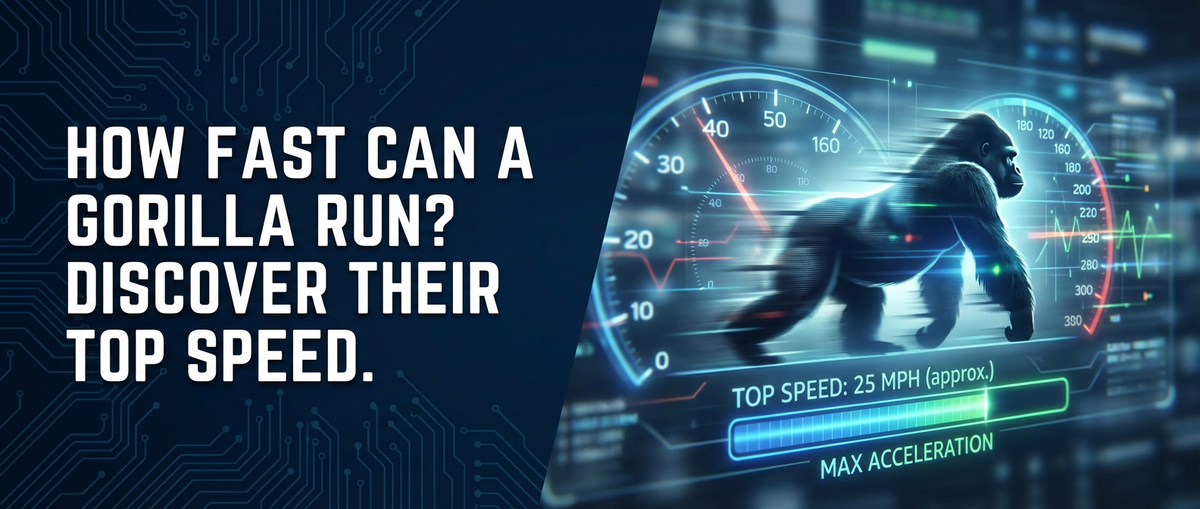


The dense, emerald canopies and misty mountains of Africa conceal a creature of immense power and profound mystique: the gorilla. Revered as one of humanity's closest living relatives, these magnificent primates command respect not only for their sheer size and intelligence but also for an aura of formidable strength. For centuries, tales and observations have painted a picture of a gentle giant, primarily herbivorous and largely placid, yet capable of astonishing bursts of raw energy when provoked or in defense of its family. Among the myriad questions that captivate our curiosity about these incredible animals, one frequently surfaces with an almost primal urgency: "How fast can a gorilla run?" This question delves beyond mere statistics, touching upon their evolutionary adaptations, their unique locomotive strategies, and the very essence of their survival in challenging wilderness environments.
Dispelling popular myths and delving into scientific observations reveals a nuanced understanding of gorilla speed. Unlike the sleek, streamlined form of a cheetah built for open-plain sprints, or the enduring stamina of a gazelle, the gorilla’s physical architecture tells a different story—one of power, deliberate movement, and an unexpected capacity for rapid, ground-covering bursts when circumstances demand. Their robust skeletal structure, colossal musculature, and distinctive knuckle-walking gait all contribute to a specialized form of locomotion that prioritizes strength and agility within their specific habitat over sustained high-speed pursuit or evasion across vast distances. This article embarks on an extensive exploration of gorilla locomotion, meticulously dissecting their physical attributes, behavioral patterns, and the environmental factors that collectively define their true top speed. We will compare their capabilities against other species, including humans, to provide a comprehensive and vivid portrait of what it truly means for a gorilla to "run," offering insights that extend far beyond a simple numerical answer and deepen our appreciation for these extraordinary inhabitants of our planet.
Chapter 1: The Gorilla – An Apex Primate's Anatomy of Power
To truly understand how fast a gorilla can move, we must first embark on an in-depth anatomical journey, dissecting the very physical structure that underpins their locomotive capabilities. Gorillas are the largest living primates, a designation that immediately implies a build optimized for power and stability rather than the lightweight agility often associated with speed. There are three primary species, each with slight variations in size and habitat, yet all sharing a common foundational design: the Mountain Gorilla (Gorilla beringei beringei), the Eastern Lowland Gorilla (Gorilla beringei graueri), and the Western Lowland Gorilla (Gorilla gorilla gorilla). Each of these subspecies, while distinct in their geographical distribution—from the dense, high-altitude cloud forests to the steamy lowland rainforests—exhibits a remarkable consistency in their fundamental physical makeup, which profoundly influences their movement.
The most striking feature of a gorilla's physique is its immense strength, a characteristic directly linked to its powerful musculature and robust skeletal system. An adult male, particularly a dominant silverback, can weigh upwards of 180 to 220 kilograms (400 to 485 pounds), with some individuals even exceeding 270 kg (600 lbs). Females are considerably smaller, typically weighing between 70 to 120 kg (150 to 265 pounds). This substantial body mass is not simply fat; it is predominantly dense muscle. Their shoulders are broad and exceptionally powerful, housing muscles capable of prodigious feats of strength, such as tearing down thick vegetation or engaging in formidable displays of aggression. The chest is deep and barrel-like, providing ample space for large lungs and a powerful heart, crucial for sustained physical exertion, even if short-lived.
Their limb structure is uniquely adapted for a life spent primarily on the forest floor, though they are capable climbers, especially the younger and lighter individuals. Gorillas are classic examples of quadrupeds, moving predominantly on all fours, a mode of locomotion known as knuckle-walking. Their forelimbs are significantly longer and more robust than their hindlimbs, designed to bear a substantial portion of their body weight during locomotion. The arms are exceptionally muscular, with powerful biceps, triceps, and forearm muscles, allowing them to swing through branches, pull themselves up, and, critically, support their massive torsos during knuckle-walking. The hands are large and powerful, with a strong grip and sturdy knuckles, which are specifically adapted to bear weight without damage during their primary mode of terrestrial movement. The bones of their fingers and wrists are specially reinforced to absorb the impact of supporting their immense weight.
In contrast to their formidable upper body, a gorilla's hindlimbs, while still incredibly strong, are relatively shorter and less developed for pure running speed when compared to the long, powerful legs of cursorial (running) mammals. Their legs are powerfully muscled for propulsion and maintaining an upright posture, but they lack the elongated proportions and spring-like tendons found in animals optimized for high-speed terrestrial pursuit. The feet are broad and robust, featuring a divergent big toe that functions much like an opposable thumb, providing excellent grip when climbing or stabilizing themselves on uneven terrain. This adaptation is more geared towards arboreal agility and ground stability than outright speed on open ground.
Furthermore, the gorilla's center of gravity is relatively low and forward, a configuration that enhances stability during knuckle-walking but potentially limits the efficient biomechanics required for a sustained, high-speed bipedal run. Their large, block-like skulls, powerful jaws, and thick necks further emphasize a build focused on strength and intimidation rather than the streamlined form of a sprinter. In essence, the gorilla's anatomy is a masterclass in adaptation for its specific ecological niche: a predominantly terrestrial herbivore that requires immense strength for foraging, defense, and navigating dense forest environments, with speed serving as a secondary, burst-oriented capability rather than a defining characteristic. This foundational understanding of their physical prowess is paramount as we delve into the intricate mechanics of their movement.
Chapter 2: Deciphering Gorilla Locomotion – More Than Just Walking
Having explored the formidable anatomy of the gorilla, we can now delve into the nuanced and specialized forms of locomotion that this structure enables. A gorilla's movement repertoire is far more complex than simply walking or running; it is a sophisticated symphony of adaptations designed for efficiency and survival within their challenging forest habitats. Understanding these different gaits is crucial to accurately assess their potential for speed.
The primary and most iconic mode of terrestrial locomotion for gorillas is knuckle-walking. This quadrupedal gait involves supporting their upper body weight on the knuckles of their forelimbs, specifically the dorsal (back) surfaces of the middle phalanges, while their hindlimbs propel them forward. This unique method is not a mere convenience; it is an evolutionary masterpiece. By supporting their weight on their knuckles, gorillas protect the sensitive palms of their hands, which are vital for gripping during climbing and manipulating food. The strong wrist joints and reinforced finger bones are perfectly adapted to absorb the constant impact of this movement. Knuckle-walking is an incredibly stable and energy-efficient way for such a heavy animal to move through dense undergrowth, over uneven forest floors, and up moderate slopes. It allows them to maintain a relatively horizontal posture, keeping their center of gravity stable and enabling them to navigate obstacles with surprising agility for their size. While appearing deliberate and sometimes slow, this gait allows for steady, sustained travel throughout their day, covering considerable distances in search of forage without expending excessive energy.
While primarily quadrupedal, gorillas are also capable of bipedalism, walking upright on their two hind legs. However, this is not their default or primary mode of travel over long distances, unlike humans. Bipedalism in gorillas is typically reserved for short bursts and specific contexts. They might stand and walk bipedally when carrying large armfuls of food, such as branches or fruit, to keep their hands free. More dramatically, bipedalism is a key component of their impressive threat displays. A silverback might rise to its full height, beating its chest and vocalizing loudly, often taking a few bipedal steps or even a short bipedal charge as part of an intimidating bluff. This upright posture makes them appear even larger and more formidable, serving as a powerful visual deterrent to rivals or perceived threats. These bipedal movements, while striking, are generally less stable and more energy-intensive than knuckle-walking, making them unsuitable for prolonged travel.
Climbing is another essential aspect of gorilla locomotion, especially for younger, lighter individuals who frequently forage in trees for fruits and leaves that are out of reach from the ground. Adult gorillas, particularly the massive silverbacks, are less agile climbers due to their weight, but they are still capable of ascending sturdy trees. Their powerful grasping hands and feet, aided by their opposable big toe, provide excellent grip. While not as nimble as smaller, more arboreal primates, their climbing ability allows them access to diverse food sources and occasionally offers a vantage point or a safe haven from terrestrial threats. Their speed in climbing is more about controlled strength and dexterity than rapid ascent.
Now, addressing the core question: running or sprinting. When a gorilla needs to move quickly, whether escaping a perceived threat, pursuing another gorilla, or engaging in a vigorous display, their gait shifts dramatically. From their typical knuckle-walking posture, they can transition into a powerful, ground-eating charge. This "run" is still primarily quadrupedal, but it is executed with much greater speed and force. Their powerful forelimbs, usually used for support, become active propulsive units, pushing off the ground with immense power, while their hindlimbs drive them forward with explosive force. The gait becomes a bounding or galloping motion, covering ground with incredible rapidity.
It's crucial to distinguish this quadrupedal "run" from a human sprint. A human sprint involves the elastic recoil of long legs and a precise transfer of energy through an upright posture. A gorilla's sprint leverages its massive muscle mass for raw power. They do not typically adopt a sustained, efficient bipedal run for speed in the way humans do. While they can indeed move bipedally for a few steps during a charge, their fastest movements are overwhelmingly quadrupedal. The short, powerful bursts they achieve are a testament to their muscular power, allowing them to accelerate rapidly and cover short distances with alarming speed, surprising many who underestimate their agility. This explosive acceleration is key to their escape strategies and intimidating charges, proving that while they may not be built for endurance races, their capacity for rapid, powerful movement is undeniable.
Chapter 3: The Numbers Game – Estimating Gorilla Top Speed
After dissecting the gorilla's powerful anatomy and understanding their diverse locomotive repertoire, we arrive at the most anticipated question: what is their actual top speed? The reality is that obtaining precise, scientifically validated measurements of a wild gorilla's maximum sprint speed is an exceedingly challenging endeavor, leading to a degree of estimation and reliance on anecdotal evidence. Unlike captive environments where animals can be trained and measured under controlled conditions, studying the elusive and often unpredictable behavior of wild gorillas in their dense, rugged habitats presents significant methodological hurdles.
Challenges in Measurement: Researchers face numerous obstacles when attempting to clock a gorilla's speed in the wild. 1. Elusiveness: Gorillas are shy and avoid human contact whenever possible. They typically move away from observers, making it difficult to set up measurement equipment. 2. Terrain: Their natural habitat of dense forests, steep slopes, and tangled undergrowth is not conducive to smooth, sustained running or accurate speed tracking. GPS collars can track movement, but precise sprint speeds over short distances are hard to isolate. 3. Motivation: A gorilla's sprint is almost always a response to a perceived threat, an escape, or an aggressive display. Inducing such behavior purely for scientific measurement would be unethical and impractical. 4. Observation Difficulty: Dense vegetation often obstructs a clear line of sight, making visual estimation of speed highly unreliable.
Common Estimates and Anecdotal Evidence: Despite these challenges, various sources, including primatologists, wildlife experts, and even park rangers, have offered estimations based on prolonged observation and occasional dramatic encounters. The most widely cited figures suggest that a gorilla's top speed, primarily in a burst, quadrupedal charge, falls within the range of 20 to 25 miles per hour (approximately 32 to 40 kilometers per hour). Some reports, particularly from individuals who have witnessed charges, describe speeds that feel even faster, though these are often subjective and influenced by the adrenaline of the moment.
It is important to emphasize that these speeds represent a maximum burst. Gorillas are not built for sustained high-speed running over long distances. Their bursts are typically short, covering perhaps 50 to 100 meters, designed to quickly escape danger or close the distance on an perceived threat.
Factors Influencing Speed: Several variables can significantly influence a gorilla's speed at any given moment:
- Terrain: A gorilla will undoubtedly be faster on relatively open, flat ground compared to navigating steep, rocky slopes, thick mud, or dense tangles of roots and vines. The ability to quickly traverse obstacles is more crucial than raw speed in such environments.
- Motivation: The impetus behind the movement is paramount. A gorilla fleeing a poacher or defending its young will exhibit an explosive burst of speed fueled by adrenaline that it might not demonstrate during routine travel or play. Similarly, a silverback's bluff charge, though not always intended to make contact, is executed with terrifying speed to maximize its psychological impact.
- Age and Sex: Younger, lighter gorillas tend to be more agile and potentially capable of quicker bursts than older, heavier silverbacks, although silverbacks possess immense power in their charges. Females, being smaller, might also exhibit slightly different speed profiles compared to the massive males.
- Individual Variation: Just like humans, individual gorillas will have variations in their physical conditioning, health, and inherent athletic capabilities.
Comparison to Humans: To put a gorilla's estimated top speed into perspective, let's compare it to human capabilities:
- Average Human Jog/Run: An average human can typically jog at around 5-8 mph (8-13 km/h).
- Average Human Sprint: Most fit non-athletes can sprint at speeds between 10-15 mph (16-24 km/h) over short distances.
- Olympic Sprinter: The fastest human ever recorded, Usain Bolt, achieved a top speed of approximately 28 mph (45 km/h) during his 100-meter world record run.
Based on these comparisons, a gorilla's estimated top speed of 20-25 mph (32-40 km/h) makes it faster than most humans, including fit athletes, over short distances. While it might not match the absolute peak speed of an elite Olympic sprinter like Usain Bolt, a gorilla's acceleration and raw power would make it incredibly difficult for an average human to outrun in a direct, short-distance confrontation, especially considering the added variables of terrain and sheer intimidation. The gorilla's burst speed is a formidable tool in its survival arsenal, perfectly suited for rapid evasion or a decisive, intimidating charge within its natural domain.
Chapter 4: Strength vs. Speed – The Gorilla's Evolutionary Priorities
In the grand tapestry of evolution, every species develops a unique suite of adaptations that optimize its survival within its specific ecological niche. For the gorilla, a meticulous examination of its physical attributes and behavioral patterns unequivocally reveals that strength has been prioritized over sustained, high-end speed as its primary evolutionary advantage. While capable of impressive bursts of quick movement, the gorilla's overall design is a testament to the power needed to thrive in its demanding environment.
The Primacy of Strength: The gorilla's massive musculature, robust skeletal structure, and formidable size are all geared towards immense strength. This raw power serves multiple critical functions in their daily lives: * Defense: Their primary defense mechanism against threats, including leopards (particularly for younger gorillas) and human poachers, is not evasion through speed, but rather intimidation and direct confrontation. A silverback's charge, while involving speed, is ultimately about deploying its overwhelming physical power. Its ability to inflict damage or stand its ground is paramount. * Foraging: Gorillas are herbivores, and their diet consists largely of tough, fibrous vegetation such as leaves, stems, bamboo shoots, and bark. Their incredible strength is essential for tearing down large branches, stripping bark, and breaking open tough plant parts to access nutrients. This requires powerful jaws, neck muscles, and upper body strength far more than swift movement. * Intimidation and Social Dominance: Within their social groups, strength is a key factor in establishing and maintaining dominance, particularly for silverbacks. Threat displays, which often involve powerful chest-beating, ground-slapping, and mock charges, rely on projecting an image of overwhelming strength to deter rivals or assert authority. * Navigating Habitat: Moving through dense, often impenetrable forest undergrowth, climbing sturdy trees, and crossing rugged terrain demands powerful muscles to push through obstacles, maintain balance, and support their heavy bodies, rather than the agile, light-footedness of a pure speedster.
Evolutionary Niche and Diet: Gorillas occupy an ecological niche that does not necessitate high-speed predation or sustained flight from predators. As large herbivores, their survival strategy revolves around efficient foraging for abundant plant matter. This contrasts sharply with carnivores like cheetahs or wolves, whose existence hinges on the ability to outrun or outmaneuver prey, thus demanding incredible speed and agility. Similarly, small prey animals often evolve great speed to escape predators. Gorillas, by virtue of their size and social structure, have few natural predators. For an animal of their size, calorie conservation is crucial, and a slow, deliberate, powerful mode of movement like knuckle-walking is far more energy-efficient for daily activities than constantly engaging in high-speed sprints. Their digestive system is adapted to process large quantities of fibrous plant material, a process that requires a substantial energy input itself, making energy expenditure on unnecessary rapid movement counterproductive.
Limited Natural Predators: The lack of significant natural predators for adult gorillas further diminishes the evolutionary pressure to develop extreme running speed. Leopards are the primary natural predator, but they typically target young or sick gorillas. An adult silverback is generally too large and powerful for a leopard to tackle effectively. Against human threats (poachers), while a gorilla's charge is terrifyingly fast, the ultimate defense against bullets or traps is not necessarily speed, but rather group cohesion, strength, and their deep knowledge of the forest. Their survival strategy against such threats often involves aggressive posturing to deter, or powerful, short-burst escapes to disappear into dense cover.
Survival Strategies Beyond Speed: Instead of relying on speed, gorillas have developed a suite of sophisticated survival strategies: * Intimidation: Their sheer size, strength, and impressive threat displays are often sufficient to deter most challenges. * Group Defense: Gorillas live in highly structured family groups, with the silverback leading and protecting. The collective defense of the group is a powerful deterrent. * Knowledge of Terrain: Gorillas possess an intimate knowledge of their territories, knowing where to find food, safe sleeping sites, and escape routes through the dense vegetation. This spatial awareness can be more valuable than raw speed in avoiding danger. * Camouflage and Cover: Their dark fur and their ability to quickly disappear into the dense foliage provide effective concealment, often a more viable escape strategy than attempting to outrun a threat in the open.
In summary, while a gorilla's burst speed can be surprisingly rapid and formidable, it is a secondary adaptation that complements their overarching evolutionary priority: a body meticulously crafted for immense strength. This strength allows them to dominate their environment, secure their food supply, protect their families, and deter threats, making them one of the most powerful and enduring creatures in the African wilderness. Their speed is a powerful weapon in their arsenal, but it is their strength that defines their ecological success.
APIPark is a high-performance AI gateway that allows you to securely access the most comprehensive LLM APIs globally on the APIPark platform, including OpenAI, Anthropic, Mistral, Llama2, Google Gemini, and more.Try APIPark now! 👇👇👇
Chapter 5: Gorilla Behavior and the Context of Speed
Understanding gorilla speed isn't solely about physical capabilities; it's intricately woven into their complex behavioral ecology. The context in which a gorilla might exhibit rapid movement provides crucial insights into why and how they utilize their speed, highlighting that it is a tool deployed strategically rather than a constant state. Their motivations for quick locomotion are primarily defensive, social, or related to daily foraging, rarely involving sustained pursuit or escape over vast distances.
One of the most dramatic and widely observed contexts for gorilla speed is during threat displays and charges. A silverback, the dominant male of a gorilla group, plays a pivotal role in protecting his family. When faced with a perceived threat—be it a rival silverback, a predator, or an intrusive human—he will often initiate a highly ritualized and awe-inspiring display. This can begin with a deliberate stare, followed by hooting vocalizations, chest-beating, and tearing at vegetation. Crucially, this display often culminates in a terrifying bluff charge. During a bluff charge, the silverback will drop to all fours and charge forward with astonishing speed and power, often covering significant ground (e.g., 20-50 meters) in a matter of seconds. While the intent is usually to intimidate and deter rather than to make physical contact, the speed and ferocity of this charge are designed to be utterly convincing. The ground literally shakes as the massive primate thunders towards the perceived threat, creating a sound and visual spectacle that few can withstand. This burst of speed, combined with their immense size and power, transforms them into an incredibly formidable force, making it clear that their speed is a vital component of their defensive repertoire.
Escape behavior is another scenario where gorillas demonstrate their capacity for rapid movement. While silverbacks often opt for confrontation or intimidation, particularly if the group is directly threatened, all gorillas will flee if they perceive an overwhelming danger or if an aggressive display is insufficient. In such situations, the initial burst of speed is critical. Gorillas will rapidly accelerate from their resting or foraging posture, using their powerful quadrupedal gait to quickly disappear into the dense undergrowth. Their knowledge of the terrain, combined with their ability to move quickly through even very thick vegetation, allows them to vanish with surprising swiftness, often leaving observers disoriented. This rapid initial escape prevents a threat from gaining an advantage and allows them to utilize the forest's natural cover for concealment. This is not a prolonged flight but a focused, powerful dash to safety.
Play and social interactions also showcase the agility and speed of gorillas, particularly among younger individuals. Juvenile gorillas, unburdened by the full weight of adulthood, are remarkably playful and agile. They chase each other through the undergrowth, wrestle, and engage in mock fights, exhibiting bursts of speed, quick turns, and energetic movements. These play sessions are crucial for developing motor skills, strength, and social bonds. While not comparable to the top speeds of a panicked escape or a defensive charge, these playful interactions demonstrate an inherent capacity for rapid, dynamic movement within the group. Even adult gorillas will occasionally engage in playful chasing or energetic interactions, especially during periods of relaxed social cohesion, further illustrating their latent athletic capabilities.
Finally, their territorial movement and daily foraging patterns, while generally slower and more deliberate, still involve variations in speed. Gorillas spend their days moving through their home ranges, foraging for food. This daily travel is typically executed via efficient knuckle-walking, a pace designed to conserve energy while covering necessary ground. However, if a desirable food source (like a fruiting tree) is discovered, the group might move with greater urgency and speed to reach it before other groups or individuals. Similarly, changes in weather, the onset of dusk, or the need to find a suitable nesting site can prompt a more rapid pace of movement, even if not a full "sprint." Their internal clock and environmental cues dictate the tempo of their movement, with speed being adjusted according to necessity and reward.
In essence, a gorilla's speed is not a singular, constant metric but rather a variable asset, deployed with purpose and precision. It is a powerful exclamation point in their repertoire of survival tools, used to protect, escape, or assert dominance, ensuring their continued reign as the majestic, unyielding guardians of the African forests. The sheer unpredictability and raw power of these movements contribute significantly to the awe and respect they command.
Chapter 6: Conservation and the Future of Gorilla Research
The sheer power, intelligence, and complex social structures of gorillas make them truly captivating creatures. However, their future, much like that of many iconic species, hangs precariously in the balance. Understanding every facet of their biology, behavior, and ecology, including their locomotive capabilities, is not merely an academic exercise but a critical component of effective conservation strategies. As human populations expand and resource demands intensify, gorillas face an array of persistent and severe threats that underscore the urgency of robust research and conservation efforts.
The primary threats to gorilla populations across Africa are alarmingly diverse and interconnected: * Habitat Loss and Fragmentation: Deforestation due to agriculture, logging, mining, and human settlements relentlessly encroaches upon their natural habitats, reducing their living space and fragmenting populations, which isolates groups and diminishes genetic diversity. * Poaching: Despite legal protections, gorillas are still hunted for bushmeat, trophies, and the illegal pet trade. Infant gorillas are often captured, which usually entails killing their protective mothers and other adult group members. * Disease: Being genetically similar to humans, gorillas are highly susceptible to human diseases, such as Ebola, which has devastated entire populations in some regions, sometimes wiping out 95% of local gorilla groups in mere weeks. * Civil Unrest and Conflict: Many gorilla habitats are located in regions plagued by political instability, armed conflict, and illegal resource exploitation. This destabilizes conservation efforts, increases poaching, and displaces both humans and wildlife.
Addressing these multifaceted threats requires an equally multifaceted approach, heavily reliant on robust scientific research. Studying gorillas in their natural environment is inherently challenging due to their elusive nature, the density of their habitats, and the logistical difficulties of working in remote, often dangerous areas. Yet, advancements in technology are progressively transforming the landscape of wildlife monitoring and research, offering unprecedented opportunities to gather crucial data.
Modern conservation efforts increasingly leverage a variety of sophisticated tools: * GPS Tracking Devices: Attaching GPS collars or implants to select individuals allows researchers to monitor their movement patterns, home range size, habitat use, and inter-group interactions with unprecedented accuracy. This data can help identify critical corridors for conservation and understand how gorillas adapt to environmental changes. * Camera Traps: Strategically placed motion-activated cameras capture images and videos of gorillas and other wildlife, providing insights into their presence, population density, behavior, and even unique individual identification without direct human disturbance. * Drone Technology: Drones equipped with high-resolution cameras and thermal imaging capabilities can survey vast, inaccessible areas, locate gorilla nests, monitor forest health, and even detect illegal activities like logging or poaching from a safe distance. * Acoustic Monitoring: Automated listening devices can record gorilla vocalizations, helping researchers identify groups, track their movements, and understand communication patterns.
The sheer volume and diversity of data generated by these technologies — from GPS coordinates and sensor readings to high-definition imagery and acoustic signatures — present both immense opportunities and significant challenges. Research institutions and conservation organizations are increasingly grappling with how to effectively collect, process, integrate, analyze, and disseminate this complex array of information. This is where robust data management and integration platforms become indispensable.
For instance, imagine a large-scale gorilla conservation project involving multiple research teams, each deploying different types of sensors, tracking devices, and data collection methodologies. Each device or data source might have its own proprietary API (Application Programming Interface) or data format. Integrating these disparate data streams, ensuring data consistency, applying various analytical models (which themselves might be AI-powered), and then securely sharing insights across geographically dispersed teams is a monumental task. An open-source AI gateway and API management platform like APIPark could play a pivotal role in streamlining these operations. APIPark provides a unified system to integrate over 100+ AI models and various sensor APIs, standardizing the request data format. This means that data from different GPS trackers, camera trap image analysis AI models, or environmental sensors can all be brought into a common, manageable framework. Furthermore, APIPark assists with the entire lifecycle management of these critical conservation APIs, from design and publication to secure invocation and decommissioning. This robust management system ensures efficient data flow, simplifies complex integrations, and enables collaborative research across teams, allowing scientists to focus on extracting meaningful insights about gorilla behavior, health, and habitat rather than wrestling with integration complexities. By providing a secure and efficient way to manage and access critical data, platforms like APIPark empower conservationists with the tools needed to make informed decisions, track progress, and ultimately, enhance the efficacy of their efforts to protect these magnificent primates.
The future of gorillas hinges not just on direct protection but on a deeper scientific understanding of their lives. By embracing technological advancements and sophisticated data management solutions, researchers can gain unparalleled insights into their existence, helping to develop more targeted, effective, and sustainable conservation strategies. Through these combined efforts, we can hope to secure a future where the powerful, elusive gorilla continues to thrive in its natural domain, a testament to the enduring majesty of wild Africa.
Gorilla Speed Comparison Table
To better understand where a gorilla's speed stands in the animal kingdom and against human capabilities, here's a comparative table. It's important to remember that these are average or peak burst speeds and can vary significantly based on individual, terrain, and motivation.
| Species / Category | Estimated Top Speed (mph) | Estimated Top Speed (km/h) | Primary Locomotion / Context | Key Evolutionary Advantage |
|---|---|---|---|---|
| Gorilla | 20-25 | 32-40 | Quadrupedal charge/burst, short distances | Immense strength, intimidation, navigating dense forest |
| Human (Average Sprint) | 10-15 | 16-24 | Bipedal, short distances | Endurance, intelligence, complex tool use, bipedal efficiency |
| Human (Olympic Sprinter) | ~28 | ~45 | Bipedal, highly specialized sprint | Peak athletic performance, technique, long legs |
| Cheetah | 70-75 | 112-120 | Quadrupedal pursuit, open plains, short bursts | Extreme acceleration, flexibility, hunting |
| African Lion | 50 | 80 | Quadrupedal pursuit, ambush predator | Strength, ambush hunting, social cohesion |
| Usain Bolt | ~28 | ~45 | Bipedal, highly specialized sprint | Peak human performance, powerful legs, stride length |
| Racehorse | 40-44 | 64-70 | Quadrupedal, sustained gallop, open terrain | Stamina, speed, long legs |
| Brown Bear | 30-35 | 48-56 | Quadrupedal burst, powerful charge, versatile | Strength, resilience, omnivorous diet, surprising agility |
| Elephant | 25 | 40 | Quadrupedal, powerful charge, surprising agility for size | Immense strength, intelligence, long lifespan |
This table illustrates that while gorillas are not the fastest animals on the planet, their burst speed is formidable and places them well above the average human, holding their own against some surprisingly swift animals, particularly for their size. Their speed is a powerful asset in specific contexts, underscoring their unique evolutionary success.
Conclusion
The captivating question of "How fast can a gorilla run?" unravels into a far more intricate and compelling narrative than a mere numerical answer. It reveals a creature whose very existence is a testament to the evolutionary prioritization of raw, unadulterated strength, tactical intelligence, and social cohesion over the pursuit of sustained, high-end speed. While not built for the endurance races of the open savanna, the gorilla possesses an astonishing capacity for explosive, ground-covering bursts when faced with threat, engaged in defense, or propelled by social dynamics. Their formidable anatomy, characterized by immense musculature and a robust skeletal system, supports a specialized form of quadrupedal locomotion – knuckle-walking – that is both energy-efficient for daily foraging and capable of transitioning into a terrifyingly rapid charge.
Our exploration has revealed that a gorilla’s top speed, primarily in a burst, quadrupedal sprint, is estimated to be between 20 to 25 miles per hour (32 to 40 kilometers per hour). This makes them considerably faster than most humans over short distances, and indeed, capable of outrunning many other animals their size. This speed, however, is not a constant attribute but a strategic tool, deployed with precision in specific contexts: a silverback's awe-inspiring bluff charge designed to intimidate, a rapid escape into dense foliage to evade overwhelming danger, or the playful chases of energetic juveniles. The factors influencing this speed—terrain, motivation, age, and individual variation—further underscore the dynamic nature of their movement.
Ultimately, the gorilla's success in its challenging African forest habitats is rooted in a holistic suite of adaptations where strength reigns supreme, complemented by surprising bursts of speed, a deep understanding of its environment, and a complex social structure. These magnificent primates stand as powerful symbols of the wild, embodying a unique balance of power, intelligence, and grace. As we continue to face critical challenges in their conservation, understanding every aspect of their biology, from their immense strength to their surprising speed, becomes increasingly vital. Through dedicated research, enabled by advanced technologies and robust data management platforms, we can strive to ensure that these majestic creatures continue to thunder through the forests of Africa for generations to come, a testament to the enduring wonders of the natural world.
5 Frequently Asked Questions (FAQs)
1. How fast can a gorilla run compared to a human? A gorilla can run significantly faster than an average human over short distances. While an average human might sprint at 10-15 mph (16-24 km/h), a gorilla's top burst speed is estimated to be 20-25 mph (32-40 km/h). An elite Olympic sprinter like Usain Bolt could outpace a gorilla with a top speed of around 28 mph (45 km/h), but the gorilla's acceleration and immense power would make it a formidable opponent in a short, close-quarters burst, especially on uneven terrain.
2. Is a gorilla's "run" bipedal or quadrupedal? A gorilla's fastest movements, or "runs," are primarily quadrupedal (on all fours), using their powerful arms and legs in a bounding or galloping motion. While they can stand and move bipedally for short distances, particularly during threat displays or when carrying items, their top speed is achieved in a powerful, low-to-the-ground, quadrupedal charge.
3. Why aren't gorillas faster if they are so strong? Gorillas have evolved primarily for strength and power rather than sustained speed, aligning with their ecological niche as large, herbivorous primates. Their diet of tough vegetation requires immense strength for foraging and their size and social structure provide sufficient defense against most natural predators, reducing the evolutionary pressure for extreme running speed. Their locomotion emphasizes energy conservation for daily activities and short bursts of power for defense or escape.
4. What factors influence a gorilla's speed? Several factors can influence a gorilla's speed. These include the type of terrain (they are faster on open ground than dense forest), their motivation (fleeing danger or an aggressive charge will elicit maximum speed), their age and sex (younger gorillas might be more agile, while silverbacks possess immense power in charges), and individual variations in fitness and health.
5. How do scientists study gorilla movement and speed in the wild? Studying gorilla speed in the wild is challenging due to their elusive nature and dense habitats. Scientists use various technologies, including GPS tracking devices attached to individuals to monitor movement patterns, camera traps to record their presence and behavior, and sometimes drones to observe from above. These tools help gather data, which is then analyzed, often using sophisticated data management platforms, to understand their locomotion, habitat use, and overall behavior, contributing to conservation efforts.
🚀You can securely and efficiently call the OpenAI API on APIPark in just two steps:
Step 1: Deploy the APIPark AI gateway in 5 minutes.
APIPark is developed based on Golang, offering strong product performance and low development and maintenance costs. You can deploy APIPark with a single command line.
curl -sSO https://download.apipark.com/install/quick-start.sh; bash quick-start.sh

In my experience, you can see the successful deployment interface within 5 to 10 minutes. Then, you can log in to APIPark using your account.

Step 2: Call the OpenAI API.