How Fast Can a Gorilla Run? The Surprising Truth Revealed
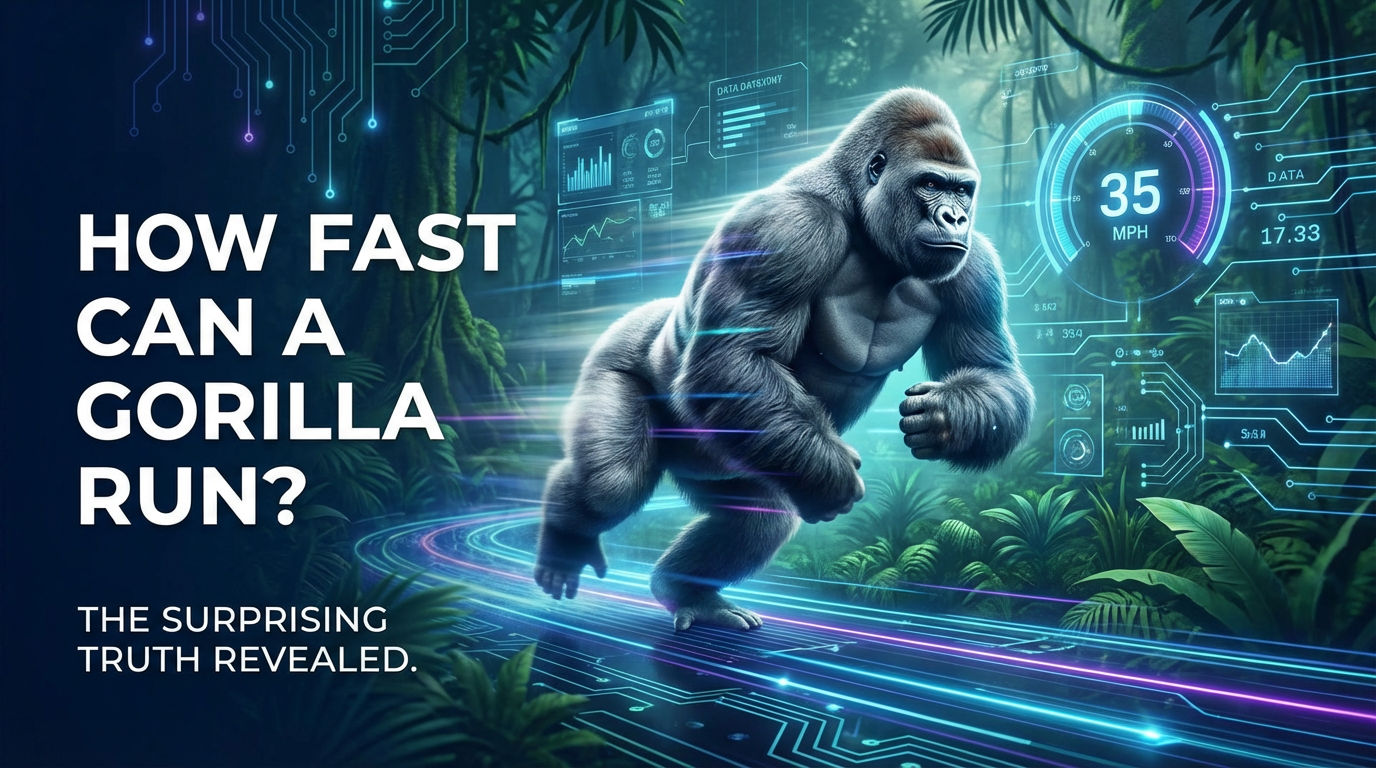


The dense, emerald heart of Africa holds many secrets, whispered among ancient trees and echoing through mist-shrouded mountains. Among its most iconic residents is the gorilla, a creature of immense power, profound intelligence, and a gentle spirit often overshadowed by its formidable physique. Standing as the largest of the great apes, the gorilla commands respect and evokes a primal sense of awe. Yet, despite their widely recognized strength and imposing presence, one question frequently sparks curiosity and ignites debate: How fast can a gorilla run? Is their speed a match for their strength, or do their impressive brawn and bulk belie a more measured pace? The answer, as with many aspects of the natural world, is more nuanced than a simple number, revealing a surprising truth about their evolutionary adaptations, their unique locomotive strategies, and their place within the complex tapestry of the forest ecosystem.
Common misconceptions, often fueled by sensationalized media and popular culture, tend to paint gorillas as lumbering giants, slow and ponderous. Conversely, some narratives inflate their speed to mythological proportions, suggesting they could outrun an Olympic sprinter with ease. Neither extreme accurately captures the reality. Gorillas are not built for sustained, high-speed pursuit across open plains like a cheetah, nor are they as slow and vulnerable as their size might suggest. Their speed, when it manifests, is a potent expression of their explosive power, a burst of formidable energy tailored to the demands of their challenging forest environment and the intricacies of their social lives. This article will delve deep into the anatomy, behavior, and ecological context that collectively dictate a gorilla's pace, dissecting the myths, quantifying the realities, and ultimately revealing the surprising truth about how fast these magnificent primates can truly move. We will explore their specialized musculature and skeletal structure, examine their unique forms of locomotion, consider the environmental pressures that have shaped their movement strategies, and touch upon the fascinating ways modern science strives to measure and understand the mechanics of their powerful strides. Prepare to look beyond the stereotypes and discover the dynamic agility and formidable, albeit context-specific, speed of the gorilla.
The Anatomy of Speed: Built for Power, Not Pursuit
To truly understand how fast a gorilla can run, one must first appreciate the extraordinary architecture of their bodies. These are not creatures sculpted for the open-field chase, but rather for navigating dense, challenging terrains, foraging efficiently, and asserting dominance through sheer physical presence. Every aspect of their musculature and skeletal structure speaks to a life lived in the forest understory, prioritizing strength, stability, and short bursts of explosive power over sustained velocity.
Gorillas possess an almost unparalleled muscularity among terrestrial animals. Their muscles are incredibly dense and powerful, especially in the upper body and core. The sheer volume and quality of their muscle fibers contribute to their legendary strength, allowing them to tear through dense vegetation, climb formidable trees, and engage in powerful displays of dominance. While human muscles are designed for endurance and a broad range of motions, gorilla muscles are optimized for raw power. This difference is stark when considering their limb proportions: gorillas have significantly longer and more powerful arms relative to their legs compared to humans. These long, robust arms are crucial for knuckle-walking, a primary mode of locomotion, but also for climbing and for delivering potent blows during conflict. The broad shoulders and deep chest further emphasize this upper body dominance, housing massive pectoral and deltoid muscles that generate immense force.
Their skeletal structure provides the sturdy framework for this incredible musculature. Gorilla bones are thick and dense, capable of withstanding the immense forces generated by their powerful movements and supporting their considerable body weight, which can exceed 400 pounds for a large silverback. Their pelvis is broad and robust, offering a strong attachment point for powerful leg muscles, even if these legs are relatively shorter than those of a human. The spine, while flexible, is designed for stability under stress. Crucially, the structure of their hands and wrists is adapted for knuckle-walking. The bones are reinforced, and the joints allow for a stable, weight-bearing platform when they move quadrupedally. This unique adaptation distributes their body weight evenly, protecting their fingers and providing a powerful thrusting mechanism.
When we consider locomotion, gorillas exhibit a fascinating duality. Their most common mode of travel is knuckle-walking, a quadrupedal gait where they support their upper body weight on the knuckles of their forelimbs, specifically the middle phalanges, rather than their palms. This method is incredibly efficient for moving through the cluttered forest floor, offering stability on uneven terrain and allowing them to maintain a low center of gravity. It is not, however, a speed-oriented gait for long distances. While they can cover ground surprisingly quickly with knuckle-walking, it is not their fastest mode.
The critical insight into gorilla speed comes when they shift to bipedal locomotion. While primarily quadrupedal, gorillas can and do stand and walk on two legs for short distances. This bipedal stance is often seen when they are foraging, carrying items, or performing intimidation displays. When truly motivated for speed, such as escaping a perceived threat or during a territorial charge, they can adopt a bipedal run. This bipedal burst is where their maximum speed is observed. During such a run, their powerful legs, despite being relatively shorter, are capable of generating tremendous propulsive force. Their core strength helps stabilize their massive torso, allowing for a powerful forward momentum. However, their anatomical adaptations, particularly their limb proportions and the structure of their pelvis and spine, are not optimized for sustained bipedal running in the way a human's are. Their center of gravity is higher, and their gait is less efficient for prolonged bipedal sprints.
Comparing a gorilla's build to other animals underscores this point. A cheetah, the fastest land animal, possesses a highly flexible spine, long legs, and a lean body designed for explosive acceleration and maximum stride length. A human sprinter has long, powerful legs, a relatively lighter upper body, and a pelvis and spine perfectly adapted for an efficient bipedal stride. Gorillas, by contrast, possess a unique blend of features that make them master navigators of their specific environment, capable of bursts of astonishing power, but not designed for marathon speed or sustained high-velocity sprints. Their power lies in explosive, short-distance propulsion, a testament to their evolutionary journey within the dense, challenging, and often vertical world of the African rainforest. This profound understanding of their physical makeup is the first step in unraveling the true nature of their running capabilities.
The Environment and Context of Gorilla Speed
Understanding a gorilla's speed is incomplete without considering the stage upon which their lives unfold: the dense, complex ecosystems of Central and East Africa. The tropical and subtropical forests, from the lowland jungles to the misty mountain cloud forests, are not conducive to sustained high-speed running. Unlike the vast savannahs where speed is often the ultimate determinant of survival for both predator and prey, the gorilla's habitat demands a different suite of physical adaptations and movement strategies.
The very nature of these environments shapes a gorilla's movement patterns. The forest floor is a labyrinth of tangled vines, fallen trees, thick undergrowth, and uneven terrain. Visibility is often limited, and pathways are rarely straight or clear. In such a landscape, the ability to navigate obstacles, climb, and move silently and powerfully through dense vegetation is far more advantageous than the capacity for a swift, open-field sprint. A gorilla's knuckle-walking gait is perfectly suited for this, providing stability and strength as they move over roots, rocks, and mud. Their long arms aid in pulling themselves through thickets and maintaining balance. Attempting to run at top speed through such an environment would be inefficient, dangerous, and often impossible. A fast, uncontrolled run could lead to injury from unseen obstacles or entanglement in dense foliage.
Furthermore, a gorilla's diet profoundly influences their energy expenditure and, consequently, their movement strategy. Gorillas are primarily herbivores, consuming vast quantities of leaves, stems, bamboo shoots, fruits, and insects. This diet, while abundant in their habitat, is often low in readily available energy compared to a carnivorous diet. They spend a significant portion of their day foraging, slowly moving through their territory to find and consume vegetation. Their large digestive systems are designed to process this fibrous material efficiently, but it's a slow process that doesn't lend itself to high-octane activities. Investing large amounts of energy in prolonged, high-speed running would be counterproductive to their overall metabolic strategy. Every calorie must be judiciously spent. Therefore, a deliberate, powerful, and energy-conservative movement style is paramount for their survival and well-being.
The intricate social structure of gorilla groups also plays a pivotal role in dictating the context of their speed. Gorilla groups, typically led by a dominant silverback male, are characterized by cohesion and often a defensive stance. Unlike species that rely on fleeing from predators in open spaces, gorillas, especially the formidable silverback, primarily rely on intimidation, strength, and aggressive displays to deter threats. When faced with a rival group, a leopard, or, tragically, human poachers, the silverback's initial response is rarely to flee at top speed. Instead, he will engage in a spectacular display of power: chest-beating, roaring, tearing vegetation, and often a terrifying charge. These charges, while undeniably fast and intimidating, are typically short bursts, designed to scare off an adversary rather than engage in a sustained pursuit. The group will often move to safety behind the silverback, but their initial response is protective defense, not flight.
Therefore, the purpose of speed for a gorilla is highly contextual and primarily defensive or assertive. Short, explosive bursts of speed are utilized in specific scenarios: * Defense against predators: While adult gorillas have few natural predators other than leopards (and humans), a sudden encounter might prompt a rapid, short-distance sprint to safety or a charge to deter. * Territorial disputes: Silverbacks might charge rival males to assert dominance over territory or females. * Escape from immediate, localized dangers: This could be a falling tree branch, a rockslide, or any sudden, proximate threat that requires immediate evasive action. * Foraging efficiency: Occasionally, a quick dash might be employed to reach a particularly desirable fruit tree or patch of vegetation before a rival or another group member.
In none of these scenarios is sustained, long-distance running a primary adaptive strategy. Instead, the gorilla's speed is a demonstration of concentrated power, an ability to rapidly shift from a methodical pace to an explosive burst when absolutely necessary. Their environment has sculpted them into masters of their domain, not through sheer velocity over distance, but through an unparalleled combination of strength, stability, and an intimidating presence, underscored by the capacity for startling, short-range acceleration when the situation demands it. This understanding reframes the question of "how fast" from a simple measure of top speed to a deeper appreciation of adaptive movement within a specific ecological niche.
Measuring the Immeasurable: Challenges in Quantifying Gorilla Speed
Pinpointing the exact maximum running speed of a gorilla is a task fraught with significant challenges, both practical and ethical. Unlike track athletes who perform in controlled environments with precise timing equipment, or even savanna animals that can be filmed over long distances in relatively open terrain, gorillas inhabit dense, complex, and often remote forest environments. These factors make direct, accurate, and repeatable measurement exceptionally difficult.
One of the primary hurdles is the sheer difficulty of observation. Gorillas live in dense undergrowth, which limits visibility and makes it almost impossible to consistently track an animal over a measurable distance. Scientists often rely on indirect observations, short video clips, or anecdotal accounts from field researchers and park rangers. These methods, while valuable for qualitative understanding, lack the precision required for empirical speed calculations. Imagine trying to film a gorilla running at full tilt through a thicket of bamboo – branches, leaves, and uneven ground constantly obscure the view, making it nearly impossible to set up clear start and finish lines, or even to maintain a continuous visual on the animal.
Ethical considerations also play a profound role. Unlike some animal studies where animals might be mildly habituated or even briefly captured for research purposes (though this is rare for great apes), intentionally provoking a gorilla to run at its maximum speed for measurement is unthinkable. Such an act would not only be unethical and potentially dangerous for researchers but would also cause immense stress to the animal, disrupting its natural behavior and potentially jeopardizing its well-being. Conservation efforts prioritize the minimal disturbance of these critically endangered species. Therefore, any data on gorilla speed must be collected opportunistically, when the animals are moving naturally in response to their environment or social dynamics. This means researchers observe rather than intervene, capturing what moments they can without influencing the outcome.
Given these constraints, much of what we know about gorilla speed relies on a combination of:
- Observational Estimates: Experienced field researchers and park rangers, who spend countless hours observing gorillas, often provide valuable estimates based on their professional judgment. They might describe a silverback's charge as "surprisingly fast" or "faster than a human sprint," offering qualitative benchmarks. While these are not precise measurements, they provide crucial context and help to build a collective understanding among those who work closely with these animals. These accounts are often the first indicators that gorillas, despite their bulk, possess considerable bursts of speed.
- Anecdotal Evidence: Stories from encounters with gorillas, though not scientific data, contribute to the lore and general perception of their speed. These might involve reports of a gorilla charging a perceived threat or moving quickly through dense vegetation, reinforcing the idea of their potent, if short-lived, bursts of acceleration. While not scientifically verifiable, these anecdotes often align with scientific estimates.
- Video Analysis: With advancements in portable video technology, researchers are increasingly able to capture short sequences of gorillas moving quickly. While still challenging due to the environment, these videos can sometimes be analyzed frame by frame to estimate distances covered over specific timeframes. This provides a more empirical basis than pure observation, but the limited duration and often obscured views still present analytical difficulties. For instance, determining the exact point of acceleration and deceleration, or the precise distance covered, can be tricky when the animal is only visible for a few seconds through a dense screen of foliage.
- Tracking Technologies (Limited Application): While GPS collars and other tracking devices are used on some larger mammals, their application to great apes like gorillas is extremely limited due to ethical concerns, the difficulty of deployment, and the potential impact on behavior. Even if deployed, these devices primarily track location and movement patterns over time, providing data on average travel speeds, home range, and migration, rather than instantaneous maximum sprint speeds. They would be unlikely to capture the precise metrics of a short, high-speed burst necessary for answering our core question.
The lack of consistent, high-fidelity data means that scientific literature often cites a range of estimated speeds rather than a single definitive figure. These estimates are often extrapolations based on observations of their physical capabilities and short bursts of movement. The challenge of measurement is a testament to the gorilla's elusive nature and the respect afforded to them by the scientific community. Researchers prioritize the animals' welfare and the integrity of their natural behaviors, even if it means some questions about their physical limits remain without perfectly precise answers. This ethical approach is fundamental to the study and conservation of such magnificent and vulnerable creatures.
Dispelling Myths and Setting the Record Straight
The powerful image of a gorilla has long been a fertile ground for myths, legends, and often exaggerated portrayals in popular culture. From King Kong scaling skyscrapers to various adventure stories depicting gorillas as either slow, gentle giants or impossibly swift, monstrous threats, these fictionalized accounts often cloud the true understanding of their physical capabilities, particularly concerning their speed. It is crucial to separate cinematic spectacle from scientific reality to grasp the surprising truth.
One pervasive myth, largely fueled by Hollywood and sensationalized adventure narratives, suggests that a gorilla can outrun a human effortlessly, even an Olympic sprinter, over any distance. While a gorilla's raw power is undeniable and their burst acceleration can be genuinely startling, the idea of them maintaining a speed comparable to a human sprinter for a significant distance is biologically unfounded. Human anatomy, with its long legs, specialized hip structure, and evolved bipedal gait, is uniquely optimized for sustained running and high-speed sprinting over medium distances. A gorilla's anatomy, as we've explored, is built for strength, stability, and short, explosive bursts, primarily in a knuckle-walking or short bipedal charge context. Their relatively shorter legs and higher center of gravity make their bipedal gait less efficient for prolonged high-speed running. Therefore, while a gorilla might achieve a formidable top speed for a few seconds, it could not outrun a trained human sprinter over a 100-meter dash, let alone longer distances. The context and duration of "running" are critical distinctions.
Another common misconception is that gorillas are inherently slow and ponderous due to their size, making them easy to evade. This is equally misleading. While they are not constantly moving at high speeds and spend much of their time foraging deliberately, their capacity for rapid acceleration should never be underestimated. A silverback, when motivated, can move with astonishing quickness, covering ground faster than many people realize. This ability to transition rapidly from a calm, deliberate pace to an explosive burst is what makes them formidable and underscores the importance of respecting their space in the wild. Mistaking their usual composure for inherent slowness could lead to dangerous situations for anyone encroaching on their territory or threatening their group.
It's also important to differentiate between a gorilla's top speed, sustained speed, and agility. * Top Speed: This refers to the maximum velocity they can achieve, typically in a very short burst (a few seconds). This is where their power comes into play, generating incredible propulsion over a limited distance. This top speed is what is most often referenced when people ask "how fast can they run." * Sustained Speed: This is the speed they can maintain over a longer period. For gorillas, their sustained speed is significantly lower than their top burst speed. They are not built for endurance running, and their energy expenditure for high-speed movement would be unsustainable over distance, given their herbivorous diet and bulky frame. Their "cruising speed" when knuckle-walking is efficient but not fast in the human sense of running. * Agility: Gorillas are surprisingly agile within their environment. They can climb rapidly, maneuver through dense undergrowth, and quickly change direction. This agility is more about coordinated movement and adaptability to terrain than pure linear velocity. Their ability to navigate complex forest environments efficiently showcases a different kind of "speed" – a functional speed tailored to survival.
The "charge" phenomenon, a defining aspect of gorilla behavior, is perhaps the most significant source of both awe and misunderstanding regarding their speed. A silverback's charge is a truly terrifying and powerful display, involving chest-beating, roaring, and a rapid, ground-covering dash towards a perceived threat. This charge is a communication, an intimidation display designed to avoid actual physical conflict by scaring away an intruder. It's an explosive, short-distance sprint, full of power and speed, but it's not a protracted pursuit. The intent is to shock and deter, not to hunt down or outpace over a long distance. The speed and intensity of these charges are often the basis for exaggerated claims of their running prowess, but it's crucial to remember their purpose and typical duration.
In essence, the surprising truth about gorilla speed lies in its specificity. They are not built for the conventional definition of "running speed" that we apply to humans or cursorial animals. Instead, they possess an extraordinary capacity for short, explosive bursts of power, harnessed for specific defensive or assertive purposes within their unique forest domain. Dispelling the myths allows us to appreciate the gorilla not as a cartoonish monster or a lumbering slowpoke, but as a perfectly adapted, immensely powerful creature whose movements are a testament to its evolutionary success in one of the planet's most challenging environments.
APIPark is a high-performance AI gateway that allows you to securely access the most comprehensive LLM APIs globally on the APIPark platform, including OpenAI, Anthropic, Mistral, Llama2, Google Gemini, and more.Try APIPark now! 👇👇👇
The Surprising Truth: Peak Performance and What it Means
After dissecting their anatomy, considering their environment, and dispelling common myths, we arrive at the heart of the matter: what is the surprising truth about how fast a gorilla can run? The consensus among zoologists and field researchers, based on a combination of anecdotal observations, short video analyses, and understanding of their biomechanics, suggests that gorillas can achieve impressive speeds, but strictly in short, explosive bursts.
The most widely cited estimates for a gorilla's top running speed range from 20 to 25 miles per hour (approximately 32 to 40 kilometers per hour). This speed is typically achieved during a bipedal run, a full-out sprint, when a gorilla is highly motivated – whether it's an intimidating charge towards a perceived threat, a rapid escape from immediate danger (like a falling tree), or a sudden dash in a territorial dispute. It is crucial to emphasize that these are maximum, short-duration speeds, not something they can sustain. A burst of this magnitude would likely last only for a few seconds, covering a distance of perhaps 30 to 50 meters, before they would decelerate or revert to their more energy-efficient knuckle-walking or deliberate pace.
To put this into perspective, let's consider a few comparisons: * Usain Bolt, the fastest human sprinter, reached a top speed of approximately 27.8 miles per hour (44.7 km/h) during his 100-meter world record. This means a gorilla's top speed, in a very short burst, is remarkably close to, though still slightly below, that of the fastest human ever recorded. However, Bolt sustains this speed over a longer distance, maintaining an average speed significantly higher than a gorilla could. * A typical fit human can sprint at around 12-15 mph (19-24 km/h). This implies that a gorilla's top burst speed could certainly outpace an average human sprinter, especially over a very short, sudden dash. * The fastest land animal, the cheetah, can reach speeds of 60-70 mph (96-112 km/h). This stark comparison highlights that gorillas are not built for open-field velocity but rather for powerful, short-range acceleration.
The power behind this speed is truly what defines it. When a gorilla launches into a sprint, it is a magnificent display of raw, concentrated muscle power. Their massive leg and gluteal muscles, despite their relative shortness, generate immense force, propelling their considerable bulk forward with astonishing acceleration. The entire body acts as a powerful lever system, channeling energy into a formidable forward thrust. This is not speed born of graceful fluidity or aerodynamic design, but of sheer, unadulterated brute force. The ground literally shakes when a silverback charges.
Why do these bursts of speed occur? * Defensive Charges: The most common context for a gorilla's top speed is a defensive charge by a silverback male. When his group is threatened by humans, a leopard, or rival gorillas, the silverback will often initiate a terrifying display that culminates in a rapid charge. This is a tactic of intimidation and a protective measure for his family. The speed and force of this charge are designed to unequivocally communicate the severity of the threat he perceives, typically stopping short of physical contact unless the threat persists. * Escape from Acute Danger: While not their primary response to predators, a gorilla might use a rapid burst of speed to escape an immediate, unexpected danger in their environment, such as a rockslide, a sudden collapse of vegetation, or even a sudden confrontation with a dangerous animal they wish to avoid engaging. * Inter-Group Dynamics: During encounters between different gorilla groups, especially if there's competition over resources or females, silverbacks might engage in short, high-speed confrontations or chases to assert dominance or drive off rivals.
The fact that gorillas possess such an impressive top-end burst, despite their bulky frame and primary knuckle-walking gait, is a testament to their overall physical prowess and evolutionary adaptability. It signifies that while they are not endurance runners, they are far from slow or defenseless. Their speed is a powerful tool in their arsenal, deployed strategically and effectively within the parameters of their forest home and social dynamics. This surprising truth underscores that the gorilla is a creature of immense capability, a master of its challenging domain, where power and strategic bursts of velocity are far more valuable than sustained, long-distance speed. It forces us to reconsider simplistic notions of "fast" and "slow" and instead appreciate the nuanced, context-specific expressions of speed in the animal kingdom.
A Comparative Look at Primate and Human Speeds
To further contextualize the gorilla's speed, let's examine it alongside other primates and human capabilities. This comparison highlights their unique adaptations.
| Species | Primary Locomotion | Typical Environment | Estimated Top Speed (mph / km/h) | Notes |
|---|---|---|---|---|
| Gorilla | Knuckle-walking, Bipedal | Dense Forests | 20-25 mph / 32-40 km/h | Short, explosive bursts for defense/intimidation; not sustained. |
| Human (Sprinter) | Bipedal | Varied, Optimized for open ground | 27.8 mph / 44.7 km/h (Max) | Achieved by elite athletes over 100m; highly specialized. |
| Human (Average) | Bipedal | Varied | 12-15 mph / 19-24 km/h (Max) | Average person's sprint speed. |
| Chimpanzee | Knuckle-walking, Bipedal | Forests, Savannah | 25 mph / 40 km/h (Max) | Highly agile, often climb; bursts of speed for various reasons. |
| Baboon | Quadrupedal | Savannah, Woodlands | 30 mph / 48 km/h (Max) | Built for speed on open ground, but not as strong as gorillas. |
| Orangutan | Brachiation, Quadrupedal | Arboreal (Rainforest) | ~5-10 mph / 8-16 km/h (on ground) | Primarily arboreal, slow on ground; speed irrelevant to survival. |
This table clearly illustrates that while a gorilla's top speed is impressive, it is comparable to or slightly less than elite human sprinters, and for shorter durations. It is also similar to the agile chimpanzee, which, despite its smaller size, is incredibly powerful and quick. The baboon, living in more open environments, shows greater sustained speed, reflecting its different ecological pressures. The orangutan, on the other hand, highlights how species adapt to their specific niches, where ground speed may be a negligible factor. The gorilla's speed is a burst of immense power, a signature of its evolutionary journey within the formidable African forest.
APIPark and the Future of Zoological Research Data
Understanding the intricacies of gorilla speed, their habitat, and their behavior requires extensive scientific research. This research generates vast amounts of complex data, from video recordings of movement patterns and physiological measurements to detailed ecological observations and genetic sequences. As scientific inquiry becomes increasingly sophisticated, the sheer volume and diversity of this data present both immense opportunities and significant challenges for researchers worldwide. In an era where data-driven insights are paramount, the efficient management, analysis, and sharing of information are critical, and this is where advanced technological solutions begin to intersect, however conceptually, with the world of zoological science.
Imagine a future where zoologists, conservationists, and geneticists from different continents collaborate seamlessly on understanding primate behavior or endangered species. This future would necessitate robust digital infrastructures to handle the flow of information. Researchers might be collecting high-resolution video footage of gorilla movements in the field, analyzing their metabolic rates from non-invasive samples, or correlating their range expansion with satellite imagery of forest cover. Each data source, each analytical tool, would ideally communicate in a standardized way. This is where the concept of an API (Application Programming Interface) becomes incredibly relevant, even in seemingly unrelated fields like zoology.
An api serves as a common language, a set of defined rules and protocols that allows different software applications to talk to each other. In a sophisticated zoological research network, various databases – perhaps one storing GPS tracking data, another holding genetic information, and yet another housing environmental climate data – could expose their information through standardized APIs. This would allow researchers to query and integrate data from disparate sources without needing to understand the underlying complexity of each database. For instance, a scientist developing a predictive model for gorilla migration patterns might need to access environmental variables, population density figures, and historical movement data. If each of these data sets were accessible via a well-defined API, the integration process would be significantly streamlined. This standardization reduces friction, accelerates data access, and fosters interdisciplinary collaboration, pushing the boundaries of what we can learn about these magnificent animals.
Furthermore, the analysis of such vast datasets increasingly relies on sophisticated computational methods, including artificial intelligence and machine learning. Imagine using AI to automatically identify individual gorillas from video footage, track subtle changes in their gait, or predict their foraging routes based on environmental cues. Accessing these specialized AI models, which might be developed by different research institutions or commercial entities, requires a controlled and efficient mechanism. This is precisely the role of an AI Gateway. An AI Gateway acts as a centralized access point for various AI services, managing authentication, request routing, and often standardizing the invocation format. Instead of researchers needing to learn the unique interface of every AI model, they interact with a single, unified gateway. This simplifies the adoption of cutting-edge AI in scientific research, allowing zoologists to focus on biological questions rather than complex technical integrations.
For large-scale, collaborative projects involving multiple research teams, institutions, and diverse data streams, the entire system needs a robust management layer. This is where an api gateway becomes indispensable. An API gateway sits at the edge of the network, acting as a traffic controller and a security enforcer for all incoming API requests. It can perform crucial functions such as load balancing (distributing requests across multiple servers to prevent overload), authentication and authorization (ensuring only authorized users and applications can access data), rate limiting (preventing abuse by controlling how many requests can be made in a given time), and API versioning (managing changes to APIs without breaking existing applications). For a global zoological research platform, an API gateway would ensure that data is accessed securely, efficiently, and reliably, supporting complex computational models and real-time data analysis without bottlenecks or security vulnerabilities.
Platforms like APIPark, an open-source AI gateway and API management platform, exemplify the kind of infrastructure that could support such advanced scientific collaborations. By offering quick integration of AI models and end-to-end API lifecycle management, APIPark provides a robust foundation for managing complex data flows, ensuring secure and efficient access to computational resources for researchers worldwide. Its ability to unify API formats for AI invocation and encapsulate prompts into REST APIs means that even specialized AI algorithms designed to analyze intricate gorilla behavioral patterns could be easily integrated and accessed by a broad community of scientists. Moreover, APIPark's features like API service sharing within teams, independent API and access permissions for each tenant, and detailed API call logging would be invaluable for managing complex research projects, ensuring data governance, and providing transparency in data usage. The platform's performance capabilities, rivaling Nginx, ensure that even massive datasets and high-volume analytical requests can be handled with stability and speed, which is critical for time-sensitive conservation efforts or real-time ecological monitoring.
The integration of such powerful API and AI gateway technologies into zoological research is not just a futuristic vision; it's an evolving reality that promises to accelerate discoveries. By streamlining data access, standardizing AI invocation, and providing comprehensive API lifecycle management, these platforms can empower scientists to draw deeper insights into the lives of creatures like gorillas. This shift means more efficient research, enhanced global collaboration, and ultimately, a more profound understanding that can better inform conservation strategies, ensuring the survival of these magnificent primates and their crucial habitats for generations to come.
Conservation Implications and Our Role
Understanding the unique physiology and behavior of gorillas, including the surprising truths about their speed, is far more than just an academic exercise. It is a critical component of broader conservation efforts aimed at protecting these magnificent, yet critically endangered, primates. Every piece of scientific knowledge, from their dietary habits to their locomotive capabilities, contributes to a holistic understanding that is essential for their survival in a rapidly changing world.
Knowing how gorillas move, their typical speeds, and the contexts in which they use bursts of acceleration helps conservationists and park rangers in several practical ways. For instance, understanding their territorial movements and responses to threats can inform the design of protected areas and anti-poaching strategies. If gorillas primarily rely on intimidation and short charges rather than sustained flight, then protecting their immediate space and deterring human encroachment becomes even more vital. Rangers patrolling these areas need to understand the potential speed and power of a charging silverback to ensure both their own safety and to avoid provoking the animals. Similarly, knowing their typical travel speeds and distances helps in estimating population densities, tracking group movements, and identifying critical corridors for their migration, all of which are crucial for effective habitat management.
The primary threat to gorillas across all species (Cross River, Western Lowland, Eastern Lowland, and Mountain Gorillas) remains habitat loss and fragmentation, primarily due to deforestation for agriculture, logging, mining, and human settlement. The integrity of their dense forest habitats is paramount. If these forests are destroyed or degraded, gorillas lose not only their food sources but also the very environment that dictates their movement strategies. A gorilla's speed, tailored for the forest, becomes less effective in open, human-dominated landscapes where they are more vulnerable to poaching. Poaching for bushmeat and the illegal pet trade further decimates their populations, as does the spread of diseases, particularly Ebola, which has ravaged some populations. Civil unrest and political instability in their native ranges also compound these threats, making conservation work incredibly challenging.
Our role in protecting gorillas is multifaceted and urgent. * Support Conservation Organizations: Donating to reputable organizations working on the ground in Africa (such as the Dian Fossey Gorilla Fund International, WWF, African Wildlife Foundation) provides crucial resources for anti-poaching patrols, habitat protection, community education, and scientific research. These organizations are at the forefront of direct conservation action. * Responsible Tourism: Ecotourism, specifically gorilla trekking, can provide significant economic benefits to local communities, thereby creating an incentive for them to protect gorillas and their habitat. However, it must be managed responsibly to minimize disturbance to the gorillas and prevent the transmission of human diseases. Choosing ethical tour operators who adhere to strict guidelines is essential. * Sustainable Consumption: Our consumption patterns in developed nations have a direct impact on gorilla habitats. Demands for conflict minerals (like coltan used in electronics), unsustainably sourced palm oil, timber, and other products drive deforestation in gorilla ranges. Supporting companies with ethical supply chains and advocating for responsible sourcing can reduce this pressure. * Education and Awareness: Spreading accurate information about gorillas, their behaviors, and their plight helps to dispel myths and foster a sense of responsibility and empathy. Understanding their complex lives, including their fascinating adaptations like their specific kind of speed, deepens our appreciation for these animals. * Technological Advancement: As discussed in the previous section, the future of conservation increasingly relies on advanced data management and analytical tools. Supporting the development and deployment of technologies like AI gateways and robust API platforms (such as APIPark mentioned earlier) can equip conservationists with better tools for monitoring, data analysis, and predictive modeling, making conservation efforts more efficient and effective.
Ultimately, the majestic gorilla, with its immense strength, complex social life, and surprising bursts of speed, stands as a powerful symbol of the wild heart of Africa. Their survival is intertwined with the health of the entire ecosystem. By continuing to learn about them, challenging our preconceptions, and actively engaging in conservation efforts, we can play a vital role in ensuring that these incredible primates continue to thrive for generations to come, their powerful strides echoing through the protected forests of their ancestral home.
Conclusion
The question of "How fast can a gorilla run?" ultimately leads us to a fascinating and multifaceted understanding of these magnificent primates. The surprising truth is that while gorillas are not built for sustained, long-distance speed like many savanna dwellers, they possess an extraordinary capacity for short, explosive bursts of power. Estimates suggest they can achieve speeds of 20 to 25 miles per hour (32 to 40 kilometers per hour) when fully motivated, a formidable pace achieved in a powerful bipedal sprint. This is a speed that, for a few crucial seconds, rivals that of an elite human sprinter, underscoring the immense physical prowess hidden beneath their often calm demeanor.
However, this speed is profoundly contextual. It is not an everyday gait but a strategic adaptation, primarily employed for intimidation, defense, or rapid evasion from immediate, acute threats within their dense forest habitats. Their anatomy, characterized by immense strength, robust bones, and relatively shorter legs, is optimized for stability, power, and efficient navigation of challenging terrain through knuckle-walking, rather than for open-field velocity. Their herbivorous diet and social structure further reinforce a lifestyle that prioritizes energy conservation and powerful, assertive displays over flight.
Dispelling the myths propagated by popular culture is crucial to truly appreciate gorillas. They are neither sluggish giants nor mythological speedsters, but perfectly adapted creatures whose movement strategies are a testament to their evolutionary success in a unique ecological niche. The challenges of precisely measuring their speed in the wild underscore the ethical imperative of non-interference, relying instead on careful observation and contextual understanding.
In an increasingly data-driven world, even the study of such natural phenomena can benefit from advanced technological solutions. The integration of robust api frameworks, AI Gateway solutions, and comprehensive api gateway platforms, as exemplified by APIPark, offers a glimpse into a future where zoological research, data sharing, and conservation efforts are streamlined and amplified. Such tools can enable global collaboration, foster deeper analytical insights, and ultimately provide the critical data needed to protect these endangered species.
Ultimately, the gorilla's speed is a symbol of their profound strength and adaptability. It reminds us of the intricate balance of nature and the unique solutions evolution crafts for each species. As we continue to learn more about these incredible animals, our understanding fuels our responsibility. Protecting their habitats and ensuring their survival is not just about preserving a species; it is about safeguarding a vital part of our planet's biodiversity and respecting the awe-inspiring power and gentle spirit of one of Earth's most majestic inhabitants.
FAQs
1. How fast can a gorilla run at its maximum speed? Gorillas can run at a maximum estimated speed of 20 to 25 miles per hour (approximately 32 to 40 kilometers per hour). However, this speed is achieved in very short, explosive bursts, typically lasting only a few seconds, and is not sustainable over longer distances.
2. Is a gorilla faster than a human? In a short, explosive burst, a gorilla's top speed can be comparable to, or even slightly exceed, the top speed of an average human sprinter. However, an elite human sprinter like Usain Bolt can reach slightly higher top speeds and maintain high speeds over a longer distance (e.g., 100 meters) than a gorilla, whose bipedal running is not optimized for sustained velocity.
3. Why are gorillas not built for sustained high-speed running? Gorillas are built for immense strength, stability, and navigating dense forest environments. Their anatomy features powerful, dense musculature, robust bones, and relatively shorter legs compared to their long arms, making their primary knuckle-walking gait efficient for their habitat. Their bipedal run, while powerful, is less efficient for sustained speed compared to human anatomy, which is specifically adapted for bipedal endurance and sprinting. Their herbivorous diet also means less energy is available for prolonged high-octane activities.
4. When do gorillas typically run at their fastest? Gorillas primarily use their top speed in specific, high-motivation contexts: during defensive charges by a silverback male to deter perceived threats (such as humans or rival gorillas), during territorial disputes, or to escape immediate, acute dangers like a falling tree or a sudden rockslide. Their fastest movements are almost always short, powerful bursts.
5. How do scientists measure or estimate a gorilla's speed in the wild? Measuring a gorilla's exact maximum speed in the wild is extremely challenging due to their dense forest habitat and ethical considerations (not wanting to provoke them). Scientists rely on a combination of methods, including anecdotal observations from experienced field researchers, short video analyses from opportunistic recordings, and an understanding of their biomechanics and muscle capabilities. Direct, controlled speed trials are not feasible or ethical for these critically endangered animals.
🚀You can securely and efficiently call the OpenAI API on APIPark in just two steps:
Step 1: Deploy the APIPark AI gateway in 5 minutes.
APIPark is developed based on Golang, offering strong product performance and low development and maintenance costs. You can deploy APIPark with a single command line.
curl -sSO https://download.apipark.com/install/quick-start.sh; bash quick-start.sh

In my experience, you can see the successful deployment interface within 5 to 10 minutes. Then, you can log in to APIPark using your account.

Step 2: Call the OpenAI API.