How to Inspect Incoming TCP Packets with eBPF
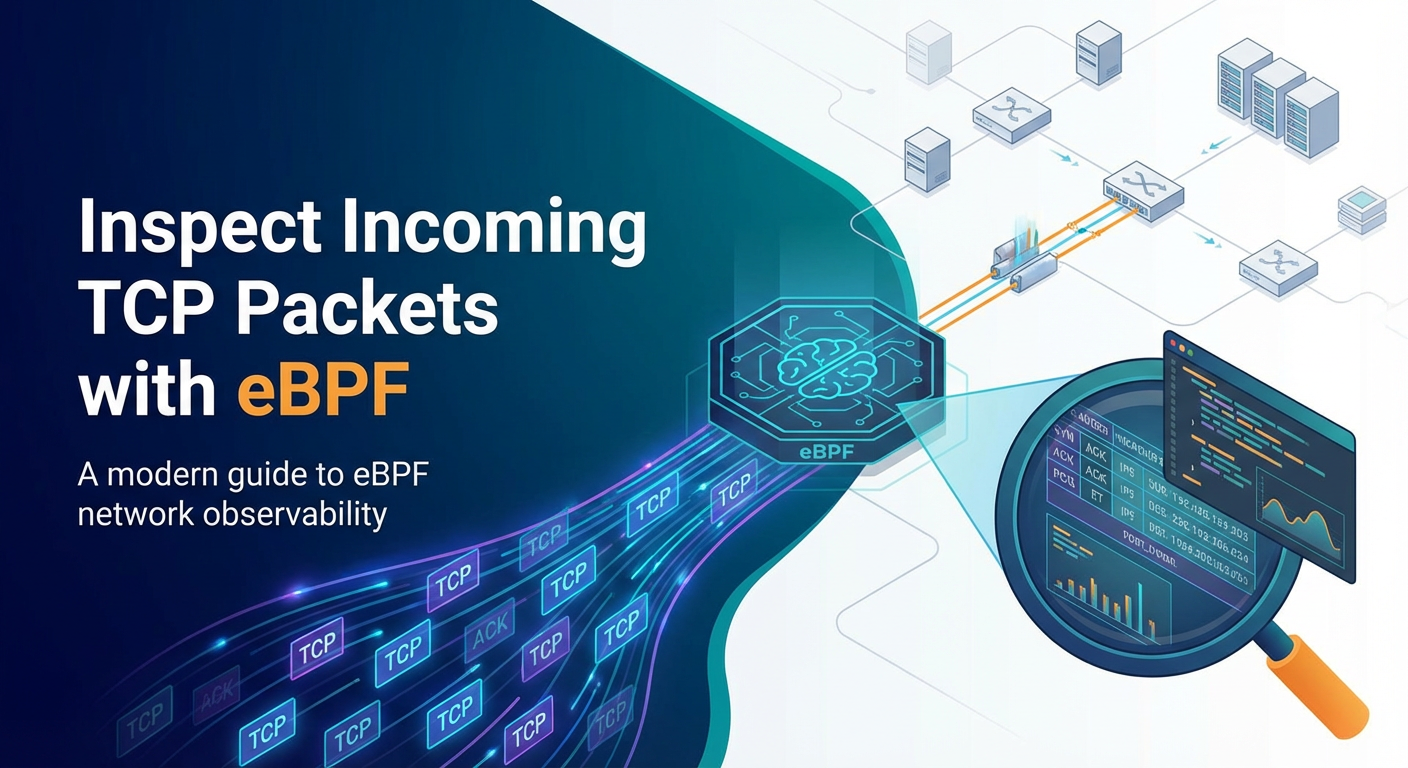


In the intricate world of modern computing, where every millisecond counts and network traffic is the lifeblood of applications, understanding and observing the flow of data is paramount. From debugging performance bottlenecks to fortifying security defenses, the ability to peek into the raw stream of incoming TCP packets offers invaluable insights. Traditional tools have long served this purpose, but with the advent of high-speed networks, containerized environments, and increasingly complex distributed systems, their limitations in terms of performance, safety, and dynamic adaptability have become apparent. This is where Extended Berkeley Packet Filter, or eBPF, emerges as a transformative technology, offering an unprecedented level of programmability and visibility deep within the Linux kernel.
eBPF is not merely an incremental improvement; it represents a paradigm shift in how we interact with the operating system. It allows developers to run custom, user-defined programs safely and efficiently within the kernel, triggered by various events—including, crucially, network packet ingress. This kernel-level programmability bypasses the need for costly context switches to user space for processing, enabling real-time analysis and even manipulation of network traffic at the earliest possible stages. Imagine being able to filter, count, or even modify packets before they fully enter the kernel's networking stack, all without modifying the kernel source code or rebooting the system. This capability transforms the landscape of network observability, security, and performance optimization, moving beyond the static limitations of traditional tools like tcpdump or netfilter rules.
The objective of this comprehensive guide is to demystify the process of inspecting incoming TCP packets using eBPF. We will embark on a journey from understanding the foundational concepts of TCP/IP networking, through the intricacies of eBPF architecture, to practical, hands-on examples demonstrating how to write and deploy eBPF programs for deep packet inspection. We will explore different eBPF attachment points, such as XDP (eXpress Data Path) and TC (Traffic Control), each offering unique advantages depending on the specific inspection goals. Ultimately, by the end of this exploration, readers will possess a robust understanding of how to leverage eBPF to gain unparalleled visibility into their network traffic, unlocking new dimensions of system monitoring and control. This deep kernel-level insight can often reveal critical information that informs the design and operation of higher-level networking components, sometimes even influencing the internal workings of sophisticated network gateway solutions, by providing granular control over traffic flow and enabling highly optimized data plane logic. The power of eBPF thus extends far beyond simple packet capture, offering a programmable api to the kernel's most fundamental operations.
Understanding TCP/IP Fundamentals for eBPF Inspection
Before diving into the specifics of eBPF programming, a solid grasp of the underlying network protocols, particularly TCP/IP, is indispensable. eBPF programs, especially those dealing with raw network packets, operate at a very low level, requiring the programmer to manually parse network headers and interpret their contents. Without this foundational knowledge, crafting effective and accurate eBPF solutions for packet inspection would be akin to trying to read a foreign language without knowing its alphabet or grammar.
The TCP/IP model, a conceptual framework for how networked devices communicate, is typically divided into four or five layers, depending on the model variation. For our purposes of inspecting incoming TCP packets, we will primarily focus on the Data Link Layer (Layer 2), Network Layer (Layer 3), and Transport Layer (Layer 4). Each layer encapsulates data from the layer above it, adding its own header information before passing it down the stack. When a packet arrives at an interface, eBPF can intercept it at various stages, allowing us to examine these headers in reverse order of encapsulation.
At the lowest level of our interest, the Data Link Layer, we encounter the Ethernet header. This header contains the source and destination MAC (Media Access Control) addresses, which uniquely identify network interfaces within a local network segment. It also includes an EtherType field, which indicates the protocol of the payload, often IP (IPv4 or IPv6). Understanding how to parse the Ethernet header is the very first step in an eBPF program that intercepts raw packets, as it provides the initial offset to the subsequent IP header.
Moving up to the Network Layer, we encounter the IP (Internet Protocol) header. This header is crucial for routing packets across different networks and contains information such as the source IP address, destination IP address, total length of the IP packet, and a "Protocol" field. The Protocol field is particularly important for TCP inspection, as it specifies the next-level protocol carried in the IP payload—for TCP, this value is 6. The IP header also includes a Time-To-Live (TTL) field, which prevents packets from looping indefinitely on the network, and a header checksum for error detection. Parsing the IP header allows us to identify the communicating hosts and determine if the packet indeed contains a TCP segment.
Finally, at the Transport Layer, we reach the TCP (Transmission Control Protocol) header. TCP is a connection-oriented, reliable protocol, meaning it establishes a connection before transmitting data, ensures ordered delivery, and provides error checking and flow control. The TCP header is rich with information critical for understanding the state and nature of a network conversation. Key fields within the TCP header include:
- Source Port and Destination Port: These 16-bit numbers identify the application or service on the respective hosts that the packet belongs to. For instance, port 80 typically indicates HTTP traffic, and port 443 HTTPS.
- Sequence Number: A 32-bit number representing the sequence number of the first data byte in this segment (unless SYN is present). This is crucial for TCP's reliability and ordering.
- Acknowledgment Number: A 32-bit number, if the ACK flag is set, this is the next sequence number the sender of the ACK is expecting to receive.
- Data Offset (Header Length): Specifies the length of the TCP header in 32-bit words, indicating where the actual data payload begins.
- Reserved: Six bits reserved for future use, always set to zero.
- Flags (Control Bits): These nine bits are fundamental to TCP's operation and state management.
- URG (Urgent): Indicates that the Urgent pointer field is significant.
- ACK (Acknowledgment): Indicates that the Acknowledgment number field is significant.
- PSH (Push): Request to push buffered data to the receiving application.
- RST (Reset): Abort a connection.
- SYN (Synchronize): Initiate a connection.
- FIN (Finish): Terminate a connection.
- ECN (Explicit Congestion Notification) and CWR (Congestion Window Reduced): Related to congestion control.
- Window Size: A 16-bit field indicating the number of data bytes the sender of this segment is willing to accept, used for flow control.
- Checksum: A 16-bit field used for error detection over the entire TCP segment (header + data).
- Urgent Pointer: If URG flag is set, this 16-bit field indicates an offset from the sequence number, pointing to the last byte of urgent data.
- Options: Variable-length field for various TCP options, such as Maximum Segment Size (MSS), Window Scale, and Timestamps.
Understanding the various TCP states (SYN-SENT, SYN-RECEIVED, ESTABLISHED, FIN-WAIT-1, CLOSE-WAIT, etc.) and how they transition based on these flags is also vital. For example, a packet with only the SYN flag set indicates a new connection attempt, while a packet with SYN and ACK flags set is a response to a SYN, part of the TCP three-way handshake. Inspecting these flags is a common requirement for eBPF programs aimed at security or connection tracking.
When an eBPF program receives a packet, it typically gets a pointer to the raw packet data. The programmer must then manually cast this pointer to an ethhdr (Ethernet header) structure, calculate the offset to the iphdr (IP header) based on the Ethernet header's length, and subsequently calculate the offset to the tcphdr (TCP header) based on the IP header's length. This meticulous byte-level parsing is a core responsibility of eBPF programs dealing with raw network frames, underlining why a strong foundation in TCP/IP header structure is not just beneficial, but absolutely essential for effective eBPF packet inspection.
Introduction to eBPF: The Basics
eBPF has revolutionized how we observe, secure, and optimize Linux systems. At its core, eBPF is a highly flexible and efficient virtual machine that resides within the Linux kernel. It allows developers to write and execute small, sandboxed programs in kernel space, triggered by various events. This innovative approach provides an unprecedented level of programmability without requiring changes to the kernel source code or recompilation, ensuring system stability and broad applicability across different kernel versions.
The historical roots of eBPF trace back to the classic Berkeley Packet Filter (BPF), originally designed in the early 1990s to efficiently filter packets for tools like tcpdump. Classic BPF was a simple, register-based virtual machine, but it had limitations in terms of program complexity and the types of kernel events it could attach to. In 2014, a significant evolution occurred with the introduction of "extended BPF" or eBPF, which dramatically expanded its capabilities. eBPF introduced a more powerful instruction set, additional registers, helper functions, and most importantly, the ability to attach to a vast array of kernel events beyond just packet filtering, including system calls, tracepoints, kernel probes (kprobes), and user probes (uprobes), as well as network device drivers via XDP and the traffic control subsystem via TC.
The fundamental operation of eBPF involves a user-space program that loads an eBPF bytecode program into the kernel. Before execution, this bytecode undergoes a stringent verification process by the eBPF verifier, a critical security component. The verifier ensures that the eBPF program is safe to run in kernel space: it must terminate (no infinite loops), not crash the kernel, and not access memory outside its allocated stack or map boundaries. This sandboxing mechanism is what makes eBPF so powerful yet secure, as it prevents malicious or buggy programs from compromising the entire system. Once verified, the eBPF bytecode is often Just-In-Time (JIT) compiled into native machine code, providing near-native execution speed, which is a key factor in its high performance.
eBPF programs are event-driven. They don't run continuously but are invoked only when a specific event occurs at their designated attachment point. For network inspection, common attachment points include:
- XDP (eXpress Data Path): Attaches at the earliest possible point in the network driver, even before the packet is fully processed by the kernel's networking stack. This allows for extremely high-performance packet processing, enabling actions like dropping, redirecting, or modifying packets with minimal overhead. It's ideal for DDoS mitigation, load balancing, and high-volume packet filtering.
- TC (Traffic Control): Attaches to the Linux traffic control subsystem, typically
ingressoregressqueues. Programs attached here can perform more sophisticated classification, shaping, and scheduling of packets. They have access to a richer context (__sk_buff) than XDP programs, including information about the socket buffer, which might contain metadata added by earlier kernel processing. - Socket Filters: These are traditional BPF programs that filter packets delivered to a specific socket. While not as versatile as XDP or TC for general ingress inspection, they are useful for optimizing specific application sockets.
- Kprobes/Uprobes and Tracepoints: These allow eBPF programs to attach to virtually any kernel function (kprobes) or user-space function (uprobes), or to statically defined instrumentation points in the kernel (tracepoints). While not directly on the packet path, they can be used to observe kernel functions that handle incoming packets, providing insight into internal kernel logic or application behavior in response to network events.
eBPF programs typically communicate with user space and store state using eBPF Maps. These are generic key-value data structures residing in kernel memory, accessible by both eBPF programs and user-space applications. Maps are fundamental for collecting statistics (e.g., packet counts), storing configuration parameters, or sharing complex data structures between multiple eBPF programs or between an eBPF program and its user-space counterpart. There are various map types, including hash maps, array maps, ring buffers, and perf event maps, each optimized for different use cases.
Another crucial aspect of eBPF are eBPF Helper Functions. These are predefined kernel functions that eBPF programs can call to perform specific tasks, such as accessing packet data, interacting with maps, printing debug messages (bpf_printk), or generating random numbers. These helpers provide a safe and controlled api for eBPF programs to interact with kernel resources, ensuring the integrity of the system while extending the capabilities of the eBPF virtual machine. Without them, eBPF programs would be severely limited in their ability to perform complex operations within the kernel context. This structured api for kernel interaction is one of the pillars of eBPF's security and power.
Developing eBPF applications often involves a combination of C (for the kernel-space eBPF program) and a higher-level language like Python or Go (for the user-space loader and interaction). Tools like BCC (BPF Compiler Collection) and libbpf are instrumental in this process. BCC provides a rich Python framework that simplifies writing, compiling, loading, and interacting with eBPF programs, often compiling C code on-the-fly. libbpf offers a more robust, lower-level C/C++ library for working with eBPF, often leveraging BTF (BPF Type Format) for stable and efficient interaction with kernel data structures. For initial development and rapid prototyping, BCC is generally more accessible, while libbpf is preferred for production-grade applications due to its stability and reduced dependency footprint. The bpftool utility is also invaluable for inspecting loaded eBPF programs, maps, and events.
The flexibility and performance of eBPF mean it underpins a vast array of modern infrastructure. It's used in network observability tools (like Cilium, Falco), security firewalls, load balancers, service meshes, and performance monitoring agents. This deep-seated capability to observe and influence kernel operations is what makes eBPF a cornerstone for future-proof networking and system management. This foundational technology provides low-level apis for the kernel, allowing developers to craft custom network and security logic. These capabilities can be leveraged by sophisticated network gateway solutions, such as next-generation firewalls or load balancers, to implement highly performant and programmable data plane logic, enhancing features like traffic filtering, routing, and deep packet inspection before traffic even reaches user-space applications. For instance, a high-performance gateway could use eBPF at the XDP layer to detect and drop malicious traffic with extreme efficiency.
Setting Up Your eBPF Development Environment
Embarking on the journey of eBPF development requires a properly configured environment. While eBPF programs themselves are written in a C-like language and compile to BPF bytecode, the ecosystem involves several tools and dependencies to facilitate development, compilation, loading, and interaction. A well-prepared setup will significantly smooth the learning curve and allow you to focus on the logic of your eBPF programs rather than wrestling with build issues.
The core requirement for any eBPF development is a relatively modern Linux kernel. While basic eBPF functionality has been available since kernel 3.18 (released in late 2014), many of the features crucial for advanced network inspection, such as XDP, bpf_skb_load_bytes, and various helper functions, have been introduced in later versions. It is generally recommended to use a kernel version 4.9 or newer; however, for full access to the latest eBPF capabilities and improved stability with tools like libbpf and BTF (BPF Type Format), a kernel version 5.x or later is highly advisable. Most modern Linux distributions (Ubuntu 20.04+, Fedora 33+, Debian 11+, RHEL 8+) ship with kernels that meet these requirements. You can check your kernel version using uname -r.
Beyond the kernel, you'll need a set of development tools:
- Clang and LLVM: These are the compilers responsible for translating your C-like eBPF code into BPF bytecode. Clang (C language family frontend) and LLVM (Low Level Virtual Machine) are indispensable. Ensure you have a recent version installed, as older versions might lack necessary eBPF features or have compatibility issues. On Debian/Ubuntu, you would typically install
clangandllvmpackages. On Fedora/RHEL, it might beclangandllvm-devel. - Kernel Headers: For your eBPF program to correctly interpret kernel data structures (like
struct ethhdr,struct iphdr,struct tcphdr,struct __sk_buff), it needs access to the kernel's header files. These headers provide the definitions for these structures and constants. The version of the kernel headers must precisely match your running kernel. On Debian/Ubuntu, this is usuallylinux-headers-$(uname -r). On Fedora/RHEL, it'skernel-devel. - Git: Essential for cloning eBPF development tools and examples from repositories.
- BCC (BPF Compiler Collection): For beginners, BCC is an excellent starting point. It provides a rich Python framework and command-line tools that greatly simplify writing, compiling, loading, and interacting with eBPF programs. BCC handles the complexity of linking against kernel headers, compiling with Clang/LLVM, and loading programs into the kernel. While it's great for development and prototyping, its runtime dependencies (Python, LLVM) can be heavy for production use.
- Installation for Ubuntu/Debian:
sudo apt-get install bpfcc-tools linux-headers-$(uname -r) python3-bpfcc - Installation for Fedora/RHEL:
sudo dnf install bcc bcc-tools python3-bcc kernel-devel - You might also need
cmakefor building BCC from source if binary packages are not available or up-to-date for your distribution.
- Installation for Ubuntu/Debian:
libbpfandbpftool: For more advanced users or production deployments,libbpfis the standard. It's a C/C++ library that offers a more lightweight and stable way to interact with eBPF, often leveraging BTF (BPF Type Format) for compile-once, run-anywhere eBPF programs.bpftoolis a low-level utility provided by the kernel for managing eBPF programs and maps. These are typically part of thelinux-toolsorbpftoolpackages on most distributions.- Installation for Ubuntu/Debian:
sudo apt-get install linux-tools-$(uname -r) bpftool - Installation for Fedora/RHEL:
sudo dnf install bpftool
- Installation for Ubuntu/Debian:
After installing these prerequisites, it's a good practice to test your setup with a simple "Hello World" eBPF program. A common example involves attaching an eBPF program to a tracepoint (e.g., sys_enter_openat) and printing a message to trace_pipe.
// hello.c (eBPF program)
#include <linux/bpf.h>
#include <bpf/bpf_helpers.h>

char LICENSE[] SEC("license") = "Dual BSD/GPL";

SEC("tracepoint/syscalls/sys_enter_openat")
int hello_world(void *ctx) {
    bpf_printk("Hello, eBPF World! sys_enter_openat called.\n");
    return 0;
}
# hello_user.py (User-space loader using BCC)
from bcc import BPF
import time

b = BPF(text='''
#include <linux/bpf.h>
#include <bpf/bpf_helpers.h>

char LICENSE[] SEC("license") = "Dual BSD/GPL";

SEC("tracepoint/syscalls/sys_enter_openat")
int hello_world(void *ctx) {
    bpf_printk("Hello, eBPF World! sys_enter_openat called.\\n");
    return 0;
}
''')

print("Tracing sys_enter_openat... Press Ctrl-C to stop.")

# Print any messages from bpf_printk
b.trace_print()
To run this: 1. Save the Python code as hello_user.py. 2. Execute sudo python3 hello_user.py. 3. In another terminal, try opening a file, e.g., ls /tmp. 4. You should see "Hello, eBPF World! sys_enter_openat called." in the hello_user.py output.
This basic test confirms that your eBPF environment is correctly set up, your kernel supports eBPF, clang/llvm are functional, and BCC can load programs. With this foundation, you are ready to explore more complex eBPF programs for network packet inspection.
APIPark is a high-performance AI gateway that allows you to securely access the most comprehensive LLM APIs globally on the APIPark platform, including OpenAI, Anthropic, Mistral, Llama2, Google Gemini, and more.Try APIPark now! 👇👇👇
Inspecting Incoming TCP Packets with eBPF: Practical Approaches
Inspecting incoming TCP packets with eBPF offers unparalleled visibility and control at the kernel level. The choice of attachment point for your eBPF program is critical, as it dictates when in the packet's journey your program will execute, what context it will have access to, and what actions it can perform. We will explore three primary approaches: XDP for ultra-early processing, TC for more contextual analysis, and Kprobes for observing kernel network function calls.
Approach 1: Using XDP (eXpress Data Path) for Early Packet Processing
XDP is the earliest point at which an eBPF program can interact with an incoming packet. It attaches directly to the network interface card (NIC) driver, allowing the eBPF program to run even before the packet is fully allocated into an sk_buff (socket buffer) and processed by the generic Linux networking stack. This "zero-copy" architecture significantly reduces overhead, making XDP ideal for high-performance use cases like DDoS mitigation, load balancing, or very high-volume packet filtering and forwarding.
Advantages of XDP: * Extreme Performance: Executes at the absolute earliest point, often directly on the network driver's receive queue, minimizing CPU cycles and memory allocations. * Packet Manipulation: Can drop packets, redirect them to other interfaces or CPU cores, or modify them in place. * Stateless Processing: Ideal for operations that don't require extensive kernel context.
Disadvantages of XDP: * Raw Packet Processing: eBPF programs must manually parse Ethernet, IP, and TCP headers from the raw packet data (xdp_md context). * Limited Context: Does not have access to the sk_buff structure or higher-level kernel network stack information. * Driver Support: Requires NIC drivers that explicitly support XDP.
Example: An XDP program to identify and count incoming SYN packets
This example demonstrates an XDP program that intercepts all incoming packets, parses their headers, identifies TCP SYN packets (the first step in a TCP handshake), and counts them in an eBPF map. The user-space program then periodically reads this count.
// xdp_syn_counter.c (eBPF program)
#include <linux/bpf.h>
#include <linux/if_ether.h>
#include <linux/ip.h>
#include <linux/tcp.h>
#include <bpf/bpf_helpers.h>
#include <bpf/bpf_endian.h> // For bpf_ntohs

// Define an eBPF map to store SYN packet counts
struct {
    __uint(type, BPF_MAP_TYPE_ARRAY);
    __uint(max_entries, 1); // Only one entry for a global counter
    __type(key, __u32);
    __type(value, __u64);
} syn_count_map SEC(".maps");

char LICENSE[] SEC("license") = "Dual BSD/GPL";

SEC("xdp")
int xdp_syn_counter(struct xdp_md *ctx) {
    void *data_end = (void *)(long)ctx->data_end;
    void *data = (void *)(long)ctx->data;

    struct ethhdr *eth = data;
    if (eth + 1 > data_end) {
        return XDP_PASS; // Packet too short for Ethernet header
    }

    // Check if it's an IPv4 packet
    if (bpf_ntohs(eth->h_proto) != ETH_P_IP) {
        return XDP_PASS; // Not IPv4, pass to kernel
    }

    struct iphdr *ip = data + sizeof(*eth);
    if (ip + 1 > data_end) {
        return XDP_PASS; // Packet too short for IP header
    }

    // Check if it's a TCP packet
    if (ip->protocol != IPPROTO_TCP) {
        return XDP_PASS; // Not TCP, pass to kernel
    }

    // Calculate TCP header offset
    __u16 ip_hdr_len = ip->ihl * 4; // ip->ihl is in 4-byte words
    struct tcphdr *tcp = (void *)ip + ip_hdr_len;
    if (tcp + 1 > data_end) {
        return XDP_PASS; // Packet too short for TCP header
    }

    // Check for SYN flag (and no ACK)
    // TCP flags are in tcp->flags. SYN is bit 1 (0x02)
    // We only care about pure SYN packets, not SYN-ACK, etc.
    if ((tcp->syn == 1) && (tcp->ack == 0)) {
        __u32 key = 0; // Key for our single-entry map
        __u64 *count = bpf_map_lookup_elem(&syn_count_map, &key);
        if (count) {
            __sync_fetch_and_add(count, 1); // Atomically increment counter
            // bpf_printk("SYN packet detected from %u.%u.%u.%u:%d\n",
            //             (ip->saddr >> 0) & 0xFF, (ip->saddr >> 8) & 0xFF,
            //             (ip->saddr >> 16) & 0xFF, (ip->saddr >> 24) & 0xFF,
            //             bpf_ntohs(tcp->source));
        }
    }

    return XDP_PASS; // Pass the packet to the normal network stack
}
# xdp_syn_counter_user.py (User-space loader using BCC)
from bcc import BPF
import time
import sys

# Define the network interface to attach XDP program
if len(sys.argv) < 2:
    print("Usage: %s <interface>" % sys.argv[0])
    sys.exit(1)
interface = sys.argv[1]

# Load the eBPF program from string
b = BPF(text='''
#include <linux/bpf.h>
#include <linux/if_ether.h>
#include <linux/ip.h>
#include <linux/tcp.h>
#include <bpf/bpf_helpers.h>
#include <bpf/bpf_endian.h>

struct {
    __uint(type, BPF_MAP_TYPE_ARRAY);
    __uint(max_entries, 1);
    __type(key, __u32);
    __type(value, __u64);
} syn_count_map SEC(".maps");

char LICENSE[] SEC("license") = "Dual BSD/GPL";

SEC("xdp")
int xdp_syn_counter(struct xdp_md *ctx) {
    void *data_end = (void *)(long)ctx->data_end;
    void *data = (void *)(long)ctx->data;

    struct ethhdr *eth = data;
    if (eth + 1 > data_end) {
        return XDP_PASS;
    }

    if (bpf_ntohs(eth->h_proto) != ETH_P_IP) {
        return XDP_PASS;
    }

    struct iphdr *ip = data + sizeof(*eth);
    if (ip + 1 > data_end) {
        return XDP_PASS;
    }

    if (ip->protocol != IPPROTO_TCP) {
        return XDP_PASS;
    }

    __u16 ip_hdr_len = ip->ihl * 4;
    struct tcphdr *tcp = (void *)ip + ip_hdr_len;
    if (tcp + 1 > data_end) {
        return XDP_PASS;
    }

    if ((tcp->syn == 1) && (tcp->ack == 0)) {
        __u32 key = 0;
        __u64 *count = bpf_map_lookup_elem(&syn_count_map, &key);
        if (count) {
            __sync_fetch_and_add(count, 1);
        }
    }

    return XDP_PASS;
}
''')

# Attach the XDP program to the specified interface
try:
    b.attach_xdp(device=interface, fn=b.get_function("xdp_syn_counter"))
    print(f"XDP program attached to {interface}. Counting SYN packets... Press Ctrl-C to stop.")

    # Get a reference to the eBPF map
    syn_count_map = b.get_table("syn_count_map")

    while True:
        try:
            # Read the count from the map
            key = ctypes.c_uint32(0)
            count_ptr = syn_count_map[key]
            current_count = count_ptr.value if count_ptr else 0
            print(f"[{time.strftime('%H:%M:%S')}] Total incoming SYN packets: {current_count}")
            time.sleep(2)
        except KeyboardInterrupt:
            break
except Exception as e:
    print(f"Failed to attach XDP program: {e}")
    print("Ensure the specified interface exists and supports XDP, and you have root privileges.")
    print("Common reasons for failure: NIC driver does not support XDP, or incorrect interface name.")

finally:
    # Detach the XDP program
    if 'b' in locals() and b.current_xdp_maps:
        b.remove_xdp(device=interface)
        print(f"XDP program detached from {interface}.")
To run this: 1. Save the Python code as xdp_syn_counter_user.py. 2. Identify your network interface (e.g., eth0, enp0s3). You can use ip a to find it. 3. Execute sudo python3 xdp_syn_counter_user.py <your_interface_name>. 4. In another terminal, try initiating TCP connections, e.g., nc -zv google.com 80 or curl google.com. You should see the SYN packet count increase in your xdp_syn_counter_user.py output.
This example demonstrates how XDP programs must meticulously handle packet data, using data and data_end pointers to ensure safe memory access within the packet buffer. bpf_ntohs is used to convert network byte order to host byte order for multi-byte fields like h_proto. The __sync_fetch_and_add helper is essential for atomically incrementing shared counters in eBPF maps, preventing race conditions.
Approach 2: Using TC (Traffic Control) for More Contextual Analysis
TC eBPF programs attach to the Linux traffic control subsystem, specifically to ingress (incoming) or egress (outgoing) queues. This attachment point is slightly later in the packet's journey than XDP, but it provides access to the sk_buff structure, which contains a wealth of metadata about the packet that the kernel has already parsed or generated. This makes TC eBPF programs suitable for more complex classification, filtering, and packet modification tasks where additional kernel context is beneficial.
Advantages of TC: * Rich Context: Access to the sk_buff structure (__sk_buff in eBPF context), providing more information about the packet (e.g., ingress device, socket information, marks). * Flexible Operations: Can perform actions like dropping, redirecting, marking, or modifying packets with greater sophistication. * Integration with TC Qdisc: Can be integrated with existing tc queuing disciplines for advanced traffic management.
Disadvantages of TC: * Slightly Higher Overhead: Executes after some initial kernel processing compared to XDP. * Still Kernel-Level: Requires careful management of pointers and offsets within the sk_buff structure.
Example: A TC program to inspect incoming TCP packets for a specific destination port and log connection attempts
This example monitors incoming TCP traffic for a specific destination port (e.g., 80 for HTTP) and logs the source IP and port of clients attempting to connect. It uses a BPF_MAP_TYPE_PERF_EVENT_ARRAY to send event data to user space.
// tc_port_monitor.c (eBPF program)
#include <linux/bpf.h>
#include <linux/if_ether.h>
#include <linux/ip.h>
#include <linux/tcp.h>
#include <bpf/bpf_helpers.h>
#include <bpf/bpf_endian.h>

// Struct to send data to user space via perf event
struct conn_info {
    __u32 saddr;
    __u16 sport;
    __u16 dport;
    __u8  tcp_flags; // SYN, ACK, etc.
};

// Define an eBPF map for perf events
struct {
    __uint(type, BPF_MAP_TYPE_PERF_EVENT_ARRAY);
    __uint(key_size, sizeof(__u32)); // CPU ID
    __uint(value_size, sizeof(__u32)); // Dummy value
} events SEC(".maps");

// Define a variable to hold the target destination port (e.g., HTTP = 80)
// This can be configured by user space using a BPF_MAP_TYPE_ARRAY or other means
// For simplicity, we hardcode it here, but in production, maps are preferred.
volatile const __u16 TARGET_DPORT = 80; // Example: HTTP port

char LICENSE[] SEC("license") = "Dual BSD/GPL";

SEC("tc")
int tc_port_monitor(struct __sk_buff *skb) {
    void *data_end = (void *)(long)skb->data_end;
    void *data = (void *)(long)skb->data;

    struct ethhdr *eth = data;
    if (eth + 1 > data_end) {
        return TC_ACT_OK;
    }

    if (bpf_ntohs(eth->h_proto) != ETH_P_IP) {
        return TC_ACT_OK;
    }

    struct iphdr *ip = data + sizeof(*eth);
    if (ip + 1 > data_end) {
        return TC_ACT_OK;
    }

    if (ip->protocol != IPPROTO_TCP) {
        return TC_ACT_OK;
    }

    __u16 ip_hdr_len = ip->ihl * 4;
    struct tcphdr *tcp = (void *)ip + ip_hdr_len;
    if (tcp + 1 > data_end) {
        return TC_ACT_OK;
    }

    // Check if it's a SYN packet for the target destination port
    if ((tcp->syn == 1) && (tcp->ack == 0) && (bpf_ntohs(tcp->dest) == TARGET_DPORT)) {
        struct conn_info info = {
            .saddr = bpf_ntohl(ip->saddr),
            .sport = bpf_ntohs(tcp->source),
            .dport = bpf_ntohs(tcp->dest),
            .tcp_flags = tcp->syn | (tcp->ack << 1) | (tcp->fin << 2) | (tcp->rst << 3), // Store relevant flags
        };
        // Send the event to user space
        bpf_perf_event_output(skb, &events, BPF_F_CURRENT_CPU, &info, sizeof(info));
    }

    return TC_ACT_OK; // Allow packet to continue processing
}
# tc_port_monitor_user.py (User-space loader using BCC)
from bcc import BPF
import time
import sys
import ctypes as ct
import struct

# Define the network interface
if len(sys.argv) < 2:
    print("Usage: %s <interface> [target_port]" % sys.argv[0])
    sys.exit(1)
interface = sys.argv[1]
target_port = int(sys.argv[2]) if len(sys.argv) > 2 else 80

# Structure for perf event data
class ConnInfo(ct.Structure):
    _fields_ = [
        ("saddr", ct.c_uint32),
        ("sport", ct.c_uint16),
        ("dport", ct.c_uint16),
        ("tcp_flags", ct.c_uint8),
    ]

# Load the eBPF program from string
bpf_text = f'''
#include <linux/bpf.h>
#include <linux/if_ether.h>
#include <linux/ip.h>
#include <linux/tcp.h>
#include <bpf/bpf_helpers.h>
#include <bpf/bpf_endian.h>

struct conn_info {{
    __u32 saddr;
    __u16 sport;
    __u16 dport;
    __u8  tcp_flags;
}};

struct {{
    __uint(type, BPF_MAP_TYPE_PERF_EVENT_ARRAY);
    __uint(key_size, sizeof(__u32));
    __uint(value_size, sizeof(__u32));
}} events SEC(".maps");

volatile const __u16 TARGET_DPORT = {target_port};

char LICENSE[] SEC("license") = "Dual BSD/GPL";

SEC("tc")
int tc_port_monitor(struct __sk_buff *skb) {{
    void *data_end = (void *)(long)skb->data_end;
    void *data = (void *)(long)skb->data;

    struct ethhdr *eth = data;
    if (eth + 1 > data_end) {{
        return TC_ACT_OK;
    }}

    if (bpf_ntohs(eth->h_proto) != ETH_P_IP) {{
        return TC_ACT_OK;
    }}

    struct iphdr *ip = data + sizeof(*eth);
    if (ip + 1 > data_end) {{
        return TC_ACT_OK;
    }}

    if (ip->protocol != IPPROTO_TCP) {{
        return TC_ACT_OK;
    }}

    __u16 ip_hdr_len = ip->ihl * 4;
    struct tcphdr *tcp = (void *)ip + ip_hdr_len;
    if (tcp + 1 > data_end) {{
        return TC_ACT_OK;
    }}

    if ((tcp->syn == 1) && (tcp->ack == 0) && (bpf_ntohs(tcp->dest) == TARGET_DPORT)) {{
        struct conn_info info = {{
            .saddr = bpf_ntohl(ip->saddr),
            .sport = bpf_ntohs(tcp->source),
            .dport = bpf_ntohs(tcp->dest),
            .tcp_flags = tcp->syn | (tcp->ack << 1) | (tcp->fin << 2) | (tcp->rst << 3),
        }};
        bpf_perf_event_output(skb, &events, BPF_F_CURRENT_CPU, &info, sizeof(info));
    }}

    return TC_ACT_OK;
}}
'''

b = BPF(text=bpf_text)

# Function to convert IP address from integer to string
def ip_to_str(ip_int):
    return socket.inet_ntoa(struct.pack("<L", ip_int))

# Callback for perf event
def print_event(cpu, data, size):
    event = ct.cast(data, ct.POINTER(ConnInfo)).contents
    saddr_str = ip_to_str(event.saddr)
    # Check TCP flags (bit 0 = SYN, bit 1 = ACK, bit 2 = FIN, bit 3 = RST)
    flags = []
    if event.tcp_flags & 0x01: flags.append("SYN")
    if event.tcp_flags & 0x02: flags.append("ACK")
    if event.tcp_flags & 0x04: flags.append("FIN")
    if event.tcp_flags & 0x08: flags.append("RST")
    flags_str = ",".join(flags) if flags else "NONE"

    print(f"[{time.strftime('%H:%M:%S')}] New connection attempt: {saddr_str}:{event.sport} -> :{event.dport} (Flags: {flags_str})")

# Attach TC program
# Need to add a qdisc and filter first
# sudo tc qdisc add dev <interface> clsact
# sudo tc filter add dev <interface> ingress bpf da obj <BPF_OBJ_FILE> sec tc
# For BCC, it simplifies this:
try:
    # Get the TC program function from BPF object
    fn = b.get_function("tc_port_monitor")
    # Attach TC program to ingress
    b.attach_tc(device=interface, fn=fn, direction=BPF.INGRESS)
    print(f"TC program attached to {interface} (ingress) for port {target_port}. Monitoring connection attempts... Press Ctrl-C to stop.")

    # Open the perf buffer
    b["events"].open_perf_buffer(print_event)

    import socket # Required for ip_to_str function

    while True:
        try:
            b.perf_buffer_poll()
            time.sleep(1)
        except KeyboardInterrupt:
            break
except Exception as e:
    print(f"Failed to attach TC program: {e}")
    print("Ensure the specified interface exists, you have root privileges, and 'tc qdisc add dev <interface> clsact' has been run (BCC often handles this, but manual might be needed on some systems).")

finally:
    # Detach TC program
    if 'b' in locals() and b.current_tc_handle:
        b.detach_tc(device=interface, direction=BPF.INGRESS)
        print(f"TC program detached from {interface}.")
    # Clean up qdisc if manually added and not managed by BCC
    # For robust cleanup: sudo tc qdisc del dev <interface> clsact
To run this: 1. Save the Python code as tc_port_monitor_user.py. 2. Execute sudo python3 tc_port_monitor_user.py <your_interface_name> [optional_target_port]. 3. In another terminal, try initiating connections to the target port on your machine (or a service running on it), e.g., nc -zv localhost 80 (if HTTP server is running). You should see events logged in the tc_port_monitor_user.py output.
This example highlights the use of bpf_perf_event_output to efficiently stream data from kernel space to user space, which is critical for logging or real-time monitoring. The volatile const keyword allows the TARGET_DPORT to be set at load time, making the eBPF program more flexible. Note the use of bpf_ntohl for IP addresses and bpf_ntohs for ports, ensuring correct byte order interpretation.
Approach 3: Using Kprobes/Kretprobes on Kernel Network Functions
Kprobes (kernel probes) allow eBPF programs to attach to the entry point of virtually any kernel function, while Kretprobes attach to the exit point. This approach is fundamentally different from XDP or TC, as it doesn't operate directly on the raw packet path. Instead, it observes events that occur as the kernel processes packets, providing rich context from the kernel's internal data structures and function arguments. This is particularly useful for debugging, tracing specific kernel behaviors, or understanding the flow of data at a higher semantic level.
Advantages of Kprobes: * Deep Kernel Insight: Access to function arguments and return values, providing high-level context about kernel operations. * Flexible Attachment: Can attach to a vast number of kernel functions related to networking, scheduling, memory, etc. * Observes Internal Logic: Useful for understanding how the kernel processes packets and connections.
Disadvantages of Kprobes: * Performance Overhead: Can introduce more overhead than XDP/TC, especially if probing frequently called functions. * Kernel Version Fragility: eBPF programs often rely on the exact signature and internal structure of kernel functions, which can change between kernel versions, leading to breakage. * Not for Raw Packet Processing: Primarily for event tracing, not for high-volume raw packet inspection or manipulation.
Example: Kprobe on tcp_v4_connect to observe new TCP connection attempts
This example attaches an eBPF program to the tcp_v4_connect kernel function, which is called when a TCP connection is initiated. It captures the source and destination IP addresses and ports of the outgoing connection attempt. While this is an outgoing connection function, it illustrates the principle of probing kernel functions relevant to TCP. For incoming, one might probe functions like tcp_rcv_synack or tcp_rcv_established.
// kprobe_tcp_connect.c (eBPF program)
#include <linux/bpf.h>
#include <linux/socket.h>
#include <linux/in.h>
#include <net/sock.h> // For struct sock
#include <bpf/bpf_helpers.h>
#include <bpf/bpf_endian.h>

// Struct to send data to user space via perf event
struct connect_event {
    __u32 pid;
    __u32 saddr;
    __u32 daddr;
    __u16 sport;
    __u16 dport;
};

// Define an eBPF map for perf events
struct {
    __uint(type, BPF_MAP_TYPE_PERF_EVENT_ARRAY);
    __uint(key_size, sizeof(__u32)); // CPU ID
    __uint(value_size, sizeof(__u32)); // Dummy value
} connect_events SEC(".maps");

char LICENSE[] SEC("license") = "Dual BSD/GPL";

// Probe the entry of tcp_v4_connect
SEC("kprobe/tcp_v4_connect")
int kprobe_tcp_v4_connect(struct pt_regs *ctx) {
    // tcp_v4_connect arguments (check kernel source for exact ABI)
    // On x86_64: RDI, RSI, RDX, RCX, R8, R9 for first 6 args
    // struct sock *sk is typically the first argument (RDI)
    struct sock *sk = (struct sock *)PT_REGS_PARM1(ctx);

    // Retrieve connection info from the socket structure
    // Note: Accessing kernel structs can be fragile across kernel versions.
    // Use bpf_probe_read_kernel() for safer access if struct layout changes.
    // For BCC, direct access might be stable for common fields.
    __u16 s_port = 0;
    __u16 d_port = 0;
    __u32 s_addr = 0;
    __u32 d_addr = 0;

    // Check if the socket is valid and is an IPv4 TCP socket
    if (sk && sk->__sk_common.skc_family == AF_INET && sk->__sk_common.skc_protocol == IPPROTO_TCP) {
        s_port = bpf_ntohs(sk->__sk_common.skc_num); // Local port
        d_port = bpf_ntohs(sk->__sk_common.skc_dport); // Remote port
        s_addr = bpf_ntohl(sk->__sk_common.skc_rcv_saddr); // Local address
        d_addr = bpf_ntohl(sk->__sk_common.skc_daddr); // Remote address
    } else {
        return 0; // Not a relevant socket
    }

    // Create an event struct and populate it
    struct connect_event event = {
        .pid = bpf_get_current_pid_tgid() >> 32, // Get PID
        .saddr = s_addr,
        .daddr = d_addr,
        .sport = s_port,
        .dport = d_port,
    };

    // Send the event to user space
    bpf_perf_event_output(ctx, &connect_events, BPF_F_CURRENT_CPU, &event, sizeof(event));

    return 0; // Kprobe should always return 0 to allow original function to run
}
# kprobe_tcp_connect_user.py (User-space loader using BCC)
from bcc import BPF
import ctypes as ct
import time
import socket
import struct

# Structure for perf event data
class ConnectEvent(ct.Structure):
    _fields_ = [
        ("pid", ct.c_uint32),
        ("saddr", ct.c_uint32),
        ("daddr", ct.c_uint32),
        ("sport", ct.c_uint16),
        ("dport", ct.c_uint16),
    ]

# Load the eBPF program from string
b = BPF(text='''
#include <linux/bpf.h>
#include <linux/socket.h>
#include <linux/in.h>
#include <net/sock.h>
#include <bpf/bpf_helpers.h>
#include <bpf/bpf_endian.h>

struct connect_event {
    __u32 pid;
    __u32 saddr;
    __u32 daddr;
    __u16 sport;
    __u16 dport;
};

struct {
    __uint(type, BPF_MAP_TYPE_PERF_EVENT_ARRAY);
    __uint(key_size, sizeof(__u32));
    __uint(value_size, sizeof(__u32));
} connect_events SEC(".maps");

char LICENSE[] SEC("license") = "Dual BSD/GPL";

SEC("kprobe/tcp_v4_connect")
int kprobe_tcp_v4_connect(struct pt_regs *ctx) {
    struct sock *sk = (struct sock *)PT_REGS_PARM1(ctx);

    __u16 s_port = 0;
    __u16 d_port = 0;
    __u32 s_addr = 0;
    __u32 d_addr = 0;

    if (sk && sk->__sk_common.skc_family == AF_INET && sk->__sk_common.skc_protocol == IPPROTO_TCP) {
        s_port = bpf_ntohs(sk->__sk_common.skc_num);
        d_port = bpf_ntohs(sk->__sk_common.skc_dport);
        s_addr = bpf_ntohl(sk->__sk_common.skc_rcv_saddr);
        d_addr = bpf_ntohl(sk->__sk_common.skc_daddr);
    } else {
        return 0;
    }

    struct connect_event event = {
        .pid = bpf_get_current_pid_tgid() >> 32,
        .saddr = s_addr,
        .daddr = d_addr,
        .sport = s_port,
        .dport = d_port,
    };

    bpf_perf_event_output(ctx, &connect_events, BPF_F_CURRENT_CPU, &event, sizeof(event));

    return 0;
}
''')

# Function to convert IP address from integer to string
def ip_to_str(ip_int):
    return socket.inet_ntoa(struct.pack("<L", ip_int))

# Callback for perf event
def print_event(cpu, data, size):
    event = ct.cast(data, ct.POINTER(ConnectEvent)).contents
    print(f"[{time.strftime('%H:%M:%S')}] PID {event.pid}: {ip_to_str(event.saddr)}:{event.sport} -> {ip_to_str(event.daddr)}:{event.dport}")

# Attach Kprobe
b.attach_kprobe(event="tcp_v4_connect", fn_name="kprobe_tcp_v4_connect")
print("Tracing TCP connect attempts via kprobe/tcp_v4_connect... Press Ctrl-C to stop.")

# Open the perf buffer
b["connect_events"].open_perf_buffer(print_event)

while True:
    try:
        b.perf_buffer_poll()
        time.sleep(1)
    except KeyboardInterrupt:
        break

# Detach Kprobe
b.detach_kprobe(event="tcp_v4_connect")
print("Kprobe detached.")
To run this: 1. Save the Python code as kprobe_tcp_connect_user.py. 2. Execute sudo python3 kprobe_tcp_connect_user.py. 3. In another terminal, try initiating any outgoing TCP connection, e.g., curl google.com, ping -c 1 8.8.8.8 (will trigger DNS lookup which uses TCP, or direct connect if applicable), or even a simple telnet localhost 22. You should see the connection details logged.
This example demonstrates how to extract parameters from a probed kernel function using PT_REGS_PARM1(ctx) (which maps to the first argument in struct pt_regs). It also shows how to access fields within kernel data structures like struct sock. The use of bpf_get_current_pid_tgid() helps associate the network event with the process that initiated it. This level of detail is invaluable for advanced debugging and security auditing.
Choosing the Right Attachment Point
The selection of the appropriate eBPF attachment point is paramount for the success and efficiency of your packet inspection task:
- XDP is your go-to for high-performance, early-stage raw packet processing. If your goal is to filter malicious traffic at line rate, implement custom load balancing, or perform simple, fast packet drops before the kernel expends resources, XDP is the optimal choice. It offers the lowest latency and highest throughput but requires manual header parsing and provides minimal kernel context.
- TC is ideal for more complex, contextual packet analysis and manipulation that still needs to operate early in the networking stack but can benefit from some kernel-provided metadata (the
sk_buffcontext). Use TC when you need to classify traffic based on richer criteria, perform advanced queuing, or apply policies that require more information than raw packet headers alone. It's a balance between performance and context. - Kprobes/Tracepoints are best suited for observing specific kernel network function calls or internal kernel behaviors. They are not designed for high-volume raw packet inspection but excel at tracing connection establishments, state changes, or data transfer events at a semantic level. Use them for debugging, auditing specific kernel paths, or understanding application interactions with the network stack. They provide the richest kernel context but come with potentially higher overhead and kernel version fragility.
Each approach offers a distinct vantage point into the flow of TCP packets, enabling developers and operators to tailor their eBPF solutions precisely to their observability and control requirements.
Advanced Techniques and Considerations
As you delve deeper into eBPF for TCP packet inspection, several advanced techniques and considerations become crucial for building robust, performant, and maintainable solutions. These aspects move beyond basic packet parsing and address practical challenges in real-world deployments.
Filtering and Data Extraction
While the examples above demonstrate basic filtering, real-world scenarios demand highly specific criteria. eBPF programs can implement complex filtering logic based on any combination of packet header fields: * Source/Destination IP Addresses: Match specific hosts or subnets. * Source/Destination Ports: Isolate traffic for particular applications or services. * TCP Flags: Differentiate between SYN, SYN-ACK, FIN, RST, or data packets. * Payload Inspection (Limited): While full deep packet inspection of application payloads is generally discouraged in eBPF due to performance and verifier limitations, basic checks for specific magic bytes or string patterns at known offsets might be feasible for very targeted use cases. However, this increases complexity and fragility. * Protocol Chain: Verify the entire protocol chain (e.g., Ethernet -> IPv4 -> TCP) to ensure the packet structure is as expected, preventing misinterpretation of malformed packets.
Efficient data extraction involves carefully calculating offsets and using bpf_skb_load_bytes() (for sk_buff based programs like TC) or direct pointer arithmetic (for XDP) to access the desired fields. It's crucial to always check data + offset + sizeof(struct) > data_end to prevent out-of-bounds memory access, which the verifier will strictly enforce.
Stateful Inspection with eBPF Maps
Many network inspection tasks require stateful analysis, such as tracking active connections, counting packets per flow, or detecting anomalies across a series of packets. eBPF maps are the cornerstone for maintaining state in kernel space: * Connection Tracking: A BPF_MAP_TYPE_HASH can store (source_ip, source_port, dest_ip, dest_port) as a key and (connection_state, start_timestamp, packet_count) as a value. This allows eBPF programs to monitor the lifecycle of TCP connections from SYN to FIN/RST. * Rate Limiting: Store a (IP_address, timestamp) pair to track the last packet received from an IP, enabling rate-based filtering. * Aggregation: Use maps to aggregate statistics (e.g., total bytes, packet counts) per IP address, port, or connection, which can then be periodically polled by user-space applications.
The atomic helper functions like __sync_fetch_and_add() are vital for safely updating map values in a multi-core environment.
Communicating with User Space
Effective eBPF solutions require robust communication channels between the kernel-resident eBPF program and its user-space controller and data consumers. * bpf_perf_event_output(): This helper function is designed for high-volume, asynchronous event streaming from kernel to user space. It writes data to per-CPU ring buffers, which user-space applications can read with minimal overhead. It's ideal for logging individual packet events, connection attempts, or alerts. * eBPF Maps (Polling): For aggregate statistics or configuration parameters, user-space applications can periodically read or update eBPF map entries. This is suitable for lower-frequency data exchange and control plane interactions. BPF_MAP_TYPE_ARRAY and BPF_MAP_TYPE_HASH are commonly used here.
Security Implications
While the eBPF verifier is robust, operating at the kernel level demands a heightened awareness of security: * Privilege: Loading eBPF programs typically requires CAP_BPF or CAP_SYS_ADMIN capabilities, limiting who can deploy them. * Verifier Bypass (Rare): Although extremely unlikely with modern kernels, a theoretical bug in the verifier could lead to kernel exploits. This is why keeping the kernel updated is crucial. * Side Channels: Sophisticated eBPF programs could potentially create side channels to leak kernel memory or information. * Resource Exhaustion: While the verifier prevents infinite loops, a poorly designed eBPF program could still consume excessive CPU cycles if triggered very frequently on a busy system.
Always review eBPF code thoroughly and ensure it adheres to best practices.
Performance Tuning
Optimizing eBPF programs is key to realizing their full potential: * Minimalist Logic: Keep eBPF programs as small and efficient as possible. Avoid complex calculations or unnecessary memory accesses. * Direct Access vs. Helper Calls: Sometimes direct pointer arithmetic is faster than bpf_skb_load_bytes() if the offset is fixed and known. * Map Choice: Select the appropriate map type for your access patterns (e.g., BPF_MAP_TYPE_HASH for sparse, arbitrary keys; BPF_MAP_TYPE_ARRAY for dense, integer-indexed keys). * JIT Compilation: Ensure JIT is enabled for your kernel, as it converts BPF bytecode to native machine code for maximum speed. * Early Exit: Implement early exit conditions (return XDP_PASS or TC_ACT_OK) for packets that don't match your criteria, reducing unnecessary processing.
Tooling Ecosystem
The eBPF ecosystem is rapidly evolving: * BCC vs. libbpf/BTF: While BCC is great for prototyping, libbpf with BTF (BPF Type Format) is increasingly preferred for production. BTF provides rich type information that allows libbpf to load programs compiled once on one kernel and run them safely on different kernel versions, solving the kernel version fragility issue. * bpftool: This indispensable utility from the kernel developers allows you to list loaded eBPF programs and maps, inspect their details, dump bytecode, and attach/detach programs manually. It's crucial for debugging and managing eBPF resources. * bpf_printk(): For basic debugging, bpf_printk() (which writes to trace_pipe) is your primary tool. Access cat /sys/kernel/debug/tracing/trace_pipe to see its output.
How eBPF Relates to Broader API and Gateway Concepts
eBPF, by providing a programmable api into the kernel's event system, fundamentally changes how network and system functionalities are built. It allows developers to craft highly customized and performant network and security logic directly at the source of all data—the Linux kernel. These low-level, high-performance capabilities form the bedrock upon which sophisticated network gateway solutions are constructed.
For instance, a modern network gateway, such as a firewall, a load balancer, or even a sophisticated service mesh proxy, can leverage eBPF to implement its data plane logic. eBPF programs can perform ultra-fast packet filtering, dynamic routing decisions, or deep packet inspection to enforce security policies and traffic management rules right at the network interface, often before the packet ever reaches user-space processes. This means that a gateway can achieve performance rivaling dedicated hardware, while retaining the flexibility of software. The eBPF programs act as the granular api for kernel-level network processing, allowing for precise control over how the gateway handles each packet.
This brings us to higher-level abstractions. While eBPF provides the foundational kernel apis and mechanisms for network processing, applications and services interact with each other through their own APIs. Managing these application-level APIs, particularly in a complex, distributed environment involving AI models or microservices, is a distinct but equally critical challenge. Platforms like ApiPark address this need. APIPark is an open-source AI gateway and API management platform that sits at a different layer of the stack. While eBPF ensures efficient and observable packet flow at the kernel level, APIPark simplifies the management and integration of application-specific APIs for services built upon that infrastructure. It offers a unified gateway for AI models and REST services, standardizing API formats, managing lifecycle, and enabling secure access.
In essence, eBPF provides the low-level apis for kernel interaction, allowing for the creation of incredibly efficient network primitives. These primitives can then be used by various infrastructure components, including intelligent network gateways. On top of this, platforms like ApiPark provide essential API management and gateway functionalities for applications, ensuring that the insights derived from kernel-level eBPF observation can be effectively utilized by higher-level services, and that those services themselves are exposed and managed through robust APIs. It's a layered approach: eBPF for deep kernel visibility and control, and platforms like APIPark for efficient, secure application-level API exposure and governance. This distinction highlights how the concept of an "api" varies across different layers of system architecture, from kernel system calls to web service interfaces, and how robust infrastructure relies on excellence at all levels.
Illustrative Table: Common TCP Packet Fields for eBPF Inspection
Understanding the structure of network packets is paramount when writing eBPF programs. This table summarizes common fields across the Ethernet, IP, and TCP headers that are frequently targeted for inspection, along with a conceptual way an eBPF program would access them.
| Field Name | Layer | Description | eBPF Access Method (Conceptual) |
|---|---|---|---|
| MAC Source | L2 | Ethernet Source Address (6 bytes) | ethhdr->h_source |
| MAC Destination | L2 | Ethernet Destination Address (6 bytes) | ethhdr->h_dest |
| EtherType | L2 | Indicates protocol in payload (e.g., ETH_P_IP for IPv4) |
bpf_ntohs(ethhdr->h_proto) |
| IP Source | L3 | Source IP Address (32-bit IPv4) | bpf_ntohl(iphdr->saddr) |
| IP Destination | L3 | Destination IP Address (32-bit IPv4) | bpf_ntohl(iphdr->daddr) |
| IP Protocol | L3 | Protocol of IP payload (e.g., IPPROTO_TCP for TCP) |
iphdr->protocol |
| IP Header Length | L3 | Length of IP header in 4-byte words | iphdr->ihl * 4 |
| TCP Source Port | L4 | TCP Source Port (16-bit) | bpf_ntohs(tcphdr->source) |
| TCP Destination Port | L4 | TCP Destination Port (16-bit) | bpf_ntohs(tcphdr->dest) |
| TCP Sequence Number | L4 | Sequence number of first data byte in segment | bpf_ntohl(tcphdr->seq) |
| TCP Acknowledgment | L4 | Acknowledgment number (if ACK flag set) | bpf_ntohl(tcphdr->ack_seq) |
| TCP Flags (SYN, ACK) | L4 | Control bits (e.g., tcphdr->syn, tcphdr->ack for individual bits; or tcphdr->doff for flag byte, requiring bitmasking) |
tcphdr->syn, tcphdr->ack, tcphdr->fin, etc. (or bitwise check on combined flag field) |
| TCP Window Size | L4 | Receiver's advertised window size for flow control | bpf_ntohs(tcphdr->window) |
| TCP Checksum | L4 | 16-bit checksum of TCP segment | tcphdr->check (typically not modified/validated by eBPF unless explicit need) |
| Payload Offset | L4+ | Offset to the start of the TCP data payload | (void *)tcp + (tcphdr->doff * 4) |
Note: bpf_ntohs (network to host short) and bpf_ntohl (network to host long) are eBPF helper macros used to convert 16-bit and 32-bit values from network byte order (big-endian) to the host's native byte order, which is crucial for correctly interpreting multi-byte fields like IP addresses and port numbers. ethhdr, iphdr, tcphdr refer to pointers to the respective C structures parsed from the raw packet data.
Conclusion
The journey through inspecting incoming TCP packets with eBPF reveals a powerful and transformative approach to network observability and control within the Linux kernel. We have explored the foundational principles of TCP/IP, the revolutionary architecture of eBPF, and practical applications across various attachment points: XDP for ultra-high-performance early processing, TC for more contextual analysis within the networking stack, and Kprobes for deep insight into specific kernel function calls. Each method offers a unique vantage point, enabling developers to precisely tailor their eBPF solutions to meet diverse requirements, from real-time traffic analysis and security enforcement to nuanced performance debugging.
eBPF's ability to safely execute user-defined programs in kernel space, combined with its JIT compilation and access to kernel data structures and helper functions, provides an unparalleled level of flexibility and efficiency. It transcends the limitations of traditional tools by offering programmable, dynamic, and high-performance kernel interaction without compromising system stability. This paradigm shift empowers engineers to build more resilient, secure, and performant networked applications and infrastructure, pushing the boundaries of what's possible in cloud-native and high-performance computing environments.
As the eBPF ecosystem continues to mature with advancements like BTF and enhanced tooling, its adoption across various domains—from network security and load balancing to distributed tracing and application performance monitoring—will only accelerate. Mastering eBPF is becoming an increasingly valuable skill for anyone seeking deep visibility and granular control over their Linux systems and network traffic. We encourage you to experiment with the provided examples, explore the extensive eBPF documentation, and delve into the vibrant open-source community. The insights gained from direct kernel-level packet inspection can unlock novel solutions and provide a profound understanding of how your systems truly operate.
Ultimately, by leveraging eBPF, you gain a foundational understanding of network interactions, which is critical for building robust system architecture. This deep kernel visibility underpins various infrastructure components, including intelligent gateway systems that process and route traffic, and provides essential data for effective API management platforms. For example, while eBPF ensures the efficient handling of raw packets at the kernel, higher-level platforms like ApiPark provide the crucial API management and gateway functionalities for applications, allowing the services and AI models to consume and expose their data through well-defined, secure APIs. Both eBPF and platforms like APIPark are essential, albeit at different layers, for comprehensive, high-performance digital infrastructure.
Frequently Asked Questions (FAQs)
Q1: What is eBPF, and why is it superior to traditional packet inspection methods like tcpdump?
A1: eBPF (extended Berkeley Packet Filter) is a Linux kernel technology that allows users to run custom, sandboxed programs in kernel space. It's superior to traditional tools like tcpdump for deep packet inspection primarily due to its performance, safety, and programmability. tcpdump operates in user space, requiring packets to be copied from kernel to user memory, incurring context switch overhead and higher latency. eBPF, however, executes directly within the kernel at critical choke points (like network drivers via XDP or traffic control via TC), enabling high-speed processing, filtering, and even modification of packets with minimal overhead, often at line rate. Its verifier ensures program safety, preventing kernel crashes, while its JIT compiler optimizes performance to near-native execution speed. Moreover, eBPF can track complex state and communicate with user-space applications for advanced analytics, capabilities largely beyond the scope of simple packet capture tools.
Q2: What are the main attachment points for eBPF programs for network packet inspection, and when should I use each?
A2: The three main attachment points for network packet inspection are XDP, TC, and Kprobes/Tracepoints: 1. XDP (eXpress Data Path): Attaches at the earliest possible point in the network driver. Use XDP for ultra-high-performance, raw packet processing tasks like DDoS mitigation, custom load balancing, or very fast packet drops. It offers the lowest latency and highest throughput but requires manual header parsing and has limited kernel context. 2. TC (Traffic Control): Attaches to the Linux traffic control ingress/egress queues. Use TC for more contextual packet analysis and manipulation when you need access to the sk_buff structure (socket buffer) and kernel-provided metadata, but still desire early-stage processing. It balances performance with richer context, suitable for advanced filtering or traffic shaping. 3. Kprobes/Tracepoints: Attach to specific kernel functions or statically defined instrumentation points. Use Kprobes/Tracepoints for observing kernel network function calls or internal kernel behaviors, such as connection establishment, state changes, or data transfer events. They provide the deepest kernel context and semantic insights but are not designed for high-volume raw packet processing or modification, and can have higher overhead.
Q3: Can eBPF programs modify network packets, and what are the implications?
A3: Yes, eBPF programs can modify network packets, particularly when attached via XDP or TC. At the XDP layer, programs can modify packet data directly in the receive buffer, enabling use cases like header manipulation (e.g., source NAT), fast packet redirection, or encapsulation/decapsulation. At the TC layer, programs can also modify packet headers and metadata within the sk_buff structure. The implications are significant: it allows for powerful, programmable network functions to be implemented directly in the kernel's data plane, leading to highly optimized firewalls, load balancers, and network gateways. However, packet modification must be done with extreme care to maintain packet integrity and avoid introducing vulnerabilities or network issues. The eBPF verifier helps enforce memory safety, but logical correctness and network compatibility remain the programmer's responsibility.
Q4: What tools and programming languages are commonly used for eBPF development?
A4: eBPF development typically involves a combination of: * C (or a C-like language): The kernel-space eBPF programs themselves are written in a restricted C dialect. * User-space Languages: Python and Go are popular choices for the user-space component, which is responsible for loading the eBPF program into the kernel, interacting with eBPF maps, and processing events. * Compilers: Clang and LLVM are the standard compilers used to translate the C code into BPF bytecode. * Development Frameworks/Libraries: * BCC (BPF Compiler Collection): A Python framework that simplifies eBPF development, handling compilation, loading, and user-space interaction. Excellent for rapid prototyping and learning. * libbpf: A C/C++ library for more robust, production-grade eBPF applications. It offers stability and efficiency, often leveraging BTF (BPF Type Format) for kernel version compatibility. * Utilities: bpftool is an essential kernel-provided utility for inspecting, managing, and debugging eBPF programs and maps.
Q5: How does eBPF relate to API Gateway products like APIPark?
A5: eBPF operates at a fundamental, kernel-level layer, providing low-level APIs for kernel interaction to observe and control network packets. This deep visibility and control enable the creation of highly efficient network infrastructure components, including intelligent firewalls, load balancers, and service mesh proxies, which can act as network gateways. APIPark, on the other hand, is an open-source AI Gateway and API management platform that operates at a higher, application-level layer. While eBPF optimizes the data plane by ensuring efficient and observable packet flow within the kernel, APIPark focuses on the control plane and application-level concerns: managing, securing, and deploying application APIs, particularly for AI models and REST services. It standardizes API formats, handles authentication, rate limiting, and lifecycle management for these higher-level services. In summary, eBPF provides the foundational performance and observability for the underlying network, which sophisticated API gateways like APIPark can then build upon to efficiently manage and expose application functionalities. They are complementary technologies, addressing different layers of the modern computing stack.
🚀You can securely and efficiently call the OpenAI API on APIPark in just two steps:
Step 1: Deploy the APIPark AI gateway in 5 minutes.
APIPark is developed based on Golang, offering strong product performance and low development and maintenance costs. You can deploy APIPark with a single command line.
curl -sSO https://download.apipark.com/install/quick-start.sh; bash quick-start.sh

In my experience, you can see the successful deployment interface within 5 to 10 minutes. Then, you can log in to APIPark using your account.

Step 2: Call the OpenAI API.