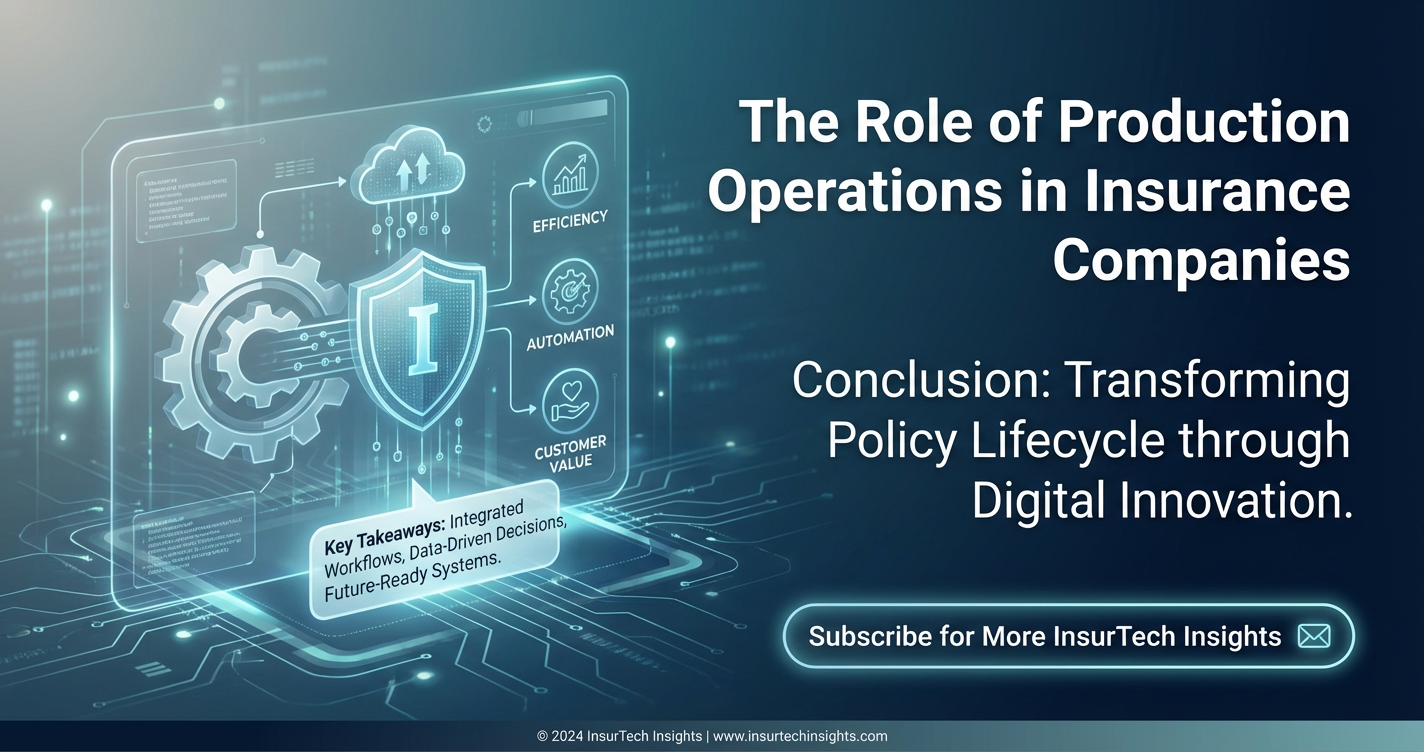
The Role of Production Operations in Insurance Companies



The insurance industry, a cornerstone of economic stability and personal security, operates on a complex web of processes designed to assess risk, administer policies, and process claims. At the heart of this intricate machinery lie production operations – the mission-critical functions that ensure the seamless delivery of insurance products and services. These operations are not merely back-office tasks; they are the very engine driving an insurance company's ability to fulfill its promises to policyholders, manage its financial health, and navigate an increasingly dynamic market. In an era defined by digital transformation, escalating customer expectations, and a relentless pursuit of efficiency, the role of production operations has evolved dramatically, shifting from manual, siloed activities to highly automated, data-driven, and interconnected systems. This evolution is profoundly influenced by technological advancements, with Application Programming Interfaces (APIs) and robust API gateway solutions emerging as indispensable architectural components. These technologies are not just enablers; they are the foundational elements that facilitate data exchange, foster innovation, enhance security, and ultimately empower insurance companies to operate with unprecedented agility and responsiveness.
The journey of an insurance product, from initial quotation to policy issuance, through various endorsements, and ultimately to the handling of claims, involves a myriad of intricate steps. Each step in this lifecycle constitutes a part of production operations, demanding precision, speed, and unwavering accuracy. Historically, these processes were often manual, paper-intensive, and fragmented across disparate departments, leading to inefficiencies, increased operational costs, and extended turnaround times. However, the modern insurance landscape, characterized by fierce competition and a digitally savvy customer base, no longer tolerates such archaic practices. Today, production operations are expected to be real-time, personalized, and seamlessly integrated, providing a fluid experience for customers, agents, and internal stakeholders alike. This necessitates a robust technological infrastructure that can bridge the gaps between legacy systems, facilitate communication with external partners, and harness the power of emerging technologies like Artificial Intelligence (AI) and machine learning. Without a sophisticated framework for data exchange and system interoperability, insurance companies would struggle to meet these demands, jeopardizing their market position and their capacity to innovate. The focus, therefore, has sharply shifted towards building resilient, adaptable, and highly efficient operational systems, underpinned by strategic technological investments.
The Bedrock of Insurance: Core Production Operations
To fully appreciate the pivotal role of production operations, it's essential to delineate its core components. These are the fundamental activities that collectively define an insurance company's ability to create value and serve its customers. Each component, while distinct, is deeply interconnected, with data flowing between them to form a cohesive operational whole.
1. Policy Administration: This is arguably the most central function, encompassing the entire lifecycle of an insurance policy. It begins with the initial quoting and proposal generation, where customer data, risk assessments, and pricing models converge to formulate a policy offering. Once accepted, policy administration oversees the meticulous process of policy issuance, ensuring all terms, conditions, and regulatory requirements are met. Beyond initial issuance, this function handles a continuous stream of events, including endorsements (changes to a policy, such as adding a new vehicle or adjusting coverage), renewals, cancellations, and reinstatements. Accurate and timely policy administration is critical not only for maintaining customer satisfaction but also for ensuring the insurer’s compliance with regulatory bodies and for accurate financial reporting. Any error or delay in this process can have significant repercussions, from financial losses due to incorrect premiums to legal disputes arising from policy misunderstandings. The underlying systems must be capable of complex data management, workflow automation, and seamless integration with various other operational units, such as underwriting and billing, to ensure a single, consistent source of truth for each policy.
2. Claims Processing: For many policyholders, the moment of truth in their relationship with an insurer comes during the claims process. This function is about fulfilling the promise made in the policy contract – providing financial compensation or services when a covered event occurs. It starts with the First Notice of Loss (FNOL), where the policyholder reports an incident. What follows is a multi-stage process involving investigation, data collection (from police reports, medical records, property assessments, photographs, etc.), validation of coverage, adjudication of the claim (determining its validity and payout amount), and ultimately, payment to the policyholder or service provider. Efficient claims processing is paramount for customer retention and brand reputation. Delays, errors, or perceived unfairness in claims handling can severely erode trust. Furthermore, effective claims operations play a crucial role in fraud detection, a constant threat to insurers' profitability. Modern claims systems increasingly leverage automation, artificial intelligence for preliminary assessments, and sophisticated analytics to streamline workflows, reduce cycle times, and improve accuracy, all while maintaining rigorous oversight to prevent fraudulent activities. The sheer volume of data involved, often from disparate sources, makes robust data integration and management indispensable.
3. Underwriting: Before a policy is issued, the underwriting function assesses the risk associated with insuring a particular individual or entity. This involves a meticulous evaluation of various factors – for auto insurance, it might be driving history, vehicle type, and location; for health insurance, medical history and lifestyle; for property insurance, location, construction type, and prior claims. Underwriters use this information to determine eligibility for coverage, set appropriate premium rates, and define policy terms. It’s a delicate balancing act: accepting too much risk at too low a price can lead to unprofitability, while being too conservative can result in lost business. The accuracy and speed of underwriting are directly linked to an insurer's competitive edge and long-term financial viability. This process is inherently data-intensive, requiring access to a vast array of internal and external data sources, from applicant-provided information to credit scores, publicly available demographic data, and increasingly, telematics data from IoT devices. The ability to integrate and analyze this diverse data quickly and accurately is a key differentiator for modern insurers.
4. Customer Service: While often seen as a front-office function, customer service is inextricably linked to production operations as it acts as the primary interface through which policyholders interact with the insurer regarding their policies and claims. Inquiries about policy coverage, status updates on claims, billing questions, or requests for policy changes all funnel through customer service. An efficient customer service operation relies heavily on rapid access to accurate, up-to-date information housed within the policy administration and claims systems. In today's omnichannel world, customers expect seamless interactions across various touchpoints – phone, email, chat, social media, and self-service portals. This demands a unified view of the customer and their interactions, facilitated by integrated systems. The quality of customer service directly impacts customer satisfaction, retention rates, and the insurer's overall reputation. Poor service can lead to churn, negative reviews, and a damaged brand image, underscoring the critical need for well-supported, information-rich service channels.
5. Billing and Collections: This function ensures the financial health of the insurance company by managing the invoicing and collection of premiums. It involves generating accurate invoices, processing various payment methods (credit cards, bank transfers, direct debits), managing payment plans, sending reminders, and handling delinquencies. Precision is paramount, as errors can lead to customer frustration, loss of revenue, and regulatory non-compliance. Billing systems must be tightly integrated with policy administration to reflect correct premium amounts based on policy terms, endorsements, and renewals. They also need to interface with financial accounting systems for reconciliation and reporting. Efficient billing processes contribute significantly to cash flow management and reduce administrative overhead, ensuring that the insurer has the necessary funds to pay out claims and operate sustainably. Automated billing and collection systems reduce manual effort, minimize errors, and improve the overall efficiency of an insurer’s financial operations.
Each of these core operational areas generates and consumes vast amounts of data, highlighting the imperative for robust data management and integration capabilities. Without a seamless flow of information between these functions and with external entities, the entire production operation would grind to a halt, severely impeding an insurance company's ability to function effectively and competitively. The sheer volume, velocity, and variety of data involved necessitate sophisticated technological solutions that can manage this complexity while ensuring security, accuracy, and performance.
Navigating the Digital Tides: Challenges and Evolution in Insurance IT
The insurance industry, while often perceived as traditional, is currently undergoing one of its most profound transformations, largely driven by technological advancements and shifting market dynamics. This evolution is both a necessity and an opportunity, compelling insurers to rethink their production operations and the IT infrastructure that supports them. However, this journey is fraught with significant challenges.
1. The Burden of Legacy Systems: Many established insurance companies operate on IT systems developed decades ago, often running on mainframe architectures. These "legacy systems" are typically characterized by proprietary code, complex customizations, and a lack of modern documentation. While they are often highly stable and have processed billions in premiums and claims over the years, their monolithic nature makes them incredibly difficult and expensive to modify, upgrade, or integrate with newer technologies. This creates significant technical debt, stifling innovation and agility. The cost of maintaining these systems, coupled with a dwindling pool of developers proficient in older programming languages, represents a substantial drain on resources that could otherwise be invested in modernization efforts. Migrating away from these systems is a monumental task, often involving immense risk and multi-year projects.
2. Data Silos and Integration Headaches: A direct consequence of legacy systems and the historical departmentalization within insurance companies is the prevalence of data silos. Customer information, policy details, claims histories, and billing records often reside in separate, unconnected databases or applications. This fragmentation makes it extraordinarily difficult to achieve a holistic, 360-degree view of a customer, a policy, or a claim. For instance, a customer service representative might struggle to access real-time claims status while simultaneously viewing policy details, leading to disjointed interactions and frustrated customers. Integrating these disparate systems is a major challenge, requiring complex point-to-point integrations that are fragile, costly to maintain, and prone to breaking with every system upgrade. This lack of interoperability severely hampers efficiency and limits the ability to leverage data for advanced analytics or personalized services.
3. The Digital Transformation Imperative: Modern consumers, accustomed to seamless digital experiences in other industries (retail, banking), now demand the same from their insurers. They expect instant quotes, self-service policy management through mobile apps, real-time claims tracking, and personalized communications. This demand for digital engagement puts immense pressure on insurers to modernize their production operations. Digital transformation is not merely about launching a mobile app; it requires a fundamental overhaul of underlying processes and systems to support real-time data access, automated workflows, and an intuitive user experience across all channels. Companies that fail to adapt risk losing market share to agile InsurTech startups or more forward-thinking incumbents.
4. Regulatory Compliance and Security: The insurance industry is heavily regulated, with strict requirements concerning data privacy (e.g., GDPR, CCPA, specific national insurance acts), financial reporting, and consumer protection. These regulations are constantly evolving, demanding that insurers maintain robust security measures, meticulous audit trails, and transparent data handling practices. Protecting sensitive customer data – including personal identifiable information (PII), health records, and financial details – is not just a regulatory obligation but a fundamental ethical responsibility. Any data breach can lead to severe financial penalties, reputational damage, and a profound loss of customer trust. Ensuring that all systems, especially those involved in data exchange, adhere to the highest security standards is a continuous and complex challenge.
5. Pace of Innovation and Competitive Pressure: The rise of InsurTech companies, coupled with advancements in AI, machine learning, IoT, and big data analytics, has dramatically accelerated the pace of innovation within the insurance sector. New business models, personalized products (e.g., usage-based insurance), and AI-powered tools for risk assessment and claims processing are rapidly emerging. Established insurers face immense pressure to adopt these new technologies to remain competitive, improve operational efficiency, and offer innovative services. This requires a flexible and extensible IT architecture that can quickly integrate new solutions and external data sources without disrupting core operations. The ability to experiment, iterate, and deploy new capabilities rapidly is becoming a key differentiator in a crowded market.
These challenges collectively highlight a critical need for modern, flexible, and secure integration solutions within the insurance industry. The traditional approaches to system integration and data management are simply no longer sufficient to meet the demands of digital transformation, regulatory compliance, and competitive innovation. This is precisely where the strategic adoption of technologies like APIs and API gateways becomes not just beneficial, but absolutely indispensable for the future resilience and growth of insurance companies.
Unlocking Interoperability: The Transformative Power of APIs in Insurance
In response to the aforementioned challenges, Application Programming Interfaces (APIs) have emerged as a foundational technology, revolutionizing how insurance companies manage their production operations and interact with the broader digital ecosystem. An API acts as a set of defined rules and protocols that allow different software applications to communicate with each other. In essence, it's a digital connector, abstracting away the underlying complexity of systems and exposing specific functionalities or data points in a standardized and controlled manner. For the insurance industry, APIs are not merely technical tools; they are strategic enablers of efficiency, innovation, and enhanced customer experience.
Why APIs are Crucial for Insurance:
1. Breaking Down Internal Silos: One of the most significant benefits of APIs is their ability to dismantle internal data silos. Instead of complex, fragile point-to-point integrations between every application, APIs provide a standardized interface for different internal systems (e.g., policy administration, claims management, CRM, billing) to exchange data. For instance, a claims system can use an API to instantly pull up a policyholder's details from the policy administration system, ensuring that adjusters have the most up-to-date information. This creates a unified data landscape, fostering consistency and reducing manual data entry and reconciliation efforts, which are common pain points in traditional insurance operations. The result is a more cohesive internal ecosystem where information flows freely and accurately, empowering employees with the data they need to perform their roles effectively.
2. Facilitating External Integration and Ecosystem Building: The insurance industry is inherently collaborative, involving a wide network of partners such as independent agents, brokers, reinsurers, third-party adjusters, and service providers (e.g., auto repair shops, healthcare networks). APIs are the digital glue that connects insurers with this external ecosystem. * Agent/Broker Portals: APIs power self-service portals for agents and brokers, allowing them to instantly retrieve quotes, submit applications, check policy statuses, and manage renewals directly from their own systems, streamlining the sales and service processes. * Third-Party Data Providers: Insurers increasingly rely on external data for enhanced risk assessment and personalized underwriting. APIs enable seamless integration with data providers offering credit scores, property data, public records, social media insights, weather data, and even IoT-derived telematics data for usage-based insurance. This influx of rich, real-time data allows for more granular risk pricing and innovative product development. * InsurTech Partnerships: APIs are the backbone of collaborations with InsurTech startups, enabling insurers to quickly integrate specialized solutions for fraud detection (using AI), customer engagement (chatbots), or new digital distribution channels without extensive custom development. This 'API economy' approach fosters innovation and agility, allowing insurers to experiment with new technologies more easily. * Open Insurance Initiatives: Following the "Open Banking" trend, "Open Insurance" envisions a future where, with customer consent, insurers can securely share data and services with third parties via APIs to create broader ecosystems and innovative new services. This could include personalized financial planning tools, preventative health services, or integrated home security solutions that leverage insurance data.
3. Enhancing Customer Experience and Digital Engagement: APIs are fundamental to delivering the seamless, real-time digital experiences that modern customers expect. * Mobile Apps and Customer Portals: APIs power self-service mobile applications and customer web portals, allowing policyholders to perform actions like getting instant quotes, purchasing policies, managing coverage details, submitting claims, tracking claim status, and making payments, all from their preferred device. This provides convenience and control, improving customer satisfaction and reducing call center volumes. * Personalized Services: By integrating data from various sources via APIs, insurers can offer highly personalized products and services, such as tailored coverage options based on individual behavior (e.g., safe driving discounts), proactive alerts (e.g., weather warnings for property protection), or customized communication. * Chatbots and Virtual Assistants: APIs enable AI-powered chatbots to access policy and claims data, allowing them to answer common customer queries, guide users through processes, and provide instant support, thereby enhancing responsiveness and reducing the load on human customer service agents.
4. Driving Innovation and Agility: The modular nature of APIs fosters an environment of innovation. Developers can rapidly build and deploy new applications, features, or services by combining existing APIs, rather than having to build everything from scratch. This accelerates time-to-market for new products and allows insurers to quickly adapt to changing market conditions and customer demands. For example, an insurer could quickly launch a new travel insurance product by combining internal APIs for policy administration with external APIs for flight tracking, weather alerts, and emergency medical assistance. This agility is crucial in a fast-evolving competitive landscape.
5. Data Monetization and New Revenue Streams: While primarily focused on internal efficiency, APIs also open avenues for new revenue streams. Insurers, with customer consent and appropriate anonymization, could safely expose certain data points (e.g., aggregated risk profiles, property characteristics) to partners or other industries, creating value from their vast data assets. This could involve providing insights to real estate companies, smart home device manufacturers, or automotive industries, fostering a data-driven business model beyond traditional premium collection.
In summary, APIs have transformed from being a niche technical concept to a strategic imperative for insurance companies. They are the conduits through which data flows, systems communicate, and innovation thrives within and beyond the organizational boundaries. However, as the number of APIs proliferates, managing, securing, and scaling them becomes a complex challenge in itself. This is precisely where the role of an API gateway becomes not just important, but absolutely critical.
The Orchestrator: API Gateways as the Backbone of Insurance Digital Infrastructure
As insurance companies embrace the API-driven economy, the sheer volume and diversity of APIs, both internal and external, introduce new layers of complexity. Managing hundreds or even thousands of API endpoints, each with its own security requirements, traffic patterns, and performance metrics, can quickly become an unmanageable task. This is where an API gateway steps in as an indispensable component of modern insurance digital infrastructure. An API gateway acts as a single entry point for all API calls, sitting between the client (e.g., a mobile app, a partner system, an internal application) and the backend services that fulfill those requests. It functions as a proxy, intercepting all API traffic, routing it to the appropriate backend service, and applying a range of policies and functionalities along the way. For an industry as heavily regulated and data-sensitive as insurance, the robust capabilities of an API gateway are not just a convenience, but a strategic imperative.
Core Functions of an API Gateway in Insurance:
1. Centralized Security and Authentication: In an industry dealing with highly sensitive personal, financial, and medical data, security is paramount. An API gateway provides a critical layer of defense by centralizing security mechanisms. * Authentication and Authorization: It verifies the identity of every API caller (using API keys, OAuth tokens, JSON Web Tokens - JWTs, etc.) and determines what resources they are authorized to access. This prevents unauthorized access to sensitive policyholder information or internal systems. * Threat Protection: Gateways can identify and mitigate common web vulnerabilities and attacks such as SQL injection, cross-site scripting (XSS), and Denial of Service (DoS) attacks, protecting backend insurance systems from malicious intent. * Encryption: They ensure that all data transmitted between clients and backend services is encrypted, safeguarding data in transit. This is crucial for maintaining data privacy and regulatory compliance. * Data Masking/Redaction: For certain external integrations, a gateway can automatically mask or redact sensitive data fields before they are exposed, ensuring that partners only receive the information they absolutely need.
2. Intelligent Traffic Management: The operational performance of insurance systems hinges on their ability to handle fluctuating traffic loads efficiently and reliably. An API gateway acts as an intelligent traffic controller. * Routing: It intelligently routes incoming API requests to the correct backend service, even if multiple versions of a service exist or if services are deployed across different environments. * Load Balancing: Distributes incoming API requests across multiple instances of a backend service to prevent any single service from becoming overloaded, ensuring high availability and responsiveness of critical insurance applications (e.g., real-time quoting, claims submission portals). * Throttling and Rate Limiting: Prevents API abuse, protects backend systems from being overwhelmed by excessive requests, and ensures fair usage among different consumers. For example, an API gateway can limit how many quotes an external api consumer can request per second, safeguarding system resources. * Caching: Stores frequently accessed API responses, reducing the load on backend systems and significantly improving response times for common queries (e.g., basic policy information lookups).
3. Comprehensive Monitoring and Analytics: For continuous improvement and proactive issue resolution in insurance production operations, visibility into API performance and usage is essential. An API gateway acts as a central monitoring point. * Real-time Metrics: It collects detailed metrics on API calls, including latency, error rates, throughput, and usage patterns. This provides real-time insights into the health and performance of the API ecosystem. * Operational Insights: Through dashboards and reports, operations teams can quickly identify performance bottlenecks, detect anomalies, and troubleshoot issues before they impact policyholders or business partners. * Audit Trails: Every API call passing through the api gateway is logged, providing a comprehensive audit trail that is invaluable for compliance, security investigations, and debugging. This level of logging is critical for regulated industries like insurance.
4. Policy Enforcement and Transformation: An API gateway allows insurers to apply consistent business rules and transformations across all their APIs. * Policy Enforcement: It can enforce organizational policies such as mandatory headers, data format validation, or specific business logic before requests reach the backend, ensuring consistency and compliance. * Protocol Translation and Data Transformation: Insurance backend systems often use various data formats (e.g., XML, JSON, proprietary formats) and communication protocols. An API gateway can perform protocol translation and data transformations on the fly, enabling seamless communication between disparate systems without requiring changes to the backend services. This is particularly valuable when integrating with legacy systems or diverse external partners.
5. Developer Portal and Lifecycle Management: To foster API adoption and innovation, insurers need to make their APIs easy to discover, understand, and consume. * Developer Portal: Many API gateways come with or integrate with developer portals, which serve as self-service platforms where internal and external developers can discover available APIs, access documentation, test APIs, and manage their API keys. This accelerates integration efforts and promotes an API-first culture. * Versioning: An API gateway is crucial for managing different versions of APIs. As APIs evolve, the gateway can route requests to specific versions, ensuring backward compatibility for existing consumers while allowing new features to be rolled out without disrupting production. This is vital for maintaining stability in a complex operational environment.
Table: Key API Gateway Functionalities and their Benefits for Insurance Production Operations
| API Gateway Functionality | Description | Benefit for Insurance Production Operations |
|---|---|---|
| Security & Authentication | Centralized enforcement of access controls, encryption, threat detection for all API traffic. | Protects sensitive customer data (PII, health, financial), ensures regulatory compliance (GDPR, CCPA), prevents fraud and cyberattacks, and builds trust. |
| Traffic Management (Routing, Load Balancing, Throttling) | Directs API requests efficiently to appropriate backend services, distributes load, and prevents API abuse. | Ensures high availability and responsiveness of critical services (claims, policy admin, quoting), maintains performance during peak demand, and optimizes resource utilization. |
| Monitoring & Analytics | Tracks API performance, usage, and error rates in real-time, providing deep operational insights. | Enables proactive identification and resolution of performance bottlenecks, provides comprehensive audit trails for compliance, and optimizes API strategy based on usage patterns. |
| Policy Enforcement & Transformation | Applies consistent business logic, validates data, and translates data formats between disparate systems and protocols. | Guarantees uniform application of underwriting rules and claims procedures, facilitates seamless integration with legacy systems and diverse external partners, reducing integration complexity and error rates. |
| Developer Portal | Provides a self-service platform for API discovery, comprehensive documentation, and testing for developers. | Accelerates integration with internal teams and external partners, fostering an API-first culture, reducing support overhead, and speeding up time-to-market for new services. |
| Versioning & Lifecycle Management | Manages simultaneous API versions, allowing for controlled evolution and deprecation without disrupting existing integrations. | Ensures continuous development and deployment of new features and updates without breaking critical production systems, maintaining business continuity and agility. |
In essence, an API gateway transforms a collection of individual APIs into a managed, secure, and scalable API ecosystem. For insurance companies, it's the critical control point that enables them to leverage APIs effectively, securely expose their digital assets, integrate with diverse partners, and deliver superior digital experiences to their customers, all while maintaining the integrity and performance of their core production operations. Without a robust API gateway, the promise of an API-driven, digitally transformed insurance industry would remain largely unfulfilled, mired in security vulnerabilities, performance issues, and integration complexities.
APIPark: An Enabler for Modern Insurance Production Operations
As insurance companies navigate the complexities of digital transformation, the need for a comprehensive and efficient API gateway and API management solution becomes paramount. It's not enough to simply expose APIs; they must be securely managed, easily discoverable, high-performing, and adaptable to evolving business needs, especially with the accelerating adoption of AI. In this context, platforms like ApiPark emerge as crucial tools for insurance companies looking to modernize their production operations, enhance security, and drive innovation. APIPark, an open-source AI gateway and API management platform, offers a suite of features that directly address the multifaceted challenges faced by the insurance industry.
1. Quick Integration of 100+ AI Models & Unified API Format for AI Invocation: The modern insurance industry is increasingly leveraging AI for various aspects of its production operations, from automated claims processing and fraud detection to personalized underwriting and customer service chatbots. Integrating diverse AI models, however, can be complex due to varying APIs and data formats. APIPark simplifies this significantly by offering the capability to integrate a vast array of AI models with a unified management system. More importantly, it standardizes the request data format across all AI models. For an insurance company, this means that changes in underlying AI models (e.g., upgrading to a newer large language model for sentiment analysis or switching fraud detection algorithms) or prompts do not necessitate changes in the consuming application or microservices. This significantly reduces maintenance costs, accelerates the adoption of cutting-edge AI, and ensures consistency in how AI services are invoked within the complex insurance IT landscape, allowing insurers to rapidly deploy and iterate on AI-powered solutions without extensive re-engineering.
2. Prompt Encapsulation into REST API: This feature holds immense potential for insurance companies. Users can quickly combine AI models with custom prompts to create new APIs. Imagine an insurance company needing a specialized sentiment analysis API for customer feedback on claims, or a translation API for handling multilingual customer inquiries, or a data analysis API to extract specific entities from unstructured policy documents. APIPark allows business analysts or developers to encapsulate these AI-driven functionalities into easy-to-consume REST APIs. This democratizes the use of AI, enabling various departments within an insurance company to leverage AI capabilities for specific, nuanced tasks without needing deep AI expertise for each implementation, greatly enhancing operational efficiency and the creation of specialized services tailored to insurance needs.
3. End-to-End API Lifecycle Management: For an industry with a vast and growing number of internal and external APIs, comprehensive lifecycle management is non-negotiable. APIPark assists with managing the entire lifecycle of APIs, including design, publication, invocation, and decommission. This is critical for insurance companies to regulate their API management processes, ensure consistency across their digital assets, manage traffic forwarding to correct versions, implement load balancing for critical services, and handle versioning of published APIs seamlessly. Effective lifecycle management reduces operational overhead, ensures API reliability, and facilitates a structured approach to API governance, which is vital for maintaining system stability and compliance in a highly regulated environment.
4. API Service Sharing within Teams & Independent API and Access Permissions for Each Tenant: Insurance organizations are typically large, with multiple departments and often operate with various subsidiaries or lines of business. APIPark facilitates seamless internal collaboration by allowing for the centralized display of all API services, making it easy for different departments and teams to find and use the required API services. Furthermore, its multi-tenant capability allows for the creation of multiple teams (tenants), each with independent applications, data, user configurations, and security policies, while sharing underlying applications and infrastructure. This is invaluable for large insurance groups or companies managing different product lines, as it improves resource utilization, reduces operational costs associated with maintaining separate IT stacks, and ensures tailored access and security for each business unit. This architectural flexibility supports complex organizational structures common in the insurance sector.
5. API Resource Access Requires Approval: Given the sensitive nature of insurance data, stringent access control is paramount. APIPark allows for the activation of subscription approval features, ensuring that callers must subscribe to an API and await administrator approval before they can invoke it. This granular control is essential for preventing unauthorized API calls and potential data breaches, which can have catastrophic financial and reputational consequences for an insurer. It adds an extra layer of security and auditability, aligning with the strict regulatory compliance requirements of the industry.
6. Performance Rivaling Nginx: Operational performance is a critical factor for insurance systems that handle real-time quoting, policy lookups, and claims processing. APIPark’s capability to achieve over 20,000 TPS with just an 8-core CPU and 8GB of memory, supporting cluster deployment to handle large-scale traffic, is a significant advantage. This high performance ensures that critical insurance production operations remain responsive and reliable even during peak demand, providing a seamless experience for customers and agents alike. High throughput and low latency are non-negotiable for systems dealing with time-sensitive financial transactions and customer interactions.
7. Detailed API Call Logging & Powerful Data Analysis: For compliance, auditing, and proactive issue resolution, comprehensive logging and analytics are indispensable. APIPark provides extensive logging capabilities, recording every detail of each API call. This feature allows insurance businesses to quickly trace and troubleshoot issues in API calls, ensuring system stability and data security. Furthermore, by analyzing historical call data, APIPark displays long-term trends and performance changes, helping businesses with preventive maintenance before issues occur. This capability is vital for operational oversight, identifying potential system vulnerabilities, optimizing resource allocation, and meeting stringent regulatory reporting requirements in the insurance sector. The ability to forensically review API interactions is critical for fraud investigation and dispute resolution.
By leveraging APIPark, insurance companies can build a robust, secure, and scalable API ecosystem that underpins their digital transformation initiatives. Its specialized features for AI integration, combined with strong API lifecycle management, security, and performance, make it an invaluable asset for modernizing production operations, fostering innovation, and delivering superior value to policyholders in the evolving insurance landscape. The ability to deploy it quickly with a single command (curl -sSO https://download.apipark.com/install/quick-start.sh; bash quick-start.sh) further enhances its appeal for organizations looking to rapidly implement a powerful API management solution.
Security, Compliance, and Data Governance through API Gateways
In the insurance industry, the mantra of "security first" is not just a best practice; it is a regulatory and ethical imperative. Handling vast quantities of sensitive data—personal identifiable information (PII), financial records, health data, and claims histories—demands the most stringent security protocols and unwavering adherence to a complex web of compliance regulations. From GDPR and CCPA to specific national insurance acts, regulatory bodies impose strict guidelines on how this data is collected, stored, processed, and exchanged. This is precisely where the strategic implementation of API gateways becomes a non-negotiable component of an insurer's security and data governance framework.
An API gateway acts as the primary enforcement point for security policies, providing a centralized and consistent mechanism to protect data as it flows between various systems, both internal and external. Rather than relying on individual backend services to implement their own security measures (which can lead to inconsistencies and vulnerabilities), the API gateway ensures that all incoming and outgoing API traffic is subjected to the same rigorous checks.
1. Centralized Access Control and Authentication: The gateway is the first line of defense, verifying the identity of every entity attempting to access an API. It enforces authentication protocols (e.g., OAuth 2.0, API keys, JWTs) to confirm that only legitimate applications or users are permitted to make requests. Beyond authentication, it handles authorization, ensuring that even authenticated users can only access the specific data or functionalities they are entitled to. For an insurance company, this means an agent's application might have different access privileges than a policyholder's mobile app, and a third-party data provider's system would have even more restricted access. This granular control is crucial for protecting confidential policyholder information and preventing unauthorized data exposure.
2. Data Privacy and Encryption: Compliance with data privacy regulations like GDPR (General Data Protection Regulation) or CCPA (California Consumer Privacy Act) requires robust measures to protect personal data. API gateways facilitate this by ensuring that data is encrypted both in transit (using TLS/SSL protocols) and, in some configurations, at rest before it reaches backend systems or is exposed to external partners. Furthermore, gateways can implement data masking or tokenization techniques, where sensitive data fields are replaced with non-sensitive substitutes or obfuscated entirely before being transmitted to less trusted environments. This minimizes the risk of sensitive data exposure during integration with third-party analytics platforms or external service providers, allowing insurers to leverage external services while maintaining compliance.
3. Threat Detection and Mitigation: The api gateway is a powerful tool for detecting and preventing cyberattacks. It can be configured to identify and block various types of malicious traffic, including DDoS attacks (by rate limiting or blocking suspicious IP addresses), SQL injection attempts, cross-site scripting (XSS), and other common web application vulnerabilities. By filtering out malicious requests at the perimeter, the gateway shields backend insurance systems from direct exposure to these threats, significantly reducing the attack surface and enhancing the overall security posture of the IT infrastructure.
4. Comprehensive Audit Trails and Logging: For regulatory compliance, insurers must maintain detailed records of data access and system interactions. API gateways provide comprehensive logging capabilities, capturing details of every API call, including the caller's identity, timestamp, requested resource, and outcome. These detailed audit trails are invaluable for demonstrating compliance during regulatory audits, investigating security incidents, and tracking data lineage. In the event of a data breach or suspected fraud, these logs provide critical forensic evidence, allowing insurers to pinpoint the source of the issue and understand its scope. APIPark, for instance, explicitly highlights its "Detailed API Call Logging" and "Powerful Data Analysis" features, directly addressing this crucial need for robust auditability and insights.
5. Consistent Policy Enforcement: An API gateway ensures that security and business policies are applied uniformly across all APIs, regardless of the underlying service implementation. This consistency is vital for maintaining a strong security posture and avoiding vulnerabilities that might arise from disparate security implementations across different teams or systems. For example, a gateway can enforce specific data validation rules, ensure that all requests include necessary security tokens, or route requests based on predefined compliance parameters. This centralized enforcement simplifies governance and reduces the risk of human error in security configurations.
6. Minimized Attack Surface: By acting as a single, controlled entry point, an API gateway effectively minimizes the attack surface of an insurance company's backend systems. Instead of exposing multiple individual service endpoints to the internet or external networks, only the gateway itself is exposed. This allows security teams to focus their defensive efforts on a single, well-secured perimeter, making it easier to monitor for threats and apply patches. This architectural pattern significantly enhances the resilience of insurance IT infrastructure against external threats.
In conclusion, for insurance companies, API gateways are far more than just traffic managers; they are critical enablers of robust security, regulatory compliance, and sound data governance. By centralizing security enforcement, protecting sensitive data, mitigating threats, and providing comprehensive audit trails, API gateways allow insurers to confidently leverage the power of APIs for innovation and efficiency, without compromising their solemn commitment to data protection and regulatory adherence. In an industry where trust and data integrity are paramount, the role of the api gateway in safeguarding operations cannot be overstated.
The Future Landscape: AI, Ecosystems, and Hyper-Personalization
The insurance industry stands on the precipice of its most transformative era, driven by the convergence of advanced technologies, evolving customer expectations, and a greater emphasis on proactive risk management. The future of insurance production operations will be characterized by hyper-automation, intelligent decision-making, and seamless integration within vast digital ecosystems, with APIs and robust API gateways continuing to serve as the foundational infrastructure.
1. AI and Machine Learning for Hyper-Automation and Predictive Analytics: Artificial Intelligence (AI) and Machine Learning (ML) are rapidly moving beyond pilot projects to become integral components of core insurance production operations. * Automated Claims Processing: AI will drive greater automation in claims handling, from initial assessment of damages using computer vision to fraud detection algorithms that identify suspicious patterns in real-time. This reduces manual effort, speeds up processing times, and improves accuracy, leading to faster payouts and higher customer satisfaction. * Predictive Underwriting: ML models, fed by vast datasets accessed via APIs, will enable insurers to develop highly granular risk profiles. This moves beyond traditional demographic data to incorporate behavioral economics, real-time IoT data (e.g., smart home sensors, telematics), and social context, allowing for dynamic pricing and personalized risk assessment. * Customer Service Augmentation: AI-powered chatbots and virtual assistants, seamlessly integrated via APIs, will handle a larger volume of routine customer inquiries, policy modifications, and claims status updates, freeing human agents to focus on complex or empathetic interactions. Sentiment analysis APIs will help gauge customer satisfaction and flag urgent issues. * Proactive Risk Management: AI will shift insurance from a reactive "pay and repair" model to a proactive "predict and prevent" model. By analyzing patterns in weather data (via APIs), historical claims, and IoT sensor data, insurers can alert policyholders to potential risks (e.g., impending flood, unusual home activity) and offer preventative measures, potentially reducing claims and improving customer loyalty.
2. IoT and Telematics: Real-time Data for Dynamic Insurance: The Internet of Things (IoT) is fundamentally altering how risk is assessed and managed. Connected devices—from smart home sensors (detecting leaks, fires, break-ins) to vehicle telematics (monitoring driving behavior) and wearables (tracking health metrics)—generate a continuous stream of real-time data. * Usage-Based Insurance (UBI): APIs are the conduits for integrating this IoT data into underwriting and claims systems, enabling UBI models where premiums are directly linked to actual usage or behavior. This provides fairer pricing for policyholders and more accurate risk assessment for insurers. * Preventative Services: Insurers can leverage IoT data, accessed through APIs, to offer value-added services such as smart home monitoring, connected car diagnostics, or health and wellness programs that help mitigate risks before they lead to claims. This moves insurers into a broader role as risk partners rather than just risk bearers.
3. The Rise of Open Insurance and Ecosystems: Inspired by the "Open Banking" movement, "Open Insurance" is gaining traction. This paradigm envisions an ecosystem where, with explicit customer consent, insurers can securely share data and services with a wider array of third-party providers via standardized APIs. * Integrated Customer Experiences: This enables a future where insurance is seamlessly embedded within other services, such as buying a car (instant insurance at the point of sale), purchasing a home (integrated property insurance and security services), or managing personal finances (holistic financial planning with embedded insurance advice). * New Value Propositions: Open insurance fosters collaboration, allowing insurers to partner with non-traditional entities (e.g., tech companies, lifestyle brands) to create innovative products and services that extend beyond traditional insurance offerings, creating new revenue streams and enhancing customer stickiness. APIs and API gateways are absolutely critical for governing this secure and controlled data exchange within complex ecosystems.
4. Hyper-Personalization: Tailored Products and Experiences: Leveraging the rich tapestry of data collected from APIs, AI, and IoT, insurers will move towards hyper-personalization. This means moving beyond segment-based offerings to individual-centric products and services tailored to each policyholder's unique needs, preferences, and behaviors. * Customized Coverage: Policies will be highly flexible, allowing customers to easily add or remove coverage modules as their life circumstances change, all managed through self-service api-powered platforms. * Proactive Engagement: Insurers will use data to anticipate customer needs, offering relevant advice, preventive measures, or product recommendations at precisely the right moment, fostering deeper relationships. * Personalized Pricing: Dynamic, real-time pricing models will offer rates based on current risk factors, making insurance more transparent and fair.
In this future, the role of production operations will be fundamentally transformed. They will become increasingly automated, intelligent, and interconnected, orchestrating a vast network of internal systems, external partners, AI models, and IoT devices. The underlying IT infrastructure, with APIs and sophisticated API gateways at its core, will be the critical enabler of this transformation. These technologies will not merely support the execution of tasks; they will empower insurers to innovate, personalize, and proactively manage risk in ways unimaginable a decade ago. The success of an insurance company in this evolving landscape will hinge on its ability to strategically leverage these digital connectors to build resilient, agile, and customer-centric production operations that can adapt to continuous change and deliver unparalleled value. Investing in robust api gateway solutions is, therefore, an investment in the future competitiveness and relevance of the insurance enterprise.
Conclusion
The role of production operations in insurance companies is undeniably the engine room that drives the entire enterprise, ensuring the seamless delivery of products and services, from policy administration and claims processing to underwriting and customer service. As the insurance industry navigates an era of unprecedented digital transformation, customer empowerment, and technological advancement, the nature and demands placed upon these operations have fundamentally shifted. The traditional model, often characterized by manual processes, siloed data, and legacy systems, is no longer sustainable in a competitive landscape hungry for agility, efficiency, and innovation.
The strategic adoption of modern IT infrastructure, particularly Application Programming Interfaces (APIs) and robust API gateway solutions, has become not just beneficial but absolutely indispensable. APIs serve as the digital connectors, breaking down internal data silos and fostering seamless integration with a vast ecosystem of external partners, third-party data providers, and emerging InsurTech innovators. They enable insurers to offer the real-time, personalized, and digital-first experiences that modern customers demand, powering everything from mobile self-service applications to AI-driven chatbots and dynamic pricing models.
However, the proliferation of APIs introduces inherent complexities and risks. This is precisely where the API gateway emerges as the linchpin of modern insurance digital infrastructure. By acting as a centralized control point, an API gateway provides mission-critical functionalities encompassing stringent security and authentication, intelligent traffic management, comprehensive monitoring and analytics, and consistent policy enforcement. For an industry entrusted with sensitive personal and financial data, the gateway’s role in protecting against cyber threats, ensuring regulatory compliance, and providing an auditable trail of all API interactions is paramount. Platforms like ApiPark, with their focus on AI integration, end-to-end lifecycle management, performance, and granular access control, offer insurance companies a powerful solution to efficiently manage their API ecosystem and unlock the full potential of digital transformation.
Looking ahead, the future of insurance production operations will be deeply intertwined with the continuous evolution of AI, machine learning, IoT, and the expansion of open insurance ecosystems. These technologies, accessed and managed through sophisticated APIs and API gateway architectures, will enable hyper-automation, predictive analytics, and hyper-personalization, shifting insurers from reactive risk bearers to proactive risk partners. The ability to rapidly integrate new technologies, securely exchange data across diverse platforms, and continuously innovate will define the leaders of tomorrow’s insurance market.
In essence, investing in a robust api gateway and comprehensive API management capabilities is no longer a mere technical expenditure; it is a strategic imperative for any insurance company aiming to enhance operational efficiency, foster innovation, safeguard sensitive data, ensure regulatory compliance, and ultimately, build resilience and sustainable growth in a rapidly evolving digital world. The journey of transforming insurance production operations is ongoing, and APIs, orchestrated by powerful API gateway solutions, are the indispensable guides on this path.
Frequently Asked Questions (FAQs)
1. What are the primary functions of production operations in an insurance company? Production operations in an insurance company encompass all core activities essential for delivering insurance products and services. These primarily include policy administration (managing the lifecycle from quoting to renewal and changes), claims processing (from first notice of loss to payout and fraud detection), underwriting (assessing risk and setting premiums), customer service (handling inquiries and support), and billing and collections (managing premium invoices and payments). These functions are highly interconnected and rely on efficient data flow to ensure accuracy, speed, and regulatory compliance.
2. Why are APIs becoming so critical for modern insurance operations? APIs (Application Programming Interfaces) are crucial because they enable seamless communication and data exchange between disparate software applications and systems. In insurance, APIs help break down internal data silos, allowing different departments to access unified customer and policy data. More importantly, they facilitate integration with external partners (agents, brokers, reinsurers), third-party data providers (e.g., for telematics, credit scores), and InsurTech solutions. This connectivity drives innovation, enhances customer experience through digital channels, and improves operational efficiency by automating data-intensive processes.
3. How does an API gateway enhance the security of insurance data and systems? An API gateway acts as a centralized security enforcement point for all API traffic. It protects sensitive insurance data and systems by providing functionalities like robust authentication and authorization (ensuring only legitimate users/applications access data), threat protection against common cyberattacks (e.g., SQL injection, DDoS), and encryption of data in transit. The gateway also offers granular access control, detailed logging for audit trails, and centralized policy enforcement, which are critical for meeting stringent regulatory compliance requirements and preventing data breaches in the highly regulated insurance sector.
4. What role does AI play in transforming insurance production operations, and how do APIs facilitate this? AI and Machine Learning are revolutionizing insurance operations by enabling hyper-automation and intelligent decision-making. AI is used for automated claims processing (e.g., fraud detection, damage assessment), predictive underwriting (more accurate risk assessment based on vast data), and enhancing customer service (e.g., chatbots, sentiment analysis). APIs are the bridge that facilitates the integration of these AI models into existing insurance systems. They allow insurers to easily invoke AI services, feed data to them, and receive results in a standardized format, simplifying AI adoption and reducing the complexity of managing diverse AI capabilities, as exemplified by platforms like APIPark.
5. How do API management platforms like APIPark contribute to the efficiency of insurance companies? API management platforms like APIPark provide a comprehensive solution for governing the entire lifecycle of APIs, which is vital for complex insurance operations. APIPark specifically enhances efficiency by: * Simplifying AI Integration: Unifies the management and invocation of diverse AI models, reducing complexity and cost. * Streamlining API Lifecycle: Manages API design, publication, invocation, and deprecation, ensuring consistency and governance. * Enhancing Security: Provides features like access approval and detailed logging to prevent unauthorized access and ensure compliance. * Improving Performance: Offers high throughput and load balancing capabilities for critical, real-time insurance services. * Fostering Collaboration: Facilitates API sharing within teams and allows for independent access permissions, improving internal efficiency and reducing operational costs for multi-department or multi-tenant organizations.
🚀You can securely and efficiently call the OpenAI API on APIPark in just two steps:
Step 1: Deploy the APIPark AI gateway in 5 minutes.
APIPark is developed based on Golang, offering strong product performance and low development and maintenance costs. You can deploy APIPark with a single command line.
curl -sSO https://download.apipark.com/install/quick-start.sh; bash quick-start.sh

In my experience, you can see the successful deployment interface within 5 to 10 minutes. Then, you can log in to APIPark using your account.

Step 2: Call the OpenAI API.