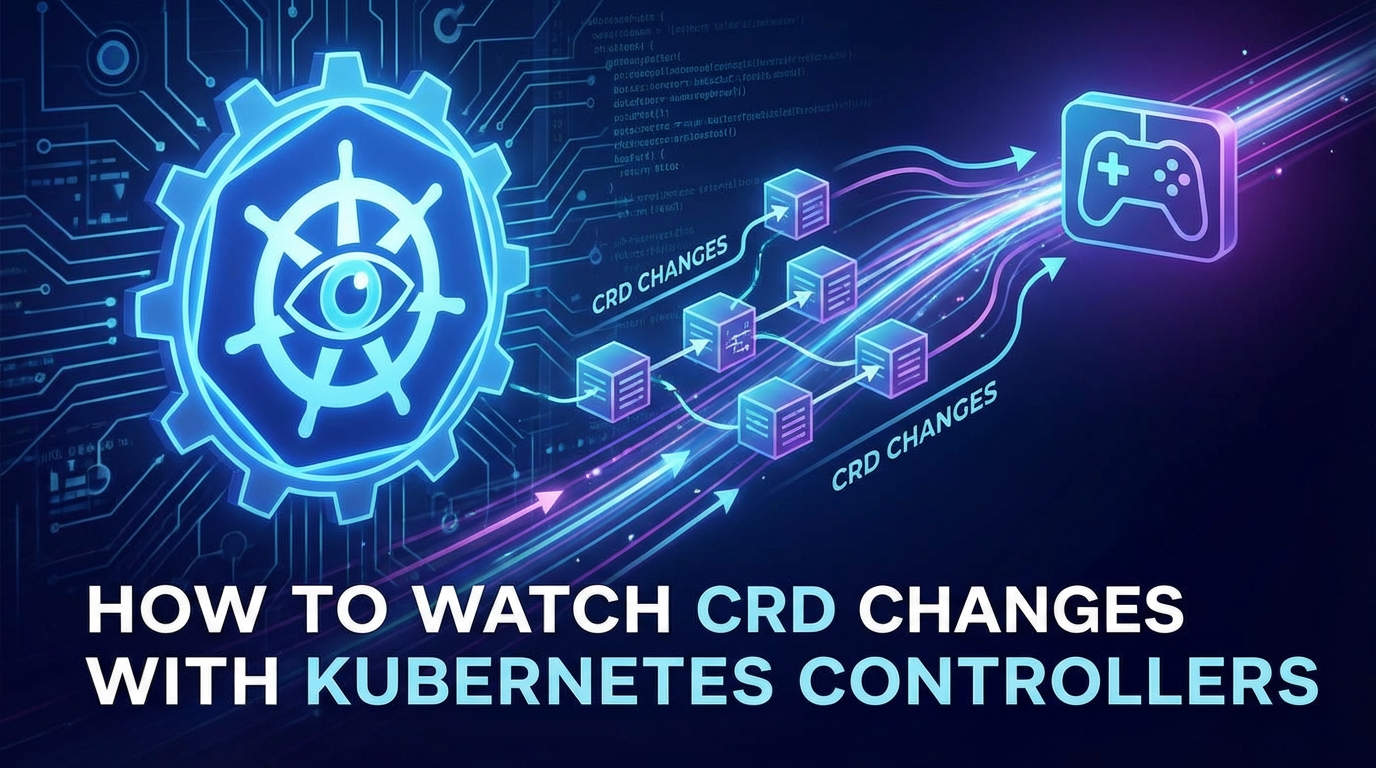
How to Watch CRD Changes with Kubernetes Controllers


Kubernetes, at its core, is a powerful platform for managing containerized workloads and services, designed with extensibility and automation in mind. While its built-in resources like Pods, Deployments, and Services cover a vast array of common use cases, the true power of Kubernetes often lies in its ability to adapt and extend. For organizations and developers facing unique domain-specific challenges, relying solely on the standard Kubernetes primitives can be limiting. This is where Custom Resource Definitions (CRDs) and Kubernetes Controllers step in, offering an unparalleled mechanism to extend the Kubernetes API and automate complex operational tasks, effectively transforming Kubernetes into a domain-specific operating system.
The journey of extending Kubernetes begins with defining new kinds of objects, which is precisely what CRDs enable. These definitions act as blueprints for custom resources, allowing users to declare desired states for applications or infrastructure components that are not natively supported by Kubernetes. However, merely defining a custom resource is only half the battle. These custom resources are passive declarations; they don't inherently perform any actions. To bring these definitions to life, to ensure that the actual state of the system converges towards the desired state described by a custom resource, we need Kubernetes Controllers. Controllers are the active agents in the Kubernetes ecosystem, constantly observing the cluster's state, reacting to changes, and taking corrective actions.
This comprehensive guide delves deep into the intricate process of watching CRD changes with Kubernetes Controllers. We will explore the fundamental concepts underpinning Kubernetes extensibility, dissect the architecture of a typical controller, and walk through the practicalities of building robust, production-ready controllers. From the low-level client-go libraries to the higher-level abstractions provided by Controller-Runtime and Kubebuilder, we will uncover the mechanisms that allow controllers to observe modifications to custom resources, process these changes, and reconcile the system's state. Furthermore, we will touch upon the critical role of APIs in this ecosystem, how CRDs leverage the OpenAPI specification for robust validation, and how modern API management solutions can interact with the broader landscape of external services a controller might orchestrate. By the end of this journey, you will possess a profound understanding of how to harness CRDs and controllers to extend Kubernetes to its fullest potential, building custom automation that is both powerful and maintainable.
Understanding Kubernetes' Extension Mechanisms
Kubernetes' success is not just due to its robust container orchestration capabilities but also its remarkably extensible architecture. This design philosophy empowers users to adapt the platform to their specific needs, going beyond the predefined set of resources. To truly grasp how to watch CRD changes, it's essential to first lay a solid foundation by understanding these core extension mechanisms.
The Core of Kubernetes: Desired State Management
At its heart, Kubernetes operates on a declarative, desired-state model. Users declare the desired state of their applications and infrastructure using YAML or JSON manifests. For instance, a Deployment manifest specifies how many replicas of an application should run, which container image to use, and how to expose it. Kubernetes then continuously works to achieve and maintain this desired state.
This desired-state paradigm is enforced by a control plane, a set of components that includes:
- kube-apiserver: The front-end for the Kubernetes control plane, exposing the Kubernetes API. All communication with the cluster, whether from users or other cluster components, goes through the API server.
- etcd: A consistent and highly available key-value store used as Kubernetes' backing store for all cluster data. All desired state information, as well as the actual state observed by controllers, is stored here.
- kube-scheduler: Watches for newly created Pods with no assigned node and selects a node for them to run on.
- kube-controller-manager: Runs various controller processes, such as the Deployment controller, ReplicaSet controller, and StatefulSet controller. These controllers watch for specific resources and ensure their actual state matches the desired state.
- cloud-controller-manager (optional): Runs controllers that interact with the underlying cloud provider, such as managing load balancers or persistent volumes.
The beauty of this architecture lies in its modularity. Each component specializes in a particular task, and they communicate primarily through the Kubernetes API server, ensuring loose coupling and high extensibility.
Why Extend Kubernetes? The Limitations of Built-in Resources
While Kubernetes offers a rich set of built-in resources, there are inherent limitations when dealing with highly specialized or domain-specific application requirements:
- Domain-Specific Abstractions: Kubernetes primitives are generic. If you're building a platform for data scientists, you might want a
DataPipelineresource that orchestrates several steps (data ingestion, processing, model training). Using just Pods, Jobs, and CronJobs directly would be cumbersome and less intuitive for the end-user. - Encapsulation of Operational Logic: Certain applications or services require specific operational knowledge to deploy, scale, and maintain (e.g., a distributed database like Cassandra or MongoDB). Instead of having users manually manage multiple Deployments, Services, and PersistentVolumeClaims, it's far better to encapsulate this logic into a single, high-level custom resource.
- Third-Party Integrations: When integrating with external systems (e.g., a managed cloud database, an external message queue, or a proprietary licensing server), built-in Kubernetes resources might not offer the necessary hooks or abstractions to represent these external dependencies within the cluster's declarative model.
- Simplified User Experience: For developers consuming your platform, a high-level
WordPressresource is far easier to understand and manage than a collection ofDeployment,Service,Secret, andPersistentVolumeClaimmanifests. Custom resources allow platform builders to define APIs tailored to their users' needs, simplifying complex deployments into single, declarative objects.
These limitations highlight the need for a mechanism to introduce new types of objects into the Kubernetes API, complete with their own schemas, and to automate their lifecycle management.
Custom Resource Definitions (CRDs) Deep Dive
Custom Resource Definitions (CRDs) are the foundational building blocks for extending the Kubernetes API. Introduced in Kubernetes 1.7, CRDs allow you to define a new type of resource that the Kubernetes API server will serve, just like built-in types.
When you create a CRD, you're telling Kubernetes about a new "kind" of object it should be aware of. This definition includes:
apiVersionandkind: Standard Kubernetes metadata, typicallyapiextensions.k8s.io/v1andCustomResourceDefinition.metadata.name: The name of the CRD, which must be in the format<plural-name>.<group>. For example,databases.stable.example.com.spec.group: The API group for your custom resources (e.g.,stable.example.com). This helps organize and avoid naming collisions with other custom resources or built-in resources.spec.names: Defines how your custom resource will be referred to:plural: The plural name used in API paths (e.g.,databases).singular: The singular name (e.g.,database).kind: Thekindfield for your custom resource objects (e.g.,Database). This is what users will put in their YAML manifests.shortNames(optional): Shorthand for command-line use (e.g.,db).
spec.scope: Specifies whether the custom resource isNamespaced(like Pods) orClusterscoped (like Nodes).spec.versions: An array defining the versions of your custom resource's API. Each version includes:name: The version string (e.g.,v1alpha1,v1).served: A boolean indicating if this version is enabled for serving requests.storage: A boolean indicating if this version should be used for storing objects inetcd. Only one version can be marked asstorage: true.schema.openAPIV3Schema: This is a crucial part. It defines the validation schema for your custom resource using the OpenAPI v3 specification. This schema ensures that any custom resource created against your CRD conforms to the defined structure, catching errors early and providing a robust API contract. It specifies data types, required fields, patterns, and constraints, just like a schema for a REST API. This allows for strong type-checking and rich client-side tooling.subresources(optional): Defines/statusand/scalesubresources, enabling separate status updates and horizontal scaling.
Here’s a simplified example of a CRD manifest:
apiVersion: apiextensions.k8s.io/v1
kind: CustomResourceDefinition
metadata:
  name: databases.stable.example.com
spec:
  group: stable.example.com
  versions:
    - name: v1
      served: true
      storage: true
      schema:
        openAPIV3Schema:
          type: object
          properties:
            apiVersion:
              type: string
            kind:
              type: string
            metadata:
              type: object
            spec:
              type: object
              properties:
                engine:
                  type: string
                  enum: ["postgres", "mysql"]
                  description: The database engine to use.
                version:
                  type: string
                  description: The specific version of the database engine.
                replicas:
                  type: integer
                  minimum: 1
                  maximum: 5
                  description: Number of database replicas.
                storageSize:
                  type: string
                  pattern: "^([0-9]+(Mi|Gi))"
                  description: Storage size for the database (e.g., "10Gi").
              required: ["engine", "version", "storageSize"]
            status:
              type: object
              properties:
                phase:
                  type: string
                  enum: ["Pending", "Ready", "Error"]
                connectionString:
                  type: string
                nodes:
                  type: array
                  items:
                    type: string
  scope: Namespaced
  names:
    plural: databases
    singular: database
    kind: Database
    shortNames:
      - db
Once this CRD is applied to a Kubernetes cluster, the API server will expose new endpoints like /apis/stable.example.com/v1/namespaces/{namespace}/databases, allowing users to create, read, update, and delete objects of kind: Database.
Custom Resources (CRs): Instances of Your CRD
A Custom Resource (CR) is an actual instance of a resource defined by a CRD. Just as Pod is a kind defined by Kubernetes and a specific running container is an instance of Pod, a Database is a kind defined by your CRD, and my-webapp-db is a specific instance of Database.
Users interact with CRs in the same way they interact with built-in Kubernetes resources: by writing YAML manifests and using kubectl.
apiVersion: stable.example.com/v1
kind: Database
metadata:
  name: my-webapp-db
  namespace: default
spec:
  engine: postgres
  version: "14"
  replicas: 2
  storageSize: "20Gi"
Applying this manifest creates a Database object named my-webapp-db in the default namespace. However, at this point, nothing actually happens in the cluster beyond the object being stored in etcd. No PostgreSQL database magically appears. This is where controllers come into play.
Kubernetes Controllers: Bringing CRDs to Life
Kubernetes Controllers are processes that continuously observe the actual state of the cluster through the Kubernetes API server and compare it with the desired state specified in the cluster's objects (including CRs). If there's a discrepancy, the controller takes action to bring the actual state closer to the desired state. This fundamental principle is known as the "reconciliation loop."
For our Database CRD example, a corresponding controller would:
- Watch: Continuously monitor the Kubernetes API server for
Databaseobjects. - React: When a new
Databaseobject (my-webapp-db) is created, updated, or deleted, the controller is notified. - Reconcile:
- If
my-webapp-dbis created, the controller might create a PostgreSQLDeployment, aService, and aPersistentVolumeClaim(PVC) for the database. - If
my-webapp-dbis updated (e.g.,replicaschanges from 2 to 3), the controller would update theDeployment's replica count. - If
my-webapp-dbis deleted, the controller would clean up the associatedDeployment,Service, andPVC.
- If
- Update Status: After performing its actions, the controller would update the
statussubresource of themy-webapp-dbobject, reflecting its current state (e.g.,phase: Ready,connectionString: "postgres://user:pass@my-webapp-db-service").
This entire cycle of watching, reacting, reconciling, and updating is the essence of a Kubernetes controller. Controllers are the operational brains that turn declarative CRDs into active, self-managing systems within Kubernetes. They embody the "operator pattern," where human operational knowledge is encoded into software.
The Controller Pattern in Detail: The Machinery Behind the Magic
To effectively watch CRD changes, a deep understanding of the underlying mechanisms that empower Kubernetes controllers is crucial. The controller pattern is a sophisticated yet elegant design that leverages event-driven programming and local caching to achieve high performance and resilience.
Informer/Reflector/Lister: The Eyes and Memory of the Controller
Directly querying the Kubernetes API server for every change would be inefficient and place undue load on the API server. Kubernetes controllers employ a more intelligent approach using a combination of Reflector, Informer, and Lister. These components, often used in conjunction through a SharedInformerFactory (especially with client-go), form the core mechanism for efficient observation of resources.
- Reflector:
- Purpose: The
Reflectoris the lowest-level component responsible for actually watching the Kubernetes API server. It establishes a long-lived HTTP connection (using websockets for watch API calls) and receives notifications about resource creation, updates, and deletions. - Mechanism: It performs an initial
Listoperation to fetch all existing resources of a specific type (e.g., allDatabaseCRs). After this initial sync, it uses theWatchAPI to receive incremental updates. Each update event contains the object itself and its type (Added, Updated, Deleted). - Resilience: If the connection drops or an error occurs, the
Reflectorwill attempt to re-establish the connection and perform anotherListoperation to ensure its local state is synchronized, thus preventing missed events.
- Purpose: The
- Informer:
- Purpose: The
Informerwraps theReflectorand adds local caching and event handling capabilities. It builds a local, in-memory cache of the resources being watched, which significantly reduces the load on the API server and improves the performance of the controller by allowing it to query local data instead of making remote API calls. - Local Cache: The Informer maintains a thread-safe local cache, often implemented using an
Indexerdata structure. This cache stores the current state of all objects of a particular type (e.g., allDatabaseobjects). - Event Handlers: The Informer exposes an
AddEventHandlermethod, allowing controllers to register callback functions forAdd,Update, andDeleteevents. When the Reflector detects a change, the Informer updates its cache and then invokes the appropriate registered event handler. - Consistency: The Informer's cache is eventually consistent with the API server. This means there might be a small delay between an object changing on the API server and that change being reflected in the Informer's cache and triggering an event. However, for most controller operations, eventual consistency is sufficient.
- Purpose: The
- Lister:
- Purpose: The
Listerprovides a read-only interface to the Informer's local cache. Controllers use Listers to retrieve specific objects from the cache without needing to interact directly with the Informer or the API server. - Efficiency: Because the Lister operates on the local cache, access is very fast. This is crucial during the reconciliation loop, where a controller often needs to fetch the desired state (e.g., the
DatabaseCR) and the actual state (e.g., relatedDeploymentandServiceobjects) multiple times. - Indexing: Advanced Listers can support custom indices, allowing controllers to quickly look up resources based on arbitrary fields (e.g., finding all Pods owned by a specific Deployment).
- Purpose: The
These three components work in concert: the Reflector pulls data from the API server, the Informer caches it and translates changes into events, and the Lister provides efficient access to the cached data for the controller's logic.
Workqueue: Decoupling Event Handling from Reconciliation
When an Informer's event handler is triggered (e.g., a Database CR is updated), the controller often needs to perform some potentially time-consuming reconciliation logic. Directly executing this logic within the event handler could block the Informer's event processing, leading to missed events or an unresponsive controller. To avoid this, Kubernetes controllers use a Workqueue (also known as a rate-limiting workqueue) to decouple event handling from the actual reconciliation process.
- Producer-Consumer Model: The Informer's event handlers act as producers, adding keys (typically
namespace/nameof the changed object) to the workqueue. The reconciliation logic, running in separate worker goroutines, acts as consumers, pulling keys from the workqueue. - Rate Limiting and Retries: The workqueue is often "rate-limited," meaning it can automatically manage retries for failed reconciliation attempts. If a reconciliation fails (e.g., due to a transient network error or API server rate limiting), the item can be re-added to the workqueue with an exponential back-off delay, preventing busy-loop retries and allowing the system to recover gracefully.
- De-duplication: The workqueue automatically de-duplicates items. If multiple events occur for the same object in quick succession (e.g., an
Updatefollowed by anotherUpdate), only a single key for that object will be processed by the reconciliation loop, ensuring that reconciliation is always based on the latest state and preventing redundant work. This is vital for idempotent operations.
The workqueue ensures that event processing is lightweight and fast, while the more complex reconciliation logic can run asynchronously and robustly.
Reconciliation Loop: The Heart of the Controller
The reconciliation loop is the core logic of any Kubernetes controller. It's an infinitely running process for each worker goroutine associated with the workqueue. When a key (e.g., default/my-webapp-db) is pulled from the workqueue, the controller enters its reconciliation phase.
The typical steps within a reconciliation loop are:
- Retrieve the Object: Fetch the custom resource (e.g.,
Databaseobjectmy-webapp-db) from the Informer's local cache using the Lister. This is the "desired state." - Handle Deletion (if applicable): Check if the object has a deletion timestamp. If it does, and finalizers are present, perform cleanup (e.g., delete the associated
Deployment,Service,PVC). Once cleanup is complete, remove the finalizer to allow the object to be fully deleted by Kubernetes. - Retrieve Actual State: Query the Kubernetes API (again, preferably via Listers for owned resources) for any related standard Kubernetes resources that the controller is responsible for managing (e.g., find the
Deployment,Service,PVCassociated withmy-webapp-db). This is the "actual state." - Compare Desired vs. Actual: Compare the specifications of the desired state (from the
DatabaseCR'sspec) with the actual state of the managed resources.- Create: If a managed resource doesn't exist but should (e.g., no
Deploymentformy-webapp-db), create it. - Update: If a managed resource exists but its configuration doesn't match the desired state (e.g.,
replicasin theDeploymentis 2 but theDatabaseCR wants 3), update it. - Delete: This case is usually handled by Kubernetes garbage collection if owner references are set correctly, but complex cleanup logic might require explicit deletion by the controller.
- Create: If a managed resource doesn't exist but should (e.g., no
- Update Status: After all necessary actions are taken, update the
statussubresource of the custom resource (e.g.,my-webapp-db). This provides feedback to the user about the current state of their custom resource (e.g.,phase: Ready,connectionString). This step is crucial for users to understand if their desired state has been achieved. - Error Handling and Requeue: If any step in the reconciliation process fails (e.g., API server error, resource conflict), log the error and re-add the item to the workqueue with a delay. This ensures the controller is resilient to transient failures and will retry reconciliation later.
- Success: If reconciliation completes successfully, remove the item from the workqueue.
The reconciliation loop must be idempotent. This means applying the reconciliation logic multiple times with the same input should produce the same result as applying it once. Controllers don't just react to changes; they ensure the desired state always eventually matches the actual state, regardless of how many times the reconciliation function is invoked for a given object.
Event Handling: The Triggers
The controller's event handlers (OnAdd, OnUpdate, OnDelete) are the entry points for the reconciliation process. When an Informer detects a change in a watched resource, it calls the appropriate handler. These handlers typically do minimal work: they extract the object's identifying key (e.g., namespace/name) and add it to the workqueue.
OnAdd: Triggered when a new resource is created.OnUpdate: Triggered when an existing resource is modified. Controllers often filterOnUpdateevents to only enqueue if significant changes (e.g., inspec) have occurred, ignoring trivial metadata updates or status changes that the controller itself caused.OnDelete: Triggered when a resource is deleted. The controller needs to ensure cleanup of dependent resources, often by using Kubernetes finalizers.
By understanding these intricate components – Reflector, Informer, Lister, Workqueue, and the Reconciliation Loop – we gain a complete picture of how Kubernetes controllers efficiently and reliably watch and react to changes, including those made to CRDs, making the cluster's API truly programmable.
Building a Kubernetes Controller for CRDs: Practical Aspects
Building a Kubernetes controller from scratch can seem daunting, but modern frameworks and libraries significantly simplify the process. The choice of tooling depends on the desired level of abstraction and control.
Choosing a Framework: client-go, Controller-Runtime, Operator SDK/Kubebuilder
Kubernetes controllers are typically written in Go, leveraging the official client libraries. Here's a breakdown of the popular choices:
client-go:- Description: This is the foundational Go client library for interacting with the Kubernetes API. It provides low-level primitives for making API calls, watching resources, and using Informers, Reflectors, and Listers.
- Pros: Offers maximum control and flexibility. Deep understanding of Kubernetes internals. Ideal for highly specialized controllers or when building core infrastructure.
- Cons: Very verbose and requires significant boilerplate code. Developers need to manage Informer factories, workqueues, and error handling manually. Higher learning curve.
- Use Case: When you need to optimize every aspect, or when building a base library that others will consume.
- Controller-Runtime:
- Description: A higher-level library built on top of
client-go. It abstracts away much of the boilerplate, providing a more opinionated and streamlined way to build controllers. It introduces concepts likeManager,Reconciler, and simplifiedWatches. - Pros: Significantly reduces boilerplate. Simplifies controller setup, Informer management, leader election, and metric exposure. Promotes a clear separation of concerns (Reconciler logic). Good for most custom controllers and operators.
- Cons: Still requires a good understanding of controller principles. Less granular control than raw
client-go. - Use Case: The recommended choice for most new controllers and operators when direct
client-gois too complex.
- Description: A higher-level library built on top of
- Operator SDK / Kubebuilder:
- Description: These are development kits that build upon Controller-Runtime. They provide scaffolding tools, code generation, and conventions to quickly create Kubernetes Operators. Kubebuilder is effectively the core framework, while Operator SDK integrates it with additional features and language support (like Ansible or Helm-based operators).
- Pros: Fastest way to get started. Generates CRD manifests, Go types, boilerplate for controllers, webhooks, and
Dockerfiles. Handles deployment best practices. Strong community support. - Cons: Can be opinionated, and understanding the generated code might take some effort. Might feel like "magic" if you don't understand Controller-Runtime underneath.
- Use Case: The best choice for building new Kubernetes Operators, especially if you need to manage complex applications with specific domain knowledge.
For the purpose of watching CRD changes and building robust controllers, Controller-Runtime (often via Kubebuilder) is the de-facto standard and will be the primary focus for practical implementation details.
Defining the CRD Go Type: Bridging YAML and Go
Before writing controller logic, you need Go types that represent your Custom Resource. Kubebuilder/Operator SDK automatically generate these types based on comments in your Go struct definitions.
For our Database CRD, you would define structs like this:
package v1

import (
    metav1 "k8s.io/apimachinery/pkg/apis/meta/v1"
)

// +genclient
// +kubebuilder:object:root=true
// +kubebuilder:subresource:status
// +kubebuilder:resource:path=databases,scope=Namespaced,shortName=db
// +kubebuilder:printcolumn:name="Engine",type="string",JSONPath=".spec.engine",description="Database engine"
// +kubebuilder:printcolumn:name="Version",type="string",JSONPath=".spec.version",description="Database version"
// +kubebuilder:printcolumn:name="Replicas",type="integer",JSONPath=".spec.replicas",description="Number of replicas"
// +kubebuilder:printcolumn:name="Status",type="string",JSONPath=".status.phase",description="Current status of the database"
// +kubebuilder:printcolumn:name="Age",type="date",JSONPath=".metadata.creationTimestamp"

// Database is the Schema for the databases API
type Database struct {
    metav1.TypeMeta   `json:",inline"`
    metav1.ObjectMeta `json:"metadata,omitempty"`

    Spec   DatabaseSpec   `json:"spec,omitempty"`
    Status DatabaseStatus `json:"status,omitempty"`
}

// +kubebuilder:object:root=true

// DatabaseList contains a list of Database
type DatabaseList struct {
    metav1.TypeMeta `json:",inline"`
    metav1.ListMeta `json:"metadata,omitempty"`
    Items           []Database `json:"items"`
}

// DatabaseSpec defines the desired state of Database
type DatabaseSpec struct {
    Engine      string `json:"engine"`
    Version     string `json:"version"`
    Replicas    int32  `json:"replicas"`
    StorageSize string `json:"storageSize"`
}

// DatabaseStatus defines the observed state of Database
type DatabaseStatus struct {
    Phase            string `json:"phase,omitempty"`
    ConnectionString string `json:"connectionString,omitempty"`
    Nodes            []string `json:"nodes,omitempty"`
    // +kubebuilder:validation:Optional
    Conditions []metav1.Condition `json:"conditions,omitempty"`
}

func init() {
    SchemeBuilder.Register(&Database{}, &DatabaseList{})
}
The +kubebuilder markers are crucial. They guide code generation tools to: * Create the actual CRD manifest (+kubebuilder:resource). * Generate client code, Informers, and Listers (+genclient, +kubebuilder:object:root). * Enable the /status subresource (+kubebuilder:subresource:status). * Define custom columns for kubectl get output (+kubebuilder:printcolumn).
After defining these structs, you'd run make generate and make manifests (if using Kubebuilder) to produce the necessary deepcopy methods and the CRD YAML.
Generating DeepCopy Methods: Immutability and Efficiency
Kubernetes objects are typically treated as immutable when passed between components or when modified. When a controller retrieves an object from the cache and needs to modify it (e.g., update its status), it's best practice to work on a deep copy of that object. This prevents unintended side effects on the cached version and ensures thread safety.
The k8s.io/code-generator toolchain, often invoked via make generate in Kubebuilder projects, automatically generates DeepCopy() methods for your custom resource Go types. These methods are essential for safely manipulating objects within your controller logic.
Setting up the Client: Connecting to the API Server
Controllers need a way to interact with the Kubernetes API server. client-go provides kubernetes.Clientset for built-in resources and apiextensions.k8s.io/client-go/clientset for CRDs. However, Controller-Runtime simplifies this by providing a unified client.Client interface.
The controller-runtime client.Client handles both built-in and custom resources, abstracting away the underlying client-go complexities. It can perform Get, List, Create, Update, Delete, and Patch operations. It intelligently uses the Informer cache for read operations when possible and falls back to direct API server calls when necessary.
Creating an Informer for Your CRD: The Watch Mechanism
With client-go, you'd manually set up a SharedInformerFactory and then create an Informer for your specific CRD type. You'd then register event handlers (AddEventHandlerWithResyncPeriod) to push changes to your workqueue.
With Controller-Runtime, this setup is largely automated. When you use SetupWithManager in your Reconciler, the Manager automatically creates and starts Informers for the types your controller is configured to watch.
// In a Reconciler setup function (e.g., main.go or in the reconciler itself)
func (r *DatabaseReconciler) SetupWithManager(mgr ctrl.Manager) error {
    return ctrl.NewControllerManagedBy(mgr).
        For(&stableexamplecomv1.Database{}). // Primary watch: Database CRs
        Owns(&appsv1.Deployment{}).          // Watch Deployments owned by Database CRs
        Owns(&corev1.Service{}).             // Watch Services owned by Database CRs
        Complete(r)
}
The For(&stableexamplecomv1.Database{}) line tells Controller-Runtime to create an Informer for Database objects and push Database events into the workqueue for DatabaseReconciler.
Implementing the Reconciliation Logic: The Reconcile Method
The core of your controller's logic resides in the Reconcile method, which is part of your Reconciler struct. This method is invoked by the Controller-Runtime Manager whenever an event for a watched resource is enqueued.
package controllers

import (
    "context"
    "fmt"
    "time"

    "github.com/go-logr/logr"
    appsv1 "k8s.io/api/apps/v1"
    corev1 "k8s.io/api/core/v1"
    "k8s.io/apimachinery/pkg/api/errors"
    metav1 "k8s.io/apimachinery/pkg/apis/meta/v1"
    "k8s.io/apimachinery/pkg/runtime"
    "k8s.io/apimachinery/pkg/types"
    ctrl "sigs.k8s.io/controller-runtime"
    "sigs.k8s.io/controller-runtime/pkg/client"
    "sigs.k8s.io/controller-runtime/pkg/controller/controllerutil"
    "sigs.k8s.io/controller-runtime/pkg/log"

    stableexamplecomv1 "your.domain/api/v1" // Your CRD API package
)

// DatabaseReconciler reconciles a Database object
type DatabaseReconciler struct {
    client.Client
    Scheme *runtime.Scheme
}

// +kubebuilder:rbac:groups=stable.example.com,resources=databases,verbs=get;list;watch;create;update;patch;delete
// +kubebuilder:rbac:groups=stable.example.com,resources=databases/status,verbs=get;update;patch
// +kubebuilder:rbac:groups=apps,resources=deployments,verbs=get;list;watch;create;update;patch;delete
// +kubebuilder:rbac:groups=core,resources=services,verbs=get;list;watch;create;update;patch;delete
// +kubebuilder:rbac:groups=core,resources=persistentvolumeclaims,verbs=get;list;watch;create;update;patch;delete

func (r *DatabaseReconciler) Reconcile(ctx context.Context, req ctrl.Request) (ctrl.Result, error) {
    _ = log.FromContext(ctx)
    logger := log.Log.WithValues("database", req.NamespacedName)

    // 1. Fetch the Database CR
    database := &stableexamplecomv1.Database{}
    if err := r.Get(ctx, req.NamespacedName, database); err != nil {
        if errors.IsNotFound(err) {
            // Request object not found, could have been deleted after reconcile request.
            // Owned objects are automatically garbage collected. For additional cleanup,
            // handle finalizers here.
            logger.Info("Database resource not found. Ignoring since object must be deleted.")
            return ctrl.Result{}, nil
        }
        // Error reading the object - requeue the request.
        logger.Error(err, "Failed to get Database")
        return ctrl.Result{}, err
    }

    // Define a finalizer to ensure external resources are cleaned up
    myFinalizerName := "database.stable.example.com/finalizer"
    if database.ObjectMeta.DeletionTimestamp.IsZero() {
        // The object is not being deleted, so if it does not have our finalizer,
        // then lets add it.
        if !controllerutil.ContainsFinalizer(database, myFinalizerName) {
            controllerutil.AddFinalizer(database, myFinalizerName)
            if err := r.Update(ctx, database); err != nil {
                return ctrl.Result{}, err
            }
            logger.Info("Added finalizer to Database")
        }
    } else {
        // The object is being deleted
        if controllerutil.ContainsFinalizer(database, myFinalizerName) {
            // Our finalizer is present, so we can do our cleanup
            logger.Info("Performing finalizer cleanup for Database")
            // Example: Delete external DB instance, S3 bucket, etc.
            // For internal K8s resources, owner references handle most of it.
            // If you manage any external API services, this is where you might
            // interact with them to deprovision resources.
            // This might involve making an API call to a cloud provider or
            // an external service. An API gateway like APIPark could be used
            // to manage these external API interactions if they are complex or numerous.

            controllerutil.RemoveFinalizer(database, myFinalizerName)
            if err := r.Update(ctx, database); err != nil {
                return ctrl.Result{}, err
            }
            logger.Info("Removed finalizer from Database")
        }
        // Stop reconciliation as the item is being deleted
        return ctrl.Result{}, nil
    }

    // 2. Reconcile Deployment
    deployment := &appsv1.Deployment{}
    err := r.Get(ctx, types.NamespacedName{Name: database.Name, Namespace: database.Namespace}, deployment)
    if err != nil && errors.IsNotFound(err) {
        // Define a new Deployment
        dep := r.deploymentForDatabase(database)
        // Set the Database instance as the owner and controller
        if err = ctrl.SetControllerReference(database, dep, r.Scheme); err != nil {
            return ctrl.Result{}, err
        }
        logger.Info("Creating a new Deployment", "Deployment.Namespace", dep.Namespace, "Deployment.Name", dep.Name)
        err = r.Create(ctx, dep)
        if err != nil {
            logger.Error(err, "Failed to create new Deployment", "Deployment.Namespace", dep.Namespace, "Deployment.Name", dep.Name)
            return ctrl.Result{}, err
        }
        // Deployment created successfully - return and requeue
        return ctrl.Result{Requeue: true}, nil // Requeue to ensure Service creation
    } else if err != nil {
        logger.Error(err, "Failed to get Deployment")
        return ctrl.Result{}, err
    }

    // Ensure the deployment size matches the spec
    expectedReplicas := database.Spec.Replicas
    if *deployment.Spec.Replicas != expectedReplicas {
        deployment.Spec.Replicas = &expectedReplicas
        logger.Info("Updating Deployment replicas", "Deployment.Namespace", deployment.Namespace, "Deployment.Name", deployment.Name, "Replicas", expectedReplicas)
        err = r.Update(ctx, deployment)
        if err != nil {
            logger.Error(err, "Failed to update Deployment", "Deployment.Namespace", deployment.Namespace, "Deployment.Name", deployment.Name)
            return ctrl.Result{}, err
        }
        // Spec updated - return and requeue
        return ctrl.Result{Requeue: true}, nil
    }

    // 3. Reconcile Service
    service := &corev1.Service{}
    err = r.Get(ctx, types.NamespacedName{Name: database.Name, Namespace: database.Namespace}, service)
    if err != nil && errors.IsNotFound(err) {
        svc := r.serviceForDatabase(database)
        if err = ctrl.SetControllerReference(database, svc, r.Scheme); err != nil {
            return ctrl.Result{}, err
        }
        logger.Info("Creating a new Service", "Service.Namespace", svc.Namespace, "Service.Name", svc.Name)
        err = r.Create(ctx, svc)
        if err != nil {
            logger.Error(err, "Failed to create new Service", "Service.Namespace", svc.Namespace, "Service.Name", svc.Name)
            return ctrl.Result{}, err
        }
        // Service created successfully - return and requeue
        return ctrl.Result{Requeue: true}, nil
    } else if err != nil {
        logger.Error(err, "Failed to get Service")
        return ctrl.Result{}, err
    }

    // 4. Update Database CR status
    newStatus := stableexamplecomv1.DatabaseStatus{
        Phase:            "Ready",
        ConnectionString: fmt.Sprintf("%s://user:password@%s.%s.svc.cluster.local", database.Spec.Engine, database.Name, database.Namespace),
        Nodes:            []string{}, // In a real scenario, this would list actual pod IPs/names
    }

    if database.Status.Phase != newStatus.Phase || database.Status.ConnectionString != newStatus.ConnectionString {
        database.Status = newStatus
        logger.Info("Updating Database status", "status", database.Status)
        err := r.Status().Update(ctx, database)
        if err != nil {
            logger.Error(err, "Failed to update Database status")
            return ctrl.Result{}, err
        }
    }

    // No reconciliation needed, or successful requeue.
    return ctrl.Result{}, nil
}

// Helper functions to create Deployment and Service omitted for brevity.
// These would construct the desired K8s objects based on the Database CR spec.
func (r *DatabaseReconciler) deploymentForDatabase(db *stableexamplecomv1.Database) *appsv1.Deployment {
    // ... logic to construct a Deployment based on db.Spec
    return &appsv1.Deployment{
        // ... populate with desired configuration
    }
}

func (r *DatabaseReconciler) serviceForDatabase(db *stableexamplecomv1.Database) *corev1.Service {
    // ... logic to construct a Service based on db.Spec
    return &corev1.Service{
        // ... populate with desired configuration
    }
}
Key takeaways from the Reconcile method:
- Idempotency: The logic checks for the existence of resources before creating them and updates them only if a change is needed. This ensures repeated calls don't cause errors or redundant work.
- Error Handling and Requeuing: If a transient error occurs (
r.Getfails,r.Createfails), the function returnsctrl.Result{}, err, which tells Controller-Runtime to requeue the request with exponential backoff. - Deletion Handling: Finalizers are a critical pattern for cleaning up external resources before the CR is fully removed from
etcd. - Status Updates: The controller updates the
.statusfield of the CR to reflect the current state, providing feedback to users. It usesr.Status().Update()for this, which interacts with the/statussubresource, preventing conflicts with.specupdates. - Owner References:
ctrl.SetControllerReferenceis vital. It establishes an owner reference from theDeploymentandServiceto theDatabaseCR. This enables Kubernetes' garbage collector to automatically delete the child resources when the parentDatabaseCR is deleted. It also allows Controller-Runtime to watch changes to owned resources (as configured inSetupWithManager) and trigger reconciliation for their owner.
Managing Dependencies: Watching Owned Resources
A controller rarely just manages a single custom resource in isolation. It typically creates and manages standard Kubernetes resources (Pods, Deployments, Services, ConfigMaps, PVCs) in response to a CR. To react to changes in these owned resources, the controller needs to watch them as well.
In Controller-Runtime, the Owns() method in SetupWithManager achieves this:
return ctrl.NewControllerManagedBy(mgr).
    For(&stableexamplecomv1.Database{}). // Primary watch for Database CRs
    Owns(&appsv1.Deployment{}).          // Watch Deployments and reconcile their owner (Database)
    Owns(&corev1.Service{}).             // Watch Services and reconcile their owner (Database)
    Complete(r)
With Owns(), if a Deployment owned by a Database CR is modified, deleted, or even accidentally created, the Controller-Runtime automatically enqueues the owning Database CR for reconciliation. This ensures that the controller is always aware of the state of the resources it manages, closing the loop and maintaining the desired state.
Table: Controller Tooling Comparison
To summarize the choices for building Kubernetes controllers, here's a comparison table:
| Feature/Tooling | client-go |
Controller-Runtime |
Operator SDK / Kubebuilder |
|---|---|---|---|
| Abstraction Level | Low-level; direct interaction with API. | Mid-level; abstracts boilerplate, higher productivity. | High-level; scaffolding, code generation, best practices. |
| Boilerplate | Very High (manual Informers, Workqueues) | Low (Manager handles Informers, Workqueues, etc.) | Very Low (scaffolds entire project) |
| Control/Flexibility | Maximum | High | Moderate (follows conventions) |
| Primary Focus | Building core K8s tooling, advanced clients. | Building controllers/operators. | Building fully-fledged Kubernetes Operators. |
| Learning Curve | Steep | Moderate | Low to Moderate (once conventions are understood) |
| Key Components | Reflector, Informer, Lister, Workqueue, Clientset |
Manager, Reconciler, client.Client, Watches |
CLI, project structure, webhooks, CRD generation |
| Recommended Use | Core K8s contributors, highly custom needs. | Most custom controllers, general Operator development. | New Operators, rapid development, adhering to best practices. |
This table illustrates the progression from bare-metal client-go to highly productive frameworks like Kubebuilder, each offering different trade-offs in terms of control versus convenience. For most controller development, Controller-Runtime or Kubebuilder will be the preferred choice due to their significant productivity benefits.
APIPark is a high-performance AI gateway that allows you to securely access the most comprehensive LLM APIs globally on the APIPark platform, including OpenAI, Anthropic, Mistral, Llama2, Google Gemini, and more.Try APIPark now! 👇👇👇
Advanced Concepts and Best Practices
Building a basic controller is one thing; crafting a robust, scalable, and maintainable one is another. Several advanced concepts and best practices are crucial for production-grade Kubernetes controllers.
Idempotency: The Golden Rule
As mentioned earlier, idempotency is paramount. Your Reconcile function must be able to be called multiple times with the same desired state (the CR) and consistently produce the same actual state (the managed Kubernetes resources) without unintended side effects.
- Check Before Create: Always check if a resource already exists before attempting to create it.
- Check Before Update: Only update a resource if its current state actually differs from the desired state specified in the CR's
spec. Unnecessary updates can lead to resource version conflicts and increase API server load. - Deletion Safety: Ensure cleanup logic is safe to run multiple times.
Violating idempotency often leads to reconciliation loops getting stuck, resource conflicts, or even orphaned resources.
Event-Driven vs. Polling: Efficiency in Observation
Kubernetes controllers are inherently event-driven, thanks to Informers. This is significantly more efficient than polling the API server periodically.
- Polling: Regularly querying the API server for the current state (e.g.,
kubectl get deploymentsevery 5 seconds). This is inefficient, creates high load, and introduces latency in reaction times. - Event-Driven: Receiving real-time notifications from the API server (via
WatchAPI). Informers abstract this. This approach is highly efficient, reactive, and scales well.
Always leverage the event-driven nature of Kubernetes via Informers. Avoid custom polling loops within your controller unless absolutely necessary for external, non-Kubernetes-aware systems.
Leader Election: Ensuring High Availability and Singularity
In a production environment, you typically deploy multiple replicas of your controller for high availability. However, only one instance of a controller should be actively performing reconciliation for a given resource at any time to prevent race conditions and conflicting updates. This is where leader election comes in.
- Mechanism: Kubernetes provides a built-in leader election mechanism (often using
Leaseobjects). When multiple controller replicas start, they contend for leadership. One replica successfully acquires the lease and becomes the leader, while others enter a standby state. - Controller-Runtime Integration:
Controller-Runtimemanagers have leader election built-in and configurable. You simply enable it in yourmain.gofile. - Benefit: Ensures that even with multiple replicas, only one controller is actively reconciling, preventing conflicts while maintaining fault tolerance if the leader fails.
Status Subresource: Clear Communication and Separation
The status subresource is a best practice for separating the desired state (spec) from the observed actual state (status).
- Purpose: The
specis written by the user, defining what they want. Thestatusis written by the controller, reflecting what is actually happening in the cluster. - Benefits:
- Reduced Conflicts: Users update
spec, controllers updatestatus. This avoids write conflicts if both tried to update the full object simultaneously. - Clear Feedback: Users can easily check the
statusfield to understand the progression of their custom resource. - Efficient Updates: Updating only the
statussubresource is a more lightweight API call than updating the entire object.
- Reduced Conflicts: Users update
- Implementation: Ensure your CRD manifest includes
subresources: {status: {}}. In your controller, user.Status().Update(ctx, object)instead ofr.Update(ctx, object)when modifying only the status.
Garbage Collection and Owner References: Automated Cleanup
Kubernetes provides an efficient garbage collection mechanism. When you delete a parent resource, its owned child resources are automatically cleaned up. This is managed through owner references.
OwnerReference: A field in themetadataof a child resource that points to its parent.- Controller-Runtime Helper:
controllerutil.SetControllerReference(as seen in the example) automatically sets theOwnerReferenceandControllerboolean. - Benefits:
- Automated Cleanup: When a
DatabaseCR is deleted, all its ownedDeployments,Services, andPVCsare automatically deleted by the Kubernetes garbage collector, reducing manual cleanup work and preventing resource leaks. - Simplified Controller Logic: The controller doesn't need explicit deletion logic for owned Kubernetes resources (though finalizers are still needed for external resources).
- Automated Cleanup: When a
Validation Webhooks: Enforcing API Contracts
While the openAPIV3Schema in a CRD provides basic structural validation, validation webhooks offer more dynamic and complex validation logic that the schema cannot express.
- Admission Controllers: Webhooks are a type of Kubernetes admission controller. They intercept API requests before objects are persisted to
etcd. - Validating Webhooks: These webhooks determine whether a resource can be created, updated, or deleted. They can enforce business logic, cross-field validation, or complex conditional rules. For example, ensuring that
storageSizefor aDatabaseCR is always a multiple of 10Gi, or preventing aDatabasefrom being downgraded. - Implementation: Kubebuilder generates boilerplate for webhooks, allowing you to implement a
ValidateCreate,ValidateUpdate, andValidateDeletemethod for your CR.
Mutation Webhooks: Modifying Resources On-the-Fly
Mutation webhooks also intercept API requests, but their purpose is to modify the resource before it's persisted.
- Purpose: Automatically injecting default values, labels, annotations, or performing other modifications based on admission criteria. For example, automatically setting
replicas: 1if not specified in aDatabaseCR, or adding standard platform labels. - Implementation: Kubebuilder also supports generating boilerplate for mutating webhooks, typically implementing a
Defaultmethod for your CR.
Webhooks are powerful tools for enriching the Kubernetes API by enforcing policies and automating common modifications.
CRD Versioning: Managing Schema Evolution
As your custom resource evolves, its schema will likely change. CRD versioning allows you to manage these changes gracefully.
- Multiple Versions: A CRD can define multiple API versions (e.g.,
v1alpha1,v1,v2). - Storage Version: Only one version is marked as the
storageversion. When an object is saved toetcd, it's converted to this storage version. - Conversion Webhooks: If your schema changes significantly between versions (e.g., a field is renamed, type changes), you'll need a conversion webhook. This webhook is responsible for converting objects between different API versions as they are read from or written to
etcd, ensuring compatibility and smooth upgrades. - Benefits: Allows users to continue using older API versions while new versions are introduced, providing a clear upgrade path.
Testing Controllers: Ensuring Reliability
Thorough testing is critical for controllers, which operate autonomously and can have wide-ranging impacts on the cluster.
- Unit Tests: Test individual functions and reconciliation logic in isolation, mocking Kubernetes client interactions.
- Integration Tests: Test the controller with a real (but often in-memory) Kubernetes API server (e.g.,
envtestfromController-Runtime). This allows testing interactions with the API, Informers, and the full reconciliation loop without deploying to a live cluster. - End-to-End (E2E) Tests: Deploy the controller and CRDs to a real cluster (e.g., Kind, Minikube, or a cloud cluster), then create, update, and delete CRs and assert that the desired state is achieved in the cluster.
Observability: Monitoring the Controller's Health
Controllers are background processes, so robust observability is crucial for understanding their behavior and troubleshooting issues.
- Logging: Use structured logging (e.g.,
logrwithzap) to output meaningful information during reconciliation:- Start/end of reconciliation.
- Creation/update/deletion of resources.
- Errors and retries.
- Key object identifiers.
- Metrics: Expose Prometheus metrics from your controller (e.g., using
controller-runtime/pkg/metrics).- Reconciliation duration.
- Number of reconciliation failures/successes.
- Workqueue depth and processing time.
- Number of watched objects.
- Tracing: Integrate with OpenTracing or OpenTelemetry for distributed tracing, especially if your controller interacts with many other services.
By incorporating these advanced concepts and best practices, you can build Kubernetes controllers that are not only functional but also reliable, scalable, and easy to operate in production environments.
Integrating with Existing API Ecosystems
While Kubernetes controllers are primarily concerned with managing resources within the cluster, many real-world applications require interaction with external services and their associated APIs. This is a common pattern where the controller acts as an orchestrator, bridging the gap between Kubernetes' declarative model and external system capabilities. The Kubernetes API itself serves as the declarative interface for your custom resources, but your controller might make calls to other APIs to provision, configure, or monitor external services.
The Role of APIs in Controller Orchestration
Consider our Database controller. While it manages Kubernetes Deployment and Service objects for a PostgreSQL instance inside the cluster, a more sophisticated scenario might involve:
- Cloud Provider APIs: Instead of deploying PostgreSQL directly, the controller could provision a managed database service (e.g., AWS RDS, GCP Cloud SQL) by calling the respective cloud provider's API.
- External Monitoring/Logging Systems: The controller might register the newly provisioned database with an external monitoring system or configure specific logging pipelines through their APIs.
- Identity and Access Management: Creating specific users or roles in an external IAM system for the database, again via API calls.
- AI/ML Services: In more advanced scenarios, a controller might provision a specific AI model endpoint, configure data pipelines that feed into it, or trigger training jobs by interacting with various AI/ML platform APIs.
In all these cases, the controller becomes an API client, making HTTP requests to external endpoints. Managing these external API integrations efficiently and securely is crucial.
OpenAPI Specification: Defining and Consuming APIs
The OpenAPI Specification (OAS), formerly known as Swagger, plays a vital role both within Kubernetes and in the broader API ecosystem.
- CRDs and OpenAPI: As discussed, CRDs use OpenAPI v3 schema to define the structure and validation rules for custom resources. This means your custom resources are themselves defined by a well-structured API specification, enabling:
- Client Generation: Tools can automatically generate type-safe clients (in Go, Python, Java, etc.) for your custom resources directly from the CRD's OpenAPI schema.
- Documentation: The schema serves as live API documentation for your custom resources, visible through
kubectl explain. - Validation: The API server enforces the
openAPIV3Schemafor all custom resource creations and updates, providing robust validation.
- External APIs and OpenAPI: For the external services your controller interacts with, it's highly beneficial if those services also provide an OpenAPI specification.
- This allows your controller to use generated API clients for external services, reducing manual HTTP request construction and parsing.
- It ensures type safety and adherence to the external service's API contract.
- It simplifies the integration process and makes the controller's external interactions more robust.
The widespread adoption of OpenAPI provides a standardized way to describe, produce, consume, and visualize APIs, both internal to Kubernetes and external.
APIPark Integration: Streamlining External API Management
When a controller needs to interact with various APIs – whether they are cloud provider APIs, internal microservices, or specialized AI model endpoints – the complexity of managing these interactions can quickly grow. This complexity encompasses authentication, rate limiting, monitoring, routing, and versioning across a potentially large number of external endpoints. This is precisely where an API gateway and management platform becomes invaluable.
A platform like APIPark offers robust capabilities for managing, integrating, and deploying a diverse range of API services, including those for AI. For a Kubernetes controller orchestrating external resources, APIPark could seamlessly handle the routing, authentication, and monitoring for any external API calls. For instance, if your Database controller provisions a managed database service on multiple cloud providers, it could route all cloud API calls through APIPark, benefiting from:
- Unified Authentication: Centralized authentication for external APIs, simplifying controller logic.
- Traffic Management: Rate limiting, load balancing, and routing policies applied consistently across all external API calls.
- Monitoring and Analytics: Detailed logging and data analysis for all API calls made by the controller, providing insights into external service dependencies and performance.
- Simplified Integration: If the controller needs to interact with various AI models (e.g., for sentiment analysis on database content or for data transformation), APIPark's ability to quickly integrate 100+ AI models and provide a unified API format for AI invocation would significantly streamline this aspect, ensuring that the controller's logic remains clean and decoupled from the specifics of different AI provider APIs.
- Prompt Encapsulation: If the controller needed to create specific custom AI services (e.g., a "summarize data" API), APIPark could encapsulate a specific AI model with a custom prompt into a new REST API, which the controller could then easily invoke.
By leveraging an API management platform, developers can offload the complexities of external API governance to a specialized system, allowing the Kubernetes controller to focus purely on its core reconciliation logic while benefiting from enhanced security, reliability, and observability for its external interactions.
Challenges and Troubleshooting
Developing and operating Kubernetes controllers, while powerful, comes with its own set of challenges. Understanding common pitfalls and effective troubleshooting strategies is key to successful controller implementation.
Controller Not Reconciling
One of the most common issues is the controller failing to react to changes.
- Symptoms: CRs are created/updated, but dependent resources aren't created/updated, or the CR's status doesn't change.
- Troubleshooting:
- Check Controller Pod Logs: Look for errors, panics, or messages indicating the reconciliation loop isn't being triggered or is failing.
- Verify CRD and CR: Ensure the CRD is correctly installed (
kubectl get crd <your-crd>) and the custom resource object exists and is syntactically valid (kubectl get <your-cr> -o yaml). - Check RBAC: Does the ServiceAccount associated with your controller have the necessary permissions (verbs like
get,list,watch,create,update,patch,delete) for both your CRD and the resources it manages (Deployments, Services, etc.)? Missing RBAC is a frequent cause of silent failures whereclient.Getorclient.Createrequests fail without clear logs from the controller. - Informer Sync: Ensure the Informers have synced their caches before the controller starts processing events.
Controller-Runtimehandles this automatically, but if you're usingclient-godirectly, you need to wait forinformer.HasSynced()to return true. - Workqueue Processing: Is the workqueue receiving items? Are worker goroutines pulling from it? If using
client-go, ensure your workqueue'sRunmethod is called. - Leader Election: If leader election is enabled, ensure a leader has been elected and your controller is the active leader. Check
Leaseobjects in the controller's namespace.
Resource Conflicts
Controllers often encounter conflicts when trying to update resources, especially in high-concurrency environments or if multiple controllers manage the same resource.
- Symptoms:
resourceVersionconflicts (e.g.,the object has been modified; please apply your changes to the latest version and try again), or unexpected resource states. - Troubleshooting:
- Idempotency: Revisit your
Reconcileloop to ensure it's truly idempotent. Only update resources if their desired state actually differs from their current state. - Read-Modify-Write Cycles: Be aware that Kubernetes updates use a "read-modify-write" pattern. If multiple processes try to update the same resource concurrently, one will fail with a
resourceVersionconflict. Controller-Runtime'sclient.Client.Updatehandles retries automatically up to a point, but fundamental logic errors can still cause issues. - Ownership and Labeling: Ensure clear ownership of resources. Avoid having multiple controllers managing the same exact resource unless explicitly designed for coordination. Use unique labels or names if resources are functionally distinct.
- Status Subresource: Always update the
statussubresource separately usingclient.Status().Update()to minimize conflicts withspecupdates.
- Idempotency: Revisit your
Rate Limiting by the API Server
Excessive API calls can lead to the API server rate-limiting your controller.
- Symptoms:
TooManyRequestserrors (HTTP 429), or a general slowdown in reconciliation. - Troubleshooting:
- Leverage Listers: Always use Informer Listers for read operations when possible, rather than making direct API server
Getcalls. - Batching/Debouncing: If creating many similar resources, consider batching operations or debouncing updates if immediate reaction isn't critical.
- Efficient Reconciliation: Ensure your
Reconcileloop is efficient and avoids unnecessary API calls. - Workqueue Rate Limiting: Controller-Runtime's workqueue provides built-in rate limiting for failed items, which helps prevent overwhelming the API server with retries. You can also configure the QPS (Queries Per Second) and burst capacity for your
client.Clientif you are usingclient-godirectly.
- Leverage Listers: Always use Informer Listers for read operations when possible, rather than making direct API server
Informers Not Caching Correctly or Lagging
If your controller relies on the Informer cache, issues with cache consistency can lead to stale data.
- Symptoms: Controller acts on outdated information, leading to incorrect state or unnecessary updates.
- Troubleshooting:
- Informer Sync: Ensure Informers have fully synced before processing events.
Controller-Runtimehandles this by blocking the controller start until all Informers are synced. - Event Filtering: If you filter
Updateevents, ensure you're not inadvertently filtering out critical changes. - Resync Period: Informers have a resync period, meaning they periodically list all objects from the API server even if no events occur. This acts as a safety net against missed events, ensuring eventual consistency. However, relying heavily on it indicates a potential issue in event processing.
- Watch API Issues: Rare, but issues with the Kubernetes Watch API itself (e.g., dropped connections, desynchronization) can cause problems. The Reflector is designed to handle this by re-listing, but continuous problems might indicate an API server health issue.
- Informer Sync: Ensure Informers have fully synced before processing events.
Deadlocks or Race Conditions in Reconciliation
Complex reconciliation logic, especially with multiple goroutines or shared state, can introduce concurrency bugs.
- Symptoms: Controller hangs, stops processing events, or produces inconsistent states.
- Troubleshooting:
- Minimize Shared State: Design your
Reconcilefunction to be as stateless as possible. Pass all necessary context as arguments. - Thread Safety: If you must use shared state, protect it with mutexes. However, it's generally better to enqueue an item for reconciliation rather than trying to coordinate shared state directly within a single reconciliation.
- Separate Concerns: Break down complex reconciliation into smaller, focused functions.
- Owner References: Properly using owner references and
Owns()in Controller-Runtime avoids many race conditions by ensuring a single owner is responsible for managing related resources. - Logging: Detailed logs, especially around entry/exit of critical sections, can help identify where a deadlock might be occurring.
- Minimize Shared State: Design your
Troubleshooting controllers requires a systematic approach, combining log analysis, kubectl inspections, and a solid understanding of Kubernetes controller principles. By anticipating these challenges and applying best practices, you can build more resilient and effective custom automation for your Kubernetes clusters.
Conclusion
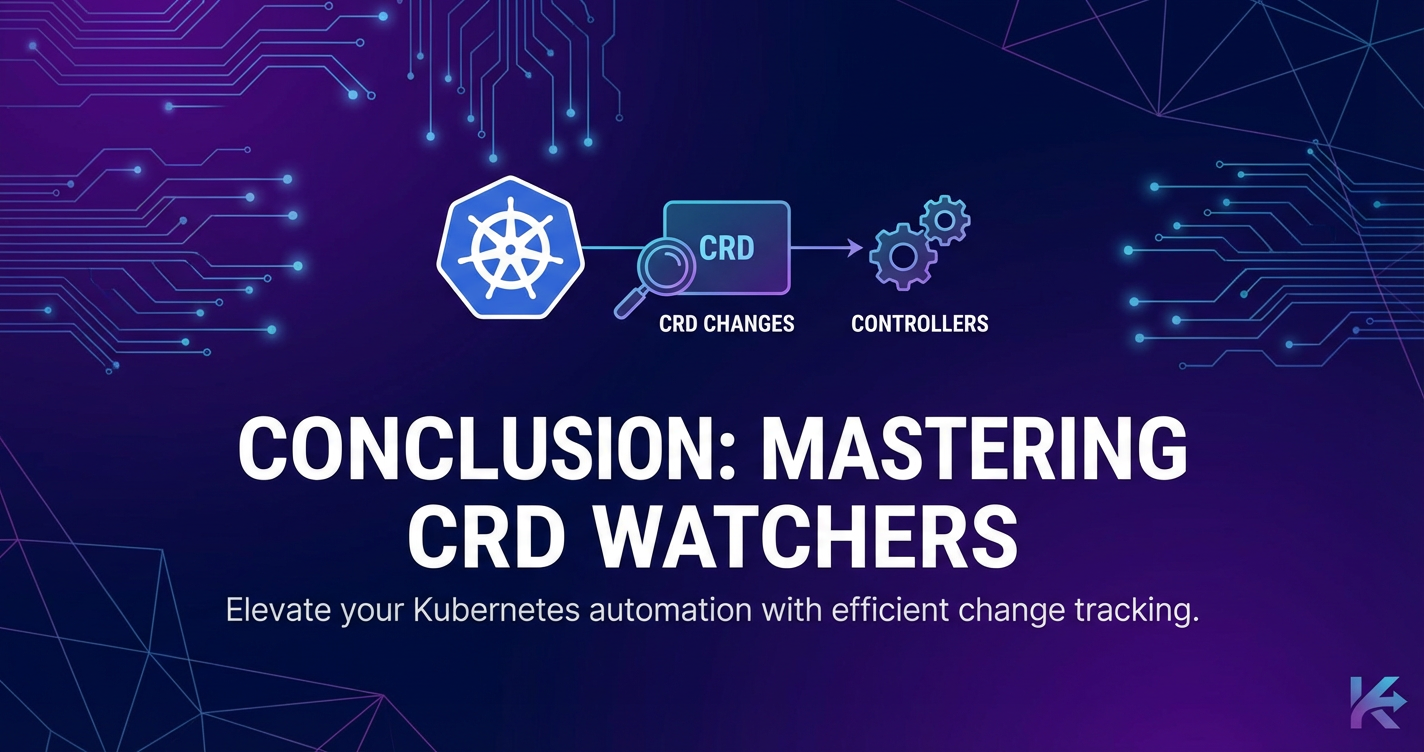
The ability to extend Kubernetes with Custom Resource Definitions and Controllers is arguably one of its most transformative features. It elevates Kubernetes from a mere container orchestrator to a highly customizable and programmable platform, capable of managing virtually any workload or infrastructure component with native elegance. Throughout this extensive guide, we have journeyed through the intricate landscape of Kubernetes extensibility, from the foundational concepts of desired state and CRDs to the sophisticated machinery of Informers, Workqueues, and the indispensable reconciliation loop.
We've explored the practicalities of building controllers, highlighting the efficiency and abstraction offered by frameworks like Controller-Runtime and Kubebuilder. These tools significantly reduce the boilerplate associated with client-go, allowing developers to focus on the unique domain logic that brings their custom resources to life. The importance of generating robust Go types for CRDs, implementing idempotent reconciliation logic, and managing dependencies through owner references cannot be overstated, as these practices are foundational to building reliable and maintainable controllers.
Furthermore, we delved into advanced concepts such as leader election for high availability, the strategic use of the status subresource for clear communication, and the power of webhooks for enforcing admission policies and mutations. We also recognized the critical role of the OpenAPI specification in defining robust API contracts for CRDs and facilitating seamless integration with external API ecosystems. The subtle yet impactful presence of external APIs, whether from cloud providers or specialized AI services, underscores the need for effective API management solutions. For instance, a sophisticated platform like APIPark can significantly streamline the complexities of routing, authenticating, and monitoring these diverse external API interactions, allowing controllers to focus on their core orchestration duties.
Finally, we tackled the common challenges faced in controller development and provided comprehensive troubleshooting strategies. From identifying reconciliation failures and resource conflicts to managing API server rate limits and ensuring Informer cache consistency, a methodical approach to problem-solving is paramount.
In mastering CRDs and Kubernetes Controllers, you gain the power to encode operational knowledge into automation, creating self-managing systems that respond intelligently to changes in your desired state. This capability not only enhances the stability and scalability of your applications but also significantly reduces the operational burden on your teams. As Kubernetes continues to evolve, its extensibility mechanisms will remain at the forefront, enabling innovative solutions and pushing the boundaries of what is possible within the cloud-native ecosystem. Embrace this power responsibly, adhere to best practices, and unlock the full potential of your Kubernetes clusters.
FAQ
Here are 5 frequently asked questions about watching CRD changes with Kubernetes controllers:
1. What is the fundamental difference between a CRD and a Custom Resource (CR)?
A Custom Resource Definition (CRD) is like a blueprint or schema for a new type of object in Kubernetes. It defines the name, scope (namespaced or cluster-scoped), and the structure (using OpenAPI v3 schema) of your custom API. It tells the Kubernetes API server how to validate and store instances of this new type. A Custom Resource (CR), on the other hand, is an actual instance of that blueprint. Just as a Deployment is a Kubernetes kind and my-app-deployment is an instance of a Deployment, a Database (defined by your CRD) is a kind, and my-webapp-db is a specific custom resource of that kind, existing as an object in the cluster's etcd store. The CRD defines the type, while the CR is an object of that type.
2. Why do I need a controller if I've already defined a CRD and created a Custom Resource?
Defining a CRD and creating a Custom Resource merely extends the Kubernetes API to store your domain-specific objects. These objects are purely declarative; they don't inherently perform any actions or orchestrate anything in your cluster. A Kubernetes controller is the active component that "watches" for these CRs. When a CR is created, updated, or deleted, the controller reacts by comparing the desired state (expressed in the CR's spec) with the actual state of your cluster and takes necessary actions (e.g., creating Pods, Deployments, Services, or interacting with external APIs) to reconcile any discrepancies. Without a controller, your Custom Resources would simply sit idly in etcd, serving no operational purpose.
3. What are Informers and why are they crucial for watching CRD changes efficiently?
Informers are key components in a Kubernetes controller's architecture that enable efficient observation of resource changes. Instead of continuously polling the Kubernetes API server, which would be inefficient and overload the server, Informers maintain a local, in-memory cache of specific Kubernetes resources (including your CRDs). They work by performing an initial list of all existing resources and then establishing a long-lived Watch connection to receive real-time incremental updates (add, update, delete events). This cached data allows the controller to quickly retrieve resource information locally, significantly reducing the load on the API server and improving the controller's responsiveness to changes. When a change occurs, the Informer updates its cache and invokes registered event handlers, pushing the relevant object's key to a workqueue for asynchronous processing by the controller's reconciliation loop.
4. How does a controller ensure that child resources (like Pods or Deployments) are cleaned up when a Custom Resource is deleted?
Controllers primarily achieve this through Kubernetes' built-in garbage collection mechanism, specifically by setting "owner references." When a controller creates a standard Kubernetes resource (e.g., a Deployment) in response to a Custom Resource (e.g., a Database CR), it sets an OwnerReference on the Deployment that points back to the Database CR. This relationship tells Kubernetes that the Deployment "belongs" to the Database CR. When the parent Database CR is deleted, Kubernetes' garbage collector automatically identifies all resources owned by it and deletes them as well. For any external resources (e.g., cloud-managed databases, external API calls) that the controller manages, "finalizers" are used. A finalizer is a special entry in the metadata of the CR that prevents its deletion until the controller explicitly removes the finalizer after performing necessary cleanup actions (like deprovisioning the external resource).
5. How do OpenAPI and API gateways like APIPark relate to Kubernetes controllers managing CRD changes?
OpenAPI plays a crucial role in Kubernetes extensibility because CRDs use OpenAPI v3 schema to define the validation rules and structure of your custom resources. This provides strong type-checking and enables tooling. Beyond Kubernetes, controllers often need to interact with external APIs (e.g., cloud provider APIs, third-party services, AI models) to orchestrate resources or perform tasks outside the cluster. An API gateway like APIPark becomes highly relevant in this scenario. It can sit in front of these external APIs, centralizing their management for the controller. APIPark can handle aspects like unified authentication for diverse external services, traffic management (rate limiting, load balancing), and comprehensive monitoring and analytics of all API calls made by the controller. This allows the Kubernetes controller to focus purely on its reconciliation logic while benefiting from a robust, secure, and observable way to interact with the broader API ecosystem, especially when dealing with many different AI models or complex external service integrations.
🚀You can securely and efficiently call the OpenAI API on APIPark in just two steps:
Step 1: Deploy the APIPark AI gateway in 5 minutes.
APIPark is developed based on Golang, offering strong product performance and low development and maintenance costs. You can deploy APIPark with a single command line.
curl -sSO https://download.apipark.com/install/quick-start.sh; bash quick-start.sh

In my experience, you can see the successful deployment interface within 5 to 10 minutes. Then, you can log in to APIPark using your account.

Step 2: Call the OpenAI API.