Inside OpenAI HQ: The Heart of AI Innovation
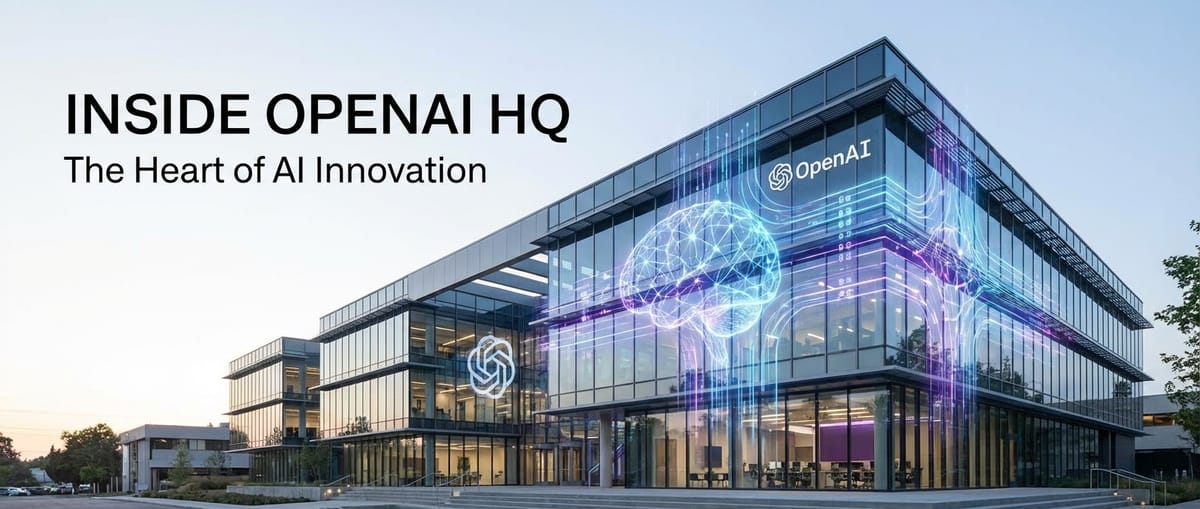


In the bustling landscape of Silicon Valley, amidst a constant hum of technological advancement, stands a place that has, in recent years, ascended to an almost mythic status: the headquarters of OpenAI. More than just an office building, it represents a crucible where the future of artificial intelligence is not merely contemplated but actively forged. This is where researchers, engineers, and ethicists converge, driven by a singular, audacious mission: to ensure that artificial general intelligence (AGI) benefits all of humanity. It is a vibrant ecosystem where groundbreaking algorithms are born, ethical dilemmas are meticulously dissected, and the very boundaries of what machines can achieve are pushed further with each passing day. To step inside OpenAI HQ is to enter the very heart of AI innovation, a realm where profound ideas are transformed into tangible realities that reshape our world.
The narrative of OpenAI is deeply intertwined with the quest for understanding and harnessing intelligence itself. Born from the collective vision of prominent figures like Elon Musk, Sam Altman, Ilya Sutskever, and Greg Brockman, the organization was founded in 2015 with an initial investment of $1 billion. Its inception was not merely another startup venture but a deliberate, almost philosophical undertaking aimed at guiding the development of AI responsibly. The founders shared a deep-seated concern that if left unchecked, the unfettered pursuit of advanced AI by commercial entities or nation-states could lead to unforeseen and potentially detrimental outcomes. Therefore, OpenAI was established as a non-profit (later transitioning to a capped-profit model to attract necessary capital and talent, while retaining its core mission) with a dual mandate: to conduct cutting-edge research in AI and to ensure its safe, ethical deployment for the betterment of all. This foundational philosophy permeates every corridor and every research initiative within their headquarters, serving as a constant reminder of the profound responsibility that accompanies their immense technological power. Their initial focus was broad, encompassing areas from reinforcement learning to robotics, but always with the underlying goal of developing general-purpose AI systems rather than narrow, task-specific ones. This ambition required an unprecedented level of computational resources, a diverse pool of brilliant minds, and an unwavering commitment to long-term research, often without immediate commercial viability as the primary driver. The early days were characterized by intense academic rigor, open collaboration, and a willingness to share insights, reflecting their commitment to advancing the entire field.
The Genesis of a Vision: Building for Beneficial AGI
OpenAI's founding principles were radical for the competitive tech industry. While many companies were scrambling to commercialize AI, OpenAI deliberately chose a path focused on safety and broad societal benefit. Their mission statement – to ensure that artificial general intelligence benefits all of humanity – is not merely a slogan but the bedrock upon which every decision is made, every line of code written, and every research paper published. This commitment demanded an organizational structure and culture that prioritized long-term impact over short-term gains, fostering an environment where ethical considerations were woven into the fabric of technological development from day one. The initial leadership, comprised of visionary scientists and entrepreneurs, understood the monumental scale of the challenge they were undertaking. They weren't just building algorithms; they were laying the groundwork for a future where intelligent machines would profoundly alter human civilization. This required attracting not just the brightest minds in machine learning but also experts in fields like ethics, philosophy, and policy, creating an interdisciplinary approach that few other tech companies could boast.
The early years of OpenAI were marked by foundational research, much of it open-sourced, contributing significantly to the broader AI community. From pioneering work in reinforcement learning with OpenAI Gym and Universe, which provided platforms for training and comparing AI agents, to early explorations in large-scale language models, the organization rapidly established itself as a leader. These initial breakthroughs, though perhaps not immediately recognized by the general public, were crucial stepping stones. They demonstrated the potential of scaling up models and data, and critically, they fostered a collaborative spirit that attracted top talent globally. Challenges were plentiful, ranging from the sheer computational demands of training complex models to the conceptual hurdles of defining and measuring general intelligence. Securing the vast computational power required, building efficient training pipelines, and developing novel architectures that could learn from massive datasets were constant battles. Yet, through perseverance and an iterative approach, these challenges were systematically addressed, laying the groundwork for the transformative products that would later emerge. The decision to remain a research-first organization, even as the potential for commercial applications grew, allowed them to pursue fundamental questions without immediate market pressure, a luxury afforded by their unique funding model and mission. This deliberate focus on foundational research is a testament to their long-term vision and their unwavering belief in the power of an open and collaborative approach to solving some of humanity's most complex technical and ethical problems.
Architecture of Genius: The Physical Space as a Catalyst for Innovation
The physical embodiment of OpenAI's mission resides in its headquarters, a carefully designed space that transcends the typical corporate office. Located in the vibrant South of Market (SoMa) district of San Francisco, the building itself is a testament to the organization's ethos, blending functionality with an ambiance conducive to deep thinking, intensive collaboration, and serendipitous discovery. Unlike many tech campuses that emphasize lavish amenities, OpenAI's HQ prioritizes an environment that is both intellectually stimulating and remarkably practical. The architectural design deliberately fosters transparency and openness, with glass walls and open-plan areas that encourage interaction and break down departmental silos. Natural light floods the workspaces, a subtle but important element in maintaining energy and focus during long hours of complex problem-solving. Every detail, from the ergonomic furniture designed for comfort during prolonged concentration to the strategic placement of whiteboards, is geared towards maximizing cognitive output and facilitating the rapid exchange of ideas.
Within this thoughtfully constructed environment, specific zones are meticulously tailored to different aspects of AI development. The research labs, for instance, are sanctuaries of intense focus, often characterized by quiet hums of powerful machinery and individuals engrossed in code or mathematical proofs. Here, the heavy lifting of theoretical exploration and algorithmic design takes place. Adjacent to these highly focused areas are dynamic collaboration zones, bustling with activity, where researchers from diverse backgrounds converge to debate, brainstorm, and iterate on complex problems. These spaces are equipped with large interactive screens, comfortable seating arrangements, and an abundance of writable surfaces, serving as incubators for interdisciplinary dialogue. Furthermore, recognizing the importance of individual contemplation and uninterrupted work, numerous quiet rooms and soundproof pods are strategically placed throughout the office. These provide havens for deep work, allowing individuals to immerse themselves in intricate tasks without distraction, a crucial element for tackling the profound challenges inherent in AI research. The data centers, often a visually striking aspect of any advanced tech company, are less about aesthetic and more about raw power, pulsating with the computational might necessary to train and refine the world's most sophisticated AI models. These are the engines that drive the organization's ambitious experiments, where vast datasets are processed, and neural networks with billions of parameters are brought to life. The entire layout reflects a deep understanding of the diverse cognitive processes involved in cutting-edge AI development, creating a physical space that is not merely an office but a finely tuned instrument designed to accelerate the pace of innovation and foster a culture of relentless inquiry. The atmosphere is one of focused intensity, yet underlying it is a strong sense of community and shared purpose, where the pursuit of AGI is a collective endeavor, supported by an environment that is both inspiring and highly functional.
The Minds Behind the Machines: People and Culture Driving Innovation
At the heart of OpenAI's relentless march towards AGI is its extraordinary team – a constellation of some of the brightest minds in artificial intelligence, engineering, and various interdisciplinary fields. The organization's hiring philosophy is not merely about recruiting technical expertise; it's about identifying individuals who possess a rare blend of intellectual curiosity, profound technical acumen, and an unwavering commitment to the ethical implications of their work. Diversity, in all its forms, is actively sought, not just for compliance but because a multiplicity of perspectives is understood to be essential for tackling problems of such immense societal consequence. Researchers hail from myriad backgrounds, bringing insights from neuroscience, philosophy, linguistics, and mathematics, enriching the purely computational approaches. This interdisciplinary melting pot ensures that AI systems are not only technically robust but also critically examined for potential biases, ethical pitfalls, and broader societal impacts.
The culture at OpenAI is distinct, characterized by an intense focus on collaboration, radical transparency (where appropriate), and a flat hierarchy that empowers individuals. Teams are often highly fluid, forming around specific research problems and dissolving as projects evolve, fostering an agile and adaptive environment. Interdisciplinary teams are the norm, with machine learning engineers working hand-in-hand with safety researchers, policy experts, and product managers from the earliest stages of a project. This collaborative model ensures that ethical considerations and deployment strategies are integrated into the design process rather than being afterthoughts. The intellectual rigor is palpable; debates are frequent and passionate, but always constructive, driven by a shared pursuit of truth and optimal solutions. There's a strong emphasis on continuous learning, with regular internal seminars, paper readings, and informal knowledge-sharing sessions that keep everyone at the cutting edge of a rapidly evolving field. Mentorship is also a cornerstone, with seasoned researchers guiding emerging talents, ensuring the transfer of knowledge and the cultivation of future leaders in AI.
While the work is undeniably demanding and the stakes are extraordinarily high, the environment is also one of immense intellectual stimulation and camaraderie. There's a shared sense of mission that transcends individual ego, uniting everyone in the monumental task of building beneficial AGI. The commitment to pushing the boundaries of what's possible means that setbacks are seen not as failures but as invaluable learning opportunities. This resilience, combined with a culture that encourages bold experimentation and intellectual courage, creates a unique ecosystem where some of the world's most complex technical and ethical challenges are confronted head-on. It's a place where the pursuit of groundbreaking science is seamlessly integrated with a deep sense of responsibility, shaping not just technology but also the future of humanity itself. This blend of scientific ambition and ethical grounding is what truly defines the people and culture within OpenAI's walls.
The Core of Innovation: Research and Development at the Forefront
The true engine of OpenAI's impact lies within its expansive and multifaceted research and development efforts, which delve into the very frontiers of artificial intelligence. Their work spans a broad spectrum of AI disciplines, but in recent years, a significant focus has coalesced around Large Language Models (LLMs), reinforcement learning, computer vision, and the ambitious integration of these capabilities into robotics. In the realm of LLMs, OpenAI has undeniably led the charge, with the GPT series becoming synonymous with advanced generative AI. This research involves training models with trillions of parameters on colossal datasets of text and code, enabling them to understand, generate, and manipulate human language with unprecedented fluency and coherence. The iterative process behind these models is staggering, involving not just novel architectural designs but also meticulous data curation, innovative training regimes, and sophisticated fine-tuning techniques to enhance performance and alignment.
Beyond language, OpenAI continues its seminal work in reinforcement learning (RL), a paradigm where AI agents learn by trial and error through interactions with an environment. This has led to remarkable achievements in complex game environments like Dota 2, where OpenAI Five demonstrated superhuman performance, and in robotic manipulation, where agents learn intricate tasks through simulated and real-world interactions. The methodologies employed are diverse and cutting-edge, often involving combinations of deep learning with model-based RL, self-play, and transfer learning to generalize skills across different tasks. The computational resources required for these endeavors are immense, necessitating access to vast clusters of GPUs and custom-built infrastructure capable of supporting distributed training across thousands of processing units for extended periods. This immense computational power allows researchers to experiment with model sizes and training durations that would be unfeasible for most organizations, pushing the envelope of what is scientifically viable.
The journey from a nascent research idea to a robust, deployable model is arduous and fraught with challenges. It begins with theoretical breakthroughs, often stemming from months or years of foundational work in mathematics and computer science. These theories are then translated into experimental code, subjected to rigorous testing on increasingly large datasets. The process is highly iterative, characterized by continuous experimentation, analysis of results, and subsequent refinement of algorithms and architectures. Researchers grapple with issues like model instability during training, the challenge of mitigating biases embedded in training data, and the enormous computational cost associated with scaling up models. Ensuring the safety and alignment of these increasingly powerful systems is a constant, overarching concern, driving dedicated research into areas like interpretability, robust adversarial examples, and controllable generation. Every breakthrough, whether in language understanding, visual perception, or robotic control, represents countless hours of dedicated effort, meticulous debugging, and a relentless pursuit of excellence, all underpinned by a deep understanding of the scientific method and a commitment to pushing the boundaries of what machines can intelligently achieve. This rigorous approach, combined with a culture that encourages bold experimentation and intellectual courage, ensures that OpenAI remains at the absolute cutting edge of AI development.
From Lab to World: Productization and Societal Impact
The transition of groundbreaking AI research from the sterile environment of a laboratory to the hands of millions globally is a complex yet defining aspect of OpenAI's mission. While deeply rooted in scientific inquiry, the organization has demonstrated an impressive capability to translate its core research into highly impactful, user-facing products. The most prominent example, ChatGPT, began as a research prototype of the GPT-3 series, showcasing the astonishing generative capabilities of large language models. Its public release, initially as a research preview, marked a pivotal moment, democratizing access to powerful AI and sparking a global conversation about its potential and implications. Similarly, DALL-E, an AI model capable of generating highly creative and realistic images from text descriptions, and Codex, which translates natural language into code, emerged from years of fundamental research in multimodal AI and code generation respectively. These products exemplify OpenAI's strategic decision-making in product deployment: often releasing early versions to gather user feedback, identify unforeseen challenges, and iterate rapidly based on real-world usage patterns.
This "release early, iterate often" philosophy, more commonly associated with agile software development, has been instrumental in refining these AI systems. Public interaction provides invaluable data on how users engage with the models, reveals edge cases, and highlights areas for improvement in terms of safety, reliability, and utility. It’s a delicate balance between showcasing technological advancements and managing the inherent risks associated with powerful, novel AI systems. OpenAI has consistently emphasized responsible deployment, recognizing the profound societal impact their creations can wield. The rapid adoption of tools like ChatGPT has not only ignited innovation across various industries but has also brought to the forefront critical ethical considerations. Discussions around AI ethics, bias, misinformation, intellectual property, and job displacement have intensified, pushing OpenAI to dedicate significant resources to addressing these challenges proactively.
The societal impact of these productizations cannot be overstated. They have fundamentally altered how individuals and businesses approach tasks ranging from content creation and software development to data analysis and education. The widespread accessibility of these tools has spurred a new wave of innovation, empowering individuals and organizations that might not have the resources to build such advanced AI from scratch. However, this transformative power comes with a responsibility to educate the public, collaborate with policymakers, and continuously refine safety mechanisms. OpenAI's commitment extends beyond simply building cutting-edge AI; it encompasses fostering a global dialogue about its responsible integration into society. They actively engage with governments, academic institutions, and civil society organizations to shape policies and best practices, ensuring that the benefits of AI are broadly distributed and its risks are diligently mitigated. This holistic approach, from scientific breakthrough to responsible global deployment, underscores the multifaceted nature of OpenAI's influence on the world.
APIPark is a high-performance AI gateway that allows you to securely access the most comprehensive LLM APIs globally on the APIPark platform, including OpenAI, Anthropic, Mistral, Llama2, Google Gemini, and more.Try APIPark now! 👇👇👇
The Technological Backbone: Infrastructure and Ecosystem Enablement
The breathtaking advancements emanating from OpenAI’s headquarters would be impossible without an equally sophisticated technological backbone – a vast, intricate infrastructure designed to support the immense computational demands of modern AI. At its core lies an unparalleled reliance on high-performance computing, particularly specialized hardware like Graphics Processing Units (GPUs) and, to a lesser extent, Tensor Processing Units (TPUs). Training a large language model like GPT-4 requires not just thousands of these powerful chips but also petabytes of data storage and high-bandwidth interconnects to allow them to communicate efficiently. This necessitates custom-built data centers, optimized for AI workloads, with advanced cooling systems and redundant power supplies to ensure uninterrupted operation. The architecture of these systems is a masterpiece of engineering, designed to orchestrate complex distributed training jobs that can run for weeks or months, consuming staggering amounts of energy.
Beyond raw computational power, managing the entire lifecycle of data – from collection and cleaning to storage, processing, and retrieval – is a monumental task. OpenAI deals with datasets of unprecedented scale and diversity, comprising vast swathes of the internet, specialized corpora, and internal experimental data. Robust data governance policies, efficient storage solutions (often involving tiered systems of hot and cold storage), and powerful data processing pipelines are essential to feed these hungry models. Internally, researchers and engineers rely on a suite of bespoke tools and platforms for everything from experiment tracking and version control for models and datasets to distributed job scheduling and monitoring. These internal systems are meticulously crafted to optimize the research workflow, allowing teams to rapidly prototype, iterate, and analyze the results of their complex experiments.
While giants like OpenAI possess bespoke internal systems to orchestrate their vast AI operations, the broader ecosystem of developers and enterprises often seeks streamlined, accessible solutions for integrating and managing these powerful models. This is where the concept of an AI Gateway becomes indispensable, acting as a crucial intermediary between AI models and the applications that consume them. For organizations looking to leverage the capabilities of large language models, an LLM Gateway provides specialized functionalities to standardize interactions, manage costs, and ensure reliability. In this spirit of democratizing AI access and management, platforms built on the principle of an Open Platform are emerging as vital tools for the wider adoption of AI.
One such innovative solution is APIPark, an open-source AI gateway and API management platform that embodies this very ethos. APIPark simplifies the complex task of managing, integrating, and deploying AI and REST services, acting as a unified point of control. It allows enterprises to quickly integrate over 100 AI models under a single management system, handling authentication, and crucial cost tracking, thereby removing significant friction in AI adoption. A core feature is its ability to provide a unified API format for AI invocation, meaning that applications can interact with various AI models using a consistent interface. This standardization is invaluable, as it insulates applications from changes in underlying AI models or prompt structures, significantly reducing maintenance costs and development complexity.
APIPark also empowers users to encapsulate custom prompts with AI models, quickly creating new, specialized REST APIs for tasks like sentiment analysis or data analysis. This rapid API creation capability transforms complex AI functionalities into easily consumable services. Furthermore, it offers end-to-end API lifecycle management, guiding APIs from design and publication through invocation and eventual decommissioning, enforcing structured management processes, and handling traffic forwarding, load balancing, and versioning. For collaborative environments, APIPark facilitates API service sharing within teams, centralizing all available API services for easy discovery and utilization across different departments. It also supports independent API and access permissions for each tenant, enabling multi-team environments to operate with independent configurations and security policies while sharing underlying infrastructure, enhancing resource utilization.
Security is paramount, and APIPark addresses this with features like requiring approval for API resource access, where callers must subscribe and await administrator approval, preventing unauthorized calls and potential data breaches. Performance-wise, it's engineered for scale, rivaling high-performance gateways like Nginx, capable of over 20,000 TPS on modest hardware and supporting cluster deployments for massive traffic. Crucially, APIPark provides detailed API call logging, recording every interaction, which is indispensable for troubleshooting, ensuring system stability, and maintaining data security. Its powerful data analysis capabilities, which analyze historical call data, reveal long-term trends and performance changes, allowing businesses to perform preventive maintenance and optimize their AI infrastructure proactively.
APIPark's open-source nature under the Apache 2.0 license means it serves as an accessible open platform for startups and developers, with commercial versions offering advanced features and professional support for larger enterprises. Its quick deployment in minutes via a simple command line underscores its commitment to ease of use and rapid adoption. Developed by Eolink, a leader in API lifecycle governance, APIPark extends Eolink's mission to serve tens of millions of professional developers globally, ensuring that the incredible power of AI, much of which is spearheaded by organizations like OpenAI, can be effectively harnessed and managed by the broader technological landscape. This robust infrastructure, whether internal and bespoke or externally accessible like APIPark, is truly the unsung hero, enabling the continuous flow of innovation from the core research labs to impactful real-world applications.
Ethical AI and Governance: Navigating the Future Responsibly
OpenAI's commitment to developing beneficial AGI is inextricably linked with a profound dedication to ethical AI and robust governance. Recognizing the immense power and potential societal disruption of advanced AI, the organization places an unparalleled emphasis on safety, alignment, and responsible development. This isn't merely a supplementary concern but a foundational pillar that guides every aspect of their research and deployment strategies. Research into AI safety is a dedicated and growing field within OpenAI, focusing on critical areas such as alignment (ensuring AI systems act in accordance with human values and intentions), interpretability (making AI decisions understandable to humans), and robustness against adversarial attacks. They actively investigate methods to prevent models from generating harmful content, exhibiting biases, or being exploited for malicious purposes.
Bias mitigation is a particularly challenging and complex area, given that AI models learn from vast datasets that often reflect existing societal prejudices. OpenAI employs a multi-pronged approach, involving careful curation of training data, development of sophisticated debiasing techniques, and extensive post-training evaluation to identify and reduce harmful biases in their models. Transparency, while often difficult to achieve in highly complex neural networks, remains a goal, with efforts to provide insights into model behavior and limitations to users and developers. This involves developing tools and methodologies that can explain why an AI system made a particular decision or generated a specific output, fostering trust and accountability.
Beyond internal research, OpenAI actively engages in external collaboration with policymakers, academics, and the public on AI governance. They regularly publish white papers, policy recommendations, and safety research findings, contributing to a global discourse on the ethical implications and regulatory frameworks for AI. This proactive engagement is crucial for shaping public understanding, informing legislative efforts, and building consensus around the responsible development and deployment of advanced AI. They understand that no single entity can dictate the future of AI; it requires a collective, multi-stakeholder approach. Initiatives range from participating in government hearings and expert panels to fostering open dialogues through forums and online platforms, inviting feedback and critiques from diverse perspectives.
The long-term vision for AI safety within OpenAI is not just about preventing immediate harms but also about preparing for the profound challenges and opportunities that superintelligent AI might present. This involves contemplating scenarios of AGI emergence and developing frameworks for ensuring its safe and beneficial integration into human society, long before such systems become a reality. This forward-looking perspective underpins much of their safety research, aiming to build a future where advanced AI acts as a benevolent force, augmenting human capabilities and solving humanity's grand challenges, rather than posing an existential risk. The dedication to these ethical principles and governance structures is what distinguishes OpenAI, establishing it not just as a leader in technological innovation but also as a responsible steward of humanity's AI future.
The Future Horizon: Charting the Course for Next-Generation AI
Peering into the future from within OpenAI HQ is to contemplate a landscape shaped by increasingly sophisticated artificial intelligence, where the boundaries between human and machine capabilities blur and redefine themselves. The quest for Artificial General Intelligence (AGI) remains the ultimate, overarching goal, a north star guiding much of the organization's long-term research. AGI, conceived as an AI system that can understand, learn, and apply intelligence across a broad range of tasks at human or superhuman levels, represents a fundamental shift in computing and cognition. Achieving this requires not just further scaling of existing models but profound breakthroughs in areas like multimodal reasoning (integrating language, vision, and other sensory data), truly abstract thought, common-sense reasoning, and the ability to autonomously learn and adapt in novel environments. OpenAI’s researchers are actively exploring new architectures and training paradigms that could unlock these next levels of intelligence, pushing beyond the current limitations of pattern recognition and statistical correlations.
One key area of future exploration involves the development of AI systems that can reason more deeply, plan over longer horizons, and exhibit a greater degree of agency and autonomy while remaining aligned with human values. This includes research into more efficient and robust learning algorithms that can achieve high performance with less data and computational expense, making advanced AI more accessible and sustainable. The potential for AI to become a truly transformative scientific tool is also a significant frontier, with models assisting in fundamental research across biology, chemistry, and physics, accelerating discovery beyond human cognitive limits. Imagine AI systems that can hypothesize new materials, design novel drugs, or even propose entirely new scientific theories based on vast, disparate datasets.
The evolving relationship between humans and AI is another critical dimension of the future horizon. As AI becomes more capable and integrated into daily life, questions of human-AI collaboration, augmentation, and even identity will become increasingly pertinent. OpenAI envisions a future where AI acts as a powerful assistant, augmenting human creativity, productivity, and problem-solving abilities, rather than replacing them. This requires not just technological advancement but also careful consideration of user interfaces, interaction modalities, and the psychological impact of highly intelligent non-human entities. The challenges ahead are immense, encompassing not only the technical hurdles of building increasingly powerful AI but also the profound ethical, societal, and philosophical questions that accompany such an endeavor. Ensuring that these future AI systems remain controllable, beneficial, and aligned with humanity's best interests is paramount. This includes anticipating and mitigating potential risks associated with advanced AI, from misuse to unforeseen emergent behaviors. The journey towards AGI is not just a scientific endeavor but a societal one, requiring continuous vigilance, open dialogue, and a collaborative spirit among researchers, policymakers, and the global community. From the vantage point of OpenAI HQ, the future of AI is not a predetermined path but a dynamic, co-created landscape, where every breakthrough is met with a renewed commitment to shaping a future where intelligence, both artificial and human, flourishes responsibly for the betterment of all.
OpenAI Milestones and Key Research Areas
OpenAI's journey has been marked by a series of pivotal research advancements and product releases that have profoundly shaped the AI landscape. Here's a summary of some of their most significant contributions:
| Milestone/Research Area | Year(s) | Description | Impact & Significance |
|---|---|---|---|
| OpenAI Gym & Universe | 2016 | Released a toolkit for developing and comparing reinforcement learning algorithms (Gym) and a platform for training AI agents across vast ranges of environments (Universe). | Democratized RL research, providing standardized environments and benchmarks, accelerating progress in the field. |
| Dota 2 (OpenAI Five) | 2018-19 | Developed AI agents that learned to play the complex video game Dota 2, eventually defeating human professional players in a full five-on-five match. | Demonstrated superhuman performance in a highly complex, real-time, multi-agent environment with imperfect information, showcasing advanced RL capabilities. |
| GPT-2 | 2019 | A large transformer-based language model capable of generating coherent paragraphs of text. Initially released with caution due to concerns about misuse. | Highlighted the emergent capabilities of large-scale language models, initiating widespread discussion about AI generation, misinformation, and responsible release strategies. |
| GPT-3 | 2020 | An autoregressive language model with 175 billion parameters, demonstrating remarkable few-shot and zero-shot learning capabilities across a wide array of language tasks. | A major leap in language understanding and generation; it showed that scaling models could lead to general-purpose intelligence in language, foundational for many subsequent AI applications. |
| DALL-E & DALL-E 2 | 2021-22 | AI systems capable of generating realistic and imaginative images from natural language descriptions. | Revolutionized text-to-image generation, showcasing multimodal AI's creative potential and sparking new fields in digital art and content creation. |
| Codex | 2021 | An AI system based on GPT-3 capable of translating natural language instructions into code in various programming languages. Underpins GitHub Copilot. | Significantly enhanced programmer productivity and accelerated software development by automating code generation from natural language, bridging the gap between human intent and machine execution. |
| ChatGPT | 2022 | A fine-tuned version of the GPT-3.5 series, optimized for conversational interaction. Its public release brought generative AI to mainstream attention. | Democratized access to powerful conversational AI, leading to unprecedented public engagement, rapid innovation across industries, and widespread awareness of generative AI's capabilities and challenges. |
| GPT-4 | 2023 | OpenAI's most advanced system to date, exhibiting human-level performance on various professional and academic benchmarks, with enhanced reasoning, safety, and multimodal capabilities. | Represents a significant step towards AGI, demonstrating advanced reasoning and problem-solving, capable of processing both text and images. Further solidified OpenAI's leadership in LLM research and deployment, setting new benchmarks for AI performance and safety. |
| AI Safety & Alignment Research | Ongoing | Continuous research into ensuring AI systems are aligned with human values, are robust against misuse, are interpretable, and contribute positively to society. | Crucial for the responsible development of increasingly powerful AI, addressing existential risks, ethical dilemmas, and ensuring AI benefits all of humanity. It's a foundational, cross-cutting theme across all OpenAI's work. |
Conclusion: The Enduring Legacy of an AI Vanguard
The journey through OpenAI HQ, both conceptually and physically, reveals far more than just a cutting-edge technological facility; it unveils the beating heart of an audacious vision for the future of artificial intelligence. From its foundational mission to ensure that AGI benefits all of humanity, through its meticulously designed physical spaces that foster both deep concentration and dynamic collaboration, to its unparalleled assembly of brilliant minds, OpenAI stands as a testament to the power of focused, ethical innovation. The relentless pursuit of knowledge, evidenced in its groundbreaking research across LLMs, reinforcement learning, and multimodal AI, consistently pushes the boundaries of what machines can achieve. The careful, yet impactful, productization of these complex research endeavors, exemplified by tools like ChatGPT and DALL-E, has not only transformed industries but has also profoundly reshaped public perception and interaction with AI.
Crucially, the organization’s proactive approach to AI ethics and governance underscores a deep understanding of the immense responsibility that accompanies such technological power. This commitment to safety, alignment, and transparent engagement with global stakeholders positions OpenAI not just as a technological leader, but as a responsible steward in guiding humanity through the nascent stages of the AI era. The technological infrastructure, whether internal or external solutions like an AI Gateway or LLM Gateway (such as APIPark) that facilitate the wider adoption of an Open Platform approach to AI, provides the robust scaffolding necessary for this continuous innovation. Looking towards the future, OpenAI remains steadfast in its quest for AGI, navigating the complex interplay between human and artificial intelligence with both scientific rigor and a profound sense of purpose. The legacy of OpenAI is still being written, but its headquarters in the heart of Silicon Valley will undoubtedly remain a crucible where the future of intelligent machines is not just imagined, but meticulously brought into being, destined to leave an indelible mark on human civilization.
5 FAQs about OpenAI and AI Innovation
1. What is OpenAI's primary mission, and how does it balance profit with ethics? OpenAI's primary mission is to ensure that artificial general intelligence (AGI) benefits all of humanity. While initially a non-profit, it transitioned to a "capped-profit" model to attract the significant capital and talent required for advanced AI research. This structure aims to balance the need for substantial investment with its core ethical mission, ensuring that any profits generated are capped and excess returns contribute back to the mission of safe AI development, rather than purely maximizing shareholder value.
2. How does OpenAI ensure the safety and ethical alignment of its AI models? OpenAI employs a multi-faceted approach to AI safety and alignment. This includes dedicated research into techniques for making AI systems more interpretable, robust against misuse, and aligned with human values. They also focus on mitigating biases in training data, developing safety-critical evaluations, and engaging with experts, policymakers, and the public to establish best practices and responsible deployment strategies. Regular testing, auditing, and user feedback loops are integral to this continuous process.
3. What role do "AI Gateway" and "LLM Gateway" solutions play in the broader AI ecosystem, especially for businesses? AI Gateway and LLM Gateway solutions, like APIPark, act as crucial intermediaries between diverse AI models (especially large language models) and the applications that consume them. For businesses, they simplify integration, standardize API formats, manage authentication and access control, track costs, and ensure consistent performance and reliability. These gateways abstract away the complexities of interacting directly with various AI providers, making it easier and more cost-effective for enterprises to leverage cutting-edge AI in their products and services, acting as an Open Platform for AI adoption.
4. What are some of OpenAI's most significant breakthroughs to date? OpenAI has achieved several landmark breakthroughs. These include pioneering work in reinforcement learning with OpenAI Gym and Universe, achieving superhuman performance in Dota 2 with OpenAI Five, and developing the highly influential GPT series of large language models (GPT-2, GPT-3, GPT-4) which power conversational AI like ChatGPT. Other notable innovations include DALL-E for text-to-image generation and Codex for natural language to code translation, all of which have significantly advanced the field of AI.
5. What is Artificial General Intelligence (AGI) and what are OpenAI's aspirations regarding it? Artificial General Intelligence (AGI) refers to a hypothetical AI system that possesses human-level or superhuman-level cognitive abilities across a broad range of intellectual tasks, rather than being limited to specific domains. OpenAI's ultimate aspiration is to build AGI. Their research is focused on developing foundational technologies and understanding the principles that could lead to such general intelligence, with a paramount emphasis on ensuring that this powerful AGI is developed safely and ethically for the benefit of all humanity.
🚀You can securely and efficiently call the OpenAI API on APIPark in just two steps:
Step 1: Deploy the APIPark AI gateway in 5 minutes.
APIPark is developed based on Golang, offering strong product performance and low development and maintenance costs. You can deploy APIPark with a single command line.
curl -sSO https://download.apipark.com/install/quick-start.sh; bash quick-start.sh

In my experience, you can see the successful deployment interface within 5 to 10 minutes. Then, you can log in to APIPark using your account.

Step 2: Call the OpenAI API.