Integrating AI Gateway & GitLab: Boost Your DevOps
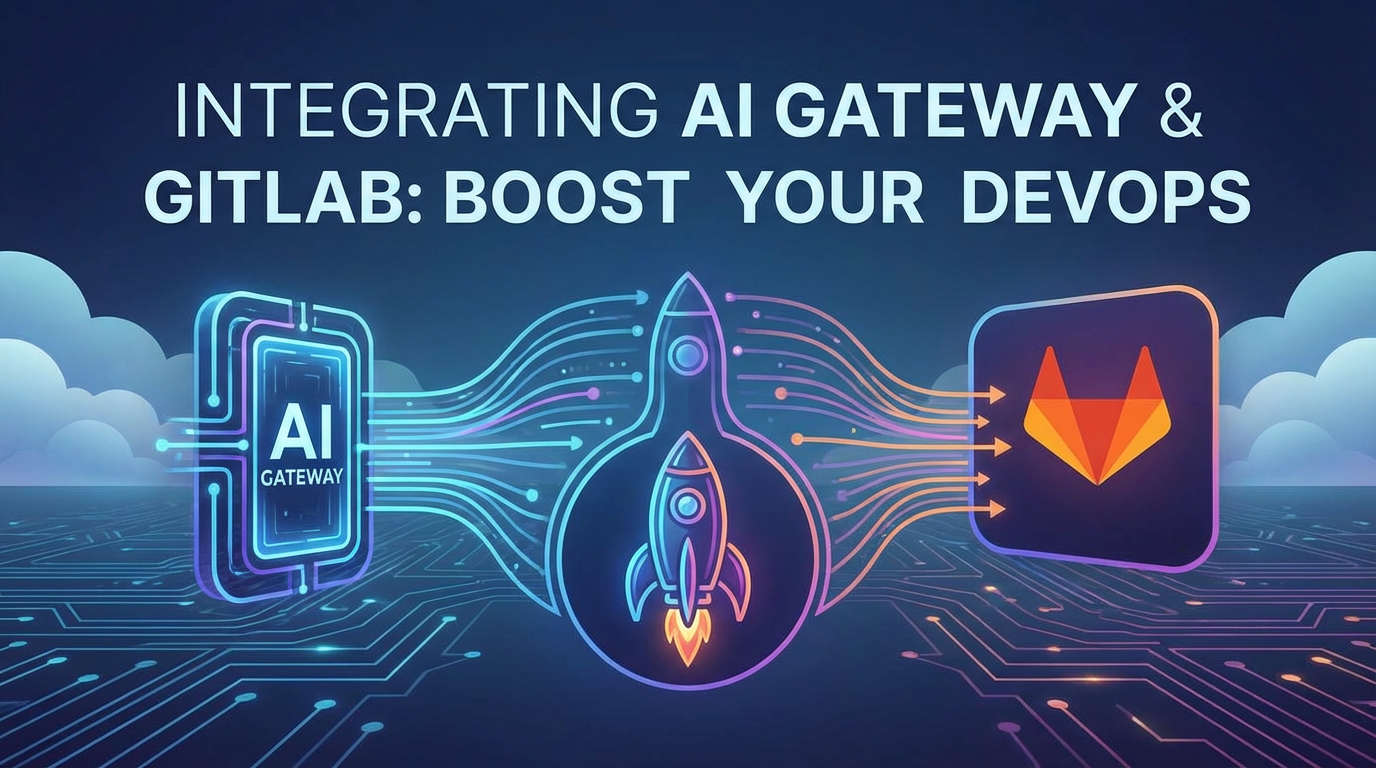


In the rapidly evolving landscape of software development, where the confluence of Artificial Intelligence and traditional application paradigms is becoming increasingly ubiquitous, the methodologies and tools underpinning robust delivery pipelines are undergoing a profound transformation. The foundational principles of DevOps — emphasizing automation, collaboration, continuous integration, and continuous delivery — are now being challenged and enriched by the imperative to seamlessly incorporate intelligent services. As organizations strive for greater agility, enhanced security, and superior performance in their AI-powered applications, the strategic integration of sophisticated infrastructure components, particularly advanced API management solutions like the AI Gateway, with comprehensive DevOps platforms such as GitLab, emerges not merely as an advantage but as an absolute necessity. This synergy is poised to redefine the operational blueprints for modern software delivery, creating resilient, scalable, and intelligent systems that can adapt to the dynamic demands of the digital age.
The journey towards this future state necessitates a meticulous examination of how these powerful tools and concepts intertwine. We must delve into the core functionalities of an AI Gateway, distinguishing it from its traditional api gateway counterpart and appreciating the specialized role of an LLM Gateway in orchestrating interactions with large language models. Simultaneously, we will explore the pervasive influence of GitLab as an integrated platform that shepherds code from inception to production, providing a unified environment for version control, CI/CD, security, and project management. The ultimate goal of this discourse is to articulate a compelling vision for a DevOps ecosystem where the deployment, management, and scaling of AI services are as streamlined and robust as any conventional application component, thereby unleashing unprecedented innovation and operational efficiency. By meticulously architecting this integration, enterprises can not only accelerate the delivery of AI-driven features but also ensure their reliability, security, and cost-effectiveness, paving the way for a truly intelligent and automated development lifecycle.
The Modern DevOps Landscape and the Rise of AI
The discipline of DevOps, an amalgamation of cultural philosophies, practices, and tools, has fundamentally reshaped how organizations approach software development and operations since its inception. Its core tenets — fostering collaboration between development and operations teams, automating manual processes, implementing continuous integration and continuous delivery (CI/CD), and emphasizing rapid feedback loops — have enabled enterprises to deliver software with unprecedented speed, reliability, and quality. No longer confined to the realm of simple application deployments, modern DevOps pipelines are characterized by their intricate orchestration of microservices, serverless functions, containerized workloads, and increasingly, complex machine learning models and artificial intelligence services. This expanded scope demands even more sophisticated tooling and integration strategies to maintain the agility and efficiency that DevOps promises.
In parallel with the maturation of DevOps, the capabilities of Artificial Intelligence have surged dramatically, transitioning from academic curiosities to indispensable components of enterprise solutions. From predictive analytics and personalized customer experiences to automated content generation and sophisticated anomaly detection, AI is now embedded across various layers of the technology stack. The proliferation of powerful machine learning models, particularly large language models (LLMs) and other generative AI systems, has introduced a new paradigm of application development. These models, often exposed as APIs, offer immense potential but also present unique challenges for integration into existing software architectures and operational workflows. Developers are now tasked with not only building traditional application logic but also with selecting, fine-tuning, deploying, monitoring, and managing interactions with these intelligent services. The complexity arises from the diversity of AI models, their varying input/output formats, unique authentication schemes, significant computational demands, and the critical need for prompt engineering and context management in conversational AI.
Integrating these nascent AI capabilities into traditional application development and deployment pipelines is not without its hurdles. Conventional application deployment focuses on compiled code, databases, and message queues, where version control, testing, and deployment strategies are well-established. However, AI models introduce new artifacts such as training data, model weights, inference servers, and prompt templates, each requiring its own lifecycle management. Ensuring consistent performance, managing model drift, tracking token usage, and maintaining data privacy for AI services become paramount concerns that extend beyond the scope of traditional DevOps practices. Furthermore, the sheer variety of AI model providers, each with its proprietary APIs and usage policies, creates a fragmented ecosystem that can hinder rapid development and deployment. Without a unified approach, teams risk creating brittle, hard-to-maintain integrations that slow down innovation and introduce significant operational overhead. This burgeoning complexity underscores the urgent need for specialized tools and methodologies that can bridge the gap between AI development and robust operational practices, ensuring that the promise of AI can be delivered reliably and at scale within a well-governed DevOps framework.
Understanding AI Gateways, LLM Gateways, and API Gateways
The successful integration of AI services into modern applications, particularly within a well-structured DevOps environment, hinges critically on the underlying infrastructure that manages these interactions. At the heart of this infrastructure lie various forms of gateways, each designed to address specific challenges in API management. While the traditional API Gateway has long been an indispensable component in microservices architectures, the advent of AI and large language models has necessitated the evolution of more specialized solutions: the AI Gateway and the even more refined LLM Gateway. Understanding the distinctions and synergistic capabilities of these gateway types is fundamental to constructing resilient and efficient AI-powered systems.
What is an API Gateway?
Historically, the API Gateway emerged as a critical architectural pattern to manage the increasing complexity of microservices-based applications. In a system composed of numerous small, independent services, a direct client-to-service communication model quickly becomes unwieldy, leading to challenges in routing, authentication, rate limiting, and analytics. An API Gateway acts as a single entry point for all client requests, abstracting the internal microservices architecture from external consumers. It effectively acts as a traffic cop, directing requests to the appropriate backend service, thereby simplifying client-side development and reducing network overhead.
The core functions of an API Gateway are multifaceted and foundational to modern distributed systems. These include request routing, where incoming requests are forwarded to the correct internal service based on defined rules; load balancing, to distribute traffic efficiently across multiple instances of a service; authentication and authorization, to secure access to APIs by verifying client credentials and permissions; and rate limiting, to protect backend services from abuse or overload by restricting the number of requests a client can make within a specified timeframe. Additionally, an API Gateway often handles cross-cutting concerns such as caching, request/response transformation, logging, monitoring, and service discovery. By centralizing these functionalities, an API Gateway significantly improves security, scalability, resilience, and maintainability of the overall system, making it an indispensable component for exposing and managing traditional RESTful or GraphQL APIs. Its role in unifying disparate services under a single, well-managed interface is crucial for any organization operating a complex service landscape.
Evolving to AI Gateways
While a traditional API Gateway excels at managing standard RESTful APIs, the unique characteristics of AI models, especially their diversity and specialized operational requirements, highlight its limitations. Integrating various AI models—ranging from computer vision services to natural language processing engines, often sourced from different vendors or deployed internally—presents a new set of challenges. Each AI model might have a distinct API signature, different authentication mechanisms, varying input/output schemas, and unique operational considerations such as prompt engineering for generative AI or managing model versions. Directly integrating with each of these disparate AI endpoints would lead to a complex, brittle, and difficult-to-maintain codebase within the consuming applications.
This is precisely where the AI Gateway steps in, acting as a specialized layer designed to abstract away the complexities inherent in managing AI services. An AI Gateway extends the functionalities of a traditional API Gateway by specifically catering to the nuances of AI model interaction. Its primary role is to provide a unified interface for invoking a diverse array of AI models, regardless of their underlying technology or provider. Key features of an AI Gateway include model abstraction, which allows applications to call AI services using a standardized request format without needing to know the specifics of the backend model; prompt management, crucial for generative AI to store, version, and inject prompts into requests; and intelligent routing, which can direct requests to the most appropriate or cost-effective AI model based on real-time criteria or predefined policies. Furthermore, an AI Gateway can facilitate advanced functionalities such as A/B testing different AI models, implementing circuit breakers for AI services, tracking costs per model invocation (e.g., token usage), and ensuring consistent security policies across all AI endpoints. By centralizing these AI-specific concerns, an AI Gateway simplifies the development of AI-powered applications, reduces maintenance overhead, and enables more agile experimentation with different AI models.
The Specialization of LLM Gateways
As Large Language Models (LLMs) have taken center stage in the AI landscape, their unique demands have prompted the emergence of an even more specialized form of AI Gateway: the LLM Gateway. While an AI Gateway provides a broad solution for various AI models, LLMs introduce specific complexities related to prompt engineering, context management, token usage, and the sheer scale of their underlying operations. An LLM Gateway is specifically optimized to handle these particular challenges, offering a highly tailored solution for integrating and managing interactions with generative AI models.
The distinct features of an LLM Gateway often include advanced prompt management capabilities, allowing developers to version, store, and dynamically inject prompts into API calls, facilitating prompt engineering and ensuring consistency across applications. It provides sophisticated context management, enabling multi-turn conversations and maintaining conversational state across multiple requests, which is crucial for building engaging chatbot experiences. Crucially, an LLM Gateway often incorporates intelligent model selection and failover mechanisms, allowing it to dynamically choose the best-performing or most cost-effective LLM provider for a given request, or to automatically switch to an alternative model if one becomes unavailable. Cost optimization is another paramount concern, with LLM Gateways often providing granular token usage tracking and budgeting features, helping organizations manage the potentially high operational costs associated with LLM inference. Furthermore, they can enforce rate limits specifically tailored to LLM usage patterns, provide content moderation capabilities before sending prompts to or receiving responses from LLMs, and offer advanced logging and observability tailored to LLM-specific metrics like latency, token counts, and error rates. The LLM Gateway thus serves as an essential layer for any organization looking to leverage the power of generative AI effectively, ensuring optimal performance, cost efficiency, and robust management of these cutting-edge models.
Synergy: How Gateways Complement Each Other
The various gateway types—traditional API Gateway, specialized AI Gateway, and highly focused LLM Gateway—are not mutually exclusive but rather complementary components within a sophisticated architectural ecosystem. In a typical enterprise environment, applications often interact with a blend of traditional RESTful APIs, diverse AI models (like image recognition or predictive analytics), and generative AI capabilities (like content generation or conversational AI). A comprehensive strategy often involves deploying these gateways in layers or in tandem to manage the full spectrum of API interactions efficiently.
A common pattern involves an overarching API Gateway handling initial traffic ingress, basic authentication, and routing for all external and internal API calls, including those destined for AI services. Below this layer, specialized AI Gateways and LLM Gateways can then be deployed to manage the specific complexities of AI interactions. For instance, an API Gateway might route /ai/sentiment requests to an AI Gateway, which then handles the model abstraction, prompt injection, and intelligent routing to the actual sentiment analysis model. Similarly, requests for /ai/chat could be routed to an LLM Gateway that takes care of context management, token tracking, and dynamic LLM provider selection. This layered approach allows organizations to benefit from the broad capabilities of a general api gateway for their entire service landscape, while simultaneously leveraging the deep, specialized functionalities of AI Gateways and LLM Gateways for their intelligent services. This synergy ensures that every type of API, from a simple data retrieval endpoint to a complex multi-model AI pipeline, is managed with optimal security, performance, and operational efficiency, contributing to a coherent and robust overall system architecture.
| Feature / Gateway Type | Traditional API Gateway | AI Gateway | LLM Gateway |
|---|---|---|---|
| Primary Focus | General API Traffic Mgmt | Unified access for diverse AI models | Optimized interaction with Large Language Models |
| Core Functions | Routing, Auth, Rate Limiting, Load Balancing, Caching, Transform | All API Gateway functions + Model Abstraction, Prompt Mgmt (basic), Cost Tracking (basic), Intelligent Routing | All AI Gateway functions + Advanced Prompt Mgmt, Context Mgmt, Token Usage Tracking, Model Selection/Failover, Content Moderation |
| Key Challenges Addressed | Microservices complexity, security, scalability, traffic mgmt | Diverse AI model APIs, inconsistent interfaces, versioning of models, basic AI cost tracking | Prompt engineering complexity, conversational context, high token costs, dynamic model switching, LLM specific security |
| Typical Use Cases | Exposing microservices, mobile backends, external partner APIs | Integrating various ML models (vision, speech, NLP), unified AI API layer | Building chatbots, generative AI applications, intelligent search, summarization services |
| Abstraction Level | Backend services | Individual AI models/endpoints | Specific LLM instances/providers |
| Cost Management | Resource utilization, infrastructure | Model invocation costs (general) | Granular token usage, specific LLM pricing tiers |
| Examples | Nginx, Kong, Apigee, AWS API Gateway | Custom-built layers, specialized API gateways with AI plugins | Custom prompt routing services, dedicated LLM proxies |
GitLab as the Epicenter of DevOps Workflow
In the modern software development landscape, characterized by continuous innovation and rapid iteration, a unified platform that can orchestrate the entire DevOps workflow is invaluable. GitLab stands out as a preeminent solution in this regard, offering a comprehensive, single application for the entire software development lifecycle (SDLC). Far more than just a Git repository management tool, GitLab provides an integrated suite of capabilities that span from project planning and source code management to CI/CD, security, and deployment monitoring, effectively serving as the epicenter of a highly efficient and collaborative DevOps pipeline. Its philosophy of "single application for the entire DevOps lifecycle" eliminates toolchain sprawl, reduces context switching for teams, and fosters a more seamless and coherent development experience.
At its core, GitLab provides robust Source Code Management (SCM) through Git, enabling developers to collaborate on code, manage versions, and perform code reviews with sophisticated merge request workflows. This foundational capability ensures that all changes, whether to application code, infrastructure configurations, or even AI model definitions and prompt templates, are meticulously version-controlled and subject to rigorous peer review. Building upon SCM, GitLab's powerful Continuous Integration (CI) engine automatically builds and tests code changes whenever they are pushed to the repository. This includes running unit tests, integration tests, static application security testing (SAST), dynamic application security testing (DAST), and dependency scanning, providing immediate feedback on code quality and potential vulnerabilities. The tight coupling of CI with version control means that issues are identified early in the development cycle, significantly reducing the cost and effort required for remediation.
Extending beyond CI, GitLab offers a comprehensive Continuous Delivery (CD) and Continuous Deployment platform, allowing for automated release processes that package, validate, and deploy applications to various environments, from staging to production. Its auto-DevOps features can automatically detect, build, test, and deploy applications, further accelerating the time-to-market. GitLab's capabilities also encompass robust project management tools, enabling teams to plan, track, and manage their work using issues, epics, and dashboards, aligning development efforts with strategic business objectives. Furthermore, its integrated security scanning tools are critical for identifying vulnerabilities throughout the SDLC, from static code analysis to container scanning and license compliance checks. Operational aspects are also deeply integrated, with features for infrastructure monitoring, incident management, and performance analytics. By consolidating these diverse functionalities into a single, intuitive platform, GitLab empowers teams to streamline their workflows, enhance collaboration, improve code quality and security, and accelerate the delivery of value to end-users, making it an indispensable asset for modern DevOps practitioners.
APIPark is a high-performance AI gateway that allows you to securely access the most comprehensive LLM APIs globally on the APIPark platform, including OpenAI, Anthropic, Mistral, Llama2, Google Gemini, and more.Try APIPark now! 👇👇👇
The Strategic Integration of AI Gateways with GitLab for Enhanced DevOps
The true power of modern DevOps is unleashed when specialized components are seamlessly woven into a unified, automated pipeline. The integration of AI Gateway technologies with GitLab represents a strategic imperative for organizations aiming to build, deploy, and manage AI-powered applications with maximum efficiency, security, and scalability. This powerful synergy transforms the traditional DevOps pipeline into an intelligent, AI-aware ecosystem where every stage, from code commit to production deployment and monitoring, benefits from robust management of AI services. By treating AI Gateway configurations, prompt templates, and AI model definitions as first-class citizens within GitLab, organizations can achieve unprecedented levels of automation, version control, and operational excellence for their AI initiatives.
Automating AI Model Deployment via GitLab CI/CD
One of the most significant advantages of integrating AI Gateways with GitLab is the ability to fully automate the deployment and management of AI models and their associated configurations through GitLab's powerful CI/CD pipelines. Just as application code is automatically built, tested, and deployed, changes to an AI Gateway's configuration – whether it's adding a new AI model endpoint, updating routing rules, modifying prompt templates, or adjusting rate limits – can trigger a series of automated steps within GitLab CI/CD.
Consider a scenario where a new version of an LLM is released or a specific prompt strategy needs to be updated. Instead of manual configuration changes, which are prone to error and lack auditability, these updates can be committed as configuration-as-code (YAML, JSON, or even specialized DSLs) to a GitLab repository. A GitLab CI/CD pipeline would then automatically: 1. Validate the configuration: Ensuring the new AI Gateway rules or prompt definitions conform to schema and policy requirements. 2. Run automated tests: Sending synthetic requests through the staging AI Gateway to verify that the new AI model or prompt behaves as expected and performance metrics are within acceptable thresholds. This could involve invoking the LLM Gateway with various prompts to check response quality and latency. 3. Deploy the configuration: Using tools like Ansible, Terraform, or APIPark's own deployment mechanisms, the CI/CD pipeline can push the validated configuration updates to the AI Gateway instances in various environments (staging, production). This might involve updating APIPark's configuration to expose a new AI service or modify an existing one. 4. Rollback capabilities: In case of deployment failures or performance degradation detected post-deployment, GitLab CI/CD pipelines can be configured with automated rollback mechanisms to revert to the previous stable AI Gateway configuration, minimizing downtime and impact.
This level of automation ensures that AI Gateway configurations are always consistent, tested, and deployed reliably, mirroring the best practices established for traditional application code. It dramatically accelerates the pace at which AI-powered features can be introduced and iterated upon, while simultaneously reducing operational risk.
Version Control and Collaboration for AI Services
GitLab's robust version control system, powered by Git, extends far beyond just application source code. When integrated with an AI Gateway, it becomes the central hub for managing all artifacts related to AI services. This includes not only the code that interacts with the AI Gateway but also the AI Gateway's own configuration files, prompt templates for LLM Gateways, access policies, and even references to specific AI model versions.
By storing these artifacts in GitLab repositories, teams gain several critical advantages: * Complete audit trail: Every change to an AI Gateway configuration or a prompt template is tracked, including who made the change, when, and why. This is crucial for compliance, debugging, and understanding the evolution of AI services over time. * Collaboration: Multiple developers and AI engineers can collaborate on AI Gateway configurations and prompt engineering using standard Git workflows, such as branching, merging, and pull requests. This enables code reviews for AI configurations, ensuring quality and adherence to best practices before deployment. * Rollback and recovery: The ability to revert to any previous version of an AI Gateway configuration or prompt template is invaluable for disaster recovery or undoing problematic changes. If a newly deployed prompt leads to undesirable LLM behavior, reverting to a prior version is a straightforward Git operation. * Environment consistency: Using Git branches to represent different environments (e.g., dev, staging, production) allows for consistent AI Gateway configurations across the entire development lifecycle, ensuring that AI services behave predictably in each environment.
This comprehensive version control for AI-related assets within GitLab ensures that the entire AI service landscape is managed with the same rigor and collaborative spirit as traditional software components, preventing configuration drift and fostering a highly organized development environment.
Security and Compliance
Security is paramount in any IT system, and AI-powered applications, especially those handling sensitive data or critical business logic, introduce new vectors of concern. The integration of an AI Gateway with GitLab significantly enhances the security and compliance posture of AI services by centralizing policy enforcement and leveraging GitLab's built-in security features.
An AI Gateway acts as the primary enforcement point for security policies governing access to AI models. This includes: * Authentication and Authorization: The AI Gateway can enforce robust authentication mechanisms (e.g., API keys, OAuth tokens) and granular authorization policies, ensuring that only authorized applications or users can invoke specific AI services. These policies can be defined as code within GitLab, version-controlled, and automatically deployed. * Rate Limiting and Throttling: Protecting backend AI models from abuse, denial-of-service attacks, or excessive costs by limiting the number of requests clients can make. These limits, too, are managed via GitLab. * Input Validation and Sanitization: The AI Gateway can preprocess incoming requests to ensure they are well-formed and do not contain malicious payloads, preventing prompt injection attacks or other vulnerabilities that exploit AI model inputs. * Data Masking and Redaction: For sensitive data, the AI Gateway can be configured to mask or redact specific information before forwarding requests to third-party AI models or logging data.
GitLab further complements this by providing an integrated security suite throughout the CI/CD pipeline: * SAST (Static Application Security Testing): Scanning the AI Gateway's configuration files (if they are code-based) and any custom code for vulnerabilities before deployment. * DAST (Dynamic Application Security Testing): Testing the deployed AI Gateway endpoints for runtime vulnerabilities and misconfigurations. * Dependency Scanning: Identifying security issues in third-party libraries used by the AI Gateway or its custom plugins. * Container Scanning: For containerized AI Gateway deployments, GitLab can scan the container images for known vulnerabilities.
By centralizing security policy definitions in GitLab and enforcing them through the AI Gateway, organizations can ensure a consistent, auditable, and robust security posture for all their AI services, meeting stringent compliance requirements and mitigating potential risks.
Monitoring and Observability
In the dynamic world of AI-powered applications, understanding the performance, health, and usage patterns of AI services is critical for operational excellence. The integration of AI Gateways with GitLab's operational capabilities significantly enhances monitoring and observability, providing comprehensive insights into AI service behavior. An AI Gateway is uniquely positioned to collect detailed metrics and logs about every interaction with an AI model. This includes: * Request/Response Logging: Recording granular details of each AI API call, including input prompts, model responses, latency, status codes, and user identifiers. This is invaluable for debugging, auditing, and compliance. * Performance Metrics: Capturing key performance indicators such as latency per model, error rates, throughput (requests per second), and resource consumption. For LLM Gateways, this also includes token usage metrics, which are critical for cost tracking. * Health Checks: Monitoring the availability and responsiveness of backend AI models through the AI Gateway.
GitLab, through its integration with various monitoring tools or its own operational dashboards, can then ingest, visualize, and alert on these AI Gateway-generated metrics and logs. GitLab CI/CD pipelines can be configured to: * Deploy monitoring agents: Automatically deploy and configure monitoring agents that collect data from the AI Gateway instances. * Configure dashboards and alerts: Define and deploy dashboards (e.g., Grafana, Prometheus) that visualize AI service performance and trigger alerts based on predefined thresholds (e.g., increased latency, error rates, or token usage spikes). * Integrate with incident management: Automatically create incidents in GitLab's incident management system or external tools when AI service performance degrades, facilitating rapid response and resolution.
This integrated approach to monitoring and observability provides a single pane of glass for understanding the operational state of both the AI Gateway itself and the AI models it manages. It enables proactive identification of issues, performance bottlenecks, and unexpected cost increases, allowing teams to optimize AI service delivery and ensure a consistently high-quality user experience. The ability to correlate AI Gateway metrics with application performance data within the broader GitLab ecosystem provides a holistic view of the system's health.
Developer Experience and API Portals
A critical aspect of any successful technology adoption is the developer experience. If integrating with AI services is cumbersome, developers will be less likely to leverage them effectively. The combination of an AI Gateway and GitLab significantly streamlines the developer experience, making AI services easily discoverable, accessible, and manageable.
An AI Gateway achieves this by: * Unified API Interface: Providing a single, consistent API endpoint for a multitude of underlying AI models, abstracting away their individual complexities. Developers no longer need to learn different APIs, authentication methods, or data formats for each AI model. Instead, they interact with a standardized interface exposed by the AI Gateway, which simplifies client-side development and reduces integration time. * Self-Service Capabilities: Many AI Gateway solutions, including comprehensive platforms, offer developer portals where AI services are documented, API keys can be managed, and usage metrics can be viewed. This empowers developers with self-service capabilities, reducing dependencies on operations teams. * Prompt Encapsulation: For LLM Gateways, the ability to encapsulate complex prompts into simple REST API calls dramatically simplifies how developers interact with large language models. They can invoke a "summarize text" API without needing to craft the specific LLM prompt or manage its context directly.
GitLab enhances this experience by: * Centralized Documentation: GitLab repositories can host comprehensive documentation for the AI Gateway's APIs, including OpenAPI specifications, example requests, and usage guides. This documentation can be automatically generated or updated as part of the CI/CD pipeline when AI Gateway configurations change. * Code Examples and SDKs: GitLab can store and version client-side code examples, SDKs, and libraries that demonstrate how to interact with the AI Gateway's endpoints, accelerating developer onboarding. * Collaborative Development: Developers can provide feedback on AI Gateway designs, prompt strategies, and documentation directly within GitLab's issue tracking and merge request workflows, fostering a collaborative environment.
By making AI services easily consumable through a unified API Gateway and providing robust support for documentation and collaboration within GitLab, organizations can significantly improve developer productivity and foster broader adoption of AI within their applications, ultimately accelerating innovation.
Cost Optimization and Resource Management
The operational costs associated with running AI models, particularly large language models, can be substantial. Inference costs, GPU usage, and token consumption can quickly escalate if not managed effectively. The strategic integration of an AI Gateway with GitLab provides powerful mechanisms for cost optimization and efficient resource management for AI services.
An AI Gateway plays a crucial role in cost control by: * Token Usage Tracking: For LLM Gateways, granular tracking of token usage per request, per user, or per application is fundamental. This data provides the necessary insights to understand where costs are being incurred. * Intelligent Routing for Cost Efficiency: An AI Gateway can be configured to dynamically route requests to the most cost-effective AI model provider or specific model version based on real-time pricing, availability, and performance. For instance, a request might be routed to a cheaper, slightly less performant model for non-critical tasks, while critical tasks go to a premium, high-performance model. * Rate Limiting and Quotas: Enforcing quotas on API calls or token usage at the AI Gateway level prevents uncontrolled consumption of AI resources, effectively capping costs for individual applications or users.
GitLab further enhances this by: * Resource Provisioning via CI/CD: GitLab CI/CD pipelines can be used to automate the provisioning and de-provisioning of AI inference infrastructure (e.g., GPU instances, container orchestrators) based on demand, ensuring that resources are only consumed when needed. * Cost Reporting Integration: Data collected by the AI Gateway (like token usage) can be integrated into GitLab's reporting tools or external cost management platforms via CI/CD pipelines, providing a clear financial overview of AI service consumption. * Policy Enforcement: Cost-related policies, such as maximum monthly token usage or preferred model providers, can be defined as code in GitLab and automatically enforced by the AI Gateway during deployment.
By coupling the intelligent routing, tracking, and enforcement capabilities of an AI Gateway with the automation and reporting power of GitLab CI/CD, organizations can gain granular control over their AI expenditures, optimize resource allocation, and ensure that AI initiatives deliver maximum value within predefined budget constraints. This proactive approach to cost management is essential for sustainable AI adoption at scale.
Practical Implementation Scenarios and Best Practices
To fully appreciate the transformative potential of integrating AI Gateways with GitLab, it's beneficial to explore practical implementation scenarios and establish a set of best practices that guide successful adoption. These examples illustrate how the combined power of these platforms can address real-world challenges in AI-driven software development.
Scenario 1: Deploying a New LLM-Powered Feature with Prompt Versioning
Imagine a development team wants to introduce a new feature that uses an LLM to summarize customer feedback. The effectiveness of this feature heavily depends on the prompt used to query the LLM.
- Developer Pushes Prompt to GitLab: An AI engineer or developer creates a new prompt template (e.g.,
summarize_feedback_v2.json) and commits it to a dedicated GitLab repository (ai-prompts). This repository also contains the configuration for the LLM Gateway that exposes this summarization service. - GitLab CI Pipeline Triggered: The commit triggers a GitLab CI/CD pipeline.
- Prompt Validation: The pipeline first validates the new prompt template for syntax and adherence to organizational guidelines.
- AI Gateway Configuration Update: The pipeline then generates an updated configuration for the LLM Gateway (e.g., using a custom script or a dedicated APIPark CLI command). This configuration registers the new prompt template with a specific API endpoint, perhaps
/ai/summarize/v2, or updates the existing/ai/summarizeendpoint to use the new prompt version via A/B testing rules. - Automated Testing: The pipeline deploys the updated LLM Gateway configuration to a staging environment. Automated tests are executed, invoking the
/ai/summarize/v2endpoint with various mock customer feedback inputs. These tests verify that the LLM provides coherent summaries, measures latency, and checks for any unexpected behavior or content moderation issues.
- Deployment to Production: If all tests pass, the pipeline automatically deploys the updated LLM Gateway configuration to production. The production application can now consume the new
/ai/summarize/v2endpoint, or the LLM Gateway can gradually route traffic to the new prompt version based on defined A/B testing strategies. - Monitoring: Post-deployment, the LLM Gateway continuously logs prompt usage, token consumption, and response quality. These metrics are fed back into GitLab's integrated monitoring dashboards, allowing the team to observe the performance and cost of the new prompt in real-time. If issues arise, the team can use GitLab's audit logs to quickly revert to
summarize_feedback_v1.json.
This scenario showcases how GitLab provides the version control, automation, and testing infrastructure for prompt engineering and LLM Gateway management, ensuring rapid, reliable, and observable delivery of AI features.
Scenario 2: A/B Testing AI Models for Optimal Performance and Cost
A team wants to evaluate two different large language models (Model A and Model B) for a specific text generation task, aiming to find the best balance between quality and cost.
- Define Gateway Routes in GitLab: In a GitLab repository, the team defines two distinct routes within the AI Gateway's configuration (e.g.,
model_a_route.yamlandmodel_b_route.yaml). Each route points to a different LLM provider or model instance. The LLM Gateway is configured to split incoming traffic (e.g., 50/50) between these two routes for the/ai/generateendpoint. - Deploy via GitLab CI/CD: A GitLab CI/CD pipeline automatically deploys this updated AI Gateway configuration to a production environment.
- Real-time Metrics and Analysis: As traffic flows, the LLM Gateway meticulously records performance metrics (latency, success rate) and cost metrics (token usage, estimated cost) for each model. This data is streamed to a centralized monitoring system and integrated with GitLab's analytical tools.
- Decision and Redeployment: After a period of evaluation, the team analyzes the data in GitLab. If Model B proves to be more cost-effective with comparable quality, they update the AI Gateway configuration in GitLab to route 100% of the traffic to Model B. A new CI/CD pipeline then deploys this change, effectively switching the primary LLM used for the feature.
This process demonstrates how GitLab, combined with an intelligent AI Gateway, enables agile experimentation and data-driven decision-making for AI model selection, optimizing both performance and operational costs.
Scenario 3: Securing AI Endpoints with Approval Workflows
An organization needs to ensure strict access control for its sensitive AI services, requiring explicit approval for any new application to consume them.
- Define Access Policies in GitLab: The security team defines API access policies within a GitLab repository. For instance, they might specify that the
/ai/customer-data-analysisendpoint requires administrator approval for subscription. These policies are part of the AI Gateway's configuration. - Deploy via GitLab CI/CD: A GitLab CI/CD pipeline deploys these security policies to the AI Gateway. APIPark, for example, allows for the activation of subscription approval features, ensuring callers must subscribe to an API and await administrator approval before invocation.
- Application Requests Access: A new internal application attempts to subscribe to the
/ai/customer-data-analysisAPI through the API Gateway's developer portal (which could be integrated or linked from GitLab). - Approval Workflow in GitLab: The subscription request triggers an approval workflow. This could manifest as an issue or a merge request in GitLab, requiring a designated security administrator to review and approve the request.
- Provision Access: Once approved in GitLab, the CI/CD pipeline (or a webhook from the AI Gateway management platform) automatically provisions the necessary access credentials or updates the AI Gateway's authorization rules to grant the new application access.
- Audit Trail: All access requests, approvals, and denials are logged and auditable within GitLab, providing a comprehensive record for compliance.
This scenario highlights how GitLab provides the governance and workflow automation for security policies enforced by the AI Gateway, ensuring that sensitive AI resources are protected by a transparent and auditable approval process.
Best Practices for Integrating AI Gateway with GitLab
To maximize the benefits of this integration, consider the following best practices:
- Infrastructure as Code (IaC) for Gateways: Treat all AI Gateway configurations, including routing rules, security policies, rate limits, and prompt templates, as code. Store them in GitLab repositories, enabling version control, code review, and automated deployment via GitLab CI/CD. This ensures consistency, reproducibility, and an audit trail for all gateway changes.
- Automated Testing for AI Services and Gateway Rules: Implement comprehensive automated tests as part of your GitLab CI/CD pipelines. These tests should not only validate the syntax of AI Gateway configurations but also perform functional tests on the AI services exposed through the gateway. This includes sending synthetic requests, verifying response integrity, measuring latency, and checking for adherence to prompt engineering guidelines.
- Granular Access Control and Principle of Least Privilege: Configure AI Gateways with granular access controls, ensuring that applications and users only have access to the specific AI services and operations they require. Manage these access policies as code within GitLab and enforce them rigorously at the API Gateway level. Regularly review and audit these permissions.
- Centralized Logging and Monitoring: Ensure that the AI Gateway generates detailed logs and metrics for every AI API call. Integrate these logs and metrics with a centralized observability platform, which can then be visualized and alerted upon through GitLab's operational dashboards or linked external tools. Pay close attention to AI-specific metrics like token usage, model inference time, and error rates.
- Version Control Everything: Beyond just application code, version control all related assets in GitLab: AI model definitions (or references), prompt templates, AI model configuration files, and AI Gateway deployment scripts. This ensures complete traceability and facilitates rollbacks.
- Adopt a Developer-Centric Approach: Design your AI Gateway APIs to be intuitive and well-documented. Leverage GitLab's capabilities to host API documentation, provide code examples, and facilitate feedback on AI Gateway designs. A positive developer experience encourages broader adoption of AI services.
- Embrace Observability-Driven Development: Use the data collected from the AI Gateway (performance, cost, usage) to drive decisions about AI model selection, prompt optimization, and resource allocation. Integrate these insights back into your GitLab planning and issue tracking workflows to create a continuous feedback loop.
Introducing APIPark - A Solution for AI Gateway Needs
In the realm of open-source solutions catering to the nuanced demands of AI and API management, platforms like APIPark emerge as crucial components. APIPark, as an open-source AI Gateway and API Management Platform, embodies many of the principles we've discussed, offering a unified approach to integrating and deploying both AI and traditional REST services. Its design directly addresses the complexities of modern API ecosystems, providing a robust foundation that can be seamlessly integrated into a sophisticated GitLab-driven DevOps pipeline. APIPark is an Apache 2.0 licensed solution that brings a comprehensive set of features, making it an excellent candidate for organizations looking to streamline their AI and API governance.
APIPark stands out with its capability for the quick integration of 100+ AI models, offering developers a unified management system that standardizes authentication and facilitates cost tracking across diverse AI services. This directly tackles the fragmentation challenge often faced when working with multiple AI providers. By providing a unified API format for AI invocation, APIPark ensures that changes in backend AI models or prompt engineering strategies do not propagate to the application or microservices layer. This abstraction simplifies AI usage and significantly reduces maintenance costs, aligning perfectly with DevOps principles of loosely coupled systems and reduced technical debt.
Crucially for AI-driven development, APIPark supports prompt encapsulation into REST API. This feature allows users to combine various AI models with custom prompts, quickly creating new, specialized APIs such as sentiment analysis, translation, or data analysis services. This 'prompt-as-API' approach empowers developers to rapidly prototype and deploy intelligent functionalities, with the LLM Gateway capabilities abstracted into easily consumable endpoints. Furthermore, APIPark offers end-to-end API lifecycle management, assisting with every stage from design and publication to invocation and decommissioning. It helps regulate API management processes, manage traffic forwarding, load balancing, and versioning of published APIs—all critical aspects that can be automated and version-controlled through GitLab CI/CD pipelines.
From an operational perspective, APIPark delivers performance rivaling Nginx, boasting capabilities to achieve over 20,000 TPS with modest hardware resources and supporting cluster deployment for large-scale traffic. This high performance ensures that the AI Gateway itself does not become a bottleneck in high-throughput AI applications. For robust DevOps practices, detailed API call logging is indispensable, and APIPark provides comprehensive logging for every API call, enabling quick tracing and troubleshooting, thereby ensuring system stability and data security. Complementing this, its powerful data analysis features analyze historical call data to display long-term trends and performance changes, which is invaluable for predictive maintenance and continuous optimization within a DevOps framework.
The ease of deployment for APIPark is another significant advantage, with a quick 5-minute setup via a single command line. This rapid deployment capability makes it highly suitable for integration into automated provisioning scripts within GitLab CI/CD pipelines, accelerating the setup of AI Gateway instances in various environments. The platform also fosters API service sharing within teams and supports independent API and access permissions for each tenant, allowing for robust multi-team or multi-departmental use cases while maintaining security and isolation. The feature that API resource access requires approval further enhances security, allowing for subscription approval features that prevent unauthorized API calls, a critical component of strong governance.
APIPark, launched by Eolink, a leader in API lifecycle governance solutions, provides not just an open-source product but also offers commercial versions with advanced features and professional technical support for enterprises. This blend of open-source accessibility and enterprise-grade support makes it a versatile choice. By leveraging APIPark as the AI Gateway or LLM Gateway within a GitLab-centric DevOps environment, organizations can efficiently manage the complexities of AI model integration, enhance security, optimize performance, and streamline the entire API lifecycle, ultimately accelerating their journey towards intelligent automation and innovation. The product serves as a tangible example of how a dedicated AI Gateway can become a core, manageable component of a sophisticated DevOps pipeline orchestrated by GitLab, delivering tangible value in efficiency, security, and data optimization across development, operations, and business management.
Future Trends and Conclusion
The convergence of AI, particularly generative AI, with traditional software development paradigms is no longer a futuristic concept but a present reality. As enterprises continue to embed intelligence into every facet of their operations, the methodologies and tools that govern this integration must evolve at an equally rapid pace. The strategic integration of AI Gateway and LLM Gateway technologies with comprehensive DevOps platforms like GitLab is not merely a transient trend but a foundational shift that will define the next generation of software delivery. This synergy lays the groundwork for a more agile, secure, and scalable approach to building and managing AI-powered applications.
Looking ahead, we can anticipate several key trends that will further solidify the importance of this integration:
- Maturation of MLOps within DevOps: The specialized discipline of MLOps (Machine Learning Operations) will become fully integrated into broader DevOps pipelines. AI Gateways will serve as critical MLOps components, managing model serving, versioning, A/B testing, and rollback directly within GitLab-orchestrated workflows. This will extend the principles of continuous integration and continuous delivery to the entire lifecycle of machine learning models, from experimentation to production.
- Advanced AI Governance and Policy Enforcement: As regulatory scrutiny around AI increases, AI Gateways will evolve to incorporate more sophisticated governance features. This includes automated content moderation for LLM Gateways, enhanced data privacy enforcement, explainable AI (XAI) integration to log model decisions, and granular policy management that is entirely defined and audited within GitLab. The gateway will act as the first line of defense for ethical AI deployment.
- Self-Healing AI Systems: Integration with advanced monitoring and AI-powered observability tools will enable AI Gateways to detect performance degradation or anomalous behavior in AI models and trigger automated remediation actions via GitLab CI/CD. This could involve dynamically switching to a backup model, rolling back a prompt version, or triggering retraining pipelines, moving towards truly self-healing intelligent systems.
- Democratization of AI Development: The simplified access to diverse AI models through unified AI Gateways, coupled with robust development and deployment workflows in GitLab, will empower a broader range of developers, not just specialized AI engineers, to build intelligent applications. This will accelerate innovation across organizations as AI capabilities become easily consumable building blocks.
- Edge AI Management: As AI pushes towards the edge, AI Gateway principles will extend to managing inference on localized devices. GitLab will orchestrate the deployment and update of AI Gateway configurations and models to edge infrastructure, ensuring consistent management across cloud, on-premises, and edge environments.
In conclusion, the journey to harness the full potential of AI within the enterprise is inextricably linked to the strength of its underlying operational practices. By embracing the strategic integration of AI Gateway and LLM Gateway technologies with GitLab, organizations are not just adopting tools; they are investing in a future where the complexities of AI are abstracted, its security is fortified, its performance is optimized, and its delivery is continuous. This powerful combination unlocks unparalleled agility, accelerates time-to-market for intelligent features, and cultivates a culture of innovation that is essential for thriving in the AI-driven era. The synergy between these platforms creates a resilient, efficient, and intelligent DevOps ecosystem, capable of meeting the dynamic challenges and opportunities presented by the ever-evolving landscape of artificial intelligence.
Frequently Asked Questions (FAQs)
1. What is the primary difference between a traditional API Gateway, an AI Gateway, and an LLM Gateway? A traditional API Gateway primarily manages standard RESTful APIs, handling routing, authentication, load balancing, and rate limiting for general microservices. An AI Gateway extends these capabilities to specifically manage diverse AI models, offering model abstraction, basic prompt management, and AI-specific cost tracking. An LLM Gateway is a further specialization designed for Large Language Models, providing advanced features for prompt engineering, conversational context management, granular token usage tracking, and intelligent model selection/failover, directly addressing the unique complexities and cost considerations of generative AI.
2. How does integrating an AI Gateway with GitLab benefit DevOps practices? Integrating an AI Gateway with GitLab significantly enhances DevOps by enabling Infrastructure as Code for AI services, allowing AI Gateway configurations and prompt templates to be version-controlled, reviewed, and automatically deployed via GitLab CI/CD pipelines. This ensures automated testing, consistent deployments, improved security through centralized policy enforcement, enhanced monitoring for AI service performance and cost, and a streamlined developer experience for consuming AI models. It brings the same rigor and automation to AI services as is applied to traditional application code.
3. Can an AI Gateway help in managing the cost of using Large Language Models (LLMs)? Yes, an AI Gateway (especially an LLM Gateway) is crucial for cost optimization. It can track granular token usage for each LLM invocation, enforce rate limits and quotas to prevent uncontrolled consumption, and implement intelligent routing strategies to dynamically select the most cost-effective LLM provider or model version based on real-time pricing and performance. These cost-related insights and control mechanisms are vital for sustainable LLM adoption.
4. What role does version control play when integrating AI Gateways with GitLab? Version control, facilitated by GitLab, is paramount. It ensures that every change to an AI Gateway's configuration, including routing rules, security policies, and particularly prompt templates for LLMs, is tracked and auditable. This enables team collaboration through merge requests, allows for easy rollbacks to previous stable states, and ensures consistent configurations across different development environments, preventing configuration drift and enhancing overall stability and compliance.
5. How does APIPark fit into the concept of an AI Gateway within a GitLab DevOps workflow? APIPark is an open-source AI Gateway and API Management Platform that provides many of the advanced features discussed, such as unified AI model integration, prompt encapsulation into REST APIs, and end-to-end API lifecycle management. When used with GitLab, APIPark's configurations for managing AI models and APIs can be stored in GitLab repositories and deployed automatically via GitLab CI/CD pipelines. Its detailed logging and data analysis features integrate with GitLab's observability, and its high performance ensures the AI Gateway scales with demand, making it an excellent example of how a dedicated solution can be a core component in a robust, GitLab-driven AI DevOps ecosystem.
🚀You can securely and efficiently call the OpenAI API on APIPark in just two steps:
Step 1: Deploy the APIPark AI gateway in 5 minutes.
APIPark is developed based on Golang, offering strong product performance and low development and maintenance costs. You can deploy APIPark with a single command line.
curl -sSO https://download.apipark.com/install/quick-start.sh; bash quick-start.sh

In my experience, you can see the successful deployment interface within 5 to 10 minutes. Then, you can log in to APIPark using your account.

Step 2: Call the OpenAI API.