Intermotive Gateway AI: Driving the Next Era of Smart Cars
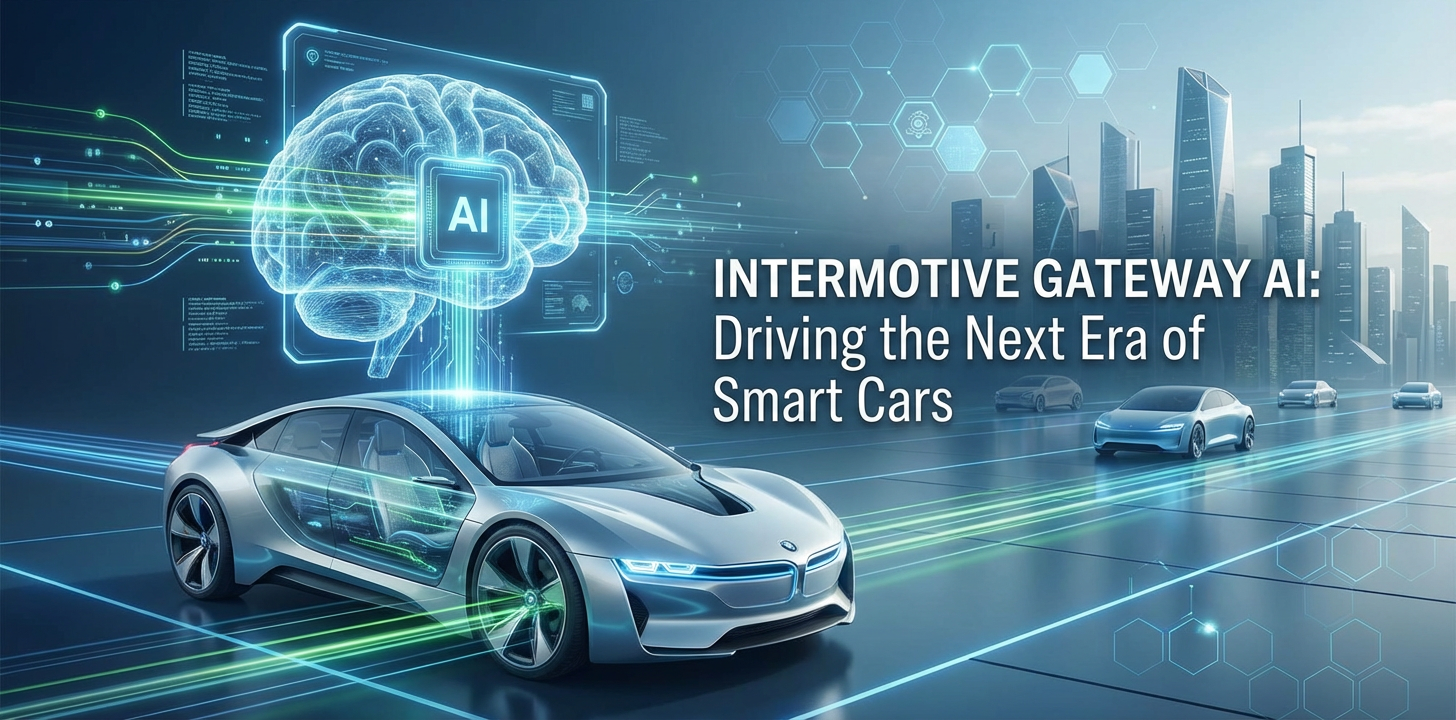


The automotive industry stands at the precipice of its most profound transformation since the invention of the internal combustion engine. What began as a mere mode of transport has rapidly evolved into a sophisticated, interconnected digital platform – the smart car. At the heart of this revolution lies a burgeoning technology that promises to redefine every facet of driving: Intermotive Gateway AI. This isn't just about adding intelligence to a car; it's about fundamentally redesigning its nervous system, equipping it with cognitive capabilities, and enabling it to interact with its environment, its occupants, and the broader digital world in unprecedented ways. The Intermotive Gateway AI represents the central processing unit, the intelligent orchestrator that aggregates data, makes real-time decisions, and facilitates a seamless, intuitive, and ultimately safer mobility experience. It is the invisible architect shaping a future where vehicles are not just tools, but intelligent companions, partners in our daily lives.
This article delves deep into the multifaceted concept of Intermotive Gateway AI, exploring its foundational components, its transformative impact on various aspects of smart cars, and the complex challenges and exciting opportunities that lie ahead. We will dissect how critical technologies like AI Gateway, LLM Gateway, and API Gateway coalesce within this intermotive intelligence hub, turning raw data into actionable insights and paving the way for truly autonomous, personalized, and hyper-connected vehicles. By understanding the intricate layers of this technology, we can begin to grasp the sheer magnitude of its potential to reshape urban landscapes, redefine personal mobility, and usher in a new era of automotive excellence.
Unpacking the Core Concept: What is Intermotive Gateway AI?
Traditionally, an automotive gateway served as a crucial bridge, connecting various Electronic Control Units (ECUs) within a vehicle and often providing a secure link to external networks. These early gateways were primarily data routers and protocol converters, ensuring different systems could communicate despite varying standards. However, the advent of smart cars, laden with dozens of sensors, sophisticated infotainment systems, and increasingly complex ADAS (Advanced Driver-Assistance Systems), demanded far more than simple data forwarding. The sheer volume, velocity, and variety of data generated by a modern vehicle – from LiDAR point clouds and radar signals to camera feeds, GPS coordinates, and telematics – overwhelmed the capabilities of conventional gateways. This escalating complexity, coupled with the imperative for real-time decision-making, necessitated a radical evolution: the Intermotive Gateway AI.
The Intermotive Gateway AI transcends its predecessors by integrating advanced artificial intelligence capabilities directly into its processing architecture. It is not merely a conduit for data; it is an intelligent processing hub that filters, analyzes, and contextualizes information at the edge, close to the source. This sophisticated gateway acts as the vehicle's brain, capable of executing complex AI models, orchestrating communication between disparate systems, and making autonomous or semi-autonomous decisions in milliseconds. Its functionality extends beyond simple data routing to include predictive analytics, anomaly detection, personalized user experiences, and robust cybersecurity protocols. Essentially, it transforms the vehicle from a collection of isolated electronic systems into a cohesive, intelligent entity capable of learning, adapting, and interacting dynamically with its environment. This profound shift is foundational to realizing the promise of truly smart, connected, and autonomous vehicles.
The Foundational Pillars: AI, LLM, and API Gateways in Smart Cars
To fully appreciate the power of Intermotive Gateway AI, it's essential to dissect its constituent technological pillars. These are not merely buzzwords but represent distinct yet interdependent layers of intelligence and connectivity that collectively empower the smart car of tomorrow. Each gateway plays a unique, indispensable role in the vehicle's overall cognitive and operational framework, ensuring seamless functionality and robust performance.
The AI Gateway's Pivotal Role in Intelligent Orchestration
At the heart of the Intermotive Gateway AI is the AI Gateway. This component is far more than a simple data router; it is the intelligence orchestrator responsible for managing the myriad artificial intelligence models deployed within the vehicle. Modern smart cars are veritable mobile data centers, running a diverse array of AI models for tasks such as object recognition, pedestrian detection, lane keeping assistance, driver monitoring, voice command processing, and predictive maintenance. The complexity arises from the diversity of these models—some might be deep neural networks, others machine learning algorithms, each potentially requiring different computational resources and operating environments.
The AI Gateway provides a unified interface for interacting with these diverse AI services, abstracting away the underlying complexities of model frameworks, hardware accelerators, and data formats. It ensures that various vehicle systems can invoke the necessary AI functionalities without needing to understand the intricate details of each model's implementation. For example, a vehicle's autonomous driving system might query the AI Gateway for real-time object classification from camera feeds, while the infotainment system requests sentiment analysis of a driver's voice command. The AI Gateway manages these requests, routes them to the appropriate models, handles data pre-processing and post-processing, and ensures low-latency inference, which is absolutely critical for safety-critical applications like collision avoidance. It also plays a vital role in model lifecycle management, facilitating seamless Over-The-Air (OTA) updates for AI models, version control, and performance monitoring. This centralized management ensures that the vehicle’s AI capabilities are always up-to-date, optimized, and performing reliably under all conditions.
Moreover, the AI Gateway is instrumental in ensuring data privacy and security for AI-driven functionalities. It can implement strict access controls, data anonymization techniques, and encryption protocols for data exchanged with AI models, protecting sensitive information generated within the vehicle. In a complex environment where numerous AI models from different vendors might be integrated, the AI Gateway provides the necessary governance and security framework. For developers and enterprises aiming to streamline the integration, deployment, and lifecycle management of both AI and REST services within such intricate systems, open-source solutions like APIPark offer a robust and scalable answer. APIPark, acting as an AI gateway and API management platform, provides unified control over diverse AI models, standardizing invocation formats, encapsulating prompts into REST APIs, and ensuring end-to-end API lifecycle management, which is crucial for the seamless operation and evolution of smart car functionalities. This kind of platform simplifies the complex task of integrating hundreds of AI models, ensuring they communicate effectively and securely within the demanding automotive environment.
The LLM Gateway: Unleashing Conversational Intelligence
As AI capabilities mature, the integration of Large Language Models (LLMs) into smart cars represents a significant leap forward in human-machine interaction and vehicle intelligence. The LLM Gateway is specifically designed to manage and facilitate the vehicle's interaction with these powerful generative AI models. Unlike traditional voice command systems that rely on rigid, pre-programmed phrases, LLM-powered interfaces enable natural language understanding and generation, allowing for far more intuitive and context-aware conversations.
Imagine a scenario where a driver simply says, "I'm cold and hungry," and the vehicle, through its LLM Gateway, not only adjusts the climate control but also proactively suggests nearby restaurants based on the driver's preferences, current traffic, and even their calendar appointments. This level of semantic understanding and intelligent response moves beyond mere task execution to truly conversational AI. The LLM Gateway handles the complex processing required for natural language interpretation, query expansion, and response generation, often interacting with cloud-based LLMs while also leveraging smaller, optimized models at the edge for latency-critical functions. It orchestrates the flow of natural language data, ensuring privacy, security, and efficient resource utilization, especially when dealing with computationally intensive LLM models.
Furthermore, the LLM Gateway can enable advanced functionalities such as summarizing incoming messages, translating spoken languages in real-time, or even generating creative content for entertainment. It forms the backbone for personalized, proactive assistants that learn driver habits, preferences, and moods, offering a truly bespoke in-car experience. This gateway makes the car a more understanding and responsive companion, fundamentally altering the way occupants interact with their vehicle and access information or services.
The API Gateway: The Communication Orchestrator
While AI and LLM Gateways focus on intelligence and interaction, the API Gateway is the indispensable communication orchestrator, managing all external and internal API calls within the smart car ecosystem. Modern vehicles are not isolated entities; they are deeply integrated into a sprawling network of services, including cloud-based telematics, V2X (Vehicle-to-Everything) communication, infotainment providers, mapping services, over-the-air (OTA) update servers, and potentially third-party applications.
The API Gateway acts as a single entry point for all these interactions, providing a robust and secure mechanism for managing incoming and outgoing API requests. Its responsibilities are vast: * Security: It enforces authentication and authorization protocols, encrypts data, and filters malicious requests, protecting the vehicle's internal systems from external threats. * Traffic Management: It handles request routing, load balancing, and rate limiting, ensuring stable and efficient communication even under heavy load. * Protocol Translation: It can translate between different communication protocols and data formats, allowing diverse services to interact seamlessly. * Microservice Orchestration: Within the vehicle itself, modern automotive software architectures increasingly rely on microservices. The API Gateway orchestrates communication between these internal services, abstracting their complexity and managing their interactions. * Lifecycle Management: It helps manage the entire lifecycle of APIs, from design and publication to invocation and decommission, ensuring that connected services are always up-to-date and properly managed.
Without a robust API Gateway, the smart car's ecosystem would be a chaotic patchwork of unmanaged connections, vulnerable to security breaches and prone to instability. It is the crucial layer that enables the car to be a truly connected device, seamlessly exchanging data with the cloud, other vehicles, and the surrounding infrastructure, unlocking a vast array of services and capabilities. APIPark, as a comprehensive API management platform, excels in these areas, offering end-to-end API lifecycle management, secure service sharing, and independent permissions for multi-tenant environments, which are all critical features for managing the complex web of APIs in connected vehicles.
These three gateways—AI, LLM, and API—together form the sophisticated core of the Intermotive Gateway AI. They work in concert, enabling intelligent processing, natural interaction, and secure connectivity, ultimately driving the next era of smart cars.
Technological Components and Architecture of Intermotive Gateway AI
The realization of Intermotive Gateway AI is an engineering marvel, integrating a complex array of hardware, software, and networking technologies. Its architecture is carefully designed to balance real-time performance, massive data processing capabilities, stringent security requirements, and robust reliability. Understanding these underlying components is key to appreciating the sophistication and challenges of this transformative technology.
Edge Computing and In-Vehicle Processing
The sheer volume and time-critical nature of data generated by a smart car necessitate significant processing power directly within the vehicle, at the "edge." Edge computing is a cornerstone of Intermotive Gateway AI because sending all raw sensor data to the cloud for processing would introduce unacceptable latency, especially for safety-critical functions like autonomous driving. Instead, the Intermotive Gateway AI performs substantial data analysis, AI inference, and decision-making on-board.
This involves powerful System-on-Chips (SoCs) specifically designed for automotive applications, often incorporating specialized AI accelerators (e.g., NPUs, GPUs, FPGAs) to efficiently run deep learning models. These edge processors are responsible for tasks such as: * Real-time Sensor Fusion: Combining and interpreting data from cameras, LiDAR, radar, and ultrasonic sensors to create a comprehensive understanding of the vehicle's surroundings. * Perception and Object Detection: Identifying and classifying objects (vehicles, pedestrians, cyclists, road signs) in real-time. * Path Planning and Control: Calculating safe trajectories and issuing commands to steering, braking, and acceleration systems. * Driver Monitoring: Analyzing driver gaze, head position, and fatigue levels. * Local AI Inference: Running smaller, optimized AI models for immediate responses, such as voice command recognition or gesture control, even when cloud connectivity is intermittent.
The ability to process data at the edge reduces reliance on constant cloud connectivity, enhances data privacy by processing sensitive information locally, and significantly lowers bandwidth requirements. It's a distributed intelligence model where the vehicle possesses substantial autonomy, augmented by cloud resources when needed.
Cloud Connectivity and Backend Infrastructure
While edge computing handles immediate, real-time tasks, the cloud remains an indispensable component of the Intermotive Gateway AI ecosystem. Cloud connectivity provides the necessary infrastructure for: * Massive Data Storage and Processing: Raw sensor data, performance logs, and user interaction data can be offloaded to the cloud for long-term storage, large-scale training of new AI models, and fleet-wide analysis. This vast pool of data is crucial for improving autonomous driving algorithms and developing new services. * Over-The-Air (OTA) Updates: The cloud facilitates seamless software and AI model updates, ensuring that vehicles receive the latest features, security patches, and performance enhancements without needing a visit to the dealership. This capability is vital for keeping smart cars technologically relevant and secure throughout their lifespan. * High-Performance AI Training: Training complex AI models, especially large language models or deep reinforcement learning agents, requires immense computational resources that are typically only available in hyperscale cloud environments. The models are trained in the cloud and then deployed to the vehicle's edge processors via OTA updates. * Fleet Management and Remote Diagnostics: Cloud platforms allow manufacturers to monitor the health and performance of entire fleets, predict potential issues through AI-driven analytics, and perform remote diagnostics. This proactive approach significantly reduces maintenance costs and improves vehicle uptime. * Backend Services and APIs: Infotainment streaming, navigation services, V2X communication coordination, and third-party application integration all rely on robust cloud-based backend services accessed via the API Gateway.
The relationship between edge and cloud is symbiotic: the edge provides immediate intelligence, while the cloud offers boundless storage, computational power, and a centralized management hub for the entire vehicle fleet.
Sensor Fusion and Data Orchestration
Smart cars are equipped with an astonishing array of sensors: high-resolution cameras, various types of radar (long-range, short-range), LiDAR scanners, ultrasonic sensors, GPS, accelerometers, gyroscopes, and more. Each sensor provides a unique perspective on the vehicle's environment, but no single sensor can provide a complete and reliable picture under all conditions. This is where sensor fusion comes into play.
The Intermotive Gateway AI's architecture includes sophisticated sensor fusion modules that ingest data from all these disparate sources, synchronize it, and then combine it to create a more accurate, robust, and comprehensive understanding of the vehicle's surroundings than any individual sensor could provide. For instance, LiDAR might provide precise depth information, while cameras offer rich color and texture data; combining these yields a much clearer image for object recognition. Radar excels in adverse weather, compensating for limitations in camera visibility.
The gateway orchestrates this complex data flow, ensuring that raw sensor data is efficiently processed, relevant features are extracted, and the fused output is fed to the appropriate AI models (e.g., perception, planning) in real-time. This orchestration is critical not only for autonomous driving but also for advanced ADAS features, parking assistance, and even personalized climate control based on sunlight intensity detected by external sensors. The efficiency and reliability of this data orchestration directly impact the safety and effectiveness of the smart car's intelligent functions.
Cybersecurity Frameworks
As vehicles become more connected and intelligent, the attack surface for cyber threats expands dramatically. A compromised Intermotive Gateway AI could have catastrophic consequences, ranging from data breaches to vehicle hijacking. Therefore, robust cybersecurity is not an add-on but a fundamental design principle embedded throughout the gateway's architecture.
Key aspects of the cybersecurity framework include: * Secure Boot and Firmware Over-the-Air (FOTA) Updates: Ensuring that only authenticated and cryptographically signed software can run on the gateway, and that updates are delivered securely. * Hardware Security Modules (HSMs): Dedicated hardware components to protect cryptographic keys and perform secure operations. * Intrusion Detection and Prevention Systems (IDPS): Monitoring network traffic and system behavior for anomalies that might indicate an attack, and taking proactive measures to mitigate threats. * Secure Communication Protocols: Implementing strong encryption (e.g., TLS/SSL for external communications, MACsec for internal Ethernet) for all data exchange, both within the vehicle and with external services. * Access Control and Authentication: Strict management of permissions for all APIs and internal services, ensuring that only authorized entities can access specific functions or data. This is where API Gateway's capabilities for tenant isolation, subscription approval, and granular access permissions become invaluable, protecting against unauthorized API calls. * Threat Intelligence and Vulnerability Management: Continuously monitoring for new threats, applying patches promptly, and performing regular security audits. * Isolation and Sandboxing: Running different applications and services in isolated environments to prevent a compromise in one component from spreading to others.
The Intermotive Gateway AI must be designed with a "security-by-design" philosophy, anticipating and mitigating threats across its entire lifecycle. This layered approach to cybersecurity is essential for building and maintaining trust in smart vehicles.
Performance and Scalability Considerations
Achieving the ambitious goals of Intermotive Gateway AI demands unparalleled performance and scalability. The gateway must be able to: * Process vast amounts of data in real-time: From raw sensor data streams (gigabytes per second) to complex AI model inferences within milliseconds. * Handle concurrent requests: Simultaneously managing multiple AI model invocations, API calls, and internal vehicle communications. * Support future growth: The architecture must be modular and scalable to accommodate new sensors, more powerful AI models, and evolving functionalities without requiring a complete redesign.
This often involves distributed computing within the gateway, leveraging multi-core processors, specialized AI accelerators, and high-speed internal networks (e.g., Automotive Ethernet). Efficient software design, optimized algorithms, and effective resource management are critical. For instance, APIPark's reported capability of achieving over 20,000 TPS with an 8-core CPU and 8GB memory, alongside cluster deployment support, highlights the kind of performance and scalability required from the API management layer to handle the large-scale traffic and diverse services typical of a smart car ecosystem. Such performance metrics are vital when considering the real-world demands of millions of connected vehicles.
In summary, the Intermotive Gateway AI is a highly sophisticated system, meticulously engineered to combine the best of edge and cloud computing, integrate diverse sensor inputs, execute complex AI algorithms, and maintain an impenetrable security posture, all while delivering real-time performance and scalability. This architectural complexity underscores the ingenuity required to bring the next era of smart cars to fruition.
APIPark is a high-performance AI gateway that allows you to securely access the most comprehensive LLM APIs globally on the APIPark platform, including OpenAI, Anthropic, Mistral, Llama2, Google Gemini, and more.Try APIPark now! 👇👇👇
Impact on Key Aspects of Smart Cars
The Intermotive Gateway AI is not merely an incremental upgrade; it is a paradigm shift that fundamentally reshapes every aspect of the smart car experience. Its pervasive influence extends from the most critical safety systems to the most nuanced personalized comforts, promising a driving future that is safer, more efficient, and profoundly more enjoyable.
Revolutionizing Autonomous Driving and ADAS
Autonomous Driving (AD) and Advanced Driver-Assistance Systems (ADAS) are arguably the most prominent beneficiaries of Intermotive Gateway AI. The gateway serves as the central intelligence hub that makes advanced autonomy possible: * Real-time Perception and Cognition: By fusing data from multiple sensors and running sophisticated AI models (managed by the AI Gateway), the Intermotive Gateway AI creates a robust, 360-degree understanding of the vehicle's environment. This enables precise object detection, classification, tracking, and prediction of other road users' behavior, even in complex scenarios or adverse weather conditions. * Intelligent Decision-Making: Based on the perceived environment, the gateway's AI algorithms (often leveraging deep reinforcement learning or other planning algorithms) calculate optimal driving trajectories, decide on lane changes, manage speed, and react to unexpected events in milliseconds. This real-time decision-making, coupled with redundancy and fail-operational capabilities, is paramount for safety. * Enhanced ADAS Features: Even for lower levels of autonomy, the gateway significantly enhances features like adaptive cruise control, lane keeping assist, automatic emergency braking, and parking assist. Its improved perception and predictive capabilities make these systems more reliable, smoother, and more proactive, reducing driver fatigue and increasing safety margins. * Learning and Adaptation: The Intermotive Gateway AI can continuously learn from driving data, both locally and through fleet-wide cloud analysis. This allows autonomous systems to improve over time, adapt to new road conditions, and refine their decision-making processes, progressively enhancing their capabilities through OTA updates.
The robust processing and orchestration provided by the Intermotive Gateway AI are what elevate autonomous driving from experimental technology to a viable and safe future of mobility.
Hyper-Personalized User Experience
Beyond safety and autonomy, the Intermotive Gateway AI is a catalyst for an unprecedented level of personalization within the vehicle cabin. By understanding the occupants' preferences, habits, and even emotional states, the car transforms into a highly adaptive, intuitive space: * Adaptive Cabin Environment: The gateway can learn preferred seating positions, climate control settings, ambient lighting, and even scent profiles for individual drivers or passengers. Using facial recognition or biometric sensors, it can instantly configure the cabin upon entry, creating a familiar and comfortable environment. * Proactive Infotainment and Navigation: The LLM Gateway enables truly conversational interfaces that understand context and anticipate needs. The car can proactively suggest music playlists based on the driver's mood, recommend routes that avoid known congestion based on historical data, or even order coffee from a favorite drive-through based on routine and time of day. It can integrate seamlessly with personal calendars, smart home devices, and productivity tools, extending the user's digital life into the vehicle. * Health and Wellness Monitoring: Integrated sensors can monitor vital signs, detect signs of driver fatigue or distress, and even offer guided relaxation exercises through the infotainment system. The gateway can intelligently adjust cabin parameters (e.g., temperature, lighting, soundscape) to improve occupant well-being. * Multi-Modal Interaction: Users can interact with the vehicle using voice, gestures, touchscreens, or even eye-tracking, with the gateway intelligently interpreting and responding to the most natural input method for the situation. This creates a flexible and intuitive human-machine interface (HMI) that reduces cognitive load and enhances engagement.
This level of personalization goes far beyond simple presets; it creates a dynamic, evolving relationship between the occupant and the vehicle, making every journey uniquely tailored.
Enhanced Safety and Security
While autonomous driving directly contributes to safety, the Intermotive Gateway AI bolsters overall vehicle safety and security through multiple layers: * Predictive Collision Avoidance: Beyond reactive braking, the gateway's AI can predict potential collision scenarios earlier and more accurately, providing timely warnings or initiating evasive maneuvers. It can anticipate risks from obscured intersections, distracted drivers, or vulnerable road users, offering an additional layer of protection. * Driver State Monitoring: AI-powered cameras and sensors can continuously monitor the driver for signs of distraction, drowsiness, or incapacitation. The gateway can issue alerts, intervene with ADAS features, or even initiate a safe stop if the driver becomes unresponsive, significantly reducing accident risks. * Proactive System Diagnostics: By continuously analyzing data from various vehicle components, the gateway can detect subtle anomalies that precede failures. This enables predictive maintenance, notifying the driver or service center about potential issues before they escalate, preventing breakdowns and ensuring optimal vehicle health. * Robust Cybersecurity: As discussed, the inherent design of the Intermotive Gateway AI includes a comprehensive cybersecurity framework. This protects critical vehicle systems from remote attacks, ensures the integrity of software and data, and safeguards personal information, which is paramount for both operational safety and consumer trust. The API Gateway plays a critical role here, acting as a fortified barrier for all external communications.
The intelligent vigilance of the Intermotive Gateway AI creates a cocoon of safety around the vehicle and its occupants, actively working to prevent accidents and protect against digital threats.
V2X Communication and Smart City Integration
The Intermotive Gateway AI is the key enabler for V2X (Vehicle-to-Everything) communication, transforming individual cars into active participants in a broader intelligent transportation system: * V2V (Vehicle-to-Vehicle): Cars can directly exchange information about their speed, position, braking status, and intentions. The gateway processes this incoming V2V data, integrates it with on-board sensor data, and uses it to enhance situational awareness, anticipate potential hazards (e.g., hidden vehicles, sudden braking ahead), and facilitate cooperative maneuvers like platooning. * V2I (Vehicle-to-Infrastructure): Communication with traffic lights, road signs, parking structures, and toll booths allows the vehicle to optimize speed for green waves, receive real-time information about road hazards, dynamic speed limits, or available parking spaces. The API Gateway is crucial here, managing secure and efficient data exchange with diverse city infrastructure APIs. * V2P (Vehicle-to-Pedestrian/Cyclist): Via smartphones or dedicated devices, vulnerable road users can communicate their presence and direction to vehicles, enhancing their safety by alerting drivers or autonomous systems to potential collisions. * Smart City Integration: By participating in V2X networks, smart cars contribute valuable anonymized data to city management systems, aiding in traffic flow optimization, emergency response, and urban planning. The Intermotive Gateway AI filters and aggregates this data before secure transmission, balancing utility with privacy.
This interconnectedness, orchestrated by the gateway, allows vehicles to be part of a dynamic, collaborative network, making urban mobility more efficient, safer, and sustainable.
New Business Models and Services
The intelligence and connectivity provided by the Intermotive Gateway AI unlock a plethora of new business models and revenue streams for automotive manufacturers and service providers: * Subscription Features: Instead of paying for features upfront, consumers can subscribe to advanced ADAS capabilities, premium infotainment content, enhanced personalization profiles, or even performance upgrades on demand. The gateway manages access and authentication for these services. * Mobility-as-a-Service (MaaS): The gateway is fundamental for managing shared autonomous vehicle fleets, enabling seamless booking, payment, and personalized experiences for multiple users. * Data Monetization (with strict privacy controls): Anonymized and aggregated vehicle data (e.g., traffic patterns, road conditions, usage statistics) can be valuable for urban planners, logistics companies, and mapping services. The gateway ensures that data sharing adheres to privacy regulations and user consent. * On-Demand Services: From ordering food to receiving package deliveries directly to the vehicle's trunk, the gateway facilitates the integration of third-party services, turning the car into a versatile service hub. * Personalized Insurance: Telematics data collected via the gateway can enable usage-based insurance (UBI) models, where premiums are adjusted based on actual driving behavior, promoting safer driving habits.
These new business models transform the automotive industry from a product-centric to a service-centric paradigm, offering continuous value to consumers throughout the vehicle's lifespan.
To summarize, the Intermotive Gateway AI is a transformative force, fundamentally altering how smart cars perceive, interact, and operate. Its integrated intelligence unlocks a future of unparalleled safety, hyper-personalization, seamless connectivity, and innovative services, marking a true evolution in personal mobility.
Challenges and Considerations for Intermotive Gateway AI
While the promise of Intermotive Gateway AI is immense, its implementation is fraught with complex challenges that demand innovative solutions and careful consideration. These hurdles span technological, ethical, regulatory, and societal domains, requiring a collaborative effort across industries and governments.
Data Management and Privacy
The sheer volume, velocity, and variety of data generated by smart cars running Intermotive Gateway AI are staggering. A single autonomous vehicle can generate terabytes of data per day. Managing this "data deluge" presents significant challenges: * Storage and Processing: Efficiently storing, processing, and analyzing such massive datasets, both at the edge and in the cloud, requires colossal infrastructure and sophisticated algorithms. * Data Quality and Annotation: For AI models to learn effectively, data must be high-quality, accurately labeled, and representative of diverse real-world conditions, a process that is incredibly labor-intensive. * Data Transfer and Bandwidth: Transmitting large volumes of data from vehicles to the cloud, especially for fleet-wide updates or extensive logging, demands robust and high-bandwidth wireless connectivity, which may not always be available. * Privacy Concerns: Vehicles collect highly personal data—locations, travel patterns, interactions with voice assistants, even biometric data. Protecting this information from unauthorized access, misuse, or breaches is paramount. Regulations like GDPR and CCPA impose strict requirements on data handling, necessitating strong anonymization, encryption, and consent management strategies within the Intermotive Gateway AI. Balancing the utility of data for enhanced services with the individual's right to privacy is a constant tightrope walk.
Regulatory Hurdles and Standardization
The rapid pace of technological innovation in smart cars, especially regarding autonomous driving and AI, often outstrips the development of cohesive regulatory frameworks. This creates a complex and fragmented landscape: * Autonomous Driving Laws: Different countries and even different states or provinces within a country have varying laws regarding the testing, deployment, and liability of autonomous vehicles. This regulatory patchwork complicates global deployment and scaling. * Safety Standards: Establishing universally accepted safety standards for AI-driven systems, particularly for validating their reliability and robustness in complex and unpredictable scenarios, is a significant undertaking. How do we certify that an AI will always make the "right" decision? * Data Governance and Cross-Border Data Flows: Regulations concerning data residency, transfer, and processing differ significantly across jurisdictions, posing challenges for global automotive manufacturers operating fleets internationally. * Interoperability and Standardization: For seamless V2X communication and integration into smart cities, open standards for communication protocols, data formats, and API specifications are essential. Without these, the ecosystem risks becoming fragmented and inefficient. Efforts from organizations like SAE and ISO are crucial here.
Cybersecurity Threats
As vehicles become more connected and software-defined, they present an increasingly attractive target for cybercriminals and malicious actors. The Intermotive Gateway AI, as the central brain, is a prime target: * Increased Attack Surface: More lines of code, more sensors, more network connections, and more third-party integrations inherently mean a larger attack surface. * Remote Exploits: Vulnerabilities could allow remote attackers to gain control of vehicle systems, steal data, or disrupt operations. * Supply Chain Vulnerabilities: A compromise in any part of the software or hardware supply chain could introduce backdoors or weaknesses. * Evolving Threats: Cyber threats are constantly evolving, requiring continuous vigilance, rapid patching, and adaptive security measures within the gateway. * Mission-Criticality: Unlike a smartphone or laptop, a cyberattack on a vehicle can have immediate and life-threatening physical consequences, elevating the stakes significantly.
Robust, multi-layered cybersecurity, from secure hardware roots of trust to advanced intrusion detection and prevention systems (often integrated within the API Gateway layer for external interactions), is absolutely non-negotiable.
Computational Power and Energy Efficiency
The advanced AI models running within the Intermotive Gateway AI, particularly for autonomous driving and LLMs, are computationally intensive. This poses significant challenges: * Hardware Requirements: Powerful processors (GPUs, NPUs) are expensive, consume considerable energy, and generate heat, requiring sophisticated cooling solutions. * Energy Consumption: High power consumption directly impacts the range of electric vehicles and adds strain to the vehicle's electrical system in conventional cars. Balancing performance with energy efficiency is critical for both sustainability and operational viability. * Thermal Management: Managing the heat generated by high-performance computing components in a confined automotive environment, especially under extreme ambient temperatures, is a complex engineering challenge. * Cost: The cost of integrating such advanced hardware and software can significantly increase the final price of the vehicle, potentially hindering widespread adoption.
Innovations in power-efficient AI accelerators, optimized software architectures, and advanced thermal management systems are vital to address these challenges.
Reliability and Redundancy
For safety-critical automotive systems, absolute reliability and fault tolerance are paramount. The Intermotive Gateway AI must be designed to be extremely robust: * Fault-Tolerant Architectures: Systems must have redundancy built-in, meaning that if one component fails, another can immediately take over without interruption. This includes redundant sensors, processors, and communication channels. * Determinism: AI decisions in critical scenarios must be predictable and repeatable, rather than exhibiting non-deterministic behavior that is difficult to test and certify. * Degradation Modes: The system must be able to detect failures and safely degrade its performance, for example, by reverting to a human driver or performing a minimal risk maneuver, rather than failing catastrophically. * Extensive Validation and Testing: Testing Intermotive Gateway AI systems for every conceivable scenario, including rare edge cases and adverse conditions, is an immense undertaking that relies on billions of miles of simulation, closed-track testing, and real-world road testing.
The "zero-defect" mentality common in automotive engineering is amplified when dealing with AI-driven systems where even minute errors can have grave consequences.
Public Acceptance and Trust
Beyond technical challenges, the widespread adoption of smart cars driven by Intermotive Gateway AI hinges on public trust and acceptance: * Fear of the Unknown: Many people harbor skepticism or fear regarding autonomous technology, particularly after highly publicized accidents, even if human error is statistically far more prevalent. * Ethical Dilemmas: The "trolley problem" and other ethical dilemmas inherent in autonomous decision-making in unavoidable accident scenarios raise profound societal questions that need transparent discussion and resolution. * Job Displacement: Concerns about job losses in the transportation sector due to widespread automation are a valid societal consideration. * Loss of Control: Some drivers simply enjoy the act of driving and may resist relinquishing control to an AI.
Building public trust requires not only ensuring safety and reliability but also engaging in transparent communication, educating the public, and addressing ethical concerns proactively. Demonstrating the tangible benefits and safety improvements consistently will be key to overcoming skepticism.
These challenges, while formidable, are also catalysts for innovation. The ongoing research and development dedicated to overcoming them are pushing the boundaries of what's possible in automotive engineering and artificial intelligence, ultimately leading to more robust, secure, and intelligent smart cars.
The Road Ahead: Future Prospects of Intermotive Gateway AI
The journey of Intermotive Gateway AI is still in its early stages, yet its future trajectory promises even more radical transformations. As technology continues its relentless march forward, the capabilities embedded within the smart car's central intelligence hub will evolve in ways that currently reside in the realm of science fiction, pushing the boundaries of what personal mobility can achieve.
Hyper-Personalization and Predictive Intelligence
The future of Intermotive Gateway AI will elevate personalization from adaptive settings to truly predictive intelligence. Cars will not just react to driver preferences but anticipate needs before they are even consciously recognized. Imagine a vehicle that knows, based on your calendar and traffic patterns, that you're likely stressed and proactively suggests a detour through a scenic route with calming music. Or, it might recognize signs of an impending allergic reaction and activate specific air filtration modes. This level of foresight will be powered by: * Deep Learning of User Behavior: More sophisticated AI models will continuously learn from every interaction, every journey, and integrate data from wearable devices and smart home ecosystems to build a holistic profile of each occupant. * Emotional AI: Advanced sensors (facial expression analysis, vocal tone, biometric data) will allow the car to gauge emotional states, leading to truly empathetic AI that adjusts its behavior and offerings accordingly. * Proactive Wellness and Safety: The car could become a mobile health monitor, proactively identifying health anomalies, suggesting rest stops during long drives, or even automatically contacting emergency services if a health crisis is detected.
The car will evolve into a truly bespoke, sentient space that intuitively caters to the physical and emotional well-being of its occupants, blurring the lines between vehicle and personal assistant.
Advanced Cognitive Capabilities and Beyond LLMs
While current LLMs represent a significant leap, future Intermotive Gateway AI will incorporate even more advanced cognitive capabilities. This goes beyond understanding and generating human language to include complex reasoning, problem-solving, and continuous learning: * Multi-Modal Reasoning: Future AI will seamlessly integrate information from various modalities (vision, audio, text, sensor data) to form a coherent understanding of the world, akin to human perception. This means better interpretation of complex situations, such as understanding a construction worker's hand signals or interpreting the intent behind a combination of subtle environmental cues. * Commonsense Reasoning: Equipping AI with a deeper understanding of commonsense physics, social norms, and human psychology will enable it to navigate ambiguous situations more safely and naturally, making decisions that align with human expectations. * Federated Learning and Swarm Intelligence: Vehicles will participate in global, decentralized learning networks. Rather than sending all raw data to a central cloud, AI models can be trained collaboratively across entire fleets, sharing learned insights without compromising individual privacy. This collective intelligence will accelerate the learning curve for autonomous systems dramatically. * Ethical AI and Transparent Decision-Making: Research will focus on developing AI that can explain its reasoning, making its decisions more transparent and auditable. This is crucial for building trust, addressing ethical dilemmas, and ensuring accountability in autonomous systems. The Intermotive Gateway AI will include mechanisms to record and interpret the basis for critical decisions.
These advancements will allow smart cars to handle an even wider range of unforeseen circumstances with greater nuance and intelligence, approaching human-like cognitive abilities.
Seamless Integration with IoT Ecosystems
The smart car of the future will be a central node in an expansive Internet of Things (IoT) ecosystem, seamlessly interacting with smart homes, smart cities, and personal devices: * Home-to-Car and Car-to-Home Automation: Imagine driving home and your car automatically signaling your smart home to adjust lighting, temperature, and even pre-heat dinner. Conversely, your home could update your car with calendar appointments or shopping lists. The API Gateway will be crucial for managing secure and seamless API calls between these disparate systems. * Smart City Synchronization: Beyond V2X, cars will communicate with every aspect of urban infrastructure – parking garages, charging stations, public transport, and even waste management systems – to optimize their journey, reduce congestion, and contribute to the efficiency of the urban environment. This integrated data exchange will enable truly dynamic and responsive city planning. * Wearable and Personal Device Integration: Your smartwatch could share your sleep data with your car, leading it to suggest a more relaxing route or activate energizing cabin features. Augmented reality glasses could integrate with the car's navigation and ADAS to project critical information onto your field of view.
This pervasive connectivity will turn the vehicle into an extension of one's digital life, a truly integrated personal space within a larger intelligent network.
Quantum Computing's Potential
Looking further into the future, the advent of commercially viable quantum computing could profoundly impact Intermotive Gateway AI. While still nascent, quantum computing promises to solve computational problems currently intractable for classical computers: * Faster and More Efficient AI: Quantum algorithms could dramatically accelerate the training of complex AI models, perform optimization tasks for path planning with unprecedented speed, or even enable real-time analysis of quantum sensor data for enhanced perception. * Advanced Cryptography: Quantum-resistant cryptographic algorithms will be essential to secure the Intermotive Gateway AI against future quantum attacks, ensuring the long-term integrity and privacy of smart cars. * Materials Science and Battery Optimization: Quantum simulations could lead to breakthroughs in battery technology, enhancing range and charging speeds, which in turn supports the energy demands of advanced Intermotive Gateway AI.
Though still a distant prospect, quantum computing's potential to revolutionize processing power could unlock entirely new levels of automotive intelligence and efficiency, making today's most powerful AI seem rudimentary in comparison.
The future of Intermotive Gateway AI is not just about faster cars or more gadgets; it's about fundamentally rethinking mobility, safety, and our relationship with technology. It's a vision of vehicles as intelligent, empathetic, and seamlessly integrated components of our lives, constantly learning, adapting, and contributing to a smarter, safer, and more connected world. The journey will be complex, but the destination promises to be revolutionary.
Conclusion
The evolution of the automobile from a mechanical marvel to an intelligent, interconnected entity is fundamentally orchestrated by the Intermotive Gateway AI. This sophisticated hub, driven by the synergistic integration of AI Gateway, LLM Gateway, and API Gateway technologies, is much more than a collection of processors; it is the cognitive core that breathes life into the smart car, transforming it from a mere mode of transport into a dynamic, learning, and highly responsive companion.
We have explored how the Intermotive Gateway AI acts as the vehicle's central nervous system, intelligently processing vast streams of data at the edge, orchestrating complex AI models for real-time decision-making, and facilitating seamless, secure communication with the cloud and the broader digital ecosystem. Its impact is profound and far-reaching, redefining the paradigms of autonomous driving, delivering hyper-personalized user experiences, bolstering safety and cybersecurity to unprecedented levels, and enabling deep integration into smart city infrastructures. Furthermore, it unlocks a plethora of new business models, propelling the automotive industry into a service-centric future.
While the path to fully realizing the potential of Intermotive Gateway AI is paved with formidable challenges—from managing data privacy and navigating complex regulations to mitigating cybersecurity threats and balancing computational demands with energy efficiency—these very hurdles serve as catalysts for relentless innovation. The ongoing advancements in edge AI, quantum computing, and ethical AI frameworks promise to overcome these obstacles, pushing the boundaries of what is conceivable in personal mobility.
The journey ahead for Intermotive Gateway AI is one of continuous evolution, promising a future where vehicles are not just smarter, but truly intelligent, empathetic, and indispensable partners in our daily lives. As this technology matures, it will not only redefine how we travel but also fundamentally reshape our cities, our communities, and our relationship with the world around us, marking the dawn of a truly intelligent era of mobility.
Frequently Asked Questions (FAQs)
1. What is Intermotive Gateway AI and how is it different from a traditional automotive gateway? Intermotive Gateway AI is an advanced, intelligent central processing and orchestration unit within a smart car. Unlike traditional automotive gateways, which primarily function as data routers and protocol converters, the Intermotive Gateway AI integrates sophisticated artificial intelligence capabilities. It not only manages data flow between vehicle systems and external networks but also performs real-time data analysis, executes complex AI models, makes autonomous decisions, and facilitates personalized user experiences. It acts as the vehicle's brain, capable of learning, adapting, and interacting dynamically with its environment.
2. What are the key components of Intermotive Gateway AI, and what role does each play? The Intermotive Gateway AI is built upon three foundational pillars: * AI Gateway: Manages and orchestrates various AI models within the vehicle (e.g., for object recognition, driver monitoring), providing a unified interface for their invocation, facilitating updates, and ensuring low-latency inference. * LLM Gateway: Enables natural language understanding and generation, allowing for advanced conversational interfaces, context-aware interactions, and personalized concierge services by managing interactions with Large Language Models. * API Gateway: Acts as the secure communication orchestrator, managing all internal and external API calls. It handles security (authentication, encryption), traffic management (routing, load balancing), and protocol translation, connecting the vehicle to cloud services, V2X networks, and third-party applications. These components work together to provide intelligent processing, natural interaction, and secure connectivity.
3. How does Intermotive Gateway AI enhance autonomous driving and vehicle safety? Intermotive Gateway AI is crucial for autonomous driving by fusing data from multiple sensors (cameras, LiDAR, radar) to create a comprehensive, real-time understanding of the environment. Its AI algorithms then make intelligent decisions for path planning and control. For safety, it enables predictive collision avoidance, sophisticated driver state monitoring (detecting fatigue or distraction), and proactive system diagnostics for predictive maintenance. Additionally, its robust cybersecurity framework protects critical vehicle systems from attacks, ensuring operational safety and data integrity.
4. What are the main challenges in implementing Intermotive Gateway AI? Key challenges include managing the immense volume and variety of data generated by smart cars, ensuring data privacy and compliance with global regulations. There are significant regulatory hurdles for autonomous driving and the need for standardized communication protocols. Cybersecurity threats are constantly evolving, requiring continuous vigilance. High computational power for AI models demands solutions for energy efficiency and thermal management. Finally, ensuring absolute reliability and redundancy for safety-critical systems, along with building public trust and acceptance, are ongoing challenges.
5. How will Intermotive Gateway AI impact the future of smart cars and mobility? Intermotive Gateway AI is set to revolutionize smart cars by enabling hyper-personalization, where vehicles anticipate and cater to occupant needs based on deep learning of behavior and even emotional states. It will integrate advanced cognitive capabilities beyond current LLMs, allowing for more complex reasoning and problem-solving. Cars will become central nodes in extensive IoT ecosystems, seamlessly interacting with smart homes, smart cities, and personal devices. Ultimately, it will transform mobility into a safer, more efficient, highly personalized, and profoundly integrated experience, giving rise to new business models and redefining our relationship with vehicles.
🚀You can securely and efficiently call the OpenAI API on APIPark in just two steps:
Step 1: Deploy the APIPark AI gateway in 5 minutes.
APIPark is developed based on Golang, offering strong product performance and low development and maintenance costs. You can deploy APIPark with a single command line.
curl -sSO https://download.apipark.com/install/quick-start.sh; bash quick-start.sh

In my experience, you can see the successful deployment interface within 5 to 10 minutes. Then, you can log in to APIPark using your account.

Step 2: Call the OpenAI API.