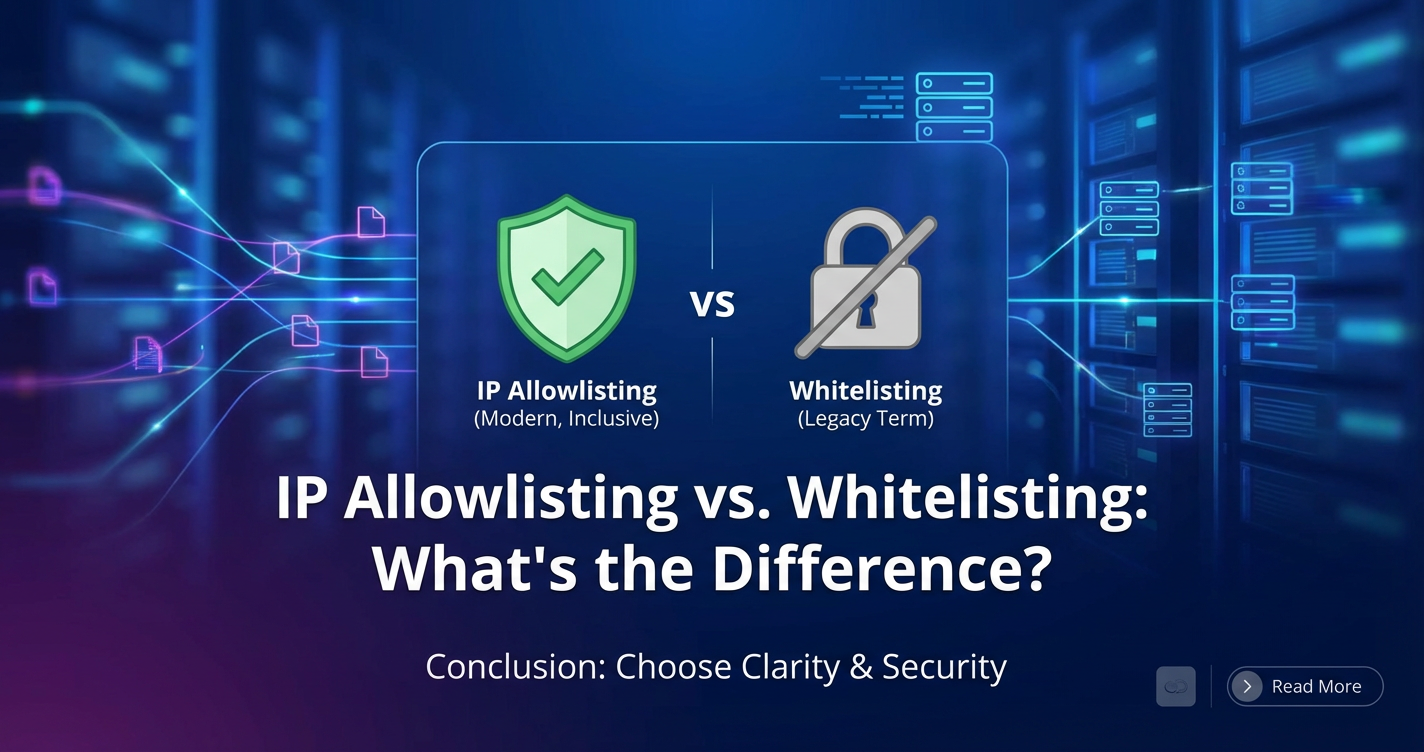
IP Allowlisting vs. Whitelisting: What's the Difference?
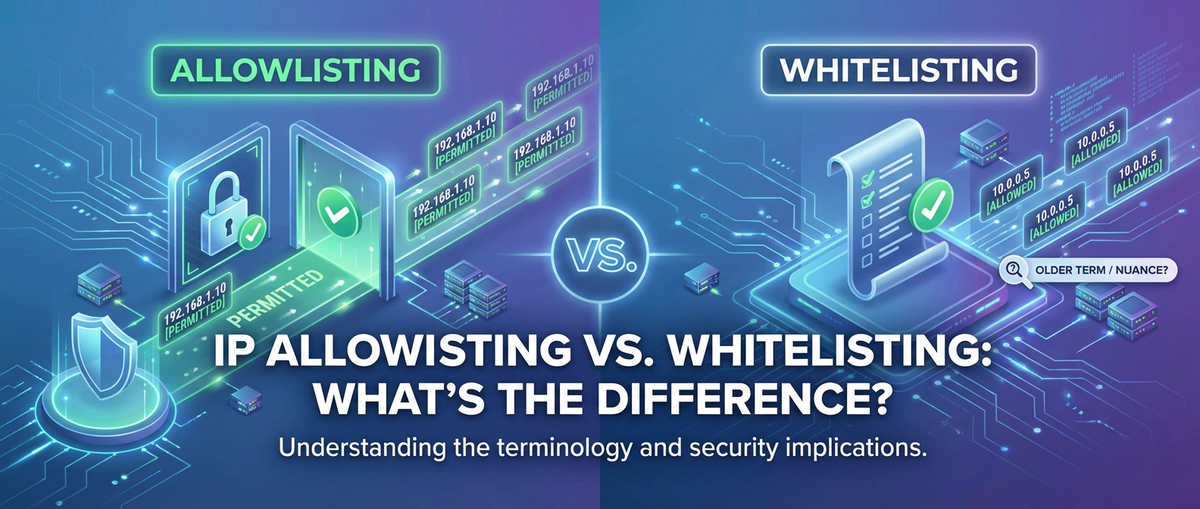


In the intricate landscape of cybersecurity and network architecture, controlling who or what can access your digital resources is paramount. Whether we're discussing sensitive data, critical applications, or the backend infrastructure that powers modern services, robust access control mechanisms are the bedrock of a secure environment. Among the most fundamental of these mechanisms is the concept of restricting access based on Internet Protocol (IP) addresses. For decades, the term "IP whitelisting" dominated this conversation, serving as the common parlance for explicitly permitting a predefined set of IP addresses while implicitly denying all others. However, in recent years, a shift in terminology has gained significant traction, introducing "IP allowlisting" as the preferred and increasingly standard term for this identical technical function.
This article delves into the nuances of these two terms, exploring their historical context, the reasons behind the transition, and the profound implications for cybersecurity practices. Beyond merely defining the terms, we will embark on a comprehensive journey through the technical intricacies of how IP allowlisting – or whitelisting, as it was formerly known – operates across various layers of network and application infrastructure. We will examine its strategic applications, discuss best practices for effective implementation, acknowledge its limitations, and cast an eye towards the future of access control. Understanding this mechanism is not just about vocabulary; it's about grasping a critical component of defensive security, enabling organizations to build more resilient, compliant, and ultimately, safer digital ecosystems.
The Foundation of Network Access Control: Building Digital Boundaries
At its core, network access control is about setting boundaries in the digital realm, much like physical security measures protect a building. Without effective control, an organization's digital assets would be exposed to the entire internet, an open invitation for malicious actors, unauthorized users, and accidental misconfigurations. The internet, by its very nature, is a vast, interconnected web, and while this connectivity fosters innovation and global communication, it simultaneously presents an enormous attack surface for any system connected to it. Therefore, the ability to selectively grant or deny access is not merely a feature but a fundamental requirement for operational security and data integrity.
The underlying principle guiding almost all access control mechanisms is the concept of "implicit deny" coupled with "explicit permit" or "explicit deny." In essence, this means that unless something is specifically allowed, it is automatically denied. Conversely, for something to be denied, it often doesn't need to be explicitly stated if it's not on an allowed list. This "default deny" posture is a cornerstone of robust security design, minimizing the risk of accidental exposure and ensuring that only known, trusted entities can interact with protected resources. IP addresses serve as digital identifiers for devices and networks communicating over the internet. Every request, every connection attempt, originates from a specific IP address, making it a natural and logical attribute upon which to base initial access decisions. By leveraging IP addresses, administrators can define precise perimeters, allowing traffic only from locations or systems that are known and deemed trustworthy, effectively creating a secure channel in an otherwise open network. This foundational understanding sets the stage for appreciating the critical role that IP allowlisting plays in modern cybersecurity strategies, acting as a crucial first line of defense in a layered security model. The evolution of terminology from "whitelisting" to "allowlisting" doesn't change this fundamental technical principle, but rather refines the language used to describe it, aligning with broader efforts towards inclusive and clearer communication within the technology sector.
Decoding IP Whitelisting: A Historical Perspective and Its Technical Realities
For many years, "IP whitelisting" was the undisputed and universally understood term for the practice of defining a list of permissible IP addresses. This concept, deeply embedded in network security lexicon, refers to an access control mechanism where only IP addresses explicitly included on a designated "whitelist" are granted permission to connect to a specific resource, service, or network segment. Any IP address not present on this list is automatically and unequivocally denied access, adhering strictly to the principle of implicit denial. This approach has been a staple in enterprise security, acting as a powerful and straightforward method for reducing an organization's attack surface.
The historical context of "whitelisting" is rooted in a simple dichotomy: good vs. bad, trusted vs. untrusted. The "white" list represented the good, the authorized, the permitted. This terminology mirrored similar concepts like "blacklisting" (explicitly denying) and "greylisting" (temporarily deferring), creating a suite of terms that, while evocative, carried certain connotations that would eventually lead to their re-evaluation. Technologically, "IP whitelisting" provides undeniable advantages. By severely restricting the pool of potential communicators, it significantly enhances security. Imagine a digital fortress where only a handful of specific keys are known to work; this greatly reduces the chances of an unauthorized intruder gaining entry. It's particularly effective against broad-spectrum attacks, such as reconnaissance scans or automated botnet attempts, as these often originate from a vast array of unknown and unauthorized IP addresses, which are immediately blocked. This precision in access control translates into a reduced administrative burden for security teams, as they can focus their monitoring and threat detection efforts on the limited set of allowed connections rather than sifting through a deluge of potentially malicious traffic from unknown sources. For sensitive internal systems, administrative interfaces, or backend databases that should never be exposed to the public internet, IP whitelisting serves as an indispensable barrier, ensuring that only specific, known corporate networks or VPN endpoints can initiate a connection.
However, despite its pervasive use and clear benefits, "IP whitelisting" is not without its drawbacks and complexities. One significant challenge lies in its inherent rigidity. In dynamic cloud environments, where IP addresses for resources can frequently change, maintaining an accurate and up-to-date whitelist becomes a constant operational overhead. Organizations relying on cloud providers often face the issue of shared IP ranges or dynamically assigned addresses, making it difficult to pinpoint and whitelist specific instances without potentially opening up access to broader, less secure ranges. Furthermore, for users operating from home or public networks with dynamic IP addresses, access to whitelisted resources can become problematic, often necessitating the use of Virtual Private Networks (VPNs) with static egress IPs. This introduces an additional layer of infrastructure and management.
The "whitelist" approach also carries the risk of false negatives if the list is not meticulously managed. A legitimate user or service whose IP address is accidentally omitted will be denied access, leading to operational disruptions and frustration. Conversely, if an allowed IP address becomes compromised, the whitelist itself can become a vector for attack, as the compromised source is still considered "trusted." Perhaps the most significant "con," and indeed the catalyst for the shift in terminology, is the very word "whitelist" itself. Critics argue that the term, along with its counterpart "blacklist," carries racially charged connotations due to the historical association of "white" with good or permissible and "black" with bad or impermissible. While the intent in a technical context was benign, the broader societal implications spurred a movement towards more inclusive and neutral language in technology. This ethical consideration, coupled with the desire for clearer, less ambiguous terminology, paved the way for the adoption of "allowlisting." Understanding these pros and cons is crucial for any organization deploying such a critical access control mechanism, whether they choose to call it whitelisting or allowlisting. The technical function remains the same, but the careful consideration of its implementation and nomenclature reflects a maturing approach to both security and communication.
Embracing IP Allowlisting: Modern Terminology, Same Powerful Protection
The transition from "IP whitelisting" to "IP allowlisting" represents more than just a superficial change in vocabulary; it reflects a broader industry movement towards more inclusive, precise, and universally understood terminology in technology. While the underlying technical mechanism remains identical – allowing access only to explicitly specified IP addresses and denying all others – "IP allowlisting" is now widely preferred for several compelling reasons, solidifying its status as the modern standard. This linguistic evolution emphasizes clarity and neutrality, detaching the concept from potentially problematic connotations while maintaining its powerful security posture.
At its core, "IP allowlisting" functions precisely as "IP whitelisting" did. It is a restrictive access control policy that dictates which specific IP addresses or ranges of IP addresses are permitted to connect to a particular network resource. If an incoming connection request originates from an IP address not present on this pre-approved list, the request is automatically blocked. This explicit permission model drastically reduces the attack surface, as unknown and untrusted sources are prevented from even attempting to interact with the protected system. From a purely technical standpoint, there is no functional difference between a "whitelist" and an "allowlist"; they both perform the same critical security role. However, the decision to embrace "allowlisting" is driven by a confluence of ethical and practical considerations, making it a more robust and forward-thinking choice for organizations today.
The primary impetus for the shift to "allowlisting" stems from the desire to move away from language that might carry unintended social or racial biases. Terms like "whitelist" and "blacklist" have been critiqued for their historical association with concepts of good/bad or permitted/denied, which can inadvertently perpetuate discriminatory undertones. By adopting "allowlist," the industry aims for a more neutral, descriptive, and inclusive language that focuses solely on the technical action being performed – that of allowing access – without any extraneous implications. This change aligns with a broader trend in technology and open-source communities to review and update terminology for greater inclusivity, a movement that also sees "master/slave" replaced by "primary/replica" or "main/secondary," and "sanity check" by "quick check" or "readiness check." This commitment to inclusive language reflects a mature and responsible approach to technology development and communication, ensuring that technical terms are clear, precise, and accessible to everyone, fostering a more welcoming environment for all professionals.
Beyond ethical considerations, "allowlisting" offers several practical advantages that align with modern best practices in security. By explicitly stating what is "allowed," the term inherently emphasizes the principle of "least privilege" – a fundamental security concept dictating that users, programs, or processes should only have the minimum necessary access to perform their functions. This focus on permission rather than exclusion can lead to clearer security policies and easier communication among technical teams and stakeholders. It removes any potential ambiguity that might arise from the older terminology, promoting a straightforward understanding of the access control mechanism. Furthermore, advocating for "allowlist" helps standardize security terminology across different platforms, vendors, and open-source projects. As more organizations adopt this preferred term, it simplifies documentation, training, and cross-team collaboration, reducing the chances of misinterpretation or confusion. For example, when discussing access policies for an API gateway or a cloud gateway service, clearly stating "IP allowlisting" leaves no room for doubt about the intended security posture, whether you are configuring a firewall rule or an API access policy.
While the benefits of adopting "allowlisting" are clear, its primary "con" is largely transitional. Organizations that have long used "whitelisting" may experience an initial period of adjustment as they update their documentation, internal policies, and communication. There might be a temporary risk of misunderstanding if some team members are not yet familiar with the new term. However, this is a minor and transient challenge compared to the long-term advantages of embracing a more inclusive and precise vocabulary. The security benefits of restricting access to known, trusted IP addresses remain as potent as ever, irrespective of the label. "IP allowlisting" provides a robust defense against unauthorized access, significantly reducing the attack surface for critical systems, whether they are backend databases, administrative control panels, or exposed API endpoints. By championing "allowlisting," organizations not only reinforce their commitment to inclusive practices but also adopt a term that accurately and unequivocally describes a powerful security control, solidifying their security posture in an increasingly complex digital world.
Technical Deep Dive: How IP Allowlisting Works Across the Stack
Understanding the conceptual shift from "whitelisting" to "allowlisting" is one thing; grasping the intricate technical mechanisms by which this access control is enforced across various layers of an organization's infrastructure is another. IP allowlisting is not a monolithic solution but rather a versatile technique implemented at multiple points, each offering distinct advantages and layers of defense. From the outer edges of a network to the innermost application components, the principle remains the same: scrutinize the source IP address and permit only those on the pre-approved list.
Implementation at Different Layers:
- Network Firewalls (Hardware/Software Appliances):
- Function: Firewalls are the traditional gatekeepers of network traffic, operating at layers 3 and 4 (Network and Transport layers) of the OSI model. They inspect incoming and outgoing packets and make decisions based on predefined rules.
- How it works: IP allowlisting on a network firewall involves configuring rules that explicitly permit traffic from specified source IP addresses to a destination IP address and port, while a default "deny all" rule handles everything else.
- Characteristics: Highly effective as a first line of defense, preventing unauthorized traffic from even reaching internal network segments. Can be stateful (tracking connection states) or stateless (evaluating each packet independently).
- Example: An organization might configure its perimeter firewall to allow SSH (port 22) access to its production servers only from the IP addresses of its administrative office or a specific VPN egress point.
- Application Firewalls (WAFs - Web Application Firewalls):
- Function: WAFs operate at Layer 7 (Application layer) and are designed to protect web applications from common web-based attacks (e.g., SQL injection, XSS).
- How it works: While WAFs primarily focus on application-layer threats, they often include IP-based access control functionalities. An allowlist can be configured to permit HTTP/HTTPS requests from certain IPs to the protected web application, adding another layer of defense on top of network firewalls.
- Characteristics: Provides more granular control for web traffic and can integrate IP allowlisting with other application-specific security policies.
- Example: A WAF protecting a sensitive customer portal might allow access only from partner networks or specific corporate proxies, in addition to scrutinizing the content of the web requests themselves.
- Cloud Security Groups/Network Access Control Lists (ACLs):
- Function: In cloud environments (AWS, Azure, GCP), security groups and network ACLs are virtual firewalls that control traffic to and from virtual machines (VMs) or subnets.
- How it works: Security groups are stateful and attached to instances, allowing inbound/outbound rules. Network ACLs are stateless and attached to subnets, controlling traffic flow for all instances within that subnet. Both allow administrators to specify source IP addresses (or other security groups/subnets) that are permitted to initiate connections on specific ports.
- Characteristics: Essential for securing cloud-native workloads, highly flexible, and can be managed programmatically (Infrastructure as Code).
- Example: An AWS Security Group for a database server would be configured to allow inbound traffic on the database port (e.g., 3306 for MySQL) only from the IP addresses of the application servers that need to connect to it, and not from the entire internet.
- Load Balancers and Reverse Proxies (e.g., Nginx, HAProxy):
- Function: These components sit in front of application servers, distributing incoming traffic, providing SSL termination, and often acting as a
gatewayto backend services. - How it works: Many load balancers and proxies offer built-in
IP allowlistingcapabilities. They can inspect the source IP of an incoming connection before forwarding it to the backend servers. This provides an efficient way to filter traffic close to the application. - Characteristics: Can handle high volumes of traffic, offload security tasks from backend servers, and provide a centralized point for
APIaccess control. - Example: An Nginx reverse proxy might be configured to
allowlistspecific clientIPsfor accessing an internal reportingAPI, ensuring that only authorized clients can even reach theAPIendpoint for further authentication.
- Function: These components sit in front of application servers, distributing incoming traffic, providing SSL termination, and often acting as a
- API Gateways:
- Function: An
API Gatewayacts as a single entry point for allAPIrequests, sitting between clients and backend services. It handles traffic management, security policies, authentication, authorization, caching, and rate limiting forAPIs. - How it works:
API gatewaysare prime locations for enforcingIP allowlisting. Before routing anAPIrequest to the appropriate backend service, thegatewaycan check the source IP address against a configured allowlist. If the IP is not permitted, the request is rejected immediately, preventing it from consuming backend resources or even reaching sensitiveAPIlogic. - Characteristics: Provides granular
API-specific control, essential for microservices architectures, and can integrateIP allowlistingwith otherAPIsecurity policies like OAuth, JWT validation, and key management. - Example: A company might use an
API gatewayto protect its internal dataAPI. It would configureIP allowlistingto ensure that only its trusted internal applications or specific partnergatewayservices can invoke theseAPIs. For instance, platforms like APIPark, an open-source AI gateway and API management platform, provide robust capabilities for managing API access, including the enforcement of IP allowlisting rules to secure sensitive endpoints. APIPark's comprehensive lifecycle management and security features make it an idealgatewayfor applying such access controls to both traditional REST and AI-drivenAPIs.
- Function: An
- Operating System Level (e.g., iptables on Linux, Windows Firewall):
- Function: Host-based firewalls directly control network traffic to and from a specific server or workstation.
- How it works: Administrators can configure rules on individual operating systems to accept connections only from designated IP addresses on specific ports.
- Characteristics: Provides a final layer of defense for individual hosts, even if perimeter defenses are bypassed. Can be complex to manage at scale.
- Example: A Linux server running a critical application might have
iptablesrules to allow inbound connections on its application port only from the IP address of its load balancer.
Configuration Considerations: CIDR Notation
When implementing IP allowlisting, especially in larger environments, understanding CIDR (Classless Inter-Domain Routing) notation is crucial. CIDR allows administrators to specify IP address ranges more efficiently than traditional classful networking. For example: * 192.168.1.100 refers to a single IP address. * 192.168.1.0/24 refers to all IP addresses from 192.168.1.0 to 192.168.1.255. * 10.0.0.0/8 refers to the entire 10.x.x.x private network range.
Using CIDR effectively helps manage lists, prevent errors, and optimize performance by grouping related IPs into single entries rather than numerous individual addresses. For instance, if an organization uses a /24 subnet for its main office, allowlisting that single CIDR block is far more practical than allowlisting 254 individual IP addresses. This technical depth in implementation highlights the pervasive and fundamental role of IP allowlisting in constructing secure network architectures, regardless of whether it's applied at the gateway, API, or network level.
APIPark is a high-performance AI gateway that allows you to securely access the most comprehensive LLM APIs globally on the APIPark platform, including OpenAI, Anthropic, Mistral, Llama2, Google Gemini, and more.Try APIPark now! 👇👇👇
Strategic Applications and Use Cases for IP Allowlisting
The versatility and effectiveness of IP allowlisting make it a critical component in a wide array of cybersecurity strategies. Its ability to create explicit trust boundaries allows organizations to secure diverse resources against unauthorized access, ranging from administrative interfaces to sensitive data repositories. Understanding where and how to strategically apply this mechanism is key to building a robust, layered defense.
- Restricting Administrative Access: Perhaps the most common and critical application of
IP allowlistingis to secure access to administrative interfaces. This includes SSH access to servers, RDP connections to Windows machines, cloud provider consoles, database administration tools, and control panels for applications or infrastructure components. By allowing access to these highly privileged entry points only from a limited set of trusted IPs (e.g., specific office networks, dedicated jump servers, or VPN egress points), organizations drastically reduce the risk of remote brute-force attacks, credential stuffing, or unauthorized configuration changes. This is a foundational security control for any system with administrative capabilities, creating a significant barrier to entry for external attackers. - Protecting Sensitive API Endpoints: In the era of microservices and interconnected applications,
APIsare the lifeblood of digital services. ManyAPIshandle sensitive data, orchestrate critical business processes, or expose internal functionalities.IP allowlistingat theAPI gatewaylevel or directly on the backendAPIservers is crucial for protecting these endpoints. For instance, a privateAPIused by internal applications or trusted business partners might be configured to only accept requests from their known IP addresses. This ensures that even if anAPIkey or token were compromised, an attacker attempting to use it from an unauthorized location would still be blocked at the network perimeter or by theAPI gatewayitself. This provides an essential layer of defense for theAPIecosystem. - Securing Backend Databases and Internal Services: Databases are often the crown jewels of an organization, containing invaluable customer data, financial records, or intellectual property. Similarly, many internal microservices and communication channels should never be directly exposed to the public internet.
IP allowlistingis indispensable here. Database servers should only accept connections from theIP addressesof their associated application servers,API gateways, or specific administration hosts, and never from broad, untrusted networks. This principle extends to message queues, cache servers, and other internal infrastructure components, creating a segmented network where each piece can only communicate with its designated peers. - Compliance Requirements (HIPAA, PCI DSS, GDPR): Many regulatory frameworks and compliance standards mandate stringent access controls for systems handling sensitive data. For example, PCI DSS (Payment Card Industry Data Security Standard) requires strict segmentation and access restrictions for environments that process, store, or transmit cardholder data.
IP allowlistingis a common and effective method to demonstrate compliance with these requirements, proving that access to critical systems is limited to authorized sources. Similarly, for data governed by HIPAA or GDPR, limiting network access to specificIP addressescan be a vital part of protecting Personally Identifiable Information (PII) and ensuring data privacy. - VPN Alternatives for Specific Access: While VPNs offer comprehensive secure remote access,
IP allowlistingcan serve as a simpler alternative for granting very specific, limited access to a resource without the overhead of a full VPN client. For example, if a third-party vendor needs temporary access to a specific port on a server for troubleshooting, their egress IP address can beallowlistedfor a defined period, minimizing the exposure compared to opening up a broader network path or requiring them to connect to an internal VPN. - Access Control for CI/CD Pipelines: Continuous Integration/Continuous Deployment (CI/CD) pipelines often involve automated tools and services that interact with deployment targets, code repositories, and configuration management systems. To prevent unauthorized modification or deployment of code,
IP allowlistingcan be used to ensure that only the build servers or CI/CDgatewayservices with knownIP addressescan connect to production environments, deploy applications, or access critical configuration stores. This prevents rogue build agents or compromised developer machines from impacting production. - Limiting Access to Staging/Development Environments: While production environments are paramount, staging, testing, and development environments also contain sensitive intellectual property and can serve as attack vectors if compromised.
IP allowlistingcan be applied to these environments to ensure that only developers, QA testers, or automated testinggatewayservices from specificIP addressescan access them, preventing public exposure of pre-release code or test data.
In each of these strategic applications, IP allowlisting serves as a potent tool for enforcing the principle of least privilege, significantly reducing the attack surface, and bolstering the overall security posture. When integrated into a comprehensive security strategy, alongside other controls like strong authentication and robust monitoring, it forms a cornerstone of modern cybersecurity defense.
Best Practices for Effective IP Allowlisting
While IP allowlisting is a powerful security mechanism, its effectiveness is highly dependent on how it's implemented and managed. Poorly configured or outdated allowlists can create significant security gaps or lead to operational disruptions. Adhering to best practices is essential to leverage this tool to its fullest potential, ensuring both security and functionality.
- Principle of Least Privilege: This is the golden rule of
IP allowlisting. Only allow the absolute minimum necessaryIP addressesto access a resource. Avoid broad ranges (e.g.,/16or/8) unless absolutely necessary and thoroughly justified. The smaller and more precise your allowlist, the smaller your attack surface. If a resource only needs to be accessed by a single server, allow only that server's IP. If it's for an office, allow only that office's egress IP or subnet. Any deviation from this principle introduces unnecessary risk. - Regular Review and Auditing:
IP addressesand network configurations are dynamic. Business needs change, projects conclude, and external partners may rotate theirIPs. A stale allowlist can quickly become a security liability. Schedule regular reviews (e.g., quarterly, semi-annually) of allIP allowliststo:- Remove
IPsno longer requiring access. - Update
IPsthat have changed. - Verify that current
IPsstill adhere to the principle of least privilege. - Document the justification for each
IPon the list. Automated tools and scripts can assist in identifying changes and flagging potential inconsistencies, especially for configurations managed through Infrastructure as Code (IaC).
- Remove
- Managing Dynamic IP Addresses and Cloud Environments: One of the biggest challenges with
IP allowlistingin modern, distributed, and cloud-native environments is the prevalence of dynamicIP addresses.- Cloud Egress IPs: Cloud providers often use shared or dynamic
IP rangesfor egress traffic. If you need toallowlista cloud service that connects to your on-premises resources, you might need toallowlistlarge, publicly known ranges, which is less secure. A better approach is to use NATGatewaysor dedicated egressIPswhere possible, providing a stable, smaller set ofIP addressestoallowlist. - Residential/Mobile IPs: For remote workers or mobile
APIclients,allowlistingdynamic residential or cellularIPsis impractical. In these cases, combiningIP allowlistingwith a corporate VPN (which provides a static egressIP) is the most secure and manageable solution. The VPNgateway'sIPbecomes the singleIPtoallowlist. - Service Tags/Security Groups (Cloud-native): In cloud environments, instead of
allowlistingspecificIPs, leverage cloud-native features like Security Groups (AWS), Azure Service Tags, or GCP Network Tags. These allow you toallowlistaccess based on logical groupings of resources or cloud services rather than individualIPs, abstracting away the underlyingIPchanges.
- Cloud Egress IPs: Cloud providers often use shared or dynamic
- Combining with Other Security Measures (Layered Security):
IP allowlistingshould never be the sole security control. It's a powerful first layer of defense but is not foolproof. It must be complemented by other robust security measures:- Strong Authentication: Multi-Factor Authentication (MFA) is non-negotiable for all sensitive access points. Even if an
IPisallowlisted, strong credentials and MFA prevent unauthorized access from within that trusted network. - Authorization: Beyond who can access, define what they can do. Role-Based Access Control (RBAC) ensures users or services only have permissions relevant to their roles.
- Web Application Firewalls (WAFs): For web applications,
IP allowlistingis best paired with a WAF that inspects application-layer traffic for common web vulnerabilities. - Rate Limiting: Protects against abuse from
allowlisted IPs, such as excessiveAPIcalls or brute-force attempts from a compromised trusted source. - Endpoint Security: Ensure all devices connecting from
allowlisted IPsare secured with antivirus, patch management, and host-based firewalls.
- Strong Authentication: Multi-Factor Authentication (MFA) is non-negotiable for all sensitive access points. Even if an
- Monitoring and Alerting: Implement comprehensive logging and monitoring for all access attempts, especially those to
allowlistedresources.- Log Denials: Monitor attempts from non-
allowlisted IPsto ensure the rules are working as expected and to detect potential reconnaissance or attack attempts. - Log Successful Access: Monitor successful connections from
allowlisted IPsfor unusual patterns, high volumes, or access at odd hours, which could indicate a compromised trusted source or insider threat. - Alerting: Configure alerts for suspicious activities, such as repeated failed login attempts from an
allowlisted IP, or access from a newly observedIPwithin anallowlistedrange.
- Log Denials: Monitor attempts from non-
- Clear Documentation: Maintain clear, up-to-date documentation for all
IP allowlists. This should include:- What resource is being protected.
- Which
IP addressesor ranges are allowed. - The business justification for each allowed
IP. - Contact information for the owner of the allowed
IP(if external). - Date of last review and next scheduled review. Good documentation is critical for auditing, troubleshooting, and ensuring continuity when team members change.
- Automation and Configuration Management: For large or dynamic environments, manual
IP allowlistmanagement is error-prone and unsustainable.- Infrastructure as Code (IaC): Use tools like Terraform, CloudFormation, or Ansible to define and manage
IP allowlistsprogrammatically. This ensures consistency, version control, and easier auditing. - Centralized Management: Utilize centralized security
gatewayorAPI gatewayplatforms that offer robustIP allowlistingfeatures and can propagate changes across multiple resources. For example, a platform like APIPark can centrally manageIP allowlistingrules for variousAPIendpoints, streamlining policy enforcement across a diverseAPIlandscape. - Dynamic Update Mechanisms: Explore services or custom scripts that can dynamically update
allowlistsbased on trusted sources (e.g., dynamically updated lists of cloud serviceIP rangesifallowlistingby service tag isn't an option).
- Infrastructure as Code (IaC): Use tools like Terraform, CloudFormation, or Ansible to define and manage
By meticulously applying these best practices, organizations can transform IP allowlisting from a static, cumbersome task into a dynamic, highly effective, and resilient component of their overall security strategy, safeguarding critical assets against an ever-evolving threat landscape.
Challenges and Limitations of IP Allowlisting
While IP allowlisting offers a robust layer of defense, it is not a silver bullet and comes with its own set of challenges and limitations. Acknowledging these drawbacks is crucial for a balanced security strategy, ensuring that organizations do not over-rely on this mechanism and instead adopt a multi-layered approach.
- Spoofing and Proxying:
IP allowlistingis inherently reliant on the authenticity of the sourceIP address. However,IP addressescan be spoofed, especially in less secure network segments or during specific types of attacks (e.g., certain types of DDoS attacks or direct network attacks). WhileIP spoofingis difficult to achieve for TCP connections over the internet (due to the need for a three-way handshake), it's not impossible in specific scenarios or within controlled network segments. More commonly, attackers might use compromised legitimate systems within anallowlistednetwork or leverage open proxies to tunnel their traffic through anallowlisted IP address. If an attacker compromises a server that is on yourallowlist, they effectively gain access to resources as if they were a trusted entity, completely bypassing theIPcheck. This vulnerability underscores the need for additional authentication and authorization mechanisms. - DDoS Attacks (Volume Attacks):
IP allowlistingis designed to prevent unauthorized logical access from untrusted sources. It is generally ineffective against large-scale Distributed Denial of Service (DDoS) attacks that aim to overwhelm network bandwidth, server capacity, or application resources with a flood of traffic, regardless of the sourceIP. Even if the attackingIPsare not on the allowlist, the sheer volume of denied traffic can still saturate network links, exhaust firewall resources, or consume CPU cycles on front-endgatewayservices, causing legitimate traffic to be dropped. Dedicated DDoS mitigation services are required to defend against these types of threats. - Insider Threats:
IP allowlistingis primarily designed to protect against external threats. It offers limited protection against insider threats – malicious or negligent actions by individuals who already have legitimate access to theallowlistednetwork or systems. If an employee's machine or a system within anallowlistednetwork is compromised, or if an employee intentionally abuses their access,IP allowlistingwill not prevent them from accessing the protected resources. This emphasizes the importance of strong internal access controls, monitoring, and robust insider threat detection programs. - VPN Egress IP Changes: Organizations often
allowlistthe egressIP addressof their corporate VPNs to grant remote employees access to internal resources. However, some VPN providers (especially consumer-grade ones) might change their egressIPsfrequently or use a large pool ofIPs, makingallowlistingimpractical or requiring constant updates. Even enterprise VPNs can experienceIPchanges due to maintenance or infrastructure updates, necessitating proactive communication and management to avoid service disruptions. Relying solely onIP allowlistingfor remote access without considering the stability of the VPNgatewayIPcan lead to operational headaches. - Complexity in Large, Distributed Environments: Managing
IP allowlistsbecomes increasingly complex and error-prone in highly distributed architectures, such as multi-cloud deployments, hybrid clouds, or environments with thousands of microservices. Tracking and updatingIP addressesfor numerous applications, services, and environments can quickly become an unmanageable task without sophisticated automation and centralized management tools. Misconfigurations in such complex setups can inadvertently expose resources or block legitimate traffic. The challenge is amplified when dealing with dynamicIPsassigned to containers, serverless functions, or auto-scaling groups, whereIPscan change frequently. - Over-reliance on IP Addresses (Lack of Identity): The fundamental limitation of
IP allowlistingis that it trusts anIP address, not an identity. While anIPcan identify a machine or a network, it doesn't inherently identify a specific user, application, or service context. This is whyIP allowlistingmust always be paired with strong identity-based authentication (username/password, MFA, certificates, OAuth tokens, etc.) and authorization (RBAC). AnIP addressindicates where a request is coming from, but not who or what is making the request or why. As security models evolve towards "Zero Trust," the focus shifts from trusting the network perimeter (and by extension,IP addresses) to trusting authenticated and authorized identities, regardless of their network location. - Maintaining Public IP Lists: For services that need to interact with a wide range of external services or partners, maintaining an
allowlistof all their publicIPscan be a significant administrative burden. Many large cloud services (e.g., SaaS platforms, paymentgateways) have vast and frequently changingIP ranges, making it impractical toallowlistthem all individually. In such cases, alternative authentication mechanisms (like API keys, OAuth, or digital certificates) might be more suitable or theallowlistmay need to be broader, which introduces more risk.
Understanding these limitations is not an argument against IP allowlisting but rather a call for its judicious and thoughtful application as part of a comprehensive, layered security architecture. It serves as an excellent perimeter defense, especially for backend and administrative resources, but it must be fortified with identity-aware controls, robust monitoring, and continuous security audits to provide true resilience against modern threats.
Moving Forward: The Evolution of Access Control Beyond IP Allowlisting
While IP allowlisting remains a foundational and highly effective security control, especially for perimeter defense and static environments, the rapidly evolving landscape of cloud computing, microservices, and remote work is driving the need for more dynamic, granular, and identity-centric access control models. The future of security is moving beyond simply trusting a network location (IP address) to explicitly verifying every request based on a rich set of contextual attributes. This paradigm shift is encapsulated by concepts like Zero Trust Architecture.
Zero Trust Architecture: Trust Nothing, Verify Everything
The Zero Trust security model, championed by NIST and increasingly adopted by enterprises, represents a fundamental departure from traditional perimeter-based security. Instead of the old adage "trust but verify" within a defined network perimeter, Zero Trust operates on the principle of "never trust, always verify." Every user, every device, and every application attempting to access a resource, regardless of its network location (even if it's within a traditionally "trusted" internal network), must be authenticated and authorized.
In a Zero Trust model, IP allowlisting still has a role, but it becomes one of many signals used to establish trust, rather than the primary mechanism. For instance, an IP allowlist might restrict initial access to a specific API gateway, but subsequent access to individual APIs would require user authentication, device posture checks, and fine-grained authorization policies. The focus shifts from "where is this request coming from?" to "who is this, what are they trying to do, from what device, and under what conditions?"
Identity-Based Access Management
At the heart of Zero Trust is strong identity management. Instead of IP addresses, the primary determinants of access become: * User Identity: Who is the individual requesting access? (e.g., employee, contractor, customer). * Service Identity: Which application or service is making the request? (e.g., microservice A, batch job B). * Device Identity: What device is being used, and is it compliant with security policies? (e.g., corporate laptop, personal mobile device, IoT sensor).
Solutions leveraging standards like OAuth 2.0, OpenID Connect, SAML, and X.509 certificates for machine-to-machine authentication are becoming paramount. An API gateway in a Zero Trust environment would enforce token validation, scope checks, and granular permissions for every API call, far beyond what IP allowlisting alone can provide. This means that even if a request originates from an allowlisted IP, if the identity isn't properly authenticated and authorized, access will be denied.
Contextual Access Policies
Modern access control extends beyond static IPs and identities to incorporate real-time contextual information. Policies are evaluated dynamically based on: * User Behavior: Is the user's current activity typical for them? (e.g., accessing resources from an unusual location or at an odd hour). * Device Posture: Is the device patched, running antivirus, and free of malware? * Geographical Location: Is the access attempt coming from an expected region? * Time of Day: Is the access within permitted operational hours? * Sensitivity of Data: Does the user's role and the sensitivity of the data they are trying to access align?
This enables adaptive access policies where access can be granted, elevated, or revoked in real-time based on the assessed risk level. For example, a user attempting to access sensitive data from an unsecured network might be prompted for additional MFA, even if their IP is generally allowlisted for less sensitive resources.
Behavioral Analytics
Integrating User and Entity Behavior Analytics (UEBA) tools allows organizations to establish baselines of normal behavior for users, devices, and applications. Deviations from these baselines can trigger alerts or automated access restrictions. For instance, if an allowlisted API client suddenly starts making an unusually high volume of requests to a different set of APIs, behavioral analytics could detect this anomaly and prompt an immediate security response, potentially revoking its access tokens or temporarily adding its IP to a denylist (formerly "blacklist").
The Role of API Gateways in the Evolving Landscape
API gateways are central to this evolution. As the primary gateway for API traffic, they are perfectly positioned to enforce these sophisticated access policies. Modern API gateways, such as APIPark, are designed to integrate with identity providers, apply contextual policies, manage API keys, validate tokens, and enforce IP allowlisting as part of a comprehensive security suite. They act as policy enforcement points, translating high-level security requirements into real-time access decisions for every API call.
While IP allowlisting will continue to serve as a valuable and straightforward perimeter defense, particularly for administrative access and fixed environments, its role is evolving. It is transitioning from being a standalone security measure to becoming one component within a larger, more sophisticated, and identity-aware access control framework. By embracing Zero Trust principles and leveraging advanced capabilities in API gateways and identity management, organizations can build truly resilient and adaptive security postures that are prepared for the challenges of the modern digital landscape. This layered, context-aware approach ensures that access decisions are based on a holistic understanding of risk, rather than simply the source IP address.
Conclusion: Harmonizing Security with Modern Terminology
The journey from "IP Whitelisting" to "IP Allowlisting" is more than a mere semantic update; it signifies a conscious effort within the technology industry to foster greater inclusivity, precision, and clarity in its language, while reaffirming the enduring importance of this fundamental security control. Technically, both terms refer to the identical process: explicitly permitting a predefined list of IP addresses to access digital resources while implicitly denying all others. This mechanism remains a cornerstone of robust cybersecurity, offering a powerful initial layer of defense against unauthorized network access and significantly reducing an organization's attack surface.
Throughout this extensive exploration, we've delved into the historical context that gave rise to "whitelisting," examined its undeniable benefits in securing everything from administrative interfaces to sensitive API endpoints, and acknowledged its practical limitations, particularly in dynamic cloud environments. The embrace of "allowlisting" aligns with modern best practices, promoting clear, unambiguous communication and reflecting a commitment to thoughtful terminology.
We've also taken a deep dive into the practical implementation of IP allowlisting across various layers of infrastructure, from traditional network firewalls and cloud security groups to advanced API gateways. Platforms like APIPark, an open-source AI gateway and API management platform, exemplify how modern gateway solutions integrate such controls to secure complex API ecosystems, demonstrating the versatility of this technique. Effective IP allowlisting relies on adhering to best practices: maintaining the principle of least privilege, conducting regular reviews, carefully managing dynamic IP addresses, and, crucially, integrating it within a broader, layered security strategy. IP allowlisting should never be a standalone solution but rather one vital component among many, including strong authentication, granular authorization, and continuous monitoring.
Looking ahead, while IP allowlisting retains its value, the future of access control is leaning towards more dynamic, identity-centric approaches like Zero Trust Architecture. These evolving models shift the focus from trusting network perimeters to verifying every user and device, under all conditions. However, even within a Zero Trust framework, IP allowlisting continues to play a role as an initial filter, complementing advanced identity and context-aware policies.
In summary, IP allowlisting is an indispensable tool in the cybersecurity arsenal. By understanding its mechanics, strategic applications, limitations, and best practices, organizations can effectively leverage this powerful control to fortify their digital boundaries. As the digital landscape continues to evolve, so too must our security practices and the language we use to describe them, ensuring that we build defenses that are not only effective but also inclusive and forward-thinking.
Frequently Asked Questions (FAQ)
1. What is the primary difference between IP allowlisting and IP whitelisting?
Technically, there is no functional difference between IP allowlisting and IP whitelisting. Both terms refer to the same security practice: explicitly permitting a predefined list of IP addresses to access a specific network resource (e.g., a server, API, or application) while implicitly denying access to all other IP addresses. The primary difference lies in the terminology itself. "IP allowlisting" is the modern, preferred term, adopted to promote more inclusive and neutral language in technology, moving away from the potentially problematic connotations associated with "whitelist" and "blacklist."
2. Why is "allowlisting" the preferred term over "whitelisting" in the cybersecurity industry?
"Allowlisting" is preferred due to a broader industry movement towards inclusive language. Terms like "whitelist" and "blacklist" have been critiqued for their historical association with concepts of good/bad or permitted/denied, which can inadvertently carry discriminatory undertones. By adopting "allowlist," the industry aims for a more neutral, descriptive, and precise term that focuses solely on the technical action of allowing access, without any unintended social implications. This change aligns with efforts to make technology more welcoming and understandable for everyone.
3. Can IP allowlisting protect against all types of cyber threats?
No, IP allowlisting is a powerful first line of defense but not a comprehensive security solution. It is highly effective at preventing unauthorized access from unknown IP addresses and reducing the attack surface. However, it offers limited protection against threats like DDoS attacks (which can overwhelm a system with traffic even if denied), insider threats, or attacks originating from a compromised system that is already on the allowlist. It must be combined with other security measures such as strong authentication (MFA), authorization (RBAC), Web Application Firewalls (WAFs), and continuous monitoring for a robust, layered defense.
4. How do organizations manage IP allowlists for dynamic IP addresses or in cloud environments?
Managing IP allowlists for dynamic IP addresses (e.g., for remote workers or certain cloud services) or in highly dynamic cloud environments (like auto-scaling groups) can be challenging. Best practices include: * Using VPNs: Remote users connect through a corporate VPN, whose static egress IP address is then allowlisted. * Dedicated Egress IPs: In cloud environments, using NAT gateways or dedicated egress IP services to provide a stable, manageable set of IP addresses for allowlisting. * Cloud-native Features: Leveraging cloud-provider specific features like security groups, service tags, or network tags, which allow allowlisting based on logical resource groups or services rather than individual, changing IPs. * Automation (IaC): Implementing Infrastructure as Code (IaC) tools to programmatically manage and update allowlists, reducing manual errors and adapting to changes more efficiently.
5. Where is IP allowlisting typically implemented in a network architecture?
IP allowlisting can be implemented at multiple strategic points across a network architecture to create a layered defense: * Network Firewalls: As the primary perimeter defense, controlling traffic flow into and out of the entire network. * Cloud Security Groups/Network ACLs: For virtual networks and instances in cloud environments. * Load Balancers/Reverse Proxies: Filtering traffic before it reaches backend application servers. * API Gateways: Acting as a crucial control point for all API traffic, protecting backend API services. * Operating System Level: Host-based firewalls (like iptables or Windows Firewall) provide a final layer of defense for individual servers. Implementing allowlisting at these different layers ensures comprehensive protection for various resources.
🚀You can securely and efficiently call the OpenAI API on APIPark in just two steps:
Step 1: Deploy the APIPark AI gateway in 5 minutes.
APIPark is developed based on Golang, offering strong product performance and low development and maintenance costs. You can deploy APIPark with a single command line.
curl -sSO https://download.apipark.com/install/quick-start.sh; bash quick-start.sh

In my experience, you can see the successful deployment interface within 5 to 10 minutes. Then, you can log in to APIPark using your account.

Step 2: Call the OpenAI API.