Mastering Terraform for Site Reliability Engineers
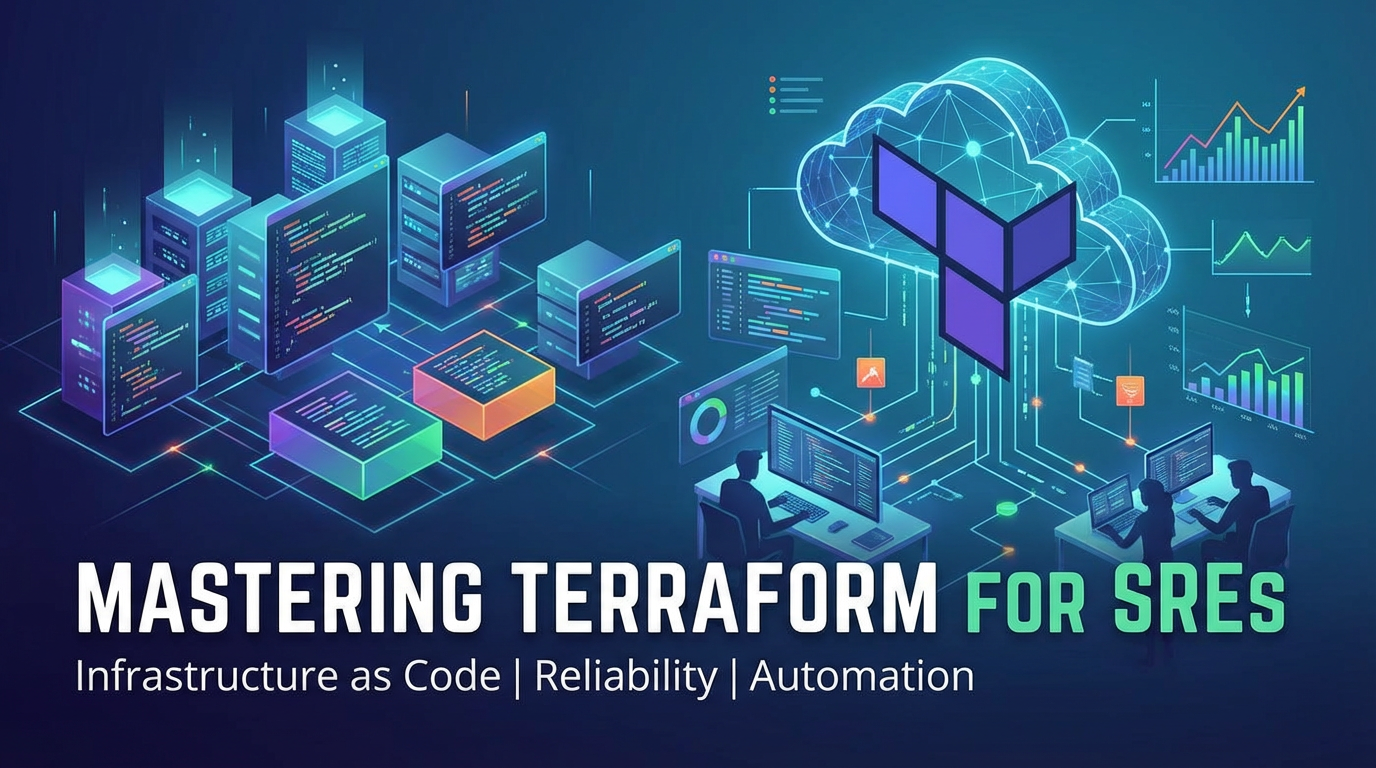


In the ever-accelerating world of digital infrastructure, the role of a Site Reliability Engineer (SRE) has evolved from merely keeping the lights on to proactively engineering systems for optimal performance, resilience, and efficiency. At the heart of this transformation lies the philosophy of Infrastructure as Code (IaC), a paradigm shift that treats infrastructure provisioning and management with the same rigor and discipline as application development. Among the pantheon of IaC tools, Terraform stands out as a formidable, cloud-agnostic solution, empowering SREs to define, provision, and manage infrastructure across a multitude of cloud providers and on-premises environments with unparalleled precision and automation. This comprehensive guide delves deep into the intricacies of Terraform, meticulously exploring how SREs can leverage its full potential to build robust, scalable, and maintainable systems, thereby elevating operational excellence to an art form. We will navigate through fundamental concepts, advanced techniques, integration into modern SRE workflows, and strategic considerations for security, cost, and compliance, ultimately demonstrating why Terraform is not just a tool, but an indispensable partner in the SRE journey.
The SRE Philosophy and Terraform's Foundational Alignment
Site Reliability Engineering is fundamentally about applying software engineering principles to operations. Its core tenets — embracing risk, eliminating toil, setting and monitoring SLOs/SLIs, designing for scale and reliability, and automating everything possible — resonate deeply with the capabilities offered by Terraform. For an SRE, manual infrastructure provisioning is anathema, a breeding ground for inconsistencies, human error, and operational debt. Terraform, by allowing infrastructure to be described in a declarative configuration language (HashiCorp Configuration Language or HCL), offers a powerful antidote to these challenges.
Terraform's contribution to SRE principles:
- Automation and Toil Reduction: Every resource provisioned, every configuration change applied through Terraform eliminates repetitive manual tasks. SREs can define a complete application stack, from networking and compute to databases and monitoring, in code, and deploy it with a single command. This drastically reduces operational toil, freeing up engineers to focus on higher-value tasks like system design, reliability improvements, and innovation.
- Consistency and Immutability: Terraform ensures that infrastructure is provisioned exactly as defined. This eliminates configuration drift, a notorious source of reliability issues. When an SRE needs to replicate an environment – for testing, disaster recovery, or scaling – Terraform guarantees identical infrastructure every time. This immutable infrastructure paradigm is crucial for predictable system behavior.
- Version Control and Auditability: Because infrastructure is code, it lives in version control systems like Git. Every change is tracked, reviewed, and approved, providing a complete audit trail. For SREs, this means understanding who changed what, when, and why, which is invaluable for troubleshooting, compliance, and post-mortems.
- Self-Service Infrastructure: By encapsulating complex infrastructure patterns into reusable Terraform modules, SRE teams can empower development teams to provision their own environments safely and consistently. This "paved road" approach accelerates development cycles while maintaining SRE-defined guardrails, reducing friction and improving collaboration.
- Disaster Recovery and Business Continuity: Terraform configurations can serve as a blueprint for rapidly rebuilding infrastructure in the event of a catastrophic failure. With infrastructure defined as code, restoring an entire environment becomes a matter of applying a known good state, significantly reducing recovery time objectives (RTO).
The proactive stance of an SRE in designing systems for resilience and scalability finds its perfect companion in Terraform. It shifts infrastructure management left, embedding it earlier in the development lifecycle, allowing for robust testing and validation of infrastructure changes long before they impact production. This proactive, engineering-led approach to operations is precisely what Terraform facilitates, making it an indispensable asset in the modern SRE's toolkit.
Terraform Fundamentals for the Discerning SRE
Before delving into advanced patterns, a solid grasp of Terraform's core concepts is paramount for any SRE. These foundational elements form the building blocks of all infrastructure deployments.
Core Concepts: The Pillars of Terraform
- Providers: Terraform interacts with various cloud services (AWS, Azure, GCP), SaaS offerings (Datadog, PagerDuty), and even custom APIs through providers. Each provider exposes a set of resources it can manage. An SRE will typically configure multiple providers, declaring credentials and region information. For example, the
awsprovider allows management of EC2 instances, S3 buckets, and VPCs. - Resources: Resources are the fundamental units of infrastructure managed by Terraform. They represent a specific component, such as a virtual machine, a network interface, a database instance, or a load balancer. Each resource block defines the desired state of that component, including its type (e.g.,
aws_instance), a local name (web_server), and various arguments (ami,instance_type). SREs meticulously define these to ensure optimal configuration for reliability and performance. - Data Sources: While resources create infrastructure, data sources read existing infrastructure or external data. An SRE might use a data source to fetch the latest Amazon Machine Image (AMI) ID, retrieve details of an existing VPC, or query a DNS record. This allows Terraform to integrate with existing infrastructure or external systems without creating them anew, which is crucial for hybrid environments or gradual adoption.
- Variables: Variables allow SREs to parameterize their Terraform configurations, making them reusable and dynamic. Instead of hardcoding values like
instance_typeorregion, variables enable specifying these values at runtime or through environment-specific configuration files. This is essential for deploying the same module across different environments (development, staging, production) with minor variations, ensuring consistency while maintaining flexibility. - Outputs: Outputs expose specific values from a Terraform configuration, which can then be consumed by other configurations or simply displayed to the user after an
apply. For instance, an SRE might output the public IP address of a newly provisioned load balancer, the endpoint of a database, or the DNS name of an API gateway. These outputs become crucial integration points for subsequent steps in a deployment pipeline or for other interdependent Terraform configurations. - Modules: Modules are self-contained Terraform configurations that can be reused across different projects. They encapsulate a set of resources, variables, and outputs, allowing SREs to define common infrastructure patterns (e.g., a standard VPC, a Kubernetes cluster, a highly available database setup) once and reuse them many times. This is the cornerstone of maintainable and scalable infrastructure as code, preventing duplication and enforcing standardization across an organization.
State Management: The SRE's Blueprint of Reality
Perhaps one of the most critical and often misunderstood aspects of Terraform for SREs is its state file. The Terraform state is a crucial mechanism that maps real-world infrastructure resources to your configuration. It's how Terraform knows what infrastructure it manages and what changes need to be made during an apply.
- Local vs. Remote State:
- Local State: By default, Terraform stores its state in a
terraform.tfstatefile in the working directory. While simple for individual experimentation, this is completely unsuitable for team environments due to collaboration challenges and the risk of data loss. - Remote State: For any serious SRE team, remote state is non-negotiable. Backends like Amazon S3, Azure Blob Storage, Google Cloud Storage, HashiCorp Consul, or HashiCorp Terraform Cloud provide a centralized, shared, and durable location for the state file.
- Local State: By default, Terraform stores its state in a
- State Locking: When multiple engineers are potentially modifying infrastructure, state locking prevents concurrent modifications that could corrupt the state file or lead to unexpected resource provisioning. Remote backends typically offer state locking mechanisms, ensuring that only one
terraform applyoperation can modify the state at a time. This is a fundamental safeguard for SRE teams working on shared infrastructure. - State Security: The state file often contains sensitive information, including resource IDs, network configurations, and potentially even plain-text secrets if not carefully managed. SREs must ensure that remote state backends are configured with robust access controls (IAM policies, encryption at rest and in transit) to protect this critical data.
- Preventing Drift: The state file allows Terraform to detect "drift," which occurs when manual changes are made to infrastructure outside of Terraform. During a
terraform plan, Terraform compares the current state file with the actual infrastructure and your desired configuration to identify these discrepancies. SREs must regularly runterraform planto detect and rectify drift, ensuring the infrastructure matches its declared state.
Execution Plan: The SRE's Preview
The terraform plan command is arguably the most important command for an SRE using Terraform. It performs a dry run, showing exactly what changes Terraform will make to your infrastructure before applying them.
terraform plan: This command consults the desired configuration, the current state file, and the actual infrastructure (by querying the cloud provider APIs) to generate an execution plan. It details what resources will be added, changed, or destroyed. An SRE meticulously reviews this plan, especially for production changes, to ensure it aligns with expectations and poses no unintended risks.terraform apply: Once the plan is reviewed and approved,terraform applyexecutes the actions outlined in the plan, making the necessary changes to the real-world infrastructure. This command requires explicit confirmation, a crucial safety measure for SREs.terraform destroy: This command deprovisions all resources managed by a given Terraform configuration. While powerful, it should be used with extreme caution, typically only for development environments or during planned resource decommissioning. SREs often prefer to manage resource lifecycles more granularly or use conditional provisioning to "turn off" resources instead of outright destroying them.
Terraform CLI Essentials: Daily Tools for the SRE
Beyond the core plan, apply, destroy, SREs frequently use other CLI commands:
terraform init: Initializes a working directory, downloading necessary providers and setting up the backend configuration. This is the first command run in any new or cloned Terraform repository.terraform validate: Checks the syntax and configuration of your Terraform files for errors. Essential for early error detection in CI/CD pipelines.terraform fmt: Automatically reformats your Terraform code to a canonical style, ensuring consistency across the team and improving readability.terraform import: Allows SREs to bring existing, manually created infrastructure under Terraform's management. This is invaluable when adopting Terraform in an environment with pre-existing resources.terraform state: A powerful set of commands for direct manipulation of the state file (e.g.,list,show,mv,rm). Used with extreme caution, primarily for recovery or advanced state management scenarios.
Mastering these fundamentals is the bedrock upon which an SRE can build sophisticated, reliable, and automated infrastructure solutions using Terraform. It enables a clear understanding of Terraform's operational model and how to effectively manage infrastructure lifecycle within the SRE paradigm.
Advanced Terraform Techniques for Elevated SRE Operations
Once the fundamentals are solid, SREs can unlock Terraform's true power through advanced techniques, moving beyond simple resource declarations to build truly dynamic, resilient, and standardized infrastructure.
Modules: The Cornerstone of Reusability and Standardization
For an SRE, modules are not merely a convenience; they are a strategic imperative. They encapsulate best practices, enforce architectural standards, and dramatically improve the maintainability and scalability of infrastructure codebases.
- Why Modules are Crucial for SREs:
- Standardization: SREs define "golden path" modules for common infrastructure components (e.g., a secure VPC, a highly available database, a standard compute cluster). This ensures every team provisions infrastructure consistently, adhering to security, performance, and naming conventions.
- Consistency: By reusing modules, SREs eliminate the "snowflake" problem, where each environment or application has slightly different, manually configured infrastructure. This leads to predictable behavior and easier troubleshooting.
- Speed: Developers or other teams can provision complex infrastructure stacks quickly by simply calling pre-built modules, without needing deep Terraform expertise or understanding of every underlying resource.
- Maintainability: Changes or updates to a core infrastructure pattern only need to be applied in one place – the module itself. All consumers of that module then benefit from the update, greatly reducing the effort of patching or upgrading infrastructure.
- Abstraction: Modules hide complexity, allowing consumers to focus on what infrastructure they need, rather than how it's implemented. An SRE can provide a simple
web_app_clustermodule that provisions load balancers, auto-scaling groups, and security groups, without the consumer needing to specify each individual resource.
- Module Best Practices for SREs:
- Clear Inputs and Outputs: Define intuitive and well-documented variables for module inputs and useful outputs for consumption.
- Semantic Versioning: Version modules (e.g.,
v1.0.0) and use version constraints (~> 1.0) when consuming them. This ensures stability and controlled updates. - Separate Repositories: Store reusable modules in dedicated Git repositories, separate from the main application or infrastructure configuration, facilitating independent development and versioning.
- Testing: Treat modules like any other piece of code; implement unit and integration tests (e.g., using Terratest) to ensure they function as expected and don't introduce regressions.
- Readmes and Examples: Provide comprehensive
README.mdfiles with clear explanations, input/output documentation, and usage examples.
Examples of modules critical for SREs include: a base VPC module with public/private subnets and routing, a secure S3 bucket module with encryption and logging, a Kubernetes cluster module with specific add-ons, or a multi-region database replication module.
Workspaces for Environment Management: Isolation or Separation?
Terraform workspaces allow you to manage multiple distinct state files for a single configuration. While useful, SREs often debate their optimal use for managing environments.
- When to use
terraform workspace:- Temporary Environments: Ideal for ephemeral environments for testing features or bug fixes, where the configuration is largely identical but resources need isolation (e.g.,
dev,test). - Small Projects/PoCs: For simpler setups where the differences between environments are minimal (e.g., different instance counts or minor variable changes).
- Temporary Environments: Ideal for ephemeral environments for testing features or bug fixes, where the configuration is largely identical but resources need isolation (e.g.,
- When to use Separate Directories (Preferred for SREs in most cases):
- Significant Environment Differences: When
dev,staging, andprodenvironments have vastly different network topologies, security configurations, or resource types, separate directories (each with its ownmain.tf,variables.tf, etc.) provide clearer isolation and prevent accidental cross-environment modifications. - Enhanced Security: By having separate state files and potentially even separate Git repositories, the blast radius of a misconfiguration or security breach is reduced. Production environments can have stricter access controls.
- Team Segregation: Different teams might own different environments, making separate directories a natural fit for organizational structure.
- GitOps Integration: Separate directories often integrate more cleanly with CI/CD pipelines, allowing distinct pipelines for each environment.
- Significant Environment Differences: When
SREs typically opt for separate directories for production-grade environments due to the enhanced isolation, explicit configuration differences, and clearer delineation of responsibility. Workspaces are often reserved for more temporary or tightly coupled scenarios.
Dynamic Resource Provisioning: for_each and count
SREs often need to provision multiple identical or similar resources without writing repetitive code. count and for_each are Terraform's primary mechanisms for this.
count: Creates multiple instances of a resource or module based on an integer value.terraform resource "aws_instance" "web" { count = var.instance_count # e.g., 3 ami = "ami-0abcdef1234567890" instance_type = "t2.micro" tags = { Name = "web-server-${count.index}" # index from 0 to count-1 } }Useful when you need a fixed number of resources, and the only difference might be an index.for_each: Creates multiple instances of a resource or module based on the elements of a map or a set of strings. This is generally preferred by SREs for more robust and readable dynamic provisioning. ```terraform variable "buckets" { type = map(object({ name = string acl = string })) default = { "logs" = { name = "my-app-logs" acl = "private" }, "data" = { name = "my-app-data" acl = "private" } } }resource "aws_s3_bucket" "app_buckets" { for_each = var.buckets bucket = each.value.name acl = each.value.acl tags = { Purpose = each.key # logs, data } }``for_eachis particularly powerful for creating resources from a list of objects (e.g., different types of databases, multiple environment-specific configurations) because it uses stable identifiers (map keys) rather than integer indices. This makesfor_eachmore resilient to changes in the input list, reducing the risk of unintended resource recreation. SREs leveragingfor_each` can build highly flexible and scalable configurations.
Conditional Expressions: Logic in Infrastructure
SREs frequently encounter scenarios where infrastructure needs to be provisioned or configured differently based on certain conditions (e.g., environment, feature flags). Conditional expressions bring this logic directly into Terraform.
resource "aws_instance" "app_server" {
  instance_type = var.is_production ? "m5.large" : "t3.medium"
  # ... other attributes
}
This simple syntax (CONDITION ? TRUE_VALUE : FALSE_VALUE) allows SREs to adapt resource properties dynamically, for example, choosing a larger instance size for production or enabling specific features only in certain environments, all within the same codebase.
Terraform Functions and Expressions: Enhancing Configuration Logic
Terraform provides a rich set of built-in functions for manipulating strings, lists, maps, and numbers, enabling SREs to create more sophisticated and dynamic configurations.
- String Functions:
join,split,replace,format,upper,lower– useful for generating names, parsing tags, or formatting outputs. - Collection Functions:
length,contains,lookup,merge,flatten,setunion– invaluable for working with lists of IDs, combining configurations, or processing complex data structures. - Numeric Functions:
min,max,ceil,floor– for calculating resource parameters. - Encoding Functions:
base64encode,jsonencode,yamlencode– essential for passing configuration data (e.g., user data scripts, Kubernetes manifests) that needs to be encoded.
An SRE might use jsonencode to dynamically generate a JSON policy document for an IAM role, or join to construct a unique name for a resource based on environment variables. These functions empower SREs to build highly intelligent and adaptable infrastructure.
Provisioners (and the SRE's Cautionary Tale)
Terraform provides provisioner blocks (local-exec, remote-exec) that allow SREs to execute scripts on a local machine or a remote resource after it has been created. While they offer immediate post-provisioning customization, SREs generally view them with a healthy dose of skepticism and prefer alternatives.
local-exec: Runs a command on the machine where Terraform is being executed. Useful for simple tasks like generating a local SSH key or running acurlcommand to register a resource.remote-exec: Runs a script on a remote resource (e.g., an EC2 instance) after it's provisioned, typically via SSH or WinRM.
Why SREs are cautious about Provisioners: * Fragility: Provisioners are not idempotent. Re-running terraform apply might re-execute them, leading to unexpected behavior or errors. * State Management Issues: Terraform does not track the state of changes made by provisioners. If a provisioner fails mid-way, Terraform might still mark the resource as successfully created, leading to an inconsistent state. * Debugging Difficulty: Debugging script failures within provisioners can be challenging, as the context is often limited. * Tight Coupling: Provisioners tightly couple infrastructure provisioning with configuration management, violating separation of concerns.
Better Alternatives for SREs: * Cloud-Init/User Data: For initial bootstrap of virtual machines, cloud-init scripts (Linux) or User Data scripts (AWS) are far more reliable and cloud-native. * Packer: To create immutable machine images (AMIs, VM images) with all necessary software pre-installed and configured. This is the preferred SRE approach for building base images. * Configuration Management Tools: For ongoing configuration, software deployment, and server orchestration, dedicated tools like Ansible, Chef, Puppet, or SaltStack are superior. They are designed for idempotency, state management, and robust error handling. * Containerization: For application deployments, containers (Docker, Kubernetes) abstract away much of the underlying OS configuration, making server provisioning simpler.
SREs should strive to keep their Terraform configurations purely declarative, defining what infrastructure should exist, and delegate configuration within that infrastructure to tools specifically designed for that purpose. Provisioners should be a last resort for very simple, idempotent tasks.
Integrating Terraform into the SRE Workflow
The true power of Terraform for SREs isn't just in its ability to provision infrastructure, but in how seamlessly it integrates into modern software delivery and operational workflows. Embracing GitOps and CI/CD principles transforms infrastructure management from an ad-hoc process into a streamlined, automated, and auditable engineering discipline.
Version Control (GitOps): Infrastructure as a Shared Source of Truth
For an SRE, placing all Terraform code in a Git repository is non-negotiable. This practice forms the bedrock of GitOps, where Git becomes the single source of truth for declarative infrastructure and applications.
- Storing Terraform Code in Git: Each Terraform configuration, whether a root module or a reusable component, resides in a Git repository. This allows for:
- History and Auditability: Every change to infrastructure is a Git commit, providing a complete, immutable history. This is invaluable for post-mortems, compliance audits, and understanding the evolution of systems.
- Collaboration: Multiple SREs can work on infrastructure changes concurrently using standard Git workflows (branches, pull requests).
- Rollback Capability: In case of issues, reverting to a previous, known-good state is as simple as reverting a Git commit and re-applying Terraform.
- Pull Request Workflows for Infrastructure Changes: Just like application code, infrastructure changes should go through a pull request (PR) process:
- An SRE creates a new branch for their infrastructure change.
- They write/modify Terraform code.
- They open a PR, describing the change, its purpose, and potential impact.
- Automated checks (see CI/CD below) run against the PR.
- Peer review by other SREs ensures correctness, adherence to best practices, and flags potential risks.
- Upon approval, the branch is merged into the main branch, triggering automated deployment.
- Code Review for Infrastructure: This is a critical step. Reviewers should look for:
- Correctness: Does the code achieve its intended purpose?
- Security: Are resources configured securely (least privilege, encryption, network access)?
- Cost Efficiency: Are resources sized appropriately? Are cost-saving tags applied?
- Best Practices: Adherence to module patterns, naming conventions, and organizational standards.
- Readability and Maintainability: Is the code clear, well-commented, and easy to understand for future SREs?
CI/CD Pipelines for Terraform: Automation and Guardrails
Automating Terraform operations through CI/CD pipelines is fundamental for SREs to ensure consistent, reliable, and secure infrastructure deployments.
- Automated
terraform planon PRs: Every time a PR is opened or updated, the CI pipeline should automatically runterraform validate,terraform fmt, and crucially,terraform plan. The output of the plan should be posted back to the PR, allowing reviewers to see the exact infrastructure changes before approval. This early feedback loop is invaluable for preventing errors. - Automated
terraform applyon merge tomain: Once a PR is approved and merged into themainbranch, the CI/CD pipeline should triggerterraform applyfor the respective environment (e.g.,staging,production). This ensures that only reviewed and approved changes make it to production, automatically. Some organizations prefer a manual gate for productionapplyas an additional safety measure. - Tools for CI/CD: Popular choices include:
- Jenkins: Highly customizable, but requires more setup and maintenance.
- GitLab CI/CD: Native integration with GitLab repositories, powerful and easy to use.
- GitHub Actions: Event-driven automation directly within GitHub, with a vast marketplace of actions.
- Azure DevOps Pipelines: Comprehensive CI/CD capabilities for Azure users.
- Atlantis: A specialized tool designed specifically for running Terraform in a GitOps workflow, providing PR-driven
planandapplyfunctionality directly from comments. - HashiCorp Terraform Cloud/Enterprise: Offers remote state management, team collaboration, policy enforcement, and a managed CI/CD workflow for Terraform.
Testing Terraform Configurations: Ensuring Infrastructure Quality
Just as application code requires testing, so too does infrastructure code. SREs cannot rely solely on terraform plan to catch all issues.
- Unit Testing (
terraform validate,fmt,tflint):terraform validate: Checks HCL syntax and configuration logic.terraform fmt: Ensures consistent formatting.tflint: A linter for Terraform that can detect potential errors, adherence to best practices, and security flaws before deployment.
- Integration Testing (Terratest, kitchen-terraform):
- Terratest: A Go library that provides utilities for writing automated tests for infrastructure. It can deploy real infrastructure with Terraform, run checks against it (e.g., verify ports are open, services are running), and then tear it down. This is invaluable for testing modules and complex configurations.
- kitchen-terraform: Based on Test Kitchen, it allows SREs to provision infrastructure using Terraform, run InSpec or Serverspec tests against it, and then destroy it. These tools help SREs ensure that the provisioned infrastructure not only deploys successfully but also functions as expected.
- End-to-End Testing of Deployed Infrastructure: Beyond integration tests, SREs should also consider end-to-end tests that validate the entire application stack running on the Terraform-provisioned infrastructure. This might involve deploying a test application, hitting its endpoints, and verifying functionality and performance.
Drift Detection and Remediation: Maintaining Infrastructure Integrity
Infrastructure drift, where the actual state of resources deviates from the defined Terraform state, is a common operational headache for SREs.
- Regular
terraform planExecutions: The simplest form of drift detection is to regularly runterraform planagainst your production configurations. Automating this daily or weekly, and sending alerts if drift is detected, is a baseline practice. - Using Specialized Tools:
- Driftctl: An open-source tool that detects unmanaged resources and infrastructure drift. It identifies resources that exist in the cloud but are not defined in your Terraform state, or resources that have diverged.
- Cloud Provider Native Tools: AWS Config, Azure Policy, GCP Security Command Center can monitor resource configurations and report deviations from desired states.
- Automated Remediation Strategies: Once drift is detected, SREs need a strategy for remediation. Options include:
- Manual Review and
terraform apply: The safest approach for critical systems, where an SRE reviews the detected drift and manually approves theterraform applyto bring the infrastructure back to compliance. - Automated
terraform apply(with caution): For non-critical resources or well-understood drift patterns, an automatedapplycan be configured. This requires robust testing and careful consideration of potential side effects. terraform importand Refactor: If drift represents a legitimate manual change that should be preserved, SREs can import the changed resource back into Terraform state and update the configuration code.
- Manual Review and
By integrating Terraform deeply into their GitOps and CI/CD workflows, and by adopting robust testing and drift detection strategies, SREs can build, deploy, and manage infrastructure with the same level of confidence, automation, and reliability typically associated with application code.
Security and Compliance: Building Trust with Terraform
For an SRE, security is not an afterthought but a foundational pillar of reliability. Terraform, when wielded with intention, is a powerful tool for embedding security and compliance directly into infrastructure provisioning. It allows organizations to define secure-by-default infrastructure and enforce policies programmatically.
Least Privilege: IAM Role Management as Code
One of the most critical security principles is least privilege – granting only the permissions necessary to perform a task. Terraform facilitates this by allowing SREs to define Identity and Access Management (IAM) roles, policies, and users in code.
- Centralized IAM Definition: Instead of manually configuring permissions in a cloud console, SREs define IAM roles and policies using Terraform. This ensures consistency, auditability, and adherence to security best practices. ```terraform resource "aws_iam_role" "app_role" { name = "my-application-role" assume_role_policy = jsonencode({ Version = "2012-10-17" Statement = [ { Action = "sts:AssumeRole" Effect = "Allow" Principal = { Service = "ec2.amazonaws.com" } } ] }) tags = { Environment = var.environment } }resource "aws_iam_role_policy_attachment" "s3_read_only" { role = aws_iam_role.app_role.name policy_arn = "arn:aws:iam::aws:policy/AmazonS3ReadOnlyAccess" # Example, prefer custom policies } ``` * Granular Permissions: SREs can define highly granular custom policies that grant only the precise actions required for a service or application. This moves away from broad, risky managed policies. * Role-Based Access Control (RBAC): Terraform can configure RBAC for Kubernetes clusters, ensuring that pods and users have appropriate permissions within the cluster.
Sensitive Data Management: Protecting Secrets
Secrets (API keys, database credentials, certificates) must never be hardcoded or committed to version control. Terraform provides mechanisms to integrate with external secret management systems.
- Terraform Variables (Don't Commit Secrets): While variables can be used for sensitive data, the values themselves should never be committed to Git. Instead, they should be provided via environment variables (
TF_VAR_),.tfvarsfiles (excluded from Git), or secure CI/CD pipelines. - Secrets Managers: SREs integrate Terraform with dedicated secrets management solutions:
- HashiCorp Vault: A powerful, open-source secrets management system that can dynamically generate secrets, lease them, and revoke them. Terraform has a
vaultprovider and data sources to retrieve secrets. - AWS Secrets Manager/Parameter Store: Cloud-native services for storing and retrieving secrets. Terraform can fetch secrets from these using data sources.
- Azure Key Vault: Azure's managed service for secrets, keys, and certificates.
- GCP Secret Manager: Google Cloud's fully managed service for secrets.
- HashiCorp Vault: A powerful, open-source secrets management system that can dynamically generate secrets, lease them, and revoke them. Terraform has a
- Outputting Sensitive Data (Mark as Sensitive): If a Terraform output must expose sensitive information (e.g., a generated password), it should be marked with
sensitive = true. This prevents the value from being displayed in the console output ofterraform planorapply, and ensures it's redacted in Terraform Cloud/Enterprise UI.terraform output "database_password" { value = aws_db_instance.main.password sensitive = true }
Policy as Code: Enforcing Organizational Standards
Policy as Code allows SREs to define security, compliance, and operational policies in a machine-readable format and enforce them automatically during the infrastructure provisioning process.
- Tools for Policy as Code:
- Open Policy Agent (OPA): A general-purpose policy engine that can be used to enforce policies for Terraform plans. OPA uses Rego language to define policies (e.g., "S3 buckets must be encrypted," "EC2 instances must not have public IPs").
- HashiCorp Sentinel: Integrated with Terraform Cloud/Enterprise, Sentinel allows SREs to define fine-grained, logic-based policies that evaluate Terraform plans before they are applied. This can prevent non-compliant infrastructure from ever being provisioned.
- Cloud Custodian: A rule engine that allows SREs to manage and enforce policies across multiple cloud accounts, including identifying non-compliant resources and taking automated remediation actions.
- Benefits for SREs:
- Proactive Compliance: Policies are enforced at build time (during
terraform plan), preventing security misconfigurations from reaching production. - Reduced Manual Audits: Automated policy checks reduce the need for manual security audits.
- Scalable Governance: Policies can be applied consistently across hundreds or thousands of Terraform configurations.
- Developer Empowerment: Developers receive immediate feedback if their infrastructure code violates policies, allowing them to correct issues earlier.
- Proactive Compliance: Policies are enforced at build time (during
Auditability: Transparency and Accountability
Terraform, especially when integrated with Git, provides a robust audit trail for all infrastructure changes.
- Version Control History: Every change to your Terraform configuration is a Git commit, showing who made the change, when, and what was modified. This is the primary audit log for infrastructure.
- Terraform State: The state file reflects the current desired state of your infrastructure and the resources managed by Terraform. While not a historical log, it provides a snapshot of what should be running.
- Cloud Provider Logs: Complementary to Terraform's auditability, cloud provider logs (e.g., AWS CloudTrail, Azure Monitor, GCP Cloud Audit Logs) record all API calls made to modify resources. By correlating these with Terraform changes, SREs get a complete picture of infrastructure lifecycle.
By meticulously implementing these security and compliance practices with Terraform, SREs can build infrastructure that is not only reliable and performant but also secure by design and compliant with regulatory requirements, significantly reducing the attack surface and operational risk.
APIPark is a high-performance AI gateway that allows you to securely access the most comprehensive LLM APIs globally on the APIPark platform, including OpenAI, Anthropic, Mistral, Llama2, Google Gemini, and more.Try APIPark now! 👇👇👇
Cost Optimization and Management with Terraform
For SREs, managing cloud costs is an integral part of optimizing reliability and efficiency. Terraform plays a crucial role by enabling cost-aware infrastructure provisioning and providing mechanisms for tracking, right-sizing, and automating the lifecycle of resources.
Resource Tagging: The Foundation of Cost Allocation
Consistent and comprehensive resource tagging is the cornerstone of cloud cost management. Terraform allows SREs to enforce tagging policies across all provisioned resources.
- Mandatory Tags: SREs can configure Terraform modules to require specific tags (e.g.,
environment,project,owner,cost_center) for all resources. This ensures that every resource has metadata essential for cost allocation and reporting. - Dynamic Tagging: Tags can be dynamically generated based on variables or data sources, ensuring that they reflect the current context of the deployment.
- Benefits:
- Accurate Cost Attribution: Tags allow finance and business units to understand exactly who or what is consuming cloud resources, aiding in chargebacks and budget management.
- Resource Identification: Quickly identify resources belonging to specific projects, teams, or environments.
- Automation Targets: Tags can be used by automation scripts or cloud policies (e.g., to stop non-prod instances after hours).
resource "aws_ec2_instance" "web_server" {
  # ... other attributes
  tags = {
    Name        = "web-app-${var.environment}"
    Environment = var.environment
    Project     = "MyApp"
    Owner       = "sre-team"
  }
}
Right-Sizing Resources: Eliminating Waste
Over-provisioning resources is a common source of cloud waste. Terraform allows SREs to define resource specifications precisely, facilitating right-sizing.
- Variable-Driven Sizing: SREs define variables for instance types, disk sizes, database tiers, and memory allocations. These can be adjusted per environment (e.g., smaller instances for
dev, larger forprod) or based on performance metrics. - Module Defaults: Modules can establish sensible default sizes, which can then be overridden when necessary, promoting efficiency while maintaining flexibility.
- Automated Scaling Definitions: While Terraform provisions the auto-scaling groups, SREs use it to define min/max capacity, scaling policies, and target utilization, which are critical for cost-effective scaling.
Lifecycle Rules: Automating Resource Deletion or Archival
Many cloud resources incur costs even when idle. Terraform enables SREs to define lifecycle policies that automatically manage resource existence.
- S3 Bucket Lifecycle Policies: Terraform can define rules for S3 buckets to automatically transition objects to cheaper storage tiers (e.g., Glacier) or expire them after a certain period, crucial for managing log data or backups.
- Snapshot Lifecycle Policies: For databases or EBS volumes, Terraform can configure automated snapshot creation and retention, balancing recovery needs with storage costs.
- Conditional Resource Provisioning: Using conditional expressions or
count = 0, SREs can ensure that certain costly resources are only provisioned in specific environments or when a feature flag is enabled. For example, a development database might be destroyed nightly.
Monitoring and Alerting: Visibility into Spend
While not directly a cost-saving measure, deploying monitoring and alerting infrastructure with Terraform provides the visibility needed to identify cost anomalies and inefficient resource usage.
- Metric Alarms: Terraform can provision cloud-native metric alarms (e.g., AWS CloudWatch Alarms, Azure Monitor Alerts) that notify SREs if resource utilization falls below a threshold (indicating over-provisioning) or if costs exceed a budget.
- Dashboard Provisioning: Dashboards for cost analysis (e.g., custom dashboards in Grafana pulling billing data) can also be defined and provisioned with Terraform, giving SREs and business stakeholders a clear view of spending patterns.
By embedding cost considerations directly into Terraform configurations, SREs move beyond reactive cost-cutting to proactive cost optimization. This ensures that infrastructure is not only reliable and performant but also fiscally responsible, aligning technical excellence with business value.
Terraform and Cloud-Native Ecosystems: Bridging the Gap
Modern SRE landscapes are dominated by cloud-native technologies. Terraform's extensible provider model makes it an ideal orchestrator for these diverse ecosystems, allowing SREs to manage everything from foundational cloud resources to complex container orchestration platforms.
Kubernetes: The Orchestrator of Orchestrators
Kubernetes is central to many cloud-native strategies. Terraform acts as the layer that provisions and configures Kubernetes clusters and, increasingly, even deploys applications onto them.
- Provisioning Kubernetes Clusters:
- Managed Services: Terraform is extensively used to provision managed Kubernetes services like Amazon EKS (
aws_eks_cluster), Azure AKS (azurerm_kubernetes_cluster), and Google GKE (google_container_cluster). SREs define cluster size, node pools, networking, and add-ons in code. - Self-Managed Clusters: For highly customized deployments, Terraform can provision the underlying VMs, networking, and security groups, which are then used by tools like Kubeadm to bootstrap a Kubernetes cluster.
- Managed Services: Terraform is extensively used to provision managed Kubernetes services like Amazon EKS (
- Deploying Kubernetes Manifests via
kubernetesProvider: Once a cluster is up, thekubernetesprovider allows Terraform to deploy Kubernetes resources directly (Deployments, Services, Ingress, ConfigMaps, Secrets, etc.).terraform resource "kubernetes_deployment_v1" "nginx" { metadata { name = "nginx-deployment" labels = { App = "nginx" } } spec { replicas = 3 selector { match_labels = { App = "nginx" } } template { metadata { labels = { App = "nginx" } } spec { container { name = "nginx" image = "nginx:latest" port { container_port = 80 } } } } } }While suitable for simpler deployments, SREs often graduate to specialized GitOps tools like Argo CD or Flux for continuous delivery of Kubernetes applications once the cluster itself is provisioned by Terraform. - Helm Charts with
helmProvider: Helm is the de facto package manager for Kubernetes. Terraform'shelm_releaseresource allows SREs to deploy Helm charts, managing the lifecycle of complex applications defined within charts. This is particularly powerful for deploying third-party services like Prometheus, Grafana, or database operators onto a Kubernetes cluster.
Serverless: Event-Driven Architectures as Code
Serverless computing (AWS Lambda, Azure Functions, GCP Cloud Functions) allows SREs to run code without provisioning or managing servers, focusing purely on business logic. Terraform is the primary tool for deploying and configuring these functions and their associated triggers.
- AWS Lambda: Terraform provisions Lambda functions, their execution roles, event triggers (API Gateway, S3 events, SQS, DynamoDB streams), and network configurations.
- Azure Functions: SREs use Terraform to define Function Apps, their underlying storage, consumption plans, and deployment slots.
- GCP Cloud Functions: Terraform configures Cloud Functions, their triggers (HTTP, Pub/Sub, Cloud Storage), and IAM permissions.
Terraform ensures that all components of a serverless application, from the function code deployment to its event sources and permissions, are version-controlled and deployed consistently.
Container Registries: Managing Image Artifacts
Container images are the building blocks of containerized and serverless applications. Terraform helps SREs provision and manage private container registries within their cloud accounts.
- AWS Elastic Container Registry (ECR): Terraform defines ECR repositories, their lifecycle policies, and associated IAM permissions.
- Azure Container Registry (ACR): SREs provision ACR instances, set up replication, and manage access policies.
- Google Container Registry (GCR)/Artifact Registry: Terraform manages GCR repositories and access control lists.
By orchestrating these components with Terraform, SREs ensure that the entire cloud-native ecosystem, from the lowest-level compute resources to high-level application deployment mechanisms, is managed consistently and declaratively.
API, API Gateway, and Gateway Management in the SRE Domain
While the core focus of this article is Terraform for SREs, it's impossible to discuss modern infrastructure without addressing APIs and their management. Site Reliability Engineers are inherently responsible for the reliability, performance, and security of services exposed via APIs. This often involves provisioning and managing API Gateways—critical components that act as the front door to microservices and backend systems. Terraform is the quintessential tool for automating the deployment and configuration of these gateways.
Provisioning Cloud-Native API Gateways with Terraform
SREs use Terraform to define and deploy the various API Gateway services offered by cloud providers:
- AWS API Gateway: Terraform configurations define REST API endpoints, HTTP API endpoints, WebSocket APIs, integration types (Lambda, HTTP, mock), request/response transformations, custom domain names, API keys, usage plans, and authorization mechanisms (IAM, Cognito, Lambda Authorizers). For an SRE, this means ensuring that external-facing APIs are secure, performant, and correctly routed to backend services.
- Azure API Management: Terraform modules can provision Azure API Management instances, define APIs, operations, policies (e.g., rate limiting, caching, authentication), products, and subscriptions. SREs leverage this to standardize API exposure and apply governance across an enterprise.
- Google Cloud API Gateway: Terraform manages the deployment of API Gateways to front backend services like Cloud Functions, Cloud Run, and App Engine. It defines routing rules, authentication, and other traffic management policies.
By managing these API Gateways through Terraform, SREs ensure:
- Version Control: All gateway configurations are stored in Git, allowing for history, auditability, and easy rollbacks.
- Consistency: Gateways are deployed identically across environments (dev, staging, production).
- Security: Authentication, authorization, and network access policies are consistently applied.
- Automation: Gateway updates and new API deployments are automated through CI/CD pipelines.
Beyond Cloud Provider Gateways: Enterprise API Management
While cloud provider API Gateways handle the edge of an SRE's infrastructure, internal API management platforms or specialized gateways often come into play, especially for complex microservice architectures or when integrating with various backend services, including AI models. This is where a robust API gateway and management platform like APIPark becomes relevant to an SRE's responsibilities.
SREs are not only responsible for provisioning the underlying infrastructure but also for ensuring the operational health of the platforms deployed on it. If an organization relies heavily on AI services, managing their APIs becomes a critical SRE task. This is where an open-source solution like APIPark offers significant value. APIPark acts as an all-in-one AI gateway and API management platform, designed to simplify the management, integration, and deployment of both AI and traditional REST services. For an SRE, this means having a dedicated platform that can standardize AI model invocations, encapsulate prompts into new APIs, and provide end-to-end API lifecycle management. An SRE might use Terraform to provision the compute resources (VMs, Kubernetes clusters) on which APIPark itself runs, ensuring its infrastructure is robust and scalable. Once deployed, APIPark helps the SRE manage the performance, logging, and security of the APIs it orchestrates. Its ability to quickly integrate 100+ AI models and unify API formats can significantly reduce operational burden, making the management of complex AI-driven services more reliable and efficient.
SREs are deeply involved in maintaining systems that expose or consume APIs. Whether it's provisioning the underlying compute resources for an API gateway using Terraform, or integrating an AI Gateway solution like APIPark into the operational landscape, the principles of reliability, automation, and observability remain paramount. An SRE leverages Terraform to create the environment, and tools like APIPark to manage the dynamic, often complex, world of APIs and AI services that run within that environment, ensuring they are performant, secure, and easily discoverable.
Challenges and Pitfalls for SREs Using Terraform
While Terraform offers immense benefits, SREs must navigate several challenges and potential pitfalls to fully harness its power without introducing new operational complexities.
- State File Management Complexity:
- Large State Files: Overly large state files (managing hundreds or thousands of resources) can become slow to process and difficult to troubleshoot. This often indicates a need to break down configurations into smaller, more manageable modules or separate root configurations.
- State File Corruption: While remote backends and state locking mitigate this, state file corruption can still occur (e.g., due to network issues, force-quitting Terraform). Recovery can be a delicate operation, sometimes requiring manual state editing (a last resort for SREs).
- Sensitive Data in State: Despite precautions, sensitive data might inadvertently end up in the state file. Regular audits and careful
terraform outputmanagement are essential.
- Provider Limitations and Bugs:
- New Service Support: Cloud providers release new features and services constantly. Terraform providers might lag in supporting them, forcing SREs to use custom provider forks,
local-execscripts, or wait for updates. - Provider Bugs: Like any software, providers can have bugs, leading to unexpected behavior or resource provisioning issues. SREs must be vigilant in checking provider release notes and issue trackers.
- API Rate Limiting: Large Terraform configurations can trigger cloud provider API rate limits, especially during
planorapplyoperations, leading to failures. SREs need to optimize their configurations and potentially increase provider retry limits.
- New Service Support: Cloud providers release new features and services constantly. Terraform providers might lag in supporting them, forcing SREs to use custom provider forks,
- Managing Dependencies Between Modules and Resources:
- Implicit vs. Explicit Dependencies: Terraform handles many dependencies implicitly, but complex cross-module dependencies can be hard to visualize or manage, sometimes leading to resource creation order issues.
- Circular Dependencies: These are logical errors that prevent Terraform from creating a plan, requiring careful refactoring of the infrastructure design.
- Out-of-Band Dependencies: When Terraform configurations depend on resources not managed by the same state file (e.g., an existing VPC), SREs must use
datasources or remote state lookups effectively.
- Over-Engineering Terraform Configurations:
- Excessive Genericity: Attempting to make every module overly generic to handle every possible use case can lead to complex, hard-to-understand, and hard-to-maintain code. SREs should aim for "just enough" flexibility.
- Premature Abstraction: Abstracting too early or too much can hide critical details and make debugging harder. Start with simpler configurations and refactor into modules as patterns emerge.
- Dealing with External Changes (Manual Changes, Out-of-Band Updates):
- Manual Console Changes: The most common form of drift, often leading to Terraform conflicts. SREs must enforce a policy of "no manual changes" to Terraform-managed resources or use
terraform importto bring manual changes back under control. - Non-Terraform Automation: Other automation tools (e.g., Ansible, custom scripts) might modify resources also managed by Terraform, leading to unpredictable behavior. A clear demarcation of responsibilities for each tool is crucial.
- External Service Configuration: Sometimes, changes in external services (e.g., DNS, SaaS providers) can affect Terraform deployments if not properly managed or synchronized.
- Manual Console Changes: The most common form of drift, often leading to Terraform conflicts. SREs must enforce a policy of "no manual changes" to Terraform-managed resources or use
SREs, through experience and rigorous process, learn to anticipate and mitigate these challenges. Robust CI/CD, comprehensive testing, disciplined Git workflows, and a deep understanding of cloud provider APIs are essential tools for navigating these complexities and ensuring Terraform remains a force for reliability, not a source of toil.
Future Trends in Terraform for SREs
The landscape of infrastructure as code is constantly evolving. For SREs, staying abreast of these trends is crucial for adopting new best practices and leveraging emerging capabilities.
- Increased Adoption of Terraform Cloud/Enterprise: HashiCorp's managed offerings for Terraform are gaining significant traction. They provide remote state management, team collaboration, cost estimation, policy as code (Sentinel), and private module registries out-of-the-box. For SRE teams, this means less time managing infrastructure for Terraform itself and more focus on delivering reliable infrastructure.
- Deeper Integration with GitOps Tools: The synergy between Terraform and GitOps will continue to strengthen. Tools like Atlantis, Argo CD, and Flux will offer even more seamless, declarative workflows for both infrastructure provisioning and application deployment, all driven by Git. This allows SREs to manage the entire stack from a single source of truth.
- Enhanced Focus on Security and Compliance from the Start: Policy as code (OPA, Sentinel) will become even more pervasive, shifting security checks further left into the development lifecycle. SREs will increasingly be responsible for defining, implementing, and enforcing these policies, ensuring that infrastructure is secure and compliant by design.
- More Sophisticated Testing Frameworks: As Terraform configurations grow in complexity, the need for robust testing becomes paramount. Frameworks like Terratest will continue to evolve, offering richer capabilities for integration, end-to-end, and even chaos testing of infrastructure. The concept of "infrastructure tests" will become as standard as "unit tests" for application code.
- Composable Infrastructure and Platform Engineering: SRE teams are increasingly building internal platforms that abstract away cloud complexity for developers. Terraform will be a key enabler for this, allowing SREs to define highly composable modules and APIs that developers can consume to provision tailor-made environments without needing deep cloud expertise. This trend moves towards SREs as platform builders.
- Terraform for Multi-Cloud and Hybrid Cloud: As organizations adopt multi-cloud strategies, Terraform's cloud-agnostic nature becomes even more valuable. SREs will use it to provision and manage resources consistently across different cloud providers and potentially integrate with on-premises infrastructure, offering a unified control plane for diverse environments.
- AI-Assisted Infrastructure Management: While not directly a Terraform feature, the rise of AI and large language models (LLMs) will influence how SREs interact with and generate Terraform code. AI could assist in writing modules, refactoring configurations, or even suggesting optimizations based on desired outcomes, potentially making SREs even more productive. For instance, an AI Gateway like APIPark, which helps manage and integrate AI models, might itself be deployed and configured using advanced Terraform strategies, ensuring its reliability and scalability are met. This highlights how Terraform underpins the infrastructure for even cutting-edge AI deployments.
These trends indicate a future where Terraform is not just a tool for provisioning, but a central component in an integrated, automated, policy-driven, and highly intelligent infrastructure ecosystem, further solidifying its role as an indispensable asset for Site Reliability Engineers.
Conclusion: Terraform – The SRE's Indispensable Ally
The journey of mastering Terraform for Site Reliability Engineers is one of continuous learning, strategic application, and unwavering commitment to engineering excellence. We have traversed the foundational concepts, illuminated advanced techniques, and meticulously detailed how Terraform weaves into the fabric of modern SRE workflows—from GitOps and CI/CD to security, cost management, and cloud-native integration. The ability to declaratively define infrastructure, enforce consistency through modules, automate deployments with pipelines, and secure environments with policy as code transforms infrastructure management from a reactive chore into a proactive, resilient, and scalable engineering discipline.
Terraform empowers SREs to embody their core principles: eliminating toil, building systems for reliability and scale, and driving automation at every layer of the infrastructure stack. It allows teams to move faster, reduce human error, maintain auditability, and ultimately build more robust, performant, and cost-efficient services. Whether provisioning the backbone of a complex microservices architecture, deploying an AI Gateway like APIPark to manage a myriad of AI services, or ensuring the secure and compliant operation of cloud-native applications, Terraform provides the declarative control and automation necessary for an SRE to excel.
In the hands of a skilled SRE, Terraform is more than just an Infrastructure as Code tool; it is a strategic partner in the relentless pursuit of ultimate site reliability. By embracing its power, understanding its nuances, and diligently integrating it into every facet of the operational lifecycle, SREs are not just managing infrastructure; they are engineering the future of reliable systems.
Frequently Asked Questions (FAQs)
1. What is the fundamental difference between terraform count and terraform for_each for SREs? For SREs, terraform for_each is generally preferred for dynamic resource creation when dealing with lists of complex objects or maps, as it uses stable identifiers (map keys or set values). This makes it more resilient to changes in the input list, preventing unintended resource recreation when an item is added or removed from the middle of the list. terraform count, on the other hand, relies on integer indices, which can lead to destructive changes if items are reordered or removed. count is better suited for a fixed, known number of resources where only an index is needed for differentiation.
2. How do SREs handle sensitive data (like database passwords) with Terraform securely? SREs never hardcode or commit sensitive data to Terraform configurations or Git repositories. Instead, they leverage dedicated secrets management services such as HashiCorp Vault, AWS Secrets Manager, Azure Key Vault, or GCP Secret Manager. Terraform data sources can then securely retrieve these secrets at runtime for resource configuration. Additionally, any Terraform outputs containing sensitive information should be explicitly marked with sensitive = true to prevent them from being displayed in logs or the console.
3. What is infrastructure drift, and how do SREs prevent or remediate it using Terraform? Infrastructure drift occurs when the actual state of cloud resources deviates from what is defined in the Terraform configuration and state file, usually due to manual changes made outside of Terraform. SREs prevent drift by enforcing a "no manual changes" policy for Terraform-managed resources and using CI/CD pipelines to ensure all infrastructure changes go through Terraform. To detect and remediate drift, SREs regularly run terraform plan (often automated in pipelines) and use specialized tools like Driftctl to identify discrepancies. Remediation typically involves reviewing the detected drift and performing a terraform apply to bring the infrastructure back to the desired state, or using terraform import if a legitimate manual change needs to be incorporated into the Terraform state.
4. Why do SREs often prefer separate directories over terraform workspaces for managing different environments (dev, staging, prod)? While terraform workspaces provide isolation for state files, SREs often opt for separate directories because production environments typically have significantly different configurations (networking, security, resource sizing) compared to development or staging. Separate directories allow for explicit, distinct configurations per environment, preventing accidental sharing of modules or variables that could lead to unintended consequences. This approach also offers clearer isolation, enhanced security through separate access controls, and more straightforward integration with GitOps and CI/CD pipelines, reducing the blast radius of misconfigurations.
5. How does Terraform integrate with CI/CD pipelines to enhance SRE workflows? Terraform is a cornerstone of GitOps and CI/CD for SREs. It integrates by: * Automated terraform plan on Pull Requests: Every PR triggers a terraform plan to show proposed changes before merging, enabling peer review and early detection of errors. * Automated terraform apply on merge: Upon merging to the main branch, a pipeline automatically runs terraform apply to deploy approved infrastructure changes, ensuring consistency and auditability. * Validation and Formatting: terraform validate and terraform fmt are run early in the pipeline to catch syntax errors and enforce coding standards. * Testing: Integration with tools like Terratest allows for automated testing of deployed infrastructure within the pipeline. This integration ensures that all infrastructure changes are version-controlled, reviewed, tested, and deployed consistently, drastically reducing manual toil and improving reliability.
🚀You can securely and efficiently call the OpenAI API on APIPark in just two steps:
Step 1: Deploy the APIPark AI gateway in 5 minutes.
APIPark is developed based on Golang, offering strong product performance and low development and maintenance costs. You can deploy APIPark with a single command line.
curl -sSO https://download.apipark.com/install/quick-start.sh; bash quick-start.sh

In my experience, you can see the successful deployment interface within 5 to 10 minutes. Then, you can log in to APIPark using your account.

Step 2: Call the OpenAI API.