Mastering OpenAPI: Simplified API Design & Integration
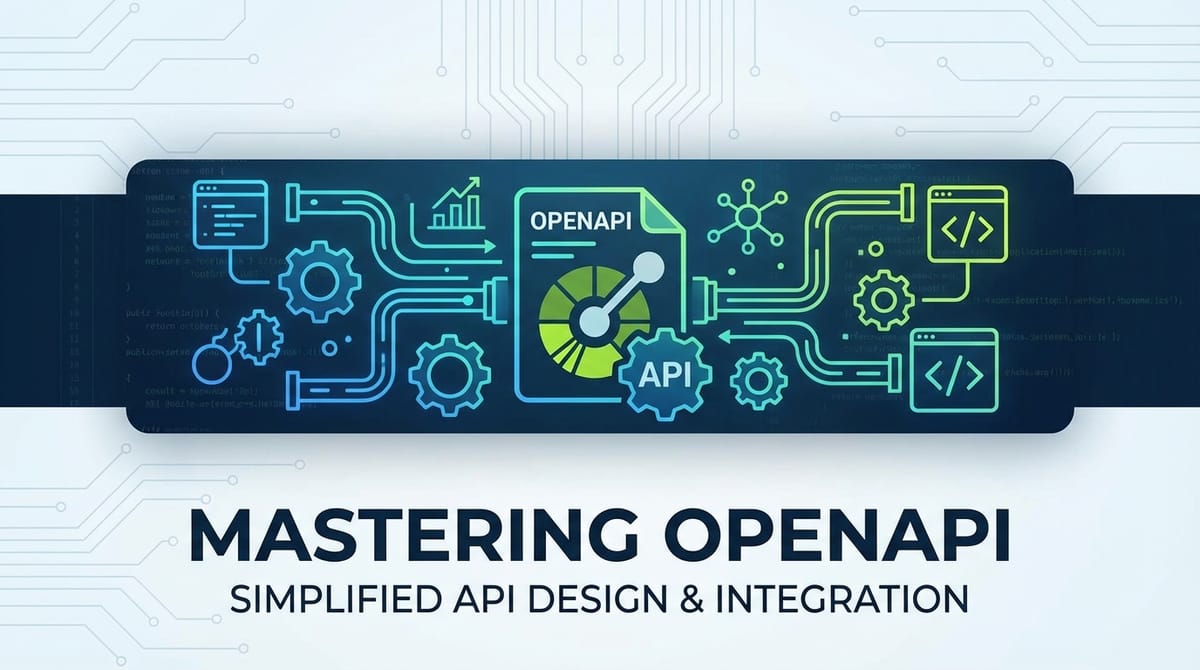


In the rapidly evolving landscape of modern software development, Application Programming Interfaces (APIs) have become the bedrock upon which interconnected digital ecosystems are built. They are the unseen threads that weave together disparate applications, services, and data sources, enabling innovation, fostering collaboration, and driving digital transformation across industries. From powering mobile applications and facilitating microservice architectures to enabling complex data analytics and integrating third-party services, APIs are ubiquitous. However, the proliferation of APIs also brought forth a significant challenge: consistency, clarity, and manageability. Without a standardized approach, developing, consuming, and maintaining APIs could quickly devolve into a chaotic and error-prone endeavor, hindering efficiency and stifling innovation. This is where OpenAPI emerges as a transformative force, offering a universally understood language for defining and describing APIs.
This comprehensive guide delves deep into the realm of OpenAPI, exploring its profound impact on simplifying API design and streamlining integration processes. We will unpack the fundamental principles of the OpenAPI Specification (OAS), illuminate its myriad benefits for developers, architects, and business stakeholders alike, and provide practical insights into leveraging this powerful standard to its full potential. From fostering seamless collaboration and automating documentation to enabling robust testing and accelerating development cycles, OpenAPI stands as an indispensable tool for anyone navigating the intricate world of APIs. By mastering OpenAPI, organizations can elevate their API strategies, build more resilient and scalable systems, and unlock unprecedented levels of efficiency and innovation in their digital initiatives. Prepare to embark on a journey that will demystify API complexity and empower you to architect a future where api interactions are not just functional, but elegantly simple, consistently reliable, and effortlessly integrated.
The Genesis of Standardized API Description: From Chaos to Clarity
The journey of APIs from proprietary, ad-hoc integrations to standardized, discoverable interfaces is a fascinating narrative of technological evolution driven by a fundamental need for interoperability. In the early days of the web, services often communicated through bespoke protocols or SOAP (Simple Object Access Protocol), which, while robust, were characterized by their verbosity, complexity, and steep learning curve. The advent of REST (Representational State Transfer) architecture, championed by Roy Fielding in his doctoral dissertation, marked a pivotal shift. REST introduced a simpler, more lightweight approach to building web services, leveraging existing HTTP methods and stateless communication, which resonated deeply with developers seeking agility and scalability. This paradigm quickly became the de facto standard for web APIs, fueling an explosion in their adoption.
However, the very flexibility and simplicity that made REST so appealing also presented new challenges. Without a formal, machine-readable contract, understanding a REST API often required extensive manual documentation, tribal knowledge, or tedious reverse-engineering. Developers integrating with an api faced a "discovery problem": how to ascertain what resources were available, what operations could be performed on them, what data formats were expected, and how to handle authentication. This lack of a common description format led to fragmented documentation, inconsistent API designs, and significant friction in the api consumption process. Each new integration demanded a manual deep dive, eating up valuable development time and increasing the likelihood of errors.
Recognizing this growing pain, initiatives began to emerge aimed at standardizing API descriptions. Swagger, initially conceived by Tony Tam at Wordnik in 2010, quickly gained traction as a simple, human- and machine-readable format for describing RESTful APIs. It provided a powerful set of tools for generating documentation, client SDKs, and server stubs from a single api definition. Swagger’s success demonstrated the immense value of a standardized description format. In 2015, the Swagger Specification was donated to the Linux Foundation and rebranded as the OpenAPI Specification (OAS), administered by the OpenAPI Initiative (OAI). This move broadened its appeal and ensured its evolution as an open, vendor-neutral standard supported by a diverse community of technology leaders. The transition to OpenAPI was not merely a name change; it signified a commitment to establishing a robust, extensible, and universally adopted standard that could serve as the foundational language for the entire api economy, bringing much-needed clarity and consistency to a rapidly expanding digital landscape.
Deconstructing the OpenAPI Specification (OAS): The Blueprint for Modern APIs
The OpenAPI Specification (OAS) is a language-agnostic, human-readable format for describing RESTful APIs. It essentially serves as a comprehensive blueprint, detailing every aspect of an api in a way that can be understood by both developers and machines. This dual capability is crucial, enabling not only clear communication among teams but also the automation of various api-related tasks. Written in either YAML or JSON, an OAS document provides a robust, single source of truth for an API's functionality, its exposed endpoints, expected inputs, and anticipated outputs.
At its core, an OpenAPI document structures api information into several key objects, each serving a specific purpose in defining the api's contract:
openapiObject: This root object defines the version of the OpenAPI Specification being used (e.g.,3.0.0,3.1.0). This is crucial for ensuring compatibility with various tools and parsers that adhere to specific OAS versions. It's the starting point for any valid OpenAPI definition.infoObject: This section provides meta-information about theapiitself. It includes vital details such as theapi'stitle(e.g., "Pet Store API"),description(a detailed explanation of what theapidoes),version(theapi's semantic version, like1.0.0), and optional fields liketermsOfService,contactinformation, andlicensedetails. This object is fundamental for human readability and for discoverability withinapiportals.serversObject: This array specifies the base URLs for theapi's deployment environments. For example, anapimight have a development server, a staging server, and a production server. Each server object includes aurland an optionaldescription, allowing consumers to easily switch between environments or understand where to direct their requests.pathsObject: This is perhaps the most critical part of an OpenAPI definition, as it describes the individual endpoints (paths) of theapiand the operations (HTTP methods) that can be performed on them. Each path (e.g.,/pets,/users/{id}) is mapped to an object containing nested operation objects.- Operation Objects (e.g.,
get,post,put,delete): Each HTTP method for a given path defines a specificapioperation. Within an operation object, you'll find:summaryanddescription: Brief and detailed explanations of what the operation does.operationId: A unique string used to identify the operation, useful for code generation.tags: An array of strings used for logical grouping of operations in documentation (e.g., "pets", "users").parameters: An array of objects defining the inputs to the operation. Parameters can beinquery(URL parameters),header(HTTP headers),path(parts of the URL), orcookie. Each parameter specifies itsname,description,requiredstatus, andschema(data type and constraints).requestBody: Describes the data sent in the request body for operations likePOSTorPUT. It includesdescription,requiredstatus, andcontentwhich maps media types (e.g.,application/json) to aschemadefining the structure of the request payload.responses: A critical object defining the possible HTTP response codes (e.g.,200,201,400,500) and their correspondingdescriptionandcontent. For each response code,contentspecifies the media type and theschemaof the response payload, enabling consumers to understand the expected output for various scenarios, including error conditions.
- Operation Objects (e.g.,
componentsObject: This section acts as a reusable repository for defining common data structures, security schemes, parameters, responses, headers, and examples that can be referenced throughout theapidefinition. This promotes modularity, reduces redundancy, and ensures consistency across theapi. Key sub-objects include:schemas: Defines reusable data models (e.g.,Userobject,Productobject) using JSON Schema. This is where you describe the properties, data types, and constraints of your data structures.securitySchemes: Defines reusable security mechanisms, such asAPIkeys, OAuth2 flows, or HTTP Basic authentication.parameters: Reusable parameter definitions.responses: Reusable response objects.
securityObject: This array specifies whichsecuritySchemes(defined incomponents) apply to the entireapior specific operations. It dictates how callers must authenticate to access theapior its protected endpoints.
By meticulously defining these elements, an OpenAPI document creates an unambiguous and complete contract for an api. This structured approach is not just about documentation; it’s about providing a programmatic interface that tools can leverage to automate development tasks, streamline integration, and enforce consistency across an organization's api portfolio.
The Unquantifiable Benefits of Adopting OpenAPI: A Catalyst for API Excellence
The widespread adoption of the OpenAPI Specification is not merely a testament to a well-designed standard; it is a direct reflection of the profound and quantifiable benefits it brings to every stage of the API lifecycle. Embracing OpenAPI transforms API development from a potentially fragmented and ambiguous process into a structured, collaborative, and efficient endeavor, yielding significant advantages for developers, teams, and the entire organization.
One of the most immediate and impactful benefits is improved collaboration and communication. In complex software projects, various teams – backend developers, frontend developers, QA engineers, technical writers, and product managers – all interact with APIs. Without a common language, misunderstandings about endpoints, parameters, data types, and error responses are rampant, leading to endless meetings, rework, and delays. An OpenAPI definition acts as a single, unambiguous source of truth. Frontend developers can begin building user interfaces against a clearly defined API contract even before the backend api is fully implemented. QA teams can design test cases based on precise specifications, eliminating ambiguity. Product managers can review the API design to ensure it aligns with business requirements, and technical writers can generate accurate and comprehensive documentation with minimal effort. This shared understanding minimizes friction, reduces communication overhead, and ensures that everyone is literally on the same page, accelerating time-to-market.
Secondly, OpenAPI revolutionizes automated documentation. Gone are the days of manually drafting and constantly updating api documentation, a task that is often tedious, prone to errors, and quickly outdated as APIs evolve. With an OpenAPI definition, tools like Swagger UI, ReDoc, and Postman can automatically generate stunning, interactive, and always-up-to-date api documentation directly from the specification. These interactive portals allow developers to explore endpoints, understand parameters, view example requests and responses, and even try out api calls directly within the browser. This dramatically enhances the developer experience (DX) for both internal teams and external consumers, making it incredibly easy to understand and onboard new APIs. Developers spend less time deciphering api contracts and more time building innovative features, significantly boosting productivity and reducing the barrier to entry for consuming services.
Beyond documentation, OpenAPI empowers extensive code generation. Specialized tools can parse an OpenAPI definition and automatically generate client SDKs (Software Development Kits) in various programming languages (e.g., Python, Java, JavaScript, C#). These SDKs provide pre-built classes and methods for interacting with the api, eliminating the need for developers to manually write HTTP request logic, parse JSON responses, or handle serialization/deserialization. This not only saves immense development time but also reduces the potential for integration errors. Similarly, server stubs can be generated, providing a skeletal implementation of the api's endpoints, allowing backend developers to focus on the business logic rather than boilerplate code. This rapid code generation capability significantly accelerates development cycles and fosters consistency across the entire codebase.
Furthermore, OpenAPI is a cornerstone for automated testing and validation. The specification provides a clear contract that can be used to validate both incoming requests and outgoing responses. Tools can automatically compare api calls against the OpenAPI definition to ensure that parameters, headers, and body payloads conform to the specified schema and types. This enables robust contract testing, where frontend and backend teams can independently verify that their respective api implementations adhere to the agreed-upon contract. Automated tests can be generated to cover various api endpoints and scenarios, catching regressions and integration issues early in the development pipeline. This proactive approach to quality assurance significantly improves api reliability and reduces the risk of production errors.
Finally, OpenAPI is instrumental in establishing and enforcing api governance and consistency. In organizations with numerous APIs, maintaining a consistent design philosophy, naming conventions, and security standards can be a formidable challenge. By mandating that all APIs be defined using OpenAPI, organizations can standardize their api design patterns, ensure uniform error handling, and consistently apply security policies. This governance layer simplifies API management, enhances discoverability, and creates a cohesive api landscape that is easier to maintain, scale, and secure. It transforms a collection of disparate services into a well-orchestrated, interoperable system, laying the groundwork for a robust and scalable digital future.
Crafting Immaculate Interfaces: Designing APIs with OpenAPI First
The paradigm shift towards "Design-First" API development, heavily facilitated by OpenAPI, marks a significant evolution from the traditional "Code-First" approach. In the past, developers would often write the code for their api endpoints first, and then, as an afterthought, attempt to document them. This process frequently led to inconsistent designs, incomplete or inaccurate documentation, and integration headaches for consumers. The Design-First philosophy, however, advocates for meticulously defining the api's contract using OpenAPI before writing any implementation code. This approach ensures that the api is well-thought-out, consistent, and meets the needs of its consumers from the outset.
Design-First vs. Code-First: A Methodological Comparison
The Code-First approach typically involves developers writing api endpoints and data models in their preferred programming language, often with annotations or decorators that can then be used by tools to generate an OpenAPI definition. While this can be quick for small, internal projects, it often results in documentation that merely reflects the implementation rather than an optimal, user-centric api design. Changes in implementation can easily break the generated documentation, and the focus remains on the backend logic rather than the external api contract. This can lead to tightly coupled designs that are difficult to evolve without impacting consumers.
Conversely, the Design-First methodology starts with the OpenAPI Specification. API designers, often in collaboration with product managers, frontend developers, and other stakeholders, define every aspect of the api using an OpenAPI editor. This collaborative process ensures that the api’s interface is intuitive, consistent, and addresses real-world use cases. Once the OpenAPI definition is finalized and approved, it serves as the authoritative blueprint. Backend developers then implement the api to adhere precisely to this specification, while frontend developers can concurrently build client applications using mock servers generated from the same definition. This parallel development significantly reduces integration issues and accelerates the overall development timeline. The api is treated as a product itself, with its interface being a carefully crafted user experience for developers.
Best Practices for OpenAPI Design: Architects of Clarity
Effective api design with OpenAPI goes beyond merely documenting endpoints; it involves adhering to principles that enhance usability, maintainability, and scalability.
- Embrace RESTful Principles: While OpenAPI can describe various
apistyles, it shines brightest when applied to RESTful APIs. Adhere to REST principles:- Resource-based Naming: Use nouns for resource paths (e.g.,
/users,/products), avoiding verbs. - Standard HTTP Methods: Use
GETfor retrieval,POSTfor creation,PUTfor full updates,PATCHfor partial updates, andDELETEfor removal. - Statelessness: Each request from a client to a server must contain all the information necessary to understand the request.
- Clear Status Codes: Return appropriate HTTP status codes (2xx for success, 4xx for client errors, 5xx for server errors).
- Resource-based Naming: Use nouns for resource paths (e.g.,
- Detailed Descriptions and Summaries: Every path, operation, parameter, and response should have clear, concise
summaryfields and more elaboratedescriptionfields. This is paramount for human understanding and forms the basis for effective documentation. Explain the purpose, expected behavior, and any nuances. - Consistent Naming Conventions: Establish and strictly follow naming conventions for paths, parameters, schemas, and properties. Consistency across your API portfolio reduces cognitive load for consumers and makes your APIs predictable. Use camelCase for JSON properties and snake_case for query parameters if that's your chosen standard.
- Define Robust Data Types and Schemas: Leverage JSON Schema within the
components/schemassection to precisely define your data models. Specify data types (string,integer,boolean,array,object), formats (date-time,email,uuid), length constraints (minLength,maxLength), value constraints (minimum,maximum,enum), and required properties. Providingexamplevalues within schemas and responses is invaluable for clarity. - Comprehensive Error Handling: Define clear and consistent error responses for various client-side and server-side issues. Use appropriate HTTP status codes (e.g., 400 Bad Request, 401 Unauthorized, 404 Not Found, 422 Unprocessable Entity, 500 Internal Server Error) and provide a consistent error response body schema that includes details like an error code, message, and potentially a link to more information. This predictability is vital for robust client error handling.
- Thoughtful Security Definitions: Clearly define your
api's security requirements using thesecuritySchemesincomponents. Whether it'sAPIkeys, OAuth2, or JWT (JSON Web Tokens), specify the type, location (header, query), and name. Then, apply these security schemes at the global level or per operation using thesecurityobject. This guidesapiconsumers on how to authenticate and authorize their requests. - Effective Versioning Strategies: As APIs evolve, versioning becomes essential to manage changes without breaking existing clients. Common strategies include:
- URL Versioning: Embedding the version in the URL (e.g.,
/v1/users). Simple and explicit. - Header Versioning: Specifying the version in an HTTP header (e.g.,
X-API-Version: 1). - Media Type Versioning: Using
Acceptheaders with a custom media type (e.g.,Accept: application/vnd.myapi.v1+json). - OpenAPI can document all these approaches, providing a clear contract for each version. It's crucial to decide on a strategy and stick to it, clearly documenting deprecated versions and migration paths.
- URL Versioning: Embedding the version in the URL (e.g.,
By diligently applying these best practices, teams can create APIs that are not only functional but also a joy to use, fostering developer satisfaction and driving faster integration cycles. An OpenAPI-first design approach is an investment in the long-term health and success of an organization's api ecosystem.
Seamless Integration: Consuming and Producing APIs with OpenAPI
The true power of OpenAPI fully manifests in its ability to streamline the integration of APIs, bridging the gap between producers and consumers. Whether you are building an api for others to consume or integrating with external services, OpenAPI acts as the universal translator, minimizing friction and maximizing efficiency.
Consuming APIs: From Specification to Seamless Interaction
For api consumers, an OpenAPI definition is akin to a comprehensive instruction manual, but one that is machine-readable and therefore vastly more powerful than static documentation. It provides all the necessary information to understand an api's capabilities and interact with it effectively.
- Understanding the API Contract: The most fundamental aspect is the clear understanding of the
apicontract. Developers can quickly ascertain:- Available Endpoints and Operations: What resources can be accessed and what actions can be performed (GET, POST, PUT, DELETE).
- Required Parameters: What inputs are needed (query, path, header, body), their data types, and whether they are optional or mandatory.
- Expected Request Formats: The structure of the request body (e.g., JSON schema for a
POSTrequest). - Possible Response Structures: The format of successful responses (e.g.,
200 OK) and error responses (400 Bad Request,404 Not Found), including their respective data schemas. - Authentication Mechanisms: How to authenticate requests (e.g.,
apikey, OAuth2 token). This clarity significantly reduces the guesswork and trial-and-error often associated with integrating undocumented or poorly documented APIs.
- Client SDK Generation: This is where OpenAPI dramatically accelerates integration. Tools like OpenAPI Generator can take an OpenAPI definition and automatically produce client SDKs in virtually any popular programming language (Java, Python, JavaScript, Ruby, Go, C#, Swift, etc.). These generated SDKs encapsulate all the complexity of HTTP requests, serialization/deserialization, and error handling into idiomatic code. Instead of manually crafting HTTP requests, developers can simply call methods like
api.users.get(userId)orapi.products.create(newProduct), which are pre-configured to interact correctly with theapi. This capability drastically reduces development time, eliminates boilerplate code, and minimizes the risk of integration errors, allowing consumers to focus on their application's business logic. - Interactive Documentation and Testing: Many OpenAPI tools provide interactive documentation portals (like Swagger UI) that allow consumers to explore the
api, view example requests and responses, and even make liveapicalls directly from the browser. This "try it out" functionality is invaluable for quickly understanding how anapibehaves and validating integration logic without writing any code. Furthermore, tools like Postman can import an OpenAPI definition to automatically generate a collection ofapirequests, complete with examples, making it easy to test and debug integrations.
Producing APIs: Documenting and Exposing Services
For api producers, OpenAPI offers a robust framework for documenting new APIs from inception and for generating machine-readable descriptions of existing ones.
- Design and Documentation from Day One: As discussed, the Design-First approach ensures that the OpenAPI definition is created before or concurrently with the
api's implementation. This guarantees that the documentation is always accurate and up-to-date, reflecting the actual contract of theapi. It forces developers to think through theapi's interface from the perspective of a consumer, leading to more intuitive and well-structured APIs. - Server Stub Generation: Just as client SDKs can be generated, OpenAPI can also generate server stubs. These stubs provide a skeletal
apiimplementation (e.g., a Spring Boot controller or an Express router) with all the defined endpoints and their corresponding method signatures, but without the actual business logic. This allows backend developers to rapidly scaffold theirapis, focusing on implementing the core functionality within a pre-defined, OpenAPI-compliant structure. It enforces consistency across differentapis developed by various teams within an organization. - API Gateway Configuration: Modern
api gatewaysolutions heavily leverage OpenAPI definitions for automatic configuration. Anapi gatewayacts as a single entry point for allapirequests, handling tasks like routing, load balancing, authentication, rate limiting, and monitoring. When anapiis defined with OpenAPI, a gateway can often ingest this definition to automatically configure rules for:- Routing: Mapping incoming requests to the correct backend services based on paths and methods.
- Validation: Ensuring that incoming request payloads conform to the specified OpenAPI schemas before forwarding them to backend services.
- Security Policies: Applying authentication and authorization rules defined in the OpenAPI security schemes.
- Generating Developer Portals: Presenting the
apis defined in OpenAPI to internal and external developers through a discoverable portal.
This integration with an api gateway is particularly powerful for managing a large portfolio of microservices or external-facing APIs. The OpenAPI definition becomes the single source of truth for the api's behavior and access policies at the gateway level.
APIPark is a high-performance AI gateway that allows you to securely access the most comprehensive LLM APIs globally on the APIPark platform, including OpenAI, Anthropic, Mistral, Llama2, Google Gemini, and more.Try APIPark now! 👇👇👇
The Indispensable Role of the API Gateway in the OpenAPI Ecosystem
As organizations embrace microservices architectures and expand their api ecosystems, the complexity of managing, securing, and scaling these interfaces grows exponentially. This is precisely where the api gateway steps in as an indispensable architectural component, serving as the central nervous system for all incoming api traffic. An api gateway acts as a single, unified entry point for all clients, abstracting the underlying complexity of the backend services and providing a myriad of functionalities that are critical for modern api management.
At its core, an api gateway is a reverse proxy that sits in front of one or more api services. However, its capabilities extend far beyond simple traffic forwarding. Key functions of an api gateway include:
- Request Routing: Directing incoming requests to the appropriate backend service based on the request path, HTTP method, headers, or other criteria. This allows for complex routing logic, including version-based routing (e.g.,
/v1/usersto one service,/v2/usersto another). - Authentication and Authorization: Centralizing
apisecurity by enforcing authentication (e.g.,apikeys, JWT validation, OAuth2 token validation) and authorization policies before requests even reach the backend services. This offloads security concerns from individual services. - Rate Limiting and Throttling: Protecting backend services from overload by limiting the number of requests a client can make within a specified timeframe. This prevents abuse and ensures fair usage.
- Load Balancing: Distributing incoming
apitraffic across multiple instances of a backend service to ensure high availability and optimal performance. - Traffic Management: Implementing policies like circuit breakers, retries, and timeouts to improve the resilience of
apicalls. - Caching: Storing responses from backend services to reduce latency and load for frequently accessed data.
APITransformation and Orchestration: Modifying request and response payloads, aggregating responses from multiple backend services into a single response, or translating protocols.- Monitoring and Analytics: Collecting metrics on
apiusage, performance, and errors, providing valuable insights intoapihealth and user behavior. - Developer Portal: Providing a self-service platform where developers can discover, subscribe to, and test APIs, complete with interactive documentation.
OpenAPI's Symbiotic Relationship with the API Gateway
The relationship between OpenAPI and the api gateway is deeply symbiotic. OpenAPI provides the definitive contract for an api, while the api gateway implements and enforces many of the behaviors defined within that contract. When an api is meticulously defined using OpenAPI, it unlocks a new level of automation and consistency at the gateway level.
- Automated Configuration: Many modern
api gatewaysolutions can directly ingest an OpenAPI definition. This allows the gateway to automatically configure routing rules, validate request and response schemas, apply security policies, and even generate stub implementations based on the OpenAPI document. This eliminates manual configuration, reduces human error, and ensures that the gateway's behavior precisely aligns with theapi's contract. - Enhanced Validation: The
api gatewaycan use the OpenAPI schemas to perform robust payload validation on incoming requests. If a request body or a parameter does not conform to the specified schema, the gateway can reject it immediately, preventing malformed requests from ever reaching the backend services. This acts as a crucial first line of defense, improvingapireliability and security. - Consistent Security Enforcement: With
securitySchemesdefined in OpenAPI, theapi gatewaycan uniformly enforce authentication and authorization requirements across allapis or specific operations. For instance, if an OpenAPI definition specifies OAuth2 for a particular endpoint, the gateway will ensure a valid OAuth2 token is present and correctly scopes before forwarding the request. - Dynamic Developer Portals: OpenAPI definitions are the backbone of dynamic developer portals provided by
api gatewayplatforms. These portals use the OpenAPI content to generate interactive documentation, allowing developers to easily explore, understand, and testapis. They also facilitateapidiscovery and subscription management.
Introducing APIPark: An Open Source AI Gateway & API Management Platform
In this dynamic ecosystem, APIPark stands out as a robust, all-in-one AI gateway and API developer portal that is open-sourced under the Apache 2.0 license. It's designed to help developers and enterprises manage, integrate, and deploy AI and REST services with unparalleled ease, demonstrating how an advanced api gateway can leverage and extend the principles of OpenAPI.
APIPark embodies the power of an api gateway by offering a comprehensive suite of features that significantly enhance the api lifecycle. Its core strength lies in its ability to quickly integrate over 100+ AI models, providing a unified management system for authentication and cost tracking. This is a game-changer for organizations looking to harness the power of AI without getting bogged down in the complexities of disparate AI apis. By standardizing the request data format across all AI models, APIPark ensures that changes in underlying AI models or prompts do not disrupt applications or microservices—a clear example of an api gateway providing critical abstraction and consistency, much like OpenAPI provides consistency at the definition level. Users can even encapsulate custom prompts into REST APIs, rapidly creating new services like sentiment analysis or translation APIs directly through the platform.
Beyond AI integration, APIPark provides end-to-end api lifecycle management, assisting with everything from design and publication to invocation and decommissioning. It regulates api management processes, handles traffic forwarding, load balancing, and versioning, all critical functions for any enterprise-grade api gateway. The platform facilitates api service sharing within teams, offering a centralized display for easy discovery, and supports independent apis and access permissions for multiple tenants, boosting resource utilization. With features like subscription approval for api access, detailed api call logging, and powerful data analysis for long-term trend monitoring, APIPark provides the robust governance and operational intelligence expected from a leading api gateway. Its performance, rivalling Nginx, with over 20,000 TPS on modest hardware, further solidifies its position as a high-performance solution for managing a diverse and demanding api landscape. The ease of deployment, a single command line, also speaks to its developer-centric design, making powerful api management accessible to a wider audience.
APIPark exemplifies how a modern api gateway leverages concepts akin to OpenAPI – providing a unified contract and management layer – to simplify complex integrations, enhance security, and ensure the reliable delivery of both traditional apis and cutting-edge AI services. It demonstrates the evolution of api management platforms from mere proxies to intelligent orchestration layers that underpin digital innovation.
The Broader Ecosystem: Advanced Topics and Tooling Landscape
The power of OpenAPI extends far beyond basic documentation and code generation, permeating a rich and diverse ecosystem of tools and advanced architectural patterns. Understanding this broader landscape is crucial for fully leveraging OpenAPI to build robust, scalable, and maintainable api infrastructures.
The Expansive Tooling Landscape
The adoption of OpenAPI has spurred the development of an extensive array of tools that cater to every stage of the api lifecycle. These tools transform the OpenAPI definition from a static document into a dynamic asset, enabling automation and enhancing the developer experience.
- OpenAPI Editors: Tools like Swagger Editor (online and offline), Stoplight Studio, and Postman's built-in editor provide intuitive interfaces for writing and validating OpenAPI definitions. They offer features like syntax highlighting, auto-completion, and real-time validation against the OpenAPI schema, ensuring that definitions are syntactically correct and semantically valid. These editors greatly simplify the design-first approach by making the creation of OpenAPI documents more accessible.
- Documentation Generators: As discussed, Swagger UI and ReDoc are leading tools for transforming OpenAPI definitions into beautiful, interactive, and explorable
apidocumentation. They allow users to visualize endpoints, parameters, request/response bodies, and even makeapicalls directly from the browser, significantly enhancing developer onboarding andapidiscoverability. - Code Generators: OpenAPI Generator is a powerful command-line tool that can generate client SDKs, server stubs, and documentation in over 50 different languages and frameworks from an OpenAPI definition. This automation dramatically reduces boilerplate code and ensures consistency across different components of a system.
- Testing and Validation Tools:
- Postman (with its OpenAPI import feature) and Insomnia allow developers to automatically create
apicollections from OpenAPI definitions, making it easy to test and validateapiendpoints. - Dredd and Schemathesis are examples of property-based testing tools that can generate test cases and validate
apiresponses against an OpenAPI schema, ensuring contract adherence and catching subtle regressions. - Newman (Postman's CLI runner) enables automated testing of Postman collections derived from OpenAPI in CI/CD pipelines.
- Postman (with its OpenAPI import feature) and Insomnia allow developers to automatically create
- Mock Servers: Tools like Prism (from Stoplight), Mockoon, or even custom solutions built with json-server can create mock
apiservers directly from an OpenAPI definition. These mock servers allow frontend and mobile developers to start building and testing their applications against a simulatedapienvironment before the actual backendapiis implemented, facilitating parallel development and accelerating the overall development timeline.
OpenAPI and Microservices: Orchestrating Decentralization
OpenAPI is a cornerstone technology for effectively managing microservice architectures. In a distributed system composed of numerous, independently deployable services, each exposing its own api, maintaining coherence and enabling seamless communication is paramount.
- Service Contracts: Each microservice can expose its
apithrough an OpenAPI definition, serving as a formal contract between the service and its consumers (other microservices, frontend applications, etc.). This clear contract enables independent development and deployment while guaranteeing interoperability. - Inter-service Communication: When one microservice needs to call another, an OpenAPI-generated client SDK can be used, simplifying the integration. This ensures that changes to a service's
apiare clearly communicated and can be reflected in client code with minimal effort. - API Gateway Configuration: As discussed, a central
api gatewayleverages OpenAPI definitions from individual microservices to aggregate, route, and secure external access. This prevents clients from needing to know the specific endpoints of each backend service, abstracting the microservice topology. - Governance and Standardization: OpenAPI helps enforce a consistent
apidesign philosophy across an organization's microservices, ensuring that endpoints, data formats, and error handling are standardized, even when developed by different teams. This reduces complexity and improves maintainability across the entire service mesh.
OpenAPI and Event-Driven Architectures (AsyncAPI): Expanding the Scope
While OpenAPI is primarily focused on request-response (RESTful) APIs, the rise of event-driven architectures (EDAs) necessitates a similar standardization for asynchronous apis. This is where AsyncAPI comes into play. AsyncAPI is a specification that aims to bring the same level of discipline and tooling to event-driven APIs (e.g., Kafka, RabbitMQ, WebSockets) that OpenAPI brings to RESTful APIs. It allows developers to define message formats, channels, and operations for publishing and subscribing to events. While distinct, AsyncAPI shares many conceptual similarities with OpenAPI, and often, modern systems utilize both, with OpenAPI describing the synchronous apis and AsyncAPI describing the asynchronous event interfaces. This dual approach ensures comprehensive documentation and governance for all forms of api-based communication.
API Governance and Lifecycle Management: The Strategic Imperative
Beyond technical implementation, OpenAPI plays a strategic role in api governance and the holistic management of the api lifecycle. From initial design to eventual deprecation, OpenAPI acts as a central artifact.
- Design Review: OpenAPI definitions facilitate structured
apidesign reviews, allowing stakeholders to scrutinize the proposedapiinterface before any code is written, ensuring it meets functional, non-functional, and security requirements. - Change Management: As
apis evolve, managing changes becomes critical. OpenAPI provides a formal mechanism to track changes betweenapiversions, enabling automatic generation of changelogs and clear communication to consumers about breaking and non-breaking changes. - Deprecation and Sunsetting: When an
apiversion needs to be deprecated, the OpenAPI definition can clearly mark endpoints or operations as deprecated, providing guidance to consumers on migration paths. - Monitoring and Analytics Integration: Many
apimanagement platforms (likeAPIPark) integrateapimonitoring and analytics directly using insights derived from OpenAPI definitions. This allows for tracking metrics against definedapioperations and understanding their real-world performance and usage patterns.
By embedding OpenAPI throughout the entire api lifecycle, organizations can achieve a level of control, consistency, and efficiency that is otherwise unattainable, transforming their api strategy into a powerful engine for digital innovation and growth.
Navigating the Labyrinth: Challenges and Considerations in OpenAPI Adoption
While OpenAPI offers a plethora of benefits, its successful adoption and ongoing maintenance are not without challenges. Organizations embarking on an OpenAPI-first journey must be cognizant of potential pitfalls and proactively strategize to mitigate them. Overcoming these hurdles requires a combination of technical acumen, process adjustments, and strong organizational commitment.
One significant challenge lies in maintaining large and complex specifications. As an api grows, its OpenAPI definition can become very extensive, encompassing numerous paths, operations, and intricate data schemas. Managing a monolithic OpenAPI file can be cumbersome, leading to long loading times in editors, difficult navigation, and increased merge conflicts in version control. The solution often involves modularization, breaking down a large specification into smaller, reusable components using $ref pointers. This allows different teams to own and maintain specific parts of the api definition, but it also introduces complexity in managing these interconnected files and ensuring consistent referencing. Tools that support multi-file OpenAPI projects become essential here.
Another common hurdle is ensuring consistent adoption across diverse teams and projects. In large enterprises, different teams may have varying levels of familiarity with OpenAPI, diverse development cultures, or even preferred tools that don't fully support the specification. Mandating OpenAPI without adequate training, clear guidelines, and supportive tooling can lead to resistance or half-hearted implementations. Organizations must invest in educating their developers, establishing api style guides that are enforced through automated linting tools, and fostering a culture where OpenAPI is seen as an enabler rather than an overhead. Leadership buy-in and a clear communication strategy are vital to drive this cultural shift.
Furthermore, handling complex api design scenarios within OpenAPI can sometimes be intricate. While OAS is powerful, accurately representing advanced concepts like polymorphism (where a response or request body can take on multiple shapes based on a discriminator field), inheritance, or highly conditional data structures can require a deep understanding of JSON Schema and advanced OpenAPI features. Developers might struggle to express these complex scenarios in a clear and unambiguous way, potentially leading to misinterpretations or incomplete documentation. The community around OpenAPI is constantly evolving to address these complexities, but it still demands careful design and thorough validation.
Versioning an api and its OpenAPI definition is another area requiring careful consideration. As APIs evolve, changes are inevitable. Distinguishing between breaking and non-breaking changes, managing multiple api versions simultaneously, and clearly communicating deprecations to consumers are crucial. While OpenAPI supports defining different versions, the strategy for evolving the api itself needs to be well-defined. Should new versions be exposed on different URLs (/v1, /v2)? Or should changes be additive within the same version until a major overhaul is required? The chosen strategy must be consistently applied and clearly documented within the OpenAPI definition, possibly leveraging x- extensions for custom metadata to aid in lifecycle management.
Finally, keeping the OpenAPI definition synchronized with the actual api implementation presents an ongoing challenge, especially in a Code-First or hybrid development environment. If the code deviates from the specification, the api contract becomes unreliable, undermining all the benefits of OpenAPI. Robust CI/CD pipelines must incorporate automated validation steps that compare the implemented api's behavior against its OpenAPI definition (e.g., using contract testing tools). This continuous validation loop ensures that the OpenAPI specification remains the authoritative source of truth, preventing "documentation drift" and maintaining confidence in the api's contract.
Addressing these challenges head-on requires a strategic approach that combines robust tooling, clear architectural guidelines, continuous education, and an unwavering commitment to treating OpenAPI as a first-class artifact in the software development lifecycle. By anticipating these hurdles and planning for them, organizations can fully harness the transformative potential of OpenAPI to build a resilient and agile api ecosystem.
The Horizon of API Development: The Future of OpenAPI
The journey of OpenAPI is far from over; it continues to evolve as the api landscape itself transforms. The future of OpenAPI promises even greater sophistication, deeper integration with emerging technologies, and an expanding role in driving the next wave of digital innovation. Several key trends and developments are poised to shape its trajectory.
One significant area of evolution is the deeper integration with AI and Machine Learning technologies. As AI becomes increasingly pervasive, the demand for AI-driven APIs, apis for accessing AI models, and tools that leverage AI to design or manage APIs will grow. OpenAPI is already being extended to describe AI-specific parameters and responses, but we can expect more structured ways to define model inputs/outputs, confidence scores, and even model versioning within the specification. Furthermore, AI itself could assist in generating OpenAPI definitions from existing codebases, identifying common patterns to suggest api designs, or even automatically optimizing existing specifications for better performance or consistency. The emergence of open-source AI gateways like APIPark that integrate 100+ AI models and simplify their api invocation, using unified formats, is a testament to this convergence. Such platforms will likely influence future extensions of OpenAPI to better describe and manage these sophisticated AI services.
The drive towards hyper-automation and low-code/no-code platforms will also see OpenAPI playing an increasingly central role. For these platforms to effectively integrate with existing systems and build new applications without extensive coding, they require precise, machine-readable api definitions. OpenAPI serves as the ideal contract, enabling these platforms to automatically discover capabilities, generate integration components, and orchestrate complex workflows involving multiple apis. This will democratize api consumption and empower a broader range of users to build sophisticated digital solutions.
Enhanced support for event-driven and streaming APIs will likely see continued convergence between OpenAPI and AsyncAPI. While distinct, the need for a unified approach to describing both synchronous and asynchronous interactions within a single system is growing. Future specifications or tooling might offer a more seamless way to link or embed AsyncAPI definitions within an OpenAPI context, providing a holistic view of an entire service's communication interfaces. This integration will be crucial for building resilient, reactive, and real-time systems that rely heavily on event streams.
The evolution of API security will also continue to influence OpenAPI. As threats become more sophisticated, the specification will need to offer richer ways to define and enforce security policies, including more granular access controls, token introspection, and potentially integration with emerging standards for zero-trust architectures. OpenAPI's securitySchemes and security objects are powerful, but the future may see them enhanced to represent more complex security models and policies directly within the definition.
Finally, the growth of the OpenAPI tooling ecosystem will accelerate. We can anticipate more intelligent editors, more powerful code generators that offer greater customization, and more sophisticated governance tools that leverage AI to detect inconsistencies or suggest improvements. The community will likely focus on improving the developer experience for large, modular specifications, simplifying versioning strategies, and providing better ways to manage the entire api lifecycle from design to deprecation within integrated development environments (IDEs) and api management platforms.
In essence, the future of OpenAPI is one of expanded scope, deeper intelligence, and tighter integration with the broader software development ecosystem. It will continue to serve as the bedrock for clear, consistent, and consumable apis, empowering developers and organizations to build more complex, intelligent, and interconnected digital experiences with greater ease and confidence.
Conclusion: OpenAPI as the Keystone of Modern API Strategy
In the intricate tapestry of modern software development, APIs are no longer mere technical interfaces; they are strategic assets, the very sinews that connect applications, enable ecosystems, and drive digital innovation. From internal microservices communication to external partner integrations and the burgeoning world of AI services, the efficacy of an organization's digital strategy hinges on its ability to design, develop, and manage APIs with precision and agility. It is within this critical context that OpenAPI emerges not just as a useful tool, but as the indispensable keystone of any robust api strategy.
Throughout this extensive exploration, we have delved into the profound impact of OpenAPI on simplifying api design and streamlining integration. We've traced its evolution from a nascent idea to a globally recognized standard, a testament to its intrinsic value in addressing the chaos and inconsistency that once plagued api development. The OpenAPI Specification, with its meticulous structure and machine-readable format, transforms api contracts into a single source of truth, fostering unparalleled clarity and collaboration across diverse teams.
The benefits are far-reaching and transformative: dramatically improved developer experience through automated, interactive documentation, accelerated development cycles via client SDK and server stub generation, enhanced api reliability through rigorous automated testing and validation, and the establishment of robust api governance and consistency across an entire api portfolio. By embracing a Design-First approach, organizations can architect APIs that are intuitive, predictable, and resilient from their inception, laying a solid foundation for future growth and evolution.
Moreover, we have highlighted the critical synergy between OpenAPI and the api gateway, a partnership that empowers organizations to manage, secure, and scale their api ecosystems with unprecedented efficiency. An api gateway like APIPark, an open-source AI gateway and API management platform, exemplifies how an advanced api gateway leverages concepts akin to OpenAPI definitions for comprehensive lifecycle governance, from integrating diverse AI models with a unified format to providing end-to-end management, security, and performance. Such platforms demonstrate how the structured approach of OpenAPI translates into tangible operational benefits and strategic advantages.
While challenges in adoption and maintenance exist, they are surmountable with strategic planning, appropriate tooling, and a commitment to continuous improvement. The future of OpenAPI is bright, with ongoing evolution promising even deeper integration with AI, hyper-automation platforms, and advanced architectural patterns.
Ultimately, mastering OpenAPI is not just about adopting a technical standard; it's about embracing a philosophy of clarity, collaboration, and consistency in the digital age. It empowers developers to build better apis, enables businesses to accelerate innovation, and ensures that the complex dance of interconnected services unfolds with elegance and efficiency. By embedding OpenAPI at the heart of their api strategy, organizations can future-proof their digital assets, unlock their full potential, and confidently navigate the ever-expanding universe of api-driven possibilities.
Summary of Key OpenAPI Benefits and Features
| Feature Category | Description | Impact on API Design & Integration |
|---|---|---|
| Documentation | Automatically generates interactive, up-to-date documentation (e.g., Swagger UI, ReDoc) from a single definition. Includes endpoints, parameters, request/response schemas, examples, and authentication methods. | Simplifies API Discovery: Developers can easily understand and explore APIs, reducing onboarding time and communication overhead. Ensures documentation accuracy, eliminating manual updates and inconsistencies. Enhances developer experience for consumers. |
| Collaboration | Provides a single, unambiguous contract (.yaml or .json file) for all stakeholders (backend, frontend, QA, product). Facilitates design-first development and parallel workstreams. |
Reduces Misunderstandings: Aligns teams on API behavior before implementation, minimizing rework and integration issues. Fosters a shared understanding of the API's capabilities and requirements. |
| Code Generation | Automatically generates client SDKs (for various languages like Python, Java, JS, C#) and server stubs from the API definition. | Accelerates Development: Eliminates boilerplate code for API consumers and producers, allowing developers to focus on business logic. Reduces human error in API integration and implementation. |
| Testing & Validation | Enables automated contract testing, where API implementations are validated against the OpenAPI schema. Can generate test cases and validate request/response payloads. | Improves API Reliability: Catches integration issues and regressions early in the development cycle. Ensures consistent API behavior and adherence to the defined contract, leading to more stable systems. |
| API Gateway Integration | Modern API gateways can ingest OpenAPI definitions to automatically configure routing, security policies (authentication, authorization), rate limiting, and request/response validation. Also used to populate developer portals. | Streamlines API Management: Centralizes control and enforcement of API policies. Reduces manual configuration errors and ensures consistency between API definition and gateway behavior. Enhances security and performance management. |
| Governance | Establishes a standard format for defining APIs, enforcing consistent design patterns, naming conventions, and error handling across an organization's API portfolio. | Ensures Cohesion & Maintainability: Creates a unified and predictable API landscape, easier to manage, evolve, and scale. Promotes best practices and reduces technical debt associated with disparate API designs. |
| Mocking | Tools can generate mock API servers directly from an OpenAPI definition, simulating API responses. | Enables Parallel Development: Frontend and mobile teams can build and test against mock APIs before backend implementation is complete, reducing dependencies and accelerating project timelines. |
Frequently Asked Questions (FAQs)
Q1: What is OpenAPI, and how does it differ from Swagger?
A1: OpenAPI Specification (OAS) is a language-agnostic, human-readable specification for defining RESTful APIs. It allows developers to describe an API's endpoints, operations, input/output parameters, authentication methods, and more in a structured JSON or YAML format. Swagger was the original name of the specification, created by Tony Tam at Wordnik. In 2015, Swagger was donated to the Linux Foundation and rebranded as the OpenAPI Specification, managed by the OpenAPI Initiative (OAI). So, OpenAPI is the current specification, while "Swagger" now refers to a suite of tools (like Swagger UI, Swagger Editor, Swagger Codegen) that implement and work with the OpenAPI Specification.
Q2: Why is OpenAPI considered crucial for modern API development and integration?
A2: OpenAPI is crucial because it acts as a universal contract for APIs, solving key challenges in development and integration. It provides a single source of truth for API definitions, leading to clear and automated documentation, reduced communication overhead between teams, and improved collaboration. It enables the automated generation of client SDKs and server stubs, significantly accelerating development. Furthermore, it facilitates robust automated testing, consistent API governance, and seamless integration with API management platforms and gateways, ensuring reliability, scalability, and security across the entire API lifecycle.
Q3: What are the primary benefits of using an OpenAPI-first design approach?
A3: The OpenAPI-first design approach involves defining the API's contract using OpenAPI before writing any implementation code. Its primary benefits include: 1. Improved API Quality: Forces thoughtful API design from the consumer's perspective, leading to more intuitive and consistent APIs. 2. Accelerated Parallel Development: Frontend and backend teams can work concurrently using the finalized API contract, often with mock servers. 3. Enhanced Collaboration: Provides a clear, unambiguous reference for all stakeholders, minimizing misunderstandings. 4. Automatic Documentation: Ensures that documentation is always accurate and up-to-date with the API's actual behavior. 5. Reduced Rework: Catches design flaws early in the process before significant coding efforts are invested.
Q4: How does OpenAPI interact with an API Gateway like APIPark?
A4: OpenAPI has a symbiotic relationship with an api gateway. The OpenAPI definition provides the explicit contract for an api, detailing its endpoints, methods, parameters, security schemes, and data structures. An api gateway like APIPark can ingest this OpenAPI definition to automatically configure many of its functions, such as: * Routing: Directing requests to the correct backend services based on the OpenAPI paths. * Validation: Ensuring incoming requests conform to the OpenAPI schemas. * Security: Enforcing authentication and authorization policies defined in the OpenAPI security schemes. * Developer Portals: Automatically generating interactive API documentation and discovery tools from the OpenAPI content. APIPark, as an AI gateway and API management platform, further leverages this by unifying diverse AI models under a consistent api format, much like OpenAPI standardizes traditional REST APIs, providing comprehensive end-to-end management from design to monitoring.
Q5: Can OpenAPI be used for non-RESTful APIs or event-driven architectures?
A5: While OpenAPI Specification (OAS) is primarily designed for describing synchronous, request-response RESTful APIs over HTTP, it can be extended for certain non-RESTful aspects or by using custom extensions. However, for genuinely event-driven architectures (like Kafka, RabbitMQ, WebSockets), AsyncAPI is the dedicated and more appropriate specification. AsyncAPI aims to bring the same level of standardization and tooling to asynchronous apis that OpenAPI provides for REST. Many modern systems use both OpenAPI for their synchronous apis and AsyncAPI for their event-driven interfaces to provide a comprehensive view of their entire communication landscape.
🚀You can securely and efficiently call the OpenAI API on APIPark in just two steps:
Step 1: Deploy the APIPark AI gateway in 5 minutes.
APIPark is developed based on Golang, offering strong product performance and low development and maintenance costs. You can deploy APIPark with a single command line.
curl -sSO https://download.apipark.com/install/quick-start.sh; bash quick-start.sh

In my experience, you can see the successful deployment interface within 5 to 10 minutes. Then, you can log in to APIPark using your account.

Step 2: Call the OpenAI API.