Mastering Public API Contract Testing


In the rapidly evolving digital landscape, Application Programming Interfaces (APIs) have emerged as the foundational building blocks of modern software, driving innovation, fostering integration, and enabling ecosystems of interconnected services. From mobile applications and web platforms to intricate microservices architectures and sophisticated AI models, APIs serve as the crucial communication channels that allow diverse systems to interact seamlessly. However, the very power and flexibility of APIs also introduce significant challenges, particularly when dealing with public-facing APIs that serve an external developer community. Ensuring the reliability, consistency, and backward compatibility of these public interfaces is paramount for maintaining trust, fostering adoption, and avoiding costly disruptions for countless consumers.
This is where the discipline of API contract testing steps in, offering a robust methodology to verify that an API's behavior strictly adheres to its documented agreement, or "contract." Unlike traditional integration tests that focus on the end-to-end flow, contract testing zeroes in on the interface itself, acting as a crucial safeguard against unexpected changes that could ripple through an entire ecosystem. When coupled with explicit contract definitions, often powered by the OpenAPI Specification, and fortified by strong API Governance strategies, contract testing becomes an indispensable tool for any organization committed to building high-quality, dependable, and maintainable public APIs. This comprehensive guide will delve deep into the intricacies of mastering public API contract testing, exploring its foundational principles, practical implementation strategies, and its transformative impact on the API economy.
I. The Evolving Landscape of Public APIs
The past decade has witnessed an explosion in the API economy, fundamentally reshaping how businesses operate and innovate. Organizations no longer merely build monolithic applications; instead, they construct intricate webs of services, many of which are exposed externally as public APIs. These APIs empower third-party developers, partners, and even internal teams to build new products, integrate disparate systems, and extend the functionality of core offerings, creating a vibrant ecosystem of innovation.
Microservices architecture, with its emphasis on breaking down large applications into smaller, independent, and loosely coupled services, has further accelerated this trend. Each microservice typically exposes one or more APIs, and when these services are consumed by external parties, they become public APIs. This paradigm shift brings immense benefits, including increased agility, scalability, and resilience. However, it also introduces a new layer of complexity: managing the interactions and dependencies between numerous independent services, especially when those services are consumed by entities outside the immediate control of the producer.
Public APIs are the lifeblood of many modern digital businesses. Consider the intricate integrations powering e-commerce platforms, payment gateways, social media interactions, or cloud service providers. Each interaction relies on a well-defined and consistently behaving API. The stakes are incredibly high; a single breaking change in a public API can lead to cascading failures across an entire ecosystem, impacting thousands or even millions of users, tarnishing brand reputation, and incurring significant financial losses.
The challenges in managing these public APIs are multifaceted:
- Versioning and Backward Compatibility: As APIs evolve, new features are added, and old ones may be deprecated. Managing these changes while ensuring that existing consumers are not abruptly broken is a delicate balancing act.
- Documentation Drift: API documentation often struggles to keep pace with rapid development cycles. Outdated or inaccurate documentation can lead to misinterpretations by consumers, resulting in faulty integrations and frustration.
- Consumer Expectations: Public API consumers expect stability, predictability, and clear communication. Any deviation from these expectations can erode trust and drive developers to alternative solutions.
- Discovery and Adoption: For an API to be successful, it must be easily discoverable and consumable. A clear, reliable contract is fundamental to achieving this.
These challenges underscore the critical need for robust mechanisms that ensure public APIs consistently deliver on their promises. While various testing methodologies contribute to API quality, contract testing emerges as the most precise and effective approach for verifying the agreement between an API producer and its numerous, often unknown, consumers. It is the cornerstone of building resilient and trustworthy API ecosystems.
II. Understanding API Contracts
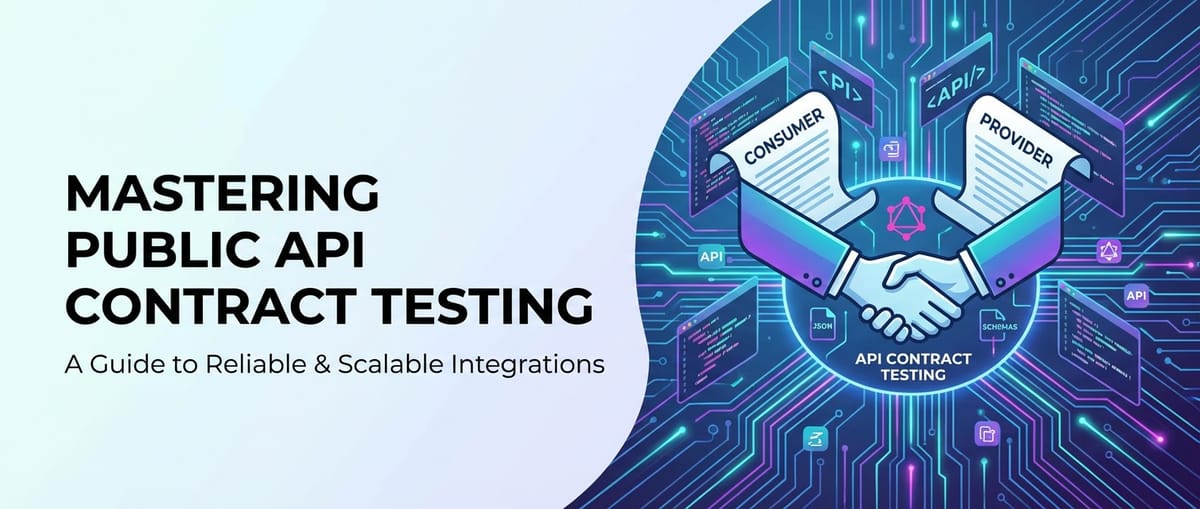
Before delving into the specifics of API contract testing, it is essential to establish a clear understanding of what an API contract truly represents. At its core, an API contract is an explicit agreement or specification that defines how an API will behave and how consumers should interact with it. It serves as a formal handshake between the API producer (the team or service providing the API) and the API consumer (the application or service calling the API), outlining the terms of their interaction. This agreement transcends mere documentation; it is a machine-readable, enforceable definition of the interface.
What constitutes an API contract? It encompasses a comprehensive set of specifications that dictate various aspects of the interaction:
- Request Format: This includes:
- HTTP Method: The verb used for the request (e.g., GET, POST, PUT, DELETE, PATCH).
- URL Path: The specific endpoint or resource being accessed (e.g.,
/users/{id},/orders). - Headers: Any required or expected HTTP headers, such as
Content-Type,Authorization,Accept. - Query Parameters: Key-value pairs appended to the URL to filter or modify the request (e.g.,
?status=active&limit=10). - Body Schema: For requests that carry a payload (e.g., POST, PUT), the exact structure, data types, and constraints of the data expected in the request body (e.g., JSON schema defining fields, their types, required status, and validation rules).
- Response Format: This defines what the consumer can expect back from the API:
- Status Codes: The range of possible HTTP status codes, indicating the outcome of the request (e.g., 200 OK, 201 Created, 400 Bad Request, 404 Not Found, 500 Internal Server Error).
- Headers: Any relevant HTTP headers in the response (e.g.,
Content-Type,Date,ETag). - Body Schema: The exact structure, data types, and constraints of the data returned in the response body for each possible status code (e.g., a JSON schema for a successful response, and another for an error response).
- Behavioral Aspects: Beyond mere data structures, a robust API contract also implies certain behaviors:
- Side Effects: What actions does invoking an endpoint trigger (e.g., creating a user, sending an email)?
- Idempotency: Can an identical request be made multiple times without changing the state of the server beyond the initial request (e.g., a POST to create a resource is generally not idempotent, but a PUT to update a resource usually is)?
- Error Conditions: Under what circumstances will the API return an error, and what will the structure of that error response be? This includes validation errors, authorization failures, and server-side issues.
- Authentication and Authorization: How will consumers authenticate themselves, and what permissions are required for specific operations?
The importance of explicit contracts is amplified for public APIs because the producer has limited control and visibility over its consumers. Unlike internal APIs where teams might communicate directly or share repositories, public API consumers are diverse, geographically dispersed, and often unknown to the producer. Without a clear and enforceable contract, both parties are operating under assumptions, leading to a high potential for miscommunication, integration failures, and a fractured developer experience.
An explicit contract acts as:
- A Shared Understanding: It creates a common language and understanding between the producer and all its consumers, eliminating ambiguity.
- A Basis for Trust: Consumers can rely on the contract, knowing that if they adhere to its terms, the API will respond as expected.
- A Foundation for Automation: A machine-readable contract can be used to generate documentation, client libraries, server stubs, and, crucially, automated tests.
- A Reference for Change Management: When changes are proposed, the contract serves as the definitive reference point to assess the impact on consumers and to guide deprecation or versioning strategies.
In essence, an API contract is more than just documentation; it is a living, binding agreement that forms the bedrock of reliable and scalable API integrations, especially vital for the public interfaces that power a significant portion of today's digital economy.
III. The Central Role of OpenAPI Specification (OAS)
In the quest for explicitly defined and universally understood API contracts, the OpenAPI Specification (OAS) stands out as the de facto standard. Formerly known as Swagger Specification, OpenAPI is a language-agnostic, human-readable, and machine-readable interface description language for RESTful APIs. It provides a standardized format for describing the capabilities of an API, making it invaluable for both human developers and automated tools.
The primary purpose of OpenAPI is to create a comprehensive and consistent definition of an API's interface. Instead of relying on disparate documentation, scattered examples, or implicit understandings, OpenAPI allows producers to define every facet of their API in a structured, consistent, and consumable format (typically YAML or JSON). This specification acts as a blueprint, outlining precisely how consumers should interact with the API.
An OpenAPI document meticulously details various elements of an API's contract:
- Paths and Operations: It lists all available endpoints (paths) and the HTTP operations (GET, POST, PUT, DELETE) supported by each path. For example,
/users/{id}could support a GET operation to retrieve a user and a PUT operation to update a user. - Parameters: For each operation, it specifies all accepted parameters, including:
- Path Parameters: Variables embedded directly in the URL (e.g.,
idin/users/{id}). - Query Parameters: Optional parameters appended to the URL (e.g.,
page,limit). - Header Parameters: Custom headers expected in the request.
- Cookie Parameters: Parameters passed via cookies.
- Each parameter's name, data type, description, whether it's required, and any validation rules (e.g., minimum length, enum values) are specified.
- Path Parameters: Variables embedded directly in the URL (e.g.,
- Request Bodies: For operations that require a payload (e.g., POST, PUT), OpenAPI defines the structure of the request body using schemas. These schemas precisely describe the fields, their data types (string, integer, boolean, array, object), their formats (date-time, email, UUID), and any validation constraints.
- Responses: For every operation and every possible HTTP status code (e.g., 200, 201, 400, 404, 500), OpenAPI specifies the expected response structure. This includes the HTTP status code itself, relevant headers, and, critically, the schema of the response body. This ensures that consumers know exactly what data to expect back for success and what error format to parse for failures.
- Schemas: OpenAPI allows for reusable schema definitions, which are vital for maintaining consistency across multiple endpoints that might share common data structures (e.g., a "User" object schema can be referenced in both request and response bodies).
- Security Schemes: It describes the authentication and authorization mechanisms employed by the API (e.g., OAuth2, API Keys, HTTP Basic Authentication), helping consumers understand how to secure their requests.
The benefits of using OpenAPI for defining public API contracts are profound and far-reaching:
- Documentation Generation: Tools like Swagger UI can automatically render interactive, human-readable documentation directly from an OpenAPI specification, ensuring that documentation is always up-to-date with the API's actual interface.
- Code Generation: OpenAPI specifications can be used to automatically generate client SDKs in various programming languages, simplifying integration for consumers. Similarly, server stubs can be generated for producers, providing a starting point for implementation that adheres to the contract.
- Validation: The machine-readable nature of OpenAPI allows for automated validation. Producers can validate incoming requests against the defined schemas, ensuring that consumers send correctly formatted data. Similarly, consumers can validate responses, ensuring the API delivers what it promised.
- Enabling Contract Testing: This is perhaps one of the most significant benefits. An OpenAPI specification provides the definitive source of truth for the API's contract, which can then be used as the foundation for generating and executing contract tests. These tests can automatically verify that the API implementation matches its OpenAPI definition.
- Improved Design and Consistency: By forcing developers to define the API upfront in a structured manner, OpenAPI promotes a "contract-first" design approach. This leads to more thoughtful API designs, better consistency across endpoints, and a reduced likelihood of ambiguous or contradictory behaviors.
- Enhanced API Governance: OpenAPI specs become a central artifact in API Governance. They can be reviewed, versioned, and managed within an organization's governance framework, ensuring adherence to design standards, security policies, and architectural principles.
In essence, OpenAPI transforms an API's interface from an implicit understanding into an explicit, verifiable, and consumable artifact. It serves as the single source of truth for the API contract, laying a solid foundation for robust testing strategies, seamless integrations, and effective governance, all critical for the success and longevity of public APIs.
IV. What is API Contract Testing?
With a clear understanding of API contracts and the pivotal role of OpenAPI, we can now precisely define API contract testing. API contract testing is a specific type of testing that verifies whether an API (the "producer") adheres to its agreed-upon contract, and conversely, that consumers correctly interact with that contract. It is fundamentally about validating the interface agreement between communicating services, rather than testing the internal logic of a single service or the entire end-to-end flow of a system.
The core distinction of contract testing from other testing types is its focus:
- Unit Tests: Verify individual components or functions in isolation, without external dependencies. They ensure the internal logic of a piece of code works as expected.
- Integration Tests: Verify the interaction between two or more components or services. These often involve testing the full communication path, including network calls and database interactions.
- End-to-End Tests: Simulate real user scenarios, testing the entire system from the user interface down to the backend services and databases.
- Contract Tests: Specifically verify that the API's input and output conform to its defined contract. They don't test the business logic behind the API, nor do they test the full system's functional correctness. Their sole purpose is to ensure the interface agreement holds true.
For public APIs, contract testing takes on an even greater significance. The decoupling of producers and consumers is a hallmark of successful public APIs. Consumers often develop against mocks or documentation, having no direct access to the producer's internal implementation or even its staging environments. Without contract testing, the only way to discover a breaking change from the producer's side or an incorrect assumption from the consumer's side is through costly and time-consuming integration failures, typically identified late in the development cycle or, worse, in production.
Why is contract testing especially crucial for public APIs?
- Decoupling Consumers and Producers: Contract tests allow producers and consumers to develop and deploy independently. The contract acts as a shared guarantee, enabling consumers to build against a stable interface expectation, even if the producer's internal implementation details change.
- Early Detection of Breaking Changes: A producer's contract tests will immediately fail if a change to the API implementation inadvertently violates the published contract (e.g., changes a field name, alters a data type, removes a required parameter). This allows issues to be caught and rectified before they are deployed and impact external consumers.
- Building Trust and Reliability: When consumers know that an API producer rigorously tests its adherence to the contract, it instills confidence and fosters trust. This predictability is vital for widespread adoption and sustained usage of public APIs.
- Reducing Integration Headaches: For consumers, contract tests can verify that their application correctly formats requests and correctly parses responses according to the API's contract. This helps prevent common integration errors and significantly reduces the debugging effort when things go wrong.
- Enforcing API Governance: Contract testing is a practical enforcement mechanism for API Governance policies. It ensures that API implementations align with approved design standards, schema definitions, and versioning rules defined in the governance framework.
There are broadly two main approaches to API contract testing:
- Producer-Driven Contract Testing: The producer defines the contract (e.g., via an OpenAPI specification) and writes tests to ensure its API implementation conforms to that contract. This guarantees the producer delivers what it promises.
- Consumer-Driven Contract (CDC) Testing: Each consumer specifies its own expectations of the API. These "consumer contracts" are then shared with the producer, who runs tests to ensure its API satisfies all known consumer expectations. This guarantees that no deployed change will break any known consumer.
While producer-driven testing with OpenAPI is a powerful first step, consumer-driven testing offers an even stronger guarantee for public APIs by actively involving the consumers' perspectives. Both approaches aim for the same goal: ensuring the API interface remains consistent and reliable, thereby minimizing friction and maximizing value in the interconnected world of public APIs.
V. Benefits of Implementing Public API Contract Testing
Implementing robust API contract testing for public APIs yields a multitude of strategic, operational, and financial benefits that collectively contribute to the long-term success and sustainability of an API program. These advantages extend beyond mere technical correctness, impacting developer experience, business agility, and overall market reputation.
Enhanced Reliability and Stability
The most direct and immediate benefit of contract testing is a significant uplift in the reliability and stability of public APIs. By systematically verifying that an API adheres to its defined contract, producers can catch breaking changes or inconsistencies before they reach production. This drastically reduces the likelihood of unexpected failures, downtime, and operational incidents for consumers. When consumers can depend on an API to behave predictably, their own applications become more stable, leading to a ripple effect of improved system health across the entire ecosystem. For public APIs, where the impact of instability can be global, this foundational reliability is non-negotiable.
Faster Development Cycles for Both Producers and Consumers
Contract testing fosters true independent deployability, a cornerstone of agile development and microservices architectures.
- For Producers: With confidence that their API adheres to the contract, producers can iterate on internal implementation details without fear of breaking external consumers. They can deploy updates more frequently and with greater assurance, accelerating their development velocity.
- For Consumers: Consumers don't have to wait for the producer's API to be fully implemented or deployed to a staging environment to begin their development. They can generate mocks or stubs directly from the OpenAPI specification (or from consumer-driven contracts) and develop their applications against these reliable mock interfaces. This parallel development significantly reduces integration lead times, allowing consumers to bring new features and products to market faster.
Improved Collaboration and Communication
The act of defining a clear, explicit API contract, especially through a standard like OpenAPI, inherently improves communication between API producers and consumers. The contract becomes a single, unambiguous source of truth that both parties can refer to. This clarity minimizes misunderstandings, reduces the need for constant back-and-forth communication regarding API behavior, and fosters a more collaborative environment. Any proposed change to the API contract immediately highlights its potential impact, prompting necessary discussions and consensus-building well in advance.
Reduced Risk of Breaking Changes and Easier Versioning
One of the most insidious threats to public APIs is the accidental introduction of breaking changes. A seemingly innocuous change on the producer's side (e.g., renaming a field, changing a data type) can cripple numerous consumer applications. Contract testing acts as an automated safety net, detecting these violations instantly. This capability allows producers to:
- Prevent Accidental Breaks: Quickly identify and fix issues during the development or CI/CD pipeline.
- Strategize Intentional Breaks: When a breaking change is necessary, the contract helps in planning a clear deprecation strategy and versioning approach, ensuring consumers have ample time and guidance to migrate.
- Enforce Semantic Versioning: Contract tests can be configured to distinguish between non-breaking additions and breaking changes, reinforcing a robust semantic versioning strategy.
Better Developer Experience (DX)
A reliable and well-documented API, backed by contract testing, significantly enhances the developer experience for consumers. Developers prefer APIs that are:
- Predictable: They know what to expect and can build against it confidently.
- Easy to Integrate: Clear contracts and reliable mocks streamline the integration process.
- Trustworthy: They don't have to constantly worry about the API suddenly changing or failing.
A positive developer experience translates into higher adoption rates, stronger community engagement, and ultimately, greater success for the public API and the platform it supports.
Cost Savings
The early detection of issues afforded by contract testing translates directly into substantial cost savings. Identifying and fixing a breaking change in the development or testing phase is orders of magnitude cheaper than discovering it in production, which can involve:
- Extensive debugging and rollback efforts.
- Customer support costs due to widespread outages.
- Reputational damage and potential loss of business.
- Lost productivity for both producer and consumer teams.
By shifting left the discovery of integration issues, contract testing minimizes rework and maximizes efficient resource allocation.
Stronger API Governance and Compliance
Contract testing is a powerful mechanism for enforcing API Governance standards. It transforms governance policies from mere guidelines into tangible, verifiable requirements. Organizations can define standards for API design, security, error handling, and data schemas within their governance framework, and then use contract tests to ensure that every API implementation adheres to these standards. This level of enforcement is critical for maintaining a consistent, secure, and compliant API portfolio, especially when managing a large number of public APIs across diverse teams. It ensures that the public face of an organization's digital offerings maintains a high bar for quality and adherence to established best practices.
APIPark is a high-performance AI gateway that allows you to securely access the most comprehensive LLM APIs globally on the APIPark platform, including OpenAI, Anthropic, Mistral, Llama2, Google Gemini, and more.Try APIPark now! 👇👇👇
VI. Architectures and Approaches to Contract Testing
The realm of API contract testing offers several architectural approaches, each with its strengths, weaknesses, and ideal use cases. Understanding these distinctions is crucial for selecting the most appropriate strategy for your public APIs. The two primary paradigms are Producer-Driven Contract Testing and Consumer-Driven Contract (CDC) Testing, with hybrid approaches often emerging as practical solutions.
A. Producer-Driven Contract Testing
In the producer-driven model, the API producer is primarily responsible for defining and maintaining the API contract. This contract, typically expressed using a formal specification like OpenAPI, serves as the definitive source of truth for the API's behavior. The producer then writes and executes tests to ensure that their API implementation strictly adheres to this published contract.
How it works:
- Contract Definition: The API producer defines the contract using an OpenAPI (or similar) specification. This document details all endpoints, operations, request/response schemas, parameters, and security schemes.
- Implementation: The producer implements the API logic based on this OpenAPI specification.
- Test Generation & Execution:
- Tests are either manually written based on the OpenAPI spec or automatically generated from it.
- These tests make actual calls to the API (or to a mock of it, configured by the producer) and validate that the responses (status codes, headers, body schemas) match the expectations defined in the OpenAPI specification.
- Tools can also validate incoming requests against the OpenAPI schema to ensure they conform to the contract.
- Integration into CI/CD: These tests are integrated into the producer's continuous integration/continuous delivery (CI/CD) pipeline, failing the build if any contract violations are detected.
Strengths:
- Simpler Setup: Generally easier to set up and manage, especially for a single producer with potentially many unknown consumers.
- Single Source of Truth: The OpenAPI specification acts as the definitive contract, reducing ambiguity.
- Guaranteed Producer Adherence: Ensures the producer delivers what it promises in its documentation.
- Comprehensive Coverage: A well-written OpenAPI spec allows for broad contract coverage without requiring consumer input.
Weaknesses:
- May Not Catch All Consumer-Specific Assumptions: While the producer adheres to the formal contract, it might not catch subtle assumptions or specific edge cases that individual consumers rely on but are not explicitly captured in the OpenAPI spec.
- Risk of "Greenlighting" Unused Features: The producer might test parts of the contract that no consumer actually uses, potentially leading to unnecessary maintenance.
- Producer Bias: The contract is defined from the producer's perspective, potentially overlooking consumer pain points unless there's strong feedback.
Tools: * OpenAPI validators: Spectral, oas-validator, stoplight.io * API testing frameworks capable of validating against schemas: Postman (with schema validation), Newman, Dredd, Karate DSL.
B. Consumer-Driven Contract (CDC) Testing
In contrast, consumer-driven contract testing reverses the ownership of the contract. Here, the consumers of an API define their specific expectations of the API's behavior. These expectations are captured in "consumer contracts" which are then shared with the API producer. The producer is responsible for verifying that its API implementation satisfies all known consumer contracts.
How it works:
- Consumer Defines Expectations: Each consumer identifies the specific requests it will make to the API and the exact responses it expects. This is typically done by writing tests that capture these interactions as "pacts" or contracts.
- Contract Sharing: The consumer publishes these contracts to a shared repository or broker (e.g., a Pact Broker).
- Producer Verification: The API producer fetches all relevant consumer contracts from the broker. For each contract, the producer sets up a temporary environment (or uses a dedicated testing tool) to simulate the consumer's request and then verifies that its actual API implementation provides the expected response.
- Integration into CI/CD: Both consumer and producer integrate contract testing into their CI/CD pipelines. A consumer's build will fail if its local application no longer adheres to its own contract. A producer's build will fail if it makes a change that breaks any of the consumer contracts it has committed to support.
Strengths:
- Guaranteed Consumer Compatibility: This is the strongest guarantee that a producer's change will not break any known consumer.
- Focus on Actual Usage: Contracts reflect what consumers actually use, preventing the producer from maintaining unused API surface areas.
- Stronger Decoupling: Both producer and consumer can develop and deploy independently with a high degree of confidence.
- Early Feedback: Producers get immediate feedback on the impact of their changes on actual consumers.
Weaknesses:
- Higher Complexity: Can be more complex to set up and manage, especially with a large number of diverse consumers, each contributing contracts.
- Contract Management: Managing and aggregating contracts from many consumers can be challenging.
- Requires Consumer Buy-in: Requires consumers to actively participate by defining and publishing their contracts. This can be difficult for truly public APIs with anonymous consumers.
- Partial Coverage: Only covers the parts of the API that consumers explicitly interact with, potentially leaving other parts untested.
Tools: * Pact (most popular framework, supports many languages) * Spring Cloud Contract (Java-specific)
C. Hybrid Approaches
For many public API ecosystems, a hybrid approach often provides the optimal balance. This typically involves:
- Producer-Driven OpenAPI for Overall Contract: The producer maintains a comprehensive OpenAPI specification as the primary, high-level contract, ensuring a foundational level of API governance and documentation.
- Consumer-Driven Contracts for Critical Consumers: For key partners, strategic integrations, or high-volume consumers, CDC testing can be implemented to provide an extra layer of assurance for those specific relationships. This is especially useful where a "private" subset of a public API is exposed to specific partners.
This strategy leverages the comprehensive nature of OpenAPI for broad coverage and robust documentation, while using CDC for targeted, high-value consumer relationships to minimize risk and maximize trust.
Here's a comparative table summarizing the two primary approaches:
| Feature | Producer-Driven Contract Testing | Consumer-Driven Contract (CDC) Testing |
|---|---|---|
| Contract Ownership | Producer defines and maintains the contract (e.g., via OpenAPI) | Consumers define their specific expectations (contracts) |
| Primary Goal | Ensure producer's API matches its published specification | Ensure producer's API meets all known consumer expectations |
| Ideal Use Case | Public APIs with many unknown consumers; "contract-first" design | APIs with a manageable number of known, critical consumers |
| Setup Complexity | Relatively simpler | More complex, requires consumer participation & contract broker |
| Guaranteed Outcome | Producer delivers what it said it would | Producer delivers what its consumers need |
| Detection of Breaks | Catches producer-side violations of its own contract | Catches producer-side changes that break any specific consumer |
| Documentation Source | OpenAPI specification | Contracts (pacts) generated by consumers |
| Key Advantage | Strong API Governance, comprehensive interface definition | Maximum confidence that no consumer will be broken |
| Key Challenge | May miss subtle consumer assumptions | Managing numerous consumer contracts, requiring consumer buy-in |
| Common Tools | OpenAPI validators, Dredd, Karate DSL | Pact, Spring Cloud Contract |
Choosing the right approach or combination thereof depends on the specific context of your public API, including the number and nature of your consumers, the criticality of integrations, and the organizational capacity to implement and maintain testing infrastructure. For public APIs aiming for broad adoption, a strong foundation in producer-driven testing with OpenAPI is often the most pragmatic starting point, supplemented by CDC for key partners as needed.
VII. Practical Steps for Implementing Contract Testing for Public APIs
Implementing effective contract testing for public APIs requires a systematic approach, integrating technical tools with sound API Governance practices. It's not merely about writing tests; it's about establishing a culture of contract adherence and reliability.
1. Define Your API Contract Explicitly and Comprehensively
The absolute first step is to establish a clear, unambiguous, and machine-readable contract. For public APIs, the OpenAPI Specification is the gold standard for this.
- Adopt a Contract-First Design Philosophy: Begin by writing the OpenAPI specification before any code is written. This forces a thoughtful design process, ensuring consistency and clarity from the outset. It allows for early feedback from potential consumers and stakeholders on the API's usability and structure.
- Detail Every Aspect: Ensure your OpenAPI specification is exhaustive. This means defining:
- All endpoints (paths) and the HTTP operations they support.
- Every single parameter (path, query, header, cookie) with its type, format, constraints, and whether it's required.
- Precise JSON schemas for all request bodies and response bodies (for all relevant status codes, including error scenarios). Define data types, enumerations, minimum/maximum values, regular expressions, and example values.
- All possible HTTP status codes for each operation, detailing their expected response schemas.
- Security schemes (e.g., OAuth2, API Keys) and their application to specific operations.
- Version Your Contracts: Just as you version your APIs, version your OpenAPI specifications. Use semantic versioning (e.g.,
v1.0.0) to clearly communicate breaking vs. non-breaking changes. Store your OpenAPI definitions under version control (e.g., Git) alongside your API code, making them first-class citizens in your development process. - Validate the OpenAPI Specification Itself: Use tools like Spectral, OpenAPI Linter, or online validators to ensure your
yaml/jsonfile conforms to the OpenAPI standard and any internal style guides. This prevents errors in the specification from causing issues later.
2. Choose the Right Tools and Frameworks
The tooling landscape for contract testing is rich and varied. Your choice will depend on your chosen approach (producer-driven, consumer-driven, or hybrid), your tech stack, and your team's familiarity with different tools.
- For Producer-Driven Contract Testing (based on OpenAPI):
- Schema Validators: Tools like
ajv(JavaScript),json-schema-validator(Java), or built-in validation features in API gateways can validate incoming request bodies and outgoing response bodies against your OpenAPI schemas at runtime. - Dedicated OpenAPI Testing Tools:
- Dredd: An HTTP API validation tool that generates tests from an OpenAPI specification and runs them against the API implementation. It verifies request/response payloads, headers, and status codes.
- Karate DSL: A powerful API test automation framework that supports schema validation and can directly use OpenAPI definitions to drive tests.
- Postman/Newman with Schema Validation: While primarily for manual/collection-based testing, Postman collections can be augmented with pre-request scripts and test scripts to validate responses against JSON schemas derived from your OpenAPI spec, and then run via Newman in CI/CD.
- Custom Frameworks: In many cases, teams build lightweight frameworks in their preferred language that parse the OpenAPI spec and generate tests or assertions against the live API.
- Schema Validators: Tools like
- For Consumer-Driven Contract (CDC) Testing:
- Pact: The most popular CDC framework, supporting a wide range of programming languages. It provides a "Pact Broker" for sharing contracts between consumers and producers.
- Spring Cloud Contract: A Java-specific framework integrated with the Spring ecosystem, offering a more opinionated approach to CDC.
Consider factors like language support, ease of integration into your CI/CD pipeline, learning curve, and community support when making your selection.
3. Integrate into CI/CD Pipeline
Automating contract checks is paramount. Manual contract testing is error-prone and unsustainable. Your contract tests must be an integral part of your continuous integration and continuous delivery (CI/CD) pipeline for both the API producer and, if applicable, the consumers.
- Producer CI/CD:
- On every code commit or pull request, trigger the OpenAPI specification validation.
- Execute the producer-driven contract tests against a deployed instance of the API (e.g., in a temporary testing environment or a fully mocked environment if the actual API is not yet available).
- If using CDC, the producer's pipeline should fetch the latest consumer contracts from the Pact Broker and run verification tests to ensure the proposed changes do not break any consumer.
- Crucially, fail the build if any contract test or schema validation fails. This "fail fast" approach prevents breaking changes from progressing further down the deployment pipeline.
- Consumer CI/CD (for CDC):
- Consumers' pipelines should run their own integration tests against mock services generated from the producer's contract (or their own published pacts).
- They should also publish their updated contracts to the Pact Broker whenever their integration logic changes.
This automation ensures that contract adherence is continuously monitored and enforced, providing immediate feedback to developers.
4. Establish Clear API Governance Policies
Contract testing is a technical implementation of a broader API Governance strategy. Without robust governance, contract testing can become ad-hoc and lose its effectiveness.
- Contract Ownership: Clearly define who owns the OpenAPI specification for each API. Is it the development team, an API architect, or a central governance team?
- Process for Contract Changes: Establish a formal process for proposing, reviewing, approving, and communicating changes to the API contract. This includes:
- A review process for OpenAPI specification updates.
- Guidelines for backward compatibility and semantic versioning.
- A communication plan for notifying consumers of upcoming changes (especially breaking ones).
- Version Control for Contracts: As mentioned, store OpenAPI specifications in version control, potentially in a dedicated repository or alongside the API code, with clear versioning.
- Documentation and Discovery: Ensure that the official, versioned OpenAPI specifications are easily accessible to consumers, perhaps via a developer portal.
5. Mocking for Consumers
One of the greatest enablers of parallel development and reduced dependency is the ability for consumers to develop against mock API services.
- Generate Mocks from OpenAPI: Use tools to automatically generate mock servers or client stubs directly from your OpenAPI specification. These mocks can simulate the API's responses based on the defined schemas and examples, allowing consumers to build and test their applications without needing a live producer API.
- Dynamic Mocks: Advanced mocking tools can even provide dynamic responses based on request parameters, making the mocks more realistic.
- Integration with API Management: For organizations managing a multitude of APIs, especially those leveraging AI models, tools like APIPark (https://apipark.com/) can significantly streamline the API lifecycle, offering features from design to publication and invocation, including robust API gateway capabilities which are instrumental in managing mocks, routing requests, and ensuring consistent API behavior across various environments. Its ability to encapsulate prompts into REST APIs and provide end-to-end API lifecycle management makes it an invaluable asset for maintaining high standards of API Governance and facilitating effective contract testing strategies, particularly when dealing with complex, evolving public AI services. By offering a unified API format for AI invocation and prompt encapsulation into REST API, APIPark simplifies the management and testing of AI-powered public APIs, ensuring their behavior remains consistent with defined contracts regardless of underlying model changes.
Providing reliable mocks empowers consumers to accelerate their development, reducing the burden on the producer to maintain numerous staging environments and providing a clear, contract-driven development path.
6. Monitor and Alert
Contract adherence shouldn't stop at deployment. Continuous monitoring in production environments is crucial to detect any drift or unexpected behavior.
- Runtime Schema Validation: Implement runtime validation within your API gateway or service logic to validate incoming requests and outgoing responses against the OpenAPI schema. This catches unexpected data that might bypass initial contract tests.
- API Monitoring Tools: Use API monitoring solutions that can regularly invoke your public API endpoints and validate their responses against your expected schemas or example values.
- Alerting: Set up alerts to notify relevant teams immediately if any contract violations are detected in production, allowing for rapid investigation and remediation.
By following these practical steps, organizations can establish a comprehensive and sustainable framework for mastering public API contract testing, ensuring their APIs remain reliable, consistent, and trustworthy for all consumers.
VIII. Challenges and Best Practices
While the benefits of public API contract testing are substantial, its implementation is not without challenges. Navigating these obstacles effectively requires thoughtful planning and adherence to best practices.
Challenges in Public API Contract Testing
- Keeping Contracts Up-to-Date and Synchronized: The most common challenge is ensuring that the OpenAPI specification (or consumer contracts) accurately reflects the API's current behavior. As APIs evolve, changes to the implementation must be meticulously reflected in the contract. If the contract drifts from the actual API, the tests become meaningless, leading to a false sense of security. This synchronization is particularly difficult in fast-paced development environments.
- Managing Multiple Consumer Contracts (for CDC): If adopting a consumer-driven approach for public APIs, managing a large number of diverse consumer contracts can become unwieldy. Each consumer might have slightly different needs or use only a subset of the API. Aggregating, validating, and verifying against all these contracts introduces significant overhead and complexity.
- Complexity of Dynamic Data and State: Many real-world APIs involve dynamic data, intricate state transitions, and dependencies on external systems. Testing such scenarios with static contracts can be difficult. For instance, testing an
order creationAPI often requires unique order IDs, and subsequentorder status updateAPI calls depend on the state created by the first. Mocking these complex, dynamic interactions robustly for contract testing can be challenging. - Tooling Fragmentation and Integration: The API testing landscape is diverse, with numerous tools for different aspects (design, validation, testing, mocking, monitoring). Integrating these tools seamlessly into a cohesive CI/CD pipeline and ensuring they work well together can be a significant engineering effort.
- Educating Teams and Fostering Adoption: Shifting to a contract-first or contract-driven development culture requires buy-in and education across development, QA, and even product teams. Developers might initially perceive contract definition and testing as additional overhead, requiring a cultural shift to appreciate its long-term benefits.
- Testing Non-Functional Requirements: Contract testing primarily focuses on the functional interface. It doesn't inherently test performance, security vulnerabilities (beyond defined authentication schemes), or scalability. These aspects still require dedicated non-functional testing strategies.
Best Practices for Effective Public API Contract Testing
- Embrace Contract-First Design as a Core Tenet:
- Mandate that the OpenAPI specification is written and reviewed before any API code. This ensures a well-thought-out, consistent API design that inherently lends itself to testability. It prevents the common pitfalls of "code-first" approaches where documentation and contracts become afterthoughts.
- Treat the OpenAPI spec as executable documentation and the definitive source of truth.
- Implement Strict Semantic Versioning:
- Clearly define and communicate your API's versioning strategy. Use semantic versioning (MAJOR.MINOR.PATCH) to signal the nature of changes.
- Major version increments (
MAJOR) for breaking changes. - Minor version increments (
MINOR) for backward-compatible feature additions. - Patch version increments (
PATCH) for backward-compatible bug fixes. - Contract tests should be able to verify adherence to these versioning rules and prevent accidental major changes from being deployed as minor ones.
- Automate Everything in the CI/CD Pipeline:
- This cannot be overstated. Manual contract verification is unsustainable.
- Automate the validation of OpenAPI specs, the execution of producer-driven contract tests, and, if applicable, the publication and verification of consumer contracts.
- Ensure that the CI/CD pipeline fails immediately upon detecting a contract violation, providing rapid feedback to developers.
- Integrate contract testing into every stage of the development and deployment lifecycle.
- Prioritize Clear and Proactive Communication with Consumers:
- For public APIs, maintaining consumer trust is paramount.
- Establish clear channels and processes for communicating API changes, especially deprecations or breaking changes. Provide ample lead time, migration guides, and support.
- Publish release notes and version histories alongside your OpenAPI documentation.
- Consider a developer portal as a central hub for all API-related information, including contracts, changelogs, and support resources.
- Focus on Business Value and Critical Paths:
- While comprehensive contract testing is ideal, in complex systems, prioritize testing the most critical endpoints and data structures first. Focus on the core business flows that drive value.
- Ensure that error handling and negative test cases are thoroughly covered in your contracts and tests, as these are often overlooked but critical for robust integrations.
- Educate and Empower Teams:
- Invest in training for your development, QA, and product teams on contract-first design principles, OpenAPI specification best practices, and the chosen contract testing tools.
- Foster a culture where everyone understands the importance of contracts and their role in building reliable APIs.
- Encourage cross-functional collaboration on API design and contract reviews.
- Utilize Mocking Extensively:
- Encourage consumers to use mocks generated from OpenAPI specifications for their development and testing. This significantly reduces dependencies and speeds up development cycles for everyone.
- Producers can also use mocks of downstream services to isolate their API during contract testing, preventing external dependencies from affecting test reliability.
By consciously addressing these challenges and embedding these best practices into their API development lifecycle, organizations can successfully master public API contract testing, transforming it from a mere technical task into a strategic enabler of scalable, reliable, and trustworthy API ecosystems.
IX. The Future of API Contract Testing and API Governance
The trajectory of the API economy shows no signs of slowing, and with it, the critical importance of ensuring API reliability and consistency will only grow. The future of API contract testing and API Governance is poised for significant evolution, driven by advancements in artificial intelligence, deeper integration with API management platforms, and a holistic shift towards treating APIs as first-class products.
One of the most exciting areas of development lies in the emergence of AI in API design and testing. AI and machine learning algorithms are beginning to play a role in:
- Automated Contract Generation: AI could assist in generating initial OpenAPI specifications based on observed API traffic or even high-level natural language descriptions, accelerating the contract-first design process.
- Intelligent Test Case Generation: AI can analyze OpenAPI specifications and historical API usage patterns to intelligently generate more comprehensive and efficient contract test cases, including edge cases and negative scenarios that might be overlooked by human testers.
- Predictive Anomaly Detection: By continuously monitoring API behavior against its contract and historical data, AI can proactively identify potential contract deviations or performance regressions before they impact consumers, moving beyond reactive testing to predictive governance.
- Simplifying Complex Interactions: As APIs become more complex, especially those integrating advanced AI models (like those managed by APIPark), AI-driven tools can help simplify the management and testing of these intricate interfaces.
Another significant trend is the greater integration of testing into gateways and API management platforms. Modern API gateways are evolving beyond mere traffic routing and security enforcement. They are increasingly incorporating capabilities for:
- Runtime Contract Validation: Gateways can enforce OpenAPI schemas in real-time, rejecting requests or responses that violate the contract before they reach the backend service or the consumer.
- Automated Policy Enforcement: API Governance policies, such as rate limits, authentication requirements, and data masking, can be directly enforced and tested within the gateway.
- Built-in Mocking and Virtualization: Advanced gateways and developer portals will offer more sophisticated mocking capabilities, directly derived from OpenAPI specifications, allowing consumers to test against reliable virtualized services with greater ease.
- Observability and Feedback Loops: Integrating contract adherence metrics into broader API observability platforms will provide real-time insights into API health relative to its contract, feeding back into the governance process.
This shift towards holistic API Governance frameworks will continue to mature. Organizations will increasingly adopt comprehensive strategies that encompass the entire API lifecycle, from initial design and specification to development, testing, deployment, monitoring, and deprecation. API Governance will not just be about documentation; it will be about establishing enforceable policies and automated checks at every stage, with contract testing serving as a central pillar of enforcement. This includes:
- Centralized Contract Repositories: Robust, versioned repositories for OpenAPI specifications that serve as the authoritative source for all API assets.
- Automated Design Reviews: Tools that can automatically check OpenAPI specifications against organizational design guidelines and coding standards.
- Unified Developer Portals: Platforms that not only host API documentation and contracts but also provide tools for client SDK generation, mock server access, and interactive testing environments.
Finally, the continued importance of explicit contracts for reliable distributed systems remains an immutable truth. As systems become more distributed, polyglot, and interconnected, the need for clear, unambiguous agreements between independent services only intensifies. Whether it's microservices communicating within an enterprise or public APIs powering global digital ecosystems, a robust, versioned, and testable contract is the only way to ensure stability, facilitate innovation, and build lasting trust.
The future will see contract testing become even more intelligent, automated, and deeply embedded into the fabric of API development and management. It will move from being an optional "good-to-have" to an indispensable "must-have" for any organization serious about building, maintaining, and scaling successful public APIs in an increasingly interconnected and AI-driven world. The emphasis will be on proactive prevention of issues through robust governance and intelligent automation, rather than reactive debugging.
Conclusion
The digital landscape is inextricably linked by Application Programming Interfaces, with public APIs acting as vital conduits for innovation, collaboration, and value creation across diverse ecosystems. However, the very nature of these external-facing interfaces introduces complexities and risks that demand rigorous attention to detail and a commitment to reliability. Mastering public API contract testing is not merely a technical endeavor; it is a strategic imperative that underpins the success and longevity of any API program.
We have explored how explicit API contracts, universally understood through the OpenAPI Specification, form the bedrock of predictable and trustworthy interactions. Contract testing, whether producer-driven or consumer-driven, serves as the essential validation mechanism, ensuring that an API's implementation faithfully adheres to its published agreement. The benefits are profound: enhanced reliability and stability for consumers, accelerated development cycles for both producers and integrators, improved collaboration, reduced risk of breaking changes, a superior developer experience, and significant cost savings through early defect detection.
Implementing these practices requires a systematic approach, beginning with a contract-first design philosophy, meticulously defining every aspect of the OpenAPI specification, and selecting the right tooling. Crucially, integrating automated contract tests into every stage of the CI/CD pipeline ensures continuous vigilance against contract drift. This entire framework is strengthened and sustained by robust API Governance policies that define ownership, manage changes, and foster a culture of contract adherence across all teams. Tools like APIPark (https://apipark.com/) exemplify how modern API management platforms can integrate these principles, providing the infrastructure for seamless API lifecycle management, robust governance, and effective testing, particularly for the evolving landscape of AI-powered APIs.
As the API economy continues its relentless expansion, fueled by microservices and artificial intelligence, the future promises even more sophisticated AI-driven tools for contract generation, intelligent testing, and predictive anomaly detection, all seamlessly integrated into comprehensive API management platforms. The imperative remains: build dependable APIs, foster developer trust, and drive innovation responsibly. By embracing and mastering the principles and practices of public API contract testing, organizations can confidently navigate the complexities of the API landscape, unlocking its full potential while safeguarding the integrity and stability of their digital offerings. It is the commitment to the contract that ultimately defines the quality and trustworthiness of an API, paving the way for sustained success in the interconnected world.
Frequently Asked Questions (FAQ)
1. What is the fundamental difference between API Contract Testing and traditional Integration Testing?
The fundamental difference lies in their focus and scope. Integration Testing verifies the interactions and data flow between multiple components or services, often involving a full end-to-end scenario to ensure they work together correctly. It checks the overall functional correctness of the integrated system. API Contract Testing, on the other hand, specifically verifies that a single API's input and output conform to its predefined agreement or "contract." It doesn't test the internal business logic of the service or the full end-to-end flow, but rather ensures the interface itself remains stable and predictable, allowing producers and consumers to develop and deploy independently. Contract testing acts as a guardrail at the interface level, while integration testing checks the combined functional outcome.
2. Why is OpenAPI Specification so important for public API contract testing?
The OpenAPI Specification (OAS) is crucial because it provides a standardized, machine-readable format for defining the entire API contract. This explicit definition serves as the "single source of truth" that both human developers and automated tools can rely on. For contract testing, OAS allows tools to automatically generate test cases, validate requests and responses against defined schemas, and ensure that the API's implementation matches its documented behavior. Without a clear, universally understood specification like OpenAPI, contract testing would be significantly more challenging, prone to ambiguity, and difficult to automate consistently across different teams and technologies. It standardizes the language of the contract, making it testable.
3. What are the main benefits of Consumer-Driven Contract (CDC) testing for public APIs compared to Producer-Driven testing?
While Producer-Driven testing (often using OpenAPI) ensures the API adheres to its published promise, Consumer-Driven Contract (CDC) testing offers an even stronger guarantee: that a producer's change will not break any known consumer. The main benefits include: 1. Guaranteed Consumer Compatibility: Directly verifies the producer's API against actual consumer expectations, minimizing the risk of breaking critical integrations. 2. Focus on Actual Usage: Contracts reflect only what consumers genuinely use, preventing the producer from maintaining unnecessary API surface areas. 3. Stronger Decoupling: Allows both consumers and producers to develop and deploy independently with greater confidence in compatibility. However, CDC can be more complex to set up and requires active participation from consumers, making it more challenging for truly anonymous public APIs with a very large, diverse user base.
4. How does API Governance tie into effective API Contract Testing?
API Governance provides the overarching framework and policies that guide the entire API lifecycle, and contract testing is a key enforcement mechanism within that framework. Strong API Governance dictates how contracts are designed, reviewed, versioned, and communicated. It establishes the rules (e.g., semantic versioning for changes, specific error response formats, security protocols) that contract tests then programmatically verify. Without governance, contract testing might be ad-hoc or inconsistent. Conversely, without contract testing, governance policies are merely guidelines lacking automated enforcement. Together, they ensure that public APIs are not only well-designed but also consistently implemented according to organizational standards and consumer expectations, fostering trust and predictability.
5. Can API contract testing completely replace other forms of API testing, such as functional or end-to-end testing?
No, API contract testing cannot completely replace other forms of API testing. Contract testing focuses specifically on verifying the interface agreement and data structures between services. It ensures that the API behaves as expected at its boundaries. However, it does not typically verify: * Business Logic: That the API's internal logic correctly implements the intended business requirements. * Non-Functional Requirements: Such as performance, scalability, security vulnerabilities (beyond defined authentication), or load handling. * End-to-End System Flows: That multiple APIs and downstream systems correctly interact to deliver a complete user story. Therefore, contract testing should be viewed as a complementary, "shift-left" testing strategy that significantly reduces the scope and necessity of later-stage, more costly integration and end-to-end tests by ensuring interface compatibility early in the development cycle. It builds a strong foundation, but other testing types are still essential for comprehensive quality assurance.
🚀You can securely and efficiently call the OpenAI API on APIPark in just two steps:
Step 1: Deploy the APIPark AI gateway in 5 minutes.
APIPark is developed based on Golang, offering strong product performance and low development and maintenance costs. You can deploy APIPark with a single command line.
curl -sSO https://download.apipark.com/install/quick-start.sh; bash quick-start.sh

In my experience, you can see the successful deployment interface within 5 to 10 minutes. Then, you can log in to APIPark using your account.

Step 2: Call the OpenAI API.