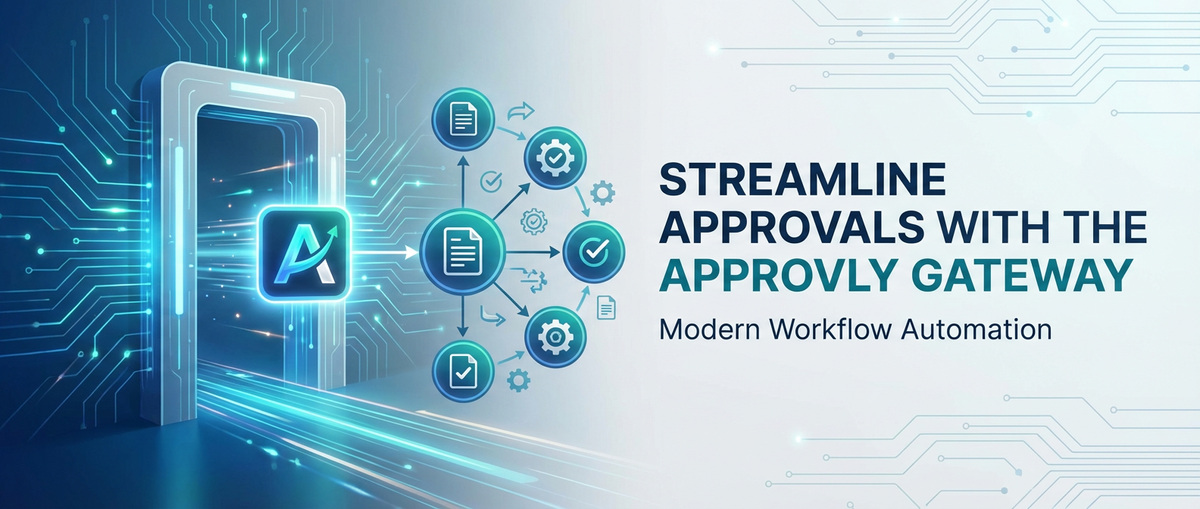
Streamline Approvals with the Approvly Gateway


In the intricate tapestry of modern enterprise operations, approvals are the threads that hold critical processes together. From financial transactions and data access requests to software deployments and resource provisioning, every significant action often hinges on a deliberate decision-making step. Yet, for countless organizations, these vital approval workflows remain mired in inefficiency, insecurity, and opaque processes. Manual reviews, email chains, siloed systems, and a lack of real-time visibility transform what should be straightforward authorizations into frustrating bottlenecks, hindering agility, escalating operational costs, and introducing substantial compliance risks. The demand for a more sophisticated, secure, and scalable solution has never been more urgent.
This article delves into the transformative power of the Approvly Gateway, an innovative concept that reimagines how organizations manage and execute their approval processes. By leveraging the robust foundation of an API gateway and extending its capabilities with intelligent approval mechanisms, the Approvly Gateway promises to inject unprecedented levels of efficiency, security, and auditability into enterprise workflows. We will explore the inherent challenges of traditional approval systems, dissect the core functionalities of a modern API gateway, and then illustrate how the Approvly Gateway transcends these capabilities to create a truly streamlined, intelligent, and compliant approval ecosystem. This revolutionary approach not only accelerates decision-making but also fortifies an organization's security posture and ensures unwavering adherence to regulatory standards in an increasingly complex digital landscape. Join us as we uncover how to move beyond reactive oversight to proactive, automated, and secure approval management, making the Approvly Gateway an indispensable asset for any forward-thinking enterprise.
The Evolving Landscape of Enterprise Approvals: Challenges in a Connected World
The rhythm of business has accelerated dramatically in the digital age. What was once a slow, deliberate cadence of operations has morphed into a complex, high-speed orchestration of interconnected systems, microservices, and global teams. In this intricate environment, the role of approvals has expanded significantly, permeating nearly every layer of an organization's digital interactions. However, the methods traditionally employed for managing these approvals have largely failed to keep pace with the demands of modern enterprise architecture, creating a critical chasm between operational necessity and technological capability.
At the heart of the challenge lie traditional approval processes, often characterized by their manual, fragmented, and ad-hoc nature. Imagine a high-value financial transaction requiring multiple layers of sign-off: it might start with an email request, move to a shared spreadsheet for tracking, involve a series of phone calls or in-person meetings, and ultimately conclude with a manual entry into an ERP system. Each step in this convoluted journey introduces potential points of failure. Emails can be overlooked or misfiled, leading to significant delays. Shared documents can be inadvertently modified or lost, compromising data integrity. And without a centralized system, gaining real-time visibility into the status of an approval request becomes a Herculean task, often requiring direct follow-ups that consume valuable time and resources. This lack of transparency not only frustrates stakeholders but also makes it nearly impossible to identify and address bottlenecks proactively.
Beyond mere inefficiency, traditional approval mechanisms pose substantial security and compliance risks. When sensitive actions, such as granting access to confidential customer data or deploying critical system updates, rely on informal sign-offs or easily circumvented controls, the potential for unauthorized access, data breaches, or system failures skyrockets. Auditing such processes retrospectively becomes a forensic nightmare, making it exceedingly difficult to demonstrate compliance with stringent regulatory frameworks like GDPR, HIPAA, or SOC 2. Without an immutable, auditable trail of who approved what, when, and why, organizations expose themselves to significant legal and financial penalties, alongside irreparable damage to their reputation. The absence of strong, programmable access controls at the point of action—the API call itself—leaves critical enterprise resources vulnerable.
The rise of cloud-native architectures, microservices, and a pervasive API-first strategy further exacerbates these challenges. In a world where applications are decoupled, services communicate asynchronously, and data flows across a myriad of endpoints, a single "approve" button in a monolithic application is no longer sufficient. Each interaction, each data exchange, each system modification within this distributed ecosystem potentially requires its own set of checks and balances. Attempting to bolt on traditional, human-centric approval workflows to this highly automated and machine-driven environment is akin to trying to steer a jet plane with a horse and buggy. It creates friction, slows innovation, and fundamentally undermines the very benefits that microservices and APIs promise: agility, scalability, and resilience.
Furthermore, the complexity of modern organizations, often spanning multiple departments, regional offices, and even external partners, means that approval matrices can be incredibly intricate. Defining who has the authority to approve what, under which circumstances, and within what timeframe, requires a robust, dynamic system that can adapt to changing business rules without requiring extensive manual reconfiguration. The inability to enforce these granular policies consistently across all digital touchpoints leads to inconsistencies, errors, and an overall erosion of governance. The need for a centralized, intelligent, and programmable decision point – a smart gateway – for all these digital actions has become unequivocally clear, paving the way for solutions like the Approvly Gateway to fill this critical void.
Understanding the API Gateway as a Foundation
To truly appreciate the innovation embodied by the Approvly Gateway, it is essential to first grasp the fundamental role and capabilities of a standard API gateway. In the architectural landscape of modern applications, particularly those built on microservices principles, the API gateway has emerged as a critical, almost indispensable, component. It acts as the single, intelligent entry point for all client requests, shielding the complexity of the underlying backend services from external consumers. Think of it as the ultimate traffic controller and security checkpoint for your entire digital ecosystem.
At its core, an API gateway is a server that sits between client applications (web browsers, mobile apps, third-party systems) and a collection of backend services. Instead of clients directly calling individual microservices, they send all requests to the gateway. This architectural pattern provides a multitude of benefits, solving many of the challenges associated with managing a distributed system. The fundamental purpose of any gateway is to simplify and secure interactions with complex backend infrastructure, and an API gateway achieves this with remarkable efficacy.
One of the primary functions of an API gateway is request routing. When a client sends a request, the gateway inspects the incoming request (e.g., the URL path, HTTP method) and intelligently routes it to the appropriate backend service. This means developers don't have to hardcode service endpoints into their client applications; they simply interact with the gateway. This also enables flexible deployment strategies, allowing backend services to be scaled, updated, or even replaced without impacting client applications, as long as the API contract exposed by the gateway remains consistent. This abstraction layer is crucial for maintaining agility in fast-evolving environments.
Beyond routing, API gateways are powerhouses of traffic management. They can perform load balancing, distributing incoming requests across multiple instances of a service to prevent any single instance from becoming overwhelmed and ensuring high availability. They can also implement rate limiting, preventing abuse or denial-of-service attacks by restricting the number of requests a client can make within a specified timeframe. This protects the backend services from being flooded and ensures fair usage for all consumers of the API. Furthermore, traffic shaping and circuit breaking functionalities can be employed to manage network congestion and gracefully handle service failures, enhancing the overall resilience of the system.
Security is another cornerstone of API gateway functionality. Acting as the first line of defense, a gateway typically handles authentication and authorization. It can integrate with various identity providers (e.g., OAuth 2.0, OpenID Connect, JWT) to verify the identity of the client and ensure they have the necessary permissions to access a particular API or resource. This offloads the security burden from individual microservices, allowing them to focus solely on their business logic. The gateway can also perform API key management, providing a simple yet effective mechanism for client identification and access control, thereby ensuring that only legitimate consumers can interact with your services.
Moreover, API gateways are adept at request and response transformation. This means they can modify incoming requests before forwarding them to a backend service, or outgoing responses before sending them back to the client. This is incredibly useful for standardizing API contracts, aggregating responses from multiple services, or applying common data formatting. For example, a gateway might convert XML to JSON, add standard headers, or even enrich a request with additional data before it reaches the target service. This capability promotes a cleaner separation of concerns and reduces the need for redundant logic across various microservices.
Finally, monitoring and logging are critical features embedded within API gateways. They can capture detailed logs of all incoming and outgoing requests, providing invaluable data for auditing, troubleshooting, and performance analysis. This centralized logging capability simplifies operational oversight, offering a holistic view of API traffic and service health. Furthermore, many gateways provide metrics and analytics dashboards, allowing administrators to gain insights into API usage, latency, and error rates, which are crucial for proactive management and capacity planning.
In essence, an API gateway provides a unified, secure, and scalable entry point for all your digital services. It acts as an abstraction layer, a security enforcer, a traffic manager, and a monitoring hub, making it an indispensable component for any organization embracing API-driven development and microservices architectures. It establishes a robust framework upon which more advanced functionalities, such as those offered by the Approvly Gateway, can be built, transforming a simple pass-through mechanism into an intelligent decision-making engine.
Introducing the Approvly Gateway: A Specialized Approval Engine
While the standard API gateway lays a robust foundation for managing and securing API traffic, its primary focus remains on routing, security, and performance. The Approvly Gateway takes this powerful infrastructure a significant step further, transforming the conventional gateway into a sophisticated, intelligent approval engine. It's not merely a pass-through for requests; it's a dynamic decision point, specifically designed to intercept, evaluate, and orchestrate complex approval workflows before any critical API call is allowed to proceed to its backend service. This specialization addresses the glaring void left by generic API gateways when it comes to embedded, context-aware authorization and workflow enforcement, particularly for high-risk or regulated operations.
The Approvly Gateway can be conceptualized as an augmented API gateway that extends its core capabilities – such as request interception, policy enforcement, and identity integration – with advanced features tailored specifically for managing approvals. Its purpose is clear: to ensure that every API invocation that requires an explicit approval step is halted, assessed against predefined policies, routed to the appropriate human or automated approvers, and only then permitted to execute, following a successful authorization. This places the approval mechanism directly at the point of action, making it impossible to bypass and significantly enhancing overall control and security.
One of the most defining characteristics of the Approvly Gateway is its capacity for Dynamic Policy Enforcement. Unlike basic authorization, which might simply check if a user has a specific role, the Approvly Gateway's policies are highly granular and conditional. For instance, a policy might dictate that a financial transaction over a certain amount requires approval from two different department heads, or that access to specific customer data outside of business hours needs executive sign-off. These policies can be based on a multitude of factors: the identity of the caller, the requested resource, the time of day, the geographical location, the sensitivity of the data, or even external risk scores. This allows organizations to implement nuanced, context-aware approval logic that adapts to diverse business requirements without hardcoding this logic into individual services.
Central to its operation is Workflow Orchestration. The Approvly Gateway is designed to integrate seamlessly with existing Business Process Management (BPM) tools, workflow engines, or even simple internal microservices designed for approval management. When an incoming API request triggers an approval policy, the gateway doesn't simply deny it; it initiates a predefined approval workflow. This could involve sending notifications to approvers via email, Slack, or a custom portal; routing the request through multiple approval stages; or even invoking a chatbot for interactive approval. The gateway then holds the original API request in a pending state, awaiting the outcome of this workflow. Upon receiving an approval or denial signal, it either forwards the request to the backend service or sends an appropriate rejection message back to the client. This intelligent mediation ensures that approvals are not just a static check but an integral, managed process.
Granular Access Control is elevated to new heights with the Approvly Gateway. It moves beyond simple Role-Based Access Control (RBAC) to support Attribute-Based Access Control (ABAC), where access decisions are made based on a combination of attributes associated with the user, the resource, the environment, and the action itself. For example, a user's department, seniority, project assignment, or even their device's security posture could all be factors in determining if they can initiate an action that requires approval, or if they are even eligible to be an approver for a specific type of request. This fine-grained control ensures that the "right" people are involved in the approval process, minimizing the risk of misauthorization.
For compliance and security, Audit Trails and Compliance Reporting are paramount. Every intercepted API request, every approval workflow initiation, every decision made by an approver (including justifications), and the ultimate outcome (approved/denied) is meticulously logged and timestamped by the Approvly Gateway. This creates an immutable, verifiable audit trail that is invaluable for demonstrating adherence to regulatory requirements and for forensic analysis in case of a security incident. This level of transparency transforms the often-opaque approval process into a fully accountable and traceable operation.
Real-time Monitoring & Alerts keep stakeholders informed and identify potential bottlenecks. The Approvly Gateway provides dashboards and alerting mechanisms to track the status of all pending approvals, identify overdue requests, and flag potential issues. Administrators can see who requested what, who it's pending with, and how long it's been awaiting a decision. This proactive monitoring ensures that approval delays are addressed swiftly, maintaining the efficiency of business operations.
Furthermore, the Approvly Gateway excels in Request Enrichment and Transformation. Before initiating an approval workflow, the gateway can enrich the incoming API request with additional context from other internal systems (e.g., pulling user's cost center from an HR system, or project details from a project management tool). This enriched data provides approvers with all the necessary information to make informed decisions without needing to consult multiple disparate systems. It can also transform the request into a format suitable for the approval workflow engine or notification system, streamlining integration.
In summary, the Approvly Gateway transforms a generic API gateway into a strategic control point for all approval-bound digital interactions. By embedding dynamic policy enforcement, robust workflow orchestration, granular access controls, and comprehensive auditing directly into the API pathway, it ensures that every critical action is not just authorized, but approved through a secure, transparent, and efficient process. It's about shifting from a reactive "check if allowed" model to a proactive "require approval before allowed" paradigm, establishing an impenetrable layer of governance and control for enterprise APIs.
Use Cases and Benefits of the Approvly Gateway
The Approvly Gateway's unique ability to integrate sophisticated approval workflows directly into the API lifecycle opens up a vast array of possibilities for enhancing security, efficiency, and compliance across various enterprise functions. Its impact spans multiple departments, transforming traditionally slow and risky processes into streamlined, auditable, and secure operations.
Let's explore some compelling use cases where the Approvly Gateway proves invaluable:
- Financial Transactions and High-Value Operations: Imagine a system that processes payments or initiates large-scale financial transfers via API calls. With an Approvly Gateway, any transaction exceeding a predefined threshold (e.g., $10,000) could automatically trigger a multi-level approval workflow involving a finance manager and a compliance officer. The API gateway intercepts the
POST /paymentsrequest, holds it, initiates the approval process, and only after successful authorization from all required parties, forwards the request to the payment processing service. This prevents fraudulent or erroneous transactions and ensures adherence to internal financial controls. - Sensitive Data Access Approvals: In environments dealing with personally identifiable information (PII) or other confidential data (e.g., healthcare records, customer demographics), access requests often require explicit authorization. An Approvly Gateway can be configured to intercept
GET /patient_records/{id}orGET /customer_data/{id}API calls. If the request originates from an unapproved application, a new user, or if it requests highly sensitive fields, it can trigger an approval workflow. A data privacy officer or legal counsel might need to review and approve access before the API gateway permits the request to reach the database service. This is critical for GDPR, HIPAA, and CCPA compliance. - System Configuration Changes and Infrastructure as Code: Modern infrastructure management relies heavily on APIs for deploying, modifying, and de-provisioning resources (e.g., creating a new virtual machine, updating a firewall rule, deploying a microservice). To prevent unauthorized or erroneous changes that could lead to outages or security vulnerabilities, an Approvly Gateway can enforce approval for critical configuration APIs. For instance, a
PUT /infrastructure/firewall_rulesorPOST /deployments/{service_name}API call could require a senior engineer's and a security analyst's approval before the underlying infrastructure as code platform or CI/CD pipeline is allowed to execute the change. - New User Provisioning and De-provisioning: Managing user identities and access across various enterprise applications is complex. When a new user needs access to a suite of applications, or an existing user's permissions need escalation, an Approvly Gateway can manage the API calls to identity and access management (IAM) systems. For example, a
POST /usersorPUT /user_permissions/{id}API request could be intercepted, requiring manager approval before an account is created or privileges are granted in Active Directory, Okta, or other identity providers. This ensures proper onboarding/offboarding governance. - API Subscription and Resource Access Approvals: For organizations that expose their APIs externally or to different internal teams, controlling who can consume which APIs is paramount. Here, the Approvly Gateway concept directly aligns with a crucial feature offered by robust API gateway and management platforms. For example, a platform like APIPark, an open-source AI gateway and API management platform, prominently features "API Resource Access Requires Approval." This capability allows administrators to activate subscription approval, meaning callers must explicitly subscribe to an API and await administrator approval before they are granted the necessary permissions to invoke it. This prevents unauthorized API calls, enhances data security, and ensures that API consumers are properly vetted and onboarded – a real-world embodiment of the Approvly Gateway's core function.
- Software Release Approvals in DevOps Pipelines: In agile development environments, continuous integration and continuous deployment (CI/CD) pipelines leverage APIs extensively. Before a new version of software is pushed to production, multiple stakeholders (e.g., product owner, QA lead, security reviewer) often need to sign off. An Approvly Gateway can intercept the API call that triggers a production deployment, ensuring that all required approvals are obtained before the release pipeline is allowed to proceed, thereby embedding governance directly into the DevOps workflow.
The tangible benefits derived from implementing an Approvly Gateway are profound and far-reaching:
- Increased Security: By centralizing and enforcing approval policies at the API gateway level, organizations significantly reduce the attack surface. Unauthorized actions are intercepted before they can even reach backend services, effectively creating a mandatory security checkpoint for critical operations. This prevents direct calls to sensitive services and ensures all actions are vetted.
- Improved Compliance and Auditability: The Approvly Gateway provides an immutable, time-stamped record of every request, approval workflow, and decision. This comprehensive audit trail is invaluable for demonstrating compliance with regulatory requirements (e.g., SOX, HIPAA, GDPR) and internal governance policies, dramatically simplifying compliance reporting and external audits.
- Enhanced Efficiency and Speed: Automating approval workflows through the gateway eliminates manual steps, reduces human error, and accelerates decision-making. Requests are routed instantly to the correct approvers, and real-time monitoring helps to identify and resolve bottlenecks quickly, leading to faster operational execution and quicker time-to-market for new features or services.
- Better Visibility and Control: Centralized dashboards and logging provide real-time insights into the status of all pending approvals. This transparency empowers administrators and stakeholders with a holistic view of ongoing operations, allowing for proactive management and resource allocation. It also provides granular control over who can approve what, under which conditions.
- Reduced Operational Risk: By embedding approvals directly into the API layer, the Approvly Gateway minimizes the risk of human error, policy circumvention, and unauthorized actions. It acts as a fail-safe, ensuring that critical operations adhere to established protocols, thus protecting against data breaches, system outages, and financial losses.
- Scalability and Flexibility: As the number of applications, APIs, and users grows, the Approvly Gateway scales to handle increasing volumes of approval requests without compromising performance. Its policy-driven approach allows for flexible adaptation to evolving business rules and organizational structures without requiring extensive code changes in backend services.
The Approvly Gateway transforms enterprise operations from a series of disjointed, risky, and often slow manual approvals into a cohesive, secure, and highly efficient automated system. It ensures that the speed and agility of modern API-driven architectures are complemented by robust governance and unwavering security.
APIPark is a high-performance AI gateway that allows you to securely access the most comprehensive LLM APIs globally on the APIPark platform, including OpenAI, Anthropic, Mistral, Llama2, Google Gemini, and more.Try APIPark now! 👇👇👇
Implementation Considerations and Best Practices
Deploying an Approvly Gateway is a strategic undertaking that requires careful planning, architectural considerations, and adherence to best practices to ensure its successful integration and optimal performance. It's not merely about installing a piece of software; it's about fundamentally rethinking how critical actions are authorized within an organization.
Architectural Design and Placement
The first consideration is the Approvly Gateway's position within your existing infrastructure. Typically, it should sit as the primary entry point for all API traffic that requires approval. This means it might function as the primary API gateway for all internal and external APIs, or it could be a specialized gateway dedicated solely to high-risk APIs that absolutely mandate approval workflows, sitting upstream of other generic API gateways or directly in front of sensitive microservices.
- Edge Gateway: Placing it at the network edge means it handles all incoming requests, providing a single point of control and security for both authentication and approval. This simplifies client configuration.
- Internal Gateway: For internal microservices, an Approvly Gateway can sit within your private network, ensuring that even internal service-to-service calls that manipulate critical data or configurations go through an approval process.
- Hybrid Approach: A common pattern might involve a primary external API gateway handling basic authentication and routing, which then forwards requests to an internal Approvly Gateway for specific, high-stakes API calls. This layered approach adds security depth.
Consider its scalability requirements. Given that it will intercept all approval-bound traffic, the gateway must be highly available and capable of handling significant request volumes without introducing unacceptable latency. This implies stateless design (where possible), robust caching for policy decisions, and horizontal scaling capabilities.
Integration Challenges
The Approvly Gateway's effectiveness hinges on its ability to integrate seamlessly with various existing enterprise systems:
- Identity Providers (IdP): It must connect with your corporate IdP (e.g., Okta, Azure AD, Auth0, Keycloak) for authenticating users and services. This is crucial for determining the caller's identity, which forms the basis for many approval policies.
- Workflow Engines/BPM Tools: The gateway needs to initiate and communicate with your chosen workflow management system. This could involve standard protocols (e.g., webhooks, REST APIs) to trigger approval processes and receive callback notifications upon completion. The workflow engine will handle the complex human-in-the-loop steps, notifications, and state management of the approval.
- Notification Services: To inform approvers promptly, integration with communication platforms (e.g., Slack, Microsoft Teams, email, custom mobile apps) is essential. The gateway or its associated workflow engine should be able to send actionable notifications.
- Logging and Monitoring Systems: Deep integration with your SIEM (Security Information and Event Management) and observability platforms (e.g., Splunk, ELK Stack, Prometheus, Grafana) is vital for comprehensive auditing, threat detection, and performance monitoring.
Policy Definition and Management
This is perhaps the most critical aspect. Approval policies must be clear, unambiguous, and easily manageable.
- Policy Language: Choose a policy language that is expressive enough to capture complex business logic but also intuitive for non-developers to understand (e.g., OPA Rego, JSON-based rules).
- Granularity: Design policies at the right level of granularity. Avoid overly broad policies that trigger unnecessary approvals, or overly specific ones that become difficult to maintain.
- Version Control: Treat policies as code. Store them in a version control system (e.g., Git) to track changes, enable rollbacks, and facilitate collaborative development.
- Centralized Management: Implement a centralized policy management interface, possibly with a low-code/no-code editor, to allow business users and security teams to define and update policies without deep technical knowledge of the gateway.
- Contingency for Approver Unavailability: What happens if an approver is on vacation or unresponsive? Policies should include escalation paths, fallback approvers, or time-out mechanisms to prevent bottlenecks.
Monitoring, Alerting, and Auditing
Comprehensive oversight is non-negotiable for an Approvly Gateway.
- Real-time Dashboards: Provide dashboards that show pending approvals, approval trends, approver response times, and potential bottlenecks.
- Proactive Alerts: Configure alerts for overdue approvals, policy violations, failed integrations with workflow engines, or unusual API request patterns that might indicate an attempted bypass.
- Immutable Audit Logs: Ensure that every step of the approval process – from request inception to final decision – is logged in an immutable, tamper-proof manner. These logs are crucial for compliance, forensics, and demonstrating accountability.
- Data Analysis: Leverage the detailed API call data and approval logs for deeper analysis. This is an area where platforms like APIPark excel, offering powerful data analysis capabilities on historical call data to display long-term trends and performance changes. This helps businesses with preventive maintenance and proactive issue detection, extending the value proposition of a well-implemented API gateway beyond mere traffic management to intelligent operational insights.
Security Best Practices
As the critical enforcement point, the Approvly Gateway itself must be rigorously secured.
- Gateway Security: Follow standard security practices for securing the gateway instance itself: strong authentication for administrators, network segmentation, regular patching, and vulnerability scanning.
- Least Privilege: Ensure the gateway only has the minimum necessary permissions to perform its functions.
- API Security: Apply all standard API security measures: input validation, output encoding, protection against common vulnerabilities (OWASP API Security Top 10).
- Encryption: All communication with the gateway and between the gateway and backend services should be encrypted using TLS/SSL.
- Secrets Management: Securely manage API keys, database credentials, and other secrets used by the gateway using dedicated secrets management solutions.
Testing and Validation
Thorough testing is paramount.
- Unit Testing: Test individual policy rules and integration points.
- Integration Testing: Verify end-to-end approval workflows, including notifications, escalations, and successful execution of backend APIs upon approval.
- Performance Testing: Ensure the gateway can handle expected load and does not introduce unacceptable latency, especially when approval workflows are complex.
- Security Testing: Conduct penetration testing and security audits specifically targeting the approval logic and bypass scenarios.
By meticulously addressing these implementation considerations and adhering to best practices, organizations can successfully deploy an Approvly Gateway that not only streamlines their approval processes but also fortifies their security posture and ensures robust compliance in an ever-evolving digital landscape. The investment in careful planning at this stage will yield significant returns in long-term operational efficiency and risk reduction.
The Future of Approval Workflows: Intelligent and Automated Governance
The journey towards truly streamlined approvals doesn't end with the implementation of an Approvly Gateway; in many respects, it only begins. The foundation laid by a centralized, policy-driven API gateway for approvals unlocks exciting possibilities for future innovations, particularly through the integration of artificial intelligence and machine learning. As digital ecosystems become even more complex and the volume of actions requiring validation continues to skyrocket, the need for intelligent, self-optimizing approval systems will become paramount.
One of the most promising avenues for the future is the integration of AI/ML for Intelligent Approvals. Imagine an Approvly Gateway that doesn't just enforce static rules but learns from historical approval data. Machine learning models could analyze patterns in past approved or denied requests, the context surrounding them (e.g., time, user, resource, associated risk factors), and the decision-making behavior of approvers. This could lead to:
- Automated Risk Scoring: AI could assign a real-time risk score to each incoming API request based on its attributes, the caller's behavior, and the sensitivity of the action. High-risk requests would automatically trigger more stringent, multi-stage approval workflows, while low-risk, routine requests could be fast-tracked or even auto-approved, significantly reducing human overhead.
- Anomaly Detection: Machine learning can identify unusual request patterns that deviate from established norms, even if they technically pass static policy checks. For instance, a user suddenly requesting access to a large volume of sensitive data they've never accessed before could be flagged for mandatory human approval, preventing potential insider threats.
- Optimized Approver Selection: AI could suggest the most appropriate approver(s) based on their expertise, availability, historical decision-making speed, and current workload, ensuring requests are routed to the individuals best equipped to make a timely and informed decision.
- Predictive Bottleneck Identification: By analyzing workflow durations and approver response times, AI could predict potential bottlenecks in approval queues and proactively suggest re-routing or escalation before delays impact operations.
Another significant area of advancement lies in Low-code/No-code Interfaces for Policy Management. While current Approvly Gateways offer robust policy languages, the future will likely see more intuitive, visual interfaces that empower business users, security analysts, and compliance officers – who are not necessarily developers – to define, manage, and audit approval policies directly. Drag-and-drop rule builders, decision tables, and visual workflow designers would abstract away the underlying technical complexity, making governance truly accessible and agile. This democratizes policy creation, ensuring that business rules are accurately translated into technical enforcement without multiple layers of interpretation.
The concept of Decentralized Approvals, potentially leveraging blockchain technology, also holds intriguing possibilities. For highly sensitive, cross-organizational approvals where absolute transparency and tamper-proof records are essential, a distributed ledger could provide an immutable, verifiable chain of approval events. While still nascent for enterprise-wide API governance, this could enhance trust and accountability for specific, high-stakes inter-company collaborations or regulatory reporting.
Furthermore, the Approvly Gateway will likely evolve to become even more deeply integrated with the broader API Management ecosystem. Capabilities such as automated API discovery for approval policies, intelligent API versioning that considers approval workflows, and more sophisticated API monetization models that incorporate approval as a service will become standard. The gateway will transition from just an enforcement point to an intelligent orchestrator that not only facilitates but actively optimizes the flow of approved digital actions.
In this future, the Approvly Gateway isn't just a static control point; it's a dynamic, learning entity that continuously adapts to evolving threats, business requirements, and operational dynamics. It becomes the brain of enterprise governance, ensuring that every digital action is not only fast and efficient but also secure, compliant, and perfectly aligned with organizational policies. It empowers organizations to embrace digital transformation with confidence, knowing that their critical operations are governed by an intelligent, automated, and unassailable approval mechanism. The future of approval workflows is one where speed and security are not trade-offs, but inherent characteristics, driven by the intelligence embedded within the very fabric of the API gateway.
Conclusion
The journey through the complexities of modern enterprise approvals illuminates a clear and undeniable truth: traditional, manual methods are no longer sufficient to meet the demands of speed, security, and compliance in our digitally interconnected world. The pervasive adoption of microservices and APIs, while offering unparalleled agility, also introduces new layers of complexity and potential vulnerabilities that necessitate a more sophisticated approach to governance and authorization. The bottlenecks, risks, and inefficiencies inherent in outdated approval processes directly impede innovation, inflate operational costs, and expose organizations to significant regulatory and reputational damage.
The Approvly Gateway emerges as the definitive answer to these pressing challenges. By building upon the robust foundation of an API gateway and enhancing it with intelligent, dynamic approval mechanisms, it transforms a mere traffic controller into a strategic decision-making and enforcement engine. We've seen how its capabilities for dynamic policy enforcement, seamless workflow orchestration, granular access control, and comprehensive audit trails collectively create an impenetrable shield around critical enterprise operations. Whether it's authorizing high-value financial transactions, granting access to sensitive data, approving crucial system configurations, or managing API subscriptions (a core feature exemplified by platforms like APIPark), the Approvly Gateway ensures that every significant digital action is thoroughly vetted and explicitly approved before execution.
The benefits are profound and transformative: unparalleled security through centralized control, unwavering compliance with meticulous audit trails, drastically improved efficiency by automating manual steps, and enhanced visibility into the entire approval lifecycle. Organizations can move faster, innovate more boldly, and operate with greater confidence, knowing that their most critical processes are governed by a system that is both intelligent and immutable.
As we look to the future, the Approvly Gateway stands as a foundational component for further advancements, poised to integrate with AI/ML for predictive approvals, anomaly detection, and self-optimizing policy management. It promises a future where approval workflows are not just streamlined but intelligently automated, adapting to risk and context in real-time.
In essence, the Approvly Gateway is not just a technological upgrade; it is a paradigm shift in how enterprises manage governance in the digital age. It empowers businesses to harmonize the speed of innovation with the imperative of control, ensuring that every API call, every data access, and every system change is executed not just efficiently, but responsibly, securely, and with full accountability. Embracing the Approvly Gateway is not merely an option for forward-thinking organizations; it is a strategic imperative for navigating the complexities of the modern digital landscape with confidence and competitive advantage.
Comparing Traditional Approvals vs. Approvly Gateway
| Feature / Aspect | Traditional Approval Processes | Approvly Gateway |
|---|---|---|
| Primary Mechanism | Email, manual forms, spreadsheets, verbal approvals, ad-hoc systems. | API interception, programmable policies, automated workflows, digital signatures. |
| Control Point | Decentralized; often human-centric at various stages of an operation. | Centralized at the API gateway; all relevant API calls are routed through it. |
| Security | Prone to human error, bypasses, lack of consistent enforcement. Vulnerable to unauthorized actions. | Robust, policy-driven enforcement; prevents unauthorized API calls from reaching backend. |
| Efficiency / Speed | Slow, manual bottlenecks; prone to delays due to approver unavailability or oversight. | Fast, automated routing; real-time monitoring of approval status; reduced human intervention. |
| Visibility | Low; difficult to track status, identify bottlenecks, or retrieve historical data. | High; centralized dashboards, real-time status updates, comprehensive logging. |
| Compliance / Audit | Fragmented audit trails; difficult to prove adherence to regulations; high audit burden. | Immutable, detailed, and centralized audit logs; simplified compliance reporting. |
| Scalability | Poor; manual processes struggle with increasing volumes of requests. | Excellent; designed to handle high volumes of API calls and approval workflows. |
| Policy Enforcement | Inconsistent; relies on human memory or disparate rules. Easy to circumvent. | Consistent, dynamic, and granular policy enforcement based on context. Impossible to bypass. |
| Integration | Limited; often requires manual data transfer between systems. | Seamless integration with IdPs, workflow engines, notification services. |
| Error Reduction | High potential for human error in routing, decision-making, and execution. | Significantly reduced human error through automation and policy validation. |
| Cost Implications | High operational costs due to manual effort, delays, and potential compliance fines. | Reduced operational costs through automation; prevents costly breaches/errors. |
Frequently Asked Questions (FAQs)
1. What exactly is an Approvly Gateway and how does it differ from a standard API Gateway? An Approvly Gateway is an enhanced API Gateway that specifically integrates and enforces approval workflows. While a standard API Gateway focuses on core functions like routing, authentication, rate limiting, and traffic management, an Approvly Gateway extends these capabilities to intercept API calls requiring explicit authorization, initiate approval processes (human or automated), and only forward the request to the backend service upon successful approval. It adds a layer of intelligent governance directly into the API execution path.
2. What types of approval processes can the Approvly Gateway streamline? The Approvly Gateway can streamline a wide range of critical enterprise approvals. This includes, but is not limited to, high-value financial transactions, access requests to sensitive data (e.g., PII, medical records), infrastructure configuration changes, new user provisioning, software release deployments, and even API subscription requests (as demonstrated by platforms like APIPark). Essentially, any digital action triggered by an API that requires a formal review and authorization step can be managed.
3. How does the Approvly Gateway enhance security and compliance for an organization? For security, it acts as a mandatory checkpoint, preventing unauthorized API calls from ever reaching sensitive backend services. By enforcing granular, context-aware policies, it ensures that only approved actions proceed, significantly reducing the attack surface. For compliance, it generates immutable, time-stamped audit trails of every request, decision, and action, providing irrefutable evidence for regulatory adherence (e.g., GDPR, HIPAA, SOX) and simplifying external audits.
4. Is the Approvly Gateway a standalone product or a concept that can be built into existing API management platforms? While the "Approvly Gateway" is presented here as a concept highlighting specialized capabilities, its functionalities can be (and often are) integrated into existing robust API management platforms and API Gateways. Many advanced API Gateways offer policy engines, workflow integration, and granular access controls that can be configured to achieve Approvly Gateway-like behavior. Some platforms, like APIPark, even offer specific features such as "API resource access requires approval" out-of-the-box, embodying this concept.
5. What are the key challenges in implementing an Approvly Gateway and how can they be mitigated? Key challenges include defining complex approval policies, integrating with disparate existing systems (Identity Providers, workflow engines, notification services), ensuring scalability to handle high traffic, and meticulous testing of approval workflows. Mitigation strategies involve using expressive yet manageable policy languages, designing flexible integration layers (e.g., RESTful APIs, webhooks), employing cloud-native scaling patterns, and performing thorough unit, integration, and security testing. Centralized policy management and robust monitoring are also crucial for long-term success.
🚀You can securely and efficiently call the OpenAI API on APIPark in just two steps:
Step 1: Deploy the APIPark AI gateway in 5 minutes.
APIPark is developed based on Golang, offering strong product performance and low development and maintenance costs. You can deploy APIPark with a single command line.
curl -sSO https://download.apipark.com/install/quick-start.sh; bash quick-start.sh

In my experience, you can see the successful deployment interface within 5 to 10 minutes. Then, you can log in to APIPark using your account.

Step 2: Call the OpenAI API.