Mosaic AI Gateway: Unlocking Seamless AI Integration


In the rapidly accelerating digital landscape, artificial intelligence has transitioned from a futuristic concept to an indispensable component of modern enterprise strategy. From automating mundane tasks to delivering profound insights and generating creative content, AI's transformative power is undeniable. However, the journey to truly harness this power is often fraught with complexity. Organizations find themselves grappling with a burgeoning ecosystem of diverse AI models, each with its unique APIs, authentication mechanisms, data formats, and operational nuances. Integrating these disparate intelligence sources into a coherent, scalable, and secure architecture presents a significant challenge, one that can stifle innovation and inflate operational costs. This is where the concept of an AI Gateway, particularly a "Mosaic" approach that unifies these varied pieces, emerges as a critical enabler, promising to unlock seamless AI integration and propel enterprises into a new era of intelligent operations.
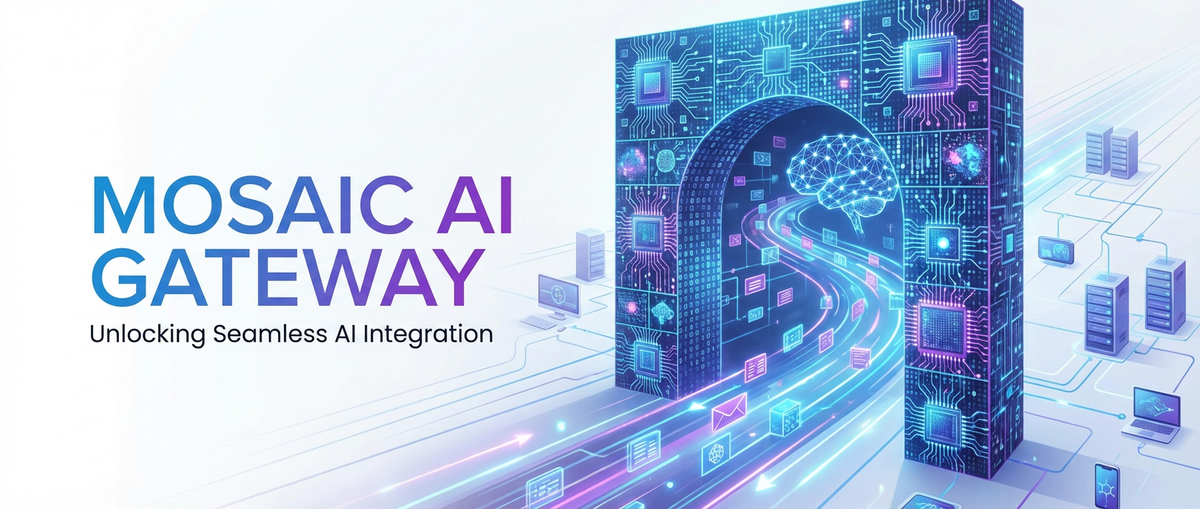
The term "Mosaic AI Gateway" evokes the image of carefully arranged, diverse tiles forming a beautiful and functional whole. In the context of AI, this means bringing together a multitude of AI models – from specialized machine learning algorithms for predictive analytics to the expansive capabilities of large language models (LLMs) and generative AI – under a single, cohesive management layer. This gateway acts as a sophisticated intermediary, simplifying the intricate dance between applications and intelligent services. It abstracts away the underlying complexities of individual AI providers, standardizes communication protocols, enforces robust security policies, and provides comprehensive observability, effectively creating a unified intelligence fabric. By doing so, an AI Gateway doesn't just streamline technical integration; it fundamentally reshapes how businesses conceive, deploy, and scale their AI initiatives, transforming what was once a labyrinth of disparate technologies into an accessible, powerful, and strategic asset. The promise is clear: to move beyond fragmented AI implementations towards a seamlessly integrated, resilient, and continuously evolving intelligent ecosystem that drives unprecedented value.
The Evolving Landscape of AI Integration: From Niche Tools to Ubiquitous Intelligence
The journey of artificial intelligence within the enterprise has been one of exponential growth and increasing complexity. A decade ago, AI adoption was primarily confined to niche applications such as sophisticated fraud detection systems in financial institutions or recommendation engines in e-commerce. These early implementations, while powerful, often involved highly specialized, custom-built models integrated directly into specific applications, leading to siloed intelligence and limited reusability. Developers would spend considerable effort not just on model training and deployment, but also on crafting bespoke integrations, handling diverse data formats, and managing unique authentication schemes for each AI service they consumed, whether internal or external. This approach, while functional for isolated use cases, became untenable as the number and variety of AI models began to proliferate.
The past few years, particularly with the advent of large language models (LLMs) and the broader generative AI paradigm, have dramatically altered this landscape. LLMs like GPT, Llama, and Claude have democratized access to advanced natural language processing, creative generation, and complex reasoning capabilities. Suddenly, enterprises are not just seeking predictive insights but also conversational interfaces, automated content creation, sophisticated code generation, and intelligent data summarization. This explosion of new AI models, each with its own strengths, weaknesses, and API specifications, has amplified the integration challenge by several orders of magnitude. Organizations are now faced with a dizzying array of choices, and the desire to leverage multiple models—perhaps one for summarization, another for image generation, and a third for code analysis—simultaneously or interchangeably has become a strategic imperative.
Directly integrating these numerous, often rapidly evolving AI models into existing application ecosystems presents a formidable set of hurdles. Developers are forced to contend with API proliferation, where each AI provider exposes its services through a distinct interface, requiring specialized code for request formatting, response parsing, and error handling. Authentication and authorization mechanisms vary widely, from simple API keys to complex OAuth flows, demanding intricate security management at the application level. Furthermore, managing rate limits, ensuring high availability through load balancing across multiple instances or providers, tracking usage for cost allocation, and maintaining compatibility as models undergo updates or deprecation, all add layers of operational burden. These complexities divert valuable engineering resources away from core product development and innovation, slowing down time-to-market for AI-powered features.
Traditional API Gateway solutions, while excellent at managing RESTful APIs for microservices architectures, often fall short when confronted with the unique demands of AI integration. These gateways typically focus on routing, authentication, and basic traffic management for predictable HTTP/S endpoints. However, AI services, especially LLMs, introduce new dimensions: the need for sophisticated prompt engineering, context management across conversational turns, streaming responses, data transformation for heterogeneous model inputs/outputs, and intricate cost management tied to token usage rather than simple request counts. Moreover, the security landscape for AI is evolving, with concerns around prompt injection, data leakage through model outputs, and adversarial attacks requiring more specialized defenses than a conventional API Gateway can typically provide out-of-the-box. The sheer volume and complexity of AI-specific concerns necessitate a more intelligent, adaptable, and purpose-built intermediary layer.
Defining the AI Gateway: A Specialized Orchestration Layer for Intelligent Services
At its core, an AI Gateway serves as an intelligent intermediary positioned between client applications and a diverse array of AI models, abstracting away their underlying complexities and providing a unified, secure, and manageable access point. Unlike a traditional API Gateway that primarily focuses on routing HTTP requests to backend services, an AI Gateway is purpose-built to understand and manage the unique characteristics of AI model interactions. It doesn't merely pass requests through; it intelligently transforms, augments, and orchestrates them to optimize performance, enhance security, and streamline operations specific to artificial intelligence workloads. This specialization allows it to address the nuanced requirements that generic gateways cannot, effectively creating a single pane of glass for all AI consumption within an organization.
The key distinction lies in its deep awareness of AI-specific protocols, data types, and the entire AI model lifecycle. For instance, while a standard API Gateway might route an HTTP GET request to a user profile service, an AI Gateway understands that a request to an LLM might involve a sophisticated prompt, context variables, specific temperature settings, and a desire for streaming output. It knows how to manage these parameters, potentially rewriting prompts on the fly, injecting system instructions, or ensuring that conversational history is correctly maintained across successive calls. This contextual intelligence extends to handling different model versions, managing fallback scenarios when a primary model is unavailable or underperforming, and normalizing the varied response formats that different AI providers might return. It transforms the chaotic multiplicity of AI endpoints into a coherent, standardized service layer, empowering developers to integrate intelligence without becoming experts in the intricacies of every individual model.
Within the broader category of AI Gateway solutions, the LLM Gateway stands out as a specialized sub-category, designed to specifically address the unique demands of large language models and other generative AI. The rise of LLMs has introduced unprecedented capabilities alongside novel challenges that necessitate tailored solutions. An LLM Gateway goes beyond general AI integration by focusing on critical aspects such as advanced prompt engineering and management. This includes versioning prompts, allowing A/B testing of different prompts to optimize model output, and dynamically injecting context or personalization parameters. It can abstract away the vendor-specific prompt formats, ensuring that applications interact with a single, consistent prompt API regardless of the underlying LLM provider.
Furthermore, an LLM Gateway is crucial for managing the often-complex context window limitations of LLMs, intelligently truncating or summarizing long conversations to fit within token limits while preserving essential information. It handles streaming responses efficiently, allowing applications to display generated content in real-time, which is a common requirement for interactive chat interfaces. Cost management for LLMs, tied to input and output token counts, is another area where an LLM Gateway provides immense value, offering granular tracking and optimization strategies. By centralizing the invocation, monitoring, and governance of LLMs, an LLM Gateway simplifies their adoption, enhances their reliability, and mitigates risks associated with their powerful, yet sometimes unpredictable, nature. It is the sophisticated control panel that turns raw LLM power into predictable, manageable, and secure business value.
Ultimately, both general AI Gateway and specialized LLM Gateway solutions act as a unified orchestration layer. This layer centralizes access, management, and governance for all AI services, fostering an environment where AI can be treated as a first-class, reusable component of the enterprise architecture. It moves organizations away from ad-hoc, point-to-point integrations towards a strategic, scalable, and secure AI infrastructure.
Key Components and Features of a Robust AI Gateway
A truly robust AI Gateway is more than just a proxy; it’s a sophisticated control plane that orchestrates, secures, and optimizes the flow of intelligence within an organization. Its effectiveness hinges on a suite of meticulously designed components and features, each addressing a critical aspect of AI integration and management. Understanding these elements is paramount for any enterprise looking to build a resilient and scalable AI infrastructure.
Unified API Interface and Model Abstraction
One of the primary benefits of an AI Gateway is its ability to provide a unified API interface, abstracting away the significant differences between various AI models and providers. Whether integrating with OpenAI's GPT models, Google's Gemini, Anthropic's Claude, a suite of Hugging Face models, or proprietary in-house machine learning services, each typically exposes a unique API with distinct request bodies, authentication methods, and response formats. The gateway normalizes these differences, presenting a single, consistent API to client applications. This means developers write integration code once, against the gateway's standardized interface, rather than needing to adapt to the specific idiosyncrasies of every AI model. For instance, a request for text completion might always use a POST /completions endpoint with a consistent JSON payload, regardless of whether it's routed to GPT-4 or Llama 3, with the gateway handling the necessary transformations in the background. This dramatically reduces development overhead, accelerates time-to-market for AI-powered features, and makes swapping out or experimenting with different models a trivial configuration change rather than a significant refactoring effort.
Centralized Authentication and Authorization
Security remains a paramount concern in AI integration. An AI Gateway centralizes authentication and authorization, serving as a single enforcement point for access control to all underlying AI models. Instead of managing individual API keys, OAuth tokens, or identity provider integrations for each AI service at the application level, applications authenticate once with the gateway. The gateway then validates these credentials – whether they are API keys, JWTs, or OAuth tokens – against an internal identity store or an external identity provider. Once authenticated, the gateway applies granular authorization policies, determining which applications or users are permitted to access specific AI models or even particular functions within a model (e.g., only allowing certain teams to access high-cost generative AI models). This centralized approach not only simplifies security management but also significantly enhances the overall security posture by reducing the attack surface, enabling consistent security policies across the entire AI landscape, and providing a single audit trail for all AI access attempts.
Intelligent Rate Limiting and Throttling
AI models, particularly those offered as SaaS, often come with strict rate limits imposed by providers to manage infrastructure load and costs. Without a centralized mechanism, individual applications might inadvertently exceed these limits, leading to service interruptions, error messages, and poor user experiences. An AI Gateway implements intelligent rate limiting and throttling policies, applying them globally, per-user, per-application, or per-model. It can smooth out request spikes, queue requests during peak periods, and ensure that no single application or user monopolizes AI resources. This prevents service degradation, ensures fair usage across the enterprise, and helps avoid costly overages with AI providers. Moreover, it allows organizations to define tiered access, offering higher rate limits to premium applications or critical business processes while maintaining baseline access for others.
Dynamic Load Balancing and Smart Routing
To ensure high availability, optimal performance, and cost efficiency, an AI Gateway incorporates dynamic load balancing and smart routing capabilities. It can distribute incoming AI requests across multiple instances of the same model, across different models from the same provider, or even across different AI providers entirely. For example, if an organization uses both OpenAI and Anthropic for text generation, the gateway can route requests based on factors like current latency, cost, model capabilities, or even geographical location. In scenarios where a primary AI model experiences downtime or performance degradation, the gateway can automatically failover to a secondary model or provider, ensuring uninterrupted service. This intelligent routing also facilitates A/B testing of different models or model versions, allowing enterprises to compare performance, accuracy, and cost in real-time before committing to a specific solution.
Caching for Performance and Cost Optimization
Many AI queries, especially for common prompts or frequently accessed data, produce identical or near-identical results. Directly querying the AI model for each such request is inefficient and costly. An AI Gateway can implement a sophisticated caching mechanism that stores responses to previous AI invocations. When a new request comes in, the gateway first checks its cache. If a relevant, fresh response is found, it's returned immediately, bypassing the underlying AI model entirely. This significantly reduces latency, delivering faster responses to end-users, and substantially cuts down on operational costs, especially for LLMs where costs are often per token. Cache invalidation strategies, time-to-live (TTL) settings, and intelligent cache keys (considering prompt variations and context) are crucial for ensuring the accuracy and relevance of cached responses.
Comprehensive Observability: Monitoring, Logging, and Tracing
Understanding how AI services are being consumed, their performance characteristics, and any potential issues is vital for operational excellence. An AI Gateway provides comprehensive observability features, including detailed monitoring, logging, and tracing. It collects granular metrics on every AI invocation: request and response sizes, latency, error rates, token counts, and cost per request. These metrics are pushed to centralized monitoring dashboards, offering real-time insights into AI service health and usage patterns. Detailed logs of every request and response, including the prompts sent and the AI-generated content received, are captured. This is invaluable for debugging, auditing, and ensuring compliance. Distributed tracing capabilities allow operations teams to follow the entire lifecycle of an AI request, from the client application through the gateway to the specific AI model and back, helping to pinpoint bottlenecks or failures in complex AI pipelines. This rich data empowers teams to proactively identify issues, optimize performance, and accurately attribute costs.
As a practical example of a platform offering these robust observability capabilities, ApiPark provides detailed API call logging, recording every aspect of each API interaction. This feature is instrumental for businesses to quickly trace and troubleshoot issues, ensuring system stability and data security. Furthermore, its powerful data analysis capabilities examine historical call data to display long-term trends and performance changes, enabling proactive maintenance before problems escalate.
Advanced Cost Management and Optimization
With AI usage, especially LLMs, costs can quickly escalate if not meticulously managed. An AI Gateway offers advanced cost management and optimization features, providing granular insights into AI consumption. It tracks usage metrics (e.g., token counts, compute time) per user, per application, per team, or per model, enabling accurate cost attribution and chargeback mechanisms. Organizations can set budget alerts, automatically receive notifications when spending thresholds are approached, or even implement automated throttling or routing changes to control costs. Intelligent routing decisions, as mentioned earlier, can also prioritize lower-cost models for less critical tasks or leverage caching more aggressively to minimize expenses. This proactive cost control empowers financial teams to better manage budgets and ensures that AI initiatives deliver ROI.
Robust Security Features for AI
Beyond traditional authentication and authorization, an AI Gateway must incorporate security features specifically tailored for AI risks. This includes data masking and input validation to prevent sensitive information from being sent to AI models (e.g., automatically redacting PII from prompts). Output sanitization can clean or filter potentially harmful, biased, or inappropriate content generated by AI models before it reaches end-users. Threat detection capabilities, sometimes leveraging AI itself, can identify and mitigate prompt injection attacks, where malicious users try to manipulate the AI's behavior through crafted inputs. Furthermore, it ensures that data ingress and egress are encrypted, complying with industry standards and regulatory requirements. By acting as a secure conduit, the gateway protects both the integrity of the AI models and the privacy of the data processed.
Prompt Management and Versioning
For LLMs, the prompt is paramount. An AI Gateway provides sophisticated prompt management and versioning capabilities. Developers can store, manage, and version their prompts directly within the gateway, treating prompts as first-class code assets. This enables teams to collaborate on prompt engineering, track changes, and easily roll back to previous versions if a new prompt degrades performance. The gateway can also support A/B testing of different prompt variations, allowing organizations to scientifically determine which prompts yield the best results for specific use cases. By centralizing prompt management, the gateway ensures consistency across applications, accelerates experimentation, and safeguards valuable intellectual property embedded in effective prompts. In fact, ApiPark facilitates prompt encapsulation into REST APIs, allowing users to quickly combine AI models with custom prompts to create new, specialized APIs like sentiment analysis or translation services, streamlining prompt management and deployment.
Response Transformation and Normalization
Different AI models, even those performing similar functions, might return results in varying JSON schemas, data structures, or linguistic styles. An AI Gateway can perform intelligent response transformation and normalization, converting diverse AI outputs into a consistent, predictable format for client applications. This eliminates the need for applications to implement complex parsing logic for each model, further simplifying integration and maintenance. For example, if one model returns sentiment as "positive," "negative," "neutral," and another uses a numerical score from -1 to 1, the gateway can normalize both into a unified enumeration, ensuring applications receive a standardized output regardless of the underlying AI.
Model Agnosticism and Fallback Strategies
A truly robust AI Gateway embraces model agnosticism, allowing organizations to seamlessly switch between different AI models or providers without requiring application-level code changes. This is critical for future-proofing AI investments. If a better, more cost-effective model emerges, or if a current provider changes its terms or pricing, the organization can reconfigure the gateway to use the new model with minimal disruption. Complementing this is the implementation of intelligent fallback strategies. If a primary AI model fails to respond, returns an error, or exceeds a predefined latency threshold, the gateway can automatically route the request to a secondary, pre-configured fallback model. This ensures business continuity and maintains a high level of service reliability, even in the face of unexpected AI service disruptions.
Together, these components transform a simple forwarding mechanism into a powerful, intelligent control center for all AI interactions, significantly enhancing the efficiency, security, and scalability of an enterprise's AI initiatives.
The Strategic Advantages of Implementing an AI Gateway
The decision to implement an AI Gateway is not merely a technical choice; it's a strategic imperative that yields profound benefits across the entire organization. By centralizing the management and orchestration of AI services, enterprises can unlock significant efficiencies, enhance their security posture, optimize costs, and accelerate their pace of innovation.
Simplified Integration and Accelerated Development
One of the most immediate and tangible advantages of an AI Gateway is the drastic simplification of AI integration. In a world teeming with diverse AI models, each with its unique API, authentication requirements, and data formats, developers face a steep learning curve and considerable integration effort for every new model they wish to incorporate. The gateway acts as a universal adapter, providing a single, standardized API interface that applications can consume regardless of the underlying AI provider. This significantly reduces development overhead, allowing engineering teams to focus on building core application logic and features rather than wrestling with myriad integration complexities. For instance, a developer needing sentiment analysis no longer needs to worry about the specific API calls for Azure's Cognitive Services, Google's Natural Language API, or a custom internal model; they simply call the gateway's /sentiment endpoint. This abstraction accelerates time-to-market for AI-powered products and features, enabling businesses to react more swiftly to market demands and gain a competitive edge. The consistent invocation format also ensures that future changes to AI models or prompts do not ripple through and affect the application or microservices layers, simplifying AI usage and maintenance costs, a key feature offered by platforms like ApiPark.
Enhanced Security and Compliance
Security is paramount, especially when dealing with sensitive data and powerful AI models. An AI Gateway acts as a centralized enforcement point for all AI security policies, dramatically enhancing the overall security posture. Instead of distributing security concerns across multiple applications and integrating with various AI provider-specific security mechanisms, the gateway enables a single, robust security layer. This includes centralized authentication and authorization, ensuring that only approved users and applications can access specific AI models. Features like data masking can prevent sensitive personally identifiable information (PII) from ever reaching external AI models. Output filtering can mitigate risks associated with generative AI producing harmful or biased content. Furthermore, the gateway provides comprehensive logging and auditing capabilities, creating an immutable record of all AI interactions, which is crucial for compliance with regulations such as GDPR, HIPAA, and industry-specific mandates. By consolidating security management, organizations can enforce consistent policies, detect anomalies more effectively, and reduce the attack surface, safeguarding both data and intellectual property.
Improved Scalability, Resilience, and Performance
AI workloads can be highly variable, with unpredictable spikes in demand. A well-designed AI Gateway inherently provides improved scalability and resilience for AI services. Its intelligent load balancing capabilities distribute requests across multiple instances of AI models or even across different providers, preventing any single point of failure and ensuring that AI services remain responsive under heavy load. If an upstream AI model or provider experiences an outage, the gateway's failover mechanisms can automatically reroute requests to alternative models, minimizing downtime and ensuring business continuity. Caching mechanisms further boost performance by serving frequently requested AI responses from memory, reducing latency and offloading the burden from the actual AI models. This combination of load balancing, failover, and caching results in a highly available, performant, and resilient AI infrastructure that can scale dynamically to meet fluctuating business demands without requiring manual intervention or significant re-architecture.
Significant Cost Optimization
Running and scaling AI models, particularly LLMs, can be a substantial expense. An AI Gateway offers multiple avenues for significant cost optimization. Firstly, its intelligent routing capabilities can prioritize lower-cost models for less critical tasks or route requests based on real-time pricing from different providers. Secondly, effective caching directly reduces the number of requests sent to expensive AI models, leading to substantial savings on usage-based pricing (e.g., token consumption for LLMs). Thirdly, granular usage tracking and reporting allow organizations to precisely monitor AI consumption per application, team, or user, enabling accurate cost attribution and identifying areas of potential waste. By setting budget alerts and implementing throttling policies, businesses can proactively manage and control their AI expenditures, ensuring that AI initiatives remain financially viable and deliver maximum return on investment. This detailed tracking and analysis prevent unexpected cost overruns and allow for more strategic resource allocation.
Increased Agility and Accelerated Innovation
The AI landscape is characterized by rapid innovation. New models, improved capabilities, and refined techniques emerge constantly. An AI Gateway fosters greater agility by decoupling applications from specific AI implementations. This means businesses can experiment with new AI models or fine-tune existing ones without requiring extensive changes to their consuming applications. For example, if a new LLM offers superior performance for a particular task, the gateway can be reconfigured to route requests to this new model with minimal downtime. Prompt management and versioning features within the gateway allow for rapid iteration and A/B testing of different prompts, enabling continuous optimization of AI outputs. This ability to quickly adopt new technologies and iterate on existing solutions accelerates the pace of innovation, empowering organizations to stay at the forefront of AI advancements and continuously enhance their intelligent offerings.
Better Governance and Compliance
Managing a sprawling AI ecosystem without a central governance layer is a recipe for chaos and potential regulatory non-compliance. The AI Gateway provides a central point for establishing and enforcing governance policies across all AI interactions. This includes defining and enforcing data handling policies, ensuring that sensitive data is processed in accordance with privacy regulations. It allows for auditing of all AI requests and responses, providing a clear trail for compliance checks. Centralized policy management ensures consistency in how AI is used, preventing ad-hoc deployments that might inadvertently violate ethical guidelines or legal requirements. This structured approach to AI governance builds trust, reduces legal risks, and demonstrates a commitment to responsible AI development and deployment.
Enhanced Data Privacy and Control
With increasing concerns around data privacy, especially when third-party AI models are involved, an AI Gateway becomes a crucial tool for maintaining control over enterprise data. By acting as the sole intermediary, the gateway can enforce strict data egress policies, ensuring that only necessary data leaves the organization's perimeter and is sent to external AI providers. Data masking capabilities can anonymize or redact sensitive information within prompts and responses, minimizing exposure risks. Furthermore, if an organization leverages on-premise or private cloud AI models, the gateway ensures that data remains within controlled environments, meeting stringent privacy and security requirements. This level of control is indispensable for industries with high regulatory burdens or those handling extremely sensitive customer or proprietary data.
In summary, implementing an AI Gateway transcends mere technical convenience. It represents a strategic investment that fortifies an enterprise's AI infrastructure, making it more secure, scalable, cost-effective, and agile. It empowers organizations to fully realize the transformative potential of AI, turning complex challenges into opportunities for innovation and sustained competitive advantage.
APIPark is a high-performance AI gateway that allows you to securely access the most comprehensive LLM APIs globally on the APIPark platform, including OpenAI, Anthropic, Mistral, Llama2, Google Gemini, and more.Try APIPark now! 👇👇👇
Challenges and Considerations in AI Gateway Adoption
While the benefits of an AI Gateway are compelling, adopting and implementing such a critical piece of infrastructure is not without its challenges. Organizations must carefully consider several factors to ensure a successful deployment and maximize the return on their investment. Proactive planning and a clear understanding of these hurdles are essential for navigating the complexities inherent in building a unified AI management layer.
Initial Setup Complexity and Learning Curve
The initial setup of a comprehensive AI Gateway can be a complex undertaking, especially for organizations with a diverse existing AI landscape. Integrating numerous AI models, each with its unique API specifications, authentication methods, and data formats, requires significant configuration effort. Defining and implementing robust routing rules, security policies, rate limits, and caching strategies across a multitude of AI services demands a deep understanding of both the gateway's capabilities and the specific requirements of the underlying AI models. Furthermore, if the chosen gateway solution is open-source or requires significant customization, there might be a steep learning curve for development and operations teams to fully grasp its architecture, configuration options, and operational nuances. This initial investment in time and expertise should not be underestimated and requires dedicated resources and a well-defined project plan.
Build vs. Buy Decision and Vendor Lock-in
A critical decision facing organizations is whether to build an AI Gateway in-house or to procure a commercial off-the-shelf solution. Building an custom gateway offers maximum flexibility and control, allowing for tailor-made features that precisely meet an organization's unique requirements. However, this path demands substantial ongoing development and maintenance effort, including ensuring security updates, scaling infrastructure, and keeping pace with the rapidly evolving AI ecosystem. The total cost of ownership (TCO) for a custom build can quickly surpass that of a commercial product. Conversely, opting for a commercial solution offers faster deployment, professional support, and a feature set that often benefits from broader industry experience. However, it introduces the potential for vendor lock-in, where switching providers in the future could be challenging due to proprietary interfaces or specific configurations. Organizations must carefully weigh the trade-offs between flexibility, cost, development resources, and the long-term strategic implications of each approach.
Maintaining Model Compatibility and Evolution
The AI landscape is extraordinarily dynamic. New models are released, existing ones are updated, deprecated, or even completely replaced at a rapid pace. A significant challenge for an AI Gateway is continuously maintaining compatibility with this evolving ecosystem. Every time an underlying AI model's API changes, its authentication mechanism is updated, or its response format shifts, the gateway's integration layer must be adapted. This requires ongoing vigilance, robust versioning strategies, and agile development processes to ensure that the gateway remains a reliable intermediary. Failure to keep pace can lead to broken integrations, service disruptions, and a loss of confidence in the gateway's utility. This maintenance burden necessitates dedicated resources and a proactive approach to monitoring changes in external AI services.
Potential Performance Overhead
While an AI Gateway offers numerous performance benefits through caching and intelligent routing, it also introduces an additional network hop and processing layer between client applications and AI models. This can, in some scenarios, introduce a slight performance overhead or increased latency, especially if the gateway itself is not optimized or is deployed on insufficient infrastructure. Factors such as the gateway's internal processing logic (e.g., prompt transformations, data masking), network distance, and the efficiency of its underlying hardware or cloud resources can all contribute to this overhead. Organizations must carefully benchmark the gateway's performance under expected load conditions and optimize its deployment to minimize any adverse impact on application responsiveness. The goal is to ensure that the performance gains from caching and intelligent routing significantly outweigh any inherent latency introduced by the gateway itself. It is worth noting that some open-source solutions like ApiPark are engineered for high performance, with benchmarks showing it can achieve over 20,000 TPS with modest hardware, effectively mitigating this concern for many enterprise deployments.
Addressing AI-Specific Security Vulnerabilities
Beyond traditional API security concerns, AI Gateways must contend with a unique set of security vulnerabilities inherent to AI models, particularly LLMs. Prompt injection attacks, where malicious users craft inputs to manipulate the AI's behavior or extract sensitive data, pose a significant risk. Data leakage through model outputs, where the AI inadvertently reveals confidential information from its training data or previous queries, is another concern. The gateway must incorporate specialized defenses such as advanced input validation, output sanitization, and potentially even AI-powered threat detection mechanisms to identify and mitigate these risks. This requires a deeper understanding of AI security best practices and continuous adaptation to emerging adversarial techniques. Traditional security tools alone are often insufficient to address these nuanced AI-specific threats.
Operational Complexity and Maintenance
Deploying and operating an AI Gateway adds another layer of operational complexity to an organization's infrastructure. This includes managing the gateway's own infrastructure (servers, containers), monitoring its health and performance, applying updates and patches, and troubleshooting issues that may arise. Configuring and maintaining policies for routing, security, rate limiting, and cost management requires ongoing attention. For large-scale deployments, managing clusters of gateway instances, ensuring high availability, and handling disaster recovery scenarios can be intricate. Organizations must allocate sufficient operational resources and expertise to ensure the gateway runs smoothly and reliably, delivering its intended value without becoming an additional burden on IT teams.
By acknowledging and proactively addressing these challenges, enterprises can successfully integrate an AI Gateway into their architecture, transforming it into a powerful asset that streamlines AI operations and accelerates innovation, rather than becoming a source of new complications.
Best Practices for Designing and Deploying an AI Gateway
Implementing an AI Gateway effectively requires more than just installing software; it demands a thoughtful design process and adherence to best practices that ensure its reliability, security, and long-term utility. A strategic approach will maximize the gateway's benefits while mitigating potential pitfalls.
1. Start with Clear Requirements and Use Cases
Before embarking on any design or deployment, clearly define the specific problems the AI Gateway is intended to solve and the primary use cases it will support. Are you primarily concerned with centralizing access to LLMs, managing costs, improving security, or enabling rapid experimentation? Understanding whether the initial focus is on internal applications, external APIs, or a hybrid model will guide architectural decisions. Identify the types of AI models that will be integrated (e.g., NLP, vision, generative AI), their expected traffic patterns, and critical performance requirements (e.g., latency, throughput). Documenting these requirements meticulously will serve as a blueprint for the gateway's features and configurations, preventing scope creep and ensuring that the solution aligns with actual business needs.
2. Prioritize Security from Day One
Security should be an architectural cornerstone, not an afterthought. Design the AI Gateway with a security-first mindset from its inception. This involves implementing robust authentication and authorization mechanisms (e.g., OAuth 2.0, JWTs, mutual TLS), applying the principle of least privilege, and segmenting access to different AI models or endpoints based on roles and permissions. Incorporate data masking and input validation capabilities to protect sensitive information, preventing its exposure to external AI models. Implement output sanitization to filter potentially harmful or biased content. Ensure all data in transit and at rest is encrypted. Regularly conduct security audits, penetration testing, and vulnerability assessments of the gateway itself, and stay abreast of emerging AI-specific security threats like prompt injection, building defenses into the gateway's logic.
3. Implement Robust Monitoring, Logging, and Alerting
Comprehensive observability is crucial for the operational health and performance of an AI Gateway. Deploy robust monitoring tools to track key metrics such as request rates, latency, error rates, CPU/memory utilization, and token consumption (for LLMs) in real-time. Integrate with centralized logging systems to capture detailed records of every AI invocation, including prompts, responses, and associated metadata. This data is invaluable for debugging, auditing, cost analysis, and compliance. Configure proactive alerting mechanisms to notify operations teams immediately of anomalies, performance degradations, security incidents, or threshold breaches (e.g., exceeding rate limits or budget caps). A well-instrumented gateway provides the visibility needed to quickly identify and resolve issues, optimize resource allocation, and ensure continuous, reliable AI service delivery.
4. Design for Scalability, High Availability, and Resilience
The AI Gateway should be designed to handle fluctuating workloads and remain operational even in the face of failures. This means implementing a horizontally scalable architecture, allowing easy addition of gateway instances to accommodate increased traffic. Employ load balancing at the infrastructure level to distribute requests efficiently across multiple gateway nodes. Design for high availability by deploying the gateway across multiple availability zones or regions, and ensure that underlying dependencies (e.g., databases, caches) are also highly available. Implement intelligent routing with failover mechanisms, allowing the gateway to automatically switch to alternative AI models or providers if a primary service becomes unavailable or unresponsive. Consider circuit breakers and retries to prevent cascading failures. A resilient gateway ensures uninterrupted access to AI services, which is critical for business continuity.
5. Embrace Modularity and Extensibility
The AI landscape is constantly evolving, and a rigid AI Gateway will quickly become obsolete. Design the gateway with a modular and extensible architecture. This allows for easy integration of new AI models, providers, and custom logic without requiring significant refactoring of the entire system. Use plugin-based architectures or webhook integrations to add custom pre-processing or post-processing logic (e.g., for specific data transformations, prompt enhancements, or response filtering). This flexibility enables organizations to adapt the gateway to future AI advancements, integrate proprietary AI models, and customize its behavior to meet specific business needs without compromising the core stability of the platform. Open-source solutions, like ApiPark, often excel in modularity, allowing for community contributions and custom extensions while providing a stable, high-performance core.
6. Plan for Prompt and Model Lifecycle Management
For LLM-focused gateways, a robust strategy for prompt and model lifecycle management is crucial. Establish processes for versioning prompts, allowing teams to track changes, revert to previous versions, and conduct A/B testing to optimize AI outputs. Consider integrating the gateway with existing version control systems (e.g., Git) for prompt management, treating prompts as code. Similarly, plan for managing the lifecycle of integrated AI models, including strategies for handling model updates, deprecations, and migrations. The gateway should facilitate seamless swapping of models without disrupting consuming applications, perhaps through intelligent routing based on model versions. This systematic approach ensures that AI applications always leverage the most effective and up-to-date models and prompts.
7. Leverage Open-Source Solutions Where Appropriate
Evaluate the open-source landscape for AI Gateway solutions. Open-source projects often offer a strong community, transparency, and the flexibility to customize and extend functionality without vendor lock-in. For instance, ApiPark is an open-source AI gateway and API management platform under the Apache 2.0 license, offering capabilities like quick integration of 100+ AI models, unified API format, and end-to-end API lifecycle management. While open-source might require more in-house expertise for deployment and maintenance, the benefits of community support, rapid innovation, and cost savings can be significant. However, balance this with the availability of commercial support and enterprise-grade features that may be required for mission-critical deployments. A hybrid approach, utilizing open-source core with commercial add-ons or support, can often provide the best of both worlds.
8. Implement Granular Cost Tracking and Optimization
Proactively manage and optimize AI expenditures by implementing granular cost tracking capabilities within the gateway. This means capturing usage metrics (e.g., token counts, API calls) for each AI model, attributing costs to specific applications, teams, or users. Use this data to generate detailed reports, set budget alerts, and identify areas for cost reduction. Leverage the gateway's intelligent routing and caching features to actively optimize costs, for example, by prioritizing lower-cost models for certain tasks or increasing cache hit rates. This proactive financial management ensures that AI initiatives deliver measurable ROI and remain within budgetary constraints.
By diligently following these best practices, organizations can design and deploy an AI Gateway that not only addresses their immediate integration challenges but also provides a flexible, secure, and scalable foundation for their evolving AI strategy.
Real-World Applications and Use Cases of AI Gateways
The versatility of an AI Gateway makes it applicable across a myriad of industries and use cases, fundamentally transforming how organizations interact with and leverage artificial intelligence. By providing a unified, managed, and secure interface, the gateway enables innovative applications that were previously cumbersome or economically unfeasible.
Customer Service and Support Bots
One of the most prominent applications of AI, particularly LLMs, is in enhancing customer service. Companies deploy sophisticated chatbots and virtual assistants to handle customer inquiries, provide instant support, and deflect simple requests, freeing human agents for more complex issues. An AI Gateway plays a crucial role here by acting as the orchestration layer for these intelligent bots. For example, a customer service bot might need to perform several AI tasks for a single interaction: analyze the customer's sentiment (using an NLP model), summarize previous interactions (using an LLM for summarization), search a knowledge base (using an embeddings model for retrieval-augmented generation, RAG), and finally generate a natural language response (using another LLM). The AI Gateway can intelligently route these sub-requests to the most appropriate AI models, ensuring efficient execution, managing context across conversational turns, and normalizing disparate responses into a coherent dialogue. It also allows the customer service platform to seamlessly switch between different LLM providers based on cost, performance, or specific language capabilities, ensuring resilience and cost optimization.
Content Generation and Creative Workflows
The explosion of generative AI has revolutionized content creation, from marketing copy and product descriptions to creative writing and image generation. Organizations are now leveraging multiple generative AI models, each excelling in different domains or styles. An AI Gateway becomes indispensable in managing these complex creative workflows. For instance, a marketing agency might use one LLM for drafting initial blog post outlines, another for generating social media captions in different tones, and a third for translating content. It might also integrate with an image generation AI for accompanying visuals. The gateway provides a unified API for these varied content generation tasks, allowing content management systems or creative applications to invoke different models through a consistent interface. It handles prompt management and versioning, ensuring brand consistency across generated content and allowing for A/B testing of prompts to optimize creative output. The gateway also tracks usage, helping allocate costs across different campaigns and departments.
Developer Platforms and Internal AI Services
Many enterprises are building internal developer platforms that offer AI capabilities as a service to their own engineering teams. An AI Gateway is the cornerstone of such platforms, providing a streamlined and secure way for internal developers to access a curated set of AI models. Instead of each development team integrating directly with various AI providers, they interact with the internal gateway's standardized API. This not only accelerates development but also enforces corporate governance, security policies, and cost controls across all internal AI consumption. The gateway can expose both external AI models (e.g., OpenAI, AWS AI Services) and proprietary, in-house trained models through the same interface. It centralizes API key management, rate limiting, and observability, creating a consistent and reliable environment for AI-driven application development, allowing teams to quickly find and use required API services, which is a core benefit of platforms like ApiPark.
Data Analysis and Business Intelligence
AI models are increasingly integral to extracting deeper insights from data. From predictive analytics to anomaly detection and sophisticated data summarization, AI transforms raw data into actionable intelligence. An AI Gateway facilitates the integration of diverse analytical AI models into business intelligence tools, data lakes, and data warehousing solutions. For example, an organization might use a specialized time-series forecasting AI for sales predictions, a fraud detection model, and an LLM for generating natural language explanations of complex data reports. The gateway orchestrates these models, potentially pre-processing data before sending it to the AI and post-processing the AI's output for integration into dashboards or alerts. It ensures data privacy by masking sensitive information before it reaches external AI services and provides comprehensive logging for auditing data processing activities.
Healthcare: Personalized Medicine and Diagnostics
In healthcare, AI Gateways enable the secure and compliant integration of AI models for personalized medicine, diagnostic support, and administrative automation. For instance, a hospital might integrate an AI model for predicting patient readmission risk, another for analyzing medical images for anomalies (e.g., X-rays, MRIs), and an LLM for summarizing patient records or assisting with clinical documentation. The gateway ensures that all interactions comply with stringent regulations like HIPAA, masking Protected Health Information (PHI) and enforcing strict access controls. It provides a unified interface for medical applications to access these diverse AI services, allowing for rapid deployment of new AI-powered tools without extensive re-integration efforts, thus accelerating the adoption of AI in critical healthcare workflows.
Finance: Fraud Detection and Risk Assessment
Financial institutions leverage AI for a wide array of applications, from real-time fraud detection to algorithmic trading and credit risk assessment. An AI Gateway can act as a critical layer in these high-stakes environments. It can route transactions or customer data to various AI models: one for real-time anomaly detection, another for evaluating creditworthiness based on a diverse set of data points, and perhaps an LLM for summarizing complex financial reports. The gateway's robust security features (e.g., encryption, access control, audit trails) are paramount for ensuring regulatory compliance and protecting sensitive financial data. Its performance capabilities, including low-latency routing and caching, are essential for real-time decision-making in financial markets, ensuring that crucial AI insights are delivered precisely when needed.
Retail: Personalized Recommendations and Inventory Management
In the retail sector, AI drives personalization and operational efficiency. AI Gateways integrate AI models that power personalized product recommendations on e-commerce sites, optimize inventory levels based on predictive demand forecasting, and enhance customer interactions through intelligent virtual assistants. For example, a retailer might use a collaborative filtering model for product recommendations, a time-series AI for inventory forecasting across different SKUs and locations, and an LLM for generating product descriptions or answering customer queries about sizing. The gateway provides the infrastructure to seamlessly connect these AI services to the e-commerce platform, supply chain management systems, and customer relationship management (CRM) tools. It ensures that customer data is handled securely and that AI models are performing optimally to drive sales and reduce operational costs.
These examples illustrate that an AI Gateway is not merely a technical convenience but a fundamental enabler for enterprises across sectors. By simplifying, securing, and optimizing AI interactions, it empowers organizations to unlock the full potential of artificial intelligence, transforming complex challenges into strategic advantages and driving innovation at an unprecedented pace.
The Future of AI Gateways: Trends and Innovations
The rapid evolution of artificial intelligence guarantees that the landscape of AI Gateways will continue to innovate and expand, adapting to new AI paradigms and addressing emerging challenges. The future holds exciting developments that will further solidify the gateway's role as an indispensable component of modern enterprise architecture.
More Advanced Prompt Engineering and Management Features
As prompt engineering becomes a critical skill for interacting with LLMs, AI Gateways will evolve to offer even more sophisticated features for managing and optimizing prompts. Expect advanced version control systems specifically tailored for prompts, including seamless integration with Git-like repositories, visual diff tools for comparing prompt changes, and robust approval workflows. Gateways will likely incorporate AI-driven prompt optimization tools, suggesting improvements, generating variations, and automatically conducting A/B tests to find the most effective prompts for specific use cases. Furthermore, dynamic prompt templating, allowing for highly personalized and contextualized prompts to be constructed on the fly based on user data or real-time events, will become standard. This will transform prompt engineering from an art into a more systematic, data-driven discipline, directly supported by the gateway.
Deeper Integration with MLOps Pipelines
The gap between model development (MLOps) and model consumption needs to shrink. Future AI Gateways will integrate more deeply and seamlessly with MLOps platforms and CI/CD pipelines. This means that once an AI model is trained, validated, and deployed within an MLOps system, the gateway will be able to automatically discover, register, and expose it as a service with minimal manual configuration. Conversely, performance and usage data collected by the gateway will feed back into the MLOps pipeline, informing model retraining, re-evaluation, and continuous improvement cycles. This tighter coupling will enable true end-to-end automation of the AI lifecycle, from model experimentation to production deployment and monitoring, accelerating the operationalization of new AI capabilities.
Emergence of Edge AI Gateways
As AI models become more efficient and capable of running on resource-constrained devices, the concept of an Edge AI Gateway will gain prominence. These gateways will be deployed closer to the data source, at the network edge (e.g., IoT devices, smart cameras, local servers), to process AI inferences locally rather than sending all data to the cloud. This significantly reduces latency, conserves bandwidth, enhances data privacy, and improves resilience in environments with intermittent connectivity. Edge AI Gateways will manage the deployment, updating, and orchestration of multiple localized AI models, balancing workload, and securely aggregating results to the cloud where necessary. This paradigm shift will unlock new AI applications in manufacturing, autonomous vehicles, smart cities, and remote monitoring.
AI-Powered API Management and Intelligent Routing
The AI Gateway itself will become more intelligent, leveraging AI to manage and optimize its own operations. This could include AI-powered intelligent routing that dynamically selects the best AI model or provider based on real-time performance metrics, cost fluctuations, or even the semantic content of the request. For example, an AI might analyze a user's query and route it to a specialized LLM tailored for that specific domain. AI could also be used for anomaly detection within the gateway's own traffic, identifying unusual request patterns that might indicate a security threat or a performance bottleneck. Furthermore, AI could automate the generation of API documentation, suggest optimal caching strategies, or even self-heal by identifying and mitigating performance issues proactively.
Enhanced Security for Adversarial AI Attacks
As AI systems become more ubiquitous, so do the threats of adversarial AI attacks, such as data poisoning, model inversion, and sophisticated prompt injection. Future AI Gateways will incorporate advanced security measures specifically designed to detect and mitigate these AI-specific threats. This could involve leveraging machine learning models within the gateway to analyze incoming prompts and outgoing responses for malicious patterns, detecting subtle manipulations that human-designed rules might miss. Techniques like differential privacy and homomorphic encryption might be integrated to provide stronger data protection during AI processing. The gateway will act as the first line of defense, safeguarding the integrity and reliability of AI models against increasingly sophisticated attacks.
Greater Emphasis on Ethical AI and Bias Detection
With growing societal concerns about algorithmic bias and ethical AI, future AI Gateways will play a crucial role in enforcing ethical guidelines. They could incorporate mechanisms to detect and potentially mitigate bias in AI model outputs, perhaps by running parallel checks against fairness metrics or by employing guardrail LLMs to review responses. The gateway might also enforce policies related to data lineage and transparency, ensuring that users understand the source and processing of AI-generated content. Features for tracking and reporting on the ethical performance of AI models, along with audit trails demonstrating adherence to responsible AI principles, will become standard. This will enable organizations to not only deploy AI efficiently but also responsibly, building trust with their users and stakeholders.
API Resource Access Requires Approval
A growing trend is the implementation of stricter controls around API access, ensuring that sensitive AI resources are not invoked without proper authorization. Future AI Gateways will likely integrate more sophisticated subscription and approval features. This means that developers or applications wishing to consume specific AI services exposed through the gateway must first formally subscribe to the API and then await explicit administrator approval before they can gain access. This prevents unauthorized API calls, strengthens security against potential data breaches, and ensures that all AI resource consumption is deliberate and compliant with internal policies. This feature is already robustly supported by platforms like ApiPark, where activating subscription approval ensures callers must subscribe to an API and await administrator approval before invocation.
The future of AI Gateways is one of increasing intelligence, automation, and specialization. They will evolve from mere proxies into sophisticated, AI-powered control planes that not only manage the flow of intelligence but also optimize, secure, and govern it proactively. This continuous innovation will empower organizations to navigate the complexities of the AI revolution, transforming fragmented AI capabilities into a seamlessly integrated and truly intelligent enterprise ecosystem.
Conclusion: The Mosaic AI Gateway as the Bedrock of Intelligent Enterprise
The journey through the intricate world of AI integration reveals a compelling truth: for enterprises to truly harness the transformative power of artificial intelligence, a strategic, unified approach is not merely beneficial, but essential. The rapid proliferation of diverse AI models, from specialized predictive algorithms to the expansive capabilities of large language models, has created an integration labyrinth. This complexity, if unaddressed, risks stifling innovation, escalating costs, and compromising the very security and reliability that intelligent systems promise. It is within this challenging landscape that the AI Gateway emerges as a critical architectural pattern, a foundational layer designed to abstract, orchestrate, and govern the intelligent services that will define the next generation of business.
We have explored how a robust AI Gateway, particularly one adopting a "Mosaic" philosophy, functions as more than just a proxy. It acts as an intelligent control plane that normalizes disparate AI APIs, centralizes robust authentication and authorization, intelligently manages traffic with sophisticated rate limiting and load balancing, and significantly optimizes costs through caching and smart routing. Its comprehensive observability features provide unparalleled visibility into AI consumption, while specialized security measures defend against AI-specific vulnerabilities. Furthermore, features like prompt management, response transformation, and model agnosticism ensure that organizations can remain agile and adaptable in a rapidly evolving AI ecosystem. Platforms like ApiPark exemplify many of these advanced features, providing an open-source, high-performance solution that accelerates AI integration and management for developers and enterprises alike.
The strategic advantages of implementing an AI Gateway are multifaceted and profound. It dramatically simplifies integration, accelerating development cycles and time-to-market for AI-powered applications. It fortifies the enterprise's security posture, ensuring compliance and protecting sensitive data. It enhances scalability, resilience, and performance, guaranteeing that AI services are always available and responsive. Crucially, it drives significant cost optimization, ensuring that AI investments yield measurable returns. By embracing this architectural pattern, organizations can foster greater agility, enable continuous innovation, and establish better governance over their AI initiatives, paving the way for responsible and effective AI adoption.
While challenges such as initial setup complexity, the build-vs-buy dilemma, and maintaining compatibility in a dynamic AI landscape require careful consideration, the benefits overwhelmingly underscore the gateway's indispensable role. Adhering to best practices in design, prioritizing security, implementing robust observability, and embracing modularity will ensure that the AI Gateway becomes a resilient and future-proof asset.
Looking ahead, the evolution of AI Gateways promises even greater intelligence, tighter integration with MLOps, the rise of edge deployments, and advanced AI-powered self-management capabilities. They will continue to adapt to new threats, enforce ethical guidelines, and streamline the entire AI lifecycle. Ultimately, the AI Gateway is the bedrock upon which the intelligent enterprise will be built – a unified, secure, and scalable foundation that transforms a fragmented collection of AI models into a coherent, powerful, and continuously innovating "Mosaic" of intelligence, unlocking seamless AI integration and driving unprecedented value across every facet of the business.
5 Frequently Asked Questions (FAQs)
1. What is an AI Gateway and how does it differ from a traditional API Gateway? An AI Gateway is a specialized intermediary positioned between client applications and various AI models (including LLMs), designed to abstract, orchestrate, secure, and optimize AI interactions. While a traditional API Gateway focuses on general HTTP/S routing, authentication, and traffic management for backend services, an AI Gateway is purpose-built for AI's unique demands. It handles AI-specific protocols, prompt engineering, context management, streaming responses, model versioning, AI-specific security risks (like prompt injection), and granular cost tracking based on AI usage (e.g., token counts), providing a unified and intelligent layer for all AI consumption.
2. Why should my organization consider implementing an AI Gateway, especially for LLMs? Implementing an AI Gateway offers several strategic advantages. It simplifies the integration of diverse AI models, reducing development effort and accelerating time-to-market. It enhances security by centralizing authentication, authorization, and data privacy controls for all AI interactions. It optimizes costs through intelligent routing, caching, and granular usage tracking. For LLMs specifically, it enables advanced prompt management, ensures model agnosticism for easy swapping of providers, and provides robust observability to monitor and troubleshoot AI-powered applications, ultimately fostering greater agility and innovation.
3. What are the key features to look for in a robust AI Gateway solution? A robust AI Gateway should offer a unified API interface for various models, centralized authentication and authorization, intelligent rate limiting and throttling, dynamic load balancing and smart routing with failover, and efficient caching for performance and cost optimization. Critical AI-specific features include comprehensive observability (monitoring, logging, tracing), granular cost management, robust security for AI risks (e.g., data masking, prompt injection defense), prompt management and versioning, and response transformation/normalization. Solutions like ApiPark also offer quick integration for 100+ AI models and end-to-end API lifecycle management.
4. Can an AI Gateway help with managing costs associated with using Large Language Models (LLMs)? Absolutely. Cost management is a significant benefit of an AI Gateway, especially for LLMs where pricing is often based on token usage. The gateway can track token consumption per user, application, or model, providing granular visibility into expenditures. It enables intelligent routing to prioritize lower-cost models or providers, implements caching to reduce the number of direct LLM calls, and allows organizations to set budget alerts or throttling policies to prevent cost overruns. This proactive cost control ensures AI initiatives remain financially viable.
5. How does an AI Gateway contribute to the security of AI-powered applications? An AI Gateway significantly enhances security by acting as a central enforcement point for all AI interactions. It centralizes authentication and authorization, ensuring only authorized entities can access AI models. It can implement data masking to prevent sensitive information from reaching external AI services and perform output sanitization to filter potentially harmful or biased content from AI responses. Furthermore, it provides detailed audit logs of all AI requests, crucial for compliance, and can incorporate advanced defenses against AI-specific threats like prompt injection attacks, safeguarding both data integrity and model reliability.
🚀You can securely and efficiently call the OpenAI API on APIPark in just two steps:
Step 1: Deploy the APIPark AI gateway in 5 minutes.
APIPark is developed based on Golang, offering strong product performance and low development and maintenance costs. You can deploy APIPark with a single command line.
curl -sSO https://download.apipark.com/install/quick-start.sh; bash quick-start.sh

In my experience, you can see the successful deployment interface within 5 to 10 minutes. Then, you can log in to APIPark using your account.

Step 2: Call the OpenAI API.