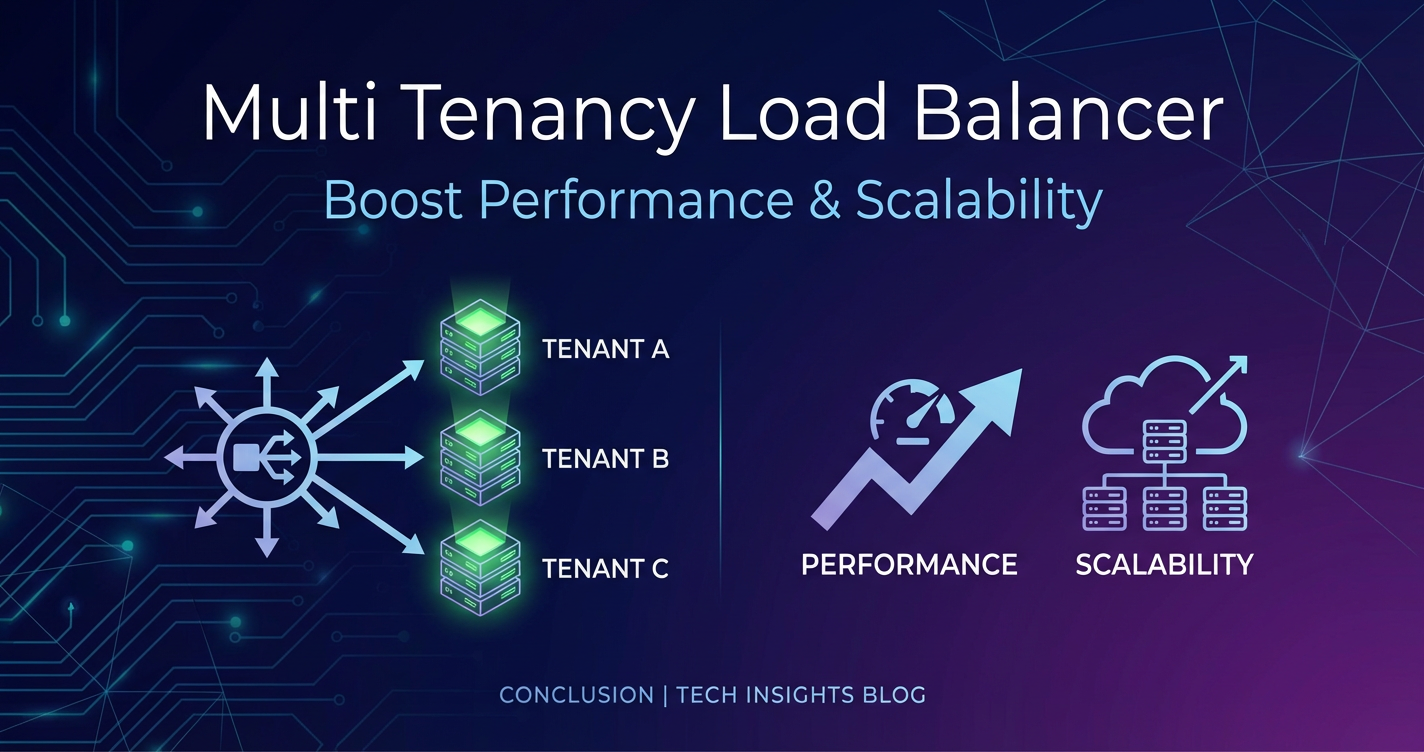
Multi Tenancy Load Balancer: Boost Performance & Scalability
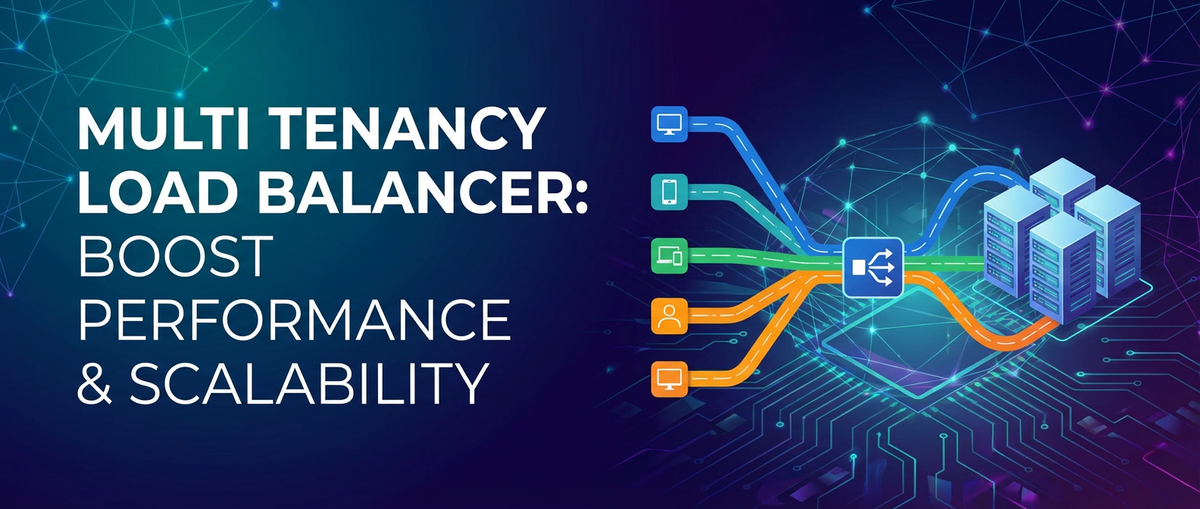


In the intricate tapestry of modern digital infrastructure, where applications serve millions and data flows relentlessly across continents, two concepts stand out as pillars of efficiency and resilience: load balancing and multi-tenancy. Individually, they represent powerful architectural paradigms for handling scale and optimizing resources. Load balancing, in its essence, is the art of distributing incoming network traffic across multiple servers to ensure no single server becomes a bottleneck, thereby maximizing uptime, improving response times, and preventing system overloads. Multi-tenancy, on the other hand, is a software architecture where a single instance of a software application serves multiple distinct user groups, or "tenants," each with their own isolated data and configurations, yet sharing the underlying application and infrastructure.
The true marvel, however, unfolds when these two concepts are meticulously woven together, giving rise to the multi-tenancy load balancer. This sophisticated infrastructure component is not merely a traffic director; it is a strategic orchestrator designed to optimize performance, enhance scalability, and secure isolation within shared environments. As organizations increasingly migrate towards cloud-native architectures, embrace Software-as-a-Service (SaaS) models, and manage burgeoning fleets of microservices, the demand for intelligent, tenant-aware traffic management has skyrocketed. The multi-tenancy load balancer addresses the unique challenges of shared resource environments, ensuring that the actions or demands of one tenant do not adversely impact the experience of another, a phenomenon often referred to as the "noisy neighbor" problem. By intelligently routing, rate-limiting, and isolating traffic at the network edge, these advanced load balancers empower businesses to build robust, cost-effective, and highly available systems that can scale gracefully with demand, delivering a consistent and superior experience to every tenant. This article delves deep into the architecture, benefits, implementation strategies, and future trends of multi-tenancy load balancers, exploring how they are fundamentally transforming the landscape of scalable application delivery and how they often integrate with an overarching gateway or api gateway to provide a complete, managed entry point for diverse workloads.
Understanding Load Balancing in Depth: The Foundation of Resilient Systems
Before we dissect the intricacies of multi-tenancy load balancing, it is imperative to establish a comprehensive understanding of traditional load balancing. At its core, load balancing is a method of distributing network traffic efficiently across multiple servers. Its primary purpose is to ensure that no single server bears too much demand, which could lead to performance degradation or even system crashes. By spreading the workload, load balancers enhance the responsiveness, reliability, and availability of applications. They act as a sophisticated traffic controller, sitting in front of a cluster of servers, intercepting incoming client requests, and forwarding them to an appropriate server based on predefined algorithms and health checks.
What is Load Balancing?
Load balancing serves several critical functions in a modern computing environment:
- Traffic Distribution: The most fundamental role is to evenly distribute incoming client requests across available servers. This prevents any single server from becoming overwhelmed and ensures optimal utilization of all resources.
- Fault Tolerance and High Availability: If a server fails or becomes unhealthy, the load balancer intelligently stops sending traffic to it and redirects requests to other healthy servers. This seamless failover mechanism is crucial for maintaining continuous service availability, preventing downtime, and ensuring a resilient user experience.
- Resource Optimization: By distributing the load, all servers in a farm can operate within their optimal performance parameters, preventing resource exhaustion and prolonging their operational lifespan.
- Scalability: Load balancing enables horizontal scalability, allowing administrators to add or remove servers from the pool dynamically without interrupting service. This flexibility is vital for applications experiencing fluctuating traffic volumes.
- Improved Performance: By preventing server overload, load balancers reduce latency and improve the response time for end-users, leading to a better overall user experience.
Types of Load Balancers
Load balancers can be broadly categorized based on their implementation and the layer of the OSI model at which they operate:
- Hardware Load Balancers: These are dedicated physical appliances specifically designed for load balancing. They offer high performance, dedicated processing power, and robust feature sets, making them suitable for very high-traffic environments. However, they come with significant upfront costs, require physical space, and can be less flexible than software solutions.
- Software Load Balancers: These are applications that run on standard server hardware or virtual machines. They offer greater flexibility, are easier to scale, and typically have lower initial costs. Examples include Nginx, HAProxy, and various cloud provider load balancers.
- Network Layer (Layer 4) Load Balancers: These operate at the transport layer of the OSI model, focusing on IP addresses and port numbers. They are extremely fast because they only inspect network packets' header information, not the content. Common algorithms include Round Robin and Least Connections. They are ideal for applications requiring high throughput and simple traffic distribution.
- Application Layer (Layer 7) Load Balancers: Operating at the application layer, these load balancers can inspect the content of network packets, such as HTTP headers, URLs, and cookie data. This allows for more intelligent routing decisions, such as directing requests to specific application instances based on URL paths or user session information. Layer 7 load balancers also support features like SSL/TLS termination, content caching, and web application firewalls (WAFs), making them essential for complex web applications and API gateway deployments.
- DNS Load Balancing: This is a simpler form of load balancing where multiple IP addresses are associated with a single domain name. When a client requests a domain, the DNS server responds with one of the associated IPs, effectively distributing traffic. While easy to implement, it lacks granular control, real-time health checks, and can be affected by DNS caching.
Load Balancing Algorithms
The effectiveness of a load balancer heavily depends on the algorithm it employs to distribute requests. Some common algorithms include:
- Round Robin: Requests are distributed sequentially to each server in the pool. It's simple and effective for homogenous server farms but doesn't consider server load.
- Weighted Round Robin: Similar to Round Robin, but some servers are assigned a higher weight, meaning they receive more requests. Useful for servers with varying capacities.
- Least Connections: Directs new requests to the server with the fewest active connections. This is a dynamic algorithm that considers the current load on each server, making it more efficient for environments with varying request processing times.
- Weighted Least Connections: An enhancement to Least Connections, allowing administrators to assign weights to servers, influencing how many connections they receive relative to others.
- IP Hash: The load balancer uses a hash of the client's IP address to determine which server receives the request. This ensures that a particular client consistently connects to the same server, which is useful for maintaining session persistence without requiring explicit session management at the load balancer.
- Least Response Time: Sends requests to the server with the fewest active connections and the fastest average response time. This algorithm prioritizes both current load and server performance.
Benefits of Traditional Load Balancing
The widespread adoption of load balancing is a testament to its profound benefits:
- Improved Reliability and Uptime: By distributing traffic and facilitating failover, load balancers ensure that applications remain accessible even if individual servers fail.
- Reduced Downtime: Automated health checks quickly identify unhealthy servers and remove them from the rotation, preventing traffic from being sent to non-responsive instances.
- Enhanced User Experience: Faster response times and consistent availability lead to happier users and increased engagement.
- Efficient Resource Utilization: Load balancers help maximize the use of server resources, reducing the need for over-provisioning and lowering infrastructure costs.
- Seamless Scaling: Adding or removing servers is transparent to end-users, allowing operations teams to scale infrastructure rapidly in response to demand.
In essence, traditional load balancing is the bedrock upon which highly available, scalable, and performant application architectures are built. It provides the essential mechanism for traffic management, enabling applications to withstand high loads and deliver consistent service. With this foundational understanding, we can now venture into the more specialized and complex domain of multi-tenancy.
The Paradigm of Multi-Tenancy: Sharing Resources, Isolating Experiences
Multi-tenancy represents a fundamental shift in software architecture, moving away from the traditional model where each customer or client operates their own dedicated instance of an application. Instead, it embraces a model where a single instance of a software application serves multiple distinct user groups, referred to as "tenants," each of whom has their own isolated data, configurations, and user management, yet shares the underlying computing resources. This architectural pattern has become the cornerstone of cloud computing and the Software-as-a-Service (SaaS) industry, driving significant efficiencies and enabling rapid service delivery.
Defining Multi-Tenancy
At its core, multi-tenancy embodies a "one-to-many" relationship. A single deployment of an application, often across multiple servers and databases, caters to numerous tenants simultaneously. Each tenant perceives their environment as isolated and exclusive, unaware of other tenants sharing the same infrastructure. This logical isolation is paramount, ensuring data privacy, security, and a customized experience for each tenant.
To fully grasp multi-tenancy, it's useful to contrast it with single-tenancy:
| Feature | Single-Tenancy | Multi-Tenancy |
|---|---|---|
| Application Instance | One application instance per customer | Single application instance serves multiple customers |
| Database | Dedicated database per customer | Shared database with logical separation |
| Infrastructure | Dedicated infrastructure per customer | Shared infrastructure across customers |
| Customization | High, direct access and modification | Configurable, but core application code is shared |
| Maintenance/Upgrades | Per-customer upgrades, complex | Single upgrade for all tenants, simplified |
| Resource Utilization | Often inefficient, potential over-provisioning | Highly efficient, resource pooling |
| Cost | Higher per customer | Lower per customer |
| Data Isolation | Physical separation | Logical separation, requires robust controls |
This table highlights the fundamental difference: single-tenancy prioritizes complete physical isolation at a higher cost, while multi-tenancy prioritizes resource efficiency and simplified management through logical isolation and shared infrastructure.
Architectural Patterns for Multi-Tenancy
The implementation of multi-tenancy can vary significantly, primarily concerning how tenant data is managed within the database layer:
- Separate Databases (Database-per-Tenant): Each tenant has their own dedicated database instance. This provides the highest level of data isolation and security, as one tenant's data cannot inadvertently leak to another. It also allows for easier backup and restoration of individual tenant data. However, it can be resource-intensive and complex to manage a large number of database instances.
- Shared Database with Separate Schemas (Schema-per-Tenant): All tenants share a single database server, but each tenant's data resides in its own dedicated schema within that database. This offers a good balance between isolation and resource efficiency. It's less resource-intensive than separate databases but still provides strong logical separation.
- Shared Database with Shared Schema (Table-per-Tenant or Row-based Isolation): All tenants share a single database and a single schema. Tenant data is differentiated by a "tenant ID" column in each table. This is the most resource-efficient model, as it minimizes database overhead. However, it requires the application layer to enforce strict tenant ID filtering on every data access, making it the most complex to implement securely and correctly. It also carries the highest risk of "noisy neighbor" issues at the database level.
Regardless of the database pattern, the application layer typically remains a single, shared instance (or cluster of instances) that serves all tenants, routing requests and accessing data based on the identified tenant.
Advantages of Multi-Tenancy
The pervasive adoption of multi-tenancy is driven by its compelling advantages, particularly in the cloud era:
- Cost Efficiency: By sharing infrastructure (servers, databases, network equipment), providers can achieve significant economies of scale. The cost of hardware, software licenses, and operational overhead is amortized across numerous tenants, leading to lower per-tenant costs. This translates to more affordable services for customers.
- Simplified Management and Maintenance: A single application instance means a single point for upgrades, patches, and maintenance. Instead of deploying updates to hundreds or thousands of individual instances, developers can update one shared instance, drastically reducing operational complexity and ensuring all tenants run on the latest version simultaneously.
- Enhanced Scalability: Multi-tenant architectures are inherently designed for scalability. Adding new tenants often involves simply provisioning new user accounts and configurations, leveraging existing infrastructure. The system can be scaled horizontally by adding more application servers or database replicas as overall demand grows.
- Faster Deployment and Onboarding: New tenants can be onboarded rapidly, as there's no need to provision entirely new infrastructure or application instances. This agility is crucial for SaaS providers aiming to quickly expand their customer base.
- Reduced Environmental Impact: By maximizing resource utilization across shared infrastructure, multi-tenancy contributes to a smaller carbon footprint compared to myriad dedicated, often underutilized, single-tenant environments.
Challenges of Multi-Tenancy
While the benefits are substantial, multi-tenancy introduces its own set of challenges that require careful architectural planning and robust implementation:
- "Noisy Neighbor" Problem: This is perhaps the most significant challenge. One tenant's heavy usage (e.g., intensive computations, large data imports, complex queries) can consume disproportionate resources, negatively impacting the performance experienced by other tenants sharing the same infrastructure. Mitigating this requires sophisticated resource management, throttling, and isolation mechanisms.
- Security and Data Isolation Concerns: Despite logical isolation, the physical sharing of resources means that a vulnerability or misconfiguration could potentially expose one tenant's data to another. Robust access controls, encryption, and regular security audits are paramount to maintain trust.
- Customization Limitations: While multi-tenant applications offer configurable options (branding, workflows), deep-level customization of the core application code is generally not feasible. This can be a limiting factor for tenants with highly unique or specialized requirements.
- Complex Monitoring and Troubleshooting: Diagnosing performance issues or bugs in a multi-tenant environment can be challenging. It requires sophisticated monitoring tools capable of tracking metrics and logs per tenant to identify which tenant is experiencing issues or causing resource contention.
- Backup and Restore Complexity: While a single database simplifies overall backups, restoring data for a single tenant in a shared database/schema environment can be intricate, often requiring point-in-time recovery for specific data subsets.
- Regulatory Compliance: Meeting diverse regulatory requirements (e.g., GDPR, HIPAA) across multiple tenants in a shared environment can be complex, especially if some regulations demand physical data segregation.
In summary, multi-tenancy is a powerful and economically attractive architectural pattern that maximizes resource efficiency and streamlines operations. However, its successful implementation hinges on effectively addressing the inherent challenges, particularly around performance isolation, security, and granular management. This is precisely where the concept of a multi-tenancy load balancer becomes not just beneficial, but indispensable.
The Synergy: Multi-Tenancy and Load Balancing – Orchestrating Shared Success
The convergence of multi-tenancy and load balancing represents a sophisticated architectural evolution, moving beyond simple traffic distribution to intelligent, tenant-aware workload management. While traditional load balancers ensure overall system health and equitable distribution across servers, a multi-tenancy load balancer elevates this capability by understanding the distinct identities and requirements of each tenant. This synergy is crucial for overcoming the inherent challenges of multi-tenancy, particularly the notorious "noisy neighbor" problem, and for truly unleashing the full potential of shared infrastructure for performance, scalability, and security.
Why Combine Them?
The need for a multi-tenancy load balancer stems directly from the challenges of multi-tenant environments:
- Addressing the "Noisy Neighbor" Problem: In a shared environment, one tenant's peak usage can degrade the performance for all others. A multi-tenancy load balancer can identify such scenarios and apply specific policies—like rate limiting or routing to isolated resource pools—to prevent this.
- Ensuring Fair Resource Allocation: It's not enough to simply distribute requests; they must be distributed in a way that respects each tenant's contracted service level agreements (SLAs) and prevents any single tenant from monopolizing resources.
- Scaling Individual Tenant Workloads: Some tenants may experience temporary spikes in traffic. A multi-tenancy load balancer can intelligently scale resources or prioritize traffic for specific tenants without impacting the stability of the entire platform.
- Centralized and Intelligent Entry Point: For all tenant traffic, a multi-tenancy aware load balancer, often integrated with an api gateway, serves as the first point of contact. This allows for centralized tenant identification, authentication, authorization, and policy enforcement before traffic even reaches the application servers.
How Multi-Tenancy Load Balancers Work
A multi-tenancy load balancer operates by incorporating tenant identification into its decision-making process. This tenant identification can be derived from various parts of an incoming request:
- HTTP Headers: A common method is to include a
X-Tenant-IDor similar custom header in API requests. - URL Path: The tenant ID can be part of the URL, e.g.,
api.example.com/tenantA/resource. - Subdomain: Each tenant might have a unique subdomain, e.g.,
tenantA.example.com. - JWT Claims: If a JSON Web Token (JWT) is used for authentication, the tenant ID can be extracted from its claims.
Once the tenant is identified, the load balancer applies tenant-specific routing rules and policies:
- Tenant-Aware Routing: Instead of just sending requests to the least loaded server, the load balancer can direct traffic for a specific tenant to a designated set of application instances or a specific resource pool that has been provisioned or scaled for that tenant. This provides a soft form of isolation.
- Resource Partitioning and Quotas: Advanced multi-tenancy load balancers can enforce resource quotas per tenant. This might involve setting limits on the number of concurrent connections, bandwidth, or requests per second for each tenant. By doing so, they prevent any single tenant from exhausting shared resources.
- Intelligent Throttling and Rate Limiting: If a tenant exceeds their allocated resource quota or makes an excessive number of requests, the load balancer can dynamically throttle or rate-limit their traffic to protect the overall system stability without penalizing other tenants. This is a critical defense against "noisy neighbors."
- Advanced Health Checks: While traditional load balancers perform generic health checks, multi-tenancy load balancers might incorporate more sophisticated, tenant-specific health checks, ensuring that even if the application instance is generally healthy, it's also responsive and available for specific tenant workloads.
Key Features and Capabilities
A robust multi-tenancy load balancer offers a suite of advanced features designed for the unique demands of shared environments:
- Tenant-ID Based Routing and Content Switching: The ability to parse request attributes (headers, URLs, cookies) to identify the tenant and then route that tenant's traffic to specific backend server groups or microservices. This is particularly powerful at Layer 7.
- Resource Quotas & Throttling/Rate Limiting per Tenant: Essential for fair usage and preventing resource monopolization. Administrators can configure custom limits on requests per second, bandwidth, or concurrent connections for individual tenants.
- Dynamic Service Discovery and Tenant Mapping: The load balancer should be able to dynamically discover new backend services or instances and map them to specific tenants, allowing for agile scaling and deployment of tenant-specific microservices.
- Customizable SSL/TLS Certificates and Policies per Tenant: To maintain strong security and brand identity, a multi-tenancy load balancer can manage and apply distinct SSL/TLS certificates and security policies for each tenant, particularly when tenants use custom domains.
- Granular Monitoring and Logging: Crucial for observability. The load balancer should provide detailed metrics, logs, and alerts broken down by tenant. This allows for quick identification of tenant-specific performance issues, usage patterns, and potential security threats.
- Authentication and Authorization Integration: Often, the load balancer (or an integrated api gateway) can perform initial authentication and authorization checks based on tenant credentials or tokens before forwarding requests, adding an extra layer of security.
- Billing and Chargeback Mechanisms: By accurately tracking resource consumption (requests, bandwidth, CPU time) per tenant, the load balancer provides the data necessary for billing and chargeback, enabling providers to monetize their services effectively.
- API Management Capabilities: When functioning as an api gateway, it can provide API versioning, transformation, caching, and developer portal features, all while being tenant-aware.
Benefits of a Multi-Tenant Load Balancer
Implementing a multi-tenancy load balancer unlocks a cascade of advantages for providers and tenants alike:
- Enhanced Performance and Predictability: By intelligently distributing and managing tenant traffic, the system can ensure optimal resource utilization, reducing latency and maintaining consistent performance for all tenants, even under varying loads. The "noisy neighbor" effect is significantly minimized.
- Superior Scalability and Elasticity: The platform can scale individual tenant services or the entire infrastructure more efficiently. New tenants can be onboarded seamlessly, and resources can be dynamically allocated or deallocated based on tenant demand, fostering elasticity.
- Improved Resource Utilization and ROI: Sharing resources effectively across multiple tenants maximizes the return on infrastructure investment. Fewer servers are idle, and computing power is efficiently consumed, leading to substantial cost savings.
- Stronger Isolation and Security: While sharing physical resources, the load balancer enforces logical isolation at the traffic layer. Tenant-specific routing, SSL certificates, and access policies enhance security and ensure that data and traffic remain separate.
- Simplified Operations and Management: By centralizing traffic management and policy enforcement, multi-tenancy load balancers reduce the complexity of managing large, diverse multi-tenant environments. A single point of control simplifies monitoring, troubleshooting, and applying updates.
- Cost Reduction: Beyond resource utilization, the operational cost savings derived from simplified management, fewer incidents caused by resource contention, and streamlined scaling contribute significantly to overall cost reduction.
- High Availability and Resilience: Building upon traditional load balancing principles, the multi-tenancy variant extends fault tolerance to the tenant level, ensuring that specific tenant services remain available even if some backend instances serving other tenants encounter issues.
In essence, the multi-tenancy load balancer is not just an efficiency tool; it is a strategic differentiator. It transforms a complex, potentially chaotic shared environment into a well-orchestrated, predictable, and high-performing system, delivering a premium experience to every tenant while optimizing the provider's operational footprint. Its intelligence at the edge of the network is paramount for the success of any large-scale SaaS platform or multi-tenant cloud offering.
APIPark is a high-performance AI gateway that allows you to securely access the most comprehensive LLM APIs globally on the APIPark platform, including OpenAI, Anthropic, Mistral, Llama2, Google Gemini, and more.Try APIPark now! 👇👇👇
Implementation Strategies and Best Practices: Architecting for Multi-Tenant Success
Implementing a multi-tenancy load balancer effectively requires careful consideration of architectural choices, integration points, and ongoing operational practices. The goal is to maximize the benefits of shared infrastructure while upholding the principles of isolation, security, and performance for each tenant. This section explores various strategies, common integration patterns, and essential best practices, including how platforms like APIPark contribute to this ecosystem.
Choosing the Right Architecture
The architectural design for a multi-tenancy load balancer depends heavily on the scale, complexity, and specific requirements of the application:
- Shared Load Balancer with Tenant-Aware Routing (Most Common): This is the prevalent model. A single, powerful load balancer (or a cluster of them) sits at the edge, acting as the primary ingress point for all tenant traffic. It uses Layer 7 capabilities to inspect requests (e.g., HTTP headers, URL paths, subdomains) to identify the tenant. Based on this identification, it then routes the request to the appropriate backend server group or microservice cluster dedicated to that tenant's workload, or to a shared pool with specific resource allocation for the identified tenant. This approach optimizes resource utilization and simplifies management.
- Dedicated Load Balancer per Tenant (Less Common for Cost): While providing maximum isolation, this approach often negates the cost-efficiency benefits of multi-tenancy. Each tenant would have their own dedicated load balancer instance. This might only be considered for extremely large enterprise tenants with unique, stringent security or compliance requirements that demand physical segregation at every layer, and who are willing to pay a premium.
- Load Balancer as a Service (LBaaS) in Cloud Environments: Cloud providers (AWS ELB/ALB, Azure Load Balancer, GCP Load Balancing) offer managed load balancing services that are inherently scalable and highly available. These services often provide features suitable for multi-tenancy, such as host-based routing, path-based routing, and custom header inspection. Leveraging LBaaS offloads the operational burden of managing the load balancer infrastructure itself, allowing focus on tenant-specific routing rules and backend application logic. This is often the default choice for cloud-native multi-tenant applications.
Integration with API Gateways
A critical component that often works in tandem with, or even incorporates the functionalities of, a multi-tenancy load balancer is an API gateway. An API gateway acts as a single entry point for all API calls, sitting in front of a collection of backend services. While a load balancer primarily handles traffic distribution at the network or application layer, an API gateway extends this functionality by providing a comprehensive suite of API management capabilities.
The integration pattern typically looks like this:
- Client Request: A client sends a request to the application's public endpoint, which is often managed by the API gateway.
- API Gateway Processing: The API gateway intercepts the request. Here, it can perform initial tenant identification, apply authentication and authorization policies (e.g., validating API keys, JWTs), enforce rate limits specific to the tenant, perform request/response transformations, cache responses, and log API calls. These functions are often tenant-aware.
- Forwarding to Load Balancer: After processing, the API gateway then forwards the request to an internal multi-tenancy load balancer. The API gateway might append or modify headers (e.g., add
X-Tenant-ID) to explicitly inform the load balancer about the tenant, or the load balancer itself might re-extract tenant information. - Load Balancer Routing: The multi-tenancy load balancer then takes over, using the tenant information to route the request to the correct backend microservice, server group, or container instance specifically allocated for that tenant or shared among tenants with specific resource controls.
- Backend Service: The request is processed by the application service, which then returns a response back through the load balancer and API gateway to the client.
This layered approach offers robust control and isolation. The API gateway handles the API-specific concerns and tenant-level access control, while the multi-tenancy load balancer ensures efficient and isolated traffic distribution to the underlying infrastructure.
Introducing APIPark: An Open Source AI Gateway & API Management Platform
In this context of comprehensive API management and intelligent traffic routing, platforms like ApiPark emerge as crucial tools. APIPark, an open-source AI gateway and API developer portal, exemplifies how an advanced API gateway can naturally integrate and enhance multi-tenancy load balancing strategies.
APIPark is designed to manage, integrate, and deploy AI and REST services with ease. For multi-tenancy, it offers a standout feature: "Independent API and Access Permissions for Each Tenant". This directly addresses the need for logical isolation and customized experiences, allowing the creation of multiple teams (tenants), each with independent applications, data, user configurations, and security policies, while still sharing the underlying applications and infrastructure to improve resource utilization and reduce operational costs. This aligns perfectly with the goals of multi-tenancy.
Furthermore, APIPark's "End-to-End API Lifecycle Management" includes helping to "regulate API management processes, manage traffic forwarding, load balancing, and versioning of published APIs." This means that APIPark doesn't just manage APIs; it actively participates in how traffic is directed and balanced, providing essential functionalities that complement a dedicated multi-tenancy load balancer or even incorporate aspects of it. Its ability to "Quick Integration of 100+ AI Models" and "Unified API Format for AI Invocation" also highlights its role as a specialized AI gateway, abstracting backend complexities for diverse AI services. With its performance rivaling Nginx, achieving over 20,000 TPS on modest hardware, APIPark proves its capability to handle large-scale multi-tenant traffic efficiently. Detailed API call logging and powerful data analysis features further provide the per-tenant visibility crucial for operational success in a multi-tenant environment.
Monitoring and Observability
In a multi-tenant environment, granular monitoring is not just a best practice; it's a necessity.
- Per-Tenant Metrics: Collect and visualize metrics (e.g., requests per second, error rates, latency, resource utilization) for each individual tenant. This helps identify "noisy neighbors" or performance degradation specific to one tenant.
- Centralized Logging: Aggregate logs from the load balancer, API gateway, and backend services. Ensure logs contain tenant identifiers to facilitate quick troubleshooting and root cause analysis for tenant-specific issues.
- Distributed Tracing: Implement distributed tracing (e.g., OpenTracing, OpenTelemetry) to track individual requests as they traverse through the load balancer, API gateway, and various microservices. This provides end-to-end visibility and helps pinpoint bottlenecks in complex multi-tenant architectures.
- Alerting: Set up tenant-specific alerts for performance thresholds or error rates. Proactive alerting allows operators to address issues before they impact a large number of tenants.
Security Considerations
Security is paramount in multi-tenant systems, as a breach can impact multiple customers.
- Data Isolation: Reiterate the importance of robust logical (and where feasible, physical) data isolation at the database layer. The load balancer and API gateway must not allow any cross-tenant data leakage.
- Access Control and Authentication: Implement strong authentication mechanisms (MFA, SSO) for both tenants accessing their data and administrators managing the system. The API gateway is the ideal place to enforce tenant-aware authorization policies.
- DDoS Protection and Rate Limiting: The multi-tenancy load balancer and API gateway should be equipped with strong DDoS mitigation capabilities and fine-grained rate-limiting features (per tenant, per API endpoint) to protect against malicious attacks and accidental overload.
- Web Application Firewall (WAF) Integration: Integrate a WAF (either as part of the load balancer/gateway or a separate component) to protect against common web vulnerabilities (e.g., SQL injection, XSS).
- Secure API Design: Follow security best practices for API design, including input validation, output encoding, and principle of least privilege for API keys and tokens.
Scalability Challenges and Solutions
While multi-tenancy inherently aids scalability, specific challenges remain:
- Horizontal Scaling of Application Instances: Design backend services to be stateless and easily horizontally scalable. The multi-tenancy load balancer can then distribute traffic across newly added instances.
- Database Scaling: For shared database patterns, employ database sharding (partitioning data across multiple database servers) or use managed database services that offer high scalability and performance.
- Auto-scaling Policies: Implement auto-scaling groups for application servers, configured to scale based on metrics like CPU utilization, request queue length, or custom tenant-specific metrics, managed by the load balancer.
- Caching: Strategically use caching at the load balancer, API gateway, and application layers to reduce the load on backend services and improve response times. Tenant-specific caching can be implemented.
By meticulously planning and implementing these strategies, organizations can build highly performant, secure, and scalable multi-tenant platforms that deliver exceptional value to all their customers, while simultaneously optimizing their operational footprint. The synergistic interaction between a well-configured multi-tenancy load balancer and a feature-rich API gateway like APIPark forms the backbone of such resilient architectures.
Use Cases and Real-World Applications: Where Multi-Tenancy Load Balancers Shine
The principles and technologies behind multi-tenancy load balancers are not confined to theoretical discussions; they are actively deployed and form the backbone of countless successful digital services across various industries. Their ability to deliver isolated, scalable, and high-performance experiences within shared infrastructure makes them indispensable for a broad spectrum of real-world applications.
SaaS Platforms
This is arguably the most common and critical application of multi-tenancy load balancers. Virtually every major Software-as-a-Service (SaaS) provider, from CRM giants to project management tools, leverages multi-tenancy to serve millions of customers cost-effectively.
- Customer Relationship Management (CRM) Systems: Platforms like Salesforce or HubSpot manage vast amounts of customer data and interactions for thousands of businesses. A multi-tenancy load balancer ensures that a high-volume data import by one client doesn't impact the responsiveness of another client running a sales report. It intelligently routes traffic for each company to the appropriate application servers and manages resource allocation, often integrating with an API gateway for secure and metered access to CRM functionalities by third-party applications.
- Enterprise Resource Planning (ERP) Solutions: SaaS ERPs provide comprehensive business management functionalities to diverse enterprises. Here, multi-tenancy load balancers ensure that financial transactions for one company are processed efficiently and securely, completely isolated from inventory management operations of another company, all while sharing the underlying compute infrastructure.
- Project Management & Collaboration Tools: Tools like Asana, Trello, or Jira Cloud serve teams of varying sizes and activity levels. A multi-tenancy load balancer prevents a large team running complex queries or uploading massive files from degrading the experience for smaller teams engaging in routine task updates.
- Email Marketing and Automation Platforms: These platforms handle millions of email sends and complex campaign automations for numerous businesses. The load balancer plays a crucial role in distributing email sending tasks, managing API calls for contact list management, and ensuring that the performance of one customer's massive campaign launch doesn't affect another's regular operations.
Cloud Providers: Managing Tenant Resources
Major cloud providers (AWS, Azure, Google Cloud) are perhaps the largest implementers of multi-tenancy at their core. While their offerings are vast, multi-tenancy load balancing is fundamental to how they provide "Load Balancer as a Service" (LBaaS) and manage their internal resources.
- Virtual Machines (VMs) and Container Orchestration: Cloud providers host countless VMs and containers belonging to different customers on shared physical hosts. The internal networking and load balancing components within the cloud infrastructure are inherently multi-tenant. They ensure that traffic intended for a specific customer's VM or Kubernetes cluster is routed correctly and that resource usage is isolated, preventing noisy neighbor issues at the infrastructure level. Their external load balancers (like AWS ALB or GCP Load Balancing) also offer multi-tenant capabilities, allowing users to configure host-based or path-based routing to different microservices or customer applications behind a single load balancer instance.
- Serverless Functions (FaaS): Platforms like AWS Lambda or Azure Functions operate by running customer code in isolated execution environments on shared infrastructure. When a function is invoked, an internal multi-tenancy load balancer-like mechanism ensures that the request is directed to the correct customer's function instance, often with cold start management and auto-scaling built-in, all while providing strong resource isolation.
Microservices Architectures
Modern applications are increasingly built using microservices, where an application is decomposed into smaller, independently deployable services. Multi-tenancy load balancers play a vital role here, especially when multiple teams or customers consume these microservices.
- Shared Microservices with Tenant-Specific Data: A single microservice (e.g., a notification service) might be shared across multiple tenants. The multi-tenancy load balancer (or an integrated API gateway) can route requests to this shared service, appending a tenant ID or other context, ensuring the service processes data relevant only to that tenant.
- Tenant-Specific Microservice Instances: For very demanding tenants or those with strict isolation needs, the multi-tenancy load balancer can route their traffic to dedicated instances of certain microservices, effectively segmenting resources at a granular level.
- Service Mesh Integration: In complex microservices environments using a service mesh (e.g., Istio, Linkerd), the multi-tenancy load balancer acts as the ingress controller, routing external tenant traffic into the mesh, where further tenant-aware routing, policies, and observability are enforced at the service-to-service level.
Telecommunications: Managing Diverse Subscriber Services
The telecommunications industry, with its massive subscriber bases and diverse service offerings (voice, data, messaging, IoT), heavily relies on multi-tenancy and robust load balancing.
- Customer Billing and Provisioning Systems: These systems manage millions of customer accounts, service plans, and billing cycles. Multi-tenancy load balancers ensure high availability and performance for these critical operations, allowing different segments of subscribers (e.g., consumer vs. enterprise, different regions) to be managed efficiently.
- Network Function Virtualization (NFV): In NFV, traditional network functions (e.g., firewalls, routers, load balancers themselves) are virtualized and run on commodity hardware. These virtualized network functions often serve multiple tenants (e.g., different enterprise customers of a telco) in a multi-tenant fashion, relying on multi-tenancy load balancing to distribute traffic and isolate workloads within the virtualized infrastructure.
IoT Platforms: Handling Millions of Connected Devices
Internet of Things (IoT) platforms manage millions, sometimes billions, of connected devices for various customers. Each customer might have hundreds of thousands of devices generating continuous data streams.
- Device Ingestion and Data Processing: A multi-tenancy load balancer is crucial for ingesting massive volumes of data from diverse customer devices. It ensures that data streams from one customer's smart sensors are processed efficiently, isolated from another customer's fleet of autonomous vehicles, preventing data cross-contamination and resource contention at the data ingestion gateway.
- Command and Control: When customers send commands to their devices, the load balancer ensures these commands are routed securely and efficiently to the correct device through the appropriate backend services, all while maintaining tenant isolation.
Across these varied and demanding sectors, the multi-tenancy load balancer emerges as a foundational technology. It empowers organizations to build resilient, scalable, and secure platforms that efficiently serve a diverse customer base, solidifying its position as a cornerstone of modern digital infrastructure.
Future Trends and Evolution: The Road Ahead for Multi-Tenancy Load Balancers
The landscape of cloud computing and application delivery is in a constant state of flux, driven by relentless innovation. Multi-tenancy load balancers, as critical components of this ecosystem, are also evolving rapidly, adapting to new architectural patterns and leveraging emerging technologies. Understanding these future trends is crucial for architects and developers planning for the next generation of scalable and resilient multi-tenant systems.
AI/ML-Driven Load Balancing
The integration of Artificial Intelligence and Machine Learning is poised to revolutionize load balancing. Traditional algorithms, while effective, are static or react to immediate conditions. AI/ML-driven load balancers, however, can:
- Predictive Scaling: Analyze historical traffic patterns, resource utilization, and even external factors (e.g., marketing campaigns, news events) to proactively scale resources and adjust routing before peak loads occur, preventing performance bottlenecks rather than just reacting to them.
- Anomaly Detection and Self-Healing: Identify unusual traffic patterns or resource consumption behaviors for specific tenants that might indicate a "noisy neighbor," a DDoS attack, or an application error. They can then automatically apply mitigation strategies, such as isolating the problematic tenant or rerouting traffic, reducing manual intervention.
- Optimized Resource Allocation: Dynamically learn and fine-tune resource allocation policies per tenant, based on their actual usage and performance requirements, ensuring optimal cost efficiency and tenant experience. This moves beyond static quotas to intelligent, adaptive resource management.
- Enhanced API Gateway Functionality: Within an AI gateway like APIPark, AI/ML could further optimize the routing of AI model invocations, predict model performance, and dynamically adjust resource allocation for different AI workloads based on real-time demand and cost considerations.
Edge Computing and Distributed Load Balancing
As applications and data move closer to the end-users to reduce latency (edge computing), load balancing will become increasingly distributed.
- Edge Load Balancers: Instead of a centralized load balancer, multiple smaller, geographically distributed load balancers will operate at the network edge. These edge load balancers will be responsible for routing tenant traffic to the closest available compute resources, whether those are microservices running in a local data center or serverless functions at the nearest CDN POP.
- Global Multi-Tenancy Load Balancing: For applications with a global footprint, load balancers will need to make intelligent routing decisions based on user location, tenant data residency requirements, and real-time network conditions across multiple regions, ensuring optimal performance and compliance. This also applies to multi-tenant API gateway deployments spanning continents.
Serverless and Container-Native Load Balancing
The proliferation of serverless functions and container orchestration platforms (like Kubernetes) is driving the need for specialized load balancing solutions.
- Container-Native Load Balancers: Kubernetes Ingress controllers and service meshes already provide sophisticated load balancing for microservices running in containers. Future advancements will focus on making these even more tenant-aware, with advanced policy enforcement, resource isolation, and observability capabilities integrated directly into the container orchestration layer.
- Serverless-Aware Load Balancing: For serverless architectures, load balancers will need to integrate more deeply with FaaS platforms, optimizing cold start times, managing concurrency for multi-tenant functions, and providing seamless scaling based on event-driven triggers, ensuring efficient resource utilization for individual tenants.
More Sophisticated Tenant Isolation Techniques
While logical isolation is the norm, the drive for enhanced security and performance will lead to more robust isolation methods.
- Micro-Segmentation: Network micro-segmentation will become more granular, allowing for fine-grained control over network traffic flow between individual tenant components, even within the same physical host.
- Hardware-Assisted Isolation: Leveraging technologies like Intel SGX or AMD SEV could provide hardware-level isolation for tenant-specific code and data within shared computing environments, offering an even higher degree of security than purely software-based methods.
- Hybrid Isolation Models: Blending shared infrastructure with dedicated tenant-specific components (e.g., dedicated databases for premium tenants, shared application servers) will become more common, offering flexible isolation levels tailored to tenant requirements and pricing tiers.
Enhanced Observability and Automation
The increasing complexity of multi-tenant environments demands even more sophisticated tools for monitoring, troubleshooting, and automation.
- Unified Observability Platforms: Single-pane-of-glass solutions that integrate metrics, logs, traces, and events, all filtered and correlated by tenant, will become standard. This will enable faster root cause analysis and proactive issue resolution.
- Policy-as-Code and Automation: The configuration of multi-tenancy load balancers, including routing rules, rate limits, and security policies, will be increasingly managed through code. This allows for automated deployment, version control, and consistent application of policies across environments.
- Self-Optimizing Systems: The ultimate goal is for multi-tenant systems, including their load balancers and API gateway components, to become largely self-managing and self-optimizing, automatically adapting to changes in load, performance, and security threats with minimal human intervention.
The future of multi-tenancy load balancers is bright and dynamic. As the digital world continues its rapid expansion, these intelligent traffic orchestrators will remain at the forefront, leveraging AI, edge computing, and cloud-native paradigms to deliver unparalleled performance, scalability, and security to multi-tenant applications and services across the globe. Their evolution is inextricably linked to the ongoing quest for more efficient, resilient, and adaptive digital infrastructures.
Conclusion: The Indispensable Role of Multi-Tenancy Load Balancers in Modern Architectures
In the complex and ever-evolving landscape of modern cloud-native applications and Software-as-a-Service (SaaS) platforms, the multi-tenancy load balancer stands as an indispensable architectural component. We have traversed from the fundamental principles of load balancing—the essential art of distributing traffic to ensure high availability and prevent bottlenecks—to the nuanced paradigm of multi-tenancy, which champions resource efficiency and simplified management through shared infrastructure and logical isolation. The true power, however, emerges from their synergistic combination.
A multi-tenancy load balancer is far more than a simple traffic router. It is an intelligent orchestrator, capable of understanding the unique identity and requirements of each tenant. By employing sophisticated tenant-aware routing, granular resource quotas, dynamic rate limiting, and robust security policies, these advanced load balancers effectively mitigate the notorious "noisy neighbor" problem, ensuring that the performance and experience of one tenant are never compromised by the demands of another. This capability unlocks a cascade of benefits, including superior performance predictability, enhanced scalability and elasticity, optimized resource utilization, stronger isolation and security, and significantly reduced operational costs.
The strategic integration of a multi-tenancy load balancer with an API gateway further amplifies these advantages. The API gateway serves as a vital first line of defense and management, handling authentication, authorization, logging, and API-specific policy enforcement, all in a tenant-aware manner. Platforms like ApiPark exemplify this integration, offering not just an open-source AI gateway but also comprehensive API management features that contribute to traffic forwarding and load balancing within a multi-tenant context. APIPark's ability to provide independent APIs and access permissions for each tenant, coupled with its robust performance and analytical capabilities, showcases how a well-designed API gateway becomes an integral part of a resilient multi-tenant delivery system.
From the vast SaaS ecosystems powering global businesses to the intricate cloud infrastructures supporting millions of virtual resources, and from dynamic microservices deployments to high-volume IoT platforms, multi-tenancy load balancers are the unseen heroes enabling seamless operation and growth. As we look to the future, the continuous evolution of these systems—driven by AI/ML for predictive intelligence, edge computing for distributed performance, and deeper integration with serverless and container orchestration—promises even more sophisticated and adaptive solutions.
For any organization building or operating scalable digital services in a shared environment, embracing the architecture of a multi-tenancy load balancer is not merely an option; it is a strategic imperative. It empowers businesses to deliver a consistent, high-quality experience to every customer, maximize their infrastructure investments, and remain agile and competitive in an ever-demanding digital world. This foundational technology is, without doubt, boosting performance and scalability, forging the path for the next generation of resilient and efficient digital infrastructures.
Frequently Asked Questions (FAQ)
- What is the main difference between a traditional load balancer and a multi-tenant load balancer? A traditional load balancer primarily focuses on distributing generic network traffic across a pool of servers to optimize overall performance and availability. It typically treats all incoming requests equally. A multi-tenant load balancer, however, is tenant-aware. It identifies the specific tenant associated with each incoming request (e.g., via HTTP headers, URLs, or subdomains) and then applies tenant-specific routing rules, resource quotas, rate limits, and security policies. This ensures logical isolation, prevents "noisy neighbor" issues, and guarantees a consistent experience for each tenant within a shared infrastructure.
- How does a multi-tenant load balancer prevent the "noisy neighbor" problem? The "noisy neighbor" problem occurs when one tenant's heavy resource consumption negatively impacts the performance experienced by other tenants sharing the same infrastructure. A multi-tenant load balancer prevents this by:
- Tenant-Aware Routing: Directing specific tenant traffic to dedicated backend server groups or resource pools when necessary.
- Resource Quotas & Throttling: Enforcing limits on requests per second, bandwidth, or concurrent connections for each individual tenant.
- Rate Limiting: Dynamically reducing traffic volume from tenants exceeding their fair share of resources, without affecting other tenants.
- Granular Monitoring: Providing per-tenant visibility to quickly identify and address resource contention issues.
- Can an API Gateway function as a multi-tenant load balancer? Yes, an API gateway often incorporates significant multi-tenant load balancing capabilities and can even be considered an advanced form of a Layer 7 multi-tenant load balancer. While its primary role is API management (authentication, authorization, transformation, caching), it typically performs tenant identification and then routes traffic to backend services. Many API gateway solutions offer tenant-specific rate limiting, access control, and policy enforcement, effectively performing traffic distribution and resource management in a tenant-aware manner. For very complex multi-tenant routing at scale, an API gateway might work in conjunction with a dedicated, highly optimized internal multi-tenant load balancer.
- What are the key security considerations for a multi-tenant load balancer? Security in a multi-tenant environment is paramount. Key considerations for a multi-tenant load balancer include:
- Data Isolation: Ensuring that traffic and data for one tenant cannot be accessed or inadvertently routed to another.
- Strong Authentication and Authorization: Integrating with identity providers to authenticate tenants and enforce granular access permissions at the gateway or load balancer level.
- SSL/TLS Management: Supporting tenant-specific SSL/TLS certificates and policies for secure communication.
- DDoS and WAF Protection: Implementing robust DDoS mitigation and Web Application Firewall (WAF) capabilities to protect against common web attacks and volumetric traffic spikes that could impact all tenants.
- Secure Configuration: Regularly auditing load balancer configurations to prevent misconfigurations that could lead to security vulnerabilities.
- How does APIPark contribute to multi-tenant API management? ApiPark significantly contributes to multi-tenant API management by acting as an open-source AI gateway and API management platform with built-in multi-tenancy features. Specifically, APIPark enables the creation of multiple independent "teams" (tenants), each with their own applications, data, user configurations, and security policies, while sharing underlying infrastructure. It facilitates "End-to-End API Lifecycle Management," which includes managing traffic forwarding and load balancing for these distinct tenant environments. Furthermore, APIPark's ability to unify API invocation formats, encapsulate prompts into REST APIs, provide detailed call logging, and offer powerful data analysis per tenant makes it an invaluable tool for ensuring isolated, secure, and performant API experiences in a multi-tenant architecture, particularly for AI services.
🚀You can securely and efficiently call the OpenAI API on APIPark in just two steps:
Step 1: Deploy the APIPark AI gateway in 5 minutes.
APIPark is developed based on Golang, offering strong product performance and low development and maintenance costs. You can deploy APIPark with a single command line.
curl -sSO https://download.apipark.com/install/quick-start.sh; bash quick-start.sh

In my experience, you can see the successful deployment interface within 5 to 10 minutes. Then, you can log in to APIPark using your account.

Step 2: Call the OpenAI API.