SOAP Calls vs. REST: Choosing the Right API Design
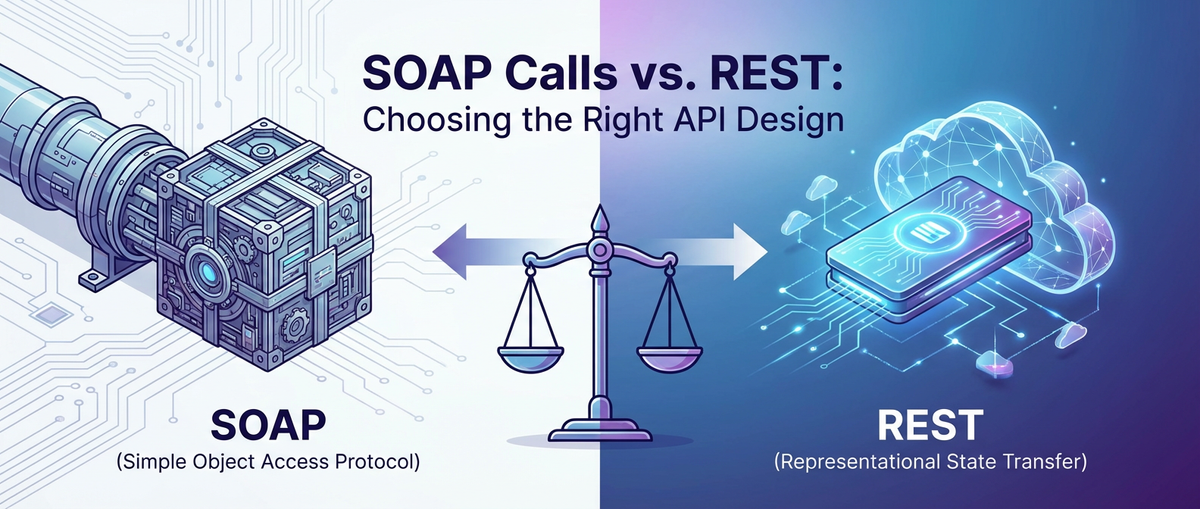


In the vast and interconnected landscape of modern software development, Application Programming Interfaces (APIs) serve as the fundamental building blocks, the invisible bridges that allow disparate software systems to communicate, share data, and collaborate seamlessly. They are the bedrock upon which countless applications, from sprawling enterprise systems to nimble mobile apps, are constructed. The ability of an application to interact with other services, databases, and external platforms has become a non-negotiable requirement, driving innovation and enabling complex digital ecosystems to flourish. Without robust and well-designed APIs, the dream of interconnected services and data fluidity would remain largely unrealized, leading to fragmented systems and stifled progress.
As the demand for interoperability grew exponentially over the past few decades, two primary architectural styles and protocols emerged as dominant forces in the realm of API design: SOAP (Simple Object Access Protocol) and REST (Representational State Transfer). Each represents a distinct philosophy for how software components should interact, offering unique strengths and posing different challenges. For developers, architects, and business leaders, the decision between SOAP and REST is not merely a technical preference; it's a strategic choice that can profoundly impact a project's development timeline, performance, scalability, security, and long-term maintainability. Understanding the nuances of each, their historical context, design principles, and practical implications, is paramount to making an informed decision that aligns with specific project requirements and future aspirations. This comprehensive guide will delve deep into the intricacies of SOAP and REST, providing a detailed comparison, exploring their respective advantages and disadvantages, and ultimately equipping you with the knowledge to choose the most appropriate api design for your next endeavor.
The Genesis of Communication: A Deep Dive into SOAP
Before the advent of widespread web services, integrating disparate systems was often a laborious and proprietary endeavor. SOAP emerged in the late 1990s as a standardized way to exchange structured information in the implementation of web services, primarily as a successor to older technologies like DCOM and CORBA, which were often language and platform-specific. Unlike a mere architectural style, SOAP is a highly prescriptive, XML-based messaging protocol, meaning it defines a strict set of rules for how messages are structured and transmitted. Its foundational strength lies in its ability to offer a robust and highly standardized framework for enterprise-level communication, where reliability, security, and transactional integrity are paramount.
What is SOAP? Understanding its Core Principles
At its heart, SOAP is a protocol for exchanging structured information in a decentralized, distributed environment. It primarily uses XML (Extensible Markup Language) for its message format, making it verbose but also highly descriptive and machine-readable. A SOAP message is essentially an XML document, typically transported over HTTP, but it can also be carried over other protocols like SMTP, JMS, or TCP. This transport independence provides a degree of flexibility, although HTTP remains the most common choice due to its ubiquity and firewall-friendliness.
The structure of a SOAP message is rigidly defined and consists of several key components:
- Envelope: This is the root element of a SOAP message, defining the start and end of the message. It effectively wraps the entire message content and defines the XML namespace for the SOAP protocol itself. Think of it as the outer packaging that declares this as a SOAP message.
- Header (Optional): The header block is used for carrying application-specific control information. This is where features like security credentials (e.g., WS-Security tokens), transaction IDs (e.g., WS-AtomicTransaction), or routing information (e.g., WS-Addressing) are typically embedded. Its optional nature allows for flexibility, but in enterprise contexts, it often carries crucial metadata that doesn't directly relate to the business payload.
- Body: This is the mandatory element that contains the actual message payload, meaning the data intended for the recipient application. In a request, it might hold the method call and its parameters; in a response, it would contain the return values. The business logic and data exchange reside predominantly within the Body.
- Fault (Optional): If an error occurs during the processing of a SOAP message, the Fault element is used to convey error information back to the sender. It contains structured error details, including a fault code, a fault string (human-readable explanation), a fault actor (who caused the fault), and an optional detail element for application-specific error information. This structured error handling is a significant advantage in complex systems.
The rigorous definition of SOAP messages, coupled with its reliance on XML Schema for data type validation, ensures a high degree of interoperability and predictability. When a client sends a SOAP request, it typically invokes a specific operation on a remote service, passing parameters within the SOAP Body. The service processes the request and returns a SOAP response, again as an XML document, containing the result or any error information. This remote procedure call (RPC) paradigm is central to SOAP's design.
The Power of Standards: WSDL and WS-* Extensions
One of SOAP's most distinguishing features, and a significant contributor to its enterprise adoption, is its deep integration with a rich ecosystem of related standards, particularly WSDL and the WS-* specifications.
WSDL (Web Services Description Language): This XML-based language is used to describe the functionality offered by a SOAP web service. It acts as a machine-readable contract, detailing everything a client needs to know to interact with the service: * Operations: What functions the service can perform (e.g., getCustomerDetails, placeOrder). * Messages: The format of the request and response messages for each operation. * Data Types: The XML Schema definitions for all data types used in the messages, ensuring strong type checking. * Bindings: The communication protocol and message format for operations (e.g., SOAP over HTTP). * Service Endpoint: The network address where the service can be accessed.
WSDL is invaluable for enabling tool-driven development. Client-side tools can parse a WSDL document and automatically generate client-side proxy classes in various programming languages. This means developers don't have to manually write code to serialize or deserialize SOAP messages, significantly reducing development effort and minimizing errors. The formal contract ensures that both client and server adhere to the same agreed-upon interface, making integration more predictable and robust.
WS-* Specifications: Beyond WSDL, SOAP's power is amplified by a family of interoperable extensions known as the WS- specifications. These standards address critical enterprise requirements that go beyond basic message exchange, adding layers of functionality and governance: * WS-Security: Provides mechanisms for message-level security, including integrity (digital signatures), confidentiality (encryption), and authentication (security tokens like X.509 certificates or SAML assertions). This is a significant differentiator from basic transport-layer security (HTTPS) alone, allowing for fine-grained security policies on individual message parts. * WS-ReliableMessaging: Guarantees message delivery, even in the face of network outages or system failures. It ensures that messages are delivered once and only once, and in the correct order, which is crucial for critical business transactions. * WS-AtomicTransaction: Enables distributed transactions across multiple services, ensuring that a set of operations either all succeed or all fail together (ACID properties). This is vital for maintaining data consistency across complex, inter-dependent systems, such as those found in banking or supply chain management. * WS-Addressing:* Provides mechanisms for addressing messages to specific endpoints and for associating messages with replies, allowing for more flexible message routing independent of the underlying transport.
These WS-* standards provide a comprehensive toolkit for building highly secure, reliable, and transactional enterprise integrations. They represent years of industry collaboration to solve complex distributed computing problems, making SOAP a formidable choice for environments with stringent quality of service requirements.
Advantages of SOAP: Where it Shines Brightest
SOAP's design and its accompanying standards offer several compelling advantages, making it the preferred choice for specific use cases:
- Robust Security (WS-Security): The ability to implement message-level security features, encrypting specific parts of a message or signing individual elements, offers a granular control that goes beyond what transport-level security (HTTPS) alone can provide. This is critical for highly regulated industries like finance, healthcare, and government, where data privacy and integrity are non-negotiable.
- Reliability and Guaranteed Delivery (WS-ReliableMessaging): For mission-critical applications where message loss is unacceptable, SOAP's reliable messaging capabilities ensure that every message reaches its intended destination, even over unreliable networks. This is crucial for event-driven architectures and systems handling irreplaceable data.
- ACID Transactions (WS-AtomicTransaction): The support for distributed, atomic transactions is a cornerstone for enterprise resource planning (ERP) systems, financial platforms, and other applications requiring strict data consistency across multiple services. It simplifies the development of complex business processes by guaranteeing atomicity, consistency, isolation, and durability.
- Formal Contracts (WSDL): The machine-readable WSDL document acts as an unassailable contract between the service provider and consumer. This formal definition facilitates automatic code generation, validation, and documentation, significantly reducing ambiguity and integration errors. It enables a "contract-first" development approach, where the API definition drives the implementation.
- Platform and Language Independence: Because SOAP messages are XML documents and can be transported over various protocols, they are inherently platform and language agnostic. Any system that can parse XML and implement the SOAP protocol can interact with a SOAP service, regardless of the underlying programming language or operating system. This makes it ideal for heterogeneous enterprise environments.
- Stateful Operations Support: While REST is inherently stateless, SOAP can support stateful operations, often achieved by passing context identifiers in the header. This can be beneficial for complex workflows where the server needs to maintain session information across multiple requests from a client.
Disadvantages of SOAP: The Cost of Rigor
While powerful, SOAP's strict nature comes with a set of trade-offs that can hinder its adoption in certain contexts:
- Complexity and Verbosity: SOAP messages, being XML-based, are notoriously verbose. The overhead of XML parsing and the layers of SOAP-specific elements (Envelope, Header, Body, Fault) add significant complexity compared to more lightweight alternatives. This verbosity leads to larger message sizes, requiring more bandwidth and processing power.
- Steep Learning Curve: Developing and consuming SOAP services, especially when leveraging the full suite of WS-* standards, requires a deep understanding of complex specifications. The sheer volume of standards can be daunting for new developers, leading to a higher barrier to entry.
- Performance Overhead: The parsing of large XML messages and the processing of various WS-* headers can introduce noticeable latency and consume more computational resources compared to simpler messaging formats like JSON. For high-performance, low-latency applications, this overhead can be a significant drawback.
- Limited Browser Support: Modern web browsers do not natively support making direct SOAP calls. This means that for web-based applications, an intermediary proxy or server-side component is usually required to translate browser requests into SOAP calls, adding an extra layer of complexity and potential latency.
- Tooling Dependence: While WSDL facilitates automatic code generation, it also implies a dependency on robust tooling. If development tools are not mature or readily available for a specific platform, working with SOAP can become cumbersome. Without proper tools, manual SOAP message construction and parsing are highly error-prone.
- Tight Coupling: The strict contract defined by WSDL can lead to tighter coupling between client and server. Any change to the WSDL (e.g., modifying an operation's parameters) often necessitates regenerating client-side code, which can be disruptive in agile development environments.
When to Choose SOAP: Identifying its Niche
Despite the rise of REST, SOAP continues to be a viable and often necessary choice for specific scenarios, particularly in established enterprise environments:
- Enterprise Applications: Large organizations, especially those in finance, banking, healthcare, and government, often leverage SOAP for their critical internal integrations. The demand for robust security, guaranteed message delivery, and transactional integrity makes SOAP a strong contender.
- Legacy System Integration: Many older enterprise systems expose their functionalities via SOAP web services. When integrating with such systems, adopting SOAP is often the most practical and sometimes the only option.
- Highly Regulated Industries: Industries with strict compliance requirements, where non-repudiation, message integrity, and confidentiality are paramount, benefit from the granular security features offered by WS-Security.
- Environments Requiring Formal Contracts: Projects that prioritize a formal, machine-readable contract for service definitions, enabling strict type checking and automated client generation, will find WSDL invaluable. This is common in large teams or scenarios where multiple vendors need to integrate.
- Distributed Transactions: When business processes span multiple services and require atomic transactions across them, WS-AtomicTransaction provides a robust framework that is difficult to replicate with simpler architectural styles.
In essence, SOAP is a heavyweight champion, designed for scenarios where enterprise-grade features like transactional reliability and advanced security are non-negotiable, even at the cost of complexity and performance. It's the protocol of choice for systems where robustness and adherence to strict contracts outweigh considerations of bandwidth and developer agility for simpler tasks.
The Web's Language: A Deep Dive into REST
In stark contrast to SOAP's protocol-driven, XML-centric approach, REST (Representational State Transfer) emerged as an architectural style that leverages the existing infrastructure and principles of the World Wide Web itself. Conceived by Roy Fielding in his 2000 doctoral dissertation, REST is not a protocol but a set of architectural constraints that, when adhered to, foster a scalable, stateless, and cacheable system. It embraces the simplicity and ubiquity of HTTP, making it an intuitive and widely adopted choice for web services and distributed systems, particularly those exposed to the public internet or consumed by a multitude of diverse clients.
What is REST? Embracing the Web's Philosophy
REST is an architectural style for distributed hypermedia systems. Its fundamental idea is that clients and servers interact by exchanging representations of resources. A "resource" can be any piece of information, such as a document, an image, a collection of other resources, or a non-virtual object (e.g., a person). Each resource is identified by a unique URI (Uniform Resource Identifier), which acts as its address.
The core of REST's philosophy lies in applying the principles that have made the World Wide Web so successful: simplicity, scalability, and loose coupling. Instead of defining a new communication protocol, REST leverages standard HTTP methods to perform actions on resources.
Key Characteristics and Principles (REST Constraints)
Roy Fielding's dissertation outlined six core constraints that define a truly RESTful system. Adherence to these constraints ensures the desirable properties of scalability, performance, simplicity, and reliability:
- Client-Server: This constraint enforces a clear separation of concerns between the user interface (client) and the data storage (server). Clients are not concerned with data storage, and servers are not concerned with the user interface. This separation improves portability of the user interface across multiple platforms and improves scalability by simplifying server components.
- Stateless: This is perhaps the most crucial characteristic of REST. Each request from client to server must contain all the information necessary to understand the request. The server must not store any client context between requests. Every request is treated as independent and self-contained. This statelessness significantly enhances scalability, as any server can handle any request, simplifying load balancing and fault tolerance. It also improves reliability, as the server doesn't need to recover session state after a crash.
- Cacheable: Clients and intermediaries can cache responses. Responses must explicitly or implicitly label themselves as cacheable or non-cacheable to prevent clients from reusing stale or inappropriate data. Caching significantly improves performance and scalability by reducing the number of requests to the server.
- Uniform Interface: This is the most critical constraint that distinguishes REST from other network-based styles. It simplifies the overall system architecture, improves visibility of interactions, and enables independent evolution of services. The uniform interface is achieved through four sub-constraints:
- Identification of Resources: Individual resources are identified in requests, for example, using URIs. The resources are conceptually separate from the representations that are returned to the client.
- Manipulation of Resources Through Representations: When a client holds a representation of a resource, including any metadata, it has enough information to modify or delete the resource on the server, provided it has the necessary permissions. The representation is the data format that clients use to interact with resources (e.g., JSON, XML).
- Self-Descriptive Messages: Each message includes enough information to describe how to process the message. For example, a media type (like
application/jsonorapplication/xml) tells the client how to parse the representation, and HTTP methods (GET, POST, PUT, DELETE) describe the intended action. - HATEOAS (Hypermedia As The Engine Of Application State): This constraint means that clients interact with a RESTful server entirely through hypermedia provided dynamically by the server. The server's responses should include links that the client can follow to discover other available actions or resources. This allows for dynamic client interaction without prior knowledge of the server's API structure, enabling independent evolution of the server. While often overlooked or partially implemented, HATEOAS is a hallmark of true RESTfulness.
- Layered System: A client cannot ordinarily tell whether it is connected directly to the end server, or to an intermediary along the way. Intermediary servers (proxies, gateways, load balancers, etc.) can be introduced to improve system scalability, security, and performance.
- Code-On-Demand (Optional): Servers can temporarily extend or customize the functionality of a client by transferring executable code (e.g., JavaScript applets). This constraint is optional and rarely used in practice for typical REST APIs.
Leveraging HTTP: Methods and Data Formats
REST extensively utilizes standard HTTP methods to perform CRUD (Create, Read, Update, Delete) operations on resources:
- GET: Retrieves a representation of a resource. It should be idempotent (multiple identical requests have the same effect as a single one) and safe (no side effects on the server).
- POST: Creates a new resource or submits data to be processed. It is typically not idempotent.
- PUT: Updates an existing resource or creates a resource if it does not exist at a specified URI. It is idempotent.
- DELETE: Removes a resource at a specified URI. It is idempotent.
Beyond these, methods like PATCH (for partial updates) and HEAD (retrieving headers only) are also commonly used. The uniformity of these methods simplifies client development and understanding.
For data formats, REST is highly flexible. While XML was an early choice, JSON (JavaScript Object Notation) has become the predominant format due to its lightweight nature, human readability, and native compatibility with JavaScript. Other formats like plain text, CSV, or even binary data can also be used, making REST highly adaptable to diverse data exchange needs. The Content-Type HTTP header indicates the format of the request body, and the Accept header allows clients to specify preferred response formats.
Advantages of REST: Simplicity, Scalability, and Flexibility
REST's adherence to web principles and its flexibility have driven its widespread adoption:
- Simplicity and Readability: RESTful APIs are generally much simpler to design, implement, and consume than SOAP services. The use of standard HTTP methods and familiar URL structures makes them intuitive for developers. The lightweight JSON format is easy to read and parse.
- Lightweight: With a minimal message overhead compared to SOAP's verbose XML, REST APIs require less bandwidth and processing power. This is particularly advantageous for mobile applications or IoT devices with limited resources.
- Performance: The combination of smaller message sizes (especially with JSON), statelessness (which aids caching), and the efficient use of HTTP results in generally faster response times and higher throughput.
- Scalability: The stateless nature of REST allows for easy horizontal scaling. Any server instance can handle any client request, simplifying load balancing and distributing traffic across multiple servers without needing to maintain session affinity. This makes REST ideal for high-traffic public APIs.
- Browser Compatibility: REST APIs are naturally compatible with web browsers. AJAX calls from JavaScript can directly interact with REST endpoints, enabling dynamic web applications and single-page applications (SPAs) without requiring server-side proxies.
- Flexibility in Data Formats: While JSON is dominant, REST supports various data formats, allowing developers to choose the most appropriate one for their specific needs. This adaptability is crucial in heterogeneous environments.
- Loosely Coupled: Clients and servers in a RESTful system are loosely coupled. Changes on the server side (e.g., adding a new field to a resource) often don't break existing clients, as long as the core URI and resource representation remain consistent. This facilitates independent evolution and deployment.
Disadvantages of REST: Where Simplicity Falls Short
Despite its popularity, REST is not without its limitations, especially when compared to the enterprise-grade features of SOAP:
- Lack of Formal Contract (Historically): One of REST's initial drawbacks was the absence of a WSDL-like formal, machine-readable contract. This could lead to ambiguity in API documentation and client integration. However, specifications like OpenAPI (formerly Swagger) have largely addressed this by providing a standardized way to describe RESTful APIs, facilitating automated documentation, client code generation, and testing.
- Less Built-in Security & Reliability: REST itself does not provide the same message-level security (like WS-Security) or guaranteed delivery (like WS-ReliableMessaging) mechanisms found in SOAP. It typically relies on transport-level security (HTTPS) and implements reliability through custom retry mechanisms or external queuing systems. For complex, multi-step transactions, developers must implement robust error handling and compensation logic manually.
- Discoverability (HATEOAS Complexity): While HATEOAS is a core principle, it is often poorly implemented or completely omitted in many "REST-like" APIs. This means clients often need prior knowledge of the API's structure, which can hinder true discoverability and independent evolution. Implementing HATEOAS correctly can add significant complexity.
- Over-fetching and Under-fetching: Clients often face situations where a single REST endpoint returns either too much data (over-fetching) or not enough (under-fetching), requiring multiple requests. This can lead to inefficient data transfer and increased latency, particularly for mobile clients. This limitation has fueled the rise of alternatives like GraphQL.
- No Inherent Transactional Support: REST is inherently stateless and doesn't provide built-in support for distributed, atomic transactions across multiple service calls, unlike WS-AtomicTransaction in SOAP. Implementing transactionality in a RESTful system typically involves complex sagas or two-phase commit protocols that are implemented at the application level.
When to Choose REST: The Modern Web's Backbone
REST is the dominant choice for a vast majority of modern API development, especially in scenarios prioritizing agility, scalability, and broad accessibility:
- Public APIs: Any service intended to be consumed by external developers or a broad range of client applications (web, mobile, desktop) will find REST's simplicity and web compatibility invaluable.
- Mobile Applications: Given the limited bandwidth and processing power of mobile devices, REST's lightweight nature and efficient data transfer (JSON) make it ideal for mobile backend services.
- Web Services and Single-Page Applications (SPAs): REST is the natural fit for web applications, allowing direct interaction from client-side JavaScript without complex intermediaries.
- Microservices Architectures: REST's statelessness and loose coupling align perfectly with the principles of microservices, enabling independent development, deployment, and scaling of small, specialized services.
- High-Traffic Applications: When high throughput and low latency are critical, REST's efficient use of HTTP and lightweight message formats often outperform SOAP.
- Cloud-Native Development: REST is the de facto standard for cloud-native applications, seamlessly integrating with cloud platforms and services that often expose their functionalities via RESTful APIs.
In essence, REST is the agile, lightweight workhorse of the modern internet. It excels where simplicity, performance, scalability, and widespread accessibility are primary concerns, making it the go-to choice for web, mobile, and cloud-based applications. While it requires developers to handle certain enterprise-grade features manually, its flexibility and ease of use often make it the more attractive option for rapid development and broad integration.
A Head-to-Head Battle: SOAP vs. REST Comparison
Having explored the individual intricacies of SOAP and REST, it's time to place them side-by-side to highlight their fundamental differences and help crystallize the decision-making process. The choice between these two powerful api design paradigms is rarely straightforward and often depends on a confluence of technical, business, and operational factors.
The following table provides a concise overview of the key distinguishing characteristics:
| Feature/Aspect | SOAP (Simple Object Access Protocol) | REST (Representational State Transfer) |
|---|---|---|
| Type | Protocol | Architectural Style |
| Primary Data Format | XML (eXtensible Markup Language) | JSON (JavaScript Object Notation) preferred, also XML, plain text, etc. |
| Transport Protocol | HTTP, SMTP, JMS, TCP, etc. (transport agnostic) | Primarily HTTP (tightly coupled with HTTP methods) |
| Contract Definition | WSDL (Web Services Description Language) - Formal, machine-readable | OpenAPI (formerly Swagger) - De facto standard, formalizes REST APIs |
| Security | WS-Security (message-level security), also relies on HTTPS | Primarily HTTPS (transport-level security), token-based authentication |
| Reliability | WS-ReliableMessaging (guaranteed delivery, message ordering) | Custom implementation (e.g., retry logic, queues, idempotent operations) |
| Transactions | WS-AtomicTransaction (distributed ACID transactions) | Custom implementation (e.g., Sagas, two-phase commit at application layer) |
| Complexity | High (verbose XML, numerous WS-* standards, steep learning curve) | Low to Moderate (simpler, uses standard HTTP methods, lightweight JSON) |
| Performance | Generally lower (XML parsing overhead, larger message sizes) | Generally higher (lightweight JSON, efficient HTTP, caching) |
| Tooling | Requires robust tooling for WSDL parsing & client generation | Can be developed with minimal tooling, enhanced by OpenAPI tools |
| Browser Support | Limited/Indirect (requires proxies or server-side intermediaries) | Excellent (direct AJAX calls from JavaScript) |
| Statefulness | Can be stateful (session management, WS-Addressing) | Strictly Stateless (each request self-contained) |
| Primary Use Cases | Enterprise applications, legacy integration, highly regulated industries, distributed transactions | Public APIs, mobile apps, web services, microservices, cloud-native apps |
Elaboration on Key Differences
- Protocol vs. Architectural Style: This is the most fundamental distinction. SOAP is a rigid protocol with predefined rules for message exchange. REST, on the other hand, is a flexible architectural style that provides a set of guidelines for building web services, primarily by leveraging existing web standards like HTTP. This means SOAP implementations tend to be more uniform but less adaptable, while REST implementations can vary but are generally more flexible.
- Data Format: SOAP's unwavering commitment to XML brings both benefits and drawbacks. XML is highly expressive and extensible, supporting complex data structures and strong typing through XML Schema. However, it's also verbose, leading to larger message payloads and increased parsing overhead. REST, while capable of using XML, thrives on JSON. JSON's conciseness, human readability, and native compatibility with JavaScript make it ideal for modern web and mobile applications, contributing significantly to REST's perceived simplicity and performance.
- Transport Protocol: SOAP's transport independence means it can operate over virtually any protocol, offering flexibility in specialized enterprise environments. However, in practice, HTTP remains its most common carrier. REST, by design, is tightly coupled with HTTP. It leverages HTTP methods (GET, POST, PUT, DELETE) directly as verbs for resource manipulation, making it a natural extension of the web's infrastructure. This tight coupling simplifies integration with web technologies but limits its transport options.
- Contract Definition: WSDL is SOAP's undeniable strength for contract definition. It provides a formal, machine-readable description of all service operations, messages, and data types. This enables strong type checking, automated client code generation, and a contract-first development approach. REST historically lacked such a formal contract, which could lead to documentation inconsistencies. However, the emergence of OpenAPI (formerly Swagger) has largely mitigated this. OpenAPI provides a standardized, language-agnostic interface description for RESTful APIs, facilitating automated documentation, client and server stub generation, and testing, effectively bringing a WSDL-like rigor to the REST world without sacrificing its flexibility. This has been a game-changer for REST api development.
- Security and Reliability: SOAP offers enterprise-grade security and reliability features through its WS-* extensions. WS-Security provides message-level encryption and digital signatures, offering granular control over security policies. WS-ReliableMessaging ensures guaranteed, ordered, and idempotent message delivery, crucial for critical transactions. REST primarily relies on transport-level security (HTTPS) for data in transit and authentication mechanisms like OAuth2 or API keys. While robust, these are generally less granular than WS-Security. Reliability in REST often requires custom implementation using retry mechanisms, message queues, or by ensuring operations are idempotent at the application level.
- Transactions: SOAP's WS-AtomicTransaction provides a robust framework for distributed, ACID-compliant transactions across multiple services. This is invaluable for complex enterprise workflows where data consistency is paramount. REST, being stateless, does not have inherent support for distributed transactions. Developers must implement complex compensating transactions (sagas) or two-phase commit protocols at the application level, which adds significant complexity and development effort.
- Complexity and Performance: SOAP's verbose XML messages, extensive headers, and reliance on complex WS-* standards inevitably lead to higher complexity and performance overhead due to increased message sizes and processing requirements. REST, with its lightweight JSON format and efficient use of standard HTTP features (including caching), generally offers better performance and lower latency, making it more suitable for high-throughput, low-latency applications.
- Tooling and Browser Support: SOAP's complexity often necessitates sophisticated development tools for WSDL parsing, client generation, and message introspection. Without good tooling, working with SOAP can be cumbersome. Its lack of native browser support also requires intermediaries for web-based applications. REST, conversely, can be developed and consumed with minimal tooling, and its direct compatibility with web browsers via AJAX makes it the go-facto standard for web development.
- Statefulness: SOAP can support stateful interactions by maintaining session context (though it can also be stateless). This can simplify certain complex workflows, but it reduces scalability. REST is strictly stateless; every request must contain all necessary information, and the server must not store any client context between requests. This statelessness is a cornerstone of REST's scalability, as it allows requests to be processed by any available server instance.
In summary, the choice between SOAP and REST often boils down to a trade-off between enterprise-grade features and flexibility/performance. SOAP provides a highly structured, feature-rich environment for complex, secure, and transactional integrations. REST offers a simpler, more performant, and highly scalable approach that aligns perfectly with the principles of the web and modern distributed systems.
APIPark is a high-performance AI gateway that allows you to securely access the most comprehensive LLM APIs globally on the APIPark platform, including OpenAI, Anthropic, Mistral, Llama2, Google Gemini, and more.Try APIPark now! 👇👇👇
The Unifying Force: The Role of the API Gateway and API Management
In a world increasingly reliant on a diverse array of APIs—some legacy SOAP services, others modern RESTful endpoints, and even emerging styles like GraphQL or gRPC—the sheer volume and variety can quickly become unwieldy. Managing these apis effectively, ensuring their security, performance, and discoverability, is a monumental challenge that transcends the choice between SOAP and REST. This is where the concept of api gateway and comprehensive api management platforms becomes not just beneficial, but absolutely essential for any organization operating at scale.
Why API Management is Crucial in Today's Ecosystem
As organizations embrace digital transformation, they invariably create and consume more apis. This proliferation brings a host of operational challenges: * Security: How do you uniformly apply authentication, authorization, and threat protection across hundreds of apis, some internal, some external? * Visibility and Control: How do you monitor performance, track usage, enforce rate limits, and debug issues across a distributed api landscape? * Developer Experience: How do you make it easy for developers (both internal and external) to discover, understand, and consume your apis? * Lifecycle Management: How do you manage the entire lifecycle of an api—from design and development to deployment, versioning, retirement, and deprecation? * Scalability: How do you ensure that your apis can handle fluctuating traffic loads without compromising performance or availability? * Consistency: How do you enforce consistent standards, documentation, and error handling across a heterogeneous mix of apis built by different teams using different technologies?
Without a centralized approach to api management, these challenges can quickly lead to security vulnerabilities, performance bottlenecks, frustrated developers, and spiraling operational costs.
The API Gateway: Your API's Front Door
An api gateway acts as a single entry point for all client requests, routing them to the appropriate backend service. It's the traffic cop, the bouncer, and the concierge for your entire api ecosystem. By centralizing common concerns, an api gateway offloads significant work from individual backend services and provides a unified point of control and observability.
Key functionalities of an api gateway include:
- Request Routing: Directing incoming requests to the correct backend service based on defined rules (e.g., URL path, headers).
- Authentication and Authorization: Verifying client credentials (API keys, OAuth tokens) and determining if a client has permission to access a specific api. This can be applied uniformly across all apis.
- Rate Limiting and Throttling: Preventing api abuse and ensuring fair usage by limiting the number of requests a client can make within a given timeframe.
- Caching: Storing frequently accessed api responses to reduce the load on backend services and improve response times.
- Load Balancing: Distributing incoming api traffic across multiple instances of a backend service to ensure high availability and optimal performance.
- Monitoring and Logging: Collecting metrics on api usage, performance, and errors, providing valuable insights for operational teams and troubleshooting.
- Request/Response Transformation: Modifying api requests or responses on the fly. This is particularly powerful for bridging different api styles; for instance, an api gateway can expose a legacy SOAP service as a modern RESTful endpoint by translating requests and responses. This allows newer clients to interact with older services using familiar REST patterns.
- Security Policies: Applying advanced security measures like WAF (Web Application Firewall) functionalities, IP whitelisting/blacklisting, and protection against common api attacks.
- Versioning: Managing different versions of an api, allowing old versions to coexist with new ones during migration periods.
By consolidating these cross-cutting concerns, an api gateway simplifies backend service development, improves security posture, enhances performance, and provides a centralized point for governance and analytics. It's a critical component for managing a robust and resilient api infrastructure.
APIPark: An Open Source Solution for Modern API Management
For organizations grappling with a growing number of APIs, whether SOAP or REST, an efficient api management platform is indispensable. Platforms like APIPark offer a comprehensive solution, acting as an open-source AI gateway and api management platform designed to help developers and enterprises manage, integrate, and deploy AI and REST services with ease.
APIPark stands out by providing a unified approach to API lifecycle management. It’s not just about routing traffic; it’s about providing an all-in-one platform for end-to-end governance. For instance, its "End-to-End API Lifecycle Management" feature helps regulate API management processes, manage traffic forwarding, load balancing, and versioning of published APIs. This means whether you are exposing a SOAP service or a new REST endpoint, APIPark helps you define, publish, consume, and decommission it with consistency.
Furthermore, APIPark addresses key operational demands that resonate with both traditional and modern api paradigms. Its "Performance Rivaling Nginx" capability ensures that even with complex api management tasks, the gateway can handle over 20,000 TPS on modest hardware, supporting cluster deployments for large-scale traffic. This performance is critical whether you're dealing with the heavier payloads of SOAP or the high-volume requests of REST. The platform also offers "Detailed API Call Logging," recording every detail of each API call, enabling businesses to quickly trace and troubleshoot issues in API calls and ensuring system stability and data security. Complementing this, "Powerful Data Analysis" capabilities analyze historical call data to display long-term trends and performance changes, assisting with preventive maintenance.
In a rapidly evolving landscape where AI integration is becoming increasingly vital, APIPark also differentiates itself as an "AI Gateway." It enables "Quick Integration of 100+ AI Models" and provides a "Unified API Format for AI Invocation," standardizing request data across different AI models. This allows users to quickly combine AI models with custom prompts to "Prompt Encapsulation into REST API," creating new APIs like sentiment analysis or translation services. This dual capability—managing traditional REST/SOAP APIs while simultaneously acting as a powerful AI gateway—positions APIPark as a forward-thinking solution for the hybrid integration needs of today and tomorrow. For teams needing centralized display and access control, "API Service Sharing within Teams" and "API Resource Access Requires Approval" features ensure secure and collaborative api consumption.
Deploying APIPark is remarkably simple, demonstrating its commitment to developer experience: it can be quickly set up in just 5 minutes with a single command line, making it accessible even for smaller teams or those experimenting with advanced api management.
Evolving API Landscape: Beyond SOAP and REST
While SOAP and REST have dominated the api landscape for years, the relentless pace of technological innovation means that the world of distributed systems is constantly evolving. New architectural styles and protocols emerge to address specific limitations or cater to specialized needs, pushing the boundaries of what's possible in inter-service communication. This evolution doesn't necessarily mean the obsolescence of SOAP or REST, but rather their continued specialization and co-existence within more complex, hybrid architectures.
GraphQL: Addressing REST's Limitations
One of the most notable entrants in the api design arena is GraphQL. Developed by Facebook in 2012 and open-sourced in 2015, GraphQL is a query language for your api and a server-side runtime for executing queries by using a type system you define for your data. It primarily addresses the common issues of over-fetching and under-fetching data that can occur with RESTful APIs.
With a traditional REST api, a client often receives more data than it needs (over-fetching) or has to make multiple requests to gather all the necessary data (under-fetching). GraphQL solves this by allowing clients to specify exactly what data they need, and nothing more, in a single request. The server then responds with precisely that data, optimizing network usage and reducing latency, especially for mobile applications where bandwidth is often a concern.
GraphQL also features a strong type system, which can provide a degree of contract similar to WSDL, enabling better introspection, validation, and tooling. While GraphQL is not a replacement for REST (it can often be implemented over a RESTful backend), it represents a significant evolution in how clients consume and interact with data from services, particularly for complex client-side applications.
gRPC: High-Performance Microservices Communication
Another significant development is gRPC (Google Remote Procedure Call). Open-sourced by Google, gRPC is a modern open-source high-performance RPC framework that can run in any environment. It uses Protocol Buffers (protobuf) as its Interface Definition Language (IDL) and message format, and HTTP/2 for transport.
Key advantages of gRPC include: * High Performance: Leveraging HTTP/2 for multiplexing, header compression, and bi-directional streaming, combined with the efficient binary serialization of Protocol Buffers, gRPC offers significantly higher performance and lower latency than JSON-based REST over HTTP/1.1. * Strongly Typed Contracts: Protocol Buffers provide a language-agnostic, strongly typed contract for service definitions, similar to WSDL, enabling automated code generation for clients and servers in numerous languages. This ensures strong compile-time checking and reduces integration errors. * Bi-directional Streaming: gRPC supports four types of service methods: unary (single request/single response), server-side streaming, client-side streaming, and bi-directional streaming, making it suitable for real-time applications, IoT, and long-lived connections. * Polyglot Support: With generated code for almost every popular programming language, gRPC is ideal for heterogeneous microservices architectures where different services might be implemented in different languages.
gRPC is particularly well-suited for internal microservices communication where performance and strong contracts are paramount, making it a compelling alternative to REST in certain contexts.
Hybrid Architectures and the Importance of OpenAPI
In practice, modern enterprise environments rarely adhere to a single api style. Instead, they often feature hybrid architectures where SOAP services co-exist with RESTful APIs, GraphQL endpoints, and potentially gRPC services. This mixed landscape is a result of legacy systems, strategic choices for new development, and the adoption of specialized tools for specific problems.
An api gateway becomes even more critical in such hybrid environments, acting as a facade that can expose diverse backend services through a unified interface. It can translate protocols, mediate security, and provide a consistent entry point for clients, abstracting away the underlying complexity of different api styles. This allows organizations to modernize incrementally, integrating new technologies without having to rip and replace existing, stable systems.
Crucially, the OpenAPI Specification plays a vital role in documenting and formalizing these diverse RESTful and even GraphQL APIs within a hybrid ecosystem. While SOAP has WSDL, OpenAPI has become the de facto standard for describing RESTful APIs in a language-agnostic, machine-readable format. It allows developers to: * Generate Interactive Documentation: Tools can automatically create user-friendly documentation from an OpenAPI definition, improving API discoverability and reducing the learning curve for consumers. * Automate Client and Server Code Generation: Similar to WSDL, OpenAPI definitions can be used to generate client SDKs and server stubs in various programming languages, accelerating development and ensuring consistency. * Facilitate Automated Testing: OpenAPI definitions can power automated testing tools, allowing for comprehensive validation of api behavior against its defined contract. * Enable API Governance: OpenAPI helps enforce design standards and consistency across multiple teams and APIs, which is vital in large organizations.
By providing a clear, machine-readable contract for REST APIs, OpenAPI bridges the gap that once separated REST from SOAP's inherent contract-driven nature. It empowers robust api development and management in a world where flexibility and formal definitions must go hand-in-hand. This evolution underscores the continuous effort to refine api interactions, balancing simplicity with the need for strong contracts, high performance, and versatile data access.
Making the Decision: Key Factors for Choosing the Right API Design
The choice between SOAP and REST, or even newer alternatives like GraphQL and gRPC, is rarely a simple one-size-fits-all solution. There is no universally "best" api design; instead, the optimal choice is deeply intertwined with the specific context, requirements, constraints, and future aspirations of your project and organization. A thoughtful evaluation across several key dimensions is essential to make a decision that will serve your development efforts well, both in the short term and over the long haul.
1. Project Requirements: Functionality vs. Agility
- Security and Reliability: If your application deals with highly sensitive data, critical financial transactions, or operates in heavily regulated industries (e.g., banking, healthcare, government), SOAP's built-in WS-Security, WS-ReliableMessaging, and WS-AtomicTransaction offer enterprise-grade features that are difficult and costly to replicate manually in REST. For public-facing APIs where basic HTTPS and token-based authentication suffice, REST's approach is often adequate and simpler.
- Transactional Integrity: When atomic, distributed transactions across multiple services are a strict requirement (e.g., ensuring all parts of a complex order processing system either complete successfully or roll back), SOAP's WS-AtomicTransaction provides a robust framework. Achieving similar guarantees in a stateless REST environment typically requires implementing complex sagas or application-level compensation logic, which adds significant complexity to development.
- Performance and Scalability: For high-throughput, low-latency applications, particularly those serving a large number of diverse clients (like mobile apps or web frontends), REST's lightweight nature (JSON), efficient use of HTTP caching, and inherent statelessness often lead to superior performance and easier horizontal scalability. SOAP's XML parsing overhead and larger message sizes can introduce latency.
- Data Format Preferences: If your organization heavily relies on XML for internal data exchange and has existing XML processing infrastructure, SOAP might feel more natural. However, for most modern web and mobile applications, JSON's conciseness and ease of parsing make REST a more convenient choice.
2. Development Ecosystem and Team Expertise
- Learning Curve: REST generally has a lower learning curve due to its reliance on familiar HTTP concepts and simpler data formats. This makes it easier for new developers to onboard and for smaller teams to implement quickly. SOAP, with its verbose XML and numerous WS-* standards, requires a steeper learning curve and a more specialized skillset.
- Tooling Availability: While both have extensive tooling, the type of tooling differs. SOAP benefits from mature IDE support for WSDL parsing and client code generation, which can significantly streamline development in certain environments. REST development is supported by a plethora of libraries, frameworks, and OpenAPI tools for documentation and code generation, catering to a broader range of languages and platforms. Evaluate the existing toolchain and the expertise of your development team.
- Platform Compatibility: If your clients are primarily web browsers or mobile apps, REST's direct browser compatibility is a significant advantage. Integrating SOAP directly with browser-based clients typically requires server-side proxies, adding an extra layer of complexity.
3. Business Context and Future Considerations
- Integration with Legacy Systems: When integrating with existing enterprise systems that already expose functionalities via SOAP web services, it often makes sense to adopt SOAP for that specific integration to minimize conversion overhead and leverage existing contracts.
- Public API vs. Internal API: For public-facing APIs that need to be easily consumed by a wide variety of third-party developers, REST's simplicity, broad support, and excellent documentation options (via OpenAPI) make it the clear winner. For internal, tightly controlled enterprise integrations, especially where extreme security or transactional guarantees are needed, SOAP might still be preferred.
- Evolution and Maintainability: REST's loose coupling generally allows for more independent evolution of client and server. Changes on the server side often don't break existing clients, as long as the core resource model remains stable. SOAP's strict WSDL contract can lead to tighter coupling, where changes to the WSDL might necessitate client-side code regeneration. Consider how frequently your API is expected to change and the impact of those changes on consumers.
- Future-Proofing and Industry Trends: While both SOAP and REST are here to stay, REST continues to be the dominant choice for new web, mobile, and cloud-native applications. Emerging alternatives like GraphQL and gRPC are gaining traction for specific use cases (client-driven data fetching, high-performance microservices, respectively). Understanding these trends can help align your choice with future integration possibilities.
The "Right Tool for the Right Job" Philosophy
Ultimately, the decision should be driven by a "right tool for the right job" philosophy rather than a dogmatic adherence to one style. * Choose SOAP when: your project demands robust enterprise-level security, guaranteed message delivery, strict transactional integrity, and a formal, contract-driven approach, often in highly regulated or legacy environments. The overhead and complexity are acceptable trade-offs for these assurances. * Choose REST when: your project prioritizes simplicity, performance, scalability, ease of development, broad accessibility (especially for web and mobile clients), and aligns with modern web principles. You are comfortable implementing certain enterprise features (like reliability or transactionality) at the application layer or via supporting infrastructure.
It's also important to remember that a hybrid approach is often the most pragmatic solution in complex organizations. You might use SOAP for core financial transactions with a legacy system, REST for a new public mobile API, and gRPC for internal, high-performance microservices communication. In such scenarios, a robust api gateway like APIPark becomes indispensable for managing this diverse landscape, providing a unified management layer, ensuring consistent security, logging, and performance monitoring across all your api styles. It acts as the glue, allowing you to leverage the strengths of each api design without inheriting their individual management complexities.
Conclusion
The journey through the intricate world of SOAP and REST reveals two distinct philosophies for inter-service communication, each with its own set of advantages and challenges. SOAP, the venerable protocol, stands as a testament to robustness, offering a structured, secure, and highly reliable framework ideal for enterprise-grade applications where formal contracts and strict transactional integrity are paramount. Its rich ecosystem of WS-* standards provides unparalleled features for security, reliability, and distributed transactions, making it a powerful, albeit complex, choice for mission-critical systems and legacy integrations.
In contrast, REST, the architectural style that underpins much of the modern web, champions simplicity, flexibility, and scalability. By leveraging ubiquitous HTTP standards and embracing lightweight data formats like JSON, REST has become the de facto standard for public APIs, mobile applications, and microservices architectures. Its stateless nature, ease of use, and strong browser compatibility make it the preferred choice for applications prioritizing agility, performance, and broad reach. While REST historically lacked the formal contract of SOAP, the advent of the OpenAPI Specification has largely bridged this gap, bringing structure and discoverability to the RESTful ecosystem.
Ultimately, there is no inherent "winner" in the SOAP vs. REST debate. The optimal choice is always contextual, dictated by a careful assessment of project requirements, team expertise, infrastructure, and long-term strategic goals. Organizations often find themselves managing a hybrid landscape, where the strengths of each api design are leveraged for specific use cases. In such diverse environments, the role of an api gateway and comprehensive api management platforms becomes critical. Solutions like APIPark provide a unifying layer, abstracting away the complexities of disparate api styles, ensuring consistent security, performance, and lifecycle governance across the entire api portfolio, including the integration of modern AI models.
As the api landscape continues to evolve with the emergence of GraphQL, gRPC, and other innovative approaches, the fundamental principles of good api design—clarity, consistency, security, and scalability—remain evergreen. By understanding the core tenets of SOAP and REST, and by wisely selecting the right tools for api management, developers and architects can build robust, interconnected systems that not only meet today's demands but are also poised for the challenges and opportunities of tomorrow's digital frontier. The power lies not in choosing one over the other in all cases, but in making informed decisions that align the technology with the business imperative, ensuring that your apis serve as true enablers of innovation and growth.
Frequently Asked Questions (FAQs)
1. What is the fundamental difference between SOAP and REST? The fundamental difference lies in their nature: SOAP is a protocol, defining strict rules and an XML-based message format for web service communication, often with additional WS- standards for enterprise features. REST, on the other hand, is an architectural style* that leverages existing web standards, primarily HTTP, to build stateless, cacheable, client-server interactions, typically using lightweight data formats like JSON.
2. When should I choose SOAP over REST for my API design? You should consider SOAP when your project requires strong enterprise-grade features such as robust message-level security (e.g., WS-Security), guaranteed message delivery (e.g., WS-ReliableMessaging), and distributed atomic transactions (e.g., WS-AtomicTransaction). It's often preferred in highly regulated industries (finance, healthcare), for integrating with complex legacy systems, or when a formal, machine-readable contract (WSDL) is a strict requirement.
3. What are the key advantages of using REST for API development? REST's key advantages include its simplicity, lightweight nature (especially with JSON), high performance, and excellent scalability due to its statelessness. It's highly compatible with web browsers and mobile applications, making it ideal for public APIs, web services, and microservices architectures where agility, broad accessibility, and rapid development are priorities.
4. How does the OpenAPI Specification relate to REST APIs? The OpenAPI Specification (formerly Swagger) serves as the de facto standard for defining and documenting RESTful APIs in a machine-readable format. It addresses REST's historical lack of a formal contract (like SOAP's WSDL) by enabling developers to describe API endpoints, operations, parameters, and data models. This facilitates automated documentation, client/server code generation, and testing, significantly improving the development and consumption experience for REST APIs.
5. What is an API gateway and why is it important for API management? An api gateway is a single entry point for all API calls, acting as a proxy between clients and backend services. It's crucial for API management because it centralizes cross-cutting concerns such as authentication, authorization, rate limiting, caching, routing, monitoring, and logging. This offloads complexity from individual services, enhances security, improves performance, and provides a unified platform for managing diverse APIs (including both SOAP and REST) across an organization, enabling better governance and scalability.
🚀You can securely and efficiently call the OpenAI API on APIPark in just two steps:
Step 1: Deploy the APIPark AI gateway in 5 minutes.
APIPark is developed based on Golang, offering strong product performance and low development and maintenance costs. You can deploy APIPark with a single command line.
curl -sSO https://download.apipark.com/install/quick-start.sh; bash quick-start.sh

In my experience, you can see the successful deployment interface within 5 to 10 minutes. Then, you can log in to APIPark using your account.

Step 2: Call the OpenAI API.