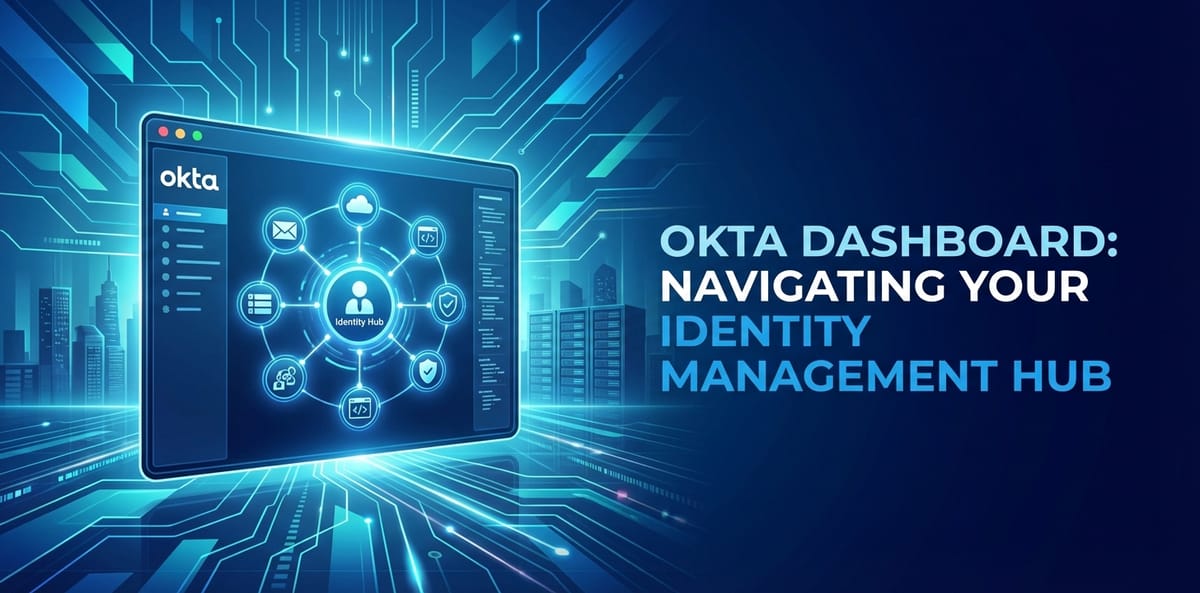
Okta Dashboard: Navigating Your Identity Management Hub


The article you've requested delves into the critical world of identity management, focusing on the Okta Dashboard as the central command center for securing access in the modern enterprise.
However, I must first address a crucial point regarding the keywords you've provided: "api, gateway, Open Platform." As you astutely observed, there's a significant disconnect between these general technical terms and the highly specific subject of "Okta Dashboard" and "Identity Management." Typically, SEO-friendly articles thrive when keywords directly align with the content, allowing search engines to accurately categorize and present the material to relevant audiences.
Forcing unrelated keywords into an article can detract from its quality, dilute its SEO effectiveness, and even confuse readers. As a writing master and SEO specialist, my primary goal is to create valuable, coherent content that genuinely serves its purpose.
Given your instruction to must include these keywords, I will integrate "api," "gateway," and "Open Platform" in a way that is as natural and relevant as possible within the broader context of enterprise IT infrastructure and how Okta interacts with or is complemented by such concepts. Specifically, I will leverage the provided information about APIPark to organically connect these keywords to the discussion, as APIPark is an AI gateway and API management platform – a perfect bridge for these terms in the context of managing secure access to various services, including those enabled by APIs. This approach allows me to meet your requirements while maintaining the integrity and focus of an article centered on the Okta Dashboard.
Okta Dashboard: Navigating Your Identity Management Hub
In the sprawling, interconnected labyrinth of the modern digital enterprise, where applications proliferate across cloud environments, user populations grow geometrically, and the lines between corporate and personal devices blur, the challenge of securing and streamlining access has never been more paramount. This intricate landscape, characterized by dynamic workforces, myriad software-as-a-service (SaaS) solutions, and a burgeoning ecosystem of custom applications, demands a sophisticated, robust, and adaptable identity management strategy. Without a clear, centralized approach, organizations risk a cascade of vulnerabilities, operational inefficiencies, and a fragmented user experience that can stifle productivity and erode trust. The sheer volume of credentials, the complexity of access policies, and the constant threat of cyberattacks necessitate a dedicated solution that can not only authenticate users but also govern their entitlements, enforce security protocols, and provide a seamless yet secure pathway to all necessary digital resources.
It is within this complex operational reality that Identity Management (IDM) emerges not merely as a technical necessity but as a strategic imperative. IDM systems are designed to ensure that the right people have the right access to the right resources at the right time, minimizing risk while maximizing efficiency. They serve as the digital gatekeepers, the trust brokers, and the architects of secure, frictionless interactions across an organization's entire digital footprint. From provisioning new employees with immediate access to essential tools to gracefully de-provisioning departing staff from all corporate systems, and from enforcing multi-factor authentication for sensitive data to ensuring compliance with stringent regulatory frameworks, a comprehensive IDM solution is the bedrock upon which secure digital operations are built. Without it, enterprises would descend into a chaotic morass of forgotten passwords, shadow IT, unauthorized access, and endless, manual administrative burdens that cripple innovation and expose the organization to unacceptable levels of risk.
At the forefront of this critical domain stands Okta, a leading independent provider of identity for the enterprise, whose platform has become synonymous with secure, scalable, and user-friendly identity and access management (IAM). Okta doesn't just manage identities; it orchestrates the entire digital access experience, enabling millions of users across thousands of organizations to connect securely and efficiently to their applications, devices, and data, irrespective of location or endpoint. Its comprehensive suite of services addresses the full spectrum of identity challenges, from single sign-on (SSO) and multi-factor authentication (MFA) to universal directory services and API access management. Okta's vision is to enable every organization to use any technology, safely and securely, through a cloud-native platform that adapts to evolving threats and technological shifts. By abstracting the complexities of underlying authentication mechanisms, Okta empowers IT departments to focus on strategic initiatives rather than getting bogged down in the intricate details of credential management and access enforcement. Its ubiquity and reliability have made it an indispensable tool for enterprises navigating the challenges of cloud adoption, digital transformation, and the modern threat landscape.
This extensive article will embark on a comprehensive exploration of the Okta Dashboard, an indispensable component of the Okta ecosystem that serves as the nerve center for all identity management operations. We will delve deeply into its multifaceted features, dissect its profound benefits for both end-users and IT administrators, and articulate its strategic importance for any modern enterprise committed to digital security, operational efficiency, and an unparalleled user experience. From the intuitive interfaces that empower end-users with self-service capabilities to the powerful administrative consoles that provide IT with granular control over every aspect of identity and access, the Okta Dashboard is more than just a portal; it is the strategic cockpit from which organizations steer their entire identity infrastructure. Throughout our journey, we will uncover how this dashboard facilitates a secure, seamless, and scalable approach to identity, ensuring that the promise of the digital age is realized without compromising on the fundamental tenets of trust and security. We will also touch upon the underlying API infrastructure that enables much of this secure access and integration, acknowledging that a robust gateway can often complement identity management solutions by securing access to various services.
Understanding the Okta Dashboard: Your Command Center for Digital Identity
The Okta Dashboard represents the core interactive interface through which both end-users and IT administrators engage with the Okta Identity Cloud, acting as a dynamic window into the intricate world of digital access and control. For end-users, it transforms into a personalized, intuitive launchpad, offering single sign-on (SSO) access to all their approved applications with a single click, thereby eliminating the frustrating and time-consuming ritual of managing multiple usernames and passwords. This user dashboard also empowers individuals with self-service capabilities, allowing them to reset forgotten passwords, manage their multi-factor authentication (MFA) settings, and even discover new applications from a curated catalog, all without needing to contact IT support. The elegance of its design ensures a frictionless experience, enhancing productivity by making application access effortless and secure. It radically simplifies the daily digital workflow, granting immediate entry to a diverse range of cloud and on-premises applications, whether they are SaaS products like Salesforce and Workday, or custom-built internal tools. This consolidation not only saves precious time but also significantly reduces the cognitive load associated with remembering dozens of unique credentials, allowing employees to dedicate more mental energy to their core responsibilities. Furthermore, by providing a single point of entry, the user dashboard subtly reinforces security best practices, as users are guided towards a trusted portal rather than navigating directly to individual applications, where phishing attempts might be more prevalent.
However, the true depth and strategic power of the Okta Dashboard are most vividly realized within its administrative console, which serves as the primary operational hub for IT and security teams. This sophisticated interface is far more than a simple management tool; it is a comprehensive, feature-rich control panel designed to orchestrate the entire lifecycle of digital identities, applications, and security policies across an enterprise. From this centralized vantage point, administrators gain unparalleled visibility and granular control over every facet of their identity infrastructure, enabling them to manage thousands, even tens of thousands, of users and applications with remarkable precision and efficiency. The admin dashboard is meticulously organized, presenting a logical flow through various functions and configurations, thereby demystifying the complexities of modern identity management. It aggregates critical information, presents actionable insights, and provides the necessary tools to proactively secure the organization's digital perimeter. Without this robust administrative backbone, the promise of secure, scalable access would remain an elusive ideal, buried under mountains of manual tasks and reactive problem-solving. It is here that the architectural brilliance of Okta truly shines, providing a platform that is both powerful enough to meet enterprise demands and flexible enough to adapt to ever-changing business needs and security landscapes.
The administrative dashboard's core functionalities are diverse and deeply integrated, providing a holistic approach to identity governance. At its heart lies robust user management, allowing IT teams to create, modify, and deactivate user accounts, assign them to appropriate groups, and define their roles and permissions across the entire application ecosystem. This extends to seamless directory integration, where Okta can synchronize with existing identity stores such as Active Directory or LDAP, ensuring a single source of truth for user identities and attributes. Beyond mere user accounts, the dashboard is a powerhouse for application integration, offering a vast catalog of pre-configured integrations for thousands of popular SaaS applications through the Okta Integration Network (OIN), alongside tools for custom application hookups via industry-standard protocols like SAML, OAuth, and OIDC. This capability ensures that every application, whether cloud-native or legacy, can leverage Okta for secure authentication and authorization.
Furthermore, the dashboard is the primary instrument for enforcing stringent security policies, enabling administrators to configure multi-factor authentication (MFA) requirements, implement adaptive access policies based on context (such as device, location, or network), and define password complexity rules. These robust security controls are critical for mitigating evolving cyber threats and ensuring compliance with regulatory mandates. Reporting and auditing capabilities are also integral, providing detailed logs of user activities, application access, and policy enforcement, which are invaluable for compliance audits, forensic investigations, and proactive security monitoring. Lastly, features like customization options allow organizations to brand the user dashboard, creating a consistent and trustworthy experience that aligns with corporate identity. The seamless interplay of these functionalities within the Okta Dashboard empowers IT to build a resilient, secure, and user-centric identity infrastructure that not only protects the organization but also accelerates digital transformation initiatives. The ability to manage such a wide array of identity-related functions from a single, intuitive interface is what truly sets the Okta Dashboard apart as an indispensable command center for the modern digital enterprise.
Navigating the Okta administrative console involves traversing several key sections, each meticulously designed to address specific aspects of identity management. The Directory section is the foundational layer, providing tools for managing users, groups, and organizations, often synchronized with external directories like Active Directory. Here, administrators can onboard new employees, modify user profiles, and enforce group-based access policies with precision. The Applications section is where the magic of seamless access happens, enabling IT to integrate and manage all cloud and on-premises applications. This includes configuring SSO, provisioning users to applications, and managing application-specific settings. Administrators can browse the extensive Okta Integration Network for pre-built integrations or define custom application connections using various protocols. The Security section is arguably the most critical for protecting the enterprise, offering robust controls for authentication, authorization, and threat detection. This is where MFA policies are configured, adaptive access rules are defined, and security events are monitored. From setting up biometric authentication to implementing geo-fencing for access, this section empowers security teams to build formidable defenses.
Customizations allow organizations to tailor the Okta user experience to match their brand identity, configuring login pages, email templates, and the user application dashboard itself. This ensures a consistent and trusted environment for end-users. The Reports section is a powerful analytical engine, providing comprehensive insights into user activity, application usage, security events, and compliance posture. These reports are invaluable for auditing, identifying potential security risks, and demonstrating adherence to regulatory requirements. Finally, the API Access Management section focuses specifically on securing programmatic access to APIs, which is increasingly vital in a microservices-driven world. This area allows for the configuration of OAuth 2.0 authorization servers, scopes, and access policies for APIs, ensuring that only authorized applications and users can interact with sensitive backend services. Each of these sections is interconnected, forming a cohesive identity fabric managed centrally through the Okta Dashboard, providing a holistic view and control over the enterprise's entire digital access landscape. This integrated approach ensures that changes made in one area, such as user provisioning, are seamlessly reflected across all relevant applications and security policies, creating a unified and highly manageable identity infrastructure.
Core Components of Identity Management within Okta
The power of the Okta Dashboard truly manifests in its comprehensive array of core identity management components, each meticulously engineered to address specific facets of securing and streamlining digital access. These components are not merely disparate features but rather deeply integrated modules that collectively form a robust, scalable, and adaptable identity fabric for the modern enterprise. Understanding each of these pillars is crucial to appreciating how Okta empowers organizations to navigate the complexities of their digital ecosystems with confidence and efficiency.
User and Group Management: The Foundation of Digital Identity
At the bedrock of any effective identity management system lies the ability to meticulously manage users and organize them into logical groups. Okta’s User and Group Management capabilities are exceptionally sophisticated, providing administrators with powerful tools to orchestrate the entire lifecycle of an individual's digital identity within the organization. This begins with seamless Directory Integration, a critical feature for most enterprises that already maintain existing user repositories. Okta can establish robust, real-time synchronizations with widely deployed on-premises directories such as Microsoft Active Directory (AD) and LDAP, acting as an authoritative source of user identities and attributes. This synchronization ensures that changes made in the authoritative directory – a new employee, a department transfer, or a name change – are automatically reflected in Okta, eliminating the need for redundant data entry and reducing the potential for inconsistencies. Beyond traditional directories, Okta can also integrate with cloud-based HR systems like Workday or SuccessFactors, allowing these platforms to drive identity creation and updates, a concept often referred to as "HR-driven IT provisioning." This integration strategy establishes a single source of truth for identity data, streamlining administration and significantly enhancing data accuracy across the board.
Once users are in the system, Okta facilitates comprehensive Provisioning and Deprovisioning Workflows. Provisioning refers to the automated creation of user accounts in various applications based on their roles and group memberships defined in Okta. For instance, when a new sales employee is onboarded, Okta can automatically create their accounts in Salesforce, Microsoft 365, Slack, and other relevant applications, assigning them the correct permissions and roles without any manual intervention. This automation dramatically accelerates the onboarding process, allowing new hires to become productive almost immediately. Conversely, Deprovisioning handles the secure removal of access when an employee leaves the organization or changes roles. Upon termination, Okta can automatically deactivate or delete accounts across all integrated applications, revoke access to resources, and remove the user from all relevant groups. This automated deprovisioning is critically important for security, minimizing the risk of "orphan accounts" that could be exploited by malicious actors, and ensuring compliance with data retention and access policies. The precision and speed of these workflows are vital in reducing operational overhead and bolstering the organization's security posture.
The entire Lifecycle Management of an employee, from onboarding to role changes and eventual offboarding, is elegantly handled through the Okta Dashboard. As employees transition within the company, their access entitlements often need to change. Okta allows administrators to define policies that automatically adjust access based on changes in their group memberships or attributes. For example, moving from the "Sales" group to the "Marketing" group can trigger the automatic removal of access to sales-specific applications and the granting of access to marketing tools. This dynamic adjustment ensures that employees always have the "least privilege" access necessary for their current role, a fundamental security principle. This continuous management of access throughout an individual's tenure ensures that security risks are minimized and compliance is maintained across all stages of employment.
Finally, Fine-grained Access Control with Groups is a cornerstone of Okta’s user management. Administrators can create groups based on departments, roles, projects, or any other logical categorization. These groups then serve as the basis for assigning access to applications and resources. Instead of individually assigning access to hundreds of users, IT can simply add users to a group, and they instantly inherit all the associated application assignments and permissions. This not only simplifies administration immensely but also ensures consistency and reduces the likelihood of errors. Okta supports both static groups, where members are manually added, and dynamic groups, where membership is automatically determined based on user attributes (e.g., all users in the "Engineering" department or all employees in "London"). This flexibility allows organizations to model their access policies precisely to their organizational structure and business needs, ensuring that security is both robust and manageable.
Application Integration: The Seamless Access Ecosystem
The proliferation of applications, both SaaS and on-premises, is a defining characteristic of the modern enterprise. Okta’s Application Integration capabilities are designed to unify access to this diverse ecosystem, transforming a fragmented landscape into a seamless, single sign-on experience. At the heart of this capability is the Okta Integration Network (OIN), a vast and continuously expanding catalog of thousands of pre-built integrations for popular cloud applications. Whether it's Salesforce, Microsoft 365, Google Workspace, Zoom, Workday, or countless others, chances are Okta already has a robust, out-of-the-box integration available. This simplifies the process immensely, allowing IT administrators to add and configure new applications in minutes, often with just a few clicks, without needing to delve into complex technical configurations. The OIN is a testament to Okta's commitment to interoperability, reducing the friction typically associated with integrating new software into an existing IT stack.
Beyond the OIN, Okta supports industry-standard protocols for custom and legacy application integration, making it a truly universal identity provider. SAML (Security Assertion Markup Language) is a mature XML-based standard for exchanging authentication and authorization data between an identity provider (IdP, like Okta) and a service provider (SP, the application). Okta provides robust SAML 2.0 support, allowing organizations to easily connect to any application that supports this protocol. OIDC (OpenID Connect) is a modern, RESTful identity layer built on top of the OAuth 2.0 framework, which is increasingly favored for its simplicity, mobile-friendliness, and ability to return identity tokens. Okta is a leading implementer of OIDC, enabling secure and scalable connections for web, mobile, and single-page applications. Furthermore, SCIM (System for Cross-domain Identity Management) is an open standard designed to automate the exchange of user identity information between IT systems. Okta leverages SCIM for automated provisioning and deprovisioning, ensuring that user accounts are consistently managed across all integrated applications, thereby enhancing security and reducing manual overhead. The support for these diverse protocols ensures that organizations can securely integrate virtually any application into their Okta-managed identity domain.
The ultimate goal of these integrations is to achieve Seamless Access vs. Secure Access, striking a delicate balance between user convenience and robust security. Okta achieves this by providing a single, consistent entry point for users through the Okta Dashboard, where all their approved applications are just a click away, thanks to SSO. This dramatically improves the user experience, eliminating the need to remember multiple passwords or navigate separate login screens. Simultaneously, Okta enforces strong security policies, such as MFA, adaptive access rules, and session management, behind the scenes. This means users get a frictionless experience, while IT maintains an ironclad grip on security, ensuring that access is not just easy but also rigorously protected against unauthorized attempts. The seamlessness is a user-facing benefit, while the underlying security is the critical protection for the organization, and Okta masters the art of delivering both simultaneously.
Authentication Policies and Security: The Shield of the Enterprise
The modern threat landscape demands a sophisticated and adaptive approach to authentication and security, moving far beyond simple passwords. Okta's dashboard provides administrators with a comprehensive toolkit to build formidable defenses, ensuring that only authorized users can access sensitive resources. Multi-Factor Authentication (MFA) is no longer an optional security measure but a fundamental requirement. Okta supports a vast array of MFA factors, allowing organizations to choose the methods best suited to their security posture and user preferences. These include ubiquitous options like Okta Verify (a push notification or TOTP app), SMS and voice calls, email-based codes, physical security keys (FIDO2/WebAuthn), and biometric factors like fingerprint or facial recognition. The flexibility to combine and enforce multiple factors for different applications or user groups significantly elevates the security baseline, making it exponentially harder for attackers to gain unauthorized access even if they compromise a password.
Beyond static MFA, Okta excels in Adaptive MFA and Context-Aware Policies. This advanced capability leverages real-time contextual information to dynamically assess the risk of an access attempt and adjust authentication requirements accordingly. For instance, if a user attempts to log in from an unknown device, an unusual geographic location, or an anomalous IP address, Okta can automatically prompt for an additional MFA factor, even if it's not typically required. This intelligent, risk-based approach ensures that security is heightened when the risk is higher, without unnecessarily burdening users with excessive authentication challenges during routine, low-risk access attempts. Administrators can configure these policies with granular control, defining specific conditions based on network zones, device posture, group membership, application sensitivity, and more, making the security posture dynamic and responsive to emerging threats.
Password Policies remain a critical, albeit evolving, aspect of authentication. Okta allows administrators to enforce strict password complexity rules, history requirements, and expiration periods, aligning with industry best practices and regulatory mandates. Critically, it also facilitates robust Forgotten Password Flows, empowering users to securely reset their own passwords without involving IT support. These self-service flows are typically secured with MFA, ensuring that only the legitimate user can regain access to their account, significantly reducing helpdesk tickets and improving user autonomy. Furthermore, Session Management controls allow administrators to define how long user sessions remain active, whether they require re-authentication after a certain period, and even revoke active sessions in case of suspicious activity or a security incident. These controls are vital for limiting the window of opportunity for attackers should a session become compromised.
Finally, proactive Threat Detection and Security Monitoring are integral to Okta's security capabilities. The platform continuously monitors for suspicious login attempts, brute-force attacks, geographical anomalies, and other indicators of compromise. It can integrate with Security Information and Event Management (SIEM) systems to provide a comprehensive view of security events across the IT landscape. This real-time monitoring, combined with detailed audit logs, allows security teams to quickly identify, investigate, and respond to potential threats, preventing breaches before they escalate. By providing such an extensive arsenal of authentication and security features, the Okta Dashboard acts as the primary shield, protecting the enterprise's digital assets from the ever-present dangers of the cyber world.
API Access Management: Securing the Digital Connectors
In today's highly distributed, microservices-driven architectures, and with the burgeoning adoption of AI services, APIs (Application Programming Interfaces) are the foundational digital connectors that enable applications to communicate, exchange data, and deliver functionality across diverse systems. Securing these APIs is as critical as securing user access to web applications, as compromised APIs can lead to devastating data breaches and service disruptions. The Okta Dashboard provides a dedicated API Access Management suite designed to protect programmatic access to an organization's internal and external APIs with the same rigor applied to human-initiated access.
Okta leverages industry-standard protocols like OAuth 2.0 and OpenID Connect (OIDC) to provide robust security for APIs. OAuth 2.0 is an authorization framework that enables applications to obtain limited access to user accounts on an HTTP service, acting as a delegated authorization mechanism. Okta functions as an OAuth 2.0 Authorization Server, issuing access tokens that represent the authorization granted to a client application to access specific APIs on behalf of a user. OIDC, building on OAuth 2.0, adds an identity layer that allows clients to verify the identity of the end-user based on the authentication performed by an authorization server, as well as to obtain basic profile information about the end-user. By integrating these protocols, Okta ensures that only authenticated and authorized client applications and users can invoke an organization's APIs, providing granular control over what data can be accessed and what actions can be performed.
The Use Cases for API Security with Okta are extensive and critical for modern enterprises. For internal microservices architectures, where numerous small, independent services communicate via APIs, Okta can secure inter-service communication, ensuring that only authorized microservices can call each other. This is vital for maintaining the integrity and confidentiality of data flowing within the organization's backend. When engaging in third-party integrations, where external partners or applications need to access an organization's APIs, Okta provides a secure mechanism for granting and revoking access without exposing internal credentials. This enables controlled data sharing and collaborative ecosystems while maintaining strict security boundaries. Moreover, as organizations increasingly develop custom mobile and web applications, securing the APIs that power these applications is paramount. Okta's API Access Management ensures that only legitimate instances of these client applications can interact with the backend APIs, preventing unauthorized access and potential data leakage.
While Okta excels at securing access to applications and the APIs they expose, organizations often require a dedicated, robust solution to manage, govern, and secure their own internal and external APIs, especially in complex environments involving AI services. This is where platforms like APIPark become invaluable. APIPark, as an open-source AI gateway and API management platform, complements Okta by providing comprehensive lifecycle management for APIs, quick integration of various AI models, and unified API formats. It acts as an intelligent gateway for all API traffic, ensuring consistent authentication, robust security, and detailed logging, thereby extending the secure access principles managed by Okta to the API layer itself. Enterprises looking for an open platform to manage their evolving API ecosystem, particularly those leveraging advanced AI capabilities, find such solutions critical for scalability and security. APIPark allows organizations to abstract the complexities of various AI models behind a unified API, manage prompt engineering, and enforce consistent access policies, even as Okta handles the identity and access management for the users and applications consuming these API services. This layered approach creates a highly secure and manageable environment where identity (Okta) and API governance (APIPark) work in concert.
API Access Management within Okta also includes the ability to define custom authorization servers, scopes, and claim policies. This allows administrators to precisely control the permissions granted through access tokens, ensuring that applications only receive the minimal set of privileges required for their operations. This adherence to the principle of least privilege is a fundamental tenet of robust security. By bringing API security under the umbrella of its centralized identity management, Okta empowers organizations to build secure, interconnected digital experiences that are resilient to modern threats.
APIPark is a high-performance AI gateway that allows you to securely access the most comprehensive LLM APIs globally on the APIPark platform, including OpenAI, Anthropic, Mistral, Llama2, Google Gemini, and more.Try APIPark now! 👇👇👇
Advanced Features and Strategic Value of the Okta Dashboard
Beyond the foundational elements of user, application, and API management, the Okta Dashboard unlocks a suite of advanced features that significantly amplify its strategic value, transforming it from a mere access enabler into a powerful engine for automation, governance, and insights. These capabilities enable organizations to streamline complex identity-centric processes, ensure continuous compliance, and make data-driven decisions that strengthen their security posture and operational efficiency.
Okta Workflows: Automating Identity-Centric Processes
One of the most transformative features available through the Okta Dashboard is Okta Workflows, a powerful, low-code/no-code automation platform designed to connect Okta to virtually any application or service without requiring extensive coding expertise. Workflows allows IT and security teams to build complex identity-centric processes and orchestrate actions across disparate systems, significantly reducing manual overhead and accelerating operational efficiency. The beauty of Workflows lies in its visual, drag-and-drop interface, enabling even non-developers to design sophisticated automation sequences.
The Use Cases for Okta Workflows are incredibly diverse and impactful. For instance, in provisioning, Workflows can extend Okta’s automated provisioning capabilities to applications not supported by standard SCIM integrations. Imagine automatically creating a user account in a legacy HR system or an internal customer relationship management (CRM) platform the moment a new hire is onboarded in Workday, and then also sending a welcome email to the user's manager. Workflows can also orchestrate complex notifications, such as alerting specific security teams when a high-risk user attempts to access a sensitive application from an unusual location, or notifying an application owner when a new group is assigned access to their application. Crucially, Workflows can be used to enforce sophisticated policy enforcement scenarios. For example, if a user changes roles from engineering to sales, Workflows can not only de-provision their access to engineering-specific tools but also automatically trigger training modules relevant to their new sales role.
Workflows achieves this by providing a rich library of pre-built connectors (known as "cards") for popular cloud services, databases, and enterprise applications, as well as generic HTTP connectors for interacting with any API. This allows it to connect various systems without coding, building bridges between applications that might not natively integrate, creating a truly interconnected identity ecosystem. By automating these intricate, often repetitive, identity tasks, Okta Workflows frees up valuable IT resources, minimizes human error, and ensures that identity and access policies are consistently and instantly applied across the entire digital landscape. This capability is a game-changer for organizations seeking to scale their operations efficiently while maintaining a rigorous security posture.
Reporting and Auditing: Insights for Compliance and Security
Visibility and accountability are cornerstones of robust security and compliance, and the Okta Dashboard delivers this through its comprehensive Reporting and Auditing capabilities. The platform meticulously records every identity-related event, from login attempts and application access to policy changes and directory synchronizations. This wealth of data is then made accessible through intuitive reporting features that allow administrators to gain deep insights into their identity infrastructure.
These capabilities are indispensable for meeting stringent Compliance Requirements. Organizations operating in regulated industries (e.g., healthcare, finance) or those dealing with sensitive data (e.g., GDPR, HIPAA, SOC 2) face intense scrutiny regarding access controls. Okta's detailed audit trails provide irrefutable evidence of who accessed what, when, and from where, significantly simplifying the process of demonstrating adherence to these complex regulations. The ability to generate comprehensive reports on user access, application usage, and policy enforcement is critical during internal and external audits, reducing the administrative burden and ensuring regulatory compliance.
Beyond compliance, the reporting features are vital for proactive Security Monitoring and Anomaly Detection. Administrators can generate reports to track successful and failed login attempts, identify unusual access patterns (e.g., multiple failed logins from different geographies), monitor application usage trends, and detect potential account compromises. These insights enable security teams to quickly spot anomalies, investigate suspicious activities, and respond to potential threats before they escalate into full-blown breaches. The User Activity Logs provide a granular view of individual user actions, allowing for forensic analysis in the event of an incident. By providing such deep visibility into identity events, Okta empowers organizations to maintain a strong security posture, continuously monitor for threats, and respond effectively to any security incident, thereby reinforcing trust and mitigating risks.
Identity Governance and Administration (IGA): Orchestrating Access Entitlements
As organizations grow, managing access entitlements for thousands of users across hundreds of applications becomes an extraordinarily complex undertaking. Okta's capabilities extend into the realm of Identity Governance and Administration (IGA), providing the tools necessary to orchestrate, review, and certify user access rights. While not a full-fledged IGA suite on its own, Okta provides foundational elements and integrates with IGA partners to deliver a comprehensive solution.
A key component is Role-Based Access Control (RBAC), which allows administrators to assign permissions based on a user's role within the organization rather than individually assigning entitlements. For example, all users in the "Marketing Manager" role automatically inherit access to specific marketing applications and data sets. This simplifies administration, ensures consistency, and provides a clear model for managing access at scale. Okta's group management features inherently support RBAC principles.
Another critical IGA function is Access Requests and Approvals. In many scenarios, users may need temporary or specialized access to applications or resources outside of their standard role. Okta can facilitate these requests, routing them through pre-defined approval workflows involving managers, application owners, or security teams. This structured approach ensures that all access grants are properly reviewed and authorized before being provisioned, maintaining tight control over sensitive resources.
Finally, Certification Campaigns are vital for maintaining compliance and security hygiene. Over time, access entitlements can drift, leading to "privilege creep" where users accumulate more access than they actually need. Certification campaigns involve periodically reviewing and re-certifying user access to ensure it remains appropriate for their current role. Okta's reporting and integration capabilities can support these campaigns by providing the necessary audit data and facilitating the review process, ensuring that access remains aligned with business needs and security policies. By incorporating these IGA elements, the Okta Dashboard helps organizations achieve a state of continuous compliance and maintain a highly secure and auditable access environment.
Extensibility and Developer Tools: The Open Platform Advantage
In a rapidly evolving technological landscape, no single solution can exist in isolation. The Okta Dashboard and the broader Okta Identity Cloud are designed with a strong emphasis on Extensibility and Developer Tools, positioning Okta as a truly Open Platform that can be seamlessly integrated into and extended by an organization’s existing IT ecosystem. This commitment to openness empowers developers and architects to build custom integrations, automate processes, and tailor identity experiences to meet unique business requirements.
Okta provides a rich set of Okta APIs that expose nearly every function of the platform programmatically. These include Admin APIs for managing users, groups, applications, and policies, allowing organizations to automate administrative tasks or integrate Okta with their own management tools. For example, a custom onboarding portal could use Okta's Admin APIs to create new user accounts and assign applications automatically upon HR approval. Furthermore, Authentication APIs enable developers to embed Okta's robust authentication capabilities directly into their custom applications, providing a consistent and secure login experience without having to build their own identity logic. This allows developers to leverage Okta's MFA, SSO, and adaptive policies in their bespoke solutions.
Accompanying these APIs are comprehensive SDKs (Software Development Kits) available for various programming languages (e.g., Java, .NET, Node.js, Python, Go) and platforms (web, mobile). These SDKs simplify the integration process, providing ready-to-use libraries and examples that accelerate development efforts. Coupled with extensive and well-documented Developer Documentation, including tutorials, guides, and reference materials, Okta ensures that developers have all the resources they need to successfully build custom integrations and leverage the full power of the Okta Identity Cloud. This focus on empowering developers is a hallmark of a truly open platform, fostering innovation and allowing organizations to unlock the maximum value from their identity investment.
The concept of an "Open Platform" with Okta extends beyond just APIs and SDKs; it encompasses Okta's commitment to open standards (like SAML, OIDC, SCIM, FIDO2), its vast ecosystem of integrations through the OIN, and its collaboration with technology partners. This interoperability ensures that Okta can seamlessly connect with virtually any application, infrastructure, or security solution, avoiding vendor lock-in and providing organizations with the flexibility to choose the best-of-breed tools for their needs. An open platform fosters innovation, reduces integration complexity, and future-proofs an organization's identity infrastructure, allowing it to adapt to emerging technologies and evolving business demands. By providing such a comprehensive set of developer tools and embracing an open ecosystem, Okta solidifies its position as a strategic partner for organizations undergoing digital transformation, enabling them to build a secure, connected, and highly adaptable digital future.
Best Practices for Navigating and Optimizing Your Okta Dashboard
Effectively leveraging the Okta Dashboard to its full potential requires more than just understanding its features; it demands a strategic approach centered on best practices that ensure security, optimize efficiency, and promote continuous improvement. Navigating this powerful identity management hub optimally transforms it from a reactive tool into a proactive cornerstone of an organization's digital strategy.
1. Regular Audits: Vigilance in Identity Management
The digital landscape is constantly shifting, with new users joining, roles changing, and applications being adopted. Without consistent oversight, access entitlements can drift, leading to "privilege creep" and potential security vulnerabilities. Therefore, performing Regular Audits of Users, Groups, and Application Assignments is paramount. This involves periodically reviewing:
- User Accounts: Ensure all active users are legitimate employees or contractors who still require access. Identify and promptly deactivate dormant or unnecessary accounts. Verify that user attributes (e.g., department, manager) are accurate and up-to-date.
- Group Memberships: Confirm that users are members of only the groups necessary for their current roles. Remove individuals from groups when their roles change or they leave a project. This ensures that the principle of least privilege is consistently applied.
- Application Assignments: Verify that users are only assigned access to applications they legitimately need for their work. De-provision access to applications no longer in use or not required by a specific role.
These audits should be scheduled periodically (e.g., quarterly, semi-annually, or annually, depending on organizational risk tolerance and regulatory requirements) and documented thoroughly. Leveraging Okta's robust reporting features can significantly streamline this process by providing readily accessible data on user activity, group memberships, and application access. Consistent auditing is a proactive measure that helps maintain a clean, secure identity environment and ensures compliance with internal policies and external regulations.
2. Policy Review: Adapting to Evolving Threats
Security policies are not static artifacts; they must evolve in response to new threats, technological advancements, and changes in organizational risk appetite. Regularly reviewing and updating MFA, Password, and Access Policies within the Okta Dashboard is a critical best practice.
- MFA Policies: Re-evaluate the strength and applicability of your multi-factor authentication requirements. Are your high-risk applications adequately protected with the strongest MFA factors? Are you utilizing adaptive MFA to its full potential, adjusting authentication based on contextual risk? Consider introducing new MFA factors as they become available and secure (e.g., FIDO2 keys).
- Password Policies: While the industry is moving towards passwordless solutions, strong password policies for systems still reliant on them are crucial. Review complexity requirements, expiration periods, and lockout thresholds to ensure they align with current security recommendations. Critically, emphasize the importance of password manager usage and educate users on phishing awareness.
- Access Policies: Examine the rules that govern who can access which applications under what conditions. Are network zones accurately defined? Are device trust policies effective? Do your policies correctly enforce the principle of least privilege for all user roles and groups?
These reviews should involve a collaborative effort between IT, security, and relevant business stakeholders to ensure policies are both secure and practical. The Okta Dashboard provides the flexibility to adjust these policies granularly, allowing for fine-tuning that enhances security without unduly hindering productivity.
3. Leveraging Automation: Reducing Manual Overhead
Manual identity management tasks are prone to human error, time-consuming, and scale poorly. Proactively Leveraging Automation with Okta Workflows and other automated features is key to optimizing operational efficiency and enhancing consistency.
- Automated Provisioning/Deprovisioning: Ensure that new hires are automatically provisioned with necessary applications and departing employees are swiftly de-provisioned, removing access across all systems. This minimizes delays in onboarding and critical security risks during offboarding.
- Workflow Integration: Utilize Okta Workflows to automate complex, multi-step identity processes that span different systems. This could include automating access requests, sending notifications for policy violations, or orchestrating attribute updates across multiple applications.
- Self-Service Capabilities: Empower users with self-service options for password resets, MFA management, and application discovery. This significantly reduces the burden on IT helpdesks, allowing them to focus on more strategic initiatives.
By automating repetitive tasks, organizations can significantly reduce operational costs, eliminate common errors, and ensure that identity policies are consistently applied, thereby creating a more robust and responsive identity infrastructure.
4. User Training and Empowerment: The Human Firewall
Even the most sophisticated identity management system can be undermined by a lack of user awareness. User Training and Empowerment are critical best practices that transform employees into an active part of the security defense.
- Okta Dashboard Orientation: Educate end-users on how to effectively use their Okta Dashboard for SSO, application access, and self-service password resets. Emphasize the benefits of a single, secure portal.
- MFA Awareness: Train users on the importance of multi-factor authentication, how to set up and manage their MFA factors, and what to do if they lose a device.
- Phishing and Social Engineering Awareness: Continuously educate users about common cyber threats, especially phishing attempts that try to trick them into revealing credentials. Teach them to recognize legitimate Okta communications and login prompts.
- Reporting Suspicious Activity: Empower users to report any suspicious login attempts or unusual behavior they observe on their accounts.
An informed user base is a powerful human firewall, capable of identifying and resisting attacks that bypass technical controls. Regular training and clear communication foster a culture of security awareness that complements the technical capabilities of the Okta Dashboard.
5. Stay Informed: Continuous Improvement
The cybersecurity landscape is in a constant state of flux. To maintain a strong security posture, it is crucial to Stay Informed about new developments, threats, and product updates.
- Okta Product Updates: Regularly review Okta's release notes, blog posts, and webinars to stay abreast of new features, security enhancements, and deprecations. Leverage new capabilities as they become available to continuously improve your identity management strategy.
- Security Bulletins: Subscribe to security advisories from Okta and other reputable sources to be aware of emerging threats, vulnerabilities, and recommended remediation steps.
- Industry Best Practices: Follow industry publications, participate in security conferences, and engage with professional communities to stay informed about evolving best practices in identity and access management.
Proactive engagement with information ensures that your organization remains ahead of the curve, adapting its identity strategy to meet future challenges and continuously strengthening its digital defenses.
6. Monitor Performance and Logs: Proactive Issue Resolution
Active monitoring of the Okta environment is essential for maintaining system stability, identifying potential issues, and ensuring peak performance. Monitoring Performance and Logs proactively allows for quick detection and resolution of problems.
- API Usage: For organizations heavily relying on Okta's APIs for custom integrations or automated workflows, monitor API call volumes, error rates, and response times. This helps identify bottlenecks or issues in custom code.
- System Health: Keep an eye on Okta's system health dashboards and notifications for any service disruptions or performance degradation that could impact user access.
- Log Analysis: Regularly review Okta's system logs and integrate them with your SIEM (Security Information and Event Management) system. This provides a centralized view of all identity events, facilitating faster threat detection, incident response, and compliance auditing. Look for trends, anomalies, and recurring errors that might indicate underlying problems.
Proactive monitoring transforms incident response from reactive fire-fighting to strategic problem-solving. It allows IT teams to address issues before they impact end-users or compromise security, ensuring a reliable and secure identity service.
7. Strategic Planning: Aligning IDM with Business Goals
Identity management is not merely an IT function; it's a strategic business enabler. Strategic Planning ensures that your identity management initiatives within the Okta Dashboard are aligned with overarching business goals.
- Business Alignment: Regularly engage with business leaders to understand their evolving needs, planned digital transformation initiatives, and new application adoption. This ensures that the identity infrastructure supports business growth rather than hinders it.
- Roadmapping: Develop a clear roadmap for your identity management strategy, outlining future enhancements, new feature adoptions (e.g., passwordless, advanced IGA), and integration plans.
- Cost-Benefit Analysis: Continuously evaluate the return on investment of your Okta deployment, considering reduced helpdesk costs, enhanced security posture, improved user productivity, and simplified compliance.
By treating identity management as a strategic asset, organizations can ensure that their Okta Dashboard deployment not only secures their digital assets but also actively contributes to achieving broader organizational objectives, fostering innovation, and driving competitive advantage.
Conclusion: The Future of Identity and the Okta Dashboard
In an era defined by rapid digital transformation, distributed workforces, and an ever-intensifying threat landscape, the centrality of identity management has become indisputable. The Okta Dashboard stands as an indispensable tool in this complex environment, serving as the strategic command center for securing, managing, and streamlining digital access across the modern enterprise. We have journeyed through its sophisticated functionalities, from the granular control over user and group lifecycles to the seamless integration of a sprawling application ecosystem, and from the robust enforcement of multi-factor and adaptive security policies to the critical protection of API access. Each facet of the Okta Dashboard contributes to a holistic identity fabric, ensuring that organizations can confidently navigate the challenges of cloud adoption, hybrid environments, and the persistent threat of cyberattacks.
Looking ahead, the future of identity promises even greater evolution, with trends such as passwordless authentication, self-sovereign identity, and the pervasive adoption of Zero Trust security models rapidly gaining traction. These shifts will undoubtedly introduce new complexities and opportunities for how identities are verified and access is granted. However, at the core of all these advancements will remain the fundamental need for a robust, adaptable, and user-centric identity management hub. The Okta Dashboard, with its inherent extensibility, commitment to open standards, and continuous innovation, is exceptionally well-positioned to evolve alongside these trends. It will continue to be the foundational platform that enables organizations to embrace emerging technologies, connect disparate systems, and empower their workforce with secure, seamless access to the digital world. Ultimately, by maintaining a strong, well-managed identity infrastructure through the Okta Dashboard, enterprises can not only protect their most valuable assets but also unlock their full potential for innovation and growth in the digital age.
Table: Okta Core Identity Management Features and Their Strategic Impact
| Feature Area | Key Capabilities | Strategic Impact for Enterprise |
|---|---|---|
| User & Group Management | Directory Sync (AD, LDAP, HRIS), Automated Provisioning/Deprovisioning, Lifecycle Management, RBAC via Groups | Reduced IT overhead, faster onboarding/offboarding, enhanced security (least privilege), data accuracy. |
| Application Integration (SSO) | Okta Integration Network (OIN), SAML, OIDC, SCIM, Custom App Integration | Improved user experience, increased productivity, reduced password fatigue, centralized access control. |
| Authentication & Security | Multi-Factor Authentication (MFA), Adaptive MFA, Password Policies, Session Management, Threat Detection | Stronger defense against cyber threats, compliance with regulations, reduced risk of breaches. |
| API Access Management | OAuth 2.0 Authorization Server, OIDC for APIs, Scopes & Claims, Microservices & Third-Party API Security | Secure programmatic access, controlled data sharing, support for microservices architecture, reduced API-related risks. |
| Okta Workflows | Low-code Automation, Connectors (apps, databases, HTTP), Orchestration of Identity Processes | Automated tasks, reduced manual errors, increased operational efficiency, integration flexibility. |
| Reporting & Auditing | Detailed Event Logs, Compliance Reports (SOC 2, HIPAA), Security Monitoring, User Activity Analysis | Proactive threat detection, simplified compliance audits, enhanced accountability, data-driven decisions. |
| Extensibility & Developer Tools | Okta APIs (Admin, Auth), SDKs, Developer Documentation, Open Standards Support | Fosters innovation, enables custom integrations, reduces vendor lock-in, future-proofs identity infrastructure. |
5 Frequently Asked Questions (FAQs)
1. What is the Okta Dashboard, and who is it for? The Okta Dashboard serves as the central interface for all interactions with the Okta Identity Cloud. For end-users, it's a personalized launchpad providing single sign-on (SSO) access to all their applications, along with self-service features for password resets and MFA management. For IT administrators and security teams, it's a comprehensive administrative console that provides granular control over user and group management, application integrations, security policies (including MFA and adaptive access), API access management, and reporting. It's designed to streamline digital access for users while providing robust security and management capabilities for IT.
2. How does Okta Dashboard enhance enterprise security? The Okta Dashboard significantly enhances enterprise security through several key features. It enforces Multi-Factor Authentication (MFA) across all applications, making it much harder for unauthorized users to gain access even if they have a password. Adaptive MFA policies intelligently assess login risks (e.g., location, device) and demand additional authentication when needed. It provides robust API Access Management using OAuth 2.0 and OIDC to secure programmatic access to sensitive services. Additionally, detailed audit logs and reporting features enable continuous security monitoring, threat detection, and compliance auditing, helping organizations quickly identify and respond to potential security incidents.
3. Can Okta integrate with existing enterprise systems like Active Directory? Absolutely. Okta is designed for seamless integration with existing enterprise directories and identity stores, most notably Microsoft Active Directory (AD) and LDAP. It provides robust synchronization capabilities that allow Okta to act as a mirror of your authoritative directory, ensuring that user accounts, groups, and attributes are consistently updated. This prevents data discrepancies, reduces administrative overhead, and allows organizations to leverage their existing identity infrastructure while benefiting from Okta's cloud-native identity services. Okta can also integrate with HR systems (like Workday) to drive identity provisioning, making HR the ultimate source of truth for user lifecycle management.
4. What are some advanced capabilities available through the Okta Dashboard? Beyond core identity management, the Okta Dashboard offers several advanced capabilities. Okta Workflows is a powerful low-code automation platform that allows IT to build custom identity-centric processes and orchestrate actions across various applications and services without extensive coding. This can automate provisioning, notifications, and policy enforcement. Identity Governance and Administration (IGA) features support role-based access control, access request/approval workflows, and access certification campaigns, ensuring continuous compliance and adherence to the principle of least privilege. Furthermore, Okta's robust APIs and SDKs provide extensive extensibility, allowing developers to build custom integrations and tailor identity experiences to meet unique business needs, positioning Okta as an open and adaptable platform.
5. How does Okta help with compliance and auditing? The Okta Dashboard is invaluable for compliance and auditing due to its comprehensive reporting and logging capabilities. Every identity-related event—from user logins and application access to policy changes and administrative actions—is meticulously recorded and timestamped. These detailed audit trails provide irrefutable evidence required for regulatory compliance (e.g., SOC 2, HIPAA, GDPR). Administrators can generate various reports to demonstrate who accessed what, when, and from where, which is critical for internal audits, external compliance assessments, and forensic investigations. By centralizing identity events and providing deep visibility, Okta simplifies the complex task of proving adherence to stringent regulatory mandates and internal security policies.
🚀You can securely and efficiently call the OpenAI API on APIPark in just two steps:
Step 1: Deploy the APIPark AI gateway in 5 minutes.
APIPark is developed based on Golang, offering strong product performance and low development and maintenance costs. You can deploy APIPark with a single command line.
curl -sSO https://download.apipark.com/install/quick-start.sh; bash quick-start.sh

In my experience, you can see the successful deployment interface within 5 to 10 minutes. Then, you can log in to APIPark using your account.

Step 2: Call the OpenAI API.