Open Source Webhook Management: Simplify Your Workflows
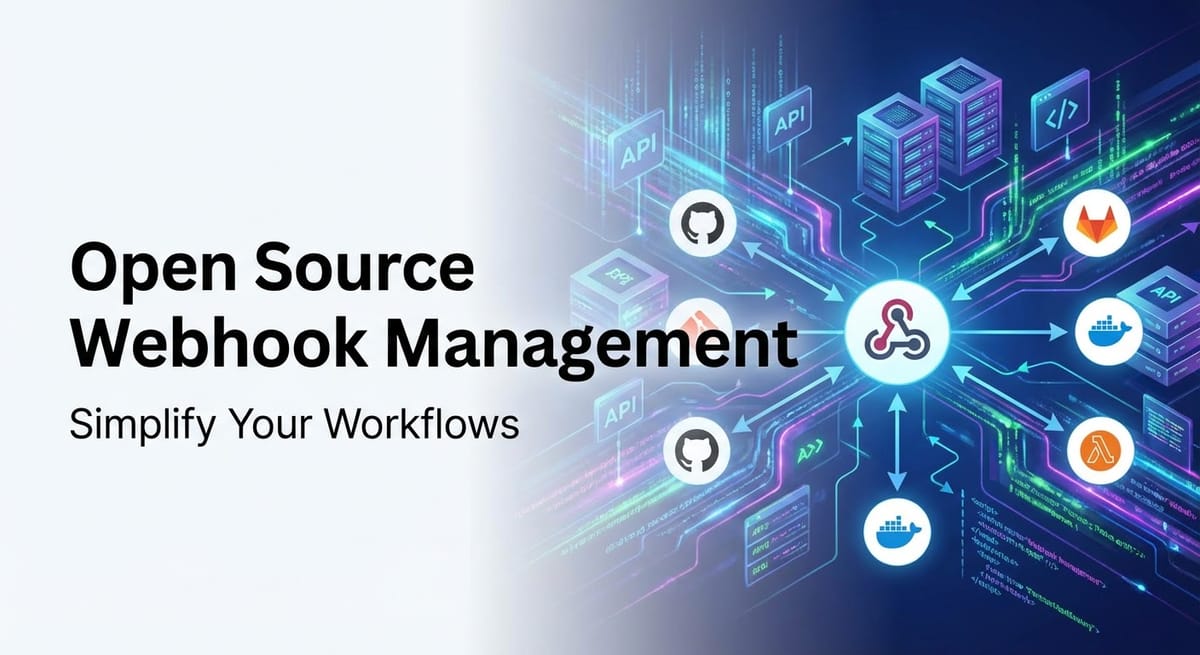


In the complex tapestry of modern distributed systems, where applications must communicate seamlessly across various platforms and services, the efficiency and reliability of data exchange are paramount. As businesses increasingly rely on real-time interactions and event-driven architectures, the traditional request-response model of an api often falls short in meeting the demands for immediate notifications and asynchronous updates. This is where webhooks emerge as a powerful, yet often underestimated, mechanism. They represent a paradigm shift, enabling systems to push information proactively rather than waiting for a pull request, thereby revolutionizing how applications interact and react to events. However, harnessing the full potential of webhooks is not without its challenges. As the number of integrations grows, so does the complexity of managing these outbound calls, ensuring their delivery, security, and scalability. This article delves into the critical need for sophisticated webhook management and champions the robust, flexible, and community-driven approach offered by Open Source Webhook Management solutions. By exploring how these platforms can streamline operations, enhance reliability, and provide an Open Platform for innovation, we will uncover how they simplify workflows in an increasingly interconnected digital landscape, often complementing or integrating with an existing api gateway infrastructure.
The journey towards building highly responsive and decoupled applications inevitably leads to the adoption of event-driven patterns. Whether it's processing an e-commerce order, notifying users of a new message, or triggering a CI/CD pipeline, the ability for one system to instantly inform another of a significant event is fundamental. Webhooks, at their core, are user-defined HTTP callbacks that are triggered by specific events. When the event occurs at the source site, the source makes an HTTP request to the URI configured for the webhook, effectively "pushing" information to the registered consumer. This inversion of control, from polling to pushing, dramatically reduces latency, frees up resources, and creates a more efficient communication channel. Yet, with great power comes great responsibility. Without a structured, resilient, and observable management layer, webhooks can quickly become a source of instability, security vulnerabilities, and operational nightmares, turning a powerful tool into a significant liability.
The allure of open source, with its promise of transparency, flexibility, and community-driven innovation, presents a compelling solution to these inherent challenges. Open source webhook management platforms offer a decentralized approach to problem-solving, allowing organizations to adapt and extend functionalities to meet their unique requirements without the constraints of vendor lock-in or prohibitive licensing costs. They embody the spirit of an Open Platform, fostering an ecosystem where continuous improvement and shared knowledge drive the evolution of robust tools. This article aims to provide a comprehensive guide to understanding, implementing, and leveraging open source webhook management to transform intricate, multi-system workflows into elegantly simplified, highly reliable, and securely managed processes, ensuring that every event, no matter how small, is delivered exactly where and when it's needed.
Part 1: Understanding Webhooks and Their Importance in Modern Architectures
To truly appreciate the value of dedicated webhook management, it's essential to first establish a profound understanding of what webhooks are, how they operate, and why they have become an indispensable component of modern software architectures. Unlike traditional api calls, which typically involve a client "pulling" data from a server through a series of synchronous requests, webhooks operate on a "push" model. This fundamental difference is what gives them their unique power and efficiency.
What are Webhooks? The Push Notification for Servers
At its most basic, a webhook is an automated message sent from an application when a specific event occurs. It's essentially a custom callback URL that one application registers with another. When the predefined event (e.g., a new user registration, an order status change, a code commit) happens, the source application makes an HTTP POST request to that registered URL, delivering a payload of data describing the event. Think of it as a doorbell for your server: instead of constantly knocking (polling) to see if someone is home, the postman (source application) simply rings the bell (webhook) when there's a delivery. This immediate notification mechanism is a cornerstone of event-driven design, allowing for real-time reactivity across disparate systems.
The payload sent via a webhook is typically formatted as JSON or XML, containing all the relevant information about the event that just occurred. The receiving application, often referred to as the webhook consumer or listener, then processes this data to perform subsequent actions. This asynchronous, event-driven communication pattern fosters loose coupling between services, meaning that changes in one service are less likely to break others, thereby enhancing system resilience and maintainability.
How Webhooks Work: A Deeper Dive into the Mechanics
The operational flow of a webhook involves several key steps:
- Event Registration: A consumer application registers a URL (its webhook endpoint) with a provider application. This registration specifies the types of events the consumer is interested in.
- Event Trigger: When a specified event occurs within the provider application, it constructs an HTTP POST request.
- Payload Creation: The request includes a payload (usually JSON) containing details about the event, such as the event type, timestamp, and relevant data.
- HTTP Request: The provider sends this HTTP POST request to the consumer's registered webhook URL.
- Consumer Processing: The consumer application receives the request, validates it (ideally), and processes the payload to trigger its own internal logic or actions.
- Acknowledgement: The consumer typically responds with an HTTP 2xx status code (e.g., 200 OK) to acknowledge receipt of the webhook. If a non-2xx status is returned, the provider might interpret this as a delivery failure and attempt retries.
This simple yet effective mechanism allows for a highly responsive and decentralized architecture. Crucially, the provider doesn't care what the consumer does with the information, only that it successfully delivered it. This decoupling is a significant advantage, promoting modularity and scalability.
Illustrative Examples of Webhook Applications
Webhooks are pervasive across the digital landscape, powering countless real-time interactions:
- E-commerce Platforms: When a customer places an order, a webhook can instantly notify an inventory management system, a shipping partner, and a customer relationship management (CRM) system. When an order status changes (e.g., shipped, delivered), further webhooks can update the customer and internal tracking tools. This real-time synchronization ensures that all aspects of the business are operating with the most current information.
- Continuous Integration/Continuous Deployment (CI/CD): Git repositories (like GitHub or GitLab) use webhooks to trigger CI/CD pipelines. When a developer pushes new code, a webhook can be sent to Jenkins, CircleCI, or GitLab CI, initiating automated tests, builds, and deployments. This automation significantly accelerates the development lifecycle and ensures rapid feedback.
- Customer Support & CRM Systems: If a new support ticket is opened in Zendesk, a webhook can push this event to Slack for team notifications, or to a custom data warehouse for analytics. When a customer interaction occurs, the CRM can update sales leads or trigger follow-up actions.
- Payment Gateways: When a payment is successfully processed, a payment gateway (e.g., Stripe, PayPal) can send a webhook to the merchant's application, confirming the transaction and allowing the merchant to fulfill the order or provide services. This is critical for preventing fraud and ensuring timely service delivery.
- Monitoring and Alerting: Monitoring tools often use webhooks to send alerts to incident management systems (e.g., PagerDuty) or communication platforms (e.g., Microsoft Teams, Discord) when an anomaly is detected or a critical threshold is breached. This ensures immediate attention to potential issues.
- IoT Devices: In certain IoT architectures, devices can use webhooks to report data or status changes to a central platform, enabling real-time device management and data collection without constant polling.
These examples merely scratch the surface of webhook utility, demonstrating their versatility in connecting disparate systems and enabling proactive, event-driven workflows.
Benefits of Using Webhooks: The Strategic Advantage
The widespread adoption of webhooks is driven by several compelling advantages they offer over traditional polling or synchronous api calls:
- Real-time Data and Responsiveness: The most significant benefit is the immediate delivery of information. Systems react instantly to events, leading to a much more responsive user experience and efficient backend operations. This is crucial for applications where latency needs to be minimized, such as financial trading, live chat, or gaming.
- Decoupled Systems and Loose Coupling: Webhooks promote architectural independence. The sender doesn't need to know the internal workings of the receiver, only its URL. This reduces interdependencies, making systems easier to develop, maintain, and scale independently. This modularity also enhances fault isolation, as a failure in one consumer is less likely to affect the producer or other consumers.
- Reduced Resource Consumption: Polling consumes resources on both the client and server side, even when no new data is available. Webhooks eliminate this inefficiency by only communicating when an event actually occurs, saving bandwidth, CPU cycles, and network requests. This is particularly beneficial for mobile applications or IoT devices with limited resources.
- Event-Driven Architecture (EDA) Enablement: Webhooks are a foundational element of EDA, a powerful architectural pattern that allows services to react to events as they happen. This pattern enhances agility, scalability, and resilience by allowing components to evolve independently and process events asynchronously.
- Simplified Integration: For many services, offering a webhook
apiis simpler than building a full-fledged API with query parameters and complex authentication for every possible data retrieval scenario. Consumers can simply register their interest and receive relevant data.
Challenges Without Proper Management: The Dark Side of Decentralization
While the benefits are clear, the inherent decentralization and asynchronous nature of webhooks also introduce a unique set of challenges if not managed effectively. As an organization scales its use of webhooks, these challenges can quickly escalate into significant operational burdens:
- Reliability and Guaranteed Delivery: What happens if the consumer's server is down? Or if the network fails? Webhooks are essentially fire-and-forget from the provider's perspective. Without a robust retry mechanism, a missed webhook means lost data or inconsistent states across systems. Ensuring guaranteed delivery becomes a critical concern.
- Security Concerns: Exposing an endpoint to the public internet for receiving sensitive event data opens up potential attack vectors. How do you verify that the webhook came from a legitimate source and that the payload hasn't been tampered with? Lack of authentication, authorization, and payload integrity checks can lead to data breaches or malicious injections.
- Scalability Issues: A sudden surge of events can overwhelm a consumer's endpoint, leading to dropped webhooks or performance degradation. How do you handle thousands or millions of events per second? Load balancing, rate limiting, and efficient processing are crucial for maintaining stability under high load.
- Debugging and Observability: When a webhook fails, or an unexpected behavior occurs, tracing the problem across multiple distributed systems can be incredibly complex. Lack of centralized logging, monitoring, and detailed event history makes troubleshooting a nightmare. Identifying the root cause – whether it's a provider issue, network problem, or consumer bug – requires sophisticated tools.
- Version Control and Evolution: As APIs and event structures evolve, how do you manage changes to webhook payloads without breaking existing consumers? Proper versioning strategies and backward compatibility are essential to avoid disrupting workflows.
- Idempotency: Webhooks might be delivered multiple times due to retries or network anomalies. Consumer systems must be designed to handle duplicate events gracefully without causing unintended side effects (e.g., charging a customer twice).
- Developer Experience: For developers building systems that consume or produce webhooks, consistent interfaces, clear documentation, and easy testing tools are vital. Without these, integrating webhooks can be a frustrating and error-prone process.
These challenges highlight that simply implementing webhooks is not enough; a dedicated management strategy is indispensable for leveraging their full potential securely and reliably. This leads us directly to the critical need for sophisticated webhook management systems, particularly those that embrace the Open Platform philosophy.
Part 2: The Need for Robust Webhook Management Systems
As organizations scale their operations and increasingly adopt microservices and event-driven architectures, the haphazard implementation of webhooks inevitably leads to significant operational challenges. What starts as a simple, effective way to communicate between two services can quickly evolve into a tangled web of unmanaged endpoints, unreliable deliveries, and security vulnerabilities. This section delves into why dedicated webhook management systems are not just a luxury but a necessity for any enterprise looking to harness the full power of real-time event processing.
Why Simple Ad-Hoc Solutions Fail as Complexity Grows
Initially, for a handful of integrations, directly exposing a public HTTP endpoint and writing custom logic for each incoming webhook might seem efficient. Developers might quickly spin up a serverless function or a simple API endpoint to receive notifications from GitHub, Stripe, or a CRM. However, this ad-hoc approach quickly breaks down under the weight of increasing complexity and scale.
- Lack of Centralization: Each webhook consumer builds its own logic for receiving, validating, and processing events. This leads to duplicated effort, inconsistent implementations, and a fragmented view of the organization's event landscape. There's no single source of truth for all outgoing or incoming webhooks, making auditing and governance nearly impossible.
- Fragile Error Handling: Custom solutions often implement rudimentary error handling – perhaps a single retry attempt or none at all. This lack of sophisticated retry policies (like exponential backoff) means that transient network issues or temporary consumer downtime can result in permanently lost events, leading to data inconsistencies and system desynchronization. Debugging such failures in a distributed environment without a unified logging and monitoring system becomes a Herculean task.
- Security Blind Spots: When every team or developer creates their own webhook endpoints, security best practices are often inconsistently applied or overlooked entirely. Basic authentication might be missing, signature validation might be absent, or TLS might not be enforced, exposing sensitive data to eavesdropping or tampering. This decentralized security posture is a major vulnerability for the entire system.
- Inadequate Scaling: A custom endpoint designed for low traffic might buckle under an unexpected surge of events. Building resilience, load balancing, and rate limiting into every custom webhook handler is a complex and resource-intensive endeavor that distracts from core business logic. Without these, systems become prone to downtime and performance bottlenecks.
- Maintenance Burden: As the number of webhooks grows, so does the maintenance overhead. Updating security protocols, refining retry logic, or upgrading underlying infrastructure across dozens or hundreds of disparate, custom-built handlers becomes an unmanageable chore. This technical debt accumulates rapidly, stifling innovation and draining engineering resources.
These shortcomings illustrate that while simple solutions might suffice for isolated cases, they are fundamentally inadequate for managing a robust, enterprise-grade event-driven architecture. A structured, centralized approach is imperative.
Common Problems Faced by Developers and Teams
Beyond the architectural and operational challenges, developers and teams on the ground frequently encounter specific pain points that highlight the need for a dedicated management platform:
- Lack of Central Visibility and Discovery:
- Problem: Developers struggle to discover what webhooks are available, what events they trigger, and who consumes them. There's no unified catalog or dashboard to view all webhook integrations, leading to tribal knowledge silos and duplicated efforts. Similarly, when a producer service needs to send out events, it lacks a clear, centralized registry of potential consumers, often resorting to ad-hoc configuration or manual communication.
- Impact: Slows down development, increases integration time, and makes it difficult to onboard new team members or understand system interdependencies.
- Reliability and Error Handling Nightmares:
- Problem: Webhooks often fail due to network issues, consumer downtime, or malformed payloads. Without automatic retries, dead-letter queues (DLQs), and alerts, these failures can lead to silent data loss or inconsistent system states. Developers spend excessive time manually investigating failed deliveries and attempting re-sends.
- Impact: Compromised data integrity, unreliable workflows, and significant operational overhead for debugging and recovery. Lost customer orders or missed critical alerts can have severe business consequences.
- Security Gaps and Compliance Risks:
- Problem: Ensuring that only legitimate webhooks are processed and that payloads haven't been tampered with is complex. Implementing proper webhook signatures (e.g., HMAC), TLS enforcement, IP whitelisting, and robust authentication on every endpoint is a recurring security challenge. Failure to do so exposes systems to denial-of-service attacks, data injection, and unauthorized data access.
- Impact: Major security vulnerabilities, potential data breaches, and non-compliance with regulatory standards (e.g., GDPR, HIPAA), leading to fines and reputational damage.
- Scaling and Performance Bottlenecks:
- Problem: Handling high volumes of webhooks efficiently requires sophisticated mechanisms like load balancing, rate limiting, and asynchronous processing. Without these, a sudden spike in events can overwhelm consumer services, leading to degraded performance or complete outages. Manually managing capacity for each webhook endpoint is unsustainable.
- Impact: System instability, poor user experience, inability to handle peak loads, and potential revenue loss due to service disruptions.
- Monitoring and Logging Deficiencies:
- Problem: When a webhook delivery fails or an unexpected event occurs, developers lack granular visibility into the entire event lifecycle. Custom logs are often insufficient, scattered, and lack centralized aggregation. Tracing an event from its origin through multiple hops to its final destination is incredibly difficult without a unified monitoring and logging solution.
- Impact: Protracted debugging cycles, inability to proactively identify issues, and a reactive rather than proactive incident response posture. This makes it challenging to meet SLAs and maintain system health. For instance, robust platforms like APIPark, known for its open-source AI gateway and API management capabilities, exemplify the kind of comprehensive logging and data analysis features that are invaluable. While primarily designed for AI and REST services, its detailed API call logging and powerful data analysis functionalities demonstrate the critical importance of deep observability and traceability, principles directly transferable and essential for effective webhook management.
- Version Control and Backward Compatibility:
- Problem: Changes to webhook payload structures or event schemas can inadvertently break older consumer integrations. Managing multiple versions of webhooks and ensuring backward compatibility is a constant challenge, particularly in a fast-evolving product environment.
- Impact: Frequent breakage of integrations, increased testing overhead, and reluctance to evolve APIs due to fear of breaking existing consumers.
- Developer Experience and Testing Hurdles:
- Problem: Setting up local development environments to test webhook consumers can be cumbersome, often requiring public tunnels (like ngrok). Simulating various failure scenarios (e.g., network timeout, malformed data, authentication failure) for testing reliability is difficult without specialized tools.
- Impact: Slower development cycles, lower code quality due to insufficient testing, and developer frustration.
These pervasive issues underscore the critical need for a dedicated, robust webhook management system. Such a system centralizes common functionalities, enforces best practices, and provides the necessary infrastructure to handle webhooks reliably, securely, and at scale, transforming a potential operational burden into a streamlined, strategic asset. This brings us to the advantages of embracing an Open Platform approach for these critical infrastructure components.
Part 3: Embracing Open Source for Webhook Management
In the landscape of software development, where choices range from proprietary, off-the-shelf solutions to bespoke, in-house creations, open source stands out as a compelling alternative, particularly for foundational infrastructure components like webhook management. The philosophy behind open source — community collaboration, transparency, and freedom of use — aligns perfectly with the demands of managing complex, interconnected systems where flexibility and control are paramount. This section explores the profound advantages and practical considerations of adopting open source solutions for webhook management, highlighting how they embody the spirit of an Open Platform.
Defining "Open Source" and Its Philosophy
At its core, open source refers to software with source code that anyone can inspect, modify, and enhance. It's not just about free access to code; it's a development methodology and a philosophical approach that emphasizes collaboration, peer review, and community participation. Key tenets of the open source philosophy include:
- Transparency: The code is open for all to see, scrutinize, and understand. This fosters trust and allows for thorough security audits and bug identification.
- Collaboration: Developers from around the world can contribute to the project, leading to rapid innovation, diverse perspectives, and robust solutions.
- Freedom: Users have the freedom to run the program for any purpose, study how it works, adapt it, redistribute it, and improve it. This empowers organizations to tailor the software to their exact needs.
- Community: A vibrant community supports open source projects, providing documentation, bug fixes, features, and mutual assistance.
This philosophy translates into tangible benefits for organizations seeking sophisticated, adaptable tools for managing their event-driven workflows, especially for critical functions like webhook delivery.
Advantages of Open Source Solutions for Webhook Management
Adopting an open source webhook management system brings a multitude of strategic and operational benefits:
- Cost-Effectiveness and Reduced Licensing Fees:
- Benefit: The most immediate and often cited advantage is the absence of direct licensing costs. This significantly reduces the total cost of ownership (TCO) compared to proprietary solutions, freeing up budget that can be reallocated to development, customization, or expert support. While there might be infrastructure costs for hosting and operational costs for maintenance, these are often more predictable and controllable than escalating licensing fees.
- Impact: Lower entry barriers for startups and SMEs, and significant savings for large enterprises, allowing for more experimentation and broader deployment without prohibitive upfront investments.
- Flexibility and Customizability:
- Benefit: With access to the source code, organizations can modify, extend, or integrate the webhook management platform precisely to their unique requirements. Need a specific authentication method? Want to integrate with an obscure internal logging system? Or perhaps you need a custom transformation logic for payloads? Open source allows for this level of deep customization, which is often impossible or prohibitively expensive with proprietary vendors.
- Impact: Solutions perfectly tailored to specific business needs, avoiding the compromises inherent in "one-size-fits-all" commercial products. This fosters agility and enables unique competitive advantages.
- Community Support and Rapid Innovation:
- Benefit: Robust open source projects boast active communities of developers, users, and maintainers. This collective intelligence means that bugs are often identified and fixed quickly, new features are developed in response to real-world needs, and a wealth of documentation and support is available through forums, GitHub issues, and chat channels. This distributed innovation model often outpaces the development cycles of single-vendor products.
- Impact: Faster problem resolution, access to cutting-edge features, and a large pool of shared knowledge and best practices, reducing reliance on a single vendor's roadmap.
- Transparency and Enhanced Security Auditing:
- Benefit: The open nature of the code allows security teams to thoroughly inspect the software for vulnerabilities, backdoors, or malicious code. This transparency is a significant advantage over proprietary solutions, where the inner workings are often opaque "black boxes." Organizations can perform their own security audits or leverage community-reported vulnerabilities and fixes.
- Impact: Greater trust in the security posture of the platform, improved ability to meet stringent compliance requirements, and faster response to emerging threats. This is especially crucial for managing sensitive event data.
- Avoiding Vendor Lock-in and Increased Control:
- Benefit: Relying on a single vendor for a critical piece of infrastructure can create significant lock-in. Open source solutions mitigate this risk by giving organizations complete control over their software stack. If a project's direction changes, or if commercial support becomes unsatisfactory, the organization retains the ability to fork the project, maintain it internally, or switch to another open source alternative.
- Impact: Strategic independence, greater bargaining power, and the ability to adapt infrastructure decisions without being held hostage by a vendor's pricing or product strategy. It truly embodies the spirit of an
Open Platformwhere choice and flexibility are paramount.
- Interoperability and Integration Flexibility:
- Benefit: Open source projects often prioritize interoperability and provide well-documented
apis and extension points, making it easier to integrate with other tools in an existing ecosystem, includingapi gatewaysolutions, monitoring platforms, and data analytics tools. This contrasts with proprietary systems that might intentionally limit integrations to maintain market share. - Impact: A more cohesive and integrated technology stack, reducing friction between different components and enabling richer data flows across the enterprise.
- Benefit: Open source projects often prioritize interoperability and provide well-documented
Disadvantages and Considerations for Open Source Adoption
While the advantages are compelling, embracing open source also comes with its own set of responsibilities and considerations that organizations must be prepared for:
- Self-Hosting and Maintenance Burden:
- Consideration: Unlike managed proprietary services, open source webhook management often requires organizations to self-host, deploy, and maintain the infrastructure. This includes managing servers, databases, networking, and ensuring high availability and scalability. This demands internal operational expertise and resources.
- Mitigation: Cloud providers offer managed services that can simplify infrastructure management. For organizations that lack extensive DevOps capabilities, commercial support for open source products (often from the project creators or specialized vendors) can provide a middle ground, offering professional support and managed hosting options.
- Reliance on Community for Support and Development:
- Consideration: While community support can be robust, it's typically asynchronous and informal. Urgent production issues might not receive immediate attention, and feature requests depend on community interest and developer availability.
- Mitigation: For critical deployments, organizations might consider dedicated commercial support subscriptions or allocate internal engineering resources to contribute back to the project, becoming part of the core development team.
- Maturity and Feature Set of Projects:
- Consideration: The maturity level of open source projects varies widely. Some are highly mature and feature-rich, while others might be nascent, less stable, or lack certain advanced features found in commercial offerings. Evaluating a project's activity, contributor base, and roadmap is crucial.
- Mitigation: Thorough due diligence is required. Look for projects with strong governance, regular releases, extensive documentation, and a proven track record in production environments.
- Learning Curve and Expertise Requirements:
- Consideration: Open source tools can sometimes have a steeper learning curve, especially for complex systems, due to less polished UIs or reliance on command-line interfaces. Internal teams need to acquire the necessary expertise to deploy, configure, and troubleshoot the platform effectively.
- Mitigation: Invest in training, leverage available documentation, and consider hiring engineers with experience in the specific open source technologies. The strong community often provides excellent educational resources.
In conclusion, for organizations that value control, flexibility, cost-efficiency, and transparent security, embracing an open source webhook management solution represents a powerful strategic choice. While it requires a commitment to operational management and potentially building internal expertise, the long-term benefits of an adaptable, community-driven Open Platform can far outweigh the challenges, paving the way for significantly simplified and robust event-driven workflows.
Part 4: Key Features of an Ideal Open Source Webhook Management Platform
A truly effective open source webhook management platform transcends simple event delivery; it acts as a central nervous system for an organization's event-driven architecture. It must provide a comprehensive suite of features that address the full lifecycle of webhooks, from registration and secure delivery to robust error handling, monitoring, and scaling. The ideal platform should be a flexible and extensible Open Platform that not only simplifies workflows but also enhances reliability and security across all event communications.
1. Endpoint Management: Centralized Control and Discovery
At the foundation of any webhook management system is the ability to effectively manage the myriad of webhook endpoints.
- Centralized Dashboard and Registry: A user-friendly web interface and programmatic
apifor registering, viewing, and managing all webhook endpoints in one place. This acts as a single source of truth, eliminating fragmentation and improving discovery. Developers should be able to quickly see which services are sending or receiving which events. - Easy Registration and Configuration: Streamlined processes for adding new webhook URLs, associating them with specific event types, and configuring parameters like delivery headers, authentication credentials, and custom payload transformations.
- Versioning and Schema Management: Support for managing different versions of webhook endpoints and their corresponding payload schemas. This ensures backward compatibility for older consumers while allowing new features and data structures to be introduced without breaking existing integrations.
- Activation/Deactivation and Decommissioning: The ability to easily enable, disable, or permanently remove webhook endpoints. This is crucial for managing the lifecycle of integrations and quickly mitigating issues if an endpoint is misbehaving.
2. Reliability and Guaranteed Delivery: Ensuring Every Event Counts
One of the most critical aspects of webhook management is ensuring that events are delivered successfully, even in the face of transient failures or consumer downtime.
- Automatic Retries with Exponential Backoff: If a webhook delivery fails (e.g., consumer returns a 4xx or 5xx HTTP status code, or experiences a network timeout), the platform should automatically retry the delivery. Exponential backoff increases the delay between retries, preventing overwhelming the consumer and allowing it time to recover. Configurable retry policies (number of retries, maximum delay) are essential.
- Dead Letter Queues (DLQs): For webhooks that exhaust their retry attempts or encounter persistent non-recoverable errors, a DLQ mechanism is vital. Failed events are moved to a designated queue for manual inspection, reprocessing, or analysis, preventing permanent data loss and providing a safety net for critical events.
- Circuit Breakers: To prevent a failing consumer from cascading failures back to the producer, a circuit breaker pattern should be implemented. If a consumer endpoint consistently fails, the circuit breaker "trips," temporarily halting further deliveries to that endpoint to give it time to recover, and then periodically "probes" to see if it's healthy again.
- Guaranteed Delivery Mechanisms: Beyond simple retries, advanced platforms might employ persistent storage for events before delivery, ensuring that events are not lost even if the webhook management system itself crashes. This might involve integration with message queues like Kafka or RabbitMQ.
- Event Deduplication: Given that webhooks can sometimes be delivered multiple times (due to retries or network quirks), the platform might offer features to help consumers identify and deduplicate events, either through unique event IDs or other metadata, thus supporting idempotency at the consumer end.
3. Security: Protecting Data and Preventing Abuse
Security is paramount when dealing with sensitive event data flowing across public networks. The platform must provide robust mechanisms to authenticate, authorize, and ensure the integrity of webhooks.
- Webhook Signatures (HMAC): The platform should generate a cryptographic signature (e.g., using HMAC with a shared secret) for each outgoing webhook payload. Consumers can then verify this signature using their secret key to ensure the webhook originated from the legitimate source and has not been tampered with in transit.
- TLS/SSL Encryption (HTTPS): All communication with webhook endpoints must be secured using HTTPS to encrypt data in transit, protecting against eavesdropping and man-in-the-middle attacks. The platform should ideally enforce HTTPS for all registered endpoints.
- IP Whitelisting/Blacklisting: For enhanced security, the ability to configure specific IP addresses or ranges from which webhooks can be received or to which they can be sent. This limits the attack surface and ensures communication only with trusted entities.
- Payload Validation and Schema Enforcement: The platform can enforce strict schema validation on incoming or outgoing webhook payloads, rejecting malformed requests or flagging non-compliant data. This helps maintain data quality and prevent injection attacks.
- Authentication and Authorization: For managing the platform itself, robust authentication (e.g., OAuth, API keys, SSO) and fine-grained role-based access control (RBAC) are crucial. Different users or teams should have varying levels of permissions to create, modify, or view webhook configurations.
4. Scalability and Performance: Handling High Throughput
As event volumes grow, the webhook management platform must scale horizontally and maintain high performance.
- Load Balancing and Distributed Architecture: The platform should be designed for distributed deployment, allowing multiple instances to run concurrently and handle incoming and outgoing webhook traffic. This ensures high availability and resilience.
- Rate Limiting: To protect consumer services from being overwhelmed by a sudden flood of events, the platform should offer configurable rate limits per endpoint or per consumer. This can be based on events per second, concurrent requests, or bandwidth.
- Asynchronous Processing: Webhook deliveries should be processed asynchronously, typically by pushing events onto internal queues, ensuring that the source system is not blocked and can quickly return to its operations.
- Concurrency Control: Managing the number of concurrent requests to a single webhook endpoint to prevent resource exhaustion on the consumer side.
5. Monitoring and Observability: Insights into Event Flow
Visibility into the webhook delivery process is critical for debugging, performance analysis, and proactive issue detection.
- Detailed Logging of Every Event: Comprehensive logging of all webhook events, including the payload, headers, delivery attempts, response codes, and timestamps. This detailed history is invaluable for troubleshooting and auditing.
- Real-time Dashboards and Metrics: A graphical user interface (GUI) displaying real-time metrics such as delivery success rates, failure rates, latency, throughput, and active endpoints. These dashboards provide immediate insights into the health and performance of the webhook system.
- Alerting Systems: Integration with alerting tools to notify administrators or on-call teams of critical events, such as persistent delivery failures, unusually high error rates, or security anomalies.
- Event History and Replay: The ability to view the full history of individual webhook deliveries, inspect past payloads, and even manually replay failed webhooks for testing or recovery purposes. This is a crucial feature for debugging and data recovery.
- Powerful Data Analysis: Leveraging collected log data to identify trends, performance bottlenecks, and potential issues before they impact operations. As mentioned earlier, platforms like APIPark excel in this area with their detailed API call logging and robust data analysis capabilities, demonstrating how deep insights into traffic and activity are invaluable for maintaining system stability and predicting future needs, whether for AI
apis or webhook events.
6. Developer Experience: Ease of Use and Integration
A great platform empowers developers rather than hindering them.
- Clear Documentation and
apis: Comprehensive documentation for both using and extending the platform, along with well-defined APIs for programmatic management of webhooks. - Testing Tools: Built-in or integrated tools for simulating webhook events, testing endpoint configurations, and replaying historical events. This simplifies development and debugging.
- Web UI/Dashboard: An intuitive graphical interface that allows non-technical users to manage basic webhook settings, while providing advanced features for developers and operators.
- Self-Service Portal: Allowing teams or external partners to register and manage their own webhook subscriptions within defined boundaries, streamlining the onboarding process.
7. Integration Capabilities and Extensibility: An Open Platform Ethos
An open source platform should be designed to fit seamlessly into diverse technology stacks and be adaptable to future needs.
- Integration with Message Queues: Native support for publishing or consuming events from popular message queuing systems (e.g., Kafka, RabbitMQ, SQS) for robust internal event bus architectures.
api GatewayIntegration: The ability to integrate with existingapi gatewaysolutions. Anapi gatewaycan manage inbound API calls, and a webhook management system can handle outbound event notifications, providing a comprehensive solution for all external communications. This ensures unified authentication, traffic management, and observability across allapiand webhook traffic.- Plugin Architecture and Custom Processing: A flexible architecture that allows developers to write custom plugins or modules for tasks like payload transformation, custom authentication, additional logging, or integration with proprietary systems.
- Cloud-Native Design: Designed to run efficiently in containerized environments (e.g., Docker, Kubernetes) and leverage cloud services for scalability and resilience.
Table: Key Features of a Robust Open Source Webhook Management Platform
| Feature Category | Key Capabilities | Benefits |
|---|---|---|
| Endpoint Management | Centralized Registry, Versioning, Activation/Deactivation | Streamlined discovery, consistent management, orderly evolution of event schemas. |
| Reliability | Automatic Retries (Exponential Backoff), DLQs, Circuit Breakers | Guaranteed delivery, prevents data loss, protects consumer services from overload, enhances system resilience. |
| Security | Webhook Signatures (HMAC), TLS/HTTPS, IP Filtering, Payload Validation | Protects against tampering, ensures data integrity, authenticates source, prevents unauthorized access. |
| Scalability | Load Balancing, Rate Limiting, Asynchronous Processing | Handles high event volumes, prevents consumer overload, maintains performance under stress. |
| Monitoring & Observability | Detailed Logging, Real-time Dashboards, Alerts, Event Replay | Rapid troubleshooting, proactive issue detection, performance analysis, facilitates auditing. |
| Developer Experience | Clear Documentation, Testing Tools, Web UI | Faster integration, improved code quality, reduced onboarding time, empowers developers. |
| Integration & Extensibility | Message Queue Integration, API Gateway Compatibility, Plugin Architecture |
Seamless fit into existing ecosystems, future-proof, allows for deep customization and complex workflows. |
By providing these core capabilities, an ideal open source webhook management platform empowers organizations to build resilient, scalable, and secure event-driven applications, ultimately simplifying complex workflows and transforming their approach to inter-service communication. It positions webhooks as first-class citizens in the overall Open Platform strategy, alongside traditional apis managed by an api gateway.
APIPark is a high-performance AI gateway that allows you to securely access the most comprehensive LLM APIs globally on the APIPark platform, including OpenAI, Anthropic, Mistral, Llama2, Google Gemini, and more.Try APIPark now! 👇👇👇
Part 5: Architectural Considerations for Open Source Webhook Management
Designing and implementing an open source webhook management system, or integrating an existing one, requires careful consideration of its underlying architecture. The decisions made at this stage will profoundly impact the system's scalability, reliability, security, and maintainability. A well-architected solution not only simplifies webhook workflows but also acts as a robust Open Platform for future integrations, often complementing a broader api gateway strategy.
1. Event Ingestion Layer: The First Point of Contact
The ingestion layer is responsible for receiving events from various source systems. This is the entry point for all webhook traffic, and its robustness is paramount.
- HTTP/S Endpoint: At its core, the system needs one or more highly available HTTP/S endpoints to receive incoming webhook POST requests. These endpoints must be secure (always HTTPS), capable of handling high concurrent requests, and resilient to sudden traffic spikes. They should ideally be stateless to facilitate horizontal scaling.
- Load Balancing: To distribute incoming traffic across multiple instances of the ingestion service, a robust load balancer (e.g., Nginx, HAProxy, or cloud-native load balancers) is essential. This ensures high availability and prevents any single point of failure from becoming a bottleneck.
- Asynchronous Queuing (Message Broker Integration): Immediately upon receiving a webhook, the ingestion layer should validate basic aspects (e.g., headers, size) and then push the raw event data onto a persistent message queue (e.g., Apache Kafka, RabbitMQ, AWS SQS, Google Cloud Pub/Sub). This decouples the ingestion from the processing, protecting the system from backpressure and ensuring data durability. If the processing service goes down, events are safely stored in the queue, awaiting processing. This also facilitates reliable retries and dead-letter queue mechanisms downstream.
- Acknowledgement and Response: The ingestion layer should quickly respond to the source system with an appropriate HTTP status code (e.g., 200 OK) after successfully accepting the event into the queue. This prevents the source from retrying unnecessarily and ensures rapid acknowledgment.
2. Processing Logic: Transformation, Filtering, and Routing
Once events are ingested, the processing layer takes over. This is where the core intelligence of the webhook management system resides.
- Event Consumers: Services that consume events from the message queue. These services are responsible for parsing the event payload, performing necessary transformations (e.g., enriching data, reformatting JSON), applying filters based on event types or payload content, and determining the appropriate webhook endpoints to deliver to.
- Configuration Storage: The processing layer needs access to a persistent and highly available data store for webhook configurations (e.g., registered URLs, secrets, retry policies, transformation rules, filtering criteria). This could be a relational database (PostgreSQL, MySQL), a NoSQL database (MongoDB, Cassandra), or even a key-value store (Redis, etcd).
- Filtering and Routing Engine: A crucial component that evaluates each event against registered webhook subscriptions. It determines which events are relevant to which consumers and maps them to their respective delivery endpoints. This often involves rule-based logic or a publish-subscribe pattern.
- Payload Transformation: The ability to modify the outgoing webhook payload to match the specific requirements of a consumer. This might involve stripping sensitive fields, adding custom headers, or changing data structures. This reduces the burden on consumers to adapt to the producer's event format.
3. Delivery Mechanism: The Outbound Connector
This layer is responsible for reliably sending the processed webhooks to their designated consumer endpoints.
- Delivery Workers/Executors: A pool of workers that retrieve processed events from internal queues and attempt to deliver them via HTTP/S POST requests to the registered consumer URLs. These workers must be fault-tolerant and capable of handling a high volume of concurrent outbound requests.
- Retry Logic and State Management: Each delivery worker must implement sophisticated retry logic, including exponential backoff, configurable retry limits, and possibly circuit breaker patterns. The state of each delivery attempt (e.g., success, failure, retry count) must be persistently stored to enable continuous retries and robust monitoring.
- Concurrency Control and Rate Limiting: Mechanisms to control the number of simultaneous deliveries to a single consumer endpoint (to prevent overwhelming them) and to enforce overall rate limits based on pre-defined quotas.
- Dead Letter Queue Integration (Outbound): Events that permanently fail after exhausting all retries should be routed to an outbound DLQ for manual intervention or further analysis. This ensures that no event is silently dropped without an audit trail.
- Security for Outbound Calls: Implementing webhook signatures (HMAC), ensuring TLS encryption for all outbound connections, and potentially supporting client certificate authentication for highly secure integrations.
4. Storage: Persistence for Reliability and Observability
Reliable storage is fundamental for ensuring data durability, enabling retries, and providing comprehensive observability.
- Event Log/History: A high-volume, durable data store (e.g., object storage like S3, a distributed log like Kafka, or a time-series database) to record every incoming event, every delivery attempt, and its outcome. This log is essential for auditing, debugging, and analytics.
- Configuration Database: As mentioned earlier, a database to store all webhook endpoint configurations, secrets, and associated metadata. This must be highly available and securely managed.
- Delivery State Store: A fast, persistent store (e.g., Redis, Cassandra, or a dedicated database) to track the state of ongoing webhook deliveries, including retry counts, last attempt time, and current status. This allows the system to resume deliveries even after restarts.
- Secrets Management: Secure storage for API keys, shared secrets, and other credentials used for authentication with webhook consumers. This should integrate with industry-standard secrets management solutions (e.g., HashiCorp Vault, AWS Secrets Manager).
5. Scalability Patterns: Growing with Demand
The architecture must inherently support horizontal scalability to handle fluctuating event volumes.
- Microservices Architecture: Decomposing the webhook management system into smaller, independently deployable services (e.g., ingestion service, processing service, delivery service) allows each component to scale independently based on its specific workload.
- Containerization and Orchestration: Deploying services in containers (Docker) and orchestrating them with platforms like Kubernetes enables efficient resource utilization, automated scaling, self-healing capabilities, and simplified deployment management.
- Stateless Services (where possible): Designing services to be stateless minimizes the need for session affinity and simplifies horizontal scaling. State management should be offloaded to external, persistent data stores.
- Event Streaming for Internal Communication: Using message brokers (like Kafka) as the backbone for internal communication between microservices within the webhook management system itself promotes decoupling, resilience, and scalability.
6. Security Best Practices in Architecture: A Multi-Layered Approach
Security must be woven into every layer of the architecture, not just as an afterthought.
- Network Segmentation: Isolating components (e.g., ingestion endpoints, databases, delivery workers) into different network segments with strict firewall rules to limit lateral movement in case of a breach.
- Least Privilege Principle: Ensuring that each service or component only has the minimum necessary permissions to perform its function.
API GatewayIntegration (External-Facing): While the internal ingestion layer handles raw webhooks, if the webhook management system needs to expose its own managementapis for programmatic control, these should be routed through a dedicatedapi gateway. Anapi gatewaylike APIPark can handle unified authentication, authorization, rate limiting, and traffic management for both RESTapis and potentially even the management interfaces of webhook systems, providing a consistentOpen Platformfor all external interactions. This provides a crucial layer of security, allowing for centralized policy enforcement and traffic inspection for both internal and external APIs.- Regular Security Audits: Performing routine code audits, penetration testing, and vulnerability scanning on all components of the system.
- Logging and Monitoring for Security Events: Integrating with Security Information and Event Management (SIEM) systems to detect and alert on suspicious activities, unauthorized access attempts, or anomalies in webhook traffic.
By meticulously planning and implementing these architectural considerations, organizations can build or leverage an open source webhook management solution that is not only highly functional but also inherently reliable, secure, and scalable, making it a cornerstone of their event-driven Open Platform strategy.
Part 6: Implementing Open Source Webhook Management - Best Practices
Successfully deploying and operating an open source webhook management system requires adherence to a set of best practices that extend beyond merely installing the software. These practices ensure reliability, security, scalability, and maintainability, transforming a complex technical challenge into a streamlined operational success. They are crucial for leveraging the full potential of an Open Platform and ensuring that webhook workflows genuinely simplify, rather than complicate, your distributed systems.
1. Design for Idempotency: Handle Duplicates Gracefully
- Practice: Always design your webhook consumer endpoints to be idempotent. This means that processing the same webhook event multiple times should have the same effect as processing it once. This is fundamental because webhook management systems, especially those with retry mechanisms, cannot guarantee exactly-once delivery; at-least-once delivery is the more realistic guarantee.
- Implementation:
- Include a unique identifier (e.g.,
event_id,transaction_id) in your webhook payloads. - On the consumer side, store a record of processed event IDs in a durable store (e.g., database, Redis). Before processing an incoming webhook, check if its
event_idhas already been processed. If so, simply acknowledge receipt and discard the duplicate. - For actions that naturally aren't idempotent (e.g., sending an email), guard them with a check against the stored event ID.
- Include a unique identifier (e.g.,
- Benefit: Prevents unintended side effects like duplicate charges, double notifications, or inconsistent data states, ensuring data integrity even with multiple deliveries. This drastically simplifies error recovery and reduces operational stress.
2. Implement Robust Error Handling: Beyond Simple Retries
- Practice: While the webhook management platform provides automatic retries, your consumer services must also implement comprehensive error handling to ensure resilience and clear communication back to the platform.
- Implementation:
- Meaningful HTTP Status Codes: Your consumer endpoint should return appropriate HTTP status codes:
200 OK(or202 Accepted): Event successfully received and processed, or accepted for asynchronous processing.400 Bad Request: Payload is malformed or invalid (platform should likely not retry this).401 Unauthorized/403 Forbidden: Authentication/authorization failed.404 Not Found: Endpoint doesn't exist.409 Conflict: Event already processed (idempotency in action).429 Too Many Requests: Consumer is overloaded; platform should back off.5xx Server Error: Transient server-side issue; platform should retry.
- Graceful Degradation: Design consumer logic to handle partial failures.
- Internal Circuit Breakers: Implement circuit breakers within your consumer logic to prevent repeated attempts to a failing downstream service.
- Meaningful HTTP Status Codes: Your consumer endpoint should return appropriate HTTP status codes:
- Benefit: Enables the webhook management platform to make intelligent decisions about retries, reduces unnecessary network traffic, and helps pinpoint issues more accurately, leading to faster recovery times.
3. Prioritize Security from Day One: Validate, Encrypt, Authorize
- Practice: Security is not an afterthought; it must be designed into every aspect of your webhook system.
- Implementation:
- Enforce HTTPS: Always use HTTPS for all webhook endpoints, both inbound and outbound.
- Verify Webhook Signatures: On the consumer side, always verify the webhook signature provided by the management platform. This ensures the request is authentic and the payload hasn't been tampered with. Do not trust the
X-Hub-Signatureheader blindly. - Validate Payloads: Strictly validate the structure and content of incoming payloads against expected schemas to prevent injection attacks or processing of malformed data.
- IP Whitelisting: If possible, restrict incoming webhook traffic to a known set of IP addresses from your webhook management platform.
- Strong Secrets Management: Store webhook secrets securely (e.g., in a dedicated secrets manager like HashiCorp Vault, AWS Secrets Manager, or Kubernetes Secrets), rotate them regularly, and avoid hardcoding them in code.
- Least Privilege: Ensure that the webhook management platform itself (and its underlying infrastructure) operates with the minimum necessary permissions.
- Benefit: Protects sensitive data, prevents unauthorized access or malicious activity, and helps maintain compliance with data governance regulations.
4. Invest in Observability: Monitor Everything, Alert on Anomalies
- Practice: Comprehensive monitoring and logging are indispensable for understanding the health and performance of your webhook workflows.
- Implementation:
- Centralized Logging: Aggregate all webhook logs (ingestion, processing, delivery attempts, successes, failures) into a centralized logging system (e.g., ELK Stack, Splunk, Loki). Ensure logs are structured (JSON) and include correlation IDs for tracing events across systems.
- Detailed Metrics: Collect and visualize key metrics such as:
- Webhook received/delivered/failed rates per endpoint.
- Average delivery latency.
- Retry counts.
- Dead letter queue size.
- CPU/memory usage of webhook management services.
- Dashboards: Create intuitive dashboards (e.g., Grafana, Kibana) to provide real-time visibility into webhook activity and system health.
- Proactive Alerting: Set up alerts for critical conditions (e.g., high failure rates, increased latency, DLQ buildup, security anomalies). Use a robust
api gatewayor platform like APIPark as an example of how powerful data analysis and detailed logging can be leveraged not just forapis but also for understanding the health of event-driven systems and preventing issues before they impact users. The principles of proactive monitoring and analysis are universally valuable.
- Benefit: Enables rapid detection and diagnosis of issues, provides insights for performance optimization, aids in capacity planning, and ensures accountability and transparency in event delivery.
5. Establish Version Control and Documentation: For Coherent Evolution
- Practice: Treat your webhook configurations, schemas, and processing logic as code, and manage them with version control. Maintain clear and up-to-date documentation.
- Implementation:
- Configuration as Code: Store webhook configurations (endpoint URLs, event subscriptions, transformation rules) in a version-controlled repository (Git). Use infrastructure-as-code tools to deploy and manage these configurations.
- Schema Definition: Clearly define and version your webhook payload schemas using tools like OpenAPI (Swagger) or JSON Schema. Communicate changes proactively to consumers.
- Comprehensive Documentation: Provide detailed documentation for:
- Available webhook events and their payloads.
- Authentication and security mechanisms (e.g., how to verify signatures).
- Retry policies and error handling expectations.
- Testing procedures and example payloads.
- Benefit: Facilitates collaborative development, ensures consistency, simplifies onboarding for new developers, and minimizes breaking changes when evolving your event
apis. It builds anOpen Platformmentality where information is shared and managed systematically.
6. Rigorous Testing: From Unit to Load Testing
- Practice: Implement a multi-faceted testing strategy for both the webhook management platform and its consumers.
- Implementation:
- Unit Tests: For individual components of the webhook management system and consumer logic.
- Integration Tests: Verify end-to-end webhook flows, including ingestion, processing, and delivery.
- Contract Testing: Ensure that webhook producers and consumers adhere to their agreed-upon event contracts (schemas).
- Load Testing: Simulate high volumes of webhook traffic to assess the scalability and performance of both the management platform and consumer services.
- Failure Injection Testing: Deliberately introduce failures (e.g., network latency, consumer downtime) to test retry mechanisms, circuit breakers, and overall system resilience.
- Webhook Simulators/Replay Tools: Use or build tools that can simulate webhook events or replay historical events for development and testing environments.
- Benefit: Identifies bugs and performance bottlenecks early, ensures the system can handle production loads, and validates the resilience of the entire event-driven architecture.
By embedding these best practices into your development and operational workflows, organizations can fully realize the promise of open source webhook management. It's about building a reliable, secure, and adaptable event Open Platform that truly simplifies complex inter-service communications, allowing teams to focus on core business logic rather than wrestling with the intricacies of event delivery.
Part 7: Architectural Examples and Use Cases: Webhooks in Action
To further illustrate the tangible benefits and practical application of open source webhook management, let's explore a few conceptual case studies. These examples demonstrate how a well-implemented webhook system, often alongside an api gateway, can simplify complex workflows and drive significant operational efficiencies across various industry scenarios. They embody the spirit of an Open Platform where components interact seamlessly to achieve business objectives.
Case Study 1: Real-time E-commerce Order Processing and Fulfillment
Scenario: A rapidly growing online retailer (e-commerce platform) uses a microservices architecture. When a customer places an order, multiple downstream systems need to be updated in real-time: inventory, payment processing, shipping, customer communication, and analytics. Initially, they tried polling, but it caused latency, excessive api calls, and resource strain. Then, they moved to ad-hoc webhook endpoints, which quickly became unmanageable due to reliability issues, lack of visibility, and security concerns.
Solution with Open Source Webhook Management: The retailer implements an open source webhook management platform as a central event hub.
- Event Source (Order Service): When a new order is confirmed, the Order Service publishes an
order.createdevent to the webhook management platform. - Webhook Management Platform:
- Ingestion: The platform's highly available ingestion layer receives the
order.createdevent. - Processing: It identifies all subscribed consumers for
order.createdevents (Inventory Service, Payment Gateway, Shipping Service, CRM, Analytics Data Lake). - Security: It signs each outgoing webhook payload with an HMAC signature for each consumer.
- Delivery: It dispatches webhooks to each registered endpoint.
- Reliability: If the Shipping Service's endpoint is temporarily down, the platform automatically retries the delivery with exponential backoff. If the Payment Gateway returns a
400 Bad Requestdue to a malformed payload, it logs the error, moves the specific delivery attempt to a DLQ, and alerts the development team, while other deliveries continue unimpeded. - Monitoring: The operations team uses the platform's dashboard to monitor overall delivery success rates, latency to different services, and any accumulating failed deliveries in the DLQ.
- Ingestion: The platform's highly available ingestion layer receives the
- Webhook Consumers:
- Inventory Service: Updates stock levels in real-time, sending an
inventory.updatedevent back to the platform. - Payment Gateway: Processes the payment and sends a
payment.succeededorpayment.failedevent back to the platform. - Shipping Service: Initiates the shipping process upon receiving the
order.createdwebhook. Upon shipment, it sends anorder.shippedevent. - CRM: Creates a new customer record or updates an existing one, triggering automated email campaigns via webhooks.
- Analytics Data Lake: Ingests all order-related events for business intelligence and fraud detection.
- Inventory Service: Updates stock levels in real-time, sending an
Simplified Workflow and Efficiency Gains:
- Real-time Synchronization: All systems are updated immediately, leading to accurate inventory, faster order fulfillment, and timely customer communication.
- Decoupling: Services remain independent. The Order Service doesn't need to know the specific
apis of all downstream systems; it just publishes an event. - Enhanced Reliability: Automatic retries and DLQs ensure no order event is lost, even if a consumer service experiences transient issues. This drastically reduces manual intervention for data reconciliation.
- Improved Observability: The centralized dashboard and logging allow operations teams to quickly identify and troubleshoot issues across the entire order fulfillment chain, reducing MTTR (Mean Time To Resolution).
- Scalability: The platform can handle a surge in orders during peak seasons without overwhelming individual consumer services, thanks to internal queuing, load balancing, and rate limiting.
Case Study 2: Automated CI/CD Pipeline Integration
Scenario: A large software development company manages hundreds of microservices. Their CI/CD pipeline relies heavily on events from Git repositories (GitHub, GitLab) and artifact repositories (Docker Hub, Nexus). Manually configuring webhooks for each repository and each pipeline stage was arduous, and visibility into webhook-triggered builds was fragmented. They needed a more robust, centralized way to trigger and monitor their build and deployment processes.
Solution with Open Source Webhook Management: The company implements an open source webhook management platform to centralize all CI/CD related event handling.
- Event Sources:
- GitHub/GitLab: When code is pushed to a repository, it sends a
pushwebhook event to the open source webhook management platform. - Docker Hub: When a new Docker image is built and pushed, it sends an
image.pushedwebhook event.
- GitHub/GitLab: When code is pushed to a repository, it sends a
- Webhook Management Platform:
- Unified Ingestion: All Git and Docker events are ingested into a single, managed platform.
- Filtering and Routing: The platform is configured to filter events based on repository, branch, and event type. For example, a
pushto themainbranch of afrontend-servicerepository triggers a specific Jenkins pipeline. - Security: It verifies incoming webhook signatures from GitHub/GitLab to ensure authenticity.
- Delivery: It forwards filtered events to the appropriate CI/CD tools (Jenkins, Argo CD, custom deployment scripts) as transformed webhooks.
- Version Management: As the company evolves its CI/CD processes, the webhook management platform allows for easy updates to routing rules and payload transformations without needing to reconfigure every repository's webhook settings.
- Webhook Consumers (CI/CD Tools):
- Jenkins/CircleCI: Receives webhooks for code pushes, initiating automated builds, tests, and static analysis.
- Argo CD: Receives webhooks for image pushes, triggering automated deployments to Kubernetes clusters.
- Custom Notification Service: Receives webhooks for build failures or deployment successes, sending notifications to Slack or Microsoft Teams.
Simplified Workflow and Efficiency Gains:
- Centralized Control: All CI/CD webhooks are managed from a single dashboard, providing a holistic view of event triggers and their corresponding actions. This is a true
Open Platformfor build automation. - Reduced Configuration Overhead: Developers only need to configure webhooks once with the management platform, rather than managing individual webhooks for dozens of CI/CD tools per repository.
- Enhanced Reliability: If a CI server is temporarily offline, the webhook management platform will retry the delivery, ensuring that no code push goes unnoticed and no build is missed.
- Improved Observability: Centralized logging of all CI/CD webhook events allows teams to easily trace why a build was triggered (or not triggered), debug pipeline issues, and monitor the overall health of their automated processes.
- Greater Flexibility: New CI/CD tools or processes can be integrated quickly by simply adding new subscriptions and transformation rules within the webhook management platform, without changing upstream sources.
These case studies underscore how an open source webhook management system provides a foundational Open Platform for reliable, secure, and scalable event-driven communication. By addressing the common challenges of ad-hoc webhook implementations, it simplifies complex workflows, reduces operational burden, and empowers organizations to build more responsive and resilient applications. This capability perfectly complements the role of an api gateway in managing all external api interactions, creating a comprehensive solution for managing both request-response and event-driven communications.
Part 8: The Future of Webhook Management and Open Source
The digital landscape is in a constant state of evolution, driven by an insatiable demand for real-time interactions, intelligent automation, and seamless connectivity. As event-driven architectures become the default for building responsive and scalable applications, the role of webhook management will only become more central and sophisticated. The future of this domain is deeply intertwined with the broader trends in cloud computing, AI, and the enduring power of the open source movement. It foresees a landscape where an Open Platform approach dominates, and the lines between api management and event management continue to blur, often converging within an advanced api gateway solution.
1. Increased Adoption of Event-Driven Architectures (EDA)
The shift towards EDA is undeniable. Microservices, serverless functions, and real-time data processing all thrive on events. Webhooks, as a primary mechanism for externalizing these events, will see expanded use across every industry. From IoT devices reporting sensor data to financial services processing transactions, and healthcare systems sharing patient information, the ability to react instantly to changes is becoming a competitive imperative. This pervasive adoption will necessitate even more robust and intelligent webhook management solutions.
2. AI/ML for Anomaly Detection and Predictive Management
The sheer volume of webhook traffic in large-scale systems will overwhelm human operators. This opens a significant opportunity for AI and Machine Learning.
- Anomaly Detection: AI algorithms can analyze historical webhook traffic patterns, delivery latencies, and error rates to automatically detect deviations that indicate an emerging issue. This could involve identifying unusual spikes in failures for a specific endpoint, unexpected changes in payload structures, or even potential security threats like DDoS attempts against webhook receivers.
- Predictive Maintenance: By analyzing trends, AI can predict potential bottlenecks or service degradations before they impact users, allowing for proactive scaling or resource allocation.
- Intelligent Retries: AI could optimize retry schedules and backoff strategies based on real-time consumer performance and historical recovery patterns, moving beyond static exponential backoff to more adaptive and efficient delivery attempts.
- Automated Troubleshooting: In the long term, AI could even assist in automatically pinpointing the root cause of webhook delivery failures by correlating logs and metrics across the entire event chain.
3. Serverless Functions for Webhook Processing and Extension
Serverless computing (e.g., AWS Lambda, Azure Functions, Google Cloud Functions) offers an ideal execution environment for webhook processing.
- Webhook Consumer as a Function: Developers can quickly deploy serverless functions to act as webhook consumers, benefiting from automatic scaling, pay-per-execution pricing, and reduced operational overhead.
- Custom Transformation and Logic: Serverless functions can be seamlessly integrated with webhook management platforms to provide highly customized event transformation, filtering, or routing logic, adding flexibility without needing to modify the core platform.
- Event-Driven Extensions: The webhook management platform itself could be extended using serverless functions to handle specific custom events or integrate with niche internal systems, further enhancing its
Open Platformcapabilities.
4. The Growing Maturity and Sophistication of Open Source Tools
The open source ecosystem for infrastructure tools is thriving. We can expect to see:
- More Feature-Rich Platforms: Existing open source webhook management projects will continue to mature, incorporating advanced features like refined security mechanisms, enhanced observability tools, deeper integration capabilities, and more user-friendly interfaces.
- Cloud-Native by Default: New open source projects will be designed from the ground up to be cloud-native, leveraging Kubernetes, service meshes, and distributed tracing standards to provide highly resilient and scalable solutions.
- Greater Community Collaboration: As the need for robust webhook management becomes universal, more developers and organizations will contribute to open source projects, accelerating innovation and fostering a stronger, more resilient community. This collaborative spirit ensures that the tools evolve to meet collective challenges.
5. Convergence with API Gateway Solutions for Unified API and Event Management
The distinction between traditional request-response apis and event-driven webhooks is becoming increasingly blurred. An api gateway is traditionally the control point for inbound api calls. However, as organizations move towards event-driven paradigms, the need for a unified control plane for all external interactions—both synchronous apis and asynchronous webhooks—is emerging.
- Unified Control Plane: Future
api gatewaysolutions, or dedicated event gateways, will likely integrate robust webhook management capabilities. This means an organization can manage authentication, authorization, rate limiting, monitoring, and versioning for both their RESTapis and their outbound webhooks from a singleOpen Platform. - Event-as-a-Service: An
api gatewaycould potentially expose webhooks themselves as a service, allowing consumers to subscribe to events via a standard API, and the gateway handles the underlying webhook delivery mechanisms. - Enhanced Security and Compliance: By unifying management under an
api gatewayframework, organizations can apply consistent security policies, audit trails, and compliance controls across all their external communication channels. This comprehensive approach simplifies governance and reduces security vulnerabilities. - Platforms like APIPark: Products such as APIPark, an open-source AI gateway and API management platform, already demonstrate this convergence for AI and REST services. Its capabilities in API lifecycle management, detailed logging, and data analysis lay the groundwork for a future where such platforms could extend to seamlessly manage a comprehensive range of event-driven interactions, encompassing webhooks alongside traditional
apis, offering a truly holisticOpen Platformfor all digital interactions. The principles of unified management, security, and observability are universal and critical for both.
The future of webhook management is bright, promising more intelligent, automated, and seamlessly integrated solutions. Open source will continue to play a pivotal role in driving this innovation, fostering a collaborative environment where cutting-edge technologies are developed to simplify the increasingly complex workflows of event-driven architectures. By embracing these advancements, organizations can ensure their systems remain agile, responsive, and resilient in the face of ever-evolving digital demands.
Conclusion
In the intricate and fast-paced world of modern distributed systems, where real-time data flow and seamless communication are paramount, webhooks have emerged as an indispensable mechanism for enabling event-driven architectures. They liberate applications from the inefficiencies of constant polling, fostering a proactive and responsive ecosystem where systems can react instantly to significant events. However, the power of webhooks, when left unmanaged, quickly devolves into a quagmire of reliability issues, security vulnerabilities, and operational complexities that can cripple even the most robust platforms.
This comprehensive exploration has underscored the critical necessity of a dedicated, sophisticated approach to webhook management. We've delved into the myriad challenges—from ensuring guaranteed delivery and fortifying security to scaling under pressure and providing granular observability—that simple, ad-hoc solutions inevitably fail to address as complexity mounts. It is precisely in this demanding landscape that Open Source Webhook Management platforms truly shine.
Embracing an open source solution is more than just a cost-saving measure; it is a strategic decision to adopt an Open Platform that offers unparalleled flexibility, transparency, and community-driven innovation. The advantages are profound: freedom from vendor lock-in, the ability to customize solutions to precise business needs, access to a vibrant community for support and rapid feature development, and the inherent security benefits of publicly auditable codebases. While requiring a commitment to operational ownership, the strategic independence and adaptability gained are invaluable for organizations navigating the complexities of modern IT.
An ideal open source webhook management platform is a cornerstone of an event-driven strategy. It centralizes endpoint registration, guarantees reliable delivery through intelligent retries and dead-letter queues, fortifies security with robust signature verification and encryption, and ensures scalability through distributed architectures and rate limiting. Crucially, it provides granular monitoring and logging, offering the deep observability required to troubleshoot issues swiftly and make informed decisions, much like the detailed data analysis capabilities seen in platforms such as APIPark for api and AI service management. Moreover, it prioritizes an excellent developer experience, fostering faster integration and greater productivity.
By adhering to best practices—designing for idempotency, implementing robust error handling, prioritizing security, investing in comprehensive observability, maintaining meticulous documentation, and rigorously testing—organizations can transform complex, multi-system workflows into elegantly simplified, highly reliable, and securely managed processes. This strategic approach ensures that every event, no matter its origin, is delivered exactly where and when it's needed, propelling business agility and operational excellence.
Looking ahead, the future of webhook management is poised for even greater sophistication, driven by the expanding adoption of event-driven architectures, the integration of AI/ML for predictive intelligence, and the continued maturation of cloud-native open source tools. The convergence with api gateway solutions promises a unified control plane for managing all forms of external digital interactions, creating a truly holistic and powerful Open Platform for the interconnected enterprise.
In conclusion, open source webhook management is no longer an option but a strategic imperative for any organization building modern, resilient, and responsive applications. It simplifies the intricate dance of distributed systems, enhances reliability, fosters innovation, and ultimately empowers businesses to thrive in an increasingly event-driven world. By harnessing the collective power of open source, organizations can unlock unprecedented levels of workflow simplification and operational efficiency, making webhooks a cornerstone of their digital transformation journey.
FAQ (Frequently Asked Questions)
1. What is the fundamental difference between an API and a Webhook?
The fundamental difference lies in their communication paradigm. An API (Application Programming Interface) typically operates on a "pull" model, where a client makes a request to a server, and the server responds with the requested data. The client actively polls or queries the API for information. In contrast, a Webhook operates on a "push" model. Instead of the client constantly asking for updates, the server proactively sends an automated HTTP POST request to a pre-registered URL (the webhook endpoint) when a specific event occurs. This makes webhooks ideal for real-time, event-driven notifications, reducing latency and resource consumption compared to continuous polling.
2. Why should my organization consider an Open Source Webhook Management solution?
Open Source Webhook Management offers several compelling advantages over proprietary solutions. Firstly, it significantly reduces or eliminates licensing costs, freeing up budget for development or support. Secondly, it provides unparalleled flexibility and customizability, allowing organizations to modify or extend the platform to precisely meet their unique requirements. Thirdly, open source projects often benefit from vibrant communities, leading to rapid innovation, quick bug fixes, and extensive community support. Lastly, the transparency of open source code allows for thorough security audits, fostering greater trust and control over your critical infrastructure, avoiding vendor lock-in, and establishing an Open Platform for your event-driven needs.
3. What are the key features to look for in a robust Open Source Webhook Management platform?
A robust Open Source Webhook Management platform should include: * Reliability: Automatic retries with exponential backoff, dead-letter queues (DLQs), and circuit breakers to ensure guaranteed delivery. * Security: Webhook signatures (HMAC), enforced HTTPS, and IP whitelisting to protect data and authenticate sources. * Scalability: Load balancing, rate limiting, and asynchronous processing to handle high event volumes. * Observability: Detailed logging, real-time dashboards, and alerting systems for comprehensive monitoring and troubleshooting. * Developer Experience: Clear documentation, testing tools, and an intuitive web UI for ease of use and integration. * Extensibility: Compatibility with message queues, potential integration with an api gateway, and a plugin architecture for custom logic.
4. How does Webhook Management integrate with an API Gateway?
While an api gateway primarily manages inbound synchronous api calls (authentication, routing, rate limiting, etc.), a webhook management system typically handles outbound asynchronous event notifications. However, these two can complement each other to create a unified Open Platform for all external communication. An api gateway can secure and manage the management API of the webhook system itself (e.g., API calls to register new webhooks). In the future, or in advanced implementations, api gateways might converge to offer integrated webhook management capabilities, providing a single control plane for consistent security, monitoring, and traffic management across both traditional apis and event-driven webhooks, much like APIPark does for AI and REST services.
5. What is idempotency and why is it crucial for webhook consumers?
Idempotency is the property of an operation such that executing it multiple times has the same effect as executing it once. It is crucial for webhook consumers because webhook management systems typically offer "at-least-once" delivery guarantees. This means a webhook might occasionally be delivered multiple times due to network issues or retries. If a consumer is not idempotent, processing a duplicate webhook could lead to unintended side effects, such as charging a customer twice, sending duplicate notifications, or creating redundant database entries. Designing consumers to be idempotent (e.g., by tracking processed event IDs) ensures data consistency and reliability, even in the face of duplicate deliveries.
🚀You can securely and efficiently call the OpenAI API on APIPark in just two steps:
Step 1: Deploy the APIPark AI gateway in 5 minutes.
APIPark is developed based on Golang, offering strong product performance and low development and maintenance costs. You can deploy APIPark with a single command line.
curl -sSO https://download.apipark.com/install/quick-start.sh; bash quick-start.sh

In my experience, you can see the successful deployment interface within 5 to 10 minutes. Then, you can log in to APIPark using your account.

Step 2: Call the OpenAI API.