Future-Proofing IoT: The Edge AI Gateway Advantage


The Internet of Things (IoT) has rapidly transformed from a futuristic concept into a ubiquitous reality, weaving its digital threads through the fabric of industries, smart cities, and our daily lives. From miniature sensors monitoring environmental conditions to complex industrial machinery communicating telemetry data, the sheer volume of connected devices continues its exponential ascent. This proliferation, while offering unprecedented opportunities for data collection and automation, simultaneously presents a growing set of challenges that threaten to overwhelm traditional computing paradigms. The centralized cloud model, while powerful, struggles with the immediacy, scale, and security demands inherent in a truly pervasive IoT ecosystem. This is where the paradigm of edge computing, specifically augmented by artificial intelligence, emerges not merely as an optimization but as a fundamental necessity for future-proofing the IoT. At the heart of this transformative shift lies the Edge AI Gateway, a sophisticated orchestrator positioned to redefine how we harness the power of interconnected devices.
The Exploding Landscape of IoT and Its Inherent Challenges
The IoT revolution is characterized by an insatiable appetite for data. Sensors embedded in everything from agricultural fields to urban traffic lights are continuously generating vast streams of information. Smart factories employ thousands of interconnected devices, each contributing to a deluge of operational data points that, if analyzed in real-time, can unlock unparalleled efficiencies and predictive capabilities. Healthcare wearables track vital signs, smart homes adjust environments, and autonomous vehicles navigate complex scenarios, all relying on the instantaneous exchange and processing of data. Grand View Research estimates the global IoT market size to reach USD 2.4 trillion by 2030, underscoring the immense scale and economic impact of this technological wave.
However, this rapid expansion exposes several critical vulnerabilities and limitations within the traditional cloud-centric IoT architecture. Firstly, latency becomes a significant hurdle. For applications requiring immediate responses, such as collision avoidance in autonomous vehicles or real-time control in industrial automation, sending data to a remote cloud server for processing and then awaiting a response introduces unacceptable delays. Milliseconds can mean the difference between safety and disaster, or optimal performance and costly downtime. Secondly, bandwidth constraints and costs become prohibitive. Transmitting petabytes of raw, unfiltered data from thousands or millions of edge devices to the cloud for analysis is not only expensive but also inefficient. Much of this raw data might be redundant, irrelevant, or only useful in aggregated forms, yet the infrastructure is burdened with its transfer.
Thirdly, security and privacy concerns escalate with every data point transmitted across networks. Centralized cloud platforms, while robust, represent attractive targets for cyberattacks. The more data that traverses public or even private wide area networks, the greater the surface area for potential breaches. For sensitive data, such as personal health information or proprietary industrial processes, keeping data closer to its source offers an inherent layer of protection. Finally, reliability and resilience are paramount. Cloud outages, network disruptions, or even intermittent connectivity can cripple IoT applications that rely solely on a persistent cloud connection. Many IoT deployments operate in remote or harsh environments where stable internet connectivity is not a given, necessitating a more autonomous operational capability. These multifaceted challenges underscore the urgent need for a more distributed, intelligent, and robust architectural approach to manage the escalating complexities of the IoT landscape.
The Genesis of Edge Computing: Bringing Computation Closer to the Source
To address the burgeoning limitations of cloud-only IoT, the concept of edge computing has gained immense traction. Edge computing fundamentally redefines the locus of data processing, shifting computational power away from distant data centers and closer to the physical location where data is generated – the "edge" of the network. This architectural paradigm involves deploying computing resources, storage, and networking capabilities directly within or in very close proximity to IoT devices and sensors. Instead of streaming all raw data to the cloud, initial processing, filtering, aggregation, and analysis occur locally.
The motivations behind this shift are compelling and directly counteract the challenges posed by a purely cloud-centric model. By processing data at the edge, latency is drastically reduced, enabling real-time decision-making for mission-critical applications. This responsiveness is vital for applications where instantaneous feedback loops are essential, such as robotics, industrial control systems, and augmented reality. Furthermore, bandwidth requirements are significantly alleviated. Only relevant, pre-processed, or actionable insights are sent to the cloud, rather than the raw deluge of data. This selective transmission dramatically reduces data transfer costs, optimizes network utilization, and frees up precious bandwidth for other critical communications.
Edge computing also inherently enhances security and privacy. Sensitive data can be processed and analyzed locally, minimizing its exposure to wider networks and reducing the risk of data exfiltration during transmission. Regulatory compliance frameworks, such as GDPR and HIPAA, often benefit from localized data processing, as it can help organizations meet stringent data residency and privacy requirements. Moreover, by distributing computing capabilities, edge deployments offer improved resilience and reliability. Even if the connection to the central cloud is interrupted, edge devices and local applications can continue to operate autonomously, processing data and executing critical functions, ensuring continuous operation for vital services. This localized intelligence mitigates the single point of failure inherent in highly centralized systems, providing a robust operational continuity. The deployment of powerful, yet compact, computing units at the network's periphery marks a pivotal evolution, laying the groundwork for truly intelligent and autonomous IoT ecosystems.
Integrating Intelligence: The Rise of AI at the Edge
While edge computing provides the infrastructure for localized processing, the true transformative power for IoT emerges when artificial intelligence (AI) is infused into this distributed architecture. Edge AI refers to the deployment of AI models and machine learning algorithms directly on edge devices or within edge gateways, enabling them to perform intelligent tasks without constant reliance on cloud connectivity. This integration elevates edge computing from mere data filtering to sophisticated, autonomous decision-making and predictive analytics at the source of data generation.
The benefits of combining AI with edge computing are profound and synergistic. Firstly, unprecedented real-time responsiveness is achieved. AI models running locally can analyze sensor data, identify patterns, and make inferences in milliseconds. Imagine an industrial machine equipped with an edge AI system that can detect subtle anomalies in vibration patterns indicative of impending failure and initiate proactive maintenance procedures before a catastrophic breakdown occurs, all in real-time. This level of responsiveness is simply unattainable with cloud-dependent AI processing.
Secondly, enhanced data privacy and security become a core advantage. With AI models processing sensitive data locally, raw information never needs to leave the premises. For applications in healthcare, finance, or government, this localized processing ability is invaluable for meeting strict data governance regulations and protecting confidential information from potential cloud vulnerabilities or transit intercepts. Thirdly, significant bandwidth and cost savings are realized. Instead of transmitting vast amounts of raw data to the cloud for AI inference, only the most critical insights, alerts, or aggregated results are sent. This minimizes data egress charges and reduces the load on network infrastructure, making large-scale IoT deployments more economically viable.
Finally, improved operational autonomy and reliability are key outcomes. Edge AI systems can continue to function intelligently even in environments with intermittent or non-existent network connectivity. For remote oil rigs, smart agriculture in rural areas, or disaster response scenarios, this ability to operate independently, making intelligent decisions without continuous cloud oversight, is paramount. Edge AI empowers devices to learn, adapt, and act locally, transforming simple data collection points into intelligent, proactive agents within the larger IoT framework, paving the way for truly smart and resilient systems.
The Nexus of Intelligence and Connectivity: Understanding the Edge AI Gateway
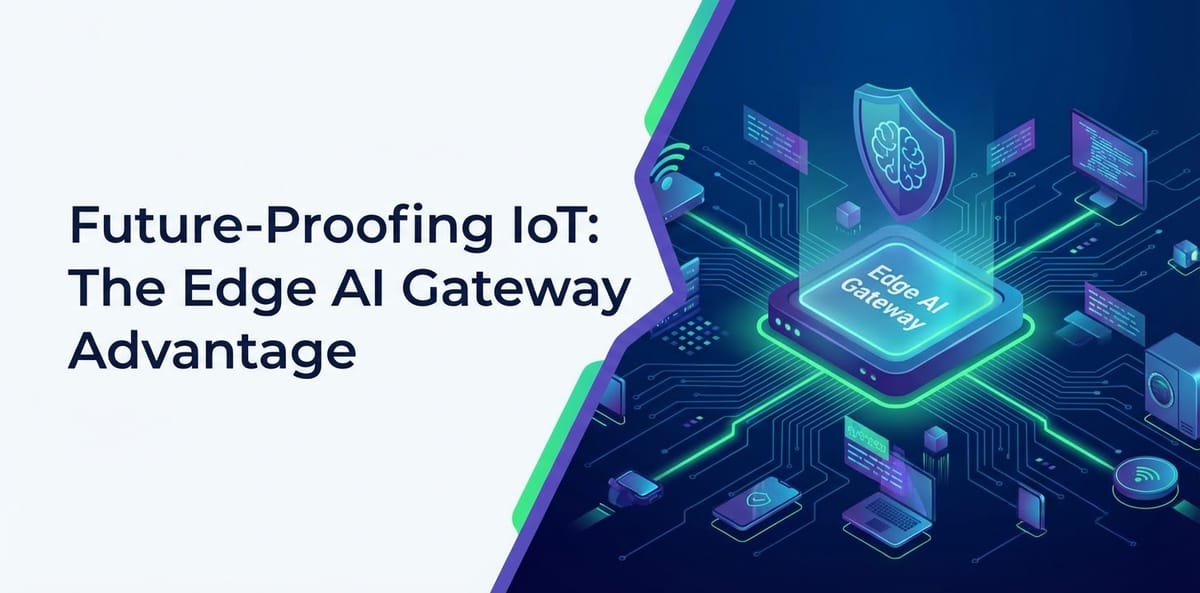
In the intricate tapestry of modern IoT, the sheer number of devices, their varied protocols, and the critical need for localized intelligence necessitate a central coordinating entity. This is precisely the role of the Edge AI Gateway. More than just a simple network router or data aggregator, an Edge AI Gateway is a specialized computing device designed to sit at the periphery of the network, acting as a bridge between diverse IoT devices, local applications, and the wider cloud infrastructure, while simultaneously hosting and executing AI and machine learning models. It is the intelligent nerve center for an edge computing environment.
At its core, an Edge AI Gateway performs several critical functions. It acts as a protocol converter, translating data from various IoT devices that might communicate using different standards (e.g., Modbus, Zigbee, LoRaWAN, MQTT) into a unified format for further processing. This interoperability is crucial for integrating heterogeneous sensor networks and legacy industrial equipment. Beyond simple data ingestion, the gateway becomes a local data processing hub. It filters, aggregates, and transforms raw sensor data, reducing noise and extracting valuable information before any data leaves the local network. This pre-processing significantly reduces the volume of data that needs to be transmitted upstream.
The distinguishing feature that elevates it beyond a traditional gateway is its integrated AI capabilities. An Edge AI Gateway hosts and runs pre-trained machine learning models, allowing for real-time AI inference directly at the edge. This means tasks like anomaly detection, predictive maintenance, image recognition, natural language processing, or complex pattern analysis can be performed instantaneously, without round-trips to the cloud. For instance, in a smart factory, an Edge AI Gateway could continuously monitor machine acoustics and vibrations, using an AI model to identify early signs of mechanical wear and trigger maintenance alerts, all locally.
Furthermore, it functions as a security enforcer, implementing authentication, authorization, and encryption protocols for all data flowing through it, both locally and to the cloud. It can establish secure tunnels and manage access control for connected devices. It also serves as a local control plane, enabling local device management, firmware updates, and even orchestrating local microservices or containerized applications. In essence, an Edge AI Gateway is a robust, intelligent intermediary that brings computational power, AI analytics, and sophisticated management capabilities directly to the source of IoT data, thereby enabling truly autonomous, efficient, and secure edge ecosystems. It stands as a pivotal piece of infrastructure for future-proofing any serious IoT deployment.
Key Advantages of Edge AI Gateways for IoT Future-Proofing
The deployment of Edge AI Gateways offers a multifaceted array of advantages that are indispensable for navigating the complexities and demands of the evolving IoT landscape. These benefits collectively contribute to making IoT systems more resilient, efficient, secure, and ultimately, more future-proof.
1. Reduced Latency and Real-Time Processing
One of the most critical advantages of an Edge AI Gateway is its ability to drastically reduce processing latency. By bringing AI inference capabilities directly to the edge, data no longer needs to travel to distant cloud servers for analysis. This proximity ensures that decisions are made almost instantaneously. For applications like autonomous systems (vehicles, drones, robots), where split-second reactions are crucial for safety and performance, or in industrial control systems where real-time feedback loops prevent costly errors, this low-latency processing is not merely an enhancement but a fundamental requirement. The ability to detect an anomaly and react within milliseconds can mean the difference between a minor adjustment and a catastrophic failure, directly impacting operational uptime and safety.
2. Bandwidth Optimization and Cost Efficiency
The sheer volume of raw data generated by IoT devices can quickly overwhelm network bandwidth and incur significant cloud egress costs. Edge AI Gateways address this challenge by performing intelligent data filtering, aggregation, and analysis locally. Instead of transmitting every raw data point to the cloud, the gateway processes the data, extracts meaningful insights, and only sends relevant, compressed, or actionable information upstream. For example, a smart camera might analyze video footage at the edge using AI for object detection, only sending alerts or metadata to the cloud when a specific event (e.g., unauthorized entry) occurs, rather than streaming continuous high-resolution video. This drastically reduces the data volume, optimizes network utilization, and significantly lowers cloud storage and data transfer expenses, making large-scale IoT deployments economically viable.
3. Enhanced Security and Privacy
Security and privacy are paramount concerns in any interconnected system, especially with the proliferation of sensitive IoT data. Edge AI Gateways bolster security by allowing critical data processing to occur locally, minimizing the exposure of raw, sensitive information to public networks and centralized cloud vulnerabilities. Data can be encrypted, anonymized, or processed for insights at the edge, with only aggregated or non-identifiable information being sent to the cloud. This localized processing helps organizations comply with stringent data residency and privacy regulations such as GDPR or HIPAA, reducing the risk of data breaches during transmission and enhancing overall data governance. The gateway also acts as a secure entry point, enforcing authentication and authorization for connected devices and establishing secure communication channels.
4. Improved Reliability and Resilience
IoT deployments often operate in environments with intermittent, unreliable, or non-existent network connectivity, from remote industrial sites to mobile assets. Edge AI Gateways provide a critical layer of operational resilience. By embedding AI capabilities and local storage, the gateway can continue to function autonomously and make intelligent decisions even when disconnected from the central cloud. This ensures continuous operation for mission-critical applications, preventing service disruptions and maintaining productivity. When connectivity is restored, the gateway can then synchronize aggregated data or essential alerts with the cloud, ensuring data consistency without sacrificing local autonomy. This ability to "operate while disconnected" is a cornerstone of future-proof IoT.
5. Cost Efficiency (Beyond Bandwidth)
While bandwidth savings are a major component of cost efficiency, Edge AI Gateways contribute to overall cost reduction in other ways. By enabling real-time insights and predictive analytics at the edge, they facilitate proactive maintenance, reduce equipment downtime, and optimize resource utilization, leading to significant operational savings. Furthermore, by distributing processing, they can sometimes reduce the demand for high-end, centralized cloud computing resources, allowing for a more optimized cloud infrastructure footprint. The ability to extend the lifecycle of existing assets through intelligent monitoring also contributes to long-term cost benefits.
6. Scalability and Flexibility
Edge AI Gateways provide a highly scalable and flexible architecture for IoT deployments. As the number of connected devices grows, additional gateways can be deployed to handle increased data volumes and processing demands without over-relying on a single centralized cloud instance. This distributed model allows for modular expansion and easier management of complex, geographically dispersed IoT networks. It also offers the flexibility to deploy specific AI models relevant to local conditions or specialized tasks, adapting the intelligence to the unique needs of each edge site without altering the entire cloud infrastructure. This modularity ensures that the IoT infrastructure can evolve and scale efficiently alongside business needs.
7. Autonomous Decision-Making
The inherent intelligence embedded within an Edge AI Gateway enables truly autonomous decision-making at the point of data generation. This goes beyond simple automation; it involves the gateway perceiving its environment through sensors, interpreting complex situations using AI models, and executing actions without human intervention or continuous cloud oversight. For instance, in smart agriculture, an Edge AI Gateway could analyze soil moisture, weather data, and crop health images to autonomously adjust irrigation schedules or nutrient delivery. This level of autonomy empowers self-optimizing systems that can react dynamically to changing conditions, fostering greater efficiency and resource optimization.
8. Regulatory Compliance (e.g., GDPR Implications)
For industries operating under strict data privacy and residency regulations, Edge AI Gateways offer a powerful solution. By processing and storing sensitive data locally, organizations can significantly simplify compliance efforts. The ability to anonymize data or extract non-personally identifiable insights before transmission to the cloud helps adhere to principles of data minimization and purpose limitation. This local control over data processing provides a transparent and auditable pathway for demonstrating compliance, reducing legal and reputational risks associated with cross-border data transfers or potential misuse.
These combined advantages solidify the position of Edge AI Gateways as not just a technological advancement, but a strategic imperative for any organization looking to build robust, secure, and intelligent IoT systems that are ready for the challenges and opportunities of tomorrow.
APIPark is a high-performance AI gateway that allows you to securely access the most comprehensive LLM APIs globally on the APIPark platform, including OpenAI, Anthropic, Mistral, Llama2, Google Gemini, and more.Try APIPark now! 👇👇👇
Technical Deep Dive into Edge AI Gateway Architecture
The sophisticated capabilities of an Edge AI Gateway are underpinned by a carefully designed architecture, encompassing both hardware and software components. Understanding these layers is crucial for appreciating how these devices effectively bridge the gap between resource-constrained IoT endpoints and powerful cloud services, all while embedding advanced AI processing capabilities.
Hardware Considerations: The Brains at the Edge
The hardware of an Edge AI Gateway must be robust, energy-efficient, and capable of handling complex computational tasks, often in challenging environmental conditions. - Central Processing Unit (CPU): Like any computer, a powerful CPU (e.g., ARM-based processors for efficiency or Intel Atom/Xeon for higher performance) is essential for overall system management, data processing, and running the operating system. The choice often balances processing power with thermal design power (TDP) and cost. - Graphics Processing Unit (GPU) / Neural Processing Unit (NPU) / AI Accelerators: This is where the "AI" in Edge AI Gateway truly shines. For demanding AI workloads such as computer vision, object detection, or complex neural network inference, dedicated hardware accelerators are indispensable. GPUs (like NVIDIA Jetson series) offer parallel processing power, while NPUs and other specialized AI chips (e.g., Intel Movidius, Google Coral Edge TPU) are optimized for inference, providing high performance with lower power consumption. These accelerators significantly speed up AI model execution, enabling real-time analytics. - Memory (RAM): Sufficient RAM is required to load AI models, store temporary data, and run multiple applications concurrently. The amount varies based on the complexity of the AI models and the number of services running. - Storage: Local storage (e.g., eMMC, SSD, or industrial-grade SD cards) is crucial for storing operating systems, AI models, collected data (for buffering or local analytics), and application binaries. Durability and speed are key considerations. - Connectivity Modules: A comprehensive suite of connectivity options is vital for an Edge AI Gateway. This includes: * Wired: Ethernet ports for robust local network connections to devices and upstream networks. * Wireless: Wi-Fi (802.11ac/ax) for local device connectivity, Bluetooth/BLE for short-range communication, LoRaWAN/NB-IoT for wide-area low-power IoT devices, and increasingly, 5G/LTE modules for high-bandwidth cellular uplink to the cloud, ensuring reliable connectivity even in remote locations. - I/O Ports: Various input/output ports (USB, HDMI, GPIOs, RS-232/485) allow for direct connection to sensors, actuators, and human-machine interfaces (HMIs), extending the gateway's versatility. - Ruggedization: For industrial or outdoor deployments, the hardware often requires rugged enclosures, wide operating temperature ranges, resistance to shock, vibration, and dust ingress (e.g., IP-rated chassis).
Software Stack: The Intelligence Enabler
The software stack on an Edge AI Gateway is complex, encompassing everything from the operating system to application-specific AI models. - Operating System (OS): Typically a lightweight, robust, and secure Linux distribution (e.g., Yocto Linux, Ubuntu Core, Debian variants) optimized for embedded systems. These OSes offer strong support for open-source tools, containerization, and security features. - Containerization and Orchestration: Technologies like Docker and Kubernetes (or lightweight alternatives like K3s) are widely used to deploy, manage, and scale applications and AI models in isolated containers. This provides flexibility, portability, and efficient resource utilization, allowing different AI models or applications to run side-by-side without interference. - AI Frameworks and Runtimes: The gateway hosts optimized versions of popular AI frameworks such as TensorFlow Lite, PyTorch Mobile, OpenVINO, or ONNX Runtime. These runtimes are designed for efficient inference on edge hardware, ensuring fast execution of pre-trained models. - Data Ingestion and Processing Libraries: Software components for collecting data from various sensors, performing initial filtering, normalization, and aggregation. MQTT brokers, Apache Kafka (or lightweight equivalents), and data parsing libraries are common here. - Device Management and Update Mechanisms: Tools for remotely monitoring the gateway's health, deploying software updates, updating AI models, and managing connected IoT devices. Over-the-air (OTA) update capabilities are crucial for maintaining security and functionality. - Security Modules: Cryptographic libraries, firewall configurations, secure boot mechanisms, and identity management systems to protect the gateway and its data from cyber threats. - API Gateway Functionality: A critical software layer that manages all external and internal API calls. This api gateway component provides a single entry point for external systems to interact with the edge applications and AI models hosted on the gateway. It handles authentication, authorization, rate limiting, routing, and policy enforcement, ensuring secure and controlled access to the edge's capabilities. For instance, an external application might call an API on the Edge AI Gateway to request a specific AI inference result (e.g., "detect defects in this image") rather than directly accessing the AI model.
The interplay of these hardware and software components enables an Edge AI Gateway to act as a powerful, intelligent hub. It not only connects the diverse world of IoT devices but also imbues that connectivity with real-time AI capabilities, transforming raw data into actionable intelligence directly at the source. This robust architecture is foundational to realizing the full potential of future-proof IoT.
Use Cases and Applications Across Industries
The versatility and power of Edge AI Gateways extend across a multitude of industries, each finding unique ways to leverage localized intelligence for unprecedented efficiency, safety, and innovation.
1. Manufacturing and Industry 4.0
In the manufacturing sector, Edge AI Gateways are revolutionizing factory floors, driving the vision of Industry 4.0. * Predictive Maintenance: AI models running on the gateway analyze real-time data from machine sensors (vibration, temperature, current) to detect subtle anomalies indicative of impending equipment failure. The gateway can then trigger alerts or schedule maintenance proactively, minimizing costly downtime and extending asset lifespan. * Quality Control: High-speed cameras connected to the gateway capture images of products on assembly lines. Edge AI models perform immediate visual inspection for defects, ensuring consistent product quality without requiring data transfer to the cloud for analysis. * Process Optimization: Gateways monitor various process parameters, using AI to identify inefficiencies, suggest optimal settings, and even autonomously adjust machine parameters to improve throughput and reduce energy consumption. * Worker Safety: AI-powered computer vision on the gateway can detect if workers are violating safety protocols (e.g., not wearing hard hats, entering restricted areas) and issue immediate warnings, enhancing workplace safety.
2. Smart Cities
Edge AI Gateways are integral to building smarter, more responsive urban environments. * Traffic Management: AI at the edge analyzes real-time video feeds from intersections to optimize traffic light timings, reduce congestion, and prioritize emergency vehicles. It can also detect traffic incidents and alert authorities instantly. * Public Safety and Surveillance: AI-enabled cameras can perform object detection for suspicious activities, crowd monitoring, or identifying unattended packages, sending only actionable alerts to central command, preserving bandwidth and privacy by not streaming all video. * Environmental Monitoring: Gateways collect data from air quality, noise, and waste sensors, using AI to identify pollution hotspots or predict waste collection needs, leading to more efficient urban services. * Smart Lighting: AI at the edge can analyze ambient light, pedestrian activity, and traffic flow to dynamically adjust street lighting, conserving energy while ensuring public safety.
3. Healthcare
The healthcare industry benefits immensely from edge AI for improved patient care, operational efficiency, and data security. * Remote Patient Monitoring: Edge AI Gateways process data from wearables and home medical devices, identifying concerning trends or critical events (e.g., falls, irregular heartbeats) in real-time. Only urgent alerts are sent to healthcare providers, reducing false alarms and ensuring timely intervention, all while preserving patient privacy by processing sensitive data locally. * Assisted Living: AI-powered sensors in assisted living facilities can monitor residents' movements and daily routines, detecting unusual patterns or potential emergencies (e.g., prolonged inactivity, falls) and notifying caregivers. * Mobile Diagnostics: Portable medical imaging devices can use edge AI for preliminary analysis of scans (e.g., X-rays, ultrasounds) in remote clinics or ambulances, providing immediate diagnostic assistance before full images are sent to specialists.
4. Retail
Edge AI Gateways are transforming the retail experience and operational efficiency. * Inventory Management: AI-powered cameras and sensors monitor shelf stock levels, identifying out-of-stock items or misplaced products in real-time, automating replenishment orders and reducing manual checks. * Personalized Customer Experiences: Gateways can analyze anonymized in-store customer behavior (e.g., traffic patterns, dwell times near products) to optimize store layouts, product placement, and personalize digital signage content, without storing personal identifiable information. * Loss Prevention: AI at the edge can detect suspicious activities like shoplifting or unauthorized access, alerting staff immediately and reducing shrinkage. * Checkout Optimization: Computer vision and AI can speed up self-checkout processes by automatically identifying items or flagging potential errors, improving customer flow.
5. Agriculture (Precision Farming)
Edge AI Gateways are crucial for optimizing yields and resource management in modern agriculture. * Crop Health Monitoring: Drones or stationary cameras connected to gateways capture images of crops. Edge AI models analyze these images to detect early signs of disease, pest infestation, or nutrient deficiencies, enabling targeted intervention. * Precision Irrigation: Gateways collect data from soil moisture sensors, weather stations, and crop growth models. AI algorithms then optimize irrigation schedules, delivering water precisely where and when it's needed, conserving resources. * Livestock Monitoring: AI-powered sensors and cameras monitor animal health, behavior, and location, detecting signs of illness, stress, or calving, allowing farmers to intervene quickly. * Automated Harvesting: Edge AI can guide autonomous harvesting equipment, identifying ripe produce and optimizing picking paths for maximum efficiency.
6. Energy and Utilities
Edge AI Gateways enhance the reliability, efficiency, and safety of energy grids and utility infrastructure. * Grid Optimization: AI models analyze real-time data from smart meters, sensors on power lines, and renewable energy sources to predict demand, detect anomalies, and optimize power distribution, reducing outages and improving efficiency. * Predictive Maintenance for Infrastructure: Gateways monitor critical utility infrastructure (pipelines, transformers, wind turbines) for signs of wear or impending failure, enabling proactive repairs and preventing costly service interruptions. * Smart Meter Analytics: AI at the edge can process granular energy consumption data to detect anomalies indicative of fraud or malfunctioning equipment, providing immediate insights.
These diverse applications underscore the pivotal role of Edge AI Gateways in unlocking the full potential of IoT. By providing localized intelligence and robust connectivity, these gateways are enabling industries to move beyond mere data collection towards real-time, autonomous, and highly optimized operations, ultimately future-proofing their investments in IoT technology.
Challenges and Considerations in Deploying Edge AI Gateways
While Edge AI Gateways offer a myriad of advantages, their successful deployment and long-term operation are not without significant challenges. Addressing these considerations systematically is crucial for realizing the full potential of an edge AI strategy.
1. Data Management and Governance at the Edge
Managing data at the edge presents unique complexities. The sheer volume of data generated by IoT devices, even after initial filtering by the AI Gateway, requires robust strategies for local storage, retention, and eventual synchronization with cloud systems. Deciding which data to keep locally, which to send to the cloud, and for how long, involves balancing storage costs, bandwidth, and regulatory compliance. Data governance frameworks must extend to the edge, defining ownership, access controls, and data lifecycle policies for distributed datasets. Furthermore, ensuring data consistency and integrity across numerous edge locations and the cloud requires sophisticated synchronization mechanisms and robust error handling.
2. Model Deployment and Lifecycle Management
Deploying and managing AI models at scale across potentially hundreds or thousands of Edge AI Gateways is a formidable task. This involves: * Model Optimization: AI models trained in the cloud are often large and resource-intensive. They need to be optimized (e.g., quantization, pruning, distillation) for efficient inference on resource-constrained edge hardware. * Deployment and Updates: Distributing new or updated AI models to numerous gateways securely and efficiently, often in environments with intermittent connectivity, requires sophisticated Over-the-Air (OTA) update mechanisms. Ensuring rollback capabilities in case of faulty deployments is also critical. * Monitoring and Retraining: Edge AI models can suffer from concept drift – where the underlying data patterns change over time, making the model less accurate. Continuous monitoring of model performance at the edge and a mechanism for collecting new data for retraining (often requiring data anonymization and secure transfer to the cloud for re-training) are essential. This creates a continuous feedback loop that is complex to manage across a distributed architecture. * Version Control: Maintaining strict version control for models deployed across different gateways is crucial for consistency and debugging.
3. Security Vulnerabilities at the Edge
The distributed nature of edge deployments expands the attack surface. Each Edge AI Gateway represents a potential entry point for malicious actors. Security considerations include: * Physical Security: Edge gateways are often deployed in unattended or physically accessible locations, making them vulnerable to tampering or theft. * Network Security: Securing communication between devices, the gateway, and the cloud is paramount. This includes robust encryption, mutual authentication, and intrusion detection capabilities. * Software Security: Ensuring the OS, applications, and AI models on the gateway are free from vulnerabilities and regularly patched is critical. Secure boot, trusted execution environments, and least-privilege access controls are essential. * AI Model Security: Edge AI models themselves can be targets. Adversarial attacks could aim to fool the model into making incorrect predictions, or models could be reverse-engineered to extract sensitive training data. Protecting the integrity and confidentiality of the AI models is therefore a new security dimension.
4. Interoperability and Standardization
The IoT landscape is characterized by a vast array of devices, protocols, and data formats. Ensuring seamless interoperability between these disparate elements and the Edge AI Gateway is a significant challenge. Lack of universal standards for device communication, data encoding, and API interfaces can lead to fragmented ecosystems and increased integration costs. While Edge AI Gateways inherently provide protocol translation, the effort required to integrate every unique device or system can still be substantial. Industry initiatives for standardization are progressing but are not yet universally adopted, leaving organizations to manage a diverse technological mix.
5. Power Consumption and Environmental Factors
Many edge deployments operate in environments where power availability is limited or environmental conditions are harsh. * Power Efficiency: Edge AI Gateways need to be energy-efficient, especially for battery-powered or solar-powered deployments. The choice of hardware (e.g., ARM processors, low-power AI accelerators) and optimized software is critical. * Environmental Resilience: Gateways must withstand extreme temperatures, humidity, dust, and vibration. Ruggedized hardware and passive cooling designs are often necessary, adding to the cost and complexity.
6. Skill Gaps
The effective deployment and management of Edge AI Gateways require a unique blend of skills that combine expertise in traditional IT/OT (Operational Technology), networking, cybersecurity, and advanced AI/ML engineering. Finding and retaining professionals with this multidisciplinary knowledge can be challenging, creating a significant barrier to adoption for many organizations. Training and upskilling existing teams become crucial for successful implementation.
Addressing these challenges demands a holistic approach, combining robust technical solutions, well-defined operational processes, and strategic investments in talent and infrastructure. Neglecting any of these aspects can undermine the benefits that Edge AI Gateways promise for future-proofing IoT initiatives.
The Indispensable Role of API Management in Edge AI Gateways
In the complex, distributed world of Edge AI, where intelligence resides at the periphery and interactions span devices, local applications, and cloud services, the concept of an API Gateway becomes not just beneficial, but absolutely indispensable. An api gateway serves as a critical orchestrator and control point, managing the flow of information and enabling secure, efficient, and scalable communication.
Consider an Edge AI Gateway deploying numerous AI models and local services. How do external applications – whether a mobile app, a cloud dashboard, or another edge device – securely and reliably interact with these local AI capabilities? This is precisely where an api gateway component within or alongside the Edge AI Gateway provides its immense value. It acts as a single, unified entry point for all API calls to the edge services, abstracting away the underlying complexity of the distributed microservices and AI models.
Key functions of an api gateway in an Edge AI context:
- Unified Access and Abstraction: Instead of directly exposing individual AI models or microservices running on the gateway, the
api gatewaypresents a simplified, consistent interface. This means developers don't need to know the specific location or deployment details of each AI model; they simply interact with the gateway's API. This abstraction simplifies development, improves maintainability, and allows for easier updates or changes to the backend edge services without impacting consumer applications. - Security Enforcement: The
api gatewayis the first line of defense. It enforces authentication (e.g., API keys, OAuth tokens), authorization (checking permissions for accessing specific AI models or data), and encryption (TLS/SSL) for all incoming and outgoing API traffic. This is critical for protecting sensitive edge data and preventing unauthorized access to local AI capabilities, which is especially important given the distributed and potentially exposed nature of edge deployments. - Traffic Management and Rate Limiting: As a central control point, the
api gatewaycan manage the volume of requests to edge AI models. It can implement rate limiting to prevent individual applications from overwhelming the gateway's processing capabilities, ensuring fair access and maintaining system stability. It can also perform load balancing across redundant edge AI instances if available. - Policy Enforcement and Transformation: The
api gatewaycan apply various policies dynamically, such as data validation, request/response transformation (e.g., converting data formats for different AI models), and caching. This allows for greater flexibility and optimization of interactions with edge services. - Monitoring and Analytics: By centralizing API traffic, the
api gatewayprovides a single point for comprehensive logging and monitoring of all interactions with edge AI services. This data is invaluable for performance analysis, troubleshooting, auditing, and understanding the utilization of different AI models. It provides crucial visibility into the health and efficiency of the edge AI ecosystem.
In this landscape, managing the APIs that connect edge intelligence to the broader digital world becomes paramount. This is where platforms like APIPark offer a compelling solution. APIPark is an open-source AI gateway and API management platform designed to help developers and enterprises manage, integrate, and deploy both AI and REST services with remarkable ease. It directly addresses the challenges of orchestrating intelligent interactions at the edge. APIPark's capabilities, such as quick integration of over 100 AI models and a unified API format for AI invocation, are particularly beneficial for Edge AI Gateway deployments. It standardizes the request data format across various AI models, ensuring that modifications to AI models or prompts do not disrupt dependent applications or microservices. This significantly simplifies AI usage and reduces maintenance overhead – a critical aspect for complex edge environments. Furthermore, its ability to encapsulate custom prompts into new REST APIs allows for rapid creation of specialized AI services directly callable at the edge, such as custom sentiment analysis or localized data interpretation.
APIPark also excels in end-to-end API lifecycle management, assisting with the design, publication, invocation, and decommission of APIs. In an Edge AI context, this means controlling access to specific AI models, managing traffic routing, and versioning AI services deployed at various edge locations. With performance rivaling Nginx, achieving over 20,000 TPS with modest hardware, APIPark is well-suited to handle the high-throughput demands of many edge AI scenarios. Its detailed API call logging and powerful data analysis features provide the necessary insights to monitor the health and performance of distributed edge AI services, allowing businesses to trace issues, ensure system stability, and perform preventive maintenance. By centralizing API governance and offering robust AI gateway functionalities, platforms like APIPark ensure that the intelligence residing at the edge is not only powerful but also accessible, secure, and manageable, making it an essential component for any future-proof IoT strategy.
Future Trends and Evolution of Edge AI Gateways
The trajectory of Edge AI Gateways is one of continuous evolution, driven by advancements in AI, connectivity, and hardware. Several emerging trends promise to further amplify their capabilities and solidify their role in future-proofing IoT.
1. TinyML and Ultra-Low Power AI
The current generation of Edge AI Gateways, while powerful, still requires a certain level of computational resources. TinyML represents a movement towards running sophisticated machine learning models on extremely low-power microcontrollers and embedded devices. As TinyML technology matures, we will see even smaller, more energy-efficient AI Gateway devices capable of performing basic AI inference directly at the extreme edge, embedded within sensors themselves. This will further reduce latency, minimize power consumption, and enable pervasive intelligence in even the most resource-constrained environments, leading to hyper-distributed AI.
2. Federated Learning at the Edge
Data privacy and regulatory compliance are significant drivers for edge AI. Federated Learning is an AI training technique where models are trained collaboratively on decentralized edge devices without exchanging raw data. Instead, only model updates (weights) are shared and aggregated in the cloud or on a central api gateway. This approach enhances privacy, reduces bandwidth requirements during training, and allows AI models to learn from diverse, real-world data at the edge. Edge AI Gateways will play a crucial role in orchestrating these federated learning processes, managing model distribution, aggregation, and ensuring secure communication.
3. Explainable AI (XAI) at the Edge
As AI systems become more autonomous and make critical decisions at the edge, the need for transparency and interpretability grows. Explainable AI (XAI) techniques aim to make AI model decisions understandable to humans. Integrating XAI capabilities into Edge AI Gateways will allow for auditing, debugging, and building trust in edge AI systems, especially in highly regulated industries like healthcare or finance, where understanding "why" an AI made a certain decision is paramount. This will involve developing smaller, more efficient XAI models that can run on edge hardware.
4. Convergence with 5G and Beyond-5G Networks
The rollout of 5G networks, with their ultra-low latency, high bandwidth, and massive connectivity capabilities, is a natural accelerant for Edge AI Gateways. 5G facilitates faster data offload from edge devices to the gateway, and faster communication between gateways and the cloud. Future iterations, including 6G and beyond, will likely include even more native support for edge computing and AI processing within the network infrastructure itself, creating a truly intelligent continuum from device to cloud. This convergence will enable new classes of real-time, highly distributed AI applications that were previously impossible.
5. Digital Twins at the Edge
Digital Twins – virtual replicas of physical assets, processes, or systems – are becoming increasingly sophisticated. Edge AI Gateways can host and maintain localized digital twin instances, continuously updating them with real-time sensor data and using AI to simulate, predict, and optimize the physical counterpart. This allows for hyper-realistic simulations, predictive maintenance, and autonomous control at the edge, offering unprecedented insights and control over complex systems, such as in manufacturing or smart infrastructure. The gateway acts as the brain for the local digital twin, enabling real-time interaction and decision-making.
6. Autonomous Edge Networks
The ultimate evolution of Edge AI Gateways envisions highly autonomous edge networks where gateways not only process data and run AI models but also collaboratively manage themselves, self-organize, and self-heal. These networks could dynamically allocate resources, adapt to changing conditions, and even deploy new AI models without direct human intervention. This level of autonomy would create incredibly resilient and adaptive IoT ecosystems, capable of operating effectively even in the most challenging and dynamic environments.
These future trends paint a picture of an increasingly intelligent, decentralized, and autonomous IoT landscape, with Edge AI Gateways serving as the foundational pillars. Their continuous evolution will be critical in unlocking the full transformative potential of interconnected devices, driving innovation across every sector of the global economy.
Conclusion: The Imperative of Edge AI Gateways for a Resilient IoT Future
The journey through the intricate world of IoT reveals a clear and undeniable truth: the future of interconnected devices is inextricably linked to the intelligence residing at its periphery. As the volume, velocity, and variety of data generated by billions of sensors and actuators continue to surge, the traditional cloud-centric paradigm, while still vital for overarching data aggregation and long-term analytics, proves increasingly inadequate for the real-time, bandwidth-constrained, and security-sensitive demands of modern IoT. The challenges of latency, bandwidth saturation, privacy risks, and operational resilience necessitate a fundamental architectural shift.
The Edge AI Gateway emerges not merely as an evolutionary enhancement but as a strategic imperative for future-proofing any serious IoT deployment. By decentralizing computational power and embedding sophisticated AI capabilities directly at the source of data generation, these intelligent gateway devices resolve many of the inherent limitations of cloud-only approaches. They dramatically reduce latency, enabling instantaneous decision-making for mission-critical applications where milliseconds matter. They optimize bandwidth by intelligently filtering and processing data locally, thereby slashing operational costs and improving network efficiency. They significantly enhance security and privacy by keeping sensitive data closer to its origin, bolstering compliance with stringent regulations. Furthermore, Edge AI Gateways foster unprecedented reliability and resilience, ensuring continuous operation even in the face of intermittent connectivity, while simultaneously paving the way for autonomous decision-making in previously unfeasible scenarios.
From revolutionizing manufacturing floors with predictive maintenance to orchestrating smart city infrastructure, transforming healthcare diagnostics, and optimizing precision agriculture, the use cases for Edge AI Gateways are diverse and impactful. However, realizing their full potential demands a meticulous approach to address challenges spanning data governance, the complex lifecycle management of AI models, and the ever-present imperative of robust cybersecurity. The architectural sophistication, involving powerful hardware accelerators and a meticulously crafted software stack—including a robust api gateway component for managing internal and external interactions—is what empowers these devices to perform their multifaceted roles. Platforms like APIPark, an open-source AI gateway and API management platform, further streamline this complexity by offering unified control, secure access, and efficient orchestration of AI and REST services across the distributed edge.
Looking ahead, the convergence with technologies like TinyML, Federated Learning, Explainable AI, and advanced 5G networks promises to unlock even greater levels of intelligence, autonomy, and adaptability at the edge. The vision of self-organizing, self-healing, and hyper-intelligent edge networks is no longer a distant dream but an approaching reality. For enterprises aiming to harness the full, transformative power of IoT, embracing the Edge AI Gateway advantage is not just a technological upgrade; it is a foundational strategy for building resilient, intelligent, and truly future-proof systems capable of thriving in the dynamic digital landscape of tomorrow.
Frequently Asked Questions (FAQs)
1. What is an Edge AI Gateway and how does it differ from a traditional IoT gateway? An Edge AI Gateway is a specialized computing device located at the edge of the network, close to IoT devices and sensors. Unlike a traditional IoT gateway, which primarily acts as a protocol converter and data aggregator, an Edge AI Gateway integrates powerful AI and machine learning capabilities. This allows it to perform real-time data processing, AI inference, and intelligent decision-making locally, without constantly sending all raw data to the cloud. It reduces latency, optimizes bandwidth, enhances security, and enables autonomous operation, making it a "smart" gateway.
2. Why is latency reduction so crucial for IoT, and how do Edge AI Gateways address it? Latency, the delay in data transmission and processing, is critical for IoT applications requiring immediate responses, such as autonomous vehicles, industrial automation, and real-time medical monitoring. In these scenarios, even milliseconds of delay can lead to safety hazards, operational inefficiencies, or missed opportunities. Edge AI Gateways address this by bringing AI inference and computational power directly to the edge, where data is generated. This localized processing eliminates the need to send data to a distant cloud server and await a response, enabling near-instantaneous analysis and decision-making right at the source, drastically reducing response times.
3. How do Edge AI Gateways improve security and privacy for IoT deployments? Edge AI Gateways enhance security and privacy by minimizing the transmission of raw, sensitive data across public networks. By performing AI processing and data analysis locally, organizations can keep critical information on-premises, reducing the attack surface for cyber threats. Data can be anonymized, encrypted, or transformed into non-identifiable insights at the edge before any necessary information is sent to the cloud. This localized processing also helps businesses comply with strict data residency and privacy regulations (like GDPR), giving them greater control over their data and reducing the risk of breaches during transit.
4. What role does an API Gateway play within an Edge AI Gateway architecture, and why is it important? Within an Edge AI Gateway architecture, an api gateway component acts as a central control point and unified entry for all interactions with the local AI models and services. It is crucial for abstracting the complexity of edge services, providing a single, consistent interface for external applications to consume. Its importance stems from its ability to enforce robust security (authentication, authorization, encryption), manage traffic (rate limiting, routing), apply policies (data transformation), and provide comprehensive monitoring for all API calls. This ensures secure, scalable, and manageable access to the distributed intelligence at the edge, making it easier for developers to integrate with and consume edge AI capabilities.
5. What are some of the key challenges in deploying and managing Edge AI Gateways at scale? Deploying and managing Edge AI Gateways at scale presents several challenges. These include complex data management and governance at the edge, requiring careful strategies for local storage, retention, and synchronization. AI model deployment and lifecycle management are also difficult, involving optimizing models for edge hardware, securely distributing updates across numerous gateways, and continuously monitoring for model drift. Security vulnerabilities are magnified due to the distributed nature of the edge, necessitating robust physical, network, software, and even AI model security measures. Furthermore, challenges related to interoperability, power consumption in diverse environments, and a significant skill gap in multidisciplinary expertise also need to be systematically addressed for successful adoption.
🚀You can securely and efficiently call the OpenAI API on APIPark in just two steps:
Step 1: Deploy the APIPark AI gateway in 5 minutes.
APIPark is developed based on Golang, offering strong product performance and low development and maintenance costs. You can deploy APIPark with a single command line.
curl -sSO https://download.apipark.com/install/quick-start.sh; bash quick-start.sh

In my experience, you can see the successful deployment interface within 5 to 10 minutes. Then, you can log in to APIPark using your account.

Step 2: Call the OpenAI API.