Revolutionizing Vehicles with Intermotive Gateway AI
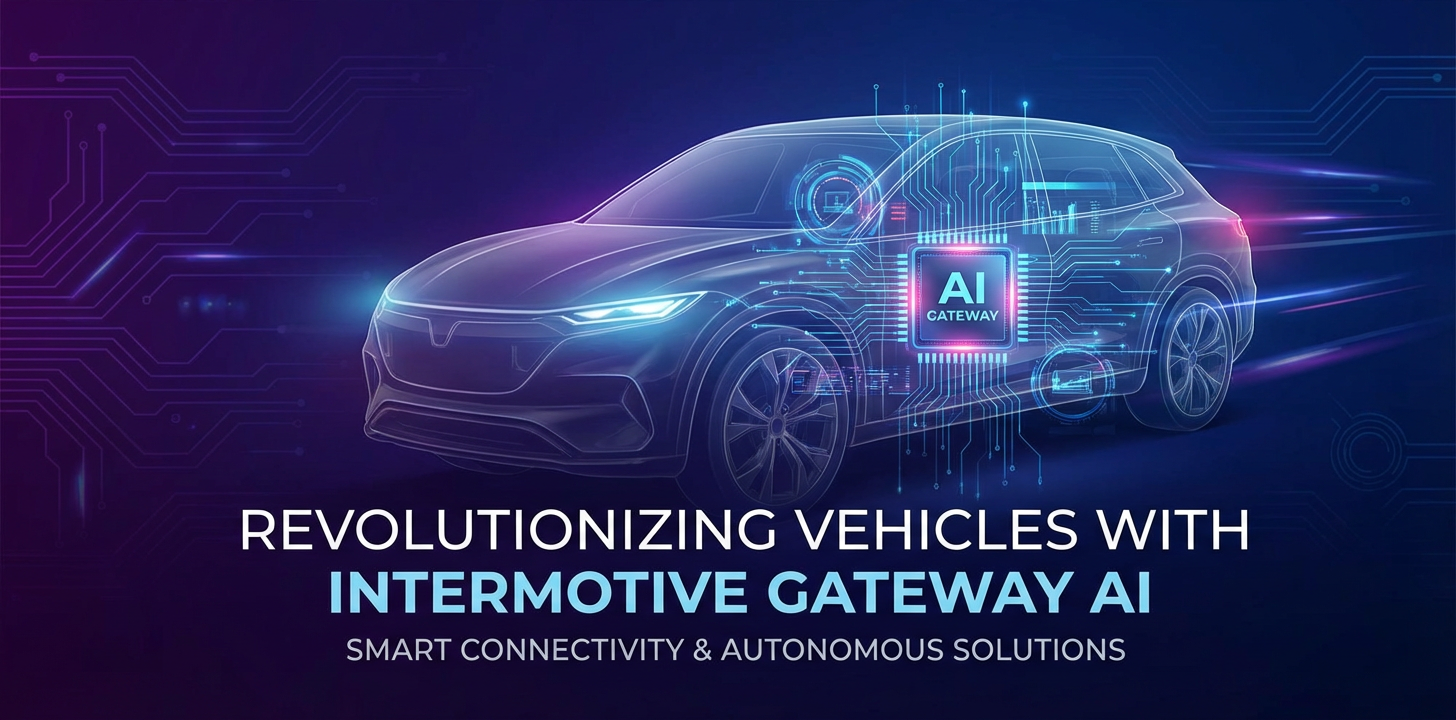


The automobile, a marvel of engineering that has shaped societies and economies for over a century, stands at the precipice of its most profound transformation yet. No longer merely a mechanical conveyance, the modern vehicle is rapidly evolving into a sophisticated, interconnected, and intelligent platform. This paradigm shift is not merely incremental; it is a fundamental revolution driven by the seamless integration of artificial intelligence at its core. Central to this automotive renaissance is the emergence of the Intermotive Gateway AI, a groundbreaking concept poised to redefine everything we understand about vehicle operation, interaction, and even ownership. This central nervous system, powered by advanced AI, serves as the ultimate orchestrator, managing an intricate symphony of data, processes, and services that were once disparate and unconnected. From optimizing performance and enhancing safety to delivering unparalleled personalization and fostering seamless connectivity, the Intermotive Gateway AI is the lynchpin for the next generation of smart, autonomous, and truly intelligent vehicles. This article will delve deep into the intricate mechanisms, transformative applications, and far-reaching implications of this revolutionary technology, exploring how it functions as an advanced AI Gateway, a robust api gateway, and an intuitive LLM Gateway to unlock unprecedented capabilities and usher in a new era of mobility.
The Evolutionary Trajectory of Automotive Intelligence: From Mechanics to Mind
The journey of the automobile has been one of continuous innovation, moving from rudimentary internal combustion engines to sophisticated hybrid powertrains, from manual transmissions to complex automated systems, and from basic radio receivers to elaborate infotainment centers. For decades, advancements primarily focused on mechanical efficiency, safety structures, and basic electronic controls. The early 2000s heralded the era of the "connected car," where vehicles began to communicate with external networks, primarily for navigation, telematics, and emergency services. This initial foray into connectivity, however, often involved siloed systems, each performing specific functions with limited interoperability. Advanced Driver-Assistance Systems (ADAS), such as adaptive cruise control, lane-keeping assist, and automatic emergency braking, represented another significant leap, introducing reactive intelligence to prevent accidents and alleviate driver strain. These systems, while impressive, operated largely as independent modules, processing sensor data within their confined domains.
The true inflection point arrived with the confluence of pervasive connectivity, exponential growth in computing power at the edge, and the dramatic maturation of artificial intelligence algorithms. Suddenly, the potential extended far beyond simple connections or isolated assistance. Vehicles began generating terabytes of data daily from an ever-expanding array of sensors—cameras, radar, lidar, ultrasonics, and more. The challenge shifted from merely collecting this data to intelligently processing, interpreting, and acting upon it in real-time, often within milliseconds. This required a fundamental architectural rethinking, moving away from distributed, single-purpose Electronic Control Units (ECUs) towards centralized, high-performance computing platforms. The vision of fully autonomous vehicles, once a distant science fiction trope, started to crystallize into engineering roadmaps, demanding an unprecedented level of real-time perception, prediction, planning, and control. It became clear that to move beyond incremental improvements, the automotive industry needed a comprehensive, integrated intelligence layer capable of unifying all these disparate threads. This necessity birthed the concept of the Intermotive Gateway AI, a system designed not just to connect, but to truly comprehend and command.
Defining the Intermotive Gateway AI: The Vehicle's Central Intelligence Hub
At its core, the Intermotive Gateway AI is a highly sophisticated, multi-functional computing platform designed to act as the central nervous system and brain of a modern vehicle. It is far more than just a data router or a mere processing unit; it is an intelligent orchestrator, deeply embedded within the vehicle's architecture, responsible for aggregating, processing, and disseminating information across all internal systems and external networks. Imagine it as a digital control tower, continuously monitoring every aspect of the vehicle's operation, its surroundings, and the driver's intent, then making intelligent decisions in real-time. This gateway leverages advanced artificial intelligence and machine learning algorithms to perform complex tasks that go beyond traditional computational logic.
Its primary function is to serve as an AI Gateway, a unified interface for all AI models operating within the vehicle. Instead of having separate AI modules for object detection, voice recognition, predictive maintenance, or route optimization, the Intermotive Gateway AI provides a cohesive environment where these diverse AI applications can communicate, share data, and collaboratively contribute to the vehicle's overall intelligence. This centralization allows for a holistic understanding of the vehicle's state and environment, enabling more nuanced and safer decision-making. For instance, the same sensor data from a forward-facing camera might simultaneously feed into an object detection AI for collision avoidance, a traffic sign recognition AI for navigation, and a road condition analysis AI for suspension adjustments. The gateway intelligently manages the data flow, prioritizes processing, and resolves potential conflicts or redundancies between these AI models.
Furthermore, the Intermotive Gateway AI is engineered with robust security protocols, acting as a fortified checkpoint for all data entering and leaving the vehicle. In an age where vehicles are increasingly vulnerable to cyber threats, this gateway provides essential protection against unauthorized access, data breaches, and malicious attacks. It monitors network traffic, authenticates connections, and encrypts sensitive information, ensuring the integrity and privacy of both vehicle systems and user data. Its design also incorporates fail-safe mechanisms and redundancy, critical for safety-critical applications like autonomous driving. The gateway's ability to seamlessly integrate and manage a vast array of hardware and software components, from advanced sensors and high-performance processors to sophisticated AI algorithms and cloud-based services, truly sets it apart. It represents the pinnacle of automotive intelligence, transforming the vehicle from a collection of parts into a cohesive, sentient entity capable of learning, adapting, and evolving.
Architectural Pillars of an Intermotive Gateway AI: Building Blocks of Intelligence
The robustness and capability of an Intermotive Gateway AI stem from a carefully designed architecture that integrates several advanced technological pillars. Each component plays a vital role in enabling the gateway to fulfill its complex functions, from real-time data processing to secure external communications.
Firstly, Edge AI Processing is paramount. Given the sheer volume of data generated by in-vehicle sensors (cameras, radar, lidar generating terabytes per hour), transmitting all of it to the cloud for processing is neither practical nor efficient, especially for latency-critical tasks like autonomous driving. The Intermotive Gateway AI incorporates powerful System-on-Chips (SoCs) and specialized AI accelerators (like GPUs, NPUs, or TPUs) that allow for immediate, on-device processing. This edge computing capability minimizes latency, enhances responsiveness, and reduces reliance on constant internet connectivity. It enables real-time perception tasks such as object recognition, pedestrian detection, and lane keeping directly within the vehicle, making instantaneous decisions for safety and navigation.
Secondly, Advanced Sensor Fusion is a cornerstone. Modern vehicles are equipped with a diverse array of sensors, each providing a unique perspective on the vehicle's surroundings. Radar excels in measuring distance and velocity regardless of weather, lidar provides precise 3D mapping, and cameras offer rich visual detail for classification. The Intermotive Gateway AI orchestrates the fusion of data from these disparate sensors. It doesn't just combine raw data; it intelligently processes and correlates inputs, creating a comprehensive, high-fidelity environmental model that is more robust and accurate than any single sensor could provide. This fusion mitigates the limitations of individual sensors (e.g., a camera's vulnerability to low light, radar's lack of fine detail) and enhances the overall perception of the vehicle, crucial for safe autonomous operation.
Thirdly, High-Bandwidth and Low-Latency Connectivity is essential for external interactions. While edge processing handles immediate decisions, the Intermotive Gateway AI also needs robust communication channels for Over-the-Air (OTA) updates, cloud-based navigation, V2X (Vehicle-to-Everything) communication, and infotainment streaming. Technologies like 5G and future wireless standards are critical here, providing the speed and reliability necessary for seamless data exchange with infrastructure (V2I), other vehicles (V2V), pedestrians (V2P), and the network (V2N). This connectivity also enables remote diagnostics, real-time traffic information, and emergency services integration, extending the vehicle's intelligence beyond its physical boundaries.
Finally, Multi-layered Security Architectures are non-negotiable. As the central intelligence hub, the Intermotive Gateway AI is a prime target for cyber threats. Its architecture incorporates multiple layers of security, including hardware-based root-of-trust, secure boot processes, encrypted communication channels, intrusion detection systems, and strict access control mechanisms. Each component, from the processor to the network interface, is designed with security in mind, ensuring that data integrity is maintained, privacy is protected, and the vehicle's critical functions cannot be compromised by malicious actors. This robust security framework is fundamental to building trust in autonomous and connected vehicles.
The AI Gateway's Crucial Role in Vehicle Intelligence: Orchestrating a Symphony of Data
The Intermotive Gateway AI’s most transformative capability lies in its function as a true AI Gateway, serving as the central nervous system that orchestrates a complex symphony of data flows, algorithms, and real-time decision-making processes within the vehicle. This goes far beyond simply connecting devices; it involves intelligently managing and synthesizing information from an unprecedented number of sources to create a holistic, dynamic understanding of the vehicle's state, its occupants, and its environment.
One of its primary roles is managing diverse data streams. Modern vehicles are veritable data centers on wheels, generating terabytes of information daily from hundreds of sensors (cameras, radar, lidar, ultrasonic, IMUs), internal systems (engine diagnostics, tire pressure, brake wear), and external sources (GPS, traffic data, weather forecasts). The Intermotive Gateway AI acts as the intelligent aggregator for all this raw data. It filters, prioritizes, and processes these streams, often performing initial pre-processing and contextualization at the edge. For instance, it might identify critical inputs from ADAS sensors related to an imminent collision, while concurrently managing lower-priority data from infotainment systems or predictive maintenance modules. This intelligent prioritization ensures that safety-critical functions always have immediate access to the necessary information.
Crucially, the gateway enables real-time decision-making. Unlike traditional systems that operate on pre-programmed rules, the Intermotive Gateway AI leverages machine learning models to analyze complex scenarios and make adaptive decisions within milliseconds. For autonomous driving, this means processing sensor data to perceive the environment, predict the behavior of other road users, and plan a safe trajectory in real-time. For in-cabin experiences, it translates natural language commands into actionable vehicle functions or intelligently adjusts climate control based on passenger preferences and external conditions. The gateway integrates various specialized AI models—for perception, prediction, planning, control, natural language processing, and more—and ensures they communicate effectively, sharing insights and coordinating actions without conflict or delay. This distributed yet centralized AI architecture is what gives the vehicle its true "intelligence."
Furthermore, the AI Gateway facilitates seamless Over-the-Air (OTA) updates and feature enhancements. As AI algorithms evolve and new functionalities emerge, the gateway provides a secure and efficient mechanism to push software updates, security patches, and even entirely new features to the vehicle remotely. This capability transforms the vehicle from a static product into an evolving platform, allowing manufacturers to continuously improve performance, add new services, and adapt to changing regulatory requirements throughout the vehicle's lifespan. This also extends to managing the lifecycle of individual AI models, ensuring they are always running the latest, most optimized versions, or even swapping them out for superior alternatives as they become available.
Finally, the Intermotive Gateway AI significantly enhances the user experience through deep personalization and proactive support. By analyzing driver habits, preferences, and even biometric data (via in-cabin sensors), the gateway can tailor everything from seat position and climate control to infotainment suggestions and driving modes. It can learn preferred routes, anticipate needs, and offer proactive assistance, such as suggesting a charging station when the battery is low or alerting the driver to potential issues identified by predictive maintenance AI. This level of personalized interaction transforms the car from a mere mode of transport into a highly intuitive and responsive companion. The sophisticated management of these diverse AI applications and data streams is what truly defines the Intermotive Gateway AI as the cornerstone of next-generation vehicle intelligence.
Leveraging LLM Gateway for Intuitive In-Cabin Experiences: Conversational AI on Wheels
The evolution of artificial intelligence, particularly in the realm of natural language processing, has opened up unprecedented possibilities for human-vehicle interaction. The Intermotive Gateway AI significantly harnesses this potential by incorporating an LLM Gateway, transforming the in-cabin experience from a series of button presses and rigid voice commands into a fluid, intuitive, and truly conversational interface. This gateway acts as the interpreter and orchestrator for large language models (LLMs) and other natural language processing (NLP) capabilities, making the vehicle a more empathetic and intelligent companion.
At its most fundamental level, the LLM Gateway facilitates natural language understanding (NLU) for voice commands. Gone are the days of needing to memorize specific phrases or command structures. With the LLM Gateway, drivers and passengers can speak naturally, asking questions or issuing instructions in conversational language. For example, instead of "Navigate to 123 Main Street," one could simply say, "Take me home, please," or "I'm hungry, find me the nearest highly-rated Italian restaurant." The gateway’s integrated LLMs can understand context, infer intent, and process nuanced requests, providing far more intelligent and helpful responses. This reduces cognitive load on the driver, allowing them to keep their eyes on the road and hands on the wheel, significantly enhancing safety and convenience.
Beyond simple commands, the LLM Gateway enables personalized intelligent assistants. These are not just voice recognition systems; they are proactive virtual co-pilots capable of learning individual preferences, habits, and even moods. By analyzing past interactions, calendar entries, and biometric data (if permissible and configured), the in-vehicle assistant can offer highly relevant suggestions: "It looks like you have a meeting across town in an hour, traffic is building up, would you like to leave now?" or "You seem stressed, would you like to play some calming music?" The LLM Gateway provides the framework for these interactions, ensuring that the conversational AI has access to relevant vehicle data (e.g., fuel level, destination, climate settings) and can integrate with external services (e.g., calendar apps, music streaming, smart home devices) to provide comprehensive assistance.
Furthermore, this capability leads to highly contextual awareness. The in-vehicle LLM Gateway can process information from various sensors and systems to understand the current situation. If the vehicle detects heavy rain, the assistant might proactively suggest adjusting the windshield wipers, activating fog lights, or rerouting to avoid flooded areas, all while communicating these actions in a natural, conversational tone. It can also integrate with the vehicle's ADAS to provide verbal warnings about potential hazards or suggest safer driving behaviors. The ability to converse with the vehicle in a natural, human-like manner transforms the journey from a passive experience into an active, engaging, and supportive one.
The integration of an LLM Gateway within the Intermotive Gateway AI architecture ensures that these powerful language models are managed efficiently, securely, and in compliance with privacy regulations. It handles the processing of spoken language, the interaction with cloud-based LLM services (if applicable), and the translation of AI-generated responses back into actionable commands for vehicle systems. This centralized management prevents fragmentation, maintains consistency in the user experience, and allows for continuous improvement of the conversational AI capabilities through over-the-air updates, ensuring the vehicle's "voice" and intelligence evolve over time.
The API Gateway: Bridging the Vehicle to the World and Its Services
In an increasingly interconnected world, the modern vehicle cannot exist in isolation. Its true potential is unleashed when it can seamlessly integrate with a vast ecosystem of external services, smart infrastructure, and digital platforms. This is where the function of an api gateway becomes absolutely critical within the Intermotive Gateway AI. It serves as the secure, standardized, and efficient conduit through which the vehicle communicates with the outside world, transforming it from a mere mode of transport into a dynamic node within the broader digital landscape.
An api gateway within the Intermotive Gateway AI acts as the single entry point for all external API calls, managing traffic, enforcing security policies, and translating protocols between the vehicle’s internal systems and external service providers. Consider the myriad of integrations required: real-time mapping and navigation updates from cloud services, payment processing for tolls or fuel, smart home integration for pre-cooling your house before arrival, personalized streaming media, predictive traffic analytics, and even communication with smart city infrastructure for optimized routing or parking. Without a robust api gateway, each of these connections would require bespoke integration, leading to a fragmented, insecure, and unmanageable architecture.
The gateway's role is multi-faceted: it provides a standardized interface for external applications, abstracts the complexity of the vehicle's internal systems, and ensures that all communications are secure and authorized. For instance, when a third-party app requests the vehicle's location data, the api gateway first authenticates the request, verifies the app's permissions, encrypts the data, and then forwards the relevant information from the vehicle's GPS module. It also handles rate limiting, ensuring that external calls don't overwhelm the vehicle's systems, and provides robust logging for monitoring and troubleshooting. This level of control is essential for maintaining both vehicle security and user data privacy.
Furthermore, an api gateway is instrumental in enabling new business models and services within the automotive sector. It allows vehicle manufacturers to open up controlled access to vehicle data and functionalities to third-party developers, fostering innovation. Imagine a personalized insurance app that dynamically adjusts premiums based on real-time driving behavior data securely retrieved via the API, or a parcel delivery service that can securely unlock a vehicle's trunk for package drop-off. These complex integrations are only possible with a sophisticated api gateway at the heart of the Intermotive Gateway AI, ensuring that data is exchanged reliably, securely, and efficiently.
For developers and enterprises navigating this complex integration landscape, robust API management solutions are indispensable. For example, APIPark, an open-source AI gateway and API management platform, offers capabilities highly relevant to such scenarios. Its ability to unify AI model invocation, manage API lifecycles from design to decommission, and ensure secure access with features like subscription approval and detailed logging, provides a powerful framework for managing the diverse APIs and AI services crucial for an advanced Intermotive Gateway AI. Such platforms help regulate API management processes, manage traffic forwarding, load balancing, and versioning of published APIs, all essential for the seamless operation and evolution of connected vehicle ecosystems. By providing independent API and access permissions for each tenant or team, solutions like APIPark facilitate secure and organized collaboration, which is vital in a multi-stakeholder automotive environment. The performance and data analysis capabilities of such platforms further ensure that the API infrastructure can handle the massive scale and real-time demands of intelligent vehicles. This kind of robust infrastructure underpins the ability of the Intermotive Gateway AI to extend its intelligence and services beyond the vehicle's immediate confines, truly bridging the vehicle to the wider digital world.
Transformative Applications of Intermotive Gateway AI: Shaping the Future of Mobility
The integration of an Intermotive Gateway AI promises to unlock a myriad of transformative applications, fundamentally reshaping the automotive landscape and the very concept of mobility. These applications span a wide spectrum, from enhancing safety and efficiency to creating entirely new user experiences and business models.
One of the most significant applications is in Autonomous Driving. The Intermotive Gateway AI is the brains behind the self-driving car. It continuously processes vast amounts of sensor data (from cameras, lidar, radar, ultrasonic sensors) to build a real-time, high-definition map of the vehicle's surroundings. It employs advanced AI algorithms for perception (object detection, classification, tracking), prediction (forecasting the behavior of pedestrians, cyclists, and other vehicles), and planning (determining the optimal path and maneuvers). The gateway's ability to fuse data from multiple sensors, make instantaneous decisions, and control the vehicle's actuators (steering, braking, acceleration) with precision is paramount for safe and reliable autonomous operation. It ensures the vehicle can navigate complex urban environments, handle adverse weather conditions, and react to unexpected events with human-like, or even superhuman, efficiency and safety.
Predictive Maintenance is another crucial application. The Intermotive Gateway AI constantly monitors hundreds of vehicle parameters, from engine performance and tire pressure to battery health and brake pad wear. By applying machine learning models to this operational data, the gateway can identify subtle anomalies and predict potential component failures long before they occur. It can then alert the driver, recommend servicing, or even proactively schedule an appointment with a dealership. This shifts maintenance from reactive repairs to proactive prevention, reducing unexpected breakdowns, improving vehicle reliability, and extending the lifespan of components, ultimately saving owners time and money.
Enhanced Safety Systems go beyond traditional ADAS. With the Intermotive Gateway AI, vehicles gain a more comprehensive understanding of both the external environment and the internal cabin. Driver monitoring systems, powered by AI, can detect signs of fatigue, distraction, or impairment, providing timely warnings or even intervening if necessary. Advanced collision avoidance systems can predict complex accident scenarios with greater accuracy, intervening earlier and more intelligently than current systems. Vehicle-to-Everything (V2X) communication, managed by the gateway, allows the vehicle to "see" around corners, receive warnings about hazards from other vehicles or infrastructure, and coordinate movements in traffic, significantly reducing the likelihood of accidents.
The gateway also enables Personalized Mobility Services. In a future where vehicle ownership might decrease in favor of shared mobility, the Intermotive Gateway AI can adapt a vehicle's settings, preferences, and even its interior configuration to individual users instantly. For ride-sharing services, this means a personalized climate, music, and navigation experience for each passenger. For fleet management, it enables optimized routing, dynamic scheduling, and efficient asset utilization. The vehicle becomes a customizable space, catering to diverse needs on demand.
Finally, Smart City Integration represents a broader societal impact. Vehicles equipped with Intermotive Gateway AI can communicate with smart traffic lights, parking systems, and urban infrastructure. This allows for optimized traffic flow, reduced congestion, and more efficient use of urban resources. Vehicles can contribute real-time data on road conditions, air quality, and traffic density, feeding into a larger smart city ecosystem to improve urban planning and responsiveness. This bidirectional data exchange transforms the vehicle into a vital sensor and actuator within the intelligent urban fabric.
These applications, driven by the Intermotive Gateway AI, collectively paint a picture of a future where mobility is safer, more efficient, more convenient, and seamlessly integrated into our daily lives, transforming not just how we travel, but how our cities function and how we interact with the world around us.
Navigating the Complexities: Challenges and Ethical Considerations
While the promise of the Intermotive Gateway AI is immense, its implementation is fraught with significant challenges and necessitates careful consideration of ethical implications. The complexity of integrating such a powerful intelligence into a safety-critical system demands meticulous planning, rigorous testing, and robust regulatory frameworks.
One of the foremost challenges is Data Privacy and Security. The Intermotive Gateway AI collects and processes vast amounts of highly sensitive data, including driver behavior, location history, biometric information, and personal preferences. Protecting this data from unauthorized access, misuse, and cyberattacks is paramount. Robust encryption, anonymization techniques, and stringent access controls are essential. Furthermore, clear policies on data ownership, retention, and sharing must be established to build and maintain user trust. The ethical implications of how this data is used, whether for targeted advertising or surveillance, also require careful scrutiny and transparent governance.
Computational Power and Energy Efficiency pose significant engineering hurdles. The real-time processing demands of autonomous driving and sophisticated AI models require immense computational resources. Integrating powerful GPUs, NPUs, and custom AI accelerators into a vehicle, while keeping costs, size, weight, and power consumption within acceptable limits, is a formidable task. Heat dissipation, reliability under extreme conditions, and ensuring consistent performance throughout the vehicle's lifespan are critical design considerations. Balancing the need for high performance with the imperative for energy efficiency is crucial, especially for electric vehicles where range is a primary concern.
Regulatory Frameworks and Ethical AI are still in their nascent stages for autonomous and highly intelligent vehicles. Governments worldwide are grappling with questions of liability in autonomous accidents, certification standards for AI systems, and ethical guidelines for AI decision-making (e.g., in unavoidable accident scenarios). Ensuring that AI systems are fair, transparent, and unbiased, and that their decision-making processes are explainable, is a complex ethical imperative. Developing robust testing and validation methodologies that can rigorously assess the safety and reliability of these complex AI systems in an infinite number of real-world scenarios is also an ongoing challenge.
Interoperability and Standardization are vital for a thriving ecosystem. As multiple manufacturers develop their own Intermotive Gateway AI solutions, ensuring that vehicles can communicate effectively with each other (V2V), with infrastructure (V2I), and with third-party services requires common standards and protocols. Without such standardization, the full potential of connected and intelligent mobility will remain fragmented, limiting seamless experiences and the widespread adoption of new services. Collaborative efforts across the industry, involving automakers, tech companies, and regulatory bodies, are essential to establish these foundational standards.
Finally, Reliability and Redundancy are non-negotiable for safety-critical systems. Any failure in the Intermotive Gateway AI could have catastrophic consequences. The architecture must incorporate multiple layers of redundancy for hardware and software components, robust error detection and correction mechanisms, and fail-safe operating modes. The system must be capable of gracefully degrading performance in the event of a partial failure or seamlessly switching to backup systems without compromising safety. Rigorous software engineering practices, extensive testing, and over-the-air update capabilities for patching vulnerabilities are all critical to maintaining the highest levels of reliability and safety throughout the vehicle's operational life. Addressing these multifaceted challenges will be key to realizing the full, responsible potential of the Intermotive Gateway AI.
The Road Ahead: Future Prospects and Societal Impact
The trajectory for the Intermotive Gateway AI is one of continuous and exponential evolution, promising to redefine not just the automotive industry but also our broader societal fabric. As AI algorithms become more sophisticated, processing power continues to miniaturize and become more efficient, and connectivity standards reach unprecedented speeds, the capabilities of these in-vehicle intelligent gateways will expand dramatically.
We can anticipate a future where Intermotive Gateway AI systems are even more deeply integrated with their surroundings. This means not just communication with smart city infrastructure, but active participation in dynamic traffic management systems, optimizing routes not just for individual vehicles but for entire fleets and urban areas. Vehicles might actively coordinate their movements in complex intersections, communicate intentions to pedestrians via projected signals, or even dynamically adjust their speed and trajectory based on real-time environmental data from surrounding buildings and sensors. The vehicle will become a highly intelligent node within an expansive, sentient environment.
The evolution of in-cabin experiences, driven by advanced LLM Gateway capabilities, will move beyond mere conversational AI to truly predictive and empathetic interactions. Vehicles might anticipate emotional states based on voice tone, facial expressions, and physiological sensors, then proactively adjust ambiance, music, or even offer mental wellness support. Personalized services could extend to on-demand retail, health monitoring, or even remote work environments seamlessly integrated into the commute. The car will transform into a highly adaptable "third space" that intelligently caters to every aspect of an occupant's physical and cognitive needs.
From an AI Gateway perspective, we will see increasing specialization and collaboration between diverse AI models. Instead of monolithic AI, the gateway will orchestrate a mosaic of highly specialized, task-specific AI agents that communicate and cooperate to achieve complex goals. For instance, a dedicated "weather prediction AI" could feed into a "tire pressure optimization AI," which in turn informs a "suspension adjustment AI," all coordinated by the central gateway. This modularity will allow for faster innovation and more robust, resilient systems.
The societal impact will be profound. Beyond reducing accidents and congestion, the Intermotive Gateway AI could fundamentally alter urban planning, reducing the need for vast parking spaces and opening up land for other uses. Mobility-as-a-Service (MaaS) will likely become the dominant paradigm, with AI-optimized fleets providing on-demand transportation that is more accessible, affordable, and environmentally friendly. New business models will emerge around data monetization, personalized services, and AI-driven vehicle enhancement. The accessibility benefits for elderly and disabled populations will be transformative, granting unprecedented freedom and independence.
However, this future also necessitates ongoing vigilance. The ethical frameworks for AI decision-making will need to mature rapidly, ensuring that transparency, accountability, and human oversight remain paramount. The digital divide and equitable access to these advanced mobility solutions will be critical considerations. The Intermotive Gateway AI is not merely a technological advancement; it is a catalyst for a fundamental rethinking of our relationship with transportation, cities, and each other, heralding an era where vehicles are not just machines, but intelligent, adaptive, and integral components of our evolving smart world.
Conclusion
The journey of the automobile, from its humble beginnings as a mechanical conveyance to its current transformation into a sophisticated, intelligent platform, is reaching a pivotal moment. The Intermotive Gateway AI stands as the ultimate orchestrator in this revolution, weaving together an intricate tapestry of sensors, data, and advanced artificial intelligence. By functioning as a powerful AI Gateway, it seamlessly manages and synthesizes diverse AI models, enabling real-time decision-making, predictive maintenance, and unparalleled safety enhancements. Its role as an LLM Gateway is transforming in-cabin experiences, fostering intuitive conversational interfaces and deeply personalized interactions that make the vehicle a true companion. Furthermore, as a robust api gateway, it securely bridges the vehicle to the vast external world of services and infrastructure, unlocking new ecosystems and business models.
While significant challenges related to security, privacy, and regulation remain, the relentless pace of innovation and collaborative efforts across industries are steadily addressing these hurdles. The promise of the Intermotive Gateway AI—safer roads, more efficient mobility, enhanced user experiences, and a deeper integration with smart cities—is not merely aspirational but increasingly within reach. This foundational technology is not just revolutionizing vehicles; it is reshaping our relationship with transportation, empowering a future where mobility is intelligent, adaptive, and seamlessly intertwined with our daily lives. The era of the truly sentient vehicle has dawned, and the Intermotive Gateway AI is driving us forward into this exhilarating new chapter.
Frequently Asked Questions (FAQs)
1. What exactly is an Intermotive Gateway AI? The Intermotive Gateway AI is a central, intelligent computing platform within a vehicle that acts as its brain and nervous system. It aggregates, processes, and disseminates data from all internal systems and external networks, leveraging advanced AI and machine learning algorithms to make real-time decisions, manage diverse AI models (acting as an AI Gateway), and orchestrate all vehicle functions, from autonomous driving to personalized user experiences.
2. How does the Intermotive Gateway AI improve vehicle safety? It significantly enhances safety by fusing data from multiple sensors (cameras, radar, lidar) to create a comprehensive understanding of the surroundings, enabling advanced autonomous driving capabilities, highly accurate collision avoidance systems, and proactive driver monitoring to detect fatigue or distraction. Its robust AI Gateway functions allow for real-time threat assessment and immediate, intelligent responses, often in conjunction with V2X communication for foresight beyond direct line of sight.
3. What is the role of an LLM Gateway in the Intermotive Gateway AI? The LLM Gateway component within the Intermotive Gateway AI enables highly intuitive and conversational in-cabin experiences. It allows drivers and passengers to interact with the vehicle using natural language, understanding complex commands and context, providing personalized assistance, and integrating with external services. This transforms rigid voice commands into fluid, human-like dialogue, enhancing convenience and reducing cognitive load.
4. How does an API Gateway integrate with the Intermotive Gateway AI to connect the vehicle to external services? The API Gateway within the Intermotive Gateway AI acts as a secure, standardized entry point for all external communication. It manages traffic, enforces security protocols, and translates data between the vehicle's internal systems and third-party services (like navigation apps, payment systems, or smart home devices). This allows for seamless and secure integration with the wider digital ecosystem, enabling new services and functionalities while protecting vehicle data and privacy.
5. What are the main challenges in developing and deploying Intermotive Gateway AI? Key challenges include ensuring robust data privacy and cybersecurity for sensitive vehicle and user data, meeting the immense computational power and energy efficiency requirements for real-time AI processing, establishing clear regulatory frameworks and ethical guidelines for AI decision-making, ensuring interoperability and standardization across different manufacturers, and achieving uncompromised reliability and redundancy for safety-critical autonomous functions.
🚀You can securely and efficiently call the OpenAI API on APIPark in just two steps:
Step 1: Deploy the APIPark AI gateway in 5 minutes.
APIPark is developed based on Golang, offering strong product performance and low development and maintenance costs. You can deploy APIPark with a single command line.
curl -sSO https://download.apipark.com/install/quick-start.sh; bash quick-start.sh

In my experience, you can see the successful deployment interface within 5 to 10 minutes. Then, you can log in to APIPark using your account.

Step 2: Call the OpenAI API.