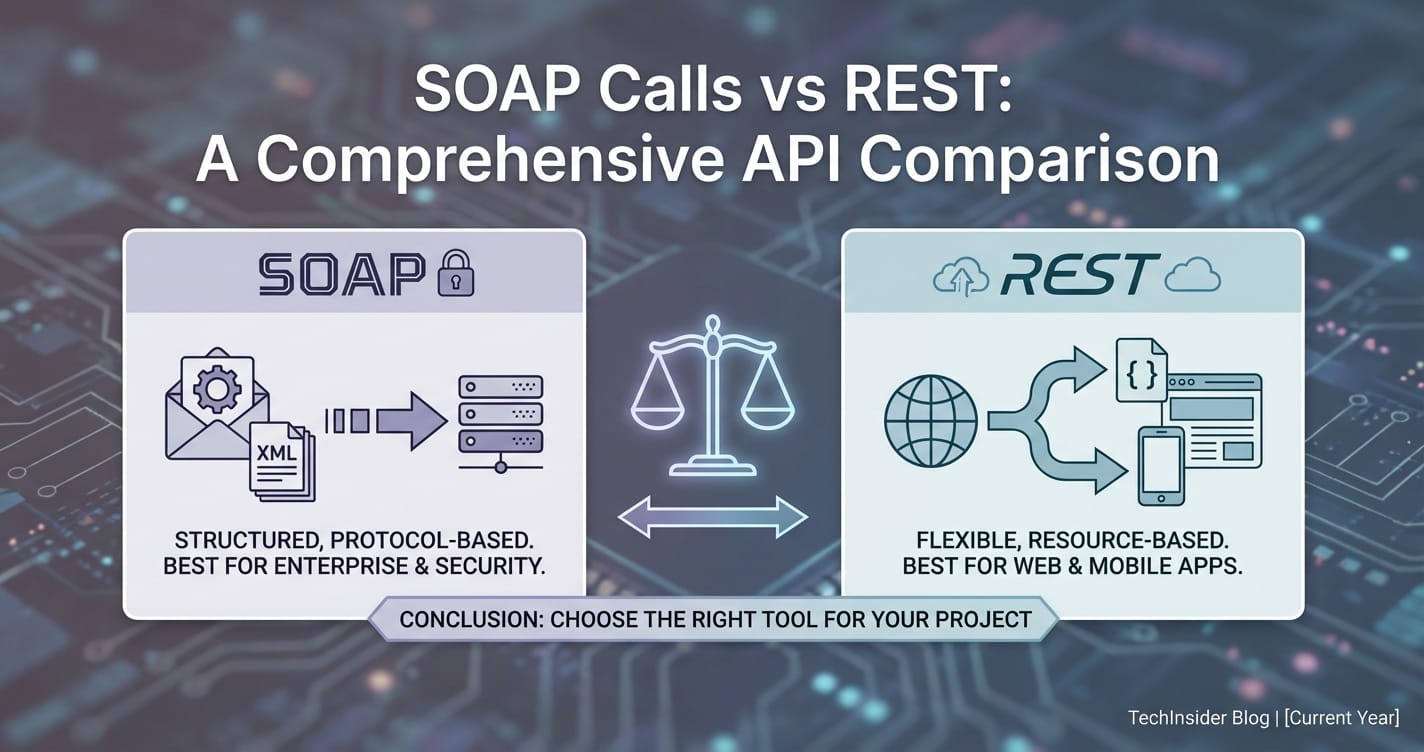
SOAP Calls vs REST: A Comprehensive API Comparison
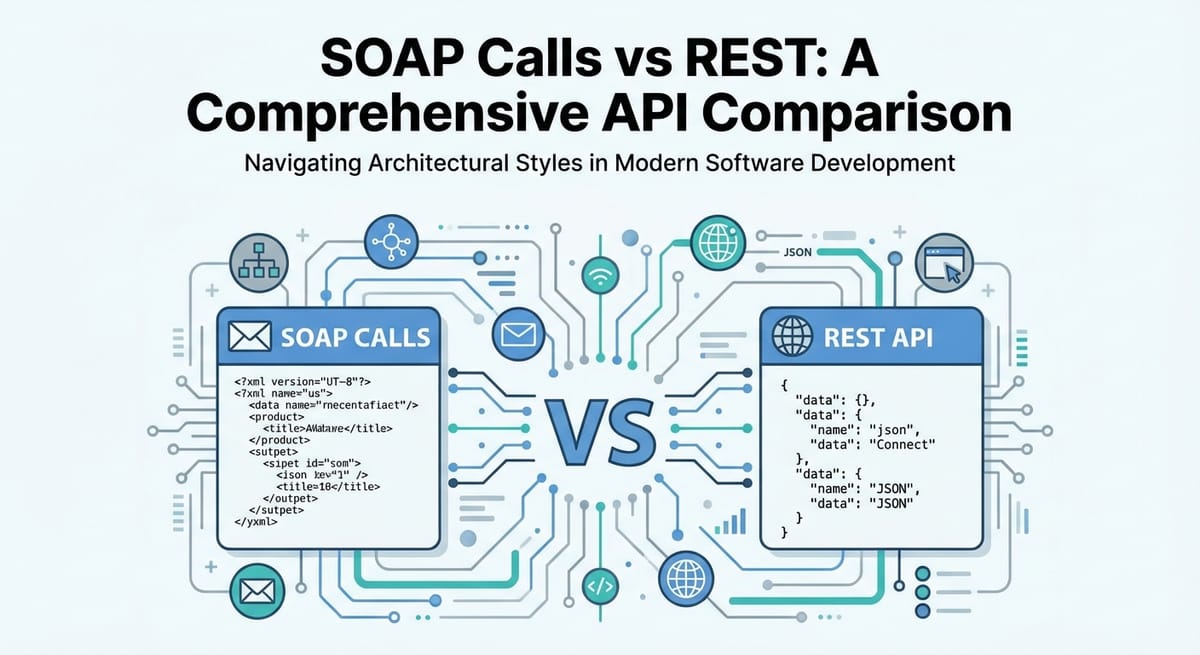


In the intricate landscape of modern software development, Application Programming Interfaces (APIs) serve as the fundamental connective tissue, enabling disparate systems to communicate, share data, and collaborate seamlessly. They are the unseen architects behind everything from mobile applications and cloud services to enterprise systems and IoT devices. As organizations increasingly embrace digital transformation, the strategic choice of API architecture becomes paramount, directly impacting system performance, scalability, development velocity, and long-term maintainability. Among the myriad of API styles, SOAP (Simple Object Access Protocol) and REST (Representational State Transfer) have long stood as the two most dominant and widely adopted paradigms, each with its unique philosophy, strengths, and ideal use cases.
The journey to building robust and efficient distributed systems often begins with a critical decision: which api architectural style best suits the project's specific requirements. This choice is far from trivial; it dictates the protocols, data formats, security mechanisms, and overall development experience. While both SOAP and REST aim to facilitate communication between services, they approach this challenge from fundamentally different perspectives. SOAP, with its roots in the enterprise world, prioritizes strict contracts, robust security features, and transport-agnostic communication, often at the cost of complexity and overhead. In contrast, REST, emerging from the principles of the World Wide Web, champions simplicity, statelessness, and leveraging existing HTTP infrastructure, making it exceptionally popular for modern web and mobile applications.
This comprehensive article aims to dissect these two formidable api architectural styles, delving deep into their core principles, advantages, disadvantages, and real-world applications. We will explore the nuances of their messaging formats, security implementations, state management, and the role of supplementary technologies like WSDL for SOAP and OpenAPI for REST. Furthermore, we will examine the crucial role of an api gateway in managing and optimizing API traffic, regardless of the underlying style. By providing a detailed comparison, practical insights, and guidance on when to choose one over the other, we aspire to equip developers, architects, and decision-makers with the knowledge necessary to make informed choices that align with their technical capabilities, business objectives, and future growth aspirations. Understanding the subtle yet significant differences between SOAP and REST is not merely an academic exercise; it is a strategic imperative for anyone navigating the complexities of interconnected software ecosystems.
Understanding APIs: The Foundation of Interconnected Systems
Before diving into the specifics of SOAP and REST, it is essential to firmly grasp the concept of an api itself. An Application Programming Interface is, at its core, a set of defined rules and protocols that allows different software applications to communicate with each other. Think of it as a waiter in a restaurant: you, the client, want a meal, but you don't interact directly with the kitchen. Instead, you tell the waiter (the api) what you want, and the waiter translates your request to the kitchen (the service provider), brings you the meal, and handles any issues. This abstraction allows for modularity, enabling developers to build complex applications by integrating pre-existing functionalities without needing to understand the internal workings of those functionalities.
The importance of APIs in the contemporary digital landscape cannot be overstated. They are the bedrock of the modern internet, facilitating the microservices architecture that powers many of today's scalable applications. APIs enable interoperability, allowing diverse systems—written in different programming languages, running on different platforms, and hosted in various environments—to exchange data and invoke operations. This capability has fueled the explosion of cloud computing, mobile applications, and the ubiquitous integration of third-party services. Whether it's a mobile app fetching weather data, a payment gateway processing a transaction, or a business intelligence tool pulling data from various enterprise systems, an api is almost certainly at play.
The evolution of API architectures has been a journey of constant refinement, driven by the ever-increasing demands for efficiency, security, and scalability. In the early days of distributed computing, mechanisms like CORBA (Common Object Request Broker Architecture) and DCOM (Distributed Component Object Model) attempted to solve the interoperability challenge, but they often suffered from platform dependency and significant complexity. The advent of the web, with its universal HTTP protocol, opened new avenues for communication, giving rise to XML-RPC and then the more robust, standard-driven SOAP, which aimed to bring a formal, enterprise-grade approach to web services. Subsequently, the desire for simpler, more lightweight communication, better suited for the agile demands of web and mobile development, led to the conceptualization and widespread adoption of REST. Each evolution represented a step towards simplifying communication, enhancing performance, or improving security, illustrating a continuous effort to optimize how software components interact across networks. Understanding this historical context provides valuable insight into why different api styles emerged and what problems they were designed to solve.
Deep Dive into SOAP: The Enterprise-Grade Protocol
SOAP, an acronym for Simple Object Access Protocol, stands as a venerable and powerful api messaging protocol. It emerged in the late 1990s and early 2000s, primarily driven by the need for a robust, standardized way for enterprise applications to communicate over the internet. Unlike REST, which is an architectural style, SOAP is a strict, XML-based protocol with a clearly defined message format and a heavy emphasis on formal contracts and rich operational capabilities. Its design philosophy centered on ensuring high reliability, security, and transactionality for complex distributed systems, often operating in highly regulated environments. This focus made it a natural fit for large organizations dealing with mission-critical applications where data integrity and secure operations were paramount, even if it meant a steeper learning curve and increased computational overhead.
Key Characteristics and Principles of SOAP
The fundamental nature of SOAP lies in its reliance on XML for all messaging. Every SOAP message is an XML document, rigidly structured into several distinct parts:
- Envelope: The root element of a SOAP message, defining the XML document as a SOAP message and containing all other elements. It acts as a wrapper around the entire communication.
- Header (Optional): This part provides a mechanism for extending the SOAP message with application-specific information that is not directly related to the actual message content. Common uses include authentication credentials (e.g., WS-Security tokens), transaction IDs (e.g., WS-Transactions), or routing information. Its optional nature allows for flexibility while maintaining a standard structure.
- Body: This is the mandatory part of the SOAP message that contains the actual payload, which is typically the request or response information, including method calls and their parameters or the results of those calls. All the data that the service needs to process, or the data it returns, resides within this section.
- Fault (Optional): If an error occurs during the processing of a SOAP message, the Body can contain a Fault element instead of the normal response. This element provides structured error information, including a fault code, a fault string (human-readable explanation), and often detailed error information, facilitating robust error handling and debugging.
One of SOAP's defining characteristics is its protocol independence. While it is most commonly transmitted over HTTP, SOAP is not tied to HTTP. It can leverage a wide array of underlying transport protocols, including SMTP (for email-based messaging), TCP, JMS (Java Message Service), and even legacy protocols like MQ (Message Queuing). This transport neutrality offers immense flexibility, allowing enterprises to integrate SOAP services into diverse existing infrastructures and adapt to specific networking requirements, which is particularly beneficial in heterogeneous computing environments. For instance, in scenarios where guaranteed message delivery and sophisticated queuing mechanisms are required, using SOAP over JMS might be preferred over HTTP.
SOAP also offers built-in error handling through its Fault element, providing a standardized way to communicate failures. This structured approach to error reporting simplifies the development of resilient client applications that can anticipate and respond to specific types of service-side issues, leading to more stable and predictable integrations compared to systems that rely solely on HTTP status codes.
Furthermore, SOAP has a rich ecosystem of WS-* standards that extend its capabilities beyond basic messaging. These include: * WS-Security: Provides mechanisms for message integrity, confidentiality, and authentication. It defines how security tokens (like X.509 certificates or SAML assertions) can be attached to SOAP messages, making it suitable for applications requiring high levels of data protection and user authentication. * WS-ReliableMessaging: Ensures messages are delivered reliably, even in the presence of network failures. It defines mechanisms for retransmission and duplicate detection, crucial for mission-critical operations where message loss is unacceptable. * WS-Transactions: Supports distributed transaction management, allowing multiple services to participate in a single, atomic transaction. This is invaluable in scenarios where operations across several services must either all succeed or all fail together, common in financial or inventory management systems.
These extensions imbue SOAP with enterprise-grade features that are often missing in simpler api styles, making it a powerful choice for complex business processes.
WSDL (Web Services Description Language)
A discussion about SOAP would be incomplete without mentioning WSDL (Web Services Description Language). WSDL is an XML-based language used to describe the functionality offered by a SOAP web service. It acts as a machine-readable contract that clients can use to understand how to interact with the service. A WSDL document provides a comprehensive blueprint, detailing:
- Data Types: The XML schema definitions for the request and response messages.
- Operations: The methods or functions that the web service exposes.
- Messages: The formats of the input and output parameters for each operation.
- Bindings: The communication protocols and message formats used (e.g., SOAP over HTTP).
- Service Endpoint Locations: The network addresses (URIs) where the service can be accessed.
The presence of a WSDL file is a cornerstone of the SOAP ecosystem. It allows for strong typing and auto-generation of client code. Developers can feed a WSDL file into various tools (like wsimport in Java or svcutil in .NET) to automatically generate client-side proxy classes. These proxies encapsulate the complexity of constructing and parsing SOAP messages, allowing developers to interact with the remote service as if it were a local object, significantly streamlining client development and reducing potential integration errors. This strict contract enforcement provides a high degree of predictability and helps ensure that clients and servers always agree on the communication format, which is particularly valuable in large, distributed teams or when integrating with third-party systems where breaking changes can be catastrophic.
Advantages of SOAP
SOAP's inherent design principles and its rich feature set contribute to several significant advantages, particularly in enterprise contexts:
- Strict Typing and Formal Contract (WSDL): The most prominent advantage of SOAP is the robust, machine-readable contract provided by WSDL. This formal specification ensures a precise definition of the service's operations, parameters, and return types. This strong typing drastically reduces ambiguity and integration errors, as both client and server are bound by a mutually agreed-upon interface. For complex systems involving multiple teams or external partners, WSDL acts as a single source of truth, facilitating predictable interactions and greatly simplifying debugging by ensuring that deviations from the contract are immediately apparent. The ability to generate client proxies automatically from WSDL further accelerates development and ensures adherence to the specified interface, offering a higher degree of reliability and predictability than typically found in more loosely defined API styles.
- Built-in Security, Transactions, and Reliability (WS-* Standards): SOAP is not just a messaging protocol; it is a framework that supports a comprehensive suite of enterprise-grade extensions. WS-Security provides sophisticated mechanisms for authentication (e.g., using SAML, X.509 certificates), authorization, data integrity, and confidentiality (encryption). These features are often critical for highly sensitive data and regulated industries like finance and healthcare, where robust security is non-negotiable and requires industry-standard compliance. Similarly, WS-Transactions enables distributed, atomic transactions across multiple services, ensuring data consistency even in complex, multi-system workflows. WS-ReliableMessaging guarantees message delivery, preventing data loss in unreliable network conditions, which is crucial for mission-critical operations where every message counts. These built-in standards eliminate the need for developers to implement such complex features from scratch, providing battle-tested solutions right out of the box.
- Language, Platform, and Transport Independent: While often associated with Java and .NET environments, SOAP is fundamentally agnostic to the programming language and underlying operating system. Its XML-based nature ensures that any platform capable of parsing XML can interact with a SOAP service. More importantly, SOAP's protocol independence allows it to be transmitted over virtually any transport layer – HTTP, SMTP, JMS, TCP, and more. This flexibility is a significant asset in heterogeneous enterprise environments where systems might use different communication infrastructures. It means that an application can use SOAP to communicate with another application regardless of whether they are running on a mainframe, a Unix server, or a Windows machine, or whether they use HTTP for real-time interaction or JMS for asynchronous, guaranteed delivery. This adaptability makes SOAP highly suitable for integrating diverse legacy systems with modern ones.
- Stateful Operations Possible: While the general trend in
apidesign leans towards statelessness, there are specific scenarios where maintaining state across requests is either necessary or highly beneficial. SOAP, through its underlying transport or session management features (e.g., using HTTP session cookies or WS-Addressing), can support stateful interactions. This capability can simplify complex multi-step processes where maintaining context across a series of operations is important, such as in long-running business processes or guided workflows where previous steps inform subsequent ones. While it adds complexity, the option to manage state provides a powerful tool for certain enterprise application patterns that would be more challenging to implement purely stateless.
Disadvantages of SOAP
Despite its formidable advantages in enterprise settings, SOAP comes with several notable drawbacks that have led to its declining popularity for many modern web development scenarios:
- Complexity and Verbosity: The most frequently cited criticism of SOAP is its inherent complexity. Every SOAP message is an XML document, which by nature is verbose. The overhead of the SOAP envelope, header, and body, along with the detailed XML schemas for data types, can result in significantly larger message payloads compared to simpler formats like JSON. This verbosity not only consumes more bandwidth and memory but also makes messages harder for humans to read and debug directly. The extensive tooling required to parse and generate these XML structures adds to the development overhead, making rapid prototyping and agile development more challenging. Developers often find themselves wrestling with XML configuration files and complex message structures rather than focusing on business logic.
- Performance Overhead: Directly related to its complexity, the verbosity of XML and the processing required to parse and serialize SOAP messages introduce a measurable performance overhead. For applications where high throughput and low latency are critical – such as mobile applications, real-time dashboards, or high-volume public
apis – this overhead can be a significant bottleneck. The extensive XML parsing, validation against WSDL schemas, and the additional processing for WS-* extensions (like security or reliability) all contribute to slower response times and higher resource consumption on both the client and server sides. While this might be acceptable for internal enterprise systems with fewer concurrent calls, it becomes prohibitive for internet-scale applications. - Steeper Learning Curve and Tooling Dependency: Developers new to SOAP often face a steeper learning curve. Understanding WSDL, the various WS-* standards, and the intricacies of XML schema definitions requires considerable effort. Furthermore, efficient SOAP development is heavily reliant on specialized tooling and IDE plugins for generating client stubs, validating messages, and handling configurations. Without these tools, manually interacting with SOAP services can be an arduous and error-prone process. This dependency on specific development environments and tools can limit flexibility and increase the initial setup time for projects, potentially alienating developers who prefer more lightweight and agnostic approaches.
- Less Suitable for Lightweight Web Applications: For the vast majority of web and mobile applications that prioritize speed, simplicity, and ease of use, SOAP is often overkill. The overhead of its protocol, the verbosity of its messages, and its reliance on complex tooling make it less appealing for scenarios where rapid iteration and broad client compatibility are key. Modern web development paradigms often favor minimalistic approaches, leveraging HTTP's existing verbs and simpler data exchange formats, which SOAP fundamentally departs from. Integrating SOAP services into client-side JavaScript applications, for instance, can be considerably more challenging than integrating RESTful services.
Use Cases for SOAP
Despite its disadvantages, SOAP continues to be a vital choice in specific domains where its strengths outweigh its weaknesses:
- Banking and Financial Services: Industries dealing with highly sensitive financial transactions, requiring ACID (Atomicity, Consistency, Isolation, Durability) properties, strong security, and strict audit trails, often leverage SOAP. WS-Security and WS-Transactions are critical for ensuring secure, reliable, and consistent operations across distributed financial systems.
- Healthcare Systems: For exchanging patient data, managing medical records, and integrating complex hospital systems, SOAP's robust security features, formal contracts, and reliability standards are highly valued. Compliance with regulations like HIPAA often necessitates the advanced security provided by WS-Security.
- Telecommunications: Network management, service provisioning, and billing systems in the telecom industry frequently rely on SOAP for integrating diverse, mission-critical components, where reliability and transactionality are paramount.
- Legacy Enterprise Integrations: Many large organizations have existing mission-critical systems built on SOAP. When integrating new applications with these established services, using SOAP often remains the most pragmatic and cost-effective approach, leveraging existing infrastructure and expertise.
- Applications Requiring Formal Contracts and Strict Messaging: In scenarios where interoperability between independent vendors or highly decoupled systems requires absolute clarity on the
apiinterface and strong enforcement of data types and operations, WSDL-driven SOAP services provide an unparalleled level of contract adherence, minimizing integration disputes and ensuring long-term compatibility.
In these environments, the trade-off of increased complexity for enhanced security, reliability, and transaction management is often deemed acceptable, if not essential.
Deep Dive into REST: The Web-Centric Architectural Style
REST, or Representational State Transfer, is not a protocol but an architectural style that emerged from the principles of the World Wide Web, first articulated by Roy Fielding in his 2000 doctoral dissertation. Unlike the prescriptive nature of SOAP, REST offers a flexible set of guidelines for building distributed systems that leverage existing web standards, primarily HTTP. Its core philosophy revolves around the concept of "resources" – any identifiable information that can be named, such as a document, an image, a collection of records, or even a service. Clients interact with these resources by sending HTTP requests and receiving representations of those resources, which can be in various formats like JSON, XML, or plain text. The elegance and simplicity of REST, coupled with its alignment with the fundamental workings of the web, have made it the dominant api style for modern applications, ranging from mobile apps and single-page web applications to microservices and IoT devices.
Key Principles and Constraints of REST
Roy Fielding defined six architectural constraints that a system must adhere to to be considered truly RESTful. While not all implementations strictly follow every constraint (especially HATEOAS), understanding them is crucial for comprehending REST's design philosophy:
- Client-Server: This fundamental constraint dictates a clear separation of concerns between the client and the server. The client is responsible for the user interface and user experience, while the server manages data storage, security, and business logic. This separation allows for independent evolution of client and server components, enhancing scalability and portability. A client doesn't need to know the server's internal workings, only the resources it exposes.
- Stateless: This is perhaps the most critical principle of REST. Each request from a client to a server must contain all the information necessary to understand the request. The server should not store any client context between requests. This means the server treats every request as independent, ensuring that scaling the server horizontally (adding more servers) is straightforward, as any server can handle any request without needing prior session information. This statelessness significantly improves scalability, reliability, and visibility of interactions, as failures can be more easily recovered from. Authentication and authorization information, for example, must be included in every request (e.g., via tokens).
- Cacheable: Responses from the server must explicitly or implicitly define themselves as cacheable or non-cacheable. If a response is cacheable, the client (or an intermediary proxy) is permitted to reuse that response data for later, equivalent requests. This constraint significantly improves network efficiency and client perceived performance by reducing the need to repeatedly fetch the same data from the server. HTTP's caching mechanisms (like ETag and Cache-Control headers) are leveraged here.
- Uniform Interface: This is the constraint that defines the general interactions between client and server. It consists of four sub-constraints:
- Resource Identification in Requests: Individual resources are identified in requests using URIs (Uniform Resource Identifiers). The client sends requests to these URIs to interact with the resources. For example,
/users/123identifies a specific user. - Resource Manipulation Through Representations: Clients manipulate resources by receiving representations of those resources (e.g., JSON or XML documents) and then sending back modified representations in the request body. The representation contains enough information to allow the client to modify or delete the resource.
- Self-Descriptive Messages: Each message includes enough information to describe how to process the message. This means the client doesn't need prior knowledge of the message's content type or method; it should be able to figure it out from the message itself (e.g.,
Content-Typeheader). - Hypermedia as the Engine of Application State (HATEOAS): This is often the most challenging and least strictly followed constraint. It mandates that clients interact with a RESTful service entirely through hypermedia provided dynamically by the server. Instead of knowing specific URIs beforehand, the client finds available actions and navigates the application state by following links embedded in resource representations. This makes the
apimore discoverable and adaptable to changes, as the client is decoupled from the server's URI structure.
- Resource Identification in Requests: Individual resources are identified in requests using URIs (Uniform Resource Identifiers). The client sends requests to these URIs to interact with the resources. For example,
- Layered System: This constraint allows for a layered architecture, where a client cannot ordinarily tell whether it is connected directly to the end server or to an intermediary along the way. Intermediary servers (proxies, load balancers,
api gateways) can be introduced to provide services like load balancing, caching, security policy enforcement, and authentication, without affecting the client-server interactions. This enhances scalability and security. - Code-On-Demand (Optional): This is an optional constraint that allows servers to temporarily extend or customize client functionality by transferring executable code (e.g., JavaScript applets). This constraint is not commonly seen in typical RESTful services and is often ignored.
HTTP Methods and Resources
REST leverages the standard HTTP methods (verbs) to perform operations on resources, mapping common CRUD (Create, Read, Update, Delete) operations to these verbs in a logical and intuitive manner:
- GET: Retrieves a representation of a resource. It should be idempotent (multiple identical requests have the same effect as a single one) and safe (does not alter server state).
- Example:
GET /users/123(retrieve user with ID 123)
- Example:
- POST: Creates a new resource or submits data to be processed. It is generally not idempotent.
- Example:
POST /users(create a new user based on data in the request body)
- Example:
- PUT: Updates an existing resource (replaces the entire resource with the data provided in the request body) or creates a new resource if it doesn't exist at the specified URI. It is idempotent.
- Example:
PUT /users/123(update user 123 with data in the request body)
- Example:
- DELETE: Removes a resource. It is idempotent.
- Example:
DELETE /users/123(delete user with ID 123)
- Example:
- PATCH: Applies partial modifications to a resource. It is not necessarily idempotent, depending on the patch method.
- Example:
PATCH /users/123(partially update user 123, e.g., only change their email address)
- Example:
The consistent use of these HTTP verbs in conjunction with meaningful URIs (representing resources hierarchically, e.g., /products/{id}/reviews) makes RESTful APIs highly intuitive and easy to understand for developers.
Data Formats
While SOAP is strictly tied to XML, REST is agnostic to the data format used for resource representations. However, in practice, JSON (JavaScript Object Notation) has become the overwhelmingly dominant format due to its lightweight nature, human readability, and native compatibility with JavaScript, making it ideal for web and mobile clients. Other formats like XML, YAML, or plain text can also be used, and APIs often support multiple formats through content negotiation (using the Accept and Content-Type HTTP headers). The flexibility in data formats significantly contributes to REST's appeal and broad adoption across diverse client technologies.
OpenAPI Specification
The rise of REST brought immense flexibility but also a challenge: the lack of a standardized, machine-readable api contract akin to WSDL for SOAP. This gap was largely filled by the OpenAPI Specification (formerly known as Swagger Specification). OpenAPI is a language-agnostic, human- and machine-readable interface description language for RESTful APIs. It allows developers to describe the operations, parameters, authentication methods, and data models of their APIs in a standardized JSON or YAML format.
The OpenAPI Specification serves several critical purposes in the REST ecosystem:
- Documentation: It provides comprehensive, interactive documentation that is easy for developers to understand and explore, making it much simpler to onboard new users to an
api. Tools like Swagger UI can renderOpenAPIdefinitions into beautiful, interactive documentation portals. - Client Code Generation: Similar to WSDL,
OpenAPIdefinitions can be used by various tools (e.g., OpenAPI Generator) to automatically generate client SDKs in multiple programming languages, server stubs, and even testing frameworks. This significantly accelerates integration efforts and reduces manual coding errors. - API Design and Prototyping:
OpenAPIcan be used as a design-first approach, where theapicontract is defined before any code is written. This fosters betterapidesign practices and enables parallel development of client and server components. - Validation and Testing: The specification provides a basis for validating incoming requests and outgoing responses against the defined schema, ensuring data consistency and
apicontract adherence during testing and runtime. - Discovery and Management:
OpenAPIdocuments facilitateapidiscovery and enableapi gateways and management platforms to understand and configure proxies, apply policies, and monitorapiusage more effectively.
In essence, OpenAPI has become an indispensable tool for standardizing, documenting, and consuming RESTful APIs, addressing one of the key historical perceived weaknesses of REST compared to SOAP. It provides the structured contract without imposing the heavy protocol overhead of SOAP.
Advantages of REST
REST's adherence to web principles and its lightweight nature have endowed it with a compelling set of advantages, making it the preferred choice for a vast majority of modern api development:
- Simplicity and Ease of Use: REST's primary strength lies in its simplicity. It directly leverages existing HTTP protocols and standard methods (GET, POST, PUT, DELETE), which are already familiar to web developers. This makes REST APIs significantly easier to learn, understand, and implement compared to the more complex SOAP protocol. Developers can often interact with a RESTful
apiusing simple HTTP client libraries available in virtually every programming language, or even command-line tools likecurl, without the need for specialized SOAP toolkits or extensive XML configuration. This reduced cognitive load translates to faster development cycles and improved developer productivity. - Lightweight and High Performance: By typically using JSON (or sometimes XML) as the data format and avoiding the verbose message envelopes of SOAP, RESTful APIs produce significantly smaller message payloads. This reduction in data size consumes less bandwidth, especially crucial for mobile applications or IoT devices operating on limited networks, and results in faster data transfer. Furthermore, the stateless nature of REST, coupled with its native support for HTTP caching, drastically improves performance and scalability. Caching allows clients or intermediate proxies to store responses and serve them directly for subsequent requests, reducing the load on the server and minimizing network latency. This lightweight design contributes to better overall system responsiveness and higher throughput.
- Scalability: The stateless constraint is a cornerstone of REST's scalability. Since each request is independent and carries all necessary information, servers do not need to maintain session state for clients. This makes it incredibly easy to distribute incoming requests across multiple servers (horizontal scaling) using load balancers. Any server in the cluster can handle any request, simplifying server management and ensuring high availability. When a server goes down, another can immediately take over without loss of session data, as no session data is stored on the server. This inherent scalability is a critical advantage for web-scale applications experiencing fluctuating traffic volumes.
- Flexibility in Data Formats: While JSON is the most common, REST is not beholden to any single data format. It can transmit data in JSON, XML, plain text, YAML, or any other format that both client and server agree upon. This flexibility allows developers to choose the most appropriate data representation for their specific needs, enhancing interoperability with diverse systems and client technologies. For example, a web browser might prefer JSON, while a legacy system might require XML. This content negotiation capability makes REST highly adaptable.
- Broader Adoption and Vibrant Ecosystem: REST has become the de facto standard for building web services, leading to a massive and vibrant ecosystem. This means a wealth of resources, tutorials, libraries, frameworks, and community support are readily available. Finding developers experienced with REST is significantly easier than finding those proficient in SOAP and its extensive WS-* standards. The pervasive use of REST for public APIs by major technology companies (e.g., Google, Amazon, Facebook, Twitter) further solidifies its position and ensures continued innovation and tool development in this space.
- Better Integration with Web Technologies: REST is inherently aligned with the architecture of the World Wide Web. It leverages HTTP verbs, status codes, and URLs in a meaningful way, making it a natural fit for web browsers and web-based applications. Integrating RESTful APIs into client-side JavaScript (AJAX) or mobile applications is straightforward, requiring minimal overhead and enabling seamless interactions.
Disadvantages of REST
Despite its widespread popularity, REST is not without its limitations, and some scenarios might expose its weaknesses:
- Lack of Formal Contract (Historically, now mitigated by OpenAPI): Historically, a significant disadvantage of REST compared to SOAP was the absence of a machine-readable contract like WSDL. This often led to
apis being poorly documented, difficult to discover, and prone to breaking changes without clear versioning strategies. Developers had to rely heavily on human-readable documentation, which could become outdated. However, the emergence and widespread adoption of theOpenAPISpecification (and tools like Swagger UI) have largely mitigated this drawback, providing a robust, machine-readable way to describe RESTful APIs, facilitating documentation, client code generation, and validation. - Statelessness Can Be Challenging for Complex Workflows: While statelessness is a significant advantage for scalability, it can sometimes make handling complex, multi-step workflows more challenging. In a purely stateless system, the client must manage and send all necessary state information with each request, which can increase message size and client-side complexity for certain business processes. For scenarios requiring persistent session context or long-running transactions, developers might need to implement workarounds (e.g., passing tokens, using unique identifiers) to simulate state, adding a layer of complexity that SOAP's session management or WS-Transactions might handle more natively.
- Less Built-in Security Features (Relies on Underlying Protocols/Standards): Unlike SOAP, which has built-in WS-Security specifications, REST does not offer a native, standardized security framework within its architectural style. RESTful
apisecurity relies on established web security standards and protocols like:- HTTPS (TLS/SSL): For encrypting communication and ensuring message confidentiality and integrity.
- OAuth 2.0: For delegated authorization, allowing third-party applications to access user resources without requiring their credentials.
- JWT (JSON Web Tokens): For securely transmitting information between parties as a compact, URL-safe JSON object, often used for authentication and authorization.
- API Keys: For simple client identification. While these are robust and widely adopted, they are external standards that need to be explicitly implemented, rather than being an intrinsic part of the REST architectural style itself. This means developers have more choices but also more responsibility in designing and implementing their security model.
- Over-fetching and Under-fetching Issues: In REST, clients often interact with resources that have fixed data structures. This can lead to two common problems:
- Over-fetching: The
apimight return more data than the client actually needs, increasing payload size and parsing effort. For example, if a client only needs a user's name but theapireturns the entire user object (name, email, address, etc.). - Under-fetching: Conversely, a client might need data from multiple related resources, requiring multiple round trips to the
api. For instance, getting a list of users and then making separate requests for each user's orders. These issues can impact performance and client-side efficiency, leading to the rise of alternativeapiquery languages and architectural styles like GraphQL, which allow clients to precisely specify the data they need.
- Over-fetching: The
- Limited Protocol Agnosticism: While SOAP is transport-agnostic, REST is tightly coupled with HTTP. While this is often a strength (leveraging HTTP's ubiquity and features), it means RESTful APIs are generally constrained to HTTP for communication. For specialized scenarios requiring non-HTTP transport protocols (e.g., highly optimized binary protocols, message queues), REST might not be the most suitable choice without additional layers or adaptations.
Use Cases for REST
REST has become the dominant api style for a wide variety of applications due to its flexibility and performance characteristics:
- Web Applications and Mobile Apps: This is arguably the most common use case. Single-page applications (SPAs), traditional web applications, and virtually all mobile apps rely heavily on RESTful APIs to fetch and send data from backend services.
- Public APIs: Major companies like Google, Amazon, Twitter, and Facebook expose their services through RESTful APIs, enabling third-party developers to integrate and build upon their platforms. The ease of consumption and broad language support make REST ideal for public consumption.
- Microservices Architectures: REST is the de facto standard for communication between microservices. Its statelessness, lightweight nature, and scalability perfectly align with the principles of independently deployable, loosely coupled services that form the backbone of modern distributed systems.
- IoT Devices: Given the resource constraints and network limitations of many Internet of Things devices, REST's lightweight messages and efficient use of HTTP make it a suitable choice for device-to-cloud communication for sending sensor data or receiving commands.
- Rapid Development and Agile Methodologies: The simplicity and straightforward nature of REST allow for quicker prototyping and iteration, aligning well with agile development practices where speed and flexibility are prioritized.
- API Integration with External Services: When integrating with a multitude of external services or partners, REST's widespread adoption minimizes integration friction, as most modern third-party services provide RESTful interfaces.
For applications where rapid development, broad compatibility, and high performance are critical, REST typically offers a superior solution.
Direct Comparison: SOAP vs REST
Having delved into the individual characteristics of SOAP and REST, it becomes clear that while both serve the purpose of inter-application communication, they do so with vastly different architectural philosophies. One is a rigid, feature-rich protocol, the other a flexible, web-centric architectural style. The choice between them is not about one being inherently "better" but about selecting the most appropriate tool for a given job, considering the specific requirements, constraints, and operational environment of the project.
To facilitate a clearer understanding of their distinctions, let's first present a comparative table highlighting their key differences across various dimensions.
Comparative Table: SOAP vs REST
| Feature/Aspect | SOAP (Simple Object Access Protocol) | REST (Representational State Transfer) |
|---|---|---|
| Type | Protocol (strict, XML-based messaging) | Architectural Style (set of guidelines) |
| Data Format | Primarily XML (verbose) | Primarily JSON (lightweight), also XML, plain text, etc. |
| Transport Protocol | Protocol Agnostic (HTTP, SMTP, TCP, JMS, MQ) | Primarily HTTP/HTTPS |
| Contract | WSDL (Web Services Description Language) - formal, machine-readable | OpenAPI Specification (or similar) - for documentation and client generation |
| Statefulness | Can be Stateful (supports sessions/transactions) | Stateless (each request independent) |
| Security | Built-in WS-Security, WS-Trust, WS-Policy extensions (robust, complex) | Relies on underlying protocols: HTTPS/TLS, OAuth 2.0, JWT, API Keys (flexible) |
| Complexity | High (verbose XML, extensive standards, tooling dependent) | Low (simple HTTP methods, JSON, easier to learn) |
| Performance | Lower (due to XML parsing overhead, larger payloads) | Higher (due to lightweight JSON, caching, less overhead) |
| Tooling | Heavy reliance on specialized tools for WSDL parsing, client generation | Lighter tooling, broad library support across languages |
| Coupling | Tightly coupled (contract-driven) | Loosely coupled (resource-driven) |
| Target Use Cases | Enterprise applications, financial services, healthcare, legacy systems | Web, mobile, IoT, public APIs, microservices |
| Ease of Debugging | More challenging due to verbose XML and binary security tokens | Easier due to human-readable JSON and standard HTTP responses |
| Scalability | Good, but often requires more resources due to overhead | Excellent, inherent statelessness and caching improve horizontal scalability |
Detailed Discussion on Key Differences
Beyond the concise table, a deeper exploration of these differences reveals the practical implications for development and deployment.
Messaging Format and Payload Size
The most visually apparent difference lies in their messaging formats. SOAP's exclusive reliance on XML, with its verbose tags and structured envelope, inevitably leads to larger message payloads. For instance, a simple data object represented in XML might be two or three times larger than its JSON equivalent. While compression can mitigate this to some extent, the intrinsic overhead of XML parsing and serialization still adds computational cost. In contrast, REST's prevalent use of JSON, a compact and efficient data interchange format, results in significantly smaller messages. This reduction in payload size translates directly to lower network bandwidth consumption, faster transmission times, and reduced processing overhead on both client and server, a critical factor for performance-sensitive applications, especially those operating over cellular networks or high-volume environments.
Protocol Dependence
SOAP's protocol independence is a powerful feature in certain enterprise scenarios. Its ability to operate over diverse transport layers like HTTP, SMTP, JMS, or even legacy message queues provides unparalleled flexibility for integrating with heterogeneous systems. This means a SOAP service can be adapted to existing communication infrastructures without demanding a complete overhaul. REST, however, is fundamentally tied to HTTP. It leverages HTTP verbs, status codes, and URI structures as core components of its architectural style. While this tight coupling to HTTP might seem like a limitation, it is also a strength, as it allows REST to fully exploit the robust features and widespread infrastructure of the web itself, including proxies, caches, and load balancers. For web-based applications, relying on HTTP simplifies development, but for non-HTTP specific transport needs, REST would require encapsulation or adaptation.
State Management
REST strictly adheres to the stateless principle, meaning each client request to the server must contain all the information necessary to understand and process the request, without the server relying on any previously stored context from that client. This design choice is a cornerstone of REST's scalability and reliability, as it simplifies horizontal scaling and makes individual requests independent. However, for complex, multi-step business processes that naturally involve state (e.g., a multi-page checkout process or a series of dependent api calls), the client must manage this state and pass relevant information with each request, potentially increasing client-side complexity and payload size. SOAP, on the other hand, can inherently support stateful operations, often through the use of HTTP sessions or more advanced WS-Addressing/WS-ReliableMessaging standards that track message sequences. This can simplify server-side logic for stateful interactions, though it comes at the cost of reduced scalability and increased resource consumption due to session management.
Security and Reliability Features
SOAP has a rich, standardized ecosystem of WS-* extensions, including WS-Security, WS-ReliableMessaging, and WS-Transactions, which provide robust, built-in mechanisms for message-level security (encryption, digital signatures), guaranteed delivery, and distributed transactions. These features are highly sophisticated and provide a comprehensive, often auditable, framework for enterprise-grade applications where data integrity, confidentiality, and transactional consistency are non-negotiable legal or business requirements. Implementing these WS-* standards can be complex, but they offer out-of-the-box solutions for advanced security needs.
REST, conversely, does not have its own inherent security standards. Instead, it relies on leveraging established web security practices and protocols. This includes using HTTPS/TLS for secure communication over the wire, OAuth 2.0 for delegated authorization, JWT for authentication and token-based security, and API keys for simpler client identification. While these external standards are extremely robust and widely adopted, REST developers are responsible for designing and integrating these security mechanisms, which offers flexibility but requires careful implementation. For many web and mobile applications, this approach is more than sufficient and often simpler to implement than the full suite of WS-Security.
Contract and Documentation (WSDL vs. OpenAPI)
WSDL provides a highly formal, machine-readable contract for SOAP services. This contract is exhaustive, describing all data types, operations, and service endpoints, enabling powerful client-side tooling to automatically generate proxy classes. This strong contractual guarantee is invaluable for complex enterprise integrations where strict adherence to an interface is paramount and breaking changes are highly disruptive. It fosters a "contract-first" development approach.
For REST, the absence of a built-in formal contract was a historical pain point. However, the widespread adoption of the OpenAPI Specification has effectively filled this gap. OpenAPI provides a standardized, machine-readable format (JSON or YAML) to describe RESTful APIs, covering operations, parameters, authentication, and data models. It facilitates interactive documentation (e.g., Swagger UI), automated client SDK generation, and API design-first methodologies. While OpenAPI offers robust contract definition, it doesn't carry the same "protocol-level enforcement" as WSDL and the underlying SOAP protocol, offering more flexibility at the potential cost of less rigid compile-time checking for certain interaction nuances.
Performance and Scalability
In terms of raw performance and scalability for internet-scale applications, REST generally outperforms SOAP. The smaller payload sizes of JSON, coupled with REST's native embrace of HTTP caching and its statelessness, allow for significantly higher throughput and lower latency. Statelessness enables easy horizontal scaling by distributing requests across multiple servers without concerns about session affinity. The simplicity of HTTP request/response cycles also reduces processing overhead. SOAP's verbose XML, complex parsing requirements, and the overhead of WS-* extensions (even if not fully utilized) inherently introduce more latency and consume more computational resources per request. While enterprise SOAP deployments are often highly optimized, they typically require more robust infrastructure to achieve comparable scale to well-designed RESTful systems.
Development Complexity and Developer Experience
The developer experience is a significant differentiator. REST is widely considered easier to learn, implement, and debug. Its use of standard HTTP methods, familiar URL structures, and human-readable JSON makes apis intuitive and approachable. Developers can quickly prototype and integrate RESTful services using common HTTP client libraries. Debugging is also simpler, as requests and responses can often be inspected directly in browser developer tools or curl commands.
SOAP, on the other hand, has a steeper learning curve. Understanding WSDL, complex XML schemas, and the nuances of various WS-* standards requires dedicated effort. Development is heavily reliant on specialized IDEs and tooling to generate client stubs and handle message serialization/deserialization, which abstracts away much of the underlying XML but also makes direct introspection harder. The verbosity of SOAP messages makes manual debugging more cumbersome. This complexity can translate to slower development cycles and increased maintenance overhead, especially for teams without extensive SOAP expertise.
Ultimately, the choice hinges on weighing these factors against the specific needs of a project. For high-performance, broadly accessible web services, REST is usually the clear winner. For highly secure, transaction-oriented enterprise systems with complex integration requirements, SOAP might still be the more robust, albeit more complex, solution.
APIPark is a high-performance AI gateway that allows you to securely access the most comprehensive LLM APIs globally on the APIPark platform, including OpenAI, Anthropic, Mistral, Llama2, Google Gemini, and more.Try APIPark now! 👇👇👇
The Role of API Gateways in Modern Architectures
In the dynamic and increasingly complex landscape of distributed systems, where applications interact with a multitude of internal and external services, the concept of an api gateway has become not just beneficial but often indispensable. An api gateway acts as a single entry point for all client requests, sitting between the client applications and the backend api services. It essentially serves as a reverse proxy, routing requests to the appropriate microservice or legacy system, but it does far more than just simple routing. It is a powerful abstraction layer that centralizes many cross-cutting concerns that would otherwise need to be implemented within each individual service or handled by client applications.
What is an API Gateway?
An api gateway is a fundamental component in modern microservices architectures and api management strategies. It acts as the "front door" to your apis, mediating all api traffic. Rather than clients having to communicate directly with multiple backend services, which can be brittle and complex, they interact solely with the api gateway. This gateway then intelligently routes the requests to the correct internal service, aggregates responses, and applies various policies and transformations. It provides a centralized point for managing, securing, and optimizing api access, simplifying client-side development and enhancing the overall security and resilience of the system.
Key Functions of an API Gateway
The responsibilities of an api gateway extend far beyond basic traffic forwarding. A comprehensive api gateway typically offers a rich set of functionalities:
- Routing and Load Balancing: The primary function is to direct incoming requests to the correct backend service or instance. It can intelligently route traffic based on various criteria (e.g., URL path, HTTP headers, request parameters) and distribute the load across multiple instances of a service to ensure high availability and optimal resource utilization.
- Authentication and Authorization: Gateways provide a centralized point to enforce security policies. They can authenticate clients (e.g., using
apikeys, OAuth 2.0 tokens, JWTs) and authorize their access to specificapis or resources, offloading this responsibility from individual backend services. - Throttling and Rate Limiting: To protect backend services from overload and abuse,
api gateways can enforce rate limits, controlling the number of requests a client can make within a specified timeframe. This prevents denial-of-service (DoS) attacks and ensures fair usage among clients. - Caching: Gateways can cache responses from backend services for a specified duration. This significantly improves performance and reduces the load on backend systems for frequently requested, static data, aligning perfectly with REST's cacheable constraint.
- Monitoring and Logging: They provide a centralized point for collecting metrics (e.g., request count, latency, error rates) and logging all
apicalls. This granular visibility is crucial for performance monitoring, troubleshooting, auditing, and business intelligence. - Protocol Translation and Transformation: A powerful
api gatewaycan translate between differentapiprotocols or message formats. For example, it could expose a legacy SOAP service as a modern RESTfulapito external clients or transform XML responses into JSON. It can also enrich requests with additional headers or data before forwarding them to backend services. - Version Management: Gateways simplify
apiversioning by allowing developers to manage different versions of anapiwithout requiring clients to change their codebase drastically. This can involve routing requests based on version headers or URL paths. - Fault Tolerance and Resilience: Gateways can implement circuit breakers, retries, and fallbacks to gracefully handle failures in backend services, improving the overall resilience of the system.
API Gateways in SOAP vs REST Context
An api gateway is beneficial for managing both SOAP and RESTful APIs, albeit with slightly different emphases:
- For RESTful APIs: Gateways are particularly crucial in microservices architectures where REST is predominant. They simplify client interactions by presenting a unified
apifaçade to potentially hundreds of backend microservices, preventing "API sprawl." They centralize security, rate limiting, and monitoring, which are often external concerns in REST, allowing individual microservices to remain lean and focused on business logic. TheOpenAPIspecification, with its machine-readable format, integrates seamlessly withapi gateways for automatic configuration and policy enforcement. - For SOAP Services: While SOAP has its own extensive WS-* standards for security and reliability, an
api gatewaycan still add significant value. It can provide a modern, centralized management layer over legacy SOAP services, offering unified authentication and rate limiting that might be absent or inconsistent in older systems. More importantly, anapi gatewaycan act as a protocol translation layer, exposing a legacy SOAP service as a simpler RESTfulapito external clients. This allows modern applications to consume older services without having to implement complex SOAP client logic, effectively bridging the gap between old and new architectures.
The strategic deployment of an api gateway empowers organizations to manage their api landscape more efficiently, enhance security, and ensure scalability, irrespective of whether their backend services are built with SOAP, REST, or a hybrid of both. It serves as a critical control point for all api traffic, transforming a collection of disparate services into a cohesive, manageable, and performant digital offering.
Introducing APIPark: An Open Source AI Gateway & API Management Platform
In this context of comprehensive api management and the evolving landscape that increasingly includes artificial intelligence, platforms like APIPark emerge as essential tools. APIPark is an all-in-one open-source AI gateway and api developer portal, licensed under Apache 2.0. It is meticulously designed to empower developers and enterprises in effortlessly managing, integrating, and deploying a diverse array of AI and REST services. This platform directly addresses the challenges discussed earlier, offering a robust solution for governing the entire lifecycle of APIs, from their initial design to their eventual decommissioning.
APIPark provides a unified management system for authentication and cost tracking, crucial for organizations leveraging numerous apis. It boasts the remarkable capability to quickly integrate over 100 AI models, standardizing their invocation through a unified api format. This innovative feature ensures that any modifications to underlying AI models or prompts do not disrupt existing applications or microservices, significantly simplifying AI usage and drastically reducing maintenance costs. Furthermore, APIPark allows users to encapsulate custom prompts with AI models into new REST APIs, enabling rapid creation of specialized services like sentiment analysis, translation, or data analysis APIs without extensive coding.
Beyond its AI-centric features, APIPark offers robust end-to-end api lifecycle management. This encompasses regulating API management processes, managing traffic forwarding, implementing load balancing, and versioning published APIs. It facilitates api service sharing within teams, centralizing all api services for easy discovery and consumption by different departments and teams. For organizations requiring multi-tenancy, APIPark supports independent API and access permissions for each tenant, allowing for separate applications, data, user configurations, and security policies while sharing the underlying infrastructure to optimize resource utilization and operational costs. Security is further bolstered by a feature that ensures api resource access requires approval, preventing unauthorized calls through a subscription and administrator approval process.
Performance is a cornerstone of modern api gateways, and APIPark excels in this area, rivaling Nginx with its capability to achieve over 20,000 TPS on an 8-core CPU and 8GB of memory, supporting cluster deployment for large-scale traffic. Its detailed api call logging records every interaction, providing businesses with critical data for quick troubleshooting and ensuring system stability. This extensive logging feeds into powerful data analysis features, displaying long-term trends and performance changes, which aids in preventive maintenance and proactive issue resolution.
Deploying APIPark is designed to be exceptionally quick and simple, achievable in just 5 minutes with a single command line:
curl -sSO https://download.apipark.com/install/quick-start.sh; bash quick-start.sh
While its open-source version provides foundational api resource management for startups, APIPark also offers a commercial version with advanced features and professional technical support tailored for leading enterprises. Developed by Eolink, a leader in api lifecycle governance solutions, APIPark stands as a testament to the evolving needs of api management, seamlessly integrating traditional REST and new AI paradigms under a single, high-performance, and secure umbrella. Its comprehensive capabilities offer developers, operations personnel, and business managers a powerful solution to enhance efficiency, security, and data optimization across their entire api ecosystem. Learn more about its capabilities at ApiPark.
When to Choose Which: Making an Informed Decision
The decision between SOAP and REST is not about proclaiming one superior to the other in an absolute sense. Instead, it’s a pragmatic choice dictated by the specific context, requirements, and constraints of your project. Both architectural styles have distinct strengths that make them uniquely suited for particular scenarios. Understanding these ideal use cases is crucial for making an informed decision that aligns with your technical capabilities, business goals, and long-term maintainability.
Choose SOAP When:
SOAP, despite its complexity, remains a powerful and relevant choice for environments where a high degree of formality, robustness, and enterprise-grade features are non-negotiable.
- High Security, Transactionality, and Reliability are Paramount: In industries such as banking, financial services, healthcare, and government, where the integrity, confidentiality, and security of data are absolutely critical, and transactions must be atomic and reliable (ACID properties), SOAP's WS-Security, WS-Transactions, and WS-ReliableMessaging extensions provide battle-tested, standardized solutions. These features offer a level of built-in guarantees that would require significant custom implementation efforts and external standards integration in a RESTful environment. If your application deals with sensitive financial data, strict regulatory compliance (e.g., HIPAA, PCI DSS), or distributed transactions that must succeed or fail as a single unit, SOAP might be the more secure and robust choice.
- Legacy Systems Integration: Many large enterprises have existing, mission-critical systems that expose their functionality via SOAP web services. When integrating new applications with these established, stable, and often complex systems, adopting SOAP for the integration layer is often the most pragmatic and cost-effective approach. It leverages existing infrastructure, avoids the need for costly refactoring of legacy services, and aligns with the existing expertise within the organization. While an
api gatewaycan translate SOAP to REST, direct SOAP integration might be preferred for deep, internal system communication. - Formal Contracts and Strict Messaging are Required: In scenarios where interoperability between independent vendors or highly decoupled systems demands an absolute, unambiguous contract for the
apiinterface, SOAP's WSDL provides an unparalleled level of detail and enforcement. This strong contractual guarantee ensures that all parties involved adhere precisely to the defined data types, operations, and message structures, minimizing integration errors and disputes. For applications where even minor deviations from the contract can have severe consequences, the strictness of WSDL is a significant advantage. This can be especially important in multi-vendor ecosystems where API stability and version compatibility are paramount. - Enterprise-Level Distributed Computing: For complex distributed computing environments that require sophisticated message routing, asynchronous messaging, and advanced messaging patterns (e.g., publish-subscribe with guaranteed delivery), SOAP's transport agnosticism and extensible WS-* standards offer greater flexibility and built-in support. While REST can be used in distributed systems, SOAP can provide more native solutions for specific enterprise integration patterns without relying on external messaging brokers for core reliability features.
Choose REST When:
REST has become the de facto standard for modern web development due to its simplicity, performance, and flexibility. It is the preferred choice for a vast majority of new api development projects.
- Simplicity, Flexibility, and High Performance are Crucial: For applications that prioritize ease of development, rapid iteration, and high throughput, REST is typically the superior choice. Its lightweight nature (JSON payloads), statelessness, and inherent support for HTTP caching make it ideal for public-facing
apis, mobile applications, and high-traffic web services where responsiveness and scalability are paramount. The reduced overhead translates to faster development cycles and better user experience. - Public APIs and Broad Client Base: When building an
apithat will be consumed by a wide range of clients, including web browsers, mobile apps (iOS/Android), and third-party developers, REST's simplicity and widespread adoption make it the most accessible option. The vast ecosystem of tools, libraries, and community support for REST ensures that clients can easily integrate with yourapiregardless of their chosen programming language or platform. Majorapiproviders (Google, Amazon, Twitter) predominantly use REST for their public offerings. - Microservices Architecture: REST is the architectural style of choice for communication between microservices. Its statelessness and resource-oriented approach perfectly align with the principles of independently deployable, loosely coupled services. RESTful
apis facilitate flexible deployment, easy scaling of individual services, and promote a clear separation of concerns, which are all hallmarks of a robust microservices ecosystem. - Rapid Development and Agile Methodologies: The straightforward nature of RESTful
apis allows development teams to build and iterate quickly. Less time is spent on wrestling with complex protocols and specialized tooling, enabling faster time-to-market and better alignment with agile development practices where flexibility and responsiveness to change are key. The ability to use standard HTTP clients and human-readable JSON simplifies debugging and testing. - Leveraging Existing Web Infrastructure (HTTP): REST inherently takes advantage of the well-understood and globally deployed HTTP protocol, including its verbs, status codes, and caching mechanisms. This allows developers to build upon a mature and robust foundation, benefiting from existing network infrastructure and tooling without needing to introduce complex new protocols.
Hybrid Approaches: Best of Both Worlds
It is also important to recognize that the choice between SOAP and REST is not always an "either/or" dilemma. In many enterprise environments, a hybrid approach can be highly effective. For example:
- Internal SOAP, External REST: An organization might use SOAP for highly secure, transactional communication between internal backend systems where its specific features are beneficial. However, an
api gatewaycould then expose these internal SOAP services as simpler, more consumable RESTful APIs to external partners or public-facing applications. This shields the complexity of the internal systems while providing a modern interface to the outside world. This is where a platform like APIPark excels, offering the ability to manage both traditional REST services and AI-driven APIs, providing a unifiedapi gatewayfor all integrations. - Service-Oriented Architecture (SOA) with RESTful Microservices: Some organizations might have a broader SOA built on SOAP, but for new functionalities or specific modules, they might adopt a microservices approach using REST. The
api gatewaythen acts as the orchestration layer, managing traffic to both SOAP-based and REST-based services. - Protocol Translation at the Edge: An
api gatewaycan perform real-time protocol translation, converting incoming REST requests into SOAP requests for a backend service and vice versa. This allows clients to use the simpler REST paradigm while communicating with a backend that still relies on SOAP, providing a migration path or facilitating coexistence.
The critical factor in making the right choice is a thorough understanding of your project's technical needs, operational context, development team's expertise, and long-term strategic goals. Neither SOAP nor REST is a silver bullet; the most successful architectures are those that thoughtfully align the chosen api style with the specific problems they aim to solve.
Future Trends and Evolution of APIs
The landscape of api development is anything but static. While SOAP and REST continue to dominate, the evolving demands of modern applications are constantly pushing the boundaries and fostering the emergence of new architectural styles and supporting technologies. The future of APIs promises even greater efficiency, flexibility, and intelligence, driven by factors such as real-time communication needs, efficient data fetching, and the pervasive integration of artificial intelligence.
The traditional client-server request-response model, while robust, sometimes falls short for highly interactive applications requiring real-time updates or for scenarios where clients need very specific data structures. This has led to the rise of alternatives:
- GraphQL: Developed by Facebook, GraphQL is a query language for APIs and a runtime for fulfilling those queries with your existing data. It allows clients to request precisely the data they need, eliminating over-fetching and under-fetching issues common in REST. A single GraphQL query can replace multiple REST calls, making it highly efficient for complex client applications. While often used over HTTP, it operates on a single endpoint, distinct from REST's resource-oriented approach. GraphQL offers powerful flexibility for front-end development, allowing clients to define their data requirements dynamically.
- gRPC (gRPC Remote Procedure Call): An open-source, high-performance RPC framework developed by Google. gRPC uses Protocol Buffers for message serialization, which are significantly more compact and efficient than JSON or XML, making it ideal for high-performance, low-latency inter-service communication, especially within microservices architectures or between mobile devices and backend services. It operates over HTTP/2, enabling features like multiplexing and server-side streaming. gRPC enforces strict contracts through
.protofiles, providing a strong type system reminiscent of WSDL but with binary efficiency. Its focus on performance makes it a strong contender for internal service communication where extreme efficiency is paramount.
Alongside these new styles, the continued importance of foundational api management technologies cannot be overstated. API gateways will remain a critical component, serving as the intelligent traffic cop, security enforcer, and policy engine for all types of APIs. As organizations adopt a mix of REST, GraphQL, gRPC, and potentially older SOAP services, the api gateway becomes the unifying layer, abstracting complexity from clients and providing centralized control, monitoring, and analytics. The ability of api gateways to perform protocol translation will become even more vital, enabling smooth transitions and integrations across diverse architectural styles.
Similarly, the OpenAPI Specification will continue to be a cornerstone for documentation, design, and developer experience. Its adaptability and broad tool support mean it will likely remain the standard for describing RESTful APIs, and potentially evolve to incorporate aspects of other api styles or integrate with their definition languages. The trend towards "design-first" API development, where the api contract is defined before implementation, will further solidify OpenAPI's role in ensuring consistency, quality, and collaboration across development teams.
Perhaps the most transformative trend in the API landscape is the rise of AI APIs. As artificial intelligence and machine learning models become ubiquitous, the need to integrate these complex capabilities into applications efficiently and securely is paramount. This is precisely where platforms like APIPark are demonstrating foresight. By offering an Open Source AI Gateway & API Management Platform, APIPark directly addresses the unique challenges of AI integration: standardizing diverse AI models under a unified api format, simplifying prompt management, encapsulating AI logic into easily consumable REST APIs, and providing robust management for these new intelligent services. The future will see more specialized api gateways and management platforms that not only handle traditional REST/SOAP but are also purpose-built to manage, monitor, and secure the invocation of AI models, abstracting the underlying AI complexities and enabling developers to build AI-powered applications with unprecedented ease.
In conclusion, while SOAP and REST have profoundly shaped the world of apis, the journey is far from over. New paradigms like GraphQL and gRPC offer specialized solutions for specific performance and flexibility needs. However, the fundamental principles of api management, including robust security, scalable infrastructure, clear documentation, and efficient traffic control, will remain universal. The continuous evolution of api gateways, the enduring utility of OpenAPI, and the innovative integration of AI capabilities, exemplified by platforms such as APIPark, ensure that the future of interconnected software will be more powerful, more intelligent, and more accessible than ever before.
Conclusion
The journey through the intricate worlds of SOAP and REST reveals two distinct yet equally powerful approaches to api design, each meticulously crafted to address specific challenges in distributed computing. SOAP, with its origins in the enterprise realm, prioritizes absolute reliability, robust security through its comprehensive WS-* standards, and transport independence, all encapsulated within a rigid, WSDL-defined XML contract. It thrives in highly regulated industries and complex legacy integration scenarios where formal guarantees and transactionality are paramount. Its verbosity and complexity, however, often come at the cost of performance and developer agility.
Conversely, REST, born from the principles of the World Wide Web, champions simplicity, statelessness, and leveraging the existing HTTP infrastructure. Its lightweight JSON payloads, intuitive use of HTTP methods, and inherent support for caching make it the undisputed champion for modern web, mobile, and microservices architectures, delivering superior performance and developer experience. While historically lacking a formal contract, the widespread adoption of the OpenAPI specification has effectively addressed this, providing robust documentation and client generation capabilities without sacrificing REST's core advantages.
The choice between these two architectural titans is rarely a matter of one being universally superior; rather, it is a strategic decision that must be meticulously aligned with the unique requirements of a project. For mission-critical enterprise systems demanding stringent security, guaranteed transactions, and detailed contracts, SOAP continues to offer a compelling, albeit complex, solution. For agile web-scale applications prioritizing speed, flexibility, broad client accessibility, and ease of development, REST stands as the clear frontrunner. Furthermore, the modern landscape increasingly embraces hybrid approaches, where api gateways play a pivotal role in bridging the gap between diverse protocols, exposing legacy SOAP services as RESTful endpoints, and unifying management across disparate api ecosystems.
As the api economy continues its explosive growth, driven by cloud computing, mobile ubiquity, and the rapid integration of artificial intelligence, the need for sophisticated api management becomes ever more critical. Platforms like APIPark exemplify this evolution, offering not just an api gateway for traditional REST services but also an Open Source AI Gateway that simplifies the integration and management of complex AI models. Such platforms provide the essential infrastructure for securing, monitoring, and scaling the entire api landscape, ensuring that organizations can confidently navigate the complexities of interconnected software, foster innovation, and deliver exceptional digital experiences.
Ultimately, the most successful api strategy is one that deeply understands its context, meticulously weighs the trade-offs of each architectural style, and wisely leverages modern api management tools to build resilient, efficient, and future-proof systems. The era of APIs is here to stay, and mastering their nuances is key to unlocking the full potential of digital transformation.
5 FAQs about SOAP vs REST APIs
1. What are the fundamental differences between SOAP and REST?
The fundamental differences lie in their nature and approach. SOAP is a protocol with a strict, XML-based messaging format, relying on WSDL for formal contracts and supporting multiple transport protocols (HTTP, SMTP, JMS). It offers built-in enterprise features like WS-Security and WS-Transactions. REST, on the other hand, is an architectural style that leverages standard HTTP methods and URIs, typically uses lightweight JSON (or XML) for data exchange, and is stateless. It relies on external standards (HTTPS, OAuth 2.0) for security and uses OpenAPI for documentation. REST is generally simpler, more performant, and flexible, while SOAP is more robust, secure, and complex for enterprise-grade needs.
2. When should I choose SOAP for my API?
You should consider choosing SOAP when your project requires: * High security, reliability, and transactional integrity: Common in financial, healthcare, or government sectors that demand ACID transactions and robust, standardized security features like WS-Security. * Formal contracts and strict messaging: WSDL provides an unambiguous, machine-readable contract essential for complex integrations between independent systems or vendors. * Transport independence: If communication needs to happen over protocols other than HTTP (e.g., JMS for message queuing). * Integration with legacy enterprise systems: Many older, critical systems expose functionality via SOAP, making it a pragmatic choice for compatibility.
3. When is REST a better choice for API development?
REST is generally the preferred choice for most modern API development due to its: * Simplicity and ease of use: Faster development, easier learning curve, and broad developer community support. * High performance and scalability: Lightweight JSON payloads, statelessness, and effective caching mechanisms make it ideal for web and mobile applications. * Flexibility: Supports various data formats and integrates seamlessly with web technologies. * Public APIs and microservices: It is the de facto standard for open APIs and communication within distributed microservices architectures. * Rapid development and agile methodologies: Aligns well with iterative development processes.
4. What role does an api gateway play for both SOAP and REST APIs?
An api gateway serves as a centralized entry point for all API traffic, mediating between clients and backend services for both SOAP and REST APIs. For REST, it centralizes concerns like security (authentication/authorization), rate limiting, caching, and monitoring, simplifying microservices management. For SOAP, it can provide a modern management layer over legacy services, offering unified security, traffic control, and crucial protocol translation (e.g., exposing a SOAP service as a RESTful api to external clients). Essentially, an api gateway enhances security, improves performance, and simplifies the management of diverse api landscapes, acting as a crucial abstraction layer regardless of the underlying api style.
5. How does OpenAPI relate to REST, and what is its significance?
OpenAPI (formerly Swagger Specification) is a language-agnostic, machine-readable format for describing RESTful APIs. Its significance lies in providing a standardized "contract" for REST APIs, similar to how WSDL functions for SOAP. OpenAPI allows developers to define an API's operations, parameters, authentication methods, and data models in a JSON or YAML file. This enables: * Interactive Documentation: Automated generation of user-friendly documentation. * Client Code Generation: Automatic creation of client SDKs in various programming languages. * API Design-First Approach: Facilitates designing the API contract before implementation. * Validation and Testing: Ensures adherence to the defined API contract. OpenAPI significantly enhances the discoverability, maintainability, and overall developer experience of RESTful APIs, addressing a historical gap compared to SOAP's WSDL.
🚀You can securely and efficiently call the OpenAI API on APIPark in just two steps:
Step 1: Deploy the APIPark AI gateway in 5 minutes.
APIPark is developed based on Golang, offering strong product performance and low development and maintenance costs. You can deploy APIPark with a single command line.
curl -sSO https://download.apipark.com/install/quick-start.sh; bash quick-start.sh

In my experience, you can see the successful deployment interface within 5 to 10 minutes. Then, you can log in to APIPark using your account.

Step 2: Call the OpenAI API.